The thought of an interview can be nerve-wracking, but the right preparation can make all the difference. Explore this comprehensive guide to NIST (National Institute of Standards and Technology) Framework interview questions and gain the confidence you need to showcase your abilities and secure the role.
Questions Asked in NIST (National Institute of Standards and Technology) Framework Interview
Q 1. Explain the five core functions of the NIST Cybersecurity Framework.
The NIST Cybersecurity Framework (CSF) organizes cybersecurity activities into five core functions: Identify, Protect, Detect, Respond, and Recover. Think of these as phases in a continuous cybersecurity lifecycle, not as a linear process. Each function contains categories and subcategories that provide a more granular view of the activities involved.
- Identify: Develop an understanding of your organization’s assets, risks, and business environment.
- Protect: Develop and implement safeguards to limit or contain the impact of a cybersecurity event.
- Detect: Develop and implement the ability to identify the occurrence of a cybersecurity event.
- Respond: Develop and implement a plan for responding to and managing a cybersecurity event.
- Recover: Develop and implement a plan for restoring any capabilities or services that were impaired due to a cybersecurity event.
For example, a hospital might Identify its critical medical devices and patient data, Protect them with access controls and encryption, Detect intrusions through security information and event management (SIEM) systems, Respond with incident response procedures, and Recover data from backups.
Q 2. Describe the three tiers of the NIST Cybersecurity Framework.
The NIST CSF uses a tiered approach to help organizations assess their cybersecurity posture and prioritize improvements. The three tiers represent a spectrum of cybersecurity capabilities:
- Tier 1 (Partial): Represents a basic level of cybersecurity capability. Organizations at this tier may lack some essential cybersecurity controls or have minimal cybersecurity awareness programs.
- Tier 2 (Risk Informed): Demonstrates a more comprehensive approach to cybersecurity risk management. Organizations at this tier implement cybersecurity controls based on their risk assessments and prioritize their efforts accordingly.
- Tier 3 (Advanced): Shows a high degree of cybersecurity maturity. Organizations at this tier have robust cybersecurity programs, advanced threat detection capabilities, and proactive risk management strategies.
Think of it as a maturity model: Tier 1 is the starting point, Tier 2 represents steady improvement, and Tier 3 signifies a highly robust security posture. An organization’s placement on this scale isn’t static and is continuously evolving based on risk and improvements.
Q 3. How does the NIST Cybersecurity Framework align with other cybersecurity standards, such as ISO 27001?
The NIST CSF is designed to be flexible and adaptable, allowing organizations to align it with other cybersecurity frameworks and standards. It doesn’t replace existing standards like ISO 27001 but can complement them.
For example, ISO 27001 provides a detailed set of security controls within an Information Security Management System (ISMS), while the NIST CSF provides a framework for prioritizing and implementing those controls. You might use ISO 27001 to define specific controls, and then use the NIST CSF to map those controls to its functions and tiers to show your overall maturity and progress.
This flexibility allows organizations to leverage the strengths of different standards to build a comprehensive cybersecurity program tailored to their specific needs and risk profile.
Q 4. What are the key differences between the NIST Cybersecurity Framework and NIST Special Publication 800-53?
While both the NIST CSF and NIST SP 800-53 are valuable cybersecurity resources, they serve different purposes.
NIST SP 800-53 is a prescriptive standard that provides a catalog of security controls for federal information systems. It’s detailed and mandates specific security practices. It is primarily for compliance and regulatory requirements.
NIST CSF is a voluntary framework that provides a set of cybersecurity activities and guidance for organizations of all sizes and sectors. It’s more flexible and adaptable, focusing on risk management and continuous improvement. It doesn’t prescribe specific controls but suggests what an organization *should* be considering.
In essence, SP 800-53 tells you *what* to do, while the CSF helps you figure out *how* to assess your current state, where you want to be, and how to get there.
Q 5. Explain the concept of ‘Identify’ within the NIST Framework.
The ‘Identify’ function is the foundational element of the NIST CSF. It focuses on understanding your organization’s assets, risks, and business environment. This involves several key activities:
- Asset Management: Identifying all critical assets, including systems, data, people, and facilities.
- Risk Assessment: Evaluating the likelihood and impact of various cybersecurity threats and vulnerabilities.
- Governance: Establishing clear roles, responsibilities, and accountability for cybersecurity.
- Risk Management Strategy: Defining how your organization will handle identified risks.
Imagine a small business – ‘Identify’ would involve listing all computers, servers, customer databases, and even the physical location. They’d then assess the likelihood of a cyberattack (risk assessment) and define strategies to manage risks like installing firewalls or employee training.
Q 6. Describe the ‘Protect’ function of the NIST Cybersecurity Framework.
The ‘Protect’ function aims to develop and implement safeguards to limit or contain the impact of a cybersecurity event. This involves several crucial areas:
- Access Control: Implementing policies and technologies to restrict access to sensitive assets based on the principle of least privilege.
- Awareness and Training: Educating employees about cybersecurity threats and best practices.
- Data Security: Protecting sensitive data through encryption, data loss prevention (DLP) tools, and access controls.
- Maintenance: Regularly updating and patching systems to address vulnerabilities.
For a bank, ‘Protect’ would encompass strong authentication methods (like multi-factor authentication), encryption of customer data, regular security audits, and employee training on phishing scams. It’s about proactively minimizing vulnerabilities.
Q 7. How does the ‘Detect’ function contribute to overall cybersecurity posture?
The ‘Detect’ function is critical for identifying the occurrence of a cybersecurity event as quickly as possible. Early detection enables faster response and reduces the potential damage. This involves:
- Security Monitoring: Continuously monitoring systems and networks for suspicious activity using tools like SIEM and intrusion detection systems (IDS).
- Threat Intelligence: Gathering information about emerging threats to proactively identify and mitigate risks.
- Vulnerability Management: Regularly scanning systems for vulnerabilities and implementing timely patches.
- Incident Reporting: Establishing processes for reporting and investigating security incidents.
For an online retailer, ‘Detect’ would include monitoring transaction logs for fraudulent activity, employing intrusion detection systems, and using threat intelligence feeds to stay ahead of known attacks. Quick detection allows them to limit financial losses and protect customer data.
Q 8. Explain the ‘Respond’ function and its importance in incident management.
The ‘Respond’ function within the NIST Cybersecurity Framework focuses on containing the impact of a cybersecurity incident that has already occurred. It’s about damage control and minimizing further harm. Think of it as the firefighting stage after a blaze has started. It’s crucial because a swift and effective response can significantly reduce the severity of an incident’s consequences.
- Containment: Isolating the affected systems or data to prevent further spread of the incident.
- Eradication: Removing the threat completely from the environment.
- Recovery: Restoring systems and data to a functional state. This is a close cousin to the ‘Recover’ function, but within the context of the immediate incident.
- Lessons Learned: Analyzing the incident to identify weaknesses and improve future response efforts.
For example, if a ransomware attack hits a company’s server, the ‘Respond’ function would involve immediately isolating the infected server, preventing further data encryption, and starting the process of restoring data from backups.
Q 9. Describe the ‘Recover’ function and its role in business continuity.
The ‘Recover’ function in the NIST Framework focuses on restoring business operations to an acceptable operational posture after an incident. It’s about getting back to normal, not just fixing immediate problems. It’s the long-term rebuilding phase after the fire is out. This is critical for business continuity, enabling operations to resume and minimize downtime.
- Restoration: Bringing systems, applications, and data back to a usable state. This might involve re-imaging servers, restoring data from backups, and re-configuring network settings.
- Validation: Verifying that restored systems are functioning correctly and securely.
- Communications: Communicating the recovery status to stakeholders, including customers and employees.
- Continuous Improvement: Using lessons learned from the incident to refine recovery plans and procedures.
Imagine a natural disaster crippling a company’s data center. The ‘Recover’ function would involve setting up temporary facilities, restoring data from a geographically separate backup location, and getting employees back to work.
Q 10. How would you prioritize risks identified using the NIST framework?
Prioritizing risks identified using the NIST Framework typically involves a combination of qualitative and quantitative analysis. We need to understand both the likelihood and the impact of each risk.
- Likelihood: How probable is the risk to occur? This could be based on historical data, threat intelligence, or vulnerability assessments.
- Impact: What are the potential consequences of the risk if it occurs? This considers financial losses, reputational damage, legal liabilities, and operational disruptions.
A common approach is a risk matrix, which visually plots likelihood against impact. Risks in the high-likelihood, high-impact quadrant receive the highest priority. For example, a high likelihood of a ransomware attack with a high impact on financial operations would be prioritized over a low likelihood of a sophisticated phishing attack.
Beyond the matrix, consider the context of the business. A small vulnerability with a low likelihood but high impact on a critical system might be prioritized over a more frequent but less impactful issue.
Q 11. Explain the importance of aligning the NIST framework with business objectives.
Aligning the NIST Framework with business objectives is absolutely vital for its effectiveness. It ensures that cybersecurity efforts are directly supporting the organization’s mission, strategic goals, and overall success. Without this alignment, cybersecurity initiatives can become isolated, inefficient, and fail to address the organization’s most critical vulnerabilities.
For example, if a company’s primary business objective is rapid innovation, a rigid and inflexible security approach might hinder its agility. The NIST framework allows for a risk-based approach to be adopted that is tailored to support that business objective. Conversely, a financial institution with stringent regulatory compliance requirements would prioritize different controls. Alignment ensures that the controls implemented are directly linked to protecting the assets and activities most critical to the business’s success.
Q 12. How can the NIST framework be used to improve incident response capabilities?
The NIST Framework significantly improves incident response capabilities by providing a structured approach to identifying, protecting, detecting, responding to, and recovering from cybersecurity events. It offers a common language and framework for all teams to use which leads to much more efficient and effective incident handling.
- Improved preparedness: The framework encourages proactive measures, developing incident response plans, and establishing clear roles and responsibilities. This allows for a faster and more organized response in an actual incident.
- Enhanced detection: The framework emphasizes establishing robust monitoring and detection capabilities, enabling organizations to identify incidents earlier.
- Streamlined response: The ‘Respond’ function, as already discussed, provides a structured approach to contain, eradicate, and recover from incidents.
- Effective recovery: The framework promotes detailed recovery plans, ensuring minimal downtime and business disruption.
- Continuous improvement: Post-incident activities focus on learning from the event, improving processes, and strengthening the overall cybersecurity posture.
By following the NIST Framework, organizations build a resilient infrastructure capable of quickly and effectively handling various cybersecurity threats.
Q 13. Describe a situation where you implemented a control based on NIST guidelines.
In a previous role, we implemented multi-factor authentication (MFA) across all employee accounts, based on NIST guidelines that strongly recommend its use for enhanced access control. This directly addressed NIST’s recommendation to implement strong authentication controls to prevent unauthorized access to sensitive data and systems.
The implementation involved selecting an MFA provider, integrating it with existing identity management systems, and rolling it out gradually to minimize disruption. This improved our organization’s security posture by adding an extra layer of protection beyond traditional passwords. We chose a solution that supported various authentication methods (e.g., One-Time Passwords (OTP), authenticator apps) to suit different employees’ needs and preferences.
Q 14. How would you measure the effectiveness of implemented NIST controls?
Measuring the effectiveness of implemented NIST controls requires a multi-faceted approach using both qualitative and quantitative metrics. We need to evaluate if the controls are achieving their intended purpose.
- Quantitative metrics: This includes things like the number of successful phishing attacks, number of security incidents, mean time to resolution, and reduction in data breaches.
- Qualitative metrics: This involves surveys, assessments, and audits to gauge employee satisfaction with implemented security controls, evaluate the maturity of the implemented processes, and determine how well policies align with industry best practices.
- Regular audits and penetration testing: These are crucial for identifying vulnerabilities and weaknesses in implemented controls, helping us evaluate overall effectiveness and make necessary improvements.
- Key Risk Indicators (KRIs): Monitoring KRIs, which are specific security risks that have a significant impact on the business, provide a high-level overview of security effectiveness.
By regularly monitoring these metrics and conducting periodic reviews, we can identify areas for improvement, enhance our security posture, and demonstrate that the NIST controls are operating effectively. The data-driven approach enables continuous enhancement based on real-world observations.
Q 15. What are the key challenges in implementing the NIST Cybersecurity Framework?
Implementing the NIST Cybersecurity Framework (CSF) presents several key challenges. One major hurdle is the resource constraint – both financial and human. A comprehensive cybersecurity program requires significant investment in personnel, training, tools, and technologies. Many organizations, especially smaller ones, struggle to allocate sufficient resources to effectively implement all aspects of the framework.
Another challenge is the complexity of the framework itself. It’s a voluntary framework, providing guidance across a broad range of cybersecurity activities. Understanding its structure, aligning it with existing organizational structures and processes, and prioritizing implementation steps can be overwhelming. This often leads to implementation paralysis.
Furthermore, measuring effectiveness can be difficult. The CSF emphasizes continuous improvement, but establishing metrics to track progress and demonstrate the impact of implemented controls requires careful planning and execution. Finally, cultural change is critical for successful implementation. Cybersecurity needs to be integrated into the organizational culture, with all employees understanding their roles and responsibilities.
- Example: A small business might struggle to afford a dedicated cybersecurity team, relying instead on outsourced services or part-time staff, hindering their ability to fully implement all framework functions.
- Example: A large enterprise might face difficulties integrating the framework across multiple departments with varying levels of cybersecurity maturity.
Career Expert Tips:
- Ace those interviews! Prepare effectively by reviewing the Top 50 Most Common Interview Questions on ResumeGemini.
- Navigate your job search with confidence! Explore a wide range of Career Tips on ResumeGemini. Learn about common challenges and recommendations to overcome them.
- Craft the perfect resume! Master the Art of Resume Writing with ResumeGemini’s guide. Showcase your unique qualifications and achievements effectively.
- Don’t miss out on holiday savings! Build your dream resume with ResumeGemini’s ATS optimized templates.
Q 16. How do you stay updated on changes and revisions to the NIST Cybersecurity Framework?
Staying updated on changes and revisions to the NIST CSF requires a multi-faceted approach. Firstly, I regularly check the NIST website for announcements, updates, and new publications. The NIST CSF is a living document, and they actively communicate any changes.
Secondly, I subscribe to relevant newsletters and publications from reputable cybersecurity organizations and industry experts who provide insights and analysis on the framework’s evolution. Participating in industry conferences and webinars is another effective method, allowing me to hear directly from NIST experts and network with other professionals engaged in implementing the framework.
Finally, I actively participate in online communities and forums focused on cybersecurity and the NIST CSF. These platforms provide opportunities for peer-to-peer learning and discussions on emerging challenges and best practices related to the framework’s updates. This combination of official sources and professional networking ensures I remain current on all relevant developments.
Q 17. What are some common misconceptions about the NIST Cybersecurity Framework?
Some common misconceptions about the NIST Cybersecurity Framework include the belief that it’s a prescriptive standard or a checklist that needs to be fully implemented at once. The CSF is a voluntary framework providing guidance, not mandates. It allows organizations to prioritize based on their risk profile and resources.
Another misconception is that it’s only for large organizations. The framework is tailorable to organizations of all sizes and types. While a large enterprise might implement more extensive controls, a small business can still benefit from the framework’s core principles by prioritizing its most critical assets and focusing on high-impact areas.
Finally, some believe that implementing the CSF provides automatic immunity from cyberattacks. This is incorrect. The CSF is a tool for improving cybersecurity posture, but it doesn’t guarantee complete protection. It helps organizations identify and manage risks more effectively, but no framework can eliminate all threats completely.
Q 18. How can the NIST Cybersecurity Framework be tailored to different organizational sizes and types?
The NIST CSF is designed to be adaptable to organizations of different sizes and types. This adaptability is achieved through its flexible, tiered approach. Instead of prescribing specific controls, the framework provides a set of core functions and categories that organizations can tailor to their unique needs.
Smaller organizations might focus on a limited set of functions and implement basic controls to manage their highest risks. Larger, more complex organizations might implement more extensive controls across a wider range of functions. The framework’s tiered approach allows organizations to self-assess their cybersecurity maturity and establish a prioritized roadmap for improvement.
Example: A small non-profit might prioritize Identify and Protect functions, focusing on basic asset management and employee awareness training. A large financial institution, however, would likely implement comprehensive controls across all five functions (Identify, Protect, Detect, Respond, Recover), employing advanced technologies and security personnel.
Q 19. Explain the role of risk assessment in implementing the NIST framework.
Risk assessment plays a crucial role in implementing the NIST Cybersecurity Framework. It’s the foundation upon which an organization builds its cybersecurity strategy. A thorough risk assessment identifies the organization’s assets, threats, vulnerabilities, and potential impact of security incidents. This information directly informs the implementation of the framework.
By understanding the organization’s risk profile, leaders can prioritize the implementation of specific controls within the framework’s functions. For example, if the assessment reveals a high risk of data breaches, the organization might prioritize controls related to data protection and access management (within the Protect function). The framework itself provides a structured approach to identify risks associated with the different functions and categories.
Example: If a risk assessment identifies a critical vulnerability in a web application, the organization can use the NIST CSF to determine the appropriate controls to mitigate that vulnerability (e.g., implementing web application firewalls, regular penetration testing, etc. within the Detect and Protect functions).
Q 20. How do you incorporate the NIST framework into a risk management program?
The NIST Cybersecurity Framework seamlessly integrates into a risk management program. The framework’s structure supports a risk-based approach, guiding organizations in identifying, assessing, and mitigating cybersecurity risks. It offers a common language and framework for communicating and managing risks across the organization.
The risk assessment informs which framework controls should be prioritized. Once controls are implemented, the organization uses the framework’s functions (Detect, Respond, Recover) to manage and respond to security events. Regular monitoring and review processes are then used to continuously assess the effectiveness of the implemented controls and adapt the strategy as needed.
Incorporating the NIST Framework involves:
- Conducting a comprehensive risk assessment to identify key risks.
- Mapping those risks to the framework’s functions and categories.
- Selecting and implementing appropriate security controls based on the risk assessment and organizational capabilities.
- Developing metrics and methods for monitoring the effectiveness of the controls.
- Regularly reviewing and updating the risk assessment and the implemented controls.
Q 21. Describe your experience with using NIST publications or frameworks in a previous role.
In my previous role at [Previous Company Name], I extensively used the NIST Cybersecurity Framework to guide our organization’s cybersecurity program. We utilized NIST Special Publication 800-53 (Security and Privacy Controls for Federal Information Systems and Organizations) to inform our security control selection and implementation. This involved conducting risk assessments and mapping identified risks to the controls outlined in SP 800-53, ensuring alignment with industry best practices and regulatory requirements.
We developed a comprehensive risk management program based on the NIST CSF, including a robust incident response plan. This involved creating a detailed incident response process that followed the guidelines outlined in NIST SP 800-61 (Computer Security Incident Handling Guide). This resulted in improved incident detection, response, and recovery capabilities. The implementation of the framework allowed for a more structured approach to cybersecurity, leading to better protection of sensitive data and a more resilient organization. We also leveraged NIST publications on cloud security to enhance our cloud security posture.
Q 22. How do you communicate cybersecurity risks and remediation strategies to non-technical stakeholders using the NIST framework?
Communicating cybersecurity risks and remediation strategies to non-technical stakeholders requires translating technical jargon into plain language. The NIST Cybersecurity Framework provides a helpful structure for this. I’d start by focusing on the Framework’s core functions: Identify, Protect, Detect, Respond, and Recover. For example, instead of saying “We need to implement multi-factor authentication,” I would explain it as: “To better protect our sensitive data from unauthorized access (Protect function), we’ll be using an extra layer of security verification, like a code sent to your phone, in addition to your password.”
Visual aids like charts and graphs are crucial. A simple bar chart showing the relative risk levels of different assets, ranked by likelihood and impact, is much more understandable than a detailed risk assessment report. For remediation strategies, I’d focus on the benefits, not just the technical details. For instance, instead of detailing the technical aspects of patching, I’d emphasize that regular patching protects our systems from known vulnerabilities, preventing potential data breaches and financial losses.
Finally, I believe in storytelling. Sharing real-world examples of similar organizations facing similar risks and how they mitigated those risks (using NIST as the foundation) can create a powerful connection and demonstrate the importance of the proposed actions. Open communication channels and regular updates are also essential to keep stakeholders informed and engaged.
Q 23. Explain the importance of continuous monitoring in maintaining compliance with the NIST framework.
Continuous monitoring is paramount for NIST Framework compliance because the threat landscape is constantly evolving. Think of it like regular checkups at the doctor; you don’t just get one checkup and assume you’re healthy for life. Similarly, a one-time assessment of your security posture isn’t enough. Continuous monitoring allows for early detection of anomalies, vulnerabilities, and incidents, enabling timely response and mitigation. This proactive approach is critical for maintaining compliance and preventing significant breaches.
Continuous monitoring encompasses various activities, including security information and event management (SIEM) log analysis, vulnerability scanning, penetration testing, and security audits. By regularly reviewing these data points, organizations can identify deviations from their security posture, address gaps promptly, and ensure ongoing compliance with the NIST Framework. Failure to maintain continuous monitoring can lead to significant vulnerabilities and potentially costly breaches, undermining the effectiveness of implemented security controls.
Q 24. How would you address a gap in compliance with the NIST framework?
Addressing a gap in NIST Framework compliance requires a systematic approach. First, we must identify the specific area of non-compliance. This requires a thorough review of the organization’s current security posture, using tools like vulnerability scans and security assessments. Once the gap is identified, we need to analyze its root cause. This might involve reviewing existing policies, procedures, and technologies.
Next, we develop a remediation plan. This plan should outline specific actions to address the gap, including timelines, responsibilities, and resource allocation. For example, if the gap involves missing security controls, we would define the necessary controls, procure the required technology (if any), implement the controls, and then verify their effectiveness. We’d also consider prioritizing remediation based on risk levels, addressing the most critical gaps first.
Finally, we monitor the effectiveness of the remediation actions. Regular testing and assessments are essential to ensure that the implemented solutions are actually closing the compliance gap. This iterative approach is key: identify, analyze, remediate, verify, and repeat as needed. This ensures the organization maintains a state of continuous improvement in its cybersecurity posture.
Q 25. Discuss your familiarity with NIST Special Publication 800-171.
NIST Special Publication 800-171, “Protecting Controlled Unclassified Information in Nonfederal Systems and Organizations,” is extremely relevant to my work. This publication provides security requirements for organizations that handle Controlled Unclassified Information (CUI) on behalf of federal agencies. It’s a critical document for organizations working with government contracts or handling sensitive data. I’m deeply familiar with its 14 security controls and the associated sub-controls, which cover areas like access control, security awareness training, and incident response.
My experience includes implementing and assessing controls based on 800-171. I understand the requirements for risk management, system security planning, and continuous monitoring. I’ve also worked with organizations to achieve compliance with 800-171, which involves conducting security assessments, developing remediation plans, and supporting the implementation of appropriate security measures. The complexities of meeting its requirements and the ongoing need for assessments are things I am well-versed in.
Q 26. How does the NIST Framework support compliance with regulatory requirements?
The NIST Cybersecurity Framework doesn’t directly mandate compliance with specific regulations, but it significantly supports achieving them. Many regulations, such as HIPAA, PCI DSS, and GDPR, share common security principles and objectives. The Framework provides a flexible and adaptable approach that helps organizations map their existing security controls to the regulatory requirements.
For example, if an organization needs to comply with HIPAA, they can use the NIST Framework’s functions (Identify, Protect, Detect, Respond, Recover) as a roadmap to implement the necessary security controls. By aligning their security practices with the Framework’s recommendations, organizations can demonstrate due diligence and achieve a more comprehensive security posture that aligns with various regulatory requirements. The Framework’s risk-based approach also allows organizations to prioritize their efforts based on their specific regulatory obligations and organizational risks.
Q 27. What tools or technologies have you used to support implementation of the NIST framework?
I’ve utilized a range of tools and technologies to support NIST Framework implementation. These include vulnerability scanners (like Nessus or QualysGuard) for identifying security weaknesses, Security Information and Event Management (SIEM) systems (like Splunk or QRadar) for monitoring security events and logs, and configuration management tools (like Ansible or Chef) for automating security configurations.
I’ve also leveraged risk management software to facilitate the risk assessment and management process, and penetration testing tools to evaluate the effectiveness of implemented security controls. The specific tools depend on the organization’s size, complexity, and specific requirements. Beyond these technical tools, I rely on effective project management methodologies to ensure that the implementation of the NIST Framework is well-planned, executed, and monitored.
Q 28. Describe your approach to integrating the NIST framework into a DevOps environment.
Integrating the NIST Framework into a DevOps environment requires a shift-left approach to security, embedding security practices throughout the software development lifecycle (SDLC). This involves automating security checks and incorporating security considerations into every stage, from code development to deployment.
For example, we can integrate automated security testing tools into the CI/CD pipeline, automatically scanning code for vulnerabilities and conducting security testing at each stage. This ensures that security issues are identified and addressed early in the process, before they reach production. Furthermore, using Infrastructure as Code (IaC) allows for the automated configuration of secure infrastructure, ensuring that security policies are consistently applied across all environments.
Collaboration between security and development teams is critical. By fostering a culture of shared responsibility, we can embed security into the DevOps process without slowing down the rapid release cycles. This involves utilizing tools that support automation and continuous integration, enabling efficient security testing and remediation within the agile workflow.
Key Topics to Learn for NIST (National Institute of Standards and Technology) Framework Interview
- Identify and Assess Risk: Understand the core components of the NIST Cybersecurity Framework, including the Identify function and its role in understanding your organization’s risk profile. Explore different risk assessment methodologies and their application within the framework.
- Develop and Implement Risk Management Strategies: Focus on the Protect, Detect, Respond, and Recover functions. Learn how to translate risk assessments into actionable security controls and incident response plans. Consider practical examples of implementing these functions in various organizational settings.
- Governance and Implementation: Understand the importance of organizational structure, policies, and procedures in successful implementation of the NIST Cybersecurity Framework. Explore how to integrate the framework into existing IT security strategies and demonstrate a practical understanding of its implementation.
- Framework Core & Tiers: Deeply understand the framework’s core and the five tiers of implementation (Partial, Risk Informed, Repeatable, Adaptive, and Continuous Improvement). Be prepared to discuss the implications of different tiers and how they relate to organizational maturity.
- Specific Framework Categories and Subcategories: Familiarize yourself with the specific categories and subcategories within the NIST Framework. Be prepared to discuss examples of controls and best practices for each area, demonstrating a comprehensive understanding of the framework’s granular detail.
- Case Studies and Practical Applications: Explore real-world examples of organizations successfully implementing the NIST Cybersecurity Framework. Analyze how different organizations have adapted the framework to their specific needs and challenges. This will strengthen your ability to apply theoretical knowledge to practical scenarios.
Next Steps
Mastering the NIST Cybersecurity Framework is crucial for advancing your career in cybersecurity and related fields. It demonstrates a deep understanding of industry best practices and a commitment to robust security measures. To significantly improve your job prospects, create a compelling and ATS-friendly resume that highlights your relevant skills and experience. We highly recommend using ResumeGemini to build a professional and effective resume. ResumeGemini provides a user-friendly platform and offers examples of resumes tailored to the NIST Cybersecurity Framework, ensuring your qualifications shine through to potential employers.
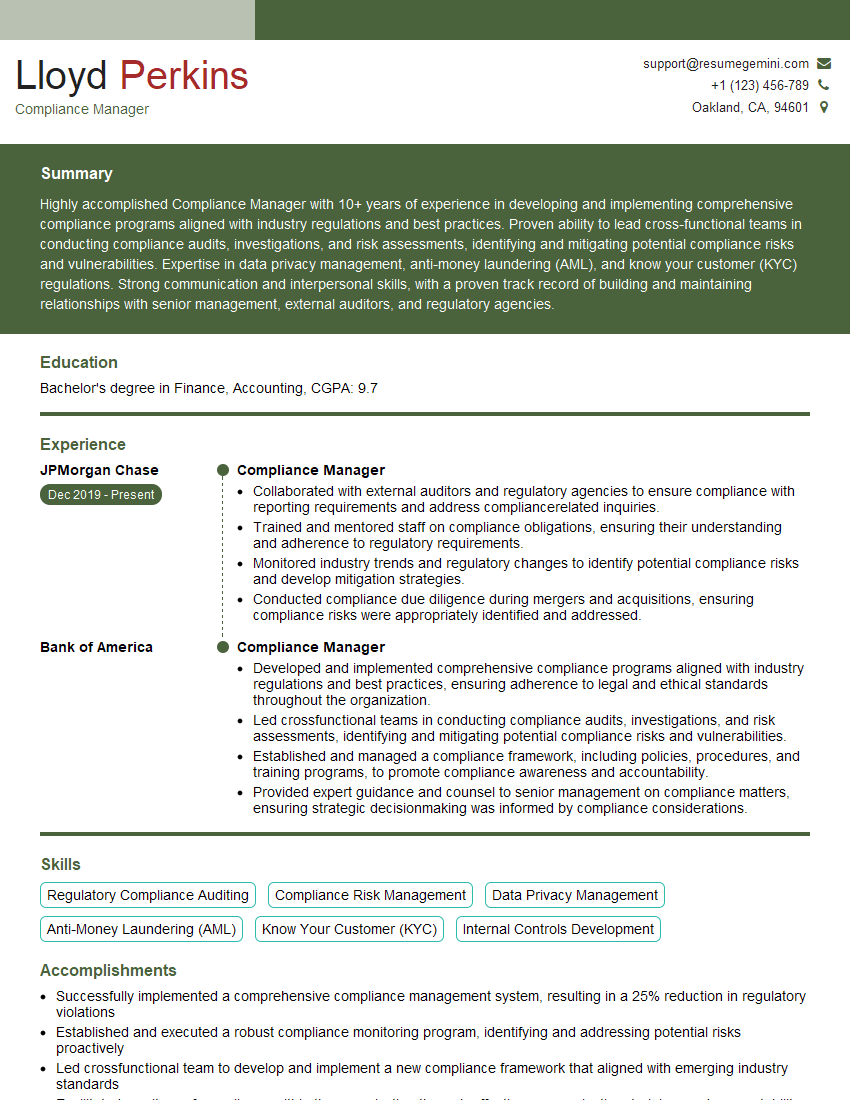
Compliance Manager Resume Sample
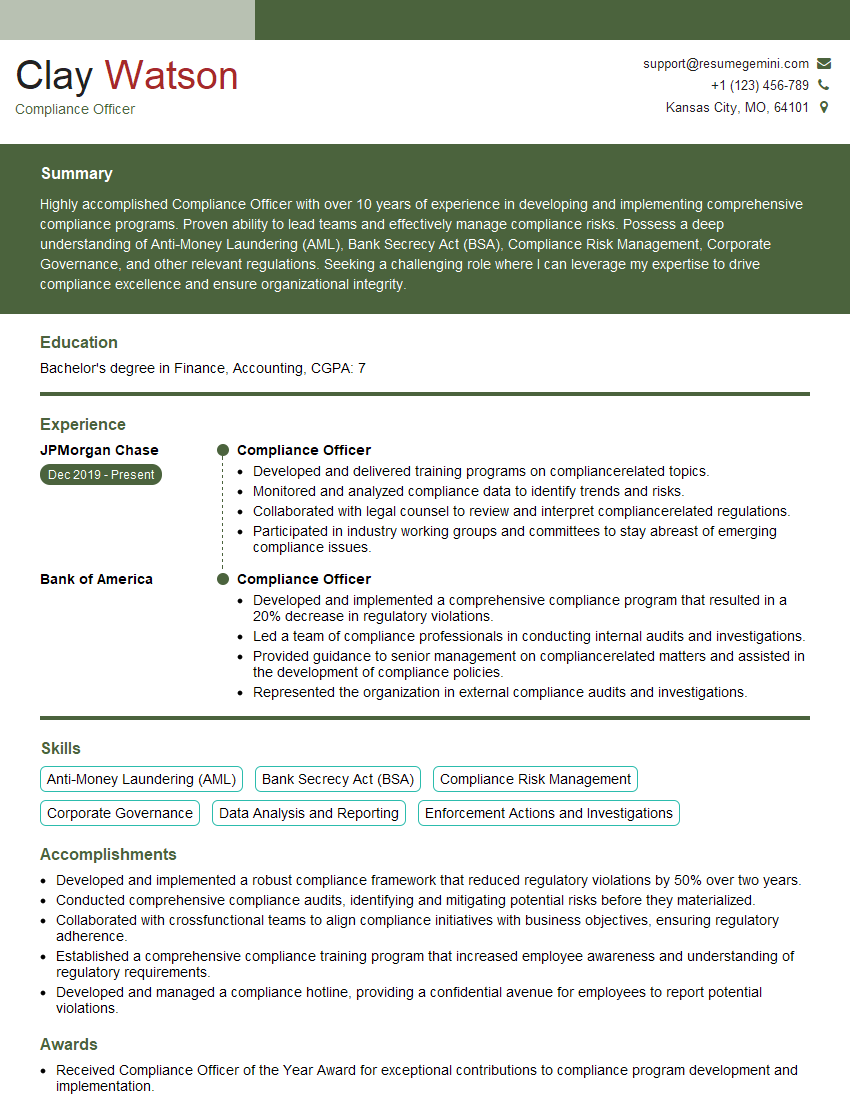
Compliance Officer Resume Sample
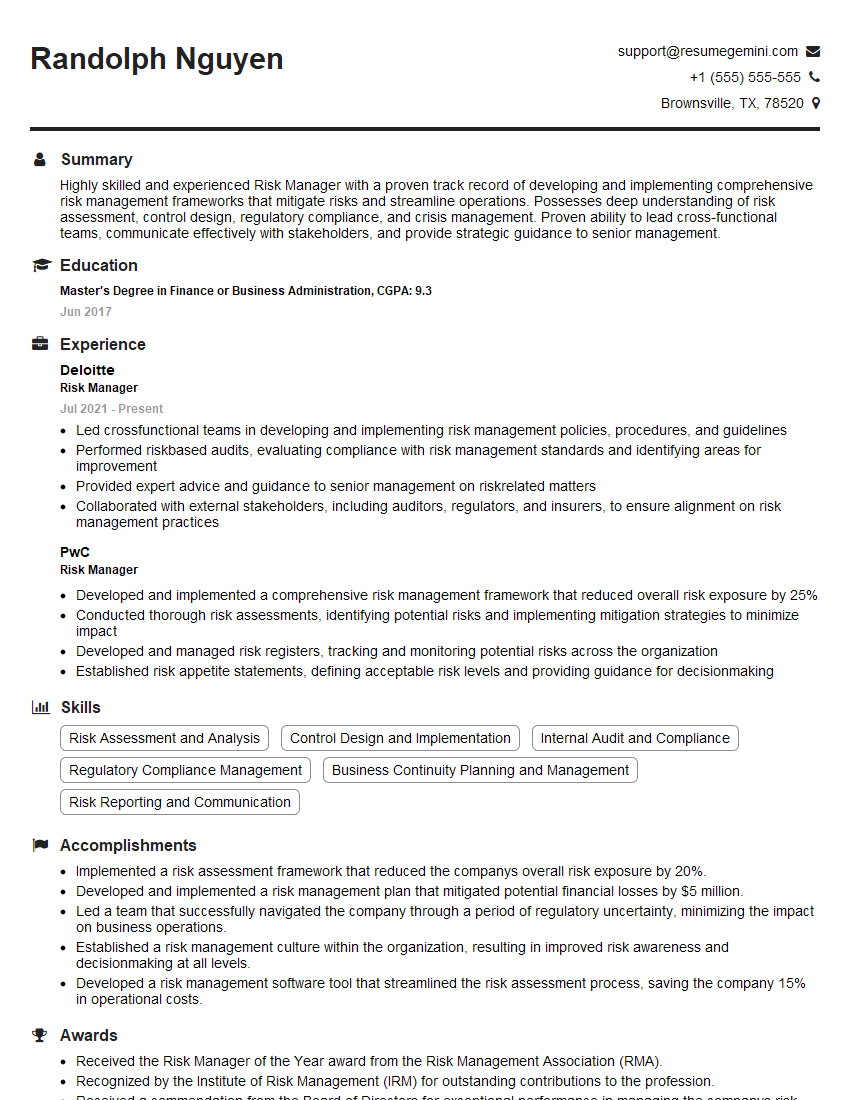
Risk Manager Resume Sample
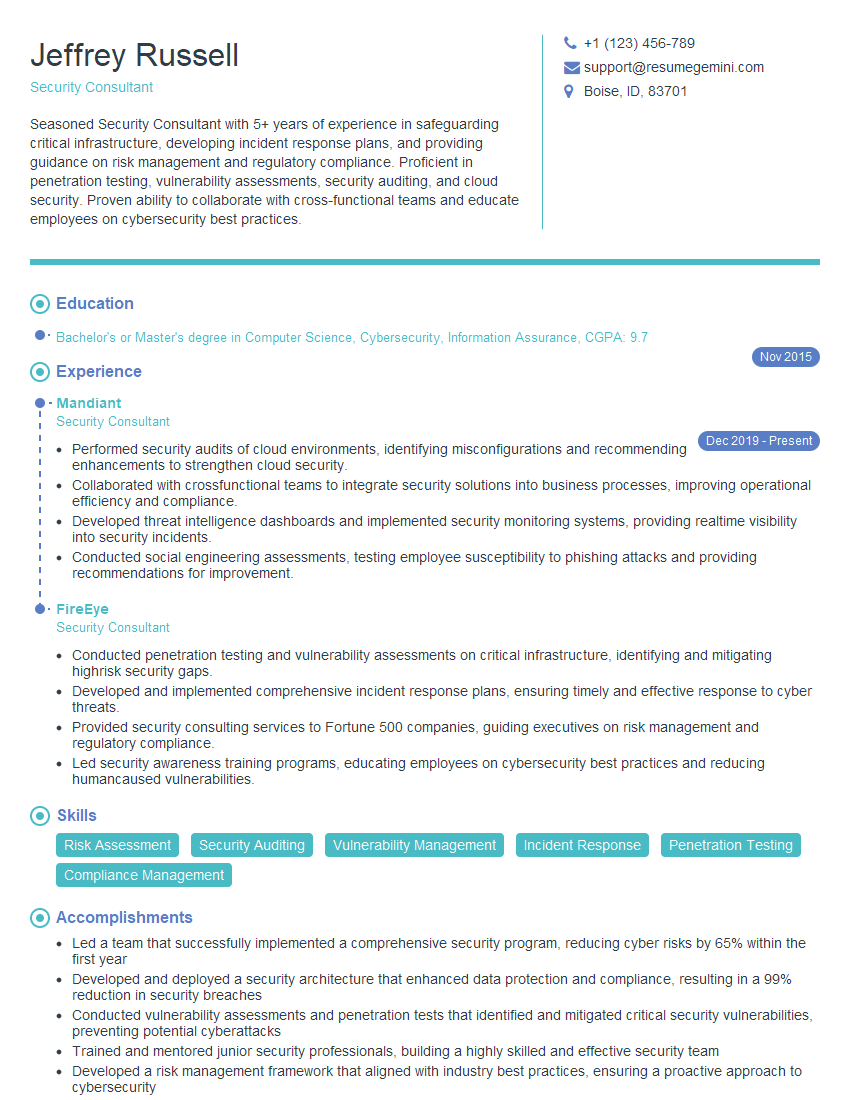
Security Consultant Resume Sample
Security Engineer Resume Sample
Data Security Analyst Resume Sample
Information Security Manager Resume Sample
Security Architect Resume Sample
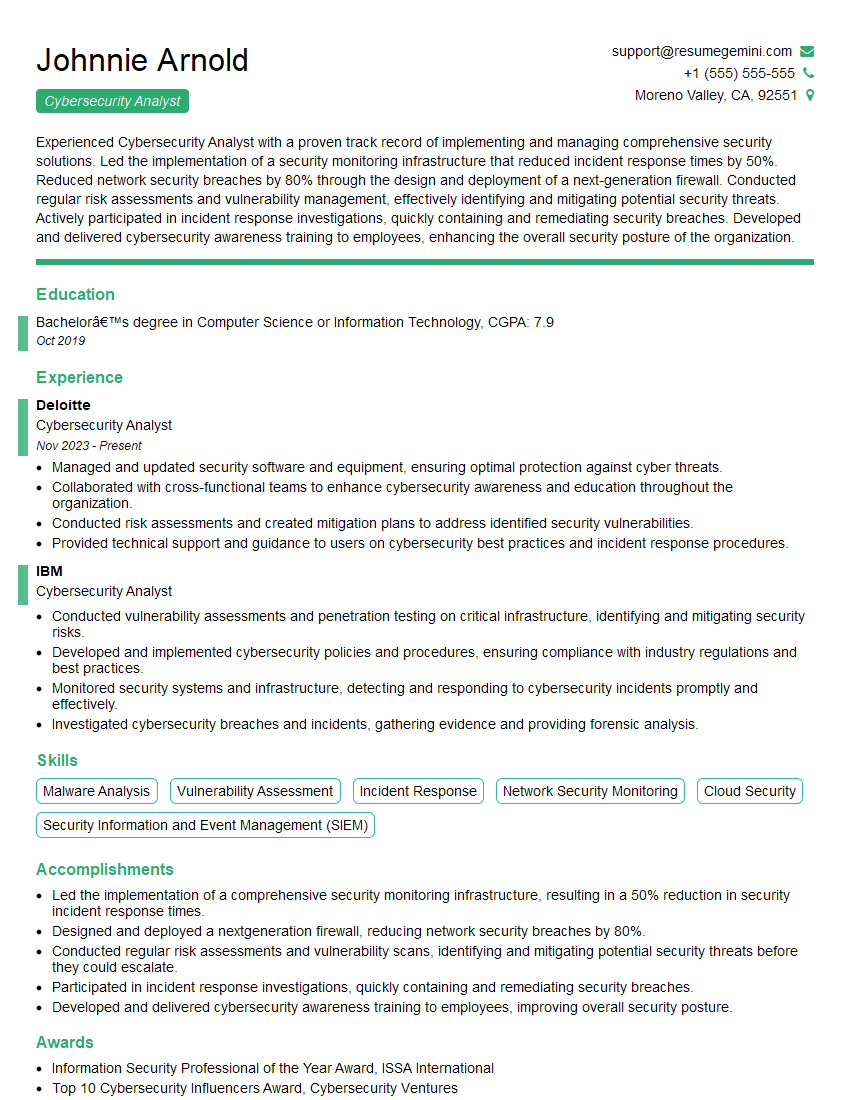
Cybersecurity Analyst Resume Sample
Explore more articles
Users Rating of Our Blogs
Share Your Experience
We value your feedback! Please rate our content and share your thoughts (optional).
What Readers Say About Our Blog
Very informative content, great job.
good