Feeling uncertain about what to expect in your upcoming interview? We’ve got you covered! This blog highlights the most important Garment Pattern Recognition interview questions and provides actionable advice to help you stand out as the ideal candidate. Let’s pave the way for your success.
Questions Asked in Garment Pattern Recognition Interview
Q 1. Explain the difference between a sloper and a block pattern.
Both slopers and block patterns are foundational garment patterns, but they differ significantly in their purpose and level of detail. Think of a sloper as a blank canvas, while a block pattern is a slightly more defined sketch.
A sloper is a basic, close-fitting pattern representing the body’s shape. It’s a highly personalized pattern, typically drafted directly from the individual’s measurements. It’s incredibly versatile and serves as the starting point for creating various garments. It’s often very simple, with minimal seam allowances or design details. Imagine it as the foundation upon which you build a house.
A block pattern is a more structured, standardized pattern based on a set of industry standard measurements. It includes more detail than a sloper, such as seam allowances and basic shaping, but is still a foundation pattern, lacking style details. Think of it as a pre-fab wall, already framed and ready for final finish.
In essence, a sloper is customized to a specific body, while a block is a more generic starting point.
Q 2. Describe the process of grading a pattern.
Grading a pattern involves systematically enlarging or reducing it to accommodate different sizes. It’s a crucial step in mass production, ensuring a consistent fit across a range of sizes. Imagine taking a photo and resizing it while maintaining proportions.
The process typically involves using specialized software or manually adjusting key pattern measurements using a grading scale or rule. Measurements are adjusted proportionally, considering factors like ease (extra fabric for comfort), and maintaining the overall design integrity. This involves increasing or decreasing widths, lengths, and other critical dimensions in a manner that keeps the proportions balanced across sizes.
For example, you might increase the chest width by a specific increment for each larger size, simultaneously increasing the corresponding length to maintain proportions. This careful adjustment is vital; incorrect grading can result in ill-fitting garments.
Q 3. How do you adjust a pattern for different body types?
Adjusting patterns for different body types requires careful consideration of individual measurements and body shapes. We don’t all fit the same ‘ideal’ proportions!
The process involves making specific adjustments based on areas where the standard pattern doesn’t match the individual’s physique. This might involve:
- Full Bust/Waist Adjustments: Adding fullness to the bust or waist darts to accommodate larger measurements.
- High/Low Bust Adjustments: Adjusting the bust point placement for better fit.
- Shoulder Adjustments: Adjusting the shoulder slope and width.
- Back Adjustments: Addressing issues like swayback or a forward-leaning posture.
- Hip Adjustments: Adjusting the hip area to accommodate wider hips.
These adjustments can be made either directly on the pattern using various techniques like adding or removing darts, or by creating entirely new pattern pieces. For example, someone with broad shoulders might need to widen the shoulder seamline. The goal is to create a flattering and comfortable garment that takes into account individual body characteristics. This requires a thorough understanding of how the body moves and drapes.
Q 4. What are the common methods for creating a garment pattern?
Garment patterns can be created using a variety of methods, each with its own strengths and weaknesses. These range from the traditional hand-drafting to sophisticated digital techniques.
- Draper’s Method: This traditional method involves draping fabric directly onto a dress form to create a three-dimensional pattern. It offers great flexibility and is ideal for creating unique and innovative designs. It’s hands-on and requires experience to master.
- Flat Pattern Drafting: This method involves creating a two-dimensional pattern using mathematical calculations and body measurements. It’s precise and repeatable, easily adapted for grading and mass production. It’s a very mathematical approach.
- Computer-Aided Design (CAD): CAD software allows for the creation, modification, and grading of patterns digitally. This method offers efficiency, accuracy, and the ability to manipulate and simulate design variations.
- Pattern Copying/Redrafting: This method involves tracing, adjusting and modifying existing patterns. It’s economical but may limit creativity.
The chosen method often depends on factors such as the design complexity, required accuracy, and available resources.
Q 5. Explain the importance of accurate pattern measurements.
Accurate pattern measurements are absolutely fundamental to garment success. They are the cornerstone of a well-fitting garment. Inaccurate measurements directly translate into ill-fitting clothes.
Without accurate measurements, the resulting garment will either be too tight, too loose, or disproportionate. This can lead to frustration for the sewer and a garment that’s uncomfortable or unwearable. Accurate measurements ensure the pattern correctly reflects the intended body shape and size. This is particularly crucial when working with close-fitting styles.
For example, an incorrectly measured chest circumference can lead to a shirt that’s either too tight across the chest or too loose and baggy. This not only impacts the fit but also affects the drape and overall aesthetics of the finished garment. Taking precise measurements, multiple times if needed, is crucial for avoiding these issues.
Q 6. How do you use a muslin to check the fit of a pattern?
A muslin is a test garment, typically made from inexpensive muslin fabric, used to check the fit of a pattern before cutting into expensive or final fabric. It’s a crucial step in refining a pattern to ensure a perfect fit. Think of it as a prototype.
The process involves cutting and sewing the muslin garment using the pattern. Then you try it on, evaluating the fit, making notes of any needed adjustments. Common areas to check include: shoulder seams, neckline, armholes, bust/waist/hip areas, overall length, and ease of movement. Adjustments are marked directly onto the muslin, then transferred to the original pattern. This iterative process of fitting, marking, adjusting, and recutting is repeated until the desired fit is achieved.
Using a muslin helps avoid costly mistakes and saves time and effort in the long run. It’s a valuable tool that transforms a theoretical design into a well-fitting reality.
Q 7. What are some common patternmaking software programs?
Several software programs are available for patternmaking, each with unique features and capabilities. Some popular options include:
- Adobe Illustrator: A widely used vector graphics editor that can be used for patternmaking.
- Pattern Design Software: Specialized pattern-making software like OptiTex, Lectra, and Gerber offer comprehensive features for creating, grading, and manipulating patterns.
- CAD/CAM Systems: These more sophisticated integrated systems streamline the entire garment production process, including pattern design, grading, and production planning. They are often used in professional settings.
The choice of software depends on the user’s needs and budget. Simple programs may suffice for individual designers, while large-scale garment producers require more powerful and advanced options.
Q 8. Describe your experience with CAD patternmaking software.
My experience with CAD patternmaking software spans over a decade, encompassing various industry-standard programs like Gerber Accumark, Lectra Modaris, and Optitex. I’m proficient in all aspects, from initial design sketching and grading to generating production-ready marker plans. I’ve used these tools to create patterns for a wide range of garments, from simple t-shirts to complex tailored jackets, mastering the functionalities of each software to optimize workflow and achieve precise results. For example, in a recent project using Gerber Accumark, I utilized its advanced grading capabilities to efficiently generate size ranges for a new line of women’s blouses, saving significant time and ensuring consistency across sizes. I’m also skilled in utilizing the digital tools for virtual prototyping and simulation to predict draping and fitting behaviors before physical production.
Q 9. How do you identify and correct common patternmaking errors?
Identifying and correcting patternmaking errors requires a keen eye for detail and a thorough understanding of garment construction. Common errors include incorrect seam allowances, inaccurate grading, and improper grainlines. My approach involves a multi-step process: First, a meticulous review of the digital pattern is undertaken, checking for inconsistencies in measurements and shape. Secondly, I meticulously compare the pattern to the design brief and technical specifications, ensuring all details are accurate. Finally, I conduct a test run – creating a sample garment from the pattern to identify and rectify any flaws in fit or construction. For instance, if a sleeve cap fits poorly, I’ll analyze the pattern pieces, possibly adjusting the ease, the sleeve cap height, or the depth of the cap. The ability to quickly identify the source of an error and implement corrections is crucial in streamlining the patternmaking process.
Q 10. What are the different types of seam allowances and when are they used?
Seam allowances are the extra fabric added to the raw edges of pattern pieces before sewing. The choice of seam allowance depends on the fabric type, the garment style, and the desired finish. Common types include:
- 5/8 inch (1.5cm): A standard allowance used for most garments, offering a good balance between strength and bulk.
- 1/2 inch (1.2cm): Used for lighter fabrics or where a slimmer seam is preferred, often in couture construction.
- 3/8 inch (1cm): Sometimes used for very delicate fabrics to prevent bulk.
- 1/4 inch (0.6cm): Suitable for decorative stitching or narrow seams in certain applications.
- Double seam allowance (e.g., 1 inch total): Provides greater strength and durability, useful for high-stress areas or heavier fabrics.
Selecting the appropriate seam allowance is critical for achieving a professional finish and the intended fit. For example, a heavier fabric will necessitate a larger seam allowance to prevent seam splitting, while a delicate fabric might require a smaller allowance to minimize bulkiness.
Q 11. Explain the concept of grainline and its importance in patternmaking.
The grainline refers to the direction of the warp yarns (the lengthwise yarns) in the woven fabric. It’s indicated on pattern pieces with a parallel line. Proper grain alignment is crucial for several reasons:
- Garment Shape & Hang: Fabric behaves differently depending on the grain direction. Cutting with the grain ensures the garment drapes correctly and hangs properly.
- Stretch & Recovery: Fabrics have more stretch across the weft (crosswise) than the warp (lengthwise). Following the grainline prevents distortion and maintains the garment’s intended shape.
- Stability & Durability: Correct grain placement increases the overall stability and durability of the garment. Cutting against the grain can cause the fabric to stretch and pull out of shape over time.
Imagine trying to make a dress shirt from fabric that’s cut incorrectly: the collar might twist, the shirt could appear uneven, and the entire piece might distort upon wear. Adherence to the grainline is an essential aspect that cannot be ignored for satisfactory construction.
Q 12. How do you account for fabric stretch and drape when creating a pattern?
Accounting for fabric stretch and drape is crucial for creating a well-fitting garment. This involves understanding the fabric’s properties and making adjustments to the pattern accordingly. For fabrics with significant stretch, such as jersey or spandex blends, I might use a smaller pattern than a non-stretch equivalent, anticipating the expansion of the fabric. For drapey fabrics, such as silk or chiffon, I would consider the way the fabric will hang and flow, possibly adding extra ease or shaping the pattern to flatter the drape. Specific methods include:
- Ease: Adding extra fabric to the pattern to allow for movement and comfort. The amount of ease will differ drastically depending on the fabric’s properties.
- Grading: Adjusting pattern pieces to accommodate for differential stretch in different areas of a garment.
- Muslin Mock-ups: Testing the pattern with a cheaper, similar fabric before cutting into the final fabric to identify issues early in the process and to refine the pattern for optimal fit.
For instance, when working with a highly stretchable knit fabric, I would reduce the seam allowance to avoid excess bulk and incorporate strategic ease to allow for body movement.
Q 13. Describe your experience with different types of fabrics and their impact on pattern design.
My experience encompasses a wide range of fabrics, including wovens (cottons, linens, silks, wool), knits (jersey, rib, interlock), and non-wovens (fleece, felt). Understanding the unique properties of each fabric type is essential for successful pattern design. For example:
- Woven fabrics, which have a structured nature, are generally more stable and easier to work with than knit fabrics.
- Knit fabrics, owing to their elasticity, require different approaches in patternmaking such as incorporating ease and seam allowances appropriately for desired fit.
- Non-woven fabrics can have varied levels of stability, which influence the choice of seam allowances and construction techniques.
These differences directly impact pattern design decisions like seam allowances, ease, and construction techniques. For example, a crisp cotton needs less ease than a flowing silk charmeuse; a stable linen can handle more complex details than a delicate georgette. This understanding is integral in choosing appropriate designs to translate into effective patterns.
Q 14. How do you work with designers to translate their design ideas into patterns?
Collaboration with designers is a key aspect of my role. I work closely with them to translate their creative vision into technically sound patterns. The process typically involves:
- Design Review: Thoroughly reviewing sketches, mood boards, and technical specifications to understand the design intent.
- Fabric Selection: Discussing fabric choices and their impact on pattern design, considering drape, stretch, and weight.
- Pattern Development: Creating the initial pattern blocks and making adjustments based on designer feedback and the garment’s requirements.
- Refinement & Testing: Making adjustments to the pattern based on muslin mockups or digital simulations, ensuring the final product accurately reflects the design.
Open communication and a shared understanding of the design goals are essential for a successful outcome. For example, working with a designer who wants a particular drape in a dress might require adjustments to the pattern’s shaping, fabric selection, and even potential use of interfacing to support the design features.
Q 15. What are your preferred methods for documenting pattern changes and revisions?
Documenting pattern changes and revisions is crucial for maintaining accuracy and traceability. My preferred method involves a combination of digital and physical techniques. I utilize a version control system, much like software developers, to track every alteration. For each revision, I create a new version file, clearly labeling it with a date and a brief description of the changes (e.g., ‘v2 – Adjusted sleeve cap height’). This allows me to easily revert to previous versions if needed.
In addition to digital records, I maintain physical copies of my patterns, annotating them directly with notes and sketches. This tactile approach helps me visualize changes and modifications in a way digital methods sometimes can’t. A detailed logbook accompanies each pattern, recording all changes, the rationale behind them, and any relevant measurements. This comprehensive approach ensures that I can quickly access the history of a pattern and understand the evolution of its design. Imagine building a house – you wouldn’t just rely on memory; you’d have blueprints and a detailed construction log. Pattern making is similar – careful documentation safeguards against errors and allows for efficient collaboration.
Career Expert Tips:
- Ace those interviews! Prepare effectively by reviewing the Top 50 Most Common Interview Questions on ResumeGemini.
- Navigate your job search with confidence! Explore a wide range of Career Tips on ResumeGemini. Learn about common challenges and recommendations to overcome them.
- Craft the perfect resume! Master the Art of Resume Writing with ResumeGemini’s guide. Showcase your unique qualifications and achievements effectively.
- Don’t miss out on holiday savings! Build your dream resume with ResumeGemini’s ATS optimized templates.
Q 16. Explain your process for creating a pattern from a sketch or technical drawing.
Creating a pattern from a sketch or technical drawing involves a multi-step process that blends artistic interpretation with technical precision. I begin by analyzing the design, understanding the silhouette, and identifying key features like darts, seams, and closures. The next step involves creating a basic block, a foundational pattern that serves as the base for the design. This is essentially a simplified version of the garment, tailored to the body’s shape.
Once the basic block is established, I use the sketch or technical drawing as a guide to add design elements. This might involve adjusting seam lines, adding darts, or manipulating existing shapes to match the designer’s vision. I often use both digital and physical techniques at this stage. Digital pattern making software allows for precise measurements and modifications, while physical draping on a mannequin allows for a more tactile understanding of fabric drape and fit. Throughout this process, meticulous attention to detail is paramount. Frequent checking against the initial design and making adjustments as needed ensures the final pattern accurately reflects the intended design.
Q 17. How do you ensure the accuracy and consistency of patterns across different sizes?
Ensuring accuracy and consistency across different sizes is fundamental in pattern making. This is achieved primarily through the use of grading rules. Grading rules are a set of precisely defined mathematical increments used to systematically increase or decrease the pattern’s dimensions to create different sizes. These rules dictate how much each part of the pattern should grow or shrink (e.g., chest width, sleeve length).
I meticulously develop these grading rules based on standard body measurement charts and extensive fit testing. Automated grading software significantly helps in this process, ensuring accurate scaling of the pattern pieces. However, manual checks and adjustments are always necessary. I frequently perform test grading and create sample garments in various sizes to verify the accuracy of the graded patterns and to identify any inconsistencies that need further refinement. This combination of automated tools and meticulous manual verification guarantees the consistency and precision of patterns across the entire size range.
Q 18. Describe your experience with pattern manipulation techniques such as dart manipulation or adding design details.
Pattern manipulation is a core skill requiring both creativity and technical expertise. Dart manipulation, for instance, allows me to reshape the garment’s form without significantly altering the overall silhouette. This involves moving, shifting, or even eliminating darts to create a specific design effect, such as a more fitted waist or a fuller skirt. For example, I might convert a vertical dart into a princess seam for a more structured look.
Adding design details, such as pleats, gathers, or yokes, requires careful planning and execution. I consider factors such as fabric type, drape, and the desired aesthetic impact. A simple example is incorporating a yoke to add structure and detail to a blouse. Each of these manipulation techniques demands a deep understanding of how altering one area of the pattern impacts other sections, maintaining overall balance and fit. It’s like sculpting with fabric – small changes can have a dramatic effect.
Q 19. How do you manage deadlines and prioritize tasks in a fast-paced environment?
Managing deadlines and prioritizing tasks in a fast-paced environment requires organization and strategic planning. I employ a project management system that allows me to break down complex projects into smaller, manageable tasks with specific deadlines. This enables me to track my progress, identify potential bottlenecks, and adjust my schedule accordingly.
Prioritization is guided by several factors including project urgency, complexity, and client expectations. I use methods like the Eisenhower Matrix (urgent/important) to distinguish between crucial and less critical tasks. Communication with team members and stakeholders is also vital – proactive updates and transparent communication helps prevent misunderstandings and delays. Flexibility is key – I am ready to adapt to changing priorities and unexpected challenges. The ability to balance efficiency with careful execution ensures that deliverables meet deadlines while maintaining high quality.
Q 20. Explain your problem-solving approach when encountering unexpected fit issues.
Encountering unexpected fit issues is common in pattern making. My problem-solving approach is systematic and data-driven. I begin by carefully analyzing the fit issue, pinpointing specific areas where adjustments are needed. This might involve studying the garment on a fit model, identifying areas of pulling, bunching, or gaping. Then, I take precise measurements to understand the magnitude of the problem.
Next, I systematically test various solutions, making small, incremental adjustments to the pattern. I may alter seam lines, adjust dart placement, or make changes to ease or shaping allowances. Each adjustment is documented and rigorously tested before proceeding to the next. This iterative process continues until the desired fit is achieved. A combination of pattern adjustments, grading corrections and potentially fabric selection analysis are employed to solve fit issues. It’s often a process of elimination, requiring both technical knowledge and a creative approach to problem-solving.
Q 21. What are your strengths and weaknesses as a pattern maker?
My strengths lie in my meticulous attention to detail, my deep understanding of garment construction, and my ability to adapt to different design styles and challenges. I am adept at both digital and traditional pattern making techniques, allowing me to leverage the best methods for each project. My experience in solving complex fit issues and my proficiency in pattern manipulation techniques are invaluable assets. I also value collaboration and open communication with designers and other team members.
One area I am constantly striving to improve is my speed in handling large-scale projects. While I am highly accurate, mastering techniques to enhance efficiency is a continuous area of development. I have recently begun incorporating advanced pattern making software to address this, and I actively seek opportunities to expand my knowledge and refine my workflow.
Q 22. Describe a challenging patternmaking project and how you overcame the challenges.
One of the most challenging projects I undertook involved creating a pattern for a complex, asymmetrical draped gown with multiple layers of sheer fabric and intricate boning. The challenge lay in achieving the desired drape and structure while ensuring the pattern pieces would align perfectly and the garment would maintain its form after construction.
To overcome this, I started by meticulously draping the design on a dress form, using a lightweight muslin to capture the initial shape. This provided a 3D template that I could then translate into 2D pattern pieces. I used several techniques to handle the asymmetry: I created separate pattern pieces for each asymmetrical element and meticulously marked grainlines and notches to ensure accurate alignment during construction. For the sheer layers, I created separate patterns with seam allowances that would accommodate the delicate nature of the fabric and prevent stretching or distortion. Finally, I incorporated test fits at each stage to make necessary adjustments and refine the pattern. The final garment beautifully showcased the drape and intricate details, proving the effectiveness of my multifaceted approach.
Q 23. How do you stay up-to-date with the latest trends and technologies in garment patternmaking?
Staying current in garment patternmaking requires a multi-pronged approach. I regularly subscribe to industry magazines like Threads and Burda Style, attend industry conferences like the Apparel Sourcing Show, and actively participate in online forums and communities dedicated to patternmaking. These resources provide valuable insights into new techniques, software, and trends. Furthermore, I continuously explore and experiment with new software and technologies, such as CAD programs like CLO 3D and Optitex, which significantly streamline the patternmaking process and allow for advanced digital manipulation. This blend of traditional learning and embracing new technologies ensures I am always at the forefront of industry innovation.
Q 24. How do you collaborate effectively with other members of the design and production team?
Effective collaboration is paramount in the garment industry. I believe in open communication and active listening. Before starting a project, I meticulously discuss the design brief with designers, ensuring a clear understanding of the desired aesthetic, fit, and functionality. I actively seek feedback from the production team, considering their expertise on manufacturing constraints and production efficiency. This ensures the patterns are not only aesthetically pleasing but also feasible to manufacture. I regularly use collaborative design software to share and receive feedback on patterns in real-time. This fosters transparency and efficiency, leading to a smoother and more successful project outcome.
Q 25. Explain your understanding of different types of pattern construction methods (e.g., flat pattern, draping).
There are two primary methods of pattern construction: flat patternmaking and draping. Flat patternmaking involves creating a 2D pattern directly on paper, using measurements and calculations as a foundation. It’s precise and allows for detailed adjustments, making it ideal for structured garments like tailored jackets or shirts. Draping, on the other hand, involves manipulating fabric directly on a dress form to achieve the desired shape. The form acts as a 3D model, allowing for fluid and organic designs. It is often employed for flowing, less structured garments like dresses or evening gowns. Often, a combination of both methods is used; for example, one might drape a basic bodice shape and then use flat patternmaking techniques to refine details and add sleeves. Understanding the strengths and limitations of each method is key to selecting the most appropriate technique for a given design.
Q 26. How do you handle feedback on your patterns and incorporate it into your work?
Feedback is crucial for improvement. I view constructive criticism as an opportunity for growth. I actively solicit feedback from designers, production teams, and even from initial garment fittings. I analyze this feedback carefully, noting specific areas for improvement. This often involves re-examining the pattern’s measurements, grading, or construction techniques. I then systematically incorporate the feedback, meticulously documenting all changes made. It’s not just about correcting errors, but also about refining the pattern to achieve a more precise and aesthetically pleasing garment. I always ensure my final pattern incorporates the learnings from the feedback process.
Q 27. Describe your experience using different types of marking and cutting tools.
My experience encompasses a range of marking and cutting tools. For marking, I’m proficient with various tools: French curves for creating smooth, flowing curves; tailor’s chalk for marking on fabric; and pattern weights to hold patterns in place. For cutting, I’m skilled in using both rotary cutters and shears, selecting the appropriate tool based on the fabric type and desired precision. For example, rotary cutters are efficient for cutting multiple layers of fabric, while shears are preferred for precise cuts on intricate details or delicate fabrics. I understand the importance of maintaining sharp blades for clean and accurate cuts to prevent fabric damage. Safety is always a priority; using appropriate safety measures when handling these tools is paramount.
Q 28. How do you ensure the efficiency and accuracy of the pattern cutting process?
Efficiency and accuracy are crucial in pattern cutting. This begins with precise measurements and proper pattern construction. I always double-check my measurements and calculations, ensuring accuracy at each step. I use efficient cutting methods and organize my cutting layout carefully to minimize fabric waste. Furthermore, technology plays a significant role. I leverage CAD software for precise pattern manipulation and grading. Using digital tools ensures consistent sizing across different sizes and reduces the risk of human error. Regular maintenance of cutting tools, like sharpening shears and replacing worn blades, is also critical to maintain accuracy and prolong tool life. Through a combination of meticulous handwork and utilizing digital tools, I ensure the pattern cutting process is both accurate and efficient.
Key Topics to Learn for Garment Pattern Recognition Interview
- Image Preprocessing Techniques: Understanding image cleaning, noise reduction, and normalization crucial for accurate pattern recognition.
- Feature Extraction Methods: Explore techniques like SIFT, SURF, HOG, and deep learning-based methods for identifying key features in garment patterns.
- Pattern Matching Algorithms: Familiarize yourself with algorithms used to compare and classify garment patterns, including template matching and machine learning classifiers.
- Classification and Clustering: Learn about different classification algorithms (e.g., SVM, KNN) and clustering techniques (e.g., k-means) for grouping similar patterns.
- Deep Learning Architectures for Garment Recognition: Explore Convolutional Neural Networks (CNNs) and their applications in identifying and classifying garment patterns from images.
- Data Augmentation Strategies: Understand how to effectively increase the size and diversity of your training dataset to improve model performance.
- Model Evaluation Metrics: Learn how to evaluate the performance of your pattern recognition models using metrics like precision, recall, F1-score, and accuracy.
- Practical Applications: Understand real-world applications, such as automated garment inspection, virtual fitting rooms, and style recommendation systems.
- Problem-Solving Approaches: Develop your ability to debug model inaccuracies, optimize parameters, and address challenges in real-world datasets.
Next Steps
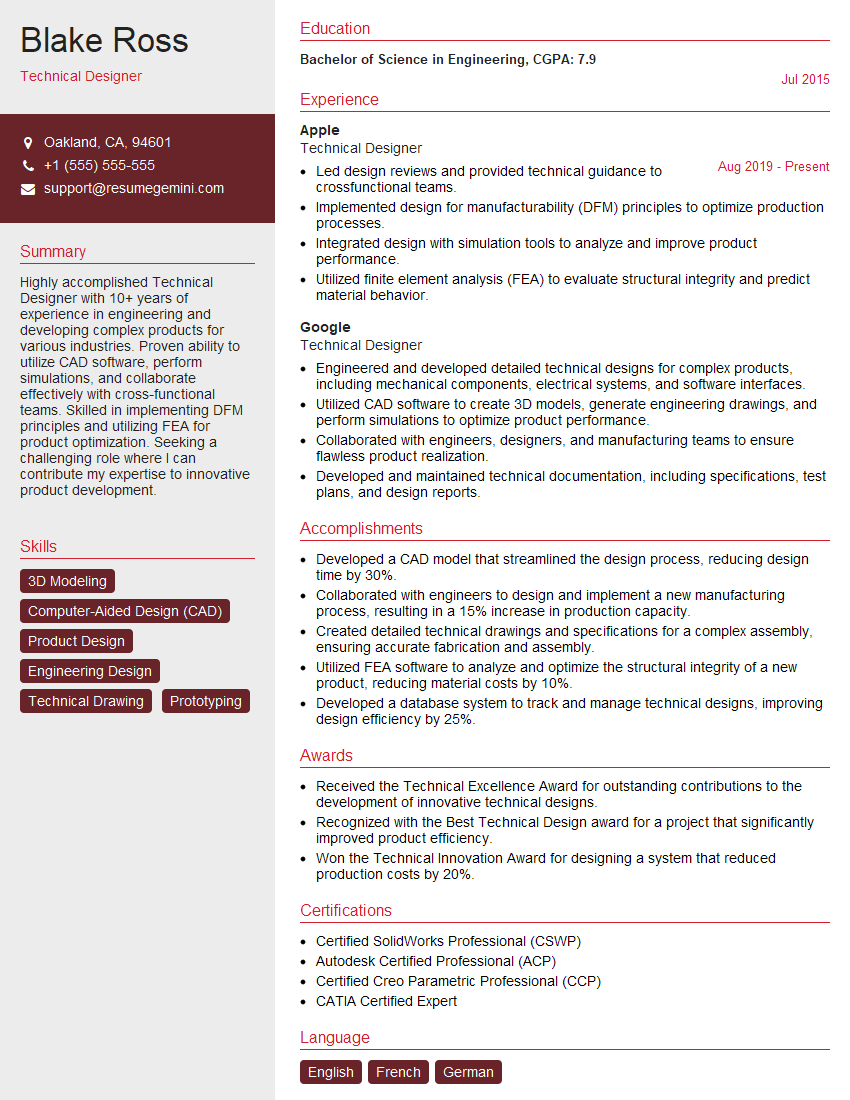
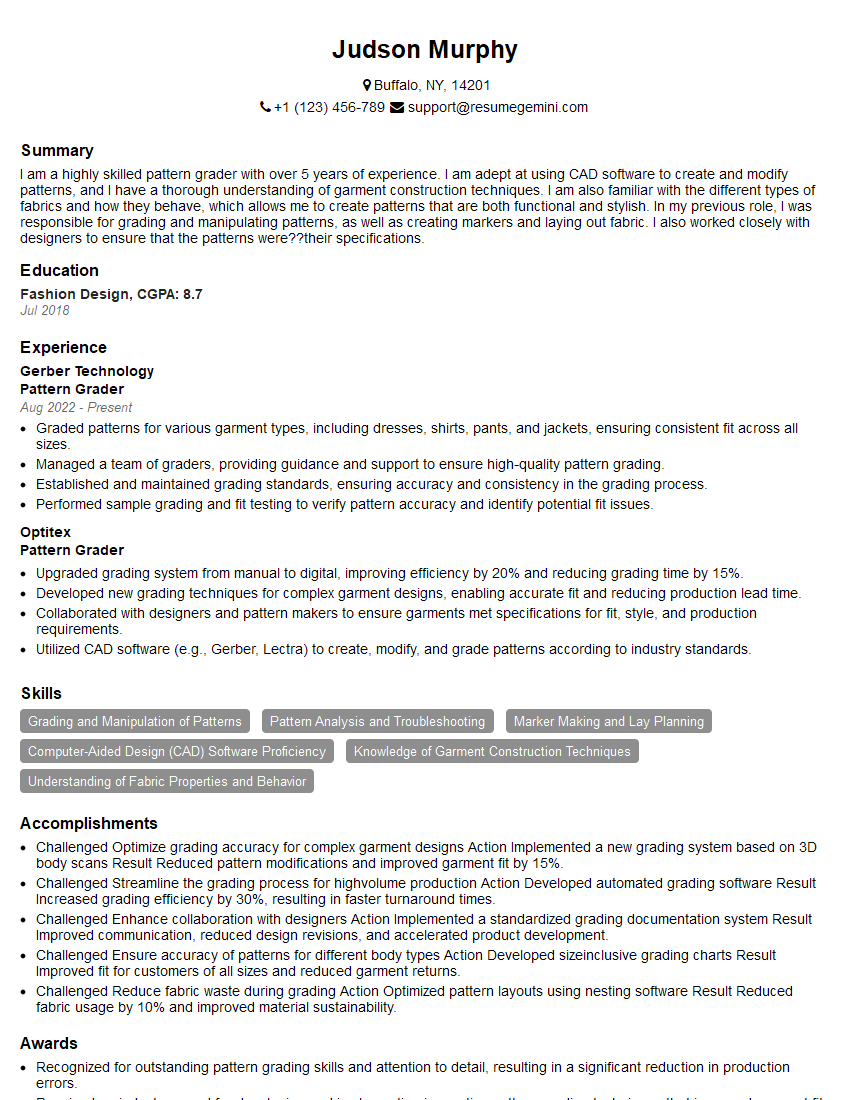
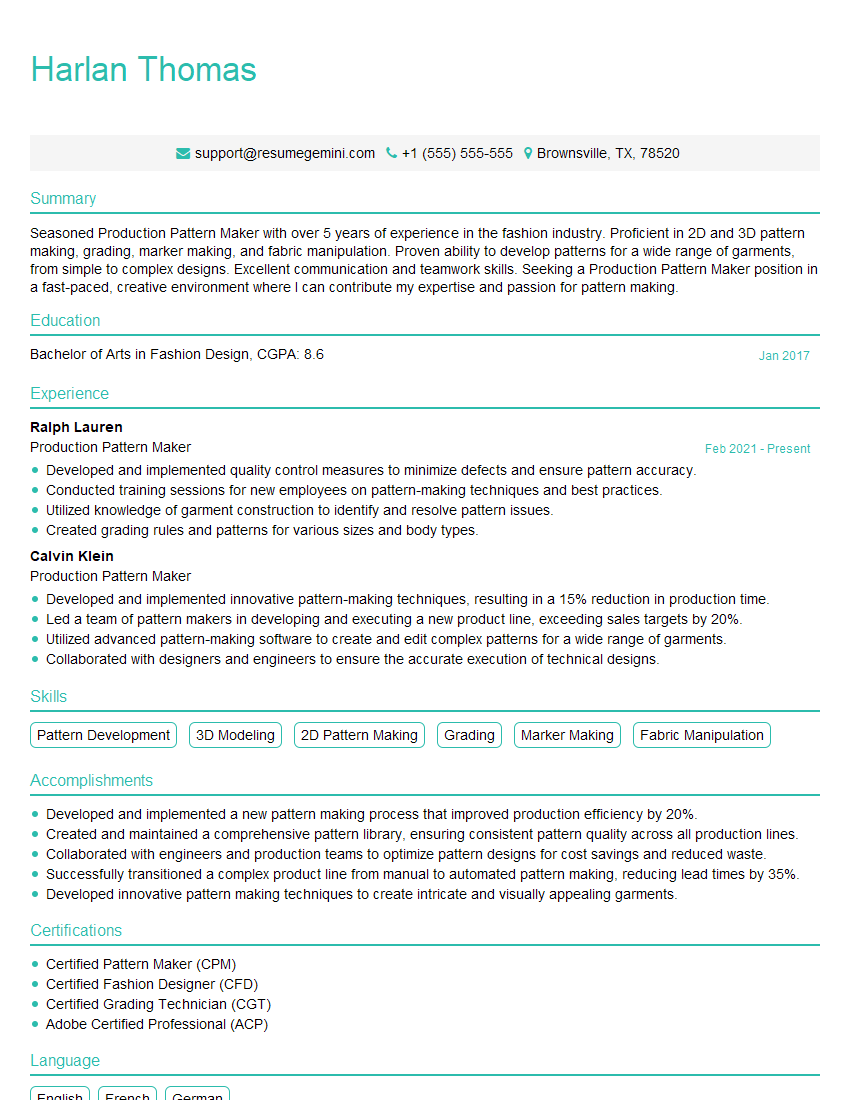
Mastering Garment Pattern Recognition opens doors to exciting career opportunities in the fashion tech industry, offering roles with high growth potential and competitive salaries. To maximize your job prospects, crafting a strong, ATS-friendly resume is crucial. ResumeGemini is a trusted resource that can help you build a professional and impactful resume tailored to the specific requirements of Garment Pattern Recognition roles. We provide examples of resumes optimized for this field to guide you in creating a document that showcases your skills and experience effectively. Invest the time in crafting a compelling resume – it’s your first impression with potential employers.

Explore more articles
Users Rating of Our Blogs
Share Your Experience
We value your feedback! Please rate our content and share your thoughts (optional).
What Readers Say About Our Blog
Very informative content, great job.
good