Preparation is the key to success in any interview. In this post, we’ll explore crucial Naval Gunnery and Weapons Systems interview questions and equip you with strategies to craft impactful answers. Whether you’re a beginner or a pro, these tips will elevate your preparation.
Questions Asked in Naval Gunnery and Weapons Systems Interview
Q 1. Describe the different types of naval gunnery systems.
Naval gunnery systems encompass a wide range of weapon types and technologies, each designed for specific roles and targets. They can be broadly categorized as follows:
- Guns: These range from smaller, rapid-fire guns used for close-in defense against smaller vessels and aircraft, to large-caliber naval rifles capable of engaging surface and land targets at long ranges. Examples include the 5-inch/54 caliber gun and the 16-inch guns used on battleships of the past.
- Guided Missiles: These are precision-guided weapons that can engage targets at much longer ranges than guns. They include anti-ship missiles (ASMs) like the Harpoon or Exocet, land-attack missiles (LAMs), and anti-aircraft missiles (AAWs) like the Standard Missile family. These are typically far more complex than traditional gunnery systems.
- Rocket Launchers: These systems launch unguided or guided rockets, primarily used for close-in defense against air or surface threats. They can provide a high volume of fire in a short period.
- Integrated Weapon Systems: Modern warships often incorporate an integrated weapon system that combines guns, missiles, and other sensors to provide a comprehensive defense and offensive capability. These systems use sophisticated command and control software to coordinate multiple weapons against multiple threats.
The choice of system depends heavily on the mission profile, the threat environment, and the size of the vessel. A small patrol boat will have different weapons than a large aircraft carrier or amphibious assault ship.
Q 2. Explain the principles of fire control.
Fire control is the process of accurately aiming and firing naval weapons. It involves a complex interplay of sensors, computers, and actuators to compensate for various factors that affect projectile trajectory. The fundamental principles are:
- Target Acquisition: Identifying and locating the target, usually through radar, optical systems, or other sensors.
- Target Tracking: Continuously monitoring the target’s position and movement to predict its future location.
- Fire Control Solution: Using mathematical models and algorithms to calculate the necessary weapon aiming parameters, taking into account factors like target range, speed, course, wind, and projectile characteristics.
- Weapon Aiming and Firing: Positioning the weapon to the calculated aiming solution and triggering the firing sequence.
- Post-Shot Analysis: Evaluating the effectiveness of the shot and making adjustments for subsequent shots.
Think of it like playing pool: you have to account for the speed of the ball, the angle of your shot, and the friction of the table to get the ball into the pocket. Naval fire control is far more complex, requiring incredibly precise calculations in real-time.
Q 3. What are the key components of a modern naval weapons system?
A modern naval weapon system is far more than just a gun or missile; it’s a complex network of interconnected components working together. Key elements include:
- Sensors: Radar, sonar, electro-optical (EO) systems, and infrared (IR) sensors to detect and track targets.
- Fire Control System (FCS): The central brain that processes sensor data, computes aiming solutions, and controls weapon firing.
- Weapons: Guns, missiles, torpedoes, and other ordnance.
- Command and Control (C2) System: The overall system that manages weapon assignments, prioritizes targets, and coordinates operations between different weapons systems and platforms.
- Data Links: Communication networks that allow different parts of the system, and even different ships, to share information.
- Power Systems: The energy source for the entire system.
- Cooling Systems: Vital to prevent overheating of sensitive equipment.
The effectiveness of the entire system depends on the seamless integration of all these components. A failure in one area can severely impact the overall capability.
Q 4. How does radar technology integrate with fire control systems?
Radar is integral to modern naval fire control systems. Radar provides critical information about target location, range, speed, and course. This data is fed into the fire control computer, which then uses this information, along with other sensor data (like optical sights), to calculate the aiming solution. The accuracy and reliability of the radar are crucial to the effectiveness of the weapon system. Different radar types are used for different purposes: search radar finds targets, while tracking radar continuously monitors their position for precision targeting. Modern systems often use phased-array radars, which offer improved accuracy and the ability to track multiple targets simultaneously.
Think of it as the eyes of the system. Without accurate radar information, the fire control computer would be blind, leading to inaccurate targeting and missed shots.
Q 5. Describe the process of targeting and engaging a hostile vessel.
Engaging a hostile vessel involves a multi-stage process:
- Detection: The ship’s sensors detect a potential threat.
- Identification: Friendly and enemy forces are differentiated; this is a crucial step to avoid friendly fire.
- Tracking: The target’s position, speed, and course are continuously monitored.
- Weapon Selection: The most appropriate weapon is selected based on range, target type, and other factors.
- Targeting Solution: The fire control computer calculates the aiming solution.
- Weapon Engagement: The weapon is fired.
- Assessment: The effectiveness of the engagement is assessed and adjustments are made if necessary.
This process needs to be extremely fast and accurate, especially in high-threat environments. Modern systems use automated procedures to speed up the process, but human oversight remains critical.
Q 6. Explain the concept of ballistic trajectory and its impact on accuracy.
A ballistic trajectory is the curved path a projectile follows under the influence of gravity. The accuracy of a projectile is significantly impacted by several factors related to its ballistic trajectory:
- Gravity: Causes the projectile to arc downwards.
- Air Resistance (Drag): Slows the projectile and affects its trajectory.
- Coriolis Effect: The rotation of the Earth slightly deflects the projectile’s path.
- Wind: Affects the projectile’s path, particularly at longer ranges.
Fire control systems must account for all these factors to accurately predict the projectile’s path and ensure an accurate hit. This requires sophisticated mathematical models and real-time data inputs. Ignoring these factors will lead to significant errors in range and impact point.
Q 7. What are the safety procedures for handling naval ordnance?
Safety is paramount when handling naval ordnance. Procedures vary depending on the specific weapon, but key principles include:
- Strict adherence to established procedures: Every step must be followed precisely.
- Proper training and qualification: Personnel must be thoroughly trained before handling ordnance.
- Safety inspections: Regular inspections of weapons and storage areas to ensure safety.
- Lockout/Tagout procedures: Preventing accidental activation of weapons systems.
- Clear communication: Maintaining clear and concise communication between all personnel involved.
- Use of protective equipment: Wearing appropriate PPE, such as hearing protection and eye protection.
- Secure storage: Ordnance must be stored securely, preventing unauthorized access or accidental detonation.
A single lapse in safety procedures can have devastating consequences. Therefore, the emphasis on safety is consistently reinforced through rigorous training and strict adherence to protocols.
Q 8. Discuss the different types of ammunition used in naval gunnery.
Naval gunnery ammunition is diverse, categorized primarily by projectile type and purpose. High-explosive (HE) rounds are the most common, designed to detonate upon impact, causing fragmentation and blast damage. They’re effective against surface targets and lightly armored structures. High-explosive incendiary (HEI) rounds add a burning component, useful against flammable targets like fuel depots. Armor-piercing (AP) rounds, typically featuring a hardened steel core, are designed to penetrate heavily armored targets, such as enemy warships. Illuminating rounds produce bright flashes of light, aiding target acquisition at night or in low-visibility conditions. Finally, guided projectiles, incorporating sophisticated guidance systems, improve accuracy at longer ranges. The specific ammunition employed depends heavily on the target type and the mission objectives. For example, during a surface action against a lightly armored vessel, HE rounds would be the primary choice. In contrast, engaging a heavily armored battleship might require the use of AP rounds. The caliber and muzzle velocity of the ammunition also factor into effective range and destructive power.
Q 9. How are naval gunnery systems maintained and repaired?
Maintaining and repairing naval gunnery systems is a complex and rigorous process, requiring specialized training and equipment. Preventive maintenance is crucial, involving regular inspections, lubrication, and cleaning to ensure all components function flawlessly. This includes careful examination of the gun barrel for erosion or damage, checking the hydraulic and electrical systems, and verifying the ammunition handling mechanisms. Repair procedures vary depending on the nature of the malfunction. Minor issues might involve replacing worn parts, while more extensive damage could necessitate complete system overhaul or even the replacement of damaged components. This work is usually carried out by highly trained technicians and engineers, often following detailed maintenance manuals and procedures to ensure safety and efficiency. Regular weapons system testing, incorporating live fire exercises, is also essential to ensure continued combat readiness. Think of it like maintaining a high-performance car—consistent care prevents breakdowns and ensures peak operational capability during crucial moments.
Q 10. What are the limitations of naval gunnery systems?
Naval gunnery systems, while powerful, face several limitations. Range is a major factor; even the most advanced guns have a finite range, beyond which accuracy and effectiveness diminish significantly. Weather conditions like high winds, heavy seas, and reduced visibility can severely impact accuracy and the ability to effectively engage targets. The vulnerability of gun emplacements to enemy fire is a serious concern; the exposed nature of turrets makes them prime targets for counter-battery fire. Furthermore, the complexity of modern gun systems requires sophisticated training and maintenance, posing logistical challenges. Finally, the rate of fire, while generally high, is still finite, meaning a saturation attack by multiple smaller weapons might overwhelm a gunnery platform before it can neutralize all threats. These limitations highlight the importance of integrated defense strategies, combining gunnery with other weapons systems and defensive measures for a comprehensive approach to naval warfare.
Q 11. Explain the role of damage control in naval gunnery operations.
Damage control plays a vital role in naval gunnery operations. The intense forces generated by naval artillery can cause damage not only to the target but also to the firing platform itself. Damage control teams are responsible for mitigating any damage, whether from near misses, enemy fire, or equipment malfunctions. Their responsibilities include repairing damaged structures, containing fires, managing flooding, and ensuring the continued operational capability of the ship. Rapid and effective damage control is critical to preserving the ship’s combat effectiveness and the safety of the crew. The timely response of a damage control team can mean the difference between a minor setback and a catastrophic loss. It’s a crucial aspect of overall naval readiness, ensuring the warship can continue its mission even in the face of significant challenges.
Q 12. Describe the different types of naval radar systems.
Naval radar systems are highly diverse, each designed for specific purposes. Surface search radars detect and track ships and other surface targets, providing information on range, bearing, and speed. Air search radars perform a similar function but are optimized for detecting and tracking aircraft. Fire control radars provide accurate targeting data for naval guns and missile systems, enabling precise engagement of enemy targets. Navigation radars assist in safe navigation by mapping the surrounding environment. Finally, weather radars monitor meteorological conditions, aiding in operational planning and decision-making. The choice of radar system depends entirely on the operational requirements. A destroyer might employ all of these types, while a smaller vessel might rely on a smaller subset tailored to its mission profile.
Q 13. How does sonar technology contribute to naval warfare?
Sonar technology is indispensable in naval warfare, primarily for underwater detection and tracking. Active sonar emits sound waves that bounce off objects underwater, providing information on their range, bearing, and speed. Passive sonar listens for underwater sounds, enabling the detection of submarines and other vessels without revealing the user’s position. This capability is vital for anti-submarine warfare (ASW), allowing ships to detect and track enemy submarines, crucial for protecting friendly vessels and assets. Sonar is also used for navigation in shallow waters and for mapping the seabed. The use of sonar is a constant game of cat and mouse between the detector and the detected, with each side constantly developing new technologies to outmaneuver the other. Think of it as a sophisticated underwater ‘hearing’ and ‘seeing’ system, essential for maintaining situational awareness in the maritime domain.
Q 14. What are the ethical considerations involved in the use of naval weaponry?
The ethical considerations surrounding the use of naval weaponry are complex and multifaceted. The potential for collateral damage to civilian populations and infrastructure is a major concern. International humanitarian law sets strict guidelines to minimize civilian casualties and protect civilian objects. The proportionality of force used is another critical consideration; the military response should be commensurate with the threat faced. The development and deployment of autonomous weapons systems raise unique ethical dilemmas, particularly regarding accountability and the potential for unintended escalation. There is ongoing debate about the level of human control needed to ensure ethical and responsible use of such technologies. Ultimately, the ethical use of naval weaponry necessitates careful consideration of international law, a clear understanding of the potential consequences, and a commitment to minimizing harm to non-combatants. The moral responsibility rests on those making the decisions to deploy and utilize these powerful weapons systems.
Q 15. Explain the impact of environmental factors on naval gunnery accuracy.
Environmental factors significantly impact naval gunnery accuracy. Think of it like trying to hit a target with a water pistol on a windy day – the wind pushes the stream of water off course. Similarly, for naval guns, several environmental elements introduce errors:
- Wind: Wind speed and direction drastically affect projectile trajectory. A strong headwind will slow the projectile, causing it to fall short, while a tailwind will extend its range.
- Currents (for projectiles impacting water): Ocean currents can deflect projectiles, especially those with longer flight times, altering their impact point.
- Temperature: Air temperature affects air density, which impacts the projectile’s ballistic performance. Colder, denser air provides more resistance, altering the flight path.
- Humidity: High humidity can also impact air density, creating slight variations in trajectory. It’s a more subtle effect than temperature but still relevant for long-range shots.
- Coriolis Effect: This effect, caused by the Earth’s rotation, becomes significant at longer ranges, deflecting projectiles slightly to the right in the Northern Hemisphere and to the left in the Southern Hemisphere.
Modern fire control systems use sophisticated algorithms and sensors to compensate for these environmental effects. They continuously monitor weather data and integrate it into the firing solution, improving accuracy significantly. Failure to account for these factors leads to substantial misses, potentially compromising mission success.
Career Expert Tips:
- Ace those interviews! Prepare effectively by reviewing the Top 50 Most Common Interview Questions on ResumeGemini.
- Navigate your job search with confidence! Explore a wide range of Career Tips on ResumeGemini. Learn about common challenges and recommendations to overcome them.
- Craft the perfect resume! Master the Art of Resume Writing with ResumeGemini’s guide. Showcase your unique qualifications and achievements effectively.
- Don’t miss out on holiday savings! Build your dream resume with ResumeGemini’s ATS optimized templates.
Q 16. Describe your experience with specific naval weapons systems (e.g., Phalanx CIWS, Aegis Combat System).
I’ve had extensive experience with both the Phalanx Close-In Weapons System (CIWS) and the Aegis Combat System. The Phalanx is a fantastic example of a point-defense system; I’ve worked on its maintenance and operational readiness, including troubleshooting malfunctions and conducting live-fire exercises. The system’s rapid reaction time and effectiveness against incoming missiles and aircraft are impressive. I was directly involved in upgrading the radar and fire control software on several units, improving target acquisition and engagement capabilities.
My experience with the Aegis Combat System is more focused on the integration aspects and strategic decision-making involved in managing multiple weapons platforms simultaneously. I’ve participated in numerous exercises utilizing Aegis’s capabilities to track, identify, and engage multiple targets – from cruise missiles to fighter aircraft. Understanding the command and control aspects of Aegis, along with its sophisticated networking and data fusion capabilities, is critical for effective fleet defense.
For example, during one exercise, we simulated a swarm attack scenario. The Aegis system’s ability to prioritize targets, coordinate engagements among multiple ships, and maintain situational awareness was instrumental in successfully neutralizing the threat. This highlights the vital role of integrated systems like Aegis in modern naval warfare.
Q 17. How do you troubleshoot malfunctions in a naval weapons system?
Troubleshooting a naval weapons system malfunction requires a systematic approach. It’s similar to diagnosing a complex mechanical or electronic problem. My process generally involves these steps:
- Safety First: Ensure the weapon system is secured and in a safe condition to prevent accidental discharge or further damage.
- Data Collection: Gather information on the nature of the malfunction. This includes error messages, sensor readings, and any relevant operational logs.
- Visual Inspection: Carefully examine the system for visible damage or unusual conditions.
- Diagnostic Tools: Utilize built-in diagnostic tools and software to pinpoint the source of the problem. This might involve running self-tests or accessing detailed system logs.
- Component Testing: If the problem is not immediately apparent, testing individual components can isolate the malfunction. This might involve replacing suspect parts, conducting continuity checks, or evaluating circuit boards.
- Reference Documentation: Consult technical manuals, schematics, and troubleshooting guides to obtain relevant information and solutions.
- Expert Consultation: In complex situations, seeking the guidance of experienced technicians or engineers can be essential.
Documentation is crucial at every step, ensuring a clear record of the problem, the troubleshooting process, and the solution. This information is valuable for future maintenance and upgrades.
Q 18. What are the procedures for emergency situations involving naval weapons?
Emergency situations involving naval weapons require immediate and decisive action. Procedures vary based on the specific situation, but overarching principles include:
- Immediate Weapon Isolation: The first priority is to secure the weapon system to prevent accidental discharge or further problems. This often involves implementing emergency shutdown procedures.
- Damage Control: Assess any damage caused by the malfunction or emergency. This includes evaluating potential risks to personnel and the ship.
- Personnel Safety: Ensure the safety of all personnel in the immediate vicinity of the malfunctioning system.
- Reporting: Report the incident through the appropriate chain of command, providing detailed information about the circumstances.
- Emergency Response Procedures: Follow established emergency response protocols, including procedures for personnel evacuation and damage control. This might involve activating specific teams or initiating ship-wide alerts.
- Investigation: After the immediate emergency is addressed, a thorough investigation is conducted to determine the root cause of the incident, prevent future occurrences, and update operational procedures.
Regular drills and training are vital to ensure personnel are prepared to handle these situations effectively. These drills cover various scenarios, enhancing the crew’s response time and effectiveness in emergencies.
Q 19. Explain the concept of integrated fire control.
Integrated fire control is a sophisticated system that coordinates multiple sensors, computers, and weapons platforms to engage targets effectively. Think of it as a highly coordinated orchestra, where each instrument (sensor, weapon) plays its part to achieve a single goal – neutralizing the enemy. It’s not just about firing a weapon; it’s about accurately targeting and destroying the threat using all available information.
Key aspects of integrated fire control include:
- Sensor Fusion: Combining information from multiple sensors (radar, sonar, optical) to provide a comprehensive picture of the battlefield.
- Target Tracking: Continuously monitoring and predicting the movement of targets to maintain accurate targeting solutions.
- Weapon Allocation: Assigning the most appropriate weapon system to each target based on its characteristics (range, type, threat level).
- Fire Control Solutions: Calculating the precise firing solution, taking into account environmental factors and weapon characteristics.
- Communication: Seamless communication between various systems and personnel to ensure efficient coordination.
The advantage of integrated fire control is its enhanced accuracy, efficiency, and ability to manage multiple threats simultaneously. It dramatically increases the chances of mission success in complex combat scenarios.
Q 20. Discuss the advantages and disadvantages of different types of naval projectiles.
Naval projectiles come in a variety of types, each with its own advantages and disadvantages. The choice of projectile depends on the target, the range, and the desired effect.
- High-Explosive (HE): These projectiles primarily use blast and fragmentation to damage targets. They are effective against lightly armored targets and personnel but less effective against heavily armored targets. They are relatively inexpensive to produce.
- Armor-Piercing (AP): Designed to penetrate armor, these projectiles are crucial for engaging heavily armored targets like tanks and ships. However, they are often more expensive and heavier than HE rounds.
- High-Explosive Incendiary (HEI): Combining the blast effect of HE with an incendiary component, these projectiles cause both blast damage and fires, making them effective against a range of targets.
- Guided Projectiles: These incorporate guidance systems for increased accuracy, allowing for engagement at longer ranges with greater precision. They are generally more expensive and complex than unguided projectiles.
Advantages and Disadvantages Summary:
| Projectile Type | Advantages | Disadvantages |
|---|---|---|
| HE | Cost-effective, effective against soft targets | Ineffective against hard targets |
| AP | Effective against hard targets | Expensive, heavy |
| HEI | Blast and incendiary effects | More complex than HE |
| Guided | High accuracy, long range | Expensive, complex |
The selection process requires careful consideration of the mission parameters and available resources.
Q 21. What are the key differences between guided and unguided munitions?
The key difference between guided and unguided munitions lies in their ability to adjust their trajectory mid-flight. Unguided munitions, like most conventional artillery shells, follow a ballistic trajectory determined solely by initial launch conditions (velocity, angle, etc.). Once fired, their course is fixed, heavily influenced by environmental factors. Think of throwing a baseball – once it leaves your hand, its path is largely determined.
Guided munitions, however, incorporate a guidance system that allows them to correct their course during flight. This might involve GPS, inertial navigation, semi-active laser guidance, or other technologies. These systems receive updates on the target’s location and adjust the munition’s flight path accordingly. Think of it like using a remote-controlled drone to hit a target. The operator can correct its course as needed. This results in significantly increased accuracy and effectiveness, especially at longer ranges.
The accuracy improvement afforded by guided munitions reduces the number of rounds required to neutralize a target, conserving ammunition and decreasing collateral damage. The increased range capabilities expand the combat envelope of naval vessels.
Q 22. Describe the process of weapon system upgrades and modernization.
Naval weapon system upgrades and modernization are complex, multi-phased processes aimed at enhancing capabilities, extending service life, and integrating new technologies. It begins with a needs assessment, identifying shortcomings and desired improvements in areas such as accuracy, range, rate of fire, and survivability. This analysis informs the development of a detailed upgrade plan, outlining specific modifications, procurement of new equipment, and software updates.
The process often involves several key stages: Conceptual Design (defining requirements and exploring solutions), Detailed Design (engineering specifications and testing), Manufacturing and Integration (building and installing new components), Testing and Evaluation (rigorous trials to verify performance and reliability), and finally, Deployment and Training (integrating the upgrades into the fleet and training personnel). For example, the upgrade of a legacy 5-inch gun system might involve replacing the fire control system with a more modern, automated system incorporating GPS and inertial navigation, alongside the integration of a new ammunition handling system for improved reload times. Each stage demands meticulous planning, rigorous testing, and coordination between various engineering teams and contractors.
Q 23. How do you ensure the readiness and operational effectiveness of naval weapons systems?
Maintaining the readiness and operational effectiveness of naval weapons systems requires a multi-pronged approach. This involves consistent preventive maintenance, adhering to strict schedules for inspections, cleaning, lubrication, and parts replacement. Regular functional tests ensure all components are working as designed. Simulations and training exercises are crucial for keeping crews proficient, and these can range from basic gunnery drills to complex scenarios involving multiple threats and coordinated fire support. Inventory management is vital, ensuring a sufficient supply of spare parts and ammunition is always available. Furthermore, data analysis from operational use and maintenance records helps identify trends and weaknesses, informing future maintenance strategies and upgrades. Think of it like keeping a high-performance car in top condition – it requires regular servicing, testing, and the right fuel and lubricants to perform optimally.
Q 24. What are the challenges involved in maintaining naval gunnery systems in harsh environments?
Maintaining naval gunnery systems in harsh marine environments presents unique challenges. Corrosion from saltwater and humidity is a significant concern, necessitating frequent cleaning and the use of corrosion-resistant materials. Extreme temperatures, from scorching sun to freezing spray, can affect the performance of electronic components and mechanical systems. Salt spray and dust can interfere with sensor accuracy and fire control systems. Vibration and shock from the ship’s movement can cause damage to delicate components. To mitigate these, specialized coatings, protective housings, and robust materials are crucial. Regular inspections and preventative maintenance are paramount. For instance, the fire control radar might need extra shielding to protect against salt spray, and the gun barrels require regular cleaning to prevent corrosion build-up that could affect accuracy and range. The challenges are significant, requiring well-trained technicians and robust maintenance procedures.
Q 25. Explain the role of training and simulation in naval gunnery proficiency.
Training and simulation play a pivotal role in achieving and maintaining naval gunnery proficiency. Realistic simulations allow crews to practice various scenarios, including target acquisition, fire control, and damage control, without the expense and risk of live-fire exercises. These simulations can replicate various environmental conditions and threat profiles, allowing for more comprehensive training. Live-fire exercises, while essential, are expensive and require careful planning and execution. Simulations reduce the costs and environmental impact while allowing for repeated practice in a safe environment. Advanced simulators can incorporate multi-sensor data fusion, advanced threat modeling, and networked interactions, providing realistic and challenging training environments that directly translate to improved combat effectiveness. The emphasis should be on both individual skills and the seamless coordination within the gunnery team.
Q 26. Describe your experience in working with multi-sensor fusion in naval systems.
My experience with multi-sensor fusion in naval systems spans several projects, including the integration of radar, electro-optical, and acoustic sensors into a unified fire control system. The key challenge lies in effectively combining data from diverse sources, each with its own strengths and weaknesses, to create a more complete and accurate picture of the battlespace. This requires sophisticated algorithms to account for sensor limitations, noise reduction, and data correlation. For instance, radar can provide long-range detection but may be susceptible to electronic countermeasures, while electro-optical sensors offer high resolution but have limited range. By fusing data from both sources, we can overcome the limitations of each individual sensor. Successful multi-sensor fusion results in improved target detection, tracking, classification, and ultimately, more effective weapon engagement. It also enhances situational awareness, enabling commanders to make better-informed decisions under pressure.
Q 27. How do you assess the effectiveness of a naval gunnery system after a live fire exercise?
Assessing the effectiveness of a naval gunnery system after a live fire exercise involves a comprehensive analysis of several key metrics. Accuracy is assessed by measuring the distance between the target’s impact point and the aiming point. Rate of fire determines how quickly the system can deliver ordnance. Reliability is measured by the number of successful engagements versus malfunctions. Damage assessment helps determine the effectiveness of the ordnance against the target. Post-exercise data analysis using telemetry data from the weapons system, sensors, and environmental data is critical in evaluating system performance and identify areas for improvement. This data may reveal limitations in fire control algorithms, issues with ammunition performance, or environmental factors influencing accuracy. Each of these factors is evaluated and combined to provide a holistic assessment of the gunnery system’s effectiveness, informing future training and upgrades.
Q 28. Discuss the importance of communication and coordination in naval gunnery operations.
Effective communication and coordination are absolutely critical in naval gunnery operations. In a complex battlespace, multiple units may be involved in coordinated attacks, requiring seamless information sharing. Clear communication channels, both within the gunnery crew and between different ships and units, are paramount. Standard operating procedures (SOPs) are vital for ensuring consistent and effective communication during all phases of an engagement, from target acquisition to post-engagement analysis. This includes precise communication of target coordinates, weapon selection, fire control parameters, and engagement status. Failure in communication can lead to fratricide, missed opportunities, and compromised mission success. Modern communication systems, including data links and integrated command-and-control systems, play a vital role in supporting coordinated naval gunnery operations.
Key Topics to Learn for Naval Gunnery and Weapons Systems Interview
- Fire Control Systems: Understanding the principles of fire control, including target acquisition, tracking, and weapon aiming mechanisms. Practical application: analyzing fire control solutions for various scenarios and weapon systems.
- Weapon System Fundamentals: Knowledge of various naval weapon types (guns, missiles, torpedoes), their capabilities, limitations, and operational procedures. Practical application: Troubleshooting malfunctions and optimizing weapon system performance based on environmental factors.
- Ballistics and Trajectory: Comprehending projectile motion, factors affecting accuracy (wind, gravity, coriolis effect), and calculating firing solutions. Practical application: Adjusting firing parameters for optimal accuracy under diverse conditions.
- Ammunition Handling and Safety: Safe procedures for handling, storing, and maintaining various types of ammunition. Practical application: Developing and implementing safety protocols to minimize risks.
- Electronic Warfare (EW) Integration: Understanding how EW systems interact with weapon systems to enhance offensive and defensive capabilities. Practical application: Analyzing EW system effectiveness in various combat scenarios.
- Sensor Systems: Knowledge of radar, sonar, and other sensor technologies used in target detection and tracking. Practical application: Evaluating sensor data to inform weapon system targeting decisions.
- Damage Control: Understanding procedures for addressing weapon system malfunctions and damage during operations. Practical application: Developing effective damage control strategies to minimize downtime and maintain operational readiness.
Next Steps
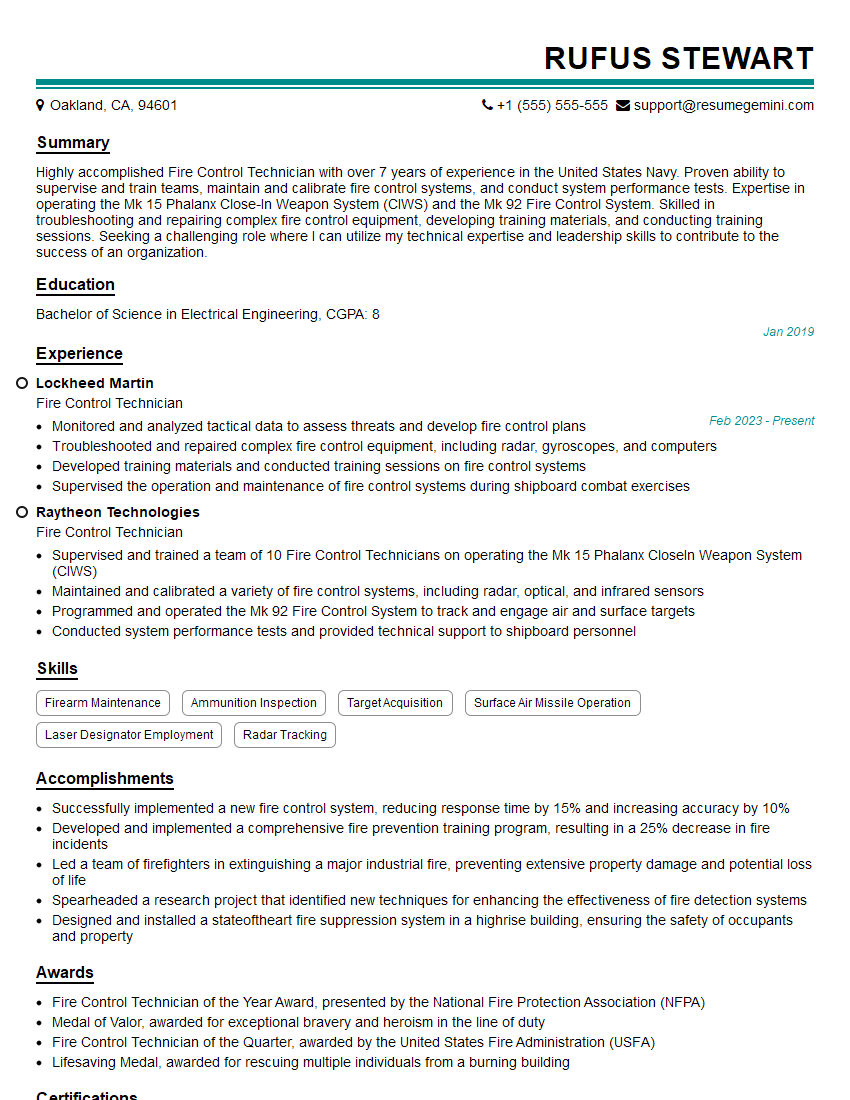
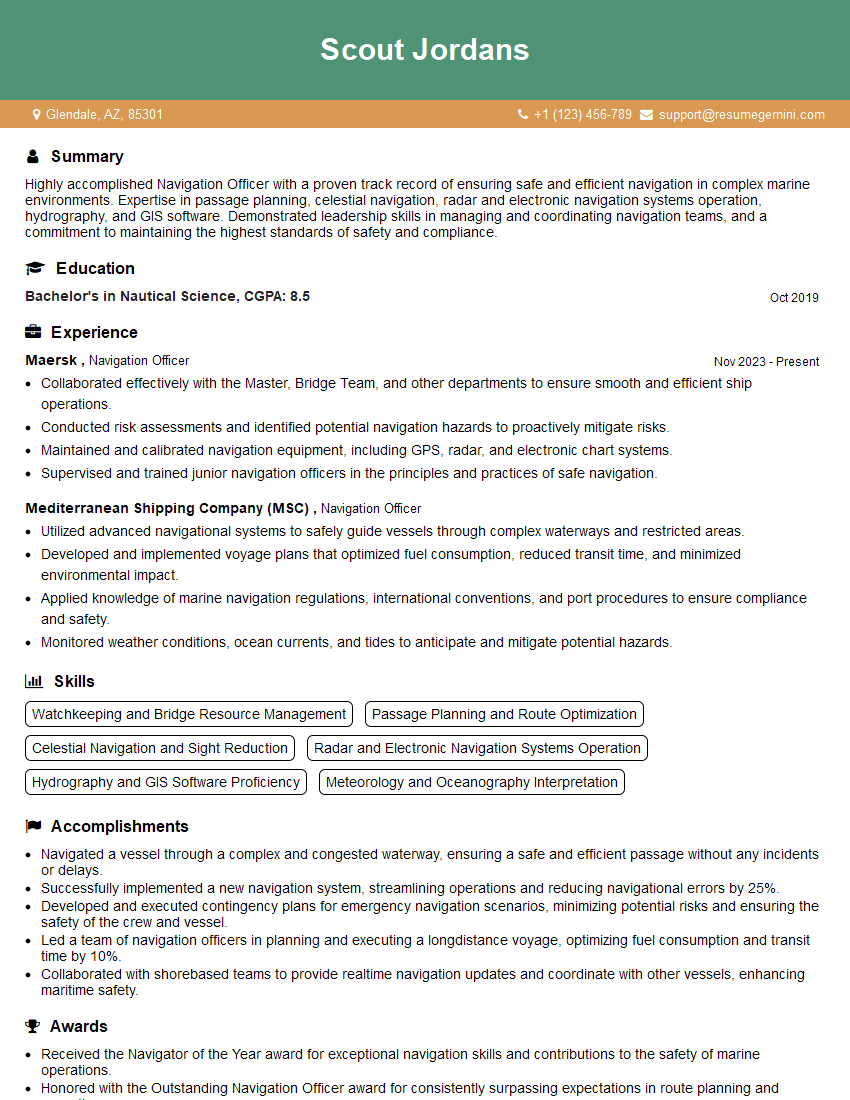
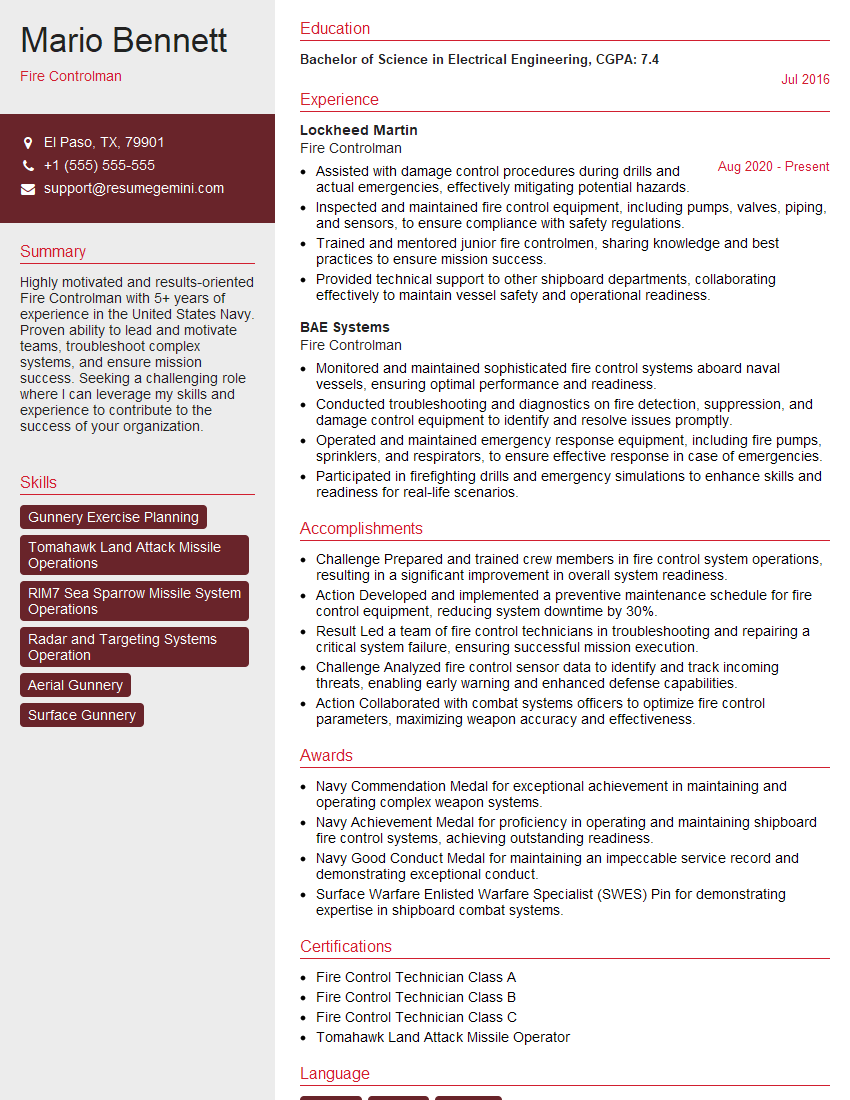
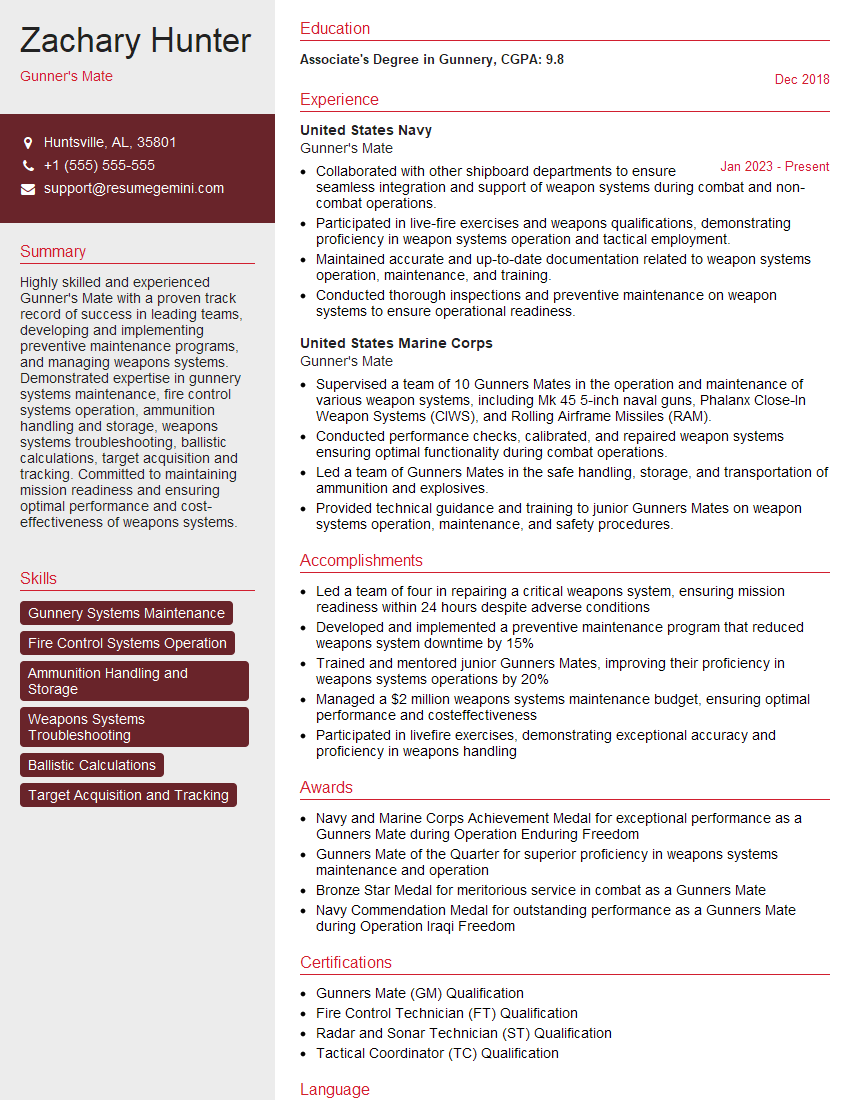
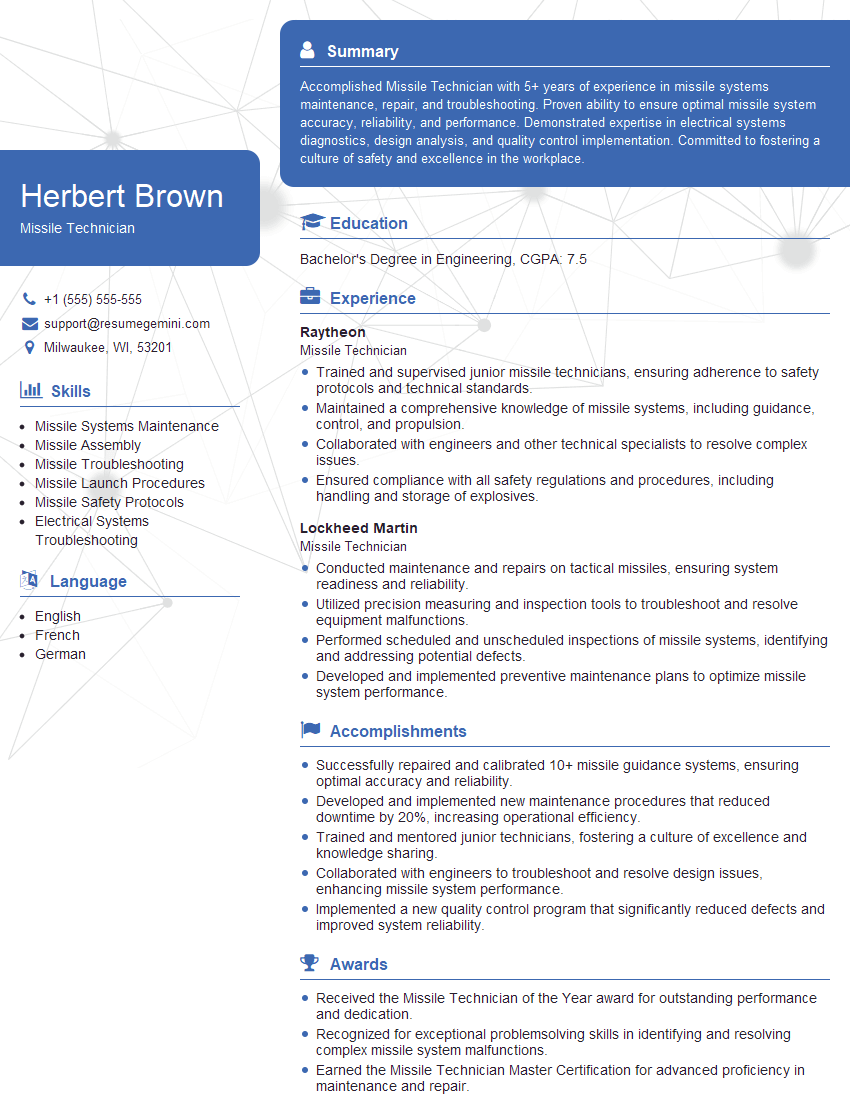
Mastering Naval Gunnery and Weapons Systems is crucial for career advancement in the maritime defense sector, opening doors to leadership roles and specialized assignments. A strong resume is your first step towards securing your dream position. Make sure your resume is ATS-friendly to maximize your chances of getting noticed. ResumeGemini is a trusted resource to help you craft a compelling and effective resume tailored to highlight your expertise in Naval Gunnery and Weapons Systems. Examples of resumes tailored to this specialization are available to help you create a winning application.

Explore more articles
Users Rating of Our Blogs
Share Your Experience
We value your feedback! Please rate our content and share your thoughts (optional).
What Readers Say About Our Blog
Very informative content, great job.
good