Are you ready to stand out in your next interview? Understanding and preparing for Glass Frosting interview questions is a game-changer. In this blog, we’ve compiled key questions and expert advice to help you showcase your skills with confidence and precision. Let’s get started on your journey to acing the interview.
Questions Asked in Glass Frosting Interview
Q 1. Explain the difference between etched glass, frosted glass, and applied film.
Etched glass, frosted glass, and applied film all achieve a similar aesthetic – a diffused, translucent surface – but through different processes. Etched glass involves chemically or mechanically removing a portion of the glass surface, creating a permanent, textured finish. This is a durable, high-end solution but also the most expensive and often irreversible. Frosted glass is typically achieved through an acid-etching process creating a more uniformly diffused look compared to etching. It’s also permanent. Applied film, on the other hand, is a temporary or semi-permanent solution where a pre-frosted film is adhered to the glass surface. It’s significantly more affordable and easier to install/remove compared to etching or frosting. Think of it like applying a sticker to the glass.
- Etched Glass: Permanent, durable, high cost, irreversible.
- Frosted Glass: Permanent, slightly less textured than etched glass, moderate cost.
- Applied Film: Temporary or semi-permanent, cost-effective, easily removable (depending on the adhesive).
Q 2. Describe your experience with various types of glass frosting film.
My experience encompasses a wide range of frosted glass films, from basic frosted finishes to those with textured patterns or varying degrees of opacity. I’ve worked with films offering UV protection, privacy features, and different adhesive strengths. For instance, I’ve used high-performance films designed for commercial applications requiring extreme durability and longevity. I also have experience with films specifically formulated for curved glass surfaces, which demand careful handling and precise application techniques. One particular project involved applying a custom-printed frosted film to a large glass partition in an office building; the client wanted a specific design incorporated into the frosted effect. This highlighted the versatility of film as a design tool. In contrast, I’ve also worked on residential projects using more basic, readily available films to enhance privacy and diffuse light.
Q 3. What are the common challenges encountered during glass frosting installation?
Common challenges during glass frosting film installation include:
- Dust and debris: Even tiny particles trapped under the film can create unsightly imperfections.
- Air bubbles: These are a frequent problem, especially on larger surfaces or with less experienced installers.
- Wrinkles and creases: These can occur if the film isn’t smoothed properly during application.
- Uneven application: Achieving a consistently smooth and even finish requires skill and attention to detail.
- Difficult glass surfaces: Curved, textured, or oddly shaped glass can be challenging to work with.
- Adhesive issues: Some films might be difficult to reposition once applied or leave residue upon removal.
Careful preparation and the right techniques are crucial to mitigate these issues.
Q 4. How do you prepare a glass surface for frosting film application?
Preparing a glass surface for frosting film application is critical to ensure a successful installation. It’s a multi-step process:
- Cleaning: Thoroughly clean the glass surface using a glass cleaner and a lint-free microfiber cloth. Remove any dirt, grease, or dust.
- Drying: Ensure the glass is completely dry before applying the film. Any remaining moisture can cause bubbles.
- Inspection: Inspect the glass for any imperfections such as scratches or chips. These can affect the final appearance of the film.
- Measuring and Cutting: Measure the glass accurately and cut the film to the appropriate size, allowing for a small margin of error. Precision cutting is essential for a professional look.
- Surface Treatment (Optional): For enhanced adhesion, especially on smooth glass, a light application of soapy water or a specifically formulated adhesive promoter might be used.
The key is meticulous preparation. A well-prepared surface greatly reduces the likelihood of problems during installation.
Q 5. What are the best practices for cleaning frosted glass?
Cleaning frosted glass is straightforward but requires a gentle touch to avoid damaging the surface. Avoid abrasive cleaners or scouring pads, which can scratch the frosted finish. Here’s how to do it:
- Use a mild cleaner: A simple solution of warm water and mild dish soap is usually sufficient. Avoid harsh chemicals.
- Soft cloth: Use a soft, lint-free cloth or sponge to gently wipe the surface. Avoid scrubbing.
- Avoid excessive pressure: Gentle wiping is key to prevent scratches or damage.
- Rinse thoroughly: Rinse the glass with clean water to remove any soap residue.
- Dry completely: Dry the surface with a clean, soft cloth to prevent water spots.
Regular, gentle cleaning will help maintain the appearance of your frosted glass or film.
Q 6. Explain your experience with different application methods (e.g., wet vs. dry).
Both wet and dry application methods are used for frosted glass films, each with its own advantages and disadvantages.
- Wet application: This method involves using a soapy water solution to lubricate the film and glass surface. This allows for easier repositioning and smoothing of the film, reducing the risk of bubbles and wrinkles. It’s preferred for larger and more complex applications.
- Dry application: This method applies the film directly to the glass surface without using a lubricant. It’s quicker but requires more precision and skill to prevent air bubbles and wrinkles. It’s often suitable for smaller applications where repositioning isn’t as crucial.
My experience has shown that wet application is generally preferred for its ease of use and lower chance of errors, particularly on larger projects. However, I’m proficient in both methods and choose the most appropriate technique based on the specific project requirements and the film’s characteristics.
Q 7. How do you handle bubbles or wrinkles during film application?
Handling bubbles or wrinkles during film application depends on the application method used.
- Wet Application: If bubbles appear, carefully use a squeegee or smooth plastic card to gently work them towards the edge of the film. For larger wrinkles, you might need to carefully lift and reposition a section of the film. A slight repositioning and firm smoothing typically removes wrinkles.
- Dry Application: Removing bubbles in dry applications is more difficult. Small bubbles might flatten out over time, but larger ones or wrinkles usually require removing and reapplying the film.
Prevention is always better than cure. Careful application, a clean surface, and proper smoothing techniques are key to minimizing these issues.
Q 8. Describe your experience working with different types of glass (e.g., tempered, laminated).
My experience encompasses a wide range of glass types commonly used in glass frosting applications. I’ve worked extensively with tempered glass, known for its strength and safety, often found in shower doors and storefront windows. The key with tempered glass is careful handling to avoid chipping or cracking during the frosting process. I’ve also worked extensively with laminated glass, which consists of two or more layers of glass bonded together with an interlayer, usually PVB (polyvinyl butyral). This adds significant safety benefits, as the interlayer holds the glass fragments together even if broken. Laminated glass presents slightly different challenges in frosting application, as the interlayer can sometimes affect the adhesion of the film. Finally, I’m experienced with annealed glass, the most common type, although it’s generally less preferred for high-traffic areas due to its shatter risk. Each glass type requires a slightly adjusted approach to ensure optimal adhesion and finish.
For example, on a recent project involving a large, tempered glass partition, I adjusted my application technique to account for the glass’s inherent rigidity and potential for cracking under pressure. With laminated glass, I used a specialized adhesive to ensure strong bonding while minimizing the chance of bubbling or delamination.
Q 9. How do you measure and cut glass frosting film accurately?
Accurate measurement and cutting are crucial for a professional finish. I begin by meticulously measuring the glass surface using a steel tape measure, ensuring precision down to the millimeter. For intricate designs, I create a template from heavy-duty paper or cardboard, ensuring it perfectly matches the glass dimensions. Then I use a sharp utility knife, or in cases requiring more complex curves, a specialized vinyl cutter, to cut the frosting film according to the template or measurements. It’s crucial to use a self-healing cutting mat to protect the underlying surface and ensure clean, precise cuts. I always cut slightly larger than the glass to allow for comfortable application and trimming of excess film. Post-cutting, I inspect the film carefully for any imperfections before installation.
For instance, when working on a project with a circular frosted design, I created a paper template and carefully cut the film using a rotary cutter to ensure smooth curves and accurate adherence to the design. The key is patience and attention to detail, avoiding rushing the cutting process, which can lead to errors.
Q 10. What safety precautions do you take during glass frosting installation?
Safety is paramount in glass frosting installation. I always wear appropriate personal protective equipment (PPE), including safety glasses to protect against flying debris during cutting, and gloves to prevent skin irritation from the adhesive. I handle glass carefully, avoiding sharp edges and using appropriate lifting techniques to prevent breakage. The workspace should be well-lit and free from obstructions to avoid accidents. If working at heights, I use appropriate fall protection equipment and adhere to all relevant safety regulations. Finally, proper ventilation is crucial, especially when working with adhesives that may release fumes. I ensure adequate ventilation or use respirators as necessary.
For example, on a recent high-rise installation, I used a harness and safety rope in accordance with OSHA standards to ensure my safety during the application process. Proper safety procedures are not simply a precaution; they’re an essential part of a professional and responsible installation.
Q 11. Explain your knowledge of different adhesive types used in glass frosting.
My knowledge of adhesives extends to several types commonly used in glass frosting. Static cling films require no adhesive, relying on electrostatic forces for adherence. These are easy to apply and remove but may not be suitable for all applications, especially those involving textured glass or high humidity. Pressure-sensitive adhesives (PSAs) are the most common type, offering strong adhesion with minimal effort. They’re available in different strengths and tack levels, allowing for tailored application based on the glass type and environmental conditions. Finally, there are solvent-based adhesives, which provide excellent adhesion but require more expertise in application and handling, because they may release fumes and require more care during application and cleanup.
In choosing the correct adhesive, factors like glass type, surface condition, and desired longevity are carefully considered. For instance, in high-moisture environments, I would opt for a PSA with increased water resistance, whereas a static cling film might be perfectly suitable for a temporary application.
Q 12. How do you troubleshoot common issues like film lifting or discoloration?
Troubleshooting is a crucial aspect of glass frosting. Film lifting can often be attributed to improper surface preparation, insufficient pressure during application, or using an inappropriate adhesive for the glass type or environmental conditions. To rectify this, I’ll often carefully remove the lifted section, clean the glass surface thoroughly, reapply the adhesive, and firmly press the film back into place, using a squeegee to remove any air bubbles. Discoloration may result from exposure to UV light or the use of low-quality film. Prevention involves choosing UV-resistant films and ensuring proper installation to prevent air entrapment, which can accelerate discoloration.
For example, if I notice bubbling after application, I carefully use a razor blade to pierce the bubble and smooth out the film, working from the center outwards. If the film lifts at the edges, this usually indicates inadequate adhesion, usually fixed by using additional adhesive and smoothing firmly with a squeegee.
Q 13. What are the limitations of using film for glass frosting?
While glass frosting film offers numerous advantages – ease of application, cost-effectiveness, and versatility – it does have limitations. The most significant limitation is its susceptibility to damage, scratching, and peeling over time, especially with heavy-duty use or exposure to harsh chemicals. Film can also be more difficult to clean than etched glass and may not be suitable for all applications, particularly where extreme durability or scratch resistance is crucial. Finally, the aesthetic quality of the frost may not match the clarity and depth of professionally etched glass, especially for highly-detailed patterns.
For example, in high-traffic areas such as commercial bathrooms, the film may degrade quicker due to frequent cleaning and abrasive use of cleaning agents. In these situations, professional etching might prove to be a more durable and lasting option.
Q 14. Describe your experience with large-scale glass frosting projects.
I have extensive experience in managing large-scale glass frosting projects. This typically involves meticulous planning, detailed measurements, and the coordination of a team. Careful material ordering and scheduling are critical, along with maintaining consistent quality control throughout the process. I’ve worked on projects covering hundreds of square meters of glass, often involving complex designs and tight deadlines. Effective communication with clients and subcontractors is vital for smooth project execution. On large projects, the use of specialized equipment, such as scaffolding and powered lift systems, may be required to ensure efficient and safe application.
One memorable project involved frosting the exterior glass walls of a multi-story office building. This required detailed planning, precise measurements, and a phased approach to minimize disruption. We collaborated closely with the building’s management team and utilized specialized equipment, ensuring safety and timely completion within budget and without any disruption to business.
Q 15. How do you ensure a professional and clean finish?
Achieving a professional and clean finish in glass frosting hinges on meticulous preparation and execution. It’s akin to baking a cake – the better the prep, the better the final product. This involves several key steps:
Thorough Cleaning: Before applying any frosting, the glass surface must be impeccably clean. This means removing dust, grease, and any other contaminants that could interfere with adhesion. I use a high-quality glass cleaner and a lint-free microfiber cloth, paying close attention to corners and edges.
Precise Application: Whether using film, etching cream, or spray, consistent and even application is crucial. For film, I use a squeegee to eliminate air bubbles and ensure smooth coverage. For etching cream, I rely on precise masking techniques to achieve defined patterns.
Careful Masking (if applicable): If creating a design, precision masking is paramount. I use high-quality masking tape and carefully plan the layout beforehand to avoid any mistakes. The time spent on masking is directly proportional to the quality of the finished product.
Proper Curing (if applicable): Some frosting methods require a curing period to ensure proper adhesion and durability. I always follow the manufacturer’s instructions meticulously to guarantee optimal results.
For example, on a recent project involving a large storefront window, I spent extra time cleaning and meticulously masking the design to ensure sharp lines and a completely professional aesthetic. The client was extremely pleased with the result.
Career Expert Tips:
- Ace those interviews! Prepare effectively by reviewing the Top 50 Most Common Interview Questions on ResumeGemini.
- Navigate your job search with confidence! Explore a wide range of Career Tips on ResumeGemini. Learn about common challenges and recommendations to overcome them.
- Craft the perfect resume! Master the Art of Resume Writing with ResumeGemini’s guide. Showcase your unique qualifications and achievements effectively.
- Don’t miss out on holiday savings! Build your dream resume with ResumeGemini’s ATS optimized templates.
Q 16. What tools and equipment are essential for effective glass frosting?
The tools and equipment for effective glass frosting vary depending on the method chosen, but some essentials include:
Measuring tools: A ruler, measuring tape, and potentially a laser measure for larger projects to ensure accurate measurements and cutting.
Cutting tools: A sharp utility knife, a craft knife, or a specialized glass cutter for precise cuts, especially important when working with frosting films.
Application tools: A squeegee (for film application), soft cloths, brushes (for etching cream), and spray bottles (for spray-on solutions).
Masking materials: High-quality masking tape (painters tape is recommended), stencil film, or other appropriate masking tools for intricate designs.
Safety equipment: Gloves, eye protection, and a respirator (especially important when working with etching creams or sprays).
Cleaning supplies: High-quality glass cleaner, lint-free microfiber cloths.
For example, a professional-grade squeegee is essential for eliminating air bubbles when applying frosting film, preventing a flawed finish.
Q 17. How do you manage challenging window shapes or sizes?
Managing challenging window shapes or sizes requires adaptability and planning. It’s like assembling a complex jigsaw puzzle – each piece needs careful consideration.
Detailed Measurements: Accurate measurements are vital. I use various measuring tools to capture every detail of the window’s shape and dimensions. This includes taking measurements of curves, angles, and any irregularities.
Pattern Adaptability: For films, I may need to cut the film into multiple pieces, ensuring seamless transitions and perfect alignment. For etching, I might use multiple stencils or masking techniques.
Templating: In many cases, I create a template from paper or another easily manipulated material, fitting it perfectly to the window’s shape, before transferring the design or cutting the film. This allows for precise cuts and minimizes waste.
Professional Guidance: For extremely complex shapes, it might be necessary to consult with other professionals or specialized companies to ensure a perfect fit and flawless application.
I once worked on a project with a large, arched window. Creating a template from card stock and meticulously cutting the frosting film according to that template allowed for a flawless and aesthetically pleasing result despite the window’s irregular shape.
Q 18. Explain your understanding of different frosting patterns and designs.
Frosting patterns and designs range from simple frosted effects to intricate custom artwork. Think of it as a spectrum, from plain white to a vibrant, complex mural.
Uniform Frosting: This is the simplest type, creating an even, opaque layer across the entire glass surface, often used for privacy.
Etched Designs: Acid etching creates permanent, crisp designs on the glass. This requires a higher level of precision and skill.
Frosted Film with Patterns: Pre-made frosted films are available with various patterns, including geometric designs, floral patterns, or even custom-printed images. This offers a cost-effective and versatile option.
Custom Designs: Using stencils and masking techniques, I can create truly unique designs, incorporating logos, artwork, or personalized elements. This often involves collaborating directly with the client.
For example, I recently created a custom frosted design for an office building that incorporated their company logo, a design which effectively promoted their brand identity while maintaining privacy.
Q 19. Describe your experience working from blueprints or design specifications.
Working from blueprints or design specifications is crucial for complex projects. It’s like following an architectural plan to build a house – each detail matters.
Careful Review: I thoroughly review the blueprints, noting all dimensions, specifications for frosting types, and the location of any patterns or designs.
Scale Drawings: I frequently create my own scaled drawings to accurately visualize the layout and ensure all dimensions are correct before beginning the application process.
Material Selection: I choose the right type of frosting film or etching technique based on the design specifications and the client’s needs.
Communication: If there are ambiguities or uncertainties, I communicate with the client or designer to clarify the requirements before proceeding.
On a recent commercial project, the blueprints indicated a specific type of frosted film needed for solar control. By carefully following the specification and working from precise measurements, we were able to install the film with accuracy and achieve the desired results.
Q 20. What are the environmental considerations when applying glass frosting film?
Environmental considerations are important throughout the glass frosting process. Just like any construction project, minimizing environmental impact is a key priority.
Material Selection: Choosing eco-friendly materials, such as films made from recycled materials or water-based etching solutions, reduces the environmental footprint.
Waste Management: Properly disposing of any waste materials, such as used masking tape or film scraps, following local regulations and recycling where possible.
Energy Efficiency: Certain types of frosted films can improve energy efficiency by reducing heat transfer through windows; this indirectly contributes to environmental sustainability.
VOC emissions: When using sprays or chemical solutions, opting for low or zero VOC (volatile organic compounds) options minimizes air pollution.
For instance, I always opt for low-VOC sprays and ensure proper disposal of all materials to minimize the environmental impact of my work.
Q 21. How do you maintain your tools and equipment?
Maintaining tools and equipment is essential for ensuring the quality and longevity of my work. Just like maintaining a car, regular upkeep is key.
Cleaning: After each project, I thoroughly clean all tools, removing any residual frosting materials, adhesive, or other contaminants. This prevents clogging or damage.
Storage: Tools are stored properly to protect them from damage. Sharp tools are stored separately in protective sheaths.
Sharpness: For cutting tools, keeping them sharp is crucial for precise cuts. I regularly sharpen or replace blades as needed. A dull blade leads to uneven cuts and mistakes.
Repair/Replacement: Damaged or worn tools are promptly repaired or replaced to maintain accuracy and safety.
For example, I always clean my squeegee immediately after use to prevent adhesive build-up, which would compromise its effectiveness in future projects.
Q 22. How do you handle client concerns or complaints?
Addressing client concerns is paramount. My approach begins with active listening, ensuring I fully understand their issue. I then explain the situation clearly, outlining potential causes and solutions in a non-technical way, so they understand. For example, if a client finds a slight imperfection in the frosted film application, I’d explain the process, why imperfections can occasionally occur despite meticulous work, and discuss options like a minor touch-up or a possible replacement, depending on the severity. I always aim for a resolution that satisfies the client and reflects the quality of my service. If a solution isn’t immediately apparent, I’ll take detailed notes, investigate thoroughly, and get back to them promptly with a clear plan of action. Maintaining open communication throughout the process is key to building trust and resolving any issues effectively.
Q 23. Explain your experience with different types of film removal techniques.
Film removal techniques vary depending on the type of film and the surface. For standard adhesive films, I typically use a combination of heat (a heat gun on low setting is crucial to avoid damaging the glass) and a specialized adhesive remover solution. I apply the solution, allow it to penetrate, and then carefully peel away the film using a plastic scraper. For stubborn residue, I might use a razor blade scraper very cautiously to avoid scratching the glass; however, this is a last resort. In cases involving etched or sandblasted glass, where the frosting is a part of the glass itself and not a film, removal is generally not possible and would require the glass to be replaced. I always prioritize the safety of both the glass and myself, ensuring to wear appropriate safety gear.
Q 24. What are the differences between DIY and professionally applied frosted glass?
The key difference lies in quality, consistency, and longevity. Professionally applied frosted glass, whether using film or etching, offers a superior finish. Professionals possess the experience and tools to ensure a flawless, bubble-free application. DIY attempts often result in imperfections like air bubbles, uneven coverage, or visible seams. Furthermore, professionally applied film utilizes high-quality, durable materials designed to withstand cleaning and wear, maintaining its appearance for several years. DIY products might fade or peel prematurely. Consider it like painting a wall; a professional painter will achieve a smoother, more even finish that lasts longer than a DIY attempt.
Q 25. What is your experience with different types of window film cleaning products?
I use a range of cleaning products, tailored to the specific type of window film. For standard frosted films, a gentle glass cleaner and a soft microfiber cloth are usually sufficient. I avoid harsh chemicals or abrasive cleaners, which can damage the film or leave streaks. For more stubborn dirt or grime, I might use a mild solution of water and white vinegar, but always test a small, inconspicuous area first. For more specialized films, I always check the manufacturer’s recommendations for appropriate cleaning products. Using the wrong cleaning products can damage the film and void any warranty, so it’s critical to follow best practices.
Q 26. How do you manage project timelines and deadlines?
Managing project timelines is a crucial aspect of my work. I start by carefully assessing the project scope, including the size of the area, complexity of the design (if applicable), and any potential challenges. Then, I create a detailed schedule, factoring in each step of the process: measuring, ordering materials, preparation, application, and cleanup. I provide clients with realistic estimates, considering factors like potential delays. I proactively communicate any unforeseen issues and work closely with the clients to find solutions that minimize disruption. My goal is to always deliver a high-quality product within the agreed-upon timeframe.
Q 27. Describe your experience working independently and as part of a team.
I’m equally comfortable working independently and as part of a team. When working independently, my strong organizational skills and attention to detail allow me to manage projects effectively from start to finish. For example, I recently completed a large project single-handedly, meticulously planning and executing every step to ensure a perfect result. When working in a team, I value collaboration and communication. I enjoy sharing my knowledge and learning from others. On a recent large commercial project, I worked as part of a team and helped train new technicians in proper installation techniques and problem-solving. Teamwork enables greater efficiency and ensures consistent quality across all projects.
Q 28. What are the latest trends in glass frosting and window film technology?
The latest trends in glass frosting and window film technology include smart films with adjustable opacity, allowing for light control and privacy on demand. These films often incorporate electrochromic or thermochromic technologies. Another trend is the increasing use of sustainable and eco-friendly materials, reducing the environmental impact of film production and disposal. There’s also a growing interest in decorative films with intricate designs, offering unique aesthetic options beyond traditional frosted finishes. Finally, advances in adhesive technology result in films that are easier to apply, remove, and maintain.
Key Topics to Learn for Glass Frosting Interview
- Types of Glass Frosting: Understand the different methods (acid etching, vinyl frosting, film application) and their respective properties, advantages, and limitations.
- Design Considerations: Explore design principles for effective frosting applications, including light transmission, privacy levels, and aesthetic integration with various design styles.
- Material Selection: Learn about different types of glass suitable for frosting and the impact of glass thickness and composition on the final result.
- Application Techniques: Familiarize yourself with the practical steps involved in each frosting method, including preparation, application, and finishing processes.
- Maintenance and Care: Understand how to maintain and clean frosted glass to preserve its appearance and longevity.
- Safety Regulations and Compliance: Become aware of relevant health and safety regulations related to chemicals and equipment used in glass frosting.
- Troubleshooting and Problem-Solving: Prepare to discuss common challenges encountered during the frosting process and how to effectively troubleshoot and address them.
- Cost Estimation and Budgeting: Develop an understanding of the factors influencing the cost of glass frosting projects and how to create accurate estimates.
- Project Management: Gain familiarity with the project management aspects, from initial consultation to final installation.
Next Steps
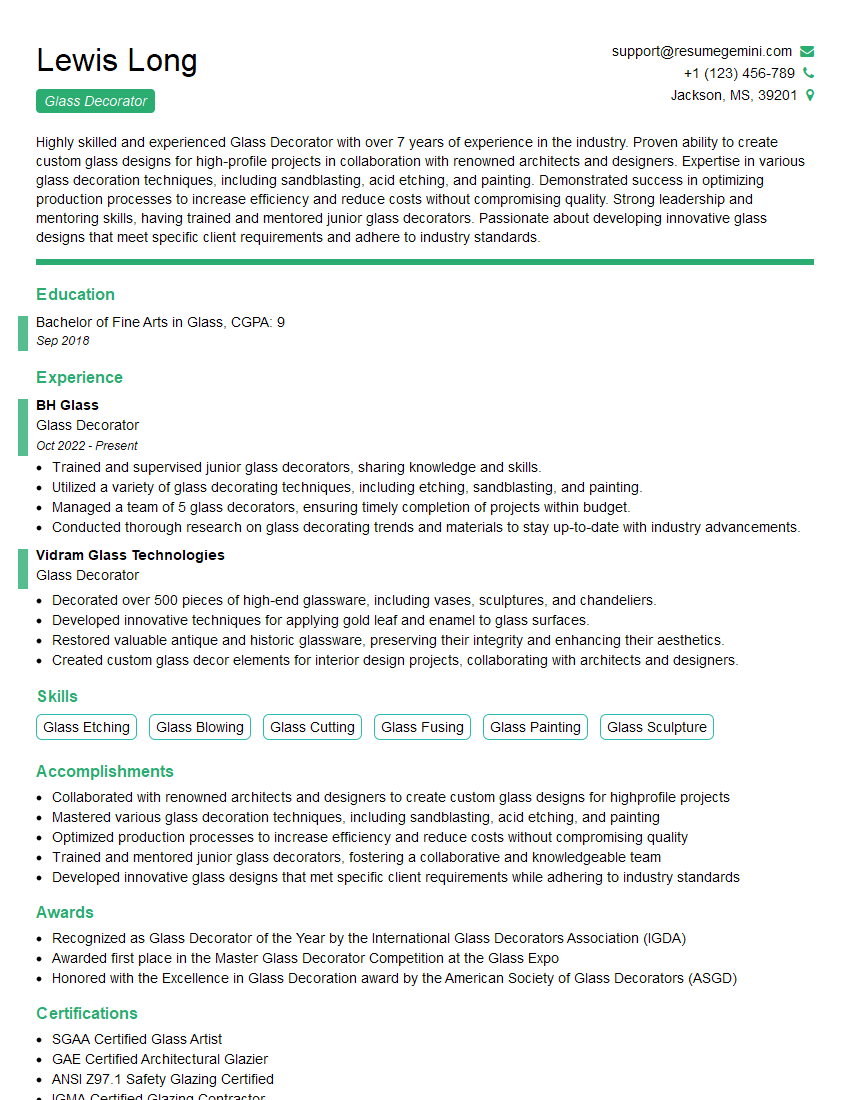
Mastering glass frosting techniques opens doors to exciting opportunities in interior design, architectural glasswork, and commercial applications. A strong understanding of this field demonstrates valuable technical skills and attention to detail, highly sought after by employers. To maximize your job prospects, crafting an ATS-friendly resume is crucial. ResumeGemini is a trusted resource to help you build a professional and impactful resume that highlights your skills and experience effectively. Examples of resumes tailored to Glass Frosting professionals are available to help guide your creation process.
Explore more articles
Users Rating of Our Blogs
Share Your Experience
We value your feedback! Please rate our content and share your thoughts (optional).
What Readers Say About Our Blog
Very informative content, great job.
good