Cracking a skill-specific interview, like one for Hair education, requires understanding the nuances of the role. In this blog, we present the questions you’re most likely to encounter, along with insights into how to answer them effectively. Let’s ensure you’re ready to make a strong impression.
Questions Asked in Hair education Interview
Q 1. Explain the different hair types and textures.
Hair is classified into different types and textures based on its shape, diameter, and density. Understanding these classifications is crucial for choosing appropriate styling and care products.
- Hair Shape: This refers to the cross-sectional shape of a single hair strand. It can be round (straight hair), oval (wavy hair), or elliptical (curly or coily hair). The more elliptical the shape, the curlier the hair will be.
- Hair Diameter: This is the thickness of a single hair strand. It’s categorized as fine, medium, or coarse. Fine hair is more delicate and prone to breakage, while coarse hair is thicker and can hold styles better.
- Hair Density: This describes the number of hairs per square inch on the scalp. It can be low, medium, or high density.
- Hair Texture: This is a combination of hair shape, diameter, and density. For example, you can have fine, wavy hair or coarse, straight hair.
Examples: Someone with fine, straight hair might experience limpness, while someone with coarse, curly hair might struggle with dryness and frizz. Understanding these differences is vital for providing tailored hair care advice.
Q 2. Describe various hair cutting techniques.
Hair cutting techniques are numerous and often tailored to achieve specific looks and manage different hair types. Some fundamental techniques include:
- Point Cutting: Using the tips of the shears to remove weight and create texture. This is commonly used on the ends of hair to soften the look.
- Slide Cutting: Holding the shears at an angle and moving them along the hair to create soft layers and movement. This is useful for creating a natural, blended look.
- Scissor Over Comb: This technique involves using a comb to guide the hair while cutting, ideal for creating short, even cuts or fades.
- Blunt Cutting: Cutting the hair straight across to create a solid, blunt line. Often used for creating bobs or other bold styles.
- Layering: Creating different lengths within the haircut to add volume, movement, or texture. This can be achieved with various techniques like point cutting or slide cutting.
Practical Application: A stylist might use point cutting on thick, curly hair to reduce bulk and enhance definition, while they might use slide cutting on long, straight hair to add soft layers and prevent a flat appearance.
Q 3. Detail the chemical processes involved in hair coloring.
Hair coloring involves chemical reactions that alter the hair’s natural pigment (melanin). The most common methods include:
- Permanent Coloring: Uses ammonia and peroxide to lift the hair’s cuticle, allowing the color to penetrate the cortex and permanently change the hair’s natural pigment. The color molecules are then locked in and remain even after multiple washes.
- Demi-Permanent Coloring: Uses a lower volume of peroxide and less ammonia, depositing color onto the hair shaft but not lifting the cuticle. This offers less damage than permanent hair coloring and gradually fades after several washes.
- Semi-Permanent Coloring: Does not contain peroxide and ammonia. It coats the hair shaft and only lasts a few washes, leaving no lasting change to the hair’s natural pigment.
- Temporary Coloring: These are usually rinses or sprays which simply coat the hair and wash out completely in one wash.
Chemical Processes: The peroxide acts as an oxidizing agent, lightening the hair’s natural color and allowing the color molecules to bind. Ammonia helps to open the hair cuticle for better color penetration. The different types of dyes involve various chemical compounds which will impact the resultant color, lasting power, and degree of damage to the hair.
Q 4. What are the safety precautions for using hair chemicals?
Safety is paramount when using hair chemicals. Essential precautions include:
- Always perform a patch test: Apply a small amount of the product to a hidden area of skin 24-48 hours before the full application to check for allergic reactions.
- Wear appropriate protective gear: This includes gloves, eye protection, and a protective cape to prevent skin and eye contact with chemicals.
- Work in a well-ventilated area: Chemical fumes can be harmful if inhaled. Ensure adequate ventilation or use a respirator mask.
- Follow the manufacturer’s instructions carefully: Do not deviate from the recommended mixing ratios or application times.
- Use the correct products: Ensure you are using professional grade hair chemicals and following industry best practices. Incorrect usage can result in severe damage, burns or allergic reactions.
- Proper disposal: Dispose of used chemicals according to local regulations.
Consequences of Neglecting Safety: Ignoring these precautions can lead to severe skin burns, allergic reactions, respiratory problems, and even permanent hair damage.
Q 5. How do you assess scalp health and identify potential problems?
Assessing scalp health involves a visual inspection and sometimes additional tests. Look for:
- Scalp Inflammation: Redness, swelling, or irritation can indicate conditions like dandruff, psoriasis, or seborrheic dermatitis.
- Dryness or Oiliness: Excessive dryness or oiliness can signal imbalances in the scalp’s natural oils. Dry scalp can lead to itching and flaking, while oily scalp may result in buildup and dandruff.
- Presence of Lesions: Any sores, bumps, or unusual markings warrant further investigation and possible referral to a dermatologist.
- Hair Loss: Excessive hair shedding or thinning could signify underlying medical conditions or nutritional deficiencies.
- Presence of Parasites: In cases of extreme scalp irritation and unusual flaking a check for lice should be conducted.
Methods: I use a combination of visual inspection, using a magnifying glass to get a better view, and a detailed client consultation to assess scalp health. If concerns arise I recommend seeking medical attention from a dermatologist. A thorough history taking about products used, health conditions and family history of scalp disorders provides valuable insight.
Q 6. Explain different hair styling techniques for various occasions.
Hair styling techniques vary widely depending on the occasion and hair type. Some examples include:
- Formal Events: Updos, braids, or sleek styles are common choices for formal events, often requiring the use of setting sprays, hairpins, and other tools for a polished look.
- Casual Events: Loose waves, braids, ponytails, or simply air-dried styles are appropriate for casual settings. The focus might be on ease and natural texture.
- Everyday Styles: Quick and easy styles like ponytails, buns, or simple braids are practical for daily life.
- Protective Styles: Braids, twists, or weaves can protect the hair from damage and promote growth. These styles are frequently used by people with textured hair.
Techniques: These range from heat styling (using straighteners, curling irons), to air drying, braiding and use of specific styling products to enhance shine, texture or hold. Understanding the client’s hair type, texture and desired outcome dictates the best choice of techniques.
Q 7. Describe your approach to teaching students with different learning styles.
I believe in tailoring my teaching methods to accommodate different learning styles. I use a multimodal approach that combines:
- Visual Learning: Using demonstrations, videos, diagrams, and visual aids to illustrate techniques and concepts.
- Auditory Learning: Providing clear and concise verbal explanations, incorporating discussions, and using audio-visual materials.
- Kinesthetic Learning: Encouraging hands-on practice, allowing students to actively participate in demonstrations and practice techniques on mannequins or each other, under my guidance.
- Personalized Feedback: Providing individualized feedback and guidance to ensure that every student understands the material and can perform techniques correctly. This includes adjusting the pace of teaching to meet each student’s specific needs.
Example: When teaching a complex braiding technique, I begin with a visual demonstration, then explain the steps verbally, and finally have students practice the technique on mannequins. I provide individual feedback to address any difficulties. This multi-faceted approach ensures every learner has multiple ways to grasp and retain information.
Q 8. How do you handle challenging student behaviors in the classroom?
Managing challenging student behaviors requires a proactive and multi-faceted approach. My strategy centers around establishing clear expectations from day one, fostering a positive and respectful learning environment, and addressing issues promptly and fairly.
First, I clearly communicate the school’s code of conduct and my classroom rules. This ensures everyone understands the boundaries. Then, I build rapport with students, getting to know them individually and understanding their learning styles and potential challenges. This helps me anticipate and address potential problems before they escalate.
When a behavioral issue arises, I address it privately first, using a calm and understanding tone. I aim to understand the root cause of the behavior, whether it’s frustration, lack of understanding, or something else. I find that active listening is key – allowing the student to express themselves without interruption before offering guidance or solutions. If the behavior is disruptive to the learning environment, I may need to implement more formal consequences, always documenting the incident and involving school administration as needed. Consistency and fairness are crucial to ensure a just and supportive environment for all students.
For example, I once had a student struggling with anxiety who would become withdrawn and disruptive during practical exams. By understanding her anxiety and adapting the exam environment slightly (offering breaks, and allowing her to choose her station), we were able to manage her behavior effectively, and she went on to excel.
Q 9. What are the current trends in hair styling and coloring?
The hair styling and coloring world is constantly evolving! Currently, we’re seeing a beautiful blend of classic techniques with modern innovations.
- Natural textures are in: Embrace of natural curls, waves, and coils, using techniques like diffused drying and product layering to enhance natural beauty rather than fighting it.
- Personalized coloring: Moving away from one-size-fits-all approaches to bespoke shades that complement individual skin tones and features. This includes techniques like balayage, babylights, and airtouch, which create soft, dimensional color.
- Sustainable and ethical products: There’s a growing demand for eco-friendly, cruelty-free, and sustainably sourced hair products. Clients are becoming increasingly aware of the environmental impact of their beauty choices.
- Short and textured cuts: Pixie cuts, bobs with added texture, and various forms of layering are extremely popular, offering versatility and style for different hair types.
- Bold accessories: Headbands, hair scarves, and clips are being utilized to create unique and stylish looks.
These trends showcase a shift towards individuality and self-expression, a move away from overly processed styles towards healthier, more manageable, and personalized looks.
Q 10. Explain the importance of sanitation and hygiene in a salon setting.
Sanitation and hygiene are paramount in a salon setting, not only for maintaining a professional image but also for preventing the spread of infectious diseases and protecting both clients and stylists.
- Proper disinfection: All tools and surfaces must be disinfected with a hospital-grade disinfectant after each use, following manufacturer’s instructions meticulously. This includes combs, brushes, scissors, clippers, and styling stations.
- Hand hygiene: Stylists should wash their hands thoroughly with soap and water before and after each client, using hand sanitizer between procedures.
- Clean towels and linens: Clean, laundered towels and capes must be used for each client, discarding any soiled items appropriately.
- Waste disposal: Proper disposal of used materials like hair clippings, foils, and chemicals is crucial, following all local regulations and safety guidelines.
- Air quality: Good ventilation is essential to reduce exposure to chemicals and airborne particles.
Ignoring these practices could lead to serious consequences like bacterial infections, fungal infections, or allergic reactions, damaging both reputation and client health. For example, improper disinfection of tools could transmit scalp infections, greatly impacting client health and the salon’s credibility. A well-maintained and hygienic salon builds trust and confidence among clientele.
Q 11. How do you assess a student’s progress and provide constructive feedback?
Assessing student progress and providing constructive feedback is an ongoing process, not a one-time event. I use a multifaceted approach to ensure a comprehensive evaluation.
Firstly, observation plays a significant role. I carefully watch students during practical sessions, noting their technique, efficiency, client interaction, and adherence to safety protocols. I also assess their written work, reviewing assignments, quizzes, and tests to gauge their theoretical understanding.
Secondly, practical assessments, like mock client sessions, allow for real-time evaluation of skills. This provides valuable insight into their ability to apply theoretical knowledge in a practical context.
Finally, constructive feedback is delivered regularly, both verbally and in writing. I focus on both strengths and areas for improvement, offering specific examples and actionable suggestions. Instead of just saying ‘your cutting technique needs improvement,’ I’ll say ‘your elevation needs more consistency to achieve the desired graduation; focus on maintaining a consistent angle.’ I also include opportunities for reflection and self-assessment, encouraging students to identify their own areas of strength and weakness. Regular check-ins and one-on-one mentoring sessions offer additional support, ensuring that each student receives personalized attention and tailored guidance.
Q 12. Describe your experience with developing and implementing a cosmetology curriculum.
I have extensive experience in developing and implementing cosmetology curricula, emphasizing both theoretical knowledge and hands-on skills. My approach focuses on creating a balanced curriculum that’s engaging, relevant, and aligned with industry standards.
In designing a curriculum, I start by analyzing industry trends and job requirements, ensuring that the program equips graduates with the necessary skills for success. The curriculum incorporates modules covering a wide range of topics, including:
- Fundamentals of hair cutting and styling: This covers various techniques, tools, and safety precautions.
- Hair coloring theory and application: This includes color correction, lightening, and various coloring techniques.
- Scalp and hair care: Educating students on proper hair and scalp analysis, treatments, and product knowledge.
- Salon management and client communication: Essential skills for running a successful business.
- Safety and sanitation: Ensuring compliance with health and safety regulations.
The curriculum is designed with a progressive structure, building upon foundational concepts and progressively introducing more advanced techniques. Practical assessments, real-world projects, and guest speakers from the industry enhance learning and provide students with valuable real-world exposure. This ensures students graduate not only with theoretical knowledge but also with the practical skills and confidence to succeed in their chosen careers.
Q 13. How do you stay up-to-date with the latest advancements in hair care and technology?
Staying current in the dynamic field of hair care requires a proactive and multi-pronged approach.
- Professional development courses: I regularly attend workshops, seminars, and advanced training sessions offered by industry leaders and reputable organizations. This keeps me abreast of the newest techniques and technologies.
- Industry publications and journals: I subscribe to several professional journals and publications, keeping me informed about the latest research, trends, and product developments.
- Trade shows and conventions: Participating in industry events provides opportunities to network with other professionals, learn about new products, and see live demonstrations of cutting-edge techniques.
- Online resources: Utilizing online platforms, webinars, and educational videos helps me access a wealth of information whenever needed.
- Mentorship and networking: Connecting with experienced professionals and sharing knowledge through mentorship keeps me connected to the industry’s pulse.
This continuous learning ensures I’m equipped to teach students the most up-to-date techniques and industry best practices. For instance, recently attending a seminar on the latest in Olaplex technology allowed me to integrate that knowledge into my curriculum, benefitting both my students and myself.
Q 14. Explain the principles of hair color theory.
Hair color theory is based on the understanding of the color wheel and how different colors interact. It’s crucial for predicting the outcome of color applications and achieving the desired results.
The color wheel is divided into primary colors (red, yellow, blue), secondary colors (green, orange, violet – created by mixing two primary colors), and tertiary colors (red-orange, yellow-orange, yellow-green, blue-green, blue-violet, red-violet – created by mixing a primary and a secondary color).
Understanding the following principles is vital:
- Complementary colors: These are colors opposite each other on the color wheel (e.g., red and green). Mixing complementary colors neutralizes the result, creating a duller tone or brown. This principle is often used for color correction.
- Analogous colors: These are colors adjacent to each other on the color wheel (e.g., yellow, yellow-orange, and orange). They create a harmonious and blended look.
- Warm and cool colors: Warm colors (reds, oranges, yellows) tend to appear brighter and more vibrant, while cool colors (blues, greens, violets) appear more subdued. This understanding helps in selecting colors to complement different skin tones.
- Level and Tone: Level refers to the lightness or darkness of a color (1 being the darkest, 10 being the lightest), while tone refers to the warmth or coolness of the color. Mastering these concepts is crucial for precise color formulation and application.
For example, if a client has unwanted brassy tones (yellow-orange), a stylist would use a blue-based toner (complementary color) to neutralize the brassiness and achieve a more neutral or cooler shade. A strong understanding of hair color theory is essential for creating beautiful, customized looks and correcting color mishaps effectively.
Q 15. How do you teach students about hair extensions and application techniques?
Teaching hair extensions involves a multi-faceted approach. We begin by exploring the different types of extensions available – from tape-ins and sew-ins to clip-ins and fusion bonds – highlighting the pros and cons of each method. Students learn to assess hair quality, matching extension color and texture to the client’s natural hair. Practical application is key; we use mannequin heads and live models to practice different application techniques. Safety is paramount, so we cover proper sanitation procedures and the importance of avoiding scalp damage. We also discuss aftercare, emphasizing proper cleaning and maintenance to prolong the lifespan of the extensions and prevent damage to the client’s natural hair. For example, we’ll demonstrate how to correctly measure and section hair before applying extensions, ensuring a natural and undetectable result. We also cover troubleshooting common problems, such as slippage or matting.
Career Expert Tips:
- Ace those interviews! Prepare effectively by reviewing the Top 50 Most Common Interview Questions on ResumeGemini.
- Navigate your job search with confidence! Explore a wide range of Career Tips on ResumeGemini. Learn about common challenges and recommendations to overcome them.
- Craft the perfect resume! Master the Art of Resume Writing with ResumeGemini’s guide. Showcase your unique qualifications and achievements effectively.
- Don’t miss out on holiday savings! Build your dream resume with ResumeGemini’s ATS optimized templates.
Q 16. What are the common issues encountered in hair care and how to address them?
Common hair care issues are incredibly diverse and depend heavily on hair type, styling habits, and overall health. Problems like dryness and breakage are often linked to harsh chemical treatments, excessive heat styling, or inadequate hydration. We address this by teaching students to identify hair types and select appropriate products and techniques. For instance, individuals with fine hair may need lightweight conditioners and gentle detangling methods to avoid breakage, while those with coarser hair might require deep conditioning treatments to combat dryness. Similarly, damage from chemical processes like perms or relaxers often requires specialized repair treatments. We cover scalp conditions like dandruff and seborrheic dermatitis, outlining potential causes and recommending suitable treatments. Teaching students to properly analyze client hair and scalp allows them to create personalized solutions.
Q 17. How do you handle client complaints or dissatisfaction with hair services?
Handling client complaints requires a calm and professional approach. Active listening is crucial; I aim to understand the client’s perspective completely before offering solutions. I start by apologizing for their dissatisfaction, regardless of the situation. A genuine apology shows empathy and goes a long way in de-escalating the situation. Next, I thoroughly assess the issue. Was there a miscommunication? Was there a technical error? Was the service not what the client expected? Once I understand the root cause, I work with the client to find a mutually acceptable solution. This might involve redoing the service, offering a discount, or suggesting alternative options. Documenting the complaint and the resolution is essential for improving future services and preventing similar issues.
Q 18. Describe your experience with different types of hair relaxers and treatments.
My experience encompasses various relaxer types, including lye-based and no-lye relaxers. Understanding the chemical properties of each is crucial. Lye relaxers, containing sodium hydroxide, are known for their strong straightening power, but require meticulous application to avoid scalp burns. No-lye relaxers, usually containing guanidine hydroxide or lithium hydroxide, are considered gentler, but still necessitate careful technique. I teach students about proper strand testing to assess the hair’s susceptibility to relaxers, stressing the importance of customizing the processing time to avoid over-processing and hair damage. Moreover, we discuss the importance of pre-treatment and post-treatment care to minimize potential damage and promote healthy hair growth. We also explore various chemical treatments like keratin smoothing treatments and other chemical straightening methods, emphasizing both the benefits and risks associated with each.
Q 19. Explain the process of creating a wig or hairpiece.
Creating a wig or hairpiece involves several steps. First, we determine the desired size and style of the hairpiece. Then, we choose the appropriate base material, whether it’s a lace cap, a monofilament cap, or a wefted cap. The chosen cap will influence the final look and durability of the piece. Next, we carefully sew or attach the hair onto the base. This is labor-intensive and requires precision. For a more natural look, hair is often hand-tied. The hair may be human hair, synthetic hair, or a blend of both. Once the hair is securely attached, the wig is styled and finished. We teach students different techniques for constructing different types of wigs and hairpieces, ranging from basic caps to more elaborate designs, including the application of different closures and other intricate techniques. Finally, we discuss proper cleaning and care instructions to maintain the integrity and longevity of the wig or hairpiece.
Q 20. How do you teach about proper hair care maintenance for different hair types?
Proper hair care maintenance varies significantly depending on hair type (straight, wavy, curly, coily) and texture (fine, medium, thick). Students learn to identify these factors and recommend tailored routines. For example, fine, straight hair might require less frequent washing to avoid stripping natural oils, while thick, curly hair might benefit from co-washing (washing with conditioner only) to maintain moisture. We discuss the importance of using sulfate-free shampoos and conditioners, which are gentler and less likely to cause dryness. We teach how to properly detangle hair using wide-tooth combs and to avoid aggressive brushing, especially when the hair is wet. Heat styling techniques are discussed, emphasizing the importance of using heat protectant sprays and avoiding excessive heat exposure. Protective styling techniques like braids, twists, and updos are also covered to minimize damage and maintain hair health.
Q 21. Explain the ethical considerations in hairdressing and cosmetology.
Ethical considerations in hairdressing are paramount. Maintaining client confidentiality is key. We discuss the importance of obtaining informed consent before performing any services, explaining the process, risks, and potential outcomes. Honesty and transparency in pricing and product recommendations are non-negotiable. It’s crucial to avoid making unrealistic promises or exaggerating the results of treatments. Maintaining a hygienic and safe work environment is vital, adhering to all sanitation and safety regulations. Furthermore, ethical hairdressers must be aware of cultural sensitivity and adapt their services accordingly, understanding that hair styling can hold significant cultural meaning. Finally, continuous professional development is essential to remain updated on the latest techniques and safety standards, ensuring the highest quality of service is delivered.
Q 22. How do you incorporate technology into your hair education methods?
Technology is integral to modern hair education. I incorporate it in several ways, enhancing both the theoretical and practical aspects of learning. For example, we use interactive digital textbooks and online learning platforms that offer 3D models of hair structures, allowing students to visualize complex concepts like follicle growth cycles and hair shaft composition. We also utilize hair styling simulation software which lets students practice various techniques virtually before working on mannequins or live models. This minimizes mistakes and allows for iterative learning. Furthermore, video tutorials, both pre-recorded and live-streamed, demonstrate advanced techniques and provide instant feedback to students. Finally, we leverage social media platforms to showcase student work, fostering a sense of community and providing exposure to industry trends.
For instance, one module focuses on balayage techniques. Instead of relying solely on static images, students use interactive simulations that allow them to adjust the placement, saturation, and lightening levels of the dye, seeing the results in real-time. This kinesthetic approach enhances understanding and improves practical application.
Q 23. Describe your approach to managing classroom supplies and equipment.
Managing classroom supplies and equipment is crucial for a smooth learning experience. My approach involves a three-pronged strategy: organization, maintenance, and inventory. I maintain a meticulously organized supply room, categorizing items (e.g., cutting tools, coloring supplies, styling products) for easy access. Each student has a designated kit, and regular checks ensure everything is in good working order and complete. Damaged or missing items are promptly replaced. A detailed inventory system – both physical and digital – tracks all equipment and supplies, allowing me to anticipate needs and prevent shortages. This system also helps in managing budgets and ordering replacements efficiently. Regular cleaning and sanitation procedures are in place to maintain a hygienic learning environment.
For example, I use a color-coded system for storage. All cutting tools are in one clearly marked section, using color-coded labels to further differentiate shears, razors, and thinning shears. This ensures quick retrieval of the needed tool and prevents confusion.
Q 24. How do you adapt your teaching style for different age groups?
Adapting teaching styles for different age groups is critical for effective learning. While fundamental concepts remain constant, the pedagogical approach needs to evolve. With younger students, I use more hands-on, playful activities, incorporating games and interactive exercises to make learning engaging. Visual aids, simplified language, and shorter lessons are essential. For older students, a more in-depth and theoretical approach is employed, encouraging critical thinking and problem-solving. I include more advanced techniques and industry trends. I also incorporate real-world case studies and discussions on professional ethics.
For example, when teaching basic haircutting techniques, younger students might practice on foam heads using large, brightly colored clips, while older students use mannequins and real hair and might be tasked with recreating a particular stylist’s signature look from a magazine.
Q 25. What is your experience with assessing and grading student projects?
Assessing and grading student projects requires a holistic approach that considers both technical skills and creative expression. My assessment framework considers several aspects: technical proficiency (precision of cuts, accuracy of color application), creativity (innovative styling choices, unique solutions to hair challenges), client consultation skills (communication with the ‘client,’ understanding needs, presenting solutions), and professionalism (hygiene, time management, and workspace organization). I use a rubric with clearly defined criteria to ensure fairness and transparency. This rubric is shared with students upfront, so they understand the expectations and can track their progress. Feedback is given constructively, focusing on both strengths and areas for improvement.
For example, a student’s coloring project might be graded based on the accuracy of the color placement, the blending techniques used, the overall aesthetic appeal, and the level of detail demonstrated in the client consultation notes.
Q 26. What are your strategies for creating a positive and supportive learning environment?
Creating a positive and supportive learning environment is paramount. I foster this through open communication, mutual respect, and a collaborative learning approach. I encourage students to share their work, offer peer feedback, and learn from each other’s experiences. I create a safe space where students feel comfortable asking questions, expressing concerns, and experimenting with new techniques without fear of judgment. Regular positive reinforcement and celebration of accomplishments also contribute to a motivational and supportive classroom culture. We even hold ‘show and tell’ sessions where students share successful projects and offer tips to their peers.
For example, if a student is struggling with a particular technique, I encourage peer mentoring; a more advanced student can provide guidance, building both confidence and leadership skills.
Q 27. Explain your experience in using different hair styling tools and products.
My experience with hair styling tools and products is extensive. I’m proficient in using a wide array of tools, from classic shears and combs to advanced technologies like thermal styling tools (flat irons, curling irons, blow dryers with various attachments) and precision clippers. I understand the nuances of different product types – shampoos, conditioners, styling creams, mousses, gels, sprays – and how to select and utilize them effectively to achieve diverse hair styles. I also have a keen understanding of the chemical properties of hair color products and how they interact with different hair types and textures.
For example, I can confidently demonstrate the difference in usage and outcome between using a ceramic flat iron versus a tourmaline flat iron, explaining the impact of different heat settings and techniques on hair health and style longevity.
Q 28. How do you incorporate client consultation into your hair education program?
Client consultation is an essential skill for any hair professional. I integrate it into my program through role-playing exercises, simulations, and real-life scenarios. Students learn to conduct thorough consultations, actively listening to client needs and preferences while assessing hair type, texture, condition, and style history. They also learn to analyze facial features and suggest styles that complement the client’s overall look. Emphasis is given on effective communication skills, including visual aids, clarifying questions, and managing client expectations. We also discuss ethical considerations, such as honest assessment of feasibility and potential risks.
For instance, we use mannequins with different hair types and textures and have students practice conducting consultations, taking detailed notes, and presenting styling options. We then review their consultations, discussing strengths and areas where they can improve communication and assessment skills.
Key Topics to Learn for Your Hair Education Interview
- Hair Anatomy and Physiology: Understanding the structure and function of hair, scalp, and skin. This forms the foundation for many hair treatments and styling techniques.
- Hair Chemistry: Knowledge of chemical processes involved in hair coloring, perming, relaxing, and other chemical treatments. Be prepared to discuss the effects of different chemicals on hair health.
- Hair Cutting Techniques: Mastering various cutting methods, including classic and modern techniques. Be ready to discuss the practical application of different cutting angles and shapes to achieve desired styles.
- Hair Styling and Design: Understanding different styling techniques, including blow-drying, curling, straightening, and updos. Be prepared to discuss your approach to creating various looks and adapting to client preferences.
- Hair Color Theory: A solid understanding of color wheels, mixing ratios, and the effects of different color applications. This includes understanding how to achieve specific tones and correct color mishaps.
- Hair Health and Scalp Conditions: Knowledge of common scalp conditions, their treatment, and how to advise clients on maintaining healthy hair and scalp. This demonstrates your client care focus.
- Salon Management and Client Communication: Discuss your understanding of salon operations, client consultation, and effective communication strategies for providing excellent client service.
- Safety and Sanitation Procedures: Demonstrate your awareness and adherence to hygiene and safety protocols within a salon environment. This is crucial for professional success and client safety.
- Product Knowledge: Familiarity with various hair care products and their applications. Be ready to discuss different product lines and their suitability for various hair types and conditions.
- Trend Awareness: Showcase your understanding of current hair trends and styles. This demonstrates your passion and commitment to the industry.
Next Steps
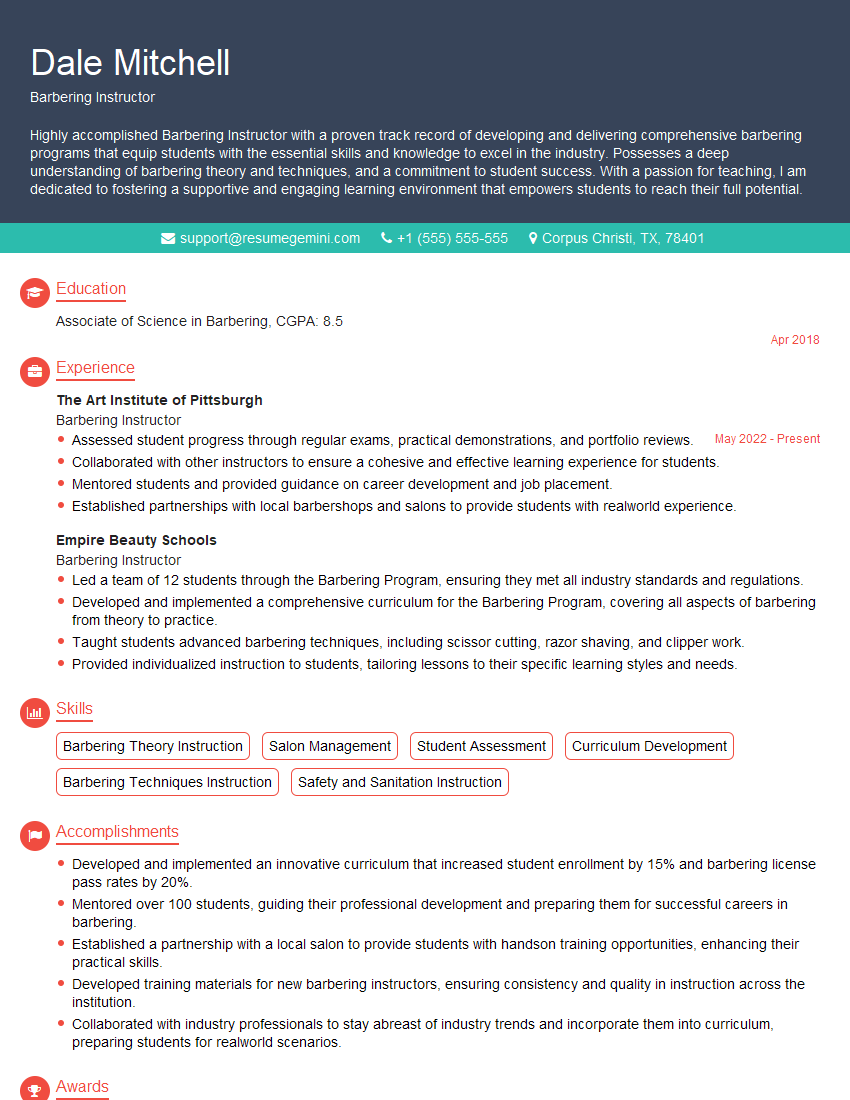
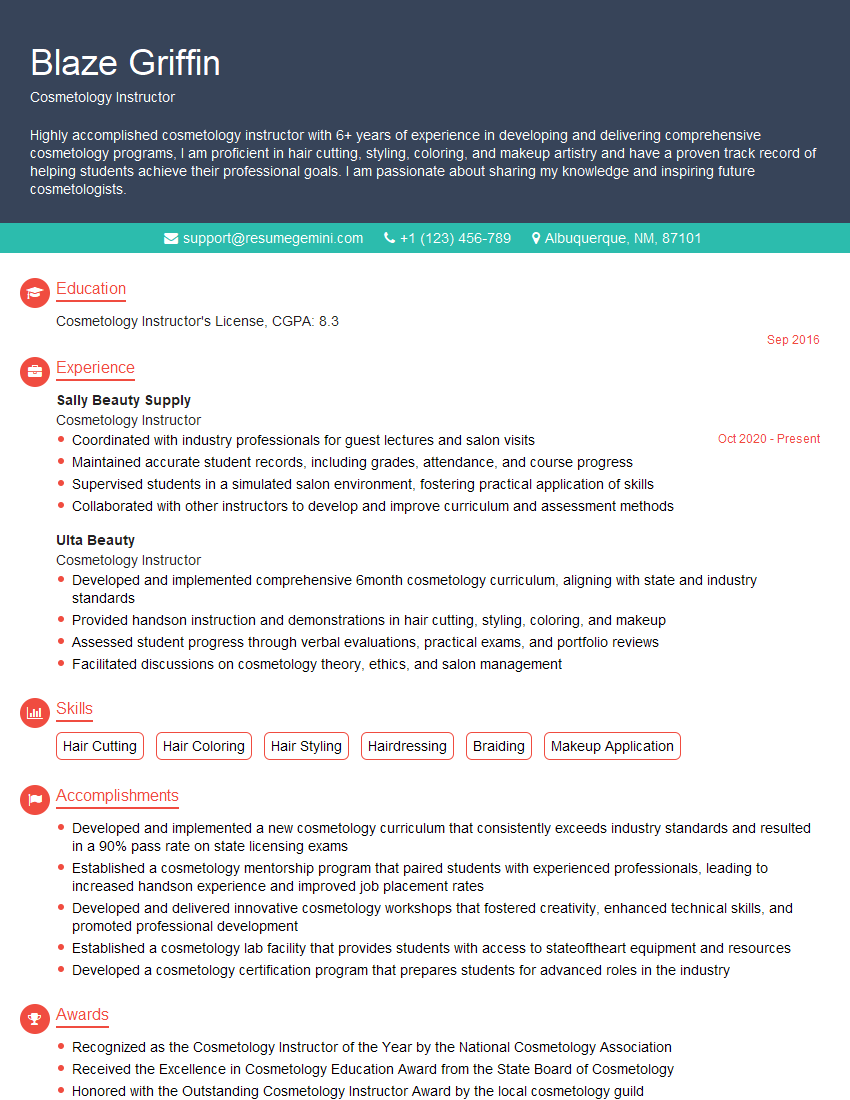
Mastering these key areas of hair education will significantly boost your career prospects. A strong understanding of hair science and practical application will set you apart. To further enhance your job search, create an ATS-friendly resume that highlights your skills and experience effectively. ResumeGemini is a trusted resource to help you build a professional resume that catches the eye of recruiters. Examples of resumes tailored to hair education are available to guide you.
Explore more articles
Users Rating of Our Blogs
Share Your Experience
We value your feedback! Please rate our content and share your thoughts (optional).
What Readers Say About Our Blog
Very informative content, great job.
good