Feeling uncertain about what to expect in your upcoming interview? We’ve got you covered! This blog highlights the most important Hauling and Excavating interview questions and provides actionable advice to help you stand out as the ideal candidate. Let’s pave the way for your success.
Questions Asked in Hauling and Excavating Interview
Q 1. Describe your experience operating an excavator.
My experience operating excavators spans over 15 years, encompassing a wide range of projects from small residential developments to large-scale infrastructure projects. I’m proficient in operating various excavator models, including hydraulic excavators, ranging from compact to large-sized machines. My expertise extends to precise grading, trenching, digging foundations, and demolition work. For instance, on a recent highway project, I used a 35-ton excavator to excavate a large section of land for bridge abutments, requiring precise control to avoid damage to existing utilities. I’m also adept at working in challenging terrain and confined spaces, maintaining efficiency and safety standards.
I regularly undergo safety training and refresher courses to stay updated on best practices and technological advancements in the field. This consistent training keeps my skills sharp and ensures optimal performance on every project.
Q 2. Explain the different types of excavators and their applications.
Excavators come in various types, each suited to specific applications. The most common are:
- Hydraulic Excavators: These are the most versatile and widely used, employing hydraulics to power their movements. They range from small, compact machines used in landscaping to massive excavators used in mining. They excel at digging, lifting, and placing materials.
- Crawler Excavators: These feature tracks for increased stability and traction on uneven terrain, making them ideal for challenging work sites and heavy-duty applications. Think large construction sites or areas with soft ground.
- Wheeled Excavators: Equipped with wheels for easy maneuverability and transportation between sites. They’re particularly useful for projects requiring quick transitions between locations.
- Long-Reach Excavators: These machines have extended booms and arms, allowing for excavation in difficult-to-reach areas, like deep trenches or across wide bodies of water. They’re often used in demolition or specialized projects.
- Mini Excavators: Compact and lightweight, perfect for confined spaces such as urban environments, residential areas, or indoor demolition projects.
The choice of excavator depends heavily on the project’s scope, terrain, and the type of material being handled. For instance, a crawler excavator would be preferred for digging in a swampy area, while a wheeled excavator would be better suited for urban road construction.
Q 3. How do you ensure the safety of yourself and others while operating heavy equipment?
Safety is my paramount concern. I meticulously follow all safety protocols before, during, and after operating heavy equipment. This includes:
- Pre-operation checks: Thoroughly inspecting the machine for any mechanical issues, fluid leaks, or damaged parts.
- Site assessment: Evaluating the work area for potential hazards, such as underground utilities, unstable ground, or overhead obstructions.
- Proper signaling and communication: Utilizing hand signals and radios to coordinate with other workers on the site.
- Maintaining a safe distance: Keeping a safe distance from other personnel and equipment during operation.
- Wearing appropriate PPE: Consistently wearing Personal Protective Equipment, including hard hats, safety glasses, and high-visibility clothing.
- Following all company safety policies and regulations: Adherence to established safety guidelines is crucial for preventing accidents.
I also prioritize regular maintenance to ensure the equipment functions correctly, minimizing the risk of mechanical failures. In short, proactive safety measures are integral to my work process.
Q 4. What are the different types of hauling trucks and their capabilities?
Hauling trucks vary greatly depending on their payload capacity and the type of material transported. Some common types are:
- Dump Trucks: These are the most common type, used to transport loose materials like dirt, gravel, and aggregates. They come in various sizes, from small pick-up trucks to massive articulated dump trucks (ADTs) used in mining operations.
- End-Dump Trucks: These trucks dump their load from the rear, making them suitable for various terrains.
- Side-Dump Trucks: These unload material from the side, ideal for road construction and narrow spaces.
- Bottom-Dump Trucks: These unload material from the bottom, best suited for transporting large amounts of materials, such as coal or ore.
- Water Trucks: Specifically designed to transport water for dust suppression, concrete mixing, or other site-related tasks.
The capabilities of a truck are primarily determined by its payload capacity (weight it can carry), engine power, and drivetrain configuration. Choosing the right truck is crucial for efficient and safe material transport. For instance, a smaller dump truck is sufficient for a residential construction project, while a large ADT might be needed for a mining operation.
Q 5. Explain your experience with load securing and transportation regulations.
My experience with load securing and transportation regulations is extensive. I am very familiar with the relevant safety standards and regulations to ensure safe transportation of materials. This involves using appropriate tie-down straps, chains, and other securing methods to prevent loads from shifting during transit. I’m also proficient in inspecting loads before and after transport to ensure they remain secure.
I’m aware of the various regulations governing weight limits, load dimensions, and proper documentation. Compliance with regulations such as those set by the Department of Transportation (DOT) is critical. For example, I always ensure all loads meet weight limits and are correctly documented for safe and legal transport. Improper load securing can lead to serious accidents, so my attention to detail in this area is paramount.
Q 6. How do you calculate the appropriate amount of fill material needed for a project?
Calculating the fill material required for a project involves several steps. Firstly, accurately determine the volume of the area needing filling. This can be done through surveying and calculations based on the project’s blueprints and dimensions. For example, if you have a rectangular area you will multiply length by width by depth. This gives you the volume in cubic units. You can adjust this formula for more complex shapes using geometry formulas.
Secondly, account for material compaction. Fill material often compresses after being placed. This can be up to 25% depending on the material. A compaction factor is then applied to the calculated volume. Finally, consider waste and overage. You should always add extra material (around 10-15%) to account for potential spillage, inaccuracies in measurements, and other unexpected events. In the end, adding up these volumes, you obtain the final amount of material to order.
The accurate calculation of fill material is essential to avoid costly over-ordering or material shortages, ensuring the project progresses smoothly and efficiently. Using accurate surveying techniques and a clear understanding of material compaction is key to success here.
Q 7. Describe your experience with GPS-guided excavation.
I have considerable experience with GPS-guided excavation. This technology significantly improves accuracy and efficiency. GPS systems guide the excavator’s movements to a pre-determined design or model, allowing for precise digging and grading. This is especially valuable in large-scale projects where precision is crucial, like pipeline installation, utility line placement or infrastructure projects.
Using GPS allows for minimizing material waste, reducing rework, and enhancing overall project speed and cost-effectiveness. For example, on a recent project involving installing underground utilities, the GPS-guided excavator accurately placed the pipes to within millimeters of the desired location, minimizing the need for manual adjustments and substantially saving time. This level of precision is difficult, if not impossible, to achieve without the aid of this technology.
Q 8. What are the common safety hazards associated with hauling and excavating?
Hauling and excavating are inherently risky. Common safety hazards include:
- Cave-ins: Unstable soil collapsing during excavation, burying workers. This is mitigated by proper shoring, sloping, or benching techniques, and regular soil testing.
- Struck-by hazards: Being hit by falling objects (rocks, debris, equipment parts). Implementing safe work practices like designated exclusion zones and proper material handling prevents this.
- Caught-between hazards: Being crushed between heavy equipment or machinery. Maintaining safe distances, clear communication, and using spotters significantly reduces risk.
- Electrocution: Contact with underground power lines. Prior to excavation, always conduct utility locates and mark the lines clearly. We should follow all appropriate safety measures to protect workers.
- Traffic hazards: Collisions with vehicles or pedestrians on or near the worksite. Implementing traffic control measures, such as flaggers and signage, is essential.
- Equipment-related hazards: Malfunctioning equipment, improper operation, or lack of maintenance. Regular inspections, proper training, and adherence to safety protocols are vital.
For example, on a recent project, we discovered an unstable soil layer. We immediately stopped work, conducted a geotechnical analysis, and implemented benching techniques to prevent a cave-in before resuming operations.
Q 9. How do you handle unexpected site conditions or equipment malfunctions?
Unexpected site conditions or equipment malfunctions require immediate and decisive action. My approach involves:
- Assessment: First, I assess the situation to identify the nature of the problem and potential risks. Is it a soil condition issue, a mechanical breakdown, or something else?
- Safety First: I immediately halt operations in the affected area and ensure the safety of all personnel. Workers are re-positioned to safe zones if necessary.
- Communication: Clear communication is key. I inform relevant personnel, including supervisors and clients, about the issue and the steps being taken.
- Problem-solving: Depending on the nature of the problem, I might implement alternative excavation techniques (e.g., switching to a smaller excavator), call for specialized equipment (e.g., a crane for a stuck truck), or contact qualified technicians for repairs.
- Documentation: Thorough documentation of the incident, including corrective actions taken, is crucial. This informs future risk assessments and prevents similar issues from reoccurring.
For instance, we once encountered a large, unexpected rock during excavation. Instead of attempting to remove it with the excavator, which risked damaging the machine, we brought in a specialized rock-breaking tool and removed the obstacle safely and efficiently.
Q 10. What is your experience with different types of soil and their impact on excavation?
Experience with various soil types is critical for safe and efficient excavation. Different soils have varying properties impacting excavation methods and equipment selection:
- Clay: Sticky and cohesive, can be difficult to excavate and prone to slumping. Requires careful shoring or sloping.
- Sand: Loose and granular, can be easily excavated but susceptible to collapse, especially when wet. Requires appropriate dewatering techniques.
- Gravel: Well-drained and stable, relatively easy to excavate.
- Rock: Requires specialized equipment like rock breakers or blasting techniques. Safety precautions must be heightened.
My experience includes working with all these soil types. For example, when excavating in a clay-rich area, I use a combination of sloping and shoring techniques to prevent cave-ins, ensuring worker safety. In sandy areas, I use dewatering pumps to remove excess water and enhance soil stability.
Q 11. Describe your proficiency in pre-start inspections of heavy equipment.
Pre-start inspections are non-negotiable. My inspection process is thorough and systematic, covering:
- Visual inspection: Checking for any visible damage to the equipment’s body, tracks, and attachments.
- Fluid levels: Verifying engine oil, hydraulic fluid, coolant, and fuel levels are adequate.
- Tire pressure: Ensuring correct tire inflation for optimal performance and safety.
- Functional checks: Testing all controls and hydraulic functions to ensure they operate correctly.
- Safety devices: Verifying the condition and functionality of safety devices, such as emergency stops, lights, horns, and seatbelts.
I meticulously document all inspections and report any issues immediately. This proactive approach minimizes downtime and prevents accidents. I even use checklists for consistency and thoroughness.
Q 12. How do you maintain accurate records of materials and equipment usage?
Maintaining accurate records is vital for project management, cost control, and compliance. I use a combination of methods:
- Digital logs: Using tablets or software to record daily equipment usage, fuel consumption, materials hauled, and hours worked. This data is easily accessible and analyzable.
- Manual logs: Keeping physical logs as a backup, particularly when working in areas with limited connectivity.
- Weigh tickets: Obtaining weigh tickets for all material transported to track quantities accurately.
- Inventory tracking: Regularly updating inventory of materials on-site to minimize waste and ensure adequate supply.
These records are crucial for invoicing clients and for tracking project costs. They also aid in identifying areas for optimization and efficiency improvements.
Q 13. Explain your understanding of load capacity and weight distribution.
Understanding load capacity and weight distribution is paramount for safety and efficiency. Exceeding load capacity can lead to equipment failure, accidents, and damage to infrastructure. Proper weight distribution ensures stability and prevents tipping.
I always adhere to the manufacturer’s specifications for load capacity and use load charts to calculate safe operating loads based on the type of material and terrain. Weight distribution is optimized by strategically positioning loads within the vehicle or excavator bucket. For example, heavier materials are placed lower in the truck to reduce the center of gravity. Improper loading practices can lead to rollover incidents.
Q 14. What are the common maintenance procedures for excavators and hauling trucks?
Regular maintenance is essential for maximizing equipment lifespan, ensuring safety, and minimizing downtime. Common maintenance procedures include:
- Daily inspections: Checking fluid levels, tire pressure, and general condition before each use.
- Lubrication: Regularly lubricating moving parts to reduce friction and wear.
- Filter changes: Replacing air, fuel, hydraulic, and oil filters according to the manufacturer’s recommendations.
- Component inspections: Regularly inspecting components like tracks, belts, hoses, and cylinders for damage or wear.
- Major repairs and overhauls: Performing scheduled major repairs and overhauls to address wear and tear and prevent catastrophic failures.
I meticulously follow manufacturer’s recommendations and utilize computerized maintenance management systems to track maintenance schedules and records. Preventive maintenance is far more cost-effective than dealing with unexpected breakdowns. For example, we perform routine track inspections on our excavators to catch any wear before it leads to significant damage.
Q 15. How do you ensure compliance with environmental regulations during excavation?
Ensuring environmental compliance during excavation is paramount. It involves a multi-faceted approach starting even before the first shovel hits the ground. We begin with a thorough site assessment to identify any potential environmental concerns, such as the presence of wetlands, endangered species habitats, or contaminated soil. This assessment informs our excavation plan and helps us secure the necessary permits.
During the excavation process itself, we implement strict procedures for soil and water management. This includes measures like erosion control (using silt fences and sediment basins), proper disposal of excavated materials according to local regulations (often requiring testing for hazardous substances), and minimizing water usage. We meticulously document all activities, including waste generation and disposal, to maintain a complete audit trail. Regular site inspections ensure adherence to these protocols. For example, on a recent project near a river, we employed specialized techniques to prevent soil runoff and implemented a robust water management plan to avoid contaminating the waterway. We also collaborated closely with environmental consultants to ensure full compliance throughout the process.
Career Expert Tips:
- Ace those interviews! Prepare effectively by reviewing the Top 50 Most Common Interview Questions on ResumeGemini.
- Navigate your job search with confidence! Explore a wide range of Career Tips on ResumeGemini. Learn about common challenges and recommendations to overcome them.
- Craft the perfect resume! Master the Art of Resume Writing with ResumeGemini’s guide. Showcase your unique qualifications and achievements effectively.
- Don’t miss out on holiday savings! Build your dream resume with ResumeGemini’s ATS optimized templates.
Q 16. Describe your experience with trench safety procedures.
Trench safety is non-negotiable. My experience encompasses all aspects, from planning and design to implementation and oversight. Before any trenching begins, we perform a thorough soil analysis to determine its stability and identify potential hazards. This dictates the necessary shoring or sloping techniques to prevent cave-ins. We always use appropriate protective systems – whether it’s shoring, sloping, or shielding – based on the soil type and trench depth. Furthermore, regular inspections are crucial, and competent personnel are assigned to monitor conditions and ensure workers’ safety. I’ve witnessed firsthand the devastating consequences of neglecting trench safety, emphasizing the importance of robust procedures. We also ensure that all workers receive comprehensive training on trench safety regulations and the use of personal protective equipment (PPE), including hard hats, high-visibility vests, and safety harnesses. For deeper trenches, we often employ specialized shoring systems and utilize qualified professionals for their installation and inspection.
Q 17. What is your experience with different types of excavation methods?
My experience spans various excavation methods, each tailored to the specific project requirements. I’m proficient in traditional methods like hand excavation (for delicate work or limited access areas), and mechanized excavation using excavators of varying sizes. My expertise extends to specialized techniques like blasting (for rock removal in controlled environments with appropriate permits and safety measures), and trenchless technologies (like horizontal directional drilling) for minimizing surface disruption and protecting existing utilities. The selection of the optimal method depends on factors such as soil conditions, project size, budget, and environmental considerations. For instance, on a recent project involving the installation of underground utilities in a densely populated area, we opted for trenchless technology to avoid disrupting traffic and existing infrastructure. Conversely, in a rural setting with rocky terrain, controlled blasting proved the most efficient approach.
Q 18. How do you manage a team effectively in a hauling and excavating project?
Effective team management in hauling and excavating hinges on clear communication, delegation, and fostering a strong safety culture. I prioritize open communication channels, ensuring everyone is informed about project goals, schedules, and safety procedures. I delegate tasks based on individual skill sets and experience, empowering team members to take ownership of their responsibilities. Regular team meetings are vital for addressing challenges, celebrating successes, and fostering collaboration. Maintaining a safe work environment is non-negotiable, with regular safety briefings and the enforcement of strict safety regulations. Building trust and respect within the team is fundamental. For example, during a particularly challenging project with tight deadlines, I ensured daily stand-up meetings to facilitate real-time communication and problem-solving. This collaborative approach prevented delays and ensured project success.
Q 19. What is your experience with project planning and scheduling?
Project planning and scheduling are critical to success. I use a variety of tools and techniques, including Gantt charts and critical path method (CPM) analysis, to create detailed project schedules. These schedules consider factors such as soil conditions, equipment availability, weather conditions, and permit acquisition timelines. Contingency plans are built in to account for unforeseen delays. Regular progress monitoring, through daily reports and weekly status meetings, allows for early detection of potential issues and timely corrective actions. Thorough risk assessment plays a significant role, identifying potential risks and developing mitigation strategies. For example, on a large-scale infrastructure project, accurate scheduling prevented cost overruns by optimizing resource allocation and minimizing downtime.
Q 20. Explain your experience with budgeting and cost control in hauling and excavating projects.
Budgeting and cost control are essential. We start with a detailed cost estimate, breaking down expenses into categories such as labor, equipment rental, materials, permits, and disposal fees. This estimate is rigorously reviewed and refined. Throughout the project, we track actual costs against the budget, using project management software to monitor progress and identify potential cost overruns. Regular cost variance analysis allows for proactive adjustments, ensuring the project remains within budget. Efficient equipment utilization, optimized material procurement, and careful waste management contribute to cost savings. For example, by negotiating favorable rates with equipment suppliers and implementing a rigorous waste management plan, we saved a significant amount on a recent project.
Q 21. How do you deal with challenging clients or supervisors?
Dealing with challenging clients or supervisors requires diplomacy, effective communication, and a problem-solving approach. Active listening is key to understanding their concerns. I prioritize clear and open communication to address their issues and provide solutions. I focus on presenting data-driven information and demonstrating professionalism. Finding common ground is crucial; maintaining a collaborative approach rather than a confrontational one. Whenever possible, I seek win-win solutions that satisfy all parties involved. For instance, during a project where the client had unrealistic expectations, I presented a revised timeline with clear justifications, ultimately reaching a mutually acceptable agreement.
Q 22. Describe your experience with using surveying equipment on a construction site.
My experience with surveying equipment is extensive. I’m proficient in using total stations, GPS receivers, and laser levels to accurately determine grades, elevations, and distances on construction sites. For example, on a recent highway expansion project, we used a total station to precisely map the existing terrain before excavation began. This ensured that our excavation was within the permitted boundaries and minimized the risk of damaging underground utilities. We also utilized GPS receivers for stakeout, accurately placing benchmarks and ensuring the construction followed the designed alignment. Understanding the intricacies of these instruments is crucial for accurate and efficient earthmoving operations – minimizing rework and ensuring project success.
Another example involves using laser levels to establish precise grade control during the excavation of a large basement. This guaranteed the foundation was level and ready for construction.
Q 23. What is your experience with using CAD software for site planning?
I’m highly proficient in using CAD software, primarily AutoCAD Civil 3D, for site planning. My experience encompasses creating detailed site plans, grading designs, and earthwork calculations. For example, on a recent residential development project, I used Civil 3D to model the site, design the grading plan, and calculate the cut and fill volumes. This allowed for precise estimation of material quantities needed for excavation and hauling, optimizing the project’s budget and timeline. The ability to visualize the project in 3D through CAD software helps to avoid conflicts between utilities, structures, and earthworks during the implementation phase.
I’m also familiar with other software like ArcGIS, beneficial for analyzing site data and integrating it into the design process.
Q 24. How do you ensure the quality of your work in hauling and excavating operations?
Ensuring quality in hauling and excavating involves a multifaceted approach. It starts with meticulous planning, using accurate surveying data and CAD models to guide excavation and ensure that cuts and fills meet specifications. On-site quality control is critical: regular inspections ensure that excavation depths are correct, slopes are stable, and materials are handled and transported without damage. We use calibrated equipment and employ experienced operators to minimize errors and waste.
Furthermore, thorough documentation, including daily logs and photographic records, serves as proof of quality. Finally, adhering to all safety protocols and environmental regulations is paramount, guaranteeing responsible and high-quality work.
Imagine a scenario where we’re excavating for a building foundation. We wouldn’t just dig randomly; we’d use laser levels for precise depths, ensuring the foundation is perfectly level. This is just one example of maintaining quality control.
Q 25. Explain your understanding of different types of permits and licenses required for hauling and excavating.
Understanding permits and licenses is essential for legal and safe operations. This varies by location, but generally includes permits for excavation, which often necessitate contacting utility companies to mark underground lines before digging. Hauling permits may be required for transporting materials, especially oversized loads or those requiring special routes. We also need to comply with environmental permits, especially concerning soil disposal and water management during excavation. Driver’s licenses with appropriate endorsements (like for heavy equipment) are also critical. Failure to obtain the necessary permits can lead to hefty fines, project delays, and even legal action.
I’m familiar with obtaining all necessary permits and ensure that all paperwork is in order before commencing any work. The process usually involves submitting detailed project plans and environmental impact assessments to the relevant authorities for approval.
Q 26. Describe your problem-solving skills related to equipment breakdowns in the field.
Equipment breakdowns are inevitable in this field. My problem-solving approach involves a systematic process. First, I assess the situation – is it a minor issue or a major one requiring specialized repair? For minor issues, I try troubleshooting myself using available resources – owner’s manuals, online forums, or experienced colleagues. I have experience with performing basic maintenance and repairs on several types of excavators and hauling trucks.
If it’s beyond my capabilities, I immediately contact the appropriate service providers or mechanics, providing them with detailed information about the problem. While waiting for repairs, I implement contingency plans, like utilizing backup equipment if available, to minimize project downtime. Prevention is key; I advocate for regular equipment maintenance to reduce the likelihood of breakdowns.
Q 27. How do you handle conflicts or disagreements within a team?
Conflict resolution is a crucial skill. My approach is to foster open communication. I believe in hearing everyone’s perspective before offering solutions. If a disagreement arises, I try to understand the root cause – is it a misunderstanding, a difference in opinion, or a personality clash? I encourage a collaborative problem-solving approach. We brainstorm solutions together, choosing one that addresses everyone’s concerns as much as possible. If necessary, I’ll mediate between parties, ensuring fairness and respect.
Maintaining a professional and respectful environment is key to avoiding conflicts in the first place. Clear communication and expectations from the beginning are essential.
Q 28. What are your career aspirations in the field of hauling and excavating?
My career aspirations involve progressing towards a management role, overseeing larger projects and teams. I’m keen to enhance my project management skills and explore opportunities in estimating, bidding, and overall project planning. I am interested in gaining expertise in sustainable earthmoving practices, contributing to environmentally conscious construction projects. Ultimately, I envision myself as a leader in the field, known for my expertise and commitment to both quality and safety.
Key Topics to Learn for Hauling and Excavating Interview
- Equipment Operation & Maintenance: Understanding the mechanics, operation, and preventative maintenance of heavy machinery like excavators, bulldozers, loaders, and dump trucks. This includes knowing safety procedures and recognizing potential malfunctions.
- Site Safety & Regulations: Familiarity with OSHA regulations, site safety protocols, and hazard identification and mitigation strategies within hauling and excavating environments. Demonstrate your commitment to a safe work environment.
- Project Planning & Execution: Discuss your understanding of project timelines, material estimations, and efficient site logistics for hauling and excavation projects. Be prepared to explain how you would approach a specific project scenario.
- Material Handling & Transportation: Explain your knowledge of safe and efficient loading, transportation, and unloading procedures for various materials, considering weight limits, terrain conditions, and legal requirements.
- GPS & Surveying Technologies: Showcase your familiarity with GPS systems and surveying techniques used in precision excavation and material placement. Discuss how these technologies improve efficiency and accuracy.
- Environmental Considerations: Demonstrate awareness of environmental regulations and best practices related to soil erosion control, waste disposal, and minimizing environmental impact during hauling and excavating operations.
- Problem-solving & Troubleshooting: Be ready to discuss how you would approach and solve common problems encountered on a job site, such as equipment malfunctions, unexpected site conditions, or scheduling conflicts.
Next Steps
Mastering the skills and knowledge in hauling and excavating opens doors to a rewarding career with excellent growth potential. This field offers opportunities for specialization, increased responsibility, and higher earning potential as you gain experience and expertise. To maximize your job prospects, creating an ATS-friendly resume is crucial. A well-structured resume that highlights your skills and experience effectively increases your chances of getting noticed by recruiters and landing interviews. ResumeGemini is a trusted resource to help you build a professional and impactful resume. We provide examples of resumes tailored to the Hauling and Excavating industry to help guide you in creating your own.

Safety Manager Resume Sample

Operations Manager Resume Sample
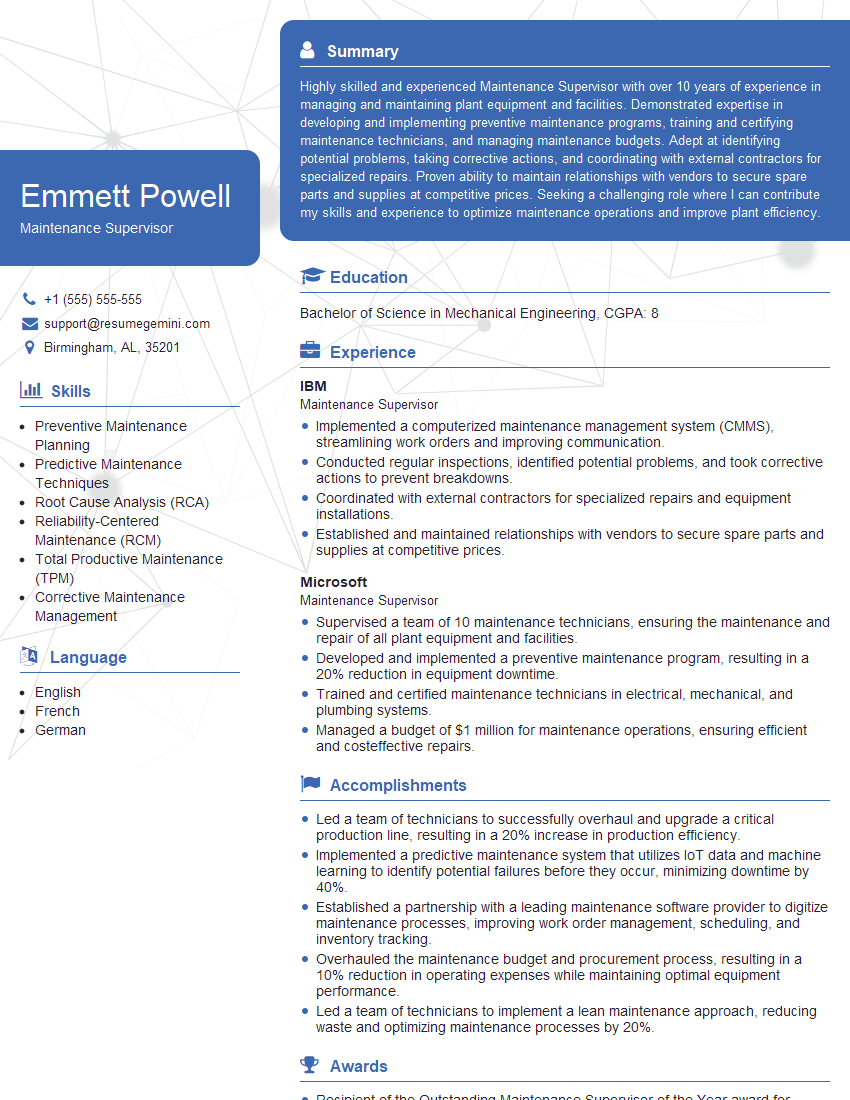
Maintenance Supervisor Resume Sample
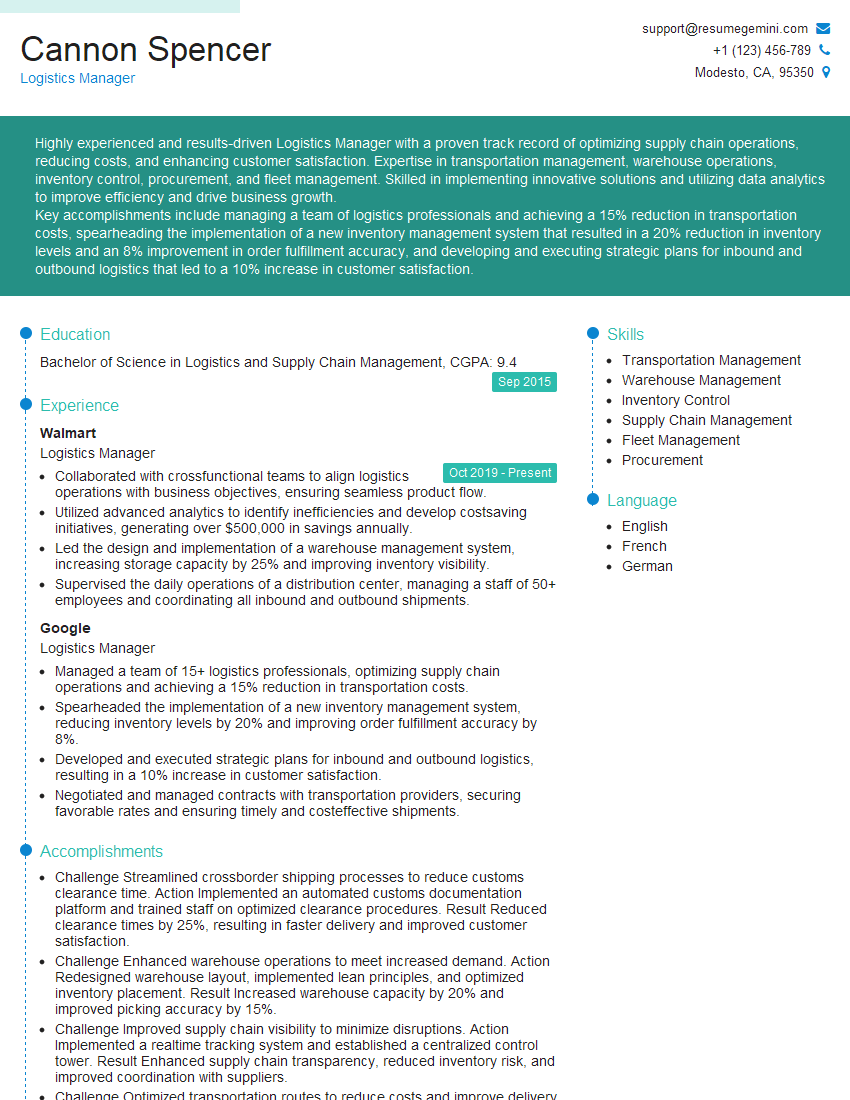
Logistics Manager Resume Sample

Construction Foreman Resume Sample

Construction Superintendent Resume Sample

Project Engineer Resume Sample

Training Coordinator Resume Sample

Surveyor Resume Sample

Civil Engineering Technician Resume Sample

Field Technician Resume Sample

General Foreman Resume Sample

Site Supervisor Resume Sample

Heavy Equipment Operator Resume Sample

Excavator Operator Resume Sample
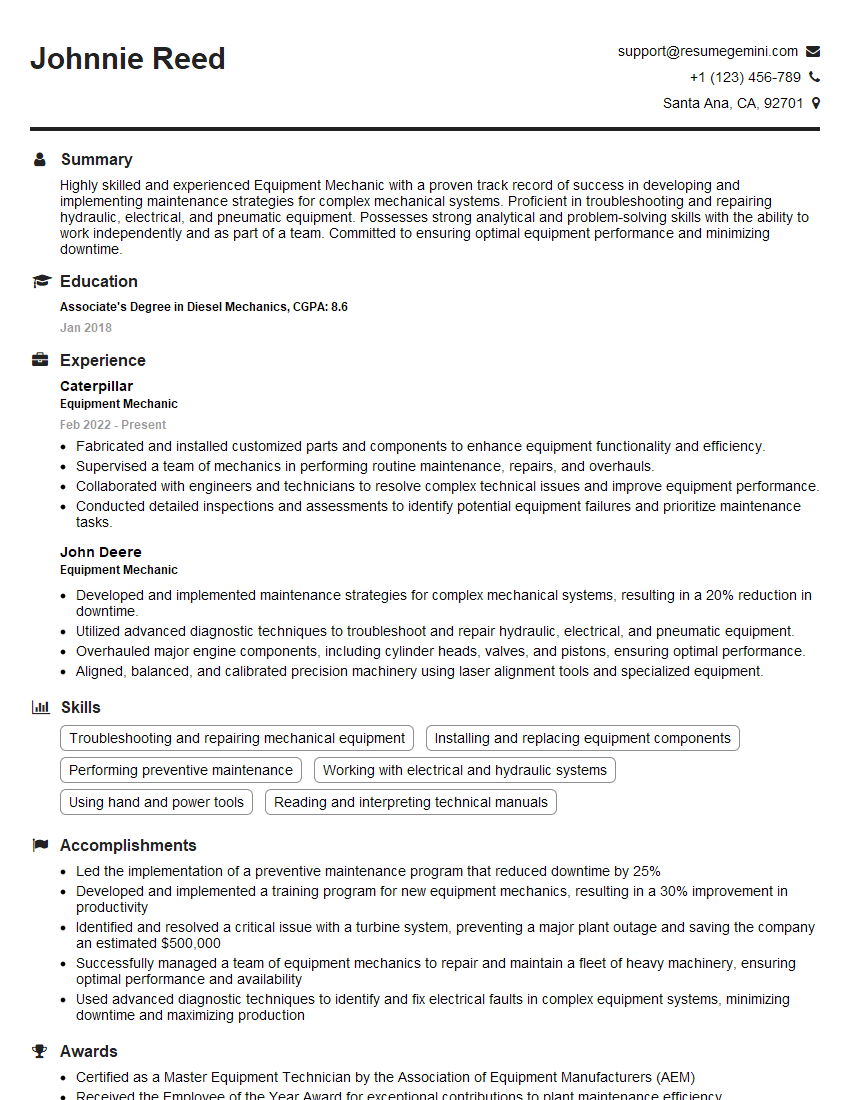
Equipment Mechanic Resume Sample
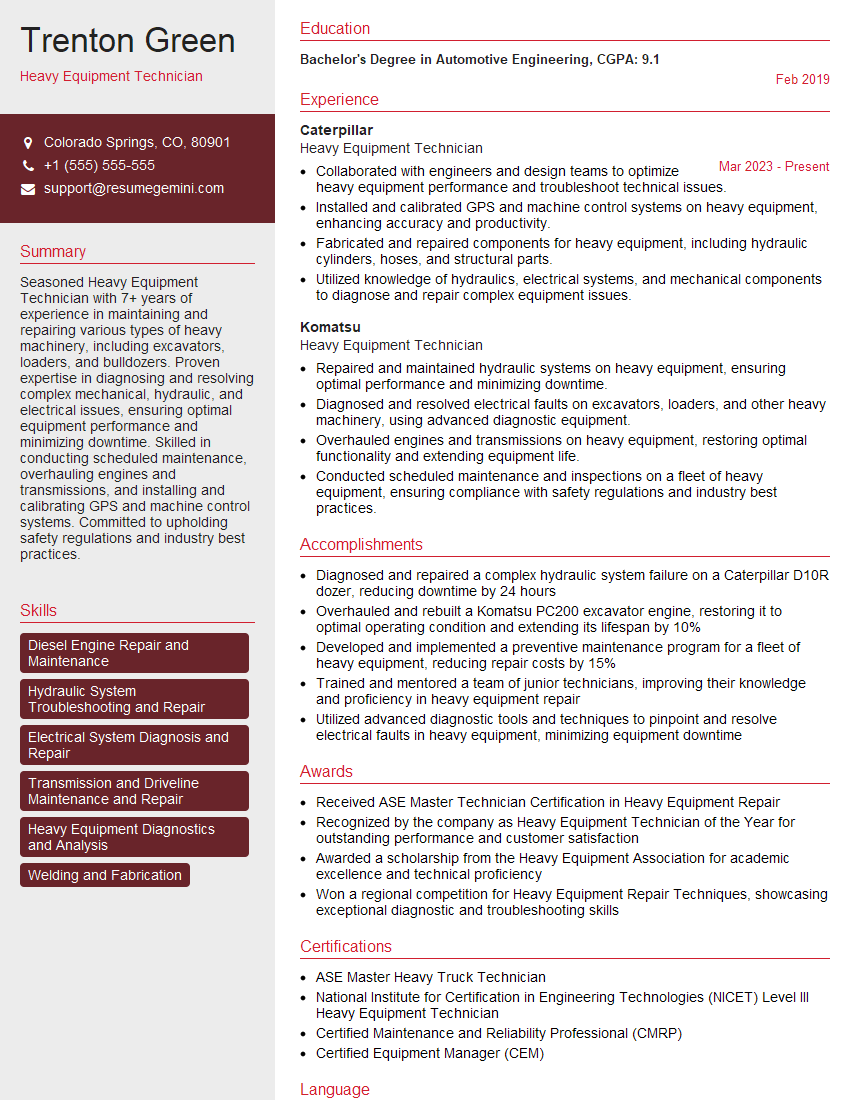
Heavy Equipment Technician Resume Sample
- Safety Manager
- Operations Manager
- Maintenance Supervisor
- Logistics Manager
- Construction Foreman
- Construction Superintendent
- Project Engineer
- Training Coordinator
- Surveyor
- Civil Engineering Technician
- Field Technician
- General Foreman
- Site Supervisor
- Heavy Equipment Operator
- Excavator Operator
- Equipment Mechanic
- Heavy Equipment Technician
Explore more articles
Users Rating of Our Blogs
Share Your Experience
We value your feedback! Please rate our content and share your thoughts (optional).
What Readers Say About Our Blog
Very informative content, great job.
good