Interviews are more than just a Q&A session—they’re a chance to prove your worth. This blog dives into essential Heavy Lifting and Load Handling interview questions and expert tips to help you align your answers with what hiring managers are looking for. Start preparing to shine!
Questions Asked in Heavy Lifting and Load Handling Interview
Q 1. Describe your experience with different types of lifting equipment.
My experience encompasses a wide range of lifting equipment, from basic hand tools like chain hoists and come-alongs to complex machinery such as overhead cranes, forklifts, and mobile cranes. I’m proficient in operating and maintaining various types of slings, including wire rope, synthetic webbing, and chain slings. I also have extensive experience with specialized lifting devices like vacuum lifters for delicate materials and air bag systems for confined space lifting. For example, on a recent project involving the installation of heavy HVAC units on a high-rise building, I oversaw the safe and efficient deployment of a tower crane, ensuring compliance with all safety regulations and load capacity limits.
- Overhead Cranes: Experience with various types, including gantry, jib, and bridge cranes, understanding their load capacity charts and safety interlocks.
- Forklifts: Proficient in operating different classes of forklifts, understanding weight capacities and safe operating procedures.
- Mobile Cranes: Familiar with different crane types (e.g., rough terrain, all-terrain) and their applications, including rigging and load chart interpretation.
- Specialized Lifting Equipment: Experience with vacuum lifters, air bag lifts, and other specialized equipment for unusual load characteristics.
Q 2. Explain the importance of pre-lift planning.
Pre-lift planning is paramount in ensuring a safe and efficient lift. It’s not just about the lift itself; it’s about mitigating all potential risks. A thorough plan considers the load’s characteristics (weight, center of gravity, dimensions, fragility), the environment (ground conditions, overhead obstructions, weather), the equipment to be used (crane capacity, sling type, appropriate rigging), and the personnel involved (training, experience, communication). Think of it like planning a complex surgical procedure – every detail matters.
For instance, failing to account for wind speed when using a crane could lead to catastrophic failure. Similarly, an improperly calculated center of gravity can cause instability and a potential tipping hazard. A detailed pre-lift plan includes risk assessments, method statements, and emergency procedures. It also involves obtaining necessary permits and approvals before the lift commences.
Q 3. How do you assess the weight and center of gravity of a load?
Assessing weight and center of gravity requires a combination of methods. The weight can often be determined through manufacturer’s specifications, scales, or estimations based on material density and volume. For irregular shapes, it might be necessary to use multiple weighing points and calculate an average. The center of gravity is the point where the weight of an object is balanced in all directions. It’s crucial for stability during lifting. For simple shapes, the center of gravity is easily calculated. For complex shapes, visual inspection, calculations based on weight distribution, or specialized equipment like a load center indicator might be needed.
For example, with a large steel beam, we might use a scale to determine weight and then visually locate the center point. However, with an irregularly shaped load, we may use a load center indicator to precisely determine the CG. This is critical for safe sling placement to prevent the load from tilting or swinging.
Q 4. What safety procedures do you follow before lifting a heavy object?
Safety is my top priority. Before any lift, I meticulously follow these procedures:
- Inspection: Thoroughly inspect all equipment (crane, slings, shackles, etc.) for any damage, wear, or defects. This includes checking certification and expiry dates.
- Site Assessment: Evaluate the work area for obstructions, uneven ground, weather conditions, and potential hazards.
- Load Assessment: Verify the load’s weight, dimensions, center of gravity, and any special handling requirements.
- Rigging Plan: Develop a detailed rigging plan, selecting appropriate slings, shackles, and other lifting accessories based on the load’s characteristics and the equipment available.
- Communication Plan: Establish clear communication channels between all personnel involved in the lift.
- Emergency Procedures: Plan for potential emergencies, such as load failure or equipment malfunction.
- Personal Protective Equipment (PPE): Ensure everyone wears appropriate PPE, such as hard hats, safety glasses, and high-visibility clothing.
Q 5. Describe your experience with load securing techniques.
My experience with load securing techniques is extensive. It involves selecting the right securing method based on the load’s characteristics, the mode of transport, and relevant regulations. I’m proficient in using various methods including:
- Slinging techniques: Using appropriate slings and hitches to distribute the load evenly and prevent slippage.
- lashing and securing straps: Using straps and ratchet straps to secure loads to trailers or other transport vehicles.
- chaining and blocking: Using chains and wooden blocks to secure loads during transport or storage.
- container securing: Securing containers to transport vehicles using twist locks and other fastening devices.
For example, securing a heavy piece of machinery on a flatbed truck requires careful consideration of the load’s weight distribution. Incorrect securing can lead to shifting during transit, resulting in damage or accidents.
Q 6. How do you handle unexpected situations during a lift?
Handling unexpected situations requires quick thinking, a thorough understanding of the equipment and procedures, and a cool head under pressure. My approach involves:
- Immediate Stoppage: Halt the lift immediately if any anomaly is detected.
- Assessment: Assess the situation to identify the source of the problem.
- Communication: Clearly communicate the situation to all personnel.
- Problem-Solving: Develop a solution to address the issue safely and efficiently. This may involve adjusting the rigging, calling for additional assistance, or reassessing the lift plan.
- Safety First: Prioritize the safety of personnel and equipment above all else.
For example, if a sling were to unexpectedly fail mid-lift, the immediate response would be to lower the load slowly and carefully, utilizing emergency procedures and any backup systems in place. A post-incident investigation would be conducted to determine the cause of the failure and prevent future occurrences.
Q 7. What are the different types of slings and their applications?
Different slings have different strengths and applications. The choice depends on the load’s characteristics, weight, shape, and the lifting environment:
- Wire rope slings: Very strong and durable, suitable for heavy and abrasive loads. However, they can be damaged by sharp edges.
- Synthetic webbing slings: Lighter than wire rope, less prone to damage from sharp edges, and offer good shock absorption. Not ideal for very high temperatures.
- Chain slings: Very strong, suitable for heavy loads and high temperatures, but can be prone to damage from sharp edges and kinking.
- Round slings: Made from synthetic materials and are often used for lifting and moving large or awkward loads due to their ability to conform to irregular shapes.
For instance, a delicate piece of equipment might be lifted using a synthetic webbing sling to minimize the risk of damage, while a heavy steel casting would likely be lifted with a chain sling due to its strength and heat resistance.
Q 8. Explain the concept of load capacity and its importance.
Load capacity refers to the maximum weight a lifting device, structure, or system can safely handle without failure or exceeding its design limits. It’s paramount because exceeding this limit can lead to catastrophic equipment failure, injury, or even death. Think of it like the weight limit on a bridge – exceeding it could cause a collapse.
Determining load capacity involves considering various factors, including the equipment’s design specifications, material strength, environmental conditions (temperature, wind), and the nature of the load itself (shape, distribution of weight). Manufacturers provide load charts and specifications that must be strictly adhered to. For example, a particular crane might have a load capacity of 10 tons at a maximum radius of 15 meters, but this capacity will decrease as the radius increases due to increased stress on the boom. Ignoring these limits is a recipe for disaster.
Q 9. How do you identify potential hazards in a lifting operation?
Hazard identification in lifting operations requires a systematic approach. I always start with a thorough pre-lift assessment, visually inspecting the lifting equipment, rigging, load, and surrounding environment. This involves:
- Equipment inspection: Checking for any damage, wear, or malfunction in the crane, hoist, slings, shackles, and other equipment.
- Load assessment: Determining the weight, center of gravity, dimensions, and stability of the load. An improperly secured load is a major hazard.
- Environmental factors: Considering wind speed and direction, ground conditions, overhead obstructions, and nearby personnel or equipment. High winds can dramatically impact the safe operation of a crane, for instance.
- Personnel factors: Ensuring that all personnel involved are properly trained, qualified, and aware of the hazards. Communication is crucial.
Furthermore, I use checklists and risk assessments to document the findings and identify any potential hazards. A near miss incident analysis is essential to prevent repeat occurrences. For instance, during a recent project, we identified a poorly anchored ground support that could have led to a crane tip-over and were able to rectify it prior to lifting the load.
Q 10. Describe your experience with different types of cranes and their operation.
My experience encompasses a wide range of cranes, including:
- Tower Cranes: These are typically used in large construction projects, offering high lifting capacity and reach. I’m proficient in their assembly, operation, and dismantling, understanding the critical role of proper counterweight balancing and wind speed limitations.
- Mobile Cranes: I’ve extensively worked with various types, from smaller truck-mounted cranes to larger all-terrain cranes. Safe operation involves understanding outrigger deployment, load charts specific to each crane model and terrain conditions.
- Overhead Cranes: These are common in industrial settings. My experience includes both bridge cranes and gantry cranes, emphasizing the importance of proper load distribution and avoiding exceeding rated capacities. I am also familiar with different hoisting mechanisms and their maintenance.
- Speciality Cranes: I have some experience with specialized cranes used in niche applications such as those used for wind turbine construction or heavy industrial maintenance projects. These often require additional certifications and very specialized training.
Each crane type requires specific operational procedures and safety protocols. I always prioritize following manufacturer guidelines and adhering to strict safety regulations.
Q 11. Explain the importance of using proper lifting techniques.
Proper lifting techniques are crucial for preventing injuries and equipment damage. They minimize strain on the body and ensure the load is handled safely and efficiently. Improper technique can lead to back injuries, muscle strains, and dropped loads. For example, twisting while lifting or lifting with bent knees increases the risk of injury significantly.
Key principles include:
- Planning: Assessing the load, the path, and potential obstacles before commencing the lift.
- Proper posture: Keeping the back straight, bending at the knees, and lifting with the legs.
- Maintaining a stable base: Using a wide stance and keeping the load close to the body.
- Using assistive devices: Employing hoists, dollies, or other tools whenever possible.
- Teamwork: Coordinating with colleagues during heavier lifts, using hand signals for clear communication.
These techniques are not just about individual safety, but also about protecting the load and preventing accidents that can result in substantial financial loss and damage to company reputation. They are integral part of a safe working practice.
Q 12. How do you ensure the safety of yourself and others during a lift?
Ensuring safety involves a multi-layered approach:
- Pre-lift planning: This is the foundation of safety. It involves a detailed risk assessment, confirming the load weight and stability, inspecting the equipment, and planning the lift path.
- Proper PPE: This includes safety helmets, high-visibility clothing, safety footwear, and hearing protection where needed.
- Restricted areas: Establishing a safe zone around the lifting operation to prevent unauthorized entry.
- Communication: Clear communication between the crane operator, riggers, and spotters is essential through predetermined hand signals or radios. Miscommunication is a major source of accidents.
- Emergency procedures: Knowing how to respond to potential emergencies, such as load instability, equipment failure, or a medical emergency.
I believe in leading by example, consistently demonstrating safe practices and encouraging my team to report any concerns without fear of reprisal. A culture of safety is essential for preventing accidents.
Q 13. What are the common causes of lifting injuries and how to prevent them?
Common causes of lifting injuries include:
- Manual handling injuries: These are often the result of improper lifting techniques, overloading, and repetitive movements.
- Crane accidents: These may stem from equipment malfunction, operator error, inadequate planning, or environmental factors such as high winds.
- Rigging failures: Using damaged or incorrect rigging equipment can lead to dropped loads and injuries.
- Lack of training: Inadequate training of personnel leads to mistakes that often result in accidents.
Prevention involves:
- Proper training and certification: All personnel involved in lifting operations should be adequately trained and certified to operate equipment safely and use proper lifting techniques.
- Regular equipment inspections: Scheduled inspections are essential to identify and repair any damaged or malfunctioning equipment.
- Risk assessments and method statements: These documents identify potential hazards and outline the steps to mitigate them.
- Enforcing safety rules and regulations: Consistent enforcement of safety rules by both management and workers is vital.
My experience shows that a proactive and comprehensive safety program that focuses on training, inspection, and risk mitigation is the most effective way to prevent lifting injuries.
Q 14. Explain your experience with load charts and weight calculations.
Load charts are essential documents that specify the safe working load limits of lifting equipment under different conditions. I have extensive experience interpreting and using these charts to calculate the weight of loads and ensure that the chosen equipment is appropriate for the task. The calculations involved often require taking into account the radius of the crane’s boom, the load’s weight distribution, and potential swing radius.
For example, if a load is asymmetrically distributed, the center of gravity must be accurately determined to calculate the required lifting capacity and ensure stability. I’ve used a variety of calculation methods, from simple formulas to more complex software programs, always double-checking the calculations for accuracy. I meticulously document all calculations and measurements to maintain a clear and auditable record for future reference and regulatory compliance. Incorrect weight calculations can lead to equipment overload and catastrophic failure, highlighting the importance of precision and attention to detail.
Q 15. Describe your experience with using different types of rigging hardware.
My experience with rigging hardware is extensive, encompassing various types used in diverse lifting scenarios. I’m proficient with shackles (bow, D-ring, and screw pin), wire rope clips, and various types of slings – including wire rope slings, synthetic web slings, and chain slings. I understand the critical importance of selecting the appropriate hardware based on load capacity, material compatibility, and the specific lifting task. For instance, I’ve used wire rope slings for lifting heavy steel beams, opting for a proper number of slings and proper angle to distribute the load effectively and prevent sling damage. Synthetic web slings are often preferred for delicate loads to avoid surface damage, while chain slings are robust and ideal for heavier, abrasive materials. Proper inspection of all rigging hardware before each lift is crucial to me, checking for any signs of wear, damage, or deformation. I’m always mindful of the Working Load Limit (WLL) stamped on each piece of equipment – never exceeding these limits is paramount to safety.
I also have hands-on experience with other crucial components such as eyebolts, turnbuckles, and spreader beams. Understanding how these elements interact to create a safe and stable lifting system is crucial. For instance, I’ve used spreader beams to lift wide loads like large generator sets, ensuring balanced load distribution and minimizing stress on the lifting points.
Career Expert Tips:
- Ace those interviews! Prepare effectively by reviewing the Top 50 Most Common Interview Questions on ResumeGemini.
- Navigate your job search with confidence! Explore a wide range of Career Tips on ResumeGemini. Learn about common challenges and recommendations to overcome them.
- Craft the perfect resume! Master the Art of Resume Writing with ResumeGemini’s guide. Showcase your unique qualifications and achievements effectively.
- Don’t miss out on holiday savings! Build your dream resume with ResumeGemini’s ATS optimized templates.
Q 16. How do you communicate effectively with your team during a lifting operation?
Effective communication is paramount during lifting operations. It’s not just about talking; it’s about clear, concise instructions, active listening, and establishing a strong understanding amongst the team. We use a system of hand signals, which are essential in noisy environments where verbal communication may be difficult. Before any lift, I conduct a thorough pre-lift meeting to discuss the plan, identify potential hazards, assign roles and responsibilities, and confirm everyone understands the procedure. Clear communication during the lift is equally crucial. I use pre-determined hand signals and verbal commands to ensure everyone is synchronized, and we constantly maintain visual contact. If any unexpected issues arise, I immediately halt the operation and discuss the problem openly with the team to find a safe solution. We maintain open communication channels throughout the entire process, ensuring transparency and facilitating immediate resolution of any issues.
For example, if we encounter a problem with a sling angle, I’ll immediately stop the lift and communicate clearly to the team the need to readjust the slings to prevent overloading. I always encourage team members to speak up if they see anything unsafe or have any concerns. Open communication creates a collaborative and safe work environment.
Q 17. What is your experience with different types of forklifts and their applications?
My experience with forklifts includes operating various types, from counterbalance forklifts commonly used for warehouse operations to reach trucks for high-stacking and order pickers for efficient retrieval of goods. I understand the unique applications and limitations of each type. Counterbalance forklifts are versatile but require careful consideration of weight distribution, especially on uneven ground. Reach trucks, on the other hand, are ideal for maximizing vertical space in warehouses, but their stability is crucial. Order pickers improve efficiency, especially in high-volume operations, through narrow aisle access. I’m familiar with the operating procedures, safety protocols, and maintenance requirements for each type. This includes pre-operational checks, understanding load capacity limits, and adhering to safety regulations, which is always paramount.
For example, when moving heavy pallets in a confined space, an order picker is more suitable than a counterbalance forklift due to its maneuverability. Conversely, for loading and unloading trucks with heavy goods, a counterbalance forklift is more efficient and often preferred. I always select the appropriate forklift based on the load, environment, and task. Proper training and adherence to safety procedures are non-negotiable.
Q 18. Explain your experience with pallet jack operation and safety.
Operating a pallet jack safely and efficiently requires understanding its limitations and adhering to safe practices. I have significant experience using pallet jacks of various capacities, focusing on proper lifting techniques, load stability, and avoiding hazards. Before operating, I always inspect the jack for any damage, ensuring the wheels are free and the hydraulic system is functioning correctly. When lifting loads, I ensure the load is evenly distributed and stable, avoiding any sudden movements or jerks. I use appropriate lifting techniques to prevent back injuries, keeping my back straight and using my legs to lift. I am also mindful of the surrounding environment, ensuring sufficient clearance and avoiding obstacles.
For example, I’d never overload a pallet jack and always ensure the load is balanced to prevent tipping. I also understand the importance of using appropriate footwear to prevent slips and falls. Regular maintenance, such as checking the hydraulic fluid level, is essential for ensuring the safety and longevity of the equipment.
Q 19. How do you handle damaged or defective lifting equipment?
Handling damaged or defective lifting equipment is critical for safety. The first step is immediate removal of the equipment from service. I then clearly mark the equipment as ‘out of service’ using appropriate tags or markings, preventing accidental use. A detailed report documenting the type of damage, the location of the damage, and the date of discovery is essential and immediately submitted to the appropriate supervisor. The damaged equipment needs a thorough inspection by a qualified technician. It’s not simply enough to look at the damage – I ensure to follow the company protocols on inspection and repair, ensuring the repair or replacement is conducted to the highest safety standards and that proper documentation and certification are obtained before the equipment is returned to service.
For example, if I noticed a crack in a chain sling, I wouldn’t attempt to use it. Instead, I’d immediately tag it, report it, and ensure its proper removal and replacement. Safety is always the top priority.
Q 20. Describe your experience with load monitoring devices.
Load monitoring devices are crucial for ensuring safe lifting practices. I have experience using various types of load monitoring systems, including load cells, dynamometers, and electronic load indicators. These instruments provide real-time data on the weight of the load, allowing for accurate assessment of stress levels on lifting equipment. Load cells, placed strategically within the lifting system, accurately measure the load, transmitting the data to a display unit. This data allows for precise control and prevents overloading. Dynamometers are useful for measuring tension in cables or chains. Electronic load indicators, often integrated with shackles or other rigging hardware, provide a direct visual indication of the load weight, allowing quick and easy monitoring. Understanding the limitations and calibration requirements of these devices is critical.
For example, when lifting an exceptionally heavy piece of machinery, using a load cell integrated into the crane’s system ensures that the load is not exceeded, preventing potential catastrophic failure.
Q 21. How do you maintain and inspect lifting equipment?
Regular maintenance and inspection of lifting equipment are essential for preventing accidents and ensuring safe operations. This involves both visual inspections and more thorough checks based on manufacturer’s recommendations. Visual inspections are performed before each lift, and the frequency of detailed inspections varies depending on equipment type and usage intensity. Checks involve examining for signs of wear, corrosion, damage to cables or chains, and proper functioning of any mechanical components. Documentation of all inspections is crucial and forms a part of our operational records. I am trained to identify potential hazards and report them immediately. If any problems are discovered, repairs and certifications are followed meticulously, strictly adhering to manufacturer guidelines and safety regulations.
For example, I’d visually check the condition of wire rope slings before every use, looking for broken wires, kinks, or other signs of wear. Regular lubrication of chains is also crucial to extend their lifespan and ensure smooth operation. Thorough documentation provides a historical record that ensures we’re keeping all equipment in top operational condition.
Q 22. Explain your understanding of OSHA regulations related to heavy lifting.
OSHA regulations concerning heavy lifting are paramount for workplace safety. They focus on preventing musculoskeletal disorders (MSDs) – injuries to muscles, tendons, ligaments, nerves, and blood vessels – caused by overexertion. These regulations aren’t just about lifting; they cover all aspects of manual material handling, including pushing, pulling, carrying, and lowering. Key aspects include:
- Proper lifting techniques: OSHA emphasizes training employees on techniques like maintaining a straight back, bending at the knees, and keeping the load close to the body. They promote using mechanical aids whenever feasible.
- Load limits: While OSHA doesn’t specify a single weight limit, it stresses assessing each lifting task for risk and providing appropriate training and equipment. The employer must consider factors like distance, frequency, and the individual worker’s capabilities.
- Personal Protective Equipment (PPE): This includes gloves, back supports, and appropriate footwear to protect workers during lifting activities. The choice of PPE depends on the specific task and hazards.
- Workplace ergonomics: OSHA encourages employers to design workstations and processes to minimize the risk of MSDs. This includes proper storage of materials, well-designed lifting devices, and minimizing repetitive movements.
- Reporting and record-keeping: Employers are obligated to track and report any work-related injuries, including those resulting from heavy lifting, to ensure continuous improvement in safety measures.
For example, in a warehouse setting, OSHA regulations would dictate the provision of pallet jacks for moving heavy pallets, the use of lifting straps to secure loads, and regular training for employees on safe lifting practices. Failure to adhere to these regulations can lead to significant fines and legal repercussions.
Q 23. Describe your experience with working at heights.
My experience with working at heights spans over 10 years, encompassing various projects involving crane operations, rigging, and the installation of large equipment on elevated platforms. I’m proficient in the use of fall protection systems, including harnesses, lanyards, and safety nets. I’ve worked extensively with different types of scaffolding and understand the importance of regular inspections to ensure structural integrity.
On one occasion, during the installation of a massive transformer on a high-rise building, we encountered unexpectedly high winds. Following established protocols, we immediately secured all equipment, halted operations, and waited for calmer conditions. Safety is always paramount, and I consistently prioritize risk assessment and mitigation before and during any work at heights. I’ve received comprehensive training in hazard identification and control specific to working at heights, always emphasizing the importance of adherence to safety regulations and procedures.
Q 24. How do you handle different types of terrain during lifting operations?
Terrain significantly impacts lifting operations. Uneven surfaces can destabilize loads, increasing the risk of accidents and injuries. My approach involves a multi-faceted strategy:
- Site assessment: Before any lifting commences, a thorough assessment of the terrain is crucial. This involves identifying potential hazards such as soft ground, slopes, obstacles, and uneven surfaces.
- Ground preparation: This might include leveling the ground using materials like plywood or gravel to create a stable base for the crane and the load. Compacting the soil can also be necessary.
- Equipment selection: The type of crane and lifting equipment used is heavily dependent on the terrain. For unstable ground, specialized cranes with wider bases or outriggers are preferred. All-terrain cranes may be necessary in rough terrain.
- Load stabilization: Additional measures, such as using cribbing (wooden blocks) or mats to distribute the weight and prevent sinking, might be needed. Load securing techniques must be adapted to accommodate the uneven terrain.
- Communication: Clear communication between the crane operator, ground crew, and spotters is vital. Everyone needs to be aware of the terrain challenges and potential risks.
For instance, during a project involving lifting equipment in a muddy field, we used specialized mats under the crane outriggers to distribute the weight and prevent the crane from sinking. We also used cribbing to stabilize the load during the lift.
Q 25. Describe your experience with emergency procedures during a lifting operation.
Emergency procedures are a critical aspect of any heavy lifting operation. My experience includes participating in and leading emergency response drills and actual emergency situations. We’ve practiced scenarios ranging from equipment malfunctions to sudden weather changes. Our protocols include:
- Emergency shutdown procedures: Knowing precisely how to quickly and safely shut down lifting equipment is paramount. This involves understanding the controls and safety mechanisms of each piece of equipment.
- Communication protocols: Clear communication channels are vital in an emergency. This involves designated emergency contacts, the use of radios, and predetermined evacuation routes.
- Evacuation plans: Pre-planned evacuation routes for personnel in the vicinity of the lift are necessary. This ensures everyone can move to a safe location quickly and efficiently.
- Injury response: Procedures for assessing and providing first aid to injured personnel are crucial. This includes having trained personnel on-site and knowing how to contact emergency medical services.
- Equipment recovery: Procedures for securing and recovering the load and equipment safely following an emergency are vital. This might involve specialized equipment or techniques.
In one instance, a sudden power outage stopped the crane mid-lift. We immediately followed our established emergency procedures; the crane operator utilized the emergency power source, allowing for a controlled lowering of the load. Then, we conducted a thorough equipment check before resuming operations.
Q 26. How do you plan for and execute a complex lifting operation?
Planning and executing complex lifting operations requires a meticulous and systematic approach. It’s not just about the lift itself; it’s about understanding the entire operation from start to finish. My approach involves several key steps:
- Pre-lift planning: This includes detailed site surveys, load calculations, risk assessments, and the development of a lifting plan that incorporates all aspects of safety and operational efficiency. It considers the type of load, weight, center of gravity, and dimensions, as well as environmental factors.
- Equipment selection: Choosing the right lifting equipment is critical. Factors to consider include lifting capacity, reach, maneuverability, and suitability for the specific terrain and environment.
- Personnel selection: Experienced and qualified personnel are essential for complex lifts. This includes certified crane operators, riggers, signal persons, and safety personnel. Their roles and responsibilities must be clearly defined.
- Risk assessment and mitigation: Identifying and mitigating potential risks is crucial. This may include developing contingency plans for emergencies and establishing communication protocols.
- Execution and monitoring: The lift itself requires constant monitoring by experienced personnel. This involves observing load stability, checking for any unusual movements or noises, and ensuring everyone follows safety protocols.
- Post-lift assessment: After the lift, a review of the entire operation is necessary to identify areas for improvement and to learn from any challenges encountered.
A recent project involved lifting a large piece of industrial machinery into a tightly constrained space. Our planning included detailed simulations, a comprehensive risk assessment that considered potential obstacles, and a phased approach to the lift to ensure precise placement. This meticulous planning resulted in a safe and efficient operation.
Q 27. What is your experience with load shifting and stabilization techniques?
Load shifting and stabilization are crucial for preventing accidents during heavy lifting. My experience involves using various techniques to secure and control loads, particularly in challenging situations. These techniques include:
- Load securing: Utilizing appropriate straps, chains, and shackles to secure the load to the lifting equipment is fundamental. Proper tensioning and securing are crucial to prevent shifting.
- Load distribution: Using spreader beams or other load distribution devices helps distribute the weight evenly across multiple attachment points, reducing stress on any single point and enhancing stability.
- Cribbing and blocking: Wooden cribbing or other materials are used to support and stabilize the load during placement or temporary resting points.
- Tag lines: Guide lines or tag lines are used to control the load’s movement and prevent swaying or uncontrolled movement, especially during difficult maneuvers or in windy conditions.
- Counterweights and ballast: Adding counterweights or ballast to the crane or lifting mechanism can enhance stability, especially on uneven terrain.
For example, when lifting a long, heavy steel beam, we used a spreader beam to distribute the weight and prevent bending. We also employed tag lines to control the beam’s movement throughout the lift, ensuring its safe placement.
Q 28. Explain your understanding of load distribution and its importance.
Load distribution refers to how the weight of a load is spread across its support points. It’s critical in heavy lifting because uneven distribution can lead to structural failure, equipment damage, or accidents. Proper load distribution ensures that all support points bear a safe and manageable portion of the weight.
For example, lifting a heavy object using a single chain could cause excessive stress on that chain, potentially leading to breakage. By using multiple chains or a spreader beam, the weight is distributed more evenly, reducing the stress on each individual attachment point. The importance of load distribution is highlighted by its significant impact on:
- Structural integrity: Proper distribution prevents overloading individual components, ensuring the crane and lifting equipment can safely handle the load.
- Stability: Even distribution enhances stability, reducing the risk of load shifting or tipping.
- Safety: Safe load distribution is paramount in preventing accidents and injuries.
Ignoring load distribution can result in catastrophic consequences, ranging from equipment damage to serious injuries or fatalities. Careful consideration of load distribution is integral to every stage of heavy lifting planning and execution.
Key Topics to Learn for Heavy Lifting and Load Handling Interview
- Understanding Load Capacity and Weight Distribution: Learn how to accurately assess the weight and center of gravity of loads to prevent accidents. Consider different lifting techniques and equipment based on load characteristics.
- Safe Lifting Techniques and Ergonomics: Master proper lifting techniques, including posture, foot placement, and the use of leg muscles to minimize strain and injury. Understand the principles of ergonomics in relation to heavy lifting.
- Equipment Operation and Safety Procedures: Familiarize yourself with various lifting equipment (forklifts, cranes, hoists) – including their safe operation, maintenance, and limitations. Understand relevant safety regulations and procedures.
- Risk Assessment and Hazard Identification: Develop the ability to identify potential hazards associated with heavy lifting and load handling tasks, and implement appropriate risk mitigation strategies.
- Communication and Teamwork: Understand the importance of clear communication and teamwork in a heavy lifting environment. Practice effective communication techniques for coordinating lifts and ensuring safety.
- Load Securing and Transportation: Learn about different methods for securing loads during transportation to prevent shifting and damage. Understand the regulations and best practices for load securing.
- Troubleshooting and Problem Solving: Develop your ability to identify and troubleshoot issues that may arise during lifting operations. Learn how to adapt your approach based on unforeseen circumstances.
Next Steps
Mastering Heavy Lifting and Load Handling is crucial for career advancement in many industries, opening doors to higher-paying roles and increased responsibility. A strong, ATS-friendly resume is your key to unlocking these opportunities. ResumeGemini can help you craft a compelling resume that highlights your skills and experience effectively. We provide examples of resumes tailored to Heavy Lifting and Load Handling positions to guide you. Take the next step towards your dream job – build a powerful resume with ResumeGemini today!

Warehouse Manager Resume Sample

Transportation Coordinator Resume Sample
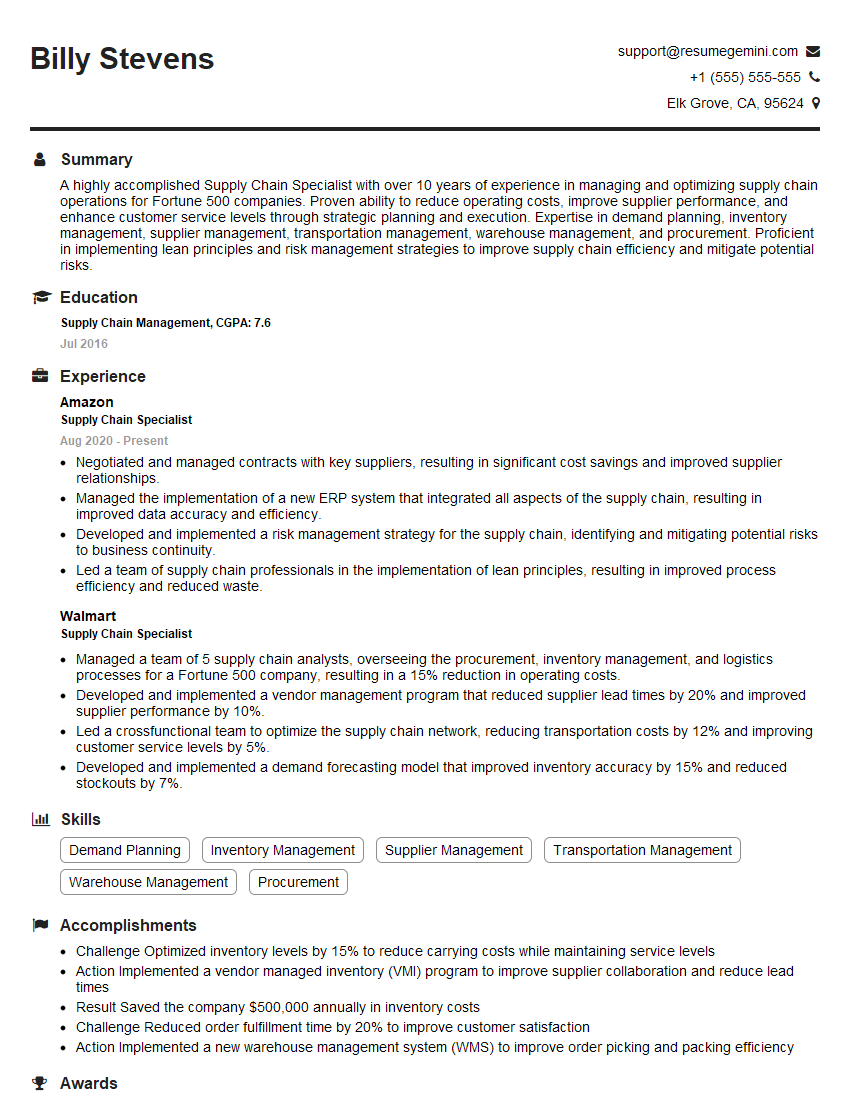
Supply Chain Specialist Resume Sample

Crane Operator Resume Sample
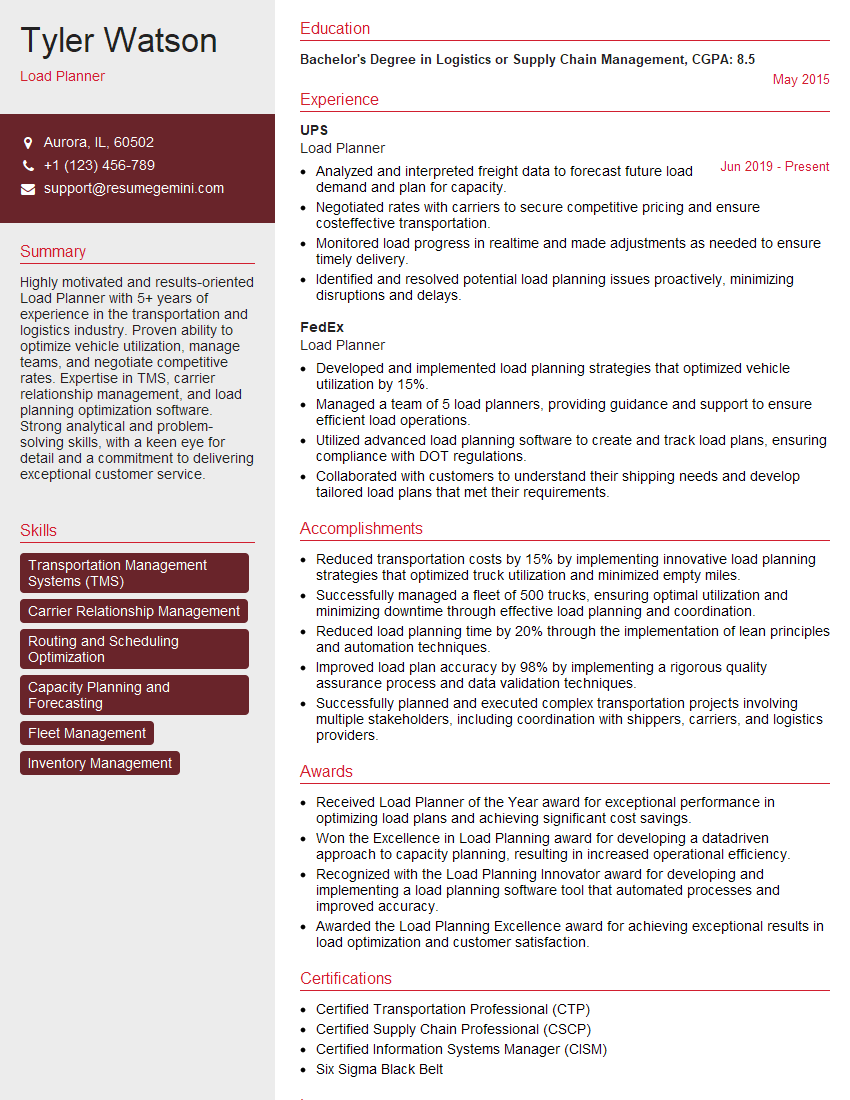
Load Planner Resume Sample

Inventory Control Specialist Resume Sample

Shipping and Receiving Clerk Resume Sample

Logistics Associate Resume Sample

Material Handler Resume Sample

Warehouse Worker Resume Sample

Construction Worker Resume Sample

Demolition Worker Resume Sample

Heavy Equipment Operator Resume Sample
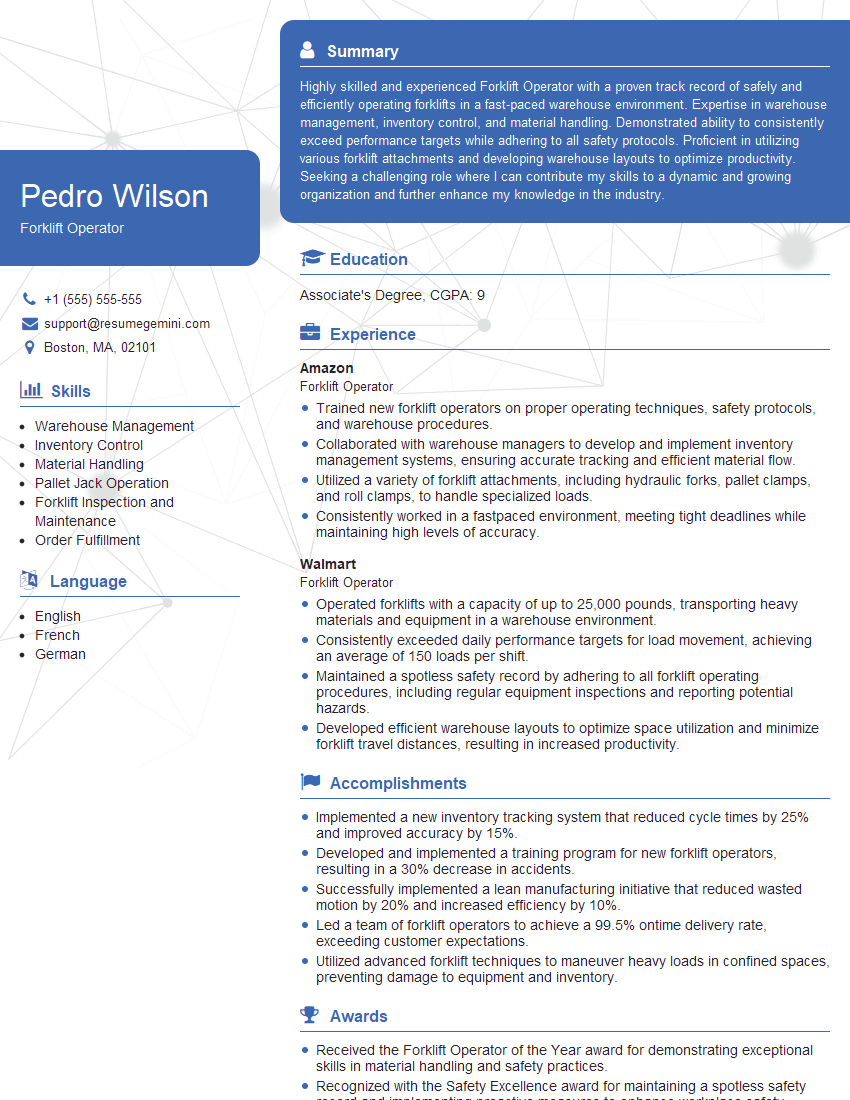
Forklift Operator Resume Sample
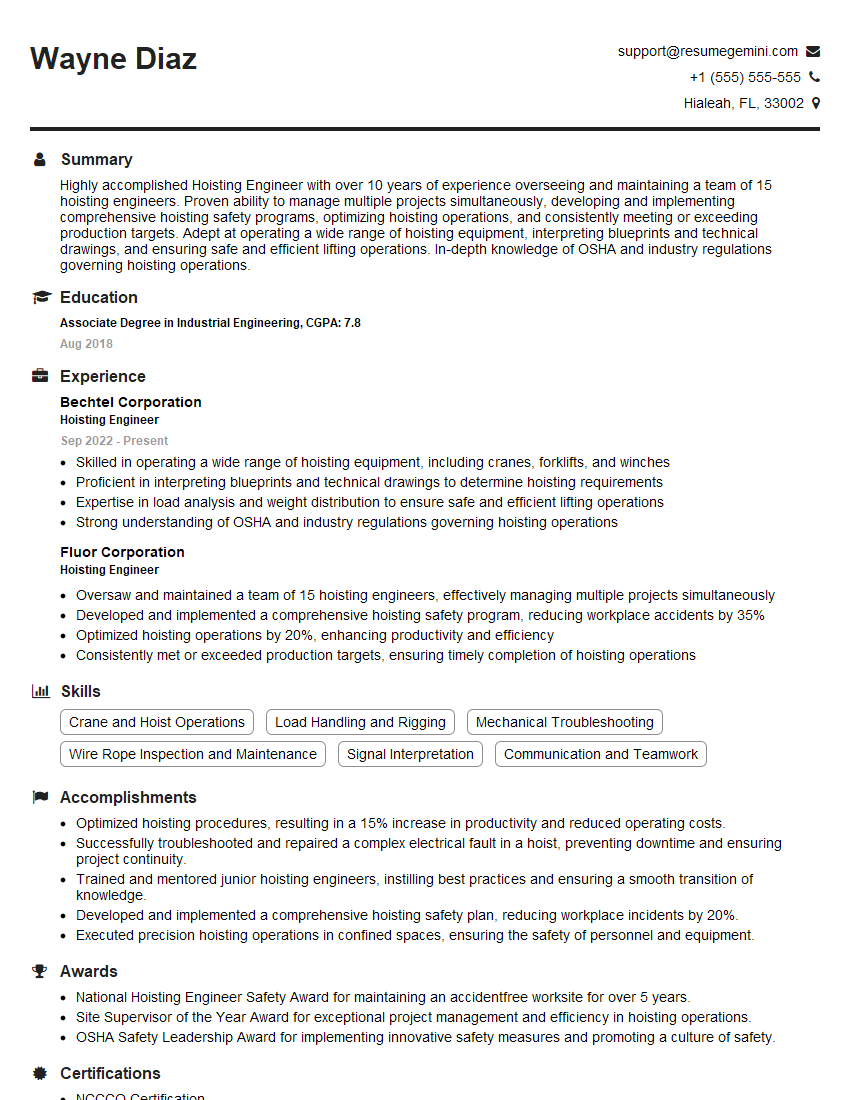
Hoisting Engineer Resume Sample

Rigger Resume Sample

Industrial Mechanic Resume Sample
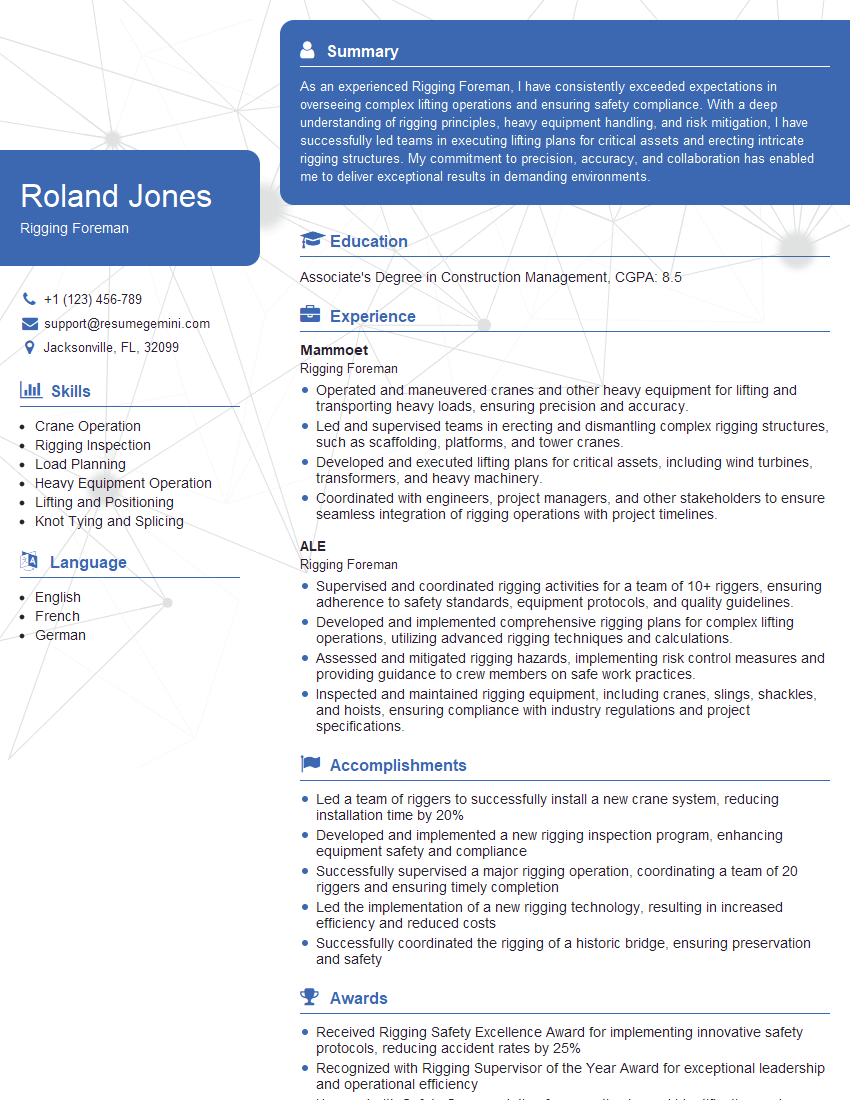
Rigging Foreman Resume Sample
- Warehouse Manager
- Transportation Coordinator
- Supply Chain Specialist
- Crane Operator
- Load Planner
- Inventory Control Specialist
- Shipping and Receiving Clerk
- Logistics Associate
- Material Handler
- Warehouse Worker
- Construction Worker
- Demolition Worker
- Heavy Equipment Operator
- Forklift Operator
- Hoisting Engineer
- Rigger
- Industrial Mechanic
- Rigging Foreman
Explore more articles
Users Rating of Our Blogs
Share Your Experience
We value your feedback! Please rate our content and share your thoughts (optional).
What Readers Say About Our Blog
Very informative content, great job.
good