Cracking a skill-specific interview, like one for Hip Isolations, requires understanding the nuances of the role. In this blog, we present the questions you’re most likely to encounter, along with insights into how to answer them effectively. Let’s ensure you’re ready to make a strong impression.
Questions Asked in Hip Isolations Interview
Q 1. Explain the anatomical structures involved in hip isolation.
Hip isolation, a fundamental movement in many dance styles and fitness routines, involves the controlled movement of one hip independently from the other, while maintaining a stable torso. Several anatomical structures play crucial roles.
- Hip Joint: The ball-and-socket hip joint (acetabulum and femoral head) allows for a wide range of motion, which is essential for isolated hip movements. The ligaments and joint capsule provide stability.
- Muscles of the Hip and Pelvis: Numerous muscles are responsible for both the movement and stabilization of the hip, including the gluteus maximus, medius, and minimus; the tensor fascia latae; the iliopsoas; and the adductors. These muscles work synergistically to produce isolated hip movements while preventing unwanted compensatory movements.
- Core Muscles: A strong core, encompassing the abdominal and back muscles, is critical in stabilizing the torso and preventing it from rotating or tilting during hip isolations. These muscles include the rectus abdominis, obliques, and erector spinae.
- Nervous System: Precise neural control is required for coordinated and isolated movements. The brain and nervous system send signals to the correct muscles to activate at the appropriate time and with the right intensity.
Q 2. Describe the difference between upper and lower hip isolations.
The distinction between upper and lower hip isolations lies in the direction of the hip movement.
- Upper Hip Isolation: Involves lifting one hip upward, as if trying to lift your hip towards your ribcage. This primarily engages the gluteus medius and minimus on the lifted side and the hip flexors on the opposite side for counterbalance. Imagine a subtle, controlled “hip hike” on one side.
- Lower Hip Isolation: This entails dropping one hip downward while maintaining a stable torso. This utilizes the gravity and the strength of the opposing hip and core muscles to maintain balance. It predominantly engages the gluteus maximus and the hip adductors on the lowered side, again with counterbalancing action from the opposing side’s muscles. Think of gently tilting your pelvis to one side.
Both movements require careful control and coordination of multiple muscle groups to achieve a clean, isolated movement.
Q 3. How do you isolate your hip without moving your torso?
Isolating your hip without moving your torso demands focused muscle control and practice. Here’s a step-by-step approach:
- Find your neutral spine: Stand with your feet hip-width apart, ensuring your spine is straight but not stiff. Engage your core muscles to stabilize your torso.
- Focus on the hip: Imagine a line running vertically through your body. Concentrate on moving only one hip along that line, upwards or downwards. Do not allow any rotation or lateral bending of the torso.
- Small, controlled movements: Begin with extremely subtle movements. Gradually increase the range of motion as you gain control and strength.
- Use your core: Actively engage your core muscles to stabilize your torso throughout the exercise. This prevents compensation from other muscle groups.
- Mirror check: Use a mirror to observe your posture and movements to ensure your torso remains still.
- Practice regularly: Regular practice is key to develop neuromuscular coordination and muscle control necessary for fluid hip isolations.
It takes time and dedication. Start slowly, focusing on precision over amplitude.
Q 4. What muscles are primarily engaged during hip isolations?
Numerous muscles contribute to hip isolations, but some are more prominently engaged than others depending on the type of isolation:
- Gluteus Maximus: Plays a significant role in lower hip isolations, controlling the downward movement.
- Gluteus Medius and Minimus: Key for upper hip isolations, responsible for the upward lift and maintaining hip stability.
- Hip Adductors: Assist in lower hip isolations by controlling the inward movement of the hip.
- Hip Flexors (Iliopsoas): Contribute to the control and counterbalance needed for both upper and lower isolations.
- Core Muscles (Abdominals and Back Muscles): Essential for stabilizing the torso and preventing unwanted movements. They work as stabilizers to ensure the isolation is truly happening at the hip and not compensated for by other areas.
The interplay of these muscles is crucial for achieving clean and controlled movements.
Q 5. Explain the role of core stability in performing effective hip isolations.
Core stability is paramount for effective hip isolations. Without a strong and stable core, you’ll likely compensate by moving your torso instead of isolating your hips.
Think of your core as the foundation. If the foundation is weak, the entire structure (your body) will be unstable and unable to perform precise movements. A strong core provides the necessary support to keep your torso stationary, allowing for the focused movement of your hip joint. This translates to cleaner lines, increased range of motion, and reduced risk of injury.
Q 6. How does breath control impact the quality of hip isolations?
Breath control significantly enhances the quality of hip isolations. It facilitates efficient muscle engagement and improves coordination.
- Inhale to prepare: Before initiating a movement, inhale deeply to prepare your muscles for engagement. This allows for greater control and reduces the risk of jerky movements.
- Exhale during movement: Exhale as you perform the hip isolation. This helps to stabilize the core and facilitates controlled, smooth movements. It also increases body awareness during the exercise.
- Controlled breathing pattern: Maintain a rhythmic and controlled breathing pattern throughout the exercise. Don’t hold your breath, as this can strain your muscles and lead to less efficient movements.
Proper breath control helps to connect mind and body, allowing for a more fluid and expressive movement.
Q 7. Describe common mistakes made when attempting hip isolations.
Common mistakes when attempting hip isolations include:
- Torso Movement: This is the most prevalent mistake. Focus on engaging your core and isolating the hip movement from the torso.
- Overuse of momentum: Relying on momentum instead of controlled muscular contractions results in sloppy, uncontrolled movements.
- Insufficient core engagement: Without sufficient core activation, your torso will compensate for the lack of stability, leading to poor form.
- Ignoring breath control: Holding your breath or breathing erratically limits efficiency and control.
- Too large movements initially: Beginners should start with tiny movements and gradually increase the range of motion as control improves.
- Lack of practice: Hip isolations require regular practice and dedicated focus to develop the required coordination and strength.
Careful attention to detail and regular practice are key to overcoming these common errors.
Q 8. How do you correct a student who is overusing their back muscles during hip isolations?
Overuse of back muscles during hip isolations indicates a lack of core engagement and understanding of the movement. The goal is to isolate the hip movement, not compensate with the back. To correct this, I start by emphasizing proper core engagement. I have the student lie on their back with knees bent, finding that neutral spine position. Then, I guide them to isolate one hip, lifting it just a few inches off the floor, focusing on the feeling of the hip flexors and gluteus medius working. I might place my hand gently on their lower back to feel for any unnecessary movement. If they arch their back, I’ll have them lower their hip, re-engage their core, and try again with smaller, more controlled movements. We work on feeling that deep abdominal connection and the subtle power from the hip itself. I often use imagery like ‘melting’ into the floor to prevent arching and encourage relaxation in the back. It’s a gradual process; we build strength and control before increasing the range of motion.
If the student continues to struggle, I might regress to exercises focusing on core stability and hip flexor strength, such as bridges or clamshells. This builds the foundational strength necessary to execute the isolation cleanly. Only after they demonstrate control and isolated hip movement in these preparatory exercises do we move back to the hip isolations.
Q 9. How can you modify hip isolations for individuals with limited mobility?
Modifying hip isolations for individuals with limited mobility requires a highly individualized approach, prioritizing safety and comfort. We begin by assessing the limitations. For example, someone with back pain may need to start with supine (lying on the back) hip isolations, focusing on small, controlled movements to avoid exacerbating the pain. We might use props like pillows for support and comfort.
For those with limited range of motion in the hips, we’ll start with very small movements, gradually increasing the range as comfort allows. We might focus on one hip at a time, working slowly to build flexibility and reduce discomfort. Chair-based modifications can be beneficial, allowing for support while still engaging the hip muscles. For students with limited mobility in their legs or knees, the isolations may be adapted by doing them lying down. This removes the balance challenge from the exercises. The key is to adapt the exercise to meet the person’s capability, emphasizing quality of movement over quantity.
Ultimately, the adaptations must be guided by the specific limitations. Careful attention to modifications avoids injury and fosters successful progress.
Q 10. What are the benefits of practicing hip isolations?
Practicing hip isolations offers numerous benefits, impacting both physical and artistic expression. Physically, they improve hip mobility and flexibility, increasing range of motion and reducing stiffness. This improved mobility can translate to better performance in other activities, from everyday movements to sports.
- Increased Core Strength: Hip isolations require core stability to prevent compensation from other muscle groups. This strengthens the deep abdominal muscles, contributing to overall core strength and stability.
- Improved Body Awareness: The practice of isolating specific muscle groups promotes better body awareness and control. Students gain a deeper understanding of their body mechanics.
- Enhanced Balance and Coordination: Mastering hip isolations improves coordination between the hips, core, and other body parts, leading to better balance and coordination in general.
- Reduced Risk of Injury: Stronger hip muscles and improved mobility reduce the risk of injury in daily activities and physical pursuits.
Beyond the physical, hip isolations are crucial for dancers and performers, enhancing expressiveness and fluidity of movement. The ability to isolate the hips allows for subtle yet powerful movements that convey emotion and artistic intent.
Q 11. How can hip isolations improve posture?
Hip isolations can significantly improve posture by strengthening the core muscles that support the spine. Weak core muscles often contribute to poor posture, such as slouching. By strengthening these muscles through hip isolations, we create a more stable base for the spine, promoting better alignment and posture. The increased body awareness gained through the practice also helps individuals identify and correct postural deviations.
Imagine a building: a strong foundation (core) is crucial for upright posture. Hip isolations help build this core foundation, allowing the spine to sit more comfortably and efficiently. This leads to less strain on the back and neck, reducing the risk of back pain and improving overall posture.
Q 12. How do you teach hip isolations to beginners?
Teaching hip isolations to beginners requires patience and a clear, step-by-step approach. I start by having students lie on their back with knees bent and feet flat on the floor. This removes the balance component, allowing them to focus on the hip movement itself. I then guide them to isolate one hip, lifting it slightly off the floor. It’s crucial to emphasize small, controlled movements, focusing on the feeling of the hip flexors and glutes engaging. I use verbal cues and physical guidance to ensure they are isolating the hips and not using their back or shoulders. We might begin with just a few repetitions, building up gradually as strength and control improves.
Next, we introduce the concept of moving the hip in a circular motion, again emphasizing slow and controlled movements. We might use visualizations like imagining drawing a circle with their hip, or rolling a ball across their hip. Throughout the session, maintaining proper breathing and relaxed shoulders are emphasized. Positive reinforcement and encouragement are paramount to create a comfortable and supportive learning environment. The whole process focuses on creating a solid foundational understanding of the movements before progressing to more challenging variations.
Q 13. How do you progress hip isolations to more advanced levels?
Progressing hip isolations to more advanced levels involves increasing the range of motion, speed, and complexity of the movements. Once a student demonstrates proficiency in basic isolations, we can introduce variations such as:
- Increased Range of Motion: Gradually increasing the height and distance of the hip movements, challenging the range of motion.
- Adding Speed and Dynamics: Introducing speed variations, moving from slow and controlled to faster and more dynamic movements.
- Combining Isolations: Combining hip isolations with other movements, such as arm movements or torso rotations, to enhance coordination and complexity. This could involve layered movements, such as isolating one hip while simultaneously moving the other, creating intricate patterns.
- Incorporating Levels: Performing hip isolations while standing, sitting, or in other positions, adding a balance component to the exercise.
- Adding Resistance: Using resistance bands or weights to increase strength and challenge the muscles.
Progression must be gradual, ensuring the student maintains control and avoids injury. Each new variation is introduced only after mastering the previous one. Regular assessment and feedback are crucial to guide the student’s progress appropriately.
Q 14. Describe different styles or variations of hip isolations.
Hip isolations encompass a variety of styles and variations, each offering unique challenges and applications. These variations are often seen in different dance styles and movement practices.
- Basic Hip Isolations (Supine and Standing): These are the foundational movements, performed lying down or standing, focusing on the isolated movement of one hip at a time.
- Circular Hip Isolations: Moving the hips in a circular motion, either clockwise or counterclockwise.
- Figure-Eight Hip Isolations: Creating a figure-eight pattern with the hips.
- Layered Hip Isolations: Moving both hips simultaneously in different patterns or directions, creating a more complex and fluid movement.
- Hip Isolations with Upper Body Movement: Combining hip isolations with arm movements, torso twists, or head movements to create dynamic and expressive sequences.
- Hip Pops and Drops: Sharp, percussive movements of the hips, often used in hip-hop and other contemporary styles.
The specific style or variation chosen depends on the individual’s goals and the context in which the hip isolations are being used. For example, a dancer might focus on fluid, flowing movements, while a fitness enthusiast may focus on strength and power.
Q 15. How can you incorporate hip isolations into a full dance routine?
Incorporating hip isolations into a full dance routine is about seamlessly weaving them into the choreography to enhance expression and rhythm. It’s not about just adding a few isolated hip movements; it’s about using them strategically to complement other dance elements.
Think of it like this: hip isolations can be the punctuation marks in a sentence. They emphasize key moments, add texture, and create a dynamic flow. You wouldn’t put an exclamation point after every word, right? Similarly, strategically placed hip isolations add impact and visual interest.
- Build-up: Start with simpler movements and gradually incorporate more complex hip isolations as the routine progresses, building intensity.
- Transitions: Use hip isolations to smoothly transition between different dance sections or stylistic changes. A quick hip circle can bridge a powerful jump to a softer, lyrical sequence.
- Emphasis: Highlight key lyrics or musical phrases with expressive hip isolations. A sharp hip pop can accentuate a strong beat, while a slow, controlled undulation can highlight a melodic phrase.
- Character portrayal: Hip isolations can contribute significantly to character development. Sharp, angular movements might portray anger or defiance, while fluid, sensual isolations could evoke a more seductive or graceful persona.
For example, in a routine combining contemporary and hip-hop styles, you might use fluid, controlled hip isolations during the contemporary sections, then transition to more sharp, percussive movements for the hip-hop sections. The key is integration and purposeful placement to enhance the overall narrative and artistic expression of the choreography.
Career Expert Tips:
- Ace those interviews! Prepare effectively by reviewing the Top 50 Most Common Interview Questions on ResumeGemini.
- Navigate your job search with confidence! Explore a wide range of Career Tips on ResumeGemini. Learn about common challenges and recommendations to overcome them.
- Craft the perfect resume! Master the Art of Resume Writing with ResumeGemini’s guide. Showcase your unique qualifications and achievements effectively.
- Don’t miss out on holiday savings! Build your dream resume with ResumeGemini’s ATS optimized templates.
Q 16. Explain the connection between hip isolations and other dance techniques.
Hip isolations are deeply connected to other dance techniques, forming the foundation for fluidity, control, and musicality. They enhance core strength, posture, and body awareness, skills crucial across many dance genres.
- Posture and Alignment: Mastering hip isolations necessitates strong core engagement and proper spinal alignment. This improves posture, not just in dance but also in daily life.
- Groove and Rhythm: Isolating the hips allows for nuanced expression of rhythm and groove. The ability to articulate the body independently to the music is fundamental to many styles, including Afro-Caribbean, jazz, and contemporary.
- Flexibility and Mobility: Regular practice of hip isolations improves hip and spine flexibility and mobility, leading to greater range of motion and freedom of movement in other dance techniques.
- Coordination and Control: Isolations require precise control and coordination of different muscle groups. This improved neuromuscular control benefits other dance techniques requiring complex body movements.
For instance, a dancer with strong hip isolations will find it easier to execute complex turns, leaps, and floorwork, as the refined body awareness translates directly to other movements. The ability to maintain core stability while isolating the hips is essential for powerful jumps and controlled landings. In ballet, even seemingly unrelated techniques like port de bras, will be enhanced through a dancer’s improved core strength and coordination.
Q 17. How do you assess a student’s understanding and execution of hip isolations?
Assessing a student’s understanding and execution of hip isolations involves a multi-faceted approach focusing on both technical proficiency and artistic expression.
- Isolation Quality: Can the student effectively isolate the hip movement while keeping the rest of the body still? Do they demonstrate control and precision in the movements?
- Range of Motion: Does the student have a sufficient range of motion in their hips, executing movements smoothly and fluidly? Are there any limitations that need addressing through stretching or other techniques?
- Musicality: Do the movements reflect an understanding of the music’s rhythm and phrasing? Are they accurately timed and expressive?
- Dynamic Variation: Can the student vary the speed, size, and style of their hip isolations to create different expressions and dynamics? This highlights their understanding of how to use the technique artistically.
- Body Awareness: Does the student demonstrate awareness of their own body and its movements? This includes proper alignment, engagement of the core and the targeted muscles.
I usually observe students from various angles, providing feedback on their posture, isolation technique and overall expressiveness. I might use mirrors, recordings, or even physical adjustments to correct their technique and enhance their understanding. For instance, if a student is struggling to isolate their hips, I’ll focus on core strengthening exercises and drills to improve their body awareness and control.
Q 18. What are some creative exercises for improving hip isolations?
Creative exercises for improving hip isolations focus on building strength, control, and enhancing body awareness. These go beyond simple repetitions and engage the dancer mentally and physically.
- Chair Isolations: Sitting on a chair helps isolate the hip movement, making it easier to focus on technique and control. Slowly perform different hip isolations, feeling the specific muscle engagement.
- Mirror Work: Using a mirror allows students to self-correct, observing their alignment and the quality of their isolations in real-time. It also helps them develop self-awareness.
- Resistance Band Exercises: Resistance bands offer resistance, adding intensity to the workout and enhancing muscle strength and control. This improves the quality and power of the isolations.
- Floor Work with Variations: Incorporating isolations into floor work (e.g., hip rolls, figure eights) adds a dimension of fluidity and challenges the dancer to control their body in a different plane.
- Music-Based Drills: Practice isolations to various rhythms and styles of music to enhance musicality and responsiveness. This cultivates a rhythmic understanding of the isolations.
- Partner Work: A partner can provide gentle resistance or support, helping to refine the technique and build awareness of the muscles involved.
For example, a student struggling with the upward hip isolation might benefit from practicing this movement with a resistance band around their thighs, providing feedback and encouraging proper muscle activation. This approach makes the learning process more engaging and effective.
Q 19. How can you use visual aids or props to teach hip isolations?
Visual aids and props can significantly enhance the learning process and make hip isolation instruction more engaging and accessible. They provide a concrete reference point, making the abstract concepts easier to understand.
- Mirrors: Mirrors allow students to observe their movements, facilitating self-correction and enhancing body awareness. They can compare their movements to those of the instructor or a video demonstration.
- Videos: Demonstrations of hip isolations from various angles, demonstrating the correct technique and different styles, help students visually understand the nuances of the movements.
- Anatomical Charts: Visual aids highlighting the muscles involved in hip isolations increase understanding of the mechanics of the movements. Students learn what muscles they should be engaging.
- Props: Using objects like scarves or ribbons placed on the hips can help visualize the desired movement pathways and help students understand the isolated motion.
- Colored Markers: Using colored markers on the hips, or taping specific areas of the body can help students isolate the targeted areas during the movements.
For example, placing a scarf on the student’s hip and instructing them to move only the scarf while keeping the rest of their body still can help them focus on isolating the desired muscle group. This approach makes the complex movement clearer and easier to comprehend, especially for beginners.
Q 20. How do you address student’s fear or anxiety about performing hip isolations?
Addressing students’ fear or anxiety about performing hip isolations requires empathy, patience, and a supportive learning environment. It’s crucial to acknowledge their feelings and create a space where they feel safe to experiment and make mistakes.
- Build Confidence: Start with simple exercises and gradually increase the complexity, ensuring each step is achievable and builds confidence before moving to more challenging elements.
- Positive Reinforcement: Focus on praising and encouraging progress, rather than dwelling on imperfections. Celebrate small achievements and milestones.
- Individualized Attention: Pay close attention to each student’s unique needs and adapt teaching methods accordingly. Some students might need more hands-on guidance, while others respond better to visual learning.
- Create a Safe Space: Foster a supportive environment where students feel comfortable expressing their concerns and asking questions without judgment.
- Break Down Movements: Instead of attempting complex sequences immediately, break down the isolations into smaller, manageable parts. This creates a sense of achievement and makes the learning process less daunting.
For instance, if a student feels self-conscious about their body, I’ll emphasize the importance of inner focus and the expressive potential of the isolations, shifting the focus from outward appearance to internal expression. Focusing on the feeling and musicality of the movements often helps students relax and overcome their self-consciousness.
Q 21. How would you adapt hip isolation instruction for different age groups?
Adapting hip isolation instruction for different age groups requires understanding their physical capabilities, cognitive development, and learning styles.
- Children (5-10): Focus on fun, playful exercises using games and imagery to make the learning process engaging. Keep movements simple, using age-appropriate terminology. Use props such as stuffed animals to make the movements fun and relatable.
- Teenagers (11-17): Incorporate more challenging isolations and variations, catering to their increasing physical capabilities and developing artistic expression. Encourage creativity and personal expression within the structure of the technique.
- Adults (18+): Instruction can be more technical and in-depth, focusing on precision, control, and advanced variations. Address potential physical limitations with modifications and appropriate warm-ups.
For example, with younger children, I might use songs and games to teach hip isolations. We could incorporate animal movements, imagining the hips moving like a swaying tree or a wiggling snake. With teenagers, I’d focus more on exploring different styles and incorporating isolations into short choreographies. For adults, the focus shifts towards refining technique, improving strength and flexibility, and exploring complex variations tailored to their fitness level and goals. A personalized approach is crucial for every age group to make learning effective and enjoyable.
Q 22. Describe the importance of proper warm-up before practicing hip isolations.
Proper warm-up before practicing hip isolations is crucial for injury prevention and optimal performance. Think of it like preparing your car engine before a long drive – you wouldn’t just jump in and go! A warm-up gradually increases blood flow to the muscles, improving flexibility and reducing the risk of strains or tears.
A good warm-up for hip isolations should include:
- Cardiovascular activity: 5-10 minutes of light cardio, such as jogging in place or jumping jacks, to increase heart rate and blood flow.
- Dynamic stretching: Gentle movements that take your joints through their full range of motion, such as leg swings, torso twists, and hip circles. Avoid static stretching (holding a stretch) before activity as it can temporarily decrease muscle power.
- Targeted muscle activation: Light isolations themselves, starting with small, controlled movements to awaken the muscles involved in the hips, glutes, and core. This helps prepare the muscles for more intense work.
This gradual approach ensures your muscles are prepared for the more focused and potentially intense work of hip isolations.
Q 23. What are some common injuries associated with improper hip isolation techniques?
Improper hip isolation techniques can lead to several injuries, primarily affecting the muscles and joints surrounding the hips and lower back. These injuries often stem from attempting movements beyond one’s current range of motion, using incorrect form, or neglecting core engagement.
- Muscle strains: Overstretching or tearing of muscles in the hip flexors, glutes, or hamstrings is common, particularly in the hip flexors due to their involvement in bringing the leg up during the isolation. This often manifests as pain and stiffness.
- Lower back pain: Insufficient core engagement during hip isolations puts increased strain on the lower back, leading to pain, stiffness, and even more serious issues if neglected. The body compensates, putting extra stress on a weak area.
- Joint pain: Overuse and improper technique can lead to pain in the sacroiliac (SI) joint and hip joint itself. The SI joint connects the pelvis to the spine and is often affected by asymmetrical movements.
- Ligament sprains: While less common, forceful, uncontrolled movements can cause sprains in the ligaments supporting the hip joint.
It’s crucial to understand that pain is a warning sign. Stop immediately if you feel any sharp or intense pain and seek professional medical advice.
Q 24. How do you prevent these injuries during instruction?
Injury prevention during instruction hinges on a multifaceted approach that prioritizes proper technique, gradual progression, and individual attention.
- Emphasis on proper form: I begin by demonstrating the correct technique emphasizing the importance of core engagement, controlled movements, and maintaining a neutral spine. I break down the movements into smaller, manageable parts before combining them.
- Gradual progression: I start with basic exercises and gradually increase the difficulty by incorporating variations like speed, range of motion, and complexity. I encourage students to work within their comfort zone and only progress when they feel confident and comfortable.
- Individualized instruction: I pay close attention to each student’s body mechanics and provide tailored feedback and adjustments to correct any mistakes early on. Everyone is different, and what works for one person may not work for another.
- Emphasis on listening to the body: I continuously stress the importance of stopping if pain is felt and to avoid pushing through discomfort. This creates a safe and supportive learning environment.
- Strengthening exercises: Incorporating exercises that strengthen the core, hip flexors, glutes, and other supportive muscles helps create a stable base for efficient and safe hip isolation movements.
By combining these strategies, we can greatly reduce the risk of injury while still achieving effective hip isolation skills.
Q 25. How would you explain the concept of ‘weight transfer’ in hip isolations?
Weight transfer in hip isolations refers to the controlled shifting of weight from one side of the body to the other, primarily through the hips. It’s not about physically moving your whole body side to side; it’s a subtle change in the distribution of your weight, facilitated by the engagement of core muscles and the controlled movement of the hips. Imagine a seesaw: you’re not moving the entire seesaw, but you are shifting the weight on each side to make it move.
Efficient weight transfer requires engaging the core to stabilize the body, keeping the spine straight and preventing unnecessary movement in the upper body. The movement initiates from the hips, utilizing the gluteus medius and minimus muscles (smaller glute muscles) for controlled side-to-side movement. The movement is smooth and rhythmic, almost like a gentle wave moving across the body.
A common mistake is using momentum instead of controlled muscle action. This creates jerky movements that are not only inefficient but also increase the risk of injury.
Q 26. How do you teach students to maintain control and fluidity in their movements?
Teaching control and fluidity is a process of building both physical strength and mindful awareness. It’s like learning to play a musical instrument – it takes practice and patience.
- Slow and controlled practice: Starting slow is essential. Students should focus on making small, controlled movements before increasing speed. This builds muscle memory and reduces the chance of mistakes.
- Mirror work: Using a mirror allows students to observe their own movements and identify any asymmetries or areas needing improvement. This provides valuable visual feedback.
- Isometric holds: Incorporating isometric holds (holding a specific position) strengthens the muscles and improves control. This builds endurance and stability.
- Mind-body connection: I encourage students to focus on feeling the muscles working, and being aware of their posture. This helps them develop better body awareness and control.
- Progressive resistance: Gradually increasing resistance through added weight or resistance bands can challenge the muscles and improve control. This helps students gradually strengthen and build muscle memory.
The goal is to move from jerky, uncontrolled movements to smooth, flowing isolations that showcase both strength and control.
Q 27. Describe the role of musicality in hip isolations.
Musicality is integral to effective hip isolations. It’s what transforms functional movement into an art form. Music provides the rhythm, tempo, and dynamics that guide the movements, adding a layer of expression and precision.
I use music in my classes to help students:
- Develop rhythm and timing: Music provides a natural framework for timing and rhythm, helping students to synchronize their movements with the beat.
- Enhance fluidity and flow: The ebb and flow of music translates to the fluidity of the movements, encouraging a natural gracefulness.
- Improve dynamic range: Changes in tempo and intensity in music inspire variations in movement speed and amplitude, creating dynamic and engaging performances.
- Add expression and emotion: Music allows students to express themselves and connect their movements to emotion and story-telling. The style of music can affect the energy of the performance.
Choosing music with a clear beat and varied dynamics is crucial for effective instruction. The music acts as a guide, allowing students to focus on precision and interpretation rather than just on the mechanics of the movements.
Q 28. How can you use feedback effectively to improve a student’s hip isolations?
Effective feedback is crucial for improving a student’s hip isolations. It’s not just about pointing out mistakes; it’s about guiding them towards improvement.
- Specific and actionable feedback: Instead of saying “your movements are jerky,” I would say, “Try to engage your core more and initiate the movement from your hips, keeping your upper body still.” This provides clear, concrete directions for improvement.
- Positive reinforcement: Focus on what the student is doing well and build upon those strengths. Positive reinforcement encourages confidence and motivation.
- Visual aids: Using mirrors, videos, or even diagrams can help students visualize the correct movement patterns and identify areas for improvement. Showing examples of correct and incorrect movements is very useful.
- Progressive feedback: Start with the most fundamental aspects of the technique before moving onto more nuanced details. Break down complex movements into smaller steps.
- Check-ins and adjustments: Regular check-ins and adjustments are crucial to ensure the student is implementing the feedback effectively. Frequent observation allows for quick correction of developing errors.
By providing targeted, positive, and actionable feedback, I help students develop a deeper understanding of their bodies and improve their hip isolation technique effectively.
Key Topics to Learn for Hip Isolations Interview
- Understanding the Fundamentals: Grasp the core principles of hip isolation, including the different planes of movement (lateral, anterior, posterior) and the muscle groups involved.
- Practical Application in Dance Styles: Explore how hip isolations are used in various dance genres (e.g., hip-hop, jazz, contemporary) and understand the nuances of execution in each style.
- Muscle Control and Coordination: Develop a deep understanding of the precise muscle control required for smooth and controlled hip isolations, focusing on strength, flexibility, and coordination.
- Troubleshooting Common Challenges: Identify and address potential difficulties candidates may face, such as limited range of motion, muscle imbalances, or lack of coordination. Practice problem-solving techniques to overcome these challenges.
- Advanced Techniques and Variations: Explore more advanced isolations, such as layered movements, intricate rhythms, and dynamic transitions. Be prepared to discuss your understanding of these advanced concepts.
- Teaching Methodology: If the role involves teaching, be prepared to discuss effective teaching strategies for hip isolations, considering different learning styles and skill levels.
- Injury Prevention and Safety: Demonstrate an understanding of proper warm-up techniques, safe movement practices, and injury prevention strategies relevant to hip isolation exercises.
Next Steps
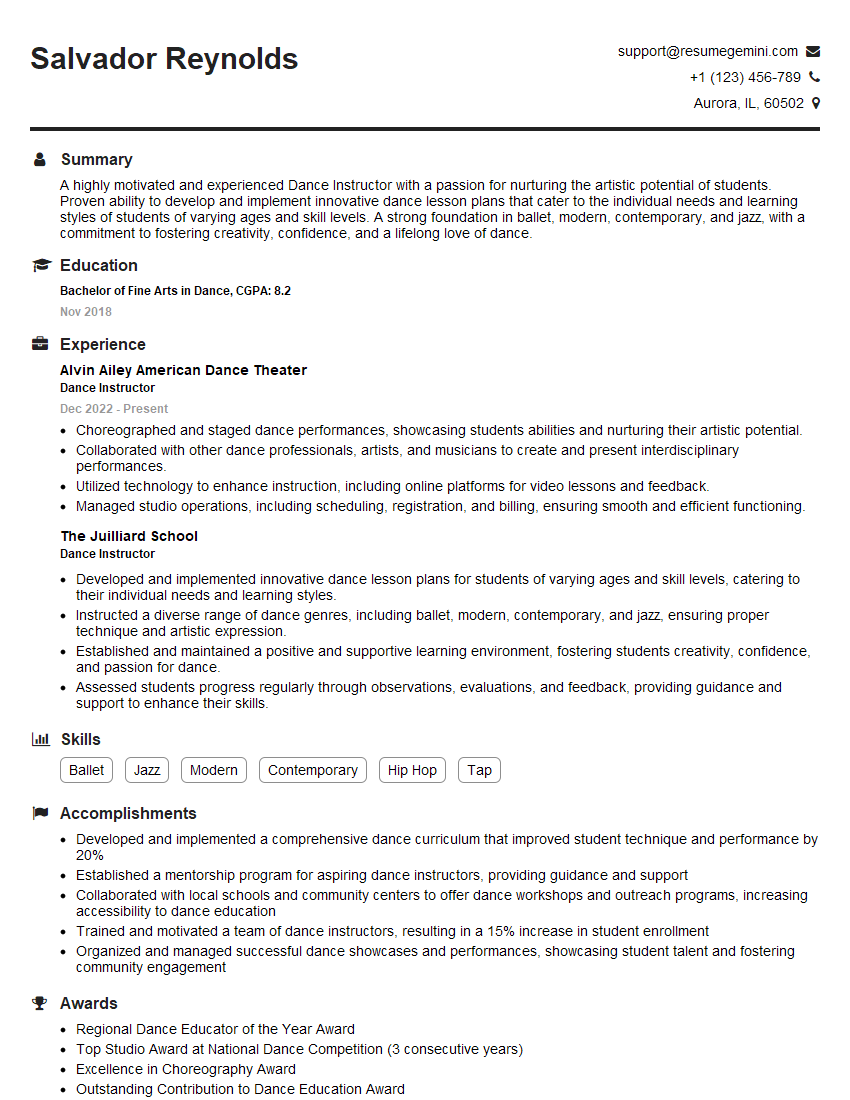
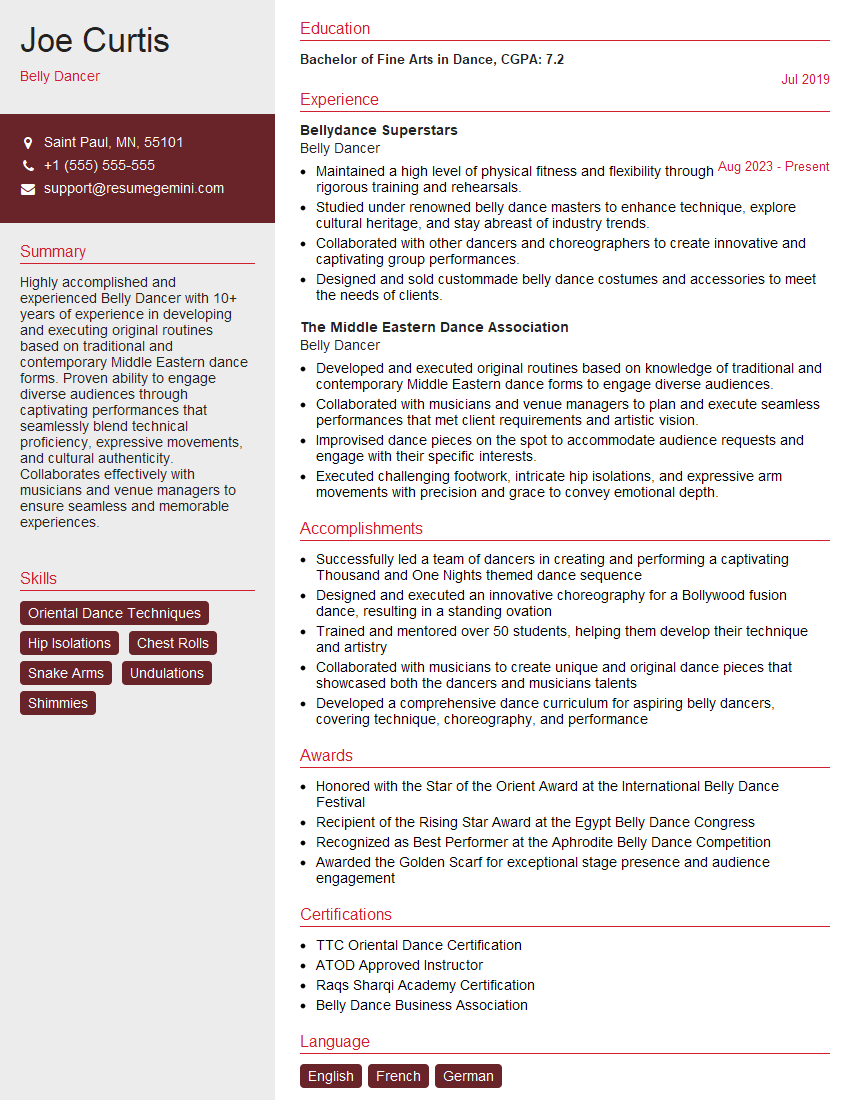
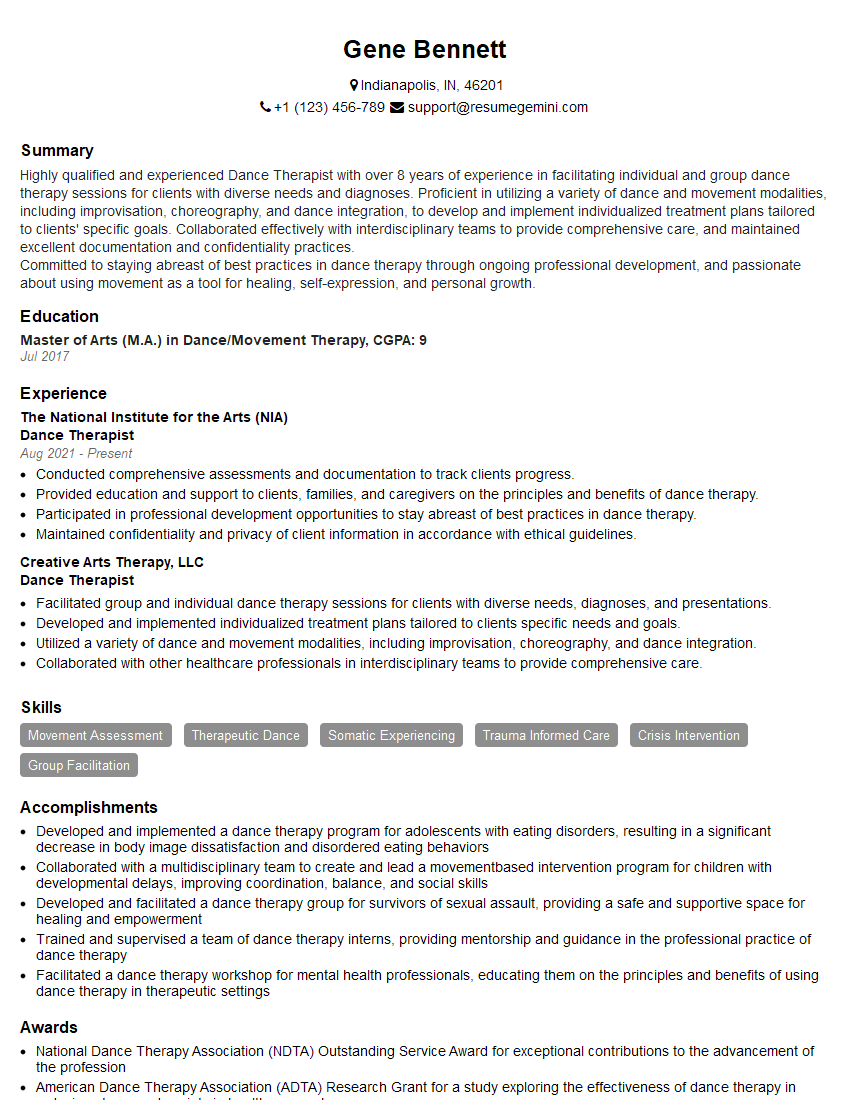
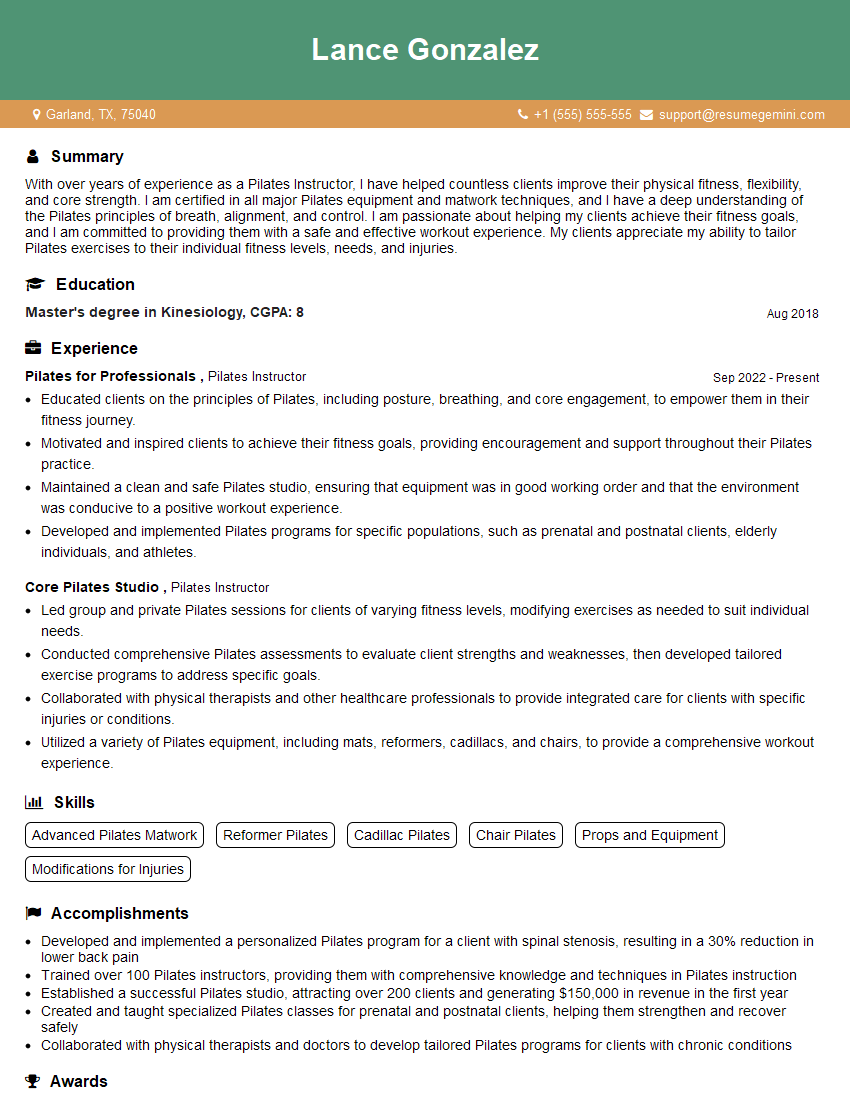
Mastering hip isolations opens doors to exciting career opportunities in dance, fitness, and related fields. A strong understanding of this skillset demonstrates dedication, precision, and a commitment to physical excellence – highly valued attributes in many professional settings. To maximize your job prospects, crafting an ATS-friendly resume is crucial. ResumeGemini is a trusted resource that can help you build a professional resume tailored to highlight your skills and experience effectively. Examples of resumes tailored to Hip Isolations are provided to help guide your resume creation process. Take advantage of these resources and put your best foot forward!



Explore more articles
Users Rating of Our Blogs
Share Your Experience
We value your feedback! Please rate our content and share your thoughts (optional).
What Readers Say About Our Blog
Very informative content, great job.
good