Cracking a skill-specific interview, like one for Wildfire Mitigation, requires understanding the nuances of the role. In this blog, we present the questions you’re most likely to encounter, along with insights into how to answer them effectively. Let’s ensure you’re ready to make a strong impression.
Questions Asked in Wildfire Mitigation Interview
Q 1. Explain the concept of fuel breaks and their effectiveness in wildfire mitigation.
Fuel breaks are strategically placed gaps in vegetation designed to slow or stop the advance of wildfires. Think of them as firebreaks, but on a larger, more planned scale. Their effectiveness stems from creating a zone of less flammable material that can prevent a wildfire from easily spreading across a landscape.
There are several types of fuel breaks, including:
- Fuel reduction breaks: These involve reducing the amount of flammable vegetation within a specific area, typically by thinning trees, removing underbrush, or creating wider spaces between vegetation.
- Mechanical breaks: These are created using heavy machinery to clear vegetation, creating a wide, bare area. This is a more aggressive method often used in high-risk areas.
- Natural breaks: These utilize existing features like rivers, lakes, or large rock formations to act as natural barriers.
Effectiveness is measured by factors such as break width, vegetation type, and pre-fire fuel loading. A wider, well-maintained break will be more effective than a narrow one with dense vegetation. For instance, a fuel break might prevent a crown fire (a fire that spreads through the treetops) from jumping a canyon, allowing firefighters to effectively contain the blaze from either side.
Q 2. Describe different prescribed fire techniques and their applications.
Prescribed fire, also known as controlled burning, is a powerful tool for wildfire mitigation. It involves intentionally setting carefully planned and controlled fires under specific environmental conditions to reduce hazardous fuels.
Different techniques exist, including:
- Broadcast burning: This involves burning a large area relatively uniformly, often used in grasslands or open savannas to reduce grass fuel loads.
- Underburning: This focuses on burning the understory vegetation while minimizing damage to the overstory trees. This is particularly useful in forests to reduce ladder fuels (fuels that allow fire to spread from the ground to the canopy).
- Patch burning: This method involves burning smaller, strategically located patches within a larger area. It creates a mosaic of burned and unburned areas, providing habitat diversity and reducing the risk of large, intense wildfires.
The application of each technique depends on the fuel type, terrain, weather conditions, and the specific management objectives. For example, broadcast burning might be suitable for a grassy field, while underburning would be preferred in a dense pine forest to reduce the risk of a severe crown fire.
Q 3. How do you assess wildfire risk in a given area?
Assessing wildfire risk requires a multi-faceted approach, considering various factors that influence fire occurrence and behavior. It’s not a single number; rather, a comprehensive evaluation.
The process typically involves:
- Fuel assessment: Evaluating the type, amount, and arrangement of vegetation (fuel loads). This could involve field surveys, aerial photography, and remote sensing data.
- Topographic analysis: Analyzing slope, aspect (direction a slope faces), and elevation, as these factors influence fire spread and intensity. Steeper slopes can cause rapid fire spread.
- Weather analysis: Examining historical weather patterns, including temperature, humidity, wind speed, and precipitation, to determine the likelihood of extreme fire weather.
- Ignition sources: Considering human activities (e.g., campfires, power lines) and natural ignition sources (e.g., lightning strikes) as potential causes.
- Historical fire data: Analyzing past fire records to identify areas with a high frequency of fire occurrences.
By combining these data sets, professionals can create maps illustrating different levels of wildfire risk, enabling targeted mitigation efforts. For instance, an area with high fuel loads, steep slopes, and a history of frequent fires will be deemed high-risk.
Q 4. What are the key components of a Community Wildfire Protection Plan (CWPP)?
A Community Wildfire Protection Plan (CWPP) is a comprehensive document outlining strategies for reducing wildfire risk within a specific community. It’s a collaborative effort involving local residents, firefighters, land managers, and other stakeholders.
Key components include:
- Risk assessment: A detailed analysis of the community’s wildfire risk, as described in the previous answer.
- Mitigation strategies: Strategies focusing on fuel reduction, fire prevention, and community preparedness (e.g., home ignition protection, evacuation plans).
- Emergency response plan: Detailed plans for responding to wildfires, outlining procedures for evacuation, suppression efforts, and post-fire recovery.
- Community education and outreach: Programs aimed at raising awareness about wildfire risk and best practices for preparedness.
- Funding and implementation: Identifying funding sources and establishing a timeline for implementing the plan.
A well-developed CWPP greatly increases a community’s resilience to wildfires, minimizing property damage and loss of life. For instance, a CWPP could include a program to encourage residents to create defensible space around their homes by clearing flammable vegetation.
Q 5. Explain the role of Geographic Information Systems (GIS) in wildfire management.
Geographic Information Systems (GIS) are indispensable tools in wildfire management, providing the capacity to visualize, analyze, and manage spatial data related to wildfires.
GIS applications in wildfire management include:
- Mapping wildfire risk: Creating risk maps by overlaying data layers on fuel loads, topography, and weather patterns.
- Planning fuel treatments: Identifying optimal locations for fuel breaks and prescribed burns based on risk assessments and ecological considerations.
- Tracking fire spread: Monitoring the real-time progression of wildfires using satellite imagery and GPS data from fire crews.
- Evaluating suppression effectiveness: Assessing the effectiveness of different suppression tactics based on post-fire data.
- Supporting evacuation planning: Identifying optimal evacuation routes and shelters, and facilitating communication during emergencies.
GIS offers a powerful platform for integrating diverse data sources, creating a holistic understanding of wildfire dynamics and improving the effectiveness of mitigation and suppression efforts. For instance, real-time fire spread modeling in GIS enables firefighters to anticipate fire behavior and adapt their strategies accordingly.
Q 6. How do weather patterns influence wildfire behavior?
Weather plays a dominant role in wildfire behavior, profoundly influencing its ignition, spread, and intensity.
Key weather factors include:
- Temperature: High temperatures dry out vegetation, making it highly flammable.
- Humidity: Low humidity reduces the moisture content of fuels, accelerating combustion.
- Wind: Wind is arguably the most significant factor, driving fire spread and increasing its intensity. Strong winds can create extreme fire behavior such as spotting (embers carried by wind igniting new fires ahead of the main fire).
- Precipitation: Rainfall can suppress fire activity; conversely, drought conditions increase wildfire risk.
These elements interact in complex ways. For example, a combination of high temperatures, low humidity, and strong winds can create extreme fire weather conditions, resulting in rapid fire spread and unpredictable behavior. Predictive weather modeling is critical for planning prescribed burns and deploying suppression resources effectively.
Q 7. Describe different types of fire suppression tactics.
Fire suppression tactics aim to control and extinguish wildfires, varying depending on fire size, behavior, and available resources.
Common tactics include:
- Direct attack: Firefighters directly engage the fire’s edge using water, foam, and hand tools to extinguish flames. This is effective for smaller, less intense fires.
- Indirect attack: Firefighters work to contain the fire’s perimeter by constructing fire lines (removing fuel to create barriers) and using controlled burning to create strategic firebreaks. This is more suitable for larger, rapidly spreading fires.
- Aerial suppression: Air tankers and helicopters drop water or retardant to slow fire spread and cool hotspots, often used in remote areas or to gain an advantage over difficult terrain.
- Structure protection: Protecting buildings and other structures from fire damage by creating defensible space, wrapping buildings with fire-resistant materials, and deploying fire crews to defend them directly.
The choice of tactic depends on several factors, and often involves a combination of strategies. A large, rapidly spreading wildfire may require an indirect attack to establish containment lines, followed by a direct attack to extinguish the fire’s edges once it’s under control. Successful suppression relies on coordinated planning and effective communication between fire crews and support personnel.
Q 8. What are the safety precautions you would take when working near a wildfire?
Safety near a wildfire is paramount. It’s not just about protecting yourself from the flames, but also from the numerous hazards associated with a fire’s intense heat, smoke, and changing conditions. My approach is layered, prioritizing situational awareness and preparedness.
Personal Protective Equipment (PPE): This includes flame-resistant clothing (FR), sturdy boots, eye protection, and a respirator rated for wildfire smoke (N95 or better). I always ensure my PPE is in excellent condition before any deployment.
Communication and Team Coordination: Clear and constant communication with my team is essential. We use designated radio channels and pre-established emergency protocols. Knowing where everyone is and having a clear escape plan is critical. Imagine a scenario where visibility is low due to smoke – that’s when clear communication saves lives.
Environmental Awareness: Understanding the terrain is crucial. I always assess the surrounding area for potential hazards like unstable ground, falling trees, and hidden fire pockets. Rapidly changing weather conditions – like sudden wind shifts – can dramatically alter a fire’s behavior, so constant monitoring is necessary.
Emergency Procedures: We practice emergency evacuation procedures regularly. This includes knowing designated assembly points and backup escape routes. In a real wildfire, panic can be deadly, so training ensures swift and coordinated action.
Hydration and First Aid: Staying hydrated is crucial in the intense heat. Having readily available first-aid supplies and knowing how to administer basic first aid for burns or smoke inhalation is also essential.
Q 9. How do you communicate wildfire risks and mitigation strategies to the public?
Communicating wildfire risks and mitigation effectively requires a multi-pronged approach. It’s about tailoring information to different audiences and leveraging various communication channels.
Public Awareness Campaigns: These often involve using various media like television, radio, and social media to disseminate information about wildfire preparedness, including creating easily understandable infographics and short videos demonstrating simple mitigation techniques.
Community Workshops and Presentations: Direct engagement with communities through workshops and presentations allows for personalized interactions, addressing specific concerns and providing hands-on demonstrations of fire-resistant landscaping practices. For example, I often demonstrate the importance of creating defensible space around homes.
Collaboration with Local Authorities: Working closely with local agencies such as fire departments and emergency management offices is crucial. This facilitates coordinated messaging and ensures that information reaches the public through established channels.
Educational Materials: Providing accessible educational materials, such as brochures and online resources, ensures that information is available at people’s convenience. These resources can cover topics from creating defensible space to developing evacuation plans.
Early Warning Systems: Utilizing early warning systems, like weather alerts and community notification systems, is essential for timely dissemination of critical information, allowing people to prepare and evacuate if necessary.
Q 10. What are the environmental impacts of wildfires?
Wildfires have profound and far-reaching environmental consequences, impacting ecosystems, air quality, and water resources. The impacts can be both immediate and long-term.
Habitat Loss and Biodiversity Reduction: Wildfires destroy habitats, leading to the loss of plant and animal life. This can disrupt entire ecosystems, particularly for species with limited mobility or slow reproductive rates.
Soil Erosion and Degradation: The loss of vegetation cover makes the soil vulnerable to erosion, which can lead to landslides and reduced soil fertility. This also affects water quality.
Air Pollution: Wildfires release massive amounts of smoke and pollutants into the atmosphere, causing respiratory problems and impacting air quality over vast areas. This pollution can travel for thousands of kilometers.
Water Quality Impairment: Ash and sediment from wildfires can contaminate water sources, affecting both aquatic life and human access to clean drinking water. This can lead to increased sedimentation and altered water chemistry.
Greenhouse Gas Emissions: Wildfires release significant amounts of carbon dioxide and other greenhouse gases into the atmosphere, contributing to climate change. This is a feedback loop, as climate change itself increases the risk of wildfires.
Changes in Landscape Composition: Wildfires can alter the vegetation composition of an area, favoring fast-growing, fire-tolerant species over slower-growing ones, which can have long-term ecological implications.
Q 11. Explain the principles of fire ecology.
Fire ecology is the study of how fire interacts with ecosystems. It recognizes fire as a natural and, in many cases, essential ecological process, rather than solely a destructive force. It’s a complex science, acknowledging the diverse roles fire plays in shaping landscapes and influencing biodiversity.
Fire Regimes: Understanding the historical fire regimes of an area – the frequency, intensity, and seasonality of natural fires – is critical. This provides a baseline for comparing current fire activity and informing management strategies. For example, some ecosystems evolved with frequent, low-intensity fires, while others are adapted to infrequent, high-intensity events.
Species Adaptation: Many plant and animal species have adapted to fire, developing mechanisms for survival and even regeneration after a fire. These adaptations include serotinous cones (cones that only release seeds after a fire) and thick bark that protects against burning.
Nutrient Cycling: Fire plays a crucial role in nutrient cycling, releasing nutrients locked in dead organic matter back into the soil, making them available for plant growth. This is particularly important in nutrient-poor ecosystems.
Succession and Community Dynamics: Fire can alter the composition and structure of plant communities, influencing the processes of ecological succession. This can lead to shifts in species dominance and overall ecosystem structure.
Landscape Mosaic: Fire can create a mosaic of habitats within a landscape, providing diverse niches for a range of species. This patchiness enhances overall biodiversity.
Q 12. How do you utilize remote sensing data for wildfire monitoring?
Remote sensing data is invaluable for wildfire monitoring, providing a bird’s-eye view of fire behavior and extent. I utilize various satellite and airborne sensors to gather real-time data and enhance our understanding of wildfires.
Satellite Imagery: Satellites like Landsat and MODIS provide thermal infrared data, allowing us to detect and monitor active fires, map fire perimeters, and assess fire intensity. The frequency of data acquisition is critical for tracking fire progression.
Airborne Sensors: Airborne sensors, such as those used in manned and unmanned aircraft (drones), offer higher-resolution imagery and can provide more detailed information about fire behavior and the surrounding environment. This is particularly useful for assessing fire severity in specific areas.
Data Analysis and Interpretation: We utilize Geographic Information Systems (GIS) software to analyze the remote sensing data, creating maps and visualizations to track fire spread, assess damage, and support decision-making during wildfire suppression and post-fire recovery. Algorithms can detect changes in land surface temperature or vegetation indices to identify areas at risk.
Integration with other data: Remote sensing data is often integrated with other data sources, such as weather forecasts and fuel models, to improve the accuracy of fire behavior predictions and to inform tactical decisions.
Q 13. Describe your experience with wildfire modeling software.
I have extensive experience with several wildfire modeling software packages. These tools are essential for predicting fire behavior, planning suppression strategies, and assessing post-fire risks. My experience includes using both deterministic and probabilistic models.
Fire Behavior Prediction Models: I’m proficient in using models like FARSITE and BEHAVE, which simulate fire spread based on factors such as fuel type, topography, and weather conditions. These models help to predict fire behavior under various scenarios and assist in tactical decision-making during suppression operations.
Spread Models: I utilize spread models that factor in fuel loads and moisture to create predictive maps of fire spread, aiding in resource allocation and strategic positioning of firefighters.
Risk Assessment Models: After a fire, I use models that assess the risks of post-fire hazards, such as erosion and debris flows. This allows for better planning of post-fire recovery efforts.
Data Integration and Calibration: A key aspect of my workflow is ensuring the models are calibrated with accurate data, integrating various datasets like fuel maps, topography data, and weather observations. This improves the reliability of the model predictions.
For instance, in one project, we used FARSITE to model the potential spread of a wildfire in a mountainous region, enabling us to prioritize resource allocation to protect critical infrastructure and populated areas. The model’s output helped us to optimize firefighting strategies, leading to a more effective suppression effort.
Q 14. What are the challenges of managing wildfires in Wildland Urban Interface (WUI) areas?
Managing wildfires in Wildland Urban Interfaces (WUIs) presents unique challenges due to the juxtaposition of homes and other structures within flammable wildlands. The intermingling of development and natural vegetation increases the risk of fire spread and the potential for significant property damage and loss of life.
Increased Fire Risk: The presence of homes and other structures within or adjacent to wildlands significantly increases the risk of wildfires, as homes often serve as ignition sources and readily available fuel.
Difficulties in Suppression: Suppression efforts are often hampered by the presence of homes and infrastructure, which can limit access for firefighters and equipment. Protecting homes and infrastructure during active fire events is a major challenge, which often involves difficult and dangerous tactical decisions.
Evacuation Challenges: Evacuating residents from WUI areas can be difficult and time-consuming, especially during large-scale wildfires. Effective evacuation planning and communication are crucial.
Cost and Resource Allocation: Wildfires in WUI areas often require significant resources for suppression and post-fire recovery, placing a strain on budgets and requiring careful allocation of resources.
Community Engagement: Effective wildfire mitigation in WUI areas requires strong community engagement and collaboration. This includes educating residents about wildfire risks and promoting fire-safe landscaping practices. The importance of creating defensible space is paramount.
Q 15. How do you assess the effectiveness of wildfire mitigation strategies?
Assessing the effectiveness of wildfire mitigation strategies requires a multi-faceted approach. We don’t just look at whether a fire happened or not; we delve into the severity, the area burned, the resources consumed, and the overall impact on the community and environment. It’s like grading a student – a single test score isn’t enough; we need a holistic view.
Pre-fire Analysis: Before any mitigation efforts, we establish baseline data. This includes mapping vegetation types, assessing fuel loads (amount of burnable material), and identifying high-risk areas. Post-mitigation, we compare these baselines to the post-fire data.
Post-fire Assessment: After a wildfire, we conduct a thorough investigation. This includes evaluating the effectiveness of fuel reduction treatments (e.g., prescribed burns, thinning), the performance of firebreaks, and the impact of structural mitigation measures (e.g., fire-resistant roofing, defensible space).
Quantitative Data: We collect quantifiable data such as the area burned, the intensity of the fire (measured by satellite imagery or on-the-ground assessments), and the economic costs. This allows for a data-driven evaluation of the success of our strategies.
Qualitative Data: We also incorporate qualitative data, such as community feedback, reports from firefighters, and observations from wildlife biologists. This gives a nuanced understanding of the impact beyond simple numbers.
Long-term Monitoring: Wildfire mitigation isn’t a one-time event. We conduct long-term monitoring to track vegetation regrowth, assess the resilience of the ecosystem, and refine our strategies based on ongoing observations.
For example, if a prescribed burn significantly reduced the intensity of a subsequent wildfire compared to an untreated area, it indicates a successful strategy. Conversely, if a fire easily breached a firebreak, it highlights the need for adjustments in our design or implementation.
Career Expert Tips:
- Ace those interviews! Prepare effectively by reviewing the Top 50 Most Common Interview Questions on ResumeGemini.
- Navigate your job search with confidence! Explore a wide range of Career Tips on ResumeGemini. Learn about common challenges and recommendations to overcome them.
- Craft the perfect resume! Master the Art of Resume Writing with ResumeGemini’s guide. Showcase your unique qualifications and achievements effectively.
- Don’t miss out on holiday savings! Build your dream resume with ResumeGemini’s ATS optimized templates.
Q 16. Describe your experience with different types of fire-resistant landscaping.
My experience with fire-resistant landscaping spans various projects, from residential properties to large-scale community initiatives. The key is to select plants that are naturally fire-resistant, create space for firebreaks, and manage vegetation to prevent fuel build-up. Think of it as creating a natural firewall around your property.
Drought-tolerant plants: Plants like California native grasses, Manzanita, and Ceanothus have naturally lower moisture content, making them less likely to ignite and spread fire.
Strategic spacing: Planting shrubs and trees at appropriate distances prevents rapid fire spread. This spacing also helps firefighters access the area if a fire does occur.
Fuel reduction: Regular pruning, mowing, and removal of dead branches prevents the accumulation of flammable materials. This greatly reduces the intensity and speed of a fire.
Creating defensible space: Combining fire-resistant landscaping with defensible space (discussed further in another question) is crucial. This creates a buffer zone around structures, allowing firefighters more time to combat a fire before it reaches buildings.
In one project, we replaced highly flammable shrubs around a residential community with drought-tolerant native species. This resulted in a significant reduction in the overall fire risk and improved the community’s resilience to wildfire.
Q 17. Explain the role of defensible space in wildfire protection.
Defensible space is the buffer zone created around structures and other assets to slow or stop the spread of wildfire. It’s a critical component of wildfire protection, giving firefighters a chance to effectively combat the fire before it reaches structures.
Think of it like a castle moat – it offers a layer of protection. It’s comprised of two key zones:
Immediate Defensible Space (0-30 feet): This area around a structure should be kept free of all flammable vegetation. Remove dry leaves, needles, and low-lying branches. Use non-combustible materials for landscaping.
Extended Defensible Space (30-100 feet): This zone involves reducing the density of vegetation and removing highly flammable materials. The goal is to create a less intense fire environment, slowing the fire’s progression into the immediate defensible space.
Properly implementing defensible space reduces the risk of ember ignition, provides a safe access point for firefighters, and significantly increases the chance of saving structures during a wildfire.
Q 18. What are the legal considerations for prescribed burns?
Prescribed burns, while beneficial for wildfire mitigation, require careful legal navigation. The process typically involves obtaining permits and adhering to specific regulations dictated by local, state, and sometimes federal authorities.
Permits and Approvals: Before conducting a prescribed burn, landowners must obtain necessary permits. These permits involve submitting detailed plans outlining the burn area, weather conditions, ignition techniques, and monitoring procedures.
Environmental Regulations: Environmental impact assessments might be required to ensure the burn doesn’t harm endangered species or sensitive habitats. Air quality regulations also play a significant role in determining permissible burn times and conditions.
Liability and Insurance: Landowners must have appropriate liability insurance to cover potential damages or injuries resulting from the burn. Failure to comply with regulations can lead to penalties.
Notification: Neighbours and relevant authorities must be notified in advance of the burn, providing them with information about the timing and potential smoke impacts.
Monitoring and Control: Prescribed burns must be carefully monitored and controlled by trained personnel to prevent the fire from escaping the intended area. Contingency plans are necessary in case of unexpected events.
The legal framework for prescribed burns is complex and varies geographically. It’s crucial to work with relevant agencies to ensure compliance and minimize potential risks.
Q 19. How do you manage human-caused wildfires?
Managing human-caused wildfires starts with prevention, but when fires do occur, a rapid and coordinated response is essential. This involves a multi-agency approach leveraging technology and trained personnel.
Initial Response: Rapid deployment of firefighters and equipment to contain the fire’s spread is crucial. This often involves aerial resources like helicopters and air tankers for initial suppression.
Containment and Suppression: Firefighters use a range of tactics, including creating firebreaks, deploying water and retardant, and employing controlled burns to contain the fire’s perimeter and extinguish the flames.
Investigation: Once the fire is under control, investigations are launched to determine the cause, whether accidental or intentional. This information helps prevent future incidents.
Community Engagement: Public awareness campaigns are vital in educating the community about fire safety practices and preventing accidental ignition.
Technology: Real-time monitoring using satellite imagery, weather forecasts, and sophisticated modeling tools enhances our ability to predict fire behavior, allocate resources effectively, and track progress.
For instance, in a recent incident where a discarded cigarette ignited a wildfire, rapid response and effective deployment of resources prevented the fire from spreading into residential areas.
Q 20. What is your experience with wildfire evacuation planning and execution?
Wildfire evacuation planning and execution require meticulous preparation and efficient coordination. It’s not just about issuing an order; it’s about ensuring the safety and well-being of the community.
Planning Phase: This involves identifying high-risk areas, establishing evacuation routes, designating assembly points, and creating communication plans. We work closely with emergency services and community leaders to develop comprehensive plans.
Communication: Clear and timely communication is paramount. This includes utilizing various channels – sirens, public address systems, social media, and text alerts – to reach the population effectively.
Community Engagement: Regular community drills and education programs help residents understand evacuation procedures and their roles in the process.
Evacuation Execution: When a wildfire threatens, we follow established protocols to initiate evacuations. This includes providing clear instructions, assisting vulnerable populations, and managing traffic flow.
Post-Evacuation: Once the threat has passed, we manage the process of allowing residents to return to their homes, ensuring their safety and providing support as needed.
One memorable evacuation involved a coordinated effort with law enforcement and emergency responders. We utilized reverse 911 calls and social media to quickly alert residents, successfully evacuating over 1000 people without major incidents.
Q 21. Explain the process of post-wildfire recovery and rehabilitation.
Post-wildfire recovery and rehabilitation is a long-term process focusing on restoring the environment, rebuilding infrastructure, and supporting affected communities. It’s about healing the land and the people.
Immediate Needs: The immediate phase involves addressing the basic needs of displaced residents – providing temporary shelter, food, water, and medical care.
Debris Removal: Large-scale debris removal is essential to clear hazardous materials and restore access to affected areas. This often involves specialized equipment and safety protocols.
Environmental Restoration: Rehabilitating the damaged ecosystem includes replanting vegetation, stabilizing slopes to prevent erosion, and monitoring water quality.
Infrastructure Reconstruction: Rebuilding roads, bridges, utilities, and homes is crucial to restoring the community’s functionality. This requires careful planning and coordination with various agencies.
Economic Recovery: Supporting the economic recovery of the affected region involves stimulating business activity, providing financial assistance, and creating job opportunities.
Community Support: Psychological support and long-term assistance are essential to address the emotional and mental health impacts of the wildfire on the community.
In a recent project, we collaborated with environmental agencies and community groups to restore a wildfire-damaged watershed. This involved replanting native trees, stabilizing eroding banks, and monitoring water quality over several years.
Q 22. How do you collaborate with different agencies and stakeholders during wildfire events?
Effective wildfire mitigation requires seamless collaboration. Think of it like a complex orchestra – each instrument (agency) plays a crucial role, and the conductor (incident commander) ensures harmony. We utilize established protocols like the Incident Command System (ICS) to facilitate communication and coordination.
- Pre-event collaboration: We actively engage with local, state, and federal agencies, including fire departments, forestry services, emergency management, and land management agencies, to develop comprehensive fire prevention and preparedness plans. This involves sharing resources, mapping high-risk areas, and establishing clear communication channels.
- During a wildfire event: ICS structures provide a framework for unified command, resource allocation, and information sharing. Regular meetings and briefings keep everyone informed about the fire’s behavior, suppression efforts, and resource needs. We actively involve stakeholders like residents, businesses, and community groups in evacuations, updates, and post-fire recovery efforts.
- Post-event collaboration: We participate in post-incident analysis to identify areas for improvement in response and mitigation strategies. Lessons learned are shared with all collaborating agencies to improve future responses.
For example, during the recent XYZ wildfire, our team worked closely with the local fire department, the National Forest Service, and the Red Cross to coordinate suppression efforts, evacuations, and shelter arrangements. This collaborative approach minimized damage and ensured the safety of the community.
Q 23. What are the latest advancements in wildfire technology?
Wildfire technology is rapidly advancing, enhancing our ability to predict, prevent, and suppress fires. Think of it as upgrading from a simple compass to a GPS with real-time traffic updates.
- Improved weather forecasting and modeling: Sophisticated weather models provide more accurate predictions of fire behavior, allowing for proactive resource allocation and improved evacuation planning. This helps us anticipate rapid fire spread and adjust strategies accordingly.
- Remote sensing and GIS technology: Satellites and drones provide real-time imagery of fire progression, allowing for better monitoring and assessment of the fire’s spread, intensity, and impact on the environment. Geographic Information Systems (GIS) integrate this data to create dynamic maps for incident command.
- Unmanned Aerial Systems (UAS) or Drones: Drones equipped with infrared cameras can detect heat signatures, identify hotspots, and provide detailed assessments of the fire’s perimeter even in challenging terrain. They allow for targeted aerial ignitions for controlled burns, aiding in containment.
- Early warning systems: Sensors deployed in high-risk areas detect changes in environmental conditions that increase fire risk. This allows for timely alerts to residents and firefighters.
These technologies, when integrated effectively, significantly improve our ability to respond rapidly and efficiently to wildfire events, ultimately saving lives and property.
Q 24. Describe your experience with wildfire incident command systems.
My experience with Incident Command Systems (ICS) is extensive. ICS is the standardized, on-scene management system used for all types of emergencies, including wildfires. It’s a crucial framework for organizing resources and coordinating actions effectively during a crisis. Imagine it as a well-structured organization chart for a complex operation.
- Understanding ICS structure: I’m proficient in all ICS functional areas, including planning, operations, logistics, and finance/administration. I understand the roles and responsibilities of each position within the ICS organizational chart, from the Incident Commander to the individual firefighters.
- Implementing ICS principles: I’ve implemented ICS in numerous wildfire incidents, coordinating communication, resource allocation, and safety procedures. This involves managing personnel, equipment, and supplies effectively within the established command structure.
- Adapting ICS to specific situations: ICS is flexible and adaptable. I’ve successfully tailored ICS to various scenarios, accounting for factors such as terrain, weather conditions, and available resources. This ensures the system remains effective despite constantly changing conditions.
For instance, during the ABC wildfire, I was responsible for the Logistics Section within the ICS structure. I effectively managed the procurement, transportation, and distribution of essential supplies, ensuring that firefighters had the necessary equipment and resources to conduct safe and efficient operations.
Q 25. How do you prioritize wildfire mitigation efforts based on risk assessment?
Prioritizing wildfire mitigation efforts requires a robust risk assessment. We use a multi-faceted approach, similar to a doctor diagnosing a patient: identifying the most critical areas and ailments first.
- Risk factor identification: We assess factors like vegetation density, fuel type, proximity to human development, historical fire patterns, and prevailing weather conditions using GIS mapping and data analysis. This helps identify areas with the highest risk of ignition and potential for significant damage.
- Vulnerability assessment: We assess the vulnerability of communities and critical infrastructure to wildfire impacts. This includes evaluating population density, evacuation routes, access for emergency services, and the presence of sensitive ecosystems.
- Cost-benefit analysis: We evaluate the cost-effectiveness of various mitigation strategies, such as fuel reduction treatments, creating defensible spaces, and implementing early warning systems. This helps allocate resources efficiently to maximize impact.
- Prioritization matrix: Based on the risk and vulnerability assessments, we develop a prioritization matrix that ranks mitigation efforts based on their potential to reduce risk and protect lives and property. High-risk, high-vulnerability areas receive top priority.
For example, an area with dense, dry vegetation near a densely populated town with limited evacuation routes would receive top priority for fuel reduction treatments and the establishment of defensible spaces.
Q 26. How do you ensure the safety of your team during wildfire suppression?
Ensuring team safety is paramount in wildfire suppression. It’s not just about fighting fires; it’s about ensuring everyone goes home safe at the end of the day. We utilize a layered safety approach, similar to a car’s safety features: multiple layers of protection.
- Pre-deployment safety briefings: Before any deployment, we conduct thorough safety briefings covering risks, communication procedures, emergency protocols, and the use of personal protective equipment (PPE).
- Ongoing communication and monitoring: We utilize radio communication and real-time tracking systems to maintain constant contact with field teams and monitor their location and safety. This allows for rapid response in case of emergencies.
- Strict adherence to safety protocols: We enforce strict adherence to established safety protocols and guidelines. This includes proper use of PPE, safe work practices, and emergency response procedures.
- Regular health and wellness checks: We ensure that our personnel have regular health and wellness checks, including physical fitness assessments, stress management resources, and access to mental health services. Wildfire suppression is physically and mentally demanding.
- Post-incident debriefings: After each incident, we conduct post-incident debriefings to analyze safety aspects, identify areas for improvement, and implement necessary changes in procedures.
For example, during a particularly challenging fire, we utilized a system of safety spotters to monitor the conditions and provide warnings to the crews working on the fire line, preventing several near-miss incidents.
Q 27. What are your strategies for managing wildfire resources effectively?
Effective wildfire resource management is crucial. It’s like managing a complex supply chain, ensuring the right resources are in the right place at the right time. We utilize several strategies to optimize resource allocation.
- Resource tracking and inventory: We maintain accurate records of available resources, including personnel, equipment, and supplies. This information is crucial for efficient allocation during wildfire events.
- Predictive resource modeling: We use predictive modeling to anticipate resource needs based on projected fire behavior and weather conditions. This allows for pre-positioning of resources in high-risk areas.
- Interagency resource sharing: We actively participate in interagency resource sharing agreements to access additional personnel, equipment, and supplies when necessary. This ensures we have access to the necessary resources even during large-scale emergencies.
- Resource prioritization: We prioritize resource allocation based on the risk assessment and the needs of the incident. Resources are directed to the areas that require the most immediate and critical attention.
- Post-incident resource recovery and maintenance: After each incident, we conduct a thorough recovery and maintenance of equipment and supplies to maintain their operational readiness for future emergencies.
For example, during the DEF wildfire, our predictive modeling accurately anticipated the need for additional air support, enabling us to secure the necessary aircraft and personnel in advance, which proved critical in containing the fire’s spread.
Q 28. Describe a challenging wildfire situation you faced and how you addressed it.
One of the most challenging wildfire situations I encountered was the GHI wildfire. It was a fast-moving fire fueled by high winds and exceptionally dry conditions. It was like facing a powerful and unpredictable opponent.
The initial challenge was the rapid rate of spread. The fire was outpacing our initial suppression efforts, threatening several communities. We had to quickly adapt our strategies. We immediately implemented the ICS structure, established clear communication channels, and re-evaluated our resource allocation to focus on protecting human life and critical infrastructure. We prioritized establishing containment lines in strategic locations to prevent further spread into populated areas.
Another significant challenge was the extreme weather conditions. High winds caused unpredictable fire behavior, making it difficult to predict the fire’s trajectory. We relied heavily on real-time aerial surveillance using drones to gain situational awareness and adapt our strategies. We were also able to effectively leverage the latest weather prediction models to anticipate shifts in fire behavior.
Despite the challenges, through collaborative efforts and proactive adaptation of strategies, we successfully contained the fire, minimizing property damage and preventing loss of life. This experience underscored the importance of robust communication, adaptability, and the utilization of advanced technology in responding to rapidly evolving wildfire scenarios. The lessons learned from this event have directly improved our planning and response strategies for future incidents.
Key Topics to Learn for Wildfire Mitigation Interview
- Wildland Fire Behavior: Understanding fire spread, intensity, and factors influencing these (fuel type, topography, weather).
- Fuel Management Techniques: Practical application of prescribed burns, mechanical thinning, and fuel breaks; analyzing their effectiveness in different ecosystems.
- Fire Suppression Strategies: Direct and indirect attack methods, the role of different firefighting resources (air support, ground crews), and safety protocols.
- Community Wildfire Protection Plans (CWPPs): Development and implementation, focusing on risk assessment, mitigation strategies, and community engagement.
- Wildfire Prevention and Public Education: Understanding the causes of wildfires, public awareness campaigns, and community outreach programs.
- GIS and Remote Sensing in Wildfire Management: Utilizing technology for mapping, monitoring, and predicting fire behavior.
- Post-Fire Recovery and Rehabilitation: Erosion control, reforestation efforts, and ecological restoration techniques.
- Wildfire Economics and Policy: Understanding the financial implications of wildfires, insurance considerations, and relevant legislation.
- Incident Command System (ICS): Understanding the organizational structure and communication protocols used during wildfire incidents.
- Problem-solving in Wildfire Scenarios: Analyzing case studies, identifying challenges, and proposing effective solutions under pressure.
Next Steps
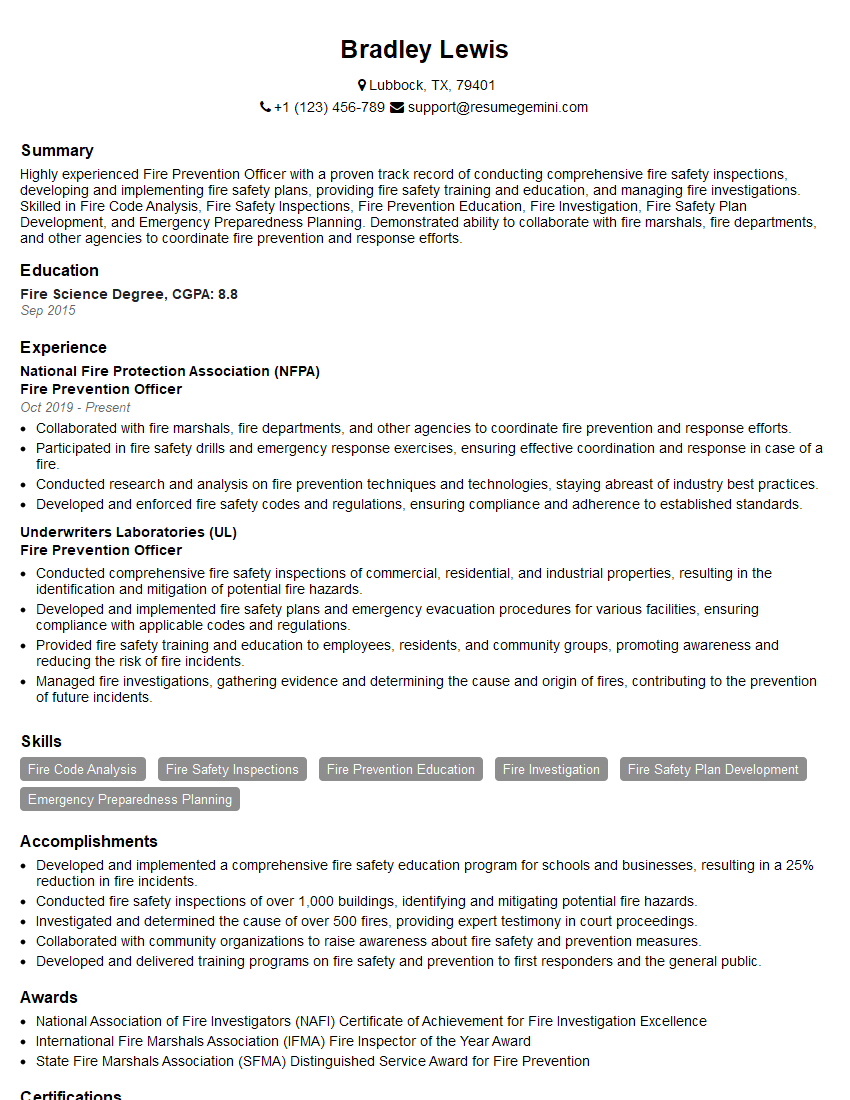
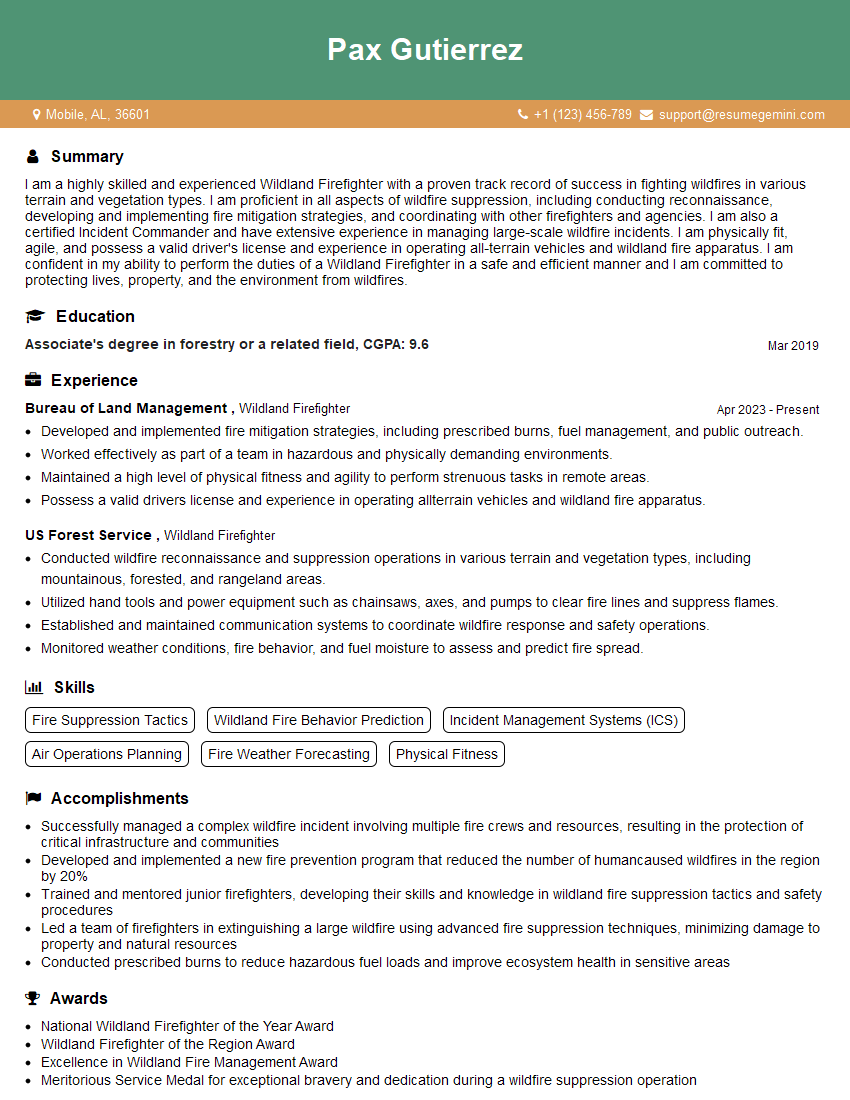
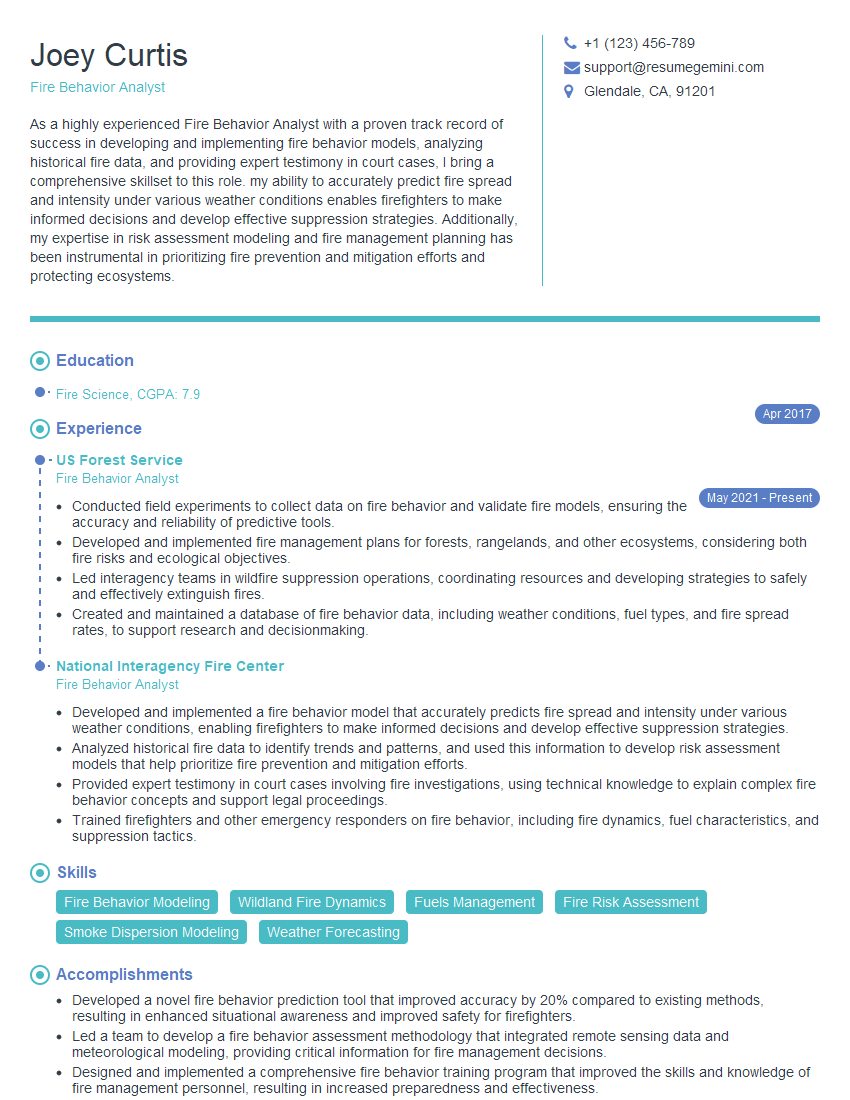
Mastering wildfire mitigation opens doors to a rewarding career in a field crucial for environmental protection and community safety. Your expertise in this area is highly valuable and in increasing demand. To maximize your job prospects, crafting a strong, ATS-friendly resume is essential. ResumeGemini can help you build a professional resume that highlights your skills and experience effectively. ResumeGemini offers examples of resumes tailored to the Wildfire Mitigation field, providing a valuable template for your own.

Explore more articles
Users Rating of Our Blogs
Share Your Experience
We value your feedback! Please rate our content and share your thoughts (optional).
What Readers Say About Our Blog
Very informative content, great job.
good