Cracking a skill-specific interview, like one for HVAC Systems Design, requires understanding the nuances of the role. In this blog, we present the questions you’re most likely to encounter, along with insights into how to answer them effectively. Let’s ensure you’re ready to make a strong impression.
Questions Asked in HVAC Systems Design Interview
Q 1. Explain the difference between sensible and latent heat.
Sensible heat and latent heat are two ways heat is transferred, affecting temperature and moisture content differently. Sensible heat is the heat we can feel and measure with a thermometer; it changes the temperature of a substance without altering its phase. Think of heating a room – the air’s temperature increases, this is sensible heat transfer. Latent heat, on the other hand, is the heat absorbed or released during a phase change, such as ice melting into water or water evaporating into steam. Even though the temperature remains constant during the phase change, a significant amount of energy is absorbed or released. In HVAC, latent heat is crucial for controlling humidity. For example, when air conditioning removes moisture from the air, it’s removing latent heat.
- Sensible Heat: A change in temperature without a change in phase (e.g., heating air from 20°C to 25°C).
- Latent Heat: A change of phase at a constant temperature (e.g., water evaporating at 100°C).
Q 2. Describe the psychrometric chart and its applications in HVAC design.
A psychrometric chart is a graphical representation of the thermodynamic properties of moist air at a constant pressure. It’s an essential tool in HVAC design, displaying relationships between temperature, humidity, enthalpy, and specific volume. It allows engineers to visualize and understand the impact of various HVAC processes on air properties.
Applications in HVAC Design:
- Determining air conditions: Knowing the dry-bulb temperature and relative humidity allows one to find the enthalpy and moisture content.
- Analyzing cooling and heating processes: The chart helps track changes in air properties during cooling (dehumidification, sensible cooling) or heating (humidification, sensible heating) processes.
- Sizing equipment: Understanding the amount of sensible and latent heat removal needed enables accurate sizing of HVAC units (e.g., air conditioners, humidifiers).
- Troubleshooting: By analyzing the conditions before and after an HVAC process, engineers can identify issues and optimize system performance.
For instance, designing an air conditioning system, the chart aids in determining the required cooling capacity to achieve a desired indoor condition (e.g., dry-bulb temperature and humidity), considering both sensible and latent heat loads.
Q 3. What are the key considerations for designing an HVAC system for a high-rise building?
Designing an HVAC system for a high-rise building presents unique challenges due to its scale and complexity. Key considerations include:
- Building Height and Zoning: Vertical zoning is crucial to address varying climate conditions at different levels. Different zones may require separate HVAC systems or a sophisticated central system with zone controls.
- Wind Loads and Pressure Differences: High-rise structures experience significant wind loads and pressure differentials, affecting airflow and system performance. These need to be considered in duct design and system pressurization.
- Air Quality and Ventilation: Providing adequate ventilation and ensuring high indoor air quality (IAQ) are essential, often requiring centralized air handling units with filtration systems.
- Energy Efficiency: High-rise buildings have significant energy consumption. Energy-efficient equipment, such as variable refrigerant flow (VRF) systems or chillers with energy recovery, are crucial for sustainability.
- Safety and Redundancy: High-rise safety necessitates redundancy in system components (e.g., pumps, chillers) and robust fire safety provisions to maintain reliable operation during emergencies.
- Accessibility and Maintenance: Designing for easy access to equipment for maintenance and repairs is critical, considering the building’s height and layout.
A well-designed high-rise HVAC system will use a combination of strategies like vertical zoning, efficient equipment, and robust controls to deliver optimal comfort and energy performance.
Q 4. How do you determine the appropriate size of an air conditioning unit for a specific space?
Determining the appropriate size of an air conditioning unit involves calculating the cooling load – the amount of heat that needs to be removed from a space to maintain a desired temperature. This involves several factors:
- Room Dimensions and Insulation: Larger rooms and poor insulation require larger units.
- Climate and External Temperature: Hotter climates necessitate greater cooling capacity.
- Number of Occupants and Appliances: People and heat-generating appliances (computers, lights) increase the cooling load.
- Window Area and Solar Gain: Large windows and direct sunlight significantly impact the cooling load.
- Desired Indoor Temperature and Humidity: Lower desired temperatures and lower humidity levels increase the cooling load.
Load calculations often use software or established formulas (Manual J or similar) that consider these factors. The resulting cooling load (in BTUs or kW) determines the necessary unit capacity. It’s crucial to avoid undersizing (inefficient cooling and discomfort) or oversizing (inefficient operation and potential humidity issues).
For example, a Manual J calculation might show a cooling load of 3 tons (36,000 BTU/hr). Therefore, a 3-ton or slightly larger air conditioning unit would be suitable. However, always consult professional HVAC engineers for accurate calculation and system design.
Q 5. Explain different types of HVAC systems (e.g., VRF, Chiller, DX).
HVAC systems come in various types, each with its strengths and weaknesses:
- VRF (Variable Refrigerant Flow): A single outdoor unit connects to multiple indoor units, offering flexibility in zoning and precise temperature control. Ideal for larger buildings or spaces requiring individual zone control.
- Chiller Systems: Use a chiller to cool water, which is then circulated through air handling units to cool spaces. Often preferred for large buildings due to their scalability and efficiency. They require cooling towers for heat rejection.
- DX (Direct Expansion): A refrigerant is directly circulated within the indoor units to absorb heat. Simpler and less expensive than other systems, suitable for smaller spaces and residential applications.
- Split Systems: Common in homes, featuring separate indoor and outdoor units. Relatively simple to install and maintain.
- Packaged Systems: Self-contained units that incorporate all components (compressor, condenser, evaporator, etc.) in a single package. Often used in commercial spaces requiring simpler solutions.
The choice of system depends on factors such as building size, budget, desired level of control, and energy efficiency requirements.
Q 6. What are the common types of refrigerants used in HVAC systems and their environmental impact?
Refrigerants are essential for heat transfer in HVAC systems. Their environmental impact is a significant concern:
- R-22 (HCFC-22): Older refrigerant, being phased out due to its high ozone depletion potential (ODP).
- R-410A (HFC): Common replacement for R-22, with low ODP but high global warming potential (GWP).
- R-32 (HFC): Lower GWP than R-410A, becoming increasingly popular.
- Natural Refrigerants (e.g., CO2, Ammonia, Propane): Zero or very low ODP and GWP. However, they may have safety or logistical considerations.
- HFO Refrigerants (e.g., R-1234yf, R-1234ze): Designed with very low GWP, intended as replacements for HFCs.
Regulations are continually tightening, pushing toward refrigerants with minimal environmental impact. Choosing a refrigerant involves balancing performance, cost, and environmental responsibility. Consulting updated standards and regulations is crucial.
Q 7. Describe the principles of air distribution and how it affects comfort.
Air distribution refers to how conditioned air is delivered and returned within a space. Effective air distribution is key to maintaining occupant comfort and energy efficiency.
Principles of Air Distribution:
- Supply Air Placement: Strategically locating supply air diffusers to minimize drafts and ensure uniform temperature distribution.
- Return Air Placement: Positioning return air grilles to facilitate effective air circulation and prevent dead zones.
- Airflow Rates and Velocity: Balancing airflow rates to ensure uniform distribution and avoid excessive drafts or stagnant areas. Higher velocities can result in drafts.
- Duct Design and Sizing: Properly sized and designed ductwork minimizes pressure losses and ensures efficient air delivery.
- Temperature and Humidity Control: Precise control of temperature and humidity is integral to ensure thermal comfort.
Impact on Comfort: Poor air distribution results in temperature stratification (uneven temperatures across a space), drafts, uncomfortable air velocities, and inadequate ventilation. This directly impacts occupant comfort, productivity, and satisfaction. Conversely, well-designed air distribution systems ensure a comfortable, even temperature distribution and high indoor air quality.
Q 8. Explain the role of ductwork design in efficient HVAC systems.
Ductwork design is the backbone of an efficient HVAC system. Think of it as the circulatory system of your building, delivering conditioned air to all the right places. A poorly designed duct system can lead to significant energy waste, uneven temperatures, and poor indoor air quality. Effective ductwork design involves careful consideration of several factors:
- Sizing: Ducts must be appropriately sized to handle the required airflow without excessive pressure drops. Undersized ducts restrict airflow, leading to weak air delivery and increased fan energy consumption. Oversized ducts lead to stratification (layers of different temperatures) and inefficient operation.
- Layout and Routing: The layout should minimize the length and number of bends, reducing friction and pressure losses. Strategic placement prevents bottlenecks and ensures even distribution. For instance, a longer duct run necessitates a larger diameter to compensate for increased friction.
- Materials: Selecting the right duct material – galvanized steel, flexible duct, or fiberglass – is crucial. Each material has different properties affecting airflow, durability, and cost. For example, flexible duct is easier to install but may be less durable and prone to leakage.
- Leakage: Air leaks in the duct system can severely impact efficiency. Proper sealing and insulation minimize energy loss and maintain consistent temperature throughout the building. A leaky system could be wasting as much as 30% of the conditioned air!
- Dampers and Registers: These allow for precise control of airflow to individual rooms or zones, optimizing comfort and energy use. Proper damper balancing ensures even distribution and prevents overheating or undercooling in certain areas.
In summary, a well-designed duct system ensures efficient air delivery, minimizes energy waste, and maximizes occupant comfort. It’s a critical aspect of any successful HVAC project.
Q 9. How do you calculate the total heat load for a building?
Calculating the total heat load for a building is a crucial step in HVAC system design. It determines the capacity of the equipment needed to maintain the desired temperature. This involves considering various factors that contribute to heat gain or loss:
- Sensible Heat Load: This accounts for temperature differences between the inside and outside, impacting the building’s structure (walls, roof, windows) and its occupants, equipment, and lighting.
- Latent Heat Load: This addresses moisture content in the air. Humidity affects cooling loads as air conditioning units must remove moisture to maintain a comfortable indoor environment.
- Infiltration Load: This considers air leakage through cracks, windows, and doors. The climate’s outdoor air temperature significantly influences this factor.
- Ventilation Load: This is the heat required to condition the fresh air brought into the building for ventilation purposes, often mandated by building codes.
The calculation process generally involves using software or manual calculation methods, considering:
- Building characteristics: Size, shape, orientation, insulation levels, window types.
- Climate data: Temperature, humidity, solar radiation.
- Occupancy and internal loads: Number of occupants, lighting, equipment heat generation.
The heat load calculation is usually broken down into different zones within the building, allowing for zoning strategies to optimize energy usage and improve comfort in different areas of a structure.
For example, a building with large south-facing windows will experience higher solar heat gain than one with north-facing windows. This needs to be accounted for in the load calculation to ensure appropriate sizing of the HVAC system.
Q 10. What are the key factors to consider when selecting HVAC equipment?
Selecting the right HVAC equipment is vital for a system’s efficiency, reliability, and lifespan. Key factors to consider include:
- Capacity (BTU/hr or kW): The equipment’s capacity must match the calculated heat load. An undersized unit will struggle to maintain the desired temperature, while an oversized unit will cycle on and off frequently, leading to reduced efficiency and increased wear.
- Efficiency (SEER, EER, HSPF): These ratings indicate the unit’s energy efficiency. Higher ratings mean lower operating costs. For example, a higher SEER rating for an air conditioner signifies it removes more heat per unit of energy consumed.
- Type of Equipment: Different equipment types (split systems, heat pumps, packaged units) have various applications and efficiency levels. Heat pumps, for instance, are efficient for both heating and cooling in moderate climates.
- Climate Conditions: The local climate significantly impacts equipment selection. A humid climate requires equipment with good dehumidification capabilities.
- Indoor Air Quality (IAQ): Consider features like air filtration (HEPA filters), UV lights, and ventilation capabilities to improve IAQ.
- Budget: Equipment costs vary widely, so budget constraints must be factored into the selection process.
- Maintenance Requirements: Choose equipment known for reliability and ease of maintenance to minimize downtime and operational issues.
- Noise levels: Consider noise levels, especially for units located near occupied spaces.
For instance, a high-rise building in a cold climate might benefit from a highly efficient heat pump system with zoning capabilities, while a smaller residential building in a mild climate could suffice with a simpler split-system air conditioner.
Q 11. Describe different types of ventilation systems and their applications.
Ventilation systems are crucial for providing fresh air and removing pollutants from indoor spaces. Several types exist, each suited for specific applications:
- Natural Ventilation: This relies on natural forces like wind and temperature differences to move air. It’s cost-effective but less controllable. Examples include opening windows or using vents.
- Mechanical Exhaust Ventilation: This uses fans to exhaust stale air from a building. It’s effective in removing pollutants but doesn’t directly introduce fresh air. Often used in bathrooms and kitchens.
- Mechanical Supply Ventilation: This uses fans to supply fresh, conditioned air into a building. It improves air quality but requires careful design to ensure even distribution and avoid drafts.
- Balanced Ventilation: This system both supplies and exhausts air simultaneously, providing a controlled exchange of air. It’s highly efficient and effective for maintaining a comfortable and healthy indoor environment, often utilizing heat recovery ventilators (HRVs) or energy recovery ventilators (ERVs) to reduce energy consumption. These systems recover some of the heat or coolness from the exhaust air to pre-condition the incoming air.
The choice of ventilation system depends on factors like building type, occupancy, and climate. A large office building might employ a sophisticated balanced ventilation system with HRVs, while a smaller residential building might use a simpler combination of mechanical exhaust and natural ventilation.
Q 12. What are the common problems encountered in HVAC systems and their solutions?
HVAC systems are complex, and various problems can arise. Some common issues and solutions are:
- Insufficient Cooling/Heating: This often indicates an undersized unit, inadequate airflow (due to clogged filters or duct restrictions), or refrigerant leaks. Solutions include replacing or resizing the unit, cleaning or repairing the ductwork, and addressing refrigerant leaks.
- Uneven Temperatures: This points to poor ductwork design, unbalanced dampers, or insufficient airflow to certain zones. Solutions include balancing the system, repairing duct leaks, or adding zoning controls.
- High Energy Bills: This could be due to low efficiency equipment, leaks in the ductwork, or improper system operation. Solutions include upgrading to more energy-efficient equipment, sealing duct leaks, and optimizing system settings.
- Poor Indoor Air Quality (IAQ): This can be caused by inadequate ventilation, dirty air filters, or the presence of mold or other contaminants. Solutions involve replacing air filters regularly, cleaning ducts, improving ventilation, and addressing moisture issues.
- System Noise: Excessive noise can arise from worn bearings, loose components, or improper installation. Solutions involve identifying the source of the noise and making repairs or replacements.
- Refrigerant Leaks: This reduces the system’s cooling capacity. Leak detection and repair by qualified technicians are crucial. Refrigerant is also environmentally sensitive, so proper handling is essential.
Regular maintenance, including filter changes and inspections, can prevent many of these problems. A proactive approach is far more cost-effective than emergency repairs.
Q 13. Explain the importance of building automation systems in HVAC control.
Building automation systems (BAS) revolutionize HVAC control, providing significant benefits in efficiency, comfort, and operational management. BAS integrates various building systems, including HVAC, lighting, and security, into a centralized control platform. For HVAC, it offers:
- Zoning Control: Allows for independent temperature control in different areas of a building, optimizing comfort and energy savings. For example, unoccupied zones can be set to a lower temperature or even shut down.
- Energy Optimization: BAS analyzes real-time data and adjusts system operation to minimize energy consumption without compromising comfort. This can involve optimizing fan speeds, adjusting supply air temperatures based on occupancy, and scheduling system operation.
- Remote Monitoring and Control: Allows for real-time monitoring of system performance and remote adjustments from anywhere with an internet connection. This can facilitate proactive maintenance and reduce response times to emergencies.
- Predictive Maintenance: By tracking system parameters, BAS can anticipate potential equipment failures and schedule preventative maintenance before problems occur, minimizing downtime and repair costs.
- Data Logging and Reporting: Provides detailed historical data on energy consumption, system performance, and equipment operation, facilitating analysis and identifying opportunities for further improvements.
Consider a large office building where BAS can automatically adjust the HVAC based on occupancy levels throughout the day. When the building is unoccupied, the system can reduce energy consumption significantly while maintaining a minimum level of ventilation. This results in substantial energy savings over time.
Q 14. How do you ensure energy efficiency in HVAC system design?
Ensuring energy efficiency in HVAC system design is crucial for both environmental sustainability and cost savings. Strategies include:
- Proper Sizing and Selection of Equipment: Selecting appropriately sized and highly efficient equipment (high SEER, EER, and HSPF ratings) is paramount. Oversized units operate inefficiently and waste energy.
- Optimized Ductwork Design: Minimizing ductwork length, reducing bends, and sealing leaks are crucial for minimizing pressure drops and improving airflow efficiency.
- Zoning and Variable Air Volume (VAV) Systems: These systems allow for precise control of airflow and temperature to individual zones, reducing energy consumption by only conditioning occupied spaces.
- Building Envelope Improvements: Improving the building’s insulation, air sealing, and window efficiency significantly reduces the heating and cooling load.
- Heat Recovery Ventilators (HRVs) and Energy Recovery Ventilators (ERVs): These systems recover heat or coolness from exhaust air to pre-condition incoming fresh air, reducing the energy required for heating or cooling ventilation air.
- Smart Controls and Building Automation Systems (BAS): BAS can optimize system operation based on occupancy, weather conditions, and other factors, minimizing energy waste.
- Regular Maintenance: Keeping the system clean, well-maintained, and properly calibrated is essential for optimal efficiency. Regular filter changes, inspections, and preventative maintenance can significantly improve system performance and energy savings.
- Renewable Energy Integration: Using renewable energy sources like solar or geothermal energy can further reduce reliance on traditional energy sources and lower operational costs.
For example, incorporating HRVs can significantly reduce energy consumption in ventilation systems. By pre-heating or pre-cooling the incoming fresh air, these systems minimize the energy required by the HVAC system. A combination of these strategies offers the best approach toward creating an energy-efficient HVAC system.
Q 15. What are your experiences with different HVAC design software (e.g., Revit, AutoCAD)?
My experience with HVAC design software is extensive, encompassing both Revit and AutoCAD. Revit, with its Building Information Modeling (BIM) capabilities, is my preferred platform for large-scale projects. Its ability to coordinate different disciplines – architectural, structural, MEP – is invaluable. I leverage Revit’s features for ductwork modeling, equipment placement, and energy analysis, creating accurate and coordinated designs. For smaller projects or quick sketches, AutoCAD’s efficiency remains unmatched. I’m proficient in using AutoCAD’s drawing tools for schematic design and detailed drafting of HVAC components. I’ve used both software packages to create comprehensive documentation including plans, sections, details, and specifications. For example, on a recent hospital project, Revit allowed us to detect and resolve clashes between ductwork and structural elements early in the design phase, saving considerable time and cost during construction.
Furthermore, I am familiar with other software like HAP (Hourly Analysis Program) for energy modeling and various duct design software to optimize air distribution. I am also adept at using software for performing load calculations, selecting HVAC equipment and generating accurate estimates of construction costs. This comprehensive software proficiency allows me to deliver detailed, accurate and efficient designs for all my projects.
Career Expert Tips:
- Ace those interviews! Prepare effectively by reviewing the Top 50 Most Common Interview Questions on ResumeGemini.
- Navigate your job search with confidence! Explore a wide range of Career Tips on ResumeGemini. Learn about common challenges and recommendations to overcome them.
- Craft the perfect resume! Master the Art of Resume Writing with ResumeGemini’s guide. Showcase your unique qualifications and achievements effectively.
- Don’t miss out on holiday savings! Build your dream resume with ResumeGemini’s ATS optimized templates.
Q 16. Explain the process of HVAC system commissioning.
HVAC system commissioning is a systematic process verifying that all components of the system work together as designed, meet specified performance requirements, and operate efficiently. It’s a critical step ensuring the building’s occupants have a comfortable and healthy environment. The process typically involves several key phases:
- Pre-commissioning: This early-stage planning involves reviewing design documents, identifying potential issues, and developing a commissioning plan.
- System Testing: During construction, individual components (like chillers, air handlers, etc.) are tested to ensure they meet manufacturer’s specifications.
- Integrated Systems Testing: Once all components are installed, the entire HVAC system undergoes rigorous testing to ensure proper integration and performance.
- Functional Performance Testing: This verifies that the system meets the design requirements, such as maintaining set temperatures and air quality.
- Training and Documentation: Operations and maintenance personnel are trained on the system’s operation, and comprehensive documentation is provided.
- Post-Commissioning: This phase involves monitoring the system’s performance after it becomes operational and addressing any issues that arise.
A successful commissioning process dramatically reduces energy consumption and improves the overall efficiency and lifespan of the HVAC system, making it a cost-effective practice in the long run. For instance, I once worked on a project where commissioning revealed a significant air leakage in the ductwork, leading to energy savings of over 15%.
Q 17. How do you handle conflicts between architectural and HVAC design requirements?
Conflicts between architectural and HVAC design are common. The key is proactive communication and collaboration. My approach involves early coordination meetings with the architectural team to identify potential clashes early in the design process. For example, we may need to strategically locate ductwork within the ceiling void to avoid interfering with architectural features like lighting fixtures or structural elements. This can sometimes lead to compromises. We might need to slightly adjust duct sizes or locations, but it is usually manageable.
When conflicts arise, I employ a collaborative problem-solving approach involving careful analysis of the building’s requirements and constraints. We explore alternative design options that satisfy both architectural and HVAC needs. This could involve using smaller, more flexible ductwork, exploring different equipment placements or even suggesting alternative architectural solutions. We document all decisions carefully, ensuring a clear understanding between all parties and a cohesive final design. Visual aids such as 3D models or detailed drawings are invaluable tools in this process. For example, on a recent project, we discovered a conflict between a large duct and an architectural feature. By working closely with the architects, we found an alternative route for the duct that maintained both the aesthetic appeal and the functionality of the HVAC system.
Q 18. Describe your experience with different types of duct materials and their properties.
My experience encompasses various duct materials, each with its advantages and disadvantages:
- Galvanized Steel: This is a common choice due to its strength, durability, and cost-effectiveness. However, it’s susceptible to corrosion in humid environments and can be heavy, requiring stronger supports.
- Aluminum: Lighter than steel and resistant to corrosion, aluminum is ideal for applications requiring less structural support or in corrosive environments. However, it’s more expensive than steel.
- Fiberglass: Used for its lightweight, insulating properties and sound dampening qualities, fiberglass is suitable for applications where noise reduction and energy efficiency are paramount. Its lower structural strength requires careful design and installation.
- Flexible Ductwork: Often used for smaller runs or in areas with limited access. It offers ease of installation but can be less efficient than rigid ductwork due to higher friction losses.
Material selection is crucial and depends on factors like the project’s budget, environmental conditions, required sound attenuation, and aesthetic considerations. For instance, in a cleanroom environment, we might opt for stainless steel for its hygiene properties, while in a high-humidity environment, aluminum or epoxy-coated steel would be preferred.
Q 19. What are your experience with building codes and regulations related to HVAC?
My experience with building codes and regulations related to HVAC is extensive. I am familiar with ASHRAE (American Society of Heating, Refrigerating and Air-Conditioning Engineers) standards, International Building Code (IBC), and local codes. I understand the implications of these codes on HVAC system design, including energy efficiency requirements, ventilation rates, safety regulations, and accessibility standards. Compliance with these codes is paramount to ensure the system’s safe and efficient operation.
For example, I’m well-versed in ASHRAE 90.1 for energy efficiency, understanding the implications of different design choices on energy performance. I use this knowledge to create designs that not only meet but exceed code requirements. I am also adept at interpreting local building codes, which often vary significantly in their requirements for fire dampers, ventilation rates, and accessibility. This detailed knowledge ensures that all my designs are compliant, minimizing potential delays and costs associated with non-compliance. I am also experienced in preparing documentation which demonstrates compliance and facilitating the approval process.
Q 20. How do you approach troubleshooting an HVAC system malfunction?
Troubleshooting an HVAC system malfunction requires a systematic approach. I begin with a thorough visual inspection, checking for obvious issues like tripped breakers, leaks, or visible damage. I then consult the system’s documentation, including blueprints, operating manuals, and maintenance logs, to understand the system’s design and history. I use instrumentation like multimeters, pressure gauges, and temperature sensors to collect data and identify the source of the problem. This data-driven approach is critical for accurate diagnosis.
My troubleshooting strategy typically follows these steps:
- Gather information: Identify the symptoms, when the problem started, and any recent changes to the system.
- Analyze data: Use instrumentation to check key parameters like airflow, pressure, temperature, and electrical readings.
- Isolate the problem: Systematically eliminate potential causes until the source of the malfunction is identified.
- Implement corrective actions: Repair or replace faulty components and verify the repair’s effectiveness.
- Document findings: Maintain accurate records of the troubleshooting process and implemented solutions.
For example, a recent call involved a building experiencing uneven cooling. Through systematic testing, I pinpointed a malfunctioning damper motor causing restricted airflow to one zone. Replacing the motor restored even cooling to the entire building.
Q 21. Explain the concept of thermal comfort and its impact on building design.
Thermal comfort refers to the condition of mind that expresses satisfaction with the thermal environment. It’s a subjective experience influenced by several factors, including air temperature, humidity, air movement, and radiant temperature (heat radiating from surfaces). Poor thermal comfort leads to reduced productivity, discomfort, and even health problems.
In building design, achieving thermal comfort is paramount. It directly impacts occupant satisfaction and productivity. The design process considers the building’s climate, occupancy patterns, and intended use to select appropriate HVAC systems and optimize their performance. Strategies include:
- Proper sizing of HVAC equipment: Ensuring the system can effectively heat and cool the space to maintain comfortable temperatures.
- Strategic placement of vents and diffusers: Optimizing airflow patterns to prevent drafts and hot/cold spots.
- Use of thermal mass: Utilizing building materials that absorb and release heat to moderate temperature fluctuations.
- Natural ventilation: Incorporating operable windows and skylights to enhance airflow and reduce reliance on mechanical systems.
- Building envelope design: Employing high-performance insulation and glazing to minimize heat transfer.
By thoughtfully designing the building envelope and incorporating appropriate HVAC systems, we create a comfortable and productive environment for the building’s occupants. A poorly designed system, however, can lead to complaints, reduced productivity and increased energy consumption.
Q 22. How do you integrate renewable energy sources into HVAC systems?
Integrating renewable energy sources into HVAC systems is crucial for sustainable building design. This involves leveraging technologies that harness solar, wind, geothermal, or biomass energy to either directly power HVAC equipment or reduce the overall energy demand.
- Solar Thermal Systems: These systems use solar collectors to heat water, which can then be used for hydronic heating systems or to preheat air entering an air handler, thus reducing the load on the conventional heating system. For example, in a large commercial building, solar thermal panels on the roof can significantly reduce reliance on natural gas for water heating, a substantial portion of overall energy consumption.
- Photovoltaic (PV) Systems: PV panels generate electricity directly from sunlight. This electricity can power electric heat pumps, fans, and other HVAC components, decreasing reliance on the grid. I’ve worked on projects where PV panels on the building’s facade supplied a substantial portion of the energy needed for a high-efficiency air-conditioning system.
- Geothermal Heat Pumps: These utilize the relatively constant temperature of the earth to provide both heating and cooling. Ground source heat pumps (GSHPs) are particularly effective, offering high efficiency and reduced environmental impact compared to traditional systems. I once designed a GSHP system for a residential project, significantly lowering their energy bills and carbon footprint.
- Biomass Boilers: In some contexts, biomass boilers using sustainably sourced wood pellets or other organic materials can provide heating for larger buildings. It’s important to carefully consider environmental implications, ensuring responsible sourcing and minimizing emissions.
The integration strategy depends on factors like climate, building type, available space, and budget. A thorough energy audit is essential to determine the optimal renewable energy mix for a specific project.
Q 23. What are your experiences with different types of air filters and their selection criteria?
Selecting the right air filter is critical for maintaining indoor air quality and HVAC system efficiency. My experience encompasses various filter types, each with specific applications and limitations:
- Flat Panel Filters (Low-efficiency): These are inexpensive and suitable for removing larger particles like dust and lint. They’re commonly found in residential applications where stringent air quality control isn’t paramount.
- Pleated Filters (Medium-efficiency): These offer greater surface area and improved dust-holding capacity compared to flat panels. They are appropriate for most residential and many commercial settings.
- HEPA Filters (High-efficiency): High-efficiency particulate air (HEPA) filters are capable of removing at least 99.97% of particles 0.3 microns or larger, ideal for environments requiring stringent air purity, such as hospitals or cleanrooms. Their higher cost and increased air resistance should be considered.
- Electrostatic Filters: These utilize an electric charge to attract and capture airborne particles. They tend to have a longer lifespan than mechanical filters but may require periodic cleaning or replacement of the charge media.
- Activated Carbon Filters: These are specialized filters that adsorb gaseous pollutants and odors. They’re frequently added to HVAC systems to remove VOCs (volatile organic compounds) and other harmful gases.
The selection criteria depend on the specific needs and context. Factors to consider include:
- Air Quality Requirements: The level of cleanliness required (residential, commercial, industrial, healthcare).
- HVAC System Capacity: Filter resistance affects airflow, so the filter must be appropriately sized for the system.
- Operating Costs: Higher efficiency filters require more frequent replacement, increasing operating costs.
- Maintenance Considerations: Ease of access and replacement should be considered during the design stage.
For instance, in a hospital operating room, HEPA filters are essential to minimize the risk of airborne infection. In contrast, a standard residential HVAC system might only need a pleated filter.
Q 24. Describe your understanding of the importance of maintaining indoor air quality.
Maintaining good indoor air quality (IAQ) is paramount for occupant health, comfort, and productivity. Poor IAQ can lead to various health problems, reduced cognitive function, and decreased overall well-being.
My understanding emphasizes the multifaceted nature of IAQ, encompassing several critical factors:
- Particle Control: Removal of dust, pollen, mold spores, and other particulate matter through proper filtration and ventilation.
- Gaseous Pollutant Control: Mitigation of volatile organic compounds (VOCs), carbon monoxide (CO), radon, and other gases through source control, ventilation, and air purification.
- Humidity Control: Maintaining optimal humidity levels to prevent mold growth and enhance comfort. High humidity can exacerbate asthma and allergies; low humidity can dry out mucous membranes.
- Temperature Control: Ensuring comfortable temperature conditions that promote productivity and minimize thermal stress.
- Ventilation: Providing adequate fresh air intake to dilute pollutants and maintain a healthy indoor environment. This can be achieved through natural ventilation or mechanical ventilation systems.
In practice, I ensure IAQ is addressed through careful system design, including proper ventilation strategies, selection of appropriate filtration, and consideration of potential sources of indoor pollutants. I frequently use computational fluid dynamics (CFD) modeling to simulate airflow patterns and predict pollutant dispersion within a space. For example, in school design projects, I prioritize efficient ventilation systems to reduce the spread of airborne illnesses.
Q 25. Explain the principles of hydronic heating systems.
Hydronic heating systems use water as a heat transfer medium to distribute heat throughout a building. Unlike forced-air systems, they utilize a network of pipes to circulate heated water, providing radiant heat through radiators, underfloor heating, or other radiant heat emitters.
The principles behind hydronic heating include:
- Heat Generation: A boiler heats the water to a specific temperature, typically using natural gas, propane, electricity, or other fuel sources.
- Water Circulation: A pump circulates the heated water through the pipe network, transferring heat to the various emitters.
- Heat Emission: Radiators, underfloor heating systems, or other radiant emitters transfer the heat from the water into the surrounding space. Radiators release heat through convection and radiation; underfloor heating primarily emits radiant heat.
- Return Path: After the water has released its heat, it returns to the boiler to be reheated and recirculated.
Hydronic systems offer advantages such as even heat distribution, quiet operation, and high efficiency, especially when combined with condensing boilers. They are well-suited for radiant heating applications, offering excellent comfort. However, they can be more expensive to install than forced-air systems and require more careful planning and execution. I have extensive experience designing hydronic systems for both residential and commercial projects, often incorporating zoning to provide individual control over temperature in different areas of the building.
Q 26. How do you address the challenges of designing HVAC systems for extreme climates?
Designing HVAC systems for extreme climates presents unique challenges requiring careful consideration of several factors:
- Extreme Temperatures: In very hot or cold climates, the HVAC system must be sized to handle significantly larger heating or cooling loads. This may involve using oversized equipment or implementing multiple stages of heating and cooling.
- Humidity Control: High humidity in hot and humid climates can significantly reduce the effectiveness of air conditioning. Systems should incorporate dehumidification strategies, like using desiccant dehumidifiers or optimizing airflow patterns.
- Energy Efficiency: In extreme climates, energy consumption is a major concern. High-efficiency equipment, proper insulation, and air sealing are vital for minimizing energy use and lowering operational costs.
- Frost Protection: In cold climates, measures are needed to prevent freezing of water pipes and components within the HVAC system. This may include insulation, heat tracing, or using antifreeze solutions.
- Material Selection: Components must be chosen to withstand the extremes of temperature and potential weather events such as high winds or heavy snow.
For example, in a project for a building in a desert climate, I focused on high-efficiency evaporative cooling combined with carefully designed shading strategies to reduce heat gain. In contrast, for a project in a very cold climate, I prioritized high-efficiency heat pumps with integrated frost protection measures and meticulous building insulation.
Q 27. Describe your experience with lifecycle cost analysis for HVAC systems.
Lifecycle cost analysis (LCCA) is essential for making informed decisions about HVAC system selection and design. It considers all costs associated with a system over its entire lifespan, not just the initial purchase price.
My experience in LCCA involves using specialized software and methodologies to evaluate the following cost components:
- Initial Investment Costs: Equipment costs, installation labor, and material costs.
- Operating Costs: Energy consumption, maintenance, repairs, and filter replacements.
- Replacement Costs: The cost of replacing components or the entire system at the end of its useful life.
- Financial Factors: Discount rates, inflation rates, and financing options are integrated into the analysis.
By performing LCCA, I can compare different HVAC system options and identify the most cost-effective solution over the long term. For example, while a high-efficiency heat pump might have a higher initial investment cost, its lower operating costs over its 20-year lifespan could make it significantly more economical than a less efficient system. This comprehensive approach to cost evaluation ensures optimal value for my clients and minimizes their long-term financial burden.
Q 28. What are your thoughts on the future trends in HVAC technology?
The future of HVAC technology is rapidly evolving, driven by the need for increased efficiency, sustainability, and improved IAQ. I foresee several key trends:
- Increased Adoption of Heat Pumps: Heat pumps are becoming increasingly popular due to their high efficiency and reduced environmental impact compared to traditional heating systems. Advances in low-temperature heating applications are extending their suitability to colder climates.
- Smart HVAC Systems and IoT Integration: The use of sensors, data analytics, and machine learning will enable more intelligent control of HVAC systems, optimizing performance and reducing energy waste. Smart thermostats and remote monitoring systems are already becoming standard in many applications.
- Improved IAQ Technologies: New technologies will continue to improve IAQ monitoring and control, including advanced filtration systems and air purification technologies to address specific pollutants.
- Integration of Renewable Energy: The integration of renewable energy sources, such as solar and geothermal, will become increasingly prevalent, minimizing reliance on fossil fuels.
- Development of Sustainable Refrigerants: The phase-out of high-global-warming-potential (GWP) refrigerants will accelerate, with a focus on environmentally friendly alternatives.
These trends indicate a shift towards a more sustainable, efficient, and intelligent HVAC industry. It’s an exciting time in the field, and I am continuously learning and adapting to stay ahead of these developments. This is essential to design and deliver systems that meet the evolving needs of clients and contribute to a healthier and more sustainable environment.
Key Topics to Learn for Your HVAC Systems Design Interview
Ace your next HVAC Systems Design interview by mastering these key areas. Remember, a deep understanding of both theory and practical application is crucial.
- Load Calculations: Understanding how to accurately determine heating and cooling loads for different building types and climates. This includes applying various calculation methods and using specialized software.
- System Selection & Design: Choosing the appropriate HVAC equipment (e.g., air handlers, chillers, boilers) based on load calculations, budget constraints, and client requirements. Consider practical applications like designing systems for various building sizes and occupancy types.
- Ductwork Design & Sizing: Mastering the principles of airflow, pressure drop, and duct sizing to ensure efficient and effective air distribution throughout the building. Think about practical challenges like navigating complex building layouts and minimizing noise.
- Refrigeration Cycles & Thermodynamics: A solid grasp of the underlying thermodynamic principles governing refrigeration cycles is essential. Be prepared to discuss different types of refrigerants and their environmental impact.
- Building Codes & Regulations: Familiarity with relevant building codes and industry standards related to HVAC design and installation is paramount for compliance and safety. Explore local and national regulations that impact your work.
- Energy Efficiency & Sustainability: Discuss strategies for designing energy-efficient HVAC systems, including the use of renewable energy sources and energy-saving technologies. Showcase your understanding of green building practices.
- Control Systems & Automation: Understanding different types of HVAC control systems and their integration with building automation systems (BAS). Be prepared to discuss system optimization and troubleshooting strategies.
- Troubleshooting & Problem-Solving: Demonstrate your ability to identify and resolve common HVAC system issues. Be ready to explain your methodical approach to troubleshooting and problem-solving.
Next Steps: Unlock Your HVAC Career Potential
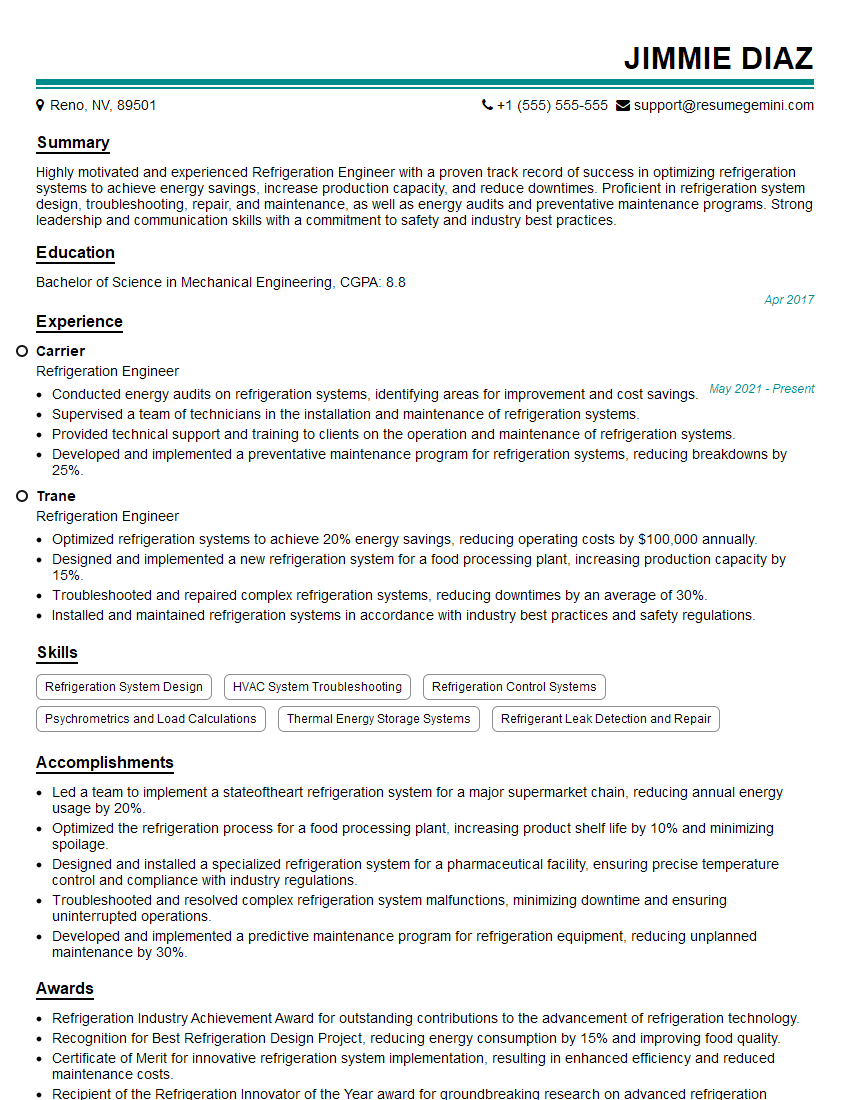
Mastering HVAC Systems Design opens doors to exciting career opportunities and higher earning potential. To maximize your chances of landing your dream job, a strong, ATS-friendly resume is vital. ResumeGemini can help you craft a compelling resume that highlights your skills and experience effectively. We offer examples of resumes tailored specifically to HVAC Systems Design professionals – allowing you to showcase your expertise and stand out from the competition. Invest in your future; build a standout resume with ResumeGemini today.
Explore more articles
Users Rating of Our Blogs
Share Your Experience
We value your feedback! Please rate our content and share your thoughts (optional).
What Readers Say About Our Blog
Very informative content, great job.
good