The right preparation can turn an interview into an opportunity to showcase your expertise. This guide to In-Process Quality Monitoring interview questions is your ultimate resource, providing key insights and tips to help you ace your responses and stand out as a top candidate.
Questions Asked in In-Process Quality Monitoring Interview
Q 1. Explain the importance of in-process quality monitoring.
In-process quality monitoring is crucial because it allows us to identify and correct defects during the production process, rather than at the end. This proactive approach significantly reduces waste, rework, and ultimately, the cost of poor quality. Think of it like this: it’s much cheaper to fix a small crack in a vase while it’s still being made than to discard the finished product. Early detection prevents the accumulation of defects and ensures that the final product meets the specified quality standards. It also helps prevent costly recalls and reputational damage.
Q 2. Describe your experience with Statistical Process Control (SPC).
My experience with Statistical Process Control (SPC) is extensive. I’ve used SPC methods across various manufacturing environments to monitor and control processes, using tools like control charts to detect shifts in process performance. For instance, in a previous role, we utilized X-bar and R charts to track the diameter of machined parts. By analyzing the data plotted on these charts, we could quickly identify any deviations from the target diameter, allowing us to investigate and adjust the machining process before producing significant numbers of non-conforming parts. This prevented scrap and ensured consistent product quality. We also implemented control charts for attributes, such as the number of defects per unit, to manage the quality of assembly processes.
Q 3. How do you identify and address deviations from quality standards during the production process?
Identifying deviations starts with clearly defined quality standards and regular monitoring. I typically use a multi-faceted approach. First, data from in-process inspections and automated quality checks are analyzed. Control charts are instrumental in visually identifying trends or shifts indicating deviations. If a deviation is detected, a thorough investigation follows, using tools such as Pareto charts to prioritize the most significant causes. Addressing the deviation involves corrective actions to bring the process back into control, ranging from minor adjustments to machine settings to complete process redesign depending on the root cause analysis. Documentation of the deviation, corrective actions, and preventive measures are crucial for continuous improvement.
Q 4. What are the key metrics you use to track in-process quality?
The key metrics I track vary depending on the specific product and process, but commonly used metrics include:
- Defect rate: The number of defective units per total units produced.
- Yield: The percentage of good units produced.
- Process capability indices (Cp, Cpk): Measures of how well the process is capable of meeting specifications.
- Cycle time: The time taken to produce one unit.
- Mean time between failures (MTBF): For equipment reliability.
These metrics provide a comprehensive view of in-process quality and highlight areas needing improvement.
Q 5. Explain your experience with different quality control tools (e.g., control charts, Pareto charts).
I’m proficient in various quality control tools. Control charts, like X-bar and R charts (for continuous data) and p-charts and c-charts (for attribute data), are essential for monitoring process stability. Pareto charts help identify the vital few causes contributing to the majority of defects. For instance, in one project involving assembling electronic components, a Pareto chart revealed that 80% of the defects stemmed from two specific soldering stations. This allowed us to focus our improvement efforts on these key areas, leading to a significant reduction in defects. Other tools I frequently use include flowcharts, fishbone diagrams (Ishikawa diagrams), and scatter diagrams for root cause analysis.
Q 6. How do you handle non-conformances identified during in-process monitoring?
Handling non-conformances involves a systematic approach. First, the non-conforming units are identified and isolated to prevent them from entering the next stage of production. Then, a thorough investigation is carried out to determine the root cause of the non-conformances. Depending on the severity and nature of the non-conformances, different actions are taken, such as rework, scrap, or concession. The decision is documented and tracked, and preventive measures are implemented to avoid similar occurrences in the future. This often involves updating process parameters, providing additional training, or improving equipment maintenance.
Q 7. What are your methods for root cause analysis of quality issues?
My approach to root cause analysis is data-driven and employs several techniques. I frequently utilize the 5 Whys method to progressively drill down to the underlying reasons behind a quality issue. Fishbone diagrams are helpful in visually organizing potential causes. Data analysis techniques such as regression analysis and statistical testing are used to identify significant factors contributing to defects. Involving cross-functional teams in the root cause analysis fosters a collaborative environment and helps identify solutions from different perspectives. The key is to not just address the symptoms but to eliminate the underlying cause to prevent recurrence.
Q 8. Describe your experience with corrective and preventive actions (CAPA).
Corrective and Preventive Actions (CAPA) is a systematic process for identifying, investigating, and resolving quality issues to prevent recurrence. It’s like a detective investigating a crime – finding the root cause and then ensuring the same crime doesn’t happen again. My experience involves a structured approach across all stages:
- Problem Identification: This begins with a thorough review of non-conforming materials, customer complaints, audit findings, or process deviations. For instance, I once noticed an unusually high rate of defective welds in a particular batch of products.
- Investigation: This step involves meticulously analyzing the problem to find the root cause. We use tools such as Fishbone diagrams (Ishikawa diagrams) to pinpoint contributing factors. In the welding example, our investigation revealed that a recent change in the welding electrode material was the culprit.
- Corrective Action: This addresses the immediate problem. In our case, we immediately switched back to the original electrode material, halting production and inspecting the affected batch.
- Preventive Action: This step aims to prevent future occurrences. This might involve retraining staff on the correct procedure, implementing a new verification system, or updating standard operating procedures (SOPs). We implemented a new quality control check at the material receiving stage to ensure the correct electrode was always used.
- Verification and Validation: Finally, we verify the effectiveness of the implemented actions and validate that the problem is truly resolved. We monitored the welding process closely for several production runs to confirm the issue was permanently fixed.
I’ve consistently documented all CAPA activities following a company-defined format, ensuring traceability and compliance with regulatory requirements.
Q 9. How do you ensure the accuracy and reliability of in-process inspection data?
Ensuring the accuracy and reliability of in-process inspection data is crucial for maintaining product quality. It’s like ensuring your measuring tape is calibrated correctly before constructing a building – small errors can lead to major problems. My approach involves several key strategies:
- Calibration and Validation: All measuring equipment undergoes regular calibration against traceable standards. We maintain detailed records of these calibrations to ensure that the equipment is functioning accurately. Validation of test methods further ensures they are fit for purpose and produce reliable results.
- Operator Training: Inspectors receive comprehensive training on the correct use of equipment, procedures, and data recording methods. We emphasize the importance of accurate observation and consistent application of standards, much like training a chef to maintain consistent recipe standards.
- Data Integrity Controls: We have robust systems in place to prevent errors and manipulation of data. This includes checks and balances like double-checking measurements, using standardized data entry forms, and employing electronic data capture systems with audit trails.
- Statistical Process Control (SPC): We utilize SPC charts to monitor process variations over time, helping identify trends and potential problems before they escalate into major defects. This allows for proactive adjustments to maintain the desired quality levels.
- Regular Audits and Reviews: Periodic audits of the inspection process itself ensure that the system is working as intended. These reviews also highlight areas for improvement and maintain the reliability of the data over time.
By implementing these measures, we build confidence in the accuracy and reliability of our in-process inspection data, forming a strong foundation for informed decision-making.
Q 10. Explain your experience using quality management systems (e.g., ISO 9001).
I have extensive experience working within ISO 9001 compliant quality management systems. It’s like a recipe for consistent quality – a detailed plan that ensures all steps are followed correctly. My experience covers a wide range of aspects:
- Documentation Control: Maintaining and updating SOPs, work instructions, and quality records, ensuring accuracy and accessibility for all staff. Think of this as maintaining the company’s recipe book.
- Internal Auditing: Conducting internal audits to assess conformance to ISO 9001 requirements, identifying gaps, and recommending corrective actions. This is like doing a quality check on the kitchen periodically to maintain efficiency.
- Management Review: Participating in management review meetings to analyze quality performance, address risks, and plan for improvements. This involves reviewing the overall results and planning ahead.
- Corrective and Preventive Action (CAPA) implementation: As discussed previously, I actively participate in the entire CAPA process, from problem identification to verification of implemented actions. Think of this as troubleshooting a problem in the recipe to create better results.
- Continuous Improvement: Actively participating in continuous improvement initiatives through the use of tools such as Lean and Six Sigma methodologies. This is like constantly working on improving the recipe for better quality and efficiency.
My experience ensures a deep understanding of the requirements of ISO 9001 and its practical application in maintaining and improving product quality.
Q 11. How do you communicate quality issues to relevant stakeholders?
Communicating quality issues effectively is crucial for timely resolution and preventing further problems. It’s like sending out a clear distress signal during an emergency, ensuring everyone understands the situation and can act accordingly. My communication strategy focuses on:
- Clear and Concise Reporting: Using clear and concise language to accurately describe the issue, its impact, and potential consequences. This involves using objective language to avoid ambiguity and unnecessary complications.
- Appropriate Communication Channels: Utilizing appropriate channels for various stakeholders. For example, I might use email for routine updates, formal reports for management, and face-to-face communication for critical issues that require immediate action.
- Data Visualization: Presenting data visually using charts and graphs to quickly communicate trends and patterns. This aids understanding and avoids the complexities of simply presenting raw data.
- Prompt Notification: Ensuring prompt notification of relevant stakeholders, especially in cases of critical quality issues. This is particularly critical for minimizing negative outcomes and ensuring quick responses.
- Follow-up and Feedback: Following up on communicated issues and obtaining feedback to assess the effectiveness of implemented actions and ensure everyone stays informed.
I ensure that communication is tailored to the audience, incorporating the necessary level of detail and technical expertise.
Q 12. Describe a time you had to make a difficult decision regarding quality.
In a previous role, we faced a situation where a major customer identified a critical defect in a large batch of our products. The defect wasn’t immediately apparent during our standard quality control checks. The decision was whether to recall the entire batch, potentially causing significant financial losses, or to attempt a selective repair, risking potential reputational damage if the repair proved insufficient.
After carefully weighing the pros and cons with the production and management team, including considering the risk assessment and potential costs, we chose a selective repair strategy involving a rigorous quality inspection and re-testing of each individual product. We also proactively contacted the customer and kept them fully informed of our corrective actions throughout the process. This approach proved successful, saving the company substantial financial losses while maintaining customer trust.
This experience highlighted the importance of using both critical thinking and strong communication skills in resolving unexpected issues while prioritizing both quality and business sustainability.
Q 13. How do you balance speed of production with maintaining high quality standards?
Balancing speed of production with high-quality standards is a constant challenge in manufacturing. It’s like driving a race car – you need speed, but safety and control are paramount. My approach involves several key strategies:
- Process Optimization: Streamlining processes to eliminate bottlenecks and inefficiencies without compromising quality. This can involve using Lean Manufacturing principles to create a more efficient workflow.
- Automation: Automating repetitive tasks that are prone to human error, thus improving both speed and accuracy. Automated testing equipment and robotic arms are common examples.
- Preventive Maintenance: Proactive equipment maintenance schedules reduce downtime and delays due to equipment failures. This ensures consistent speed without sacrificing quality.
- Employee Empowerment: Empowering employees to identify and resolve quality issues quickly, avoiding significant delays. This fosters a culture of problem-solving and continuous improvement.
- Technology Integration: Using real-time data monitoring and analytics to identify potential problems early and adjust production parameters accordingly. This allows for timely adjustments without interrupting the flow.
Ultimately, this balance is achieved through a continuous improvement approach, constantly refining processes to achieve both speed and high quality simultaneously. It requires collaboration between production and quality control to establish quality standards, track performance, and constantly refine the process.
Q 14. What is your experience with process audits?
Process audits are a systematic and independent examination of a process to assess its effectiveness and conformance to defined requirements. It’s like a health checkup for a process – identifying potential problems before they become serious. My experience encompasses:
- Planning and Scope Definition: Defining the scope of the audit, including specific processes, procedures, and documentation to be reviewed. The specific goal of the audit is clearly defined.
- Audit Execution: Conducting the audit using a structured approach, involving interviews with personnel, review of documentation, observation of processes, and verification of records. This is often guided by a checklist and standards.
- Non-Conformance Identification: Documenting any deviations from established procedures or standards, including evidence to support the findings. This includes documenting corrective actions.
- Reporting and Follow-up: Preparing a comprehensive audit report, summarizing findings, and identifying recommendations for improvement. This report is communicated appropriately.
- Follow-up on Corrective Actions: Following up on the implementation of corrective actions to ensure that identified problems are resolved.
I have experience conducting both internal and external audits, utilizing various audit methodologies and focusing on continuous improvement. My audit approach ensures objectivity, accuracy and contributes to a culture of accountability and quality enhancement.
Q 15. Explain your familiarity with different sampling techniques.
Sampling techniques are crucial in in-process quality monitoring because inspecting every single item is often impractical or cost-prohibitive. We use different methods depending on the nature of the process and the desired level of confidence.
- Random Sampling: Every item has an equal chance of being selected. This is ideal when the process is stable and there’s no reason to suspect specific areas of higher defect rates. For example, randomly selecting 10 circuit boards from a batch of 1000 for inspection.
- Stratified Sampling: The population is divided into subgroups (strata), and samples are randomly taken from each stratum. This is useful when subgroups might have different characteristics. Imagine testing different batches of raw material from various suppliers – each supplier represents a stratum.
- Systematic Sampling: Items are selected at regular intervals. For instance, selecting every 10th widget off the assembly line. This is simple, but it can be problematic if there’s a cyclical pattern in the process.
- Cluster Sampling: The population is divided into clusters (e.g., production runs), and some clusters are randomly selected for complete inspection. This is efficient for large populations but might not be as representative as other methods.
The choice of sampling technique depends on factors like the cost of sampling, the desired precision, and the nature of the production process. Often, a combination of techniques is used for a more robust analysis.
Career Expert Tips:
- Ace those interviews! Prepare effectively by reviewing the Top 50 Most Common Interview Questions on ResumeGemini.
- Navigate your job search with confidence! Explore a wide range of Career Tips on ResumeGemini. Learn about common challenges and recommendations to overcome them.
- Craft the perfect resume! Master the Art of Resume Writing with ResumeGemini’s guide. Showcase your unique qualifications and achievements effectively.
- Don’t miss out on holiday savings! Build your dream resume with ResumeGemini’s ATS optimized templates.
Q 16. How do you use data to drive continuous improvement in quality?
Data is the cornerstone of continuous improvement in quality. We use data to identify trends, pinpoint root causes of defects, and track the effectiveness of corrective actions.
- Control Charts: These visual tools track key process parameters over time, helping us identify shifts in the process mean or increase in variability. A sudden increase in points outside the control limits would signal a need for investigation.
- Process Capability Analysis: This helps determine whether a process is capable of meeting specified requirements. It assesses the variability of the process relative to the customer’s specifications. A Cp or Cpk value below 1 indicates the process is not capable.
- Statistical Process Control (SPC): A broader set of techniques that include control charts, process capability analysis, and other statistical methods to monitor and improve processes.
- Root Cause Analysis: When problems occur, we use techniques like the 5 Whys or fishbone diagrams to systematically investigate the underlying cause, not just the symptoms.
For example, if our control chart shows an upward trend in defect rates for a specific component, we’d dig deeper using root cause analysis, perhaps uncovering a problem with the supplier or a malfunctioning machine. The data guides our decisions, ensuring improvements are data-driven and not based on guesswork.
Q 17. What are the common challenges faced in in-process quality monitoring?
In-process quality monitoring presents several challenges:
- Balancing cost and effectiveness: Implementing comprehensive monitoring can be expensive. Finding the right balance between thoroughness and cost-effectiveness is crucial.
- Real-time data acquisition: Obtaining accurate data in real-time can be challenging, especially in complex or automated systems. This may require specialized sensors and data acquisition systems.
- Data interpretation and analysis: Interpreting large datasets requires expertise and the right tools. Incorrect interpretations can lead to inefficient or ineffective corrective actions.
- Operator training and buy-in: Frontline operators need proper training to understand the monitoring system and use it effectively. Their buy-in is essential for the system’s success.
- Integrating with existing systems: Integrating the monitoring system with existing enterprise resource planning (ERP) and manufacturing execution systems (MES) can be complex and time-consuming.
For example, a lack of real-time data might lead to detecting defects only at the end of the production process, increasing scrap and rework costs.
Q 18. Describe your experience with process capability analysis.
Process capability analysis is a critical aspect of my work. It involves assessing whether a process consistently produces output within specified customer requirements (specifications). We use metrics like Cp and Cpk to quantify the process capability.
- Cp (Process Capability Index): Measures the inherent variability of the process compared to the tolerance range. A Cp of 1 indicates the process is just capable of meeting the specifications.
- Cpk (Process Capability Index): Accounts for both variability and process centering. It shows how close the process average is to the target value. This is usually more informative than Cp alone.
In practice, I’ve used process capability analysis to identify bottlenecks in production lines. For instance, if a Cpk for a critical dimension is below 1.33, it signifies that the process is not consistently meeting the specifications, leading to potential customer dissatisfaction and higher rejection rates. We then would identify the source of variability (e.g., machine wear, inconsistent materials, operator error) and implement corrective actions to improve the process.
Q 19. How do you ensure the effectiveness of your quality control measures?
Ensuring the effectiveness of quality control measures requires a multi-faceted approach:
- Regular audits: We conduct periodic audits to verify that procedures are followed correctly and the monitoring system is functioning as intended.
- Data analysis and review: Continuous monitoring of key process indicators and regular review of control charts help detect problems early.
- Corrective actions: We have robust procedures for addressing problems promptly and effectively. This includes identifying root causes, implementing corrective actions, and verifying their effectiveness.
- Calibration and maintenance: Equipment used for measurement and monitoring needs to be properly calibrated and regularly maintained to ensure accuracy.
- Continuous improvement: We constantly seek ways to enhance our quality control procedures, using data analysis and best practices to refine our processes.
For example, regularly scheduled audits of our calibration procedures ensure the accuracy of our measurement instruments, ultimately improving the reliability of our quality data.
Q 20. What are your skills in using quality control software?
I’m proficient in several quality control software packages, including Minitab, JMP, and SPC software specific to our industry. My skills range from data entry and analysis to creating control charts, conducting process capability studies, and generating reports.
In Minitab, for instance, I can easily create various control charts such as X-bar and R charts, I-MR charts, and p-charts, depending on the type of data being analyzed. I can also perform advanced statistical analyses like ANOVA and regression analysis to identify significant factors influencing quality. I’m adept at using these tools to present the data in a clear and concise manner to stakeholders.
Q 21. How do you stay updated on the latest quality control methodologies?
Staying updated on the latest quality control methodologies is critical in this field. I actively engage in several strategies:
- Professional memberships: I’m a member of professional organizations like ASQ (American Society for Quality), which provides access to conferences, publications, and networking opportunities.
- Industry conferences and workshops: I regularly attend conferences and workshops to learn about the latest advancements and best practices in the field.
- Online courses and webinars: I utilize online platforms to stay abreast of new techniques and technologies.
- Industry publications and journals: I regularly read industry publications and journals to keep up-to-date with research and developments.
- Mentorship and collaboration: I actively engage with other quality professionals to share knowledge and learn from their experiences.
This continuous learning ensures that I apply the most effective and up-to-date methods in my work, leading to improved quality and efficiency.
Q 22. Explain your experience with quality improvement projects.
My experience with quality improvement projects spans several years and various industries. I’ve been involved in projects ranging from streamlining manufacturing processes to improving software development workflows. A key aspect of my approach is a data-driven methodology. For example, in a recent project at a pharmaceutical company, we implemented a Statistical Process Control (SPC) system to monitor the filling process of medication vials. By analyzing the data generated by the SPC system, we identified subtle variations in the filling mechanism that were leading to inconsistencies in dosage. This led to a process adjustment that reduced inconsistencies by 80%, improving product quality and minimizing waste. Another example involves working on a software development team where we implemented a robust testing framework to identify and fix bugs early in the development lifecycle, drastically reducing the number of post-release defects.
In each case, my approach has focused on identifying root causes, implementing corrective actions, and using data to demonstrate improvements. This includes employing methodologies like Six Sigma, Lean Manufacturing principles, and DMAIC (Define, Measure, Analyze, Improve, Control).
Q 23. How do you manage and prioritize multiple quality control tasks?
Managing multiple quality control tasks requires a structured approach. I typically use a prioritization matrix based on factors like risk, impact, and urgency. Tasks are categorized by their potential impact on product quality and deadlines. High-risk, high-impact tasks, such as those related to safety or regulatory compliance, naturally receive top priority. I use tools like project management software (e.g., Jira, Asana) to track progress, deadlines, and assign responsibilities. Visual aids such as Kanban boards also help maintain transparency and overview of the workload. This allows for better resource allocation and prevents task overload or missed deadlines. Regular review and adjustment of the priority matrix ensure that resources are aligned with changing circumstances.
For example, if a critical component in manufacturing fails to meet specifications, that will immediately become a top priority, even if other, less impactful tasks are already in progress. Effective communication with team members is paramount – transparency is key to ensure everyone understands priorities and is aware of potential roadblocks.
Q 24. Describe your experience with different types of quality defects.
My experience encompasses a wide range of quality defects, classified broadly into different categories. For example, in manufacturing, defects could be related to dimensional inaccuracies, surface imperfections, material flaws, or functional failures. In software development, defects might manifest as bugs (functional errors), usability issues, performance bottlenecks, or security vulnerabilities. In a service industry, defects might be errors in customer service interactions, late deliveries, or unmet service level agreements.
I am familiar with various defect analysis techniques, including Pareto analysis (identifying the vital few defects responsible for the majority of problems), root cause analysis (e.g., using the 5 Whys), and Failure Mode and Effects Analysis (FMEA) to proactively identify potential defects before they occur. Understanding the specific type and severity of defects is crucial for implementing appropriate corrective actions.
Q 25. How do you deal with pressure and tight deadlines in quality control?
Dealing with pressure and tight deadlines is an inherent part of quality control. My approach involves a combination of effective planning, prioritization (as discussed earlier), and efficient execution. I break down large tasks into smaller, more manageable steps, setting clear milestones and deadlines for each. Open communication with stakeholders is essential—keeping them informed about progress and potential roadblocks allows for proactive adjustments.
Moreover, I leverage my team’s strengths and delegate tasks effectively. Automation and process improvement initiatives are used to reduce time spent on routine tasks. Finally, maintaining a calm and focused demeanor under pressure is crucial for clear decision-making and problem-solving. In high-pressure situations, I have found that breaking down tasks and focusing on one at a time, while regularly checking against the bigger picture, prevents errors and oversights.
Q 26. What are your strengths and weaknesses in the context of in-process quality monitoring?
My strengths lie in my analytical skills, my ability to identify root causes of defects, and my experience with various quality control methodologies. I’m adept at using data to drive improvements and communicate findings effectively. My experience with Statistical Process Control and other data analysis techniques gives me a distinct advantage. I’m also comfortable working independently and as part of a team.
However, a potential area for improvement is my delegation skills—while I can delegate, I sometimes find myself taking on too much myself, which can lead to stress under heavy workloads. I’m actively working on improving this by building greater trust in team members and becoming more comfortable allowing them to manage tasks independently. This includes providing appropriate training and support.
Q 27. Describe a time you had to work collaboratively to resolve a quality issue.
In a previous role, we faced a significant quality issue with a new product line. The defect rate was unacceptably high, threatening the launch deadline. I collaborated closely with the engineering, manufacturing, and design teams to pinpoint the root cause. We initially focused on identifying the most frequent defects and analyzing the process steps where those defects occurred. We used a combination of brainstorming sessions, Pareto analysis, and root cause analysis (5 Whys) to analyze the situation. We discovered that a minor change in the manufacturing process introduced a subtle flaw impacting the product’s functionality.
By working collaboratively, we were able to not only identify the problem quickly but also develop and implement a corrective action plan that reduced the defect rate to acceptable levels, saving the product launch and reputation. This collaborative effort highlighted the importance of clear communication, mutual respect, and shared responsibility in resolving complex quality issues.
Q 28. How do you contribute to a culture of quality within an organization?
Contributing to a culture of quality involves a multifaceted approach. It starts with fostering a shared understanding of quality goals and expectations within the organization. This involves clear communication and training on quality standards, procedures, and methodologies. I actively participate in quality improvement initiatives, championing continuous improvement through the use of data and evidence-based decision-making. This includes promoting the use of quality tools, such as SPC and FMEA.
Furthermore, I encourage open communication about quality issues, creating a safe space where team members feel comfortable reporting defects without fear of retribution. Acknowledging and celebrating successes, no matter how small, reinforces positive behavior and encourages a culture of continuous improvement. By modeling the desired behaviors and championing data-driven decision-making, I help cultivate a quality-focused mindset throughout the organization.
Key Topics to Learn for In-Process Quality Monitoring Interview
- Understanding Quality Metrics: Learn to define and interpret key performance indicators (KPIs) relevant to In-Process Quality Monitoring, such as defect rates, cycle times, and customer satisfaction scores. Consider how different metrics relate to each other and the overall quality of the process.
- Sampling and Data Analysis: Explore effective sampling techniques to ensure representative data collection. Practice analyzing data to identify trends, patterns, and root causes of quality issues. Familiarity with statistical process control (SPC) charts will be beneficial.
- Process Improvement Methodologies: Gain a solid understanding of Lean principles, Six Sigma methodologies (DMAIC, DMADV), and other process improvement frameworks. Be prepared to discuss how these methods are applied in a real-world In-Process Quality Monitoring context.
- Root Cause Analysis Techniques: Master techniques like the 5 Whys, fishbone diagrams (Ishikawa diagrams), and Pareto analysis to effectively identify and address the underlying causes of quality problems. Practice applying these techniques to hypothetical scenarios.
- Communication and Collaboration: In-Process Quality Monitoring often involves interacting with various teams. Prepare to discuss your communication skills and ability to collaborate effectively to resolve quality issues and implement improvements.
- Technology and Tools: Familiarize yourself with common software and tools used in In-Process Quality Monitoring, such as data analysis software, quality management systems (QMS), and reporting dashboards. Be ready to discuss your experience with relevant technologies.
- Problem-Solving and Decision-Making: Practice your problem-solving abilities by working through case studies or hypothetical scenarios related to quality issues and process improvements. Highlight your ability to make data-driven decisions.
Next Steps
Mastering In-Process Quality Monitoring opens doors to exciting career advancements and higher earning potential. It demonstrates your commitment to excellence and your ability to contribute significantly to organizational success. To maximize your job prospects, focus on creating an ATS-friendly resume that effectively highlights your skills and experience. ResumeGemini is a trusted resource for building professional, impactful resumes. They provide examples of resumes tailored to In-Process Quality Monitoring to help you craft a compelling application that stands out from the competition.
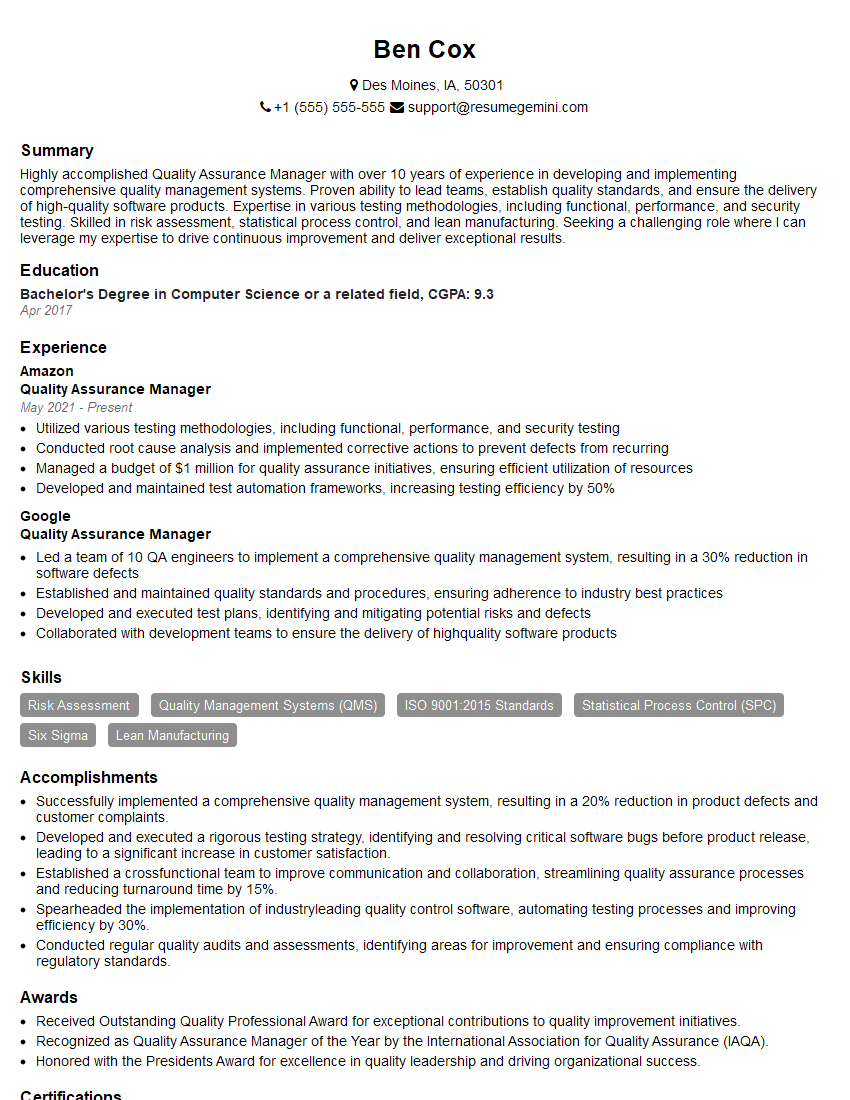
Quality Assurance Manager Resume Sample
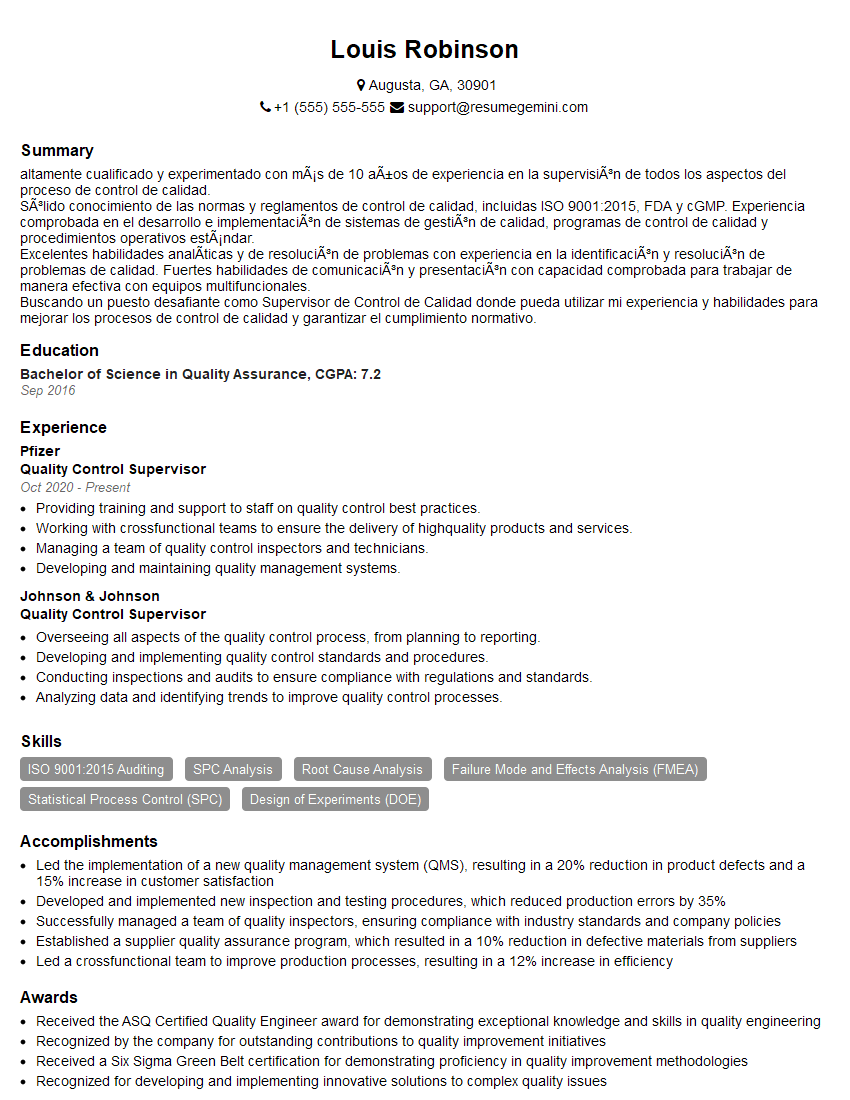
Quality Control Supervisor Resume Sample
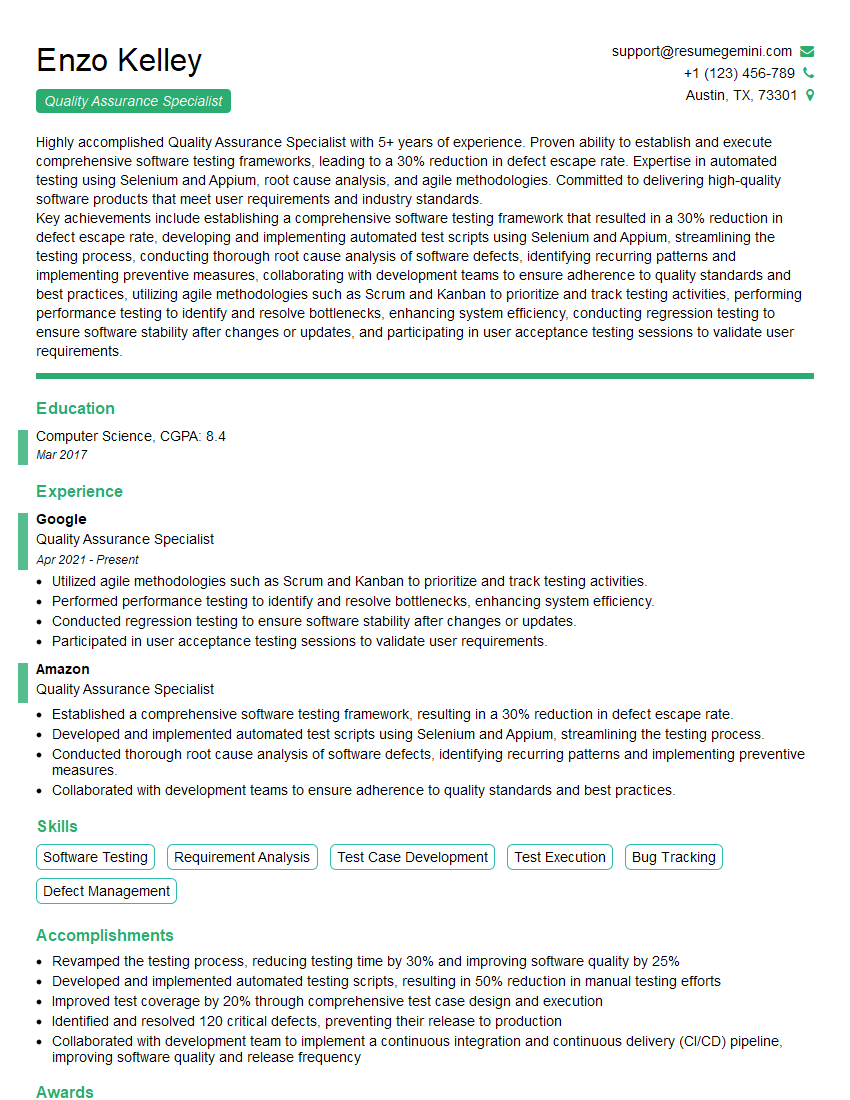
Quality Assurance Specialist Resume Sample
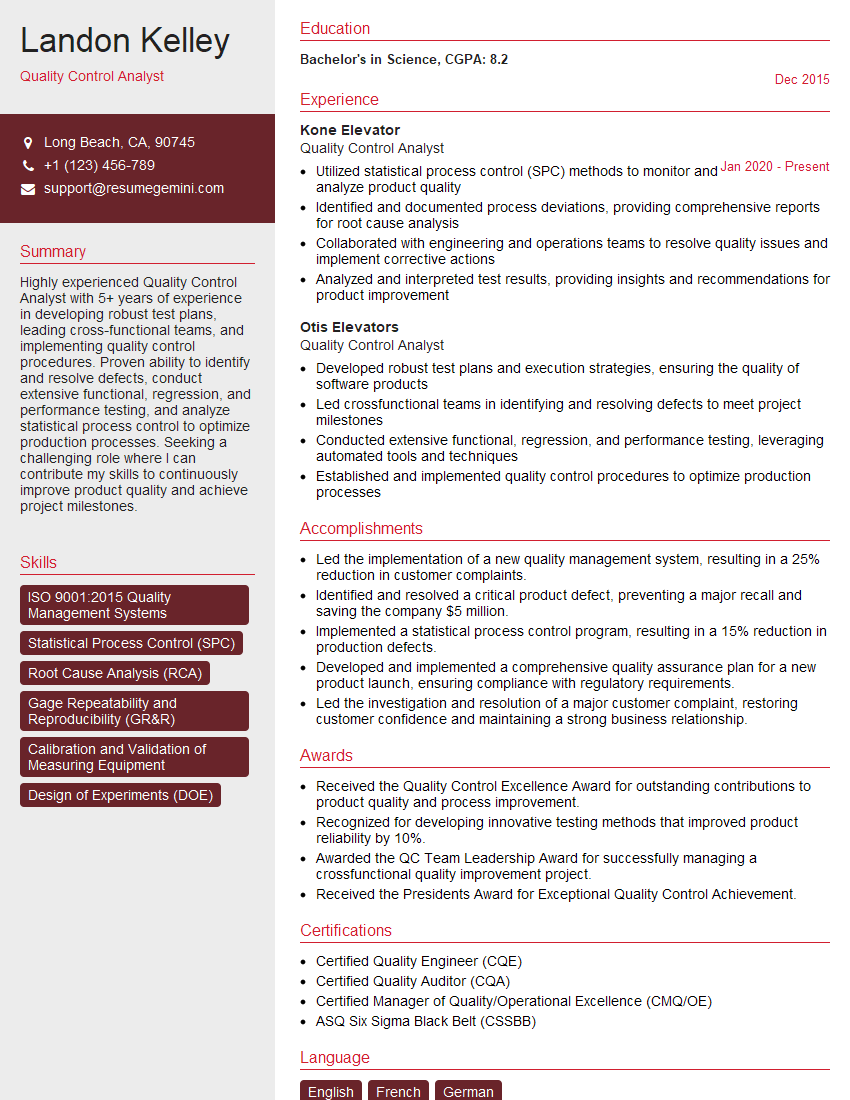
Quality Control Analyst Resume Sample
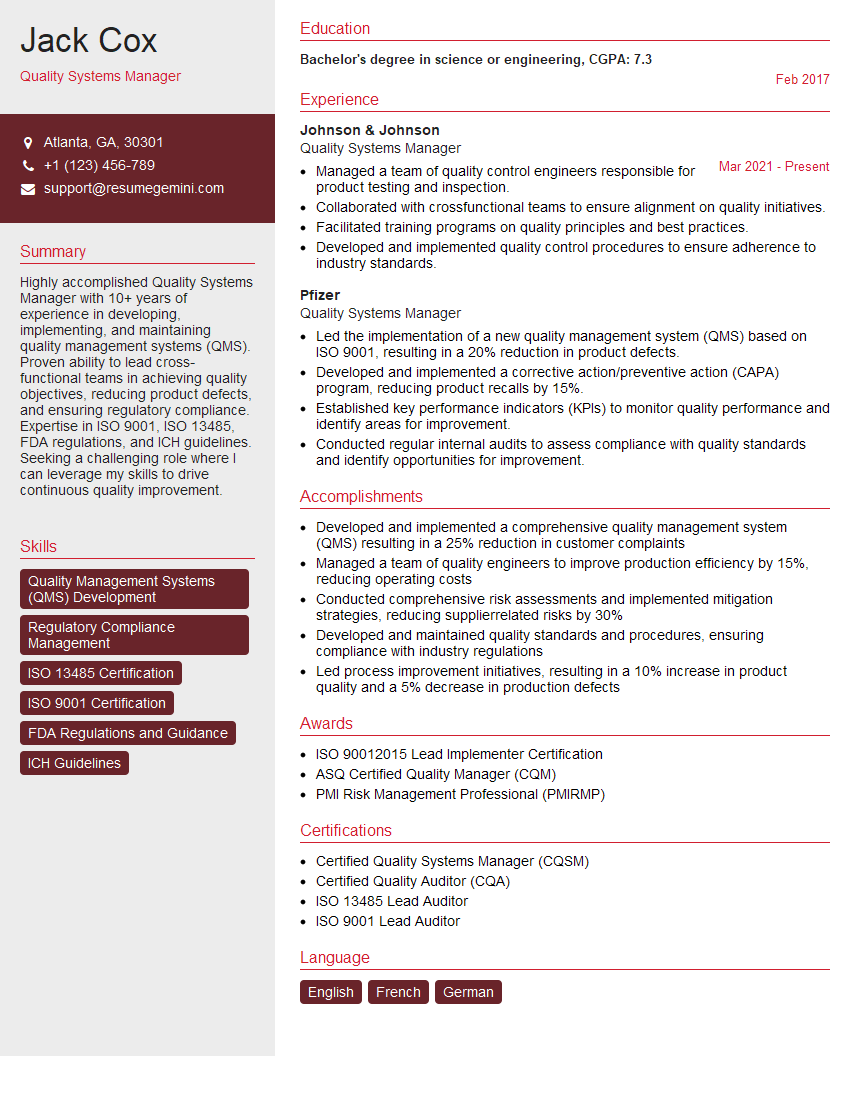
Quality Systems Manager Resume Sample
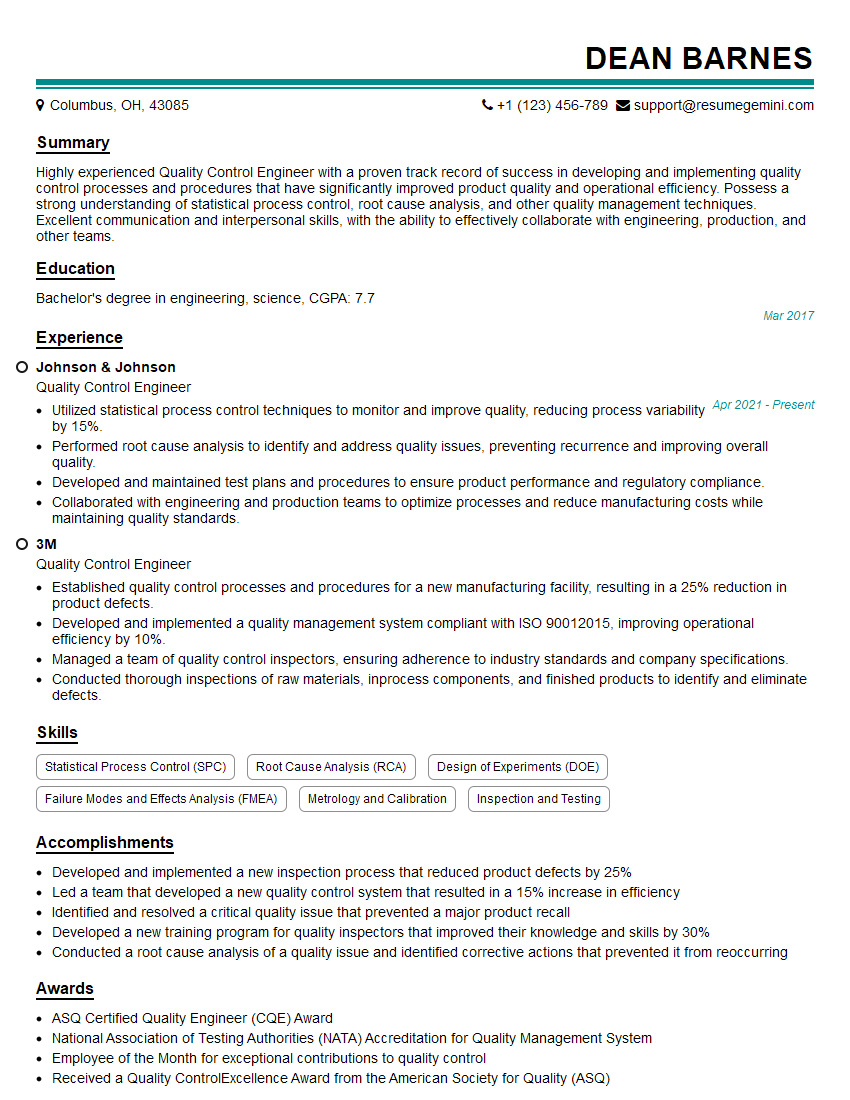
Quality Control Engineer Resume Sample
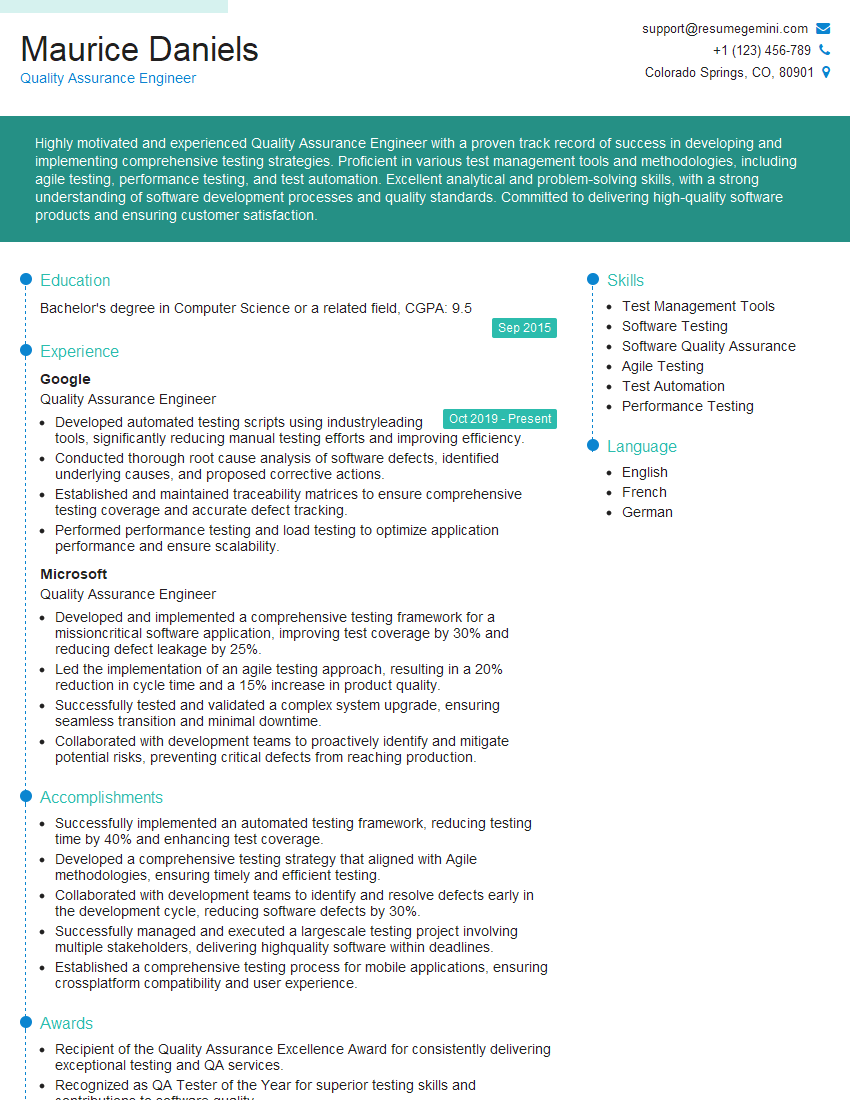
Quality Assurance Engineer Resume Sample
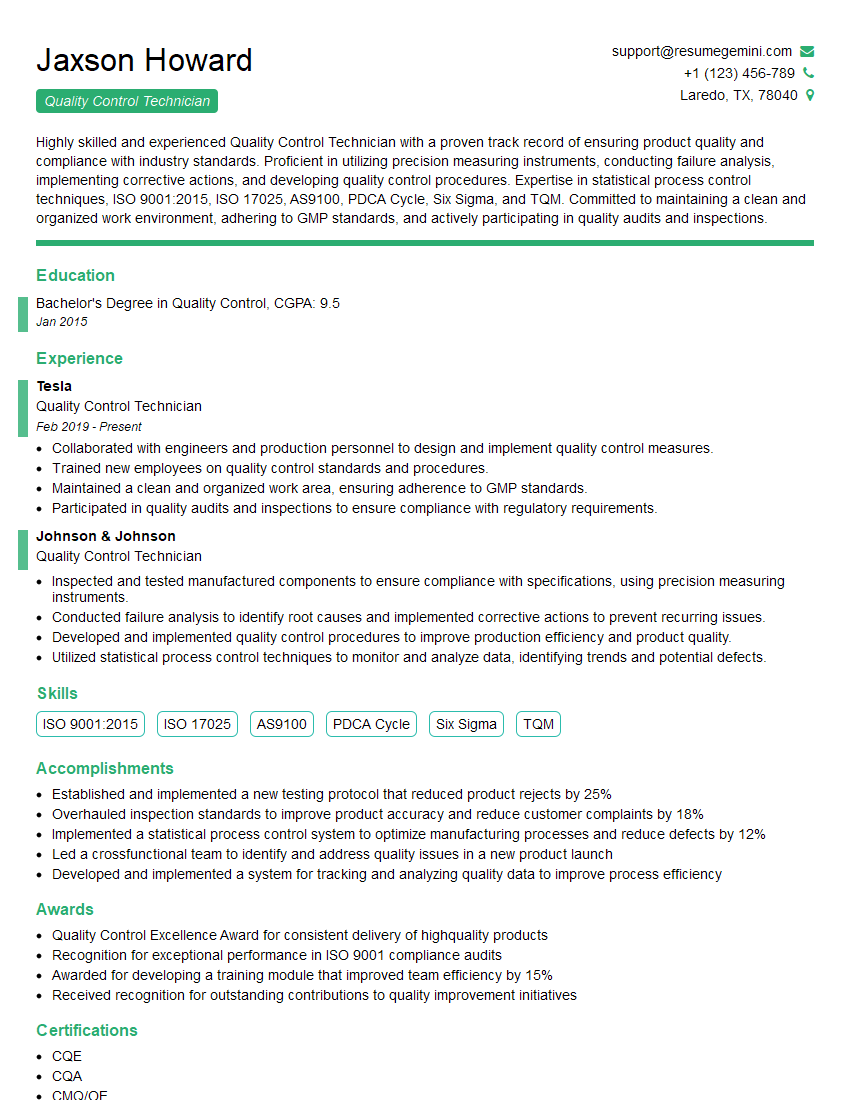
Quality Control Technician Resume Sample

Quality Control Inspector Resume Sample
Explore more articles
Users Rating of Our Blogs
Share Your Experience
We value your feedback! Please rate our content and share your thoughts (optional).
What Readers Say About Our Blog
Very informative content, great job.
good