The thought of an interview can be nerve-wracking, but the right preparation can make all the difference. Explore this comprehensive guide to Inbound and Outbound Truck Traffic Management interview questions and gain the confidence you need to showcase your abilities and secure the role.
Questions Asked in Inbound and Outbound Truck Traffic Management Interview
Q 1. Explain the difference between inbound and outbound truck traffic management.
Inbound and outbound truck traffic management are two sides of the same coin, focusing on the efficient movement of goods, but in opposite directions. Inbound management deals with the flow of goods into your facility – raw materials, components, or packaging. Think of it as managing the incoming supply chain. Outbound management focuses on the flow of goods out of your facility – finished products heading to customers or distribution centers. This is about managing the outgoing fulfillment process.
For example, inbound might involve coordinating deliveries of raw materials from multiple suppliers, ensuring timely arrival and proper storage. Outbound, on the other hand, would focus on scheduling shipments to meet customer deadlines, optimizing delivery routes, and managing carrier relationships to ensure on-time and damage-free delivery.
- Inbound: Managing supplier relationships, scheduling deliveries, receiving inspections, inventory management within the facility.
- Outbound: Order fulfillment, shipment scheduling, carrier selection, tracking shipments, managing customer delivery expectations.
Q 2. Describe your experience with Transportation Management Systems (TMS).
I have extensive experience utilizing Transportation Management Systems (TMS). In my previous role, we implemented and managed a leading TMS software to streamline our entire logistics operation. My responsibilities included configuring the system, integrating it with our ERP and WMS (Warehouse Management System), training staff, and continuously optimizing its functionality. This included setting up carrier profiles, managing freight rates, optimizing routes, tracking shipments in real-time, and generating comprehensive reports on key performance indicators (KPIs) such as on-time delivery, cost per shipment, and carrier performance.
For instance, using the TMS, we were able to identify and eliminate unnecessary empty miles by strategically consolidating shipments. This led to a 15% reduction in transportation costs within six months. I also used the system’s reporting capabilities to identify consistent delays with a specific carrier and proactively switched to alternative providers, improving our overall on-time delivery rate.
Q 3. How do you optimize truck routes for efficiency and cost savings?
Optimizing truck routes is crucial for efficiency and cost savings. My approach is multi-faceted and leverages technology and strategic thinking. I start by using route optimization software within our TMS, inputting delivery addresses, weight, and dimensions of the shipments, and considering time windows for deliveries. This software generates the most efficient routes, considering factors such as distance, traffic patterns, and speed limits.
Beyond software, I also consider:
- Consolidation of shipments: Combining smaller shipments into larger loads to reduce the number of trips.
- Load balancing: Distributing weight evenly across trailers to improve fuel efficiency.
- Strategic carrier selection: Choosing carriers with proven reliability and efficient routes for specific regions.
- Real-time tracking and adjustments: Monitoring shipments in real-time and making route adjustments as needed to avoid traffic congestion or unexpected delays.
For example, by implementing a load consolidation strategy, we reduced the number of trucks needed for a specific delivery route by 20%, saving significantly on fuel and driver costs.
Q 4. What strategies do you use to manage peak shipping seasons?
Peak shipping seasons present unique challenges. My strategy involves proactive planning and resource allocation well in advance. This includes:
- Forecasting demand: Accurately predicting shipment volumes to ensure sufficient transportation capacity.
- Capacity planning: Securing additional transportation resources (trucks, drivers) early on to meet anticipated demand.
- Negotiating favorable rates with carriers: Locking in rates with carriers ahead of peak season to avoid price surges.
- Communicating with customers: Managing customer expectations regarding potential delivery delays due to increased volume.
- Prioritization of orders: Prioritizing urgent shipments based on customer needs and order value.
- Flexible staffing: Ensuring adequate staffing levels to handle increased order processing and customer service inquiries.
During one peak season, by proactively securing extra capacity and communicating transparently with our customers about potential delays, we managed to avoid significant disruptions and maintain a high level of customer satisfaction.
Q 5. How do you handle unexpected delays or disruptions in the supply chain?
Unexpected delays are inevitable in the supply chain. My approach focuses on preparedness, communication, and problem-solving. When a disruption occurs (e.g., inclement weather, carrier issues, port congestion), I immediately:
- Identify the root cause: Determine the exact nature and extent of the delay.
- Notify all affected parties: Communicate the situation transparently to customers, carriers, and internal stakeholders.
- Develop contingency plans: Explore alternative solutions such as rerouting shipments, utilizing alternative carriers, or expediting deliveries.
- Monitor progress: Continuously track the impact of the disruption and the effectiveness of implemented solutions.
- Document the incident: Record details of the incident for future analysis and improvement of procedures.
For example, when a major snowstorm caused significant delays in a key region, we quickly rerouted shipments through alternative routes and proactively communicated with customers, minimizing the impact on our delivery schedule.
Q 6. Explain your experience with load planning and optimization.
Load planning and optimization are critical for efficient truck utilization and cost reduction. I have extensive experience in this area, using both software tools and manual techniques. My approach ensures maximum space utilization within the truck while adhering to weight and safety regulations. This involves:
- Analyzing shipment dimensions and weights: Determining the optimal arrangement of goods within the trailer.
- Utilizing load planning software: Employing software to create three-dimensional models of truck loads, optimizing space and weight distribution.
- Considering weight distribution: Ensuring proper weight distribution to prevent overloading and enhance fuel efficiency.
- Prioritizing fragile or sensitive goods: Strategically placing fragile items to minimize damage during transit.
- Complying with regulations: Adhering to all relevant weight, dimension, and safety regulations.
One specific example involved optimizing load plans for a client transporting furniture. By carefully arranging items of varying sizes and weights, we were able to increase the number of units transported per truck by 15%, reducing overall transportation costs.
Q 7. How do you ensure compliance with all relevant regulations and safety standards?
Compliance is paramount in truck traffic management. I ensure adherence to all relevant regulations and safety standards through a multi-pronged approach:
- Staying updated on regulations: Continuously monitoring changes in federal, state, and local regulations related to trucking, driver hours of service (HOS), and cargo security.
- Driver training and compliance: Ensuring drivers receive regular training on safety regulations, HOS compliance, and defensive driving techniques.
- Vehicle maintenance and inspection: Implementing rigorous vehicle maintenance programs and conducting regular inspections to ensure compliance with safety standards.
- Cargo securement: Implementing proper procedures for securing cargo to prevent shifting and damage during transit.
- Record-keeping and documentation: Maintaining accurate records of all shipments, driver logs, and maintenance records for audits.
- Utilizing ELDs (Electronic Logging Devices): Implementing ELDs to ensure accurate recording of driver hours of service.
We conduct regular internal audits and engage third-party compliance specialists to ensure ongoing adherence to all applicable regulations. This proactive approach minimizes risks and avoids potential penalties.
Q 8. Describe your experience with driver management and communication.
Effective driver management is the cornerstone of successful inbound and outbound truck traffic. It goes beyond simply assigning loads; it’s about building relationships and fostering clear communication. My approach involves proactive engagement, utilizing a combination of technology and personal interaction.
I use a transportation management system (TMS) to schedule drivers, track their location, and communicate delivery updates. However, I also believe in regular check-ins – phone calls to discuss potential delays or road conditions, acknowledging their hard work, and addressing any concerns. For example, if a driver is consistently encountering issues at a specific loading dock, I’ll work with the receiver to find a more efficient solution, perhaps changing appointment times or improving the loading process. This proactive communication prevents issues from escalating into major disruptions.
Open communication channels are vital. I encourage drivers to contact me immediately if they encounter any problems, ensuring a quick response and minimizing delays. I consider my role as a facilitator, helping drivers navigate challenges and ensuring they feel supported.
Q 9. How do you track and monitor key performance indicators (KPIs) related to truck traffic?
Tracking KPIs is crucial for optimizing truck traffic management and identifying areas for improvement. I focus on a range of metrics, including on-time delivery rates, cost per mile, driver utilization, and fuel efficiency.
- On-time delivery rate: This measures the percentage of shipments delivered on or before the scheduled time. A low rate indicates potential bottlenecks in the process.
- Cost per mile: This metric helps track transportation costs and identify opportunities for savings, such as negotiating better carrier rates or optimizing routes.
- Driver utilization: This shows how effectively drivers are utilized. High utilization means maximizing efficiency, while low utilization might indicate operational inefficiencies.
- Fuel efficiency: This is important for both cost savings and environmental sustainability. Monitoring fuel consumption helps identify areas for improvement, like driver training or route optimization.
I use data visualization tools and dashboards to track these KPIs in real-time, enabling me to identify trends and address potential problems proactively. For instance, a sudden drop in on-time delivery might point to a problem with a specific carrier or receiver, prompting investigation and corrective action.
Q 10. What software or tools are you proficient in using for truck traffic management?
My proficiency spans a variety of software and tools essential for efficient truck traffic management. I’m adept at using Transportation Management Systems (TMS) such as Oracle Transportation Management and SAP Transportation Management for shipment planning, execution, and tracking. These systems allow me to manage the entire transportation lifecycle, from booking carriers to tracking shipments in real-time.
Beyond TMS, I’m skilled in using Geographic Information Systems (GIS) software, such as ArcGIS, for route optimization and analyzing geographical factors that impact delivery times. I also rely heavily on communication and collaboration platforms like Microsoft Teams and Slack to maintain constant communication with drivers, carriers, and other stakeholders. Finally, I utilize data analytics tools, like Power BI, for creating insightful reports and dashboards to monitor KPIs and identify areas for improvement.
Q 11. How do you manage and resolve conflicts between shippers, carriers, and receivers?
Conflict resolution is a crucial skill in truck traffic management. Disputes can arise between shippers, carriers, and receivers due to various factors like late deliveries, damaged goods, or billing discrepancies. My approach emphasizes proactive communication and a collaborative problem-solving approach.
I start by actively listening to all parties involved and understanding their perspectives. Then, I work to identify the root cause of the conflict. For example, a late delivery might be due to unforeseen traffic congestion, a carrier’s operational issue, or a problem at the receiving facility. Once the root cause is identified, I collaborate with all parties to find a mutually agreeable solution. This might involve adjusting delivery schedules, offering compensation for damages, or clarifying contractual obligations.
Documentation is key. I maintain detailed records of all communications and agreements to avoid future misunderstandings. My focus is always on building strong relationships based on trust and transparency, fostering collaborative problem-solving rather than adversarial conflict.
Q 12. Describe your experience with negotiating rates with carriers.
Negotiating carrier rates requires a strategic approach combining market knowledge, data analysis, and strong communication skills. I start by researching market rates for the specific lanes and cargo types. I utilize online rate platforms and industry benchmarks to determine a competitive and fair price.
Before negotiations, I gather relevant data, such as historical shipping costs, fuel surcharges, and seasonal fluctuations. This data strengthens my position and allows me to present a well-informed proposal. During the negotiation process, I build rapport with carriers, emphasizing mutual benefit and long-term collaboration. I also consider factors like carrier reliability, safety records, and capacity availability.
For example, I might offer a higher rate for a carrier with a proven track record of on-time deliveries and excellent safety performance, even if it’s slightly above market average. This long-term strategic approach often yields better results than simply chasing the lowest price.
Q 13. How do you handle damaged goods or delivery issues?
Handling damaged goods or delivery issues requires a systematic and efficient approach. The first step involves thorough documentation. This includes taking photos of the damage, creating detailed reports describing the condition of the goods upon delivery, and obtaining signatures from the receiver confirming the damage.
Next, I initiate claims with the carrier or insurer, providing all necessary documentation. This involves carefully following the claims process outlined in the contract or bill of lading. I also collaborate with the shipper and receiver to determine the best course of action, whether it’s repairing the goods, replacing them, or issuing a credit. Open communication and transparency are crucial during this process, keeping all parties informed of the progress.
I have successfully managed several complex cases involving damaged goods and delivery failures. My experience emphasizes the importance of timely action and meticulous record-keeping in resolving these issues and minimizing potential financial losses.
Q 14. How do you maintain accurate records of all inbound and outbound shipments?
Maintaining accurate records of all inbound and outbound shipments is critical for compliance, auditing, and efficient operations. I utilize a Transportation Management System (TMS) which acts as a central repository for all shipment data. This system automatically captures information like shipment origin, destination, carrier, tracking number, and delivery date.
Beyond the TMS, I maintain supporting documentation including bills of lading, proof of delivery (POD), and any other relevant communications or agreements. This ensures complete transparency and traceability throughout the entire shipping lifecycle. Regular data backups and version control are implemented to prevent data loss. For example, I use a cloud-based solution that automatically backs up our data regularly to prevent data loss. This detailed record-keeping not only streamlines audits but also enhances decision-making and supports continuous improvement efforts.
Q 15. Explain your experience with warehouse management and inventory control.
My experience in warehouse management and inventory control is extensive, encompassing all aspects from receiving and putaway to order fulfillment and cycle counting. I’ve worked with various Warehouse Management Systems (WMS), optimizing processes to ensure efficient stock rotation, minimize storage costs, and maximize throughput. For example, in my previous role at Acme Corp, we implemented a new WMS that reduced our order fulfillment time by 15% by streamlining the picking process and optimizing warehouse layout. We also integrated the WMS with our transportation management system (TMS) for real-time visibility of inventory and shipment status. I am proficient in utilizing inventory control techniques such as FIFO (First-In, First-Out) and LIFO (Last-In, First-Out) to manage perishable goods and minimize waste. My experience also includes managing cycle counts and implementing robust inventory reconciliation processes to ensure accuracy and prevent stock discrepancies.
I understand the crucial role inventory plays in meeting customer demands and preventing stockouts. Effective warehouse management isn’t just about storing goods; it’s about orchestrating a smooth flow of goods from receipt to shipment, while minimizing errors and inefficiencies. This requires strong analytical skills, attention to detail, and the ability to utilize technology to improve processes.
Career Expert Tips:
- Ace those interviews! Prepare effectively by reviewing the Top 50 Most Common Interview Questions on ResumeGemini.
- Navigate your job search with confidence! Explore a wide range of Career Tips on ResumeGemini. Learn about common challenges and recommendations to overcome them.
- Craft the perfect resume! Master the Art of Resume Writing with ResumeGemini’s guide. Showcase your unique qualifications and achievements effectively.
- Don’t miss out on holiday savings! Build your dream resume with ResumeGemini’s ATS optimized templates.
Q 16. How do you ensure timely and accurate delivery of goods?
Ensuring timely and accurate delivery hinges on meticulous planning and execution at every stage of the supply chain. This starts with accurate order processing and real-time inventory visibility. We utilize Transportation Management Systems (TMS) to optimize routes, select appropriate carriers, and track shipments in real-time. Communication is key—maintaining constant contact with carriers and proactively addressing potential delays is critical. Proactive monitoring of weather patterns and traffic conditions allows for contingency planning.
For instance, during peak season, we might utilize predictive analytics to forecast demand and adjust our transportation strategy accordingly, potentially chartering additional trucks or negotiating preferential rates with carriers. We also implement robust tracking and tracing systems, enabling us to provide customers with accurate Estimated Time of Arrival (ETA) updates and immediate notification of any potential issues. Finally, a well-defined escalation process for addressing delays ensures swift resolution and minimizes disruption to customers.
Q 17. What is your experience with different modes of transportation (e.g., LTL, FTL)?
My experience encompasses a wide range of transportation modes, including Less-Than-Truckload (LTL), Full-Truckload (FTL), and intermodal transportation (combining rail and truck). LTL is cost-effective for smaller shipments, while FTL offers better control and speed for larger volumes. Intermodal transportation provides a balance between cost and efficiency, especially for longer distances. The choice of mode depends heavily on factors such as shipment size, urgency, cost considerations, and the distance involved.
For example, I’ve successfully managed logistics for both LTL shipments of smaller, high-value electronics and FTL shipments of bulk materials. In one project, we strategically switched from LTL to intermodal transport for a particular route, resulting in significant cost savings without compromising delivery times. My expertise allows me to select the most efficient and cost-effective transportation method for each specific requirement.
Q 18. How do you manage the documentation associated with inbound and outbound shipments?
Managing documentation associated with inbound and outbound shipments requires meticulous organization and adherence to regulatory requirements. This includes Bills of Lading (BOLs), packing lists, commercial invoices, certificates of origin, and other relevant documents. We utilize Transportation Management Systems (TMS) and Electronic Data Interchange (EDI) to streamline documentation processes, reducing manual data entry and errors. For example, EDI allows for automated exchange of shipping documents between our company and carriers, eliminating the need for manual processing.
A well-defined document management system ensures all necessary paperwork is readily accessible, enabling quick responses to inquiries and facilitating audits. Secure storage of these documents, both physical and digital, is essential to comply with regulatory compliance and maintain historical records. We also maintain a system of checks and balances to ensure accuracy and integrity in all documentation.
Q 19. What is your experience with various freight types (e.g., hazardous materials)?
I possess significant experience in handling various freight types, including hazardous materials. This includes a thorough understanding and adherence to all relevant regulations, such as those stipulated by the Department of Transportation (DOT) in the US or equivalent organizations globally. Handling hazardous materials requires specialized training, proper packaging, and transportation procedures to ensure safety and compliance.
For instance, when dealing with hazardous materials, we ensure all shipments are classified correctly according to their hazard class, accompanied by the necessary documentation, including Safety Data Sheets (SDS) and proper hazard labeling. We partner with carriers who are specifically licensed to handle such materials and utilize specialized equipment and procedures for loading, securing, and transporting hazardous goods. Maintaining meticulous records and ensuring compliance with all regulations are paramount in this area.
Q 20. How do you handle customer inquiries and complaints related to shipments?
Handling customer inquiries and complaints regarding shipments is crucial for maintaining customer satisfaction and building strong relationships. I approach this with empathy and a proactive attitude, prioritizing swift resolution of issues. We utilize a customer relationship management (CRM) system to track and manage inquiries, ensuring timely responses and follow-up.
My approach involves actively listening to the customer’s concerns, gathering necessary information, and investigating the issue thoroughly. We use tracking information and communication with carriers to identify the root cause of the problem. Transparent communication with the customer throughout the investigation and resolution process is vital. Whether it’s a delayed shipment, damaged goods, or an incorrect delivery, I strive to provide a satisfactory resolution, often offering compensation or alternative solutions to restore customer confidence.
Q 21. Explain your experience with implementing new transportation strategies.
Implementing new transportation strategies requires a data-driven approach and a strong understanding of the business needs. I have extensive experience in analyzing existing processes, identifying areas for improvement, and developing and implementing new strategies. This involves close collaboration with stakeholders across different departments, including procurement, sales, and operations.
For example, in a previous role, we implemented a route optimization software that reduced our transportation costs by 10% by identifying more efficient routes and minimizing empty miles. We also explored and successfully implemented a last-mile delivery solution using a network of independent contractors, which increased our delivery speed and reduced expenses. The key to successful implementation is thorough planning, effective communication, and a phased rollout approach to mitigate risks and ensure smooth transition.
Q 22. Describe your experience with using different freight rating systems.
My experience encompasses a wide range of freight rating systems, from simple dimensional weight calculators to sophisticated Transportation Management Systems (TMS) with integrated rating engines. I’m proficient in using various carrier rate APIs and understanding different pricing models like LTL (Less-than-Truckload), FTL (Full Truckload), and parcel shipping rates. I’ve worked with both legacy systems and cloud-based solutions, allowing me to compare and contrast their functionalities and limitations.
For instance, in a previous role, we transitioned from a manual spreadsheet-based rating system to a TMS with an integrated rating engine. This improved accuracy, reduced manual errors significantly (by about 15%), and allowed for real-time rate comparisons across multiple carriers. We also leveraged the TMS’s ability to negotiate contracts and secure volume discounts based on historical shipment data. Another example involved working with a complex LTL rating system that incorporated factors like density, handling units, and accessorial charges. Understanding these nuances ensured we were accurately calculating costs and identifying opportunities for cost savings.
My experience extends to understanding the differences between various rate types – including contract rates, spot market rates, and fuel surcharges – and how these impact overall transportation costs. I can effectively use this knowledge to optimize shipment routing and carrier selection based on cost and service requirements.
Q 23. How do you identify and mitigate potential risks in the transportation process?
Identifying and mitigating risks in transportation is a crucial aspect of my role. My approach involves a proactive risk assessment process that considers various factors across the entire transportation lifecycle.
- Carrier Risk: I assess carrier financial stability, safety records, and on-time performance. Using publicly available data and carrier performance reports, I identify potential issues and may choose to diversify our carrier base to mitigate the impact of a single carrier’s failure.
- Route Risk: I analyze route specifics including weather conditions, traffic patterns, and potential security concerns. This allows us to anticipate delays, reroute shipments if needed, or choose more secure routes. For example, avoiding known high-crime areas late at night might slightly increase travel time but reduces the risk of cargo theft.
- Cargo Risk: This focuses on the nature of the goods being shipped. For example, temperature-sensitive goods require specialized handling and equipment to prevent spoilage. Proper documentation and insurance are essential for mitigating the risk of damage or loss. This also includes proper packaging to ensure that the goods are protected during transit.
- Operational Risk: This covers aspects like driver shortages, equipment malfunctions, and port congestion. To mitigate this, I maintain strong relationships with carriers to ensure access to capacity, implement preventative maintenance schedules for equipment, and monitor real-time shipment tracking to address potential issues proactively.
My mitigation strategies often involve implementing robust contingency plans, employing real-time tracking and monitoring systems, and building strong relationships with key stakeholders in the supply chain.
Q 24. How do you collaborate with cross-functional teams to achieve transportation goals?
Collaboration is essential in transportation management. I’ve successfully worked with various cross-functional teams, including procurement, sales, operations, and customer service, to achieve transportation goals. Effective communication and a shared understanding of objectives are key to this process.
For example, in a project involving a new product launch, I collaborated closely with the sales team to understand projected shipment volumes and delivery deadlines. This input helped me in selecting appropriate carriers, negotiating favorable rates, and developing a robust transportation plan that aligned with the sales targets. I also worked with the operations team to ensure seamless integration of the transportation plan with their warehouse and inventory management processes. Regular meetings, shared dashboards for tracking progress, and open communication channels ensured everyone was on the same page.
My approach is to actively listen to other team members’ perspectives, build consensus, and work collaboratively to find solutions that meet everyone’s needs. This often includes identifying and addressing any potential conflicts or roadblocks early on to avoid delays and disruptions.
Q 25. What is your experience with reporting and analysis of transportation data?
Reporting and analysis of transportation data is critical for identifying trends, improving efficiency, and reducing costs. My experience includes using various tools and techniques to gather, analyze, and interpret data. This involves extracting data from TMS, carrier portals, and other relevant systems.
I’m proficient in using data visualization tools to create insightful reports that highlight key performance indicators (KPIs) such as on-time delivery rates, cost per mile, carrier performance, and fuel consumption. This includes using spreadsheets (Excel), data visualization software (Tableau or Power BI), and potentially SQL for database queries. For example, I’ve created dashboards that show real-time shipment tracking, identify recurring delays, and highlight areas for process improvement. I use statistical methods such as regression analysis to understand the relationship between different variables and predict future trends.
My reports help stakeholders make data-driven decisions by providing clear and concise insights into transportation performance and identifying potential cost savings or process improvements. This enables proactive management and resource allocation.
Q 26. Describe a time you had to solve a complex transportation problem under pressure.
During a major winter storm, a key supplier experienced significant delays impacting the timely delivery of critical components for a major client. This caused a significant backlog, threatened our production schedule, and jeopardized a critical deadline. The pressure was immense.
My immediate response involved activating our emergency response plan. This included: (1) Assessing the extent of the disruption by contacting the supplier and other carriers. (2) Exploring all possible alternative transportation options, including expedited freight and air freight, even if it meant higher costs. (3) Collaborating with the supplier and the client to manage expectations and negotiate extended delivery deadlines. (4) Utilizing real-time tracking to monitor the progress of alternative shipments. (5) Proactively communicating updates to all stakeholders, including the client and internal teams.
Through decisive action and effective communication, we managed to mitigate the impact of the storm. Although there were minor delays, we ultimately met the client’s revised deadline and prevented a major production disruption. This experience highlighted the importance of a robust contingency plan, strong carrier relationships, and transparent communication under pressure.
Q 27. How do you stay updated on industry best practices and technological advancements?
Staying current in the dynamic transportation industry requires a multi-faceted approach. I actively participate in industry events, conferences, and webinars to learn about the latest trends and technologies. I subscribe to industry publications and follow influential thought leaders on social media. This keeps me abreast of developments in areas such as autonomous vehicles, blockchain technology, and advanced analytics in logistics.
I also leverage online resources and professional development platforms to expand my knowledge and skill set. This includes taking online courses and certifications on topics such as TMS software, supply chain management, and risk management. Continuous learning is essential to remain competitive and adapt to the changing landscape of the transportation industry. This approach enables me to bring the latest innovations and best practices into my work to optimize efficiency and improve decision-making.
Key Topics to Learn for Inbound and Outbound Truck Traffic Management Interview
- Inbound Logistics Optimization: Understanding and applying strategies to efficiently manage the flow of goods arriving at your facility. This includes vendor management, appointment scheduling, and receiving processes.
- Outbound Shipping and Delivery: Mastering the efficient planning and execution of shipments leaving your facility. This encompasses order fulfillment, route optimization, carrier selection, and delivery tracking.
- Transportation Management Systems (TMS): Familiarizing yourself with different TMS software and their functionalities in managing freight, tracking shipments, and analyzing performance data. Practical experience using a specific TMS is highly valuable.
- Freight Cost Analysis and Negotiation: Understanding how to analyze freight costs, negotiate rates with carriers, and identify opportunities for cost savings through efficient routing and carrier selection.
- Warehouse Management Systems (WMS) Integration: Understanding how TMS integrates with WMS to ensure seamless flow of information and efficient inventory management. This includes order fulfillment accuracy and timely processing.
- Compliance and Regulations: Knowledge of relevant transportation regulations (e.g., hours of service, hazardous materials handling) and best practices to ensure compliance and safety.
- Problem-Solving and Decision-Making under Pressure: Demonstrate your ability to effectively handle unexpected delays, logistical challenges, and make timely decisions to minimize disruptions.
- Data Analysis and Reporting: Understanding key performance indicators (KPIs) for inbound and outbound logistics, and the ability to analyze data to identify areas for improvement and efficiency gains.
- Supply Chain Visibility: Explain how you would utilize technology and processes to ensure complete visibility of shipments throughout the entire supply chain, from origin to destination.
Next Steps
Mastering Inbound and Outbound Truck Traffic Management opens doors to rewarding careers with excellent growth potential. Companies highly value professionals who can optimize logistics, reduce costs, and ensure efficient delivery. To maximize your job prospects, creating a strong, ATS-friendly resume is crucial. ResumeGemini is a trusted resource that can help you build a professional resume that highlights your skills and experience effectively. Examples of resumes tailored to Inbound and Outbound Truck Traffic Management are available to guide you. Invest the time to create a compelling resume – it’s your first impression with potential employers.
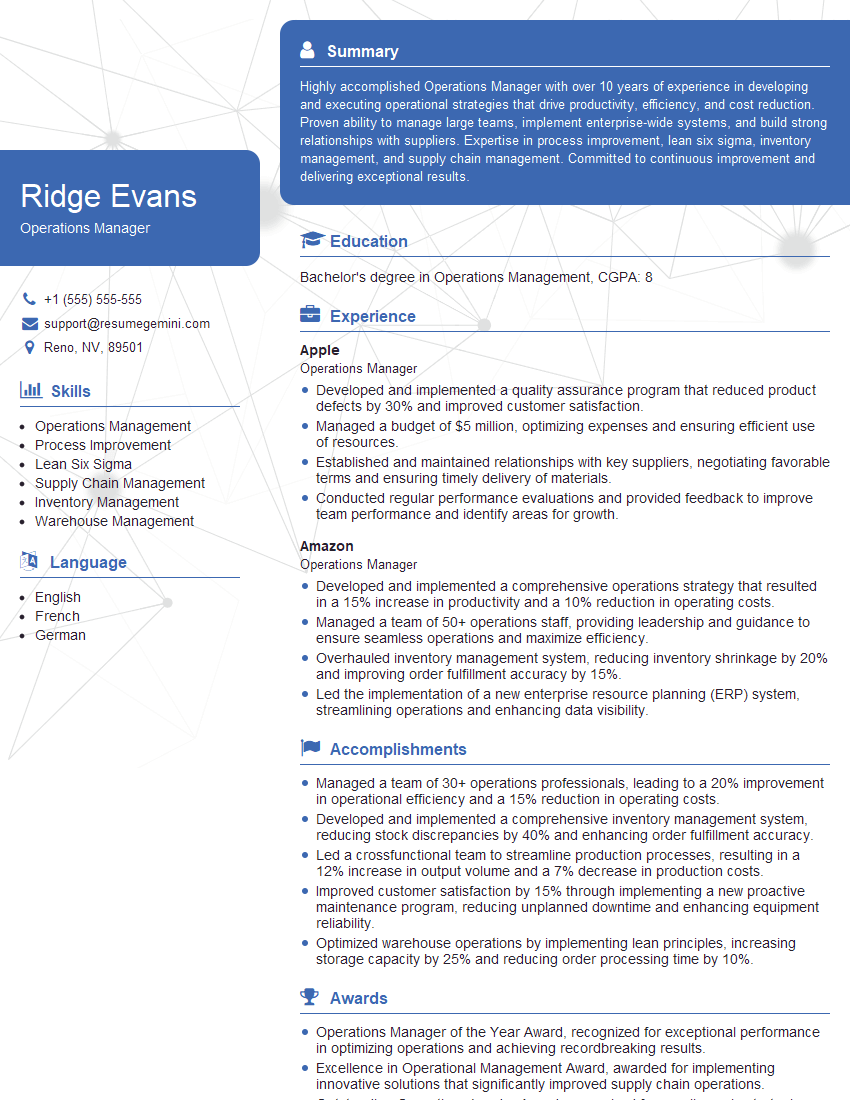
Operations Manager Resume Sample
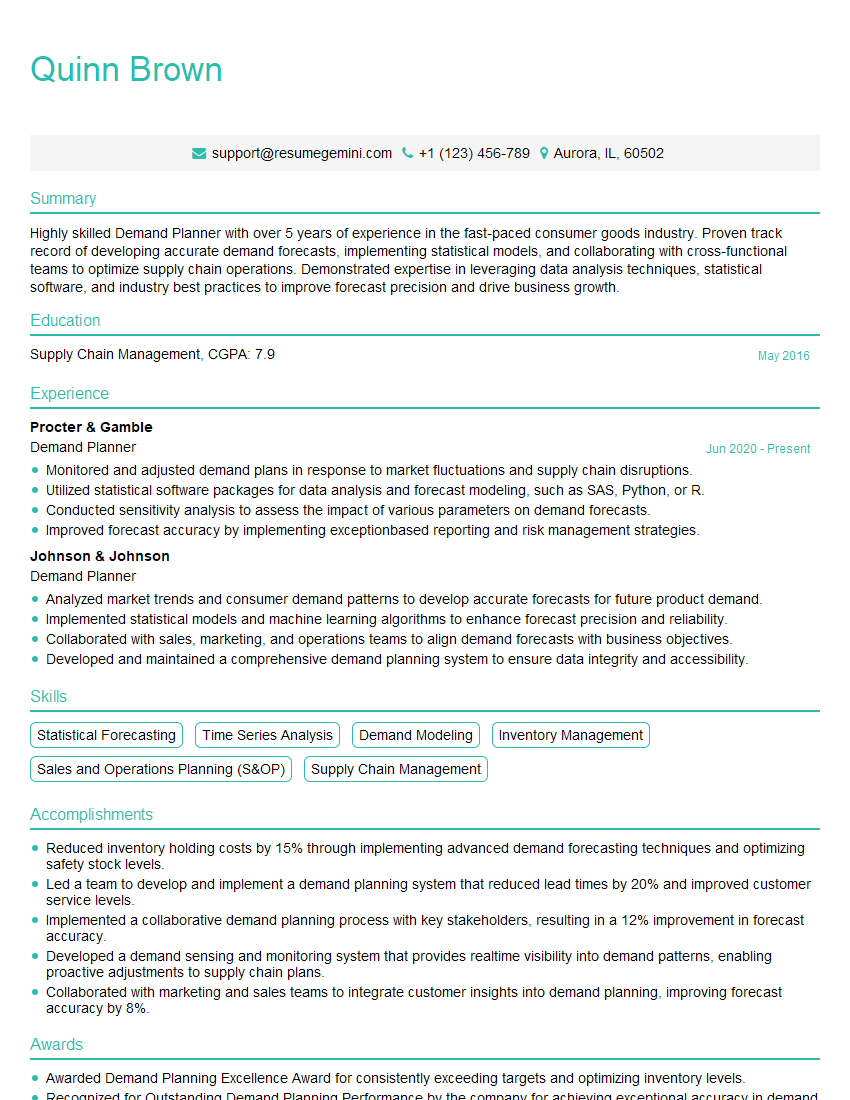
Demand Planner Resume Sample

Procurement Manager Resume Sample
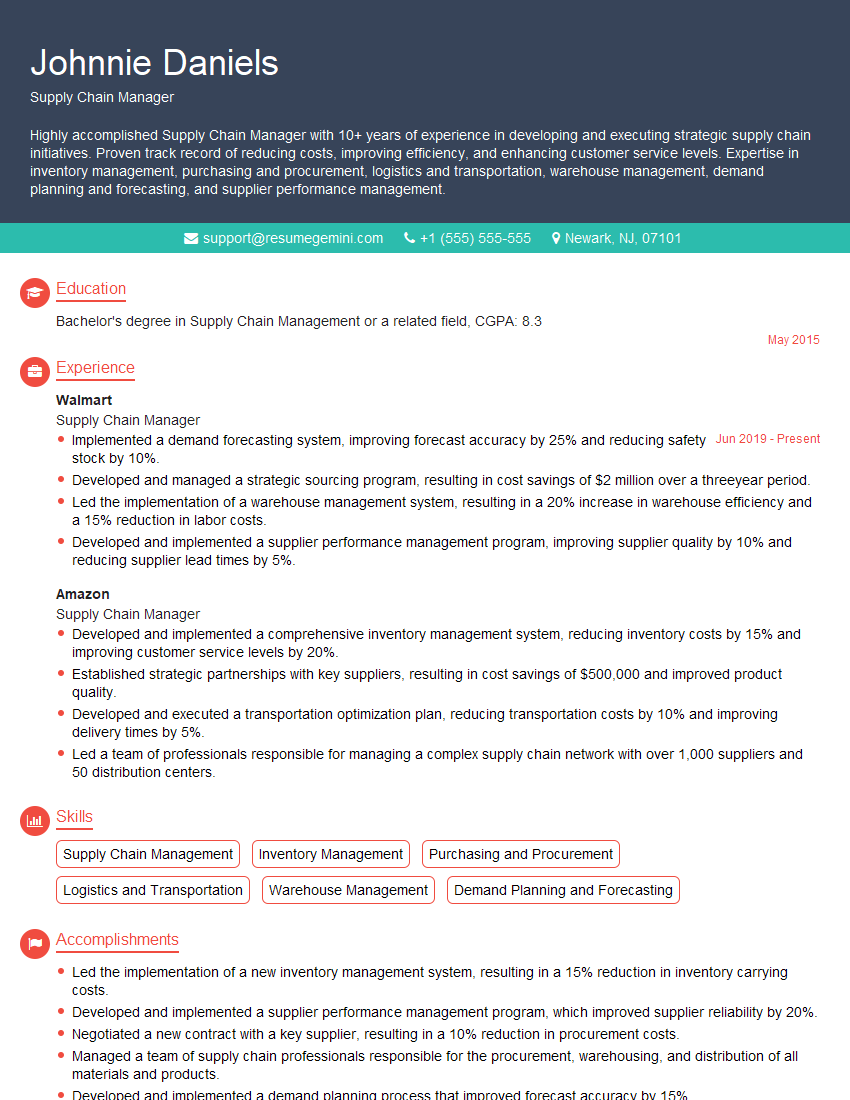
Supply Chain Manager Resume Sample
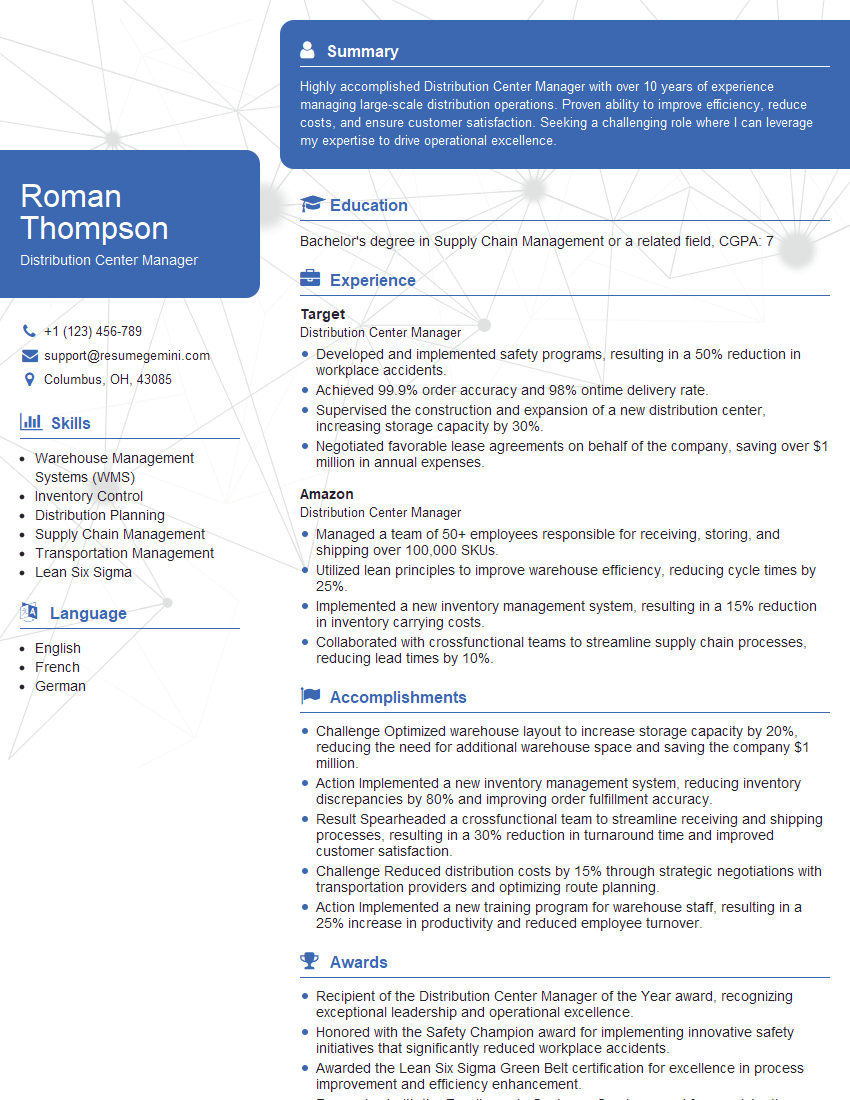
Distribution Center Manager Resume Sample
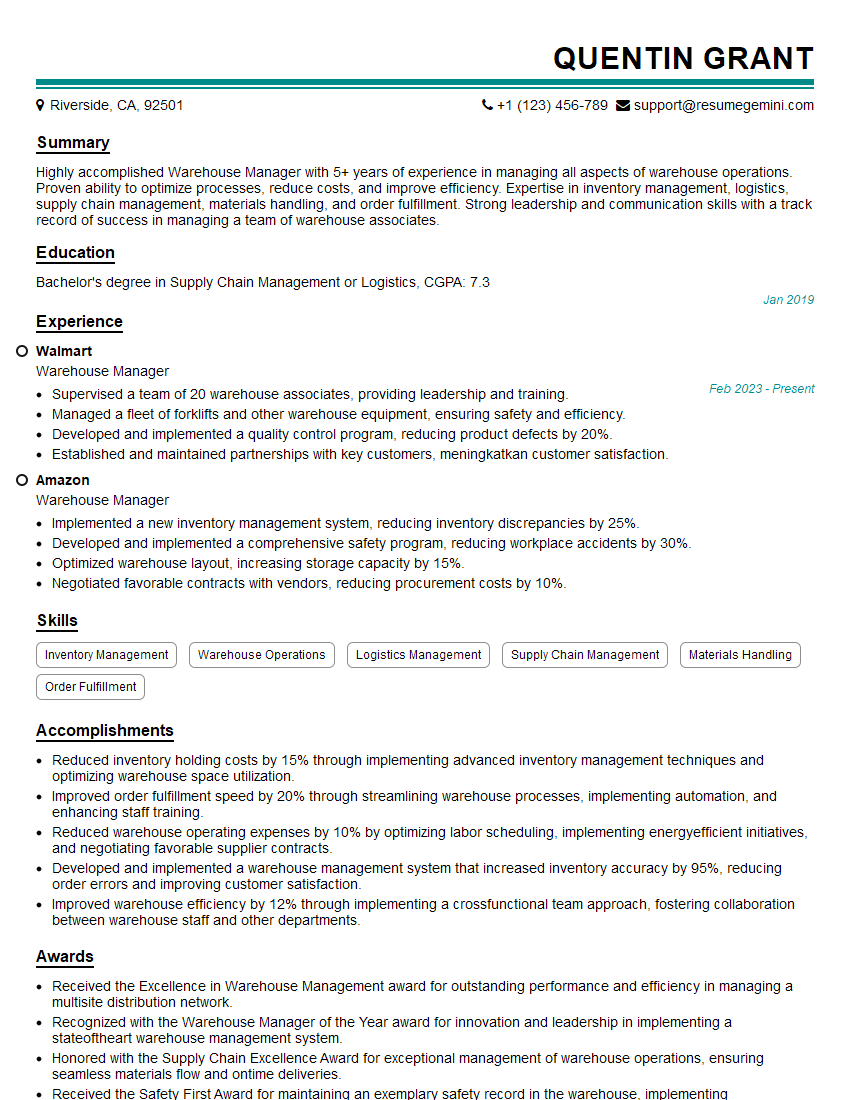
Warehouse Manager Resume Sample
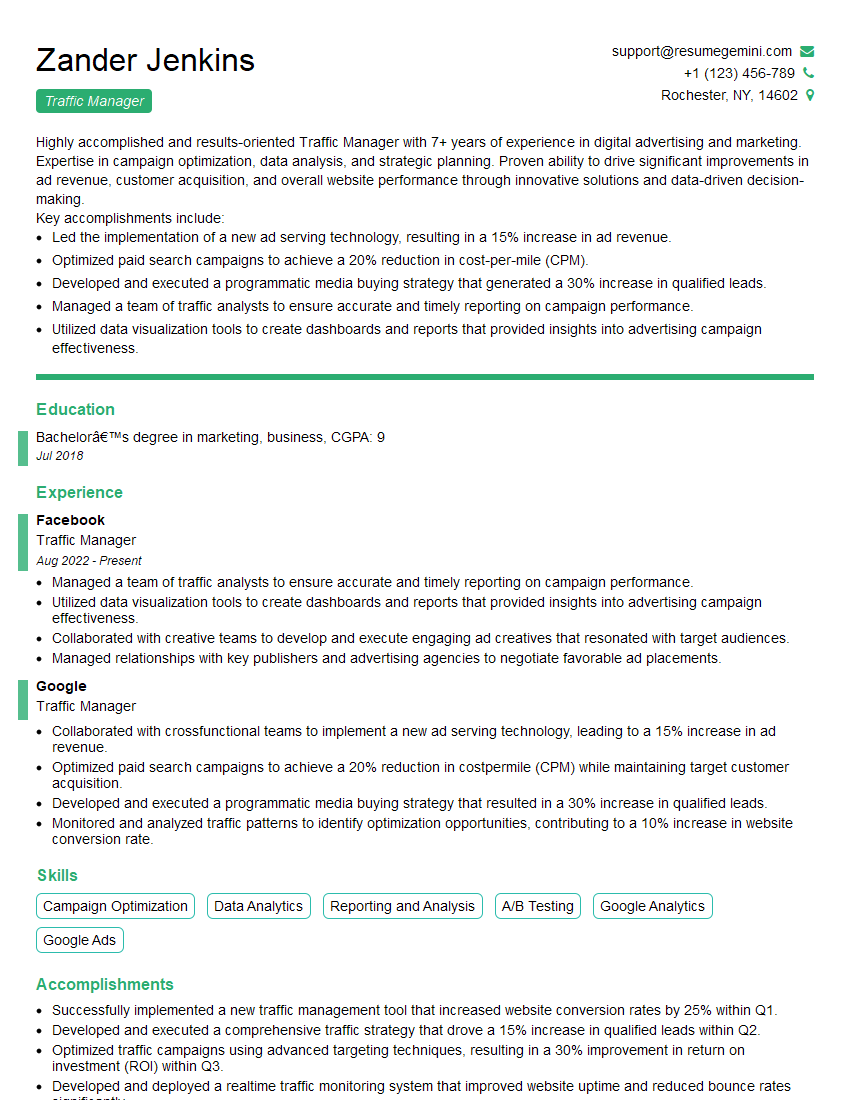
Traffic Manager Resume Sample
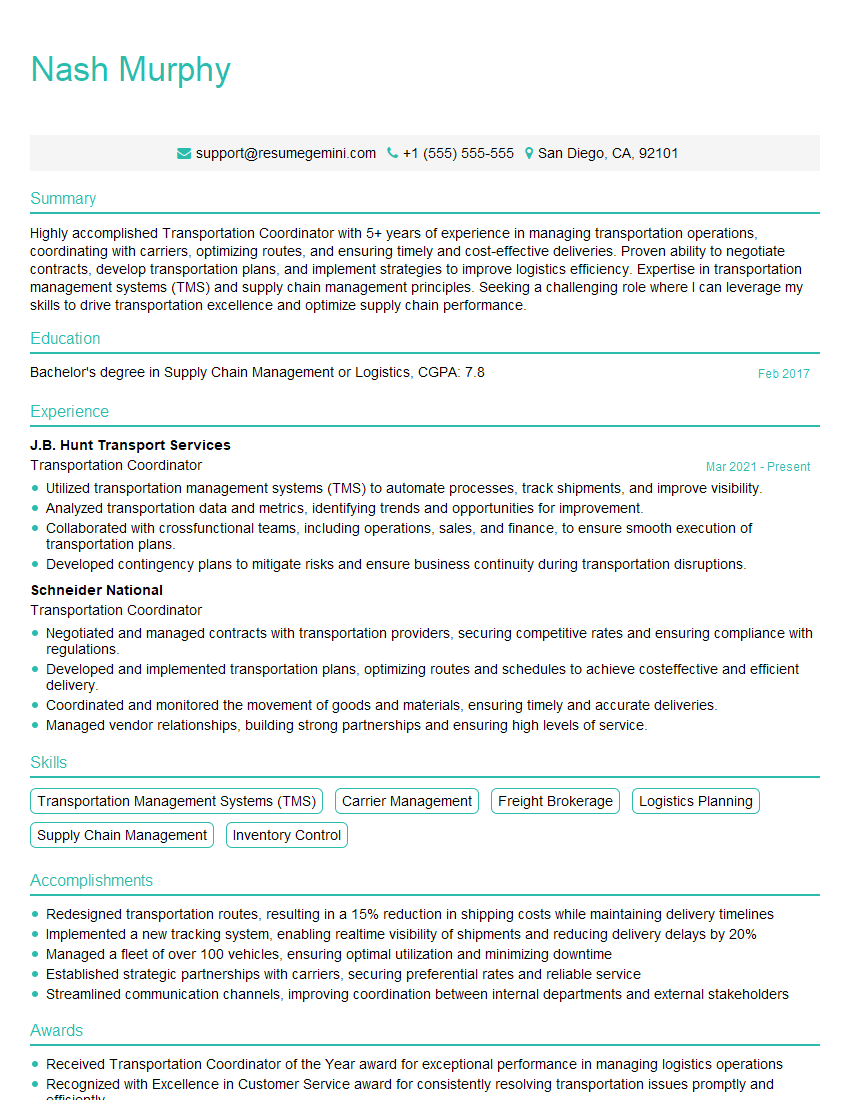
Transportation Coordinator Resume Sample
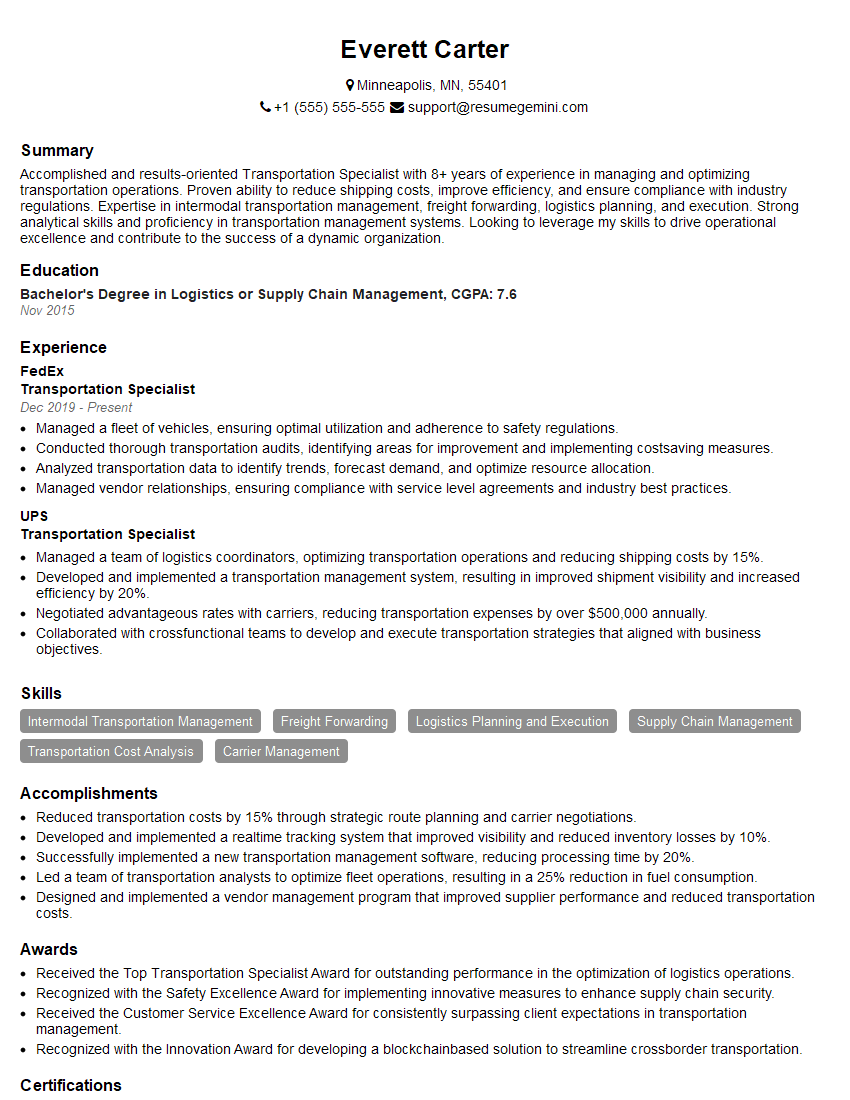
Transportation Specialist Resume Sample
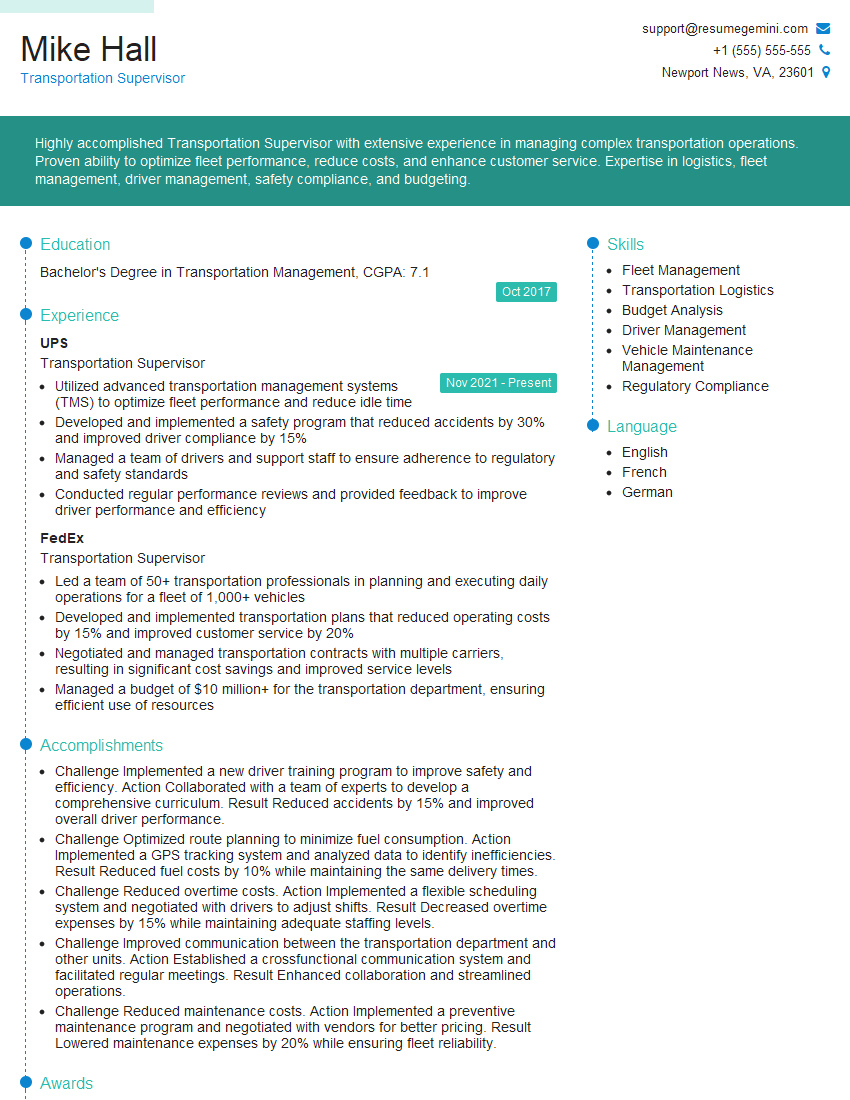
Transportation Supervisor Resume Sample
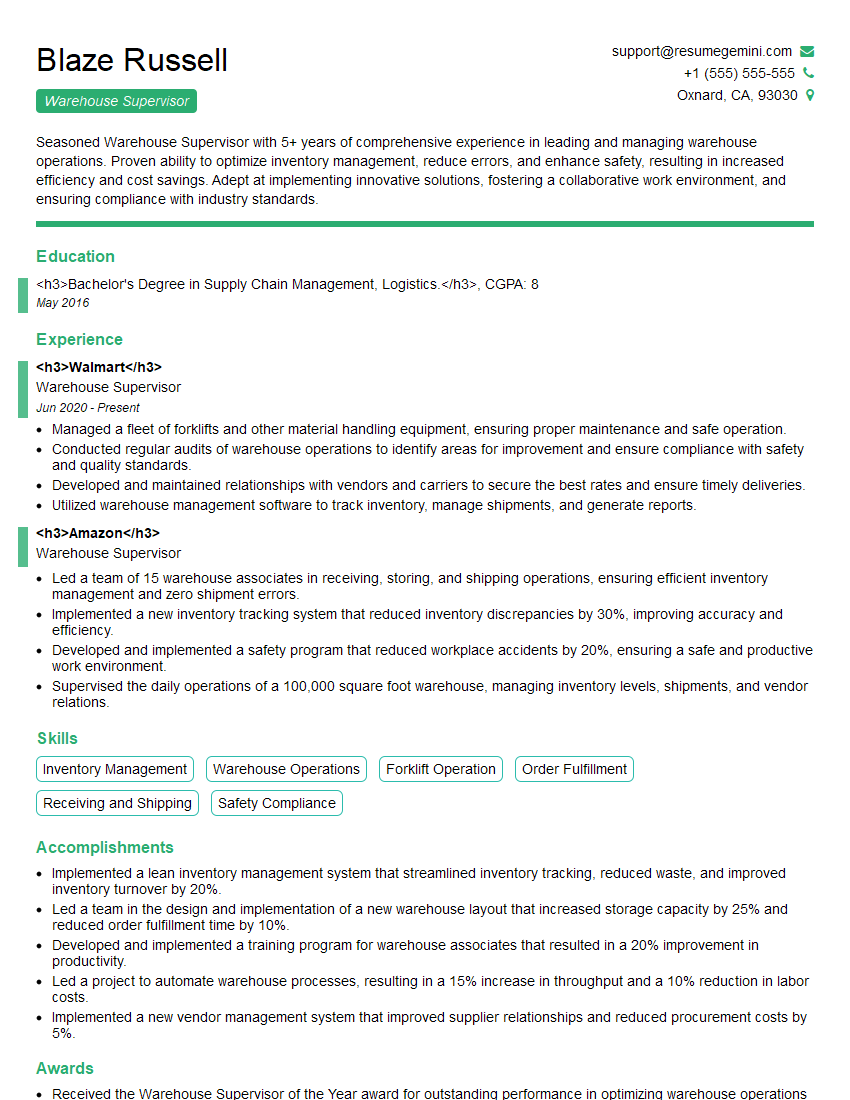
Warehouse Supervisor Resume Sample
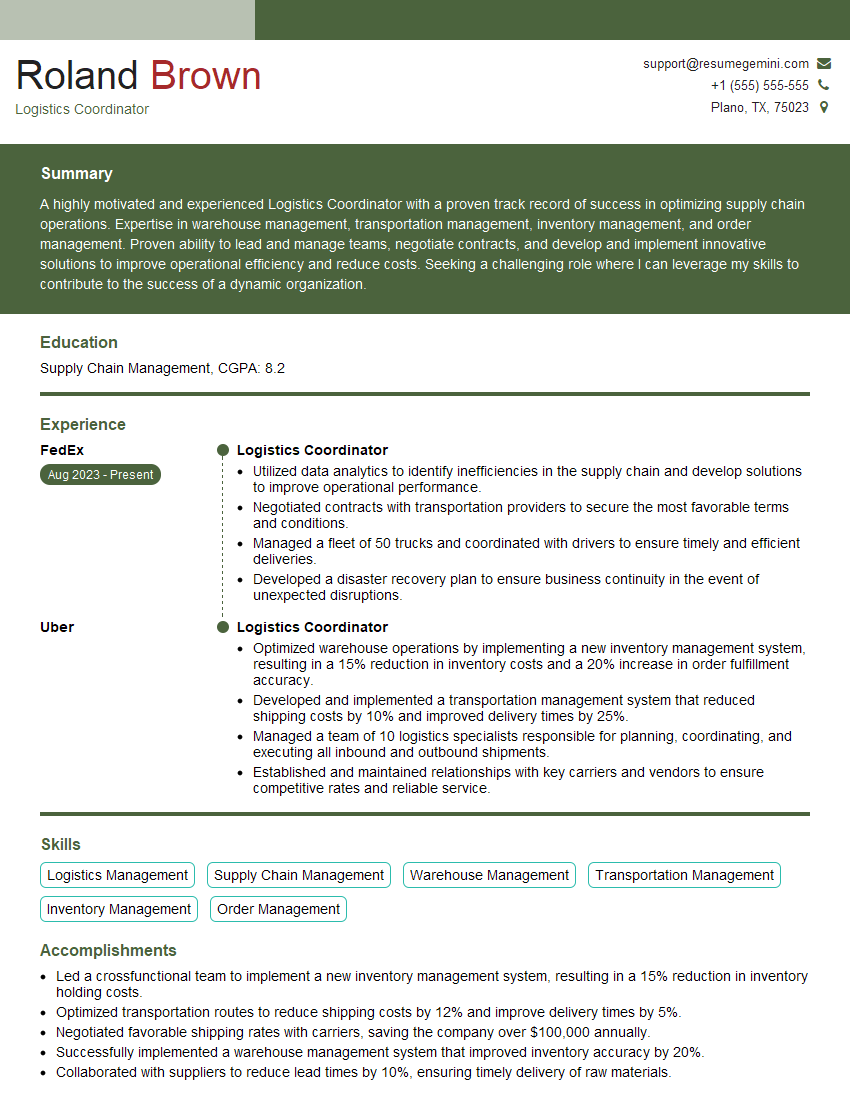
Logistics Coordinator Resume Sample
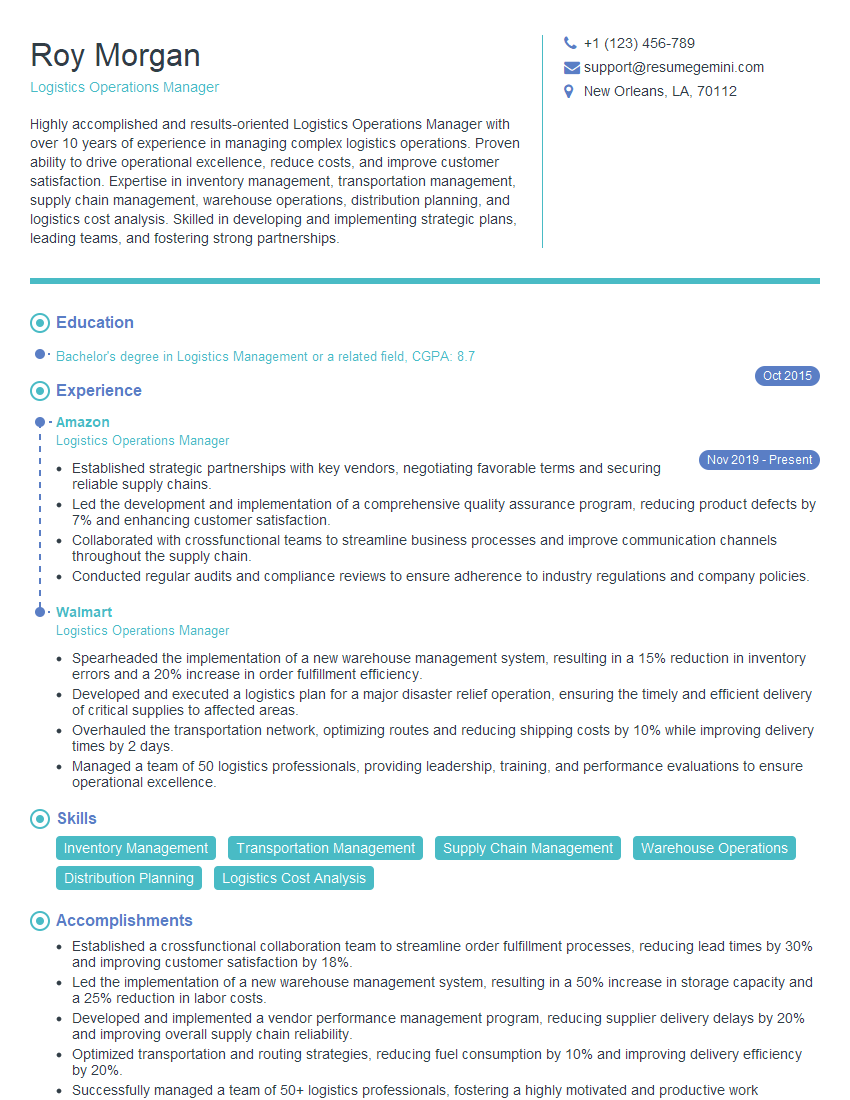
Logistics Operations Manager Resume Sample
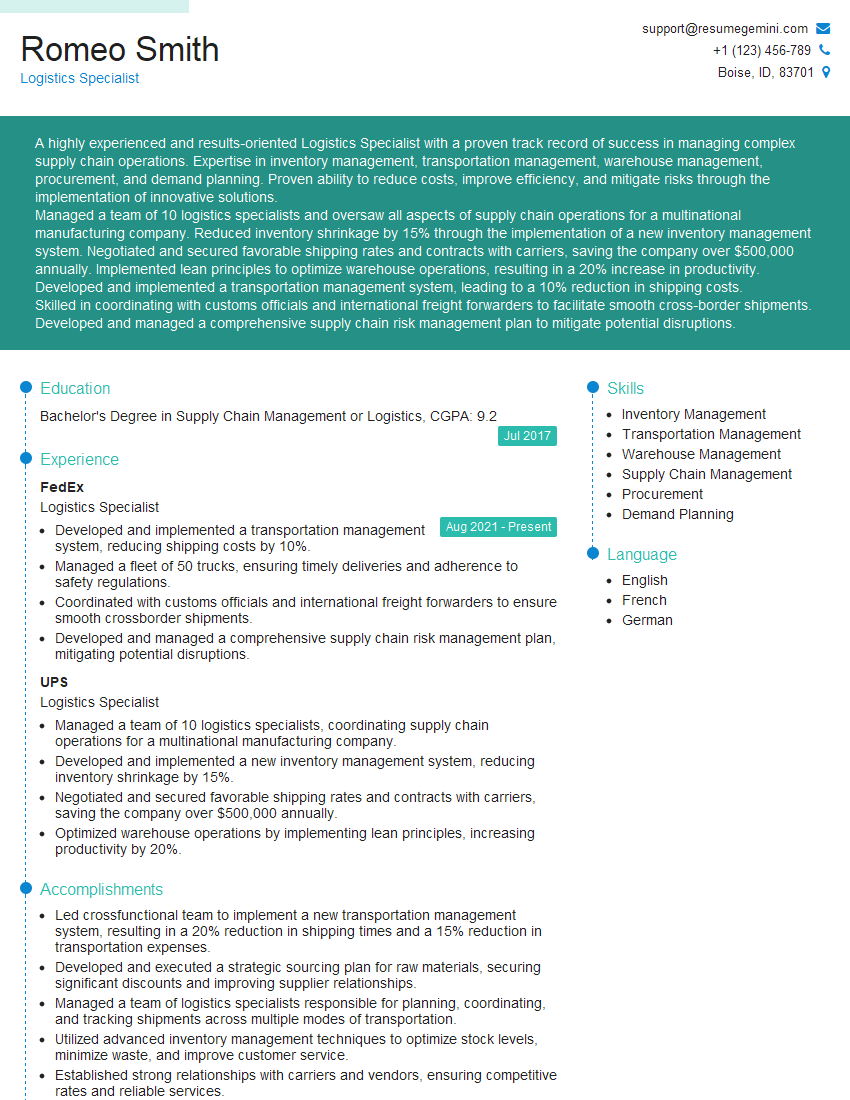
Logistics Specialist Resume Sample
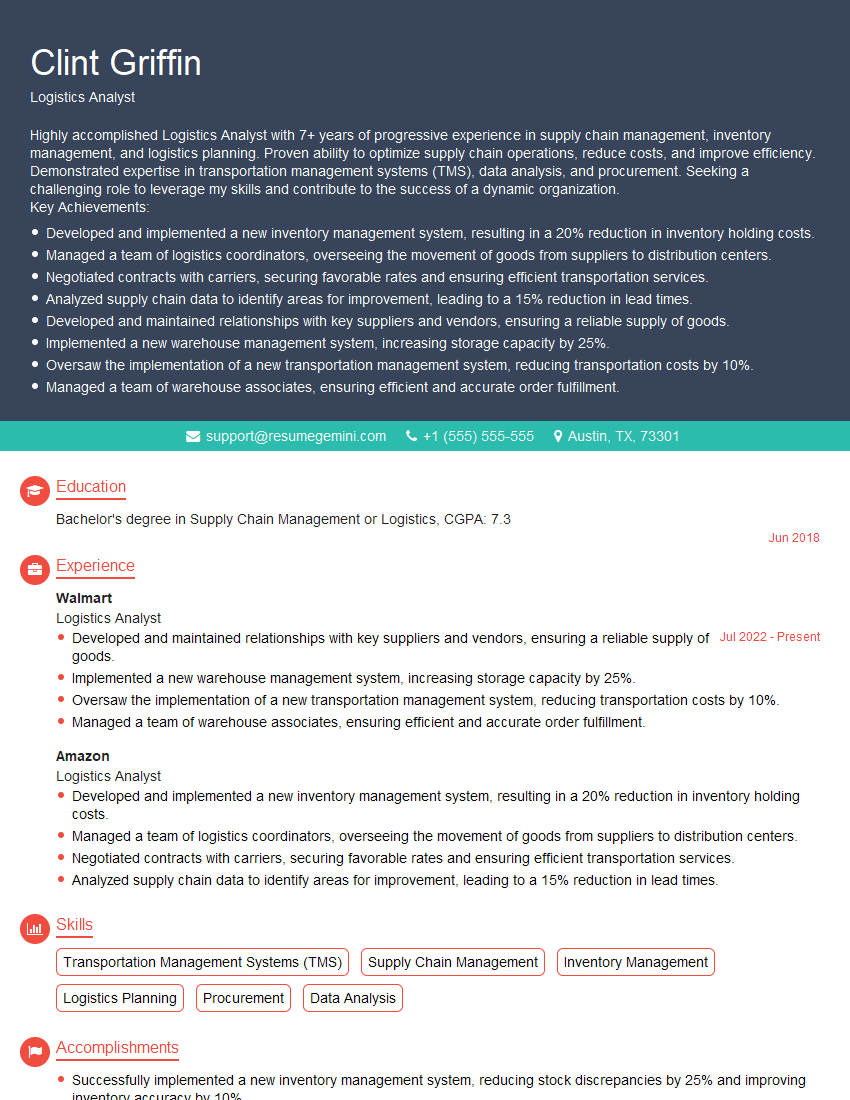
Logistics Analyst Resume Sample
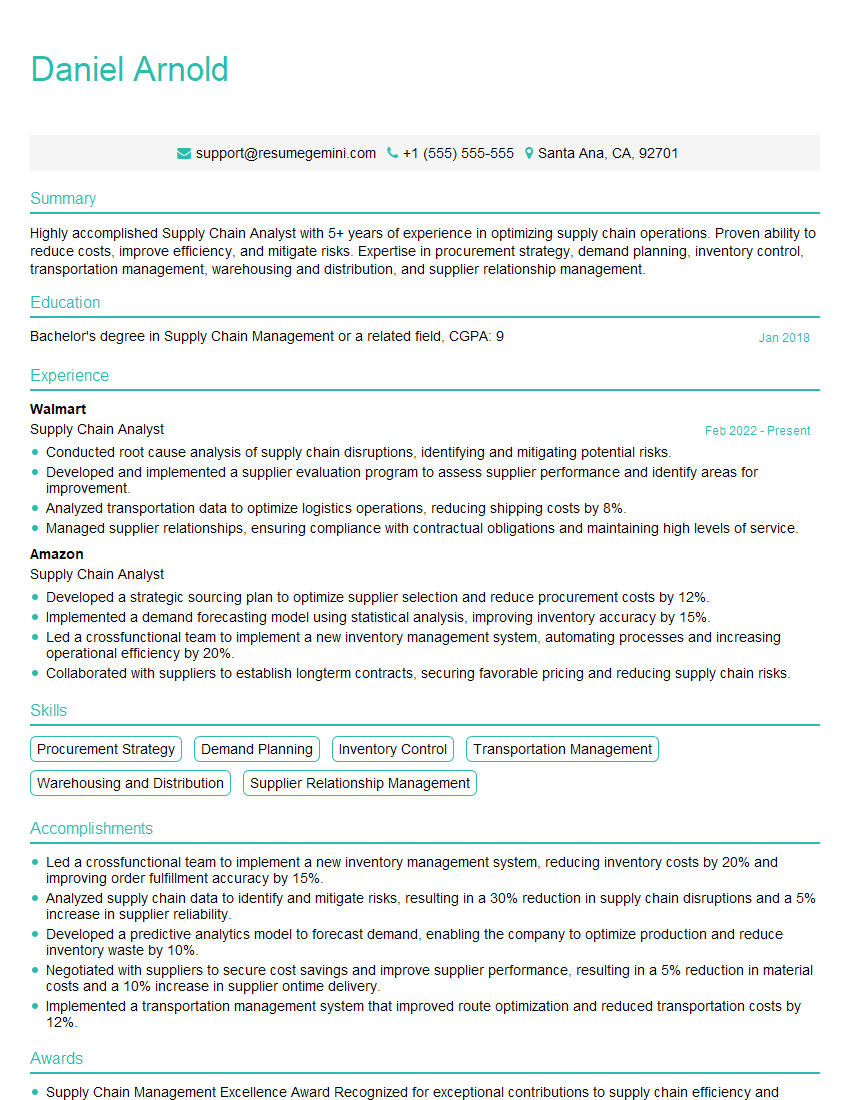
Supply Chain Analyst Resume Sample
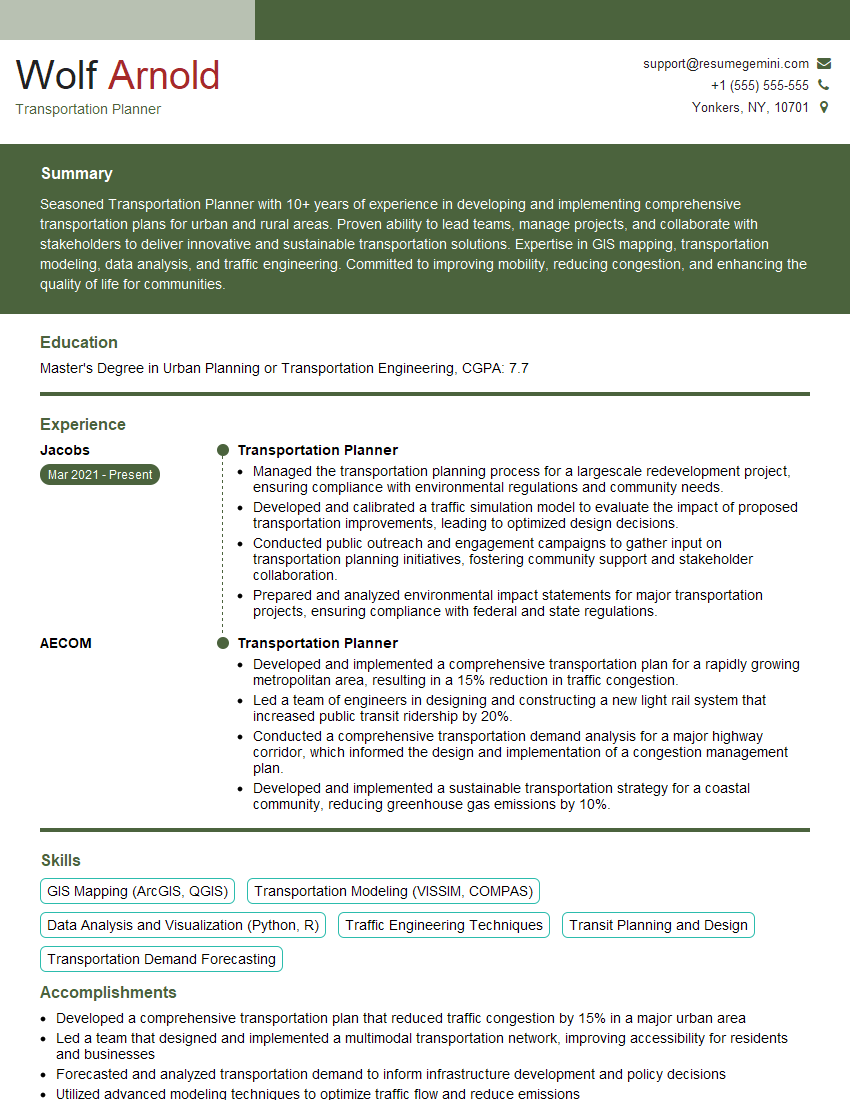
Transportation Planner Resume Sample
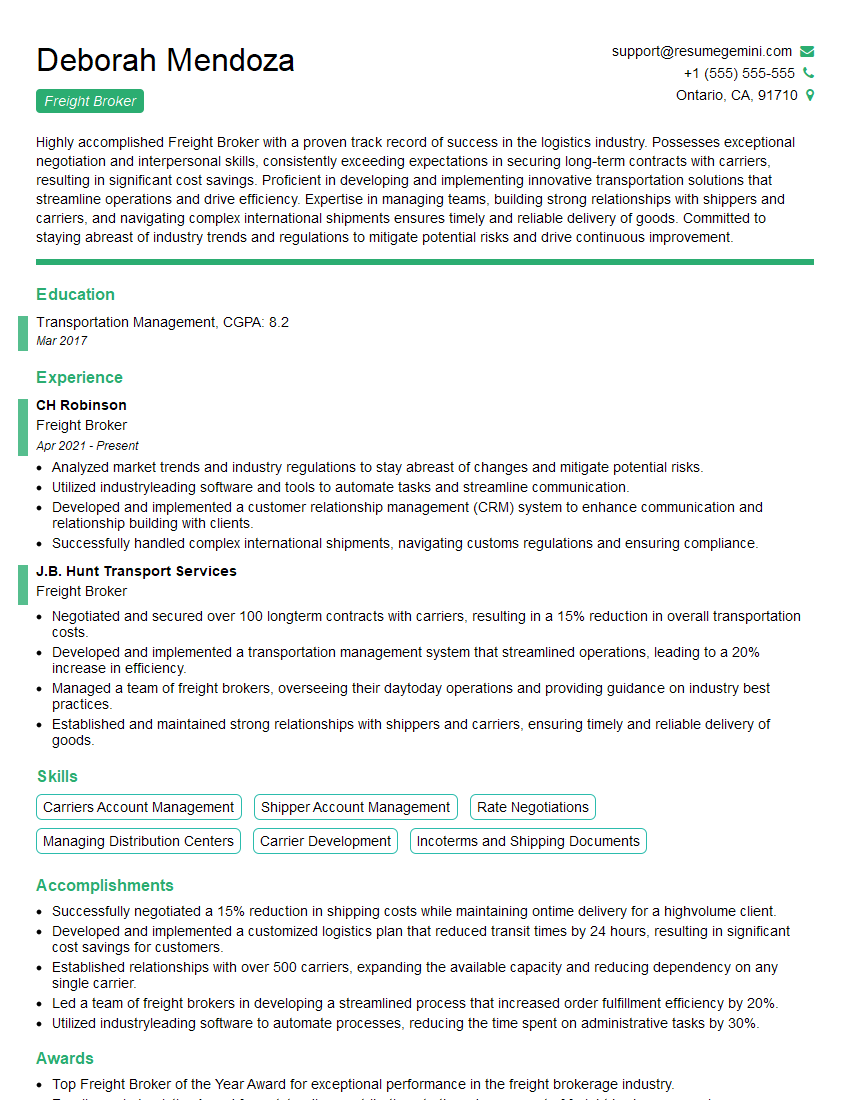
Freight Broker Resume Sample
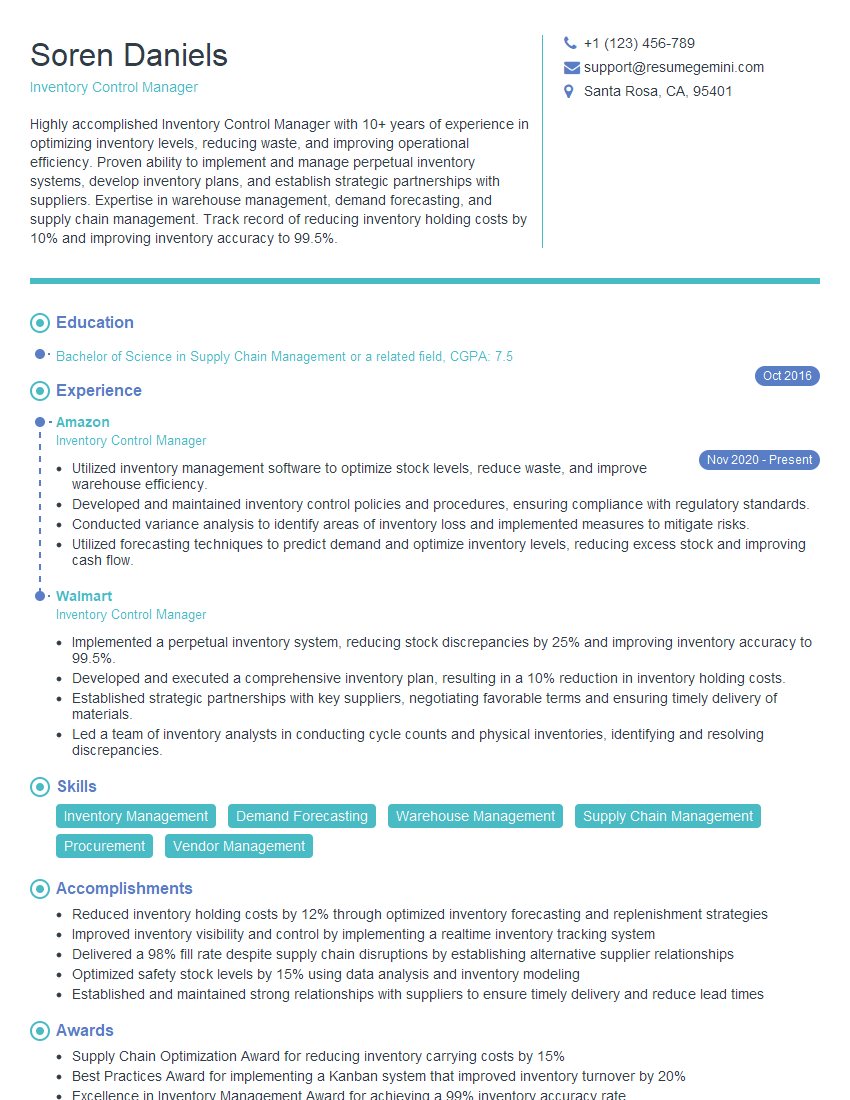
Inventory Control Manager Resume Sample
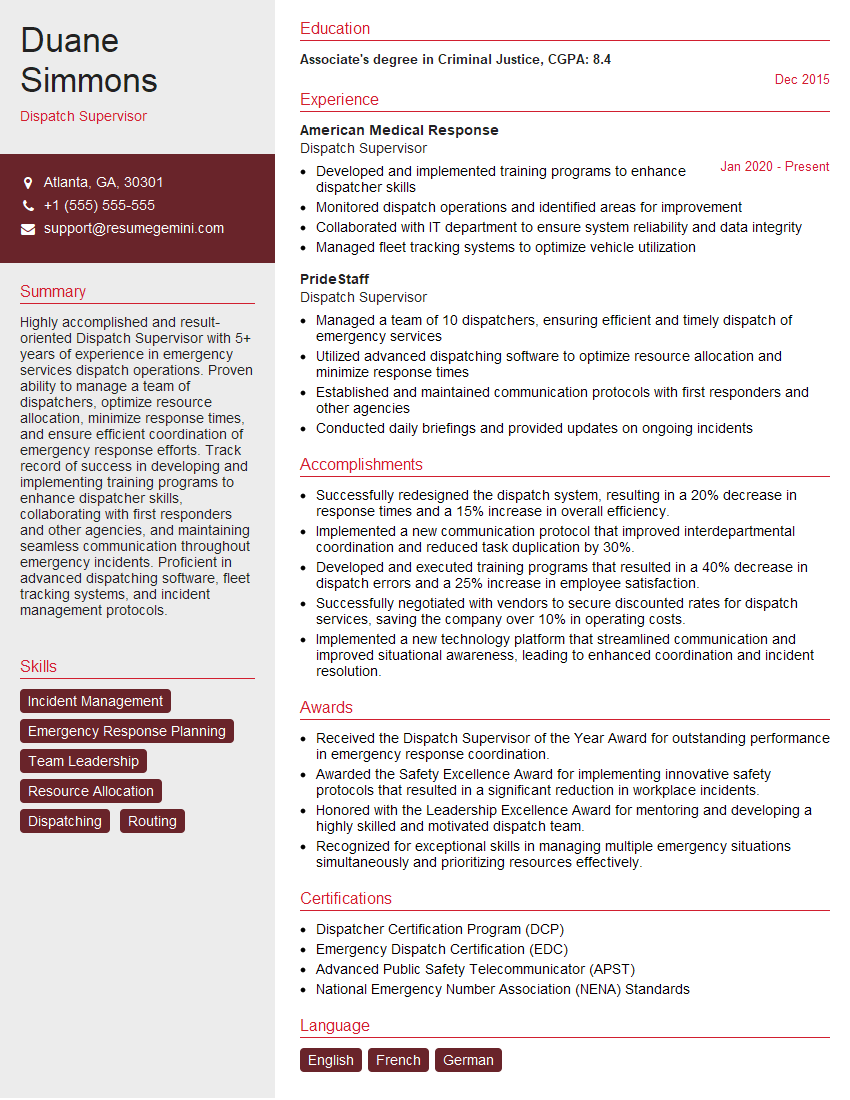
Dispatch Supervisor Resume Sample
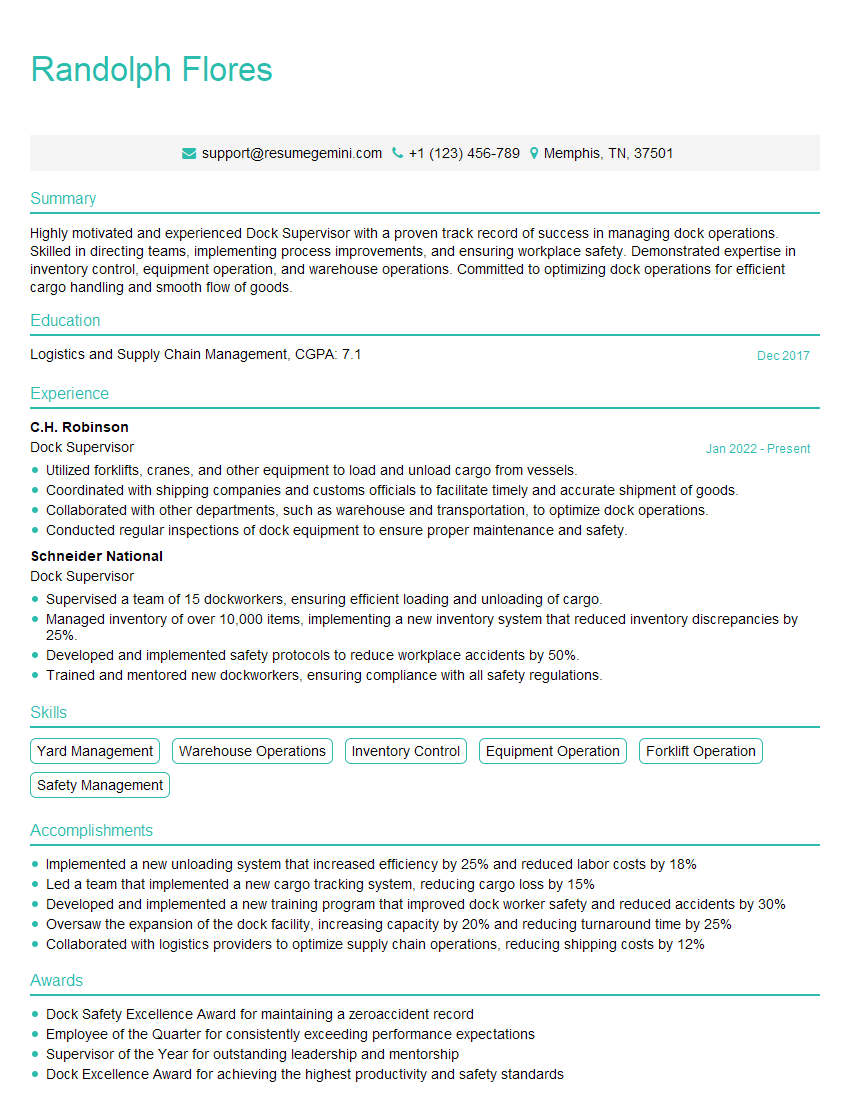
Dock Supervisor Resume Sample
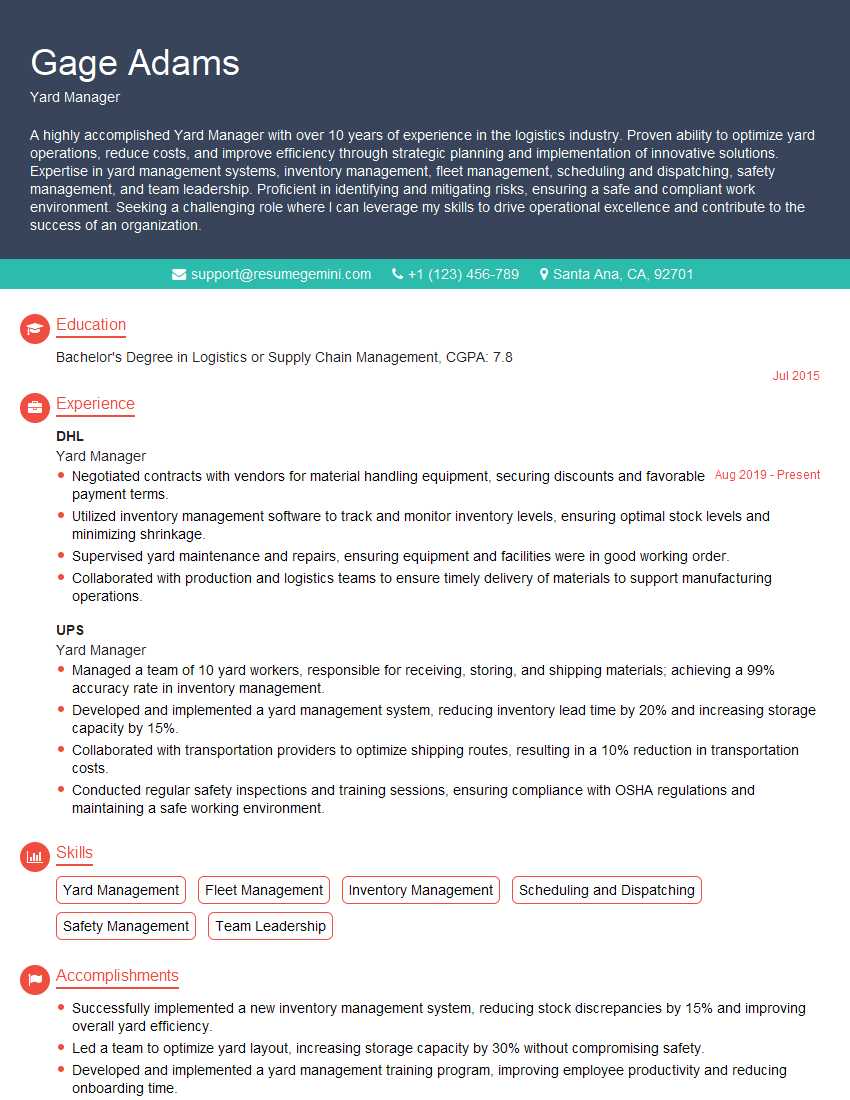
Yard Manager Resume Sample
- Operations Manager
- Demand Planner
- Procurement Manager
- Supply Chain Manager
- Distribution Center Manager
- Warehouse Manager
- Traffic Manager
- Transportation Coordinator
- Transportation Specialist
- Transportation Supervisor
- Warehouse Supervisor
- Logistics Coordinator
- Logistics Operations Manager
- Logistics Specialist
- Logistics Analyst
- Supply Chain Analyst
- Transportation Planner
- Freight Broker
- Inventory Control Manager
- Dispatch Supervisor
- Dock Supervisor
- Yard Manager
Explore more articles
Users Rating of Our Blogs
Share Your Experience
We value your feedback! Please rate our content and share your thoughts (optional).
What Readers Say About Our Blog
Very informative content, great job.
good