Preparation is the key to success in any interview. In this post, we’ll explore crucial Insect and Disease Management interview questions and equip you with strategies to craft impactful answers. Whether you’re a beginner or a pro, these tips will elevate your preparation.
Questions Asked in Insect and Disease Management Interview
Q 1. Describe the life cycle of a common insect pest in your region.
Let’s take the Colorado potato beetle (Leptinotarsa decemlineata) as a common pest in many regions. Its life cycle is a classic example of complete metamorphosis, meaning it goes through four distinct stages.
- Egg Stage: Females lay clusters of yellowish-orange eggs on the undersides of potato leaves. These eggs hatch within a week or two, depending on temperature.
- Larval Stage: The larvae are initially small and dark, gradually growing larger and developing a distinctive striped pattern. They feed voraciously on potato foliage, going through several instars (molting stages).
- Pupal Stage: After the final larval instar, the larva enters the pupal stage, burying itself in the soil. Inside the pupa, a complete transformation occurs.
- Adult Stage: The adult beetle emerges from the pupa. It is yellowish-brown with ten black stripes on its elytra (wing covers). Adults feed on potato leaves and mate, beginning the cycle anew. They can overwinter in the soil and emerge the following spring.
Understanding this life cycle is crucial for effective pest management. For instance, targeting egg masses or larval stages with specific control methods can be more efficient than dealing with the highly mobile adults.
Q 2. Explain the principles of Integrated Pest Management (IPM).
Integrated Pest Management (IPM) is a holistic approach to pest control that aims to minimize pesticide use while maximizing pest suppression. It’s about finding a balance between protecting crops and preserving the environment. The core principles include:
- Monitoring: Regularly scouting fields to identify pest presence and severity. This prevents unnecessary pesticide applications.
- Economic Threshold: Determining the pest population level at which economic damage is likely to occur. Treatment is only justified if this threshold is exceeded.
- Prevention: Implementing practices that reduce pest establishment and spread, such as crop rotation, using pest-resistant varieties, and proper sanitation.
- Biological Control: Utilizing natural enemies of pests, like beneficial insects or nematodes, to suppress pest populations. This can be highly effective and environmentally friendly.
- Cultural Control: Employing farming practices that discourage pest infestations. Examples include proper irrigation, fertilization, and weed management.
- Chemical Control: Using pesticides only as a last resort, when other methods are insufficient. This minimizes environmental impact and reduces the risk of pesticide resistance.
IPM is not simply about choosing one method; it’s a dynamic process requiring careful observation, decision-making, and adaptation based on specific circumstances.
Q 3. What are the different methods for controlling insect pests?
Insect pest control methods are diverse, and the best approach depends on the specific pest, the crop, and environmental considerations. They include:
- Physical Control: Techniques like handpicking, traps, barriers, and netting.
- Biological Control: Introducing natural enemies such as predatory insects, parasitic wasps, or entomopathogenic nematodes.
- Cultural Control: Practices that modify the environment to make it less favorable for pests; examples include crop rotation, sanitation, and appropriate planting dates.
- Chemical Control: Using insecticides, but always carefully considering their impact on beneficial organisms and the environment. Selection should be based on Integrated Pest Management (IPM) principles.
For instance, in controlling aphids, you could use sticky traps (physical), introduce ladybugs (biological), ensure good plant spacing (cultural), or employ a targeted insecticide (chemical) as a last resort, guided by IPM principles. The most effective strategies often involve a combination of these methods.
Q 4. Discuss various plant diseases and their symptoms.
Plant diseases are caused by various pathogens, including fungi, bacteria, viruses, nematodes, and even parasitic plants. Here are some examples:
- Fungal Diseases: Examples include powdery mildew (white powdery coating on leaves), late blight (brown, rotting lesions on leaves and stems – famously impacting potatoes), and rust (orange or brown pustules on leaves and stems).
- Bacterial Diseases: Fire blight (bacterial infection causing blackening and death of blossoms and shoots) is a well-known example, affecting apples and pears.
- Viral Diseases: Many viruses cause stunted growth, leaf distortion (mosaic patterns), and discoloration in plants. Tobacco mosaic virus is a common example.
- Nematode Diseases: Microscopic roundworms that infect roots, causing root knot galls and reduced plant vigor.
Accurate disease identification is crucial for effective management. Symptoms can vary depending on the pathogen, plant species, and environmental conditions.
Q 5. How do you diagnose plant diseases?
Diagnosing plant diseases requires a systematic approach. It often starts with careful observation of symptoms. This includes considering:
- Visual Symptoms: Note the location, type, and extent of symptoms (e.g., spots, wilting, discoloration). Take clear photographs.
- Plant History: Knowing the plant’s history (variety, planting date, cultural practices) helps identify potential predisposing factors.
- Environmental Conditions: Note the prevailing weather conditions, as some diseases are favored by specific temperatures, humidity levels, or rainfall.
- Laboratory Testing: In cases of uncertain diagnosis, laboratory analysis can confirm the presence of specific pathogens through microscopic examination or molecular techniques.
For instance, if you observe circular leaf spots on a tomato plant, you might suspect early blight. However, confirmation might require laboratory testing to differentiate it from other similar diseases.
Q 6. What are the common methods for controlling plant diseases?
Plant disease management also employs a multi-faceted strategy, reflecting the IPM approach:
- Cultural Practices: Maintaining good sanitation, proper irrigation, adequate fertilization, and crop rotation to minimize disease development.
- Biological Control: Using beneficial microorganisms (e.g., antagonistic fungi or bacteria) to suppress plant pathogens.
- Chemical Control: Applying fungicides or bactericides, but only when necessary and according to label instructions. Resistance development needs to be considered.
- Resistant Varieties: Choosing disease-resistant plant varieties offers a sustainable and environmentally friendly approach.
Effective disease management often requires a combination of these methods. For instance, in managing late blight on potatoes, a combination of resistant varieties, crop rotation, and fungicide application (when justified by monitoring) would be a comprehensive approach.
Q 7. Explain the concept of pesticide resistance.
Pesticide resistance occurs when a pest population develops the ability to survive exposure to a pesticide that was previously effective. This happens through natural selection: individuals with genes conferring resistance survive and reproduce, increasing the frequency of resistant genes in the population.
Overuse of a single pesticide class greatly accelerates resistance development. For example, repeatedly applying the same insecticide to control aphids will eventually lead to an aphid population that is no longer affected by that insecticide. This renders the pesticide useless and necessitates the use of more toxic chemicals or different control strategies.
To minimize resistance development, it’s crucial to follow IPM guidelines, rotate different pesticide classes, integrate other control methods, and monitor pesticide efficacy. Resistance management strategies require a long-term perspective and collaborative efforts across industries and research.
Q 8. How do you select appropriate pesticides for a specific pest or disease?
Selecting the right pesticide is crucial for effective pest and disease management while minimizing negative impacts. It’s a multi-step process that begins with accurate identification of the target pest or disease. This often involves visual inspection, laboratory analysis, and consideration of the host plant or animal. Once identified, several factors influence pesticide selection:
- Pesticide mode of action: Understanding how the pesticide works (e.g., contact, systemic, stomach poison) is vital. A systemic pesticide, absorbed by the plant, is better for sucking insects, whereas a contact pesticide is more suitable for chewing insects.
- Target specificity: Choosing a pesticide that targets only the pest and spares beneficial insects and other non-target organisms is key to environmental protection. Broad-spectrum pesticides affect a wide range of organisms, while narrow-spectrum pesticides are more specific.
- Toxicity to humans and animals: Pesticide labels indicate toxicity levels. Always choose the least toxic option effective against the target pest. Factors like application method and personal protective equipment will also influence this choice.
- Environmental fate: Consider how the pesticide will behave in the environment. Some pesticides persist longer than others, potentially causing long-term harm. Degradation rates, potential for soil and water contamination, and volatility should be reviewed.
- Resistance management: Pest populations can develop resistance to pesticides over time. Using a variety of pesticides with different modes of action, crop rotation, and integrated pest management (IPM) strategies are vital for delaying resistance development.
Example: If you identify aphids (sucking insects) on your rose bushes, a systemic insecticide absorbed by the plant would be more effective than a contact insecticide. However, if you’re dealing with Japanese beetles (chewing insects), a contact insecticide might be more appropriate. Always check the label for specific instructions and safety precautions.
Q 9. Describe the safety precautions involved in handling pesticides.
Handling pesticides requires strict adherence to safety protocols to protect yourself, others, and the environment. These precautions include:
- Read the label carefully: The label provides crucial information about toxicity, application methods, and safety precautions.
- Personal Protective Equipment (PPE): Always wear appropriate PPE, including gloves, goggles, respirators, and protective clothing, as specified on the label. This minimizes direct contact with the pesticide.
- Proper mixing and application: Follow label instructions precisely for mixing and applying pesticides. Use appropriate equipment and techniques to avoid spills or drift.
- Storage: Store pesticides in their original containers in a secure, locked location, away from children, pets, and food.
- Disposal: Dispose of empty containers and leftover pesticides according to label instructions and local regulations. Never dump pesticides down the drain or in the trash.
- Emergency preparedness: Know the location of the nearest medical facility and have the pesticide label readily available in case of accidental exposure. Familiarize yourself with emergency response procedures.
Example: When spraying an insecticide, always wear a respirator to prevent inhalation of pesticide particles. After application, wash your protective clothing and thoroughly wash your hands and exposed skin with soap and water.
Q 10. What are the environmental impacts of pesticide use?
Pesticide use carries significant environmental consequences, impacting various ecosystems. These impacts include:
- Non-target organism effects: Pesticides can harm beneficial insects (e.g., pollinators like bees), birds, fish, and other wildlife. Broad-spectrum pesticides have the most far-reaching effects.
- Water contamination: Pesticides can runoff into surface water bodies (streams, rivers, lakes) and contaminate groundwater. This can harm aquatic life and make drinking water unsafe.
- Soil contamination: Pesticide residues can persist in the soil for extended periods, affecting soil organisms (earthworms, beneficial microbes) and potentially leaching into groundwater.
- Air pollution: Some pesticides are volatile and can enter the atmosphere, contributing to air pollution. These pesticides can be transported over long distances.
- Bioaccumulation and biomagnification: Certain pesticides can accumulate in the tissues of organisms and magnify as they move up the food chain, causing harm at higher trophic levels.
Example: The widespread use of DDT (Dichlorodiphenyltrichloroethane) in the past resulted in widespread environmental damage including the thinning of bird eggshells. This illustrates the long-term consequences of improper pesticide use.
Q 11. Explain the role of beneficial insects in pest control.
Beneficial insects play a crucial role in natural pest control. These insects act as predators, parasitoids, or pathogens, reducing pest populations and minimizing the need for pesticides. This is a cornerstone of Integrated Pest Management (IPM).
- Predators: These insects actively hunt and kill pests. Examples include ladybugs (feeding on aphids) and lacewings (feeding on various soft-bodied insects).
- Parasitoids: These insects lay their eggs in or on pest insects. The parasitoid larvae then develop and consume the host, eventually killing it. Examples include parasitic wasps and flies.
- Pathogens: These are bacteria, fungi, viruses, or nematodes that cause diseases in pest insects. Bacillus thuringiensis (Bt) is a commonly used bacterial pathogen against various lepidopteran pests.
Example: Introducing ladybugs to a garden infested with aphids can significantly reduce the aphid population naturally, minimizing or eliminating the need for chemical pesticides. Encouraging beneficial insects through habitat creation and providing nectar sources are crucial.
Q 12. How do you monitor insect and disease populations?
Monitoring insect and disease populations is essential for making informed decisions in pest management. This involves regular assessments to determine pest densities, distribution, and the potential for economic damage. Methods include:
- Visual inspection: Regularly inspecting crops or other areas for signs of pests or diseases, such as leaf damage, wilting, or the presence of insects.
- Trapping: Using various traps (pheromone traps, sticky traps, pitfall traps) to capture and count insects, providing an estimate of population size and distribution.
- Sampling: Taking representative samples from the area to assess pest density. Techniques vary depending on the pest and the environment.
- Scouting: Systematic surveys to determine the presence and abundance of pests and diseases across a field or area. This allows for early detection and timely intervention.
- Remote sensing: Using technologies like drones and satellite imagery to monitor large areas for signs of pest or disease outbreaks.
Example: Regularly examining plants for signs of insect damage or disease, coupled with pheromone trapping for specific pests, helps monitor pest pressure and guides the decision to intervene. This can prevent outbreaks and reduce damage.
Q 13. What are some biological control methods for pests and diseases?
Biological control offers environmentally friendly alternatives to chemical pesticides. It involves using natural enemies of pests to suppress their populations. Methods include:
- Inoculative release: Introducing a small number of natural enemies to establish a self-sustaining population.
- Inundative release: Releasing large numbers of natural enemies to quickly suppress a pest outbreak.
- Conservation biological control: Protecting and enhancing existing beneficial organisms in the environment through habitat manipulation and other practices.
- Use of microbial pathogens: Applying bacteria, fungi, viruses, or nematodes to infect and kill pests.
- Semiochemicals: Using pheromones or other attractants to lure or disrupt pests. Pheromone traps can attract and capture male insects, reducing mating success and population growth.
Example: Introducing parasitic wasps to control aphids in a greenhouse is a form of inoculative release. Bacillus thuringiensis (Bt) is a microbial insecticide that targets specific insect pests and is commonly used in organic farming.
Q 14. Describe the different types of sampling techniques used in pest and disease management.
Sampling techniques are crucial for accurate assessment of pest and disease populations. The choice of technique depends on the target organism, the environment, and the objectives of the sampling program.
- Random sampling: Samples are taken randomly across the area, providing an unbiased estimate of the population. This ensures all parts of the area have an equal chance of being sampled.
- Systematic sampling: Samples are taken at regular intervals across the area, providing a structured approach. This method is useful for large areas and for detecting patterns or gradients in pest distribution.
- Stratified sampling: The area is divided into different strata (sub-areas) based on characteristics like plant density or soil type, and samples are taken from each stratum. This is useful when the population is not uniformly distributed.
- Quadrat sampling: Quadrats (square frames of a fixed size) are placed randomly or systematically on the ground, and the organisms within each quadrat are counted. This is a common method for estimating the density of plants or slow-moving insects.
- Sweep netting: A net is swept through vegetation to collect insects. This is useful for collecting insects from diverse plant communities and assessing the relative abundance of different insect species.
- Pitfall trapping: Small containers are buried in the ground to capture insects that fall into them. This is useful for collecting ground-dwelling insects.
Example: In a field of corn, stratified sampling might be used, dividing the field into sections based on soil moisture levels, and taking separate samples from each section to account for variation in pest abundance.
Q 15. How do you interpret pest and disease data to make management decisions?
Interpreting pest and disease data for management decisions involves a systematic approach combining quantitative analysis with qualitative observations. It’s like being a detective, piecing together clues to understand the crime scene (the field).
First, I’d assess the severity of the infestation or disease. This involves looking at the percentage of plants affected, the level of damage on each plant (e.g., percentage of leaf area lost), and the overall impact on yield. For example, a 10% infestation of aphids might be manageable, but 80% requires immediate action.
Then, I’d determine the identity of the pest or pathogen. Accurate identification is crucial for selecting effective control measures. This often requires laboratory analysis, microscopic examination, or molecular testing. Misidentifying a pest can lead to ineffective or even harmful control strategies.
Next, I consider environmental factors. Weather patterns, soil conditions, and the presence of natural enemies all influence pest and disease development. For instance, a prolonged period of rain could favor the spread of fungal diseases, while hot, dry weather might reduce aphid populations.
Finally, I evaluate the economic threshold. This is the point at which the cost of pest or disease control is less than the potential loss in yield. An economic threshold takes into account the cost of control methods, the value of the crop, and the potential yield loss. Only if the pest or disease is projected to cause economic losses exceeding the costs of intervention do we take action.
Career Expert Tips:
- Ace those interviews! Prepare effectively by reviewing the Top 50 Most Common Interview Questions on ResumeGemini.
- Navigate your job search with confidence! Explore a wide range of Career Tips on ResumeGemini. Learn about common challenges and recommendations to overcome them.
- Craft the perfect resume! Master the Art of Resume Writing with ResumeGemini’s guide. Showcase your unique qualifications and achievements effectively.
- Don’t miss out on holiday savings! Build your dream resume with ResumeGemini’s ATS optimized templates.
Q 16. What is your experience with using pest and disease forecasting models?
Pest and disease forecasting models are crucial for proactive management. They are essentially predictive tools that use various factors (weather data, historical pest/disease incidence, crop phenology) to forecast the risk of outbreaks. Think of it as a weather forecast, but for pests and diseases.
My experience includes using models like those based on degree-day accumulation (useful for insect development) and models that incorporate disease spread through spatial analysis and environmental variables. I’ve worked with both commercially available software and custom-developed models. For instance, I used a degree-day model to predict the emergence of corn borer based on temperature data and planting dates, which allowed for timely application of biological control agents.
The accuracy of these models depends heavily on the quality of the input data. Regular monitoring and calibration are essential to ensure their effectiveness. Furthermore, I understand the limitations of any predictive model; they offer probabilities, not certainties. Therefore, I always combine model predictions with regular field scouting to make informed decisions.
Q 17. How do you assess the economic impact of pests and diseases on crops?
Assessing the economic impact of pests and diseases involves quantifying yield losses and the costs associated with control measures. It’s a financial analysis of the problem.
I use a variety of methods, including yield surveys (comparing affected fields with healthy ones), market price analysis (to determine the value of lost yield), and cost accounting (which includes pesticide costs, labor, and equipment use). For example, I might compare the yield of a soybean field infested with soybean cyst nematodes to the yield of a healthy field in the same area. The difference, multiplied by the market price of soybeans, represents the direct yield loss.
Indirect costs, such as reduced crop quality and the need for replanting, are also considered. Ultimately, this analysis enables informed decisions about control strategies – whether the economic benefits of control outweigh the costs.
Q 18. Explain your experience with developing and implementing pest and disease management plans.
Developing and implementing pest and disease management plans is a multi-step process that emphasizes an integrated approach – combining different techniques to minimize reliance on chemical pesticides. This involves thinking holistically about the entire system.
Firstly, I conduct thorough risk assessments, identifying potential pests and diseases based on location, crop type, and historical data. Then, I implement monitoring strategies, including regular field scouting and using traps to detect pests early. This provides an early warning system.
Next, I determine the most appropriate control tactics, giving priority to preventive measures like resistant varieties, crop rotation, and cultural practices (e.g., proper irrigation and fertilization). Only if the economic threshold is exceeded do I introduce other methods, such as biological control (introducing natural enemies), and if necessary, chemical control, always selecting the least toxic and environmentally friendly option.
Finally, I document everything, from the initial risk assessment to the effectiveness of each control measure. This allows for continuous improvement and adaptation of the management plan over time. It’s iterative and not a one-size-fits-all solution.
Q 19. Describe your knowledge of various regulatory requirements related to pesticide use.
My knowledge of pesticide regulations is comprehensive, encompassing federal and state laws, as well as industry best practices. I understand the importance of adhering to label instructions, which are legally binding. This ensures both human and environmental safety.
I am familiar with the process of obtaining necessary permits for pesticide use, the restrictions on certain chemicals, and the procedures for handling and disposing of pesticides safely. I know the importance of maintaining detailed records of pesticide applications for compliance and traceability. For example, I understand the implications of the Worker Protection Standard (WPS) and ensure all workers are adequately protected during pesticide applications.
I stay updated on changes in regulations through professional organizations, government agencies, and industry publications. Compliance is not just a legal obligation but is crucial for responsible stewardship of the environment.
Q 20. How do you communicate pest and disease management information to growers or stakeholders?
Effective communication is vital in pest and disease management. I use a variety of methods to communicate information to growers and stakeholders in a clear and accessible way.
I tailor my communication style to the audience. For example, I provide concise summaries and recommendations to busy growers, while for more technical audiences, I might present detailed data and analysis. I use a combination of verbal presentations at workshops and field days, written reports and newsletters, and visual aids like maps and infographics. I use simple language and avoid excessive technical jargon.
Demonstrations in the field are highly effective, as are hands-on training sessions. This allows growers to see the techniques in action and to ask questions directly. Active listening is also essential to ensure that the information is relevant and addresses the growers’ specific needs and concerns.
Q 21. What is your experience with using GIS technology in pest and disease management?
Geographic Information Systems (GIS) technology is invaluable in pest and disease management, allowing for spatial analysis of pest and disease outbreaks, and the optimization of control strategies. It’s like having a high-tech map to help navigate the problem.
My experience includes using GIS to map disease incidence, identify high-risk areas, and track the spread of pests over time. I utilize GIS software to overlay various data layers, such as field boundaries, soil type, and weather patterns, to create comprehensive risk maps. For example, I have used GIS to pinpoint areas with high incidence of late blight in a potato field, enabling targeted fungicide application to minimize chemical use.
GIS also facilitates the efficient planning of control strategies. By integrating data on pest distribution, field characteristics, and the availability of resources, optimized control programs can be devised. This results in more effective and efficient pest management.
Q 22. What are the challenges of managing invasive insect pests?
Managing invasive insect pests presents a unique set of challenges due to their ability to rapidly spread, disrupt ecosystems, and cause significant economic damage. These challenges stem from several factors.
- Lack of natural enemies: Invasive pests often arrive without their natural predators, parasites, or diseases, allowing their populations to explode unchecked.
- Rapid adaptation: Invasive species can quickly adapt to new environments and develop resistance to control measures, making management increasingly difficult.
- Difficult detection: Early detection is crucial for effective management, but many invasive insects are initially difficult to identify, especially in their early stages of infestation.
- Wide dispersal: Invasive pests can easily spread through various means such as wind, water, and human transportation, making containment challenging.
- Economic impact: The economic costs associated with managing invasive pests, including crop losses, control measures, and quarantine procedures, can be substantial.
For example, the emerald ash borer, an invasive beetle from Asia, has devastated ash tree populations across North America. Its rapid spread and lack of natural enemies in North America made its control extremely difficult and costly.
Q 23. How do climate change affect insect and disease dynamics?
Climate change significantly alters insect and disease dynamics in several ways. Changes in temperature, precipitation patterns, and the frequency of extreme weather events create conditions that favor the spread of some pests and diseases while negatively impacting others.
- Range expansion: Warmer temperatures allow insects and pathogens to expand their geographic ranges, moving into previously unsuitable areas.
- Increased generations: Longer growing seasons enable some species to complete multiple generations per year, leading to higher population densities.
- Altered host-pathogen interactions: Changes in climate can affect the susceptibility of plants to diseases and the virulence of pathogens.
- Increased pest outbreaks: Extreme weather events, such as droughts or floods, can weaken plants and make them more vulnerable to pests and diseases.
- Changes in vector populations: Climate change can influence the distribution and abundance of insect vectors that transmit plant diseases.
For instance, the warmer winters in many regions are contributing to the northward expansion of several insect pests, impacting agricultural production in previously unaffected areas. Similarly, increased humidity and rainfall can favor the development and spread of fungal diseases in crops.
Q 24. Describe your experience with using precision agriculture technologies in pest and disease management.
In my previous role, I extensively used precision agriculture technologies for optimizing pest and disease management. This involved using Geographic Information Systems (GIS) for mapping pest infestations, remote sensing for early detection of crop stress, and variable rate technology for targeted pesticide application.
Specifically, I utilized drones equipped with multispectral cameras to monitor crop health and identify areas with potential pest or disease pressure. This allowed for timely intervention, preventing widespread infestation. Data from these sensors were integrated with GIS software to generate detailed maps, guiding precise application of pesticides, reducing chemical usage and environmental impact. We also employed weather stations and soil sensors to optimize irrigation and fertilization schedules, creating a more resilient crop less susceptible to stress and pest attacks.
The results showed significant cost savings by reducing pesticide use by 30% and increasing crop yields by 15% compared to traditional methods. This approach also minimized environmental impact and improved resource efficiency.
Q 25. Explain your understanding of disease resistance in plants.
Disease resistance in plants is the ability of a plant to withstand or overcome infection by a pathogen. This resistance can be either quantitative (partial resistance) or qualitative (complete resistance).
Quantitative resistance involves multiple genes that contribute to a degree of resistance, making it more durable and less likely to be overcome by the pathogen. This type of resistance is often expressed as reduced disease severity rather than complete immunity. For example, a plant might exhibit slower disease progression and reduced yield loss compared to a susceptible plant.
Qualitative resistance, on the other hand, is controlled by one or a few genes and provides complete immunity or near-immunity to specific pathogens. However, this type of resistance is often less durable, and pathogens can overcome it through the evolution of new races or strains. For instance, a plant with a specific gene may be completely immune to a particular strain of a fungus but susceptible to another.
Understanding these mechanisms is critical for developing disease-resistant crop varieties through breeding programs, focusing on combining multiple resistance genes to ensure more durable resistance.
Q 26. How do you handle situations where pest or disease control measures fail?
When pest or disease control measures fail, a multi-pronged approach is necessary to address the situation effectively. The first step involves a thorough investigation to determine the cause of the failure.
- Diagnosis: We would conduct detailed assessments to identify the pest or disease, its current population levels, and the factors contributing to the control failure. This may involve lab testing to identify resistant strains.
- Re-evaluation of strategy: Based on the diagnosis, we would re-evaluate the chosen control measures. This might involve switching to a different pesticide or employing alternative control methods such as biological control agents, cultural practices, or resistant crop varieties.
- Integrated Pest Management (IPM): Implementing an IPM strategy combining various tactics is crucial to mitigate future failures. This holistic approach considers the ecological context and aims to minimize pesticide use.
- Monitoring and Surveillance: Strengthened surveillance systems would be implemented to detect early signs of pest or disease resurgence. This early warning system would allow for timely interventions, limiting damage.
- Documentation and reporting: Detailed records of the failure, the investigation, and the corrective actions are kept to inform future management decisions and improve overall strategies.
For example, if a pesticide application fails due to pesticide resistance, we might incorporate biological control methods and implement crop rotation to help manage the pest population.
Q 27. Describe your experience with risk assessment related to pest and disease management.
Risk assessment in pest and disease management is a crucial process for identifying potential threats and developing appropriate mitigation strategies. This involves a systematic evaluation of the likelihood and potential consequences of pest or disease outbreaks.
My experience includes conducting risk assessments using frameworks that consider various factors, including:
- Pest/disease prevalence: Assessing the current distribution and abundance of potential pests and diseases in the area.
- Host susceptibility: Determining the vulnerability of the target crop or ecosystem to specific pests or diseases.
- Environmental factors: Considering weather patterns, soil conditions, and other environmental factors that may influence pest or disease development.
- Socio-economic impacts: Evaluating the potential economic and social consequences of an outbreak.
I utilize this information to prioritize management actions, allocate resources effectively, and develop contingency plans for potential outbreaks. For example, during a risk assessment for a particular region, we may determine that a specific fungal disease poses a high risk due to favorable weather conditions and the presence of susceptible host plants. This would guide us towards implementing proactive control measures such as preventative fungicide applications or the use of disease-resistant varieties.
Q 28. What are your plans for professional development in the field of insect and disease management?
My professional development plan focuses on enhancing my expertise in several key areas within insect and disease management. I aim to deepen my knowledge of advanced molecular techniques for pest and disease diagnostics and resistance management. This includes genomic analysis, CRISPR-Cas9 technologies and other advanced molecular biology tools for developing new strategies for pest and disease management.
Furthermore, I intend to explore data science and machine learning techniques to improve predictive modeling for pest and disease outbreaks, allowing for more proactive and efficient interventions. I plan to achieve this through attending specialized workshops, online courses, and actively participating in relevant conferences and research collaborations. Staying updated on the latest research and advancements in the field through journals and publications is also a priority. Ultimately, my goal is to contribute to developing sustainable and effective solutions for managing insect pests and diseases in a rapidly changing environment.
Key Topics to Learn for Insect and Disease Management Interview
- Insect Biology and Ecology: Understanding insect life cycles, behavior, and population dynamics. This includes knowledge of different insect orders and their relevance to agriculture and ecosystems.
- Disease Etiology and Epidemiology: Identifying plant diseases, understanding their causal agents (fungi, bacteria, viruses), and how they spread within and between plant populations. This involves understanding disease cycles and factors influencing disease severity.
- Integrated Pest and Disease Management (IPM): Developing and implementing strategies for managing pests and diseases, emphasizing sustainable and environmentally friendly approaches. This includes understanding the principles of IPM, including monitoring, threshold setting, and the use of various control methods.
- Pest and Disease Diagnostics: Accurate identification of pests and diseases using various techniques, including visual inspection, molecular diagnostics, and laboratory assays. This includes understanding the importance of accurate diagnosis for effective management.
- Chemical and Biological Control Methods: Understanding the principles and application of pesticides, biopesticides, and biological control agents. This includes evaluating the efficacy, safety, and environmental impact of different control methods.
- Resistance Management: Developing strategies to prevent or delay the development of pest and disease resistance to control measures. This involves understanding the mechanisms of resistance and implementing strategies to mitigate it.
- Data Analysis and Interpretation: Analyzing data from field trials and experiments to evaluate the effectiveness of different management strategies. This includes using statistical methods to interpret results and draw meaningful conclusions.
- Risk Assessment and Modeling: Assessing the risks associated with pest and disease outbreaks and using predictive models to anticipate future outbreaks. This includes understanding the factors influencing risk and developing effective mitigation strategies.
Next Steps
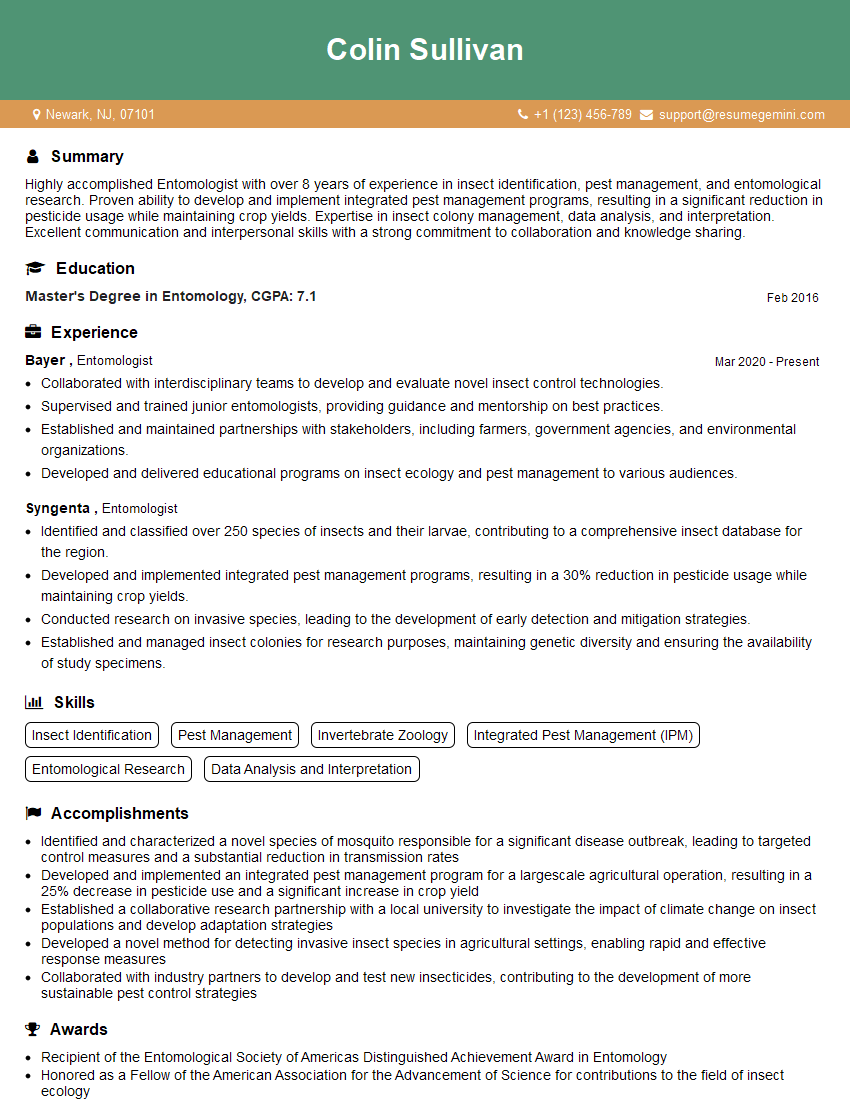
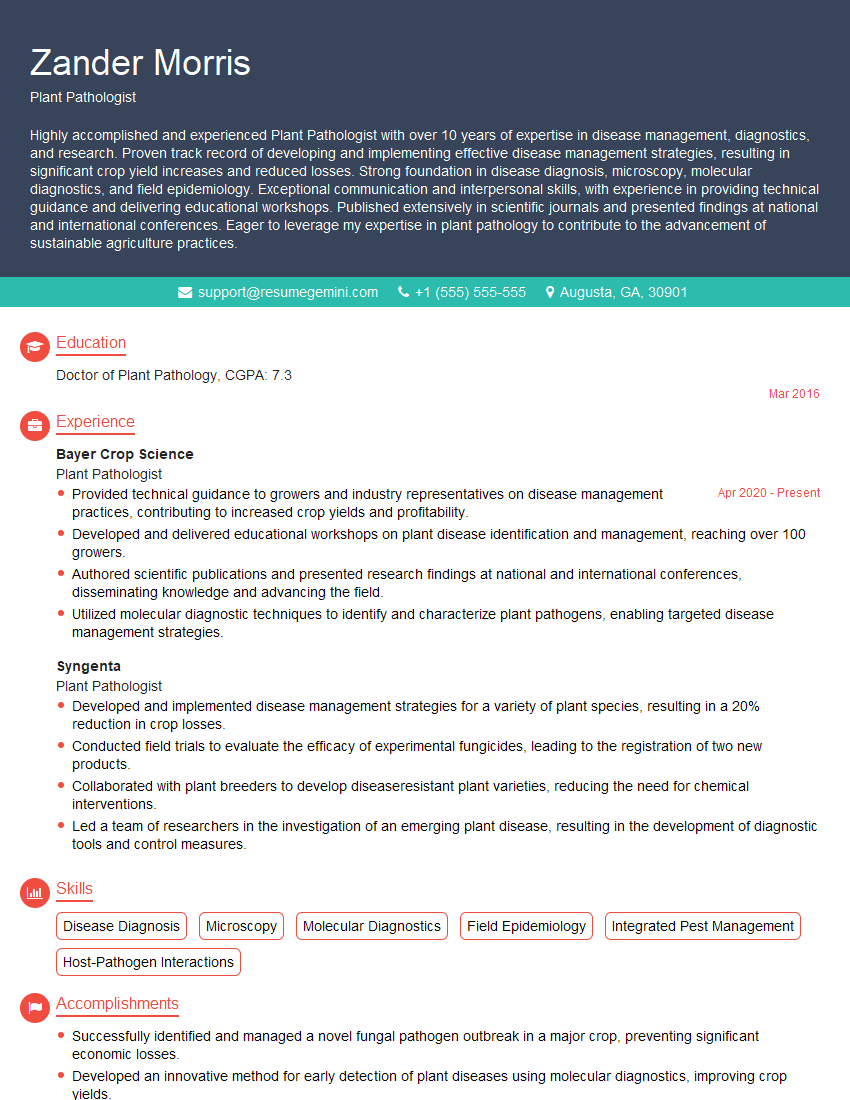
Mastering Insect and Disease Management opens doors to rewarding careers in agriculture, horticulture, environmental science, and research. A strong understanding of these principles is crucial for success in any role within this field. To maximize your job prospects, create a compelling and ATS-friendly resume that highlights your skills and experience effectively. ResumeGemini is a trusted resource that can help you build a professional resume tailored to the specific requirements of your target roles. We provide examples of resumes specifically designed for individuals working in Insect and Disease Management to guide you in crafting a successful application.

Explore more articles
Users Rating of Our Blogs
Share Your Experience
We value your feedback! Please rate our content and share your thoughts (optional).
What Readers Say About Our Blog
Very informative content, great job.
good