Cracking a skill-specific interview, like one for International Product Safety Standards, requires understanding the nuances of the role. In this blog, we present the questions you’re most likely to encounter, along with insights into how to answer them effectively. Let’s ensure you’re ready to make a strong impression.
Questions Asked in International Product Safety Standards Interview
Q 1. Explain your understanding of ISO 9001 and its relevance to product safety.
ISO 9001 is a globally recognized standard that outlines requirements for a quality management system (QMS). While not solely focused on product safety, a robust QMS is crucial for ensuring product safety. It provides a framework for consistently meeting customer and regulatory requirements, including those related to safety. Think of it as the foundation upon which a safe product is built.
Its relevance to product safety stems from its emphasis on processes, documentation, and continuous improvement. By implementing ISO 9001, organizations establish processes to identify and mitigate potential hazards, control product design and manufacturing, and manage changes effectively. This reduces the likelihood of safety defects and ensures products consistently meet safety standards. For example, a well-defined process for supplier selection under ISO 9001 ensures that materials used are safe and compliant, minimizing risks. Similarly, rigorous documentation helps trace problems and implement corrective actions quickly, thereby enhancing overall product safety.
Q 2. Describe your experience with hazard analysis and risk assessment methodologies.
Hazard analysis and risk assessment (HARA) are fundamental to product safety. My experience encompasses various methodologies, including Failure Mode and Effects Analysis (FMEA), Fault Tree Analysis (FTA), and Hazard and Operability Studies (HAZOP). FMEA, for instance, systematically identifies potential failure modes in a product, their effects, and the severity of those effects. This allows for prioritizing mitigation efforts, focusing on the most critical safety concerns.
In practice, I’ve used these techniques across numerous projects, from analyzing the safety of medical devices to evaluating the risks associated with children’s toys. For example, during a HAZOP study for a new kitchen appliance, we identified the risk of electrical shock if the appliance was improperly grounded. This led to design modifications and improved safety instructions, significantly reducing the risk. The process involves identifying hazards, assessing their likelihood and severity, and implementing control measures to mitigate risks to an acceptable level, usually documented in a risk matrix.
Q 3. How familiar are you with the requirements of the EU’s General Product Safety Directive?
I am very familiar with the EU’s General Product Safety Directive (GPSD). It’s a cornerstone of product safety legislation in the European Union, setting out the basic safety requirements for all products placed on the EU market. The GPSD doesn’t specify detailed technical requirements for individual products; rather, it establishes a general obligation on manufacturers to ensure their products are safe for their intended purpose and do not endanger consumer health or safety.
My understanding includes its key principles, such as the manufacturer’s responsibility for product safety, the importance of risk assessment, and the requirement for adequate information to consumers. I am well-versed in its implications for market surveillance and enforcement actions. A key aspect is understanding the concept of ‘fitness for purpose’ – ensuring a product is safe when used as intended and under foreseeable misuse. For example, a child’s toy must be assessed not just for its intended use, but also for how a child might try to use it in ways outside its intended purpose, such as pulling it apart and ingesting small parts. This requires a broad understanding of user behavior and potential misuse.
Q 4. What is your experience with conducting product safety testing and evaluations?
I have extensive experience in conducting product safety testing and evaluations, spanning a wide range of products and industries. This involves working with accredited testing laboratories and utilizing various testing methods depending on the product’s nature and the relevant standards. For example, I’ve been involved in mechanical testing (e.g., strength, durability), electrical testing (e.g., insulation resistance, leakage current), chemical testing (e.g., flammability, toxicity), and electromagnetic compatibility (EMC) testing.
My role typically includes defining the testing scope, selecting appropriate test methods, reviewing test reports, and interpreting the results to determine product compliance. I’ve also been involved in developing test plans and coordinating testing activities with external laboratories. A recent project involved evaluating the safety of a new type of electric bicycle, requiring a comprehensive battery safety test, along with mechanical and electrical testing to ensure compliance with relevant standards such as EN 15194.
Q 5. Explain your understanding of the different types of product recalls and their procedures.
Product recalls are a critical part of managing product safety. There are several types, broadly categorized by their scope and urgency. A Class I recall is the most serious, involving products that may present a significant risk of death or serious injury. These typically require immediate action.
Class II recalls involve products with a potential for serious adverse health consequences, while Class III recalls concern products with minor problems that are unlikely to cause serious harm. The procedures involved vary by jurisdiction, but generally include identifying the affected products, notifying distributors and consumers, offering repairs, replacements, or refunds, and cooperating with regulatory agencies. Effective recall management demands a well-defined process, including a robust tracking system and clear communication strategies. Each stage must be meticulously documented. This is essential not only for liability reasons but also for ensuring the safety of consumers and improving future product designs to prevent similar issues.
Q 6. How do you ensure compliance with international product safety standards throughout the product lifecycle?
Ensuring compliance with international product safety standards throughout the product lifecycle requires a proactive, multi-faceted approach. It begins with design, where hazard analysis and risk assessment are paramount. This informs design choices and helps eliminate potential hazards early on. Next is the manufacturing process, where quality control and regular audits are critical to ensure consistent product quality and safety.
Throughout the product’s life, ongoing monitoring and surveillance are essential to identify and address any emerging safety issues. This includes evaluating field reports, customer feedback, and analyzing post-market surveillance data. The process needs rigorous documentation at every step. It is also vital to stay updated on evolving standards and regulations, adapting designs and processes as needed. Effective communication and collaboration between design, manufacturing, and regulatory teams are crucial for maintaining compliance and ensuring product safety.
Q 7. Describe your experience with regulatory submissions and approvals for new products.
My experience with regulatory submissions and approvals for new products involves preparing and submitting all necessary documentation to relevant authorities, such as the FDA, the FCC, or the CE marking bodies in the EU. This includes preparing technical files, conducting testing to demonstrate compliance with relevant standards, and responding to any queries or requests for further information.
The process varies widely based on the product category and regulatory jurisdiction, but generally involves navigating complex requirements and demonstrating that the product meets safety, performance, and other applicable standards. I have a thorough understanding of the procedures and requirements for different regulatory bodies and have successfully guided numerous products through the approval process. This requires not just technical expertise, but also an understanding of the regulatory landscape and the ability to communicate complex information clearly and concisely to regulators.
Q 8. How familiar are you with the requirements of the Consumer Product Safety Improvement Act (CPSIA)?
The Consumer Product Safety Improvement Act (CPSIA) is a US law significantly impacting product safety. It mandates that children’s products meet specific safety standards and requires manufacturers to perform third-party testing to verify compliance. My familiarity extends to understanding its key provisions, including:
- Lead and Phthalate Restrictions: CPSIA sets strict limits on the amount of lead and certain phthalates allowed in children’s products. This requires careful selection of materials and ongoing testing.
- Third-Party Testing and Certification: Manufacturers must use accredited third-party labs to test their products and obtain certifications proving compliance. This process ensures an independent verification of safety.
- Tracking and Record Keeping: The act mandates comprehensive tracking of materials and products, facilitating traceability in case of recalls. This involves meticulous record-keeping throughout the supply chain.
- General Conformity Requirements: Beyond specific chemical limits, CPSIA encompasses general safety requirements related to product design, intended use, and foreseeable misuse.
For example, I’ve worked directly with manufacturers to navigate CPSIA compliance, assisting them in selecting appropriate materials, developing testing plans, and ensuring proper documentation. Understanding the complexities of the act, including the differences between children’s products and adult products, is critical for successful compliance.
Q 9. How do you stay updated with changes and updates in international product safety regulations?
Staying current with the ever-evolving landscape of international product safety regulations requires a multi-faceted approach. I utilize several strategies:
- Subscription to Regulatory Databases: I subscribe to reputable databases providing real-time updates on changes in regulations across various jurisdictions. This ensures I’m alerted to new laws, amendments, and interpretations.
- Professional Networks and Associations: Active participation in professional organizations like those focused on product safety allows access to expert insights, webinars, and conferences that address the latest developments.
- Government Agency Websites: Regularly reviewing the websites of relevant government agencies (e.g., CPSC in the US, EU Commission in Europe) is crucial for obtaining official updates and clarifications.
- Industry Publications and Journals: Staying informed through industry-specific journals and publications keeps me abreast of emerging safety issues and the latest regulatory responses.
Imagine it like monitoring a weather system; you need multiple sources—radar, satellites, and ground reports—to get a complete picture. Similarly, I leverage multiple channels to guarantee comprehensive and accurate information about international product safety regulations.
Q 10. Describe your experience with managing product safety incidents and investigations.
Managing product safety incidents and investigations involves a systematic approach. My experience includes:
- Incident Reporting and Analysis: Swiftly identifying, documenting, and analyzing reported incidents to determine root cause(s).
- Investigation and Root Cause Determination: Employing various investigative techniques, including failure analysis, material testing, and witness interviews to pinpoint the source of the problem.
- Corrective and Preventive Actions (CAPA): Developing and implementing effective CAPAs to prevent similar incidents from recurring. This often includes design modifications, improved manufacturing processes, and enhanced quality control measures.
- Recall Management: Participating in the development and execution of product recalls, including notification strategies, logistics, and customer communications.
- Regulatory Reporting: Complying with reporting requirements to relevant authorities, documenting all actions undertaken.
For instance, I was involved in an investigation where a seemingly minor design flaw in a children’s toy led to several reported injuries. Through a thorough investigation, we identified the flaw, implemented a design change, and collaborated with regulatory agencies to prevent further incidents and manage a voluntary recall.
Q 11. How do you identify and mitigate potential safety hazards in product designs?
Identifying and mitigating potential safety hazards in product design is a proactive process that begins at the earliest stages of development. This involves:
- Hazard Analysis and Risk Assessment (HARA): Conducting thorough HARA studies to identify potential hazards associated with the product’s design, materials, and intended use. This might involve Failure Modes and Effects Analysis (FMEA).
- Design for Safety: Incorporating safety features into the design from the outset, including safeguards against foreseeable misuse. This could include implementing redundant safety mechanisms.
- Material Selection: Choosing materials that meet relevant safety standards and are compatible with the product’s intended use and environment.
- Testing and Validation: Rigorous testing throughout the design and development process to verify the effectiveness of safety features and identify any remaining hazards.
- Prototyping and User Testing: Creating prototypes and conducting user testing to identify potential hazards that may not be apparent through other methods.
Think of it like building a house; you wouldn’t start constructing without blueprints and safety inspections. Similarly, a proactive approach to hazard identification and mitigation in product design is essential to prevent accidents.
Q 12. Explain your understanding of the role of quality management systems in product safety.
Quality management systems (QMS) play a crucial role in ensuring product safety. A robust QMS provides a framework for managing all aspects of product development, manufacturing, and distribution, incorporating safety as a core element. This includes:
- Documented Procedures: Well-defined procedures for all stages of the product lifecycle, including design review, material selection, manufacturing processes, and quality control.
- Risk Management: Systematic identification, assessment, and mitigation of risks related to product safety.
- Internal Audits: Regular internal audits to verify adherence to procedures and identify areas for improvement.
- Corrective and Preventive Actions: A formal process for addressing any nonconformities or potential hazards identified through audits or other means.
- Continuous Improvement: A commitment to continuous improvement in product safety through data analysis, feedback, and process optimization.
Implementing ISO 9001, a widely recognized QMS standard, provides a structure for building a safety-focused organization. In my experience, effective QMS significantly reduces the likelihood of product safety incidents and enhances consumer trust.
Q 13. How familiar are you with the ISO 14001 environmental management system standard?
ISO 14001 is an internationally recognized environmental management system (EMS) standard. While not directly focused on product safety, it’s closely related. A strong EMS contributes to product safety by:
- Environmental Risk Management: Identifying and managing environmental risks associated with product design, manufacturing, and disposal. This helps to prevent environmental hazards that could indirectly impact product safety.
- Sustainable Material Selection: Promoting the selection of environmentally friendly materials that also often possess improved safety characteristics.
- Waste Reduction: Minimizing waste generation throughout the product lifecycle reduces the potential for environmental contamination, which could affect product safety.
- Compliance with Environmental Regulations: Ensuring compliance with environmental regulations helps to prevent legal issues and improve overall product stewardship, indirectly impacting consumer trust.
For example, choosing recycled materials might reduce environmental impact while also potentially improving the safety of the final product by reducing the use of hazardous substances. The connection lies in responsible manufacturing and the holistic consideration of product impacts beyond pure safety.
Q 14. Describe your experience with developing and implementing product safety training programs.
Developing and implementing effective product safety training programs requires a structured approach. My experience covers:
- Needs Assessment: Identifying training needs based on the specific risks associated with products and roles within the organization.
- Curriculum Development: Creating tailored training materials encompassing relevant safety regulations, hazard identification techniques, and incident reporting procedures.
- Training Delivery: Employing various methods, such as classroom sessions, online modules, and on-the-job training, to effectively communicate safety information.
- Assessment and Evaluation: Utilizing quizzes, practical exercises, and observation to ensure knowledge retention and competence in applying safety principles.
- Ongoing Training and Updates: Ensuring that training is regularly updated to reflect changes in regulations and best practices.
I’ve successfully designed and delivered training programs for manufacturing teams, quality control personnel, and design engineers, significantly improving their awareness and skills related to product safety. Making training engaging and practical is key to ensuring its effectiveness—it’s not just about memorization, but practical application.
Q 15. How do you handle conflicts between different international product safety standards?
Resolving conflicts between differing international product safety standards requires a strategic approach that prioritizes consumer safety and regulatory compliance. There’s no single global standard, and different countries often have their own regulations. For example, the EU’s CE marking differs significantly from the US’s FCC regulations for electronics.
My approach involves:
- Identifying the Target Markets: First, I pinpoint all the countries where the product will be sold. This clarifies which standards apply.
- Comparative Analysis: Next, I thoroughly compare the relevant standards. This involves identifying areas of overlap and divergence. Often, one standard might be more stringent than another; I always prioritize the strictest standard to ensure the highest level of safety.
- Prioritization and Design Adaptation: Based on this comparison, I determine the most stringent requirements. The product design, testing, and documentation are then adjusted to meet these requirements. Sometimes, this may involve incorporating features or modifications to meet the most demanding standards.
- Documentation and Certification: Thorough documentation of all compliance activities is crucial. This demonstrates our adherence to the selected standards, reducing the risk of legal issues. Obtaining the necessary certifications for each target market is equally important.
- Continuous Monitoring: International standards evolve, so I implement a system for tracking changes and updating the product and its documentation accordingly. This is crucial for maintaining compliance.
For instance, I once worked on a project where a medical device had to meet both US FDA and European MDR standards. The MDR had more stringent requirements for clinical data. We addressed this by expanding our clinical trials and adjusting our documentation to meet both standards.
Career Expert Tips:
- Ace those interviews! Prepare effectively by reviewing the Top 50 Most Common Interview Questions on ResumeGemini.
- Navigate your job search with confidence! Explore a wide range of Career Tips on ResumeGemini. Learn about common challenges and recommendations to overcome them.
- Craft the perfect resume! Master the Art of Resume Writing with ResumeGemini’s guide. Showcase your unique qualifications and achievements effectively.
- Don’t miss out on holiday savings! Build your dream resume with ResumeGemini’s ATS optimized templates.
Q 16. How familiar are you with the concept of due diligence in product safety?
Due diligence in product safety is the proactive approach to identifying, assessing, and mitigating potential hazards associated with a product throughout its entire lifecycle, from design and manufacturing to distribution and disposal. It’s not merely about complying with regulations; it’s about proactively ensuring the safety of the product and its users.
My understanding of due diligence includes:
- Hazard Identification and Risk Assessment: Systematically identifying potential hazards using methods like Failure Mode and Effects Analysis (FMEA) and Fault Tree Analysis (FTA).
- Risk Mitigation Strategies: Developing and implementing strategies to reduce or eliminate identified hazards. This might involve design changes, warnings, or improved manufacturing processes.
- Testing and Verification: Conducting rigorous testing to verify that the product meets the safety requirements and that the mitigation strategies are effective. This often involves both internal and third-party testing.
- Record Keeping: Meticulously documenting all aspects of the due diligence process, including hazard identification, risk assessments, mitigation strategies, test results, and any corrective actions taken.
- Continuous Improvement: Regularly reviewing the product safety procedures to identify areas for improvement and incorporate lessons learned from incidents or near misses.
Think of it like building a house: Due diligence is like thoroughly inspecting the foundation, walls, and electrical wiring before anyone moves in, not just to meet building codes, but to ensure a safe and reliable home.
Q 17. What is your experience with working with third-party testing laboratories?
I have extensive experience collaborating with third-party testing laboratories, which are essential for verifying product safety and compliance. Selecting and managing these labs requires a robust process.
My experience encompasses:
- Laboratory Selection: I carefully choose laboratories accredited to the relevant international standards, such as ISO/IEC 17025. Accreditation provides confidence in the lab’s competence and impartiality.
- Communication and Coordination: Clear communication is vital for providing laboratories with all the necessary information, including product specifications, test requirements, and timelines. Regular communication throughout the testing process is vital.
- Test Plan Development: I participate in creating comprehensive test plans that specify the tests to be performed and the acceptance criteria. This ensures the testing adequately addresses all potential hazards.
- Reviewing Test Reports: I thoroughly review and analyze test reports from the laboratories. This verifies the results meet the required standards and highlights any potential areas of concern.
- Managing Discrepancies: If discrepancies or issues arise, I work closely with the laboratory to understand the root cause and determine the appropriate corrective actions. This might include additional testing or design modifications.
In one instance, we discovered a discrepancy between our internal testing and the third-party lab results. Through careful investigation, we found a minor calibration error in our internal equipment, highlighting the importance of independent verification.
Q 18. Describe your experience in documenting product safety information and creating technical files.
Creating comprehensive technical files and documenting product safety information is fundamental to demonstrating compliance and ensuring traceability. It’s not just about fulfilling regulatory requirements; it’s about safeguarding the company and its consumers.
My experience includes:
- Technical File Structure: I’m adept at structuring technical files according to relevant regulations. This often involves organizing information into sections covering design documentation, risk assessments, test reports, manufacturing processes, and instructions for use.
- Risk Assessment Documentation: I meticulously document risk assessments, outlining potential hazards, risk mitigation strategies, and justifications for design choices.
- Test Data Management: I systematically manage all test data, ensuring traceability and easy retrieval. This involves using standardized formats and version control systems.
- Manufacturing Process Documentation: I meticulously document the manufacturing processes, ensuring they align with the design specifications and safety requirements. This is vital for ensuring consistent product quality and safety.
- Software and Tools: I utilize various software tools to manage and maintain technical files, including document control systems and databases.
For example, I was instrumental in developing a digital technical file system for a medical device company, which improved efficiency and reduced the risk of errors significantly.
Q 19. How do you ensure traceability throughout the product supply chain for safety compliance?
Ensuring traceability throughout the product supply chain is crucial for maintaining safety and compliance. This involves tracking every stage of the product journey, from raw materials to finished goods and disposal.
My strategy involves:
- Supplier Management: I work closely with suppliers to ensure they adhere to our safety requirements and provide documentation demonstrating compliance. This includes auditing their facilities and processes.
- Unique Product Identification: I implement systems for uniquely identifying products at every stage of the supply chain, allowing for easy tracking and recall if necessary. This often involves batch numbers, serial numbers, or barcodes.
- Material Traceability: I ensure traceability of materials used in manufacturing, documenting their origin and quality. This helps in identifying the source of any defects or issues.
- Manufacturing Process Tracking: I implement systems for tracking products throughout the manufacturing process, recording key steps and parameters.
- Distribution and Logistics: I work with logistics providers to ensure products are handled and transported safely and tracked effectively.
For instance, we implemented a blockchain-based system to track the movement of our products throughout the supply chain, providing enhanced transparency and accountability.
Q 20. Explain your understanding of the role of global harmonization in product safety standards.
Global harmonization of product safety standards aims to create a unified set of safety regulations that apply worldwide. While complete harmonization remains a distant goal due to varying national priorities and legal frameworks, progress toward it is significant.
The benefits of harmonization include:
- Reduced Costs: Companies can avoid the expense and complexity of adapting their products and documentation to meet numerous different national standards.
- Increased Efficiency: A single set of standards streamlines the process of bringing products to market globally.
- Enhanced Safety: Harmonized standards can improve product safety by setting a consistent baseline of requirements worldwide.
- Facilitated Trade: Harmonization removes trade barriers and encourages international trade in safe products.
However, challenges persist, including differing national regulatory priorities and the difficulty in achieving consensus on technical details. Organizations like the International Organization for Standardization (ISO) play a key role in developing international standards that can help foster harmonization.
Q 21. How do you incorporate risk management principles into product design and development?
Incorporating risk management principles into product design and development is not just best practice, it’s fundamental to creating safe and reliable products. It’s a proactive, iterative process that begins at the conceptual stage and continues throughout the product’s lifecycle.
My approach involves:
- Hazard Analysis: Identifying potential hazards associated with the product at each stage of its lifecycle, from design to use and disposal.
- Risk Assessment: Evaluating the likelihood and severity of each identified hazard, prioritizing those posing the greatest risk.
- Risk Mitigation: Developing and implementing strategies to reduce or eliminate the identified risks. This might involve design changes, safety features, warnings, or improved manufacturing processes.
- Risk Review: Regularly reviewing the risk assessment and mitigation strategies throughout the product development process, adjusting them as needed based on new information or changes in the design.
- Risk Communication: Communicating the identified risks and mitigation strategies to stakeholders, including designers, manufacturers, and consumers.
For example, in designing a child’s toy, a risk assessment might highlight the risk of choking hazards. Risk mitigation could involve using larger parts, clear warnings about small parts, and rigorous testing for part strength.
Q 22. What is your experience with safety certification processes?
My experience with safety certification processes spans over 15 years, encompassing a wide range of international standards. I’ve been directly involved in obtaining certifications like CE marking for products sold within the European Economic Area, UL certifications for products sold in North America, and various certifications for products destined for the Asian markets (e.g., CCC in China). This includes navigating the complexities of each certification body’s requirements, preparing the necessary documentation (technical files, test reports, etc.), and managing the audit process. For example, I successfully guided a client through the lengthy CE marking process for a new medical device, ensuring compliance with the stringent requirements of the Medical Device Regulation (MDR). This involved coordinating testing with accredited labs, managing technical documentation, and successfully completing the Notified Body audit.
Beyond specific certifications, my expertise extends to understanding the underlying safety standards that underpin these certifications, such as ISO 14001 for environmental management and ISO 45001 for occupational health and safety. This holistic approach ensures not only product safety but also a safe and responsible manufacturing process.
Q 23. Describe your approach to ensuring product safety in a global supply chain.
Ensuring product safety within a global supply chain requires a multi-faceted approach that begins long before manufacturing. It’s crucial to establish robust supplier management programs. This involves careful selection of suppliers based on their safety certifications and compliance records, regular audits of their facilities and processes, and ongoing monitoring of their performance. I utilize a risk-based approach, identifying potential hazards at each stage of the supply chain and implementing appropriate control measures. This includes rigorous quality control checks at every step of the production process, from raw materials to finished goods. For example, we might use a traceability system to monitor materials’ origins, ensuring they meet safety standards. We would also incorporate thorough testing protocols at key points in the manufacturing process and before shipment.
Effective communication is vital. Clear, consistent communication with all supply chain partners is crucial to ensure that everyone understands their roles and responsibilities regarding product safety. Finally, ongoing monitoring and improvement is key. Regularly reviewing safety performance data allows for identification of areas for improvement and proactive risk mitigation.
Q 24. How familiar are you with the differences between mandatory and voluntary product safety standards?
Mandatory standards are legally required for a product to be sold in a particular market. Failure to comply results in legal penalties. Voluntary standards, while not legally mandated, represent best practices within an industry. They often provide a benchmark for quality and safety, and adherence can enhance a product’s reputation and market competitiveness. For example, in the EU, certain electrical appliances must meet the requirements of the Low Voltage Directive (LVD) – a mandatory standard. However, a manufacturer could choose to also comply with a voluntary standard such as IEC 60335 (safety of household and similar electrical appliances), demonstrating a higher level of safety commitment beyond the legal minimum.
Understanding this distinction is crucial for businesses operating globally. While complying with mandatory standards is a legal requirement, adhering to voluntary standards can provide a competitive advantage and demonstrate a commitment to product safety. I’ve worked with companies to effectively balance meeting mandatory compliance requirements with implementing voluntary standards to bolster their market positioning and consumer trust.
Q 25. Explain your experience with conducting product safety audits and inspections.
My experience with product safety audits and inspections involves a systematic, risk-based approach. I’ve conducted numerous audits across various industries, focusing on both manufacturing facilities and supplier sites. These audits assess the effectiveness of a company’s safety management system, examining documentation, processes, and physical facilities. Inspections often include verifying the proper functioning of safety equipment, ensuring adherence to relevant safety standards, and identifying potential hazards. I utilize checklists based on applicable standards (e.g., ISO 9001, ISO 13485 for medical devices) to maintain consistency and thoroughness.
For example, during a recent audit of a toy manufacturer, I focused on testing for compliance with toy safety standards, including verifying the absence of small parts that could pose a choking hazard and testing for the presence of harmful chemicals. My reports include detailed findings, observations, and recommendations for improvement, helping clients to take corrective actions to address any identified deficiencies.
Q 26. How do you communicate product safety risks and compliance issues to stakeholders?
Communicating product safety risks and compliance issues requires clear, concise, and timely information dissemination. I use a multi-pronged approach involving various communication channels tailored to different stakeholders. For example, internal communication includes regular reports to management detailing safety performance metrics, identified risks, and corrective actions taken. External communication involves timely notification of relevant authorities regarding safety concerns and potential recalls. This also includes direct communication with consumers, possibly through product recalls or safety alerts, using clear and accessible language to explain the issue and any necessary actions.
I create comprehensive reports that include clear, actionable recommendations, and I utilize visual aids such as graphs and charts to present complex data effectively. My approach emphasizes transparency and proactive communication to maintain trust and build strong relationships with stakeholders.
Q 27. Describe your experience with managing product liability claims related to product safety.
Managing product liability claims related to product safety involves a thorough investigation process, working closely with legal counsel. This includes gathering evidence, analyzing the incident, and determining the root cause of the issue. Cooperation with insurers and other involved parties is crucial. I’ve been involved in numerous claim investigations, helping to determine the extent of company liability and devising appropriate responses, including potential settlements or legal defense strategies. A key aspect of this is maintaining detailed records of all communication, investigation findings, and decisions made throughout the process. This careful documentation helps protect the company against further liability and contributes to future risk mitigation.
One case involved a faulty component causing injury. Through a thorough investigation, we determined the root cause and implemented corrective actions to prevent similar incidents. The claim was settled fairly, minimizing further legal exposure.
Q 28. How do you balance product safety with product development costs and timelines?
Balancing product safety with development costs and timelines requires a proactive risk management strategy. It’s about prioritizing safety considerations throughout the product development lifecycle, not as an afterthought. This involves incorporating safety requirements into the design process from the outset, selecting appropriate materials and components, and conducting thorough testing and validation. I advocate for a holistic approach, where potential safety issues are identified and addressed early, preventing costly redesigns and delays later in the process. This also includes leveraging design for safety techniques to minimize risks inherent in the product itself.
For example, incorporating robust testing protocols during the prototyping phase can identify and address potential safety concerns early on, preventing costly recalls and reputational damage. This proactive approach often leads to more efficient product development in the long run, reducing overall project costs.
Key Topics to Learn for International Product Safety Standards Interview
- Understanding Key Standards: Become familiar with major international standards like ISO, IEC, and regional regulations (e.g., CE marking in Europe, UL in North America). Focus on their core principles and how they apply to different product categories.
- Risk Assessment and Management: Master the process of identifying, analyzing, and mitigating product-related risks. Practice applying risk assessment methodologies to hypothetical scenarios and explaining your rationale.
- Testing and Certification: Understand the various testing procedures and certification processes required to demonstrate compliance with international safety standards. Familiarize yourself with different testing laboratories and their accreditation.
- Legal and Regulatory Compliance: Grasp the legal ramifications of non-compliance and the importance of maintaining up-to-date knowledge of evolving regulations. Be prepared to discuss relevant legislation and enforcement procedures.
- Product Lifecycle Management: Understand how safety considerations are integrated throughout a product’s lifecycle, from design and manufacturing to distribution and end-of-life management.
- Problem-Solving and Case Studies: Prepare to analyze hypothetical safety incidents, identifying root causes and proposing effective solutions. Review case studies of product recalls and analyze the underlying safety failures.
- Communication and Collaboration: Develop your ability to clearly communicate technical information to both technical and non-technical audiences. Practice explaining complex safety concepts in a concise and understandable manner.
Next Steps
Mastering International Product Safety Standards is crucial for career advancement in various industries. A strong understanding of these standards demonstrates your commitment to safety, compliance, and ethical product development – highly valued attributes in today’s market. To significantly enhance your job prospects, create an ATS-friendly resume that highlights your relevant skills and experience. ResumeGemini is a trusted resource that can help you build a professional and impactful resume, ensuring your application stands out. Examples of resumes tailored to International Product Safety Standards are available within ResumeGemini to guide you. Invest time in crafting a compelling resume; it’s your first impression on potential employers.
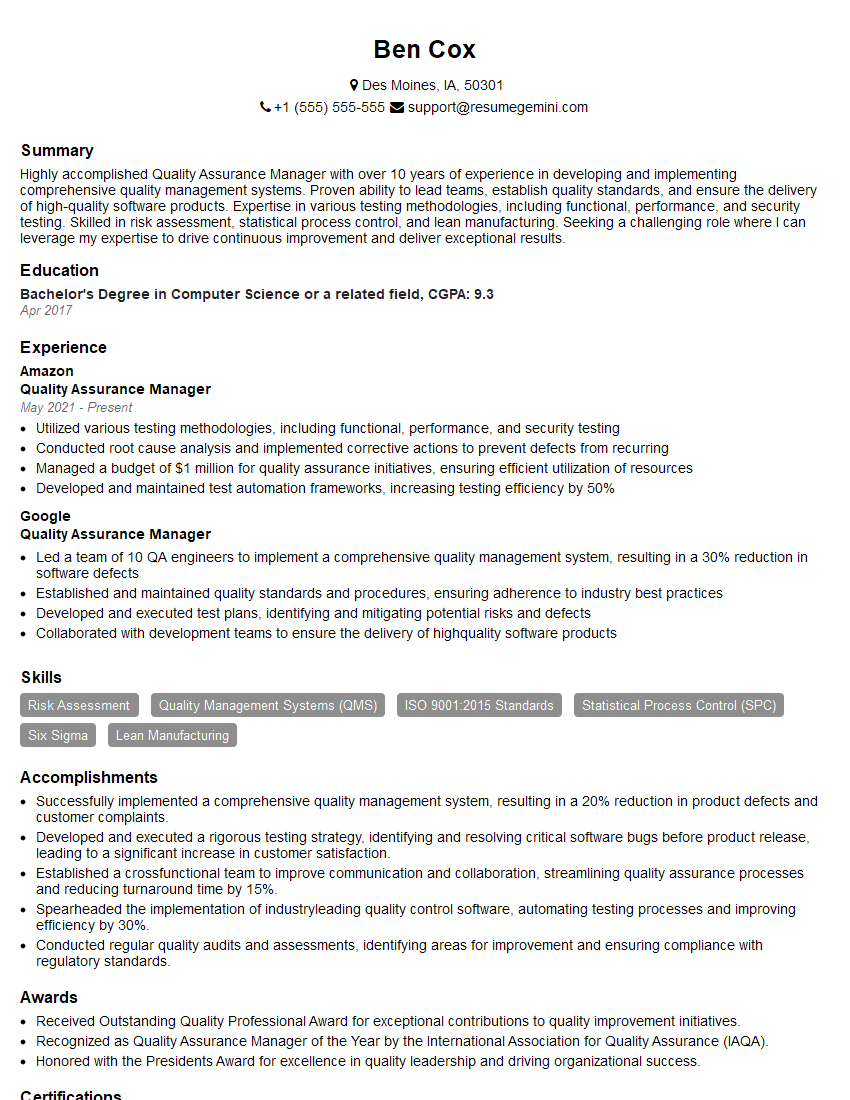
Quality Assurance Manager Resume Sample
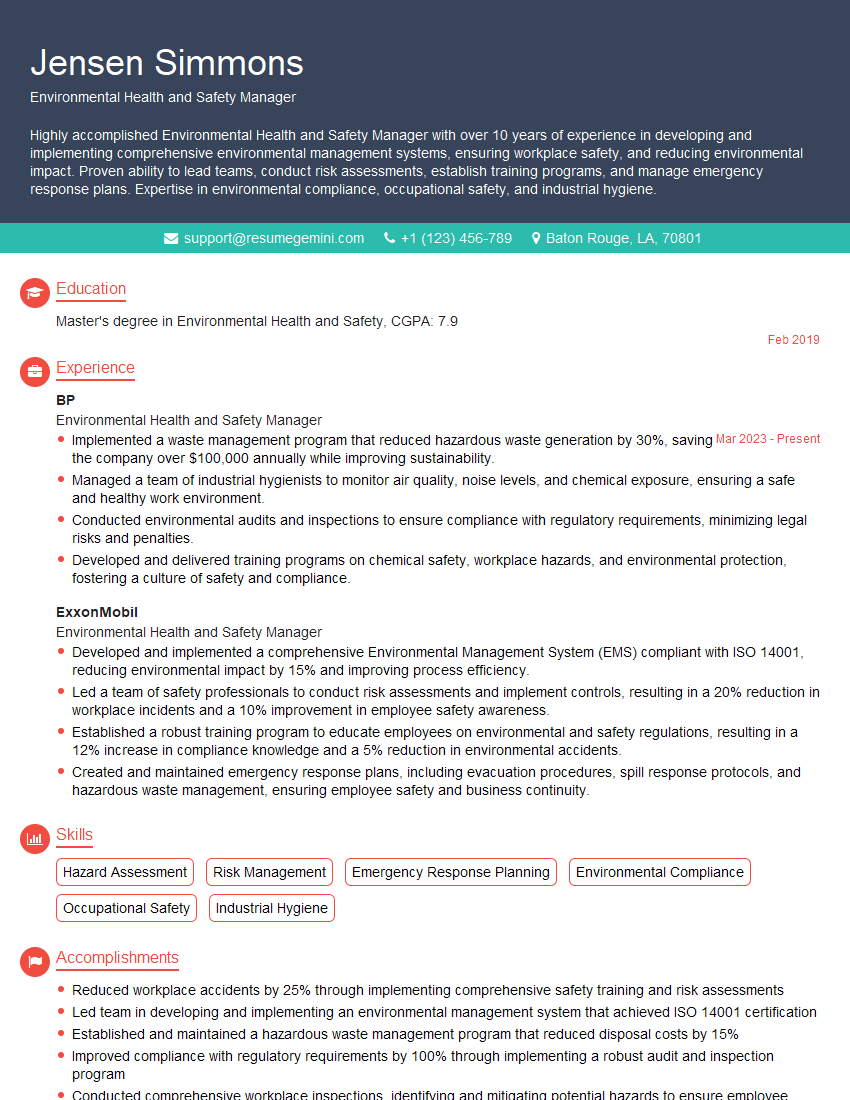
Environmental Health and Safety Manager Resume Sample
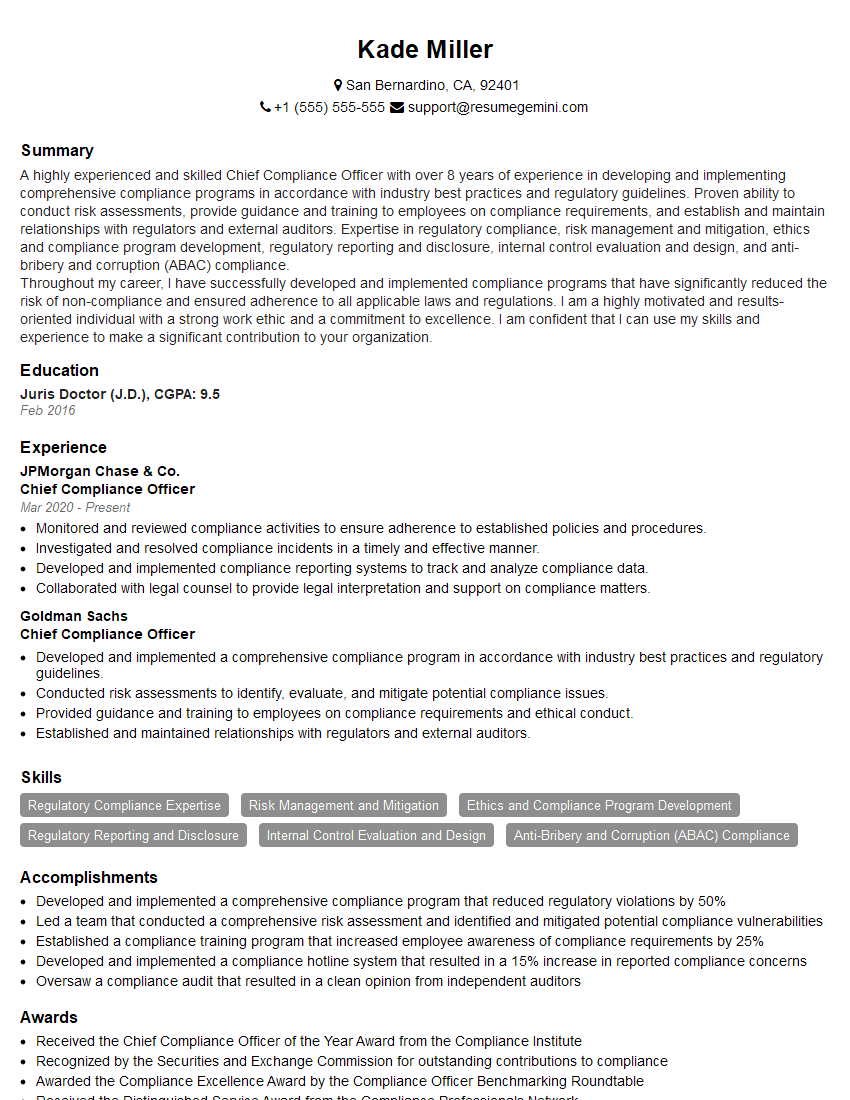
Chief Compliance Officer Resume Sample
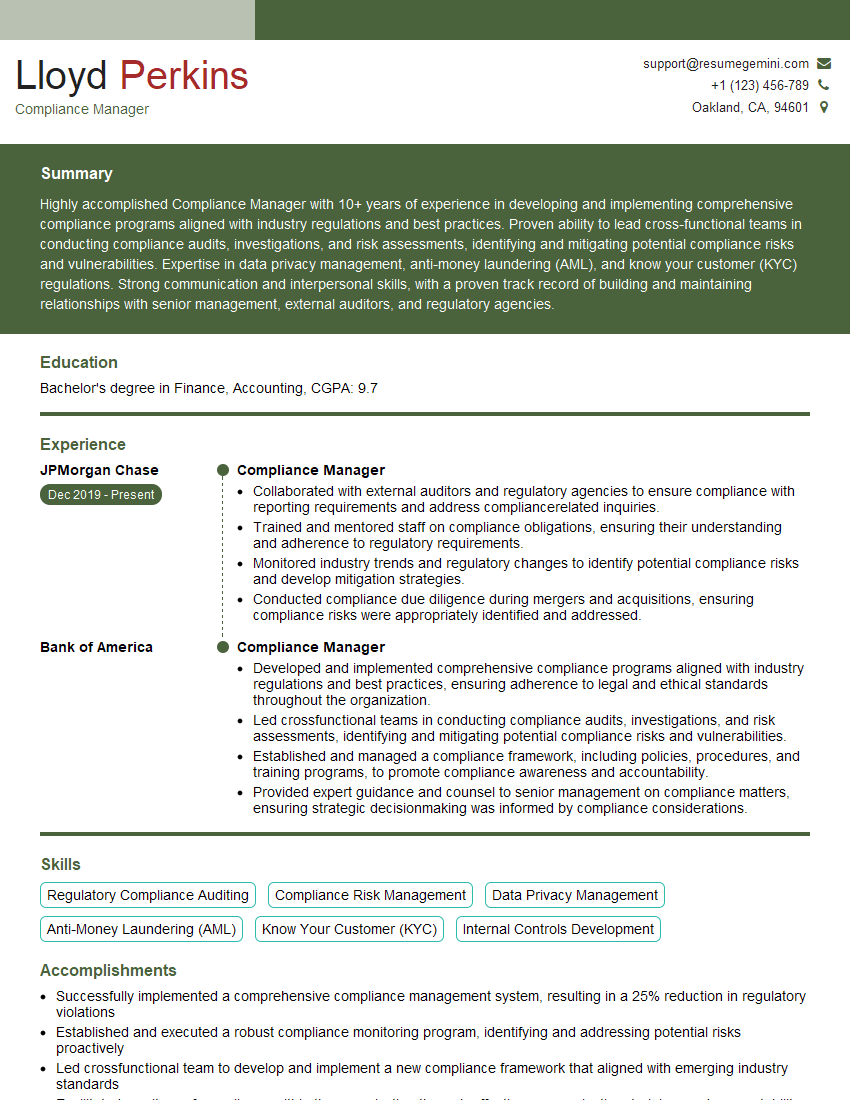
Compliance Manager Resume Sample
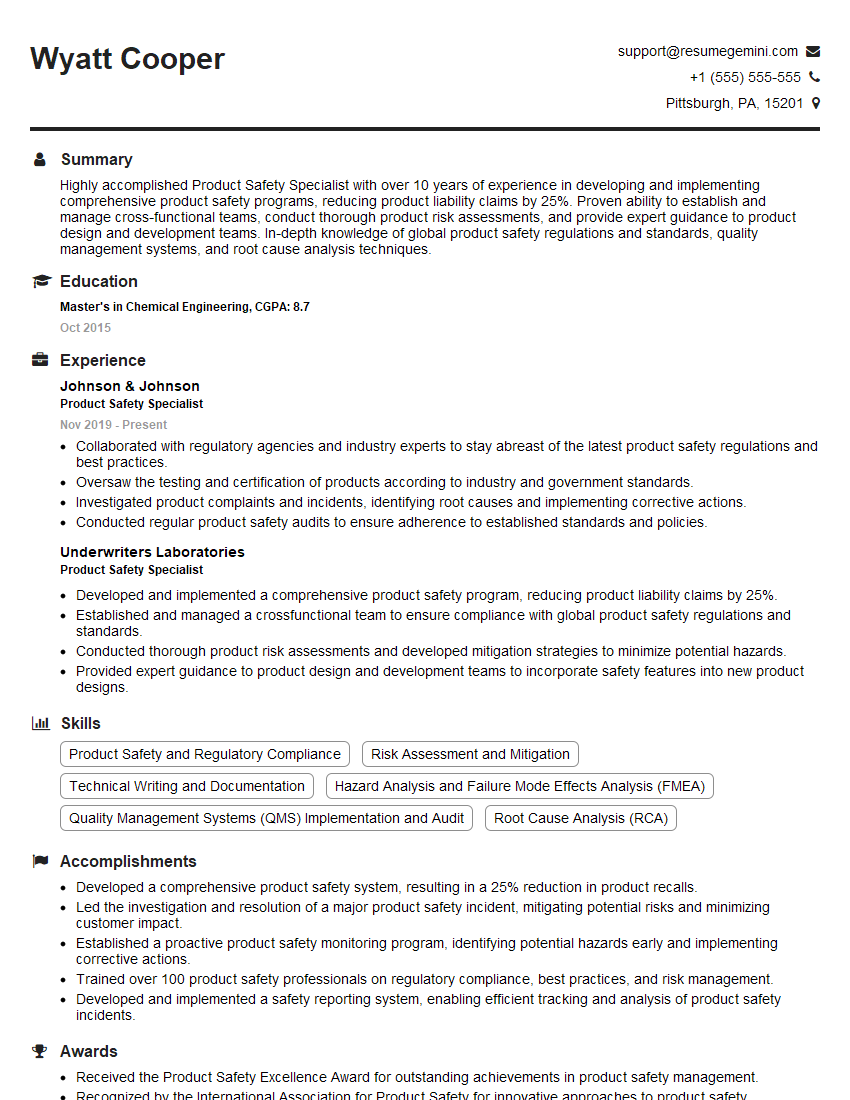
Product Safety Specialist Resume Sample
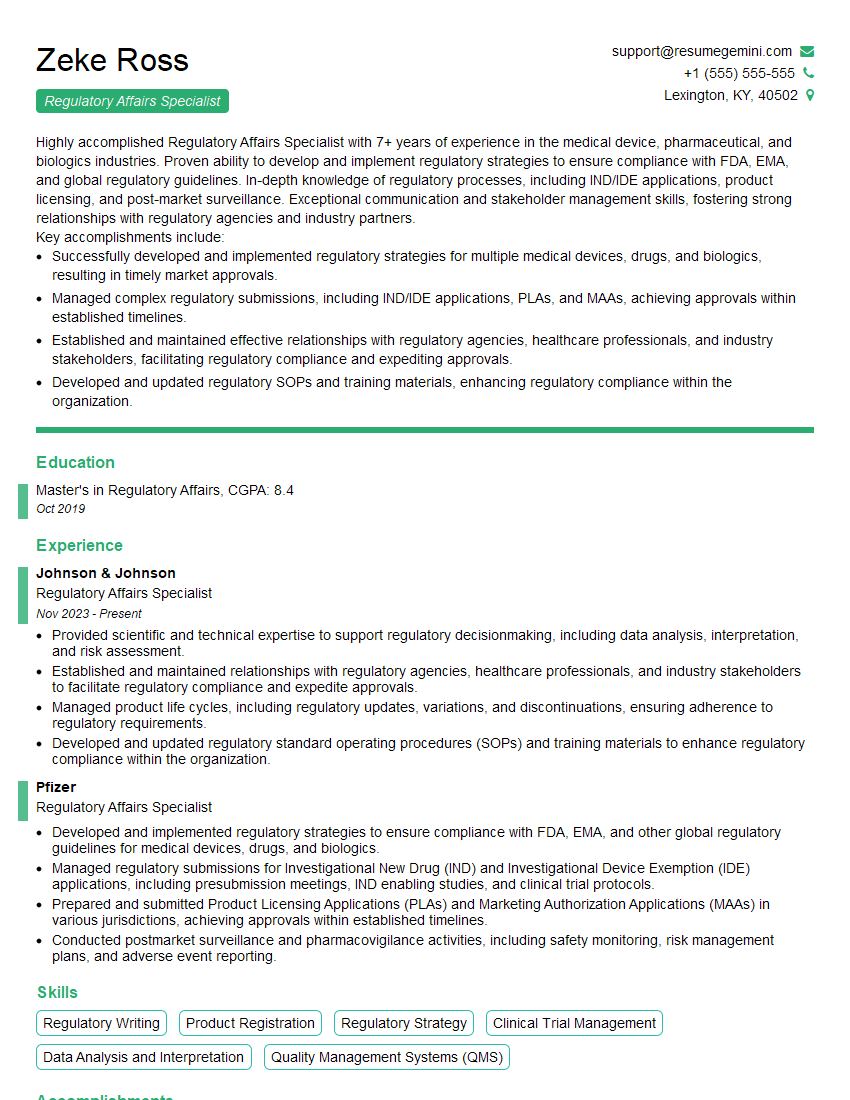
Regulatory Affairs Specialist Resume Sample
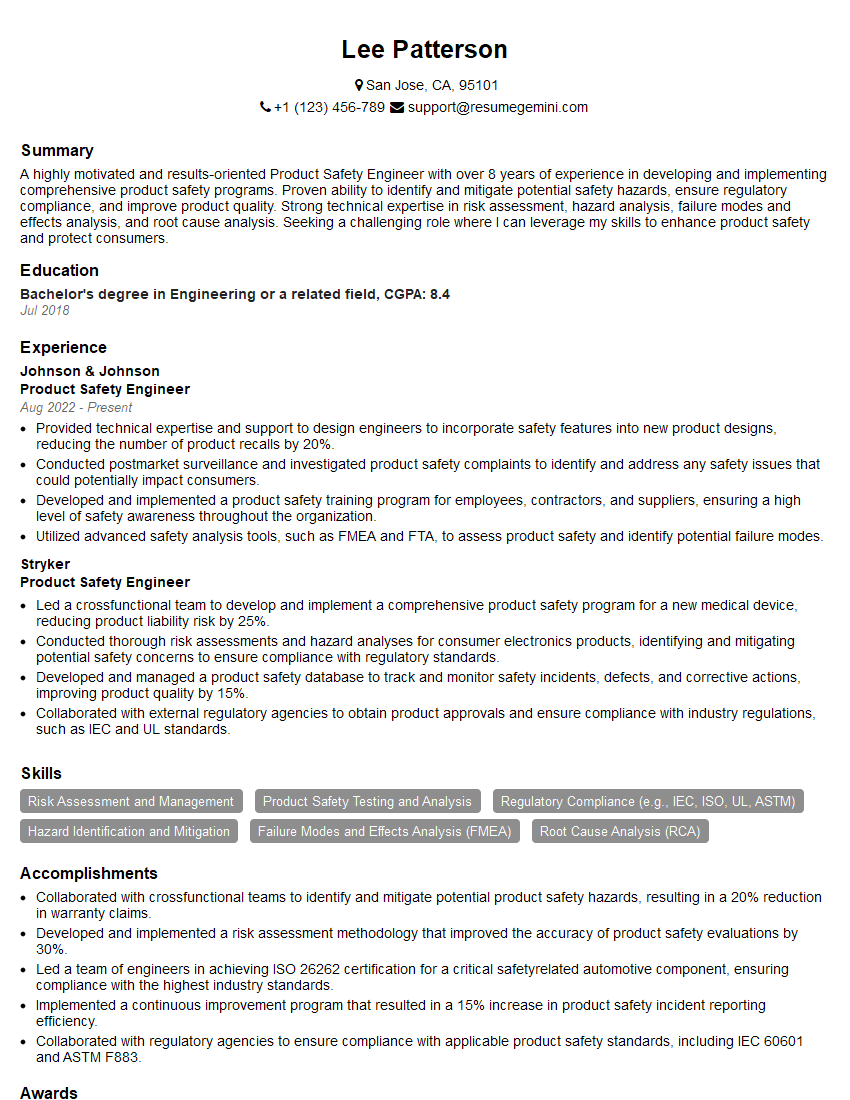
Product Safety Engineer Resume Sample
Explore more articles
Users Rating of Our Blogs
Share Your Experience
We value your feedback! Please rate our content and share your thoughts (optional).
What Readers Say About Our Blog
Very informative content, great job.
good