Feeling uncertain about what to expect in your upcoming interview? We’ve got you covered! This blog highlights the most important Interpersonal Operation interview questions and provides actionable advice to help you stand out as the ideal candidate. Let’s pave the way for your success.
Questions Asked in Interpersonal Operation Interview
Q 1. Describe your approach to building rapport with individuals from diverse backgrounds.
Building rapport with diverse individuals hinges on genuine curiosity and respect. My approach involves actively listening to understand their perspectives, appreciating their unique backgrounds, and adapting my communication style accordingly. I avoid making assumptions and instead focus on creating a safe space for open dialogue. This includes being mindful of cultural nuances in communication styles, such as directness versus indirectness, and nonverbal cues.
For example, in a team with members from various cultural backgrounds, I might initiate conversations by asking open-ended questions about their experiences and perspectives related to the project, showing a genuine interest in learning from them. I also make a conscious effort to use inclusive language and avoid jargon that might not be universally understood.
Furthermore, I believe in actively seeking common ground. Highlighting shared goals and values creates a sense of unity and mutual respect, paving the way for effective collaboration. This approach fosters trust and allows for productive relationships to blossom, even amidst differences.
Q 2. How do you handle disagreements within a team setting?
Disagreements are inevitable in team settings, but they can be valuable opportunities for growth and innovation. My approach emphasizes collaborative problem-solving rather than confrontation. I encourage open and respectful communication, ensuring everyone feels heard and valued. I guide the discussion towards identifying the core issues, separating the people from the problem, and focusing on finding solutions that meet everyone’s needs as much as possible.
This often involves active listening, summarizing perspectives to ensure understanding, and facilitating brainstorming sessions to generate multiple solutions. I focus on finding common ground and using a data-driven approach when possible to support decisions. If the disagreement is deeply rooted or impacts team dynamics significantly, I might suggest involving a neutral third party for mediation.
For instance, if a debate arises about project priorities, I would facilitate a discussion by asking each team member to explain their rationale. We would then collaboratively analyze the pros and cons of each priority, using project goals and deadlines as guiding principles to reach a consensus.
Q 3. Explain a time you successfully mediated a conflict between colleagues.
In a previous role, two team members were locked in a conflict stemming from differing work styles. One preferred meticulously planned tasks, while the other favoured a more spontaneous approach. This was leading to missed deadlines and strained relationships. I intervened by first scheduling individual meetings with each member to understand their perspectives without judgment. This allowed them to express their frustrations openly.
In a subsequent joint meeting, I facilitated a discussion focusing on the root cause of the conflict, not on assigning blame. We collaboratively identified the project stages where their contrasting approaches were creating problems. We then explored different strategies to integrate their strengths while mitigating their clashing preferences. We decided on a hybrid approach, combining detailed planning for critical tasks with more flexibility for less critical ones. The result was improved team cohesion and project efficiency.
The key to my success was empathy, active listening, and a focus on finding a solution that respected both perspectives. I acted as a facilitator, guiding the conversation rather than dictating the outcome. This collaborative approach fostered trust and resulted in a sustainable resolution.
Q 4. How do you adapt your communication style to different audiences?
Adapting communication style is vital for effective interpersonal operation. I tailor my communication to the audience by considering their level of expertise, their preferred communication channels, and the context of the interaction. This includes adjusting my language, tone, and delivery method to ensure clarity and engagement.
For example, when communicating with senior management, I use concise, data-driven reports. With junior team members, I utilize more detailed explanations and offer mentorship and guidance. When communicating complex information, I incorporate visuals like charts or diagrams to improve comprehension. With informal teams, I may utilize humor or casual language where appropriate, while maintaining professionalism.
Understanding the audience’s needs and preferences helps ensure that the message is received effectively and promotes a positive and productive interaction. The goal is always clear, concise communication that is easily understood by the recipient and fosters collaboration.
Q 5. Describe your experience using active listening techniques.
Active listening is a cornerstone of my interpersonal approach. It involves fully concentrating on the speaker, understanding their message, responding thoughtfully, and remembering what was said. I practice this by maintaining eye contact, avoiding interrupting, and using verbal and nonverbal cues to show engagement, such as nodding or summarizing key points. I also ask clarifying questions to ensure complete understanding.
For instance, when a team member expresses concern about a project deadline, instead of immediately offering solutions, I first listen carefully to understand the specific reasons for their concern. I might ask questions like, “Can you elaborate on what aspects of the deadline are causing you concern?” or “What resources or support might help you meet this deadline?” This demonstrates genuine care and facilitates a more constructive conversation.
This approach creates a safe and trusting environment where people feel comfortable sharing their thoughts and feelings openly, leading to more effective problem-solving and stronger team relationships.
Q 6. How do you provide constructive feedback to team members?
Providing constructive feedback involves offering specific, actionable suggestions for improvement, focusing on behaviour rather than personality. I frame my feedback in a positive and supportive manner, using the ‘Situation-Behavior-Impact’ (SBI) model. This ensures clarity and reduces defensiveness.
For example, instead of saying, “You’re disorganized,” I’d say, “During the last project meeting (Situation), I noticed that the presentation was not organized according to the agreed-upon outline (Behavior), which made it difficult for the stakeholders to grasp the key insights (Impact). Next time, perhaps we could use a checklist to ensure all key points are included.”
I also encourage two-way communication, allowing the recipient to share their perspective and ask clarifying questions. I always aim to end on a positive note, focusing on the individual’s strengths and potential for improvement. This approach ensures that feedback is received positively and leads to tangible improvements in performance.
Q 7. How do you identify and address communication barriers within a team?
Identifying and addressing communication barriers is crucial for effective teamwork. I start by observing team dynamics, paying attention to patterns of miscommunication, missed deadlines, or unresolved conflicts. This might involve informal discussions with team members to gauge their experiences and gather feedback.
Common barriers include unclear roles and responsibilities, differing communication styles, lack of transparency, or physical distance. Once identified, I address these barriers through clear communication protocols, team-building exercises, regular check-ins, and the use of collaborative tools. For instance, if a lack of transparency is causing friction, I implement regular project updates and make sure information is easily accessible to everyone.
If differing communication styles are creating misunderstandings, I might facilitate a workshop on effective communication strategies. The key is to proactively address these challenges to foster an environment of open communication and collaboration.
Q 8. How do you encourage collaboration and teamwork amongst colleagues?
Encouraging collaboration and teamwork involves fostering a positive and inclusive environment where everyone feels valued and empowered to contribute. This isn’t just about assigning tasks; it’s about building genuine connections and shared goals.
- Establish clear communication channels: Regular team meetings, project updates, and open-door policies ensure everyone’s informed and can voice their concerns.
- Define roles and responsibilities: Clearly outlining individual contributions prevents confusion and overlap, promoting efficiency and accountability.
- Promote mutual respect and trust: Active listening, valuing diverse perspectives, and celebrating successes build strong team bonds. Addressing conflicts constructively is also crucial.
- Facilitate team-building activities: Engaging activities outside of work, like social gatherings or problem-solving workshops, can strengthen relationships and improve team cohesion.
- Utilize collaborative tools: Platforms like shared project management software, communication apps, and version control systems streamline workflows and enhance communication.
For instance, in a previous project, I initiated weekly team check-ins, not just for updates, but also for informal discussions. This fostered a sense of camaraderie and allowed us to identify and address potential roadblocks early on. The result was improved team morale and a successful project delivery.
Q 9. Explain a time you had to navigate a difficult interpersonal situation at work.
In a past project, a team member consistently missed deadlines and communicated poorly, creating friction within the group and jeopardizing the project timeline. Navigating this required a multi-pronged approach.
- Private Conversation: I initiated a private conversation, expressing my concerns empathetically, focusing on the impact of the missed deadlines rather than placing blame. I actively listened to understand their perspective.
- Collaboration and Problem-Solving: Together, we identified the root causes of the missed deadlines (e.g., unclear expectations, personal issues, lack of resources). We then collaborated to develop solutions, such as adjusting the workload or providing additional support.
- Follow-Up and Monitoring: I closely monitored progress and offered ongoing support. Regular check-ins ensured we were on track and allowed for adjustments as needed. This demonstrated my commitment to helping them succeed.
The outcome was positive. The team member’s performance improved significantly, and the project was ultimately completed successfully. This experience highlighted the importance of empathy, open communication, and collaborative problem-solving in addressing difficult interpersonal situations.
Q 10. How do you manage conflicts of interest within a professional setting?
Conflicts of interest arise when personal interests clash with professional obligations. Transparency and proactive measures are key to managing them effectively.
- Disclosure: Immediately disclose any potential conflict of interest to your supervisor or relevant authority. This demonstrates integrity and allows for appropriate action.
- Recusal: If a conflict cannot be resolved, recuse yourself from any decisions or activities where your personal interest might influence your judgment.
- Establish clear guidelines: Organizations should have policies and procedures in place to identify and address conflicts of interest. Understanding these guidelines is essential for all employees.
- Seek advice: Consult with ethical advisors or legal counsel when faced with complex or unclear situations.
For example, if I were evaluating a vendor where a close relative works, I would immediately disclose this to my supervisor and potentially recuse myself from the evaluation process to avoid any appearance of bias.
Q 11. How do you handle criticism or negative feedback from colleagues?
Handling criticism constructively requires self-awareness, open-mindedness, and a willingness to learn.
- Active Listening: Pay close attention to the feedback, seeking to understand the perspective of the person delivering it. Avoid interrupting or becoming defensive.
- Ask Clarifying Questions: Request specific examples or further explanation to ensure a clear understanding of the concerns.
- Reflect and Respond: Take time to reflect on the feedback. Acknowledge the criticism and express gratitude for their input, even if you disagree with some aspects.
- Develop an Action Plan: Identify actionable steps to address the constructive criticism. This demonstrates a commitment to improvement.
For example, if a colleague criticizes my presentation style as being too technical, I would actively listen, ask clarifying questions about their suggestions, and then revise my future presentations to incorporate more visual aids or simpler language.
Q 12. Describe your experience building relationships with key stakeholders.
Building relationships with key stakeholders requires a consistent effort to understand their needs, perspectives, and expectations. It’s about establishing trust and mutual respect.
- Proactive Communication: Regularly communicate updates, seek their input, and address their concerns proactively.
- Empathy and Understanding: Take the time to listen actively and understand their motivations and priorities.
- Value Added Interactions: Provide them with valuable insights, information, and support that demonstrates your commitment to their success.
- Relationship Building Activities: Informal interactions such as meetings outside of formal contexts help foster personal connections.
In my experience, building a strong relationship with a key client involved regular meetings, actively listening to their concerns about project timelines, and proactively providing updates and solutions to potential problems. This led to a stronger working relationship and successful project delivery.
Q 13. How do you prioritize tasks when managing competing demands from multiple individuals?
Prioritizing tasks with competing demands requires a structured approach to ensure efficiency and meet expectations.
- Prioritization Matrix: Use a matrix (e.g., Eisenhower Matrix) to categorize tasks based on urgency and importance. This helps identify which tasks need immediate attention and which can be delegated or postponed.
- Time Blocking: Allocate specific time blocks for different tasks, creating a schedule that balances competing demands.
- Clear Communication: Communicate clearly with individuals about your priorities and timelines, managing their expectations effectively.
- Delegation: Delegate tasks appropriately when possible, empowering others and freeing up your time for higher-priority items.
For example, if I have multiple urgent requests from different individuals, I would use an Eisenhower Matrix to identify the most urgent and important tasks, then allocate specific time blocks to complete them, while communicating clearly with others about estimated completion times for their requests.
Q 14. How do you maintain positive relationships with clients or customers?
Maintaining positive relationships with clients and customers is crucial for long-term success. It’s about building trust, understanding their needs, and consistently exceeding their expectations.
- Excellent Communication: Respond promptly to inquiries, provide clear and concise information, and actively listen to their concerns.
- Proactive Service: Anticipate their needs and provide solutions before they even ask.
- Follow-Up: Regular follow-up after projects or service deliveries demonstrates your continued commitment to their satisfaction.
- Feedback and Improvement: Actively solicit and respond to feedback, using it to improve your services and build a stronger client relationship.
In a previous role, I consistently went the extra mile for clients, proactively identifying potential issues and offering solutions, resulting in high client satisfaction and repeat business.
Q 15. Describe your approach to resolving interpersonal conflicts in a professional manner.
My approach to resolving interpersonal conflicts centers around proactive communication, empathy, and a focus on finding mutually beneficial solutions. I believe in addressing conflicts directly and respectfully, avoiding escalation. My process typically involves:
- Active Listening: I prioritize understanding each party’s perspective fully before offering solutions. This involves paying close attention to both verbal and nonverbal cues.
- Identifying the Root Cause: Often, the surface-level disagreement masks a deeper underlying issue. Uncovering this is crucial for effective resolution.
- Collaborative Problem-Solving: I work with individuals involved to brainstorm solutions collaboratively, aiming for outcomes that satisfy everyone’s needs to the greatest extent possible. Compromise is key.
- Mediation (if necessary): In more complex situations, I’m adept at facilitating discussions, helping individuals communicate more effectively and find common ground. This involves neutral guidance and ensuring fairness.
- Documentation (when appropriate): For formal conflicts or those requiring record-keeping, I maintain clear and concise documentation of the process and agreed-upon resolutions.
For example, in a past project, two team members had conflicting approaches to a design element. Instead of letting it escalate, I facilitated a meeting where each explained their reasoning. We collaboratively reviewed the project goals and discovered a solution integrating both ideas, leading to a superior outcome and strengthened team cohesion.
Career Expert Tips:
- Ace those interviews! Prepare effectively by reviewing the Top 50 Most Common Interview Questions on ResumeGemini.
- Navigate your job search with confidence! Explore a wide range of Career Tips on ResumeGemini. Learn about common challenges and recommendations to overcome them.
- Craft the perfect resume! Master the Art of Resume Writing with ResumeGemini’s guide. Showcase your unique qualifications and achievements effectively.
- Don’t miss out on holiday savings! Build your dream resume with ResumeGemini’s ATS optimized templates.
Q 16. How do you contribute to a positive and inclusive team environment?
Contributing to a positive and inclusive team environment involves fostering open communication, mutual respect, and a sense of belonging for everyone. I actively promote this by:
- Promoting Open Dialogue: I create opportunities for team members to share ideas, concerns, and feedback freely. Regular team meetings, informal check-ins, and open-door policies are essential.
- Respectful Communication: I model respectful communication in all interactions, emphasizing empathy, active listening, and constructive feedback.
- Recognizing and Celebrating Diversity: I actively celebrate individual differences, fostering an inclusive atmosphere where everyone feels valued for their unique perspectives and contributions.
- Addressing Bias and Discrimination: I am proactive in identifying and addressing any instances of bias or discrimination, ensuring a safe and equitable environment for all team members.
- Mentorship and Support: I mentor and support team members, creating an environment where everyone feels encouraged to grow and contribute their best.
For example, in a previous role, I noticed a team member was hesitant to share ideas. By providing individual support and creating a more relaxed team atmosphere, I helped them feel more comfortable participating, ultimately enriching our collective work.
Q 17. How do you handle difficult conversations with colleagues or superiors?
Difficult conversations require careful planning and execution. My approach involves:
- Choosing the Right Time and Place: Selecting a private and neutral setting is important for fostering open and honest communication.
- Clear and Concise Communication: I articulate my concerns or feedback clearly, using specific examples and avoiding accusatory language.
- Empathy and Active Listening: I actively listen to the other person’s perspective and acknowledge their feelings, even if I don’t agree.
- Focusing on Solutions: Instead of dwelling on the problem, I shift the conversation toward identifying solutions and collaborative action plans.
- Maintaining Professionalism: I maintain a calm and professional demeanor throughout the conversation, even when emotions run high.
For instance, I once had to address a colleague’s consistently missed deadlines. I scheduled a private meeting, explained the impact on the team, and together we identified the root cause – a lack of time management skills. We developed a plan to address this, with regular check-ins, which resolved the issue effectively.
Q 18. How do you ensure effective communication during project planning and execution?
Effective communication during project planning and execution is paramount. My strategy involves:
- Clear Definition of Roles and Responsibilities: A well-defined project scope with clearly outlined roles and responsibilities ensures everyone knows their tasks and how they contribute to the overall goal.
- Regular Communication Channels: We establish regular communication channels like daily stand-up meetings, weekly progress reports, and project management software for tracking progress and addressing issues promptly.
- Transparent Communication: Keeping everyone informed about project progress, challenges, and changes is essential to maintain trust and commitment.
- Constructive Feedback: Providing and receiving constructive feedback throughout the project life cycle is crucial for improvement and course correction.
- Documentation: Maintaining clear and comprehensive documentation of project plans, decisions, and progress ensures transparency and accountability.
For example, in a recent project, we used a project management tool that allowed team members to update their progress, share files, and communicate in real-time, which drastically improved project visibility and facilitated quick problem resolution.
Q 19. How do you utilize technology to enhance communication and collaboration within a team?
Technology significantly enhances communication and collaboration. I utilize various tools to improve team interactions, including:
- Project Management Software (e.g., Asana, Trello, Jira): These tools provide central platforms for task management, progress tracking, file sharing, and communication.
- Video Conferencing (e.g., Zoom, Google Meet): Video conferencing facilitates face-to-face interactions, improving engagement and understanding, particularly in remote teams.
- Instant Messaging (e.g., Slack, Microsoft Teams): Instant messaging allows for quick communication and facilitates real-time collaboration.
- Collaboration Platforms (e.g., Google Docs, Microsoft Office 365): These platforms enable collaborative document editing, making it easier to work on projects together simultaneously.
For instance, in a geographically dispersed team, we leveraged video conferencing for regular meetings and used a project management tool to track tasks, share documents, and maintain a centralized repository of information, which fostered collaboration and accountability despite distance.
Q 20. How do you recognize and address potential sources of conflict within a team?
Recognizing and addressing potential sources of conflict proactively is crucial for maintaining a healthy team dynamic. My approach involves:
- Regular Team Check-ins: Conducting regular informal check-ins allows team members to voice concerns before they escalate into conflicts.
- Observing Team Dynamics: Paying attention to team dynamics, including communication patterns and interactions, helps identify potential issues.
- Identifying Unclear Roles or Responsibilities: Ambiguity in roles and responsibilities can lead to conflict. Clearly defining tasks and responsibilities is essential.
- Addressing Communication Barriers: Poor communication can be a major source of conflict. Promoting open communication and providing training where needed can help.
- Managing Workload Effectively: Unequal workload distribution can create resentment and conflict. Ensuring a fair and balanced workload is crucial.
For example, in one team, I noticed increasing tension stemming from unclear project priorities. By facilitating a discussion and clarifying expectations, I helped prevent a potential conflict from arising.
Q 21. Describe a situation where you had to negotiate a compromise to reach a desired outcome.
In a previous project, the marketing and development teams had differing visions for a product launch campaign. Marketing wanted a large-scale, multi-channel approach, while development prioritized a phased rollout due to resource constraints. This created a potential stalemate.
To reach a compromise, I facilitated a negotiation process based on collaborative problem-solving. We started by clearly outlining each team’s goals, concerns, and constraints. Through open discussion, we realized that a phased rollout, with a targeted initial campaign focusing on specific key channels, could satisfy both parties’ needs. This allowed Marketing to execute a strong initial campaign while ensuring Development’s capacity wasn’t overwhelmed. The phased approach allowed us to scale the campaign later based on the success of the initial phase and gathered user feedback. This resulted in a successful product launch, enhanced inter-departmental collaboration, and a strengthened working relationship.
Q 22. How do you utilize empathy in your interactions with others?
Empathy is the ability to understand and share the feelings of another person. I utilize empathy in my interactions by actively listening, seeking to understand their perspective, even if I don’t agree with it. I try to put myself in their shoes, considering their background, experiences, and current emotional state. This involves paying attention not only to their words but also their body language and tone of voice. For instance, if a team member seems stressed about a deadline, I wouldn’t jump to solutions immediately. Instead, I’d first acknowledge their feelings: “I can see you’re feeling pressured by this deadline. Tell me more about what’s challenging you.” This shows genuine care and creates a safe space for open communication.
I also use empathetic responses to diffuse conflict. If two team members are disagreeing, I wouldn’t try to impose a solution, but rather help them understand each other’s perspectives. I might say something like, “I understand you feel frustrated because of X, and I also see that your colleague is concerned about Y. Let’s explore how we can address both concerns.”
Q 23. How do you build trust and credibility with others?
Building trust and credibility relies on consistency, competence, and integrity. I consistently deliver on my commitments, both big and small. If I say I’ll do something, I do it, and I communicate any potential roadblocks proactively. This demonstrates reliability. I also strive to be competent in my area of expertise, continually learning and improving my skills. When I’m unsure of something, I acknowledge it and seek the necessary knowledge or resources instead of pretending to know. This honesty builds respect. Finally, I act with integrity, always being truthful and fair in my dealings. This means standing up for what’s right, even when it’s difficult.
For example, if a project faces unexpected challenges, I wouldn’t try to hide them. I’d communicate openly and transparently with the team, outlining the issues, possible solutions, and how we’ll move forward. This open communication builds trust, even in challenging situations.
Q 24. How do you effectively delegate tasks while maintaining positive relationships with team members?
Effective delegation involves understanding the strengths and capabilities of each team member. I assess their skills and interests before assigning tasks, ensuring that the tasks match their capabilities and are aligned with their professional development goals. It’s crucial to provide clear expectations, including deadlines, deliverables, and the desired outcome. I also give them the necessary resources and authority to complete the task. It’s not just about assigning work; it’s about empowering individuals to succeed.
Maintaining positive relationships involves regular check-ins and feedback. I provide constructive support throughout the process, ensuring they have the resources and guidance they need. I encourage open communication, allowing them to ask questions and share challenges. Finally, I recognize and appreciate their contributions upon completion, acknowledging their efforts and the impact of their work. For example, I might say, “Thanks for taking the lead on this; I really appreciate your dedication and the high quality of your work.”
Q 25. Describe your approach to mentoring or coaching others.
My approach to mentoring and coaching is based on a collaborative partnership. I focus on active listening and understanding the mentee’s goals, aspirations, and challenges. I use a combination of questioning, feedback, and sharing my own experiences to guide their development. I avoid a purely directive approach, instead encouraging self-reflection and problem-solving. My goal is to empower them to identify their own solutions and take ownership of their growth.
I use a structured approach, setting clear objectives and milestones for the mentorship. We regularly review their progress, celebrate successes, and address challenges constructively. I provide constructive feedback, focusing on specific behaviors and offering actionable suggestions for improvement. For instance, instead of saying “You need to improve your communication,” I might say, “I noticed in the last meeting, you interrupted a colleague twice. Perhaps we can practice active listening techniques together.”
Q 26. How do you assess the interpersonal dynamics within a team?
Assessing interpersonal dynamics involves observation, communication, and analysis. I start by observing team interactions during meetings, brainstorming sessions, and informal gatherings. I pay attention to body language, communication patterns, and the level of engagement. I look for signs of conflict, collaboration, and communication breakdowns. This might include observing who speaks the most, who interrupts whom, and how people react to different ideas or suggestions.
I also employ communication techniques such as one-on-one conversations and team surveys to gather feedback. These conversations allow me to gain a deeper understanding of individual perspectives and perceptions within the team. Team surveys provide a more anonymous platform for gathering information about team dynamics, which can reveal patterns that might not be apparent through direct observation. Finally, I analyze the data collected and identify key trends and relationships to develop a comprehensive understanding of the team’s interpersonal dynamics.
Q 27. How do you measure the success of your interpersonal interactions?
Measuring the success of interpersonal interactions involves both qualitative and quantitative assessment. Quantitatively, I might look at team performance metrics, project completion rates, and employee satisfaction surveys. However, these are not sufficient on their own. Qualitative measures are equally crucial. I look for improvements in team communication, collaboration, and conflict resolution. I assess the overall team morale and the level of trust and respect among team members. I might observe whether the team is proactively solving problems together or if disagreements are handled constructively.
For example, a successful interaction might be reflected in a team successfully navigating a challenging project, exceeding expectations, and maintaining high morale throughout the process. This involves a combination of positive team dynamics, effective communication, and a collaborative problem-solving approach.
Q 28. How do you handle situations where you disagree with a superior’s decision?
Handling disagreements with a superior requires tact, professionalism, and respect. I would first seek to understand their rationale behind the decision. I’d listen attentively and ask clarifying questions to ensure I fully understand their perspective. Then, I would respectfully express my concerns or dissenting opinions, providing data or evidence to support my viewpoint. The goal is not to challenge authority but to offer alternative solutions or raise potential issues that may have been overlooked.
For example, I might say, “I understand your decision to proceed with X, but I have concerns about Y, based on the recent data. Could we discuss this further to explore potential risks and consider alternative approaches?” It’s essential to remain respectful and professional, even if I disagree strongly. Ultimately, I’d focus on finding a mutually agreeable solution that aligns with the overall goals of the organization.
Key Topics to Learn for Interpersonal Operation Interview
- Communication Strategies: Mastering active listening, clear articulation, non-verbal communication, and adapting communication style to different audiences and situations. Practical application: Describe a time you successfully navigated a challenging communication scenario in a team setting.
- Conflict Resolution & Negotiation: Understanding conflict styles, mediation techniques, and effective negotiation strategies. Practical application: Explain your approach to resolving interpersonal conflicts and achieving mutually beneficial outcomes.
- Teamwork & Collaboration: Understanding team dynamics, roles, and responsibilities; effective collaboration techniques; building consensus and managing group processes. Practical application: Provide an example of a project where you successfully collaborated with a team to achieve a common goal.
- Relationship Building & Networking: Developing strong professional relationships, building rapport, and leveraging networks for mutual benefit. Practical application: Describe your approach to building professional relationships and how you have utilized networking to achieve career goals.
- Emotional Intelligence: Recognizing and understanding your own emotions and those of others; managing emotions effectively; building empathy and fostering positive relationships. Practical application: Give an example of how you demonstrated emotional intelligence in a professional setting.
- Leadership & Influence: Understanding different leadership styles, motivating teams, and influencing individuals and groups without direct authority. Practical application: Describe your leadership style and provide an example of how you influenced a team or individual to achieve a positive outcome.
Next Steps
Mastering interpersonal operation is crucial for career advancement. Strong interpersonal skills are highly valued across all industries, significantly impacting your ability to lead, collaborate, and succeed in dynamic work environments. To maximize your job prospects, creating a strong, ATS-friendly resume is paramount. ResumeGemini can help you build a compelling resume that showcases your skills and experience effectively. We provide examples of resumes tailored to Interpersonal Operation roles to help you create a document that stands out. Take the next step towards your dream career today!
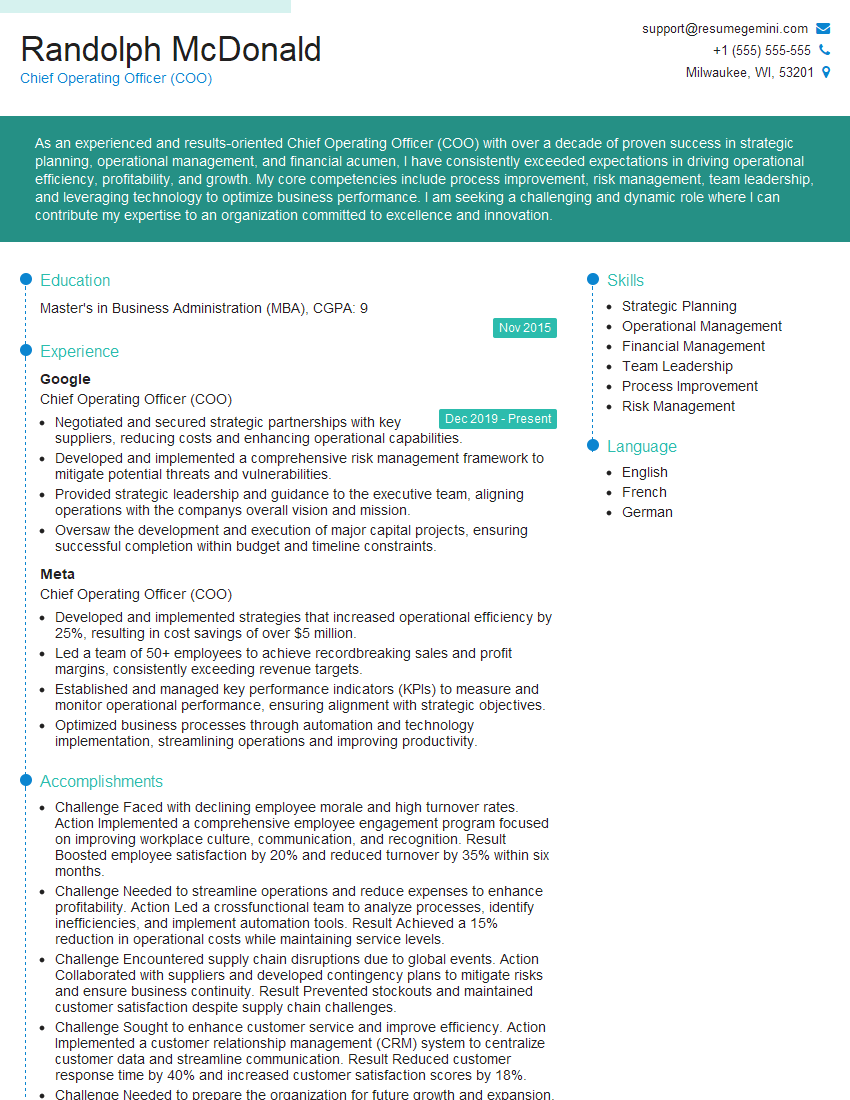
Chief Operating Officer (COO) Resume Sample
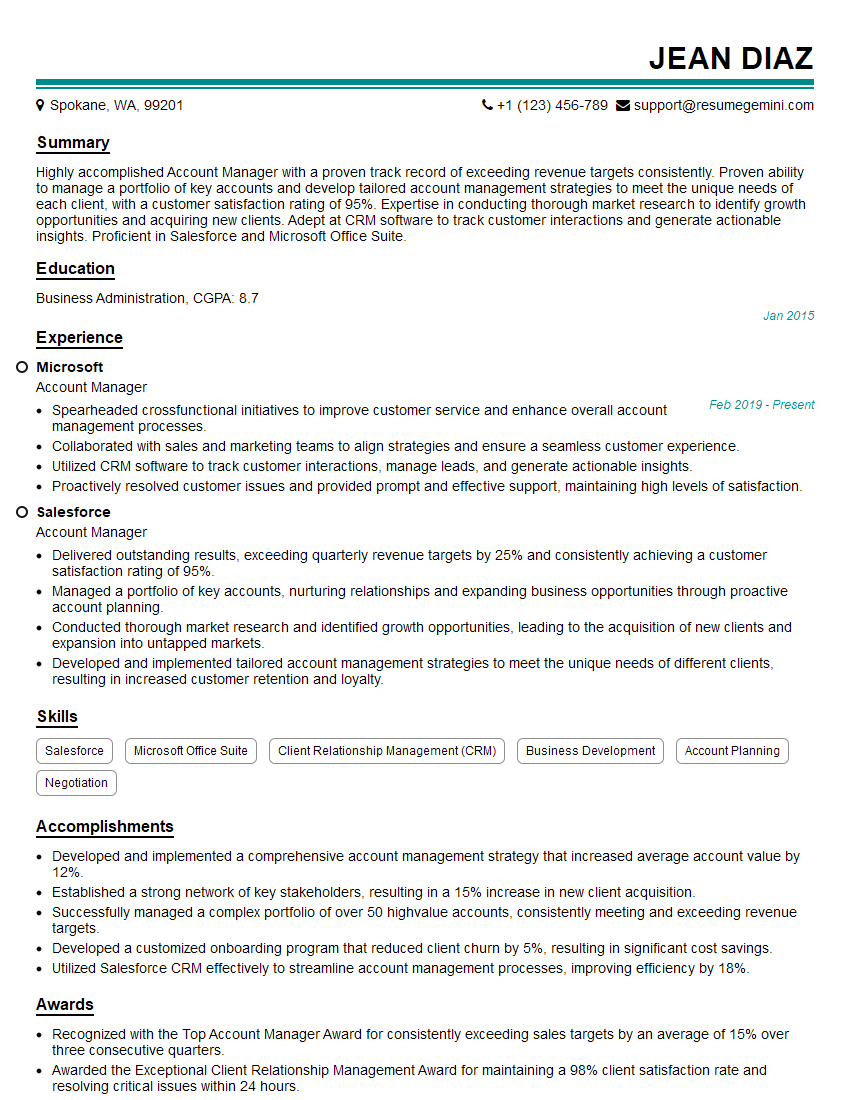
Account Manager Resume Sample
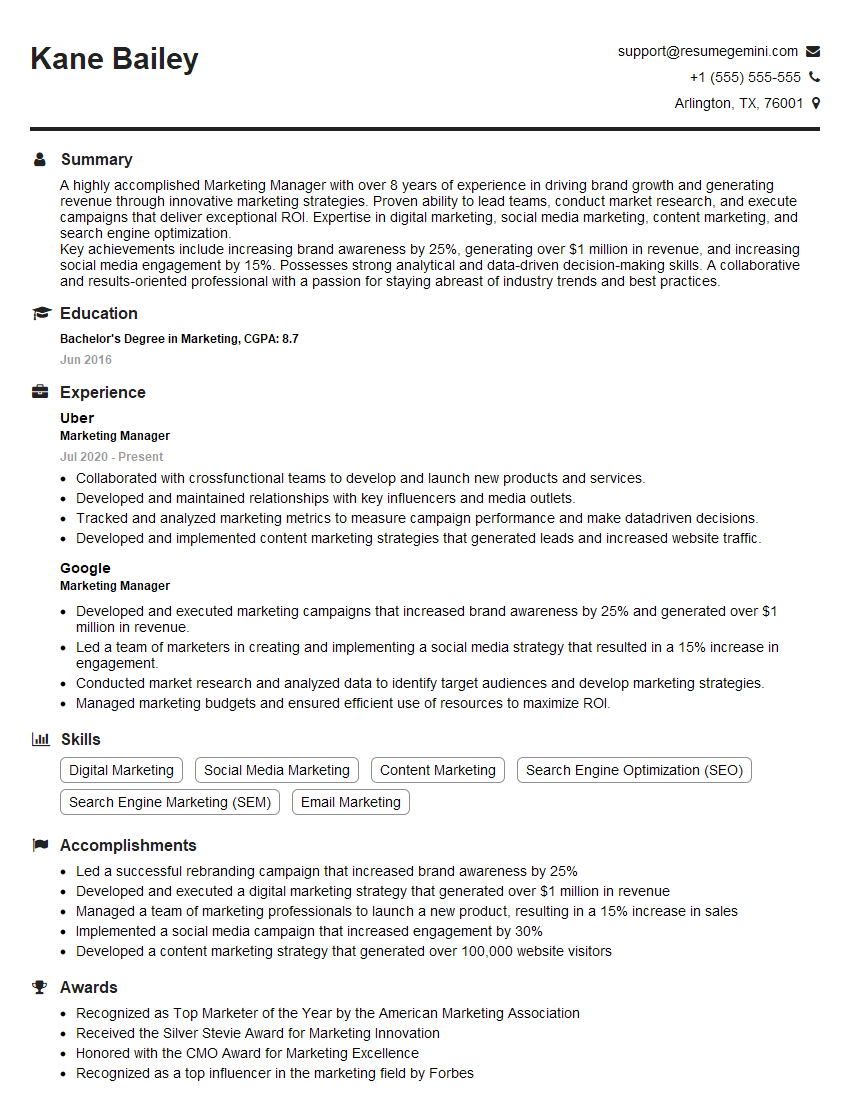
Marketing Manager Resume Sample
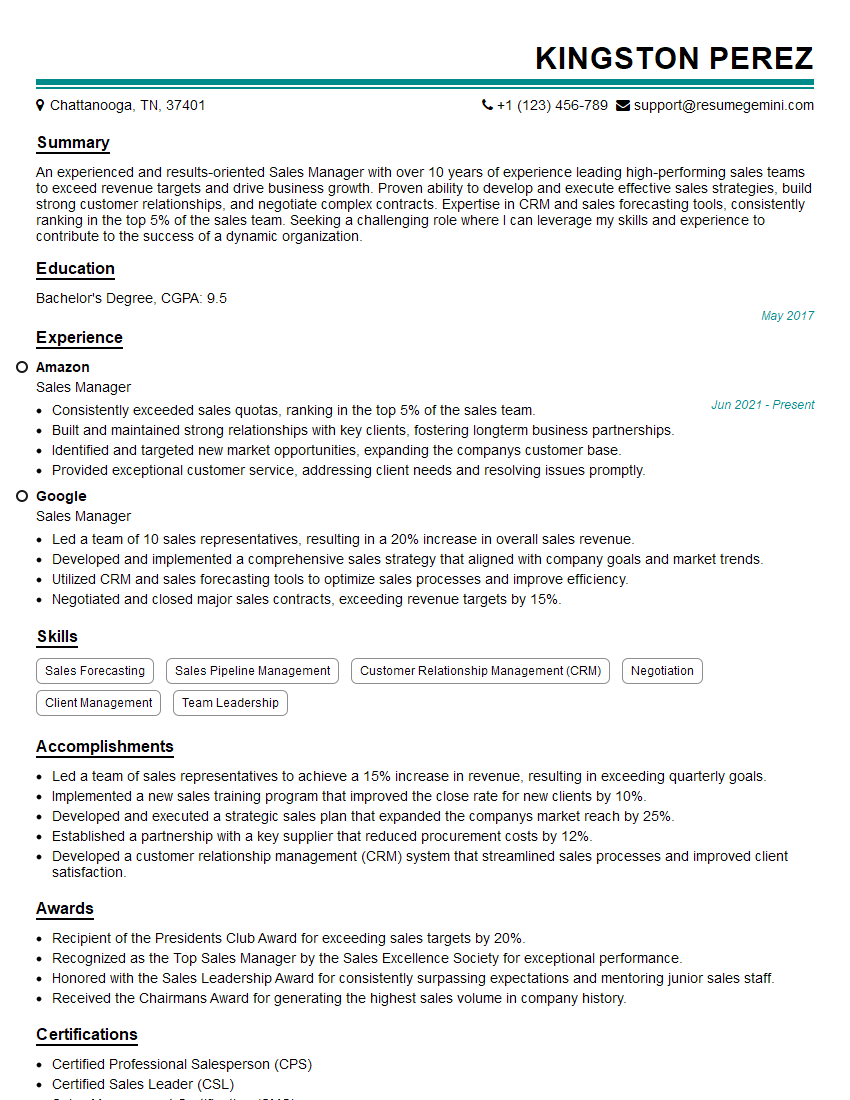
Sales Manager Resume Sample
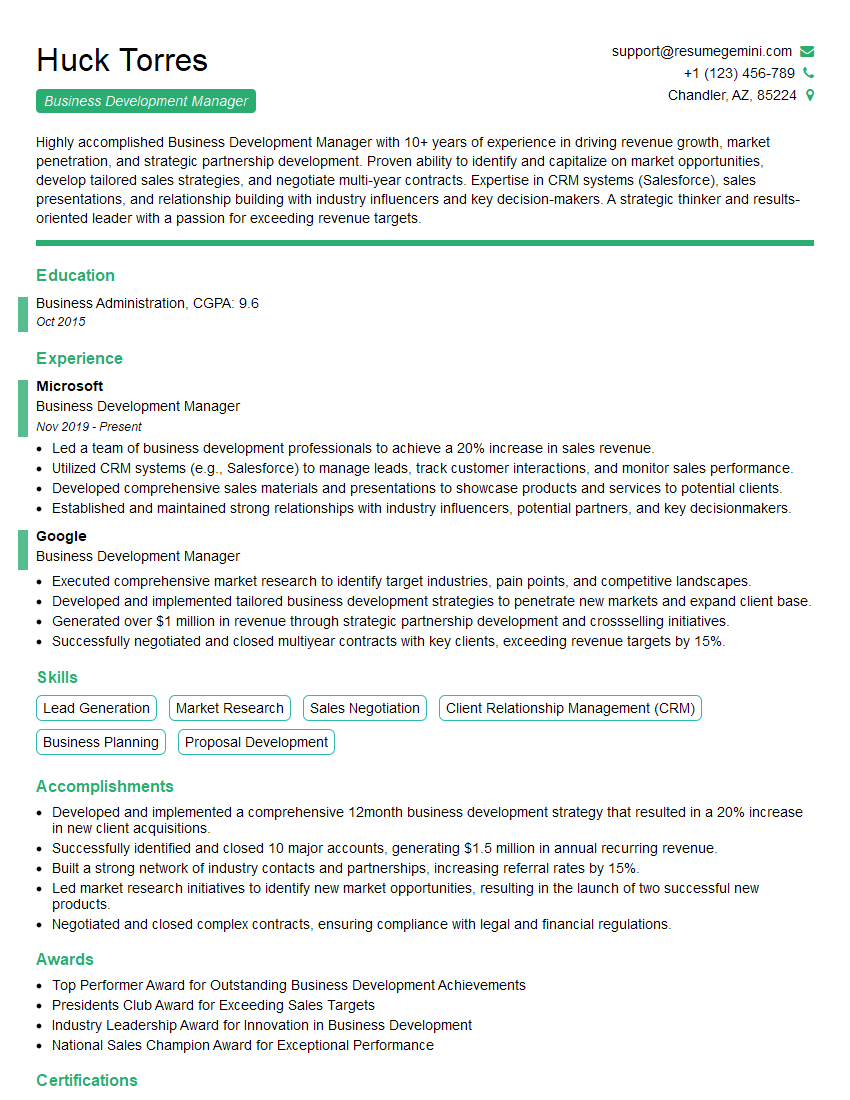
Business Development Manager Resume Sample

Communications Manager Resume Sample
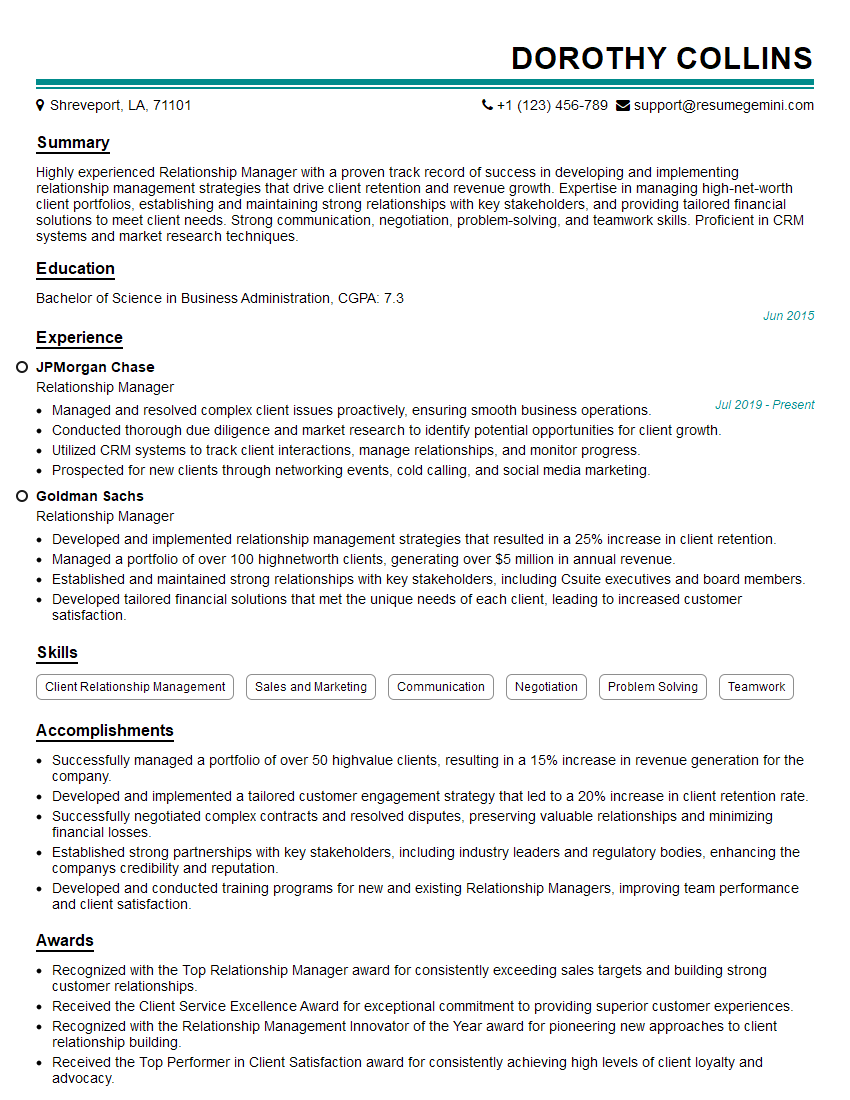
Relationship Manager Resume Sample
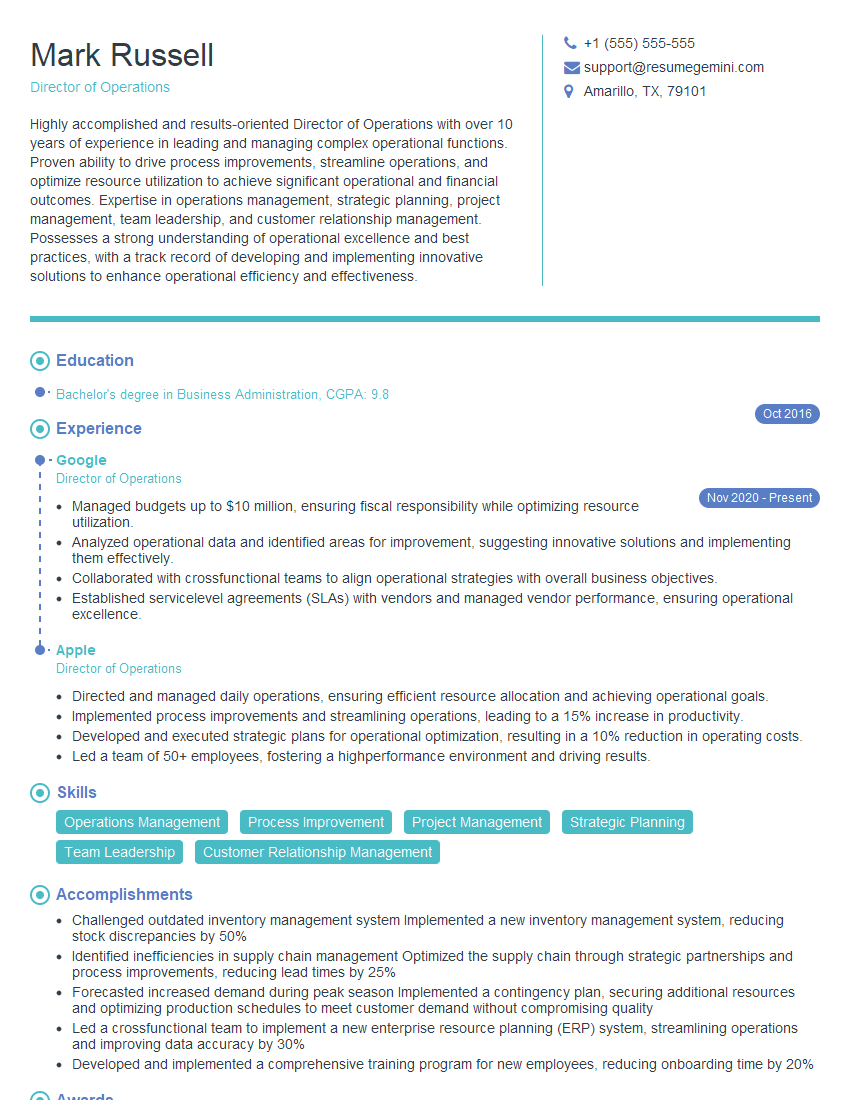
Director of Operations Resume Sample
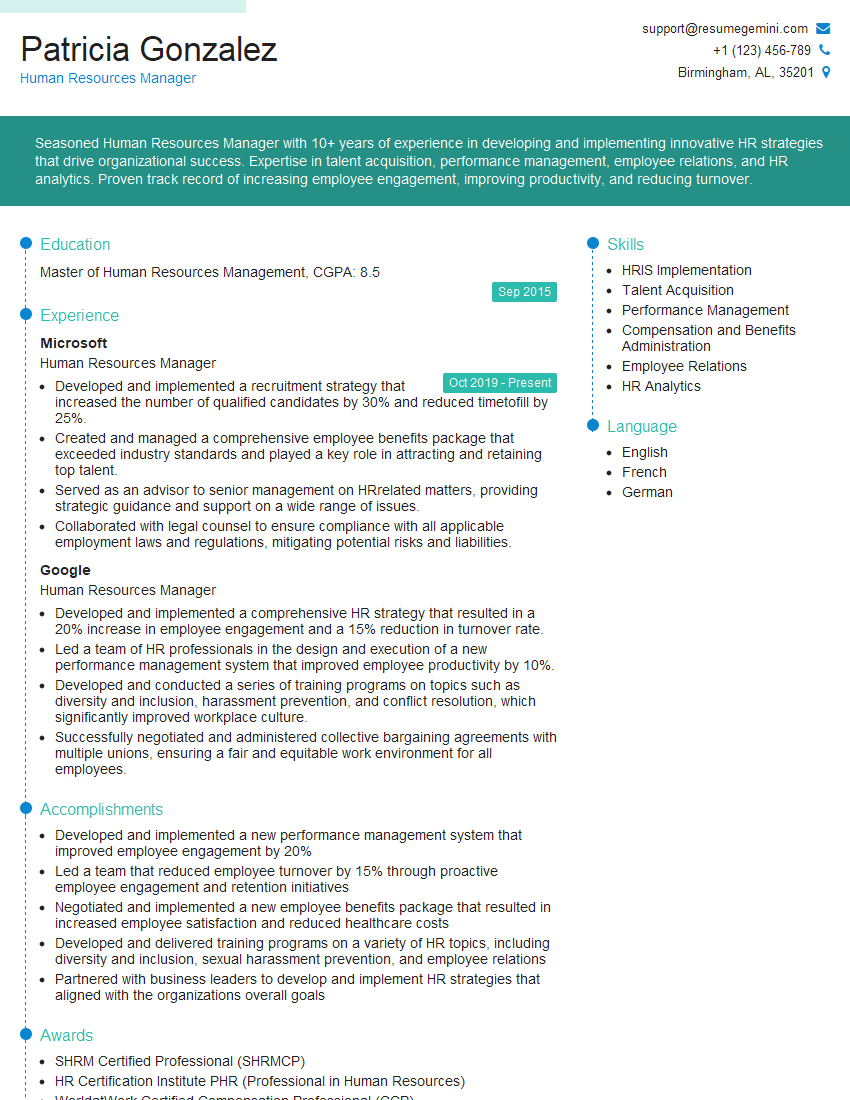
Human Resources Manager Resume Sample
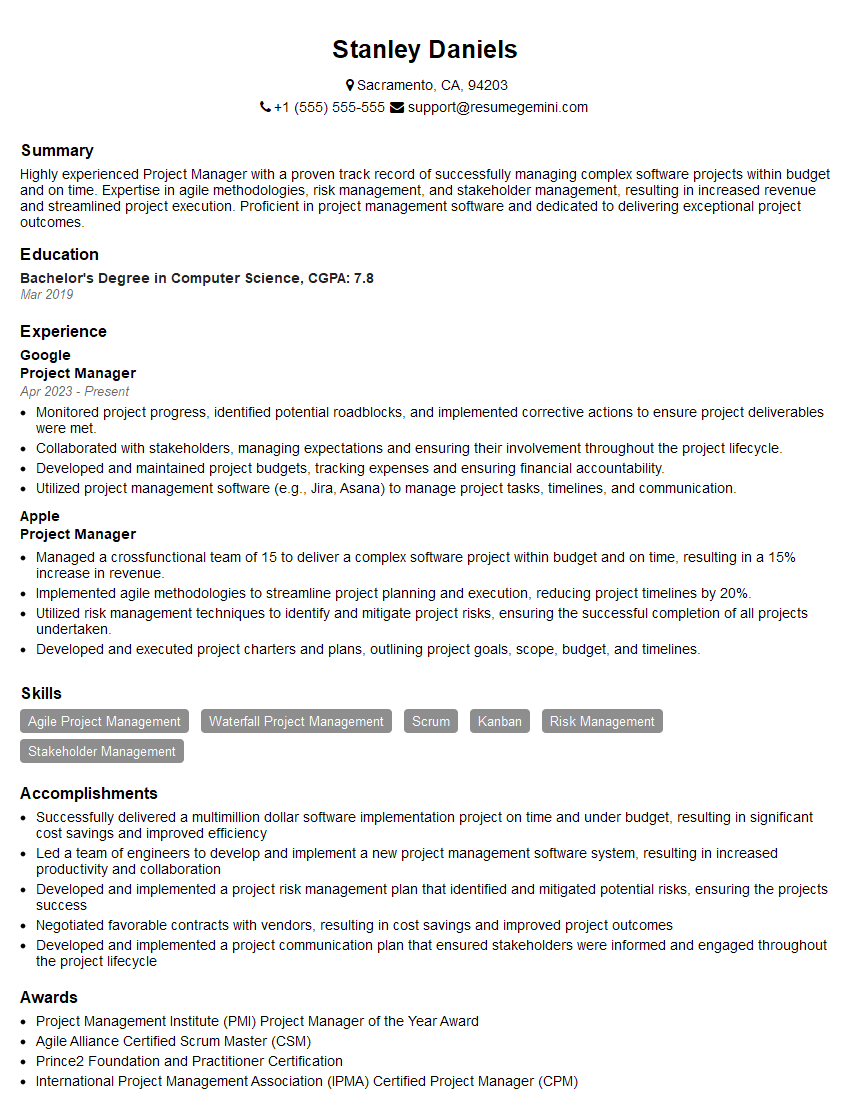
Project Manager Resume Sample

Chief of Staff Resume Sample
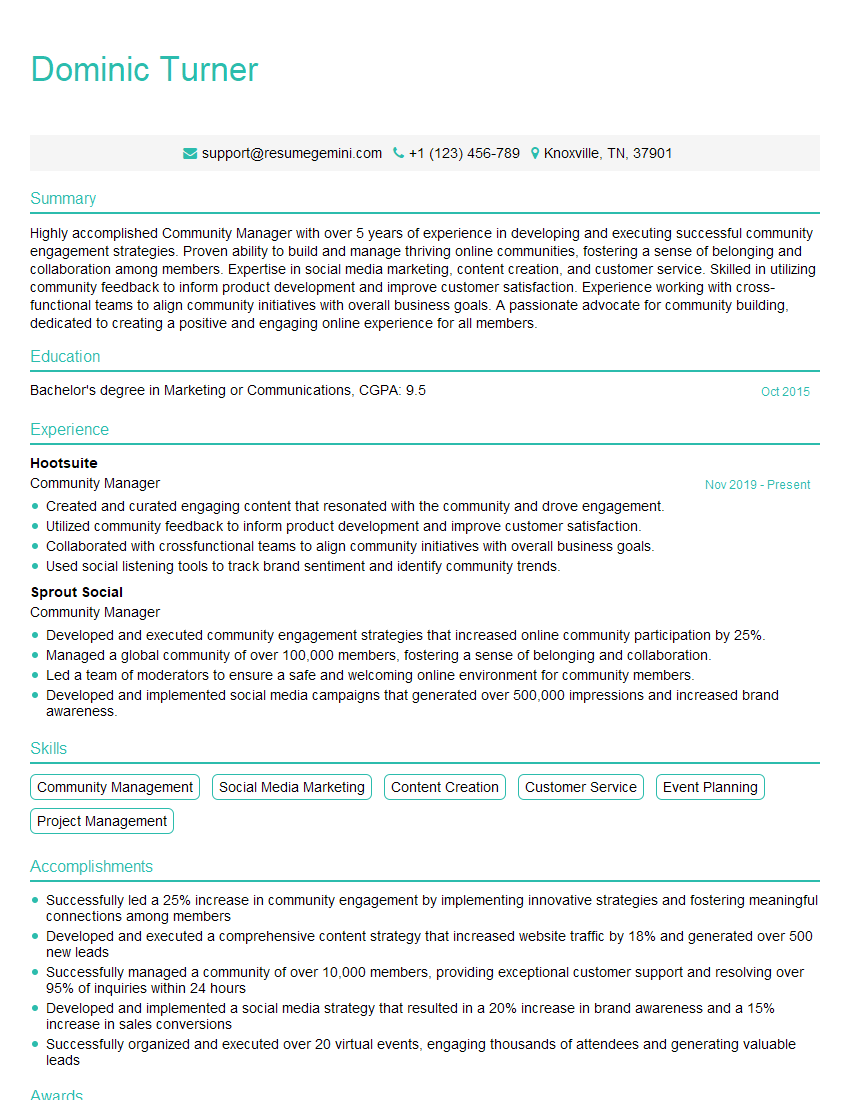
Community Manager Resume Sample
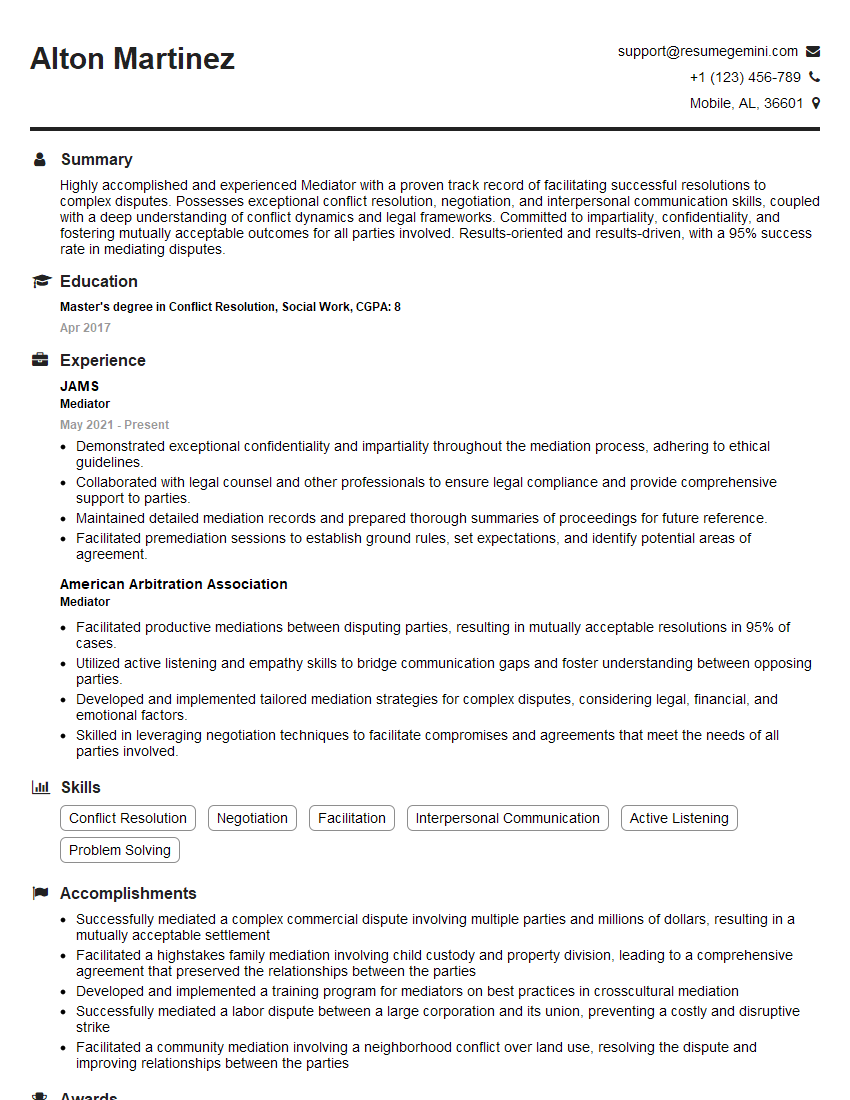
Mediator Resume Sample

Social Media Manager Resume Sample
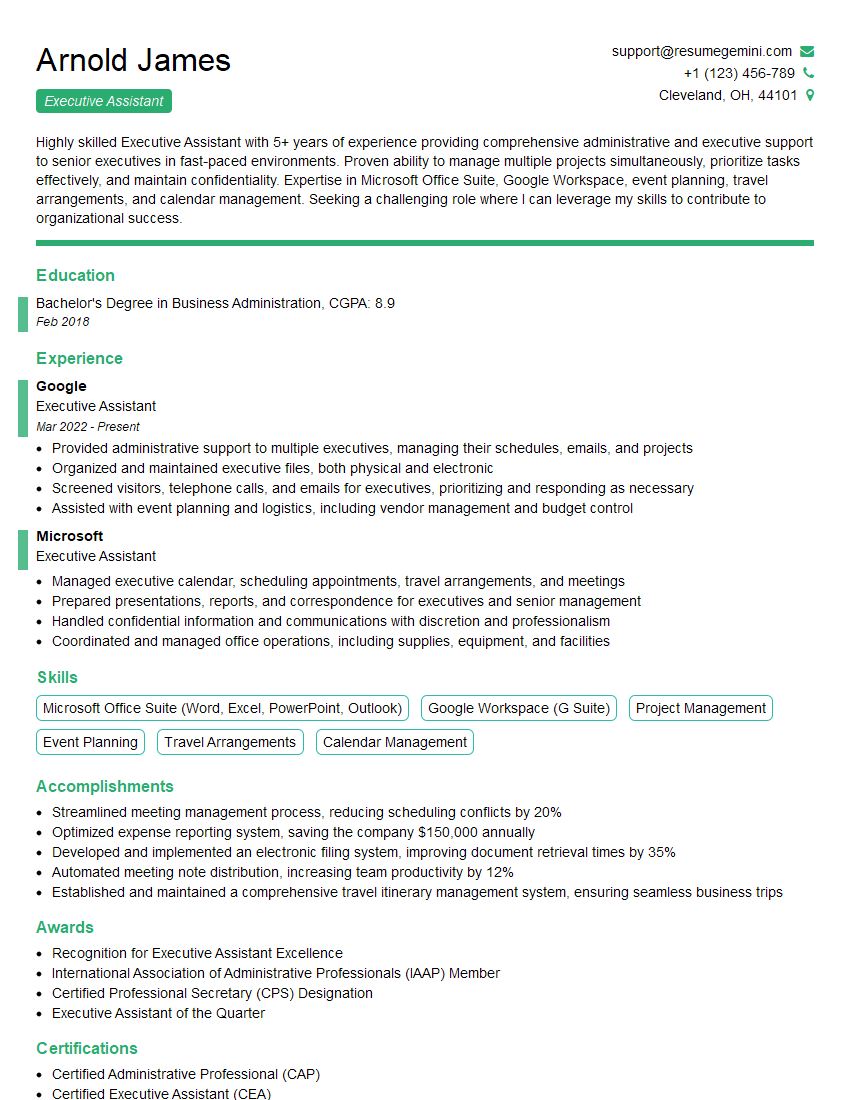
Executive Assistant Resume Sample
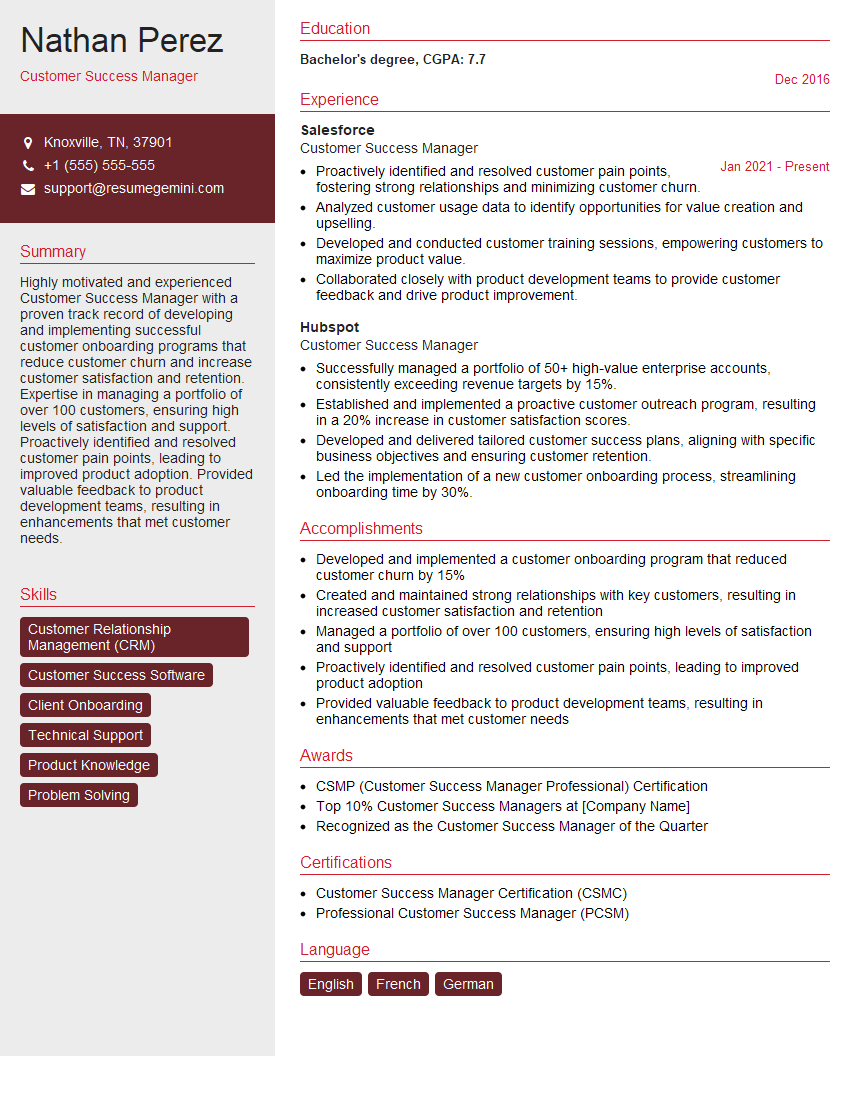
Customer Success Manager Resume Sample
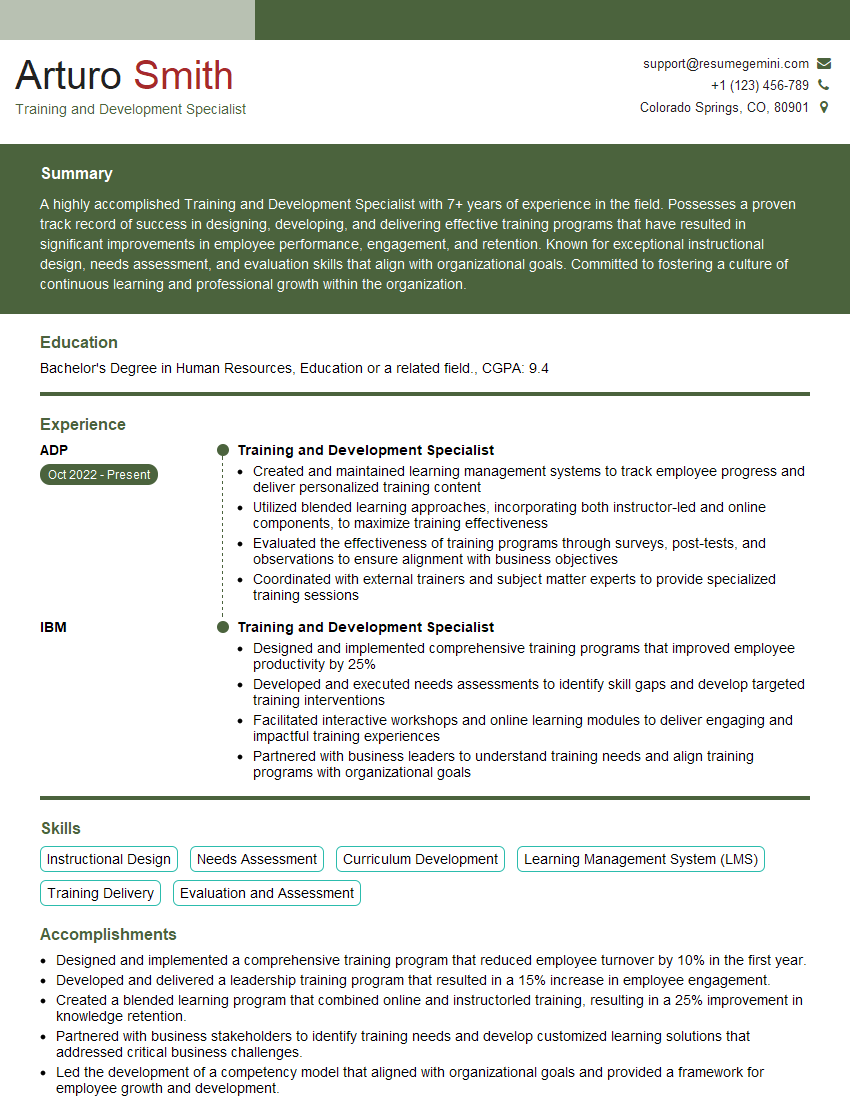
Training and Development Specialist Resume Sample
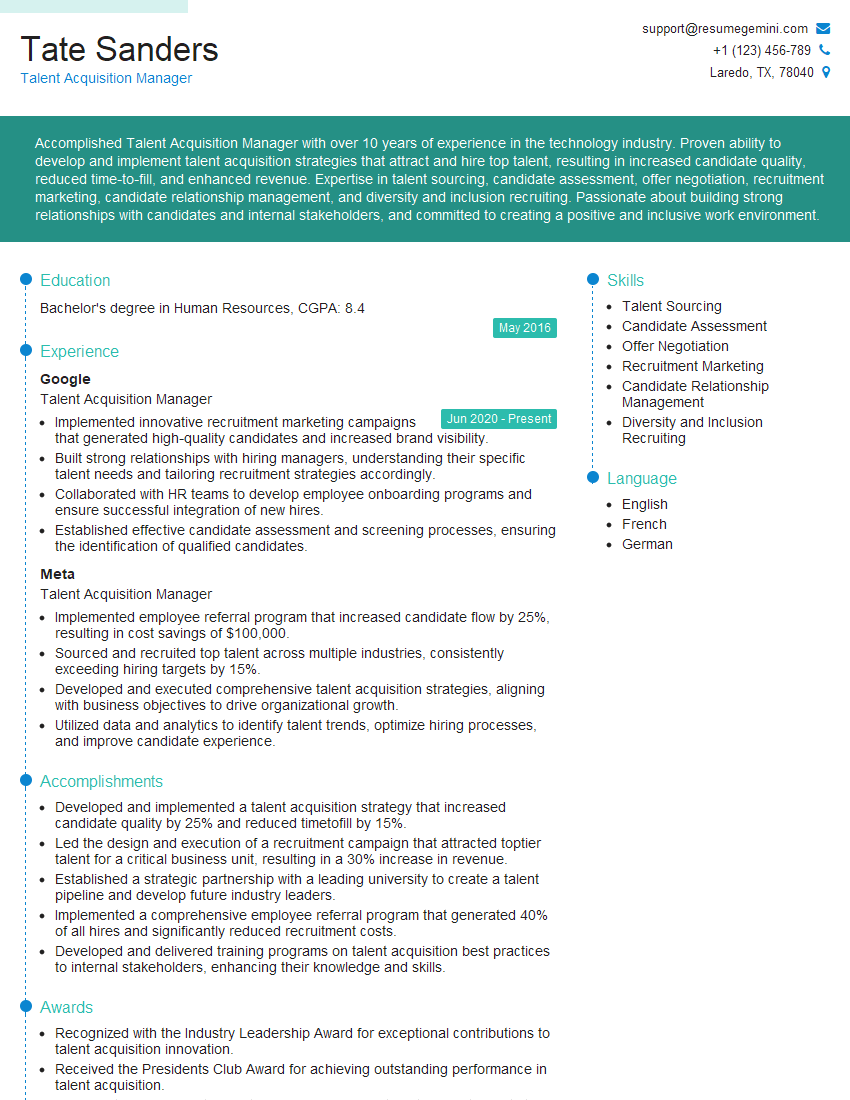
Talent Acquisition Manager Resume Sample
- Chief Operating Officer (COO)
- Account Manager
- Marketing Manager
- Sales Manager
- Business Development Manager
- Communications Manager
- Relationship Manager
- Director of Operations
- Human Resources Manager
- Project Manager
- Chief of Staff
- Community Manager
- Mediator
- Social Media Manager
- Executive Assistant
- Customer Success Manager
- Training and Development Specialist
- Talent Acquisition Manager
Explore more articles
Users Rating of Our Blogs
Share Your Experience
We value your feedback! Please rate our content and share your thoughts (optional).
What Readers Say About Our Blog
Very informative content, great job.
good