Interviews are opportunities to demonstrate your expertise, and this guide is here to help you shine. Explore the essential Knowledge of Accounting interview questions that employers frequently ask, paired with strategies for crafting responses that set you apart from the competition.
Questions Asked in Knowledge of Accounting Interview
Q 1. Explain the difference between accrual and cash accounting.
The core difference between accrual and cash accounting lies in when revenue and expenses are recognized. Cash accounting records transactions only when cash changes hands – when money is received or paid. Accrual accounting, on the other hand, records revenue when it’s earned and expenses when they’re incurred, regardless of when the actual cash flow occurs.
Example: Imagine you provide a service in December but receive payment in January. Under cash accounting, the revenue would be recorded in January. Under accrual accounting, the revenue is recorded in December, reflecting the time the service was provided. This is crucial for accurately reflecting a company’s financial performance over time.
Accrual accounting provides a more accurate picture of a company’s financial health, especially for businesses with significant credit sales or expenses, while cash accounting is simpler to manage but can be misleading about the true financial picture.
Q 2. What are the key financial statements, and how are they interconnected?
The three primary financial statements are the Income Statement, the Balance Sheet, and the Statement of Cash Flows. They’re interconnected because the results of one influence the others, providing a holistic view of a company’s financial position.
- Income Statement: Shows a company’s financial performance over a period (e.g., a year or quarter). It reports revenue, expenses, and the resulting net income or loss. Think of it as a snapshot of profitability.
- Balance Sheet: Provides a snapshot of a company’s assets, liabilities, and equity at a specific point in time. It follows the fundamental accounting equation: Assets = Liabilities + Equity. Think of it as a picture of what a company owns and owes.
- Statement of Cash Flows: Tracks the movement of cash both into and out of a company during a specific period. It categorizes cash flows into operating, investing, and financing activities. Think of it as a record of where the money came from and where it went.
Interconnection: Net income from the Income Statement is added to the beginning balance of retained earnings on the Balance Sheet. The cash flow from operations on the Statement of Cash Flows is often directly influenced by net income from the Income Statement.
Q 3. Describe the process of preparing a balance sheet.
Preparing a balance sheet involves systematically listing a company’s assets, liabilities, and equity. It’s a crucial step in understanding the financial health of a business at a given point in time.
- Identify Assets: List all assets owned by the company, including current assets (cash, accounts receivable, inventory) and non-current assets (property, plant, and equipment, long-term investments).
- Identify Liabilities: List all obligations owed by the company, including current liabilities (accounts payable, salaries payable) and non-current liabilities (long-term debt, deferred revenue).
- Calculate Equity: Determine the shareholders’ equity by subtracting total liabilities from total assets. This includes contributed capital (stock) and retained earnings (accumulated profits).
- Verify the Accounting Equation: Ensure the fundamental accounting equation (Assets = Liabilities + Equity) holds true. Any discrepancies indicate errors that need to be corrected.
- Present the Balance Sheet: Organize the information clearly, typically in a report format, with assets listed first, followed by liabilities and then equity.
Example: A company might list cash of $10,000, accounts receivable of $5,000, and equipment of $20,000 as assets. Simultaneously, it might show accounts payable of $3,000 and a loan of $15,000 as liabilities. After subtracting liabilities from assets, the resulting equity would help confirm the accuracy of the calculations.
Q 4. How do you handle accounts receivable and accounts payable?
Accounts Receivable represents money owed to a company by its customers for goods or services sold on credit. Managing accounts receivable involves tracking outstanding invoices, following up on late payments, and minimizing bad debt. This often involves using an aging schedule to analyze how long invoices have been outstanding.
Accounts Payable represents money a company owes to its suppliers for goods or services purchased on credit. Managing accounts payable involves timely processing of invoices, taking advantage of early payment discounts where applicable, and maintaining strong relationships with suppliers.
Handling Strategies: Efficient handling involves using accounting software to track transactions, setting up payment schedules, employing credit checks for customers, and establishing clear payment terms with suppliers. Regular reconciliation of accounts receivable and payable with bank statements is also crucial to identifying and correcting errors.
Q 5. Explain the concept of depreciation and its different methods.
Depreciation is the systematic allocation of the cost of a tangible asset over its useful life. It reflects the decrease in value of an asset due to wear and tear, obsolescence, or other factors. It’s not about determining the market value of an asset but rather a systematic accounting method.
Common Depreciation Methods:
- Straight-Line Depreciation: This method spreads the cost evenly over the asset’s useful life.
Depreciation Expense = (Cost - Salvage Value) / Useful Life - Declining Balance Depreciation: This method accelerates depreciation, resulting in higher expense in the early years and lower expense in later years. It’s calculated as a percentage of the asset’s net book value (cost less accumulated depreciation).
- Units of Production Depreciation: This method bases depreciation on the actual use of the asset. It’s calculated by estimating the total units the asset will produce and then calculating depreciation based on the units produced during the year.
Depreciation Expense = (Cost - Salvage Value) * (Units Produced / Total Estimated Units)
The choice of method depends on various factors including the nature of the asset and company accounting policies. The method used must be consistently applied for comparability purposes.
Q 6. How do you calculate cost of goods sold (COGS)?
Cost of Goods Sold (COGS) represents the direct costs associated with producing goods sold by a company during a specific period. It includes the cost of materials, labor, and manufacturing overhead directly related to the production process.
Calculating COGS: The formula for calculating COGS is often:
Beginning Inventory + Purchases - Ending Inventory = Cost of Goods Sold
Example: If a company starts with $10,000 worth of inventory, purchases $20,000 of inventory, and ends the period with $5,000 of inventory, the COGS would be: $10,000 + $20,000 – $5,000 = $25,000.
For service businesses, COGS doesn’t apply directly, but similar concepts like cost of services might be used to account for direct costs related to service delivery.
Q 7. What is the purpose of a general ledger?
The general ledger is the central repository of all financial transactions for a company. It’s a collection of accounts that systematically records debits and credits, ensuring that the accounting equation remains balanced. It provides a comprehensive view of all the company’s financial activities.
Purpose:
- Centralized Record-Keeping: Serves as a single, complete record of all financial transactions.
- Financial Reporting: Provides the necessary data for generating the financial statements (income statement, balance sheet, and statement of cash flows).
- Internal Controls: Helps maintain the integrity and accuracy of financial information, ensuring compliance and preventing fraud.
- Auditing: Facilitates audits by providing a complete trail of financial transactions.
Think of the general ledger as the heart of a company’s accounting system, ensuring financial information is accurately captured, organized, and readily available for various reporting and analysis needs.
Q 8. What are some common accounting ratios and what do they indicate?
Accounting ratios are crucial tools for assessing a company’s financial health. They provide insights into profitability, liquidity, solvency, and efficiency. They’re calculated using data from the financial statements (balance sheet, income statement, and cash flow statement). Let’s look at a few key examples:
Profitability Ratios: These ratios show how well a company is generating profits. Examples include:
- Gross Profit Margin: (Revenue – Cost of Goods Sold) / Revenue. This shows the percentage of revenue left after deducting the direct costs of producing goods or services. A higher margin indicates greater efficiency in production.
- Net Profit Margin: Net Income / Revenue. This reflects the percentage of revenue remaining as profit after all expenses are deducted. A higher margin indicates better overall profitability.
Liquidity Ratios: These ratios measure a company’s ability to meet its short-term obligations. Examples include:
- Current Ratio: Current Assets / Current Liabilities. This indicates whether a company has enough current assets (cash, accounts receivable, inventory) to cover its current liabilities (accounts payable, short-term debt). A ratio above 1 is generally considered healthy.
- Quick Ratio: (Current Assets – Inventory) / Current Liabilities. This is a more conservative measure of liquidity, as it excludes inventory, which may not be easily converted to cash.
Solvency Ratios: These ratios assess a company’s ability to meet its long-term obligations. Examples include:
- Debt-to-Equity Ratio: Total Debt / Total Equity. This shows the proportion of financing from debt compared to equity. A high ratio indicates higher financial risk.
Efficiency Ratios: These ratios measure how effectively a company uses its assets. Examples include:
- Inventory Turnover: Cost of Goods Sold / Average Inventory. This indicates how many times a company sells and replaces its inventory during a period. A higher turnover suggests efficient inventory management.
For example, imagine two companies in the same industry. Company A has a net profit margin of 10%, while Company B has a net profit margin of 5%. This suggests Company A is more profitable. However, it’s important to analyze these ratios in conjunction with each other and within the context of the industry and economic conditions.
Q 9. Explain the concept of working capital.
Working capital represents the difference between a company’s current assets and its current liabilities. It’s a measure of a company’s short-term financial health and its ability to meet its immediate obligations. The formula is: Working Capital = Current Assets – Current Liabilities
Current assets include items like cash, accounts receivable (money owed to the company), and inventory. Current liabilities include accounts payable (money owed by the company), short-term debt, and other short-term obligations. A positive working capital figure indicates the company has sufficient resources to cover its short-term debts. A negative working capital, while not always a bad sign, suggests the company may face challenges in meeting its immediate obligations. It’s crucial to analyze the working capital trend over time, as well as compare it to industry benchmarks, to gain a comprehensive understanding of the company’s financial position.
Think of it like this: Imagine you’re running a lemonade stand. Your current assets are the cash in your till, the lemons and sugar you have on hand, and any money customers owe you. Your current liabilities are the money you owe to your supplier for lemons and sugar. Your working capital is the difference – the amount of money you have readily available to run your business and pay your immediate bills.
Q 10. How do you reconcile bank statements?
Reconciling bank statements is a critical control procedure to ensure accuracy in financial records. It involves comparing the company’s internal cash records with the bank’s statement to identify any discrepancies. The steps typically include:
Compare the balances: Start by comparing the ending cash balance in the company’s books to the ending balance reported on the bank statement. There will almost always be a difference.
Identify outstanding deposits: These are deposits made by the company but not yet reflected in the bank statement. Add these to the bank statement balance.
Identify outstanding checks: These are checks written by the company but not yet cashed by the payee. Subtract these from the bank statement balance.
Account for bank charges and fees: Banks often charge fees for services. These need to be subtracted from the company’s book balance.
Account for notes receivable and interest earned: These additions should be made to the company’s book balance.
Identify errors: Carefully review any remaining differences to identify any errors in recording transactions. This might involve checking for transposition errors (e.g., recording $120 as $210) or other mistakes.
Prepare a reconciliation statement: The final step is creating a formal reconciliation statement that documents all the adjustments and shows the reconciled balance, which should now match between the company’s books and the bank statement.
For example, a company might have deposits in transit or outstanding checks that cause the bank balance and book balance to differ. Reconciliation helps identify these and ensures the accurate reporting of cash.
Q 11. What is the difference between GAAP and IFRS?
GAAP (Generally Accepted Accounting Principles) and IFRS (International Financial Reporting Standards) are both sets of accounting rules that guide how financial statements are prepared and presented, but they have key differences. GAAP is primarily used in the United States, while IFRS is used internationally by many countries. Key distinctions include:
Rules-based vs. Principles-based: GAAP is considered more rules-based, providing specific guidelines for accounting treatments. IFRS is more principles-based, emphasizing the underlying principles and requiring more professional judgment in applying the standards.
Flexibility: IFRS tends to offer greater flexibility in accounting treatments, allowing companies to choose methods that best reflect their economic reality. GAAP is generally more prescriptive.
Conservatism: GAAP traditionally leans towards conservatism in accounting, requiring companies to recognize losses earlier than gains. While IFRS also incorporates prudence, it’s less strict in this regard.
Inventory Valuation: GAAP allows for different inventory valuation methods (FIFO, LIFO, weighted-average). IFRS generally only permits FIFO and weighted-average.
These differences can affect the comparability of financial statements prepared under different standards. For instance, a company reporting under GAAP might show a different net income than a similar company using IFRS, even if their underlying economic activities are identical. Understanding these differences is crucial for international investors and analysts.
Q 12. Describe your experience with budgeting and forecasting.
I have extensive experience in budgeting and forecasting, having been involved in developing and managing budgets for various organizations. My approach involves a collaborative process, starting with gathering data from different departments and stakeholders. This data includes historical financial information, sales projections, anticipated expenses, and market analysis. I use this data to build detailed budgets that encompass revenue projections, cost estimates, and capital expenditure plans. I employ various forecasting techniques, such as trend analysis, regression analysis, and seasonal adjustments, to predict future performance. Once the budget is finalized, I monitor actual results against the budget throughout the period, identifying variances and making necessary adjustments. I regularly present budget performance reports to management, highlighting key achievements and areas needing attention.
For example, in my previous role, I led the budgeting process for a retail company. By analyzing past sales data and incorporating anticipated marketing campaigns and seasonal trends, we were able to accurately forecast revenue for the upcoming year. This allowed for effective resource allocation and strategic decision-making.
Q 13. How do you handle accounting discrepancies?
Handling accounting discrepancies requires a systematic and thorough approach. The first step is to identify and document the discrepancy. I’d carefully examine the relevant accounting records, such as the general ledger, subsidiary ledgers, and supporting documentation. This often involves comparing records from different sources to pinpoint the source of the error. Once the discrepancy is identified, I’d determine the nature of the error – was it a simple data entry mistake, a misclassification of transactions, or a more complex issue?
Depending on the complexity, I might use various tools like spreadsheets or accounting software to track the discrepancy. If a specific transaction is in question, I’d trace the transaction back to its origin and review the supporting documentation. In cases involving multiple transactions, I’d potentially use data analytics techniques to identify patterns and potential areas of concern. If the discrepancy is significant or cannot be easily resolved, I’d consult with senior accountants or auditors for guidance. It’s critical to document all steps taken to resolve the discrepancy, including any adjustments made to the accounting records.
For example, a discrepancy might result from a timing difference, where a transaction is recorded in one period in the company’s records but a different period on the bank statement. Thorough investigation is crucial to ensure accurate financial reporting.
Q 14. What is your experience with auditing procedures?
My experience with auditing procedures encompasses various aspects of the audit process, from planning and fieldwork to reporting. I’m familiar with different audit methodologies, including substantive testing, analytical procedures, and internal control testing. I’ve worked on both financial statement audits and operational audits. In financial statement audits, I’ve participated in planning the audit scope, selecting samples for testing, performing detailed testing of account balances, and assessing the effectiveness of internal controls. My experience with operational audits involved evaluating the efficiency and effectiveness of various business processes.
Throughout the audit process, I adhere to professional standards and ethical guidelines, ensuring objectivity and independence. I utilize auditing software and techniques to enhance efficiency and accuracy. For example, in a recent audit, I used data analytics to identify unusual transactions, which significantly improved the efficiency of testing account balances. This rigorous approach ensures the accuracy and reliability of the audit findings and contributes to the overall credibility of the financial statements.
Q 15. What software packages are you proficient in (e.g., QuickBooks, SAP, Oracle) ?
Throughout my career, I’ve gained proficiency in several accounting software packages. My experience includes extensive use of QuickBooks, particularly in managing accounts payable and receivable, generating financial reports, and handling payroll for small to medium-sized businesses. I’m also familiar with SAP, having utilized its modules for financial accounting and controlling in a larger corporate setting. This involved managing general ledger accounts, performing cost accounting, and using its reporting tools for complex financial analyses. Finally, I have working knowledge of Oracle Financials, focusing on its budgeting and forecasting capabilities. I’m a quick learner and adapt readily to new software; my focus is always on leveraging the technology to improve efficiency and accuracy in my work.
Career Expert Tips:
- Ace those interviews! Prepare effectively by reviewing the Top 50 Most Common Interview Questions on ResumeGemini.
- Navigate your job search with confidence! Explore a wide range of Career Tips on ResumeGemini. Learn about common challenges and recommendations to overcome them.
- Craft the perfect resume! Master the Art of Resume Writing with ResumeGemini’s guide. Showcase your unique qualifications and achievements effectively.
- Don’t miss out on holiday savings! Build your dream resume with ResumeGemini’s ATS optimized templates.
Q 16. Explain your understanding of internal controls.
Internal controls are the processes, policies, and procedures implemented by an organization to safeguard its assets, maintain the accuracy and reliability of its financial records, and ensure compliance with laws and regulations. Think of them as the guardrails of a financial system, preventing errors and fraud. A strong system of internal controls incorporates several key elements:
- Preventive Controls: These aim to stop errors or irregularities before they occur. Examples include segregation of duties (preventing one person from having too much control), authorization procedures for transactions, and physical security of assets.
- Detective Controls: These identify errors or irregularities after they have occurred. Examples include bank reconciliations, regular inventory counts, and internal audits.
- Corrective Controls: These address errors or irregularities that have been identified. Examples include procedures for resolving discrepancies and implementing corrective actions.
For instance, in a small business, a strong internal control might involve having one person responsible for ordering inventory and another responsible for receiving and recording it. This segregation of duties prevents potential theft or errors in inventory records. In a larger corporation, robust internal controls may involve a complex system of approvals, audits, and monitoring software. The design and implementation of internal controls are crucial for maintaining the integrity of a company’s financial reporting and operational efficiency.
Q 17. How do you manage your time effectively when working on multiple projects?
Managing my time effectively across multiple projects requires a structured approach. I typically utilize a combination of techniques, including:
- Prioritization: I start by identifying the most critical and time-sensitive projects and tasks. This often involves using a prioritization matrix that considers urgency and importance.
- Project Planning: I break down each project into smaller, manageable tasks with clearly defined deadlines. I use project management tools to track progress and identify potential roadblocks.
- Time Blocking: I allocate specific time blocks for each task, minimizing distractions during those periods. This focused approach enhances productivity.
- Regular Review and Adjustment: I regularly review my schedule and adjust my plan as needed. Flexibility is key to adapting to unforeseen circumstances or changes in priorities.
For example, if I’m working on a year-end audit alongside a quarterly financial statement preparation, I’ll allocate specific days for each, perhaps dedicating mornings to the audit due to its more complex nature and afternoons to the quarterly reports. This structured approach ensures both are completed accurately and on time.
Q 18. Describe your experience with tax accounting.
My experience in tax accounting includes preparing and filing various tax returns for individuals and businesses. This encompasses a wide range of tasks, from gathering necessary documentation and performing tax calculations to analyzing tax implications of business transactions and strategies. I’m proficient in identifying deductions, credits, and other tax-saving opportunities to minimize clients’ tax liabilities while ensuring full compliance with tax regulations. I have experience working with different tax software and navigating complex tax codes. I’ve also assisted clients with tax audits and resolving tax disputes with relevant authorities.
For example, I recently helped a small business owner optimize their tax position by strategically structuring their business expenses and taking advantage of available deductions, ultimately reducing their tax burden by a significant amount. I pride myself on staying up-to-date on changes in tax laws and regulations to provide my clients with the most accurate and relevant advice.
Q 19. What is your understanding of inventory management?
Inventory management is the process of overseeing the movement and storage of goods. It’s crucial for optimizing profitability and ensuring smooth business operations. Effective inventory management involves several key areas:
- Inventory Tracking: Accurately monitoring the quantity of goods on hand, their location, and their movement. This can involve using barcodes, RFID tags, or specialized software.
- Forecasting Demand: Predicting future demand for goods to optimize inventory levels and avoid stockouts or excess inventory.
- Ordering and Receiving: Efficiently managing the ordering process to ensure timely delivery of goods and accurate recording of inventory receipts.
- Storage and Handling: Properly storing and handling inventory to prevent damage or spoilage.
- Inventory Valuation: Determining the value of inventory using methods like FIFO (First-In, First-Out) or LIFO (Last-In, First-Out) for financial reporting purposes.
Poor inventory management can lead to lost sales due to stockouts, increased storage costs due to excess inventory, and inaccurate financial reporting. Conversely, well-managed inventory ensures timely production or sales, minimizes waste, and improves overall profitability.
Q 20. How do you handle year-end closing procedures?
Year-end closing procedures are critical for ensuring the accuracy and completeness of financial statements. The process typically involves a series of steps, including:
- Reconciliations: Reconciling bank statements, accounts receivable, and accounts payable to ensure accuracy.
- Adjusting Entries: Making necessary adjustments to accounts for items like accrued expenses, prepaid assets, and depreciation.
- Inventory Count: Conducting a physical count of inventory to verify records.
- Financial Statement Preparation: Preparing the balance sheet, income statement, and statement of cash flows.
- Auditing: Reviewing all financial records and reports for accuracy and compliance.
- Closing Entries: Making journal entries to close temporary accounts (revenue, expense, dividends) and transfer their balances to retained earnings.
Effective year-end closing requires meticulous attention to detail and a thorough understanding of accounting principles. Failure to follow proper procedures can lead to inaccurate financial reporting and potentially serious legal or tax consequences. I’ve successfully managed numerous year-end closing processes, ensuring timely and accurate completion.
Q 21. Explain your experience with variance analysis.
Variance analysis is the process of identifying and analyzing the differences between actual results and planned or budgeted results. This helps to understand why performance deviated from expectations. Variances can be either favorable (better than expected) or unfavorable (worse than expected).
For example, if a company budgeted to sell 1000 units of a product but only sold 800, a variance analysis would investigate the reasons for the shortfall. Possible factors could include lower-than-expected demand, increased competition, or pricing issues. This analysis involves comparing actual sales revenue and costs with the budgeted figures to pinpoint areas for improvement. Identifying the causes of variances enables businesses to make informed decisions to improve future performance and profitability.
My experience in variance analysis includes working with various companies across different industries, utilizing both simple and more complex techniques. I’m comfortable interpreting the results of variance analyses and presenting them to management in a clear and concise manner, allowing for data-driven decision-making.
Q 22. Describe a time you had to solve a complex accounting problem.
One particularly challenging accounting problem involved resolving a discrepancy in intercompany transactions between two subsidiaries of a multinational corporation. The issue stemmed from a complex web of transactions involving both goods and services, with differing accounting methods applied by each subsidiary. The discrepancy, initially amounting to several hundred thousand dollars, wasn’t immediately apparent due to the volume of transactions and the complexity of the intercompany agreements.
My approach was methodical. First, I meticulously reviewed all relevant intercompany agreements to understand the terms and conditions governing the transactions. Then, I carefully analyzed the general ledger accounts of both subsidiaries, cross-referencing them with supporting documentation such as invoices, purchase orders, and shipping records. This revealed inconsistencies in the timing of revenue recognition and the allocation of costs between the two entities.
The solution involved not only identifying the specific transactions contributing to the discrepancy but also determining the appropriate accounting treatment under IFRS (International Financial Reporting Standards). I had to consult several accounting standards and professional pronouncements to ensure compliance. Finally, I prepared detailed adjusting entries to correct the misstatements and documented the entire process, including the reasons for the corrections and the supporting evidence. The problem was successfully resolved, and the financial statements accurately reflected the intercompany transactions. This experience highlighted the importance of detailed documentation, a thorough understanding of accounting standards, and effective communication across different departments and subsidiaries.
Q 23. How do you stay updated on changes in accounting standards?
Staying current with changes in accounting standards is crucial for maintaining professional competency. I utilize a multi-faceted approach to ensure I’m always up-to-date.
- Professional Organizations: I am an active member of [mention relevant professional accounting organizations, e.g., AICPA, ACCA], accessing their publications, webinars, and continuing professional education (CPE) courses. These organizations offer valuable insights into the latest accounting standards updates and interpretations.
- Regulatory Websites: I regularly monitor the websites of relevant regulatory bodies like the Financial Accounting Standards Board (FASB) and the International Accounting Standards Board (IASB) for updates, releases, and proposed changes to accounting standards.
- Industry Publications: I subscribe to professional accounting journals and magazines such as [mention relevant publications, e.g., The Journal of Accountancy, Accounting Today] to stay informed about current trends, best practices, and interpretations of accounting standards.
- Continuing Professional Development: I actively participate in professional development courses and conferences focused on accounting standards updates. These events provide opportunities for networking and learning from leading experts in the field.
This proactive approach helps me to anticipate potential impacts of standard changes on my work and ensures compliance with the latest regulations.
Q 24. What are your salary expectations?
My salary expectations are in line with the market rate for a senior accountant with my experience and skillset in this region. Considering the responsibilities and requirements of this position, I am seeking a compensation package in the range of $[Insert Salary Range]. However, I am open to discussing this further and am more interested in the long-term growth and opportunities offered by your company.
Q 25. What are your long-term career goals?
My long-term career goals involve progressing to a leadership role within the accounting field. I aspire to become a senior manager or partner within the next 5-7 years. I’m particularly interested in developing my skills in [mention specific areas of interest, e.g., financial analysis, audit management, internal controls] and eventually leading and mentoring teams. I believe gaining experience in a challenging and dynamic environment like yours will greatly enhance my capabilities and help me achieve this ambition.
Q 26. Why are you interested in this position?
I am highly interested in this position because it aligns perfectly with my career aspirations and provides an excellent opportunity to contribute my skills to a reputable organization like yours. I am particularly drawn to [mention specific aspects of the job description or company, e.g., the company’s commitment to innovation, the challenging projects, the opportunity to work with a diverse team]. The opportunity to work on [mention specific projects or responsibilities] is incredibly exciting, and I believe my expertise in [mention specific skills] will be a valuable asset to your team.
Q 27. What are your strengths and weaknesses?
One of my greatest strengths is my analytical ability and attention to detail. I’m meticulous in my work, ensuring accuracy and completeness in all my tasks. This is vital in accounting where precision is paramount. I’m also a highly effective problem-solver; I enjoy tackling complex challenges and finding creative solutions. For example, in a previous role, I developed a new process for reconciling intercompany accounts that reduced processing time by 20%.
A potential weakness is my tendency to be perfectionistic. While this ensures high-quality work, it can sometimes lead to slower turnaround times. I’m actively working on improving my time management skills by prioritizing tasks and delegating when appropriate. I’m confident that my ability to learn and adapt will help me continuously overcome this and other challenges.
Key Topics to Learn for Your Knowledge of Accounting Interview
- Financial Statements: Understand the preparation and analysis of balance sheets, income statements, and cash flow statements. Focus on interpreting key ratios and identifying trends.
- Generally Accepted Accounting Principles (GAAP): Familiarize yourself with the core principles and how they impact financial reporting. Practice applying these principles to different scenarios.
- Cost Accounting: Grasp the concepts of cost allocation, budgeting, and variance analysis. Be prepared to discuss how cost information is used for decision-making.
- Budgeting and Forecasting: Understand the process of creating and managing budgets, including revenue projections, expense planning, and variance analysis. Practice creating realistic budget scenarios.
- Auditing Principles: Develop a basic understanding of audit procedures and the importance of internal controls in maintaining financial accuracy and integrity.
- Accounting Software & Tools: Demonstrate familiarity with common accounting software packages (mention specific ones if applicable to your target roles). Highlight your proficiency in data entry, report generation, and data analysis using these tools.
- Tax Accounting (if applicable): If the role involves tax preparation or compliance, be ready to discuss relevant tax laws and regulations and your experience in tax accounting procedures.
Next Steps
Mastering Knowledge of Accounting opens doors to exciting career opportunities with significant growth potential. A strong understanding of these core principles will set you apart from other candidates. To maximize your job prospects, crafting an ATS-friendly resume is crucial. ResumeGemini can help you build a professional, impactful resume that highlights your accounting skills and experience. We provide examples of resumes tailored specifically to Knowledge of Accounting roles to help you get started. Take the next step toward your dream accounting career today!
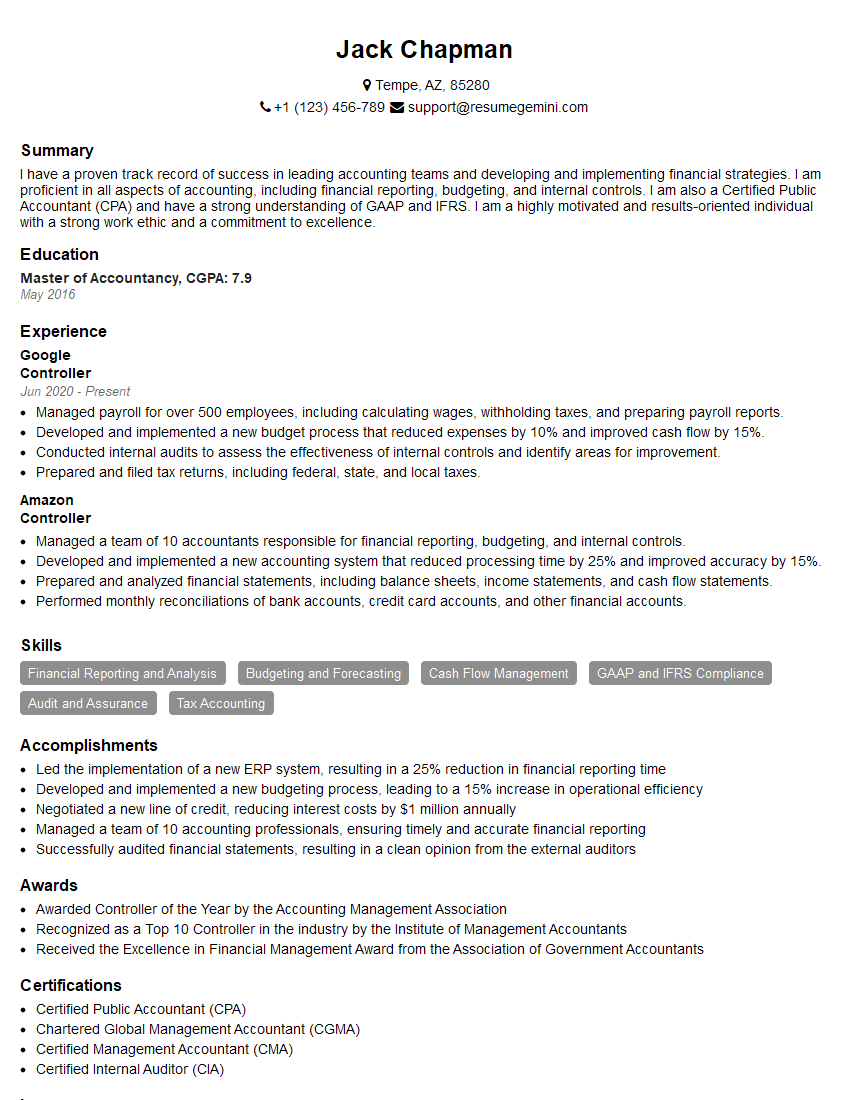
Controller Resume Sample
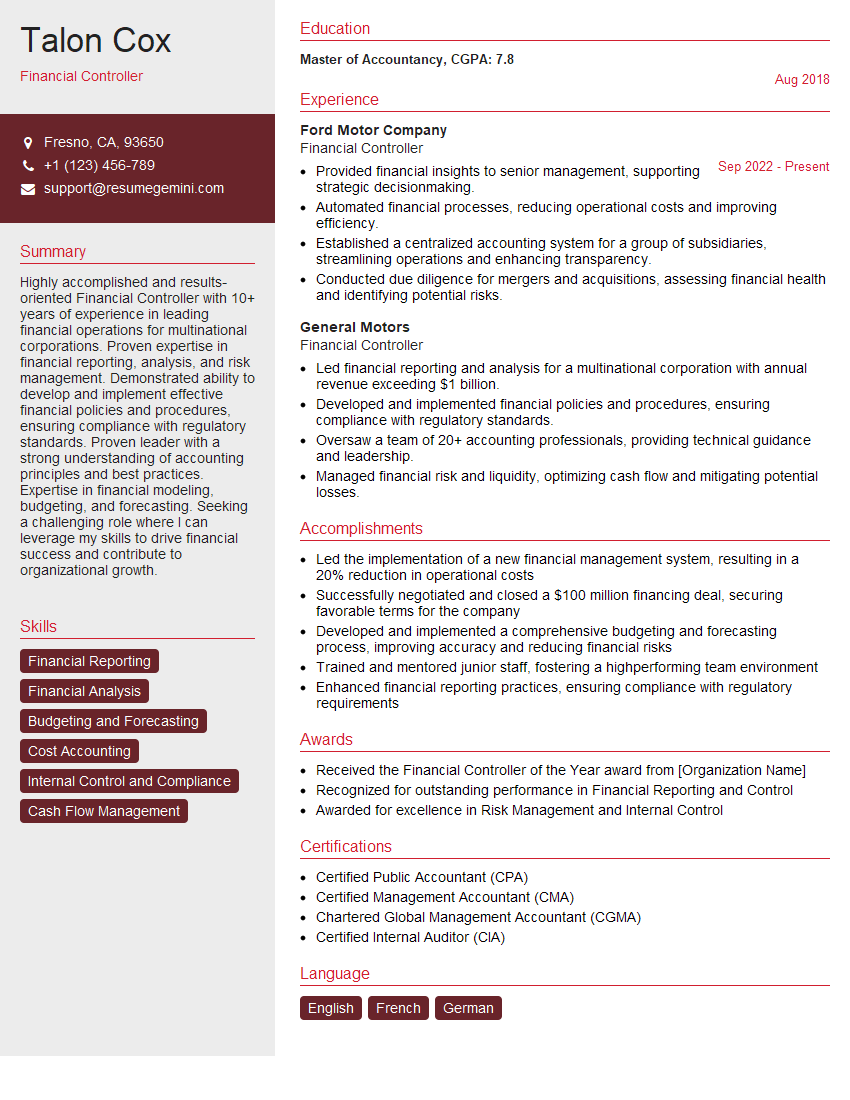
Financial Controller Resume Sample
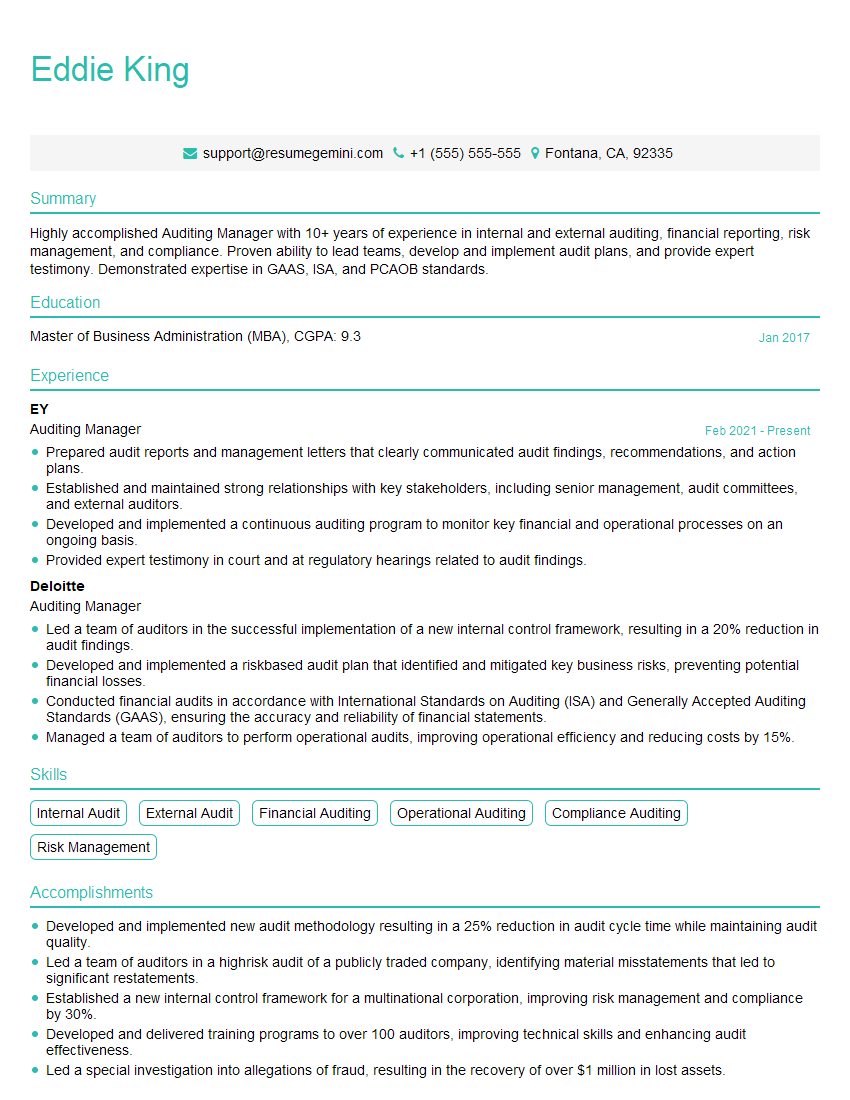
Auditing Manager Resume Sample
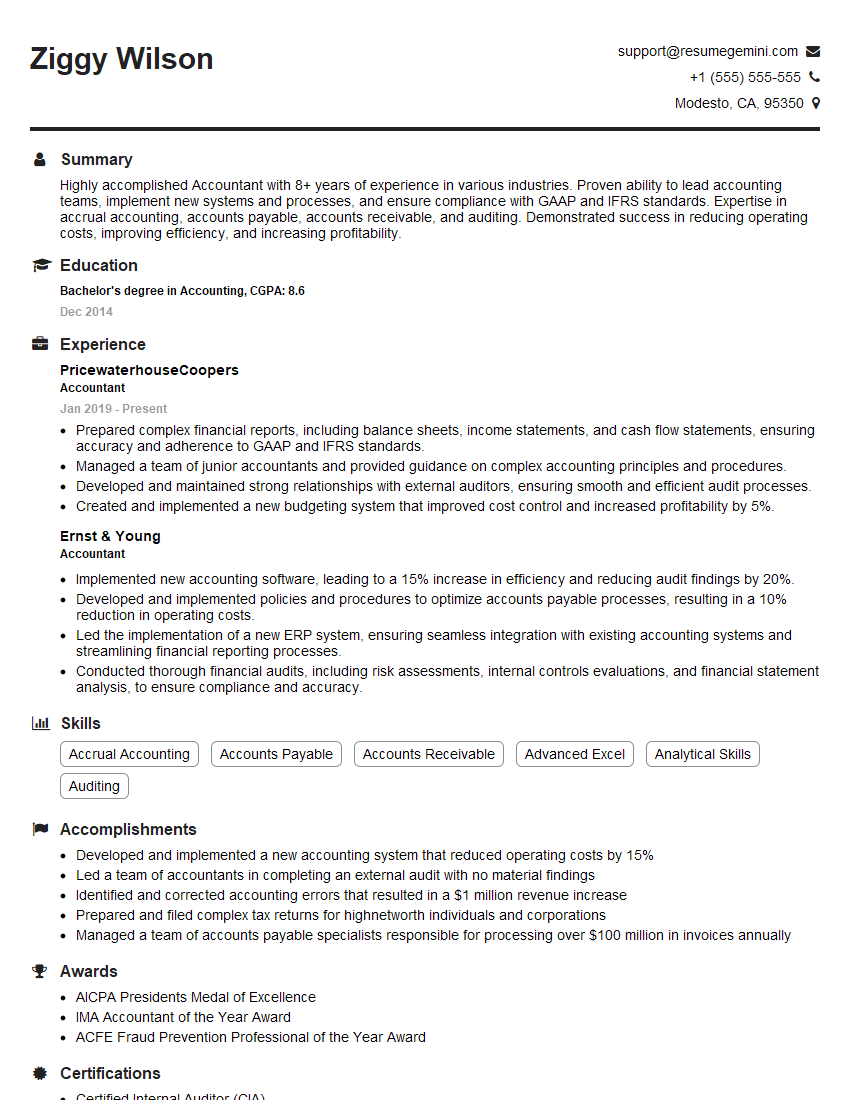
Accountant Resume Sample
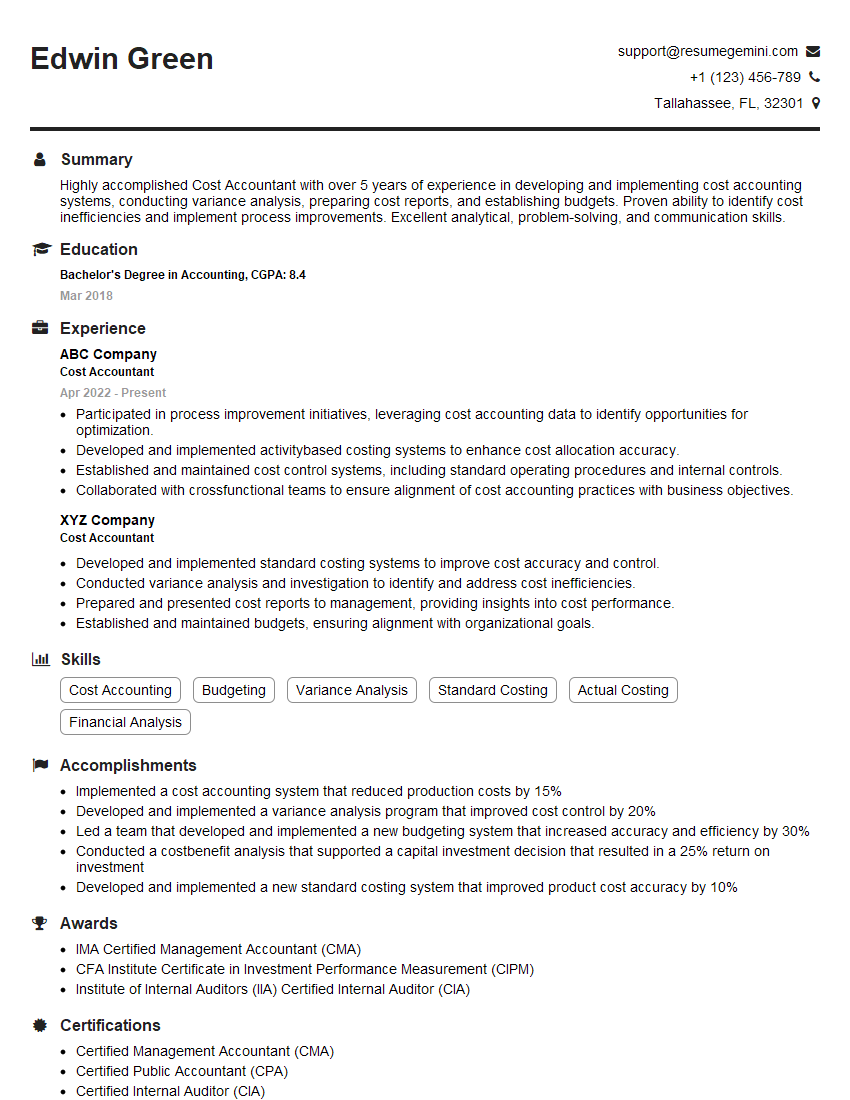
Cost Accountant Resume Sample
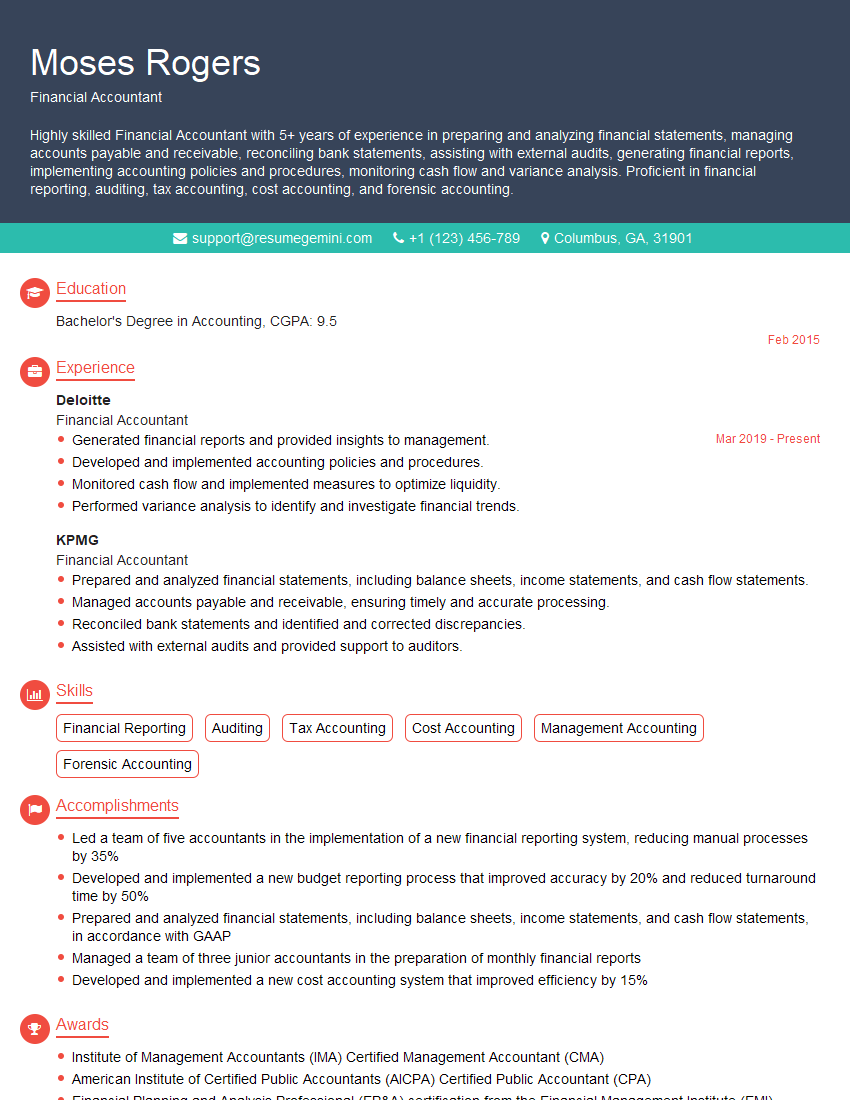
Financial Accountant Resume Sample
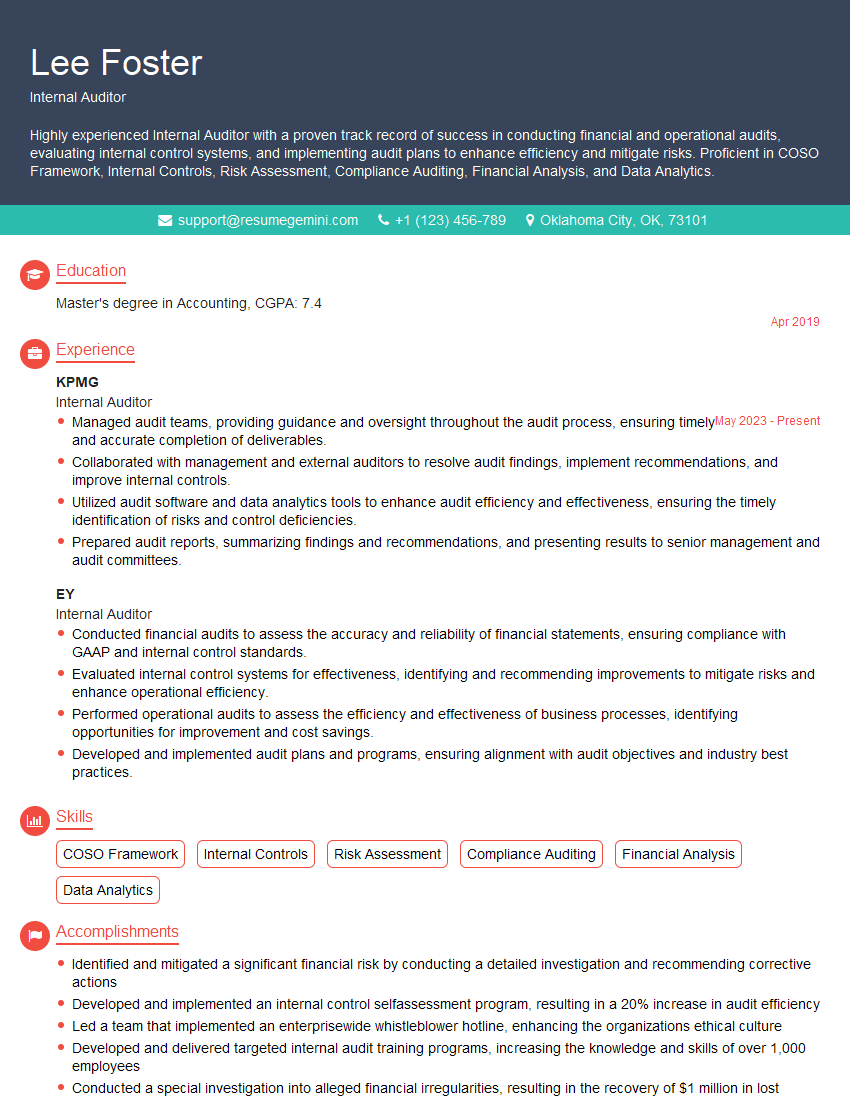
Internal Auditor Resume Sample
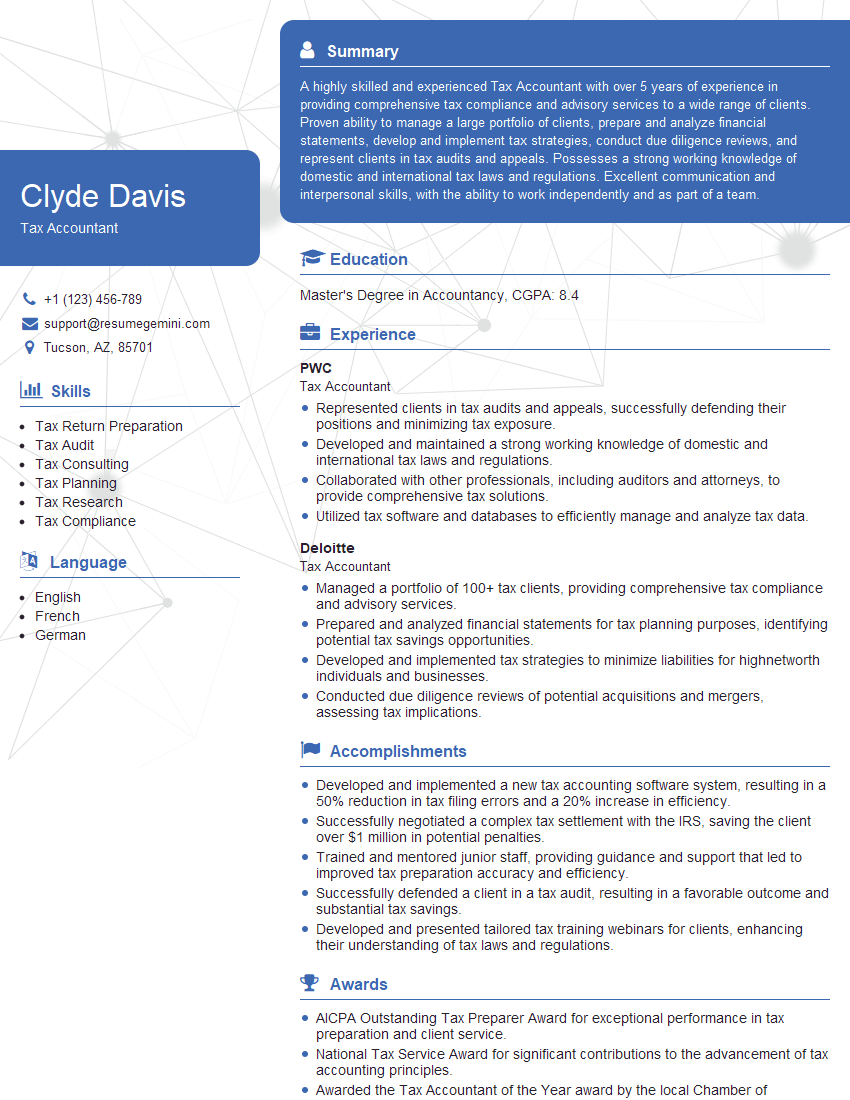
Tax Accountant Resume Sample
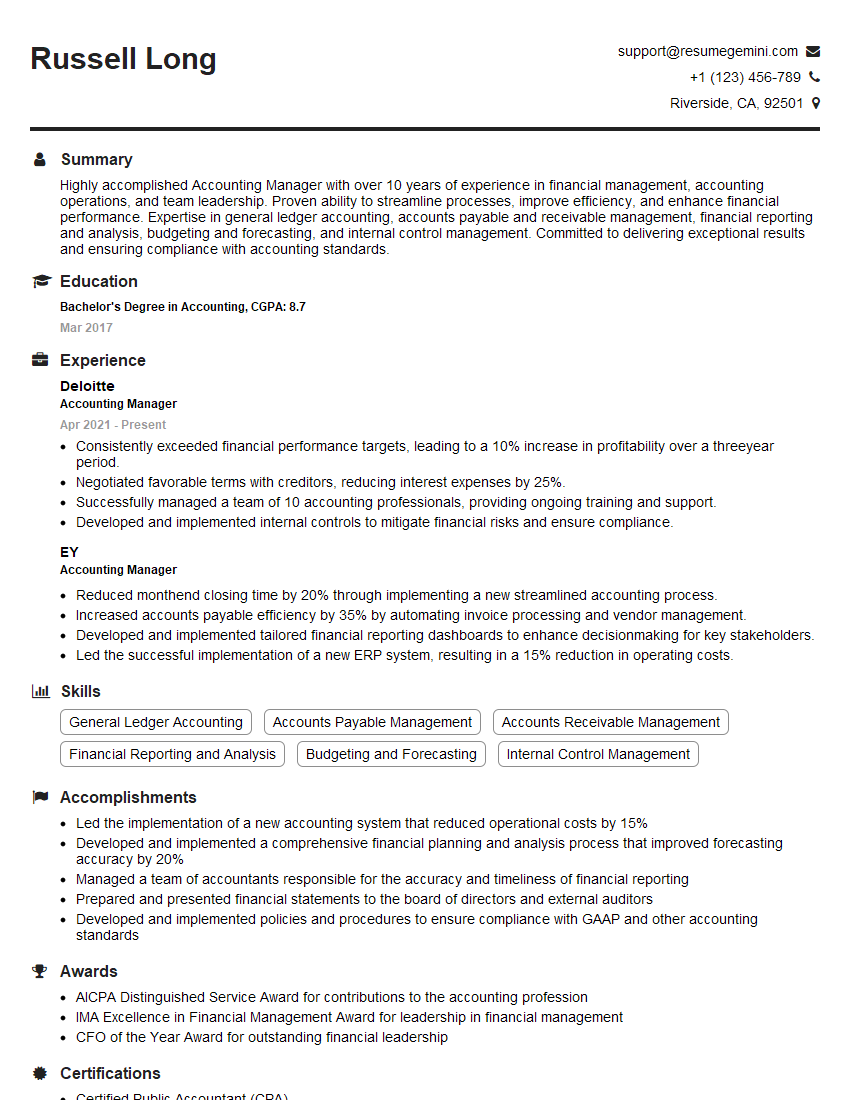
Accounting Manager Resume Sample
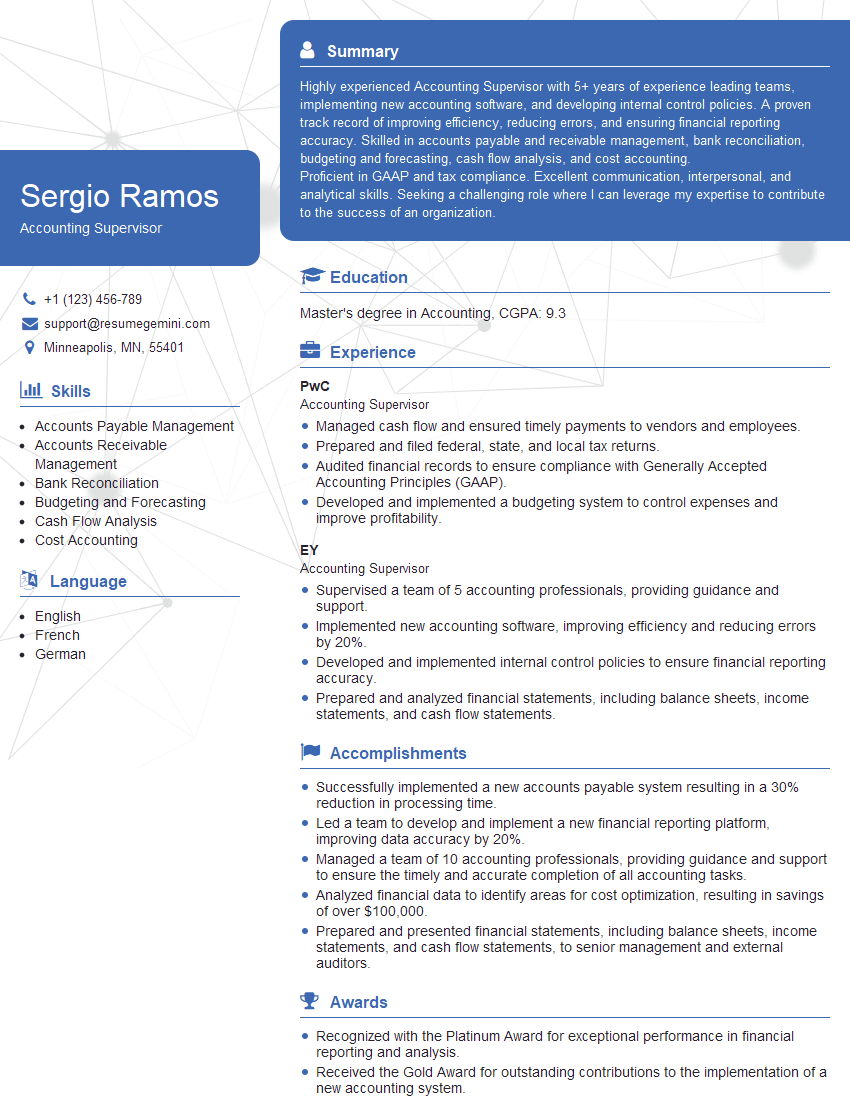
Accounting Supervisor Resume Sample
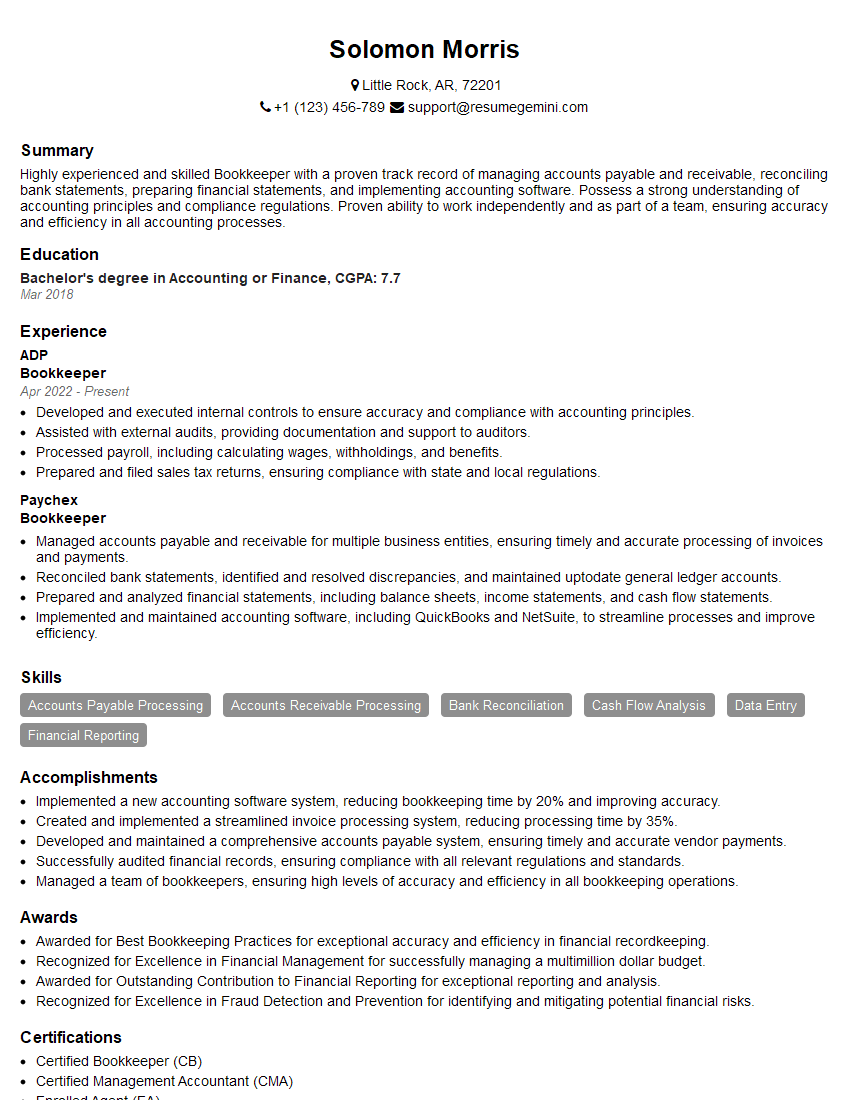
Bookkeeper Resume Sample
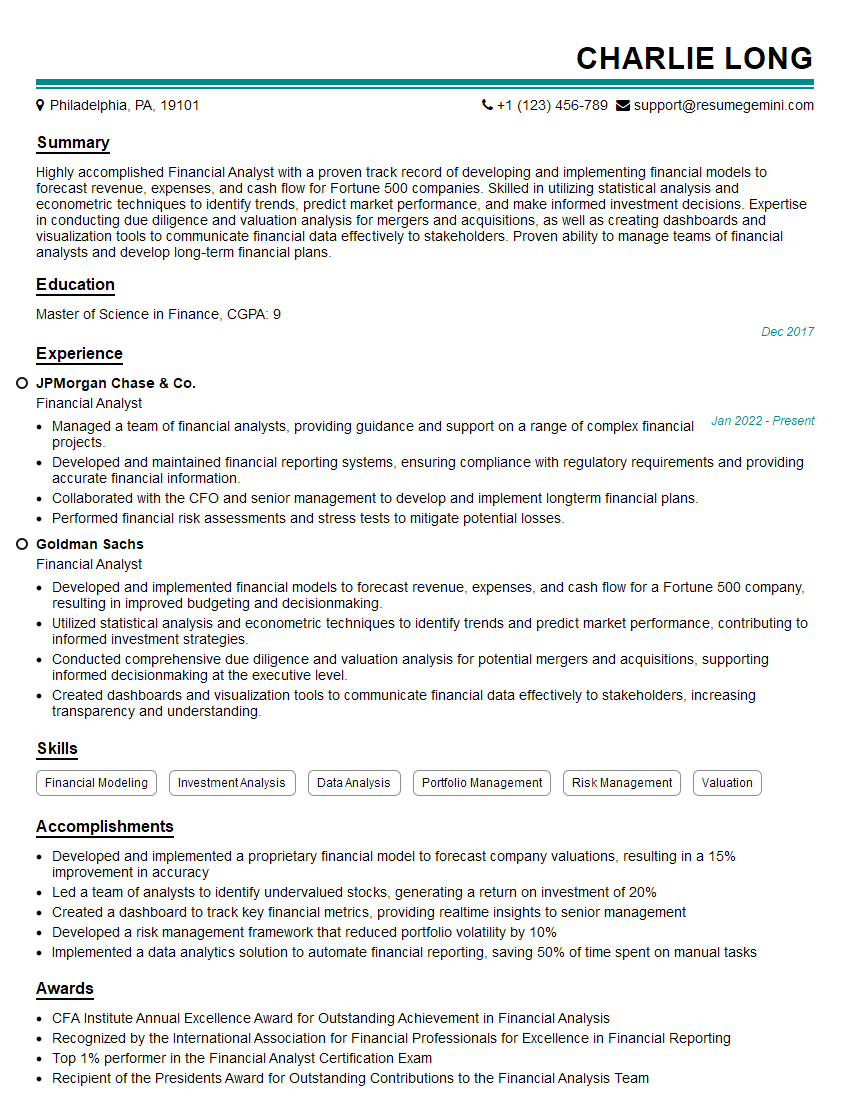
Financial Analyst Resume Sample
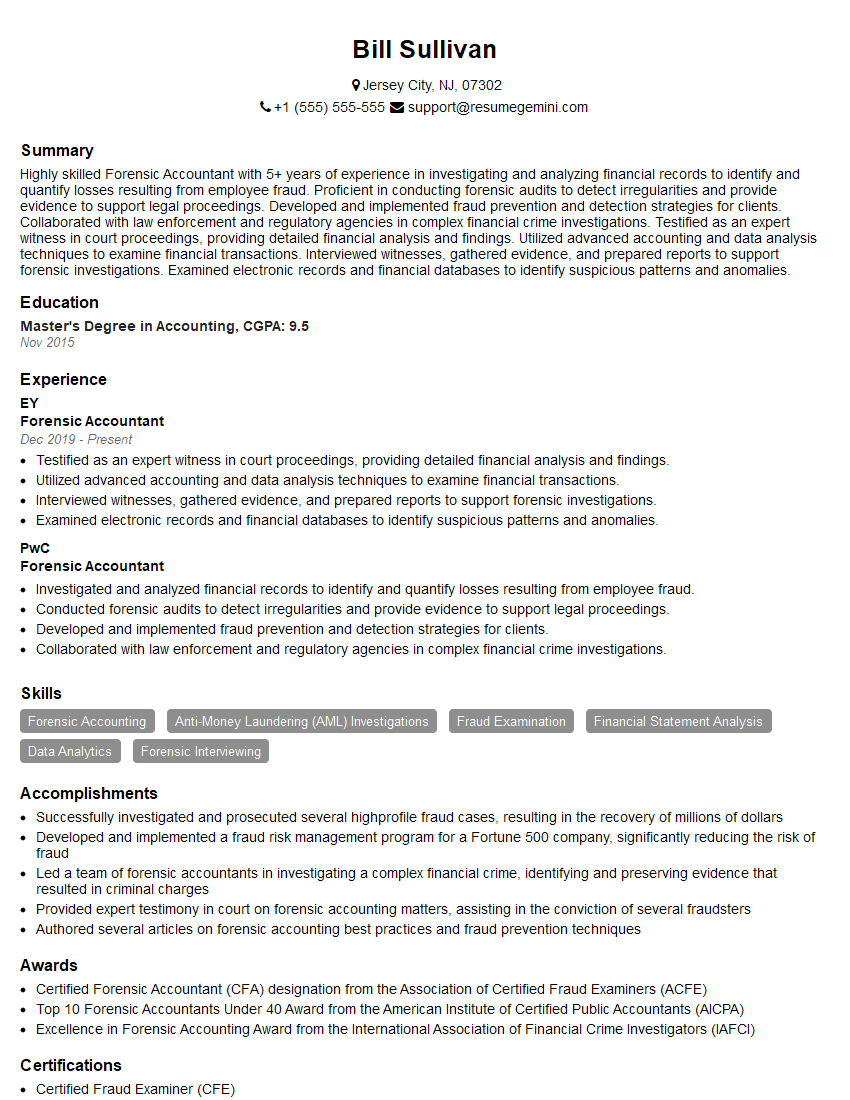
Forensic Accountant Resume Sample
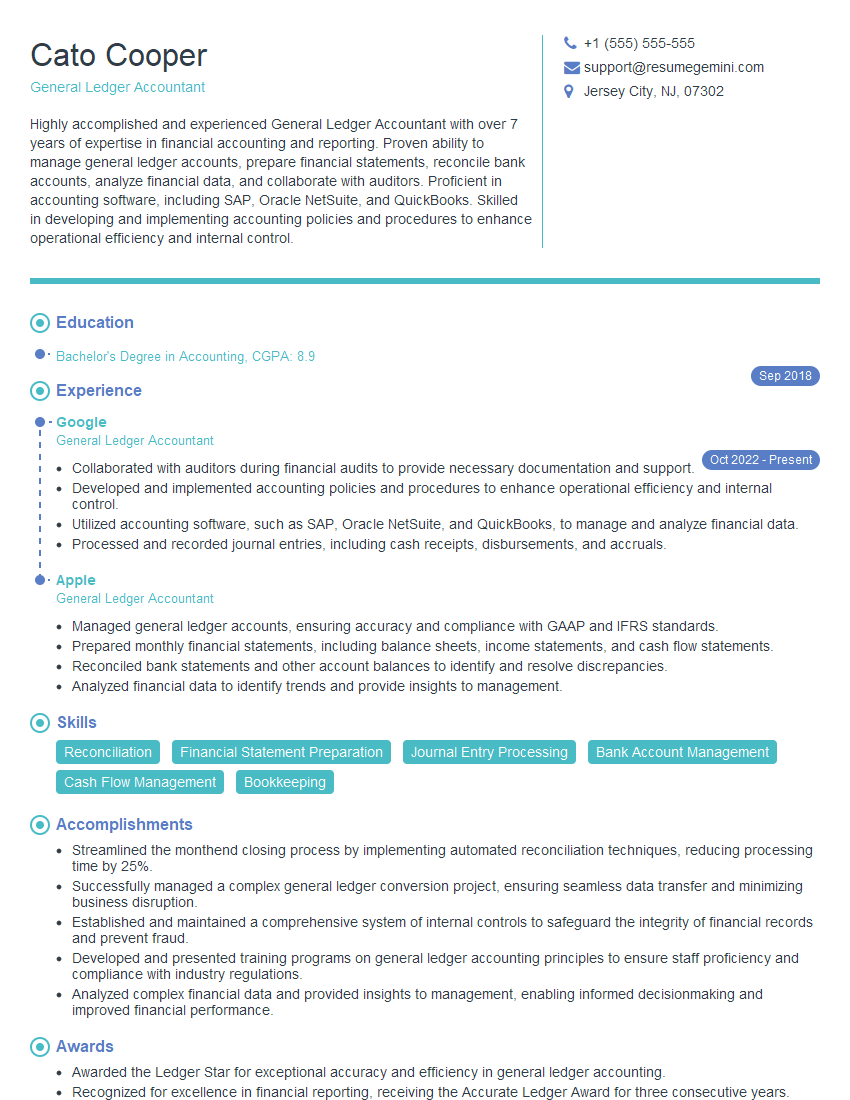
General Ledger Accountant Resume Sample
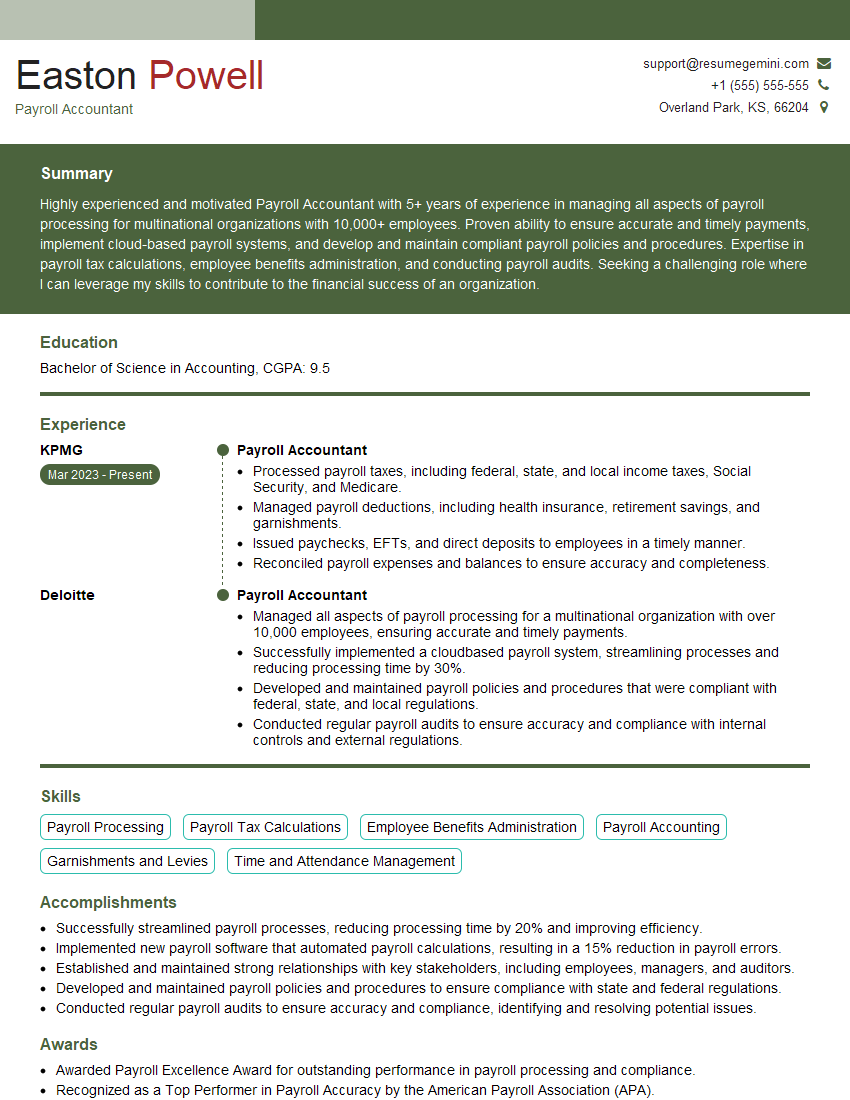
Payroll Accountant Resume Sample
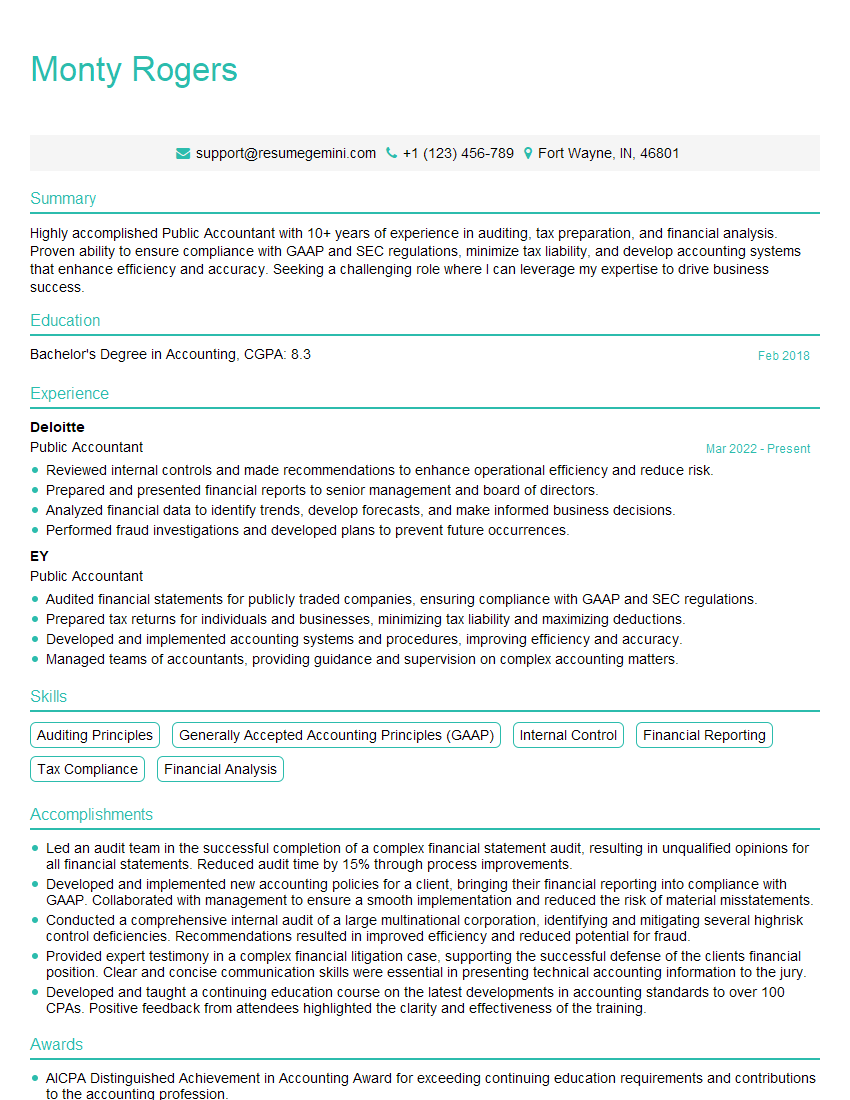
Public Accountant Resume Sample
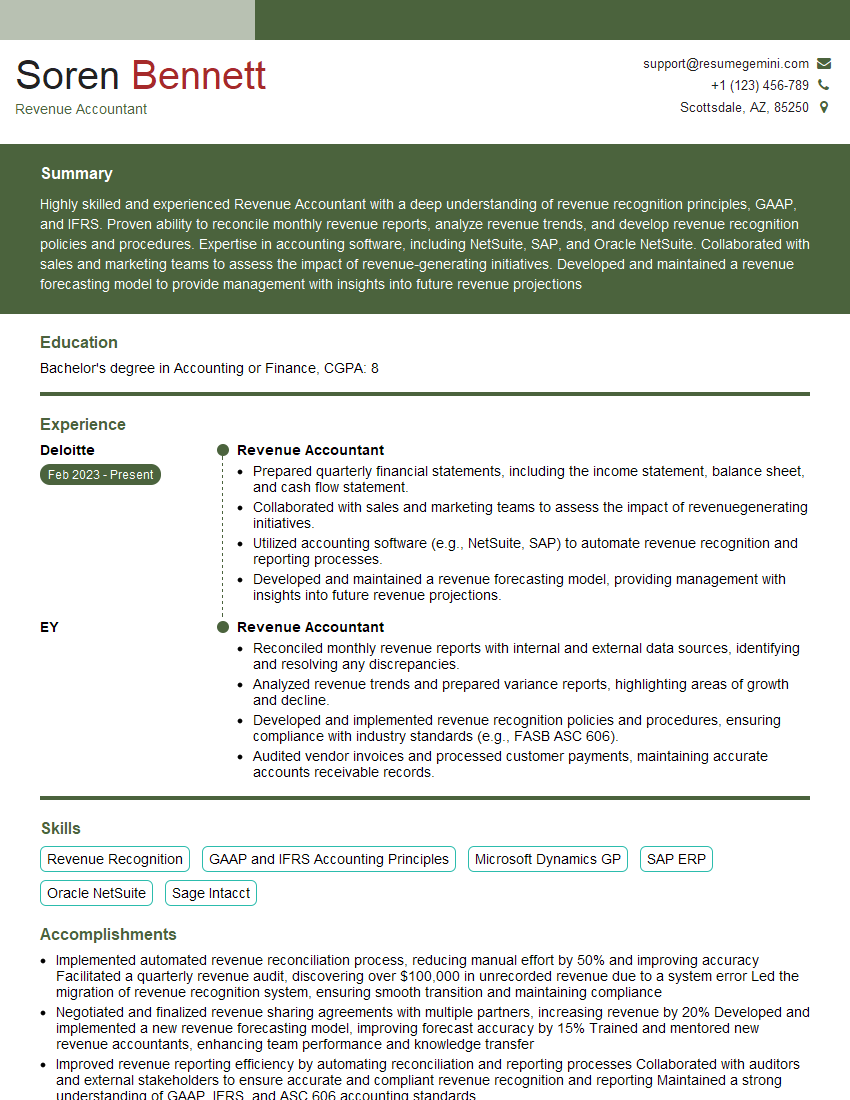
Revenue Accountant Resume Sample
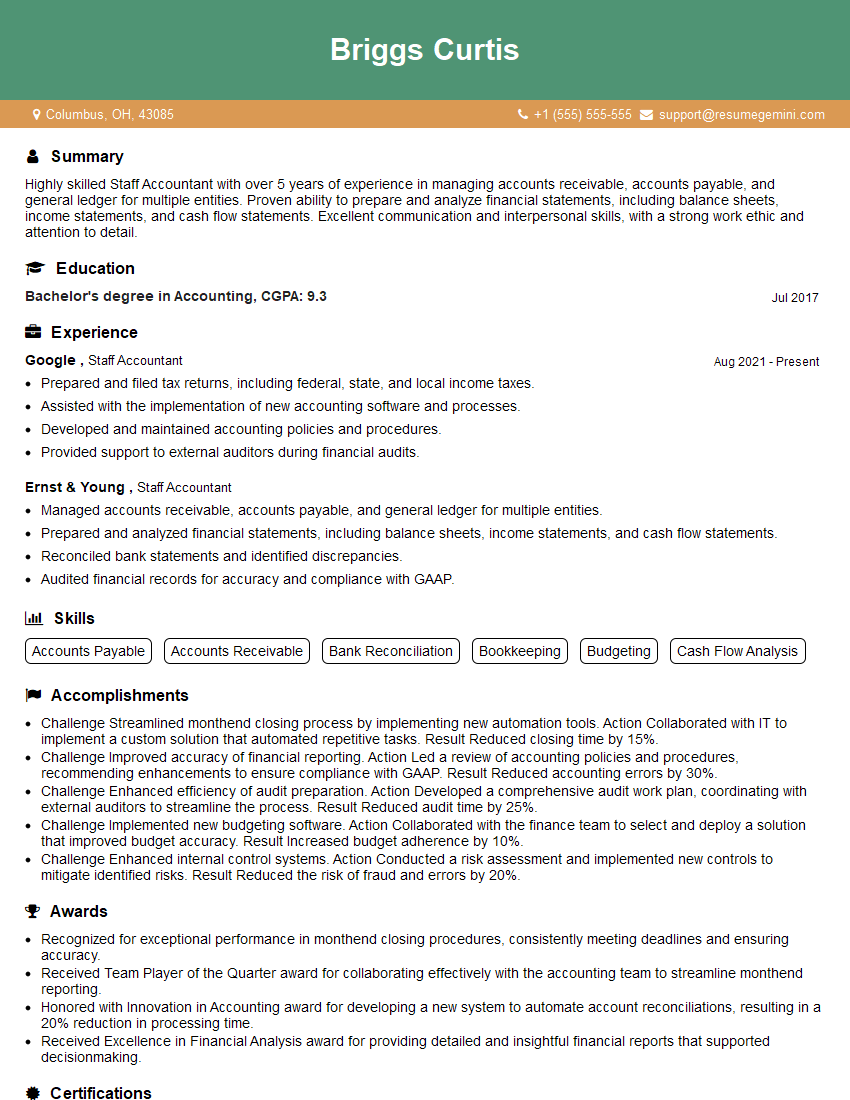
Staff Accountant Resume Sample
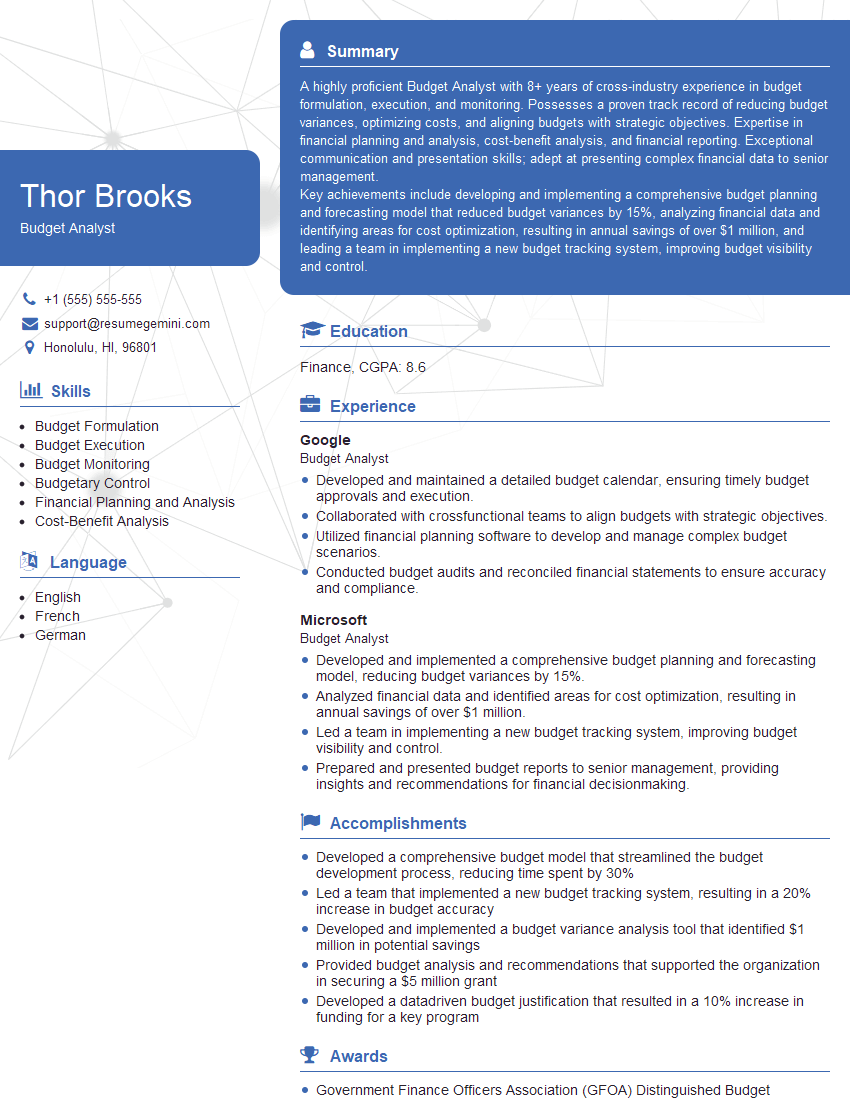
Budget Analyst Resume Sample
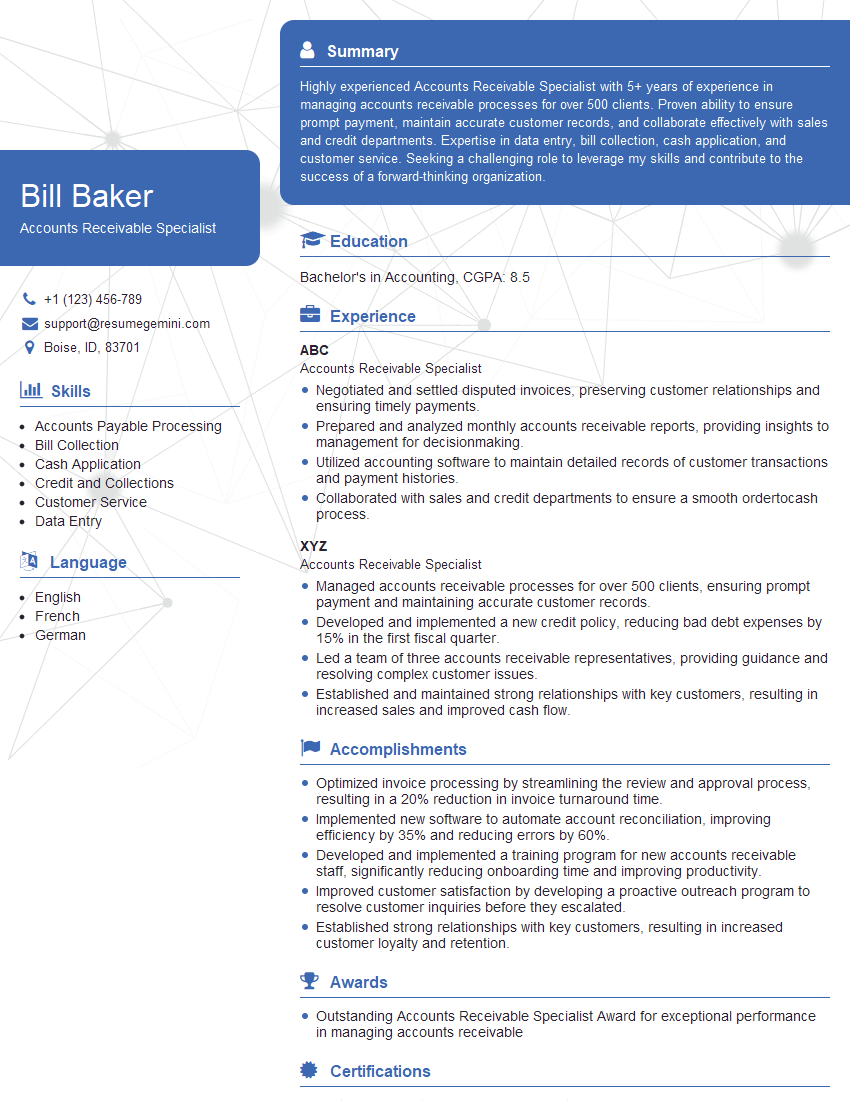
Accounts Receivable Specialist Resume Sample
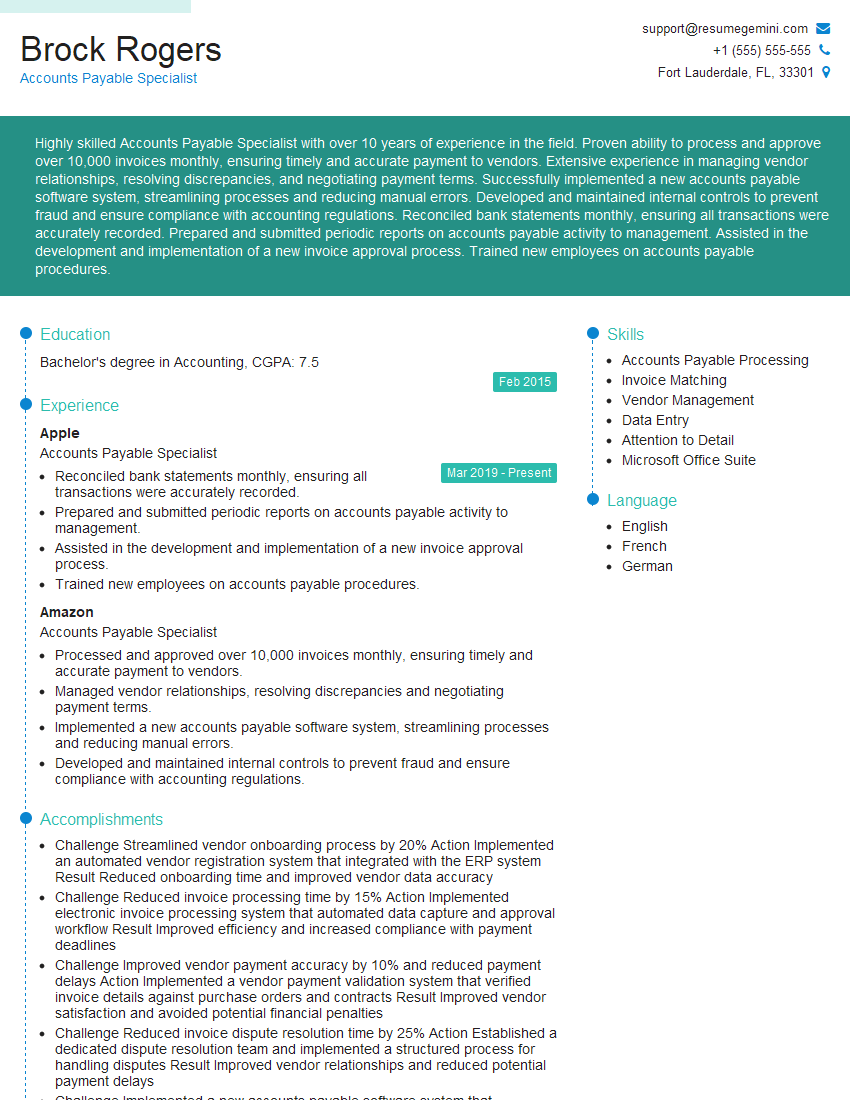
Accounts Payable Specialist Resume Sample
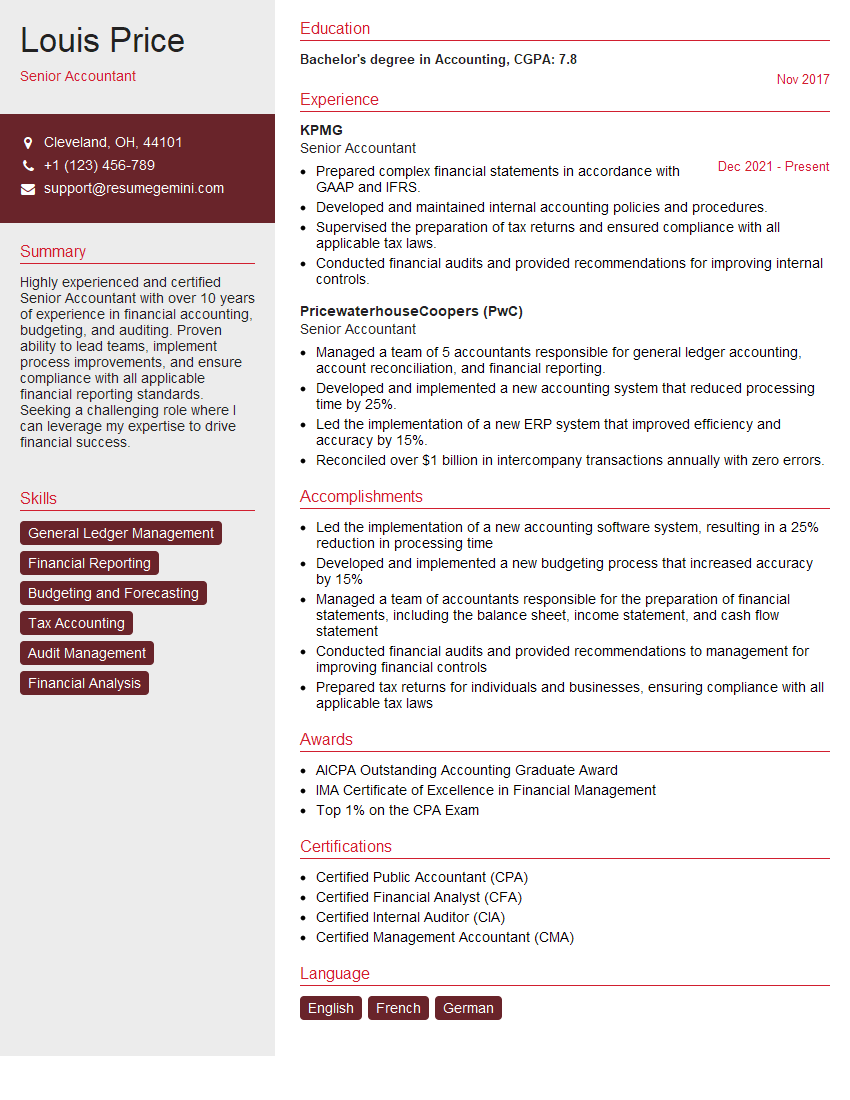
Senior Accountant Resume Sample
- Controller
- Financial Controller
- Auditing Manager
- Accountant
- Cost Accountant
- Financial Accountant
- Internal Auditor
- Tax Accountant
- Accounting Manager
- Accounting Supervisor
- Bookkeeper
- Financial Analyst
- Forensic Accountant
- General Ledger Accountant
- Payroll Accountant
- Public Accountant
- Revenue Accountant
- Staff Accountant
- Budget Analyst
- Accounts Receivable Specialist
- Accounts Payable Specialist
- Senior Accountant
Explore more articles
Users Rating of Our Blogs
Share Your Experience
We value your feedback! Please rate our content and share your thoughts (optional).
What Readers Say About Our Blog
Very informative content, great job.
good