The thought of an interview can be nerve-wracking, but the right preparation can make all the difference. Explore this comprehensive guide to Knowledge of aircraft design and manufacturing processes interview questions and gain the confidence you need to showcase your abilities and secure the role.
Questions Asked in Knowledge of aircraft design and manufacturing processes Interview
Q 1. Explain the differences between various aircraft configurations (e.g., high-wing, low-wing, canard).
Aircraft configurations significantly impact aerodynamic performance, stability, and structural design. Let’s explore three common types:
- High-wing: The wing is mounted above the fuselage. This configuration offers advantages like better ground clearance (easier for passengers to board and less susceptible to ground debris), improved stability (higher center of gravity), and enhanced short-field performance. Think of the Cessna 172 – a classic example of a high-wing aircraft.
- Low-wing: The wing is mounted below the fuselage. This configuration provides lower center of gravity, improving maneuverability and roll response. The aerodynamic center is generally closer to the center of gravity, enhancing stability during high-speed maneuvers. The Boeing 737 is a prime example of a low-wing design.
- Canard: A smaller, forward-mounted wing (the canard) precedes the main wing. This design provides improved longitudinal stability and control at high angles of attack. Canards can enhance maneuverability, but they can also create complex aerodynamic interactions with the main wing. The Rutan Voyager, a record-breaking aircraft, successfully utilized a canard configuration.
The choice of configuration depends on the intended mission profile – short take-off and landing capabilities, high-speed performance, maneuverability requirements – and other design constraints.
Q 2. Describe the process of Finite Element Analysis (FEA) in aircraft design.
Finite Element Analysis (FEA) is a crucial computational method used to predict the structural behavior of aircraft components under various loading conditions. Imagine dividing a complex aircraft part into millions of tiny elements; FEA analyzes how these elements interact under stress, strain, and other forces.
The process typically involves:
- Geometric Modeling: Creating a 3D model of the aircraft part using CAD software.
- Mesh Generation: Dividing the model into a mesh of smaller elements (tetrahedrons, hexahedrons, etc.). The mesh density impacts the accuracy of the results – finer meshes yield better accuracy but require more computational power.
- Material Property Definition: Assigning material properties (elastic modulus, Poisson’s ratio, yield strength, etc.) to each element based on the chosen material (aluminum alloy, composite, etc.).
- Loading and Boundary Conditions: Applying loads (forces, pressures, temperatures) and boundary conditions (fixed supports, constraints) to simulate real-world scenarios (flight loads, landing impact, etc.).
- Solution: Solving the system of equations that govern the element interactions to determine stress, strain, displacement, and other relevant parameters at each element.
- Post-processing: Analyzing the results to identify critical stress areas, potential failure points, and areas for structural optimization.
FEA allows engineers to virtually test designs, optimize weight, and ensure structural integrity before physical prototyping, drastically reducing development costs and time.
Q 3. What are the key considerations in designing for fatigue and fracture in aircraft structures?
Designing for fatigue and fracture is paramount in aircraft structures because repeated stress cycles during flight can lead to crack initiation and propagation, potentially causing catastrophic failure. Key considerations include:
- Material Selection: Using high-strength, fatigue-resistant materials like aluminum alloys, titanium alloys, and advanced composites. Careful consideration of material properties and their behavior under cyclic loading is crucial.
- Stress Analysis: Employing FEA and other analytical techniques to predict stress distributions under various flight conditions and identify critical stress concentration areas.
- Fatigue Testing: Conducting extensive fatigue tests on materials and components to determine their fatigue life (number of cycles to failure) under different loading conditions. This involves subjecting specimens to cyclic loading until failure and plotting an S-N curve (Stress-Number of cycles).
- Crack Propagation Analysis: Using fracture mechanics principles to assess the rate of crack growth under cyclic loading and predict the remaining life of the structure. Methods like linear elastic fracture mechanics (LEFM) are commonly used.
- Non-Destructive Testing (NDT): Implementing NDT techniques like ultrasonic inspection, radiography, and magnetic particle inspection to detect cracks and other flaws during manufacturing and in-service inspections.
- Design for Inspectability: Designing structures with readily accessible inspection points to enable easy and effective detection of cracks.
The goal is to ensure that the structure can withstand millions of flight cycles without experiencing fatigue failure, maintaining the safety and longevity of the aircraft.
Q 4. Explain the role of Computational Fluid Dynamics (CFD) in aircraft design.
Computational Fluid Dynamics (CFD) is a powerful tool used to simulate airflow around aircraft. Imagine a virtual wind tunnel where engineers can test various design modifications without building physical prototypes.
CFD helps to:
- Optimize Aerodynamic Performance: Analyze lift, drag, and pitching moment to optimize wing design, fuselage shape, and other aerodynamic components. CFD can reveal airflow separation, vortices, and other flow phenomena that impact performance.
- Reduce Drag: Identify areas of high drag and implement design changes to minimize it, improving fuel efficiency and overall performance.
- Improve Stability and Control: Analyze how the aircraft responds to various maneuvers and optimize control surfaces to ensure stability and handling qualities.
- Analyze Propulsion System Performance: Simulate the interaction of the airflow with engines and propellers to optimize their design and performance.
- Reduce Noise: Analyze noise generation sources and implement design changes to reduce noise pollution.
CFD provides valuable insights into the aerodynamic behavior of aircraft, enabling engineers to make informed design decisions and optimize performance before building and testing physical models.
Q 5. How do you ensure compliance with FAA/EASA regulations during aircraft design and manufacturing?
Compliance with FAA (Federal Aviation Administration) and EASA (European Union Aviation Safety Agency) regulations is paramount in aircraft design and manufacturing. This involves a rigorous process throughout the entire lifecycle:
- Design Certification: A comprehensive process involving detailed design reviews, analysis, and testing to demonstrate that the aircraft meets all safety requirements. This includes submitting extensive documentation to the regulatory agency.
- Manufacturing Processes: Implementing rigorous quality control procedures during manufacturing to ensure that the aircraft is built to the specified design and meets the required standards. This involves regular inspections and testing of components and assemblies.
- Testing and Flight Testing: Conducting extensive ground and flight tests to verify that the aircraft meets performance and safety requirements. This includes demonstrating the aircraft’s handling qualities, stability, and structural integrity.
- Maintenance and Airworthiness Directives: Establishing maintenance procedures and issuing airworthiness directives to address any safety concerns or potential issues that may arise during the aircraft’s operational life.
- Continuous Monitoring and Improvement: Continuously monitoring the aircraft’s performance and safety record and implementing improvements as needed.
Non-compliance can result in significant delays, penalties, and even grounding of the aircraft. A strong quality management system (QMS) is essential to ensure compliance throughout the entire design and manufacturing process.
Q 6. Describe your experience with different aircraft materials (e.g., aluminum alloys, composites, titanium).
My experience encompasses a wide range of aircraft materials, each with unique properties and applications:
- Aluminum Alloys: Widely used due to their high strength-to-weight ratio, good corrosion resistance, and relatively low cost. Various alloys (e.g., 2024, 7075) are selected based on specific strength and fatigue requirements. I’ve been involved in projects utilizing aluminum alloys in fuselage structures, wing skins, and other primary structural components.
- Composites: Offering exceptional strength-to-weight ratios and design flexibility, composites (e.g., carbon fiber reinforced polymers, CFRP) are increasingly utilized in aircraft structures. My experience includes working with composites in wing structures, tail sections, and interior components. I’ve contributed to projects focused on optimizing the layup of composite materials to maximize performance and minimize weight.
- Titanium Alloys: Known for their exceptional strength, high-temperature resistance, and corrosion resistance, titanium alloys are used in high-stress applications such as engine components, landing gear, and critical structural elements. I’ve worked on projects involving the design and analysis of titanium alloy components, focusing on ensuring the integrity of these critical parts.
The selection of material is a critical decision that involves considering various factors such as weight, strength, fatigue resistance, cost, and manufacturing process capabilities.
Q 7. What are the challenges of integrating new technologies (e.g., electric propulsion, autonomous systems) into aircraft design?
Integrating new technologies like electric propulsion and autonomous systems presents significant challenges in aircraft design:
- Electric Propulsion: The high energy density and weight of batteries pose significant challenges. Designers must optimize battery placement, manage thermal management, and ensure sufficient power for flight. Integrating electric motors and power electronics into the existing airframe also requires careful consideration of weight, space, and reliability.
- Autonomous Systems: Developing reliable and robust autonomous flight control systems requires advancements in sensor technology, artificial intelligence, and software engineering. Ensuring the safety and certification of autonomous systems is a major hurdle, requiring rigorous testing and validation.
- System Integration: Integrating these new technologies requires careful consideration of their interactions with existing aircraft systems. This necessitates a holistic approach involving careful design, extensive testing, and rigorous certification to ensure the overall safety and reliability of the aircraft.
- Certification and Regulatory Compliance: Obtaining regulatory approval for new technologies requires demonstrating compliance with stringent safety standards, which can be a time-consuming and complex process.
Overcoming these challenges requires collaborative efforts across various engineering disciplines, coupled with advancements in materials science, software engineering, and regulatory frameworks. Successful integration will revolutionize aviation, but it requires careful, methodical development and a commitment to safety.
Q 8. Explain the concept of weight optimization in aircraft design.
Weight optimization in aircraft design is paramount because every extra pound significantly impacts fuel efficiency, performance, and operational costs. It’s about achieving the optimal balance between structural integrity and minimizing weight. Think of it like a delicate balancing act – you need a strong structure to ensure safety, but every unnecessary ounce adds to fuel consumption, reducing range and profitability.
We achieve weight optimization through a multi-faceted approach:
- Material Selection: Using advanced lightweight materials like carbon fiber composites, titanium alloys, and aluminum lithium alloys replaces heavier steel or traditional aluminum. The choice depends on the specific component’s stress requirements and environmental conditions.
- Design Optimization: Employing sophisticated Computer-Aided Design (CAD) and Finite Element Analysis (FEA) tools allows engineers to simulate stress and strain on components. This helps identify areas where material can be removed without compromising strength. Think of it as sculpting the aircraft structure to remove unnecessary bulk.
- Component Integration: Combining multiple components into a single, lighter unit can reduce weight and complexity. For example, integrating fuel tanks into the wing structure instead of using separate tanks.
- Manufacturing Processes: Utilizing efficient manufacturing techniques like advanced machining processes or additive manufacturing (3D printing) can help reduce material waste and create lighter parts with complex geometries that are otherwise difficult to produce.
For instance, in a recent project, we used topology optimization software to reduce the weight of a wing rib by 15% without compromising its structural integrity. This translated to a significant reduction in fuel consumption for the aircraft.
Q 9. Discuss your experience with different manufacturing processes for aircraft components (e.g., machining, forging, casting, bonding).
My experience encompasses a wide range of aircraft component manufacturing processes. Each process has its own strengths and weaknesses, making the choice highly dependent on the component’s design, material, and required tolerances.
- Machining: I’ve extensively used CNC machining for creating precision parts from metal alloys. It offers high accuracy and surface finish, ideal for critical components like engine parts. However, it can be relatively slow and generate material waste.
- Forging: Forging is excellent for producing high-strength parts with complex shapes. I’ve worked with both open-die and closed-die forging to create components like landing gear parts, where high strength and durability are crucial. The process is energy-intensive but produces high-strength components.
- Casting: Casting, particularly investment casting, allows for intricate geometries and is cost-effective for mass production. I’ve used it for producing complex engine components and interior parts. However, post-processing is often required to achieve precise dimensions and surface finish.
- Bonding: Advanced adhesive bonding is critical in modern aircraft manufacturing, especially with composite structures. I’ve been involved in projects using various adhesive systems for joining composite panels and components. This method offers lightweight structures but requires careful control of environmental conditions and adhesive selection to ensure long-term durability and strength.
In one project, we successfully transitioned from a machined titanium component to a near-net-shape forged part, achieving a 20% weight reduction and cost savings by minimizing machining time and material waste.
Q 10. How do you manage risks and uncertainties in an aircraft development project?
Risk management in aircraft development is critical due to the high safety and cost implications. We utilize a structured approach that combines proactive identification, assessment, and mitigation of risks and uncertainties.
- Risk Identification: We use a combination of brainstorming sessions, Failure Modes and Effects Analysis (FMEA), and HAZOP (Hazard and Operability) studies to identify potential risks throughout the lifecycle, from design to manufacturing and operation.
- Risk Assessment: Each identified risk is assessed based on its likelihood and potential impact using qualitative or quantitative methods. This helps prioritize the risks that need immediate attention.
- Risk Mitigation: We develop mitigation strategies for each risk, ranging from design changes and process improvements to contingency planning and insurance. This might involve using redundant systems, implementing robust testing protocols, or developing detailed recovery plans.
- Monitoring and Review: The risks are continuously monitored and re-evaluated throughout the project. The risk register is updated regularly, and mitigation strategies are adjusted as needed.
For example, in a previous project, we identified a potential risk related to the supplier’s ability to deliver critical components on time. We mitigated this risk by engaging a secondary supplier, implementing robust supply chain management practices, and establishing clear communication protocols.
Q 11. Describe your understanding of aircraft certification processes.
Aircraft certification is a rigorous process designed to ensure the safety and airworthiness of an aircraft. It’s governed by national aviation authorities like the FAA (Federal Aviation Administration) in the US or EASA (European Union Aviation Safety Agency) in Europe. The process involves a series of stages:
- Design Certification: This phase involves demonstrating compliance with airworthiness regulations through extensive design reviews, analysis, and testing. It verifies that the aircraft meets all safety and performance requirements.
- Production Certification: This stage focuses on ensuring that the manufacturing processes consistently produce aircraft that conform to the approved design. This includes audits of manufacturing facilities and quality control systems.
- Flight Testing: A comprehensive flight test program demonstrates the aircraft’s performance and handling qualities. This includes various tests to verify flight characteristics and system functionality.
- Certification Review: Once all the required tests and documentation are completed, the certification authority reviews the evidence and issues a type certificate if the aircraft meets all the requirements.
The entire process is meticulously documented and audited, ensuring transparency and accountability. Failure to meet any of these requirements can result in delays or rejection of the certification.
Q 12. Explain the importance of quality control in aircraft manufacturing.
Quality control in aircraft manufacturing is not just important; it’s absolutely critical. The safety of passengers and crew depends on the flawless execution of every step of the process. Any defect can have catastrophic consequences.
Our quality control system incorporates several key elements:
- Material Inspection: Incoming materials are rigorously inspected to ensure they meet the specified quality standards. This involves both visual inspection and advanced testing methods.
- In-Process Inspection: Components and assemblies are inspected at various stages of manufacturing to detect defects early. This helps prevent the propagation of errors and reduces rework.
- Non-Destructive Testing (NDT): Methods like ultrasonic testing, radiography, and magnetic particle inspection are used to detect internal flaws in components without causing damage.
- Final Inspection: A thorough final inspection is performed on the completed aircraft to ensure all systems and components function correctly before delivery.
- Continuous Improvement: We employ statistical process control (SPC) and other data-driven approaches to monitor the effectiveness of our quality control system and identify areas for improvement.
A robust quality control system not only ensures safety but also enhances efficiency by minimizing rework, waste, and delays.
Q 13. What are the key performance indicators (KPIs) used to measure the success of an aircraft manufacturing process?
Key Performance Indicators (KPIs) in aircraft manufacturing are crucial for measuring the effectiveness and efficiency of the process. They provide insights into areas requiring improvement and help track progress towards goals.
- On-Time Delivery: Meeting delivery schedules is crucial for maintaining project timelines and customer satisfaction.
- Production Rate/Throughput: This measures the efficiency of the manufacturing process in terms of the number of aircraft or components produced per unit of time.
- Defect Rate: This KPI tracks the frequency of defects in the manufacturing process. A low defect rate indicates high quality.
- Production Cost: Monitoring production costs helps identify areas for cost reduction and improvement of efficiency.
- Material Waste: Minimizing material waste is essential for cost savings and environmental sustainability.
- Safety Incidents: A low rate of safety incidents reflects a safe and efficient working environment.
- Customer Satisfaction: Gathering feedback from customers helps identify areas where the product or service can be improved.
Regular monitoring of these KPIs allows us to make data-driven decisions, identify bottlenecks, and continuously improve the efficiency and effectiveness of our manufacturing process.
Q 14. How do you handle design changes and revisions during the aircraft development cycle?
Design changes and revisions are inevitable in aircraft development. A structured approach is necessary to manage these changes effectively while ensuring the integrity and safety of the aircraft.
- Change Request System: A formal system for submitting, reviewing, and approving design changes is essential. This includes documenting the rationale for the change, its potential impact, and the necessary modifications.
- Impact Assessment: Each proposed change undergoes a thorough impact assessment to determine its effects on other parts of the design, manufacturing processes, and certification requirements.
- Configuration Management: A robust configuration management system keeps track of all design changes and ensures that all stakeholders have access to the latest approved drawings and specifications.
- Verification and Validation: Any design change requires verification and validation to ensure it meets the required performance and safety standards. This may involve additional testing or analysis.
- Documentation: Meticulous documentation is critical throughout the change management process. This ensures traceability and facilitates future audits.
For example, if a design change necessitates modifying a component, we’ll update the drawings, manufacturing instructions, and testing procedures accordingly. We’ll also assess the impact on related systems and ensure all necessary approvals are obtained before implementing the change.
Q 15. Explain your experience with different CAD/CAM software packages.
My experience with CAD/CAM software spans over a decade, encompassing various packages crucial to aircraft design and manufacturing. I’m proficient in industry-standard software like CATIA, NX, and SolidWorks. CATIA, for example, has been instrumental in designing complex aircraft components, from fuselage sections to wing ribs, leveraging its powerful surface modeling and assembly capabilities. NX’s strengths lie in its robust machining capabilities, allowing for optimized toolpaths and efficient CNC programming. SolidWorks’ user-friendly interface has proven beneficial for rapid prototyping and design iterations, particularly during the initial conceptual phases of a project. Beyond the core design and manufacturing aspects, I’ve also utilized simulation software integrated with these packages, such as ANSYS and Abaqus, to conduct stress analysis and predict component behavior under various flight conditions. This integrated approach ensures optimal design and manufacturability from the outset.
For instance, during a recent project involving the design of a novel winglet, I utilized CATIA for the initial conceptual design and aerodynamic analysis using integrated CFD tools. Subsequently, I leveraged NX to generate the optimized toolpaths for CNC machining of the winglet, minimizing material waste and production time. This process exemplifies how a synergistic use of various CAD/CAM tools enhances efficiency and precision in aircraft development.
Career Expert Tips:
- Ace those interviews! Prepare effectively by reviewing the Top 50 Most Common Interview Questions on ResumeGemini.
- Navigate your job search with confidence! Explore a wide range of Career Tips on ResumeGemini. Learn about common challenges and recommendations to overcome them.
- Craft the perfect resume! Master the Art of Resume Writing with ResumeGemini’s guide. Showcase your unique qualifications and achievements effectively.
- Don’t miss out on holiday savings! Build your dream resume with ResumeGemini’s ATS optimized templates.
Q 16. Describe your experience with supply chain management in the aerospace industry.
My experience in aerospace supply chain management emphasizes collaboration and risk mitigation. The aerospace industry is characterized by intricate, global supply chains with stringent quality and regulatory requirements. Effective management necessitates a deep understanding of sourcing strategies, supplier relationship management, and logistics. I have spearheaded initiatives to optimize supplier selection based on factors such as cost, quality, delivery reliability, and technological capabilities. This often involves rigorous supplier audits and performance monitoring using key performance indicators (KPIs) to ensure compliance with industry standards like AS9100.
One notable project involved streamlining the procurement of titanium alloys for a new aircraft engine component. By engaging directly with key suppliers and implementing a just-in-time inventory management system, we reduced lead times by 20% and minimized inventory holding costs. This also involved navigating potential supply chain disruptions by diversifying sourcing and developing contingency plans to maintain production schedules, a crucial factor considering the high cost and extended lead times typical in the aerospace industry.
Q 17. How do you ensure efficient collaboration between engineering, manufacturing, and procurement teams?
Efficient collaboration between engineering, manufacturing, and procurement is paramount for successful aircraft development. I foster this by employing several key strategies. Firstly, I advocate for open communication channels, leveraging tools like collaborative design platforms and regular cross-functional meetings. These platforms allow for real-time design updates, feedback sharing, and issue tracking. Secondly, I believe in establishing clear roles and responsibilities, ensuring each team understands its contribution to the overall project objectives. A well-defined work breakdown structure (WBS) is essential for this purpose.
Thirdly, I prioritize the use of standardized processes and documentation, reducing ambiguities and ensuring consistent data flow across teams. For instance, implementing a robust design review process ensures that designs are thoroughly vetted by all relevant stakeholders before moving to the manufacturing phase. Finally, I champion a culture of mutual respect and collaboration, actively encouraging the exchange of ideas and constructive feedback between teams. In one project, a potential manufacturing defect was identified early in the design phase through close collaboration between the engineering and manufacturing teams. This proactive approach averted costly rework and delays later in the production process.
Q 18. How do you troubleshoot and resolve issues related to aircraft design or manufacturing?
Troubleshooting and resolving issues in aircraft design and manufacturing requires a systematic approach. My methodology involves a structured problem-solving process, beginning with clear problem definition and data gathering. This includes analyzing technical drawings, manufacturing records, and testing results to pinpoint the root cause. I then utilize various analytical tools, such as root cause analysis (RCA) techniques (like the 5 Whys) and fault tree analysis (FTA), to identify potential causes and their interdependencies.
Once the root cause is identified, a corrective action plan is developed and implemented. This often involves engineering design modifications, process improvements, or supplier corrective actions. Critical to this process is rigorous verification and validation of the implemented solutions to ensure that the problem has been effectively addressed and won’t reoccur. A recent example involved a manufacturing defect in a composite part. By utilizing root cause analysis, we determined the problem stemmed from an issue with the curing process. We implemented corrective actions, including adjustments to the curing parameters and improved process monitoring, resolving the defect and preventing future occurrences.
Q 19. Describe your experience with aircraft testing and validation.
My experience with aircraft testing and validation encompasses various stages, from component testing to full-scale flight testing. This involves meticulous planning and execution of tests, adhering to stringent safety protocols and regulatory compliance. I’ve been involved in designing and conducting various tests, including static structural tests, fatigue tests, environmental tests, and flight tests. Data acquisition and analysis are integral aspects, leveraging specialized software and instrumentation to collect, process, and interpret test data. Detailed test reports are meticulously documented, ensuring traceability and compliance with relevant certification standards.
During a recent project involving a new wing design, I led a team responsible for designing and executing a comprehensive series of static and fatigue tests. These tests were crucial for validating the wing’s structural integrity and ensuring it could withstand the stresses encountered during flight. The results were used to verify the design’s compliance with regulatory requirements and contribute to the aircraft’s overall airworthiness certification.
Q 20. What are the key environmental considerations in aircraft design and manufacturing?
Environmental considerations are increasingly critical in aircraft design and manufacturing. This encompasses minimizing the environmental impact throughout the entire lifecycle, from material selection to end-of-life disposal. Key areas include reducing carbon emissions through fuel-efficient designs and the use of lighter-weight, sustainable materials. Noise pollution is another significant factor, requiring the incorporation of noise reduction technologies during the design phase. Moreover, waste generation during manufacturing must be minimized through efficient processes and responsible material handling. Compliance with environmental regulations, such as those pertaining to hazardous waste disposal, is also paramount.
For example, the increasing use of composite materials in aircraft construction reduces weight, leading to lower fuel consumption and reduced carbon emissions. However, the manufacturing processes involved in working with composites must also consider the potential environmental impacts of the chemicals used and the efficient recycling of composite scraps. Careful consideration of these environmental factors throughout the entire design and manufacturing process is fundamental to developing sustainable aircraft.
Q 21. Explain the concept of airworthiness and its importance.
Airworthiness refers to the condition of an aircraft being safe and suitable for flight. It’s a crucial concept encompassing all aspects related to the aircraft’s design, manufacturing, maintenance, and operation. Airworthiness certification is a legally mandated process conducted by aviation authorities (like the FAA or EASA) to verify that an aircraft meets rigorous safety standards. This involves a thorough review of design documentation, manufacturing processes, and operational procedures. Extensive testing and inspections are carried out to ensure compliance with airworthiness regulations, guaranteeing the safety of passengers and crew.
The importance of airworthiness cannot be overstated. It ensures public safety by minimizing the risk of accidents caused by design flaws or inadequate maintenance. The certification process establishes a baseline for acceptable safety levels, setting standards that aircraft manufacturers and operators must meet. Furthermore, airworthiness standards contribute to maintaining public confidence in air travel, which is vital for the aerospace industry’s success.
Q 22. Describe different types of aircraft engines and their operating principles.
Aircraft engines are the heart of flight, and several types exist, each with unique operating principles. The most common are:
- Turboprop Engines: These engines use a gas turbine to drive a propeller. The turbine combusts fuel and air, expanding the hot gases to spin the turbine, which in turn drives the propeller. They’re efficient at lower speeds and are often found in smaller aircraft.
- Turbofan Engines: These are the workhorses of modern airliners. A large fan at the front draws in air, a portion of which bypasses the core engine, while the rest is compressed, mixed with fuel, and burned in the combustion chamber. The expanding gases spin the turbine, driving both the fan and the core engine. The high bypass ratio of modern turbofans provides excellent fuel efficiency.
- Turbojet Engines: These engines are simpler than turbofans, with all the air passing through the core engine. They are less efficient than turbofans but excel at high speeds, making them suitable for supersonic aircraft (though less common now).
- Ramjet Engines: These engines rely on the forward motion of the aircraft to compress incoming air, eliminating the need for a compressor. They require extremely high speeds to operate efficiently and are primarily used in missiles and experimental high-speed aircraft.
- Rocket Engines: These engines do not require atmospheric oxygen; they carry their own oxidizer. They produce immense thrust, making them suitable for space launch vehicles and some experimental aircraft.
The operating principle of most aircraft engines centers around Newton’s third law of motion – for every action, there’s an equal and opposite reaction. The high-velocity exhaust gases expelled from the engine create thrust, propelling the aircraft forward.
Q 23. What are the challenges associated with designing for extreme environments (e.g., high altitude, low temperature)?
Designing for extreme environments presents significant challenges. At high altitudes, the air is thin, meaning reduced oxygen for combustion and lower air pressure affecting engine performance. Low temperatures can cause material embrittlement, reduced fuel efficiency, and problems with lubrication. Solutions include:
- Material Selection: Utilizing specialized alloys and composites that retain strength and flexibility at extreme temperatures and altitudes. For example, titanium alloys are frequently used for high-temperature applications.
- Engine Design Modifications: Adapting engines to operate efficiently at lower air densities might involve advanced compressor designs or specialized combustion systems.
- Thermal Management: Incorporating advanced insulation and cooling systems to protect critical components from extreme temperatures. This may include specialized coatings or active cooling systems.
- Redundancy and Fail-Safe Systems: Building in multiple layers of safety to handle potential failures in extreme conditions, ensuring critical systems function even with partial component degradation.
A practical example is the design of aircraft intended for high-altitude research or military operations. These often incorporate advanced thermal management systems, redundant power sources, and specialized materials to cope with the challenges of the rarified atmosphere and extreme temperatures.
Q 24. How do you maintain a high level of accuracy and precision in aircraft manufacturing?
Maintaining accuracy and precision in aircraft manufacturing is paramount for safety and performance. This is achieved through a combination of advanced technologies and rigorous quality control processes.
- Computer-Aided Design (CAD) and Computer-Aided Manufacturing (CAM): These systems allow for highly precise design and manufacturing, reducing human error. CAD models are used to generate precise instructions for CNC machines, ensuring parts are manufactured to exact specifications.
- Advanced Manufacturing Techniques: Techniques like 3D printing (additive manufacturing) and laser cutting offer unparalleled precision in creating complex shapes and geometries.
- Non-Destructive Testing (NDT): Techniques like ultrasonic testing, radiography, and magnetic particle inspection are used to detect internal flaws and imperfections in materials and components before assembly.
- Tight Tolerances and Specifications: Aircraft manufacturing utilizes incredibly tight tolerances, meaning parts must be within incredibly small dimensions of the specified design. Any deviation could compromise structural integrity or aerodynamic performance.
- Rigorous Quality Control: Every step of the manufacturing process undergoes rigorous quality inspections. This includes checks on raw materials, during processing, and on the final product. Statistical Process Control (SPC) is widely employed to monitor and control variations in the manufacturing process.
For instance, a single component might require multiple NDT checks throughout the manufacturing process to ensure its integrity. Any deviation from specified tolerances might lead to the rejection of the part, underscoring the commitment to precision.
Q 25. Explain your experience with different types of aircraft structures (e.g., monocoque, semi-monocoque, truss).
Aircraft structures are designed to withstand immense stress during flight. Different structures offer varying advantages:
- Monocoque Structure: This design uses a thin, strong outer shell to bear the majority of the loads. It’s lightweight but susceptible to buckling. Think of a soda can – the thin metal shell provides all the strength.
- Semi-Monocoque Structure: This is a more robust design incorporating both a stressed skin and internal framing (stringers and ribs) to provide additional strength and stiffness. This is a common design for airliners.
- Truss Structure: This uses a network of interconnected beams and members to distribute loads. It’s highly efficient for distributing stresses, but can be less aerodynamically efficient. Early aircraft often featured truss-like designs.
My experience includes working on aircraft designs employing all three structures. The choice depends heavily on factors like aircraft size, mission requirements, and desired performance characteristics. For instance, a high-performance fighter jet may benefit from a monocoque or semi-monocoque design for its aerodynamic efficiency, whereas a larger cargo aircraft may utilize a semi-monocoque structure that provides robustness without the excessive weight.
Q 26. What are the safety protocols you follow in aircraft design and manufacturing?
Safety is paramount in aircraft design and manufacturing. We adhere to strict safety protocols throughout the entire lifecycle of an aircraft, from design to disposal. This includes:
- Redundancy and Fail-Safe Systems: Critical systems are designed with redundancy; if one component fails, a backup system takes over. Fail-safe mechanisms prevent catastrophic failures.
- Extensive Testing and Certification: Aircraft designs undergo rigorous testing, both in simulations and real-world flight tests. Independent certification authorities verify that all safety standards are met before an aircraft is certified for flight.
- Strict Adherence to Standards and Regulations: All designs and manufacturing processes must adhere to stringent international and national regulations and standards, such as those set by the FAA or EASA.
- Risk Assessment and Mitigation: Potential hazards are identified and assessed during the design phase, and mitigation strategies are implemented to minimize risks.
- Quality Control and Inspection: Stringent quality control measures, including inspections and non-destructive testing, are crucial throughout the manufacturing process.
A critical example is the implementation of fail-safe mechanisms in flight control systems. Multiple actuators and redundant control surfaces ensure that even if one component fails, the pilot can maintain control of the aircraft.
Q 27. Describe your experience with project management methodologies in the aerospace industry.
In the aerospace industry, project management requires a structured approach. I’ve extensive experience with Agile and Waterfall methodologies.
- Waterfall: This is a sequential approach, with each phase completed before moving to the next. It’s suitable for large, complex projects with well-defined requirements. I’ve used this extensively for managing large-scale aircraft development programs where strict adherence to timelines and specifications is critical.
- Agile: This iterative approach focuses on delivering functional increments, allowing for flexibility and adaptation to changing requirements. It is better suited for smaller projects or phases within a larger project where iterative development is beneficial. I’ve successfully applied this in specific modules of aircraft design and development, allowing for greater flexibility and faster response to changes in design or testing results.
Effective project management in aerospace necessitates meticulous planning, risk assessment, strong communication, and close collaboration with multiple teams (engineering, manufacturing, testing). I use tools like Gantt charts, critical path analysis, and risk management matrices to track progress, manage resources, and mitigate potential delays.
Q 28. How do you stay updated with the latest advancements in aircraft design and manufacturing?
Staying current in the rapidly evolving field of aircraft design and manufacturing is critical. I actively employ several strategies:
- Professional Organizations: Active membership in organizations like AIAA (American Institute of Aeronautics and Astronautics) provides access to publications, conferences, and networking opportunities with leading experts.
- Industry Publications and Journals: I regularly read industry-specific journals and publications to stay informed on the latest advancements and research.
- Conferences and Workshops: Attending conferences and workshops allows me to learn about new technologies and network with colleagues.
- Online Courses and Webinars: Numerous online resources offer continuing education opportunities in specialized areas.
- Collaboration and Networking: Engaging with colleagues and experts within the field helps me stay up-to-date on current projects and challenges.
For example, I recently completed an online course on advanced composite materials, a crucial area for future aircraft development, and I am actively involved in discussions with industry peers about the potential of electric and hybrid-electric propulsion systems. Keeping abreast of these changes allows me to bring the latest innovations into my work and contribute to the development of more efficient and sustainable aircraft.
Key Topics to Learn for Aircraft Design and Manufacturing Processes Interviews
- Aerodynamics: Understanding lift, drag, thrust, and weight; applying principles to aircraft design optimization and performance analysis. Consider practical applications like airfoil selection and high-lift devices.
- Structural Design: Familiarize yourself with stress analysis, material selection (aluminum alloys, composites, etc.), fatigue and fracture mechanics, and failure modes. Think about how these principles translate into designing lightweight yet strong airframes.
- Manufacturing Processes: Gain a strong grasp of techniques like machining, forging, casting, composite layup, and joining methods (riveting, bonding, welding). Be prepared to discuss the trade-offs between different manufacturing approaches in terms of cost, speed, and quality.
- Systems Engineering: Understand the integration of various aircraft systems (flight controls, avionics, powerplants) and how they interact. Consider the challenges of system compatibility and redundancy.
- Quality Control and Certification: Learn about industry standards and regulations (e.g., FAA, EASA) relevant to aircraft manufacturing and testing. Understand the importance of quality assurance throughout the design and manufacturing process.
- Computer-Aided Design (CAD) and Manufacturing (CAM): Develop proficiency in using relevant software for design, modeling, and simulation. Be ready to discuss your experience with specific CAD/CAM tools.
- Project Management in Aerospace: Understand the complexities of managing large-scale aerospace projects, including scheduling, budgeting, risk management, and team collaboration.
Next Steps
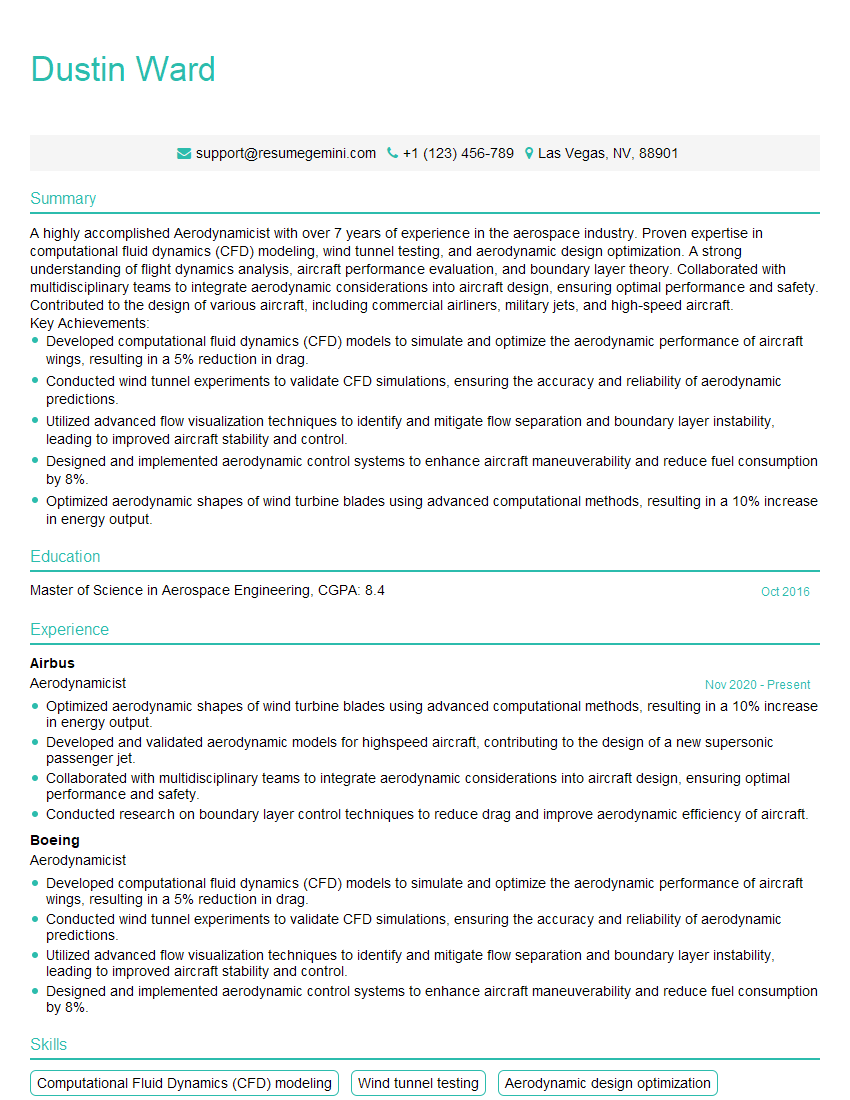
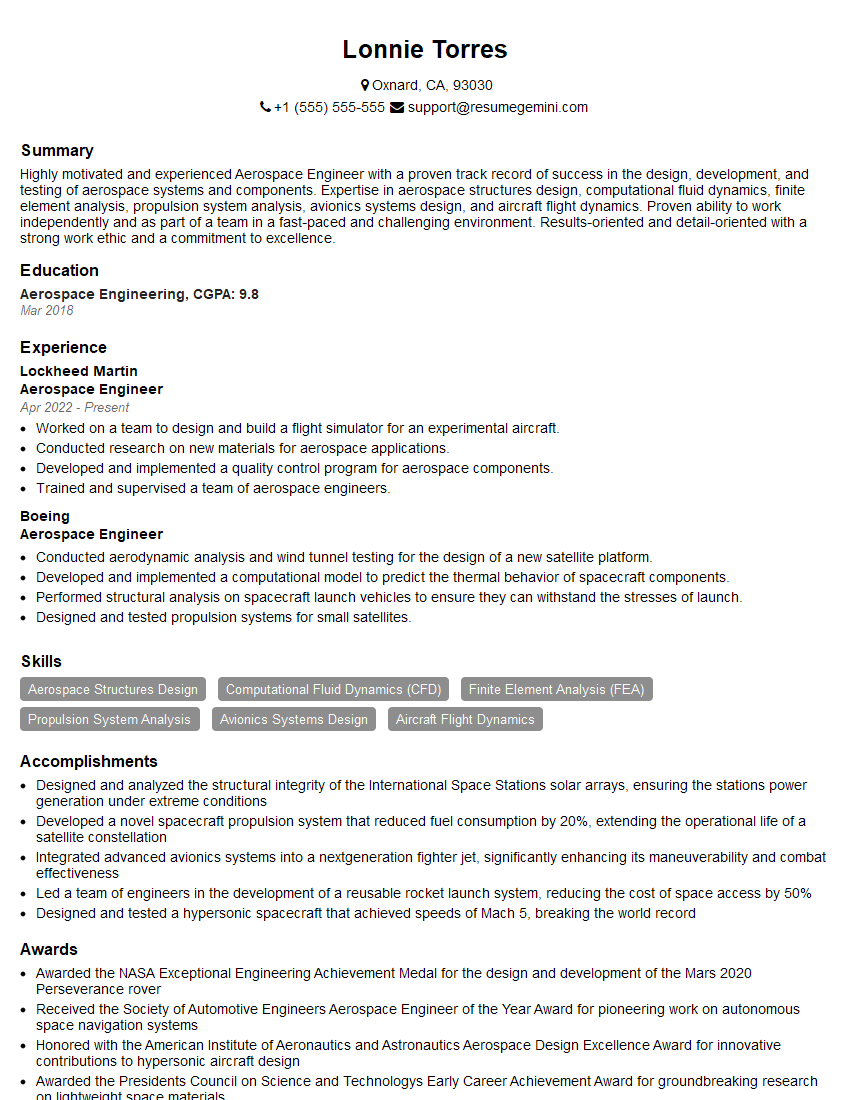
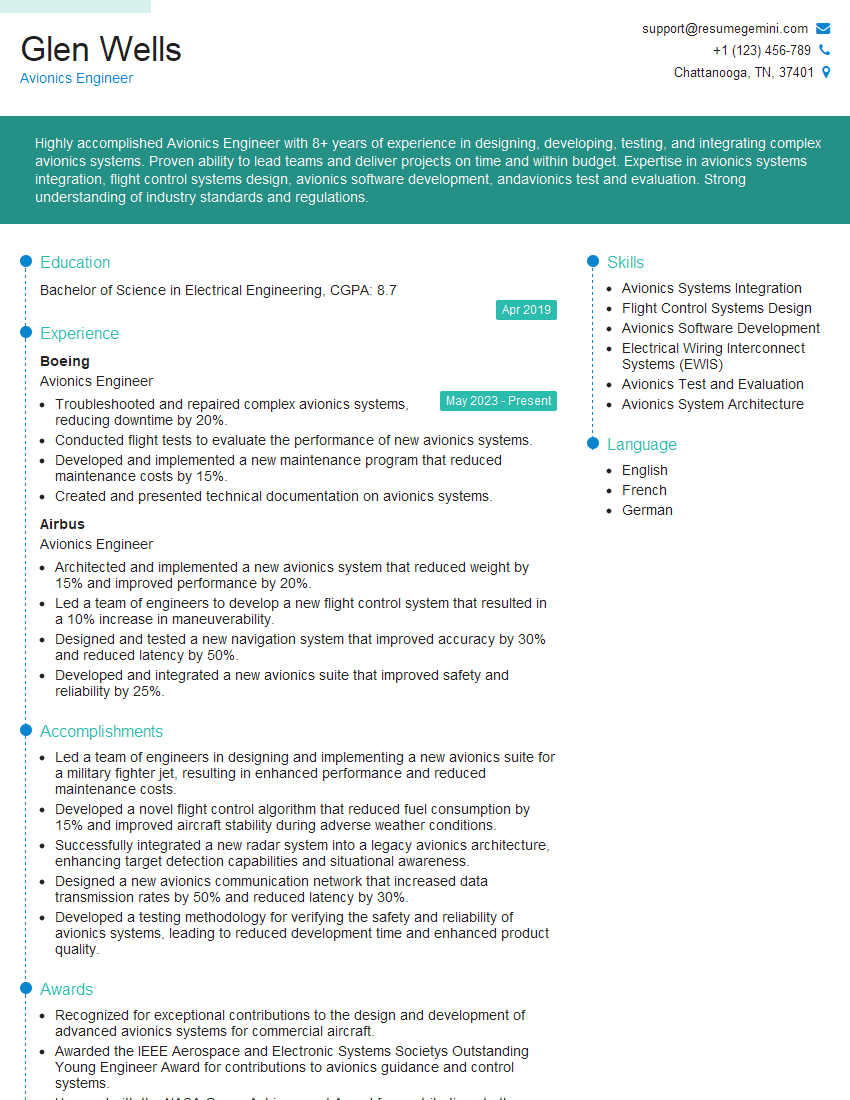
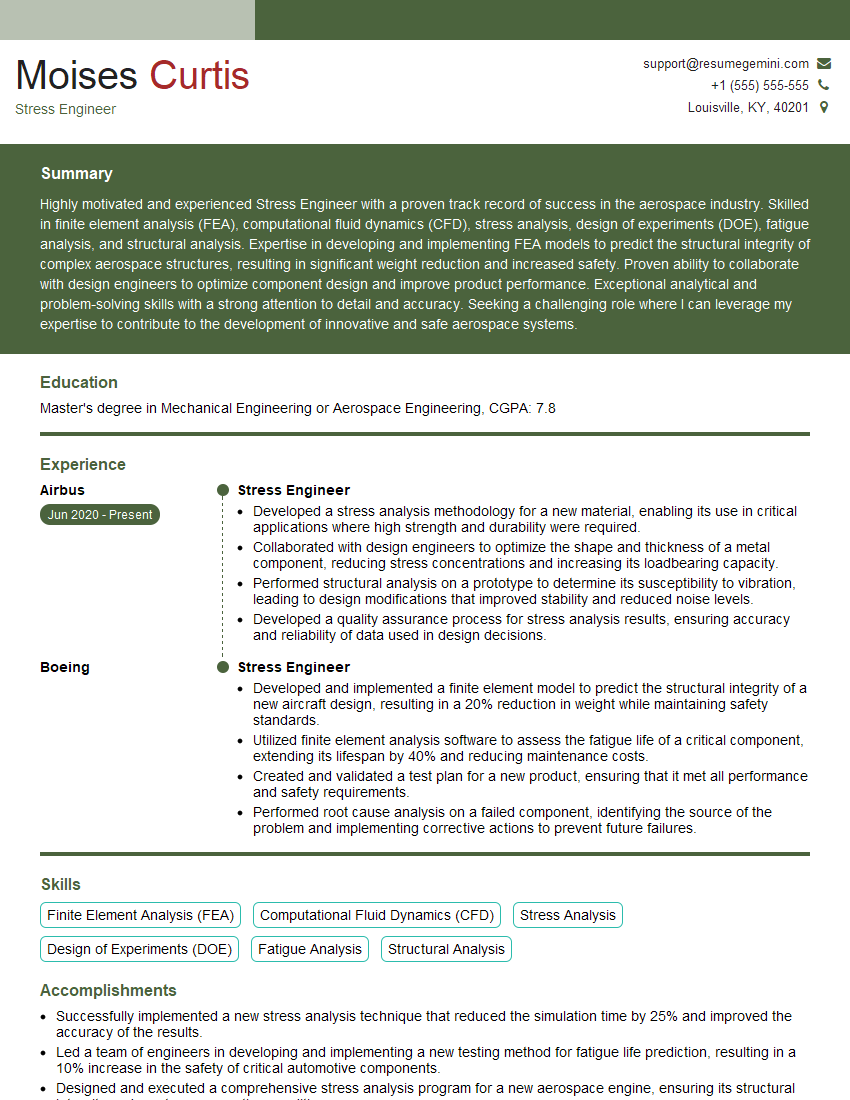
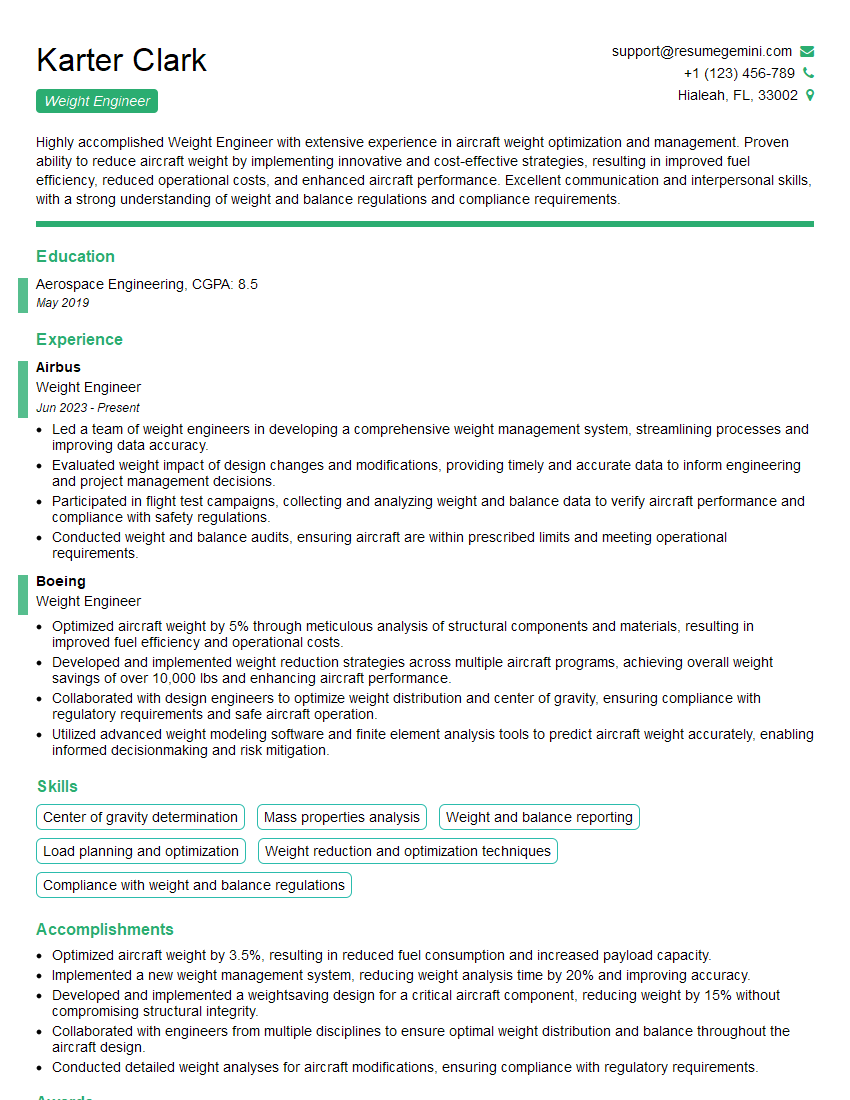
Mastering aircraft design and manufacturing processes is crucial for career advancement in the aerospace industry. It demonstrates a deep understanding of the technical challenges and allows you to contribute meaningfully to innovative projects. To significantly boost your job prospects, creating an ATS-friendly resume is essential. This ensures your qualifications are effectively highlighted to potential employers. ResumeGemini is a trusted resource to help you build a compelling and professional resume tailored to your skills and experience. Examples of resumes specifically crafted for candidates with expertise in aircraft design and manufacturing processes are available to guide you through the process.
Explore more articles
Users Rating of Our Blogs
Share Your Experience
We value your feedback! Please rate our content and share your thoughts (optional).
What Readers Say About Our Blog
Very informative content, great job.
good