The right preparation can turn an interview into an opportunity to showcase your expertise. This guide to Knowledge of basic math and geometry interview questions is your ultimate resource, providing key insights and tips to help you ace your responses and stand out as a top candidate.
Questions Asked in Knowledge of basic math and geometry Interview
Q 1. What is the Pythagorean theorem and how is it applied?
The Pythagorean theorem is a fundamental concept in geometry that describes the relationship between the sides of a right-angled triangle. It states that the square of the hypotenuse (the side opposite the right angle) is equal to the sum of the squares of the other two sides (called legs or cathetus).
Mathematically, it’s represented as: a² + b² = c², where ‘a’ and ‘b’ are the lengths of the legs, and ‘c’ is the length of the hypotenuse.
Application: The theorem has countless applications in various fields. For example, in construction, it’s used to ensure that walls are perfectly square. In navigation, it helps calculate distances. Even in computer graphics, it’s crucial for calculating distances between points on a screen.
Example: Imagine you’re building a shed and want to ensure the corner is a perfect right angle. You measure one side (a) as 3 meters and the other side (b) as 4 meters. Using the Pythagorean theorem, you calculate the hypotenuse (c): c² = 3² + 4² = 9 + 16 = 25, so c = √25 = 5 meters. If the diagonal measures 5 meters, the corner is a perfect 90-degree angle.
Q 2. Explain the concept of slope and its significance.
The slope of a line represents its steepness or incline. It’s a measure of how much the vertical position (y-coordinate) changes for every unit change in the horizontal position (x-coordinate). A higher slope indicates a steeper line.
Mathematically, the slope (m) is calculated as: m = (y₂ - y₁) / (x₂ - x₁), where (x₁, y₁) and (x₂, y₂) are two distinct points on the line.
Significance: Slope is crucial in many areas. In engineering, it’s used to calculate the gradient of a road or the angle of a ramp. In finance, it helps analyze the trend of stock prices over time. In physics, it represents the rate of change of a quantity.
Example: Consider two points on a line: (1, 2) and (3, 6). The slope is: m = (6 - 2) / (3 - 1) = 4 / 2 = 2. This means for every 1 unit increase in the x-direction, the y-value increases by 2 units.
Q 3. Calculate the area of a triangle given its base and height.
The area of a triangle is calculated using the formula: Area = (1/2) * base * height
Where ‘base’ is the length of the triangle’s base and ‘height’ is the perpendicular distance from the base to the opposite vertex (the highest point).
Example: If a triangle has a base of 6 cm and a height of 4 cm, its area is: Area = (1/2) * 6 cm * 4 cm = 12 cm²
Q 4. What are the different types of angles and their properties?
Angles are classified based on their measures:
- Acute Angle: Measures less than 90 degrees.
- Right Angle: Measures exactly 90 degrees.
- Obtuse Angle: Measures greater than 90 degrees but less than 180 degrees.
- Straight Angle: Measures exactly 180 degrees (a straight line).
- Reflex Angle: Measures greater than 180 degrees but less than 360 degrees.
- Full Angle: Measures exactly 360 degrees (a full circle).
Properties: The sum of angles in a triangle always equals 180 degrees. Adjacent angles on a straight line add up to 180 degrees. Vertically opposite angles (angles opposite each other when two lines intersect) are equal.
Q 5. How do you solve a system of linear equations?
A system of linear equations involves two or more equations with the same variables. Solving the system means finding values for the variables that satisfy all equations simultaneously.
There are several methods to solve these systems:
- Substitution Method: Solve one equation for one variable and substitute the expression into the other equation.
- Elimination Method: Multiply equations by constants to make the coefficients of one variable opposites, then add the equations to eliminate that variable.
- Graphical Method: Graph each equation and find the point of intersection (if it exists).
Example (Elimination Method):
2x + y = 7
x - y = 2
Adding the two equations eliminates ‘y’: 3x = 9, so x = 3. Substituting x = 3 into either original equation gives y = 1. The solution is x = 3, y = 1.
Q 6. What is the formula for calculating the volume of a sphere?
The formula for calculating the volume of a sphere is:
V = (4/3)πr³
Where ‘V’ is the volume, ‘r’ is the radius of the sphere, and ‘π’ (pi) is approximately 3.14159.
Q 7. Explain the concept of a derivative and its applications.
In calculus, the derivative of a function measures its instantaneous rate of change at any given point. It essentially tells us the slope of the tangent line to the function’s graph at that point.
Applications: Derivatives have numerous applications in various fields:
- Physics: Finding velocity and acceleration from displacement functions.
- Engineering: Optimizing designs and minimizing costs.
- Economics: Determining marginal cost, revenue, and profit.
- Machine Learning: Used in optimization algorithms to find the minimum or maximum of a function.
Example: If you have a function representing the position of an object over time, the derivative of that function will give you the object’s velocity at any specific time.
Q 8. What is the difference between a circle and an ellipse?
Both circles and ellipses are closed, curved shapes, but they differ fundamentally in their definition and properties. A circle is defined as the set of all points in a plane that are equidistant from a given point, called the center. This constant distance is the radius. Think of it like drawing a shape with a compass – all points are the same distance from the center point of the compass. An ellipse, on the other hand, is the set of all points in a plane such that the sum of the distances from two fixed points (called foci) is constant. Imagine stretching a circle; you now have an ellipse.
In simpler terms: a circle is a special case of an ellipse where both foci coincide (they are the same point).
Key Difference: A circle has one center, and all points on the circumference are equidistant from that center. An ellipse has two foci, and the sum of the distances from any point on the ellipse to each focus is constant.
Q 9. How do you calculate the circumference of a circle?
The circumference of a circle is the distance around its edge. It’s calculated using the formula: C = 2πr, where ‘C’ represents the circumference, ‘r’ represents the radius (the distance from the center of the circle to any point on the circle), and ‘π’ (pi) is a mathematical constant approximately equal to 3.14159.
Example: If a circle has a radius of 5 cm, its circumference would be C = 2 * π * 5 cm ≈ 31.42 cm.
This formula is fundamental in many fields, from engineering (calculating the amount of material needed for a circular pipe) to architecture (designing circular structures).
Q 10. What is the concept of similar triangles?
Similar triangles are triangles that have the same shape but not necessarily the same size. This means their corresponding angles are equal, and their corresponding sides are proportional. Think of it like enlarging or shrinking a photograph – the image remains the same, just scaled differently.
Properties:
- Corresponding angles are congruent (equal).
- Corresponding sides are proportional (the ratio of the lengths of corresponding sides is constant).
Example: If two triangles have angles of 30°, 60°, and 90°, they are similar, regardless of their side lengths. If one triangle has sides of 3, 4, and 5, and another has sides of 6, 8, and 10, they are similar because the ratios of corresponding sides are all equal (6/3 = 8/4 = 10/5 = 2).
Application: Similar triangles are extensively used in surveying, mapmaking, and many other areas that require indirect measurement.
Q 11. Explain the concept of a vector and its components.
A vector is a quantity that has both magnitude (size or length) and direction. Unlike a scalar (which only has magnitude, like temperature or mass), a vector represents both how much and which way. We can visualize it as an arrow: the length represents the magnitude, and the arrowhead shows the direction.
Components: Vectors can be broken down into components along different axes (usually x and y in two dimensions, or x, y, and z in three dimensions). These components represent the vector’s contribution along each axis. For example, a force vector might have a component in the horizontal direction and a component in the vertical direction.
Example: Imagine walking 3 miles north and 4 miles east. Your displacement (the vector from your starting point to your ending point) has a magnitude of 5 miles (calculated using the Pythagorean theorem) and a direction (approximately northeast). The northern component of the displacement vector is 3 miles, and the eastern component is 4 miles. This is the vector representation of your motion.
Vectors are crucial in physics (representing forces, velocities, accelerations), computer graphics (representing positions and movements), and many other fields.
Q 12. How do you calculate the area of a trapezoid?
A trapezoid is a quadrilateral (four-sided polygon) with at least one pair of parallel sides. These parallel sides are called bases, often denoted as ‘b1’ and ‘b2’. The height (‘h’) of the trapezoid is the perpendicular distance between the bases.
The area (‘A’) of a trapezoid is calculated using the formula: A = (1/2)(b1 + b2)h
Example: A trapezoid has bases of length 6 cm and 10 cm, and a height of 4 cm. Its area is A = (1/2)(6 cm + 10 cm)(4 cm) = 32 cm²
This formula finds practical application in land surveying, construction, and various design tasks.
Q 13. What are the properties of a parallelogram?
A parallelogram is a quadrilateral with opposite sides parallel and equal in length. Here are its key properties:
- Opposite sides are parallel: This is the defining characteristic.
- Opposite sides are congruent (equal in length): A direct consequence of the parallel sides.
- Opposite angles are congruent: The angles opposite each other have the same measure.
- Consecutive angles are supplementary: Any two angles next to each other add up to 180 degrees.
- Diagonals bisect each other: The diagonals intersect at a point that divides each diagonal into two equal segments.
Parallelograms appear frequently in architecture (e.g., tiled floors), engineering (e.g., structural support), and art.
Q 14. What is the distance formula and how is it derived?
The distance formula is used to calculate the distance between two points in a coordinate plane. Given two points, (x1, y1) and (x2, y2), the distance ‘d’ between them is given by:
d = √[(x2 - x1)² + (y2 - y1)²]
Derivation: This formula is derived from the Pythagorean theorem. Imagine a right-angled triangle formed by the two points and a horizontal and vertical line connecting them. The horizontal and vertical distances are (x2 – x1) and (y2 – y1) respectively. The distance between the points is the hypotenuse of this right triangle. The Pythagorean theorem states that the square of the hypotenuse is equal to the sum of the squares of the other two sides, hence the formula above.
Example: The distance between the points (2, 3) and (6, 7) is: d = √[(6 - 2)² + (7 - 3)²] = √[16 + 16] = √32 ≈ 5.66
The distance formula has many applications in various fields like GPS systems, mapping, and computer graphics.
Q 15. Explain the concept of radians and degrees.
Radians and degrees are both units used to measure angles. Degrees are the more common unit, dividing a circle into 360 equal parts. Radians, however, are based on the radius of a circle. One radian is the angle subtended at the center of a circle by an arc equal in length to the radius. This makes radians a more natural unit for many mathematical and physical applications.
Imagine a pizza. If you cut it into 360 slices, each slice represents one degree. Now, imagine measuring the angle using the pizza’s radius as a measuring stick along its crust. The angle formed by that arc of the radius is one radian. Since the circumference of a circle is 2π times the radius, there are approximately 6.28 radians in a full circle (2π radians).
Converting between radians and degrees involves using the relationship: 180 degrees = π radians. To convert from degrees to radians, multiply by π/180. To convert from radians to degrees, multiply by 180/π.
Career Expert Tips:
- Ace those interviews! Prepare effectively by reviewing the Top 50 Most Common Interview Questions on ResumeGemini.
- Navigate your job search with confidence! Explore a wide range of Career Tips on ResumeGemini. Learn about common challenges and recommendations to overcome them.
- Craft the perfect resume! Master the Art of Resume Writing with ResumeGemini’s guide. Showcase your unique qualifications and achievements effectively.
- Don’t miss out on holiday savings! Build your dream resume with ResumeGemini’s ATS optimized templates.
Q 16. How do you convert between different units of measurement (e.g., meters to kilometers)?
Converting between units involves understanding the relationship between them. For instance, to convert meters to kilometers, we know that there are 1000 meters in 1 kilometer. This is our conversion factor.
Let’s say we have 2500 meters and want to convert it to kilometers. We’d divide the number of meters by 1000 (because there are 1000 meters in a kilometer):
2500 meters / 1000 meters/kilometer = 2.5 kilometersTo convert kilometers to meters, we would multiply by 1000. This approach applies to most unit conversions. Find the conversion factor and either multiply or divide to obtain the desired unit. For example, converting centimeters to inches uses the conversion factor that approximately 2.54 cm = 1 inch. The method remains the same; determine the factor and perform the appropriate calculation.
Q 17. What are the different types of geometric transformations?
Geometric transformations change the position, orientation, or size of a geometric object. There are several types:
- Translation: Moving an object along a straight line without changing its orientation or size. Think of sliding a chess piece across the board.
- Rotation: Turning an object around a fixed point. Imagine spinning a wheel.
- Reflection: Creating a mirror image of an object across a line. Think of a reflection in a pond.
- Dilation: Changing the size of an object by enlarging or reducing it. Imagine zooming in or out on a map.
- Shear: Skewing an object while maintaining its area (for 2D shapes). Think of a deck of cards being pushed from one side.
These transformations can be combined to create complex changes, and are fundamental in computer graphics, robotics, and many other fields.
Q 18. How do you solve quadratic equations?
Quadratic equations are equations of the form ax² + bx + c = 0, where a, b, and c are constants and a ≠ 0. There are several ways to solve them:
- Factoring: Rewrite the equation as (px + q)(rx + s) = 0, where p, q, r, and s are constants. Then solve for x by setting each factor to zero.
- Quadratic Formula: This formula directly provides the solutions: x = [-b ± √(b² – 4ac)] / 2a. This method works for all quadratic equations.
- Completing the Square: Manipulating the equation to create a perfect square trinomial, which can then be easily solved.
For example, let’s solve x² + 5x + 6 = 0 using factoring: (x + 2)(x + 3) = 0. Therefore, x = -2 or x = -3. The quadratic formula can be used to solve any quadratic, even those that are difficult or impossible to factor.
Q 19. Explain the concept of probability and its applications.
Probability measures the likelihood of an event occurring. It ranges from 0 (impossible) to 1 (certain). It’s expressed as a fraction, decimal, or percentage.
For example, the probability of flipping a fair coin and getting heads is 1/2, or 0.5, or 50%. Applications are vast. In finance, it’s used to assess investment risks. In weather forecasting, it predicts the likelihood of rain. In medicine, it helps determine the effectiveness of treatments. Probability theory underpins many areas, from insurance to game theory to machine learning.
Imagine you’re rolling a die. The probability of rolling a 3 is 1/6 because there’s one favorable outcome (rolling a 3) out of six possible outcomes (1, 2, 3, 4, 5, 6).
Q 20. How do you calculate the mean, median, and mode of a data set?
These are measures of central tendency in a data set:
- Mean: The average. Calculate it by summing all values and dividing by the number of values. For example, the mean of {2, 4, 6, 8} is (2 + 4 + 6 + 8) / 4 = 5.
- Median: The middle value when the data is sorted. For an odd number of values, it’s the middle value. For an even number, it’s the average of the two middle values. The median of {2, 4, 6, 8} is (4 + 6) / 2 = 5.
- Mode: The most frequent value. A data set can have one mode, multiple modes (multimodal), or no mode if all values appear with equal frequency. The mode of {2, 4, 4, 6, 8} is 4.
Understanding these measures helps analyze data and identify trends. For example, a real estate agent might use the mean home price in a neighborhood to assess market value, while considering the median for a more robust representation less influenced by outliers (extremely high or low prices).
Q 21. What are the different types of statistical distributions?
Statistical distributions describe the probability of different outcomes in a data set. Some common types include:
- Normal Distribution: The bell curve, symmetrical and characterized by its mean and standard deviation.
- Uniform Distribution: All outcomes have an equal probability. Think of rolling a fair die – each number has a 1/6 chance.
- Binomial Distribution: Describes the probability of a certain number of successes in a fixed number of independent trials, each with the same probability of success. For example, the probability of getting exactly 3 heads in 5 coin flips.
- Poisson Distribution: Models the probability of a given number of events occurring in a fixed interval of time or space, given the average rate of occurrence. For example, the number of cars passing a certain point on a highway per hour.
Understanding these distributions is crucial for statistical inference, hypothesis testing, and modeling real-world phenomena. For example, understanding normal distribution is crucial for quality control in manufacturing – measuring the likelihood of a product failing within a specific tolerance.
Q 22. What is the concept of standard deviation?
Standard deviation measures the amount of variation or dispersion of a set of values from its average (mean). A low standard deviation indicates that the values tend to be close to the mean, while a high standard deviation indicates that the values are spread out over a wider range. Think of it like this: imagine two groups of students taking the same test. One group has scores clustered tightly around the average, while the other group has scores scattered widely. The second group would have a higher standard deviation.
Calculating Standard Deviation: The formula is a bit involved but the basic steps are: 1) Calculate the mean of the data set. 2) For each data point, find the squared difference between the data point and the mean. 3) Sum all the squared differences. 4) Divide the sum by the number of data points (or number of data points minus 1 for sample standard deviation). 5) Take the square root of the result.
Example: Let’s say we have the following test scores: 80, 85, 90, 95, 100. The mean is 90. Calculating the standard deviation will reveal how spread out these scores are around the mean of 90. A smaller standard deviation would indicate the scores are clustered closely, while a larger one would show more variability.
Applications: Standard deviation is crucial in various fields such as finance (measuring investment risk), quality control (assessing product consistency), and healthcare (analyzing patient data).
Q 23. Explain the concept of correlation and its interpretation.
Correlation measures the strength and direction of a linear relationship between two variables. It tells us how changes in one variable are associated with changes in another. Correlation is expressed as a correlation coefficient, typically denoted by ‘r’, which ranges from -1 to +1.
- +1: Perfect positive correlation. As one variable increases, the other increases proportionally.
- 0: No linear correlation. There’s no linear relationship between the variables.
- -1: Perfect negative correlation. As one variable increases, the other decreases proportionally.
Interpreting Correlation: A correlation coefficient close to +1 or -1 indicates a strong relationship, while a coefficient close to 0 suggests a weak or no linear relationship. It’s crucial to remember that correlation doesn’t imply causation. Just because two variables are correlated doesn’t mean one causes the other. There could be a third, unseen variable influencing both.
Example: Ice cream sales and crime rates might be positively correlated (both increase during summer), but one doesn’t cause the other. The underlying cause is the weather (heat).
Applications: Correlation analysis is widely used in various fields, including economics (analyzing relationships between variables like inflation and unemployment), social sciences (studying correlations between education levels and income), and medicine (identifying risk factors for diseases).
Q 24. How do you solve a system of inequalities?
Solving a system of inequalities involves finding the values that satisfy all inequalities simultaneously. This is often represented graphically.
Steps:
- Graph each inequality separately: Treat each inequality as an equation and graph the line or curve. Use a solid line for ≤ or ≥ and a dashed line for < or >.
- Shade the solution region: For inequalities like y > x + 1, shade the region *above* the line. For y < x + 1, shade the region *below* the line. For inequalities like x ≥ 2, shade the region to the *right* of the line x=2.
- Identify the overlapping region: The solution to the system of inequalities is the region where all shaded areas overlap.
Example: Let’s solve the system: y ≥ x and y < 2x -1. First graph y = x (solid line) and shade the region above it. Then graph y = 2x -1 (dashed line) and shade the region below it. The solution is the area where both shaded regions overlap.
Applications: System of inequalities are used in optimization problems (like maximizing profits within constraints), resource allocation, and linear programming.
Q 25. Explain the concept of a function and its domain and range.
A function is a relationship between a set of inputs (domain) and a set of possible outputs (range) where each input is related to exactly one output. Think of it like a machine: you put in an input, and it gives you one specific output.
Domain: The set of all possible input values for which the function is defined.
Range: The set of all possible output values produced by the function.
Example: The function f(x) = x² has a domain of all real numbers (you can square any number) and a range of non-negative real numbers (the square of a number is always zero or positive).
Applications: Functions are fundamental to mathematics and are used extensively in modeling real-world phenomena. They are used in physics (describing motion), economics (modeling supply and demand), and computer science (representing algorithms).
Q 26. What are the different types of graphs and their applications?
There are many types of graphs, each suited for different data and purposes.
- Bar graphs: Compare categories using bars of different heights. Useful for displaying discrete data.
- Line graphs: Show trends over time or continuous data. Useful for visualizing changes and patterns.
- Pie charts: Represent proportions of a whole. Useful for showing percentages or fractions.
- Scatter plots: Show the relationship between two variables. Helpful for identifying correlations.
- Histograms: Display the frequency distribution of continuous data. Useful for understanding data distribution.
Applications: These graphs are ubiquitous in data visualization and analysis across all fields, allowing for easy comprehension of data trends, relationships, and comparisons.
Q 27. How do you calculate the surface area of a rectangular prism?
A rectangular prism is a three-dimensional shape with six rectangular faces. The surface area is the total area of all its faces.
Formula: Surface Area = 2(lw + lh + wh), where l is length, w is width, and h is height.
Example: A rectangular prism with length 5 cm, width 3 cm, and height 2 cm has a surface area of 2(5*3 + 5*2 + 3*2) = 62 square cm.
Applications: Calculating surface area is essential in various applications like packaging design (determining the amount of material needed), construction (calculating paint or siding requirements), and engineering (analyzing heat transfer).
Q 28. What is the formula for the area of a regular hexagon?
A regular hexagon is a six-sided polygon with all sides and angles equal.
Formula: Area = (3√3/2) * s², where s is the length of a side.
Example: A regular hexagon with side length 4 cm has an area of (3√3/2) * 4² ≈ 41.57 square cm.
Applications: This formula is used in various design and engineering applications involving hexagonal structures, such as honeycomb structures, tile patterns, and certain types of nuts and bolts.
Key Topics to Learn for a Knowledge of Basic Math and Geometry Interview
- Arithmetic Operations: Mastering addition, subtraction, multiplication, and division, including working with fractions, decimals, and percentages. Understanding order of operations (PEMDAS/BODMAS) is crucial.
- Algebraic Concepts: Familiarity with solving basic algebraic equations, understanding variables, and working with linear equations. This is often applied in problem-solving scenarios.
- Geometric Fundamentals: Understanding basic shapes (squares, rectangles, triangles, circles), their properties (area, perimeter, volume), and the Pythagorean theorem. Visualizing and interpreting geometrical figures is important.
- Measurement and Units: Comfortable converting between different units of measurement (e.g., inches to centimeters, liters to gallons). Accuracy and attention to detail are key here.
- Data Interpretation: Ability to interpret data presented in graphs, charts, and tables. This often involves applying basic mathematical calculations to draw conclusions.
- Problem-Solving Strategies: Developing a systematic approach to tackling mathematical and geometrical problems. This includes identifying the problem, formulating a plan, executing the plan, and reviewing the solution.
- Spatial Reasoning: Visualizing and manipulating objects in space. This is crucial for understanding and applying geometric concepts in practical settings.
Next Steps
A strong foundation in basic math and geometry is essential for many careers, opening doors to diverse opportunities and showcasing your analytical and problem-solving skills. To maximize your job prospects, create an ATS-friendly resume that highlights your relevant skills and experience effectively. ResumeGemini can help you craft a professional and compelling resume tailored to your specific skills in basic math and geometry. We offer examples of resumes showcasing these skills, providing you with a head start in your job search. Take advantage of this resource to present yourself in the best possible light and land your dream job!

Construction Manager Resume Sample

Project Manager Resume Sample
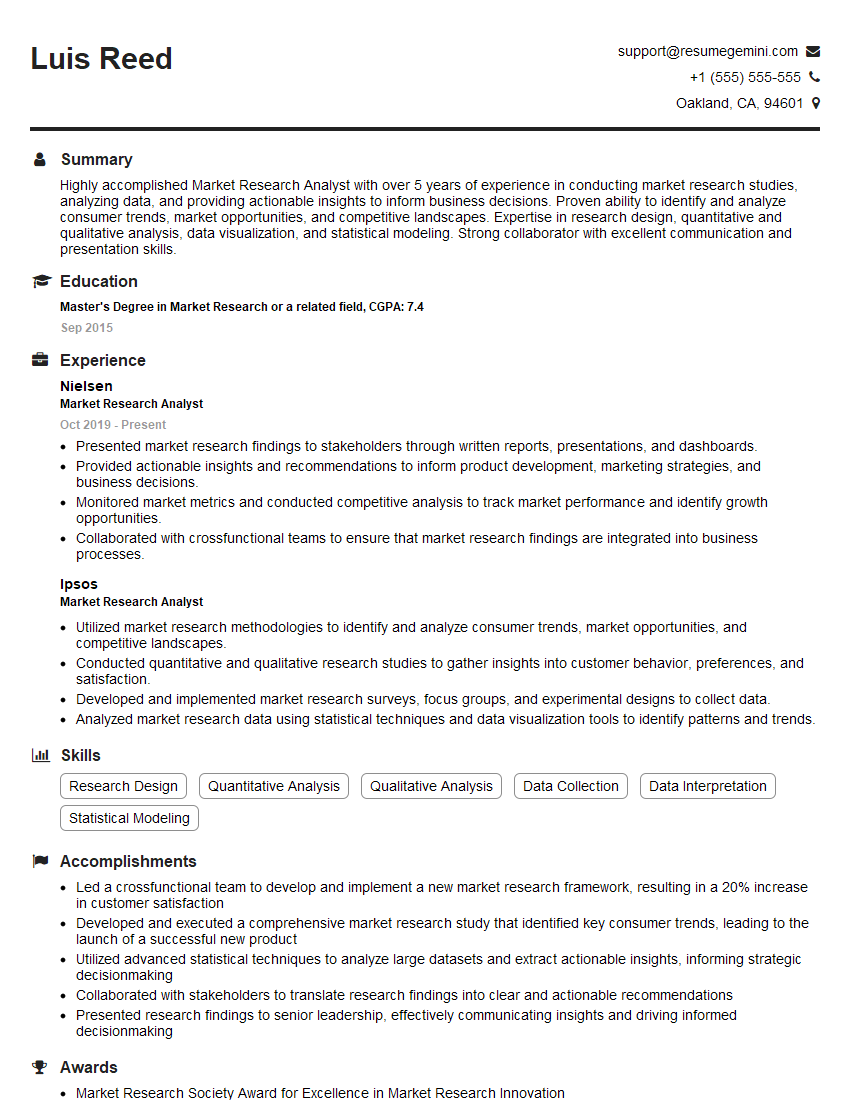
Market Research Analyst Resume Sample

Financial Analyst Resume Sample

Data Analyst Resume Sample

Quantitative Analyst Resume Sample

Data Scientist Resume Sample

Software Engineer Resume Sample
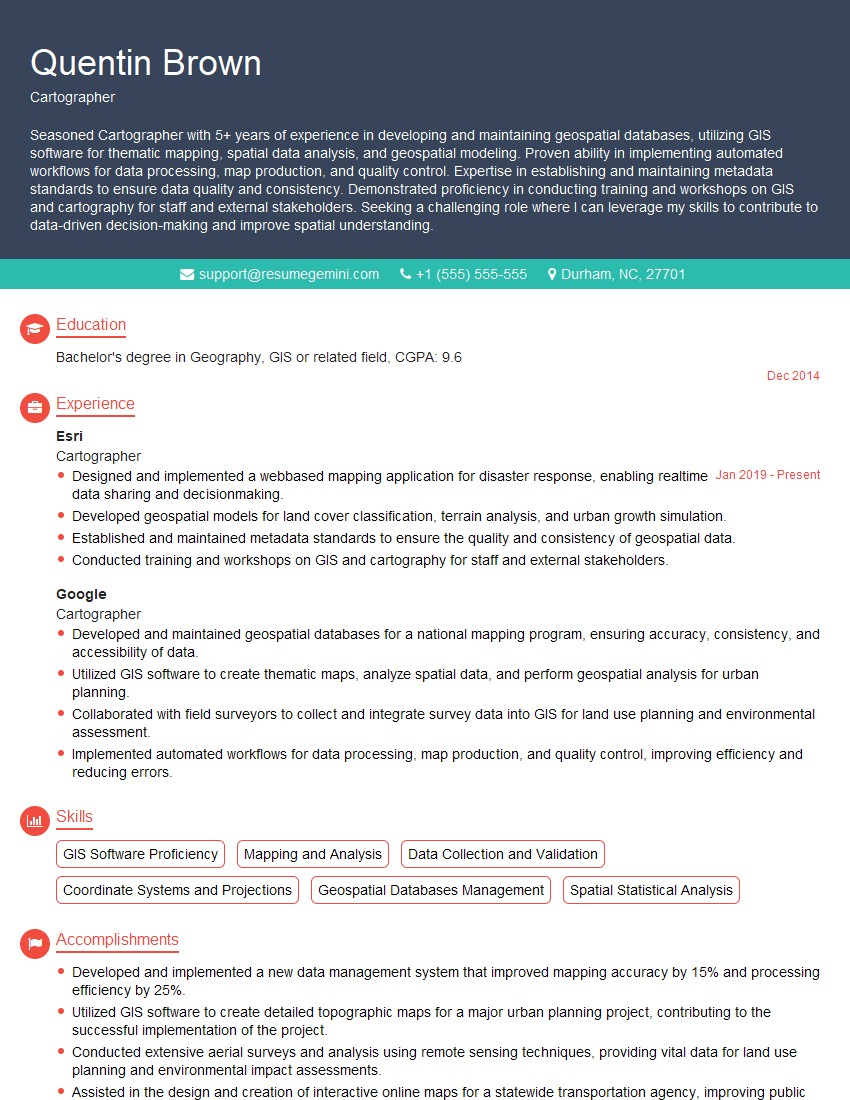
Cartographer Resume Sample

Actuary Resume Sample

Operations Research Analyst Resume Sample

Statistician Resume Sample

Architect Resume Sample
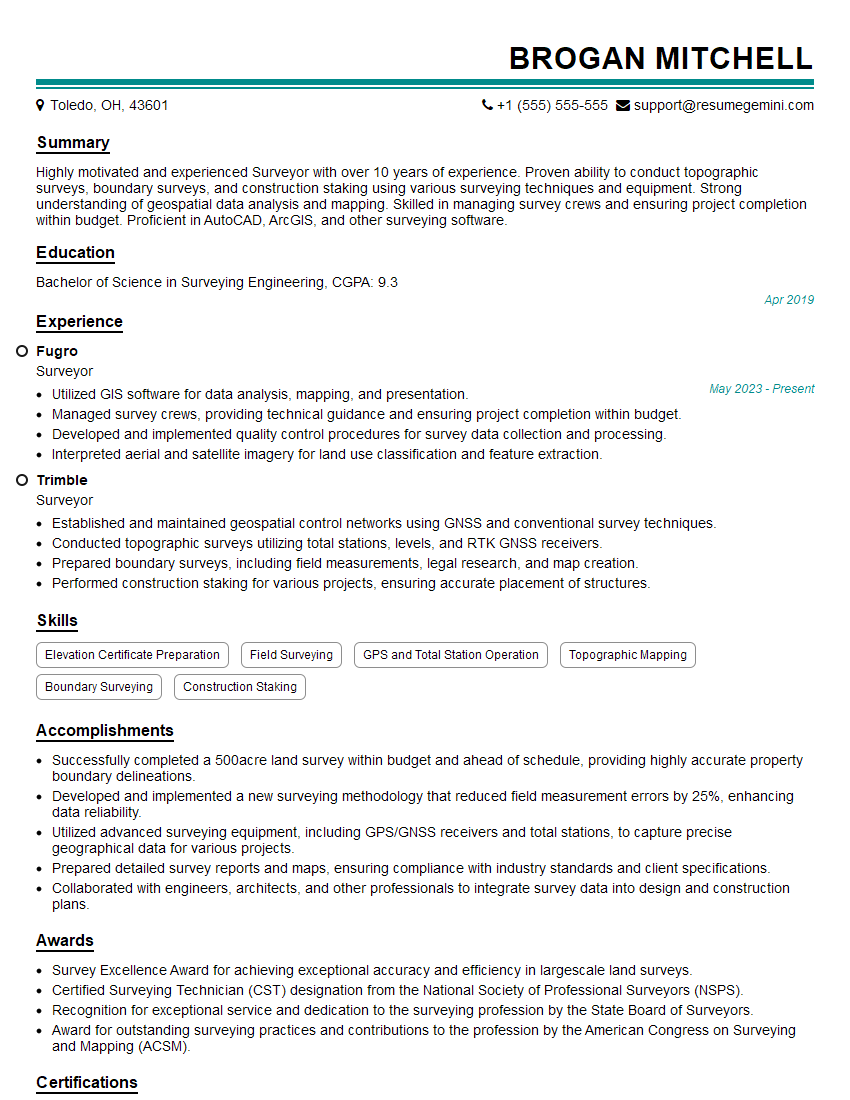
Surveyor Resume Sample

Engineering Technician Resume Sample

Civil Engineer Resume Sample
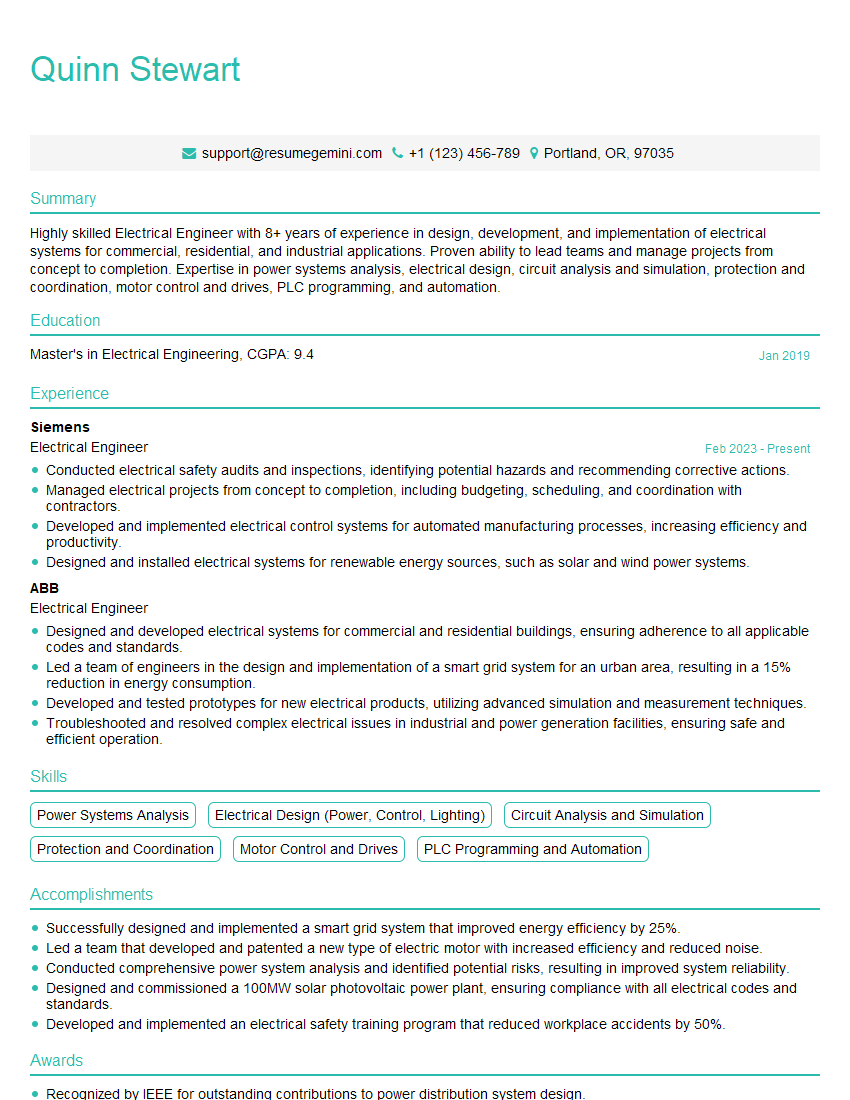
Electrical Engineer Resume Sample
Mechanical Engineer Resume Sample

Drafter Resume Sample

Math Teacher Resume Sample

Physics Teacher Resume Sample

Quality Control Inspector Resume Sample
- Construction Manager
- Project Manager
- Market Research Analyst
- Financial Analyst
- Data Analyst
- Quantitative Analyst
- Data Scientist
- Software Engineer
- Cartographer
- Actuary
- Operations Research Analyst
- Statistician
- Architect
- Surveyor
- Engineering Technician
- Civil Engineer
- Electrical Engineer
- Mechanical Engineer
- Drafter
- Math Teacher
- Physics Teacher
- Quality Control Inspector
Explore more articles
Users Rating of Our Blogs
Share Your Experience
We value your feedback! Please rate our content and share your thoughts (optional).
What Readers Say About Our Blog
Very informative content, great job.
good