Every successful interview starts with knowing what to expect. In this blog, we’ll take you through the top Piping and Machinery System Design interview questions, breaking them down with expert tips to help you deliver impactful answers. Step into your next interview fully prepared and ready to succeed.
Questions Asked in Piping and Machinery System Design Interview
Q 1. Explain the difference between Schedule 40 and Schedule 80 piping.
Schedule 40 and Schedule 80 pipes are distinguished primarily by their wall thickness. Both are standard pipe designations according to ANSI B36.10, but Schedule 80 pipes have significantly thicker walls than Schedule 40 pipes of the same nominal diameter. This increased thickness translates directly to higher pressure ratings and greater strength. Think of it like comparing a garden hose (Schedule 40) to a fire hose (Schedule 80) – both carry water, but the latter can handle much higher pressure and volume.
In short:
- Schedule 40: Thinner walls, lower pressure rating, generally less expensive.
- Schedule 80: Thicker walls, higher pressure rating, more resistant to corrosion and external forces, more expensive.
Practical Application: Schedule 40 is commonly used in low-pressure applications like drainage systems or low-pressure water lines. Schedule 80 is preferred for high-pressure steam lines, chemical processing, or applications where safety and durability are paramount.
Q 2. Describe your experience with different types of pipe supports.
My experience encompasses a wide range of pipe support methods, chosen based on factors such as pipe size, material, operating temperature, pressure, and environmental conditions. I’ve worked extensively with:
- Constant Support Hangars: Ideal for long runs of horizontal piping where consistent support is needed to minimize sagging.
- Variable Spring Supports: These accommodate thermal expansion and contraction, preventing stress buildup in the piping system. I’ve used these frequently in power plants and refineries where temperature fluctuations are significant.
- Rigid Supports: These provide fixed points of support, often used at anchor points or where changes in pipe direction occur.
- Snubbers: Essential for controlling dynamic movements caused by seismic activity or equipment vibrations. I’ve incorporated these into systems designed for earthquake-prone regions.
- Hydraulic Snubbers: These are more sophisticated and used in high-pressure applications, offering controlled resistance to sudden movements.
- Guide Supports: Used to control lateral movement and prevent excessive sway.
Selecting the right support system involves careful analysis of the system’s load conditions and potential for movement. Failure to do so can lead to pipe failure or damage to other equipment.
Q 3. How do you calculate pipe stress and what software do you use?
Pipe stress calculations involve determining the forces and moments acting on a piping system due to factors like internal pressure, weight, thermal expansion, wind loads, and seismic events. This is crucial to ensure the system’s structural integrity and prevent failures.
The process generally involves:
- Creating a 3D model: Using software like CAESAR II, AutoPIPE, or ANSYS, a detailed model of the piping system is created.
- Defining parameters: This includes pipe dimensions, materials, fluid properties, operating conditions, and support locations.
- Applying loads: The software applies the various loads mentioned above to the model.
- Analyzing stress and displacement: The software calculates stress levels and pipe displacement at various points in the system.
- Verifying compliance: The results are checked against applicable codes and standards (like ASME B31.1 or B31.3) to ensure stress levels remain within acceptable limits.
I have extensive experience using CAESAR II and AutoPIPE for these calculations. These software packages allow for detailed analysis and reporting, helping to optimize pipe routing and support design for maximum safety and efficiency.
Q 4. What are the different types of pipe fittings and their applications?
Pipe fittings are essential components connecting pipe sections and changing flow direction. They come in various types, each suited for specific applications:
- Elbows: Used to change the direction of flow, available in various angles (e.g., 45°, 90°).
- Tees: Used for branching flow, allowing for splitting or merging of fluid streams.
- Reducers: Connect pipes of different diameters.
- Crosses: Allow flow in four directions.
- Unions: Allow for easy disconnection of pipe sections for maintenance or repair.
- Couplings: Connect two pipes of the same diameter.
- Valves: Control the flow of fluids (e.g., gate valves, globe valves, ball valves, check valves).
- Flanges: Used for connecting pipes to equipment or other components, often using bolts.
The choice of fitting depends on factors like the pressure rating, temperature, fluid type, and required flow characteristics. For instance, high-pressure applications might require forged steel fittings, while less demanding applications could use malleable iron or PVC.
Q 5. Explain the concept of fluid dynamics in piping systems.
Fluid dynamics in piping systems is the study of fluid flow, pressure, and energy within pipes. It governs critical aspects like pressure drop, flow rate, and energy losses. Understanding these principles is vital for designing efficient and safe piping systems.
Key concepts include:
- Pressure drop: The reduction in pressure as fluid flows through a pipe, due to friction and other factors.
- Flow rate: The volume of fluid passing a point per unit time.
- Reynolds number: A dimensionless number indicating whether flow is laminar (smooth) or turbulent (chaotic).
- Head loss: Energy loss due to friction and other factors, expressed as a height of fluid.
- Bernoulli’s principle: States that an increase in the speed of a fluid occurs simultaneously with a decrease in pressure or a decrease in the fluid’s potential energy.
We use equations and software like AFT Fathom or PIPE-FLO to model and predict fluid behavior, ensuring adequate pipe sizing and pump selection for desired flow rates and pressures.
Q 6. How do you handle pipe routing in confined spaces?
Pipe routing in confined spaces requires careful planning and consideration of several factors to avoid clashes with other equipment and structural elements. Strategies include:
- 3D Modeling: Using software like AutoCAD or Revit allows for visualizing the piping system within the confined space and identifying potential conflicts early on.
- Optimized Routing: Choosing the shortest and most efficient path, while adhering to code requirements and minimizing bends and fittings.
- Flexibility: Incorporating flexible sections of piping or using expansion joints to accommodate thermal expansion and contraction.
- Support System Design: Designing a support system that accounts for the limited space and ensures adequate stability.
- Coordination: Close collaboration with other disciplines (structural, electrical, instrumentation) is crucial to avoid conflicts and optimize space usage.
In challenging situations, specialized fittings or customized pipe bends might be necessary. The goal is to create a safe and functional system within the constraints of the confined space.
Q 7. What are the common causes of pipe failures?
Pipe failures can stem from a multitude of causes, often interconnected. Some of the most common include:
- Corrosion: Chemical reactions between the pipe material and the fluid or environment can weaken the pipe over time.
- Erosion: The gradual wearing away of the pipe’s inner surface due to high-velocity fluid flow, often exacerbated by suspended solids.
- Stress Corrosion Cracking (SCC): A form of corrosion where tensile stresses combine with a corrosive environment to cause cracking.
- Fatigue: Repeated cyclical loading (e.g., from vibration or thermal expansion) can lead to fatigue failure, even at stresses below the yield strength of the material.
- Improper Design or Installation: Inadequate support, insufficient pipe wall thickness, incorrect fitting selection, or poor welding can all contribute to failure.
- External Loads: Excessive external forces, such as ground movement or accidental impacts, can damage or rupture pipes.
- Creep: Time-dependent deformation of a material under sustained stress, particularly at elevated temperatures.
Regular inspections, proper material selection, and adherence to design codes and best practices are crucial for minimizing the risk of pipe failures.
Q 8. Describe your experience with piping material selection.
Piping material selection is crucial for ensuring the safety, reliability, and longevity of any piping system. The choice depends on several factors, including the fluid being conveyed (its temperature, pressure, corrosiveness, and viscosity), the operating environment (temperature fluctuations, exposure to the elements), and cost considerations.
- Material Properties: I carefully evaluate material properties such as yield strength, tensile strength, corrosion resistance, and weldability. For instance, carbon steel is cost-effective for many applications but may require specialized coatings or linings for corrosive fluids. Stainless steel offers superior corrosion resistance but is more expensive. For high-temperature applications, alloys like Inconel or Monel might be necessary.
- Fluid Compatibility: Understanding the chemical interaction between the fluid and the piping material is critical. A compatibility chart or specialized testing might be required to prevent corrosion or degradation. For example, using copper piping with certain acids would be catastrophic.
- Code Compliance: Material selection must adhere to relevant codes and standards, like ASME B31.1 (Power Piping) or ASME B31.3 (Process Piping), which specify acceptable materials for various pressures and temperatures.
- Cost Optimization: Balancing material cost with lifecycle costs is vital. While a cheaper material might seem attractive initially, the potential for premature failure and costly repairs could outweigh the initial savings.
In a recent project involving the transportation of highly corrosive chemicals, we opted for a specialized fiberglass-reinforced plastic (FRP) piping system due to its excellent corrosion resistance and lightweight properties, even though the initial cost was higher than carbon steel. This ultimately proved to be a cost-effective solution because it prevented frequent repairs and extended the system’s lifespan.
Q 9. How do you ensure compliance with relevant piping codes and standards (e.g., ASME B31.1, ASME B31.3)?
Adherence to piping codes and standards is paramount for safety and regulatory compliance. I ensure compliance through a multi-step process:
- Code Selection: The appropriate code (ASME B31.1, ASME B31.3, etc.) is selected based on the type of piping system (power, process, etc.).
- Design Calculations: All design calculations, including pressure drop, stress analysis, and support design, are performed according to the selected code’s requirements. Software like Caesar II or AutoPIPE is often used for these complex calculations.
- Material Selection: Material selection is verified against the code’s allowable stress tables and material specifications.
- Fabrication and Inspection: Fabrication procedures and inspection criteria are established to ensure the piping system is built according to code requirements. This includes welding procedures, non-destructive testing (NDT) methods, and hydrostatic testing.
- Documentation: Comprehensive documentation, including calculations, material certifications, inspection reports, and as-built drawings, is maintained to demonstrate compliance.
For example, in ASME B31.1, the allowable stress values for materials are crucial for stress analysis, and deviations require justification and engineering evaluations. Ignoring these codes can lead to severe consequences, including system failure and potential safety hazards.
Q 10. Explain your understanding of hydraulic calculations for piping systems.
Hydraulic calculations are essential for designing efficient and safe piping systems. These calculations determine factors like pressure drop, flow rate, and pipe sizing. I utilize established methods and software to perform these calculations.
- Flow Rate Determination: The required flow rate is determined based on process requirements. This may involve evaluating pump curves and system demands.
- Pressure Drop Calculation: Pressure drop is calculated using Darcy-Weisbach equation or other empirical formulas, considering factors like pipe diameter, length, roughness, and fluid properties (viscosity, density). Software like AFT Fathom or PIPEPHASE is very helpful here.
- Pipe Sizing: Pipe diameter is selected based on the calculated pressure drop and flow rate to ensure sufficient flow and minimize energy loss. This often involves iterative calculations to optimize pipe size and cost.
- Pump/Compressor Selection: Pump or compressor characteristics are evaluated to ensure they can deliver the required flow rate and overcome the calculated pressure drop.
- System Optimization: Hydraulic calculations help optimize the piping system for efficiency, minimizing energy consumption and capital costs.
For example, in a recent project, we used AFT Fathom to model a complex network of pipelines and optimize the piping layout to minimize pressure drop and energy consumption. This resulted in significant cost savings in pump operation and reduced the overall energy footprint of the system. Incorrect calculations could lead to inadequate flow, excessive pressure drops, or equipment damage.
Q 11. What is your experience with P&ID development and review?
P&IDs (Piping and Instrumentation Diagrams) are the fundamental blueprints for process plants. My experience encompasses developing and reviewing P&IDs to ensure accuracy, completeness, and clarity.
- Development: I’ve created P&IDs using various software packages (e.g., SmartPlant P&ID, AutoCAD P&ID), incorporating process data, equipment specifications, and instrument details.
- Review: I’ve reviewed numerous P&IDs, identifying inconsistencies, omissions, and potential design flaws. This involves verifying instrument tagging, loop diagrams, and control strategies.
- Process Understanding: A strong understanding of process flow, instrumentation, and control systems is essential for creating and reviewing P&IDs effectively.
- Symbol Standardization: Adherence to industry standards (ISA, etc.) for symbols and conventions is critical for clear communication and unambiguous representation.
- Cross-referencing: Ensuring accurate cross-referencing between different parts of the P&ID and other project documents is crucial for avoiding errors.
In a past project, I identified a critical error in a P&ID during the review process – a missing safety relief valve on a high-pressure vessel. This oversight could have had disastrous consequences. Early detection through rigorous P&ID review prevented a potential catastrophic failure.
Q 12. Describe your experience with Isometric drawings.
Isometric drawings provide a 3D representation of piping systems. My experience includes creating, reviewing, and utilizing isometric drawings for fabrication and installation.
- Creation: I have used various CAD software (e.g., AutoCAD, PDMS, SmartPlant 3D) to generate detailed isometric drawings, including pipe sizes, materials, specifications, and support details.
- Review: I meticulously review isometric drawings for accuracy, completeness, and compliance with design specifications. This often involves checking dimensions, bend radii, and support locations.
- Fabrication Support: Isometric drawings serve as the primary reference for fabricators, ensuring the accurate construction of piping spools.
- Installation Guidance: They guide the installation team, illustrating the spatial relationships between piping components and equipment.
- Clash Detection: During the review process, isometric drawings are examined for potential interferences between pipes, equipment, and structures.
A clear and accurate isometric drawing can significantly reduce installation time and prevent costly errors on site. In one instance, a thorough review of the isometric drawing identified a potential pipe clash with a structural support, avoiding a costly rework during the installation phase.
Q 13. How do you manage changes in piping designs during a project?
Managing design changes is a crucial aspect of piping projects. A robust change management process is essential for maintaining control, accuracy, and efficient execution.
- Change Request System: A formal system for submitting, reviewing, and approving design changes is essential. This typically involves documenting the proposed change, its impact, and the necessary revisions.
- Impact Assessment: Each proposed change must be carefully assessed for its impact on other aspects of the design, including schedule, cost, and safety. This might necessitate updating calculations, drawings, and specifications.
- Communication: Clear and timely communication regarding design changes to all stakeholders (engineering, procurement, construction) is critical.
- Version Control: Using a version control system for drawings and documents ensures that all parties are working with the most up-to-date information.
- Documentation: Comprehensive documentation of all changes, including justifications and approvals, is vital for traceability and audit purposes.
We use a system of change orders and formal documentation to track and manage changes. For example, if a client requests a change to pipe material, we’d initiate a change order, assess the impact on cost and schedule, update drawings and specifications accordingly, and obtain necessary approvals before proceeding. This ensures that changes are implemented smoothly and without disrupting the project timeline or exceeding the budget.
Q 14. What are your experiences with different types of pumps and compressors?
My experience encompasses various types of pumps and compressors, each with unique characteristics and applications.
- Centrifugal Pumps: Widely used for moving liquids, these pumps offer high flow rates and relatively simple design. I have experience selecting and sizing centrifugal pumps based on flow rate, head, and fluid properties.
- Positive Displacement Pumps: These pumps, such as piston, diaphragm, or gear pumps, are suitable for high-pressure applications and viscous fluids. I have worked with these in situations requiring precise fluid metering.
- Reciprocating Compressors: Used for compressing gases to high pressures, these compressors are common in applications like refrigeration and natural gas processing. I understand their operation, maintenance, and selection criteria.
- Centrifugal Compressors: These offer high flow rates and are common in gas processing and power generation. I’ve been involved in the selection and integration of these compressors in various projects.
- Rotary Compressors: Such as screw compressors and rotary vane compressors, are used for various applications including HVAC and industrial processes. I consider their efficiency, pressure capabilities, and suitability to various gas properties.
In one project involving a high-pressure gas pipeline, selecting the right compressor type and capacity was crucial. After careful analysis of operational parameters and system requirements, we opted for a centrifugal compressor, which provided the optimal balance of efficiency, capacity, and lifecycle cost compared to other options like reciprocating compressors.
Q 15. Describe your understanding of valve selection and sizing.
Valve selection and sizing is crucial for ensuring efficient and safe operation of piping systems. It involves choosing the right type of valve (gate, globe, ball, check, etc.) based on the fluid properties, pressure, temperature, and flow requirements. Sizing ensures the valve can handle the flow without excessive pressure drop or cavitation.
The process typically begins with defining the service conditions. For example, if we’re dealing with a high-pressure, high-temperature steam line, a forged steel gate valve might be appropriate. For a low-pressure water line, a less expensive PVC ball valve could suffice. Next, we use valve sizing software or hand calculations based on flow rate, pressure drop limits, and the valve’s Cv (flow coefficient) value. This value represents the valve’s capacity to allow fluid flow. An undersized valve can lead to excessive pressure drop, while an oversized valve can be unnecessarily expensive and may not provide the necessary control.
Consider this example: We need to select a valve for a pipeline carrying 100 gpm of water. After considering the pressure drop, we find that a valve with a Cv of 10 is needed. We can then consult manufacturer catalogs to find a valve with a suitable Cv and material compatible with the fluid. Incorrect sizing could result in erosion, increased energy costs due to excessive pressure drop, or even system failure.
Career Expert Tips:
- Ace those interviews! Prepare effectively by reviewing the Top 50 Most Common Interview Questions on ResumeGemini.
- Navigate your job search with confidence! Explore a wide range of Career Tips on ResumeGemini. Learn about common challenges and recommendations to overcome them.
- Craft the perfect resume! Master the Art of Resume Writing with ResumeGemini’s guide. Showcase your unique qualifications and achievements effectively.
- Don’t miss out on holiday savings! Build your dream resume with ResumeGemini’s ATS optimized templates.
Q 16. How do you perform pipe sizing calculations?
Pipe sizing calculations aim to determine the appropriate diameter of pipe to ensure adequate flow while minimizing pressure drop and cost. Several methods exist, including using established formulas or specialized software. The most common approach involves applying the Darcy-Weisbach equation or similar empirical equations.
The Darcy-Weisbach equation accounts for factors like fluid viscosity, pipe roughness, and flow rate. It’s typically iterative, requiring adjustments until an acceptable pressure drop is achieved. We start with an initial pipe diameter guess, and then using the equation and the known parameters (flow rate, fluid properties, pipe length, etc.) we calculate the pressure drop. If the pressure drop is too high, a larger diameter pipe is required, and the process is repeated. Conversely, if the pressure drop is too low, a smaller diameter pipe might suffice (this depends on other cost and system design considerations).
ΔP = f * (L/D) * (ρV²/2)
Where:
- ΔP = pressure drop
- f = friction factor (dependent on Reynolds number and pipe roughness)
- L = pipe length
- D = pipe diameter
- ρ = fluid density
- V = fluid velocity
Software packages streamline this process significantly, considering factors like bends, fittings, and valves. Manual calculations are generally used for simpler systems, while software is preferred for complex networks.
Q 17. What are the different types of pipe insulation and their applications?
Pipe insulation is crucial for maintaining fluid temperature, preventing condensation, and improving energy efficiency. Several types exist, each with its applications:
- Fiberglass: A cost-effective option suitable for moderate temperatures. It’s relatively easy to install but has lower thermal performance compared to other materials.
- Calcium Silicate: Offers superior thermal performance and fire resistance, making it ideal for high-temperature applications and fire-hazardous areas.
- Polyurethane Foam: Known for its excellent insulating properties and moisture resistance. Often used in pre-insulated pipe systems.
- Mineral Wool: Provides good thermal and acoustic insulation and is often used in applications requiring fire protection.
- Aerogel: A high-performance insulation material with extremely low thermal conductivity, suitable for cryogenic applications and where space constraints are crucial.
The choice of insulation depends on factors such as operating temperature, environmental conditions, cost constraints, and safety requirements. For example, a chilled water line might use polyurethane foam for its moisture resistance, while a high-temperature steam line would necessitate calcium silicate for its fire resistance and thermal performance.
Q 18. Describe your experience with piping systems in hazardous environments.
My experience with piping systems in hazardous environments involves working with materials and designs that meet stringent safety standards. This includes experience with flammable and toxic fluids, where the potential for leaks or explosions is a primary concern. In these situations, the design must consider aspects such as material selection (stainless steel, specific alloys, or specialized plastics), leak detection systems, emergency shutdown systems, and appropriate venting mechanisms. I have worked on projects requiring compliance with codes such as API 650, API 653, and relevant OSHA regulations.
For example, in a refinery environment, I’ve worked on projects involving the installation of double-walled piping for flammable liquids, ensuring a secondary containment system to prevent environmental contamination in the event of a leak. These projects require meticulous attention to detail and adherence to rigorous safety procedures to minimize risk.
Q 19. How do you ensure the integrity of piping systems during commissioning?
Ensuring piping system integrity during commissioning is critical. This involves a phased approach that includes pre-commissioning checks, hydrostatic testing, and operational testing. Pre-commissioning involves verifying the system’s completeness and conformance to the design documents. This may include a visual inspection, checking valve operation, and confirming proper installation.
Hydrostatic testing involves pressurizing the system with water to a specified pressure above the design pressure to identify any leaks or weaknesses. This is a crucial step for ensuring the system’s structural integrity. After hydrostatic testing and leak repairs, operational testing involves running the system with the intended fluid and confirming that it operates as designed, including pressure and flow measurements. A detailed commissioning report should be prepared documenting the procedures, results, and any corrective actions taken.
This whole process is critically important in preventing costly failures and safety hazards later during operation.
Q 20. What are the key considerations for piping system design in offshore platforms?
Offshore platform piping systems present unique challenges due to the harsh marine environment and safety considerations. Key considerations include:
- Corrosion resistance: The use of corrosion-resistant materials (stainless steel, duplex stainless steel, specialized coatings) is vital due to seawater exposure.
- Seismic design: Piping must withstand seismic events, requiring special supports and flexible joints to prevent damage or failure.
- Extreme weather conditions: The design should account for high winds, waves, and potential ice loading.
- Accessibility and maintainability: Maintenance and repair must be possible despite the remote and often hazardous location.
- Weight and space constraints: Minimizing the weight of the piping system is essential to reduce the load on the platform structure.
Compliance with industry standards such as API 14C and relevant regulatory requirements is mandatory for offshore platforms. Specialized design analysis and stringent quality control are needed to ensure safety and reliability.
Q 21. Explain your experience with different types of pipe joining methods.
Various pipe joining methods exist, each with its advantages and disadvantages:
- Welding: Provides a strong and permanent joint suitable for high-pressure applications. Different welding techniques exist, such as butt welding, fillet welding, and socket welding, selected based on the pipe material and diameter.
- Flanged joints: Offer ease of disassembly and maintenance, making them suitable for situations where frequent access is required. They are generally less cost-effective for large systems.
- Threaded joints: A simple and economical method for smaller diameter pipes. Suitable for lower pressure applications, but thread damage can be a concern.
- Couplings: Mechanical fittings providing a quick and easy connection. Suitable for various pipe materials and are often used in repair situations. They can be less robust than welding for very high pressures.
- Solvent welding: Used for joining plastic pipes using a solvent cement to create a strong bond. Suitable for low-pressure applications where chemical compatibility is crucial.
The selection of a joining method depends on factors like the pipe material, pressure rating, required joint strength, accessibility for maintenance, and cost considerations. For example, welding is preferred for high-pressure steam lines, while flanged joints are suitable for pump connections that may require frequent access.
Q 22. How do you handle thermal expansion in piping systems?
Thermal expansion in piping systems is a significant design consideration because temperature changes cause pipes to lengthen or shorten. Ignoring this can lead to stresses exceeding the pipe’s allowable limits, causing leaks or failures. We mitigate this through several strategies:
- Expansion loops: These are strategically placed bends in the piping that allow for axial movement due to temperature changes. Think of it like an accordion – it expands and contracts without putting undue stress on the rest of the system. The design of these loops involves careful calculations to ensure sufficient movement capacity.
- Expansion joints: These are mechanical devices specifically designed to accommodate thermal expansion. They come in various types, such as bellows, gimbal, and slip joints, each suitable for different applications and levels of movement. For instance, a bellows expansion joint might be ideal for smaller movements and higher pressure applications.
- Anchors and guides: These components restrict movement in specific directions, preventing excessive stresses. Anchors completely fix the pipe, while guides allow movement in one direction but restrict it in others. Careful placement is crucial; improperly placed anchors can induce unwanted stresses in the piping system.
- Proper material selection: Selecting materials with low coefficients of thermal expansion can minimize the overall expansion and contraction. However, this is often balanced against other material properties, like strength and cost.
For example, in a power plant, long steam lines require substantial expansion loops, often designed using specialized software to account for various operating temperatures and pressure conditions. The loop’s geometry is carefully optimized to minimize stress and maximize its lifespan.
Q 23. Describe your experience with Finite Element Analysis (FEA) for piping systems.
Finite Element Analysis (FEA) is an indispensable tool for analyzing piping systems, especially in complex configurations or high-stress situations. My experience includes using FEA software like ANSYS and ABAQUS to model piping systems under various loading conditions, including thermal expansion, pressure, and seismic events. This helps predict stress levels, displacements, and potential failure points.
For example, I used FEA to analyze a piping system designed for a chemical plant. The analysis revealed high stress concentrations at certain welded joints under specific operating conditions. This allowed us to redesign the system, reinforcing the critical joints and optimizing the support locations to prevent fatigue failure. The FEA results were crucial in justifying the design changes and ensuring safety.
I’m proficient in mesh generation, material property selection, and boundary condition definition. I also have experience in interpreting the results, identifying critical areas, and proposing design improvements based on the analysis findings. The software allows visualizing stress distribution and deformation within the pipe, providing valuable insights which are difficult to obtain using only hand calculations.
Q 24. What are your experiences with different types of piping fabrication techniques?
I have extensive experience with various piping fabrication techniques, including:
- Welding: I’m familiar with different welding processes such as SMAW, GMAW, GTAW, and FCAW, understanding their respective applications and limitations. The choice of welding process depends on factors such as material, pipe diameter, accessibility, and required weld quality.
- Flanged connections: These are widely used for joining pipes, offering ease of assembly and disassembly. The design and selection of flanges depend on the pressure and temperature ratings.
- Threaded connections: Suitable for smaller diameter pipes, these are relatively simple to install but may be less suitable for high-pressure applications. Proper thread sealing is vital to prevent leaks.
- Butt welding: This process involves melting and fusing the pipe ends, creating a seamless joint. It is commonly used for high-pressure and high-temperature applications.
- Bending: I have experience designing piping systems that incorporate bends to direct the flow and minimize the need for numerous fittings. Careful consideration is needed to prevent collapse or excessive stresses during bending.
In one project, we chose orbital welding for critical sections of a high-purity pharmaceutical piping system to ensure high quality welds and prevent contamination. Each technique has its advantages and disadvantages, and selecting the right one is crucial for cost-effectiveness, safety, and meeting the system requirements.
Q 25. How do you troubleshoot piping system leaks?
Troubleshooting piping system leaks requires a systematic approach:
- Identify the leak location: Visual inspection, pressure testing, or acoustic leak detection can help pinpoint the source.
- Determine the cause: This might involve analyzing the type of leak (e.g., pinhole, crack), examining the surrounding conditions, and considering factors like corrosion, erosion, or thermal stress.
- Assess the severity: Determine the urgency of repair based on the leak rate and potential consequences.
- Develop a repair strategy: Options range from simple clamp repairs for minor leaks to complete section replacement for major failures. This often involves coordinating with maintenance teams and ensuring safe shutdown procedures.
- Implement the repair: Carefully execute the repair, ensuring proper cleaning, preparation, and adherence to safety protocols.
- Verify the repair: Pressure test the repaired section to confirm the leak is fixed.
For example, I once investigated a leak in a steam line that was initially attributed to corrosion. Closer inspection revealed that the leak was due to a poorly executed weld that was weakened by vibration. Replacing that section of pipe and improving the vibration damping resolved the problem.
Q 26. Describe your experience with HAZOP studies related to piping systems.
HAZOP (Hazard and Operability Study) is a systematic technique used to identify potential hazards and operational problems in process systems. My experience with HAZOP studies in piping systems involves participating in team meetings, reviewing P&IDs (Piping and Instrumentation Diagrams), and guiding the identification of potential hazards through the use of guide words (e.g., ‘more,’ ‘less,’ ‘part of,’ ‘other than’).
We consider various scenarios, such as pressure surges, pipe failure, fluid leakage, and equipment malfunction, assessing their likelihood and potential consequences. For each identified hazard, we develop recommendations for mitigating the risk, which may involve implementing safety systems, improving design features, or refining operating procedures.
For instance, in a refinery HAZOP, we identified a potential for overpressure in a particular section of the piping system. The analysis led to the implementation of a pressure relief valve, a safety instrumented system (SIS) and operator training, significantly mitigating the risk of an incident. HAZOP helps to ensure that safety is built into the design and operation of piping systems from the outset.
Q 27. What is your understanding of the different types of pipe supports and their applications?
Pipe supports are essential components for maintaining the integrity and stability of piping systems. They are designed to absorb the loads acting on the pipe, including weight, thermal expansion, pressure, and seismic forces. Different types of supports are selected based on their suitability for a particular loading scenario.
- Rigid supports: These fix the pipe in a specific location, preventing any movement. They’re used in areas where movement needs to be completely restricted. They are commonly used for anchors at strategic points to control overall movement and stress.
- Flexible supports: These allow for some movement in the pipe, accommodating thermal expansion or vibrations. They reduce stress on the piping system compared to rigid supports. Examples include spring supports, constant support hangers, and sway braces.
- Guides: These restrict movement in one direction but allow movement in another. They’re crucial for controlling the direction of thermal expansion.
- Snubbers: These are specialized supports that limit movement during seismic events or other sudden displacements, preventing damage to the pipe or connected equipment.
The selection of supports involves considering factors such as pipe material, diameter, operating temperature, pressure, seismic zones, and potential for vibrations. Improper support design can lead to excessive stresses, fatigue failures, and leaks, so thorough analysis is required.
Q 28. How would you approach designing a piping system for a high-pressure application?
Designing a piping system for a high-pressure application demands meticulous attention to detail and adherence to stringent safety standards. Several crucial considerations include:
- Material selection: High-strength materials like high-grade stainless steel or specialized alloys are essential to withstand the pressure. The material’s yield strength and allowable stress levels are critically important.
- Wall thickness calculations: Accurate calculations, often using ASME B31.1 or B31.3 codes, determine the required wall thickness to ensure adequate pressure resistance. These calculations factor in pressure, temperature, and material properties.
- Weld integrity: Weld quality is paramount. Non-destructive testing (NDT) methods such as radiographic testing (RT) and ultrasonic testing (UT) are often employed to ensure weld soundness.
- Support design: Robust support systems are essential to minimize stress concentrations and prevent pipe failure due to pressure or other loads. The supports must be designed to withstand significant forces.
- Pressure relief devices: Pressure relief valves (PRVs) are vital safety features that release excess pressure in case of a pressure surge or equipment malfunction, preventing catastrophic failure. The capacity and settings of PRVs must be carefully chosen.
- Flange design: High-pressure applications often require specialized flanges rated for the specific pressure and temperature range. Correct bolting procedures are also critical.
For example, in a high-pressure hydraulic system, we used finite element analysis to optimize the pipe support layout, minimizing stress concentrations and ensuring the system could safely operate at its design pressure. We also implemented redundant safety systems, including multiple PRVs, to provide an extra layer of protection.
Key Topics to Learn for Piping and Machinery System Design Interview
- Fluid Mechanics Fundamentals: Understanding pressure drop calculations, flow regimes, and pump selection criteria is crucial. Consider practical applications like sizing pipelines for different fluids and optimizing flow rates.
- Piping System Design: Master the principles of pipe sizing, material selection (considering factors like corrosion and temperature), and stress analysis. Explore case studies involving complex piping networks and their design challenges.
- Equipment Selection and Integration: Learn how to select appropriate pumps, valves, compressors, and other equipment based on process requirements. Understand the implications of integrating this equipment into a larger system.
- Process Safety and Hazard Analysis: Familiarize yourself with safety standards and regulations related to piping systems. Develop your understanding of HAZOP studies and risk assessment methodologies.
- Instrumentation and Control: Gain knowledge of instrumentation used for monitoring and controlling parameters like pressure, temperature, and flow. Understand basic control loop strategies and their applications.
- 3D Modeling and CAD Software: Develop proficiency in using industry-standard CAD software for designing and simulating piping systems. Practical experience with software like AutoCAD or Inventor is highly valuable.
- Cost Estimation and Project Management: Understand the principles of cost estimation for piping and machinery systems. Familiarize yourself with project management methodologies and their application in the design process.
- Troubleshooting and Problem-Solving: Develop strong analytical skills to diagnose and resolve problems in existing piping and machinery systems. Practice approaching problems systematically and using engineering principles to find solutions.
Next Steps
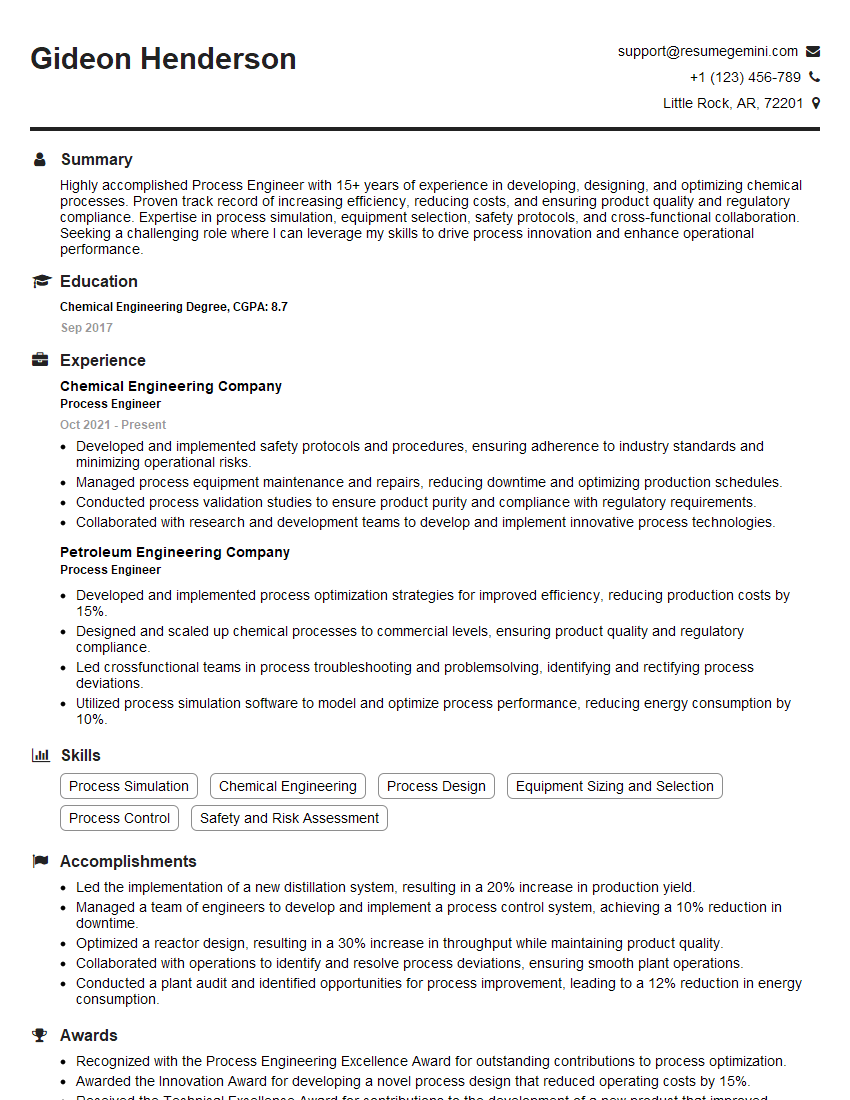
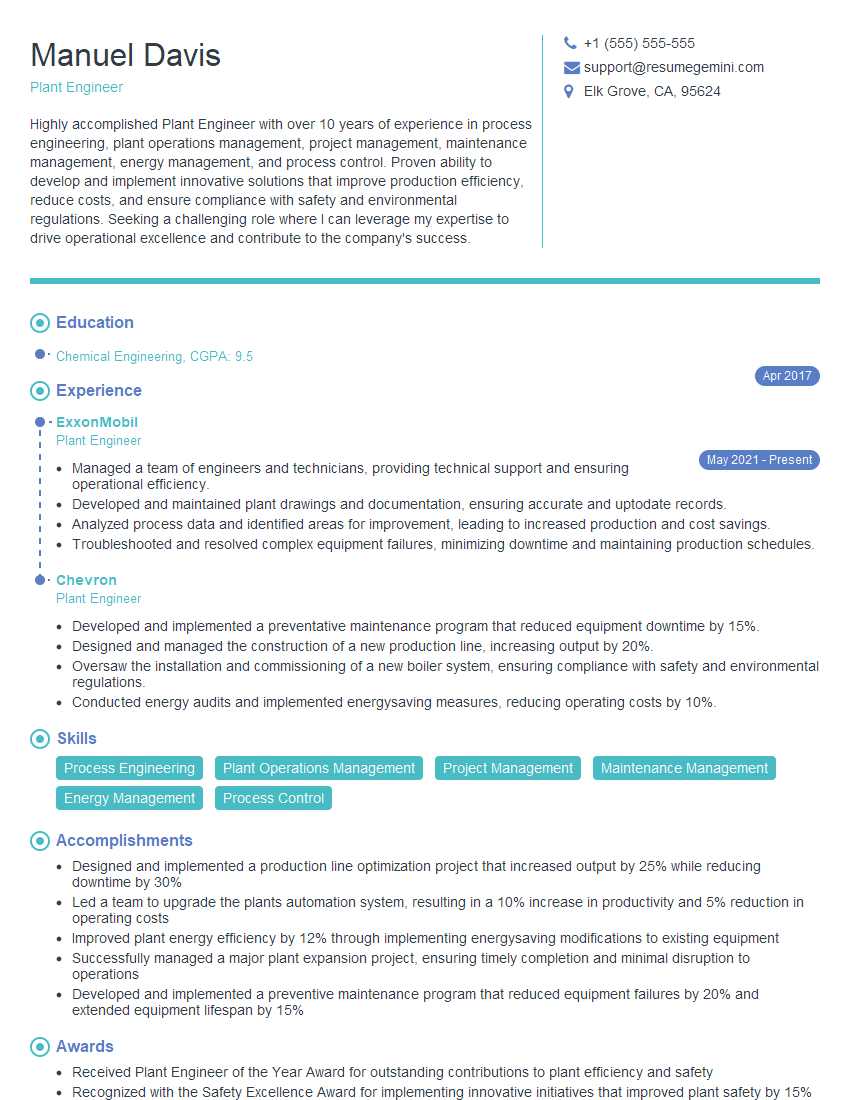
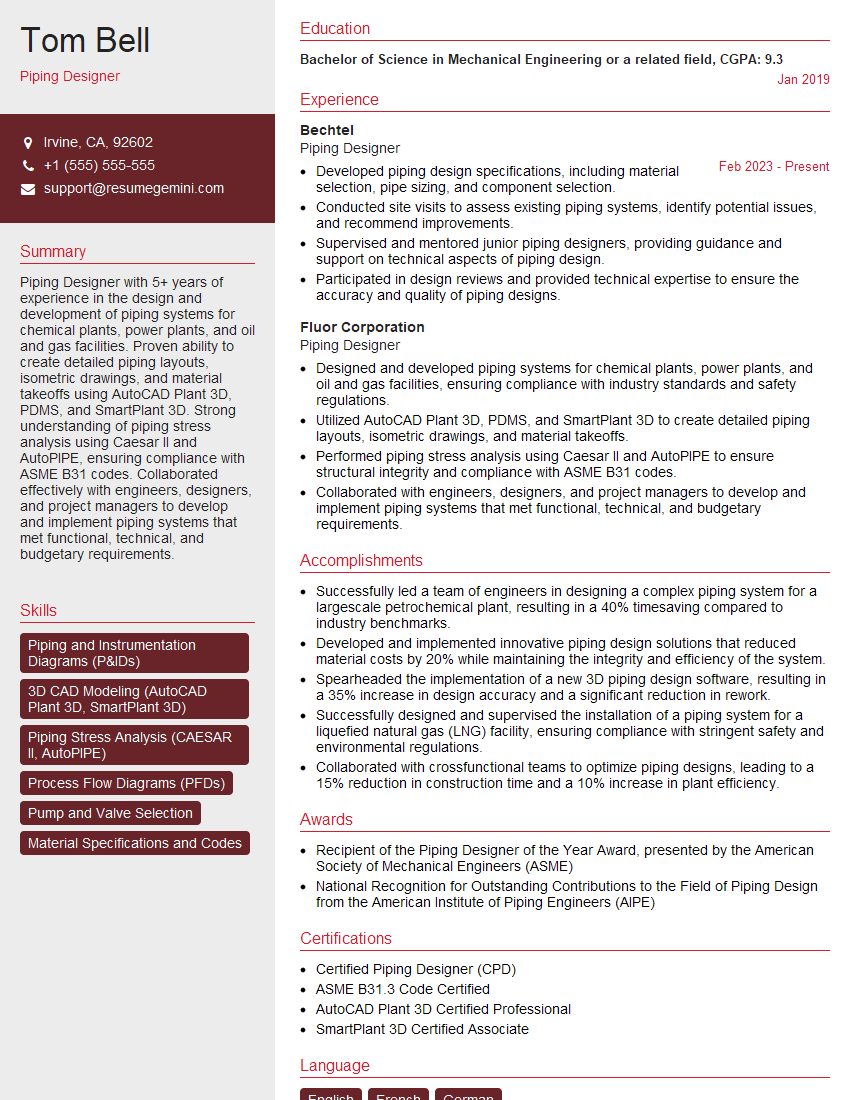
Mastering Piping and Machinery System Design opens doors to exciting career opportunities and significant professional growth within the engineering sector. To maximize your job prospects, it’s vital to present your skills effectively. Crafting an ATS-friendly resume is key to getting your application noticed by recruiters. ResumeGemini is a trusted resource that can help you build a professional and impactful resume tailored to your experience. Examples of resumes specifically designed for candidates in Piping and Machinery System Design are available to guide you. Take the next step towards a successful career—build a resume that showcases your expertise.
Explore more articles
Users Rating of Our Blogs
Share Your Experience
We value your feedback! Please rate our content and share your thoughts (optional).
What Readers Say About Our Blog
Very informative content, great job.
good