Interviews are opportunities to demonstrate your expertise, and this guide is here to help you shine. Explore the essential Knowledge of Construction Methods interview questions that employers frequently ask, paired with strategies for crafting responses that set you apart from the competition.
Questions Asked in Knowledge of Construction Methods Interview
Q 1. Explain different types of foundation systems and their suitability for various soil conditions.
Foundation systems are the structures that transfer the weight of a building to the underlying soil. The choice of system depends heavily on the soil type and the building’s load. Poor choices can lead to settlement, cracking, and even collapse.
- Shallow Foundations: These are used when the soil is strong and stable enough to support the building’s weight within a relatively shallow depth. Examples include:
- Spread Footings: Individual footings under each column or wall pier. Think of them as large, inverted bases that distribute the load over a wider area.
- Strip Footings: Continuous footings under load-bearing walls. Imagine a long, wide concrete beam running under a foundation wall.
- Combined Footings: Support multiple columns or walls, often used when columns are close together.
- Raft Foundations (Mat Foundations): A large, continuous slab covering the entire footprint of the building. Used when the soil is weak or the loads are very high. It’s like a giant, reinforced concrete raft floating on the soil.
- Deep Foundations: Used when the soil is weak or the load is significant requiring support from deeper, stronger strata. Examples include:
- Pile Foundations: Long, slender elements driven or drilled into the ground to transfer the load to a deeper, stronger layer. They’re like long nails holding the building down. Various types exist – driven piles (hammered in), bored piles (drilled in and filled with concrete), and helical piles (screw piles).
- Caissons: Large diameter, hollow cylindrical piers sunk into the ground and filled with concrete. Often used for bridges and high-rise buildings in areas with challenging soil conditions. They’re like giant, underground concrete columns.
- Pier Foundations: Similar to caissons but smaller in diameter. Often used for smaller structures or where less load is transferred.
Suitability for Various Soil Conditions:
- Strong, Stable Soil (e.g., bedrock, well-drained gravel): Shallow foundations are generally suitable.
- Weak, Compressible Soil (e.g., clay, silt, soft organic soils): Deep foundations are often necessary.
- Expansive Soils (e.g., clays that swell and shrink with moisture changes): Special foundation designs are required to mitigate settlement and heaving. This often involves deep foundations or specialized shallow foundations with provisions for expansion and contraction.
For instance, a building on solid bedrock might only require a simple slab-on-grade foundation, while a high-rise building in a swampy area would likely need a complex pile foundation system.
Q 2. Describe the process of concrete pouring and curing.
Concrete pouring and curing are critical steps to ensure a strong and durable structure. Proper techniques are vital to avoid cracking and other defects.
Concrete Pouring:
- Preparation: Ensure the formwork (temporary molds) is properly built, clean, and oiled to prevent sticking. Reinforcement steel (rebar) should be accurately positioned according to the design.
- Pouring: Concrete should be poured in layers, consolidating each layer with a vibrator to remove air pockets and ensure a dense, homogeneous mix. This prevents voids and weak points. The process should be continuous to avoid cold joints (weak areas between poured sections).
- Finishing: Once poured, the surface should be finished to the required specifications (e.g., smooth troweled finish, broom finish). This involves leveling, screeding, and smoothing the concrete surface.
Concrete Curing:
- Purpose: Curing allows the concrete to hydrate properly, gaining strength and durability. Insufficient curing results in weak, porous concrete susceptible to cracking and damage.
- Methods: Common methods include water curing (keeping the surface consistently moist), membrane curing (applying a plastic sheet to retain moisture), and chemical curing (applying curing compounds).
- Duration: The duration varies depending on the type of cement and environmental conditions (temperature, humidity). Typical curing times range from several days to several weeks.
Example: Imagine pouring a foundation. We carefully place and tie the rebar, erect the formwork, and pour the concrete in layers, using a vibrator to remove trapped air. Then, we cover the foundation with plastic sheeting (membrane curing) for at least seven days to maintain moisture and allow the cement to properly cure and achieve its design strength. Incorrect curing could lead to significant problems later on.
Q 3. What are the common methods for structural steel erection?
Structural steel erection is the process of assembling prefabricated steel members into a structure. Safety and precision are paramount in this process. Common methods include:
- Using a Crane: This is the most common method for erecting steel members. A crane lifts and positions the members, which are then bolted or welded into place. Large, heavy steel components are generally assembled this way.
- Using a Derrick: Similar to cranes but typically used in smaller projects or confined spaces. Derrick cranes provide excellent lifting capacity within a limited radius.
- Column Hoisting: Specifically for erecting columns, this method involves hoisting the column piece by piece until the required height is reached. Each piece is then securely fastened.
- Gin Pole System: A temporary mast and hoisting mechanism are used to erect structural steel members in locations inaccessible to cranes. This method is often used on difficult terrains or confined work sites.
Safety is critical during steel erection. Rigorous safety protocols, including proper rigging, fall protection, and detailed lifting plans, are essential to prevent accidents. The process typically involves a team of skilled ironworkers, riggers, and engineers working together.
Example: In the construction of a high-rise building, a large crawler crane will be used to lift and place massive steel beams and columns. Smaller sections might be erected using gin poles or derricks where crane access is limited. Each connection is meticulously checked and bolted or welded according to the structural drawings.
Q 4. Explain the different types of masonry construction.
Masonry construction utilizes units like bricks, blocks, or stones to create walls, columns, and other structural elements. Different types exist based on the materials and construction techniques used.
- Brick Masonry: Uses bricks laid in courses (horizontal layers) and bonded with mortar. It can be load-bearing or non-load-bearing depending on the design. Variations include running bond, common bond, English bond, and Flemish bond, which differ in the arrangement of bricks for aesthetics and structural strength.
- Block Masonry: Uses concrete blocks or cinder blocks which are larger than bricks, making the construction faster. Blocks are also typically hollow, which offers better insulation compared to solid brick but requires careful consideration during design due to potential weakness.
- Stone Masonry: Employs natural stones of varying sizes and shapes. It’s typically used for aesthetic appeal, but some stone types offer excellent strength and durability for load-bearing walls. This is a more labor-intensive process than brick or block masonry.
- Concrete Masonry Units (CMUs): Pre-cast concrete blocks that come in a variety of sizes, strengths, and finishes. Often used in commercial and industrial construction for speed and efficiency.
The choice of masonry type depends on factors like cost, aesthetics, structural requirements, and thermal performance. For example, a historic building might use hand-cut stone masonry for its unique appearance and durability, while a modern warehouse might use cost-effective CMUs for its structural strength.
Q 5. Describe the process of drywall installation and finishing.
Drywall installation and finishing create interior walls and ceilings. This process consists of two main phases: installation and finishing.
Drywall Installation:
- Framing: The initial step is constructing the wall or ceiling frame using wood or metal studs. These create the support structure for the drywall.
- Drywall Placement: Sheets of drywall are then fastened to the framing using screws. Seams between sheets are carefully aligned.
- Fastening: Proper spacing and depth of screws are crucial for a strong and secure bond. Using a drywall screw gun speeds up the process and maintains consistency.
Drywall Finishing:
- Taping: Seams are covered with joint compound (also known as drywall mud) and mesh tape to create smooth, seamless transitions. This is typically done in multiple coats.
- Sanding: After each coat of joint compound dries, it is sanded smooth to eliminate any ridges or bumps. This process requires care to avoid damaging the drywall surface.
- Priming: Once completely sanded and smoothed, a primer is applied to provide a uniform surface for paint. This enhances paint adhesion and provides a better final finish.
- Painting: The final stage involves painting the drywall to achieve the desired color and finish.
Example: When installing drywall in a new house, we first frame the walls and ceilings, ensuring proper spacing for insulation. Then, we carefully attach drywall sheets, ensuring the seams are well aligned and properly taped. Multiple coats of joint compound are applied and meticulously sanded before priming and painting. This step-by-step process ensures a clean, professional finish.
Q 6. What are the key considerations for waterproofing a building?
Waterproofing a building is crucial to prevent water damage, mold growth, and structural problems. Several key considerations are involved:
- Design Considerations: Building design should incorporate features that minimize water penetration, such as proper grading, flashing around windows and doors, and effective drainage systems. The design should also anticipate potential water entry points and address them proactively.
- Material Selection: Choosing appropriate waterproofing materials is critical. Options include membranes (e.g., EPDM, TPO, PVC), sealants, coatings, and specialized water-resistant materials for specific areas. The selection depends on the application, environmental conditions, and the building’s design.
- Installation Techniques: Proper installation is vital for the effectiveness of waterproofing systems. This includes careful preparation of surfaces, appropriate application methods, and adherence to manufacturer’s guidelines. Experienced professionals should carry out installation to avoid mistakes that compromise the system’s integrity.
- Maintenance: Regular inspection and maintenance are essential to identify and address any potential problems before they escalate. This includes checking for cracks, damage, or areas where water may be accumulating. Regular maintenance ensures long-term protection.
- Specific Areas: Particular attention should be given to vulnerable areas like foundations, roofs, walls, and openings (windows, doors, etc.). Specific waterproofing measures, such as damp proofing and cavity wall insulation, should be employed.
Example: A basement waterproofing project might involve excavating around the foundation, applying a waterproof membrane to the exterior walls, installing a drainage system, and then backfilling the excavation. Proper grading around the building is also essential to direct water away from the foundation.
Q 7. Explain different roofing systems and their applications.
Roofing systems protect buildings from the elements. Various systems cater to different needs and building types. The choice of roofing system depends on factors such as building type, climate, budget, and aesthetic considerations.
- Asphalt Shingles: A common choice for residential buildings, they are relatively inexpensive and easy to install. They come in various styles and colors and offer decent durability.
- Tile Roofing: Durable and aesthetically pleasing, tile roofs are commonly used in warm, dry climates. They’re long-lasting but can be more expensive to install.
- Metal Roofing: Very durable and long-lasting, metal roofs (e.g., aluminum, steel, copper) are resistant to fire, wind, and hail. They’re a more expensive option initially but offer excellent value in the long run.
- Flat Roofing Systems: Used on flat or low-sloped roofs, these systems often use membranes like EPDM, TPO, or PVC. They are typically more suited to commercial buildings and require careful installation and maintenance. They can also incorporate built-in drainage systems.
- Built-Up Roofing (BUR): A traditional flat roofing system using layers of asphalt and felt. It is durable and relatively inexpensive but requires specialized installation expertise.
Applications:
- Residential Buildings: Asphalt shingles, tile roofs.
- Commercial Buildings: Metal roofing, flat roofing systems (EPDM, TPO), BUR.
- Industrial Buildings: Metal roofing, high-performance membrane systems.
Example: A residential home in a snowy climate might opt for asphalt shingles for their cost-effectiveness and ease of installation, while a commercial building in a hurricane-prone region might choose a metal roof for its superior wind resistance.
Q 8. Describe the process of installing HVAC systems.
HVAC (Heating, Ventilation, and Air Conditioning) system installation is a complex process requiring skilled technicians and careful planning. It generally involves several key stages:
- Design and Planning: This initial phase involves assessing the building’s needs, calculating heating and cooling loads, and selecting the appropriate equipment (furnaces, air conditioners, heat pumps, etc.). Proper sizing is crucial for efficiency.
- Ductwork Installation: This often happens concurrently with the building’s framing. Ductwork, the network of pipes carrying conditioned air, needs to be properly sized, sealed, and insulated to minimize energy loss. Different materials like galvanized steel, flexible ductwork, and fiberglass are used based on the application.
- Equipment Installation: This includes placing the furnace, air handler, condenser unit (for air conditioners), and other components in designated locations. This requires careful consideration of accessibility for maintenance and proper ventilation.
- Refrigerant Piping: Refrigerant lines connect the indoor and outdoor components of air conditioners and heat pumps. These lines must be properly brazed, leak-tested, and insulated to ensure efficient and safe operation.
- Electrical Connections: HVAC systems require a substantial electrical load. Proper wiring and grounding are essential for safe and reliable operation. Electrical permits and inspections are mandatory.
- Testing and Commissioning: Once installed, the system undergoes rigorous testing to verify proper airflow, refrigerant levels, and overall functionality. This ensures the system meets design specifications and operates efficiently.
- Final Inspection: Local building codes typically require final inspections to ensure compliance before the system can be put into operation.
For example, installing a rooftop HVAC unit on a commercial building would involve significantly different considerations than installing a split-system in a residential home, with regards to accessibility, structural support, and noise reduction.
Q 9. What are the common methods for exterior wall cladding?
Exterior wall cladding protects the building’s structure from the elements and enhances its aesthetic appeal. Common methods include:
- Brick Veneer: Traditional and durable, brick veneer involves applying a layer of brick to a backing material. Requires skilled masons and proper mortar application.
- Stone Veneer: Similar to brick veneer, but using natural or manufactured stone. Offers a more rustic or luxurious appearance.
- Stucco: A cement-based plaster applied directly to a suitable substrate. Provides a smooth, weather-resistant finish. Requires careful preparation of the substrate to prevent cracking.
- Metal Panel Cladding: Modern and versatile, using aluminum, steel, or zinc panels. Provides durability, longevity, and aesthetic flexibility. Often involves specialized installation techniques and fasteners.
- Fiber Cement Siding: A composite material offering durability and low maintenance. Available in various styles and colors to mimic wood or other materials.
- Wood Siding: A classic choice offering a natural aesthetic. Requires regular maintenance to prevent rot and insect damage. Various types include clapboard, shingles, and shiplap.
The choice of cladding depends on factors such as budget, climate, aesthetics, and building code requirements. For instance, a high-rise building in a coastal area might opt for durable metal panel cladding to withstand strong winds and salt spray, while a residential home in a suburban area might choose more traditional brick or wood siding.
Q 10. Explain the process of installing windows and doors.
Window and door installation requires precision and attention to detail to ensure proper sealing, security, and energy efficiency. The process generally includes:
- Rough Opening Preparation: Ensuring the framing around the window or door opening is square, plumb, and properly sized according to the manufacturer’s specifications.
- Flashing Installation: Applying a waterproof barrier to prevent water intrusion. This is crucial to protect the building structure from moisture damage.
- Unit Installation: Carefully placing the window or door unit into the rough opening, ensuring it’s level and properly aligned.
- Securing the Unit: Fastening the unit to the framing using appropriate screws or fasteners, taking care not to over-tighten and cause damage.
- Caulking and Sealant Application: Applying sealant around the perimeter of the unit to create an airtight and watertight seal.
- Trim Installation: Installing trim around the window or door to provide a finished aesthetic appearance.
Different types of windows and doors (e.g., double-hung, casement, sliding, French doors) have varying installation methods. For instance, installing a large, heavy exterior door might require additional bracing and support to ensure structural integrity.
Q 11. Describe different types of flooring systems and their installation.
Flooring systems vary widely in material, installation method, and cost. Here are some examples:
- Carpet: Relatively inexpensive and comfortable, carpet is installed by stretching it over a pad and securing it to the edges of the room. Requires regular cleaning and maintenance.
- Hardwood Flooring: Durable and aesthetically pleasing, hardwood flooring can be installed using various methods, including nailing, gluing, or floating. Requires regular refinishing.
- Laminate Flooring: A cost-effective alternative to hardwood, laminate flooring is installed using a floating method, meaning it’s not directly attached to the subfloor. Relatively easy to install and maintain.
- Tile Flooring: Durable and water-resistant, tile flooring is installed using thin-set mortar. Requires careful planning and precise cutting for proper alignment and pattern.
- Vinyl Flooring: Affordable and versatile, vinyl flooring is available in sheets, tiles, or planks. Can be installed using adhesive or a click-lock system.
The choice of flooring system depends on factors such as budget, desired aesthetic, traffic volume, and moisture conditions. For example, a bathroom would typically require a water-resistant flooring such as tile or vinyl, while a living room might be suitable for hardwood or carpet.
Q 12. What are the key safety considerations during construction?
Safety is paramount in construction. Key considerations include:
- Fall Protection: Using harnesses, guardrails, and safety nets to prevent falls from heights, which are a leading cause of construction injuries.
- Personal Protective Equipment (PPE): Requiring workers to wear hard hats, safety glasses, gloves, and other PPE appropriate for the task.
- Hazard Communication: Clearly identifying and communicating potential hazards to workers through signage, training, and regular safety meetings.
- Machine Guarding: Ensuring machinery is properly guarded to prevent accidental contact.
- Lockout/Tagout Procedures: Implementing procedures to prevent accidental energizing of equipment during maintenance or repairs.
- Emergency Response Plan: Having a well-defined plan in place for dealing with emergencies, including medical emergencies, fires, and evacuations.
- Competent Personnel: Ensuring workers are properly trained and qualified for the tasks they are performing.
Regular safety inspections and incident reporting are crucial to maintain a safe working environment. For example, a construction site working at heights must implement stringent fall protection measures, including regular inspections of harnesses and anchor points.
Q 13. Explain the importance of building codes and regulations.
Building codes and regulations are crucial for ensuring public safety, structural integrity, and energy efficiency. They establish minimum standards for design, construction, and materials. Ignoring these codes can lead to structural failure, fire hazards, and other serious risks.
These codes cover various aspects of construction, including:
- Structural Design: Ensuring the building can withstand expected loads and stresses.
- Fire Safety: Specifying requirements for fire-resistant materials, fire suppression systems, and emergency exits.
- Accessibility: Mandating features to ensure accessibility for people with disabilities.
- Energy Efficiency: Setting standards for insulation, windows, and other energy-consuming elements.
- Plumbing and Electrical: Defining standards for plumbing systems, electrical wiring, and other building systems.
Compliance with building codes is essential for obtaining building permits and ensuring the legality of the construction project. Failure to comply can result in fines, delays, and even the demolition of the structure. For example, a building failing to meet fire code requirements might be deemed unsafe and require significant modifications before occupancy.
Q 14. Describe the process of scheduling a construction project.
Scheduling a construction project involves creating a detailed plan outlining all tasks, their durations, and dependencies. This ensures the project is completed on time and within budget. Several methods can be used:
- Gantt Charts: Visual representations of the project schedule, showing tasks as bars on a timeline. Clearly shows task durations, dependencies, and critical path.
- Critical Path Method (CPM): A network diagram technique that identifies the longest sequence of tasks (critical path) that determines the project’s overall duration. Focusing on the critical path helps in optimizing the schedule.
- Program Evaluation and Review Technique (PERT): Similar to CPM, but incorporates probabilistic estimates for task durations, allowing for better risk management.
Effective scheduling involves breaking down the project into smaller, manageable tasks, estimating the time and resources required for each task, identifying dependencies between tasks, and allocating resources effectively. Software tools like Microsoft Project or Primavera P6 are often used to manage complex projects. Regular monitoring and updates are crucial to adapt to unexpected delays or changes.
For instance, a large-scale commercial building project would require a detailed schedule outlining tasks like site preparation, foundation work, structural framing, MEP (Mechanical, Electrical, Plumbing) installations, interior finishing, and commissioning, with clear dependencies and milestones.
Q 15. What are the common methods for cost estimation in construction?
Cost estimation in construction is crucial for successful project delivery. It involves predicting the total cost of a project before construction begins. Several methods are employed, each with its strengths and weaknesses:
Detailed Estimate: This method breaks down the project into its smallest components (e.g., materials, labor, equipment for each task). It’s the most accurate but also the most time-consuming and expensive. Think of it like meticulously planning a complex recipe – you list every ingredient and step.
Unit Price Estimate: This method uses pre-determined costs per unit of work (e.g., cost per square foot of flooring, cost per cubic yard of concrete). It’s faster than a detailed estimate but less accurate, especially for unique projects. Imagine using a pre-made cake mix – it’s quicker but may not be perfectly tailored to your taste.
Approximate Estimate: This is a rough estimate based on historical data or similar projects. It’s the quickest and cheapest method but is the least accurate. It’s like guessing the recipe based on past experiences – a good starting point but not precise.
Parametric Estimating: This sophisticated method uses statistical relationships between project characteristics (e.g., size, complexity) and cost. It’s often used for large-scale projects and relies on advanced software and historical data. This is like using a specialized software to predict the recipe based on input parameters.
The choice of method depends on the project’s size, complexity, and the available time and resources. Often, a combination of methods is used for a more comprehensive cost estimate.
Career Expert Tips:
- Ace those interviews! Prepare effectively by reviewing the Top 50 Most Common Interview Questions on ResumeGemini.
- Navigate your job search with confidence! Explore a wide range of Career Tips on ResumeGemini. Learn about common challenges and recommendations to overcome them.
- Craft the perfect resume! Master the Art of Resume Writing with ResumeGemini’s guide. Showcase your unique qualifications and achievements effectively.
- Don’t miss out on holiday savings! Build your dream resume with ResumeGemini’s ATS optimized templates.
Q 16. How do you manage risks and changes in a construction project?
Managing risks and changes is paramount in construction. A proactive approach is key. We typically use a combination of strategies:
Risk Identification and Assessment: This involves identifying potential risks (e.g., weather delays, material shortages, labor disputes) and evaluating their likelihood and potential impact. We use tools like SWOT analysis and risk registers.
Risk Mitigation Planning: Once risks are identified, we develop strategies to minimize their impact. This might include contingency planning (e.g., having backup suppliers), insurance, or employing experienced subcontractors.
Change Management Process: A formal process is essential for managing changes. All changes must be documented, reviewed, and approved. This ensures that changes are cost-effective and don’t compromise project quality or schedule.
Regular Monitoring and Reporting: We constantly monitor the project for potential risks and changes. Regular progress reports help identify issues early and allow for timely corrective actions. We use project management software to track progress against the baseline plan.
For example, on a recent project, we anticipated potential delays due to inclement weather. We mitigated this by securing a covered storage facility for materials and building a more flexible schedule with buffer time.
Q 17. Explain the process of quality control and assurance in construction.
Quality control (QC) and quality assurance (QA) are intertwined but distinct processes. QA focuses on preventing defects, while QC focuses on identifying and correcting defects.
Quality Assurance: This involves establishing and maintaining a system to ensure that the project meets predetermined quality standards. This includes selecting qualified contractors, implementing quality management plans, and using quality materials.
Quality Control: This involves inspecting and testing the work at various stages to ensure compliance with the plans and specifications. This often includes regular site inspections, material testing, and independent quality audits.
A robust QA/QC system relies on thorough documentation, clear communication, and a commitment to continuous improvement. For example, we use checklists for every stage of construction, conduct regular inspections, and meticulously document any non-conformances and corrective actions. We also employ third-party inspections for key elements to ensure impartiality.
Q 18. What are the different types of construction contracts?
Construction contracts define the agreement between the owner and the contractor. Several types exist:
Lump Sum Contract: The contractor agrees to complete the project for a fixed price. This provides certainty for the owner but requires detailed planning from the contractor.
Unit Price Contract: The contractor is paid based on the quantity of work completed (e.g., per cubic yard of excavation). This is suitable for projects with variable quantities of work.
Cost Plus Fee Contract: The contractor is reimbursed for actual costs plus a fixed fee or percentage. This provides flexibility but requires careful cost tracking.
Design-Build Contract: One entity is responsible for both design and construction. This simplifies the process but requires careful selection of the contractor.
The choice of contract type depends on the project’s complexity, risk profile, and the owner’s risk tolerance. Each contract type has its advantages and disadvantages and needs to be carefully negotiated.
Q 19. Describe your experience with project management software.
I have extensive experience using various project management software, including Primavera P6, MS Project, and Procore. These tools are indispensable for effective project management. I use them for:
Scheduling: Creating and managing project schedules, identifying critical paths, and tracking progress.
Resource Management: Allocating resources (labor, equipment, materials) efficiently.
Cost Control: Tracking project costs against the budget.
Document Management: Storing and sharing project documents securely.
Communication: Facilitating communication among project stakeholders.
For instance, on a recent high-rise project, Primavera P6 was crucial in managing the complex schedule and identifying potential delays early on. Procore was instrumental in facilitating communication and document sharing among the numerous subcontractors involved.
Q 20. Explain your understanding of lean construction principles.
Lean construction principles aim to eliminate waste and improve efficiency throughout the construction process. It’s based on the Toyota Production System and focuses on delivering maximum value with minimal waste. Key principles include:
Value Stream Mapping: Identifying and visualizing all steps involved in the construction process to pinpoint areas of waste.
Last Planner System: A collaborative planning process that involves all stakeholders in creating a reliable schedule.
Pull Planning: Scheduling work based on actual demand rather than a predetermined schedule.
Continuous Improvement: Constantly seeking ways to improve efficiency and eliminate waste through feedback and data analysis.
In practice, lean principles can be implemented through techniques like prefabrication, modular construction, and improved coordination among trades. For example, on a recent project, we implemented a Last Planner System which significantly reduced scheduling conflicts and improved overall efficiency.
Q 21. How do you handle conflicts between different stakeholders on a project?
Conflict resolution is an integral part of project management. My approach involves:
Early Identification and Prevention: Proactive communication and clear expectations can prevent many conflicts from arising. Regular meetings and open communication channels are essential.
Mediation and Negotiation: If conflicts do arise, I facilitate open communication and negotiation to find mutually acceptable solutions. I strive to understand each stakeholder’s perspective and find common ground.
Formal Dispute Resolution: In cases where negotiation fails, I am prepared to escalate the conflict to formal dispute resolution mechanisms, such as arbitration or litigation, as a last resort.
Documentation: Thorough documentation of all communications and agreements is critical to avoid misunderstandings and support dispute resolution.
For instance, on one project, a conflict arose between the electrical and mechanical subcontractors regarding access to certain areas. I facilitated a meeting between the parties, helped them understand each other’s constraints, and collaboratively developed a revised schedule that accommodated both trades. The result was a smooth continuation of the project without delays or cost overruns.
Q 22. What is your experience with sustainable construction practices?
Sustainable construction practices are crucial for minimizing the environmental impact of building projects. My experience encompasses various aspects, from material selection to waste management and energy efficiency. I’ve worked on projects utilizing recycled materials like reclaimed wood and recycled steel, significantly reducing embodied carbon. For example, on a recent school renovation, we substituted traditional concrete with a low-carbon alternative made from fly ash, resulting in a 30% reduction in the carbon footprint of the project. We also implemented strategies to improve energy efficiency, such as installing high-performance windows and utilizing solar panels, leading to reduced operational costs and a smaller environmental impact. My approach always involves life-cycle assessments (LCAs) to evaluate the environmental impact of building materials and construction methods, ensuring a holistic sustainability perspective throughout the project lifecycle.
Furthermore, I’m proficient in implementing green building rating systems like LEED (Leadership in Energy and Environmental Design) and BREEAM (Building Research Establishment Environmental Assessment Method), integrating sustainable practices into design and construction processes to achieve specific certification targets. I actively seek opportunities to incorporate innovative, sustainable technologies and methods, staying up-to-date with the latest advancements in the field.
Q 23. Describe your experience with BIM (Building Information Modeling).
Building Information Modeling (BIM) is an integral part of my workflow. I have extensive experience utilizing BIM software such as Revit and ArchiCAD for various project phases, from conceptual design to construction and facility management. I’m proficient in creating and managing 3D models, generating detailed drawings, and coordinating various disciplines, including architectural, structural, MEP (Mechanical, Electrical, and Plumbing), and fire protection engineering. For example, on a recent high-rise project, BIM allowed us to detect and resolve clashes between MEP systems and structural elements early in the design process, avoiding costly rework during construction. This saved both time and money. The use of BIM also facilitates better collaboration among project stakeholders by providing a central, shared model accessible to everyone.
Beyond design coordination, BIM enables enhanced quantity take-offs for accurate cost estimation, improved project scheduling, and more effective 4D (time-based) simulations for construction sequencing. The use of BIM ensures greater accuracy and reduces the likelihood of errors, improving overall project efficiency and quality. I also have experience with implementing BIM for facility management purposes, enabling efficient maintenance and operational management once the building is completed.
Q 24. How do you ensure timely completion of a construction project?
Ensuring timely project completion relies on meticulous planning, proactive risk management, and effective communication. My approach begins with a detailed construction schedule developed using critical path method (CPM) scheduling techniques, identifying critical tasks that directly impact the project timeline. This schedule is rigorously monitored and updated regularly to reflect project progress and any identified deviations. Proactive risk management is crucial; we identify potential delays, such as material shortages or unforeseen site conditions, and develop contingency plans to mitigate their impact.
Regular progress meetings with the project team, including contractors and subcontractors, are essential for open communication and efficient problem-solving. We use various tools, such as project management software, to track progress, report milestones, and address any potential delays promptly. Clear communication channels between the project team and the client ensure everyone is informed and aligned on project goals and timelines. By combining robust planning, proactive risk management, and transparent communication, I strive to deliver projects on time and within budget.
Q 25. Explain your experience with different types of construction equipment.
My experience encompasses a wide range of construction equipment, including earthmoving machinery (excavators, bulldozers, graders), lifting equipment (cranes, forklifts), concrete equipment (mixers, pumps, finishers), and specialized tools for various trades. I’m familiar with the operating principles, safety procedures, and maintenance requirements of this equipment. For instance, I have experience supervising the safe and efficient operation of tower cranes on high-rise projects, ensuring compliance with all safety regulations and procedures. I understand the importance of selecting the appropriate equipment for specific tasks, considering factors like site conditions, soil type, and project requirements.
Beyond practical operation, I’m knowledgeable about equipment selection, cost estimation, and maintenance scheduling to optimize project efficiency and minimize downtime. I regularly assess equipment performance, ensuring it is well-maintained and operating at peak efficiency to prevent delays. My understanding of equipment extends to the logistical aspects of transportation, storage, and safety management on construction sites.
Q 26. Describe your experience with site surveying and layout.
Site surveying and layout are foundational to successful construction projects. My experience involves all aspects, from initial site surveys using total stations and GPS equipment to establishing benchmarks, grid lines, and setting out building foundations and other key features. I’m proficient in interpreting survey data, preparing site plans, and ensuring accurate positioning of building elements. For example, on a recent road construction project, precise surveying techniques were crucial for accurately establishing road grades and alignment, ensuring smooth traffic flow and minimizing potential safety hazards. I use various software programs to process survey data and create detailed as-built drawings.
I understand the importance of coordinating surveying activities with other construction processes, such as excavation and foundation work, to ensure everything aligns perfectly and that any potential discrepancies are identified and rectified early on. My approach emphasizes accuracy and precision, minimizing errors and ensuring compliance with all relevant regulations and standards.
Q 27. How do you handle unexpected issues or delays during a project?
Unexpected issues and delays are inevitable in construction. My approach emphasizes proactive risk management to minimize their impact. This includes identifying potential risks early in the project lifecycle and developing contingency plans. However, when unexpected issues arise, my response is methodical and efficient. First, I thoroughly assess the nature and extent of the issue, gathering all relevant information and documenting it meticulously.
Next, I convene a meeting with the relevant project stakeholders, including the client, contractors, and subcontractors, to discuss potential solutions. We brainstorm options, evaluating their feasibility, cost implications, and impact on the overall project schedule. We then select the optimal solution, implementing it quickly and effectively. Throughout this process, clear communication is paramount; I ensure all stakeholders are kept informed of the situation and the proposed solution. Detailed documentation of the issue, its resolution, and any necessary adjustments to the project schedule is essential for maintaining transparency and accountability.
Q 28. Describe your experience with construction documentation and reporting.
Construction documentation and reporting are crucial for project success and compliance. My experience encompasses various aspects, from preparing detailed submittals for approval to generating progress reports, maintaining accurate records, and producing final as-built drawings. I’m proficient in using various software programs to create and manage these documents, ensuring they are accurate, complete, and readily accessible to all stakeholders. For example, I have successfully managed the documentation for complex projects, including detailed shop drawings, material certifications, inspection reports, and daily logs.
I maintain a centralized system for storing and managing project documentation, enabling easy retrieval of information when needed. My reporting practices are meticulous; I generate regular progress reports that highlight key milestones, achievements, and any outstanding issues. These reports are tailored to meet the specific needs of the client and other stakeholders. Maintaining accurate and comprehensive documentation is essential for effective project management, compliance, and future reference.
Key Topics to Learn for Knowledge of Construction Methods Interview
- Building Codes and Regulations: Understanding local, regional, and national building codes and their practical application in construction projects. This includes familiarity with safety regulations and permitting processes.
- Construction Sequencing and Scheduling: Mastering the critical path method (CPM) and other scheduling techniques to optimize project timelines and resource allocation. Be prepared to discuss practical challenges and solutions related to sequencing complex tasks.
- Material Selection and Properties: Deep knowledge of various construction materials (concrete, steel, timber, etc.), their properties, and appropriate applications. Understand the impact of material choices on project cost, durability, and sustainability.
- Construction Techniques and Methods: Familiarity with various construction methods, including traditional and modern techniques. This includes understanding the advantages and disadvantages of different approaches for various project types and scales.
- Quality Control and Risk Management: Understanding quality control procedures and risk assessment methodologies within construction projects. Be prepared to discuss strategies for mitigating potential risks and ensuring project success.
- Sustainable Construction Practices: Knowledge of environmentally friendly construction materials and methods, including LEED principles and sustainable building design. This demonstrates awareness of current industry trends.
- Project Cost Estimation and Control: Understanding various cost estimation techniques and methods for controlling project budgets. This includes the ability to identify potential cost overruns and implement corrective measures.
- Health and Safety Regulations: Thorough understanding of relevant health and safety regulations and procedures to ensure a safe working environment on construction sites. Be prepared to discuss practical safety measures.
Next Steps
Mastering knowledge of construction methods is crucial for career advancement in this dynamic field. A strong understanding of these principles will significantly enhance your interview performance and open doors to exciting opportunities. To further strengthen your job prospects, it’s vital to create a compelling and ATS-friendly resume that effectively showcases your skills and experience. ResumeGemini is a trusted resource that can help you build a professional and impactful resume. Examples of resumes tailored to showcasing expertise in Knowledge of Construction Methods are available to guide you. Take the next step towards your dream career today!
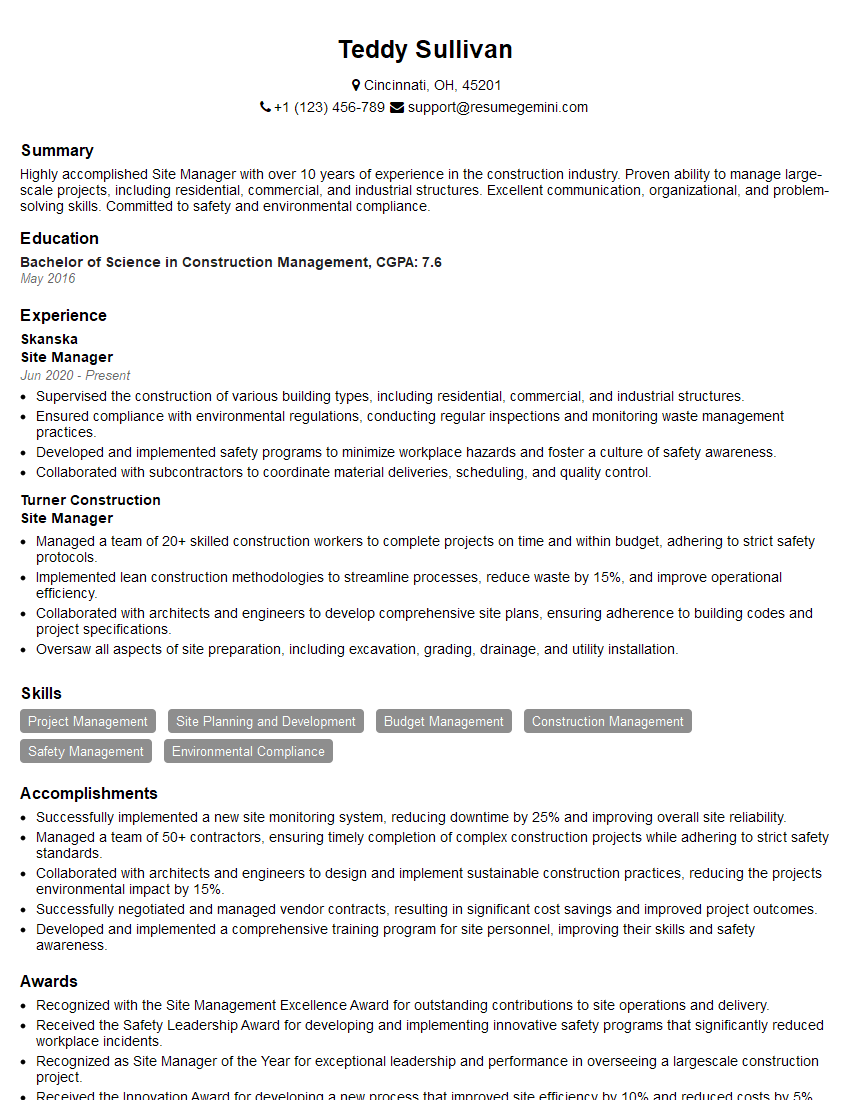
Site Manager Resume Sample
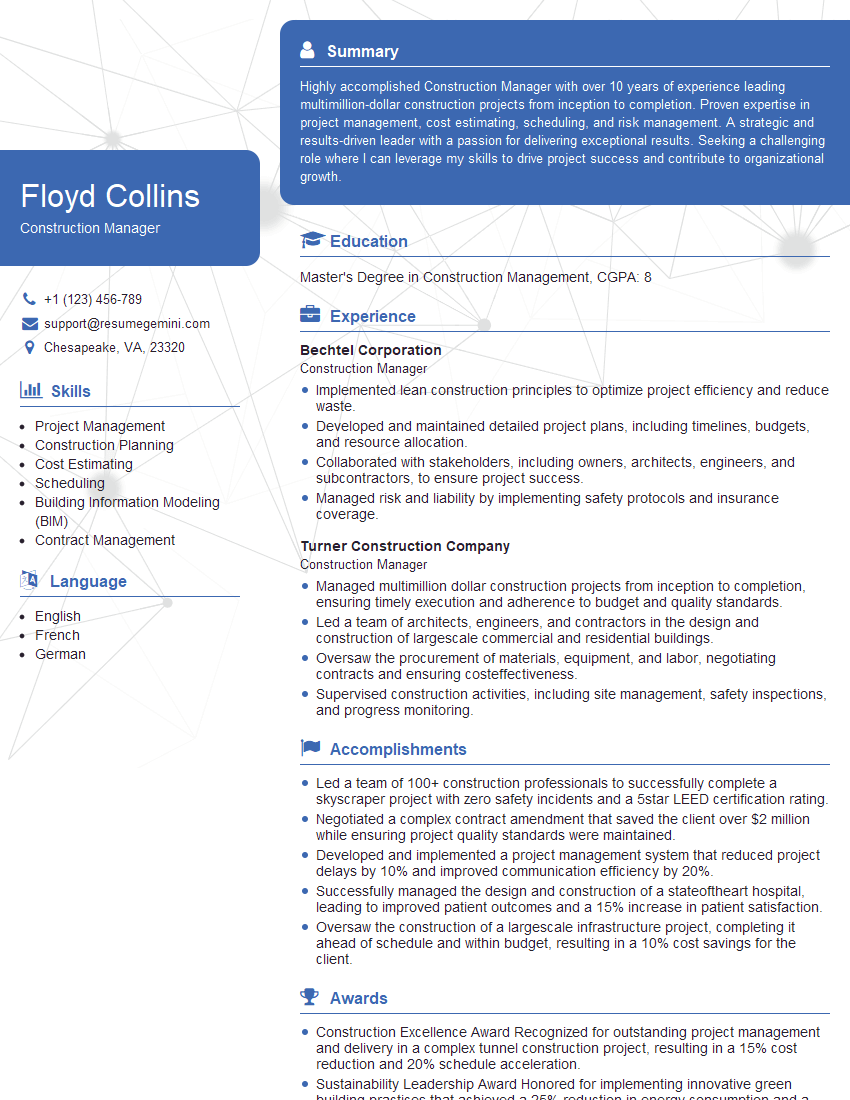
Construction Manager Resume Sample

Construction Superintendent Resume Sample
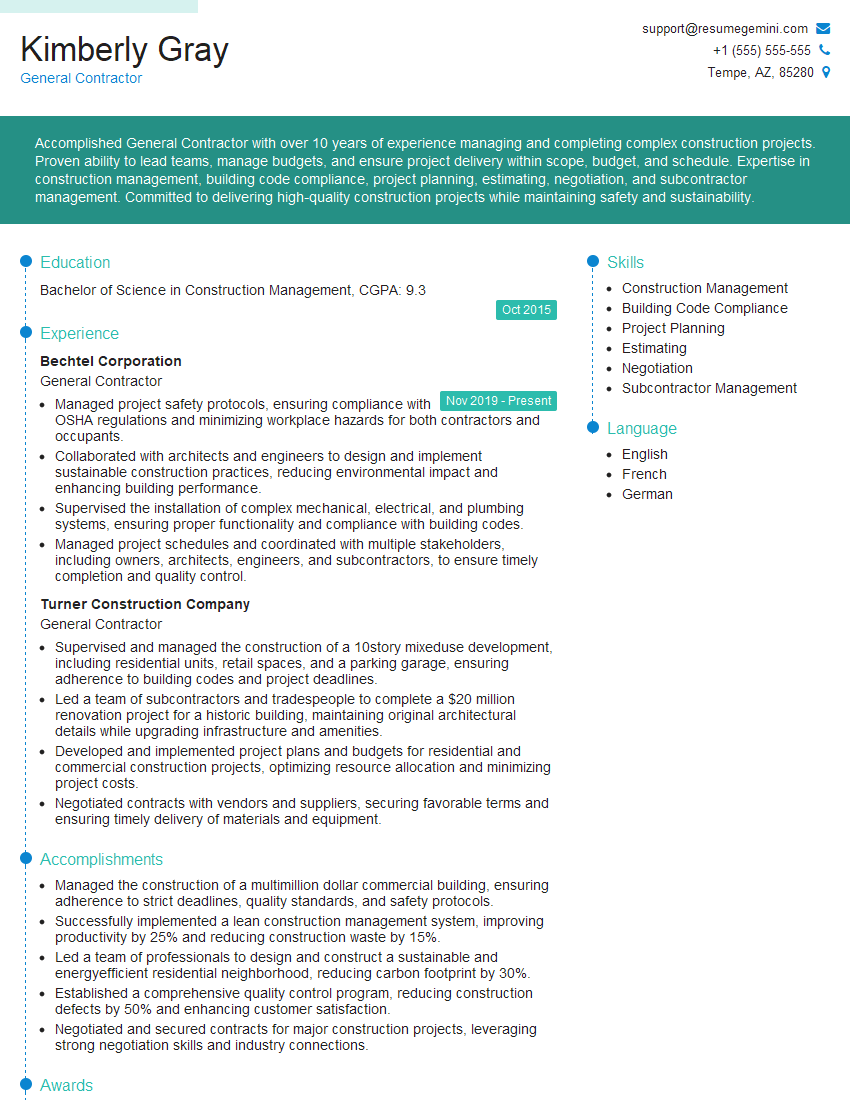
General Contractor Resume Sample

Project Manager Resume Sample

Project Engineer Resume Sample
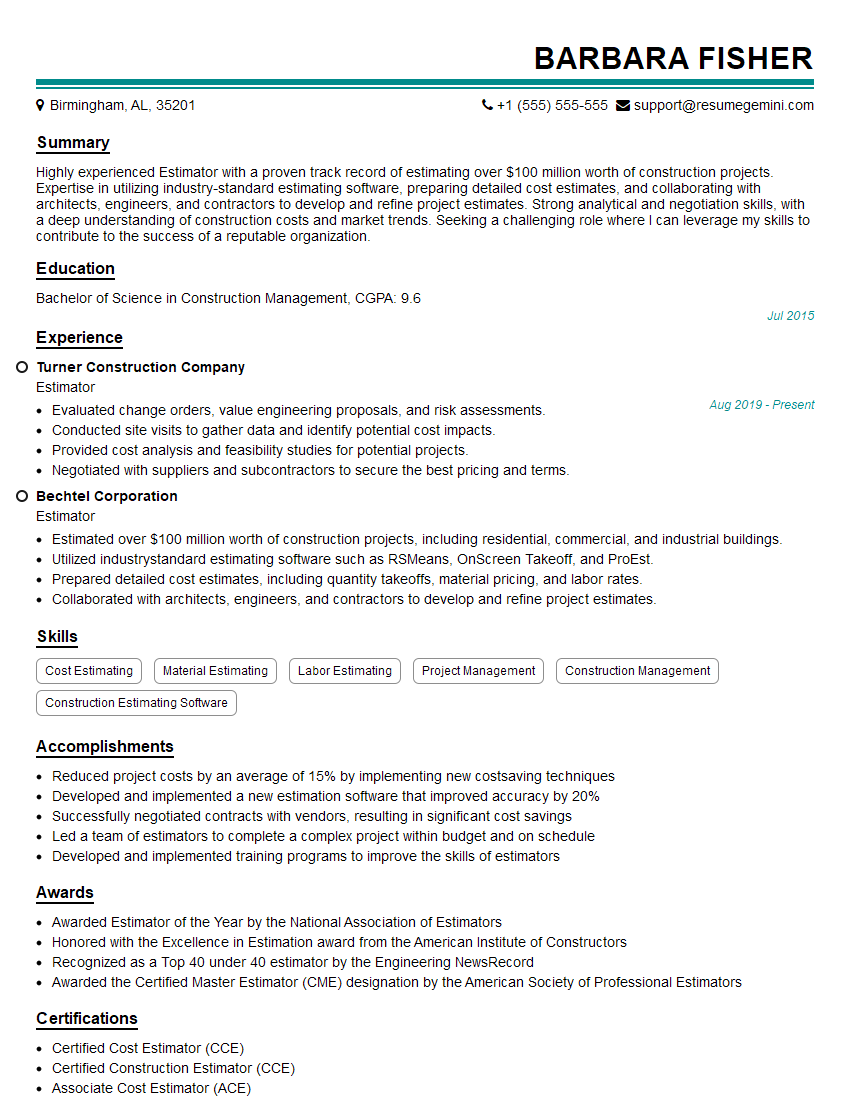
Estimator Resume Sample
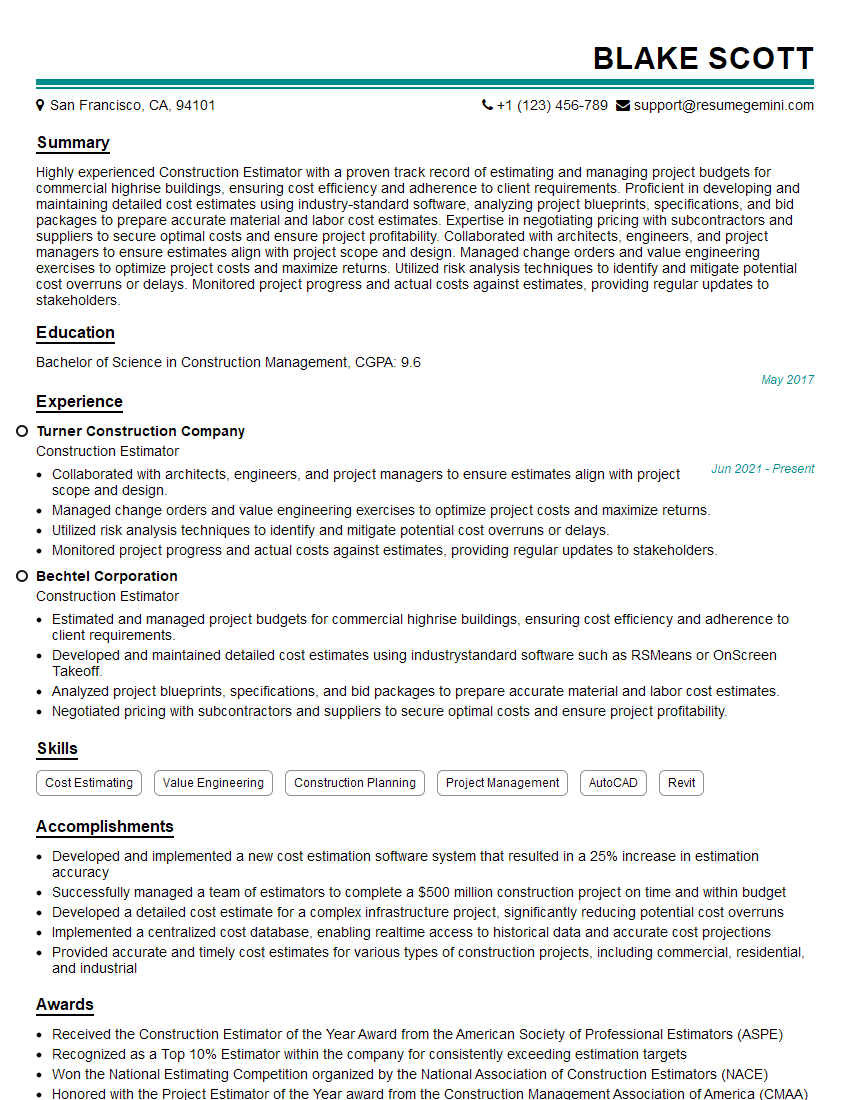
Construction Estimator Resume Sample
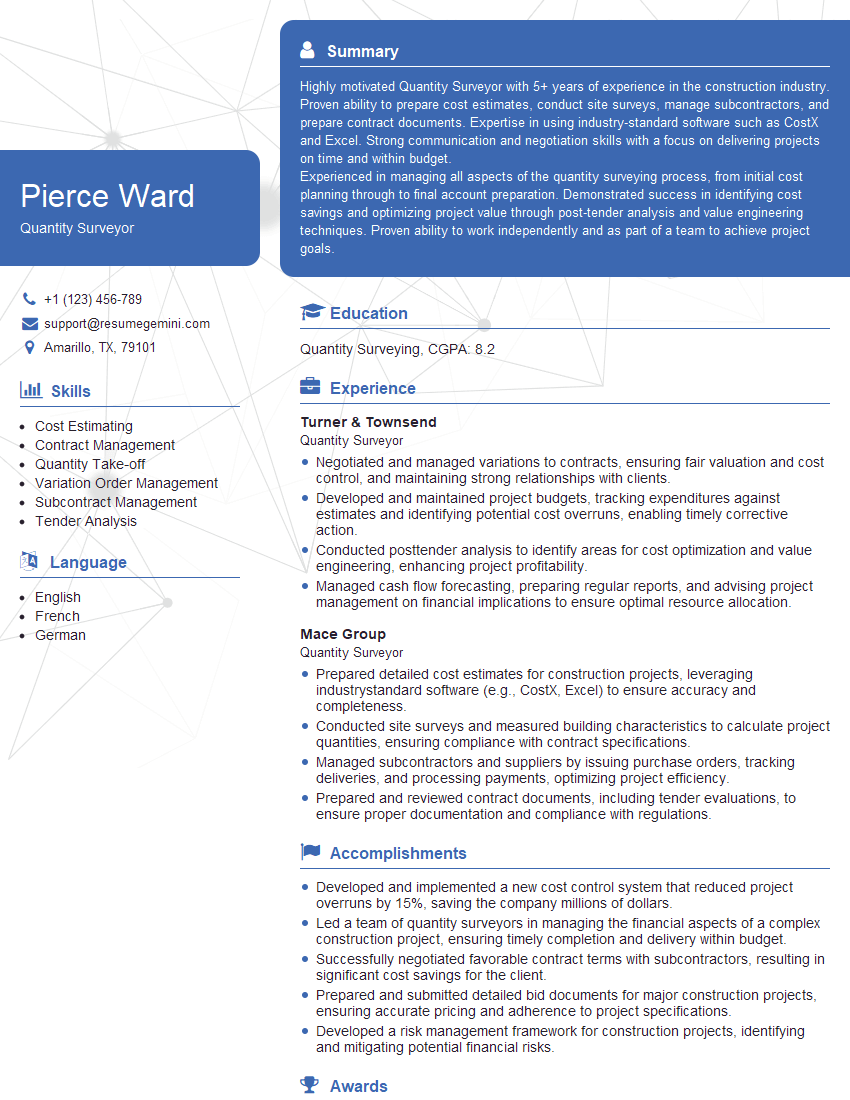
Quantity Surveyor Resume Sample
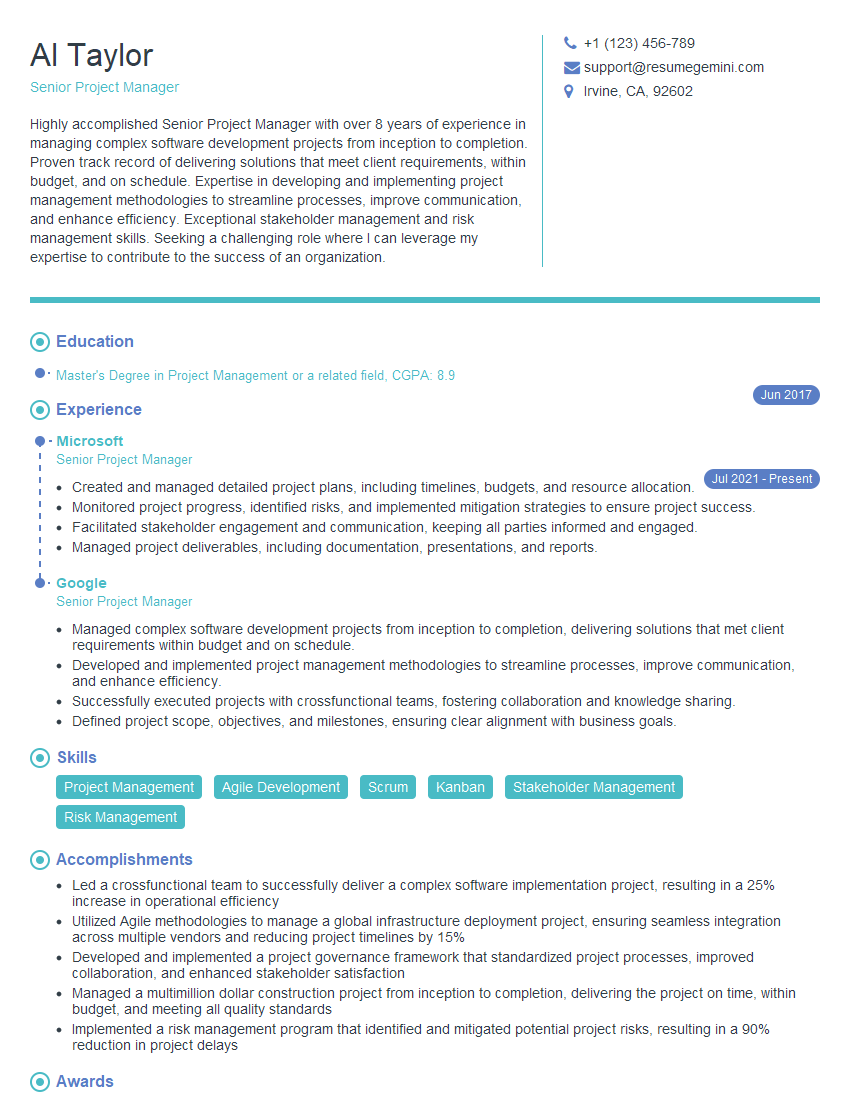
Senior Project Manager Resume Sample
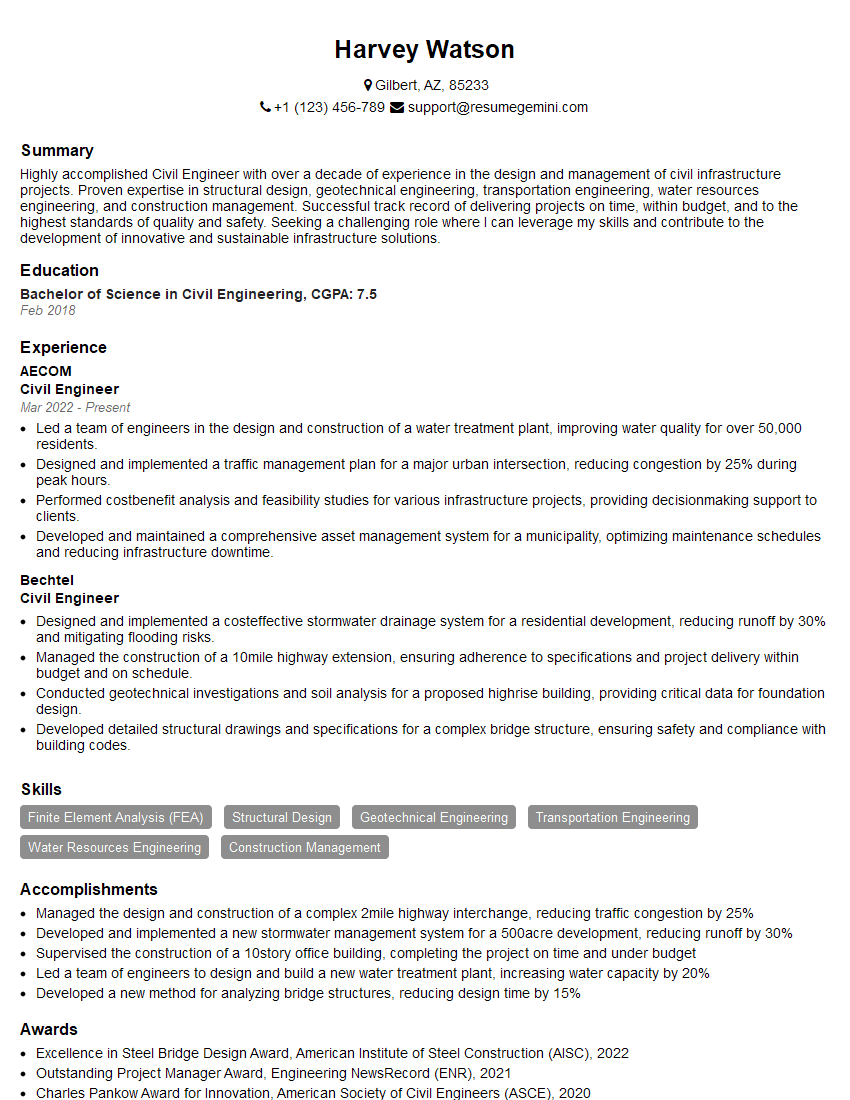
Civil Engineer Resume Sample
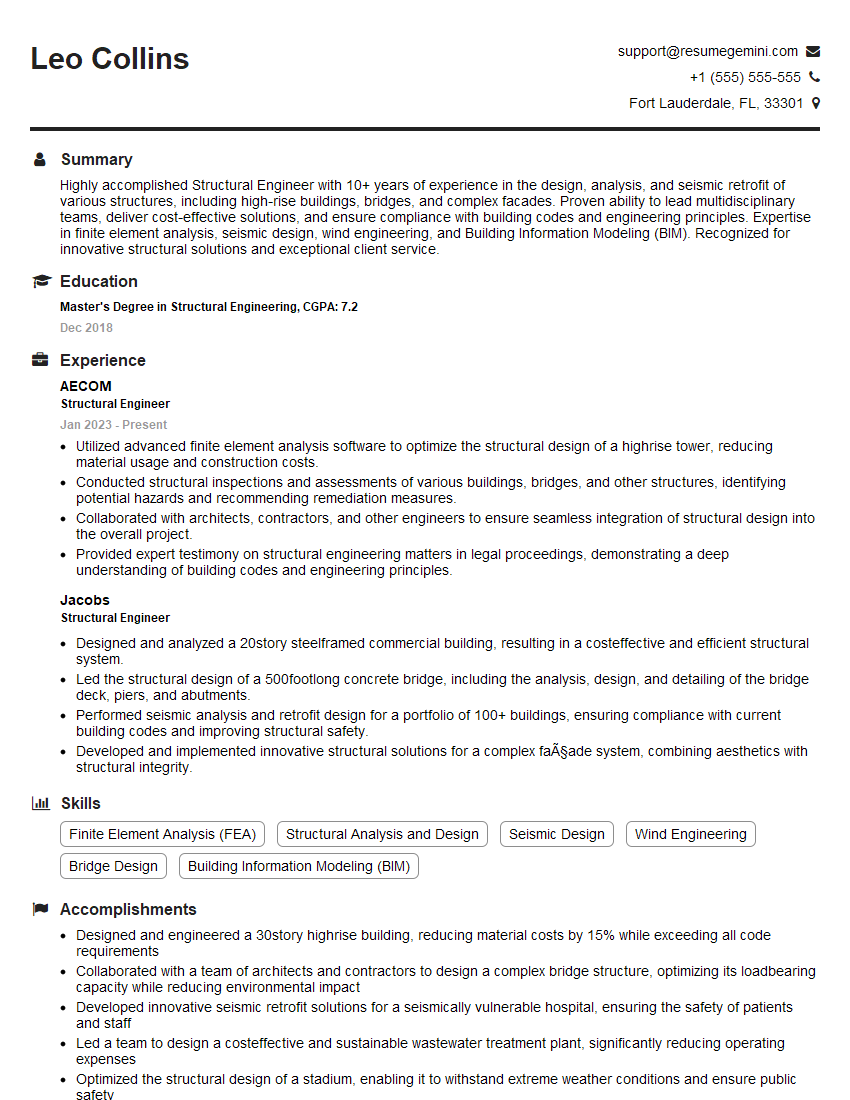
Structural Engineer Resume Sample
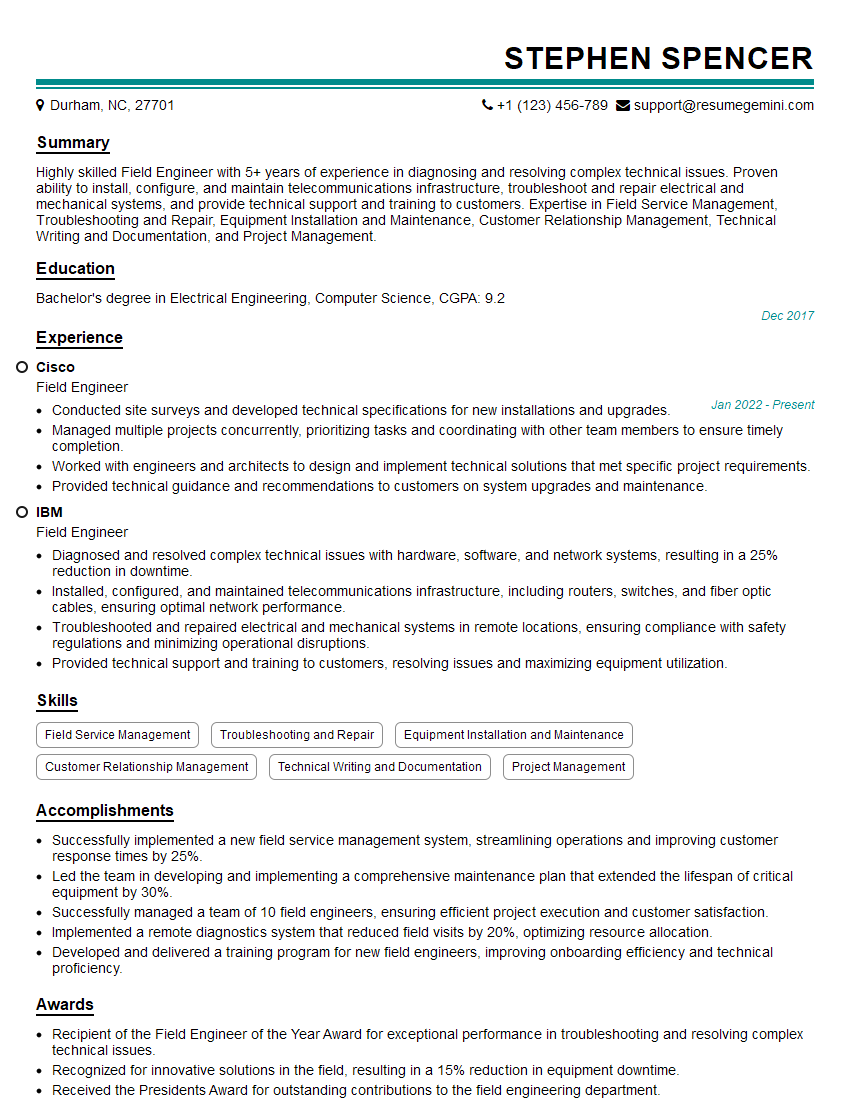
Field Engineer Resume Sample
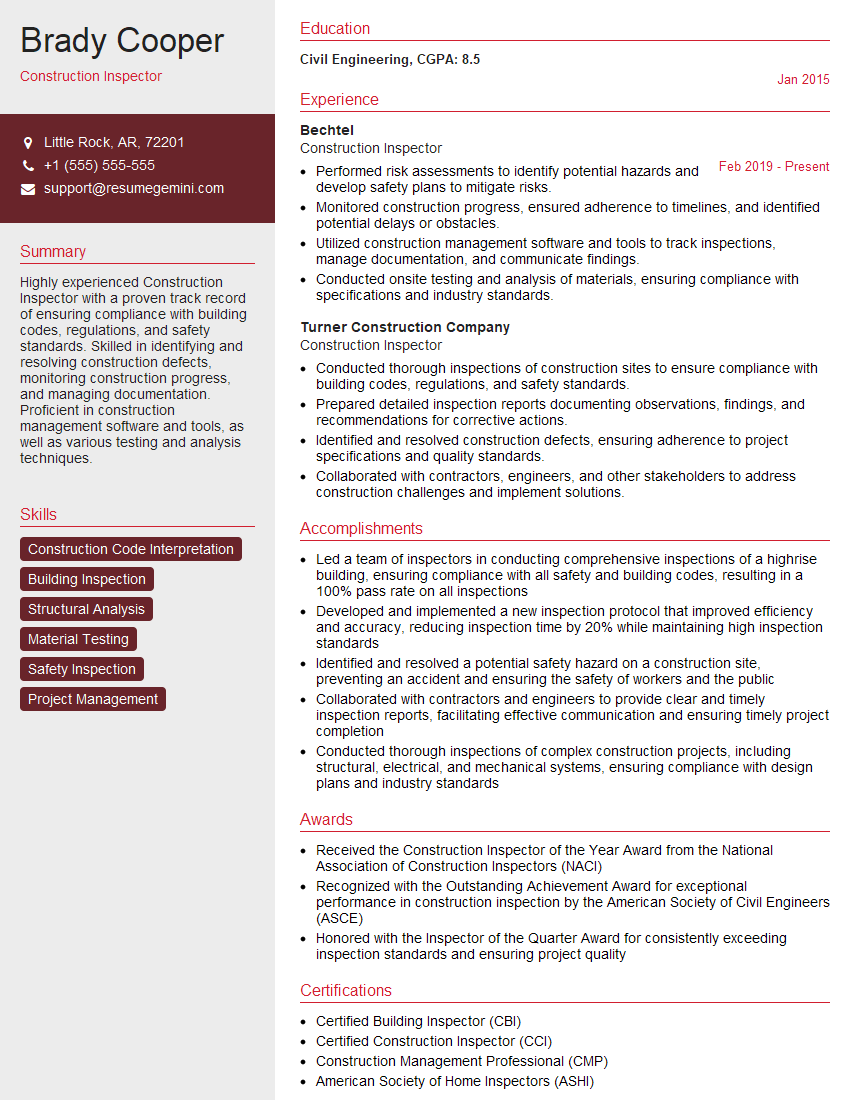
Construction Inspector Resume Sample
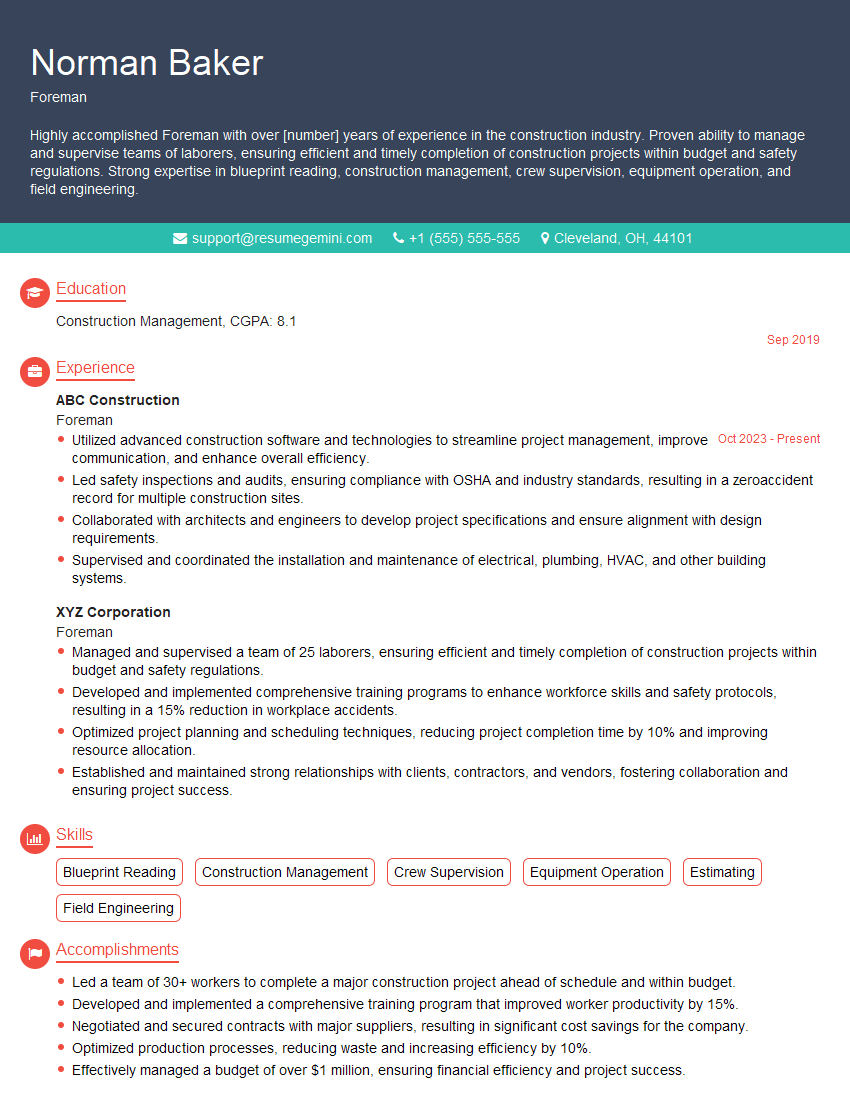
Foreman Resume Sample
Explore more articles
Users Rating of Our Blogs
Share Your Experience
We value your feedback! Please rate our content and share your thoughts (optional).
What Readers Say About Our Blog
Very informative content, great job.
good