Interviews are opportunities to demonstrate your expertise, and this guide is here to help you shine. Explore the essential Knowledge of Material Properties and Handling Techniques interview questions that employers frequently ask, paired with strategies for crafting responses that set you apart from the competition.
Questions Asked in Knowledge of Material Properties and Handling Techniques Interview
Q 1. Explain the difference between tensile strength and yield strength.
Tensile strength and yield strength are both crucial measures of a material’s ability to withstand tensile forces (pulling forces), but they represent different points on the material’s stress-strain curve. Tensile strength is the maximum stress a material can withstand before it breaks or fractures. Think of it as the ultimate limit of the material’s strength. Yield strength, on the other hand, represents the stress at which the material begins to deform permanently. This is the point where the material starts to change shape even after the load is removed. Imagine stretching a rubber band: it will return to its original shape until you stretch it past its yield strength, after which point it’s permanently stretched. The difference is crucial in engineering design; you’d want a material with a high yield strength to ensure it won’t deform permanently under normal operating conditions, and a high tensile strength to prevent fracture under extreme loads.
Example: A steel cable used in a suspension bridge needs high tensile strength to prevent breaking under the weight of the bridge and traffic. However, its yield strength also needs to be substantial to prevent permanent elongation and sagging under prolonged stress.
Q 2. Describe the concept of fatigue failure in materials.
Fatigue failure is a progressive and localized structural damage that occurs when a material is subjected to cyclic loading – repeated application and removal of stress. Even if the maximum stress in each cycle is well below the material’s tensile strength, the material will eventually fail due to the accumulation of microscopic damage. Think of constantly bending a paperclip back and forth; eventually, it will break at a point that wasn’t initially under high stress. The crack initiation and propagation are key stages of this process. The crack usually starts at a stress concentration point like a surface scratch or inclusion and slowly grows with each load cycle until the material ultimately fails. This can happen even at stresses significantly lower than the material’s ultimate tensile strength. This makes fatigue failure particularly dangerous because it can occur unexpectedly and without obvious warning signs.
Example: Aircraft wings are designed with fatigue failure in mind, as they are repeatedly stressed during take-off, flight, and landing. Thorough testing and careful design are vital to ensure their longevity and prevent catastrophic failure.
Q 3. What are the common methods for testing material hardness?
Several methods are used to measure material hardness, each employing different principles and providing slightly different hardness values. The most common include:
- Brinell Hardness Test: A hardened steel or carbide ball is pressed into the material under a specific load, and the resulting indentation diameter is measured. This is a relatively simple and inexpensive method suitable for a wide range of materials.
- Rockwell Hardness Test: This method measures the depth of penetration of an indenter (either a diamond cone or a hardened steel ball) under two different loads. It’s faster than the Brinell test and widely used in industrial settings.
- Vickers Hardness Test: A diamond indenter with a square-based pyramid shape is used, and the diagonal length of the resulting indentation is measured. This method is suitable for very hard and thin materials.
- Shore Durometer: This method uses a durometer, a device with a specific indenter that is pressed against the material. The hardness is indicated by the depth of penetration. It’s primarily used for softer materials like rubbers and plastics.
The choice of method depends on the material’s properties and the required accuracy.
Q 4. How does temperature affect the properties of different materials?
Temperature significantly impacts the properties of materials. The effect varies depending on the material type. Generally:
- Increased Temperature: Often leads to reduced strength, increased ductility (ability to deform without breaking), and decreased hardness. Some materials undergo phase transformations at specific temperatures, dramatically altering their properties.
- Decreased Temperature: Typically increases strength and hardness, but often reduces ductility and toughness (resistance to fracture). Brittle materials become even more brittle at low temperatures.
Examples: Steel becomes softer and more ductile at high temperatures, making it easier to forge or weld. Conversely, rubber becomes hard and brittle at low temperatures, losing its elasticity. Understanding these temperature-dependent effects is crucial in material selection for applications with varying temperature ranges, like aerospace components or cryogenic systems.
Q 5. Explain the concept of creep in materials.
Creep is the time-dependent permanent deformation of a material under constant stress and elevated temperature. It’s a gradual process where the material continues to deform over time, even without an increase in the applied load. Imagine a heavy metal beam supporting a load at high temperature; over time, the beam will slowly deform and sag. The rate of creep is highly temperature-dependent; it increases exponentially with increasing temperature.
Example: Turbine blades in jet engines operate at very high temperatures and experience significant creep over their lifespan. Materials engineers must select materials with excellent creep resistance to ensure the blades maintain their shape and integrity throughout the engine’s operation.
Q 6. What are the different types of material failures?
Material failures can be broadly classified into several types:
- Ductile Failure: Characterized by significant plastic deformation before fracture. The material stretches and necks down before finally breaking. This type of failure often provides warning signs.
- Brittle Failure: Occurs suddenly without significant plastic deformation. The material fractures immediately upon reaching its ultimate strength. This type of failure is often catastrophic and unpredictable.
- Fatigue Failure: As discussed earlier, it results from repeated cyclic loading, leading to crack initiation and propagation.
- Creep Failure: Caused by time-dependent deformation at elevated temperatures under constant stress.
- Corrosion Failure: Results from chemical or electrochemical degradation of the material due to its environment.
Understanding the mechanisms of different failure modes is essential for designing reliable and durable components.
Q 7. Describe the principles of material selection for a specific application.
Material selection for a specific application is a complex process requiring careful consideration of various factors. A systematic approach can involve the following steps:
- Define the application requirements: Determine the necessary mechanical properties (strength, toughness, hardness, etc.), chemical resistance, temperature range, cost constraints, and other relevant factors.
- Identify potential candidate materials: Based on the requirements, generate a list of suitable materials. This may involve consulting material property databases and handbooks.
- Evaluate material properties: Analyze the properties of candidate materials to ensure they meet or exceed the specified requirements. This may involve testing and simulations.
- Assess manufacturability and cost: Consider the ease of processing and fabrication of each material, along with its cost. Some materials may be difficult or expensive to manufacture.
- Perform risk assessment: Evaluate the potential failure modes and associated risks for each material. This may involve life cycle analysis and fatigue calculations.
- Select the optimal material: Based on the comprehensive evaluation, choose the material that best balances performance, cost, and risk.
Example: Selecting a material for a high-temperature turbine blade requires prioritizing high-temperature strength, creep resistance, oxidation resistance, and cost-effectiveness. Superalloys are often chosen for this application.
Q 8. Explain the importance of material compatibility in design.
Material compatibility is paramount in design because it ensures the long-term performance and safety of a product or structure. Incompatible materials can lead to a range of problems, from simple degradation and reduced lifespan to catastrophic failures. Think of it like choosing the right ingredients for a cake – using the wrong ones results in a disaster! In engineering, this means considering factors like chemical reactions, stress cracking, and galvanic corrosion.
For instance, using aluminum and steel together without proper surface treatments can lead to galvanic corrosion, where the aluminum corrodes preferentially due to a difference in electrochemical potential. Similarly, using a plastic that isn’t resistant to a particular chemical can lead to its degradation and compromise the structural integrity of the component. Careful consideration of material properties and potential interactions is crucial in all stages of the design process, from material selection to component manufacturing and assembly.
Q 9. What are the common methods for joining different materials?
Joining dissimilar materials requires careful consideration of their properties and the intended application. Several methods exist, each with its own advantages and limitations. A key consideration is ensuring a strong, reliable bond while minimizing any negative interactions between the materials.
- Welding (various processes, discussed later): Suitable for metals and some thermoplastics, offering strong joints but requiring specialized equipment and skill.
- Adhesives: Versatile and widely used, particularly for joining dissimilar materials that cannot be welded or mechanically fastened. Choice of adhesive depends critically on the materials’ surface properties and environmental conditions.
- Mechanical Fasteners (bolts, rivets, screws): Simple, reliable, and easily disassembled, though they can introduce stress concentrations and require pre-drilled holes. This method works well when strength and ease of assembly are prioritized.
- Brazing and Soldering: These methods use a filler metal with a lower melting point than the base metals to create a strong joint. They are suitable for joining similar metals and offer a higher strength compared to adhesives, but lower than welding.
- Diffusion Bonding: A high-temperature process that uses pressure and diffusion to create a strong bond between materials at the atomic level. This method creates very strong joints, but requires specialized equipment and careful control of temperature and pressure.
Q 10. Describe the different types of welding processes.
Welding encompasses numerous processes, each tailored to specific materials and applications. The choice of welding process depends on factors such as material thickness, joint design, required weld quality, and accessibility. Some common types include:
- Gas Metal Arc Welding (GMAW): Uses a continuously fed wire electrode and a shielding gas (usually argon or CO2) to create the weld. Versatile, productive, and suitable for various metals.
- Gas Tungsten Arc Welding (GTAW): Employs a non-consumable tungsten electrode and a shielding gas, offering excellent control and weld quality but lower deposition rates. Often used for critical applications demanding high precision.
- Shielded Metal Arc Welding (SMAW): A commonly used process using a consumable electrode coated with flux, producing its own shielding. Relatively inexpensive equipment but can be less versatile than GMAW or GTAW.
- Resistance Spot Welding (RSW): A process that uses electrical resistance to heat and fuse two metal sheets together at a specific point. High-speed and commonly used in automotive manufacturing.
- Laser Beam Welding (LBW): Uses a high-power laser beam to melt and fuse the materials. Precise, high-quality welds with minimal heat affected zone, but costly and requires specific safety measures.
Each process has its own advantages and disadvantages related to speed, cost, quality, and the skills required to operate it effectively. Proper operator training and adherence to safety protocols are vital for any welding operation.
Q 11. Explain the concept of stress corrosion cracking.
Stress corrosion cracking (SCC) is a serious form of material degradation that occurs when a material is subjected to a tensile stress in a corrosive environment. It’s a time-dependent process, meaning it can happen slowly over time. The combination of stress and corrosion leads to the formation and propagation of cracks, ultimately causing failure, often unexpectedly.
Imagine a stretched rubber band slowly dissolving in a solvent; that’s analogous to SCC. The stress weakens the material, making it more susceptible to attack by the corrosive environment. Factors that influence SCC include the material’s susceptibility, the level of applied stress, the corrosive environment’s aggressiveness, and the presence of surface imperfections. Certain alloys like stainless steel in chloride environments are particularly susceptible.
Preventing SCC involves careful material selection, stress reduction techniques (e.g., proper heat treatments), controlling the environment (e.g., using corrosion inhibitors), and regular inspections to detect early signs of cracking.
Q 12. How do you handle materials with different sensitivities to moisture or temperature?
Handling materials sensitive to moisture or temperature requires meticulous control of the storage and processing environment. The specific handling procedures depend on the material’s properties and the sensitivity level.
- Moisture-Sensitive Materials: These materials often need to be stored in desiccators, nitrogen-purged containers, or controlled-humidity environments to prevent degradation. Proper packaging and handling procedures are crucial to prevent moisture absorption, which can lead to oxidation, corrosion, or changes in physical properties.
- Temperature-Sensitive Materials: These may require controlled-temperature storage, either refrigerated, frozen, or heated depending on the material. Rapid temperature changes must be avoided to prevent thermal shock, which could lead to cracking or other forms of damage. Some materials need to be kept within a narrow temperature range, while others might be sensitive to both high and low temperatures.
Examples include certain polymers that are susceptible to hydrolysis in humid environments or electronic components that are susceptible to damage if exposed to high temperatures. Proper environmental control is essential for maintaining their quality and performance.
Q 13. What safety precautions should be taken when handling hazardous materials?
Handling hazardous materials requires strict adherence to safety protocols to protect workers and the environment. These protocols should always be followed, regardless of experience level.
- Personal Protective Equipment (PPE): Appropriate PPE is crucial, such as gloves, safety glasses, respirators, and protective clothing depending on the specific hazard. Selecting the right PPE is vital and depends on the material and the type of exposure.
- Material Safety Data Sheets (MSDS): Before handling any hazardous material, consult the MSDS to understand its properties, hazards, and safe handling procedures. MSDS sheets provide crucial information on handling, storage, and emergency responses.
- Proper Storage and Handling Procedures: Hazardous materials should be stored in clearly labeled, compatible containers in designated areas. Proper ventilation and spill containment measures should be in place. Special procedures might be required such as working under a fume hood or in a glovebox.
- Emergency Preparedness: Emergency procedures, including spill response plans and appropriate first aid measures, should be readily available and understood by all personnel involved. Regular safety training is crucial.
Failure to follow safety precautions can result in serious health consequences, environmental damage, and significant financial losses.
Q 14. Describe your experience with material handling equipment (e.g., forklifts, cranes).
I have extensive experience operating and maintaining various material handling equipment, including forklifts, overhead cranes, and smaller conveyors. My experience encompasses safe operation procedures, preventative maintenance, and troubleshooting common mechanical issues. I’ve been involved in projects requiring precise placement of heavy components and those involving delicate materials needing specialized handling.
For example, in a previous role, I was responsible for the safe transport and positioning of large, fragile molds using an overhead crane. This required careful planning, precise crane operation, and the use of appropriate rigging techniques to prevent damage to the molds. In another instance, I used a forklift to transport sensitive electronic components, ensuring that the load was secure and protected from vibration and shock.
My understanding extends beyond basic operation; I am also proficient in conducting regular inspections to ensure the equipment is in optimal working order and identify potential safety hazards. Safety is always my top priority when operating this type of equipment.
Q 15. Explain the importance of proper storage and handling of materials.
Proper storage and handling of materials are paramount to maintaining their quality, ensuring safety, and preventing costly losses. Think of it like this: a perfectly baked cake will be ruined if left uncovered in a hot room. Similarly, materials degrade or become unusable if not stored and handled correctly.
- Preventing Degradation: Many materials are sensitive to environmental factors like temperature, humidity, and light. Improper storage can lead to corrosion, oxidation, warping, or chemical reactions, rendering the materials unusable. For example, storing steel in a humid environment will lead to rust formation.
- Ensuring Safety: Certain materials are hazardous – flammable, toxic, or reactive. Incorrect handling can lead to accidents, injuries, and environmental damage. Think of handling corrosive chemicals without proper PPE (Personal Protective Equipment).
- Maintaining Quality: Proper storage and handling preserve the material’s inherent properties, ensuring that it meets the required specifications for its intended use. This is crucial for consistency in manufacturing processes and product quality. Imagine constructing a building with substandard concrete – the structural integrity is compromised.
- Reducing Waste: Careful handling minimizes material damage and waste, contributing to cost savings and environmental responsibility. Less waste means a smaller environmental footprint and reduced expenses.
Career Expert Tips:
- Ace those interviews! Prepare effectively by reviewing the Top 50 Most Common Interview Questions on ResumeGemini.
- Navigate your job search with confidence! Explore a wide range of Career Tips on ResumeGemini. Learn about common challenges and recommendations to overcome them.
- Craft the perfect resume! Master the Art of Resume Writing with ResumeGemini’s guide. Showcase your unique qualifications and achievements effectively.
- Don’t miss out on holiday savings! Build your dream resume with ResumeGemini’s ATS optimized templates.
Q 16. How do you ensure the quality of incoming materials?
Ensuring incoming material quality involves a multi-step process that starts even before the materials arrive. It’s crucial to establish clear specifications and quality standards, then meticulously verify the received materials against those standards. This typically includes:
- Supplier Qualification: We select suppliers with proven track records and robust quality management systems. We perform audits to assess their capabilities and adherence to industry best practices.
- Incoming Inspection: Upon arrival, materials undergo a thorough inspection. This can involve visual checks for damage, dimensional measurements, and sometimes destructive or non-destructive testing depending on the material and its criticality.
- Documentation Review: All accompanying documentation, including certificates of analysis (CoA), material safety data sheets (MSDS), and test reports, are meticulously reviewed for accuracy and completeness. Discrepancies are immediately flagged.
- Sampling and Testing: Representative samples are often taken from the incoming materials and subjected to relevant testing to verify properties like strength, composition, and purity. The tests used depend on the material and its application – a tensile test for steel, for instance, or a chemical analysis for polymers.
- Traceability: Maintaining detailed records of the material’s origin, processing, and handling allows for complete traceability in case of any quality issues. This assists in pinpointing the source of any defects.
For instance, in a previous role, we rejected a batch of aluminum alloy due to inconsistencies in its tensile strength revealed through tensile testing, despite the supplier’s CoA claiming otherwise. This proactive approach saved us from using faulty materials in our production.
Q 17. What are the common non-destructive testing methods for materials?
Non-destructive testing (NDT) methods allow us to evaluate the properties of a material without causing damage. These are invaluable for assessing the integrity and quality of components and finished products. Common methods include:
- Visual Inspection: The simplest method; checking for surface cracks, corrosion, or other visible defects.
- Ultrasonic Testing (UT): Uses high-frequency sound waves to detect internal flaws. Think of it like a sonar for materials. It’s useful for identifying cracks, voids, or inclusions.
- Radiographic Testing (RT): Employs X-rays or gamma rays to create images of internal structures. This reveals internal flaws like porosity or cracks.
- Magnetic Particle Testing (MT): Used to detect surface and near-surface cracks in ferromagnetic materials. Magnetic particles are applied to the surface, and the cracks are revealed by the way the particles accumulate.
- Dye Penetrant Testing (PT): A liquid dye is applied to the surface and penetrates any cracks. A developer then draws the dye out, making the cracks visible.
- Eddy Current Testing (ECT): Uses electromagnetic induction to detect surface and subsurface flaws in conductive materials. It’s very sensitive to changes in material conductivity.
The choice of NDT method depends on the material type, the type of defects expected, and the accessibility of the component.
Q 18. Describe your experience with different material characterization techniques.
My experience with material characterization techniques is extensive, covering a range of materials and applications. I have utilized various techniques, including:
- Mechanical Testing: Tensile testing, compression testing, hardness testing, impact testing, fatigue testing to determine strength, stiffness, ductility, and toughness. I’ve used these techniques extensively with metals, polymers, and composites.
- Thermal Analysis: Differential scanning calorimetry (DSC) and thermogravimetric analysis (TGA) to study phase transitions, thermal stability, and degradation behavior of materials. This is particularly useful for polymers and ceramics.
- Microscopy: Optical microscopy, scanning electron microscopy (SEM), and transmission electron microscopy (TEM) to examine the microstructure of materials, identifying features such as grain boundaries, precipitates, and defects. These techniques are vital for understanding the relationship between microstructure and material properties.
- Spectroscopy: X-ray diffraction (XRD) for phase identification and crystal structure analysis, and Fourier-transform infrared spectroscopy (FTIR) for chemical composition analysis of polymers and other materials.
- Rheological Testing: For characterizing the flow and deformation behavior of liquids and semi-solids, such as polymers and paints.
For instance, in one project, we used SEM and XRD to analyze the failure of a composite component, identifying the cause as micro-cracking due to improper curing. This led to improvements in the manufacturing process.
Q 19. How do you handle material discrepancies or defects?
Handling material discrepancies or defects requires a systematic approach to ensure timely resolution and prevent further issues. The process typically involves:
- Identification and Documentation: Thoroughly document the nature, extent, and location of the defect. This includes taking photos and detailed measurements.
- Root Cause Analysis: Investigate the potential causes of the defect. This might involve examining the manufacturing process, material specifications, or handling procedures.
- Containment: Isolate the affected materials to prevent further use or contamination.
- Corrective Actions: Implement corrective actions to address the root cause of the defect and prevent recurrence. This may involve process improvements, changes in material sourcing, or additional quality control measures.
- Disposition: Determine the appropriate disposition of the defective materials. Options include repair, rework, scrap, or return to the supplier.
- Documentation and Reporting: Document all actions taken and communicate the results to relevant stakeholders.
A recent example involved a batch of steel with higher than acceptable levels of carbon. After investigating, we traced the issue to a supplier’s deviation from standard procedures. We worked with them to resolve the issue and implemented stricter verification procedures to prevent future occurrences.
Q 20. Explain the process of material traceability.
Material traceability is the ability to track a material’s history from its origin to its final application. This is crucial for quality control, safety, and regulatory compliance. It involves maintaining detailed records throughout the material’s lifecycle. This ensures accountability and allows for quick identification of the source of any problem.
The process typically involves:
- Unique Identification: Assigning unique identifiers (lot numbers, batch numbers, serial numbers) to each batch of material.
- Record Keeping: Maintaining detailed records of material origin, processing steps, handling procedures, inspections, and testing results. This is often done using a computerized system (ERP, MES).
- Documentation: Creating and maintaining comprehensive documentation such as certificates of analysis (CoA), material safety data sheets (MSDS), and quality control reports.
- Data Management: Using a system to manage and store material data effectively, ensuring data integrity and accessibility.
- Auditing: Regularly auditing the traceability system to ensure accuracy and completeness.
For instance, in the aerospace industry, material traceability is paramount for safety and regulatory compliance. We must be able to trace every component back to its origin to ensure that it meets the stringent requirements for airworthiness.
Q 21. How do you manage material inventory effectively?
Effective material inventory management is essential for optimizing production, minimizing costs, and preventing stockouts or overstocking. It relies on several key strategies:
- Inventory Control System: Implementing a robust inventory control system, often computerized, to accurately track material quantities, locations, and usage.
- Demand Forecasting: Accurately forecasting future material needs to ensure sufficient inventory without excessive stockpiling.
- Just-in-Time (JIT) Inventory: Minimizing inventory levels by receiving materials only when needed for production. This requires close collaboration with suppliers and efficient logistics.
- ABC Analysis: Classifying materials based on their value and consumption rate. High-value materials (A) require close monitoring, while low-value materials (C) may require less stringent control.
- Regular Stock Audits: Conducting periodic physical stock audits to reconcile actual inventory with recorded levels and identify discrepancies.
- Warehouse Management: Optimizing warehouse layout and storage practices to ensure efficient material handling and access.
- Inventory Turnover Rate: Monitoring the inventory turnover rate to identify slow-moving or obsolete materials.
In a previous role, we implemented a JIT inventory system for critical components, resulting in a significant reduction in inventory holding costs and improved production efficiency. We also used ABC analysis to prioritize inventory control efforts on high-value materials.
Q 22. What are the different types of plastics and their properties?
Plastics are a vast family of synthetic or semi-synthetic organic polymers. Their properties vary dramatically depending on their chemical composition and processing. They are broadly categorized into thermoplastics and thermosets.
- Thermoplastics: These can be repeatedly softened by heating and solidified by cooling. Think of melting and re-solidifying plastic bags. Common examples include:
- Polyethylene (PE): A versatile plastic used in films (packaging), bottles, and pipes. High-density polyethylene (HDPE) is stronger and more rigid than low-density polyethylene (LDPE).
- Polypropylene (PP): Known for its toughness and resistance to chemicals, often used in containers, fibers, and automotive parts.
- Polyvinyl Chloride (PVC): Rigid and durable, commonly found in pipes, windows, and flooring. It requires stabilizers to prevent degradation.
- Polystyrene (PS): Lightweight and inexpensive, used in disposable cups, food containers, and insulation. Expanded polystyrene (EPS) is commonly known as Styrofoam.
- Thermosets: These undergo an irreversible chemical change upon heating, forming a rigid structure that cannot be re-melted. Think of epoxy resin hardening.
- Epoxy resins: Used as adhesives, coatings, and in composite materials due to their high strength and chemical resistance.
- Polyester resins: Common in fiberglass-reinforced plastics (FRP) due to their excellent mechanical properties.
- Phenolic resins: Known for their heat resistance and electrical insulation properties, often used in electrical components and molding compounds.
The properties of plastics are affected by factors like molecular weight, additives (plasticizers, fillers), and processing methods. This is why selecting the right plastic for a specific application is crucial.
Q 23. Explain the difference between different types of steel.
Steel is an alloy primarily composed of iron and carbon. The carbon content significantly affects its properties, along with alloying elements. Different types of steel are categorized based on their chemical composition and resulting properties.
- Carbon Steels: These contain only small amounts of carbon and other alloying elements. They are relatively inexpensive and easy to manufacture but have lower strength and corrosion resistance compared to alloy steels.
- Alloy Steels: These contain significant amounts of alloying elements like chromium, nickel, molybdenum, and manganese. The added elements enhance properties such as strength, toughness, hardness, corrosion resistance, and heat resistance. Examples include:
- Stainless Steel: Contains at least 10.5% chromium, which forms a protective chromium oxide layer, resulting in excellent corrosion resistance. Different grades (e.g., 304, 316) offer varying properties.
- High-Strength Low-Alloy (HSLA) Steel: These steels are designed for high strength with good weldability and formability, commonly used in automotive and construction industries.
- Tool Steels: These are designed for high hardness and wear resistance, used to make cutting tools, dies, and molds. They often contain elements like tungsten, vanadium, and molybdenum.
Selecting the appropriate steel requires careful consideration of the application’s demands. For example, a surgical instrument would require corrosion-resistant stainless steel, while a structural beam might use high-strength low-alloy steel.
Q 24. What are the common types of composites and their applications?
Composites are materials made from two or more constituent materials with significantly different physical or chemical properties that when combined produce a material with characteristics different from the individual components. They often combine a strong, stiff reinforcement phase with a matrix phase that binds the reinforcement together.
- Fiber-Reinforced Polymers (FRP): These are common composites where fibers (e.g., carbon fiber, glass fiber, aramid fiber) are embedded in a polymer matrix (e.g., epoxy, polyester). Applications range from aerospace components and automotive parts to sporting goods and construction materials.
- Particle-Reinforced Composites: These composites use particles (e.g., ceramic particles, metal particles) as the reinforcement phase within a matrix. Examples include concrete (aggregate in cement matrix) and metal matrix composites.
- Laminates: These are made by bonding together layers of different materials, often using adhesives. Plywood is a common example, but laminates can also be made with advanced materials for specific applications.
The choice of composite depends heavily on the required properties. For high strength and stiffness, carbon fiber reinforced polymers (CFRP) are preferred, while lower-cost applications might use glass fiber reinforced polymers (GFRP). The matrix material influences properties like toughness and chemical resistance.
Q 25. Describe the properties of ceramics and their limitations.
Ceramics are inorganic, non-metallic materials that are typically crystalline in nature. They are formed by high-temperature processing. They possess several unique characteristics:
- High hardness and strength: Ceramics are exceptionally hard and can withstand high compressive stresses.
- High melting points: They have very high melting points, making them suitable for high-temperature applications.
- Excellent chemical resistance: Many ceramics are resistant to corrosion and chemical attack.
- Good electrical insulation: Most ceramics are good electrical insulators.
However, ceramics also have limitations:
- Brittleness: Ceramics are inherently brittle and prone to fracture under tensile or impact loads. This is their primary limitation.
- Low fracture toughness: They have low resistance to crack propagation.
- Difficult to machine: Their hardness makes machining challenging and expensive.
Examples include alumina (Al2O3) for high-strength applications, zirconia (ZrO2) for high toughness, and silicon carbide (SiC) for high-temperature applications. The design and processing of ceramics are critical to mitigate their brittleness.
Q 26. How would you determine the best material for a high-temperature application?
Selecting a material for a high-temperature application requires careful consideration of several factors:
- Melting point: The material should have a melting point significantly above the operating temperature.
- Thermal stability: The material’s properties should not degrade significantly at the operating temperature. This includes oxidation resistance and creep resistance (deformation under stress at high temperatures).
- Thermal shock resistance: The ability to withstand rapid temperature changes without cracking or fracturing is critical in many applications.
- Strength and stiffness at high temperatures: The material must retain sufficient strength and stiffness to perform its intended function.
- Cost and availability: The practicality of using a specific material needs to be assessed.
A systematic approach involves:
- Defining the operating conditions: Precise temperature range, atmosphere (oxidizing or reducing), stress levels, and duration of exposure are essential.
- Material screening: Consulting material databases and handbooks to identify potential candidates based on melting point and other relevant properties.
- Testing and evaluation: Laboratory testing (e.g., creep tests, thermal shock tests) to evaluate the selected materials under realistic conditions.
- Cost-benefit analysis: Comparing the performance of different materials against their cost to make an optimal selection.
For example, superalloys (nickel-based alloys) are commonly used in gas turbine blades due to their exceptional high-temperature strength and oxidation resistance.
Q 27. Describe a time you had to troubleshoot a problem related to material properties or handling.
During a project involving the fabrication of a large polymer component for a medical device, we encountered unexpected warping during the curing process. The component was manufactured using a specific type of polycarbonate, and initial tests indicated that the material should meet our dimensional tolerance requirements. However, after multiple production runs, we observed consistent warping of approximately 2 mm, rendering the components unusable.
Troubleshooting involved several steps:
- Careful review of the manufacturing process: We examined parameters such as mold temperature, pressure, and cure time to eliminate any procedural issues.
- Analysis of the material properties: We re-examined the material’s data sheets and conducted additional tests to confirm its properties, including thermal expansion coefficient, glass transition temperature, and moisture absorption. We discovered a slight variation in the batch of polycarbonate we used, with a higher coefficient of thermal expansion than previously tested.
- Material substitution and testing: Based on our analysis, we explored alternative polymers with lower thermal expansion coefficients and higher dimensional stability. After rigorous testing, we successfully identified a suitable replacement material.
- Process optimization: To ensure consistent results with the new material, we optimized the molding process, fine-tuning parameters to minimize warping.
This experience highlighted the importance of thoroughly understanding material properties and the potential for subtle variations within a given material batch to impact the final product quality. A systematic troubleshooting approach, combining process analysis with material characterization, was key to resolving the issue.
Key Topics to Learn for Knowledge of Material Properties and Handling Techniques Interview
- Material Selection: Understanding the relationship between material properties (strength, ductility, elasticity, etc.) and application requirements. This includes considering factors like cost, availability, and environmental impact.
- Mechanical Properties Testing: Familiarize yourself with common testing methods (tensile testing, hardness testing, impact testing) and their interpretation to assess material suitability.
- Thermal Properties: Understanding concepts like thermal conductivity, thermal expansion, and specific heat capacity and how they influence material behavior in different applications (e.g., heat exchangers, thermal barriers).
- Chemical Properties and Reactivity: Knowledge of corrosion resistance, oxidation, degradation, and the impact of chemical environments on material selection and handling.
- Material Handling and Safety: Safe practices for handling various materials, including personal protective equipment (PPE) requirements, storage considerations, and waste disposal procedures.
- Failure Analysis: Understanding common failure modes (fatigue, creep, fracture) and methods for investigating and preventing material failures. This includes analyzing root causes and recommending solutions.
- Manufacturing Processes and their Impact: Understanding how different manufacturing processes (casting, forging, machining, etc.) affect material properties and performance.
- Advanced Materials: Familiarity with newer material classes, such as composites, polymers, and nanomaterials, and their unique properties and applications.
- Problem-Solving and Case Studies: Practice applying your knowledge to solve hypothetical material selection and handling problems. Use case studies to develop your analytical and problem-solving skills.
Next Steps
Mastering Knowledge of Material Properties and Handling Techniques is crucial for career advancement in numerous engineering and scientific fields. A strong understanding of these concepts demonstrates your technical expertise and problem-solving abilities, making you a highly valuable asset to any team. To enhance your job prospects, it’s essential to present your skills effectively. Creating an ATS-friendly resume is vital for getting your application noticed by recruiters. We highly recommend using ResumeGemini to build a professional and impactful resume. ResumeGemini provides a user-friendly platform and offers examples of resumes tailored to roles requiring expertise in Knowledge of Material Properties and Handling Techniques. This will significantly improve your chances of landing your dream job.

Supply Chain Manager Resume Sample

Logistics Manager Resume Sample

Project Engineer Resume Sample

Procurement Specialist Resume Sample

Process Engineer Resume Sample

Research Scientist Resume Sample

Aerospace Engineer Resume Sample
Chemical Engineer Resume Sample

Civil Engineer Resume Sample

Environmental Engineer Resume Sample

Safety Engineer Resume Sample
Industrial Engineer Resume Sample

Manufacturing Engineer Resume Sample

Production Engineer Resume Sample
Quality Control Engineer Resume Sample

Materials Engineer Resume Sample

Metallurgical Engineer Resume Sample

Welding Engineer Resume Sample
Mechanical Engineer Resume Sample

Lab Technician Resume Sample
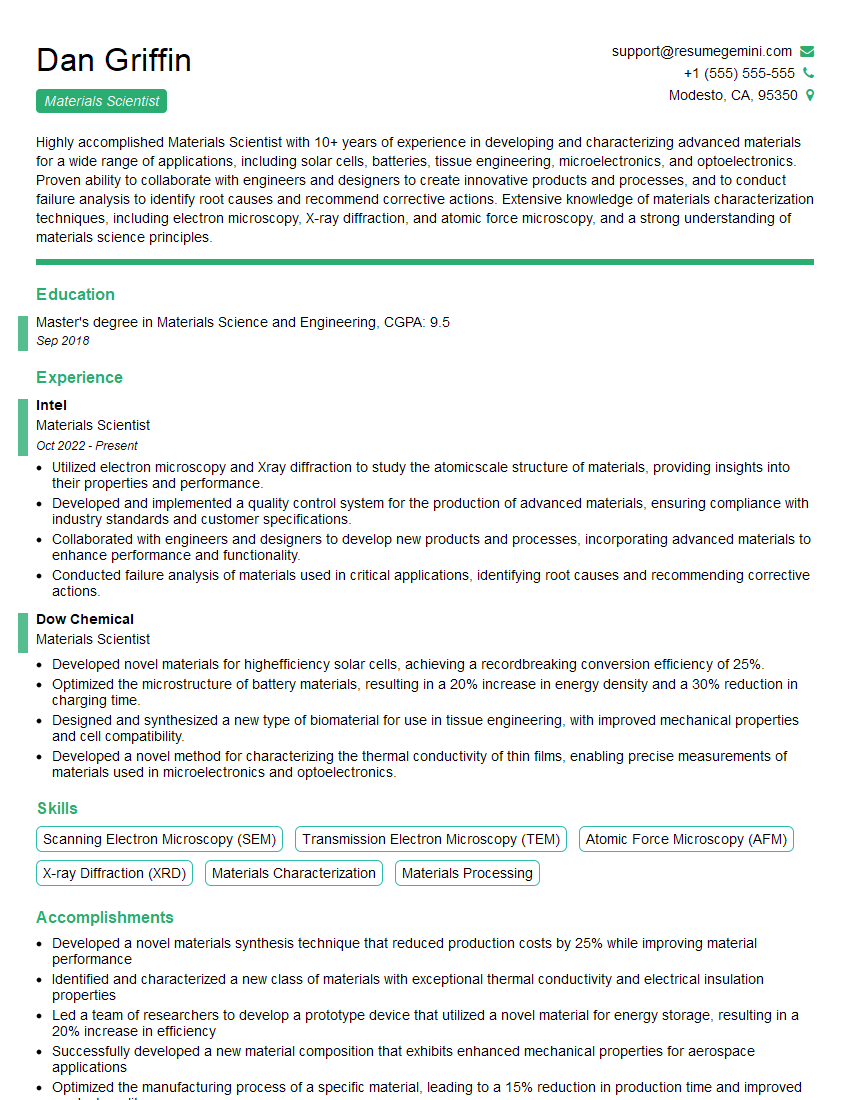
Materials Scientist Resume Sample

Materials Technician Resume Sample

Quality Control Inspector Resume Sample
- Supply Chain Manager
- Logistics Manager
- Project Engineer
- Procurement Specialist
- Process Engineer
- Research Scientist
- Aerospace Engineer
- Chemical Engineer
- Civil Engineer
- Environmental Engineer
- Safety Engineer
- Industrial Engineer
- Manufacturing Engineer
- Production Engineer
- Quality Control Engineer
- Materials Engineer
- Metallurgical Engineer
- Welding Engineer
- Mechanical Engineer
- Lab Technician
- Materials Scientist
- Materials Technician
- Quality Control Inspector
Explore more articles
Users Rating of Our Blogs
Share Your Experience
We value your feedback! Please rate our content and share your thoughts (optional).
What Readers Say About Our Blog
Very informative content, great job.
good