Interviews are more than just a Q&A session—they’re a chance to prove your worth. This blog dives into essential Knowledge of packaging materials and specifications interview questions and expert tips to help you align your answers with what hiring managers are looking for. Start preparing to shine!
Questions Asked in Knowledge of packaging materials and specifications Interview
Q 1. What are the key considerations when selecting packaging materials for a food product?
Selecting packaging materials for food products is crucial for maintaining quality, safety, and extending shelf life. Key considerations involve the product’s characteristics (e.g., moisture content, fat content, oxygen sensitivity), intended shelf life, distribution channels (temperature fluctuations during transport), and regulatory requirements. We must ensure the packaging protects the food from physical damage, contamination, and spoilage.
- Barrier Properties: The packaging needs to offer sufficient protection against oxygen, moisture, light, and aromas to prevent oxidation, rancidity, and flavor changes. For example, a high-oxygen sensitive product like coffee beans requires a package with a robust oxygen barrier.
- Material Compatibility: The chosen material shouldn’t react with the food, leaching undesirable chemicals or altering its taste or texture. For instance, acidic foods require packaging that won’t be affected by the acidity.
- Cost-Effectiveness: Balancing protection with cost is vital. A robust, expensive package is unnecessary for a product with a short shelf life and minimal spoilage concerns.
- Sustainability: Environmentally friendly materials and packaging designs are increasingly important, driving a shift towards recyclable, compostable, or biodegradable options.
- Regulations: Adherence to food safety regulations (like FDA in the US or EFSA in the EU) is paramount, requiring compliant materials and labeling.
For example, packaging fresh produce requires materials that are breathable to allow for gas exchange while preventing moisture loss and microbial growth. Contrast this with long-shelf-life products like canned goods, which require a hermetically sealed container to provide superior protection from external elements.
Q 2. Explain the difference between corrugated cardboard and solid fiberboard.
Both corrugated cardboard and solid fiberboard are made from paperboard, but their structures differ significantly, impacting their strength and applications.
- Corrugated Cardboard: This consists of fluted (wavy) medium sandwiched between two or more flat linerboards. The flutes create cushioning and strength, making it ideal for protecting fragile items during shipping. The flute type (A, B, C, E, F) determines the board’s stiffness and crush resistance. For example, ‘A’ flute is strong and suitable for heavy items, while ‘E’ flute is thinner and used for lighter products.
- Solid Fiberboard: This is made from multiple layers of flat paperboard bonded together under heat and pressure. It’s denser and stronger than corrugated cardboard but less flexible and less cushioning. It’s often used for boxes requiring high strength and rigidity, such as heavy-duty shipping containers and storage boxes. It’s also commonly used as the foundation for many other packaging types.
Think of it like this: corrugated cardboard is like a honeycomb – lightweight but strong due to its structure. Solid fiberboard is like a solid brick – dense and sturdy but less adaptable to shape.
Q 3. Describe the various types of plastic films used in packaging and their applications.
Plastic films are widely used in packaging due to their versatility, barrier properties, and cost-effectiveness. Several types exist, each suited for specific applications:
- Polyethylene (PE): A common, flexible, and relatively inexpensive film. Low-density polyethylene (LDPE) is used for bags and films requiring flexibility and sealability, such as grocery bags. High-density polyethylene (HDPE) is stiffer and used for bottles and containers.
- Polypropylene (PP): Stronger and more resistant to heat than PE. Often used for durable films, packaging for food products requiring high-temperature sterilization, and containers requiring superior impact resistance.
- Polyvinyl Chloride (PVC): Offers good clarity and barrier properties, used in shrink films, blister packs, and food packaging but is less commonly used now due to environmental concerns.
- Polyester (PET): A strong, clear, and excellent barrier film, used in bottles, pouches, and labels. It provides good chemical and oxygen resistance.
- Polyvinylidene Chloride (PVDC): Excellent barrier film, highly impermeable to oxygen, moisture, and aroma, often used as a coating on other films to enhance their barrier properties. This is often used in modified atmosphere packaging (MAP).
The choice depends on factors like the product’s properties, required barrier levels, desired aesthetics, and environmental considerations. For example, a snack food needing extended shelf life might use a multilayer film combining PET for strength and PVDC for oxygen barrier.
Q 4. What are the common barrier properties required in packaging materials, and how are they achieved?
Barrier properties are crucial in preventing interactions between the packaged product and the environment, preserving its quality and extending shelf life. Common barriers include:
- Oxygen Barrier: Prevents oxidation, rancidity, and spoilage in foods containing fats and oils.
- Moisture Barrier: Prevents moisture loss or gain, maintaining product texture and preventing microbial growth.
- Aroma Barrier: Prevents aroma loss or the absorption of unwanted odors.
- Light Barrier: Protects light-sensitive products from degradation caused by UV radiation.
These barriers are achieved through various techniques:
- Material Selection: Using inherently barrier-rich materials like EVOH, PVDC, or PET.
- Multilayer Films: Combining different films with varying barrier properties to create a composite structure with enhanced protection.
- Coatings: Applying thin coatings to improve the barrier properties of base materials.
- Laminates: Combining different materials to create a stronger and more effective barrier.
For example, a milk carton uses a multilayer structure combining paperboard for structure, polyethylene for sealing, and a thin layer of aluminum foil for its excellent oxygen and light barrier properties.
Q 5. How do you ensure compliance with relevant packaging regulations (e.g., FDA, EU)?
Ensuring compliance with packaging regulations is essential for food safety and legal compliance. This involves understanding the specific requirements of the relevant authorities, such as the FDA in the US, the EU Commission, or equivalent bodies in other countries.
Steps to ensure compliance:
- Material Selection: Using materials that meet regulatory requirements for food contact, ensuring they don’t leach harmful substances into the food.
- Labeling: Correctly labeling the packaging with required information, including ingredients, nutritional facts, storage instructions, and any warnings.
- Testing and Certification: Undertaking necessary tests to confirm that the packaging materials meet specified standards and obtaining certifications where needed.
- Documentation: Maintaining thorough records of materials used, testing results, and compliance procedures.
- Staying Updated: Regularly reviewing and updating knowledge of relevant regulations and standards as they may evolve over time.
Non-compliance can lead to product recalls, fines, and damage to brand reputation. A thorough understanding of the regulations and a robust quality control system are paramount for mitigating these risks. Utilizing a specialized consultant can also be highly beneficial for complex regulations or large scale operations.
Q 6. Explain the concept of shelf-life and its relation to packaging material selection.
Shelf life refers to the period during which a food product maintains its desired quality characteristics under specified storage conditions. Packaging material selection significantly influences shelf life. The packaging must protect the product from factors that shorten its shelf life, such as:
- Oxygen: Oxidation leads to rancidity and spoilage.
- Moisture: Moisture loss or gain affects texture and can promote microbial growth.
- Light: Exposure to UV light can degrade certain compounds.
- Temperature: Fluctuations in temperature can accelerate spoilage.
Choosing appropriate packaging materials is critical for extending shelf life. For example, packaging a high-fat product that is susceptible to oxidation requires materials with robust oxygen barriers, whereas a product prone to moisture loss needs packaging that minimizes moisture vapor transmission.
By carefully selecting materials that provide the necessary barrier properties, we can significantly extend the shelf life and maintain the quality of the food product.
Q 7. What are the different types of closures used in packaging and their suitability for different products?
Closures play a vital role in maintaining product integrity and shelf life. The choice depends on the product’s characteristics, packaging format, and desired ease of use. Some common closure types include:
- Screw Caps: Widely used for bottles and jars, providing a secure seal and easy opening/closing. Suitable for a wide range of products.
- Press-on/Snap-on Caps: Simple and economical, suitable for less sensitive products with short shelf lives.
- Crown Caps: Used for cans, providing a hermetic seal, ideal for preserving products requiring extended shelf life.
- Child-Resistant Closures: Designed to prevent children from easily accessing potentially hazardous products.
- Tamper-Evident Seals: Indicate if a package has been opened, enhancing product security.
- Spout Pouches: Provide a convenient dispensing method, commonly used for liquids and semi-liquids.
- Zipper Closures: Allow for repeated opening and closing, ideal for resealable packaging.
Selection depends on factors like the product’s viscosity, shelf-life requirements, cost considerations, and target consumer. For instance, a high-value product with a long shelf life may require a tamper-evident seal and a high-quality screw cap to ensure product protection and authenticity, while a simple, low-cost product might use a press-on cap.
Q 8. Describe your experience with different types of printing techniques used on packaging.
My experience encompasses a wide range of printing techniques used in packaging, each offering unique advantages and limitations. I’m proficient in flexographic printing, a cost-effective process ideal for high-volume production on flexible substrates like films and paperboard. I’ve also worked extensively with offset printing, providing high-quality results with sharp details and vibrant colors, particularly suitable for cartons and labels. Gravure printing, while more expensive for setup, excels in producing consistent, high-quality images on various substrates, frequently used for flexible packaging. Furthermore, I have experience with digital printing, which is perfect for shorter runs, personalized designs, and quick turnaround times. Finally, I understand the applications and limitations of screen printing, best suited for simple designs on various materials but not ideal for complex imagery or high-volume production.
For example, I once optimized a client’s packaging by switching from offset to flexography for their high-volume product line. This reduced their printing costs significantly without compromising the visual quality, as we meticulously selected the right inks and film to achieve the desired aesthetic.
Q 9. How do you assess the sustainability of different packaging materials?
Assessing the sustainability of packaging materials requires a holistic approach, considering the entire lifecycle – from raw material sourcing to end-of-life management. I use a multi-faceted framework encompassing material selection, manufacturing processes, and recyclability. This includes evaluating the carbon footprint of the material, its renewability, its biodegradability or compostability, and the energy consumed in its production and transportation. I also look at the potential for recycling or reuse, ensuring the packaging aligns with local recycling infrastructure and regulations. For example, a material might have a low carbon footprint but lack a robust recycling infrastructure, making it less sustainable overall.
For instance, I recently helped a company transition from traditional plastic packaging to a compostable alternative made from plant-based materials. This required extensive research to ensure the new material met all performance requirements – such as protection against moisture and impact – while being fully compostable in industrial composting facilities.
Q 10. What are the key factors influencing the cost of packaging materials?
Several key factors significantly influence the cost of packaging materials. Raw material prices are a major driver; fluctuations in the cost of paper, plastic resins, or metals directly affect the overall packaging cost. The type and quantity of materials used also play a vital role; complex structures or larger packages naturally cost more. Printing costs are another significant component; techniques like offset printing are often more expensive than flexography, and the number of colors and the design complexity also impact the cost. The production process, including the type of machinery and labor costs, affects the price. Finally, transportation and warehousing costs add to the final expense. For instance, opting for a lighter material can reduce transportation expenses but might require a stronger structure, potentially offsetting some savings.
In one project, we managed to significantly reduce costs by optimizing the package design, using less material without compromising product protection. We also negotiated better pricing with suppliers by consolidating our orders and establishing longer-term contracts.
Q 11. What are some common challenges encountered in packaging design and how do you overcome them?
Common challenges in packaging design include balancing protection, cost-effectiveness, and aesthetics. Ensuring the package adequately protects the product during transport and storage while minimizing material usage is crucial. Meeting sustainability goals frequently adds complexity. Achieving the desired aesthetic and branding elements while adhering to the practical constraints is also a significant challenge. For example, a visually appealing design might require additional printing processes, which will add costs.
I overcome these challenges through iterative design processes, using computer-aided design (CAD) software for prototyping and virtual testing. I collaborate closely with manufacturing partners to explore cost-effective production methods, and I employ lifecycle analysis to assess the environmental impact of different design choices. For instance, in one project, I incorporated recycled materials into the packaging, reduced the package size, and streamlined the printing process, reducing both cost and environmental impact.
Q 12. Explain the importance of proper labeling and its regulatory implications.
Proper labeling is paramount for consumer safety and legal compliance. It conveys critical information, such as ingredients, nutritional facts, warnings, and usage instructions. Accurate and clear labeling builds trust with consumers. Regulatory implications are significant; different regions and industries have specific labeling requirements mandated by government agencies like the FDA (Food and Drug Administration) or the EPA (Environmental Protection Agency). Failure to comply with these regulations can lead to fines, product recalls, and reputational damage. Even minor inconsistencies can lead to significant repercussions.
For example, accurate allergen labeling is crucial and mislabeling can have severe health consequences for consumers with allergies. In another instance, neglecting to include proper weight or volume declarations can result in legal issues. Ensuring compliance is a core part of my role, involving meticulous review of regulations and detailed label design.
Q 13. Describe your experience with packaging testing and quality control procedures.
My experience in packaging testing and quality control procedures includes a wide range of tests aimed at ensuring the packaging’s structural integrity, performance, and safety. This involves drop tests to simulate shipping conditions, compression tests to assess stackability, and seal integrity tests to ensure the package’s ability to protect against moisture and gases. We also conduct shelf-life tests to determine the packaging’s ability to preserve the product quality over time. Visual inspections are complemented by instrumental analysis for precise measurements of dimensions, strength, and other critical parameters. I adhere to relevant international standards like ISO standards to maintain consistent and reliable quality control procedures. Documentation of testing results is meticulously maintained.
During one project, we discovered a weakness in the package’s seal integrity during our testing phase. This allowed us to implement a design modification before mass production, preventing potential product damage and customer complaints.
Q 14. How do you determine the appropriate packaging size and format for a particular product?
Determining the appropriate packaging size and format requires a thorough understanding of the product’s characteristics, its intended use, and the needs of the distribution channel. This involves analyzing the product’s dimensions and weight to find the smallest package that provides adequate protection. Consideration must be given to the packaging material’s properties, its ability to withstand stress during transit and handling, and its sustainability profile. The target market and the retail environment also influence packaging size and format; packages must be easy to handle and display effectively. Additionally, regulations related to shipping dimensions and weights must be considered.
For example, a fragile product would require more robust packaging and potentially a larger size to accommodate protective inserts. Conversely, a lightweight product might be suitable for a smaller, more cost-effective package, perhaps focusing on slim design for efficiency.
Q 15. What are the benefits and drawbacks of using flexible versus rigid packaging?
The choice between flexible and rigid packaging hinges on the product’s characteristics and the desired outcome. Flexible packaging, like pouches and films, offers advantages in terms of cost-effectiveness, lightweight nature, and ease of storage and transportation. Think of a bag of chips – lightweight, easy to stack, and relatively inexpensive to produce. However, they offer less protection against physical damage and may not be as aesthetically pleasing as rigid packaging.
Rigid packaging, such as cartons and bottles, provides superior product protection from impact, moisture, and light. This makes them ideal for fragile or perishable goods like glass bottles of wine or delicate electronics. However, they are generally heavier, more expensive, and take up more storage space than their flexible counterparts. The choice often comes down to a trade-off between cost, protection, and presentation.
- Flexible Packaging Benefits: Lower cost, lightweight, space-saving, versatile in design.
- Flexible Packaging Drawbacks: Lower barrier protection, less robust against damage, potential for punctures.
- Rigid Packaging Benefits: Superior protection, better display, high barrier properties.
- Rigid Packaging Drawbacks: Higher cost, heavier weight, more storage space required.
Career Expert Tips:
- Ace those interviews! Prepare effectively by reviewing the Top 50 Most Common Interview Questions on ResumeGemini.
- Navigate your job search with confidence! Explore a wide range of Career Tips on ResumeGemini. Learn about common challenges and recommendations to overcome them.
- Craft the perfect resume! Master the Art of Resume Writing with ResumeGemini’s guide. Showcase your unique qualifications and achievements effectively.
- Don’t miss out on holiday savings! Build your dream resume with ResumeGemini’s ATS optimized templates.
Q 16. Describe your understanding of different packaging supply chain processes.
Understanding the packaging supply chain is crucial for efficiency and quality control. It’s a complex network involving several key stages:
- Raw Material Sourcing: This involves selecting and procuring the necessary materials, considering sustainability and cost factors. For example, choosing recycled paperboard over virgin material.
- Packaging Design and Development: This is where we translate product requirements into a functional and appealing package, considering aspects like material selection, printability, and ease of opening.
- Manufacturing: This stage includes the conversion of raw materials into finished packaging through processes like printing, cutting, folding, and assembling. Here, efficient machinery and quality control are paramount.
- Packaging and Filling: The finished packaging is filled with the product, often using automated machinery for speed and accuracy. This requires careful coordination to avoid damage or contamination.
- Distribution and Logistics: The packaged products are transported to warehouses and distribution centers, then onto retailers or consumers. This involves efficient warehousing, transportation, and inventory management.
- Recycling and Waste Management: Finally, the packaging’s end-of-life cycle is considered. This includes promoting recyclability, compostability, or proper waste disposal to minimize environmental impact.
Effective management across all these steps is critical for successful product delivery.
Q 17. How do you handle packaging material shortages or supply chain disruptions?
Material shortages and supply chain disruptions are unfortunately common. My approach involves a multi-pronged strategy:
- Diversification of Suppliers: Reliance on a single supplier is risky. Working with multiple suppliers mitigates the impact of any one supplier’s issues.
- Strategic Inventory Management: Maintaining a safety stock of crucial materials helps cushion against short-term disruptions. This requires careful forecasting and analysis of demand.
- Material Substitution: Exploring suitable alternative materials can maintain production if a primary material becomes unavailable. This requires thorough testing to ensure the substitute meets the necessary performance and safety standards.
- Open Communication with Suppliers: Maintaining clear and frequent communication with suppliers helps anticipate potential issues and explore solutions proactively.
- Real-time Monitoring: Utilizing supply chain management software to monitor inventory levels and potential risks allows for timely intervention.
- Negotiating Contracts: Securing long-term contracts with reliable suppliers can guarantee a steady supply of key materials.
For example, during a recent shortage of a specific type of corrugated board, we successfully substituted it with a comparable material with minor adjustments to our packaging design, ensuring minimal impact on our production schedule.
Q 18. Explain your experience with different types of packaging machinery.
My experience encompasses a wide range of packaging machinery, including:
- Cartoners: High-speed machines that automatically fold and glue cartons around products.
- Fillers: Machines designed to accurately fill packages with liquids, powders, or solids. These can range from simple gravity fillers to complex volumetric fillers.
- Labelers: Machines that apply labels to packages, either pressure-sensitive or wrap-around labels.
- Case packers: These machines automatically place filled packages into cases for easier handling and shipping.
- Pallet wrappers: Machines that wrap pallets of packaged goods in plastic film for protection during transport.
I’m proficient in troubleshooting these machines, understanding their maintenance requirements, and optimizing their performance to maximize efficiency and minimize downtime. I’ve also worked with specialized machines like thermoforming machines and pouch-making machines, depending on the product and packaging requirements.
Q 19. What is your experience with designing packaging for e-commerce fulfillment?
E-commerce fulfillment demands robust and protective packaging that can withstand the rigors of shipping and handling. My experience includes designing packaging for:
- Protection Against Damage: Utilizing cushioning materials like bubble wrap, air pillows, or void fill to protect fragile items from shocks and vibrations during transit.
- Dimensional Optimization: Designing packages to minimize wasted space and optimize shipping costs. This involves choosing appropriate carton sizes and configurations.
- Sustainability: Incorporating recyclable or compostable materials into package design to reduce environmental impact.
- Branding and Marketing: Utilizing the packaging as a marketing tool, ensuring that the design is visually appealing and reflects the brand image.
- Ease of Handling: Designing packages that are easy for both the fulfillment center and the end customer to handle, open, and unpack. This often includes clear instructions and easy-to-open features.
For instance, I worked on a project where we optimized the packaging for a delicate glass product, reducing damage during transit by 30% through the use of custom-designed inserts and improved cushioning materials.
Q 20. How do you ensure the integrity of a package during shipping and handling?
Ensuring package integrity during shipping and handling is paramount. Several strategies are employed:
- Material Selection: Choosing materials with appropriate strength and barrier properties. For example, using corrugated board with a high burst strength for heavy items.
- Structural Design: Designing packages with robust construction to withstand stacking, compression, and impact forces. This includes features like reinforced corners and proper seam closures.
- Cushioning and Protection: Utilizing appropriate cushioning materials to absorb shocks and vibrations during transit. This prevents damage to fragile products.
- Proper Labeling and Marking: Clear and accurate labeling indicates the contents and handling instructions, reducing the risk of mishandling.
- Testing and Validation: Conducting thorough testing, such as drop tests and vibration tests, simulates real-world conditions to ensure package durability.
Regular audits of packaging and shipping practices help identify areas for improvement and maintain consistent quality.
Q 21. Explain the concept of tamper-evident packaging.
Tamper-evident packaging is designed to provide visual evidence of any unauthorized opening or tampering. This is critical for ensuring product security and authenticity, especially for pharmaceuticals, food, and other sensitive items. Tamper evidence can take many forms:
- Destructible Seals: These seals break or tear when the package is opened, leaving visible evidence of tampering. Think of the foil seals on medicine bottles.
- Tamper-evident Labels: These labels are difficult to remove without leaving visible damage. Removal often leaves behind a distinct mark indicating tampering.
- Shrink Bands: These plastic bands wrap around the package and shrink tightly when heated, providing a tamper-evident seal. Removing them leaves visible breaks.
- Special Closure Mechanisms: Some packages use unique closure mechanisms that are difficult to replicate, providing clear evidence of tampering.
The choice of tamper-evident features depends on the product’s sensitivity and the level of security required.
Q 22. What are your thoughts on the future of sustainable packaging materials?
The future of sustainable packaging is incredibly exciting and driven by a confluence of factors: consumer demand, stricter regulations, and advancements in materials science. We’re moving beyond simply reducing waste to actively designing for circularity.
- Bio-based and biodegradable materials: We’ll see a significant increase in packaging made from renewable resources like mushroom packaging, seaweed, and plant-based plastics. These materials offer a lower carbon footprint and are often compostable, addressing the issue of landfill waste.
- Recyclable and compostable materials: Improved recycling infrastructure and innovative designs will make it easier to recycle more complex packaging. We’ll see more emphasis on mono-material packaging – packaging constructed from a single type of material – simplifying the recycling process.
- Reusable packaging systems: The rise of reusable containers and delivery systems, such as returnable crates and subscription services with refillable containers, is gaining momentum. This reduces the need for single-use packaging and encourages a circular economy.
- Smart packaging: Technology will play a crucial role. Smart packaging uses sensors to monitor product condition and track its journey, improving efficiency and reducing waste due to spoilage or damage.
- Reduced packaging: Minimizing the amount of material used is key. Clever design can achieve the same level of product protection using less material, leading to a reduction in overall environmental impact. I recently worked on a project where we reduced the packaging volume by 15% without compromising product integrity.
Ultimately, the future of sustainable packaging hinges on collaboration across the supply chain. Manufacturers, retailers, consumers, and policymakers must work together to create a system where sustainable packaging is the norm, not the exception.
Q 23. Describe your understanding of different packaging design software.
My experience encompasses several leading packaging design software packages. Each offers unique strengths, and the best choice depends on the project’s specific needs and the designer’s proficiency.
- Adobe Illustrator: A powerful vector-based program excellent for creating intricate designs, logos, and illustrations that form the basis of packaging artwork. It’s particularly useful for creating repeatable elements and ensuring sharp, high-resolution images.
- Adobe Photoshop: Primarily a raster-based editor, Photoshop is invaluable for creating photorealistic renders, enhancing images, and working with high-resolution print-ready artwork. I often use it to create realistic mockups for client presentations.
- SolidWorks/Autodesk Inventor: These 3D modeling software packages are indispensable for structural design, ensuring the packaging is structurally sound and protects the product effectively. This is especially crucial when designing complex structures or considering factors like weight and shipping stress.
- Esko ArtiosCAD: Specialized software for creating and managing packaging dies, this program enables efficient and precise die-cutting design, crucial for optimal material utilization and cost-effectiveness.
- PackEdge: A software specifically aimed at creating virtual prototypes of packaging to test for structural integrity, material requirements and fit.
I’m proficient in using several other CAD and design programs, and am always keen to learn new ones to meet the demands of evolving technological landscapes.
Q 24. How do you stay up-to-date with the latest packaging technologies and trends?
Staying current in the dynamic field of packaging requires a multi-pronged approach.
- Industry publications and journals: I regularly subscribe to and read leading publications like Packaging World, Packaging Digest, and similar journals that publish articles on innovative materials, technologies, and trends.
- Trade shows and conferences: Attending industry events like PACK EXPO offers invaluable opportunities to network, see new technologies in action, and learn from experts in the field. I often present at conferences and workshops as well to stay on the cutting edge.
- Online resources and webinars: I leverage numerous online resources, including industry websites, blogs, and webinars offered by packaging material suppliers and technology companies.
- Professional organizations: Membership in organizations such as the Institute of Packaging Professionals keeps me connected to the latest research and advancements through their publications, networking events, and continuing education programs.
- Competitor analysis: I regularly analyze the packaging used by competitors to understand innovative ideas or shifts in industry standard practices.
This combined approach ensures I remain informed about the latest sustainable materials, design approaches, and regulatory changes that directly impact my work.
Q 25. Explain your experience with designing packaging for specific industry regulations (e.g., pharmaceuticals, cosmetics).
Designing packaging for regulated industries like pharmaceuticals and cosmetics requires meticulous attention to detail and a thorough understanding of the specific regulations.
- Pharmaceuticals: Packaging must meet stringent requirements for child-resistance, tamper-evidence, and accurate labeling to ensure patient safety and prevent counterfeiting. I have experience designing blister packs, cartons, and secondary packaging that meet FDA and other international standards. This includes using materials compliant with regulations on migration of substances into the contents.
- Cosmetics: Regulations focus on product safety, accurate labeling (including ingredient lists and warnings), and environmental considerations. I’ve worked on packaging that meets EU regulations on cosmetic ingredient labeling and sustainable sourcing of materials, for example, minimizing the use of plastics and maximizing the use of recycled materials.
In both sectors, maintaining comprehensive documentation is paramount. I meticulously track material specifications, testing results, and regulatory compliance throughout the design process. This ensures full traceability and facilitates any future audits.
Q 26. What are the key performance indicators (KPIs) you use to measure packaging effectiveness?
Measuring packaging effectiveness involves a combination of quantitative and qualitative KPIs.
- Cost-effectiveness: This includes material costs, manufacturing costs, and overall packaging cost per unit. We aim to optimize cost while maintaining quality and functionality.
- Product protection: This is measured through damage rates during transportation and handling. We track the number of damaged products to assess packaging performance and make improvements as needed.
- Shelf appeal: This is often assessed through consumer surveys and market research. Attractive packaging can significantly influence consumer purchase decisions.
- Sustainability metrics: These include metrics like recycled content, compostability, and the overall carbon footprint of the packaging. We are increasingly looking at life-cycle analysis (LCA) to gauge the full environmental impact.
- Efficiency: Packaging efficiency is measured by factors such as ease of use for consumers, ease of filling and sealing for manufacturers, and space optimization during shipping and storage.
These KPIs are monitored throughout the design and production process, allowing for data-driven improvements and adjustments to optimize performance.
Q 27. How would you approach designing packaging for a new product?
Designing packaging for a new product is a systematic process that requires understanding the product, target market, and distribution channels.
- Product analysis: This involves a thorough understanding of the product’s physical characteristics, fragility, size, weight, and any special handling requirements. For example, is it temperature-sensitive, prone to breakage, or does it require specific protection from moisture or light?
- Target market research: Understanding the target audience helps tailor the packaging’s aesthetic appeal and functionality. For instance, packaging for children would differ significantly from that designed for professional use.
- Distribution channel analysis: The packaging needs to withstand the stresses of the chosen distribution channel. Shipping across the country requires far more robust packaging than local delivery.
- Regulatory compliance: Ensuring the packaging meets all relevant legal requirements (e.g., labeling, safety standards) is crucial.
- Material selection: This considers factors such as cost, sustainability, performance, and aesthetic requirements. We’d carefully evaluate eco-friendly options alongside traditional materials.
- Design and prototyping: This stage involves creating several iterations of designs to optimize aesthetics, functionality, and sustainability. Using CAD software and mock-ups are key in this stage.
- Testing and refinement: Thorough testing and user feedback ensures the packaging performs as intended and provides adequate product protection.
By following this structured approach, we can ensure the packaging meets the needs of the product, the consumer, and the business.
Q 28. What is your experience with packaging waste reduction strategies?
My experience with packaging waste reduction strategies is extensive, focusing on design for recyclability and reduction of material usage.
- Lightweighting: Optimizing the packaging design to use less material without compromising product protection. This can involve using thinner materials, optimizing structural design, or employing alternative materials with better strength-to-weight ratios.
- Mono-material design: Using packaging made from a single type of material simplifies the recycling process and increases recycling rates. This often makes the manufacturing process more streamlined and cost-effective.
- Recycled content: Incorporating post-consumer recycled (PCR) materials into the packaging reduces the demand for virgin materials and minimizes the environmental impact.
- Reusable packaging: Designing reusable packaging systems where appropriate, such as returnable containers or refillable packaging, drastically reduces waste over the product’s lifecycle. We need to design for efficient return schemes.
- Design for disassembly: Designing packaging that’s easy to dismantle, making separation of different components straightforward and thus improving recycling efficiency.
- Collaboration with recycling facilities: Working closely with recycling facilities to understand the limitations and possibilities of their processes helps optimize packaging for better recyclability.
I’ve successfully implemented these strategies in numerous projects, leading to significant reductions in packaging waste and a positive impact on the environment. For example, one project saw a 20% reduction in overall material usage through design optimization and the use of recycled materials.
Key Topics to Learn for Knowledge of Packaging Materials and Specifications Interview
- Material Properties: Understanding the characteristics of various packaging materials (e.g., paperboard, corrugated fiberboard, plastics, metals, glass) including their strength, durability, barrier properties (moisture, oxygen, light), and recyclability. Consider the impact of these properties on product protection and shelf life.
- Packaging Design and Engineering: Explore the principles of designing effective packaging, considering factors like product dimensions, weight, fragility, and shipping requirements. This includes understanding different packaging styles (e.g., boxes, pouches, bottles) and their suitability for various products.
- Packaging Specifications and Standards: Familiarize yourself with industry standards and regulations related to packaging, including size, weight, labeling requirements, and safety regulations (e.g., FDA regulations for food packaging). Understand the importance of clear and concise specifications for manufacturing and distribution.
- Sustainability and Environmental Impact: Learn about sustainable packaging practices, including the use of recycled materials, biodegradable options, and reduced packaging waste. Be prepared to discuss the environmental footprint of different packaging choices.
- Cost Optimization and Supply Chain Management: Understand how packaging material selection impacts overall costs. Explore the relationship between packaging choices and the efficiency of the supply chain, including storage, transportation, and distribution.
- Testing and Quality Control: Become familiar with common testing methods used to evaluate packaging performance, such as drop tests, compression tests, and seal strength tests. Understand the importance of quality control in ensuring product integrity and safety.
- Packaging Technologies: Explore advancements in packaging technologies, such as modified atmosphere packaging (MAP), active packaging, and smart packaging. Understanding these technologies demonstrates forward-thinking and adaptability.
Next Steps
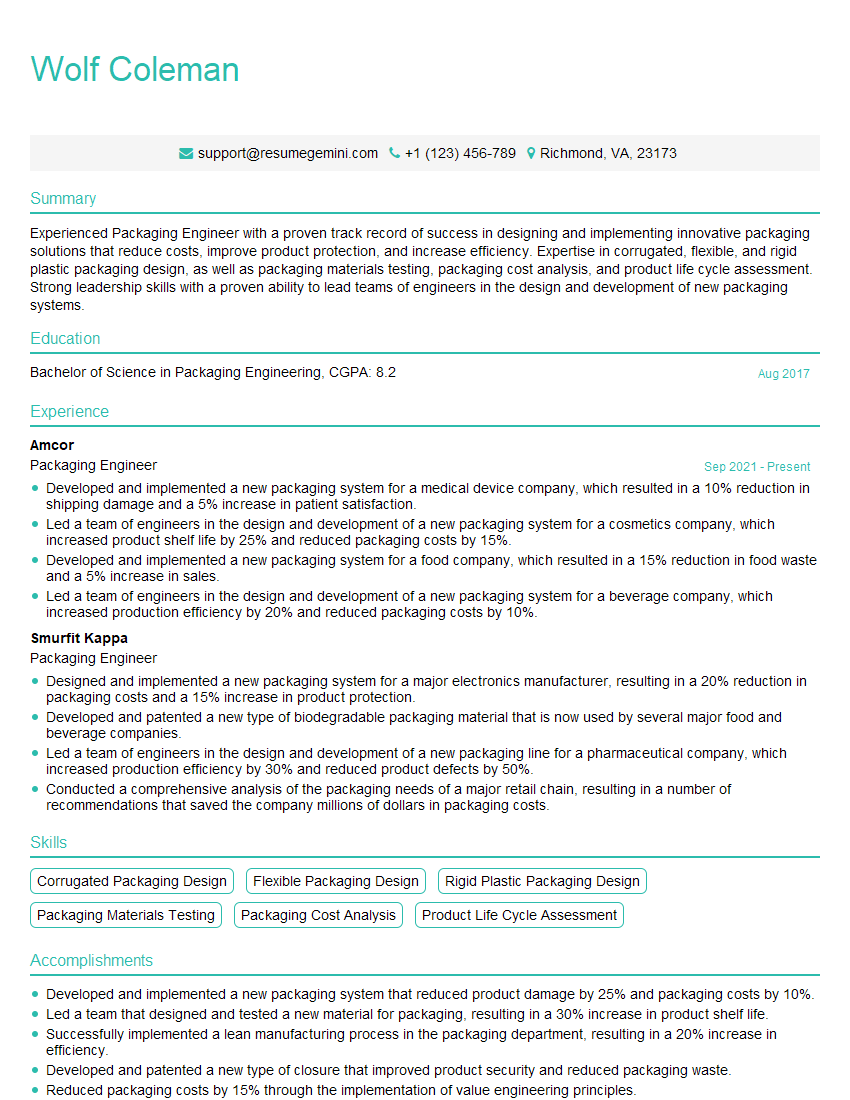
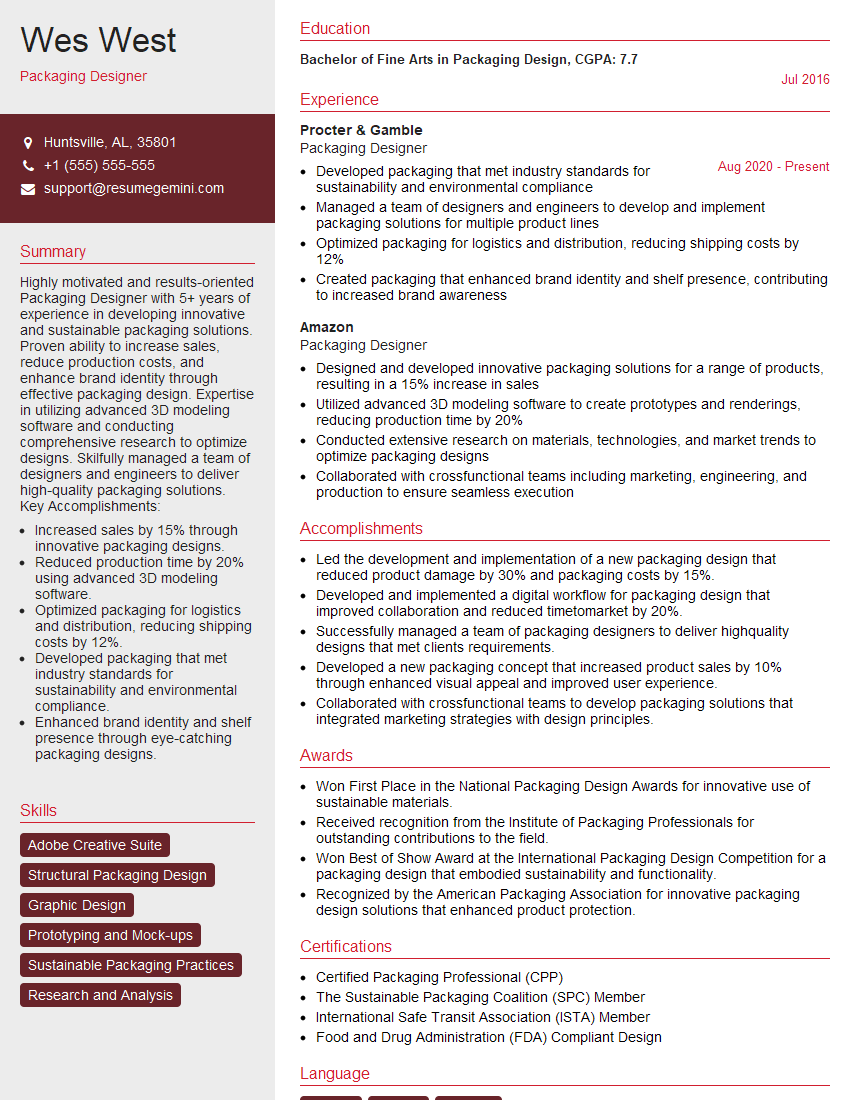
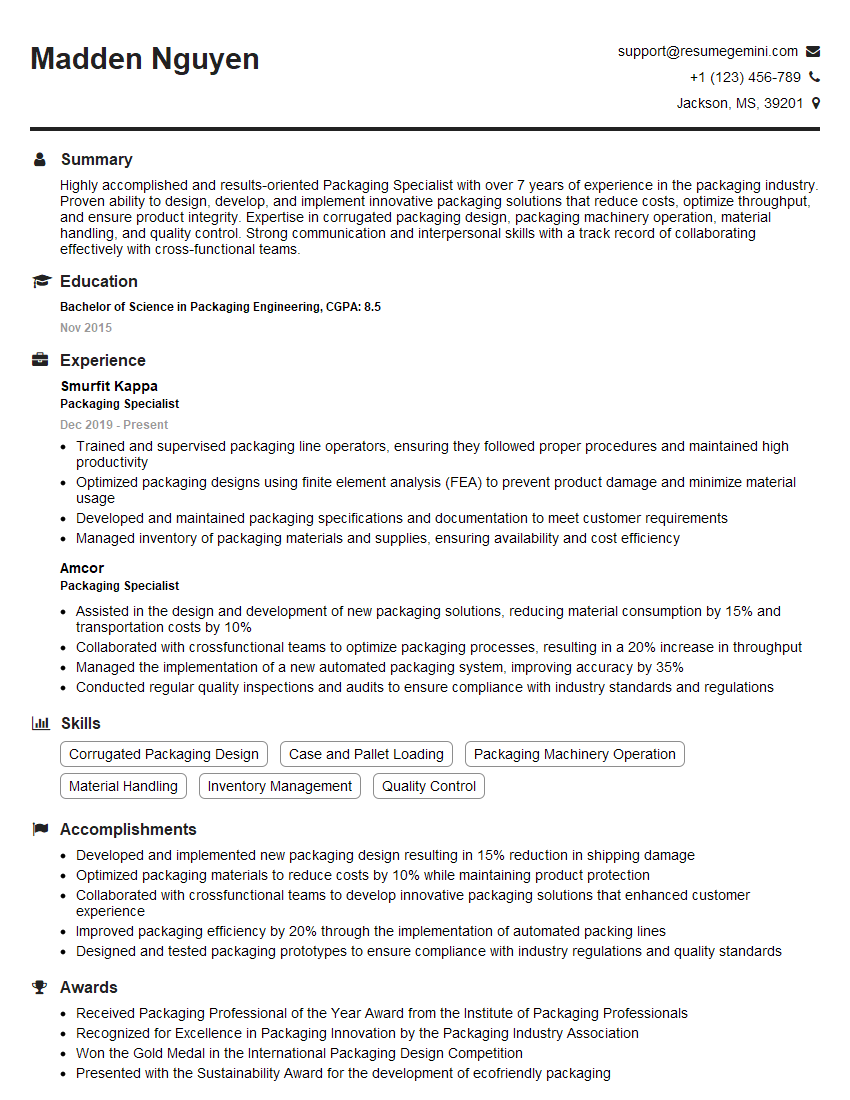
Mastering knowledge of packaging materials and specifications is crucial for career advancement in this dynamic field. A strong understanding of these concepts demonstrates your expertise and ability to contribute effectively to product development, supply chain optimization, and sustainable business practices. To enhance your job prospects, create an ATS-friendly resume that clearly highlights your skills and experience. ResumeGemini is a trusted resource to help you build a professional and impactful resume. Examples of resumes tailored to Knowledge of packaging materials and specifications are available to guide you.
Explore more articles
Users Rating of Our Blogs
Share Your Experience
We value your feedback! Please rate our content and share your thoughts (optional).
What Readers Say About Our Blog
Very informative content, great job.
good