Every successful interview starts with knowing what to expect. In this blog, we’ll take you through the top Knowledge of Sewing Equipment interview questions, breaking them down with expert tips to help you deliver impactful answers. Step into your next interview fully prepared and ready to succeed.
Questions Asked in Knowledge of Sewing Equipment Interview
Q 1. What types of sewing machines are you familiar with (e.g., industrial, domestic, serger, embroidery)?
My experience encompasses a wide range of sewing machines, from basic domestic models to sophisticated industrial and specialized machines. I’m proficient with:
- Domestic Sewing Machines: These are versatile machines ideal for home use and various projects, from clothing alterations to quilting. I’m familiar with both mechanical and computerized models, understanding their different functionalities and limitations.
- Industrial Sewing Machines: I have experience with heavy-duty industrial machines used for mass production. These machines are built for speed, durability, and specific sewing tasks like straight stitching or lockstitching. Understanding their unique maintenance and operational requirements is crucial.
- Sergers (Overlock Machines): I’m skilled in using sergers for finishing seams, creating professional-looking edges, and adding decorative elements. This includes understanding different stitch types and tension adjustments for various fabrics.
- Embroidery Machines: I’ve worked with embroidery machines, both standalone and those integrated with sewing machines. This includes designing embroidery patterns, digitizing, and operating the machines to create intricate designs.
This diverse experience allows me to adapt to different sewing needs and machine types effectively.
Q 2. Describe your experience with different sewing machine needles and their applications.
Sewing machine needles are crucial for achieving quality stitches. Choosing the right needle depends on the fabric type and the thread being used. My experience includes working with a variety of needles:
- Universal Needles: These are all-purpose needles suitable for a range of fabrics, making them a good starting point for most projects.
- Ballpoint Needles: Designed for knit fabrics, these needles have a rounded tip that glides between the loops of the fabric, preventing snags and skipped stitches. Think about sewing a soft jersey t-shirt—a ballpoint needle is essential.
- Sharp Needles: Ideal for woven fabrics like cotton, linen, and silk, these needles have a sharp point that pierces the fabric cleanly. They’re great for crisp seams and intricate details.
- Jeans Needles: Stronger needles with a reinforced shaft to handle thick denim and other heavy fabrics. I’ve often used these when working on tough materials, ensuring the needle doesn’t break under pressure.
- Embroidery Needles: These have a special sharp point for clean piercing of fabric without damaging the embroidery thread.
Incorrect needle selection often leads to skipped stitches, broken needles, or damaged fabric. Matching the needle to the fabric is crucial for success.
Q 3. How do you troubleshoot common sewing machine malfunctions (e.g., skipped stitches, broken needles, thread jams)?
Troubleshooting sewing machine malfunctions is a critical skill. My approach is systematic:
- Skipped Stitches: This can be due to incorrect needle, thread tension, or improper threading. I’d check the needle for damage, adjust the tension, and re-thread the machine. Sometimes, a simple cleaning of the bobbin case and hook area is needed.
- Broken Needles: This usually points to hitting a pin, using the wrong needle for the fabric, or improper needle insertion. I always check the needle for bends or damage before starting a project and ensure it’s inserted correctly.
- Thread Jams: Jams can occur anywhere in the machine’s threading path. I systematically check the entire path, from the spool to the needle, looking for any loose threads, lint build-up, or misaligned parts. Regular machine cleaning prevents many jams.
For more complex issues, I consult the machine’s manual and if necessary, seek professional assistance.
Q 4. Explain the process of threading a sewing machine, including the correct tension settings.
Threading a sewing machine correctly is fundamental. The process varies slightly depending on the machine model, but the general steps are:
- Place the spool of thread on the spool pin.
- Guide the thread through the tension discs (adjusting tension as needed—more tension usually means less thread coming out with each stitch).
- Thread the take-up lever.
- Thread the needle from front to back.
- Wind the bobbin with thread (following the specific instructions for your machine).
- Insert the bobbin into the bobbin case.
- Insert the bobbin case into the machine.
Tension: Correct tension is vital. Too much tension can cause the thread to break or pucker the fabric. Too little tension results in loose stitches. Finding the sweet spot is often done through trial and error, adjusting the dial slightly to achieve the desired stitch quality. The fabric type also influences tension; thicker fabric requires more tension than thinner fabric.
Q 5. What are the different types of stitches and when would you use each?
Sewing machines offer a variety of stitches, each with a specific purpose:
- Straight Stitch: The most basic stitch, used for seams, topstitching, and general construction. It is the workhorse stitch for most sewing projects.
- Zigzag Stitch: Used for finishing seams (overcasting), sewing stretchy fabrics, and creating decorative effects. It’s excellent for preventing fraying.
- Zipstich: Similar to a zigzag stitch but smaller and denser. Excellent for seaming stretchy fabrics, and particularly useful in finishing knitwear seams.
- Overlock Stitch (Serger Stitch): Creates a professional, finished seam edge by cutting, stitching, and overcasting simultaneously. Prevents fraying and adds a clean look.
- Buttonhole Stitch: Creates neat buttonholes, and often requires a special buttonhole foot.
- Blind Hem Stitch: Almost invisible; perfect for hems on skirts, trousers, and other garments where a discreet finish is necessary.
The choice of stitch depends on the fabric, the project, and the desired aesthetic outcome. For example, a straight stitch is suitable for a sturdy cotton shirt, while a zigzag stitch would be better for a jersey t-shirt.
Q 6. How do you select the appropriate stitch length and width for different fabrics?
Stitch length and width are crucial for achieving quality results. They are adjusted based on the fabric type and project.
- Stitch Length: Shorter stitch lengths (e.g., 1.5-2.0 mm) provide stronger seams, ideal for areas that will experience stress or strain (e.g., seams on pants). Longer stitch lengths (e.g., 3.0-4.0 mm) are suitable for basting or topstitching where strength isn’t paramount. When sewing delicate fabrics, a shorter stitch length is often needed to prevent damage.
- Stitch Width: Wider zigzag stitches provide more secure seams and are suited for stretchy materials. Narrower zigzag stitches can create a decorative edge or a refined seam finish. The stitch width is also important when creating buttonholes.
Experimentation is key. I always test the stitch length and width on a scrap of the same fabric before sewing the final project to make sure the settings are correct.
Q 7. Describe your experience with different types of sewing machine feet (e.g., zipper foot, buttonhole foot).
Different sewing machine feet are designed for specific tasks. My experience includes using a variety of presser feet:
- Zipper Foot: This foot allows you to sew close to the zipper teeth, creating a neat and even seam. The offset design guides the needle accurately for precision sewing.
- Buttonhole Foot: This foot is designed to create professional buttonholes in a variety of shapes and sizes. Different buttonhole feet handle different types of buttonhole styles.
- Walking Foot (Even Feed Foot): Essential for sewing multiple layers of fabric or working with difficult-to-feed materials like leather or vinyl. This foot prevents the layers from shifting during sewing.
- Overcast Foot: Allows for controlled sewing of narrow overcast stitches to prevent fraying.
- Rolled Hem Foot: Used for creating a rolled or narrow hem on delicate fabrics, which is an alternative to a blind stitch.
Each foot enhances efficiency and precision, making sewing easier and producing a superior finish.
Q 8. How do you maintain and clean a sewing machine to ensure optimal performance?
Maintaining a sewing machine is crucial for its longevity and performance. Think of it like regularly servicing your car – preventative care prevents costly repairs down the line. My cleaning and maintenance routine involves several key steps:
Regular Dusting: After each use, I gently brush away lint and dust from the bobbin area, feed dogs, and around the presser foot. A small brush or compressed air works wonders.
Oil Application: I use a high-quality sewing machine oil, applying a drop or two to the designated oiling points as specified in the machine’s manual. Over-oiling can be detrimental, so less is more.
Bobbin Case Cleaning: Regularly removing and cleaning the bobbin case with a small brush and lint-free cloth is vital. Lint build-up here can cause tension problems and jams.
Needle Replacement: I replace sewing machine needles frequently, especially when sewing heavier fabrics or noticing skipped stitches. A bent or dull needle is a common cause of many sewing issues.
Deep Cleaning: At least once a year, I perform a thorough cleaning, removing the needle plate and other accessible components to clear away accumulated lint and debris. Using a vacuum cleaner with a small brush attachment is effective for this.
Following these steps keeps my sewing machines running smoothly and extends their lifespan. Neglecting maintenance can lead to costly repairs or even machine failure.
Q 9. What safety precautions do you follow when operating sewing equipment?
Safety is paramount when operating sewing equipment. My safety precautions are unwavering and include:
Proper Machine Setup: Ensuring the machine is securely positioned on a stable surface is a fundamental safety measure. This prevents accidental tipping or movement.
Finger Guards: I always use finger guards or keep my fingers well away from the needle and presser foot, especially when sewing curves or intricate details. This prevents needle injuries.
Correct Needle Placement: Always ensuring the needle is correctly inserted and tightened in the machine prevents it from breaking and causing injury.
Power Cord Safety: I make sure the power cord is not damaged, frayed, or a trip hazard. Never touch the cord while the machine is plugged in and running.
Appropriate Clothing: Loose clothing or jewelry should never be worn while operating the sewing machine to prevent them from getting caught in moving parts.
Machine Maintenance: Regular maintenance, as discussed earlier, helps prevent malfunctions that could cause injury or damage.
Sewing may seem mundane, but ignoring these precautions can lead to serious accidents. My approach is always to prioritize safety above all else.
Q 10. What is your experience with industrial sewing machine maintenance?
My experience with industrial sewing machine maintenance is extensive. I’ve worked with various brands and models, encompassing both preventative maintenance and troubleshooting repairs. This includes:
Lubrication: Industrial machines require more frequent and specific lubrication than domestic machines. I’m proficient in identifying lubrication points and using the correct lubricants to ensure smooth operation and reduce wear.
Tension Adjustments: Industrial machines often have more intricate tension systems. I can diagnose and correct tension issues, optimizing stitch quality for different fabrics and applications.
Needle and Feed Dog Adjustment: I’m experienced in setting up and adjusting needles and feed dogs to match the specific fabric and sewing project, maximizing efficiency and minimizing fabric damage.
Troubleshooting Malfunctions: I’m adept at diagnosing and fixing mechanical issues, such as broken gears, jammed shuttles, or faulty motors, ensuring minimal downtime.
Preventative Maintenance Schedules: I understand the importance of creating and following preventative maintenance schedules to catch potential problems early and extend the life of the equipment. This includes regular inspections, cleaning, and lubrication.
Working with industrial machines requires a higher level of technical skill and understanding. My experience ensures efficient maintenance and prevents costly repairs and production delays.
Q 11. Describe your experience with different fabric types and their sewing characteristics.
My experience spans a wide range of fabric types, each with unique sewing characteristics. For example:
Cotton: A versatile fabric, but can fray easily. Requires appropriate seam finishes (like serging) to prevent unraveling.
Silk: Delicate and slippery, requiring specialized needles and a slow sewing speed. Often needs a walking foot to prevent slippage.
Linen: Can be stiff and prone to wrinkles. Needs careful pressing and might require easing techniques to prevent puckering.
Wool: Can be thick and prone to stretching. Requires a strong needle and possibly a walking foot. Pressing should be done with caution.
Synthetics (Polyester, Nylon): Can melt easily if exposed to high heat from the iron. Lower ironing temperature and possibly a Teflon presser foot are advisable.
Leather and Suede: Requires specialized needles and often a walking foot. Stitch length needs adjustment for appropriate penetration and durability.
Understanding these characteristics allows me to select the appropriate needles, stitch types, and sewing techniques for optimal results. This experience translates to high-quality, durable garments and projects.
Q 12. How do you identify and correct common sewing errors (e.g., puckering, uneven seams)?
Identifying and correcting common sewing errors is a crucial part of my skillset. Let’s take two examples:
Puckering: This often occurs due to tension issues, inconsistent seam allowances, or the fabric type. I diagnose this by checking the tension settings, examining the needle and thread, and making sure seam allowances are accurate. Solutions could involve adjusting the tension, changing the needle, using a walking foot, or grading the seam allowances.
Uneven Seams: This could be caused by uneven fabric feeding, incorrect needle placement, or inconsistent speed. My approach is to check the feed dogs for debris, adjust needle positioning, and ensure a consistent sewing speed. Sometimes a walking foot is also necessary for even feeding.
Other common errors like skipped stitches (often due to a bent or dull needle) and broken threads (possibly due to incorrect tension or a damaged bobbin) are addressed systematically. A methodical troubleshooting process combined with a thorough understanding of the sewing process is key to producing high-quality results.
Q 13. How do you interpret sewing patterns and technical drawings?
Interpreting sewing patterns and technical drawings is essential for accurate garment construction. My approach involves:
Understanding the Pattern Layout: I carefully study the pattern pieces, understanding their placement on the fabric and the grainlines. Paying close attention to markings and notations is crucial.
Reading the Instructions: Thoroughly reviewing the pattern instructions, including cutting, sewing, and finishing steps, ensures an accurate outcome.
Interpreting Measurements: Accurate interpretation of measurements, seam allowances, and other specifications are vital for achieving a properly fitting garment.
Technical Drawings: Technical drawings provide detailed diagrams of construction techniques, stitch types, and seam finishes. Understanding these drawings ensures accurate construction.
Pattern interpretation isn’t just about following instructions; it’s about understanding the design intent and using those instructions to create a finished product.
Q 14. What is your experience with different seam finishes (e.g., serging, overlocking, French seams)?
Different seam finishes serve various purposes depending on the fabric and garment style. My experience includes:
Serging/Overlocking: Creates a professional-looking, durable seam finish that prevents fraying. Ideal for knit fabrics and projects needing a clean edge.
French Seams: Enclose raw edges for a neat, high-quality finish, particularly suitable for sheer or lightweight fabrics. Creates a very clean and durable seam.
Zigzag Stitch: A basic seam finish that prevents fraying, simple to execute, and suitable for many fabrics.
Hong Kong Finish: A bias binding is used to encase raw edges and give a professional and durable seam finish. Ideal for high-end garments.
Pinked Edges: A quick and easy finish, mostly for fabrics that don’t fray significantly. Suitable for less visible seams or non-critical areas.
Selecting the appropriate seam finish depends on factors such as fabric weight, project type, and desired aesthetic. My expertise allows me to choose the most efficient and appropriate technique for the specific requirements of each project.
Q 15. Describe your experience with using different pressing equipment (e.g., iron, press, steam iron).
My experience with pressing equipment is extensive, encompassing a wide range of tools crucial for achieving professional-quality garment construction. I’m proficient with standard irons, both dry and steam, understanding the nuances of heat settings, steam levels, and the importance of proper soleplate maintenance to prevent scorching or sticking. This includes recognizing and addressing issues like mineral buildup, which can affect steam output and ironing performance.
Beyond the basic iron, I’m highly skilled in operating industrial-grade pressing equipment such as professional steam presses and sleeve boards. These machines allow for efficient and even pressing of complex garment sections, significantly improving speed and the final product’s quality. I understand the importance of using the correct pressure and temperature for various fabrics to avoid damage, such as using lower heat for delicate silks versus higher heat for cottons. For instance, I frequently use a steam press to create crisp creases on tailored trousers and a sleeve board for pressing sleeves to maintain their shape. I’m adept at using specialized pressing tools like clappers (to set seams), point pressers (for collars and cuffs) and tailor’s ham (for shaping curves) to achieve impeccable results.
Career Expert Tips:
- Ace those interviews! Prepare effectively by reviewing the Top 50 Most Common Interview Questions on ResumeGemini.
- Navigate your job search with confidence! Explore a wide range of Career Tips on ResumeGemini. Learn about common challenges and recommendations to overcome them.
- Craft the perfect resume! Master the Art of Resume Writing with ResumeGemini’s guide. Showcase your unique qualifications and achievements effectively.
- Don’t miss out on holiday savings! Build your dream resume with ResumeGemini’s ATS optimized templates.
Q 16. What is your experience with quality control in a sewing environment?
Quality control in sewing is paramount, and I’ve implemented rigorous procedures throughout my career. My approach starts with inspecting the raw materials, ensuring the fabric is free from flaws and consistent in color and texture. Throughout the sewing process, I meticulously check each stitch, seam allowance, and finishing detail, adhering strictly to pattern specifications. I regularly check for things like consistent seam allowances, correct placement of pockets or zippers, and evenness of topstitching. In addition to self-inspection, I advocate for a system of peer review where team members check each other’s work.
I am also trained in recognizing common defects like puckering, uneven stitching, or skipped stitches, and I understand how to address these issues proactively. My experience involves documenting any issues found, so we can pinpoint and rectify any issues with the process, whether it be a machine malfunction or a training need for a team member. I believe a collaborative, proactive approach to quality control leads to fewer rejected garments and ultimately, higher customer satisfaction.
Q 17. How do you handle production deadlines and high-volume sewing tasks?
Meeting production deadlines and handling high-volume sewing tasks requires effective time management and organization. My strategy involves breaking down large projects into smaller, manageable tasks, and meticulously prioritizing them based on urgency and deadline. I’m adept at using tools like production schedules and checklists to track progress and ensure efficiency.
I’ve successfully managed high-pressure environments, adapting my workflow to prioritize speed and accuracy without sacrificing quality. For example, during peak seasons, I’ve streamlined my sewing process by optimizing my workspace for efficiency, employing faster techniques, and effectively utilizing all available sewing machines. I also excel at effective communication with my team to distribute work evenly, ensuring that everyone is contributing towards meeting the deadline. A clear understanding of the project goals and deadlines, coupled with flexible adaptation to unexpected delays, is vital for success in high-volume production environments.
Q 18. How familiar are you with computer-aided design (CAD) software for apparel?
I have a solid understanding of computer-aided design (CAD) software for apparel, specifically using programs such as [Name specific software, e.g., Adobe Illustrator, Pattern Design Software]. My experience encompasses using CAD to create patterns, grading sizes, and generating marker layouts for efficient fabric cutting. I’m comfortable using the digital tools to manipulate patterns, ensuring accurate sizing and construction details and can modify existing patterns to fit specific design requirements.
I understand the advantages of using CAD for improved accuracy, reduced pattern-making time, and overall cost-effectiveness compared to traditional manual methods. I’m capable of working from digital pattern files and can adapt to using industry-standard CAD file formats. I can also translate hand-drawn patterns into digital formats using digitizing software, bridging the gap between traditional and modern techniques.
Q 19. What is your experience with different types of fabric cutting equipment?
My experience with fabric cutting equipment includes using both manual and automated tools. I’m proficient in using rotary cutters, straight shears, and pinking shears for precise and efficient cutting of various fabrics. I understand the importance of proper blade maintenance for clean cuts and safety.
Furthermore, I am experienced with industrial fabric cutting machines, including automated cutting systems that use computer-generated patterns. I’m familiar with the setup, operation, and maintenance of these machines, and understand how to generate efficient cutting layouts (markers) to minimize fabric waste. My experience encompasses different cutting techniques appropriate for various fabrics, including techniques to reduce stretching or fraying in certain materials.
Q 20. How would you handle a situation where a sewing machine breaks down during production?
In the event of a sewing machine breakdown during production, my immediate response is to assess the situation and determine the severity of the problem. If it’s a minor issue, like a jammed needle or broken thread, I can resolve it quickly and efficiently. However, if the problem is more complex, I follow a systematic troubleshooting approach.
First, I’ll attempt to identify the cause of the malfunction based on my knowledge of sewing machine mechanics. I also consult available maintenance manuals or contact our designated repair technician. While awaiting repair, I’ll reroute work to other available machines or team members to minimize production delays. Thorough documentation of the problem, its resolution, and any downtime involved is critical for preventative maintenance and improving operational efficiency in the future.
Q 21. Describe your experience working with different sewing machine brands and models.
Throughout my career, I’ve worked with a variety of sewing machine brands and models, including [List Specific Brands and Models e.g., Singer, Brother, Juki, industrial models like the Pfaff and Dürkopp Adler]. My experience extends from basic domestic machines to advanced industrial models suitable for high-speed production, encompassing both straight stitch and specialized machines for decorative stitches, serging, or embroidery.
I’m comfortable with the unique functionalities and operational characteristics of each brand and model. This includes understanding different stitch types, tension adjustments, needle types, and maintenance requirements for each machine. I understand how to optimize stitch settings for various fabric types and construction techniques to achieve consistent results. Regular maintenance and preventative care are essential, and I’m adept at performing basic machine maintenance such as oiling and cleaning.
Q 22. How do you ensure consistent stitch quality across multiple garments?
Maintaining consistent stitch quality across multiple garments is paramount for professional results. It’s a combination of meticulous machine maintenance, proper fabric preparation, and consistent sewing techniques.
- Consistent Machine Settings: Before starting a project, I always test my machine’s stitch length, width, and tension on a scrap of the same fabric. This ensures the settings are optimal for the material. I carefully note these settings for future reference.
- Proper Threading and Tension: Incorrectly threaded machines or improper tension can lead to skipped stitches or broken threads. I double-check threading regularly and adjust tension according to fabric weight and thread type. For example, heavier fabrics require higher tension than lighter ones.
- Consistent Needle Selection: Using the correct needle for the fabric type is crucial. A needle too small can cause fabric breakage, while a needle too large can cause skipped stitches. I keep a wide array of needles on hand and always select the appropriate one for each project.
- Regular Maintenance: Regular cleaning and lubrication of the sewing machine are vital. A clean machine with properly lubricated parts runs smoothly and consistently. I follow the manufacturer’s recommended maintenance schedule.
- Consistent Speed and Technique: Maintaining a consistent sewing speed and guiding the fabric smoothly through the machine prevents variations in stitch quality. Practice and experience are key here.
For instance, when working on a production run of dresses, I’ll create a detailed stitch guide including all machine settings, needle type, and thread type, ensuring consistency across all garments.
Q 23. What are the common causes of fabric shrinkage and how do you mitigate them?
Fabric shrinkage is a common problem caused by several factors. Understanding these causes allows for effective mitigation strategies.
- Fiber Type: Natural fibers like wool, cotton, and linen are more prone to shrinkage than synthetics. The degree of shrinkage depends on the fiber’s structure and how it’s processed.
- Weave and Knit Structure: Loosely woven fabrics tend to shrink more than tightly woven ones. Similarly, knit fabrics are more susceptible to shrinkage than woven fabrics.
- Washing and Drying Methods: High temperatures during washing and drying can cause significant shrinkage. Harsh chemicals in detergents can also contribute.
- Pre-Washing: This is perhaps the most effective preventative measure. Before cutting and sewing a fabric, I always pre-wash and dry it using the method I would recommend for the finished garment. This allows for shrinkage to occur before construction, preventing problems later.
Let’s say I’m working with a wool coat. I would always pre-wash it in cool water with a gentle detergent, then lay it flat to dry to minimize shrinkage. This ensures the final garment fits correctly.
Q 24. Explain your understanding of different types of thread and their properties.
Threads are the backbone of any sewing project. Understanding their properties is essential for selecting the right one for the job.
- Natural Fibers (Cotton, Linen, Silk): These offer a beautiful drape and softness but can be less durable and more prone to breakage than synthetics. Cotton is versatile and widely used; linen is strong but can be stiff; silk is luxurious but delicate.
- Synthetic Fibers (Polyester, Rayon, Nylon): These offer durability, strength, and resistance to shrinking and fading. Polyester is strong and versatile, rayon drapes well, and nylon is highly resilient.
- Thread Weight: Indicated by a number (e.g., 50 wt, 40 wt), it indicates the thickness of the thread. Lower numbers mean heavier threads, typically used for heavier fabrics, while higher numbers are used for finer fabrics.
- Thread Type: There are various types of threads: All-purpose, embroidery, quilting, serger (overlock). Each type is designed for a specific purpose and has different properties regarding strength, texture, and colorfastness. For example, quilting thread is designed for the stress of quilting and is often thicker and stronger.
When sewing a delicate silk scarf, I would choose a fine silk or a very fine polyester thread to avoid damaging the fabric and ensure the seam is invisible. For a heavy canvas tote bag, a heavier cotton or polyester thread is needed for strength and durability.
Q 25. How do you manage different types of sewing machine bobbins?
Managing sewing machine bobbins effectively is crucial for smooth sewing. Different bobbins require different handling techniques.
- Types of Bobbins: Sewing machines use various bobbin types: Class 15, Class 66, etc. The bobbin type is specific to the machine model. Using the incorrect bobbin can lead to poor stitch quality or machine malfunction.
- Winding Bobbins: I always use the correct bobbin winder for my machine and ensure the thread is wound evenly and tightly to avoid tangles. I label each bobbin with the thread type and color for easy identification and organization.
- Inserting Bobbins: Correct insertion is crucial. I always follow the manufacturer’s instructions carefully, ensuring the bobbin is correctly oriented in the bobbin case.
- Storage: I store bobbins in a clean, dry place away from dust and moisture, preferably in a designated container to avoid damage or loss. Organizing them by thread type and color keeps my workspace efficient.
For instance, I might have separate storage containers for class 15 bobbins filled with different colors of cotton thread, and another for class 66 bobbins filled with polyester thread used for heavier projects. This system allows me to easily find the specific bobbin I need for a project.
Q 26. Describe your experience with specialized sewing techniques (e.g., quilting, embroidery, appliqué).
I have extensive experience with specialized sewing techniques, enhancing my ability to handle diverse projects.
- Quilting: I’m proficient in free-motion quilting, using templates, and working with various batting types. I understand the importance of consistent stitch density and proper layering for a professional finish.
- Embroidery: I’m experienced in both free-motion and machine embroidery, using various stitches, designs, and stabilizer types. I’m familiar with hooping techniques and achieving even tension.
- Appliqué: I’m skilled in various appliqué methods, including machine appliqué, hand appliqué, and reverse appliqué. I understand fabric selection and proper placement for a neat and precise finish.
For example, I recently completed a custom quilt, incorporating free-motion quilting patterns to highlight the piecing and add texture. I also used machine embroidery to personalize it with the client’s initials. This project combined multiple techniques to achieve a unique and high-quality result.
Q 27. How familiar are you with different sewing machine lubrication methods and requirements?
Proper sewing machine lubrication is essential for its longevity and smooth operation. Different machines may have varying lubrication requirements.
- Lubrication Methods: Most machines require specific sewing machine oil, applied to designated points. The frequency varies depending on usage. I always consult my machine’s manual for the recommended oil type and application points.
- Frequency: I lubricate my machine regularly, typically after every few large projects or at least every few months, depending on the intensity of use. Over-lubrication can be as harmful as under-lubrication, leading to build-up of oil and potential damage.
- Cleaning: Before lubrication, I clean the machine thoroughly to remove dust, lint, and old oil. This ensures that fresh oil can reach the moving parts effectively.
- Identifying Lubrication Needs: If the machine begins to run stiffly, is noisy, or the stitches are inconsistent, it is a clear indicator the machine needs lubrication or cleaning.
Ignoring lubrication can lead to damage, requiring costly repairs. Regular lubrication, combined with a cleaning routine, is a preventative measure that significantly extends the life of my sewing machine, ultimately saving time and money in the long run.
Key Topics to Learn for Knowledge of Sewing Equipment Interview
- Industrial vs. Domestic Sewing Machines: Understanding the differences in functionality, capabilities, and maintenance requirements between industrial and domestic sewing machines. This includes knowledge of different stitch types and their applications.
- Operation and Maintenance of Sewing Machines: Practical experience in setting up, operating, troubleshooting, and performing basic maintenance on various types of sewing machines (e.g., lockstitch, overlock, coverstitch). This also includes understanding the importance of preventative maintenance.
- Specialized Sewing Equipment: Familiarity with specialized equipment such as buttonhole attachments, embroidery machines, and CAD/CAM systems used in garment production. Understanding their applications and limitations is crucial.
- Safety Procedures and Regulations: Demonstrating a thorough understanding of safety protocols related to the operation and maintenance of sewing equipment, adhering to relevant industry regulations and best practices.
- Fabric Handling and Selection: Knowledge of different fabric types and their suitability for various sewing techniques and equipment. Understanding how fabric properties influence sewing machine settings and outcomes.
- Troubleshooting Common Sewing Machine Issues: Ability to diagnose and resolve common problems such as skipped stitches, broken needles, and tension issues. This includes practical problem-solving skills and a methodical approach to troubleshooting.
- Sewing Machine Technology and Advancements: Awareness of emerging technologies and advancements in sewing equipment, including computerized sewing machines and automated systems. Understanding the benefits and limitations of these technologies.
Next Steps
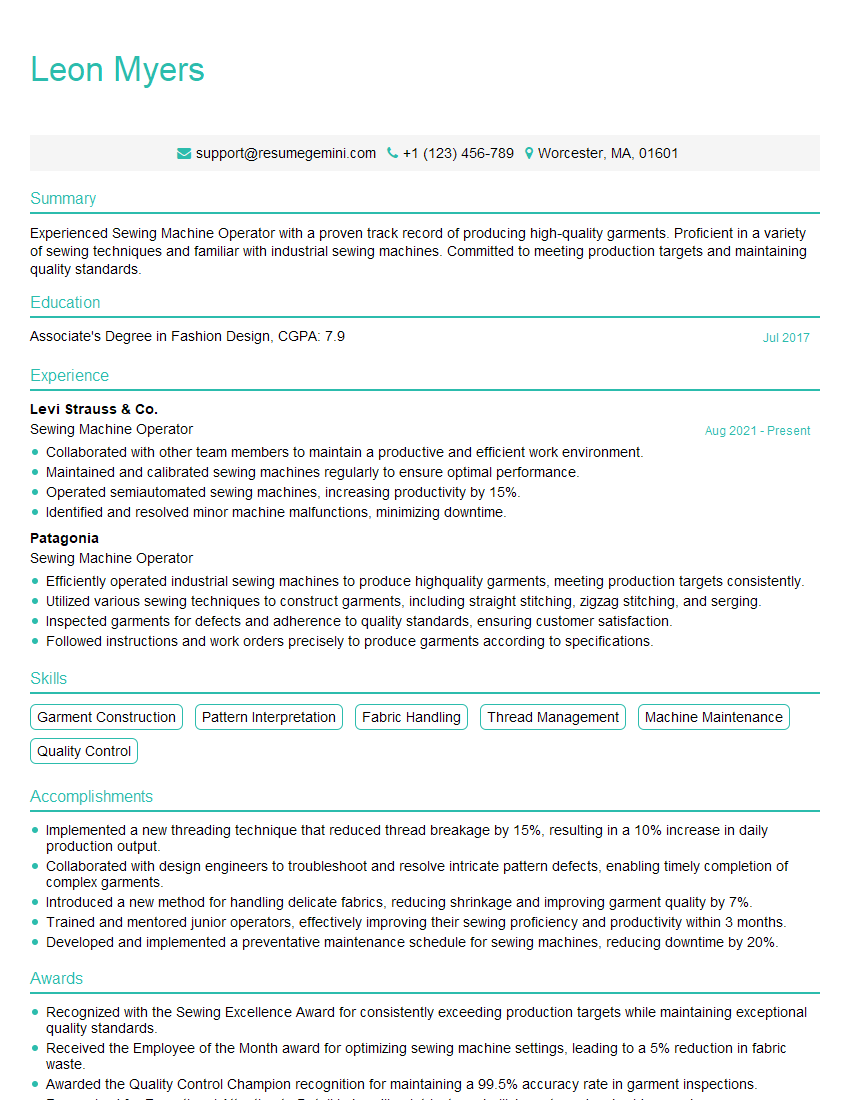
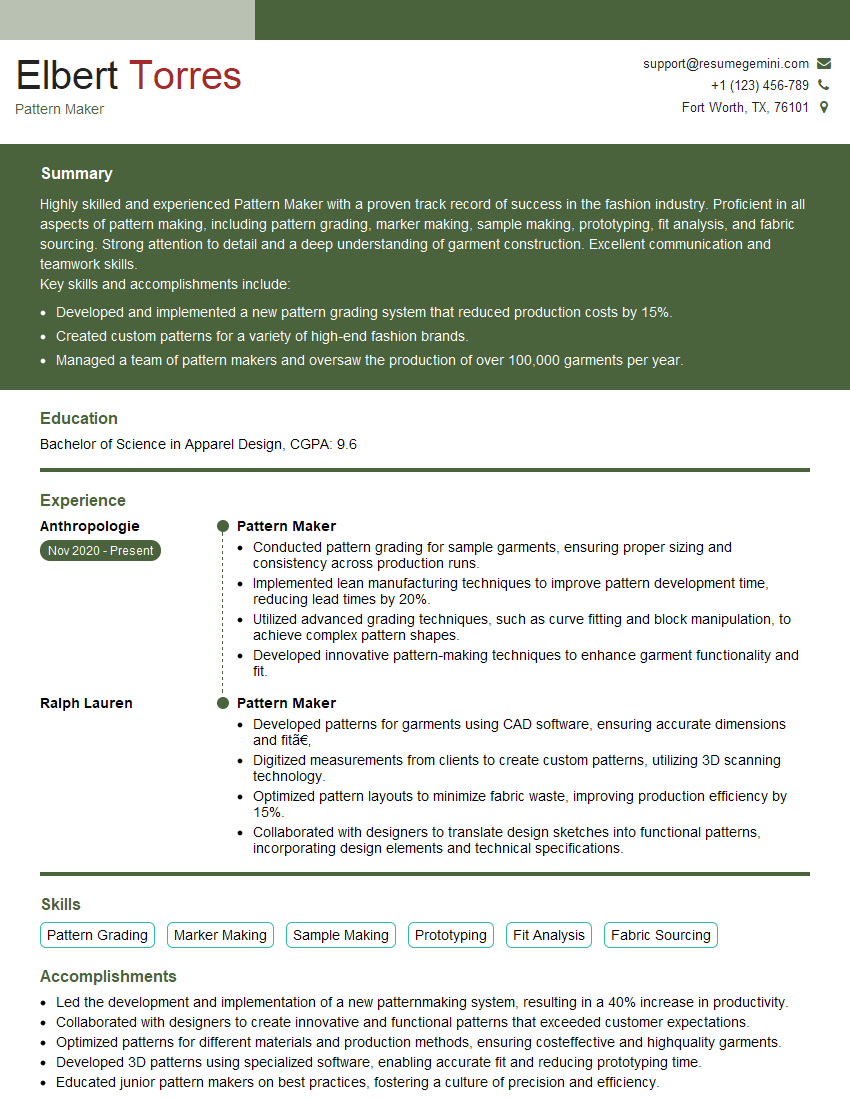
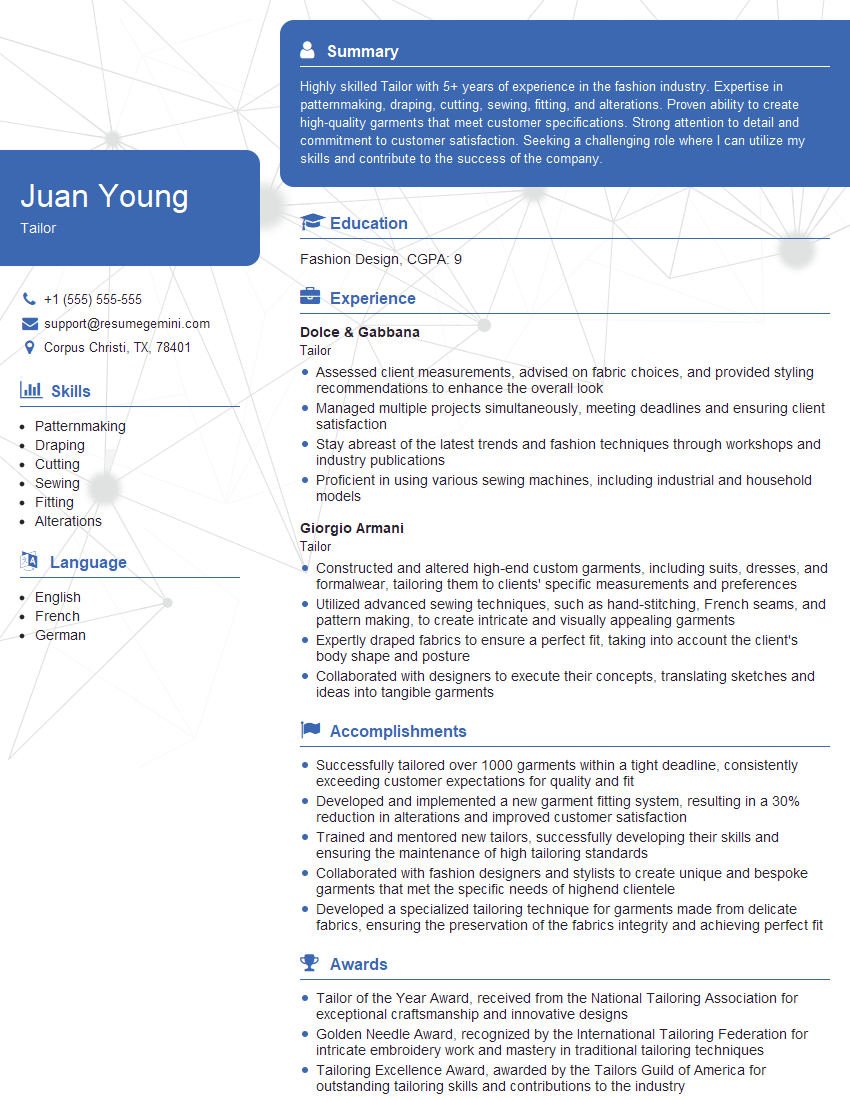
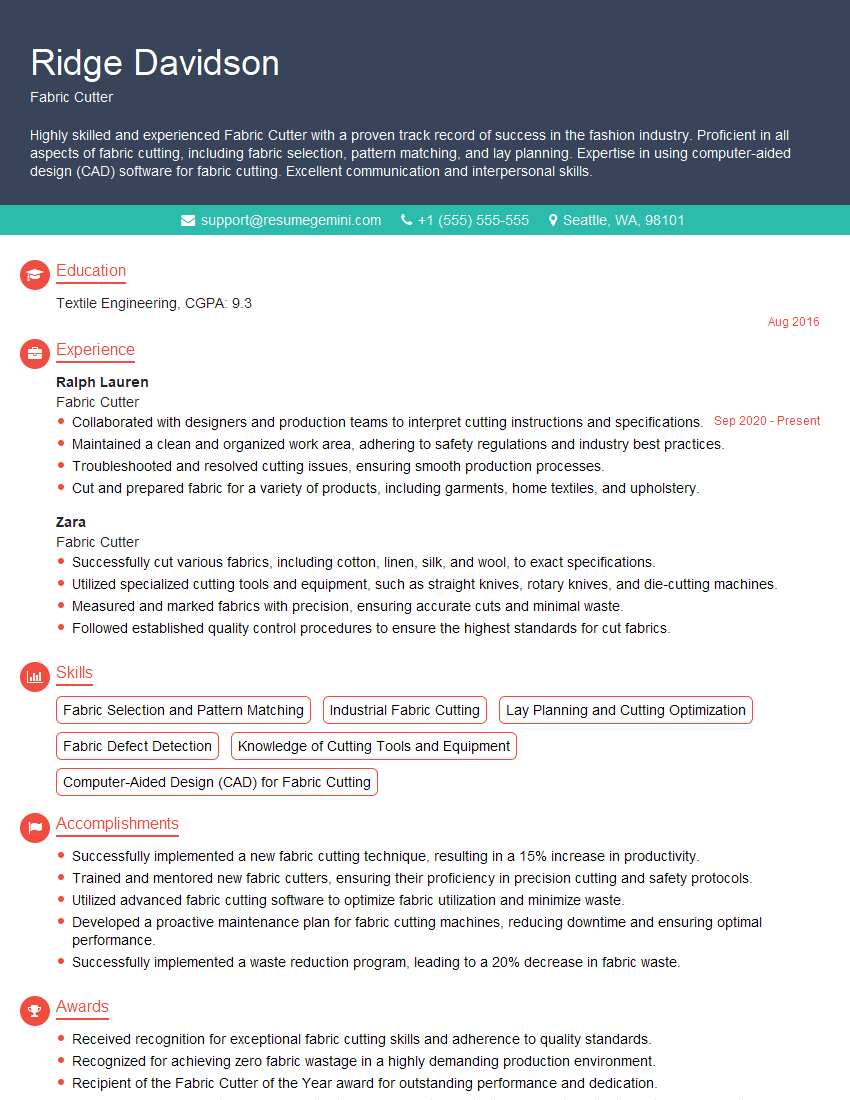
Mastering knowledge of sewing equipment is vital for career advancement in the fashion, textile, and garment manufacturing industries. A strong understanding of these machines and their applications significantly enhances your skillset and makes you a more valuable asset to any employer. To showcase your expertise effectively, creating an ATS-friendly resume is paramount. ResumeGemini is a trusted resource to help you build a professional and impactful resume that highlights your skills and experience. Examples of resumes tailored to showcasing Knowledge of Sewing Equipment are available through ResumeGemini, helping you present your qualifications in the best possible light and increase your chances of landing your dream job.


Explore more articles
Users Rating of Our Blogs
Share Your Experience
We value your feedback! Please rate our content and share your thoughts (optional).
What Readers Say About Our Blog
Very informative content, great job.
good