Interviews are more than just a Q&A session—they’re a chance to prove your worth. This blog dives into essential Label Inventory Management interview questions and expert tips to help you align your answers with what hiring managers are looking for. Start preparing to shine!
Questions Asked in Label Inventory Management Interview
Q 1. Explain the different methods for tracking label inventory.
Tracking label inventory effectively relies on a multi-faceted approach. The best method depends on the scale of your operation and the complexity of your labels. Here are some common methods:
Manual Tracking: This involves physically counting labels and recording the quantities in a spreadsheet or database. While simple for small businesses, it’s prone to errors and lacks real-time visibility. Think of a small bakery tracking its ‘best before’ date stickers manually.
Barcode/RFID Tracking: This uses barcode or RFID tags attached to label boxes or pallets. A scanner or RFID reader captures the data, providing accurate counts and location tracking. This is ideal for larger operations needing precise inventory control. Imagine a large logistics company tracking shipping labels with RFID.
Label Printer Integration: Modern label printers often integrate with inventory management systems. The system automatically deducts labels as they are printed, providing a real-time inventory update. This offers efficiency and minimizes manual data entry, beneficial for businesses with high label printing volume, such as a clothing retailer printing garment tags.
WMS (Warehouse Management System) Integration: A WMS provides comprehensive inventory management capabilities, including label tracking, location management, and lot tracking. This is suitable for large warehouses or distribution centers requiring complete inventory visibility and control. A major pharmaceutical company handling medicine labels would likely use this.
Q 2. How do you ensure accurate label inventory counts?
Accurate label inventory counts are crucial for preventing stockouts and minimizing waste. Here’s how I ensure accuracy:
Regular Cycle Counting: Instead of a full inventory count, I implement cycle counting, which involves counting a small portion of the inventory regularly. This helps detect discrepancies early and reduces disruption to operations.
Verification of Label Printer Counts: I regularly reconcile the label counts reported by the printer with the physical count to identify any discrepancies, particularly printer malfunctions that may under-report label usage.
Proper Storage and Handling: Labels are stored in designated areas under optimal conditions (temperature, humidity, light) to prevent damage and spoilage. Clear labeling of boxes with quantity, label type, and date received is essential.
Employee Training: Thorough training is given on proper counting procedures, use of scanning equipment, and data entry to minimize human error.
Regular Audits: Periodic audits, both internal and external, ensure the accuracy and effectiveness of the inventory management process.
Q 3. Describe your experience with FIFO (First-In, First-Out) and LIFO (Last-In, First-Out) inventory methods in a labeling context.
FIFO (First-In, First-Out) and LIFO (Last-In, First-Out) are inventory methods that dictate the order in which items are used. In a labeling context, this is particularly relevant for labels with expiration dates or those prone to degradation over time.
FIFO: This ensures that the oldest labels are used first. This is crucial for labels with expiration dates (e.g., food labels) to minimize waste and prevent the use of outdated labels. This prevents using expired labels, a potential compliance and safety issue.
LIFO: This method uses the newest labels first. It’s less common for labels unless specific label types have an extended shelf life and potential for changes in design or material over time. While potentially minimizing obsolescence costs in some rare scenarios, it carries more risks if dealing with time-sensitive labels.
I’ve found FIFO to be the preferred method for most label types due to its focus on minimizing waste and maintaining product integrity. However, careful consideration of label characteristics is paramount in choosing the right method.
Q 4. What software or systems have you used for label inventory management?
Throughout my career, I’ve used various software and systems for label inventory management. These include:
Enterprise Resource Planning (ERP) systems: Systems like SAP and Oracle offer integrated inventory management modules that track labels alongside other materials.
Warehouse Management Systems (WMS): These systems, like NetSuite WMS and Fishbowl Inventory, provide detailed inventory tracking, including location tracking for labels in a warehouse.
Dedicated Label Management Software: Specialized software solutions focus specifically on label inventory and management, providing features tailored to the specific needs of label tracking.
Spreadsheet Software: For smaller operations, spreadsheets (Excel, Google Sheets) can be used for basic tracking, though they lack advanced features.
My preference depends on the scale and complexity of the operation. For larger organizations with complex needs, ERP or WMS systems are ideal. For simpler operations, a dedicated label management system or even spreadsheets may suffice.
Q 5. How do you manage label obsolescence and disposal?
Managing label obsolescence and disposal is crucial for cost control and environmental responsibility. My process involves:
Regular Inventory Reviews: I conduct periodic reviews to identify outdated or slow-moving labels.
Label Shelf Life Tracking: For labels with expiration dates, I ensure strict adherence to FIFO and prompt disposal of expired labels.
Clear Disposal Procedures: Labels are disposed of according to environmental regulations. This may involve recycling, secure destruction (for sensitive information), or proper waste disposal.
Forecasting Demand to Minimize Waste: Accurate forecasting is key to reducing the production of unnecessary labels, thus reducing waste.
Properly managing obsolescence is key to both cost-effectiveness and compliance with environmental regulations.
Q 6. How do you handle discrepancies between physical and system label counts?
Discrepancies between physical and system label counts require immediate investigation. My approach is methodical and thorough:
Reconcile Counts: First, I carefully recount the physical inventory and compare it to the system count to confirm the discrepancy.
Identify Potential Causes: This involves reviewing the process for potential errors, such as data entry mistakes, scanner malfunctions, or improper storage practices. Was there a recent label printer jam not fully accounted for? Were labels misplaced?
Investigate and Correct Errors: I then address any identified errors, correcting data entry mistakes, recalibrating scanners, or improving storage procedures.
Document Findings: I thoroughly document the discrepancy, its cause, and the corrective actions taken. This helps prevent future occurrences.
Adjust System Counts: Once the cause is determined and the physical inventory is confirmed, the system count is adjusted to reflect the actual inventory.
This approach ensures accuracy and prevents future discrepancies.
Q 7. Explain your process for forecasting label demand.
Forecasting label demand is vital for efficient inventory management and cost control. My process combines historical data analysis with future projections:
Analyze Historical Data: I begin by analyzing past label usage patterns, considering factors such as product demand, production volume, and seasonal variations.
Consider Future Trends: I then factor in anticipated changes, such as new product launches, marketing campaigns, or changes in production processes that may affect label usage.
Use Forecasting Techniques: I utilize forecasting techniques like moving averages, exponential smoothing, or more advanced time series analysis to generate demand predictions.
Collaborate with Stakeholders: I collaborate with sales, marketing, and production teams to gather insights and ensure that the forecast is aligned with business plans.
Regular Review and Adjustment: The forecast is regularly reviewed and adjusted based on actual usage data. This ensures its accuracy and responsiveness to changing market conditions.
Accurate forecasting is crucial to prevent both stockouts and excess inventory. A robust forecasting process directly contributes to a more efficient and cost-effective label inventory management system.
Q 8. How do you optimize label storage and handling to prevent damage or loss?
Optimizing label storage and handling is crucial to prevent costly damage and downtime. Think of it like managing a high-value inventory – you wouldn’t just throw expensive components into a box! We need a systematic approach.
- Proper Storage Conditions: Labels are sensitive to temperature, humidity, and light. Storing them in a cool, dry, dark place, away from direct sunlight and extreme temperature fluctuations, is paramount. We use climate-controlled storage rooms for sensitive labels.
- FIFO (First-In, First-Out) System: Implementing a FIFO system prevents labels from expiring or becoming unusable due to age. This involves using clearly labeled storage bins and rotating stock regularly. We use color-coded labels on the storage bins to visually indicate the FIFO order.
- Protective Packaging: Labels should be stored in their original packaging whenever possible. If repackaging is necessary, use appropriate materials that prevent moisture, dust, and damage. We utilize static-free bags and ESD-safe containers for electronic labels.
- Inventory Management System (IMS): An IMS provides real-time visibility into label stock levels, reducing the risk of shortages and allowing for proactive ordering. We utilize a system with barcode scanning to track individual label rolls and their location.
- Regular Audits: Periodic inventory checks identify potential issues early on. This also confirms accuracy of inventory records. We conduct monthly inventory audits, with detailed reporting and corrective actions for discrepancies.
By combining these methods, we minimize losses and ensure labels are always ready for use in optimal condition.
Q 9. Describe a time you had to resolve a critical label shortage.
During a major product launch, we experienced a critical shortage of a specific type of label due to an unforeseen surge in demand. It was a high-stakes situation, as production was grinding to a halt. My immediate actions were:
- Assess the Situation: I quickly determined the extent of the shortage, the specific label needed, and the impact on production.
- Explore Immediate Solutions: We immediately contacted our primary supplier to expedite a new shipment. Simultaneously, I explored alternative label options that could be used temporarily without compromising product quality. This involved working closely with the product development team.
- Implement Short-Term Fixes: We optimized the existing label inventory by prioritizing the most critical production lines, utilizing a ‘just-in-time’ approach to minimize waste. We temporarily reduced label usage on less important items.
- Long-Term Prevention: After the immediate crisis was resolved, I conducted a thorough analysis of our forecasting and inventory management processes. We implemented improved demand forecasting methods and refined our safety stock levels to prevent such shortages in the future. We also diversified our supplier base.
This experience highlighted the importance of proactive planning, strong supplier relationships, and a flexible approach to inventory management.
Q 10. How do you ensure the security and integrity of label inventory?
Ensuring label security and integrity is crucial, especially when dealing with sensitive information like serial numbers, barcodes, and product identification. We employ a multi-layered approach:
- Restricted Access: Access to label storage areas is limited to authorized personnel only, utilizing key card systems and surveillance cameras.
- Secure Transportation: Labels are transported securely, using tamper-evident seals and tracking systems to monitor their location and condition throughout the supply chain.
- Label Authentication: We utilize security features like holograms, unique barcodes and serialization to prevent counterfeiting and ensure traceability.
- Inventory Tracking System: A robust IMS, as mentioned earlier, tracks the movement of every label, minimizing the risk of theft or loss. Every label roll is assigned a unique identifier that’s scanned in and out.
- Regular Audits and Reconciliation: Frequent audits compare physical inventory with system records to identify discrepancies and investigate potential security breaches.
This comprehensive approach minimizes the risk of counterfeit labels, unauthorized access, and loss of vital product information.
Q 11. What are the key performance indicators (KPIs) you use to track label inventory performance?
Key Performance Indicators (KPIs) are vital for tracking the effectiveness of our label inventory management. We monitor several metrics:
- Inventory Turnover Rate: This indicates how quickly labels are used and replenished, helping us optimize stock levels and minimize waste. A high turnover rate is generally desirable, but needs to be balanced with avoiding shortages.
- Label Usage Rate: This tracks the number of labels used per unit of production, helping to identify inefficiencies and optimize label placement or design.
- Inventory Accuracy: This measures the difference between physical inventory and system records. High accuracy minimizes losses and ensures accurate demand forecasting.
- On-Time Delivery Rate: This KPI shows the effectiveness of our supply chain in ensuring timely label delivery to prevent production delays.
- Cost per Label: This helps monitor pricing and identify opportunities for cost savings, including potential bulk purchasing discounts.
By regularly monitoring these KPIs, we identify areas for improvement and optimize our inventory management processes.
Q 12. How do you collaborate with other departments (e.g., production, purchasing) regarding label inventory?
Collaboration with other departments is essential for effective label inventory management. We maintain close communication with:
- Production: We work with production to forecast demand accurately, ensuring sufficient label supply and preventing production stoppages. This often involves detailed production schedules and forecasts.
- Purchasing: We collaborate to negotiate favorable pricing, ensure timely procurement, and manage supplier relationships. This includes reviewing supplier performance and selecting reliable vendors.
- Quality Control: We work together to address label quality issues promptly, including potential recalls or substandard label materials.
- Product Development: We work closely with them to ensure labels meet design specifications for new products, including the necessary materials and quantities.
Regular meetings, shared reporting dashboards, and open communication channels facilitate seamless collaboration and efficient label management across all departments.
Q 13. What is your experience with implementing or improving label inventory management systems?
I have extensive experience in implementing and improving label inventory management systems. In a previous role, we migrated from a manual, spreadsheet-based system to a fully integrated IMS. The benefits were significant:
- Improved Accuracy: The new system reduced human error, significantly improving the accuracy of inventory records.
- Enhanced Efficiency: Automating tasks like ordering and tracking freed up valuable time for strategic planning and problem-solving.
- Real-time Visibility: The system provided real-time insights into inventory levels, enabling proactive management and preventing shortages.
- Better Reporting: The system generated detailed reports that allowed us to track KPIs, analyze trends, and identify areas for improvement.
The implementation involved a thorough needs assessment, careful selection of software, comprehensive training for users, and a phased rollout to minimize disruption. Post-implementation, ongoing monitoring and refinement were key to maximizing system effectiveness.
Q 14. How do you handle label recalls or quality issues?
Handling label recalls or quality issues requires a swift and coordinated response to protect both the company’s reputation and consumer safety. Our procedure involves:
- Immediate Investigation: We identify the root cause of the recall or quality issue through a thorough investigation, involving QC and potentially external testing labs.
- Notification and Communication: We immediately notify relevant stakeholders, including suppliers, customers, and regulatory bodies. Clear and concise communication is crucial.
- Label Retrieval: We implement a system for retrieving affected labels from the market, potentially employing a combination of recall notices, return programs, and direct contact with distributors.
- Replacement and Remediation: We provide replacement labels and take corrective actions to prevent similar issues from occurring in the future. This might involve changing suppliers, improving quality control procedures, or redesigning labels.
- Documentation and Reporting: We maintain detailed records of the recall or quality issue, including investigation findings, corrective actions, and financial impacts. This allows us to learn from the experience and improve our systems.
Our goal is to minimize the disruption caused by recalls while prioritizing consumer safety and product integrity.
Q 15. Describe your experience with barcode or RFID technology in label tracking.
Barcode and RFID (Radio-Frequency Identification) technologies are crucial for efficient label tracking. Barcodes, using a unique sequence of lines and spaces, are scanned optically, providing a quick way to identify individual labels. RFID, on the other hand, uses radio waves to identify labels electronically, without needing line-of-sight. This makes RFID particularly useful for high-volume applications or tracking labels in challenging environments.
In my experience, I’ve implemented both systems in various warehousing and manufacturing settings. For instance, I integrated a barcode system in a small-scale packaging operation, significantly improving picking accuracy and reducing errors associated with manual label identification. In a larger project, we implemented RFID to track high-value labels in a pharmaceutical warehouse, providing real-time inventory visibility and improving security. The choice between barcode and RFID depends on factors like budget, label volume, environmental conditions, and the need for real-time tracking.
Career Expert Tips:
- Ace those interviews! Prepare effectively by reviewing the Top 50 Most Common Interview Questions on ResumeGemini.
- Navigate your job search with confidence! Explore a wide range of Career Tips on ResumeGemini. Learn about common challenges and recommendations to overcome them.
- Craft the perfect resume! Master the Art of Resume Writing with ResumeGemini’s guide. Showcase your unique qualifications and achievements effectively.
- Don’t miss out on holiday savings! Build your dream resume with ResumeGemini’s ATS optimized templates.
Q 16. How do you minimize waste in label inventory management?
Minimizing waste in label inventory is paramount. It’s a balancing act between maintaining sufficient stock to meet demand and avoiding unnecessary costs associated with expired, obsolete, or damaged labels. My approach focuses on several key strategies:
- Accurate forecasting: Precise demand forecasting, considering seasonality and historical data, helps prevent overstocking. I utilize statistical forecasting techniques and collaborate with production/sales teams to improve prediction accuracy.
- Just-in-time (JIT) inventory: Implementing a JIT system ensures that labels arrive only when needed, reducing storage costs and the risk of obsolescence. This requires strong supplier relationships and reliable delivery.
- Regular stock audits: Frequent physical inventory checks identify slow-moving or near-expiry labels allowing for proactive adjustments in ordering. Implementing a cycle counting program, as discussed later, significantly contributes to this.
- Proper storage: Maintaining optimal storage conditions – temperature, humidity, and protection from light – extends label lifespan and prevents damage. This often involves investing in specific storage solutions.
- Waste tracking and analysis: Monitoring label waste helps identify patterns and pinpoint areas for improvement. This data-driven approach is critical for continuous improvement.
Q 17. What are the different types of labels and their respective inventory management considerations?
Label types vary widely, each with specific inventory management needs:
- Shipping labels: These require careful tracking to ensure timely delivery. Inventory management needs to account for varying sizes, adhesive types, and thermal printer compatibility.
- Product labels: These directly relate to consumer products and need robust inventory control to prevent mislabeling or shortages. Management should include version control and regulatory compliance considerations.
- Asset labels: Used to track equipment and assets, these require durable materials and often incorporate RFID for easier tracking. Inventory management must align with the asset lifecycle.
- Barcode labels: Simple and versatile, these require effective organization within the inventory system. Management should account for barcode symbology compatibility with scanners.
- Specialty labels: These might include chemical-resistant labels, temperature-sensitive labels, or labels for specific industries. Inventory management must account for their specialized storage and handling needs.
Each label type has unique storage, handling, and expiry considerations. A robust inventory management system must be flexible enough to manage these diverse needs effectively.
Q 18. How do you ensure compliance with relevant regulations for label inventory?
Compliance with regulations is non-negotiable in label inventory management. Different industries have specific requirements, such as those related to food safety (FDA), hazardous materials (GHS), or healthcare (HIPAA). My approach involves:
- Staying updated: Continuous monitoring of changes in relevant regulations is critical. This involves subscribing to regulatory updates and attending industry conferences.
- Implementing a robust tracking system: The system must capture all necessary information for traceability and compliance, including lot numbers, manufacturing dates, and expiry dates.
- Documenting procedures: Clear and detailed Standard Operating Procedures (SOPs) ensure that all handling and storage practices meet regulatory standards. Regular audits verify adherence to these SOPs.
- Maintaining accurate records: Maintaining comprehensive records is essential for demonstrating compliance to auditors. This includes inventory logs, supplier certifications, and disposal records.
- Employee training: All personnel handling labels must receive thorough training on relevant regulations and safety procedures.
Non-compliance can result in hefty fines and damage to reputation, highlighting the importance of a proactive and diligent approach.
Q 19. Explain your experience with cycle counting and its importance in label inventory accuracy.
Cycle counting is a crucial inventory accuracy technique. Instead of conducting a full inventory count at once, cycle counting involves counting a small subset of the inventory regularly. This allows for the identification of discrepancies early on, before they escalate into major problems.
In my experience, I’ve used cycle counting to improve inventory accuracy in numerous warehouses and distribution centers. For instance, in one project, by implementing a structured cycle counting program focusing on high-value labels, we reduced inventory discrepancies by over 70% within six months. The improved accuracy allowed for better production planning and reduced stockouts.
The frequency of cycle counting depends on the value and turnover rate of the labels. High-value, fast-moving labels require more frequent counts. Cycle counting, when integrated with a robust inventory management system, provides a continuous stream of data reflecting inventory health, allowing for proactive adjustments.
Q 20. How do you identify and address inefficiencies in label inventory processes?
Identifying and addressing inefficiencies involves a systematic approach:
- Data analysis: Analyzing inventory data can reveal patterns of waste, slow-moving items, and areas with high error rates. This often involves creating reports and using data visualization tools.
- Process mapping: Visualizing the label inventory process helps identify bottlenecks and redundancies. Techniques like value stream mapping are extremely useful here.
- Technology assessment: Evaluating the current technology used for label inventory management – including software, hardware, and scanning equipment – can reveal areas for upgrade or optimization.
- Employee feedback: Gathering feedback from employees involved in the label inventory process provides valuable insights into areas for improvement. This often involves conducting interviews and surveys.
- Benchmarking: Comparing current performance with industry best practices helps identify areas for improvement and set realistic goals.
Addressing these inefficiencies may involve process redesign, technology upgrades, or changes in organizational structure. A continuous improvement mindset is essential for long-term success.
Q 21. What is your approach to managing multiple label SKUs?
Managing multiple label SKUs (Stock Keeping Units) requires a structured and organized approach. This typically involves:
- Using a robust inventory management system (IMS): A well-designed IMS can efficiently track multiple SKUs, including their locations, quantities, and expiry dates. Features such as barcoding, RFID integration, and automated reporting are crucial.
- Implementing a logical SKU numbering system: A consistent and well-defined system helps categorize and easily identify SKUs, improving accuracy and reducing errors.
- Utilizing ABC analysis: Categorizing SKUs based on their value and usage (A- high value, B- medium value, C- low value) helps focus resources on the most critical items. This improves efficiency in inventory control.
- Regular reporting and analysis: Tracking key metrics such as inventory turnover, stock levels, and obsolete stock helps maintain optimal inventory levels for all SKUs.
- Optimized storage and retrieval systems: Efficient warehouse layout and shelving systems ensure easy access to all SKUs. Consideration of factors such as label size, weight and fragility is critical.
A strategic approach combining technology and well-defined processes is vital for efficient management of numerous label SKUs.
Q 22. How do you handle label printing and distribution?
Label printing and distribution are crucial for maintaining a smooth workflow. My approach involves a multi-step process ensuring efficiency and accuracy. First, I meticulously plan print runs based on forecasted demand, considering factors like label type, quantity, and urgency. This prevents unnecessary waste and ensures timely availability. For example, if we know a particular product line is launching next quarter, I’ll schedule a larger print run of its corresponding labels well in advance.
Next, I utilize a robust printing system, often incorporating barcode and RFID technology for tracking purposes. This allows for automated printing, reducing manual errors and speeding up the process. Once printed, labels are carefully organized and stored in a designated area, clearly labeled with relevant information like label type, date printed, and quantity. Distribution is then managed based on the receiving department’s requirements. This may involve delivery via internal mail, direct delivery to packaging lines, or shipment to external locations. Each step of this process is documented and monitored, so we can readily trace the labels’ journey from printing to application.
Q 23. Describe your proficiency in using inventory management software.
I’m highly proficient in using several inventory management software solutions, including SAP, Oracle, and NetSuite. My expertise goes beyond basic data entry; I understand how to configure and optimize these systems to manage label inventory effectively. This involves setting up accurate inventory tracking, utilizing reporting features to analyze trends, generating customized reports for different stakeholders, and integrating the system with our printing and distribution processes. For instance, I’ve successfully implemented automated alerts within NetSuite to notify relevant parties when label stock reaches a predefined reorder point, preventing stockouts and associated production delays. I also regularly review and refine system configurations based on evolving business needs and emerging trends.
Furthermore, I possess strong data analysis skills, enabling me to interpret inventory data and identify areas for improvement. I can use this data to forecast future demand, optimize storage space, and minimize inventory holding costs. I am adept at customizing dashboards and reports to tailor information to the needs of different users, from production managers requiring real-time stock levels to the finance department needing inventory valuation reports.
Q 24. How do you maintain accurate label inventory records?
Maintaining accurate label inventory records is paramount. My approach involves a combination of physical inventory counts, barcode scanning, and real-time data updates in the inventory management system. Each time labels are printed, received, or used, I ensure that the system is updated accordingly. This involves meticulous record-keeping of label type, quantity, serial numbers (where applicable), and location. Regular physical inventory checks are conducted to reconcile the physical stock with the system records, detecting and resolving discrepancies promptly.
We also employ a cycle counting system, where smaller, more frequent counts are performed instead of one large annual count. This method is more efficient, improves accuracy, and allows for quicker identification and rectification of errors. Any discrepancies found are thoroughly investigated, and corrective actions are implemented to prevent future inaccuracies. This comprehensive approach ensures the inventory data remains reliable and consistently reflects the actual stock levels, providing crucial information for production planning and decision-making.
Q 25. What are the common challenges in label inventory management, and how have you overcome them?
Common challenges in label inventory management include inaccurate forecasting leading to stockouts or excess inventory, inefficient tracking systems resulting in lost or misplaced labels, and unexpected changes in demand causing production delays. In my experience, I’ve overcome these challenges by implementing several strategies.
- Improved Forecasting: I’ve leveraged historical data, sales forecasts, and market trends to refine our demand predictions, significantly reducing stockouts. For example, using a combination of statistical forecasting methods and input from sales representatives, we were able to predict a surge in demand for a particular product, allowing us to proactively increase label inventory.
- Streamlined Tracking: Implementing barcode scanning and RFID technology at each stage of the process, from printing to application, greatly improved our tracking capabilities. This minimized losses and made it easy to locate labels when needed.
- Agile Inventory Management: I’ve advocated for a more flexible and agile approach to inventory management, allowing for rapid adjustments to changes in demand. This involves establishing close collaboration between the production, purchasing, and label management teams to ensure that any changes in requirements are communicated and addressed promptly.
Q 26. How do you prioritize tasks in managing label inventory?
Prioritizing tasks in label inventory management involves balancing urgent needs with long-term goals. I utilize a framework that combines urgency and importance to categorize tasks. Urgent and important tasks, such as resolving a critical label shortage or addressing a system malfunction, take priority. Important but not urgent tasks, such as improving forecasting accuracy or implementing a new tracking system, are scheduled proactively to prevent future issues.
I also employ project management techniques, using tools like Gantt charts to visualize tasks and deadlines. This helps me effectively allocate resources and ensure that all tasks are completed within the designated timeframes. Regular review meetings and progress reports are essential to track progress, identify potential roadblocks, and adjust priorities as needed. For instance, if an unforeseen spike in demand occurs, I prioritize the immediate printing and delivery of the required labels over other tasks, demonstrating a dynamic and adaptive approach.
Q 27. Describe your experience with label auditing and reconciliation.
Label auditing and reconciliation are crucial for maintaining inventory accuracy and identifying any discrepancies. My approach involves a multi-step process. First, a physical inventory count is conducted to determine the actual on-hand quantity. Second, this physical count is compared to the inventory records maintained in the system. Any discrepancies are documented and investigated.
Third, the root cause of the discrepancies is determined through a thorough analysis. This may involve reviewing printing records, delivery documents, and usage reports. Once identified, corrective actions are implemented to prevent future discrepancies. Finally, a reconciliation report is prepared summarizing the findings and the actions taken. Regular audits are scheduled to ensure the accuracy of the inventory data and the effectiveness of our internal controls. This comprehensive approach ensures data integrity and provides valuable insights into inventory management practices, allowing for continuous improvement.
Q 28. How do you adapt to changes in label demand and supply?
Adapting to changes in label demand and supply is crucial in this dynamic environment. I use a combination of forecasting techniques, agile inventory management strategies, and strong supplier relationships to ensure that we can meet changing demands while minimizing waste and maintaining cost-effectiveness.
Accurate forecasting is key to predicting demand fluctuations. When demand increases, I work closely with the printing and procurement teams to scale up production, potentially exploring alternative suppliers or using expedited shipping to meet deadlines. When demand decreases, I implement strategies to reduce waste, such as adjusting print run sizes or exploring alternative storage solutions. Maintaining strong relationships with our suppliers ensures access to reliable supply chains and allows for flexibility when navigating unpredictable market changes. This proactive and collaborative approach allows us to respond swiftly and effectively to the ever-changing landscape of label demand and supply.
Key Topics to Learn for Label Inventory Management Interview
- Labeling Standards and Regulations: Understanding industry-specific regulations (e.g., GHS, FDA) and best practices for accurate and compliant labeling.
- Inventory Tracking and Management Systems: Proficiency in using ERP systems, WMS, or specialized label inventory software to track stock levels, manage orders, and predict demand.
- Label Design and Production: Knowledge of label design principles, printing technologies (thermal transfer, inkjet), and the production process from design to application.
- Data Analysis and Reporting: Ability to analyze inventory data to identify trends, optimize stock levels, and generate reports to improve efficiency and reduce waste.
- Supply Chain Management: Understanding the role of label inventory within the broader supply chain, including procurement, storage, and distribution.
- Waste Reduction and Sustainability: Implementing strategies to minimize label waste through efficient inventory management and sustainable labeling practices.
- Problem-Solving and Troubleshooting: Demonstrating the ability to identify and resolve issues related to label shortages, discrepancies, or printing errors.
- Process Improvement: Identifying areas for improvement in label inventory management processes and implementing solutions to enhance efficiency and accuracy.
- Security and Compliance: Understanding procedures to ensure label security and prevent counterfeiting or unauthorized access.
Next Steps
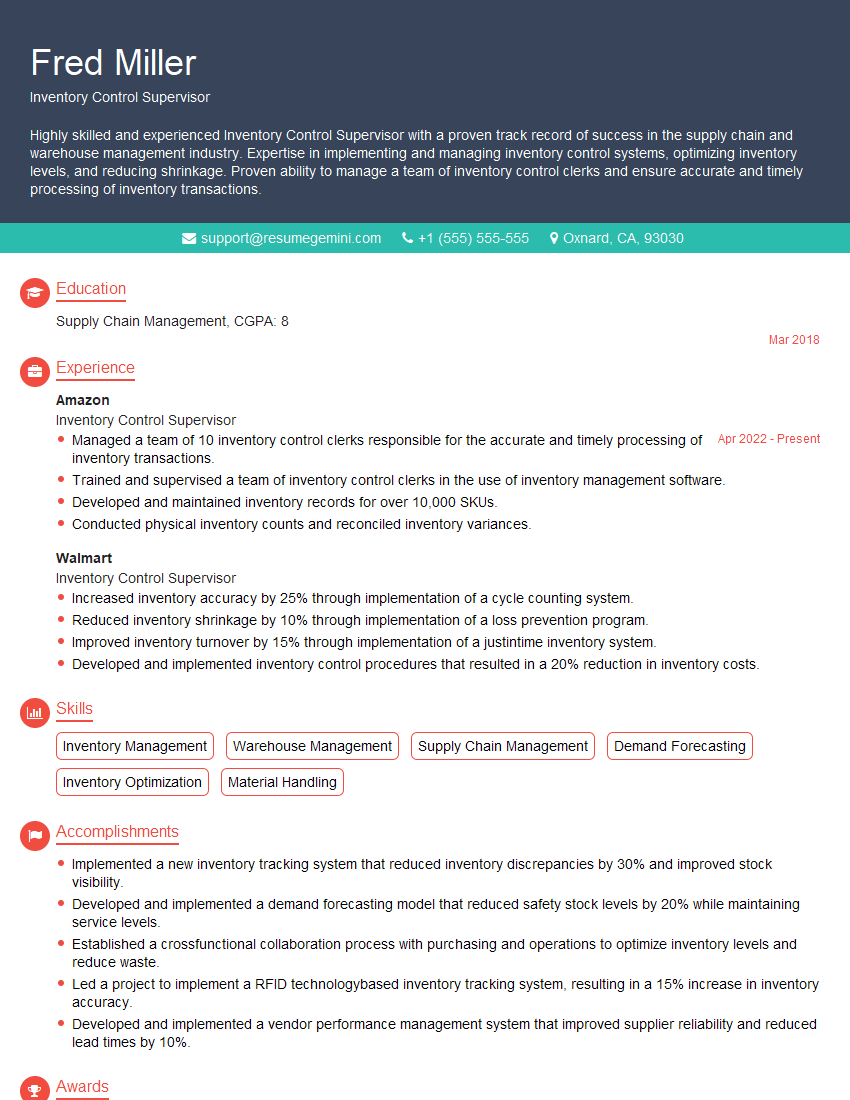
Mastering Label Inventory Management opens doors to exciting career opportunities in logistics, manufacturing, and supply chain management, offering excellent growth potential and competitive salaries. To maximize your job prospects, crafting a compelling and ATS-friendly resume is crucial. ResumeGemini is a trusted resource that can help you build a professional resume that highlights your skills and experience effectively. We provide examples of resumes tailored to Label Inventory Management to guide you in showcasing your qualifications. Take the next step towards your dream job – create a resume that makes you stand out!
Explore more articles
Users Rating of Our Blogs
Share Your Experience
We value your feedback! Please rate our content and share your thoughts (optional).
What Readers Say About Our Blog
Very informative content, great job.
good