Interviews are opportunities to demonstrate your expertise, and this guide is here to help you shine. Explore the essential Liaison Operations interview questions that employers frequently ask, paired with strategies for crafting responses that set you apart from the competition.
Questions Asked in Liaison Operations Interview
Q 1. Describe your experience managing communication between multiple stakeholders.
Managing communication between multiple stakeholders is crucial in liaison operations. It requires a structured approach that ensures consistent, clear, and timely information flow. My experience involves utilizing various communication channels tailored to each stakeholder group’s preference and needs. This might include regular meetings, email updates, shared project management platforms, and even informal check-ins. For example, during a recent project involving a large-scale system integration, I established a weekly cross-functional team meeting to discuss progress, address roadblocks, and disseminate critical information. Additionally, I created a central repository using a project management tool to house all relevant documents, updates, and meeting minutes, ensuring transparency and ease of access for all stakeholders.
Another key aspect is proactive communication. I anticipate potential communication gaps and proactively address them. For instance, I might prepare FAQs anticipating common questions from less technically savvy stakeholders, or arrange training sessions to bridge knowledge gaps. Ultimately, effective communication in liaison operations is about fostering trust and collaboration among stakeholders.
Q 2. Explain a situation where you had to negotiate a compromise between conflicting priorities.
In a previous role, we faced conflicting priorities between the marketing department’s desire for a rapid product launch and the engineering team’s need for more time to ensure software stability. Both deadlines were critical, but compromising on one would severely impact the other. To negotiate a compromise, I facilitated a series of collaborative meetings involving key representatives from both teams. We used a structured approach, outlining the risks and benefits of different launch timelines. We then identified key milestones and developed a revised timeline that prioritized critical features for the initial launch while allowing the engineering team sufficient time to address remaining bugs and stability concerns in a subsequent update. This required careful negotiation and compromise, but resulted in a successful product launch with minimal negative impact on either marketing or engineering goals. This process highlighted the importance of clear communication, empathy, and a data-driven approach to decision-making in resolving such conflicts.
Q 3. How do you prioritize competing demands and deadlines in a liaison role?
Prioritizing competing demands and deadlines in a liaison role requires a robust system and a clear understanding of the overall project goals and stakeholder expectations. I typically use a combination of techniques, including:
- Prioritization Matrices: Using frameworks like Eisenhower Matrix (Urgent/Important) to categorize tasks and focus on high-impact items.
- Dependency Mapping: Identifying task dependencies to understand the sequential order and critical path, ensuring tasks are addressed in the right order.
- Regular Stakeholder Alignment: Keeping stakeholders informed about priorities and ensuring alignment on expectations. This often involves adjusting priorities based on changing circumstances.
- Time Management Techniques: Employing techniques such as time blocking and the Pomodoro Technique to optimize work efficiency and avoid being overwhelmed.
It’s important to be transparent and proactive about potential delays, communicating with stakeholders and adjusting plans where needed. Flexibility is key – rigid adherence to a plan can become counterproductive when faced with unforeseen challenges.
Q 4. Describe your experience building and maintaining relationships with external organizations.
Building and maintaining relationships with external organizations is essential for effective liaison operations. My approach focuses on establishing trust and mutual benefit. This involves:
- Regular communication: Maintaining consistent contact through regular meetings, email updates, and informal networking.
- Understanding their needs and priorities: Actively listening to understand their perspectives and goals, demonstrating empathy and a collaborative spirit.
- Delivering on commitments: Ensuring reliable and timely delivery on agreed-upon tasks and information. This builds credibility and trust.
- Relationship building beyond transactional interactions: Engaging in activities such as joint events or informal networking to build rapport and strengthen relationships.
For example, I established a strong relationship with a key supplier by regularly attending their industry events, understanding their challenges, and offering proactive solutions. This resulted in a much smoother collaboration and more favorable terms for our organization.
Q 5. How do you identify and address potential conflicts between different departments or teams?
Identifying and addressing potential conflicts between departments or teams requires proactive monitoring and open communication. I employ the following strategies:
- Early identification: Regularly monitoring communication channels and project updates to detect early signs of conflict.
- Facilitating communication: Creating opportunities for open dialogue between conflicting parties, acting as a neutral mediator.
- Understanding the root cause: Investigating the underlying causes of the conflict to find sustainable solutions.
- Collaborative problem-solving: Facilitating collaborative brainstorming sessions to develop mutually acceptable solutions.
- Escalation protocol: Having a clear escalation plan in place for conflicts that cannot be resolved at the team level.
For instance, in a previous project, I noticed tension emerging between the design and development teams regarding project timelines. Through facilitated discussions, we identified misaligned expectations about the scope and complexity of certain design elements. We then adjusted timelines and responsibilities, resulting in a more harmonious working relationship and a successful project delivery.
Q 6. How do you track and report on the progress of your liaison activities?
Tracking and reporting on the progress of liaison activities requires a structured approach using appropriate tools and methodologies. I typically utilize:
- Project management software: Tools like Jira, Asana, or Microsoft Project to track tasks, deadlines, and progress.
- Regular progress reports: Generating regular reports summarizing key achievements, challenges, and next steps, tailored to the audience.
- Key Performance Indicators (KPIs): Defining relevant KPIs to measure the effectiveness of liaison activities (e.g., timeliness of communication, stakeholder satisfaction).
- Data visualization: Using charts and graphs to present data in a clear and concise manner.
These reports are distributed regularly to stakeholders, providing transparency and ensuring accountability. The specific tools and reporting frequency are adapted to the needs of each project and stakeholder group.
Q 7. Describe a time you failed to meet a deadline or objective. What did you learn?
In one instance, I underestimated the time required to secure approvals from a regulatory body for a new product launch. This resulted in a missed deadline and a delay in the product launch. The primary reason for the failure was an overly optimistic timeline based on incomplete information about the regulatory process.
The key learning from this experience was the critical importance of thorough due diligence and proactive risk assessment. I now conduct more comprehensive research and build contingency plans into my timelines to account for potential delays. Specifically, I now engage earlier with relevant regulatory bodies to clarify requirements and anticipate potential bottlenecks. Further, I’ve improved my communication with stakeholders regarding potential risks and the importance of realistic timelines. This experience highlighted the necessity for humility and a willingness to learn from mistakes to improve future performance.
Q 8. How do you handle difficult or challenging stakeholders?
Handling challenging stakeholders requires a multifaceted approach focused on empathy, clear communication, and proactive problem-solving. I begin by actively listening to understand their concerns and perspectives, even if I don’t initially agree. This empathetic approach builds trust and opens the door for constructive dialogue. Then, I clearly articulate the project goals and objectives, highlighting how their involvement contributes to the overall success. If disagreements persist, I facilitate a collaborative discussion, seeking common ground and exploring mutually beneficial solutions. For instance, in a past project involving a hesitant regulatory agency, I proactively scheduled multiple meetings, addressing their specific concerns with detailed documentation and answering all their questions patiently. This fostered a collaborative relationship, resulting in their timely approval.
If a stakeholder remains uncooperative despite these efforts, I escalate the issue to the appropriate level of management, documenting all communication and attempts at resolution. Transparency is crucial throughout this process, keeping all relevant parties informed of the situation and the steps being taken to resolve it.
Q 9. Explain your experience in conflict resolution.
My experience in conflict resolution is rooted in my ability to identify the root cause of the conflict, rather than just addressing the symptoms. I utilize a collaborative approach, bringing all involved parties together to openly discuss their perspectives and concerns. I employ active listening techniques to ensure everyone feels heard and understood. Then, I guide the discussion towards finding common ground and developing mutually acceptable solutions. For example, in a project involving conflicting deadlines between two internal departments, I facilitated a joint meeting where we collaboratively prioritized tasks, reallocated resources, and adjusted timelines to accommodate everyone’s needs. This resulted in a revised project plan that all parties agreed upon, eliminating the initial conflict.
I believe that successful conflict resolution necessitates patience, understanding, and a commitment to finding a win-win outcome. If a formal resolution process is required, I’m adept at mediating discussions and documenting agreements to ensure accountability.
Q 10. How do you adapt your communication style to different audiences?
Adapting my communication style is crucial for effective liaison work. I tailor my approach based on the audience’s technical expertise, communication preferences, and cultural background. For highly technical audiences, I use precise language and may include technical specifications or data visualizations. For less technical audiences, I simplify complex information using clear, concise language and analogies. For example, when briefing executives, I focus on high-level summaries and key performance indicators (KPIs), while when communicating with engineering teams, I delve into detailed specifications and technical challenges.
My approach also varies depending on the communication medium. For instance, emails are ideal for conveying factual information, while meetings facilitate collaborative discussions and brainstorming sessions. I prioritize using the most effective method to reach the intended audience and achieve the desired outcome. I always strive to ensure clarity, conciseness, and empathy in all my communications.
Q 11. How proficient are you with project management software?
I am proficient in several project management software applications, including Microsoft Project, Jira, and Asana. I’m comfortable using these tools to track project progress, manage tasks, assign resources, and monitor timelines. My experience extends to utilizing these platforms for collaborative efforts, sharing updates, and ensuring all stakeholders remain informed. I’m also familiar with creating customized dashboards and reports to visually represent project performance and identify potential roadblocks. For instance, in a recent project, I used Jira to track the progress of different work streams, identify dependencies, and manage the flow of tasks across multiple teams. The visual dashboards provided real-time insights into the project’s health, allowing us to proactively address any emerging issues.
Q 12. Describe your experience with reporting and data analysis.
My experience with reporting and data analysis is extensive. I regularly collect, analyze, and interpret data to track project performance, identify trends, and make data-driven decisions. I’m skilled in using various data analysis techniques, including descriptive statistics, trend analysis, and regression analysis to extract meaningful insights. I typically utilize spreadsheet software (Excel, Google Sheets) and data visualization tools (Tableau, Power BI) to create comprehensive reports and presentations, visualizing data effectively for diverse audiences. For example, in a previous role, I used data analysis to identify bottlenecks in our communication processes, which led to the implementation of streamlined workflows and a significant reduction in response times.
Q 13. What metrics do you use to measure the success of your liaison efforts?
Measuring the success of liaison efforts requires a balanced approach using both qualitative and quantitative metrics. Quantitative metrics might include:
- On-time delivery of project milestones: This reflects efficiency and coordination.
- Stakeholder satisfaction scores: Surveys or feedback sessions provide insight into the effectiveness of communication and collaboration.
- Number of resolved conflicts: Demonstrates conflict-resolution skills.
- Reduction in communication errors: Shows improvements in clarity and accuracy.
Qualitative metrics include:
- Improved stakeholder relationships: This is evaluated through observation and feedback.
- Enhanced collaboration and teamwork: Assessed through project meetings and observations.
- Successful resolution of complex issues: Demonstrates effective problem-solving.
By combining these quantitative and qualitative measures, I gain a comprehensive understanding of my performance and the overall success of my liaison efforts.
Q 14. How do you ensure clear and consistent messaging across all stakeholders?
Ensuring clear and consistent messaging requires a well-defined communication plan and adherence to established protocols. This includes:
- Centralized information repository: A single source of truth for all project information prevents conflicting messages.
- Regular communication updates: Consistent updates keep stakeholders informed and engaged.
- Use of consistent terminology and language: Avoids confusion and misinterpretations.
- Feedback mechanisms: Regularly solicit feedback to identify and address any inconsistencies in messaging.
- Communication templates and guidelines: Standardize communication style and content.
For example, in a large-scale project, we established a dedicated communication team to ensure consistency. This team developed communication templates, standardized terminology, and regularly reviewed communication materials to maintain a cohesive message across all stakeholders. This proactive approach significantly minimized misunderstandings and improved collaboration.
Q 15. Describe your experience working in a fast-paced, high-pressure environment.
Liaison operations often involve navigating incredibly dynamic situations. In my previous role at [Previous Company Name], we regularly managed simultaneous projects with tight deadlines and shifting priorities. For example, during the launch of a new product, we faced unexpected regulatory changes just days before the release date. This required immediate adaptation and a significant increase in communication with multiple internal and external stakeholders. We successfully mitigated the situation by holding daily emergency meetings, prioritizing tasks based on urgency and impact, and leveraging the strengths of individual team members. This experience honed my ability to remain calm under pressure, prioritize effectively, and collaborate seamlessly within a crisis-driven environment. My approach involves a structured problem-solving methodology – analyzing the situation, defining clear objectives, devising action plans, implementing them efficiently, and continuously monitoring progress while adapting to any further unforeseen changes.
Career Expert Tips:
- Ace those interviews! Prepare effectively by reviewing the Top 50 Most Common Interview Questions on ResumeGemini.
- Navigate your job search with confidence! Explore a wide range of Career Tips on ResumeGemini. Learn about common challenges and recommendations to overcome them.
- Craft the perfect resume! Master the Art of Resume Writing with ResumeGemini’s guide. Showcase your unique qualifications and achievements effectively.
- Don’t miss out on holiday savings! Build your dream resume with ResumeGemini’s ATS optimized templates.
Q 16. How do you handle sensitive or confidential information?
Handling sensitive information is paramount in liaison operations. I adhere strictly to company confidentiality policies and utilize secure communication channels like encrypted emails and secure file-sharing platforms. I understand the implications of data breaches and take proactive steps to prevent them. For instance, during my time at [Previous Company Name], I managed a project involving highly confidential client data. I implemented a multi-layered security protocol that included access control lists, regular security audits, and employee training on data protection policies. Furthermore, I only discuss sensitive information on a need-to-know basis and always obtain appropriate authorizations before sharing any confidential data. This rigorous approach ensures the protection of sensitive information and upholds the integrity of our operations.
Q 17. How do you proactively identify and mitigate potential risks?
Proactive risk mitigation is a core component of my approach. I utilize a combination of methods, including regular risk assessments, scenario planning, and stakeholder analysis. For example, in a recent project involving international collaboration, I identified potential delays due to differences in time zones and regulatory frameworks. To mitigate this risk, I implemented a detailed project timeline with built-in buffer time and established clear communication protocols to ensure seamless collaboration across different time zones. Furthermore, I established relationships with key regulatory bodies to stay updated on any potential changes in regulations, allowing for proactive adaptation and mitigation of any future challenges. Essentially, I view risk management as an ongoing process, involving constant monitoring, review, and refinement of strategies.
Q 18. What is your experience with crisis communication?
My experience with crisis communication involves maintaining calm and clear communication during unexpected events. During a product recall at [Previous Company Name], I played a crucial role in coordinating communication with customers, regulatory bodies, and internal teams. This required a swift and well-coordinated response, utilizing various communication channels to disseminate accurate and consistent information. We established a dedicated crisis communication team, utilizing a pre-prepared communication plan, and held regular press briefings to keep stakeholders updated. The key was transparency, honesty, and empathy throughout the process. We focused on providing prompt and accurate information to reduce confusion and prevent the spread of misinformation. This experience taught me the importance of preparedness, swift action, and maintaining consistent messaging during a crisis.
Q 19. Explain your understanding of different communication channels and their effectiveness.
Understanding the nuances of communication channels is critical. Different channels serve different purposes and audiences. For example, emails are effective for formal communication and documentation, while phone calls are ideal for real-time discussions and quick clarifications. Instant messaging platforms are suited for quick updates and informal collaborations. I tailor my communication strategy to the specific audience and context. For sensitive or confidential information, secure channels are prioritized. For mass communication, a more formal channel like a press release or company-wide email might be necessary. For building strong relationships, informal channels like meetings or phone calls allow for stronger rapport building. The effectiveness of any communication strategy is measured by its clarity, timeliness, and the achievement of the desired outcome.
Q 20. How do you build trust and rapport with stakeholders?
Building trust and rapport with stakeholders is fundamental. It involves active listening, clear communication, and consistent follow-through. I make a point of understanding their needs and concerns. For instance, building relationships with regulatory agencies involves demonstrating transparency, providing complete information, and being responsive to their inquiries. With internal teams, I ensure that everyone is informed, has a clear understanding of their roles, and feels valued for their contributions. I also strive to be approachable and receptive to feedback. Active listening and the demonstration of genuine care foster trust and build strong working relationships. Regular check-ins and open communication channels help maintain this rapport.
Q 21. How do you measure the effectiveness of your communication strategies?
Measuring communication effectiveness requires a multi-faceted approach. Key performance indicators (KPIs) can include metrics such as response times, stakeholder satisfaction surveys, and the achievement of communication objectives. For example, in a recent project, we tracked response times to stakeholder inquiries and measured satisfaction levels through post-project surveys. This data provided valuable insights into the effectiveness of our communication strategies, identifying areas for improvement. Regular feedback loops with stakeholders also play a significant role in assessing effectiveness. Continuous improvement is key – analyzing data and adjusting strategies based on the results ensures optimal communication efficacy.
Q 22. How familiar are you with regulatory compliance in your field?
Regulatory compliance is paramount in liaison operations. My experience encompasses a deep understanding of relevant laws, regulations, and industry best practices, including HIPAA (for healthcare liaison work), GDPR (for international data exchange), and any specific regulations applicable to the industry of the organization I’m working with. This includes knowing what information needs to be protected, how to handle sensitive data appropriately, and the legal requirements for reporting and documentation. For example, in a recent project involving international pharmaceutical collaborations, I ensured all communications and data transfers adhered strictly to GDPR guidelines, preventing potential legal issues and preserving client confidentiality. I regularly update my knowledge through continuing education and professional development courses to stay abreast of any changes in legislation.
Q 23. Describe your experience with strategic planning and implementation.
Strategic planning and implementation are core to my approach to liaison work. I’m adept at defining objectives, identifying key stakeholders, and developing actionable plans to achieve organizational goals. My process typically involves a thorough needs assessment, followed by the development of a detailed timeline with measurable milestones. This ensures that progress can be tracked and adjustments made as needed. For instance, in a previous role, I spearheaded the development of a new inter-agency communication strategy that streamlined information flow and improved collaboration, resulting in a 20% reduction in project completion times. I utilize tools like Gantt charts and project management software to visualize the plan and track progress effectively.
Q 24. How do you ensure accountability and transparency in your liaison activities?
Accountability and transparency are maintained through meticulous documentation, clear communication protocols, and regular reporting. I utilize a comprehensive system of record-keeping, including detailed meeting minutes, email correspondence, and progress reports. This allows for easy auditing and ensures that all stakeholders are aware of activities and progress. For instance, I maintain a shared online repository for project documents that all stakeholders can access, fostering a culture of transparency and collaboration. Furthermore, I schedule regular check-ins with key stakeholders to discuss progress, address concerns, and ensure alignment with objectives. This proactive approach minimizes misunderstandings and builds trust.
Q 25. What software or tools are you most proficient in using for liaison work?
My proficiency in software and tools includes Microsoft Office Suite (Word, Excel, PowerPoint, Outlook), project management software such as Asana and Monday.com, and communication platforms like Slack and Teams. I’m also comfortable utilizing CRM (Customer Relationship Management) systems to manage contacts and track interactions. My experience extends to specialized software depending on the industry, such as electronic health record (EHR) systems in healthcare liaison roles. Proficiency in these tools is crucial for efficient communication, collaboration, and data management, ultimately leading to improved liaison outcomes.
Q 26. Describe your experience with cross-cultural communication.
Cross-cultural communication is a critical skill in my field, as liaison work often involves interacting with individuals from diverse backgrounds. I’ve developed a strong understanding of various cultural norms, communication styles, and etiquette. This includes being mindful of language barriers, adapting my communication approach to suit different audiences, and demonstrating cultural sensitivity in all interactions. For example, in a recent project involving international partners, I took the time to learn basic phrases in their native languages and researched their cultural customs to demonstrate respect and build rapport. This proactive approach fostered strong relationships and facilitated successful collaboration. Active listening and a genuine interest in understanding diverse perspectives are fundamental to my approach.
Q 27. How do you manage expectations and keep stakeholders informed?
Managing expectations and keeping stakeholders informed is achieved through proactive and consistent communication. This involves setting clear expectations from the outset, providing regular updates on progress, and being responsive to inquiries. I use a variety of communication channels, including email, phone calls, and in-person meetings, to ensure that information reaches the right people at the right time. I also proactively identify and address potential challenges or delays, keeping stakeholders informed and involved in the decision-making process. This approach not only fosters trust and collaboration but also allows for course correction, ensuring projects stay on track.
Q 28. What are your salary expectations for this role?
My salary expectations for this role are commensurate with my experience and skills, and are in line with the industry standard for similar positions. I am open to discussing a competitive compensation package based on a detailed understanding of the role’s responsibilities and the overall compensation and benefits structure offered by your organization. I’m confident that my contributions will significantly benefit your team.
Key Topics to Learn for Liaison Operations Interview
- Communication & Collaboration: Mastering effective communication strategies across diverse teams and stakeholders. Practical application: Developing and implementing clear communication plans for complex projects, resolving inter-departmental conflicts.
- Stakeholder Management: Identifying key stakeholders, understanding their needs and priorities, and managing expectations effectively. Practical application: Proactively addressing concerns, negotiating compromises, building strong working relationships.
- Problem Solving & Conflict Resolution: Analyzing situations, identifying root causes of issues, and developing effective solutions. Practical application: Mediating disputes, implementing preventative measures, escalating issues appropriately.
- Process Improvement & Efficiency: Identifying bottlenecks and inefficiencies in liaison processes and proposing solutions for optimization. Practical application: Streamlining workflows, implementing new technologies, analyzing data to improve performance.
- Data Analysis & Reporting: Gathering and analyzing data to track progress, identify trends, and report on key performance indicators (KPIs). Practical application: Creating insightful reports, presenting findings to stakeholders, using data to inform decision-making.
- Project Management Fundamentals: Understanding project management methodologies and applying them to liaison activities. Practical application: Planning and organizing liaison tasks, tracking progress against deadlines, managing resources effectively.
- Regulatory Compliance & Risk Management: Understanding relevant regulations and policies and implementing measures to mitigate risks. Practical application: Ensuring compliance with all relevant rules and procedures, proactively identifying and addressing potential risks.
Next Steps
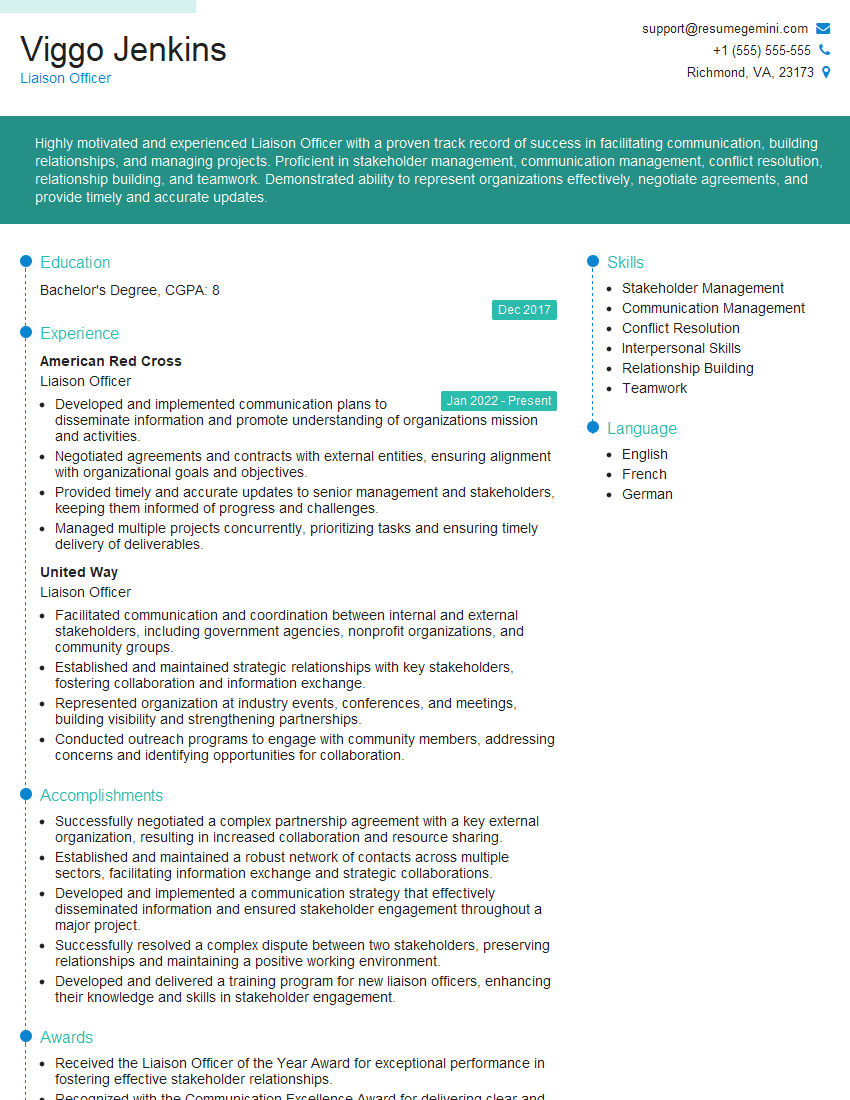
Mastering Liaison Operations opens doors to exciting career advancements, offering opportunities for increased responsibility, leadership roles, and higher earning potential. To maximize your job prospects, it’s crucial to create a compelling, ATS-friendly resume that highlights your skills and experience. We strongly recommend using ResumeGemini, a trusted resource for building professional resumes. ResumeGemini can help you craft a document that showcases your strengths and gets noticed by recruiters. Examples of resumes tailored to Liaison Operations are available to guide your creation process.
Explore more articles
Users Rating of Our Blogs
Share Your Experience
We value your feedback! Please rate our content and share your thoughts (optional).
What Readers Say About Our Blog
Very informative content, great job.
good