Unlock your full potential by mastering the most common Lighting and Illumination Techniques interview questions. This blog offers a deep dive into the critical topics, ensuring you’re not only prepared to answer but to excel. With these insights, you’ll approach your interview with clarity and confidence.
Questions Asked in Lighting and Illumination Techniques Interview
Q 1. Explain the inverse square law of light.
The inverse square law of light explains how the intensity of light decreases with distance from the source. Imagine a light bulb: the light spreads out in all directions. As you move further away, that same amount of light is spread over a larger area. Mathematically, it states that illuminance (E) is inversely proportional to the square of the distance (d) from the light source. This can be represented as: E ∝ 1/d². So, if you double the distance, the illuminance decreases to one-quarter of its original value. This is crucial in lighting design because it dictates how much light you need to achieve a desired illuminance level at a specific distance. For instance, a spotlight needs to be much closer to its target to achieve the same brightness as a floodlight illuminating a larger area.
Q 2. What are the different types of light sources and their applications?
Light sources are categorized into several types, each with unique applications:
- Incandescent: These produce light through heating a filament until it glows. They offer warm, inviting light but are energy-inefficient and have a short lifespan. Think of traditional light bulbs.
- Fluorescent: These use electricity to excite mercury vapor, producing ultraviolet (UV) light that then stimulates a phosphor coating to emit visible light. They are more energy-efficient than incandescent bulbs but can have a cooler light color and may contain mercury.
- High-Intensity Discharge (HID): These include metal halide and high-pressure sodium lamps, generating light through an electric arc passing through a gas. They are highly efficient but require a ballast and have a long warm-up time. They’re often used for street lighting or large area illumination.
- Light Emitting Diode (LED): LEDs produce light when an electric current passes through a semiconductor. They are highly energy-efficient, have a long lifespan, and offer a wide range of color temperatures. They are becoming the dominant light source in many applications.
- Organic LED (OLED): Similar to LEDs, but using organic materials, OLEDs produce light directly and offer greater flexibility in design and superior image quality. Commonly used in high-end televisions and displays.
The choice of light source depends on factors like energy efficiency, color rendering, lifespan, cost, and the specific application. For example, LEDs are ideal for residential lighting due to their energy efficiency and long life, while HID lamps might be preferred for stadium lighting due to their high intensity.
Q 3. Describe the concept of color temperature and its importance in lighting design.
Color temperature, measured in Kelvin (K), describes the appearance of light, ranging from warm to cool. Lower Kelvin values (e.g., 2700K) represent warmer light, resembling incandescent bulbs, while higher values (e.g., 6500K) represent cooler light, similar to daylight. In lighting design, color temperature is crucial because it significantly impacts the mood and atmosphere of a space. Warm light creates a cozy and inviting feeling, often used in residential settings or restaurants. Cool light, on the other hand, feels more energetic and stimulating, often preferred in offices or retail stores. Choosing the right color temperature is essential for achieving the desired ambiance and highlighting specific features within a space. Consider a retail store showcasing jewelry – warmer light can make the jewelry appear more lustrous, while cooler light could create a more modern feel.
Q 4. What are the key considerations for designing lighting for a retail space?
Designing lighting for retail spaces requires careful consideration of several factors:
- Highlighting merchandise: Strategic lighting is crucial to showcase products effectively. Accent lighting can highlight key items, while general lighting provides overall illumination.
- Creating ambiance: The lighting should support the brand’s image and create the desired shopping experience. Warm light can create a welcoming atmosphere, while cooler light can feel more modern.
- Energy efficiency: Utilizing energy-efficient lighting solutions like LEDs reduces operational costs.
- Uniformity: Even illumination prevents dark spots and ensures consistent visibility throughout the store.
- Color rendering: Accurate color rendering is essential to ensure products are displayed in their true colors. A high Color Rendering Index (CRI) is preferred.
- Vertical illumination: Adequate vertical illumination on walls and displays can enhance the overall aesthetic appeal.
For example, a high-end clothing boutique might utilize warm, accent lighting to highlight specific garments, creating a luxurious atmosphere, while a supermarket might opt for bright, energy-efficient fluorescent or LED lighting for maximum visibility of products.
Q 5. How do you calculate the illuminance level required for a specific space?
Calculating the required illuminance level involves several steps:
- Determine the task: Identify the visual task being performed in the space (e.g., reading, working, shopping). Different tasks require different illuminance levels.
- Consult lighting standards: Refer to relevant lighting standards or guidelines (like the IES Lighting Handbook) to find recommended illuminance levels for the specific task.
- Measure the area: Calculate the area of the space in square meters or feet.
- Calculate the total lumens required: Multiply the recommended illuminance level (in lux or foot-candles) by the area of the space.
- Select luminaires: Choose lighting fixtures with appropriate lumen output and light distribution.
- Account for light loss factors: Consider factors such as lamp depreciation, luminaire dirt depreciation, and room surface reflectance, which reduce the effective illuminance. These factors are typically expressed as percentages and are multiplied to obtain the effective light loss factor.
- Adjust for light loss: Divide the total lumens required by the light loss factor to determine the actual lumen output needed from the luminaires.
For example, if a guideline recommends 500 lux for an office area of 100 square meters, with a light loss factor of 0.7, the total lumens required would be 50,000 lumens (500 lux * 100 sq m), and the actual lumen output needed from the fixtures would be approximately 71,429 lumens (50,000 lumens / 0.7).
Q 6. Explain the difference between direct and indirect lighting.
Direct lighting shines light directly onto the task or area, providing focused illumination. Think of a desk lamp illuminating a work surface. Indirect lighting, on the other hand, bounces light off ceilings or walls before it reaches the task area, providing softer, more diffused illumination. Consider a cove lighting system reflecting light off the ceiling. Direct lighting is efficient for illuminating specific areas, but can create harsh shadows. Indirect lighting creates a more ambient, comfortable environment but is generally less efficient as some light is lost through reflection.
The best approach often involves a combination of both, balancing the efficiency of direct lighting with the softer, more pleasant ambiance of indirect lighting. A retail space, for instance, may use direct lighting to highlight products and indirect lighting to create a welcoming atmosphere.
Q 7. What are the advantages and disadvantages of LED lighting?
LED lighting offers several advantages:
- High energy efficiency: LEDs consume significantly less energy than traditional lighting technologies.
- Long lifespan: LEDs have a much longer lifespan, reducing replacement costs.
- Compact size: LEDs are small and versatile, allowing for creative design options.
- Instant on/off: LEDs turn on and off immediately, without warm-up time.
- Wide range of color temperatures and CRI: LEDs offer various color temperatures and high CRI for accurate color reproduction.
However, some disadvantages include:
- Higher initial cost: The upfront cost of LED lighting can be higher than traditional lighting.
- Heat sensitivity: The performance of LEDs can be affected by high temperatures.
- Light degradation: While long-lasting, LEDs experience some light degradation over time.
- Potential for glare: Poorly designed LED fixtures can produce glare.
Despite the initial higher cost, the long-term energy savings and extended lifespan often make LED lighting a cost-effective solution over the lifetime of the lighting system.
Q 8. How do you select appropriate luminaires for a project?
Selecting appropriate luminaires is crucial for successful lighting design. It’s a multi-faceted process that considers several factors. First, we define the project’s purpose. Is it a retail space needing to highlight merchandise, an office requiring task lighting, or a museum needing to preserve artifacts? The desired ambiance also plays a key role – do we need bright, energizing light or something more soft and intimate?
Next, we assess the space’s physical characteristics: ceiling height, room dimensions, and existing architectural features. These dictate the type of luminaire that can be practically installed and the light distribution needed. For instance, high ceilings might benefit from high-bay luminaires, while lower ceilings may require recessed downlights or surface-mounted fixtures.
Then comes the specification: we look at light output (lumens), color temperature (Kelvin), color rendering index (CRI), and energy efficiency (lumens per watt). For example, a warm white (2700K) light with a high CRI (above 90) is ideal for residential spaces, while a cooler white (4000K) with a good CRI (above 80) suits offices. Energy efficiency is paramount; we choose luminaires with high lumens per watt to minimize energy consumption and operating costs. Finally, we consider factors like budget, maintenance requirements, and aesthetic compatibility with the overall design.
For example, in a recent museum project, we selected track lighting with adjustable heads to provide precise and controllable illumination on individual artifacts. This allowed for flexibility in showcasing the exhibits while minimizing light spill onto sensitive materials. In contrast, for a modern office building, we opted for energy-efficient LED panels offering even illumination and a sleek, contemporary look.
Q 9. What are the common lighting control systems?
Common lighting control systems offer varying levels of sophistication and functionality. Simple on/off switches are the most basic, but they lack the flexibility for dynamic lighting scenarios. Dimmers provide control over light intensity, creating adjustable ambiance. These can be wired directly to luminaires or integrated into more complex systems.
More advanced systems include occupancy sensors, which automatically turn lights on and off based on the presence of people, optimizing energy efficiency. Daylight harvesting systems use sensors to adjust artificial lighting levels based on available daylight, further reducing energy usage.
Building Management Systems (BMS) offer comprehensive control, integrating lighting with other building systems like HVAC and security. These systems allow for sophisticated programming of lighting schedules, zoning control, and remote monitoring. Finally, advanced systems can incorporate smart technology, allowing for remote control via smartphones or tablets and enabling personalized lighting preferences. For example, smart lighting systems can simulate natural daylight cycles or create specific scenes for different activities. The choice of system depends on the project’s scale, budget, and desired level of control.
Q 10. Describe your experience with lighting simulation software.
I have extensive experience using lighting simulation software such as DIALux evo, AGi32, and Relux. These tools are invaluable for predicting the performance of lighting designs before installation. They allow me to model the space accurately, input luminaire data, and simulate the resulting illuminance levels and light distributions. This is crucial for ensuring compliance with lighting codes and achieving the desired lighting effects.
For example, using DIALux evo, I can create a 3D model of a room, place virtual luminaires, and then simulate the light levels at various points within the space. The software generates illuminance maps that visually represent the distribution of light, highlighting areas that may be over-illuminated or under-illuminated. This helps me fine-tune the luminaire placement and selection, optimizing the design for energy efficiency and visual comfort. I also frequently utilize the tools for energy analysis, allowing me to compare different design options and select the most energy-efficient solution. This process significantly reduces the risk of costly mistakes during the construction phase and ensures that the final result meets the client’s needs and expectations.
Q 11. Explain the concept of light pollution and its mitigation strategies.
Light pollution is the excessive or inappropriate illumination of the night sky, causing a range of negative consequences. It obscures the stars, impacts astronomical observations, disrupts ecosystems (affecting nocturnal animals’ behavior and migration patterns), and can even interfere with human sleep cycles. The primary sources are poorly designed or improperly aimed outdoor lighting fixtures, excessive illumination levels, and the use of inappropriate light sources.
Mitigation strategies focus on responsible lighting practices. This includes using fully shielded luminaires to direct light downwards, minimizing light trespass onto neighboring properties, choosing light sources with lower color temperatures (warmer light) and reduced blue light emission, and implementing smart controls like timers and occupancy sensors to reduce unnecessary nighttime illumination.
For instance, replacing high-pressure sodium lamps with energy-efficient LED luminaires with lower color temperatures and full cut-off optics greatly reduces upward light spill and energy consumption, effectively mitigating light pollution. Similarly, implementing astronomical lighting standards helps guide the selection and placement of outdoor lighting to minimize environmental impact. Raising public awareness about responsible lighting practices is also crucial for effective mitigation.
Q 12. How do you ensure energy efficiency in lighting design?
Energy efficiency is a critical aspect of modern lighting design. The primary approach involves using high-efficiency luminaires with high lumens per watt (LPW) outputs. LEDs are currently the most energy-efficient light sources available, offering significantly higher LPW compared to traditional technologies like incandescent or fluorescent lamps. Selecting the appropriate LED technology – such as high-efficacy LEDs with optimized thermal management – is critical for achieving maximum energy savings.
Beyond luminaire choice, effective lighting control systems are paramount. Implementing occupancy sensors and daylight harvesting systems drastically reduces energy consumption by ensuring that lights are only on when and where needed. Smart controls can optimize lighting schedules based on occupancy patterns, minimizing energy waste during unoccupied periods. Proper design that considers natural daylighting strategies further enhances energy efficiency. Strategic placement of windows and skylights can reduce the reliance on artificial lighting during daytime hours. Detailed energy modeling using lighting simulation software helps in comparing different design options and identifying the most energy-efficient solution.
For example, in a recent office renovation project, we integrated daylight harvesting systems, occupancy sensors, and LED lighting, resulting in a 60% reduction in lighting energy consumption compared to the previous lighting system.
Q 13. What are the relevant building codes and standards for lighting?
Relevant building codes and standards for lighting vary by location but generally address safety, energy efficiency, and visual comfort. Internationally, the International Energy Conservation Code (IECC) and ASHRAE standards provide guidelines for energy-efficient design, often specifying minimum lighting power densities or requiring the use of energy-efficient lighting technologies.
Locally, individual jurisdictions may have more stringent requirements. For example, many cities have adopted dark sky ordinances to address light pollution. These ordinances regulate the type, intensity, and direction of outdoor lighting. Building codes often specify minimum illuminance levels for various spaces, ensuring adequate illumination for safety and task performance (e.g., sufficient light levels in hallways, stairwells, and workspaces). Additionally, codes may address issues such as glare control, emergency lighting requirements, and the accessibility of lighting controls for people with disabilities. Compliance with these codes and standards is crucial for ensuring a safe, comfortable, and energy-efficient lighting environment.
Q 14. Describe your experience with photometric analysis.
Photometric analysis is the scientific measurement and analysis of light. It’s a critical part of lighting design, providing quantitative data on the performance of lighting systems. This analysis involves using photometric equipment such as illuminance meters and goniophotometers to measure light levels and distribution patterns. The data collected is then used to create isolux diagrams and other visual representations of the light distribution within a space.
I have extensive experience in conducting photometric analyses, using both field measurements and software simulations. For example, I’ve used goniophotometers to measure the intensity and distribution of light from various luminaires, obtaining data to create IES files (industry-standard files containing photometric data). This data is then imported into lighting simulation software for detailed analysis of the lighting design. Photometric analysis helps to verify that the design meets the required illuminance levels, minimizes glare, and achieves the desired lighting effects. It’s crucial for ensuring the design’s performance aligns with the client’s requirements and complies with applicable standards. Furthermore, photometric data provides objective evidence to support design decisions and optimize the energy efficiency and visual comfort of the lighting installation.
Q 15. How do you handle lighting design challenges in complex architectural spaces?
Lighting complex architectural spaces requires a multifaceted approach. It’s not just about illuminating the space; it’s about sculpting light to enhance the architecture’s form, function, and mood. My strategy begins with a thorough understanding of the space: its dimensions, materials, ceiling heights, and the intended use. I then consider the interplay of natural and artificial light sources.
For instance, a high-ceilinged atrium might benefit from a combination of dramatic pendant lighting to highlight key architectural features and strategically placed uplights to wash the walls with a warm glow. In contrast, a low-ceilinged space may necessitate recessed lighting to avoid visual clutter and ensure even illumination. I always conduct thorough site visits and utilize 3D modeling software to visualize the effect of various lighting schemes before implementation. Detailed light studies, incorporating factors such as light spill and shadow control, are crucial to optimize the final design.
A recent project involved a multi-level office building with an open plan. To address the challenge of even light distribution across different levels, I employed a layered approach, combining recessed downlights for general illumination, accent lighting to highlight specific work areas, and indirect lighting to create a soft ambient glow, preventing harsh shadows and promoting visual comfort.
Career Expert Tips:
- Ace those interviews! Prepare effectively by reviewing the Top 50 Most Common Interview Questions on ResumeGemini.
- Navigate your job search with confidence! Explore a wide range of Career Tips on ResumeGemini. Learn about common challenges and recommendations to overcome them.
- Craft the perfect resume! Master the Art of Resume Writing with ResumeGemini’s guide. Showcase your unique qualifications and achievements effectively.
- Don’t miss out on holiday savings! Build your dream resume with ResumeGemini’s ATS optimized templates.
Q 16. What are the considerations for lighting design in a museum or art gallery?
Museum and art gallery lighting presents unique challenges. The primary goal is to showcase the artwork while minimizing damage and preserving its integrity. This necessitates a deep understanding of different art forms and their sensitivity to light. For example, delicate fabrics or paintings might require minimal light exposure to prevent fading, while sculptures may benefit from dramatic highlighting to showcase texture and form.
Several considerations are vital: Color rendering index (CRI) – a high CRI (90 or above) is crucial to ensure accurate color representation. UV filtration is essential to protect artworks from ultraviolet radiation. Light levels must be carefully controlled to meet conservation standards. Glare control is critical; direct glare can distract viewers and damage artworks. I often use specialized museum lighting fixtures with precise beam angles and color temperatures, coupled with sophisticated dimming systems for fine-tuned control.
In one project, we used fiber optic lighting to illuminate delicate antique tapestries, minimizing heat emission and UV exposure while showcasing the intricate details. For sculptures, we employed adjustable spotlights, allowing curators to easily modify the lighting scheme for different exhibitions.
Q 17. Explain the principles of daylight harvesting.
Daylight harvesting optimizes the use of natural light to reduce reliance on artificial lighting, leading to significant energy savings and improved occupant comfort. The core principle is strategic window placement and the use of light-reflective surfaces to maximize the penetration of daylight deep into a building. This involves careful consideration of factors such as window size, orientation, and shading devices.
Effective daylight harvesting often involves incorporating technologies like light shelves (horizontal surfaces reflecting sunlight deeper into the space), light tubes (which capture daylight from the roof and transport it to interior areas), and automated dimming systems that adjust artificial lighting levels based on the amount of available daylight. Moreover, the design of interior spaces should support daylight penetration, using light-colored walls and ceilings to enhance reflection and minimize light absorption.
Imagine an office building designed with a large atrium. By incorporating light shelves along the windows and strategically placed light tubes, we can ensure even daylight distribution throughout the interior, reducing the need for artificial lighting during the day. This not only saves energy but also enhances the occupants’ well-being by providing access to natural light.
Q 18. How do you design for visual comfort and avoid glare?
Designing for visual comfort and glare avoidance is paramount. Glare, whether direct or reflected, causes eye strain, discomfort, and reduced visual acuity. My approach involves a layered lighting design strategy that balances ambient, task, and accent lighting. Ambient lighting provides overall illumination, task lighting focuses on specific work areas, and accent lighting highlights architectural features or artwork. By carefully controlling the intensity and distribution of light, we can mitigate glare.
Specific techniques include: using fixtures with low luminance (light intensity per unit area) and appropriate shielding; selecting light sources with appropriate color temperature (warmer color temperatures are generally more comfortable); and incorporating diffusers or lenses to soften and distribute light. Proper placement of lighting fixtures is also crucial—avoiding direct light shining into people’s eyes and minimizing reflections from polished surfaces.
For instance, in a residential setting, we might use recessed downlights with diffusers for general illumination, supplemented by table lamps or floor lamps with shades to create a soft and inviting ambiance. In an office environment, we would focus on task lighting that directs light onto work surfaces, while ensuring the general lighting remains comfortable and does not cause glare from computer screens.
Q 19. What are your preferred methods for creating lighting renderings and presentations?
I utilize a combination of software and rendering techniques to create compelling lighting presentations. For 3D modeling, I rely heavily on programs like DIALux evo, AGi32, and Revit. These allow me to accurately simulate the lighting scheme in a virtual environment, experimenting with different fixture types, placement, and light levels before installation. I then use visualization software such as Lumion and Enscape to create photorealistic renderings and animations that effectively convey the design intent to clients.
Beyond static renderings, I also incorporate virtual reality (VR) presentations for immersive experiences, especially for large or complex projects. This allows clients to ‘walk through’ the space and experience the lighting design firsthand, facilitating better understanding and approval. Finally, well-designed presentations, incorporating detailed technical specifications and energy calculations, are crucial for effective communication and client buy-in. The goal is not simply to show a pretty picture but to provide a comprehensive and convincing narrative of the lighting design’s impact.
Q 20. Describe your experience with different lighting fixture types (e.g., recessed, pendant, track).
My experience encompasses a wide range of lighting fixture types, each with its own strengths and limitations. Recessed fixtures are versatile and space-saving, ideal for general illumination in ceilings. However, they can be less effective in high-ceiling spaces. Pendant fixtures offer more design flexibility and can create dramatic focal points, suitable for both ambient and accent lighting. Their hanging nature, however, requires careful consideration of ceiling height and overall design aesthetic.
Track lighting provides flexibility for adjusting light placement and direction, making it ideal for highlighting specific areas or artworks in retail or gallery spaces. However, it can be more expensive and require more maintenance than other options. I also have extensive experience with linear lighting, surface-mounted fixtures, and exterior lighting solutions. The selection of appropriate fixture types is dictated by the specific project’s needs, including budget, aesthetic goals, and the required light distribution.
For example, in a modern minimalist office, recessed fixtures might be the primary choice for efficiency. In contrast, a high-end retail store might utilize track lighting to highlight merchandise dynamically. My selection always prioritizes energy efficiency, longevity, and visual appeal.
Q 21. Explain the difference between lumens, lux, and candelas.
Lumens, lux, and candelas are all units of measurement related to light, but they represent different aspects:
- Lumens (lm): This measures the total amount of light emitted by a source. Think of it as the total output of a light bulb. A higher lumen rating signifies a brighter bulb.
- Lux (lx): This measures the amount of light falling on a surface. It’s essentially the luminous flux (lumens) per unit area (square meter). Lux quantifies the illumination level at a specific point.
- Candelas (cd): This measures the luminous intensity of a light source in a particular direction. Imagine a spotlight; candelas measure the brightness of the beam at its most intense point. It’s the light emitted per unit solid angle.
Analogy: Imagine a flashlight (light source). Lumens represent the total brightness of the flashlight’s bulb. Lux measures how bright the light is on the wall it’s shining on, depending on distance and angle. Candelas measure how intensely bright the beam is coming out of the flashlight’s lens.
Understanding these differences is critical for accurate lighting design. For example, when designing an office, we might specify a target lux level for the work surfaces to ensure sufficient illumination for visual tasks. We then select luminaires with the appropriate lumen output to achieve this target illumination level.
Q 22. How do you incorporate sustainability into your lighting designs?
Sustainability is paramount in modern lighting design. It’s not just about using energy-efficient bulbs; it’s a holistic approach encompassing the entire lifecycle of the lighting system.
- Energy Efficiency: We prioritize LED lighting for its significantly lower energy consumption compared to traditional incandescent or fluorescent options. We carefully select LEDs with high lumens per watt (lm/W) ratings to maximize light output while minimizing energy use. For example, in a recent project for a museum, switching to high-efficiency LEDs reduced their energy bill by 60%.
- Material Selection: We favor sustainable materials like recycled metals and plastics in luminaire construction. We also consider the recyclability of the entire system at the end of its life. This minimizes environmental impact and promotes a circular economy.
- Light Pollution Reduction: We carefully design lighting to minimize light trespass and sky glow, reducing wasted energy and the negative impacts on nocturnal wildlife and ecosystems. Shielding luminaires and directing light downwards are key strategies here. For instance, we used directional lighting with low-glare optics in a residential development, preventing light pollution in the surrounding area.
- Lifecycle Assessment: We conduct thorough lifecycle assessments (LCA) for each project, evaluating the environmental impact of manufacturing, transportation, operation, and disposal of the lighting system. This informed decision-making helps us minimize the overall ecological footprint.
Q 23. What are your strategies for managing lighting projects within budget and timeline constraints?
Managing lighting projects within budget and timeline requires meticulous planning and proactive management.
- Detailed Budgeting: We create detailed budgets that account for all aspects: luminaire costs, installation labor, control systems, and any potential unforeseen issues. We use industry-standard cost estimating software to ensure accuracy.
- Value Engineering: Value engineering is crucial. We explore various options to achieve the desired lighting effect while optimizing costs. For instance, we might suggest a less expensive but equally effective luminaire with similar performance characteristics.
- Phased Implementation: For large projects, a phased implementation approach can help manage resources and minimize disruption. We complete sections in stages, allowing for adjustments and cost control along the way.
- Project Management Software: We utilize project management software like Asana or MS Project to track progress, manage tasks, and ensure we’re on schedule. This allows for proactive identification and resolution of potential delays.
- Communication: Clear and consistent communication with the client, contractors, and other stakeholders is vital. Regular meetings and progress reports keep everyone informed and ensure issues are addressed promptly.
Q 24. Describe your experience working with different lighting control protocols (e.g., DMX, DALI).
I have extensive experience with various lighting control protocols, including DMX and DALI.
- DMX (Digital Multiplex): DMX is commonly used for dynamic lighting applications like theatrical productions or architectural accent lighting. It offers precise control over individual luminaires, enabling complex lighting scenes and effects. I’ve used DMX to create stunning dynamic lighting displays in numerous retail and hospitality projects.
- DALI (Digital Addressable Lighting Interface): DALI provides a more sophisticated and energy-efficient solution for commercial spaces, offering greater flexibility in controlling individual luminaires and groups. It allows for dimming, switching, and monitoring of lights, providing data for energy management systems. I’ve integrated DALI systems into office buildings to optimize energy consumption and enhance user experience.
- Protocol Comparison: While both protocols facilitate control, DALI is generally favored for commercial projects due to its superior energy-efficiency and ease of integration into building management systems. DMX is usually better suited for dynamic, creative lighting installations where precise individual fixture control is paramount.
Q 25. How do you assess the impact of lighting on human health and well-being?
Lighting significantly impacts human health and well-being.
- Circadian Rhythm: The timing and spectral quality of light influence our circadian rhythm, the internal biological clock that regulates sleep-wake cycles, hormone production, and other bodily functions. Poor lighting can disrupt this rhythm, leading to fatigue, sleep disorders, and even decreased immunity.
- Visual Comfort: Adequate lighting levels, appropriate color temperature, and proper glare control are crucial for visual comfort. Insufficient or poorly designed lighting can lead to eye strain, headaches, and decreased productivity.
- Mood and Productivity: Lighting affects mood and productivity. Warm, soft light can promote relaxation, while bright, cool light can enhance alertness and focus. For instance, using a higher color temperature in an office space can improve worker concentration.
- Human-centric Lighting (HCL): HCL aims to optimize lighting to support human health and well-being by dynamically adjusting light levels, color temperature, and spectral composition to match natural daylight patterns and user activity. I frequently incorporate HCL design principles into my projects.
Q 26. How do you collaborate with architects and other design professionals?
Collaboration is key in lighting design.
- Early Involvement: I advocate for early integration with architects and other design professionals. This allows for seamless coordination and avoids design conflicts later in the process.
- BIM (Building Information Modeling): I utilize BIM software to collaborate effectively with architects and other disciplines. This facilitates coordination of lighting design with architectural plans, structural elements, and other building systems.
- Shared Design Models: We utilize cloud-based platforms to share design models and facilitate real-time communication. This ensures everyone is on the same page and promotes efficient problem-solving.
- Regular Meetings: Regular meetings with the project team are essential to discuss design progress, address challenges, and ensure the lighting design aligns with the overall project vision.
Q 27. What are some emerging trends in lighting technology?
The lighting industry is constantly evolving.
- Smart Lighting and IoT Integration: Smart lighting systems are becoming increasingly prevalent, allowing for remote control, automated scheduling, and energy management through IoT integration.
- Human-Centric Lighting (HCL): As mentioned earlier, HCL is gaining significant traction as designers become more aware of the health and well-being benefits of optimized lighting.
- LiFi (Light Fidelity): LiFi offers a potential alternative to Wi-Fi, using light waves to transmit data, offering high speeds and security benefits in specific applications.
- Tunable White LEDs: These LEDs allow for dynamic adjustment of color temperature, offering greater control over the lighting environment and enabling more nuanced lighting design.
- Advanced Optics and Luminaire Design: Innovations in optics are leading to more efficient and precise light distribution, reducing glare and maximizing energy efficiency. New luminaire designs are incorporating more sustainable materials and smart features.
Q 28. Describe a challenging lighting project you worked on and how you overcame the obstacles.
One challenging project involved designing the lighting for a historic theatre. The primary challenge was balancing the need to preserve the building’s architectural integrity with the requirement for modern, high-quality lighting that met contemporary theatrical standards.
- Challenge 1: Historic Preservation: The existing infrastructure was outdated and unsuitable for modern theatrical lighting. We couldn’t install new conduits or drastically alter the building’s structure.
- Challenge 2: Meeting Theatrical Needs: We needed to achieve precise lighting control and high light levels, which required careful planning and the use of specialized equipment.
- Solution: We developed a phased approach, carefully integrating new lighting systems into existing architectural features wherever possible. We used low-profile track systems and strategically placed concealed lighting fixtures to minimize visual disruption while meeting the theatrical demands. We also employed wireless DMX for increased flexibility in controlling the lighting without damaging the historic building.
- Outcome: The project was completed successfully, showcasing how modern theatrical lighting can be seamlessly integrated into historic structures while preserving their original character. The client was delighted with the outcome, and the lighting enhances the theatre’s atmosphere without compromising its historical integrity.
Key Topics to Learn for Lighting and Illumination Techniques Interview
- Photometry and Radiometry: Understand the fundamental principles of light measurement, including luminous flux, illuminance, luminance, and their practical applications in lighting design.
- Color Science and Color Rendering: Learn about color temperature, color rendering index (CRI), and how different light sources affect the perception of color. Consider applications in museum lighting or product photography.
- Lighting Design Principles: Master the concepts of ambient, task, and accent lighting, and how to effectively combine them to create functional and aesthetically pleasing spaces. Explore case studies of successful lighting projects.
- Light Sources and Technologies: Become familiar with various light sources (LEDs, fluorescent, incandescent, etc.), their characteristics, advantages, and disadvantages. Discuss energy efficiency and sustainability considerations.
- Lighting Controls and Systems: Understand different control systems (dimmable ballasts, smart lighting, etc.) and their impact on energy efficiency and user experience. Explore the integration of lighting with building management systems.
- Daylighting and Energy Efficiency: Explore strategies for maximizing natural light and minimizing energy consumption in building design. Discuss the role of daylight harvesting and simulations.
- Lighting Calculations and Simulations: Gain proficiency in using lighting design software and performing calculations to predict light levels and ensure compliance with lighting standards. This includes understanding relevant IES standards.
- Safety and Regulations: Familiarize yourself with relevant safety codes and regulations concerning lighting installations and maintenance. This could include emergency lighting requirements.
Next Steps
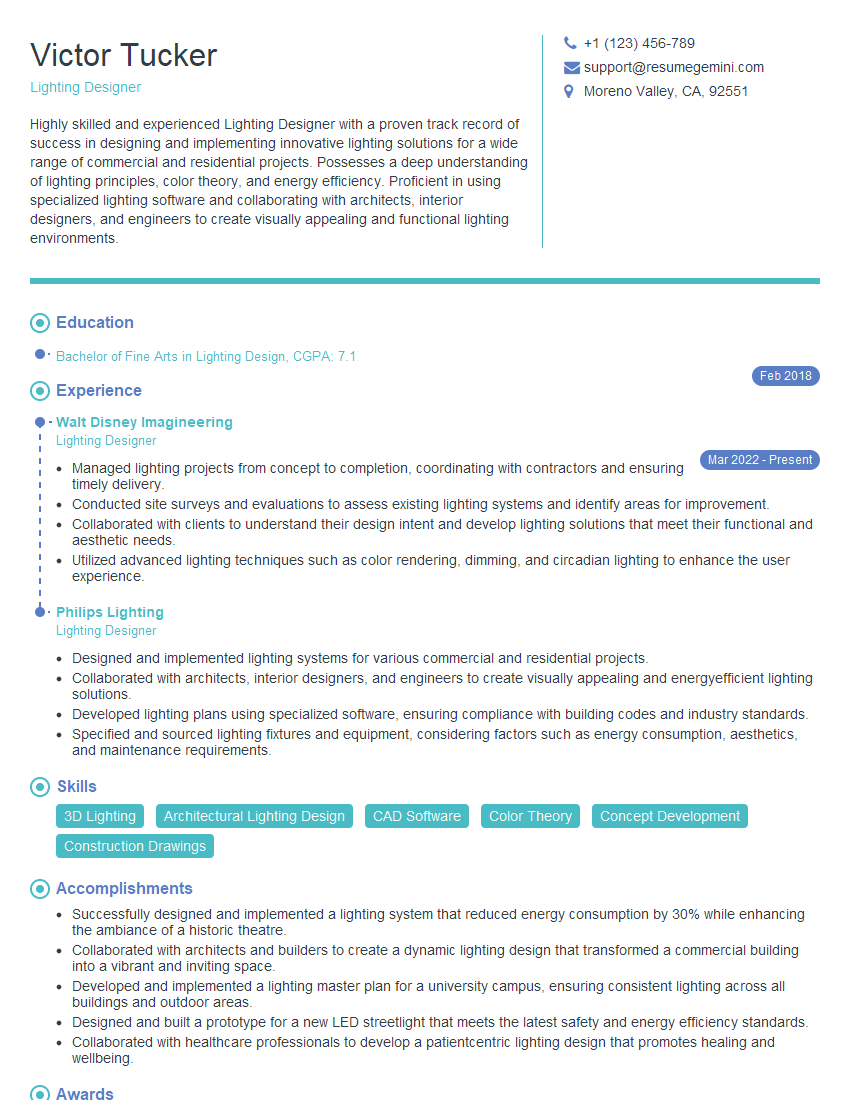
Mastering Lighting and Illumination Techniques opens doors to exciting career opportunities in architectural lighting, theatrical lighting, and various other fields. A strong understanding of these principles is crucial for demonstrating your expertise and securing your dream role. To significantly enhance your job prospects, create a compelling and ATS-friendly resume that highlights your skills and experience effectively. ResumeGemini is a trusted resource that can help you build a professional and impactful resume tailored to the specific requirements of Lighting and Illumination Techniques positions. Examples of resumes specifically designed for this field are available to guide you. Invest time in crafting a standout resume – it’s your first impression on potential employers.
Explore more articles
Users Rating of Our Blogs
Share Your Experience
We value your feedback! Please rate our content and share your thoughts (optional).
What Readers Say About Our Blog
Very informative content, great job.
good