The thought of an interview can be nerve-wracking, but the right preparation can make all the difference. Explore this comprehensive guide to Livestock Nutrition and Feed Management interview questions and gain the confidence you need to showcase your abilities and secure the role.
Questions Asked in Livestock Nutrition and Feed Management Interview
Q 1. Explain the difference between concentrate and roughage feeds.
Concentrate and roughage feeds represent two fundamental categories in livestock nutrition, differing significantly in their chemical composition, energy density, and digestibility. Think of it like this: roughage is the ‘skeleton’ of the diet, providing structure and fiber, while concentrates are the ‘meat and potatoes,’ delivering concentrated energy and nutrients.
Roughages are high in fiber (crude fiber content >18%), low in digestible energy, and bulky. Examples include hay (alfalfa, grass), silage (corn, grass), straw, and pasture. They are essential for rumen health in ruminant animals like cows and sheep, promoting healthy digestion and preventing digestive upsets. They are low in energy value per unit weight but are crucial for maintaining a healthy gut microbiome.
Concentrates, conversely, are low in fiber (<18% crude fiber), high in digestible energy, and relatively less bulky. They include grains (corn, barley, oats, wheat), oilseeds (soybean meal, canola meal), and by-products (molasses, brewers' grains). Concentrates serve as a primary source of readily available energy and protein, supporting rapid growth and high milk production. They're like the 'fast food' of the animal world, providing quick energy, but often needing careful balance with roughage for optimal health.
Q 2. Describe the importance of balanced rations for livestock.
Balanced rations are absolutely critical for maximizing livestock performance, health, and profitability. A balanced ration ensures that animals receive the optimal mix of nutrients – energy, protein, vitamins, and minerals – in the correct proportions to meet their specific needs. It’s like building a house – you need the right amount of each material (bricks, cement, wood) to create a strong and stable structure. A deficiency in even one key nutrient can severely limit an animal’s potential and even compromise its health.
For example, a dairy cow needs a high-energy diet to support high milk production. Lack of energy in her diet will lead to decreased milk yield and potentially ketosis (a metabolic disorder). Similarly, a growing pig requires a diet rich in protein for muscle development. Insufficient protein will result in stunted growth and poor overall health. A balanced ration allows the animal to reach its genetic potential, minimizing the risk of nutritional deficiencies and maximizing productivity.
Q 3. What are the key nutritional requirements for dairy cattle?
Dairy cattle have unique nutritional requirements due to their high milk production. Their diet must support not only their own bodily functions but also the energy and nutrient demands of milk synthesis. Key nutritional requirements include:
- Energy: The highest priority, providing the fuel for milk production, maintenance, and bodily functions. This is often met through forages (roughages) and concentrates.
- Protein: Essential for milk protein synthesis, as well as general tissue growth and repair. High-quality protein sources like soybean meal are frequently used.
- Minerals: Calcium and phosphorus are vital for milk production and bone health. Deficiencies can lead to milk fever (hypocalcemia) and other health issues. Other crucial minerals include magnesium, potassium, and sodium.
- Vitamins: A balanced vitamin profile is crucial for optimal metabolic function. Vitamin A, D, and E are particularly important.
- Fiber: While not an exact nutrient, fiber is crucial for maintaining a healthy rumen environment. Ensuring adequate fiber intake supports efficient digestion and prevents digestive upsets.
The exact levels of these nutrients will vary depending on factors like breed, lactation stage, and milk production level.
Q 4. How do you determine the energy content of a feedstuff?
Determining the energy content of a feedstuff is critical for formulating balanced rations. The most common method is through laboratory analysis, specifically analyzing the feed’s proximate composition and using established equations to calculate energy values. The process often involves these steps:
- Proximate analysis: This involves determining the percentage of dry matter, crude protein, crude fiber, ether extract (fat), and ash. These values provide a basic understanding of the feed’s nutrient profile.
- Energy calculation: Various equations are used to estimate the energy content from the proximate analysis results. These equations can vary depending on the animal species (e.g., poultry vs. ruminants) and the type of energy being calculated (e.g., gross energy, digestible energy, metabolizable energy, net energy). For example, the equation might take into account the percentage of digestible carbohydrates, protein, and fat.
- Bomb calorimeter: This is a direct method to determine the gross energy (GE) of a feedstuff by measuring the heat produced during complete combustion. GE is the total energy available in a feed, but a significant portion is lost during digestion and metabolism.
The choice of energy system (GE, DE, ME, NE) will depend on the specific needs of the analysis and the animal species. Net energy (NE) is generally preferred because it is the energy actually available for production.
Q 5. What are the common methods for evaluating feed quality?
Evaluating feed quality involves a multifaceted approach using various methods, both laboratory and visual. Here are some common techniques:
- Visual inspection: A simple yet important first step involving assessment of the feed’s color, texture, odor, and presence of foreign material. Molds, discoloration, or unusual smells can indicate potential quality issues.
- Proximate analysis: As mentioned earlier, this provides crucial information on the nutrient composition of the feed.
- Nutrient digestibility trials: These involve feeding the feedstuff to animals and measuring the amount of nutrients absorbed. This provides a more accurate measure of the feed’s nutritional value than proximate analysis alone.
- Microscopic analysis: Used to assess the quality of forages, examining factors like leaf-to-stem ratio, maturity, and the presence of damaged plant material.
- Near-infrared spectroscopy (NIRS): A rapid and cost-effective technique that uses light absorption patterns to estimate the nutrient content of feeds. It’s similar to a ‘fingerprint’ of the feedstuff.
- Mycotoxin analysis: Tests for the presence of mycotoxins, which are toxic fungal metabolites that can contaminate feeds and pose risks to animal health.
The specific methods employed will vary depending on the type of feedstuff and the information needed.
Q 6. Explain the concept of net energy and its significance in livestock feeding.
Net energy (NE) is the most relevant energy system in livestock feeding because it represents the energy actually available for production after accounting for the energy used for maintenance and digestion. It’s the ‘take-home pay’ of the feed, whereas gross energy (GE) is the ‘gross salary’ before deductions.
Unlike gross energy (GE), which represents the total energy content, net energy considers energy losses during digestion, metabolism, and heat production. Thus, NE system considers only the energy which is available for production. It’s categorized into different forms based on production type: NEm (maintenance), NEg (growth), NEl (lactation), and NEp (pregnancy).
For example, a feed with high GE might not necessarily be the best choice because a significant portion of that energy could be lost during digestion or converted to heat. A feed with a higher NE value will be more efficient at supporting productive functions, like milk production or weight gain.
The significance of NE lies in its ability to accurately predict an animal’s performance. It allows for more precise ration formulation to optimize production efficiency and reduce feed costs. It allows for better allocation of the available energy.
Q 7. How do you manage mycotoxins in feed?
Mycotoxins are toxic secondary metabolites produced by certain fungi that can contaminate feeds, posing a significant risk to animal health and productivity. Managing mycotoxins requires a multi-pronged approach:
- Prevention: This is the most effective strategy, focusing on minimizing fungal growth in the field and during storage. This includes proper harvesting and drying techniques to reduce moisture content, adequate ventilation in storage facilities, and using appropriate pesticides when needed.
- Detection: Regular testing of feedstuffs for mycotoxins is crucial. Various analytical methods are available, including ELISA and HPLC, to detect and quantify mycotoxins.
- Mitigation: If mycotoxin contamination is detected, several mitigation strategies can be employed. These include:
- Dilution: Mixing the contaminated feed with uncontaminated feed to reduce the overall mycotoxin concentration.
- Sorbents: Using feed additives that bind to mycotoxins in the digestive tract, preventing their absorption. Examples include aluminosilicates and activated charcoal.
- Biotransformation: Employing specific enzymes or microorganisms to degrade or modify mycotoxins.
The choice of mitigation strategy will depend on several factors including the type and concentration of mycotoxins, the species and age of the animal, and the economic feasibility of the options.
Q 8. What are the implications of feeding excessive protein to ruminants?
Feeding ruminants excessive protein has several negative implications. Ruminants, unlike monogastric animals, rely on microbial fermentation in their rumen to digest fiber. Excess protein isn’t directly utilized efficiently; instead, it’s broken down by rumen microbes, leading to an increase in ammonia production. This ammonia can be detrimental in several ways:
- Increased Urea Production: The liver converts excess ammonia into urea, which is then excreted in urine. This process uses significant energy, reducing the energy available for growth or milk production. Think of it like a car expending energy on unnecessary repairs rather than efficient driving.
- Environmental Pollution: Increased urea excretion contributes to nitrogen pollution in the environment, impacting water quality and contributing to greenhouse gas emissions. This is a growing concern for sustainable livestock farming.
- Rumen Acidosis: High protein diets can disrupt the rumen’s microbial balance, leading to rumen acidosis (a drop in rumen pH). This can cause digestive upset, reduced feed intake, and even death in severe cases. Imagine the rumen’s microbial ecosystem as a delicate garden; an imbalance can easily damage the whole system.
- Reduced Feed Efficiency: The energy diverted to urea production and managing the consequences of rumen acidosis directly reduces the efficiency of feed conversion. In simpler terms, you’re essentially wasting valuable resources.
Therefore, balancing protein intake is crucial for optimal ruminant health and productivity. A well-designed diet considers the animal’s stage of production, breed, and overall health to minimize these negative effects.
Q 9. Describe the role of fiber in ruminant digestion.
Fiber plays a crucial role in ruminant digestion. It’s the primary energy source for the rumen microbes, the tiny organisms that break down complex carbohydrates into volatile fatty acids (VFAs). These VFAs are then absorbed by the ruminant and serve as a major energy source. Think of fiber as the ‘fuel’ for the rumen’s microbial engine.
- Microbial Fermentation: Fiber acts as a substrate for rumen microbes, enabling their growth and activity. Different types of fiber are fermented at different rates, influencing the overall rate of digestion and the type of VFAs produced.
- Rumen Motility: Fiber stimulates rumen contractions, ensuring efficient mixing of the digesta and preventing stagnation, which can lead to problems like acidosis. It’s like the ‘stirring rod’ in a chemical reaction, keeping things moving smoothly.
- Rumen Maturation: The development of a healthy rumen relies on a sufficient supply of fiber. It provides the necessary structure for the rumen’s complex microbial ecosystem to thrive.
- Digestibility: While fiber isn’t always fully digested, it contributes to overall digestibility by providing bulk and improving the passage of food through the digestive tract.
In practical terms, a lack of fiber in a ruminant’s diet can lead to various health issues, including decreased feed intake, rumen acidosis, and impaired growth or milk production. Dietary fiber is not merely a ‘filler’ but a vital component of a healthy ruminant diet.
Q 10. What are the common feed additives and their functions?
Many feed additives are used to enhance animal health, performance, and feed efficiency. They can broadly be categorized into:
- Enzymes: These break down complex nutrients, improving digestibility. Examples include phytase (increases phosphorus availability) and xylanase (improves fiber digestion).
- Probiotics: These introduce beneficial microorganisms to the gut, improving gut health and reducing the risk of infections. They’re like ‘friendly bacteria’ that enhance the gut microbiome.
- Prebiotics: These are non-digestible food ingredients that promote the growth of beneficial microorganisms. They act as ‘food’ for the probiotics.
- Acidifiers: These lower the pH of the gut, reducing the growth of pathogenic bacteria. They create a less favorable environment for harmful bacteria.
- Ionophores: These are antibiotics used to improve feed efficiency and reduce the incidence of certain diseases. However, their use is increasingly scrutinized due to antibiotic resistance concerns.
- Growth Promoters: These are substances like hormones or antibiotics that stimulate growth; however, use is regulated due to safety and consumer concerns.
The choice of feed additive depends on various factors, including the animal species, age, production stage, and the overall diet. Proper usage requires thorough understanding and careful consideration of possible implications.
Q 11. How do you design a feeding program for growing pigs?
Designing a feeding program for growing pigs requires a phased approach, accounting for their rapidly changing nutritional needs. It involves considering the pig’s age, weight, and intended market weight.
- Phase 1: Creep Feed (Early Weaning): This phase focuses on highly digestible nutrients to support the transition from milk to solid feed. We use highly palatable and nutritious feed.
- Phase 2: Grower Feed: During the grower phase, the diet shifts towards higher energy density to support rapid growth. Focus is on promoting skeletal development and lean muscle mass.
- Phase 3: Finisher Feed: In this phase, the focus shifts towards maximizing lean meat deposition while maintaining optimal body condition. Nutrient levels are precisely balanced to avoid excessive fat deposition.
The specific nutrient requirements (energy, protein, amino acids, vitamins, and minerals) will vary depending on each phase. Careful monitoring of growth rate and feed conversion ratio is essential to ensure the diet’s effectiveness. We might also consider using feed additives like enzymes to improve digestibility and reduce feed costs.
A sample formulation could include corn, soybean meal, and other ingredients tailored to the specific nutritional needs of each phase. Regular monitoring of health, feed intake, and weight gain is crucial to ensure the program’s success. It’s a dynamic process adapted according to the pigs’ response.
Q 12. Explain the challenges of feeding poultry for optimal egg production.
Feeding poultry for optimal egg production presents several challenges. It’s a delicate balance between maximizing production and maintaining bird health and welfare.
- Nutrient Requirements for Egg Production: Layers require a high-energy diet rich in calcium, phosphorus, and essential amino acids to support egg shell formation and egg production. Meeting the nutrient demands is critical.
- Calcium Metabolism: Providing sufficient dietary calcium without causing digestive issues or kidney problems is crucial. Proper calcium supplementation and balancing with phosphorus are essential.
- Maintaining Peak Production: Ensuring consistent nutrient availability is vital in maintaining optimal laying rates throughout the entire laying cycle. Any deficiency can lead to a drop in production.
- Feed Quality and Consistency: Using high-quality ingredients consistently is important. Variability in feed quality can affect production and shell quality.
- Preventing Metabolic Disorders: Nutritional imbalances can lead to metabolic disorders like fatty liver syndrome and osteoporosis, so formulating balanced diets is crucial.
A well-designed feeding program for layers involves a careful balance of energy, protein, calcium, phosphorus, and other essential nutrients, taking into account the bird’s age, production phase, and overall health. Regular monitoring of egg production, egg quality, and bird health is essential to optimize the program and identify any potential issues.
Q 13. Describe the role of minerals and vitamins in animal nutrition.
Minerals and vitamins are essential micronutrients playing vital roles in various physiological functions. They act as catalysts and components in many metabolic processes, and their deficiency can significantly impact animal health and productivity.
- Minerals: Macrominerals (like calcium, phosphorus, sodium, potassium, magnesium, sulfur, and chlorine) are needed in larger quantities and are structural components of bones, tissues, and fluids. Microminerals (like iron, copper, zinc, manganese, iodine, selenium, and cobalt) are required in smaller amounts but are essential for enzyme function and various metabolic processes. For example, calcium is essential for bone formation and egg shell production, while iron is crucial for oxygen transport.
- Vitamins: These are organic compounds essential for various metabolic functions. Fat-soluble vitamins (A, D, E, and K) are stored in the body’s fat reserves, while water-soluble vitamins (B vitamins and C) need to be supplied regularly. Vitamin A supports vision and immune function, vitamin D is crucial for calcium absorption, and vitamin E acts as an antioxidant.
Deficiencies in either minerals or vitamins can result in various health problems, affecting growth, reproduction, immune function, and overall animal well-being. A well-balanced diet, supplemented when necessary, is crucial to meet the animals’ requirements.
Q 14. How do you assess the nutritional status of livestock?
Assessing the nutritional status of livestock involves a multifaceted approach combining various methods:
- Clinical Examination: A visual inspection, including body condition scoring (BCS), checking for signs of deficiency (rough coat, lameness, etc.), and observing overall health and behavior.
- Blood Analysis: Blood samples can be used to measure various blood parameters related to mineral and vitamin status, such as blood urea nitrogen (BUN), calcium, phosphorus, and various enzyme levels. This provides a more quantitative assessment.
- Feed Analysis: Analyzing the feed to determine its nutrient composition ensures that the diet meets the animal’s requirements. This helps identify potential deficiencies in the feed itself.
- Performance Monitoring: Tracking growth rates, milk production, egg production, and feed conversion ratio provides insights into the effectiveness of the feeding program. Poor performance might indicate nutritional deficiencies.
- Post-mortem Examination (Necropsy): In case of unexpected deaths, a necropsy can help identify the underlying causes, including nutritional deficiencies.
The choice of methods depends on the specific species, the animal’s age, and the suspected nutritional issue. A comprehensive approach usually integrates multiple methods to reach a conclusive assessment.
Q 15. What are the common methods for feed analysis?
Feed analysis is crucial for ensuring the quality and nutritional value of livestock feed. Several methods are employed, ranging from simple proximate analysis to more sophisticated techniques.
- Proximate Analysis: This is a standard method determining the basic composition of feed, including dry matter (DM), crude protein (CP), crude fiber (CF), ether extract (EE – fats), ash (mineral content), and nitrogen-free extract (NFE – carbohydrates). It provides a general overview of the feed’s nutritional profile. Think of it like a basic health check for your feed.
- Near-Infrared Spectroscopy (NIRS): A rapid and accurate method for predicting the chemical composition of feedstuffs. NIRS uses light absorption patterns to estimate various components like protein, fat, fiber, and moisture. It’s much faster than traditional wet chemistry methods. Imagine it as a sophisticated ‘nutritional scanner’.
- Amino Acid Analysis: Essential for determining the protein quality of feed, particularly for monogastric animals like pigs and poultry. This analysis identifies the specific amino acids present and their concentrations. This helps ensure the animal gets all the building blocks it needs for growth.
- Mineral Analysis: Crucial for assessing the levels of essential minerals like calcium, phosphorus, magnesium, and trace minerals. This analysis is done using techniques like atomic absorption spectroscopy (AAS) or inductively coupled plasma optical emission spectrometry (ICP-OES). Deficiencies or excesses can lead to serious health problems.
- Vitamin Analysis: This determines the content of vitamins in feed, often through high-performance liquid chromatography (HPLC). Vitamins are essential for various metabolic processes, and deficiency can severely affect animal health and productivity.
The choice of method depends on the specific needs, budget, and available resources. For routine quality control, NIRS is often preferred due to its speed and efficiency. However, for detailed analysis, traditional wet chemistry methods and specialized techniques like amino acid and mineral analysis are necessary.
Career Expert Tips:
- Ace those interviews! Prepare effectively by reviewing the Top 50 Most Common Interview Questions on ResumeGemini.
- Navigate your job search with confidence! Explore a wide range of Career Tips on ResumeGemini. Learn about common challenges and recommendations to overcome them.
- Craft the perfect resume! Master the Art of Resume Writing with ResumeGemini’s guide. Showcase your unique qualifications and achievements effectively.
- Don’t miss out on holiday savings! Build your dream resume with ResumeGemini’s ATS optimized templates.
Q 16. How do you formulate a cost-effective diet while meeting animal nutritional needs?
Formulating a cost-effective diet that meets animal nutritional requirements is a balancing act. It involves carefully selecting feed ingredients based on their nutritional value and price. The process typically involves these steps:
- Establish nutrient requirements: Determine the animal’s specific needs based on factors like age, weight, breed, production stage (e.g., growth, lactation), and desired performance levels. Nutritional requirement tables and software can aid in this step.
- Ingredient selection: Choose ingredients that are cost-effective and meet the established nutrient requirements. This involves considering local feed prices and availability. Compare the nutritional value per unit cost of different feedstuffs.
- Linear programming (LP): This optimization technique helps determine the least-cost combination of ingredients to meet the defined nutritional needs. Specialized software packages are often used to perform LP. It’s like solving a complex puzzle to find the perfect ingredient mix.
- Diet formulation: Based on the LP results, formulate the final diet recipe, ensuring proper mixing and handling. Consider palatability, and potential interactions between ingredients.
- Monitoring and adjustments: Regularly monitor animal performance and feed intake to evaluate the diet’s effectiveness. Make necessary adjustments as needed based on performance data and ingredient price fluctuations. Regular feedback is crucial for optimization.
Example: Let’s say you’re feeding dairy cows. You could use corn silage (relatively cheap source of energy), soybean meal (good protein source), and alfalfa hay (fiber and vitamins) in a specific ratio calculated through LP to minimize cost without compromising milk production.
Q 17. Explain the concept of amino acid balancing in swine nutrition.
Amino acid balancing in swine nutrition is critical because pigs, as monogastric animals, cannot synthesize all essential amino acids. They must obtain them from their diet. Imbalances can limit growth and efficiency. The process involves ensuring adequate levels of all essential amino acids, with a focus on limiting amino acids.
Limiting amino acids are those present in the lowest concentration relative to the pig’s requirements. For example, lysine is often the first limiting amino acid in corn-soybean meal diets. If lysine is deficient, even if other amino acids are plentiful, growth will be restricted. It’s like having a chain where the strength is limited by its weakest link.
Balancing involves adjusting the dietary amino acid profile to ensure that all essential amino acids are present in adequate amounts relative to the pig’s needs and relative to each other. This often involves adding synthetic amino acids, like lysine or methionine, to corn-soybean meal based diets to improve the overall amino acid profile and enhance growth performance.
Practical application: A feed manufacturer might analyze a typical corn-soybean meal diet and find that lysine is limiting. They would then add crystalline lysine to bring its concentration up to the optimal level, improving the overall efficiency of the diet and reducing feed costs per unit of weight gain.
Q 18. Discuss the impact of different feed processing methods on nutrient availability.
Feed processing methods significantly impact nutrient availability. Different processing techniques alter the physical and chemical structure of feed ingredients, affecting digestibility and absorption.
- Grinding: Reduces particle size, increasing surface area and improving nutrient digestibility, particularly for carbohydrates and proteins. However, over-grinding can lead to increased dust and nutrient losses.
- Pelleting: Compresses ground feed into pellets. Pelleting improves feed handling, reduces dust, and can enhance nutrient digestibility by improving the density and the rumen environment (for ruminants). It also increases the stability of the feed during storage.
- Extrusion: Uses high temperature and pressure to cook and shape feed into a variety of forms. Extrusion improves digestibility, especially for starches and proteins, and can increase palatability. It’s often used for pet food and specialized livestock diets.
- Steam flaking/Roasting: These methods increase the digestibility of grains like corn by gelatinizing starch. This makes the starch more accessible to enzymes.
- Ensilage: Fermenting forages like corn or grass under anaerobic conditions creates silage, a preserved feed source with improved palatability and digestibility.
Example: Steam flaking corn increases its digestibility compared to feeding whole corn, leading to improved energy utilization in livestock. Conversely, over-grinding soybean meal could lead to increased oxidation and reduced protein quality.
Q 19. How do you manage the risk of feed contamination?
Managing the risk of feed contamination is paramount for animal health and food safety. A multi-pronged approach is essential:
- Good Agricultural Practices (GAPs): Implementing GAPs in feed production minimizes contamination at the source. This includes selecting clean fields, using appropriate fertilizers and pesticides responsibly, and ensuring proper harvesting and storage of raw materials.
- Good Manufacturing Practices (GMPs): GMPs ensure that feed processing is done hygienically. This includes regular cleaning and sanitation of equipment, preventing cross-contamination between different feed types, and controlling pests and rodents. Think of it as maintaining a clean and sterile ‘feed factory’.
- Testing and quality control: Regularly testing feed ingredients and finished products for mycotoxins (fungal toxins), heavy metals, pesticides, and bacterial contamination. This allows for early detection of problems and prevents the distribution of contaminated feed. Regular testing is like running a comprehensive safety check.
- Proper storage: Using appropriate storage facilities to protect feed from moisture, pests, and other contaminants. Well-ventilated, dry storage areas are crucial to prevent spoilage and mold growth. Storing feed properly is akin to keeping valuable goods in a safe.
- Supplier selection: Selecting reputable and reliable feed suppliers who have their own quality control measures in place is crucial. You can’t control everything, so making sure you get your ingredients from a responsible source makes all the difference.
Example: A farmer regularly tests their corn silage for mycotoxins, implementing preventative measures like proper drying and storing the feed to minimize contamination and potential health problems for their animals.
Q 20. What are the different types of feed storage systems?
Feed storage systems vary depending on the type of feed, climate, and scale of operation.
- Silos: Used for storing large quantities of silage or other loose materials. Silos can be made of concrete, steel, or other durable materials. They provide protection from the elements.
- Bins: Often used for storing grains and other dry feeds. Bins can be constructed from various materials, such as metal or wood. Proper ventilation is critical to prevent moisture buildup and spoilage.
- Bags: Flexible containers suitable for smaller quantities of feed. Bags are relatively inexpensive and portable but require careful handling to avoid damage and contamination.
- Bunker silos: Large open-top structures for storing loose materials, often used for forage storage.
- Covered storage structures: These structures, like barns or sheds, protect feed from rain, snow, and excessive sun exposure.
The choice of storage system depends on factors such as the type of feed, volume stored, climate, and budget. Proper storage is vital for maintaining feed quality and preventing losses due to spoilage or contamination.
Q 21. Describe the principles of precision livestock feeding.
Precision livestock feeding (PLF) uses technology to optimize feed delivery and management for individual animals or groups, improving efficiency and animal welfare. It involves:
- Individual animal identification: Using electronic tags or other identification systems to track individual animal performance and feed intake.
- Automated feed delivery systems: These systems provide precise amounts of feed to individual animals or groups, based on their needs and performance data. This might involve robotic feeders or automated sorting systems.
- Data collection and analysis: Sensors and other technologies collect data on feed intake, animal weight, milk production (for dairy), and other relevant parameters. This data is analyzed to optimize feeding strategies and identify potential health problems early on.
- Real-time monitoring: PLF systems enable real-time monitoring of animal health and feeding parameters. This allows for immediate intervention if problems are detected.
- Predictive modeling: Sophisticated algorithms and models can predict future animal needs based on historical data and current conditions, allowing for proactive adjustments to feeding strategies.
Benefits: PLF improves feed efficiency, reduces feed costs, enhances animal welfare, and improves overall productivity. It enables personalized feeding strategies, providing the right amount of feed to the right animal at the right time. It’s like having a personalized nutrition plan for each animal in your herd or flock.
Q 22. How do you adapt feeding strategies based on animal performance data?
Animal performance data, such as weight gain, milk production, feed conversion ratio (FCR), and body condition score (BCS), are crucial indicators of the effectiveness of a feeding strategy. Analyzing this data allows for precise adjustments to optimize animal health and productivity. For example, if we see consistently lower-than-expected weight gain in a group of beef cattle, we might investigate several factors. This could involve reviewing their feed intake, feed composition, the presence of any diseases, and even environmental stress.
My approach involves a systematic process:
- Data Collection: Regularly collecting accurate and comprehensive data on animal performance is paramount. This includes individual animal data whenever feasible, as well as group averages.
- Data Analysis: I utilize statistical software and analytical tools to identify trends and outliers in the data. This might reveal specific animals or groups that are underperforming. For instance, a regression analysis could show a correlation between feed intake and weight gain, allowing us to fine-tune the ration.
- Nutritional Adjustments: Based on the analysis, I adjust the ration by altering the levels of energy, protein, fiber, or specific nutrients to meet the animals’ needs more effectively. If we find a deficiency in a particular nutrient, say vitamin E, we’ll supplement the diet accordingly.
- Monitoring and Evaluation: Following the adjustments, I continually monitor animal performance to assess the effectiveness of the changes. If improvements aren’t seen, further investigation and adjustments are needed.
This iterative process ensures that the feeding strategy is constantly refined to maximize animal productivity and efficiency.
Q 23. What is your experience with different feeding systems (e.g., total mixed ration, individual feeding)?
I have extensive experience with various feeding systems, each with its advantages and disadvantages.
- Total Mixed Ration (TMR): TMR is a cornerstone of modern dairy and beef cattle feeding. It involves mixing all feed ingredients—forages, grains, and supplements—into a homogenous mix. This ensures consistent nutrient intake, minimizes feed sorting (where animals select their preferred components, leading to nutritional imbalances), and improves feed efficiency. I’ve successfully implemented and managed TMR systems in several large-scale operations, using software to optimize the formulation and delivery.
- Individual Feeding Systems: This approach, often utilized in smaller-scale operations or for precise control over individual animal nutrition (like in high-producing dairy cows), allows for tailored feeding based on individual animal needs. It’s beneficial for managing animals with specific health conditions or varying productive stages. However, it can be more labor-intensive and costly. I have experience designing and implementing systems using electronic feeders that monitor individual intake and adjust feed allocation accordingly.
- Other Systems: My experience extends beyond these two systems; I’m also familiar with pasture-based systems, which require careful management of grazing rotations and supplemental feeding to meet nutrient demands.
The choice of feeding system depends on factors like animal type, herd size, available resources, and management goals. A crucial aspect is always ensuring the selected system promotes animal welfare and maximizes resource use.
Q 24. Explain the role of probiotics and prebiotics in livestock nutrition.
Probiotics and prebiotics play a vital role in supporting gut health and overall livestock performance. Think of the gut as a complex ecosystem – a balanced microbiome is key to optimal animal health and nutrient absorption.
- Probiotics: These are live microorganisms, primarily bacteria or yeasts, that when administered in adequate amounts, confer a health benefit to the host. They help restore the balance of the gut microbiota, competing with harmful bacteria and improving digestion. Examples include Lactobacillus and Bacillus species. In practice, I’ve seen probiotics improve feed efficiency, reduce diarrhea incidence, and enhance immunity in various livestock species.
- Prebiotics: These are non-digestible food ingredients that selectively stimulate the growth and/or activity of beneficial bacteria in the gut. They act as a food source for the probiotics, promoting their growth and activity. Common prebiotics include inulin, fructooligosaccharides (FOS), and mannanoligosaccharides (MOS). I’ve incorporated prebiotics into rations to improve gut health and nutrient digestibility.
The combined use of prebiotics and probiotics (synbiotics) offers a synergistic effect, promoting a robust and healthy gut microbiome. The specific choice and dosage of probiotics and prebiotics depend on the animal species, age, health status, and the nature of the ration.
Q 25. How do you address digestive issues in livestock related to nutrition?
Addressing digestive issues is critical to maintaining animal health and productivity. Nutrition plays a significant role in both preventing and treating these problems.
My approach is multifaceted:
- Accurate Diagnosis: The first step involves determining the cause of the digestive issue, whether it’s acidosis (low rumen pH), bloat, coccidiosis, or other problems. This might involve fecal analysis, blood tests, or a veterinary consultation.
- Dietary Adjustments: Once the cause is identified, I’ll tailor the diet to address it. For example, acidosis might require reducing rapidly fermentable carbohydrates (grains) and increasing fiber. Bloat might necessitate modifying forage particle size and incorporating anti-foaming agents.
- Supplementation: Specific supplements can support digestive health. For example, buffers like sodium bicarbonate can help raise rumen pH in acidosis, while enzymes can aid in nutrient digestion. Probiotics and prebiotics can also be helpful in restoring a healthy gut microbiome.
- Monitoring and Management: Close monitoring of animals’ feed intake, fecal consistency, and overall health is essential. Implementation of good hygiene practices to minimize pathogen contamination is also key.
By taking a proactive approach and addressing digestive issues promptly, we can prevent serious health problems, reduce mortality rates, and maintain optimal animal performance.
Q 26. Describe your experience with nutritional software and data analysis.
I’m proficient in using various nutritional software programs and have extensive experience in data analysis.
Examples include:
- Feed formulation software: I regularly use software like
DairyComp 305and other similar programs to formulate balanced rations, considering the nutrient requirements of the animals, the cost of ingredients, and the availability of feedstuffs. - Statistical software: I use statistical packages like
RandSASto analyze animal performance data, identify trends, and assess the impact of different feeding strategies. I’m comfortable performing various statistical analyses, including regression, ANOVA, and correlation analyses. - Database Management: I’m also experienced in managing large datasets of animal performance and feed cost data, ensuring data accuracy and integrity. This involves utilizing database systems and creating custom reports for management decision-making.
My data analysis skills are crucial in identifying areas for improvement in feeding strategies and optimizing resource utilization. I interpret the data to generate actionable insights and translate them into practical recommendations that enhance farm efficiency and profitability.
Q 27. What are some emerging trends in livestock nutrition?
Several exciting trends are shaping the future of livestock nutrition:
- Precision feeding: This involves using sensors and data analytics to tailor feeding to individual animal needs in real-time. This allows for optimized resource allocation and improved animal productivity. Sensors monitor feed intake, rumination time, and even activity levels to provide precise insights into each animal’s nutritional state.
- Sustainable feed sources: The search for sustainable feed sources is crucial to reduce the environmental footprint of livestock production. This involves exploring alternative feed ingredients like insect meal, algae, and single-cell proteins.
- Gut microbiome manipulation: A deeper understanding of the gut microbiome is opening new avenues for improving animal health and nutrient utilization through tailored probiotic and prebiotic strategies. This includes personalized gut microbiome profiles and targeted interventions.
- Improved feed efficiency: There’s ongoing research and development in improving feed efficiency through genetic selection, novel feed additives, and advanced feeding strategies.
- Data-driven decision-making: The increasing use of sensors, data analytics, and AI-powered tools is allowing for more data-driven decision-making in livestock nutrition, leading to greater precision and efficiency.
These trends represent a shift towards a more precise, sustainable, and efficient livestock nutrition sector, addressing both animal welfare and environmental concerns.
Q 28. How do you stay updated on the latest advancements in livestock nutrition?
Staying current in the rapidly evolving field of livestock nutrition requires a multi-pronged approach:
- Professional Journals and Publications: I regularly read peer-reviewed journals such as the Journal of Animal Science, the Journal of Dairy Science, and other relevant publications to stay abreast of the latest research findings.
- Industry Conferences and Workshops: Attending conferences and workshops provides valuable opportunities to network with other experts, learn about the latest advancements, and participate in discussions.
- Online Resources and Databases: I leverage online resources such as university extension websites, industry association websites, and scientific databases for accessing research articles, technical bulletins, and other valuable information.
- Networking and Collaboration: Collaborating with researchers, veterinarians, and other professionals in the field fosters knowledge sharing and facilitates learning about cutting-edge developments.
- Continuing Education: I actively participate in continuing education programs to maintain and enhance my expertise in livestock nutrition and related fields.
This multifaceted strategy ensures that my knowledge and skills remain current, allowing me to effectively address the challenges and opportunities in livestock nutrition.
Key Topics to Learn for Livestock Nutrition and Feed Management Interview
- Nutrient Requirements: Understanding the varying nutritional needs of different livestock species (e.g., cattle, swine, poultry) across various life stages (e.g., growth, lactation, reproduction). This includes knowledge of essential macro and micronutrients.
- Feed Formulation and Ration Balancing: Practical application of nutritional principles to formulate balanced diets using available feedstuffs, considering cost-effectiveness and animal performance. This includes understanding software and tools used in ration balancing.
- Feed Processing and Storage: Knowledge of different feed processing techniques (e.g., grinding, pelleting, ensiling) and their impact on nutrient availability and digestibility. Understanding best practices for feed storage to minimize nutrient loss and prevent spoilage.
- Feed Evaluation and Quality Control: Methods for assessing feed quality (e.g., proximate analysis, nutrient digestibility assays). Implementing quality control measures to ensure consistent feed quality and animal health.
- Digestive Physiology: A solid understanding of the digestive systems of various livestock species and how this impacts nutrient absorption and utilization. This includes recognizing digestive disorders and their nutritional management.
- Economic Considerations: Analyzing the cost-effectiveness of different feed ingredients and feeding strategies. Understanding the economic impact of nutrition on livestock production.
- Sustainable Feed Production: Exploring environmentally friendly feed production practices, including the utilization of alternative feed resources and minimizing the environmental footprint of livestock operations.
- Animal Health and Nutrition: The crucial link between nutrition and animal health, including the role of nutrition in disease prevention and treatment. Understanding the impact of nutritional deficiencies and excesses on animal well-being.
- Data Analysis and Interpretation: Ability to interpret data from feed analysis, animal performance records, and other sources to make informed management decisions.
Next Steps
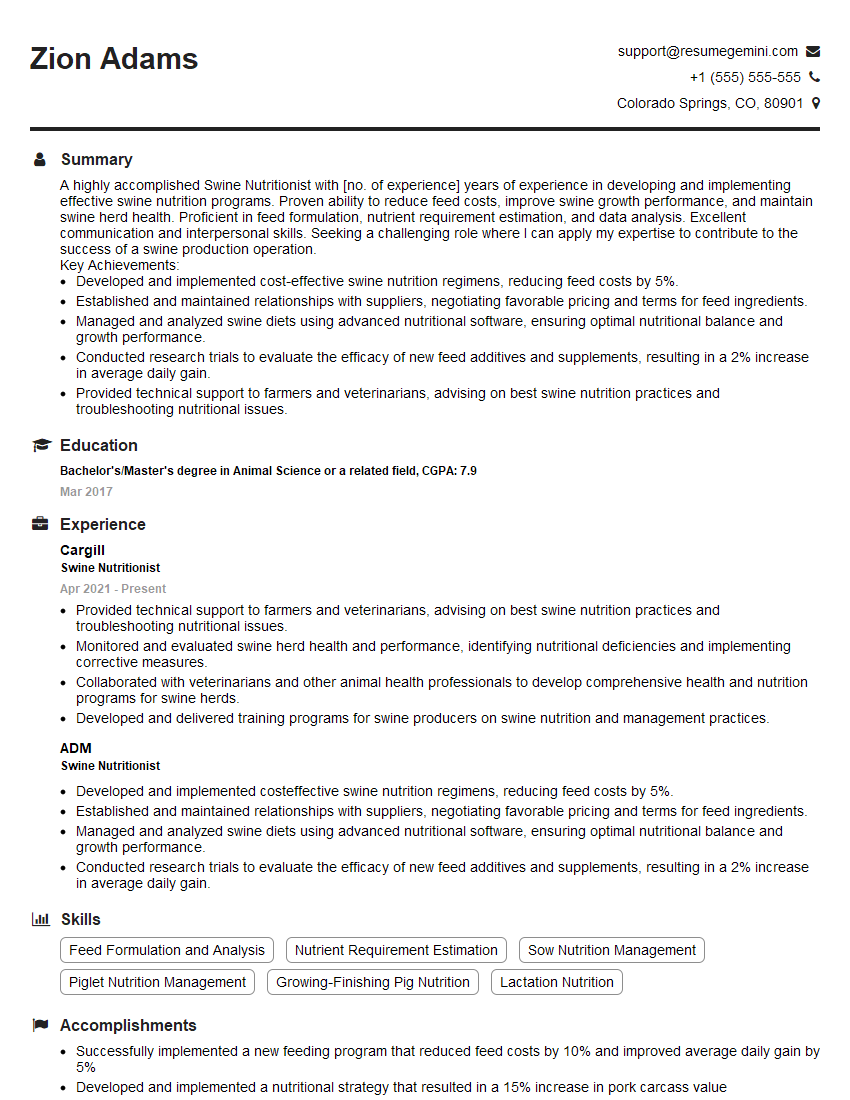
Mastering Livestock Nutrition and Feed Management is crucial for a successful and rewarding career in the agricultural industry. It opens doors to diverse roles with increasing responsibility and earning potential. To maximize your job prospects, creating a strong, ATS-friendly resume is essential. ResumeGemini is a trusted resource to help you build a professional resume that highlights your skills and experience effectively. We provide examples of resumes tailored specifically to Livestock Nutrition and Feed Management to help you get started. Invest time in crafting a compelling resume—it’s your first impression on potential employers.


Explore more articles
Users Rating of Our Blogs
Share Your Experience
We value your feedback! Please rate our content and share your thoughts (optional).
What Readers Say About Our Blog
Very informative content, great job.
good