The right preparation can turn an interview into an opportunity to showcase your expertise. This guide to Machine Adjustments and Maintenance interview questions is your ultimate resource, providing key insights and tips to help you ace your responses and stand out as a top candidate.
Questions Asked in Machine Adjustments and Maintenance Interview
Q 1. Describe your experience with preventative maintenance procedures.
Preventative maintenance is all about keeping machinery running smoothly by addressing potential problems before they cause costly downtime. It’s like regularly servicing your car – changing the oil, checking tire pressure – to prevent major breakdowns.
My experience encompasses developing and implementing comprehensive preventative maintenance schedules based on manufacturers’ recommendations, operational hours, and historical data analysis. This includes:
- Scheduled inspections: Regularly checking for wear and tear on critical components, such as belts, bearings, and sensors.
- Lubrication: Applying the correct type and amount of lubricant to reduce friction and extend component life. I’ve worked with various lubrication systems, from simple grease guns to automated lubrication systems.
- Cleaning: Removing debris and contaminants to prevent damage and improve efficiency. This often involves specialized cleaning techniques depending on the machine and its environment.
- Calibration: Ensuring that measuring instruments and control systems are accurate and precise. Regular calibration is crucial for maintaining product quality and consistency.
- Record keeping: Meticulously documenting all maintenance activities, including dates, tasks performed, and any identified issues. This data informs future maintenance schedules and helps identify recurring problems.
For example, in my previous role at a food processing plant, I implemented a preventative maintenance program that reduced unplanned downtime by 25% within six months. This was achieved through a combination of improved scheduling, training, and the use of a computerized maintenance management system (CMMS).
Q 2. Explain your troubleshooting methodology for malfunctioning machinery.
My troubleshooting methodology follows a structured approach, similar to a detective investigating a crime scene. I start by gathering information – like a good detective interviewing witnesses.
- Gather Information: This involves observing the malfunction, listening for unusual sounds, and reviewing operational logs and error messages. Talking to the operators who noticed the problem is also crucial – they often have valuable insights.
- Isolate the Problem: Once I have a good understanding of the symptom, I systematically check components to isolate the source of the malfunction. This might involve checking power supplies, sensors, actuators, and control systems.
- Identify the Root Cause: This step requires careful analysis of the gathered data and observations. I often use diagnostic tools, schematics, and technical manuals to pinpoint the underlying cause.
- Implement a Solution: After identifying the root cause, I implement the necessary repairs or adjustments. This might involve replacing a faulty component, adjusting settings, or performing a more extensive repair.
- Verify the Solution: Once the repair is complete, I thoroughly test the machine to ensure it is functioning correctly and the problem is resolved. I also document the entire troubleshooting process for future reference.
For instance, I once encountered a packaging machine that was intermittently jamming. Through systematic checks, I discovered a faulty proximity sensor that was failing to detect the presence of packages. Replacing the sensor immediately resolved the issue.
Q 3. How do you identify the root cause of recurring machine issues?
Recurring machine issues are like persistent headaches – you need to find the underlying cause to truly fix them. My approach focuses on data analysis and systematic troubleshooting.
- Data Analysis: I start by reviewing maintenance records, operational logs, and any available sensor data to identify patterns and trends. This often helps pinpoint the frequency and conditions under which the issue occurs.
- Failure Mode and Effects Analysis (FMEA): For complex systems, I employ FMEA to systematically identify potential failure modes, their effects, and their likelihood of occurrence. This helps in prioritizing preventative measures.
- Root Cause Analysis (RCA): I use various RCA techniques, such as the 5 Whys or Fishbone diagrams, to systematically drill down to the root cause of recurring problems. The goal is to move beyond treating symptoms to addressing the fundamental cause.
- Corrective Actions: Once the root cause is identified, I implement corrective actions to prevent the issue from recurring. This might involve design modifications, improved operating procedures, or more rigorous preventative maintenance.
Imagine a machine consistently overheating. By analyzing sensor data, I might discover that the cooling system is inadequate for the machine’s load. The solution wouldn’t be just to keep turning the machine off and on, but rather to upgrade the cooling system or adjust the operational parameters.
Q 4. What safety protocols do you follow during machine adjustments?
Safety is paramount in machine adjustments and maintenance. My approach is based on a proactive and layered safety strategy.
- Lockout/Tagout (LOTO): Before starting any work on machinery, I always follow the LOTO procedure. This involves isolating the power source, locking it out, and tagging it to prevent accidental energization.
- Personal Protective Equipment (PPE): I always wear appropriate PPE, such as safety glasses, gloves, and hearing protection, to protect myself from potential hazards.
- Risk Assessment: I perform a thorough risk assessment before starting any task, identifying potential hazards and implementing control measures to mitigate those risks.
- Safe Working Procedures: I adhere strictly to established safe working procedures, including proper lifting techniques, use of tools, and emergency procedures.
- Training and Competency: I ensure I am properly trained and competent to perform the tasks I undertake, and I never attempt work outside my area of expertise.
Following these safety protocols is not just a matter of compliance, it’s a commitment to personal safety and the safety of others. A seemingly small oversight can lead to serious accidents. Diligence and a focus on safety are non-negotiable.
Q 5. Describe your experience with different types of machine lubrication.
Machine lubrication is crucial for reducing friction, wear, and tear, extending equipment life, and improving efficiency. It’s like oiling the hinges on a door – it keeps things moving smoothly.
My experience covers a wide range of lubricants, including:
- Grease: Used for slow-moving parts and those operating under high loads. Different grease types exist for various operating temperatures and applications.
- Oil: Used for high-speed, rotating components. Different viscosity grades are chosen based on operating temperature and load.
- Specialized Lubricants: These include synthetic lubricants, high-temperature greases, and food-grade lubricants for specialized applications.
I’m proficient in selecting the appropriate lubricant based on manufacturer recommendations, operating conditions, and component material. I understand the importance of proper lubrication techniques, including the use of appropriate tools and the avoidance of over-lubrication, which can lead to contamination and damage.
For example, in one project, I identified improper lubrication as the root cause of premature bearing failure in a high-speed conveyor system. Switching to a higher-quality, synthetic lubricant significantly improved bearing life and reduced maintenance costs.
Q 6. How familiar are you with various types of machine sensors and their applications?
Machine sensors are the eyes and ears of modern machinery, providing critical information about its operation and condition. My familiarity with various types extends to their applications in different systems.
- Proximity Sensors: Detect the presence or absence of objects without physical contact. Used in automation, robotics, and safety systems.
- Temperature Sensors: Measure temperature to monitor overheating and prevent damage. Used in various applications, from engines to ovens.
- Pressure Sensors: Monitor pressure in hydraulic and pneumatic systems to prevent overpressure and ensure proper operation.
- Vibration Sensors: Detect vibrations to diagnose bearing wear, imbalance, or other mechanical problems.
- Flow Sensors: Measure the flow rate of fluids, crucial for process control and monitoring.
Understanding sensor technology is vital for diagnosing malfunctions, performing preventative maintenance, and implementing control systems. I can interpret sensor data, identify anomalies, and use this information for predictive maintenance – anticipating problems before they occur.
For instance, using vibration sensor data, I once identified an impending bearing failure in a critical pump, allowing for timely replacement and preventing a major production shutdown.
Q 7. Explain your process for calibrating precision machinery.
Calibrating precision machinery is like fine-tuning a musical instrument – it ensures accurate and reliable performance. The process depends on the type of machinery and its specific requirements.
- Understand the Calibration Procedure: I always start by consulting the manufacturer’s instructions and any relevant standards to understand the specific calibration procedure for the machine.
- Prepare the Equipment: This might involve gathering necessary tools, calibration standards, and test equipment.
- Perform the Calibration: This typically involves adjusting settings or replacing components to bring the machine’s performance within the specified tolerances.
- Document the Results: I meticulously document all calibration steps, measurements, and adjustments. This documentation serves as a record of the machine’s performance and is crucial for traceability.
- Verify the Calibration: After completing the calibration, I verify the machine’s performance through various tests to ensure it meets the required accuracy and precision.
For example, calibrating a coordinate measuring machine (CMM) involves using calibrated gauge blocks and software to ensure the machine’s accuracy in measuring dimensions. Any deviation from the standards requires adjustments to the machine’s settings or components.
Q 8. How do you maintain accurate records of maintenance activities?
Maintaining accurate maintenance records is crucial for ensuring equipment longevity, optimizing performance, and complying with regulatory requirements. My approach involves a multi-faceted system leveraging both digital and physical methods.
- Computerized Maintenance Management System (CMMS): I utilize CMMS software to digitally record all maintenance activities, including preventative maintenance schedules, repairs performed, parts used, and labor hours. This allows for easy data analysis, trend identification, and reporting.
- Physical Logs and Documentation: While relying heavily on digital systems, I also maintain physical logs for instances where immediate digital access isn’t available, such as during emergency repairs on the factory floor. These are then promptly entered into the CMMS.
- Clear and Concise Reporting: My reports include detailed descriptions of work performed, using standardized terminology and clear descriptions of the issues identified and resolutions implemented. This ensures that anyone accessing the records, even in the future, can understand the work completed.
- Regular Audits: Periodic audits ensure the accuracy and completeness of the records, identifying and addressing any inconsistencies or gaps in the data. This promotes transparency and accountability.
For example, in my previous role, our CMMS prevented a costly downtime by flagging an upcoming preventative maintenance task on a critical injection molding machine, ensuring timely intervention before failure.
Q 9. What is your experience with PLC programming and troubleshooting?
I have extensive experience with PLC programming and troubleshooting, primarily using Allen-Bradley and Siemens PLCs. My skills encompass programming in ladder logic, structured text, and function block diagrams. I’m proficient in using diagnostic tools to identify and resolve issues within PLC programs, including:
- Troubleshooting PLC logic errors: Identifying and correcting faulty logic that can lead to machine malfunctions.
- Analyzing I/O signals: Checking input and output signals to pinpoint problems in sensors, actuators, or other field devices.
- Using online and offline monitoring tools: Utilizing PLC programming software to monitor the real-time operation of the PLC and identify problematic code.
- Implementing safety measures in PLC programs: Ensuring safety protocols are properly integrated to prevent accidents.
For instance, I once resolved a production line standstill by swiftly identifying a logic error in the PLC program that was causing a critical safety interlock to trigger prematurely. This involved using online monitoring tools to trace the faulty signal and then modifying the ladder logic to correct the issue.
//Example Ladder Logic snippet (Illustrative) XIC X1 //If sensor X1 is activated O: Y1 //Then activate output Y1 Q 10. Describe your experience working with hydraulic and pneumatic systems.
My experience with hydraulic and pneumatic systems spans various applications, including industrial machinery, material handling equipment, and automated systems. I am adept at diagnosing and repairing issues in these systems, performing tasks such as:
- Identifying leaks: Using pressure gauges, leak detection dyes, and listening for unusual sounds to pinpoint leaks in hydraulic and pneumatic lines.
- Troubleshooting valves and actuators: Diagnosing and replacing faulty valves, cylinders, and other actuators.
- Maintaining fluid levels and cleanliness: Ensuring proper fluid levels and cleanliness to prevent system damage.
- Working with different types of hydraulic and pneumatic components: Experience with a range of components from various manufacturers, including pumps, motors, and filters.
In a past project, I successfully diagnosed a recurring hydraulic leak in a large press machine. This involved systematically checking all hydraulic lines, identifying a microscopic crack in a high-pressure line, and implementing a temporary repair until a replacement line could be installed. Preventing a significant production delay and potential safety hazard.
Q 11. How do you prioritize maintenance tasks in a high-pressure environment?
Prioritizing maintenance tasks in a high-pressure environment requires a structured approach. I employ a system that combines urgency, criticality, and impact assessment.
- Risk Assessment: I assess the potential risks associated with each task, considering the impact of failure on production, safety, and quality.
- Urgency Classification: Categorizing tasks as critical (immediate attention), high (short-term), medium (planned), or low (routine).
- CMMS Utilization: Leveraging the CMMS to schedule and track tasks, assigning priorities based on urgency and criticality.
- Communication & Collaboration: Maintaining open communication with other teams and stakeholders to ensure alignment on priorities and potential conflicts.
For example, if a critical machine breaks down, I would immediately prioritize its repair over other scheduled maintenance activities. By using a risk-based approach, I can effectively allocate resources and address the most pressing needs first while ensuring efficient operations.
Q 12. What are your skills in using diagnostic tools and software?
I am proficient in using various diagnostic tools and software, including:
- Multimeters: For measuring voltage, current, and resistance.
- Oscilloscope: For analyzing electrical signals and waveforms.
- Infrared (IR) cameras: For detecting overheating components.
- Vibration analyzers: For diagnosing mechanical issues.
- PLC programming software: For monitoring and programming PLCs.
- CMMS software: For managing maintenance activities.
- Specialized diagnostic software: Depending on the specific equipment, I also utilize vendor-specific diagnostic software.
My ability to interpret data from these tools allows for precise problem identification and efficient troubleshooting. For instance, using an IR camera once helped me quickly pinpoint a failing bearing in a high-speed motor before it caused a catastrophic failure.
Q 13. Describe a time you had to perform emergency repairs on a critical machine.
During a night shift, a critical conveyor system malfunctioned, halting the entire production line. The issue involved a broken drive belt causing significant product backlog. This required immediate action.
- Rapid Assessment: I quickly assessed the situation, identifying the broken belt as the root cause.
- Safe Procedure: Prioritizing safety, I ensured the machine was properly locked out/tagged out before initiating repairs.
- Emergency Repair: I replaced the broken belt with an available spare, ensuring correct tension and alignment.
- System Restart & Verification: After the repair, I systematically restarted the conveyor system, closely monitoring its operation to confirm functionality.
- Documentation: I promptly documented the emergency repair in our CMMS, including the cause, repair actions, and the time taken.
This quick response minimized production downtime and prevented significant financial losses. It highlighted the importance of having readily available spare parts and a well-trained team capable of handling emergency situations effectively.
Q 14. How do you handle disagreements with other maintenance team members?
Disagreements within a maintenance team are inevitable. My approach focuses on constructive communication and collaborative problem-solving.
- Active Listening: I actively listen to opposing viewpoints, seeking to understand the perspectives of all team members.
- Respectful Dialogue: I maintain a respectful tone, avoiding personal attacks and focusing on the issue at hand.
- Data-Driven Discussion: I encourage data-driven discussions, relying on factual information to support my arguments.
- Compromise & Collaboration: I am willing to compromise and collaborate to find mutually acceptable solutions.
- Escalation (if necessary): If the disagreement cannot be resolved within the team, I will escalate the issue to a supervisor or manager for mediation.
For example, I once had a disagreement with a colleague over the best method for repairing a complex hydraulic system. By engaging in respectful dialogue and sharing technical data, we eventually reached a compromise that combined elements of both our proposed solutions, resulting in a more efficient and effective repair.
Q 15. Explain your understanding of vibration analysis in machine maintenance.
Vibration analysis is a crucial predictive maintenance technique used to detect and diagnose mechanical problems in machinery before they lead to catastrophic failures. It works on the principle that all rotating machinery produces vibrations, and changes in these vibration patterns – frequency, amplitude, and phase – often indicate developing faults. Think of it like listening to your car engine – a change in sound usually suggests a problem.
We use specialized sensors to measure these vibrations, which are then analyzed using software to identify potential issues. For example, increased amplitude at a specific frequency could signify an imbalance in a rotor, while a change in the frequency itself might point to a bearing defect. Different types of faults generate unique vibration signatures, allowing experienced analysts to pinpoint the problem area with accuracy. The analysis allows for proactive maintenance, preventing costly downtime and ensuring safety.
- Data Acquisition: Sensors (accelerometers, proximity probes) are strategically placed on the machine to capture vibration data.
- Signal Processing: Raw data is filtered and processed to remove noise and extract relevant information.
- Fault Diagnosis: Processed data is compared against known fault signatures or analysed using techniques like Fast Fourier Transforms (FFT) to identify potential problems.
- Reporting & Recommendation: A report summarizing the findings and recommending appropriate actions (e.g., lubrication, balancing, replacement of parts) is generated.
Career Expert Tips:
- Ace those interviews! Prepare effectively by reviewing the Top 50 Most Common Interview Questions on ResumeGemini.
- Navigate your job search with confidence! Explore a wide range of Career Tips on ResumeGemini. Learn about common challenges and recommendations to overcome them.
- Craft the perfect resume! Master the Art of Resume Writing with ResumeGemini’s guide. Showcase your unique qualifications and achievements effectively.
- Don’t miss out on holiday savings! Build your dream resume with ResumeGemini’s ATS optimized templates.
Q 16. Describe your experience with different types of machine alignment.
My experience encompasses various machine alignment methods, each suited to different situations and machine types. These include:
- Soft Foot Alignment: This corrects uneven support of the machine base, often causing misalignment. I’ve utilized shims and precision levels to achieve this. Imagine trying to balance a table on uneven legs – soft foot addresses that.
- Laser Alignment: I’m proficient in using laser alignment tools for precise alignment of shafts and couplings. This method provides highly accurate measurements and is especially valuable for critical machinery where even minor misalignments can cause significant damage.
- Reverse Alignment: This technique aligns the driven machine to the driving machine, which can be more efficient in some scenarios, especially when dealing with difficult access.
- Dial Indicator Alignment: This traditional method uses dial indicators to measure shaft misalignment. While less precise than laser alignment, it’s a valuable skill for troubleshooting and verification in remote or less equipped settings. It’s like using a ruler to measure; less precise but still effective in certain situations.
My experience also includes aligning various types of machinery, from pumps and motors to gearboxes and turbines, ensuring optimal performance and preventing premature wear.
Q 17. How familiar are you with predictive maintenance techniques?
I’m highly familiar with predictive maintenance techniques, utilizing them routinely to optimize maintenance schedules and minimize downtime. This approach uses data analysis to anticipate equipment failures rather than relying solely on scheduled maintenance or reactive repairs. It is much more cost-effective in the long run.
My experience includes implementing and managing programs based on:
- Vibration Analysis (as described above): Predicting bearing failures, imbalance, and misalignment.
- Oil Analysis: Monitoring lubricant condition to detect contamination, wear particles, and degradation.
- Thermography: Identifying overheating components using infrared cameras, often indicative of impending failures.
- Ultrasonic Testing: Detecting leaks, partial discharges, and other issues inaudible to the human ear.
The data collected through these techniques feeds into a CMMS, enabling data-driven decision-making for maintenance scheduling and resource allocation.
Q 18. What is your experience with robotic systems maintenance?
My experience with robotic systems maintenance is primarily focused on preventative maintenance and troubleshooting. This involves understanding the mechanical, electrical, and software components of these systems. It’s a multidisciplinary field requiring expertise beyond traditional machine maintenance.
Specific tasks I’ve undertaken include:
- Regular inspections: Checking for loose connections, wear and tear on mechanical components (joints, cables, etc.), and ensuring proper lubrication.
- Sensor calibration and verification: Ensuring the accuracy and functionality of sensors crucial for robot operation.
- Software updates and troubleshooting: Diagnosing and resolving software-related errors, often using specialized diagnostic tools and programming knowledge.
- Safety system checks: Regularly verifying the effectiveness of safety mechanisms to prevent accidents during operation and maintenance.
I’m comfortable working with various robot types, including articulated arms, SCARA robots, and collaborative robots (cobots).
Q 19. Explain your experience with CMMS (Computerized Maintenance Management Systems).
I have extensive experience using CMMS (Computerized Maintenance Management Systems) software to manage and optimize maintenance activities. These systems are crucial for streamlining workflows, tracking maintenance history, managing inventory, and generating reports. It’s like having a central brain for all maintenance-related information.
My experience includes using various CMMS platforms to:
- Schedule preventative maintenance tasks: Creating and managing schedules based on manufacturer recommendations and predictive maintenance data.
- Track work orders: Managing work requests, assigning tasks to technicians, and monitoring progress.
- Manage inventory: Tracking spare parts, consumables, and tools to ensure timely availability.
- Generate reports: Creating reports on maintenance costs, equipment downtime, and overall maintenance effectiveness.
- Analyze data for process improvement: Using CMMS data to identify trends, optimize maintenance strategies, and reduce downtime.
My proficiency in CMMS software enhances my ability to efficiently manage maintenance operations and improve overall equipment effectiveness.
Q 20. Describe a time you improved a maintenance process.
In a previous role, we were experiencing excessive downtime due to frequent failures of a specific conveyor belt system. The existing maintenance process involved reactive repairs, leading to costly delays and production losses. I analyzed the failure data, identifying a pattern of premature wear on a specific section of the belt due to high friction and impact from heavy loads.
I implemented a three-step improvement plan:
- Improved Lubrication: Introduced a new, high-performance lubricant specifically designed for high-friction applications, significantly reducing wear and tear.
- Load Optimization: Adjusted the load distribution on the conveyor belt to reduce impact forces on the vulnerable section.
- Preventive Inspection: Implemented a regular inspection schedule with early detection mechanisms to identify and address any minor issues before they escalated into major failures.
These changes resulted in a 40% reduction in conveyor belt failures and a significant decrease in associated downtime. This project showcased my problem-solving abilities and my capacity to leverage data-driven insights to optimize maintenance processes.
Q 21. How do you ensure compliance with safety regulations during maintenance?
Ensuring compliance with safety regulations is paramount during all maintenance activities. My approach is proactive and multi-layered:
- Risk Assessment: Before commencing any maintenance task, I conduct a thorough risk assessment to identify potential hazards and develop control measures. This involves analyzing the task, identifying potential risks (e.g., electrical shock, moving parts, hazardous materials), and implementing appropriate safety precautions (lockout/tagout, personal protective equipment (PPE), etc.).
- Lockout/Tagout Procedures: Strict adherence to lockout/tagout procedures is critical for isolating energy sources during maintenance, preventing accidental startup and injury. I rigorously follow these procedures and ensure all team members do as well.
- Personal Protective Equipment (PPE): I always wear appropriate PPE, including safety glasses, gloves, hearing protection, and other necessary equipment, and I ensure that all team members do the same. Safety is non-negotiable.
- Training and Communication: I regularly receive and provide training on safety regulations and procedures, ensuring everyone understands and complies with safety standards. Clear and open communication is vital to maintaining a safe work environment.
- Compliance Documentation: Maintaining thorough records of safety checks, training, and incident reports is essential for demonstrating compliance and identifying areas for improvement.
Safety is not just a set of rules; it’s a fundamental part of my work ethic.
Q 22. Explain your understanding of different types of bearings and their maintenance.
Bearings are essential machine components that reduce friction and support rotating shafts. Different bearing types offer varying performance characteristics and require specific maintenance strategies. Common types include:
- Ball Bearings: Simple, cost-effective, and suitable for high-speed applications. Maintenance involves regular lubrication with the appropriate grease, checking for play, and ensuring proper alignment to prevent premature wear.
- Roller Bearings: Handle heavier loads than ball bearings but are generally slower. Maintenance is similar to ball bearings, focusing on lubrication, cleanliness, and alignment. Different roller types (cylindrical, tapered, spherical) require slightly different maintenance approaches based on their design.
- Sleeve Bearings (Journal Bearings): Simpler in design, requiring less precision manufacturing. Maintenance includes regular oiling or greasing, monitoring bearing temperature, and checking for wear or scoring. These are often found in pumps and less high-speed applications.
- Magnetic Bearings: Non-contact bearings offering high precision and reduced friction. Maintenance focuses on monitoring the magnetic field strength, ensuring proper cooling, and detecting any anomalies in the magnetic field.
For example, in a large industrial fan, we’d use roller bearings for the high load, while in a precision instrument, we might opt for a high-precision ball bearing needing meticulous cleaning and lubrication schedules. Failing to maintain bearings can lead to catastrophic failure, downtime, and costly repairs; proactive maintenance is key.
Q 23. What is your experience with interpreting engineering drawings and schematics?
Interpreting engineering drawings and schematics is fundamental to my work. I’m proficient in reading and understanding various types, including orthographic projections, isometric views, and assembly drawings. This includes identifying parts, dimensions, tolerances, materials, and manufacturing processes.
My experience includes working with both 2D and 3D models using software like AutoCAD and SolidWorks. For example, during a recent project involving a conveyor system malfunction, I quickly identified the faulty component using the assembly drawing and its specifications, which allowed me to expedite the repair process.
I am comfortable with different notation systems and symbols, understanding the importance of tolerance specifications for proper part fitting and functional operation. A clear understanding of these documents allows for efficient troubleshooting, precise part ordering, and accurate repair execution.
Q 24. Describe your experience with different types of welding and fabrication.
I have extensive experience with various welding and fabrication techniques, including:
- Shielded Metal Arc Welding (SMAW): A versatile process suitable for various materials. I’m experienced in selecting the correct electrodes for different materials and thicknesses.
- Gas Metal Arc Welding (GMAW): A highly productive process well-suited for automated applications. My experience covers different wire feed speeds, shielding gas types, and applications.
- Gas Tungsten Arc Welding (GTAW): A precision process providing high-quality welds, suitable for thin materials and critical applications. I’m experienced in controlling arc length and puddle formation.
Beyond welding, my fabrication skills encompass cutting, shaping, and assembling materials, including the use of machining tools to ensure precise dimensions and tolerances. I am comfortable working with a variety of materials such as steel, aluminum, and stainless steel. For instance, I once fabricated a custom support bracket for a piece of equipment using GMAW and precision machining techniques to correct a design flaw that was causing excessive vibration.
Q 25. How do you stay up-to-date with the latest maintenance technologies?
Staying current with maintenance technologies is crucial in this rapidly evolving field. I utilize several strategies to keep my knowledge up-to-date:
- Professional Organizations: Active membership in organizations like ASME (American Society of Mechanical Engineers) provides access to publications, conferences, and networking opportunities.
- Industry Publications and Journals: I regularly read industry publications and journals that focus on advancements in maintenance and repair technologies.
- Online Courses and Webinars: Many platforms offer training on the latest techniques, software, and best practices.
- Manufacturer Training: Attending manufacturer-provided training sessions on new equipment and maintenance procedures ensures familiarity with the latest models and technologies.
For instance, I recently completed a course on predictive maintenance techniques using vibration analysis, allowing me to proactively identify potential equipment failures before they lead to downtime.
Q 26. Explain your experience with TPM (Total Productive Maintenance).
Total Productive Maintenance (TPM) is a philosophy focused on maximizing equipment effectiveness through proactive maintenance and employee involvement. My experience encompasses implementing and managing TPM programs. This includes:
- Developing and implementing preventative maintenance schedules: This ensures that routine inspections and maintenance are performed to prevent failures and extend equipment life.
- Training employees on basic maintenance tasks: Empowering operators to perform simple tasks reduces downtime and increases their sense of ownership.
- Using data analysis to improve maintenance effectiveness: Tracking equipment performance and maintenance costs reveals areas for improvement.
- Implementing a system for continuous improvement: Regularly evaluating the TPM program and adapting it to improve its effectiveness.
In a previous role, we implemented a TPM program that reduced equipment downtime by 15% and significantly improved overall equipment effectiveness (OEE).
Q 27. Describe your experience with root cause analysis techniques.
Root cause analysis is critical for preventing recurring equipment failures. I’m proficient in several techniques, including:
- 5 Whys: A simple yet effective technique for systematically identifying the root cause by repeatedly asking ‘Why?’
- Fishbone Diagram (Ishikawa Diagram): A visual tool for brainstorming potential causes categorized by different factors (materials, methods, manpower, machinery, measurement, environment).
- Fault Tree Analysis (FTA): A more formal technique used for complex systems, creating a tree-like structure to visually represent potential failure scenarios and their contributing factors.
For example, in investigating a recurring pump failure, I used the 5 Whys technique to trace the issue back to improper lubrication, leading to a change in maintenance procedures and eliminating the problem.
Q 28. How do you handle situations where parts are unavailable during repairs?
Part unavailability during repairs presents a significant challenge, but there are strategies to mitigate this issue:
- Identifying Substitute Parts: I assess if readily available parts can fulfill the function of unavailable ones. This requires a strong understanding of engineering principles and component functionality.
- Emergency Procurement: I expedite the procurement of the needed parts from alternative suppliers or distributors, exploring options such as overnight shipping or expedited delivery.
- Temporary Workarounds: In critical situations, I might implement temporary workarounds to get equipment operational, such as using a modified part or devising a temporary fix, ensuring safety remains a top priority.
- Preventive Measures: Maintaining a strategic inventory of critical spare parts reduces reliance on emergency procurement, minimizing downtime.
For example, when a critical bearing was unavailable, we used a temporary workaround involving a custom machined part. While not ideal, it got the equipment back in operation until the original part arrived. The experience highlighted the need to maintain a larger stock of such bearings in the future.
Key Topics to Learn for Machine Adjustments and Maintenance Interview
- Preventive Maintenance Procedures: Understanding and applying scheduled maintenance tasks to minimize downtime and extend machine lifespan. This includes lubrication schedules, cleaning protocols, and component inspections.
- Troubleshooting and Diagnostics: Identifying and resolving common machine malfunctions through systematic troubleshooting techniques. Practical application involves using diagnostic tools and interpreting error codes to pinpoint issues.
- Precision Adjustments and Calibration: Mastering the techniques for precise adjustments of machine components to ensure optimal performance and accuracy. This includes understanding tolerances and using appropriate measuring instruments.
- Safety Procedures and Regulations: Demonstrating a thorough understanding of safety protocols related to machinery operation, maintenance, and repair, adhering to relevant industry regulations.
- Hydraulic and Pneumatic Systems: Understanding the principles of hydraulic and pneumatic systems commonly found in industrial machinery, including troubleshooting and maintenance of these systems.
- Electrical Systems and Controls: Familiarity with basic electrical principles and the ability to troubleshoot electrical components within the machinery, including understanding control systems and safety circuits.
- Root Cause Analysis: Developing the ability to go beyond immediate solutions and identify the underlying causes of recurring problems to prevent future failures.
- Record Keeping and Documentation: Maintaining accurate and comprehensive records of maintenance activities, repairs, and adjustments, adhering to company documentation standards.
Next Steps
Mastering Machine Adjustments and Maintenance opens doors to a rewarding career with excellent growth potential. Proficiency in this area demonstrates valuable technical skills and problem-solving abilities highly sought after by employers. To significantly increase your chances of landing your dream role, crafting a strong, ATS-friendly resume is crucial. ResumeGemini can be your trusted partner in this process. We offer a streamlined approach to building professional resumes, ensuring your skills and experience shine. Examples of resumes tailored specifically to Machine Adjustments and Maintenance are available to help guide you.
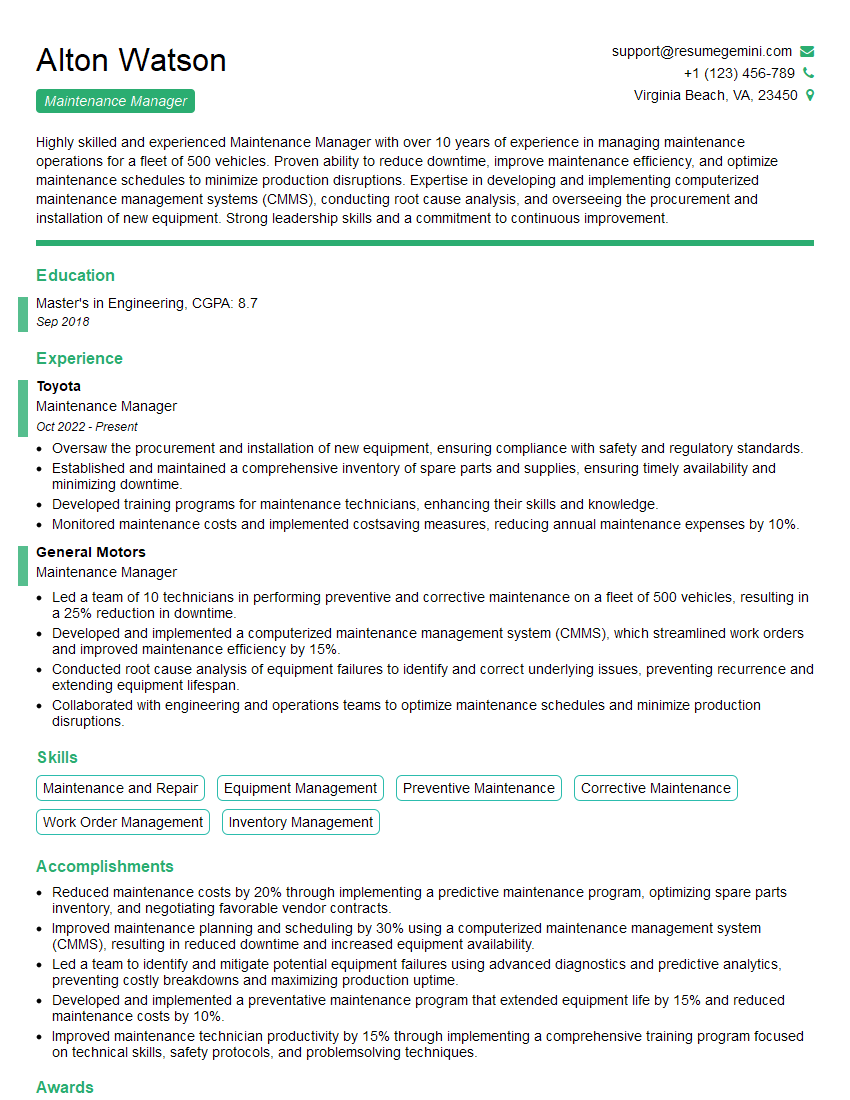
Maintenance Manager Resume Sample

Maintenance Planner Resume Sample
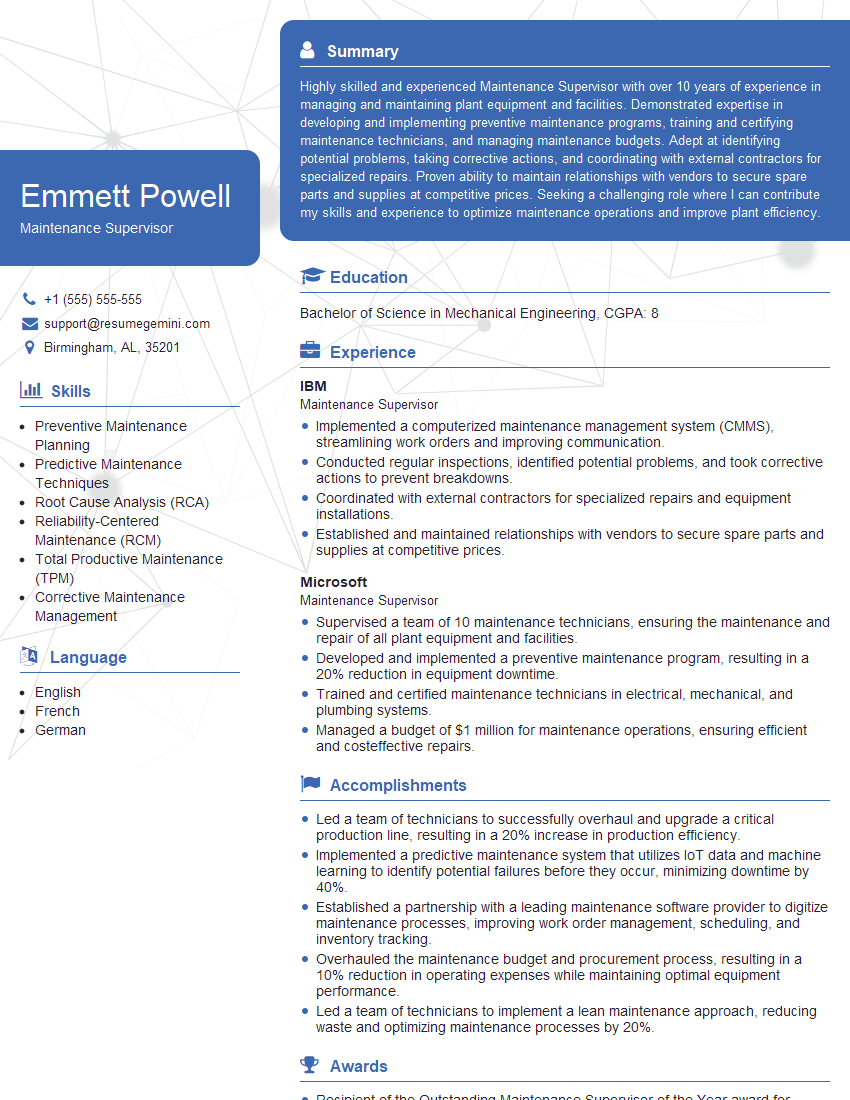
Maintenance Supervisor Resume Sample
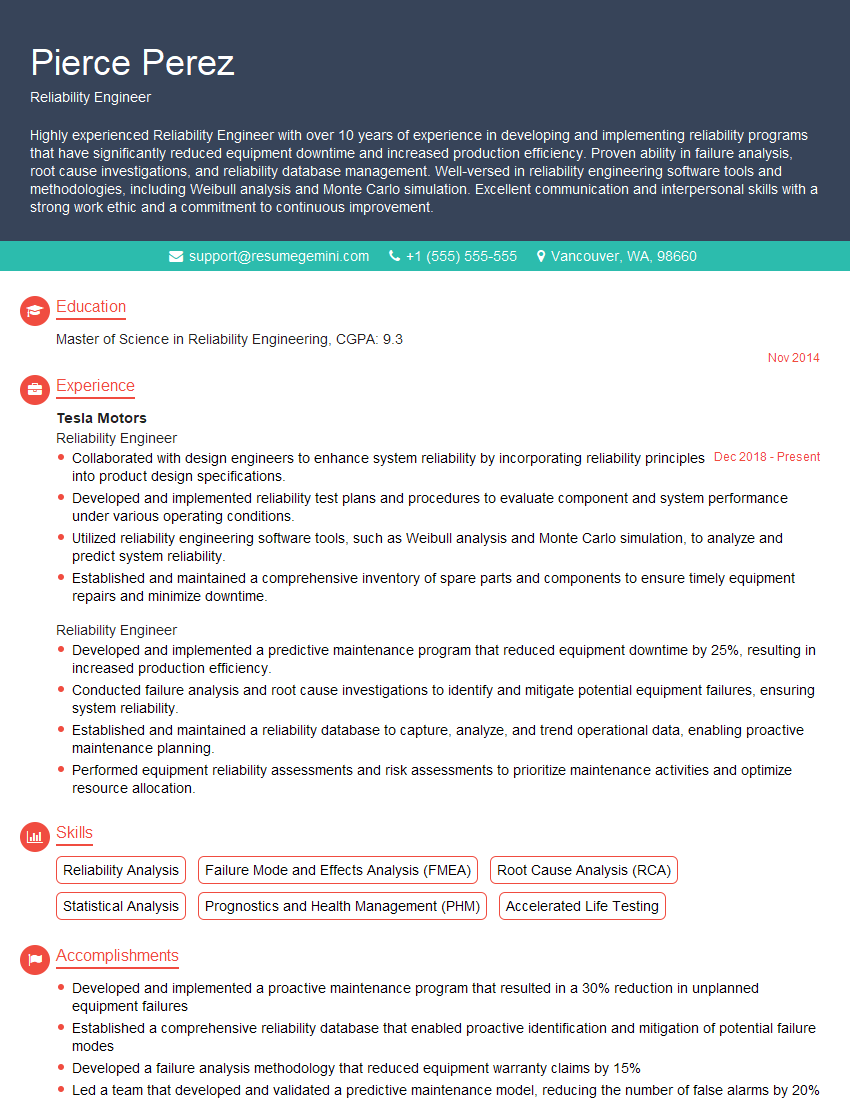
Reliability Engineer Resume Sample
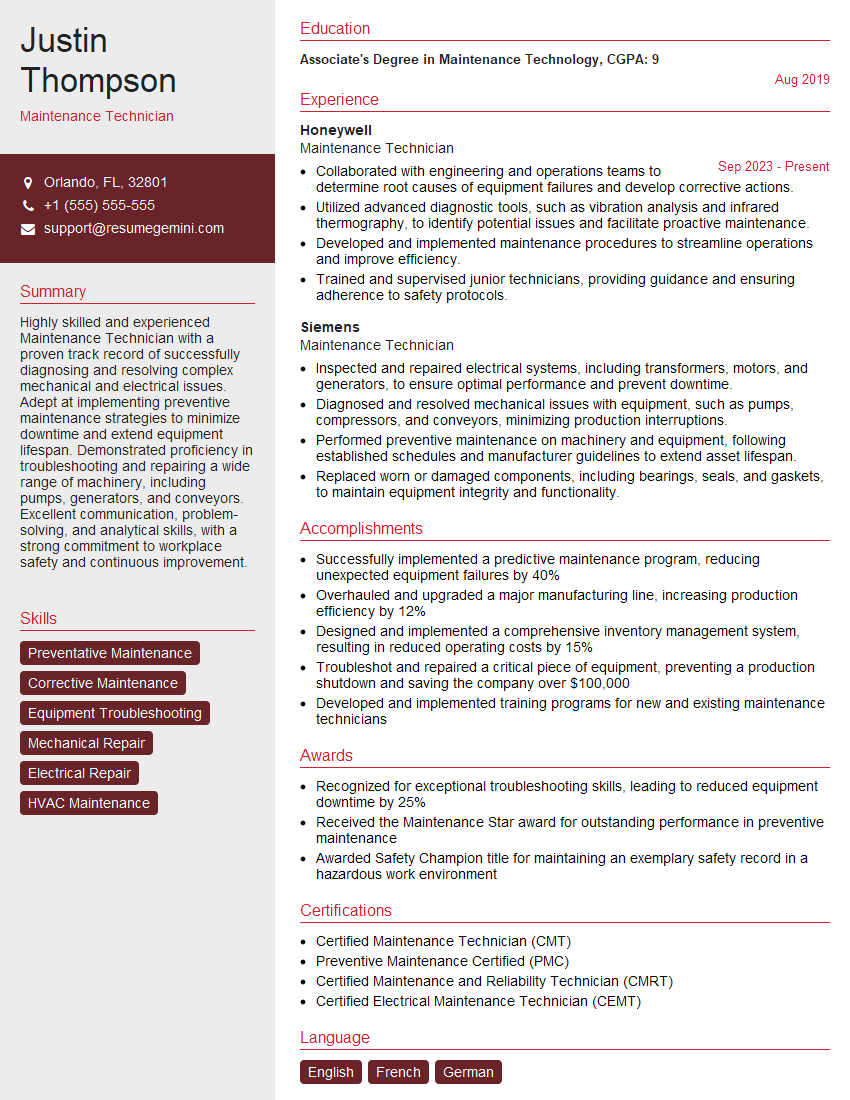
Maintenance Technician Resume Sample
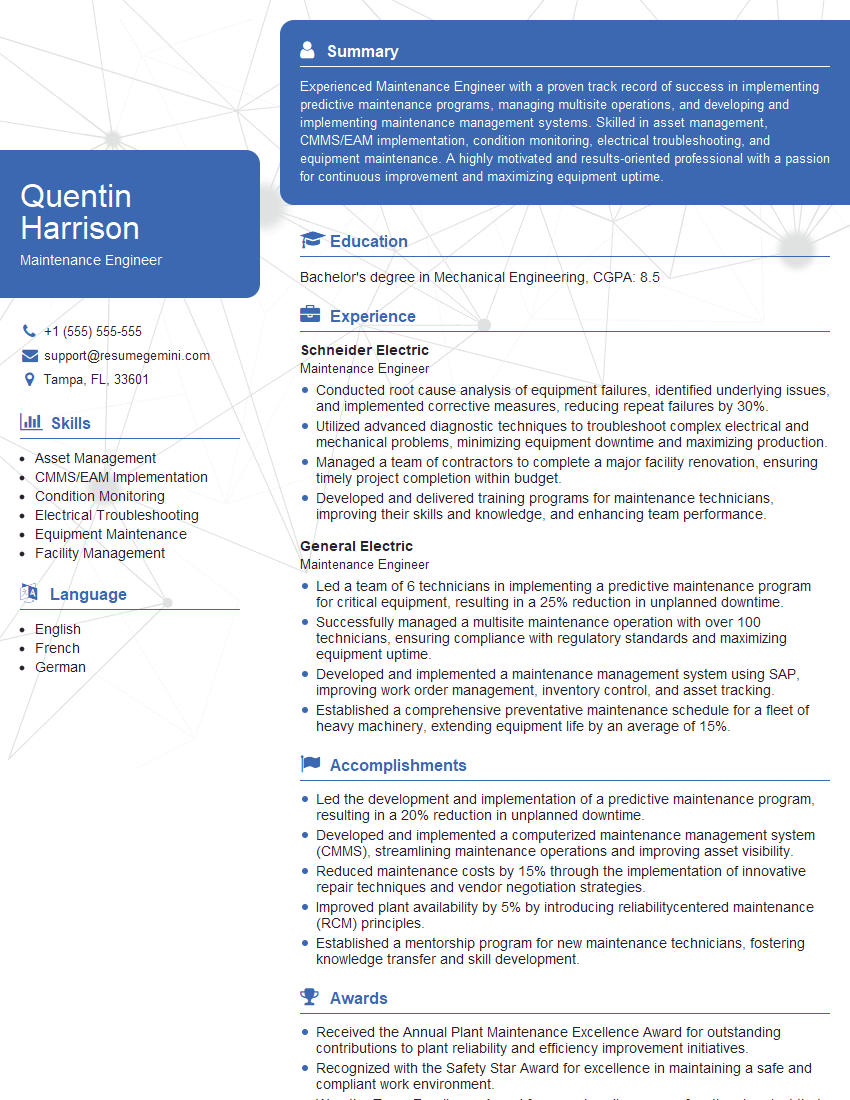
Maintenance Engineer Resume Sample

Automation Technician Resume Sample
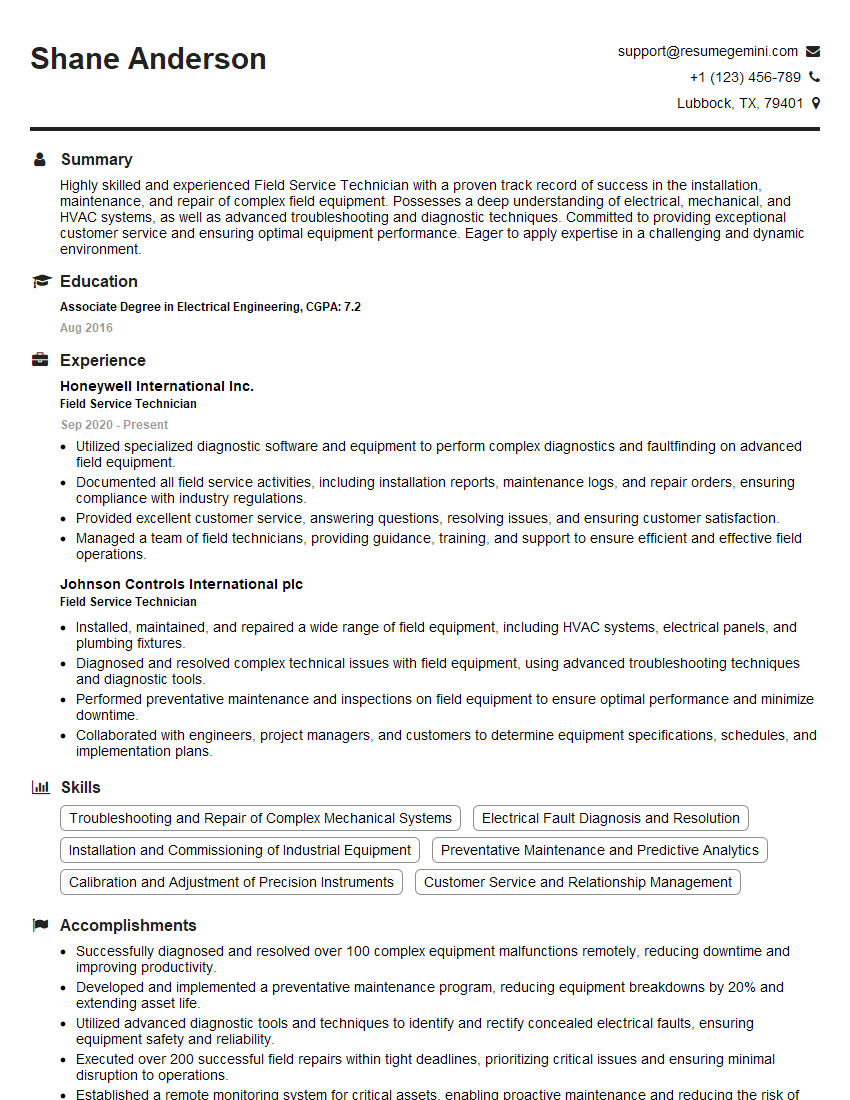
Field Service Technician Resume Sample
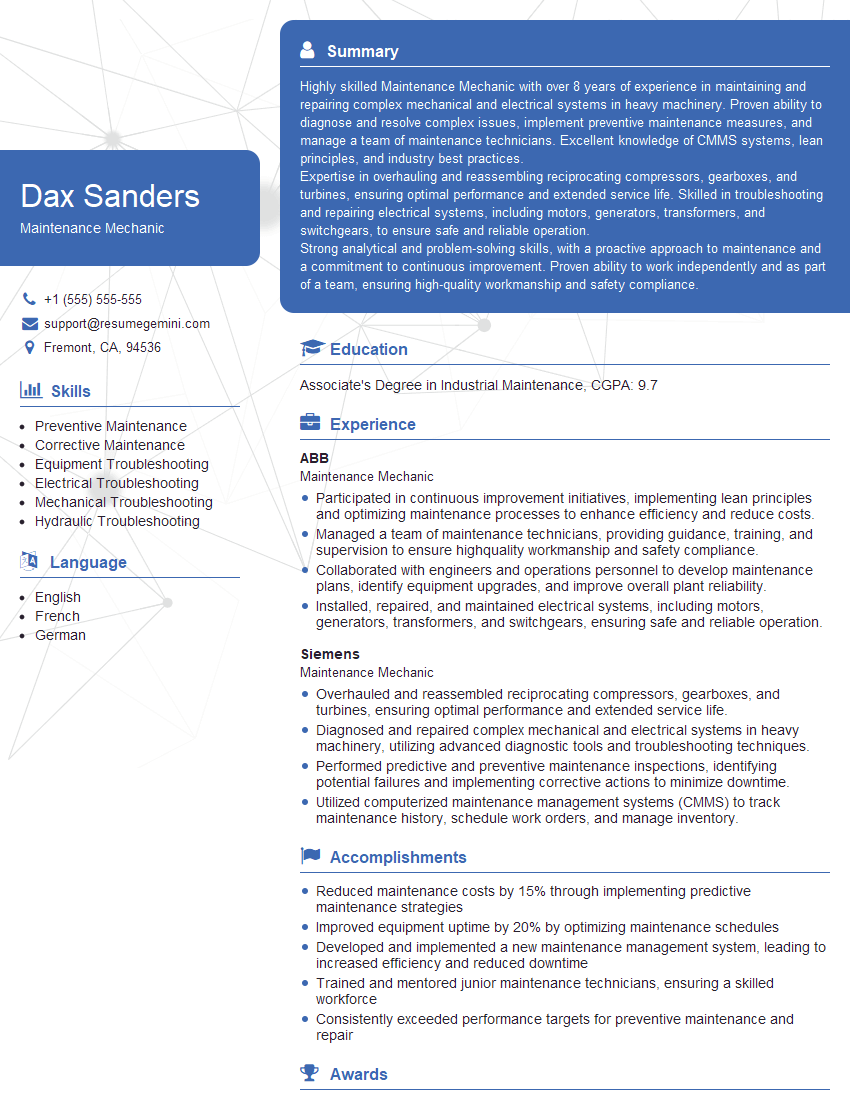
Maintenance Mechanic Resume Sample

Electrical Maintenance Technician Resume Sample
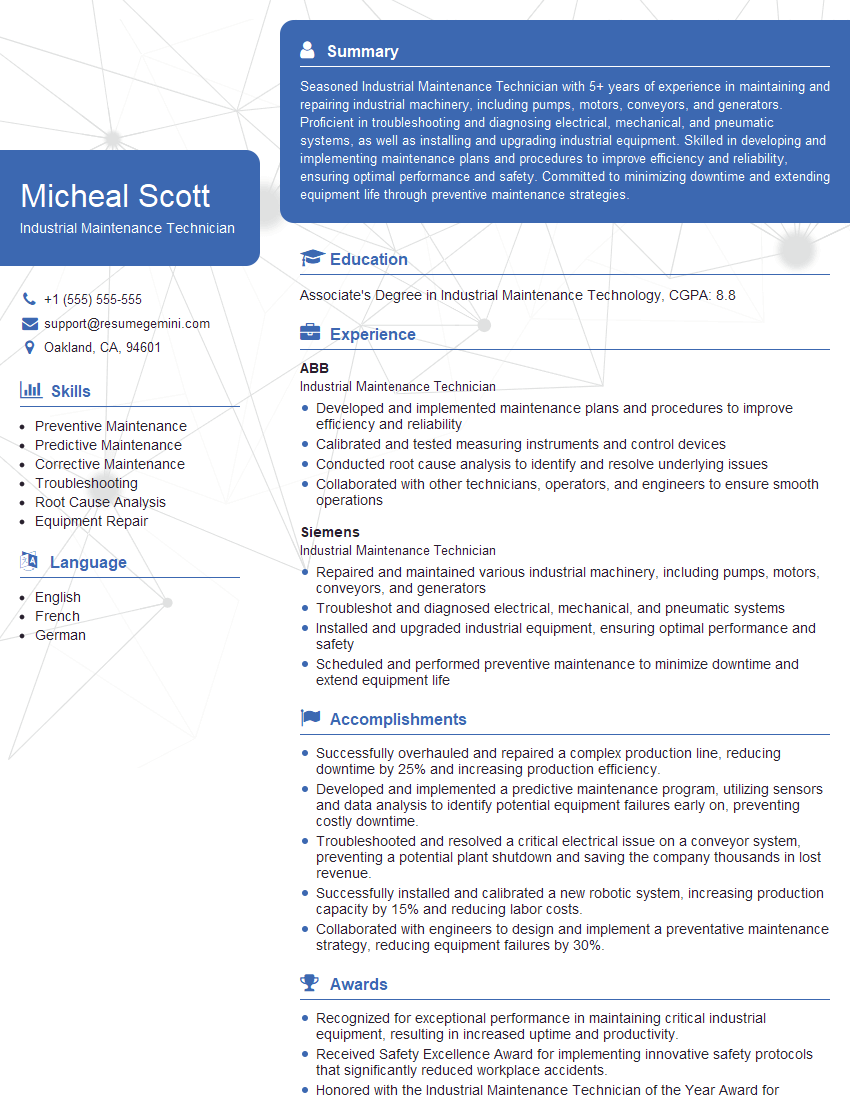
Industrial Maintenance Technician Resume Sample
Explore more articles
Users Rating of Our Blogs
Share Your Experience
We value your feedback! Please rate our content and share your thoughts (optional).
What Readers Say About Our Blog
Very informative content, great job.
good