Every successful interview starts with knowing what to expect. In this blog, we’ll take you through the top Machinery Damage Prevention interview questions, breaking them down with expert tips to help you deliver impactful answers. Step into your next interview fully prepared and ready to succeed.
Questions Asked in Machinery Damage Prevention Interview
Q 1. Explain the difference between preventive, predictive, and corrective maintenance.
The three types of maintenance – preventive, predictive, and corrective – represent a spectrum of approaches to machinery upkeep. Think of it like caring for your car:
- Corrective Maintenance: This is like fixing a flat tire after it happens. It addresses problems after they occur. It’s reactive, often leading to unplanned downtime and higher repair costs. Example: Replacing a broken bearing after the machine seizes.
- Preventive Maintenance: This is like regularly changing your oil. It involves scheduled inspections and servicing to prevent failures before they happen. This reduces the likelihood of unexpected breakdowns. Example: Regular lubrication of moving parts, scheduled inspections of belts and chains.
- Predictive Maintenance: This is like using a tire pressure gauge to anticipate when you might need new tires. It leverages data and advanced techniques to predict when a failure is likely to occur. This allows for planned maintenance, minimizing downtime and optimizing resource allocation. Example: Using vibration analysis to detect bearing wear before it leads to a catastrophic failure.
In essence, corrective maintenance is reactive, preventive maintenance is proactive, and predictive maintenance is intelligent and data-driven.
Q 2. Describe your experience with Root Cause Analysis (RCA) methodologies.
Root Cause Analysis (RCA) is crucial for preventing recurring machinery problems. I have extensive experience using several RCA methodologies, including the 5 Whys, Fishbone diagrams (Ishikawa diagrams), and Fault Tree Analysis (FTA).
For instance, when a centrifuge malfunctioned in a previous role, we used the 5 Whys method. By repeatedly asking ‘Why?’ we traced the root cause from ‘The centrifuge stopped working’ to a faulty power supply, ultimately stemming from a neglected preventative maintenance schedule. The Fishbone diagram would have been useful to visually organize all the potential causes, helping us brainstorm comprehensively. FTA would have been beneficial if we needed to analyze a more complex system with multiple potential failure points, visualizing cascading failures and potential redundancies.
My approach always involves a thorough investigation, data gathering (operational logs, maintenance records, sensor data), and team collaboration to ensure a complete and accurate analysis. The goal isn’t just to fix the immediate problem but to prevent its recurrence.
Q 3. How do you identify potential machinery failure points?
Identifying potential machinery failure points requires a multi-faceted approach. It starts with a thorough understanding of the machinery itself: its design, operating conditions, and historical performance data.
- Design Analysis: This includes reviewing schematics, identifying critical components, and assessing stress points. For example, gears are prone to wear and tear, while bearings are vulnerable to lubrication issues.
- Operating Conditions: Harsh environments (extreme temperatures, high humidity, vibration) can accelerate wear. Overloading equipment beyond its design specifications is another major risk factor.
- Historical Data Analysis: Examining past maintenance records, repair logs, and equipment performance metrics allows you to pinpoint patterns and recurring problems. A high failure rate of a specific component could indicate a design flaw or a maintenance deficiency.
- Visual Inspections: Regular visual checks for wear, corrosion, leaks, and misalignment are crucial for early detection of potential problems.
Combining these methods paints a complete picture of where potential failures are most likely to occur.
Q 4. What are the key indicators of impending machinery failure?
Several indicators can signal impending machinery failure. These can be subtle at first, but they become increasingly apparent as failure approaches. Recognizing these signs is crucial for timely intervention.
- Unusual Noises: Grinding, squealing, knocking, or humming sounds can indicate wear or damage in moving parts.
- Increased Vibration: Elevated vibrations are a major indicator of imbalance, misalignment, or bearing wear. Vibration analysis is a key tool to identify this.
- Elevated Temperatures: Excessive heat generation points to friction, inefficiencies, or impending failure.
- Leaks: Fluid leaks (oil, coolant, hydraulic fluid) indicate seal failure or damage to fluid lines.
- Performance Degradation: A noticeable drop in machine efficiency, output, or precision could signal underlying problems.
- Unusual Odors: Burning smells can indicate overheating, electrical arcing, or lubricant breakdown.
It’s important to note that the specific indicators will vary depending on the type of machinery involved. Regular monitoring and inspections are essential for early detection.
Q 5. Explain your experience with vibration analysis and its applications in machinery damage prevention.
Vibration analysis is a powerful predictive maintenance technique. I’ve used it extensively to diagnose various machinery issues, ranging from bearing faults to imbalance and misalignment. It involves measuring the vibrations produced by a machine and analyzing the frequency and amplitude of these vibrations to pinpoint their root cause.
For example, a high-frequency vibration often points to bearing damage, while a low-frequency vibration might indicate imbalance or misalignment. We use specialized equipment (accelerometers, data collectors, and analysis software) to gather vibration data and then interpret the results. This allows us to take corrective actions before a major failure occurs.
My experience includes using both portable and online monitoring systems. Online systems provide continuous monitoring of critical equipment, enabling early detection of subtle changes. The data analysis often involves using Fast Fourier Transforms (FFT) to identify the various frequency components of the vibrations.
Q 6. Describe your experience with lubrication management and its impact on machinery reliability.
Lubrication management is paramount for machinery reliability. Improper lubrication is a leading cause of premature component failure. My experience covers all aspects of lubrication, from selecting the right lubricant for specific applications to implementing robust lubrication schedules and monitoring lubrication systems.
I’ve implemented lubrication management programs that include: regular oil analysis (to detect contamination, wear particles, and lubricant degradation), proper lubrication techniques (to ensure adequate lubrication without over-lubrication), and the use of automated lubrication systems (to reduce human error and improve efficiency).
The benefits are numerous: reduced friction and wear, extended component life, increased efficiency, and minimized downtime. For instance, implementing a structured lubrication plan in a previous project significantly reduced bearing failures, resulting in substantial cost savings and improved productivity.
Q 7. How do you develop and implement a preventive maintenance schedule?
Developing and implementing a preventive maintenance schedule requires a systematic approach. It starts with a thorough assessment of the machinery involved, taking into account factors like criticality, operating conditions, and historical failure rates.
The process typically involves the following steps:
- Identify all machinery: Create a comprehensive inventory of all equipment requiring maintenance.
- Assess criticality: Categorize machines based on their importance to production, safety, and cost. Critical machines require more frequent maintenance.
- Determine maintenance tasks: Identify the specific tasks required for each machine (e.g., lubrication, inspection, cleaning, replacement of parts).
- Establish maintenance frequencies: Determine the frequency of each task based on manufacturer recommendations, operating conditions, and historical data. Use appropriate methodologies like Weibull analysis to predict failure rates and optimize maintenance intervals.
- Develop a schedule: Create a detailed schedule outlining when each task should be performed. This may involve using CMMS (Computerized Maintenance Management System) software to manage tasks and track progress.
- Resource Allocation: Assign personnel, tools, and materials to each maintenance task.
- Implementation and Monitoring: Execute the schedule and continuously monitor its effectiveness, making adjustments as needed based on data analysis and feedback.
Regular review and optimization of the schedule are crucial to ensure its ongoing effectiveness and to adapt to changing operating conditions or equipment modifications.
Q 8. How do you utilize Computerized Maintenance Management Systems (CMMS)?
Computerized Maintenance Management Systems (CMMS) are software solutions that streamline and optimize maintenance processes. I utilize CMMS extensively for scheduling preventative maintenance, tracking work orders, managing inventory, and analyzing maintenance data. For example, in a previous role, we used a CMMS to schedule lubrication for our high-speed production line. The system automatically generated work orders based on the machinery’s operating hours, ensuring timely lubrication and preventing premature bearing wear. This reduced downtime significantly and improved the overall efficiency of our production line. Beyond scheduling, we used the CMMS’s reporting features to analyze maintenance costs and identify trends, helping us optimize our maintenance strategy and budget allocation.
Specifically, my CMMS usage includes:
- Preventative Maintenance Scheduling: Setting up automated schedules based on equipment usage, calendar dates, or other relevant criteria.
- Work Order Management: Creating, assigning, tracking, and closing work orders, including recording parts used and labor hours.
- Inventory Management: Tracking spare parts and supplies, generating alerts for low stock levels.
- Reporting and Analytics: Generating reports on maintenance costs, downtime, equipment reliability, and other key performance indicators (KPIs).
Q 9. What are the common causes of bearing failures, and how can they be prevented?
Bearing failures are a common cause of machinery downtime and are often preventable. Common causes include:
- Lubrication Issues: Insufficient lubrication, improper lubrication type, or contamination of lubricant are leading causes of bearing wear and failure. Think of it like forgetting to oil a bicycle chain – it’ll seize up quickly.
- Misalignment: Improper shaft alignment puts extra stress on bearings, leading to premature wear and failure. Imagine trying to spin a wheel that’s slightly off-center – it’ll wobble and wear down quickly.
- Contamination: Dust, dirt, or other contaminants can act as abrasives, causing significant damage to bearing surfaces. Think of sand in a gear system.
- Overloading: Exceeding the bearing’s rated load capacity can result in fatigue and eventual failure. Like overloading a truck beyond its weight limit.
- Vibration: Excessive vibration can accelerate bearing wear and damage. A car with unbalanced tires creates excessive vibration damaging its components.
- Improper Installation: Incorrect installation, such as damage during fitting, can lead to early bearing failure.
Prevention involves a multi-pronged approach:
- Proper Lubrication: Using the correct lubricant, following the manufacturer’s recommendations, and ensuring proper lubrication intervals.
- Alignment Checks: Regularly checking and adjusting shaft alignment using precision instruments.
- Environmental Control: Maintaining a clean operating environment to minimize contamination.
- Load Monitoring: Monitoring operating loads to ensure they remain within the bearing’s capacity.
- Vibration Monitoring: Regularly monitoring vibration levels to detect problems early.
- Proper Installation Procedures: Following manufacturer’s guidelines meticulously during installation.
Q 10. Explain your experience with condition monitoring techniques.
My experience with condition monitoring techniques is extensive. I’ve utilized a variety of methods, including vibration analysis, oil analysis, and thermography. Vibration analysis, for instance, uses sensors to measure vibration levels, frequencies, and waveforms to detect imbalances, misalignments, or bearing defects. We used this in a manufacturing plant to identify a developing bearing fault in a critical pump weeks before catastrophic failure. Oil analysis involves testing lubricant samples for contaminants, wear metals, and other indicators of machine health. In one case, oil analysis revealed high levels of iron particles, indicating wear in a gear box, allowing for proactive maintenance and preventing significant production loss.
Thermography, or infrared testing, uses thermal imaging cameras to detect temperature anomalies, indicating potential problems such as overheating bearings or electrical faults. We employed this technique to identify a faulty motor winding before it caused a complete shutdown of a production line.
These techniques are vital for proactive maintenance as they enable early fault detection allowing for timely repairs before major failures occur.
Q 11. How do you assess the risk associated with machinery failure?
Assessing the risk associated with machinery failure involves a systematic approach. I typically use a combination of qualitative and quantitative methods. Qualitative methods include considering the potential consequences of failure, such as production downtime, safety hazards, or environmental damage. Quantitative methods involve estimating the probability of failure using historical data, failure rates, and expert judgment. I frequently use a risk matrix to visually represent the risk level, plotting the likelihood of failure against the severity of the consequences. A high likelihood of failure combined with severe consequences results in a high-risk classification necessitating immediate attention.
For example, a failure in a critical process compressor poses a high risk due to significant production downtime and potential safety hazards. Conversely, a minor failure in a non-critical machine might pose a low risk despite a high likelihood of failure.
Q 12. How do you prioritize maintenance tasks based on criticality and risk?
Prioritizing maintenance tasks based on criticality and risk is essential for efficient resource allocation. I use a risk-based approach, prioritizing tasks based on their potential impact on production, safety, and the environment. A common method is to utilize a weighted scoring system that assigns weights to criticality and likelihood of failure. The sum of these weighted scores determines the overall priority. Tasks with high scores receive immediate attention, while lower-scoring tasks can be scheduled for later.
For example, a task addressing a critical safety hazard would receive a high priority regardless of the likelihood of failure. Conversely, a task with a low likelihood of failure and minor consequences might be scheduled for a later date.
Software tools and CMMS systems can be instrumental in this process, allowing for automated prioritization and scheduling of maintenance tasks.
Q 13. Describe your experience with failure mode and effects analysis (FMEA).
Failure Mode and Effects Analysis (FMEA) is a systematic approach to identifying potential failure modes in a system or process and assessing their potential effects. I have extensive experience conducting FMEA studies for various types of machinery. The process involves creating a table that lists each component, potential failure modes, their causes, effects, and severity, occurrence, and detection ratings. These ratings are then used to calculate a Risk Priority Number (RPN), which helps prioritize potential failures for mitigation efforts.
For example, in an FMEA for a conveyor system, I identified a potential failure mode of a motor bearing seizing. Analyzing the potential causes (lack of lubrication, overloading), effects (conveyor stoppage, potential for product damage), and assigning severity, occurrence, and detection ratings allowed us to calculate the RPN, showing its high risk and the need for preventative measures such as regular lubrication and vibration monitoring.
The FMEA process facilitates proactive risk reduction, enabling the identification and mitigation of potential failures before they occur.
Q 14. How do you ensure compliance with safety regulations related to machinery maintenance?
Ensuring compliance with safety regulations related to machinery maintenance is paramount. This involves a comprehensive approach that includes:
- Regular Training: Providing all maintenance personnel with comprehensive training on relevant safety regulations, lockout/tagout procedures, and the safe handling of machinery and tools. This includes both theoretical knowledge and practical skills training in a simulated environment.
- Lockout/Tagout Procedures: Implementing and strictly enforcing lockout/tagout procedures to prevent accidental energization or startup of machinery during maintenance activities. Regular audits and training refreshes ensure consistent adherence to these critical safety protocols.
- Permit-to-Work Systems: Using a permit-to-work system to ensure all necessary safety precautions are taken before commencing work on high-risk equipment. These systems provide a documented verification of safety procedures and approvals.
- Regular Inspections: Conducting regular inspections of machinery and equipment to identify potential hazards and ensure compliance with safety standards. Thorough documentation of these inspections serves as a record of compliance and provides evidence in case of audits or accidents.
- Maintenance Records: Maintaining detailed records of all maintenance activities to demonstrate compliance with safety regulations and ensure traceability of work performed. These records are invaluable for audits and investigations.
- Staying Updated: Keeping abreast of changes in safety regulations and industry best practices. Continuous learning and adapting to new guidelines are essential to maintain compliance.
Compliance is not just about avoiding penalties; it’s about ensuring a safe working environment for everyone.
Q 15. What are your strategies for improving overall equipment effectiveness (OEE)?
Improving Overall Equipment Effectiveness (OEE) is crucial for maximizing production and minimizing downtime. My strategy is multifaceted and focuses on three key areas: Availability, Performance, and Quality.
- Availability: This focuses on minimizing unplanned downtime. I achieve this through a robust preventative maintenance program, proactive identification of potential failure points using predictive maintenance techniques (like vibration analysis and oil analysis), and a well-stocked parts inventory to reduce repair times. For example, in a previous role, implementing a predictive maintenance program on our packaging line reduced unplanned downtime by 15% in the first year.
- Performance: This centers on ensuring the equipment runs at its designed speed and efficiency. This involves optimizing machine settings, ensuring proper operator training, and regularly calibrating equipment. I often use data analysis to pinpoint bottlenecks and areas for improvement. For example, analyzing production data revealed a minor setting adjustment that increased our milling machine’s output by 8%.
- Quality: This means minimizing defects and scrap. It requires thorough quality checks throughout the production process, regular calibration of measurement equipment, and operator training focused on quality control. Implementing a statistical process control (SPC) chart on a previous production line dramatically reduced defect rates, leading to significant cost savings.
By focusing on these three pillars, and constantly monitoring key performance indicators (KPIs), we can effectively improve OEE and achieve significant gains in productivity and profitability.
Career Expert Tips:
- Ace those interviews! Prepare effectively by reviewing the Top 50 Most Common Interview Questions on ResumeGemini.
- Navigate your job search with confidence! Explore a wide range of Career Tips on ResumeGemini. Learn about common challenges and recommendations to overcome them.
- Craft the perfect resume! Master the Art of Resume Writing with ResumeGemini’s guide. Showcase your unique qualifications and achievements effectively.
- Don’t miss out on holiday savings! Build your dream resume with ResumeGemini’s ATS optimized templates.
Q 16. How do you handle unexpected machinery breakdowns?
Unexpected machinery breakdowns require a swift and organized response. My approach is based on a well-defined breakdown protocol that prioritizes safety and minimizes downtime.
- Safety First: Secure the area, ensuring the machine is isolated and all personnel are safe.
- Rapid Assessment: Quickly diagnose the problem using available diagnostic tools and expertise. If needed, I consult with other technicians or external specialists.
- Efficient Repair: Implement the most efficient repair strategy, prioritizing temporary fixes to get the machine running again quickly if a full repair will take too long. This might involve using spare parts or performing a workaround until a permanent solution can be implemented.
- Root Cause Analysis (RCA): Once the machine is operational, I conduct a thorough RCA to identify the underlying cause of the failure. This prevents future occurrences.
- Documentation and Reporting: All aspects of the breakdown, repair, and RCA are meticulously documented for future reference, and reports are generated to inform preventative maintenance strategies.
Think of it like a well-drilled fire team – everyone knows their role, and we respond efficiently and effectively to get the situation under control.
Q 17. Describe your experience working with different types of machinery.
My experience spans a wide range of machinery, including CNC milling machines, injection molding presses, conveyor systems, packaging lines, and robotic arms. I’ve worked with both simple and highly complex automated systems in various industries, including manufacturing, food processing, and pharmaceuticals. My experience isn’t just limited to the machinery itself; it also extends to the associated auxiliary equipment, control systems, and safety mechanisms.
I’m proficient in understanding and troubleshooting both mechanical and electrical components. For example, I once successfully diagnosed and repaired a malfunctioning PLC (Programmable Logic Controller) on a robotic welding system, which prevented significant production delays.
This diverse experience allows me to quickly adapt to new equipment and situations, leveraging my existing knowledge to solve novel challenges efficiently.
Q 18. What metrics do you use to measure the effectiveness of your machinery damage prevention program?
Measuring the effectiveness of a machinery damage prevention program requires a comprehensive set of metrics. I focus on key indicators that provide a holistic view of program performance.
- Mean Time Between Failures (MTBF): This metric indicates the average time between equipment failures. A higher MTBF suggests improved reliability and preventative maintenance efficacy.
- Mean Time To Repair (MTTR): This measures the average time taken to repair a failed piece of equipment. A lower MTTR showcases improvements in maintenance efficiency.
- Downtime Percentage: This shows the percentage of time the machinery is not operational, highlighting the impact of failures on productivity.
- Maintenance Costs: Tracking maintenance costs helps determine the cost-effectiveness of the prevention program. Lower costs while maintaining high reliability are ideal.
- Number of Preventative Maintenance Tasks Completed: This metric demonstrates adherence to the planned preventative maintenance schedule.
By regularly monitoring these metrics and comparing them against established baselines, we can identify areas for improvement and fine-tune our strategies for enhanced efficiency and reduced downtime.
Q 19. How do you manage and track maintenance costs?
Managing and tracking maintenance costs is essential for budgetary control and optimizing resource allocation. I utilize a combination of methods for effective cost management.
- Detailed Cost Tracking: We track maintenance costs using a computerized maintenance management system (CMMS). This allows us to categorize expenses by equipment, type of maintenance (preventative, corrective), and labor costs.
- Budgeting and Forecasting: Based on historical data and projected maintenance needs, we create detailed budgets and forecasts to anticipate future expenditures.
- Cost Analysis: We regularly analyze maintenance costs to identify areas of potential savings, such as negotiating better prices with suppliers or improving maintenance procedures to reduce labor time.
- Return on Investment (ROI) Analysis: We assess the ROI of preventative maintenance activities to justify investments and ensure that resources are allocated effectively.
By implementing these strategies, we maintain a clear understanding of our maintenance spending, allowing for proactive decision-making and efficient resource allocation.
Q 20. Describe your experience with training and mentoring maintenance personnel.
Training and mentoring maintenance personnel is a cornerstone of my approach to machinery damage prevention. I believe in fostering a culture of continuous learning and improvement.
- On-the-Job Training: I provide hands-on training, guiding personnel through various maintenance tasks and troubleshooting procedures. This allows for immediate application of knowledge and practical skill development.
- Formal Training Programs: I incorporate formal training programs, such as those focused on specific machinery types, safety regulations, and advanced diagnostic techniques.
- Mentorship: I work closely with junior technicians, providing mentorship and guidance to nurture their skills and develop their expertise. I encourage knowledge sharing among team members.
- Performance Evaluation: I regularly evaluate personnel performance to identify training needs and areas for improvement, ensuring that everyone maintains a high skill level.
My approach to training is not merely about imparting knowledge but also about cultivating a proactive, problem-solving mindset within the maintenance team.
Q 21. How do you stay up-to-date with the latest advancements in machinery damage prevention technologies?
Staying current with advancements in machinery damage prevention technologies is crucial for maintaining a competitive edge. My strategy involves a multi-pronged approach:
- Industry Publications and Conferences: I actively read industry publications, attend conferences, and participate in webinars to stay abreast of the latest technological advancements.
- Professional Networks: I engage with professional networks and communities, such as those related to maintenance management, to share knowledge and learn from industry peers.
- Vendor Collaboration: I build relationships with equipment manufacturers and technology providers to understand their latest offerings and gain insights into emerging technologies.
- Continuous Learning: I pursue continuous professional development by completing relevant online courses and certifications to maintain my skills and expertise.
By employing these strategies, I ensure that my knowledge and skills remain current, allowing me to implement the most effective and innovative solutions for machinery damage prevention.
Q 22. What is your experience with Total Productive Maintenance (TPM)?
Total Productive Maintenance (TPM) is a holistic approach to maintenance that goes beyond simply fixing broken equipment. It involves integrating maintenance activities into every aspect of the production process, empowering all employees to participate in keeping machinery running smoothly. My experience with TPM spans over 10 years, encompassing implementation, training, and continuous improvement initiatives across various manufacturing facilities. I’ve led teams in implementing TPM pillars such as autonomous maintenance (where operators perform basic maintenance tasks), planned maintenance (scheduled preventative maintenance), and focused improvement activities (solving recurring equipment problems). For example, in my previous role at Acme Manufacturing, we implemented a TPM program that resulted in a 25% reduction in downtime and a 15% increase in overall equipment effectiveness (OEE).
- Autonomous Maintenance: Trained operators on basic lubrication, cleaning, and minor adjustments, empowering them to prevent minor issues from escalating.
- Planned Maintenance: Developed and implemented a comprehensive computerized maintenance management system (CMMS) to schedule and track preventative maintenance tasks.
- Focused Improvement: Led problem-solving teams to identify and eliminate root causes of recurring equipment failures, using techniques like 5 Whys and fishbone diagrams.
Q 23. Describe a time you successfully prevented a major machinery failure.
During my time at Beta Industries, we experienced a critical issue with a high-speed packaging machine that was crucial for our main product line. Vibration analysis indicated potential bearing failure, but a full shutdown for inspection wasn’t feasible due to tight production deadlines. Instead of waiting for a catastrophic failure, I initiated a phased approach. First, we reduced the machine’s operating speed to minimize stress on the bearings. Second, we implemented a more frequent vibration monitoring schedule, using handheld devices to continuously assess the condition. Third, we established a clear communication protocol with the operations team to ensure immediate reporting of any unusual noises or vibrations. This proactive strategy successfully averted a major breakdown, minimizing production downtime and preventing significant financial losses. The machine continued operating at a reduced speed until planned maintenance allowed for a complete bearing replacement during a scheduled downtime.
Q 24. How do you communicate effectively with different stakeholders regarding machinery maintenance?
Effective communication is crucial in maintenance. I tailor my communication style to the audience. With technicians, I use precise technical language, focusing on details and problem-solving. With management, I use high-level summaries, highlighting key performance indicators (KPIs) such as downtime reduction and cost savings. With operators, I emphasize the importance of their role in preventative maintenance and encourage open communication regarding any equipment issues. I utilize various channels, including regular meetings, email updates, reports, and even visual aids like dashboards to ensure everyone is informed and engaged. For example, I created a simple, color-coded dashboard showing the status of critical machinery, accessible to everyone in the plant, which increased awareness and prompted early reporting of potential issues.
Q 25. What is your experience with data analysis to predict machinery failures?
I have extensive experience in utilizing data analysis to predict machinery failures. I leverage various techniques including vibration analysis, oil analysis, and thermal imaging. Data is collected from sensors embedded in the machinery, and I use statistical methods and machine learning algorithms to identify patterns that indicate impending failures. For instance, I’ve used predictive maintenance software to analyze vibration data and forecast bearing failures with a high degree of accuracy, allowing for proactive replacements before catastrophic failure. This allows for scheduled downtime, minimizing production disruptions and reducing repair costs. We can also use historical maintenance data to identify trends and patterns of failures, allowing for improvements in preventative maintenance schedules.
Q 26. How do you handle conflicting priorities in maintenance scheduling?
Conflicting priorities are common in maintenance scheduling. I use a prioritized scheduling system based on risk assessment and criticality. I employ a risk matrix that weighs the potential consequences of a failure against the likelihood of it occurring. This helps to prioritize tasks based on their impact on production and safety. For example, a critical machine with a high probability of failure gets immediate attention, even if other maintenance requests exist. Additionally, I use a CMMS to optimize scheduling, considering factors like resource availability, equipment downtime, and production schedules. Regular review meetings with stakeholders ensure alignment and transparency in decision-making.
Q 27. Describe your experience with the implementation of a new maintenance strategy.
I was instrumental in the implementation of a Reliability Centered Maintenance (RCM) strategy at Gamma Corporation. RCM focuses on maintaining equipment based on its functional failures and their consequences. The process involved a detailed functional failure analysis of each piece of critical machinery, identifying failure modes and their effects. We then developed preventative maintenance tasks tailored to mitigate the most critical failure modes. This involved extensive training for maintenance personnel on new diagnostic techniques and the use of specialized equipment. The implementation was a phased approach, starting with pilot projects on specific equipment before scaling up to the entire plant. The result was a significant decrease in downtime and an increase in overall equipment reliability.
Q 28. What are your salary expectations?
My salary expectations are in the range of $110,000 to $130,000 per year, depending on the overall compensation package and benefits offered. This range is based on my experience, skills, and the current market rate for professionals with my expertise in machinery damage prevention and TPM implementation.
Key Topics to Learn for Machinery Damage Prevention Interview
- Root Cause Analysis (RCA): Understanding methodologies like 5 Whys, Fishbone diagrams, and Fault Tree Analysis to identify the underlying causes of machinery failures.
- Predictive Maintenance Techniques: Applying vibration analysis, thermography, and oil analysis to predict potential failures before they occur. Practical application includes interpreting sensor data and implementing preventative measures based on analysis.
- Preventive Maintenance Schedules & Procedures: Developing and implementing effective maintenance schedules, including lubrication, inspection, and cleaning procedures to minimize wear and tear.
- Safety Procedures and Regulations: Understanding and adhering to relevant safety standards and regulations related to machinery operation and maintenance to prevent accidents and injuries.
- Machinery Design and Engineering Principles: Familiarity with basic engineering concepts related to stress, strain, fatigue, and material selection to understand failure mechanisms.
- Condition Monitoring Systems: Knowledge of various condition monitoring technologies and their applications in detecting early signs of machinery damage. This includes understanding data acquisition and interpretation.
- Data Analysis and Reporting: Ability to collect, analyze, and present maintenance data effectively to highlight trends, identify areas for improvement, and support decision-making.
- Troubleshooting and Repair Procedures: Practical experience in diagnosing and repairing machinery malfunctions, including the ability to identify faulty components and implement effective repair strategies.
Next Steps
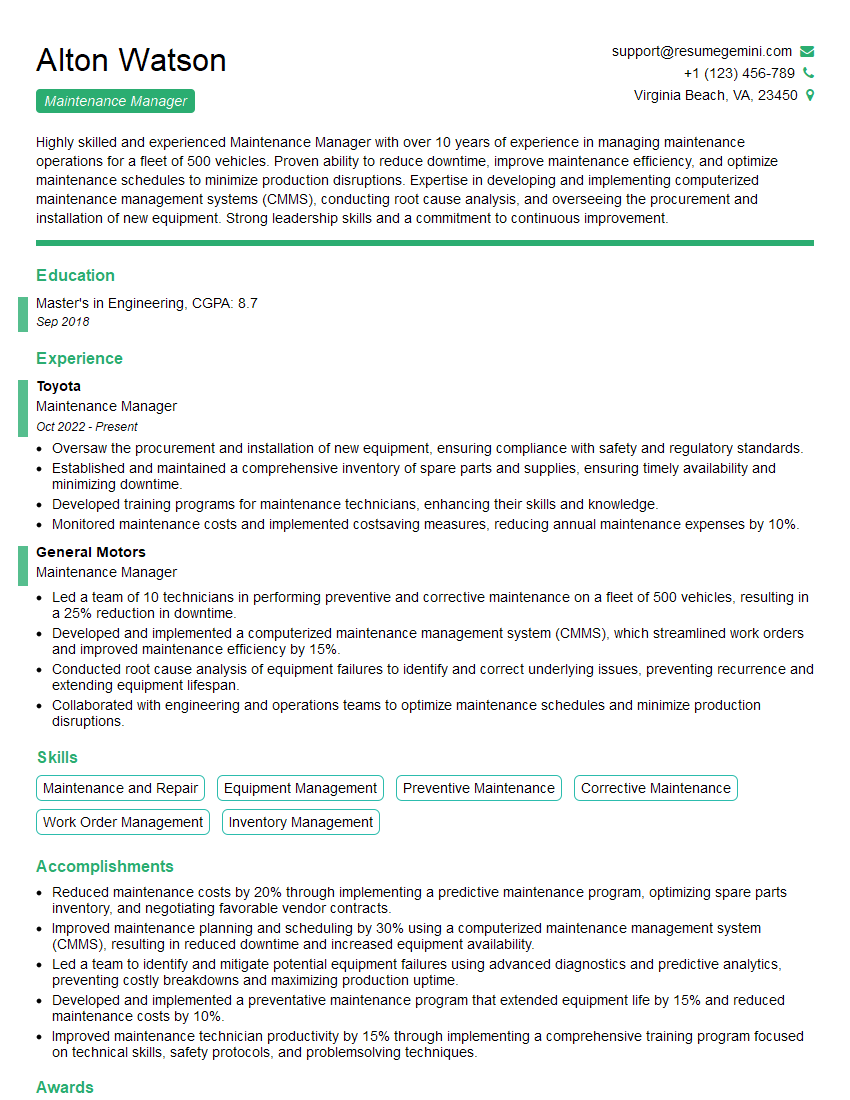
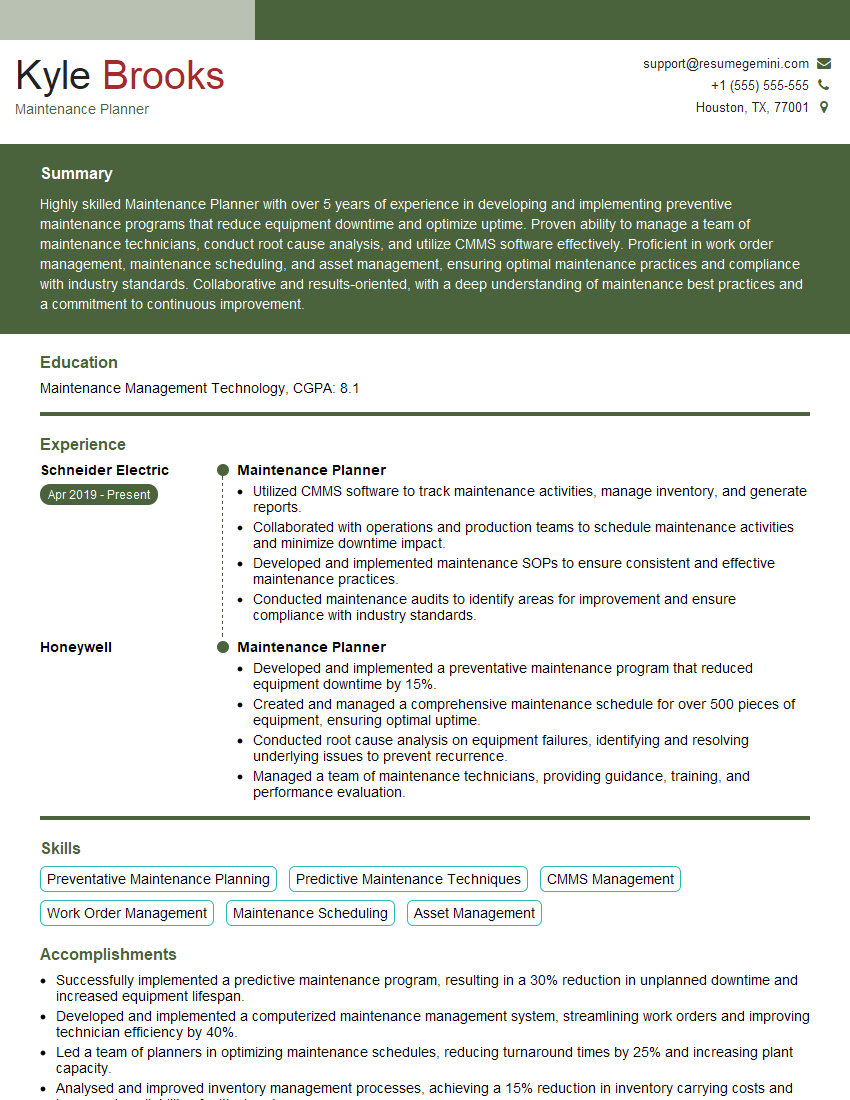
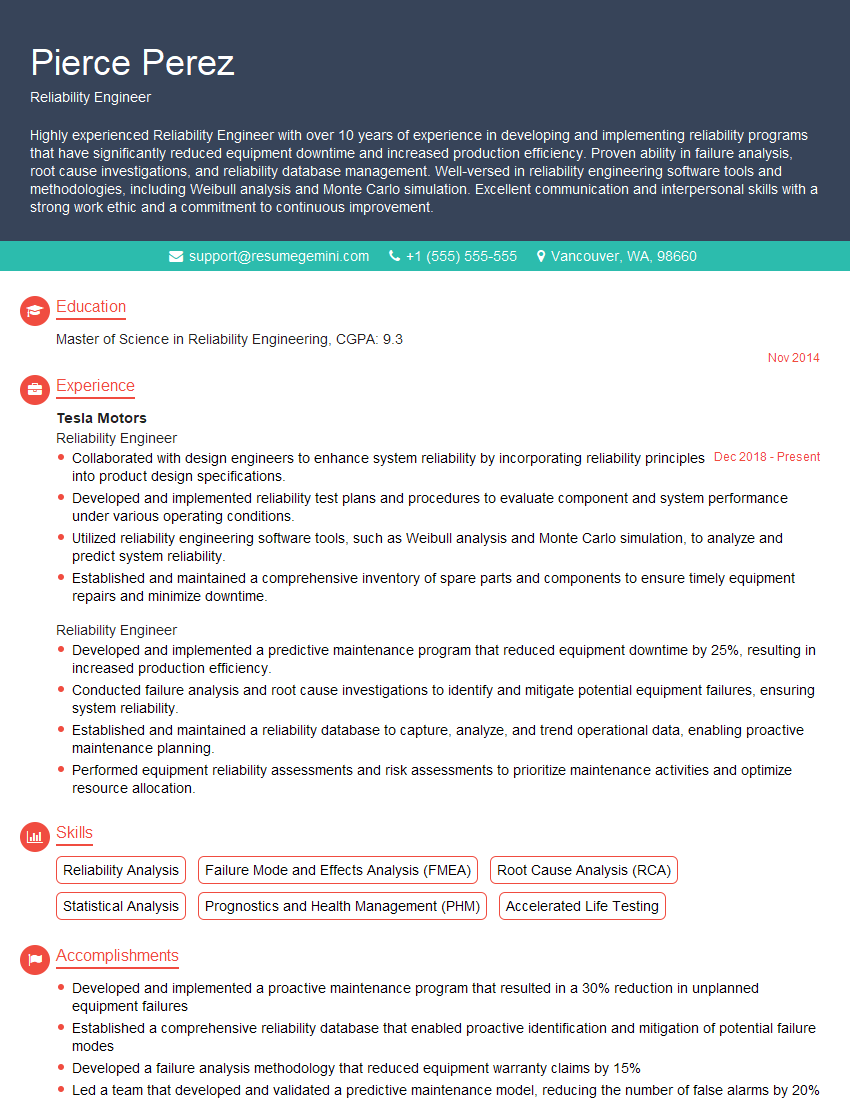
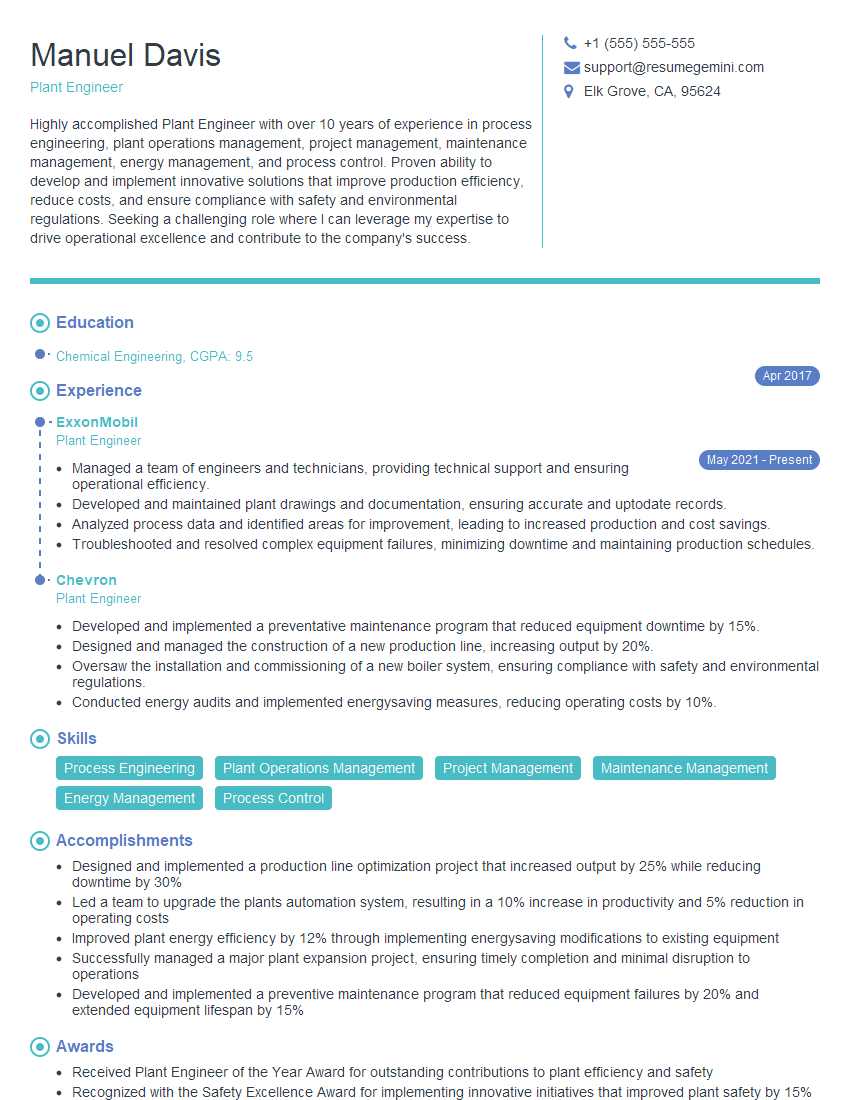
Mastering Machinery Damage Prevention is crucial for career advancement in a variety of industries. A strong understanding of these techniques demonstrates valuable problem-solving skills, enhances safety protocols, and ultimately reduces operational costs. To maximize your job prospects, create an ATS-friendly resume that highlights your expertise. We highly recommend using ResumeGemini to build a professional and impactful resume that showcases your skills effectively. ResumeGemini provides examples of resumes tailored to Machinery Damage Prevention, ensuring your application stands out from the competition.
Explore more articles
Users Rating of Our Blogs
Share Your Experience
We value your feedback! Please rate our content and share your thoughts (optional).
What Readers Say About Our Blog
Very informative content, great job.
good