Every successful interview starts with knowing what to expect. In this blog, we’ll take you through the top Maritime Regulations Knowledge interview questions, breaking them down with expert tips to help you deliver impactful answers. Step into your next interview fully prepared and ready to succeed.
Questions Asked in Maritime Regulations Knowledge Interview
Q 1. What are the key provisions of the SOLAS Convention?
The International Convention for the Safety of Life at Sea (SOLAS) is the cornerstone of maritime safety. Think of it as the global rulebook for ship safety. Its key provisions cover a wide range of aspects crucial for preventing accidents and protecting the marine environment. These provisions are regularly updated to reflect technological advancements and lessons learned from maritime incidents.
Hull Integrity: SOLAS mandates structural strength requirements for ships to withstand various sea conditions and prevent hull failures, like those that could lead to sinking.
Fire Protection: Detailed regulations cover fire detection, suppression, and escape systems, aiming to minimize the risk and impact of onboard fires. This includes specific requirements for fire-resistant materials and crew training in fire prevention and control.
Life-Saving Appliances: Ships must carry sufficient lifeboats, life rafts, life jackets, and other survival equipment, ensuring enough capacity for all persons on board. Regular inspections and drills are mandatory to ensure the equipment remains operational.
Radio Communications: SOLAS requires vessels to maintain effective communication systems, allowing for distress calls and communication with other vessels and shore-based authorities. This includes provisions for Global Maritime Distress Safety System (GMDSS).
Safety Management: Modern SOLAS chapters emphasize the importance of a company’s safety management system, requiring ships to have a structured approach to risk assessment and safety management practices (often implemented in conjunction with the ISM Code).
Cargo Security: International Ship and Port Facility Security (ISPS) Code, integrated into SOLAS, addresses the security of ships and ports, enhancing protection against terrorism and other security threats.
Imagine a cruise ship – SOLAS ensures its structural integrity, equips it with fire-fighting equipment, provides lifeboats for everyone, and sets standards for its communication systems. All of this is aimed at ensuring passenger and crew safety.
Q 2. Explain the MARPOL Annexes and their significance.
The International Convention for the Prevention of Pollution from Ships (MARPOL) is an international treaty focused solely on preventing marine pollution. It’s organized into annexes, each addressing a specific pollutant:
Annex I: Regulations for the prevention of pollution by oil. This covers oil discharge, equipment for preventing oil spills, and record-keeping requirements. Think of oil tankers – Annex I strictly controls how they handle and discharge oily waste.
Annex II: Deals with the control of pollution by noxious liquid substances carried in bulk. This includes detailed lists of substances and regulations on their handling and discharge.
Annex III: Addresses the prevention of pollution by harmful substances carried in packaged form. This covers everything from chemicals to paints and is essential to protect both the environment and crew.
Annex IV: Focuses on sewage from ships, outlining standards for sewage treatment plants and discharge criteria. This is vital for keeping coastal waters clean.
Annex V: Concerns garbage from ships, including regulations on disposal of plastics, food waste, and other garbage to prevent marine debris.
Annex VI: Covers air pollution from ships, regulating emissions of sulfur oxides, nitrogen oxides, particulate matter, and ozone-depleting substances.
MARPOL’s significance lies in its global application. It sets minimum standards for pollution prevention across all ships, protecting the oceans for future generations. Imagine a cargo ship accidentally spilling oil – MARPOL’s provisions help to mitigate the environmental damage and hold responsible parties accountable.
Q 3. Describe the International Safety Management (ISM) Code.
The International Safety Management (ISM) Code is a mandatory international standard for the safe management and operation of ships and for pollution prevention. It’s less about specific technical equipment and more about the management systems in place. Think of it as a comprehensive safety manual for a shipping company.
Safety Management System (SMS): The core of the ISM Code is the establishment of an SMS. This is a documented system of policies and procedures covering all aspects of ship operation, from risk assessment to emergency response.
Company Responsibility: The shipping company (the owner or manager) is ultimately responsible for implementing and maintaining the SMS. This involves assigning roles and responsibilities and providing necessary resources.
Shipboard Operations: The Code mandates clear procedures for all shipboard operations, including cargo handling, maintenance, and emergency situations.
Regular Audits and Reviews: The SMS must undergo regular audits and reviews to ensure its effectiveness and compliance with the Code. Regular internal audits and external audits are required.
Documentation: Maintaining comprehensive documentation of the SMS is essential for demonstrating compliance.
For example, a cruise line would have a detailed SMS covering procedures for handling emergencies, maintenance of lifeboats, and even managing passenger complaints. This ensures consistency in safety standards across all their vessels.
Q 4. What are the requirements for a valid Certificate of Registry?
A Certificate of Registry is essentially the ship’s ‘birth certificate.’ It’s an official document issued by a country’s maritime authority, proving that a ship is legally registered under that country’s flag. This confers certain rights and obligations upon the vessel and its owner.
Proof of Ownership: It confirms the legal ownership of the vessel.
Nationality: It establishes the ship’s nationality, determining which country’s laws and regulations apply to it.
Compliance with Regulations: A valid Certificate of Registry typically demonstrates that the ship meets the minimum requirements specified by its flag state regarding safety and seaworthiness.
Port Access: The certificate allows the ship to access ports and engage in international trade.
Accurate Details: The certificate should contain accurate details of the ship, including its name, dimensions, tonnage, and registered owner.
Think of it like a passport for a ship. Without a valid Certificate of Registry, a vessel will face significant restrictions in its operation and may be denied entry into ports worldwide.
Q 5. What is the role of Port State Control?
Port State Control (PSC) is the process by which a country’s maritime authorities inspect foreign-flagged ships entering their ports to ensure that they meet minimum safety and environmental standards. It’s a crucial element of ensuring compliance with international maritime regulations.
Inspections: PSC officers conduct inspections of ships at port, checking documents, equipment, and crew competency to ensure compliance with international conventions like SOLAS and MARPOL.
Detention: If serious deficiencies are found, the ship can be detained until the issues are rectified. This can lead to significant costs and delays for the shipowner.
Cooperation: PSC is a collaborative effort between different countries’ maritime authorities, aiming to maintain consistent safety standards globally.
Prevention: By conducting inspections, PSC helps to prevent substandard ships from operating, thereby reducing the risk of maritime accidents and pollution incidents.
Imagine a ship from a country with lax safety regulations entering a major European port. PSC will inspect the vessel to ensure it meets minimum standards, potentially preventing a disaster.
Q 6. Explain the differences between flag state and port state control.
Flag State and Port State Control are both essential for ensuring maritime safety, but their roles differ significantly. Think of them as two sides of the same coin:
Flag State Control: This refers to the responsibility of the country under whose flag a ship is registered (the flag state) to ensure the ship complies with all relevant international and national regulations. The flag state inspects the ship, verifies its documents, and ensures that the crew are properly trained and the vessel is seaworthy. It’s the primary responsibility for ensuring a ship operates safely.
Port State Control: As discussed earlier, this is the authority given to coastal states to inspect foreign ships in their ports to determine whether they comply with minimum international standards. Port State Control acts as a secondary safety net, supplementing Flag State control, as not all Flag States maintain rigorous standards.
The key difference is that the Flag State has the primary responsibility for ensuring the ship’s compliance, while Port State Control acts as a supplementary mechanism to catch ships that might have slipped through the Flag State’s net or are operating in a substandard manner.
Q 7. How does the STCW Convention ensure seafarer competency?
The Standards of Training, Certification and Watchkeeping for Seafarers (STCW) Convention sets the global standard for seafarer competency. It’s designed to ensure that seafarers possess the necessary skills and knowledge to perform their duties safely and efficiently. It’s a crucial element in maritime safety.
Minimum Standards: The STCW Convention establishes minimum standards for training, certification, and watchkeeping for all seafarers, regardless of the type of ship or their position onboard.
Competency-Based Training: The focus is on competency-based training, meaning that seafarers must demonstrate practical skills and knowledge rather than simply completing courses.
Certification: Seafarers must obtain certificates that demonstrate their competence, allowing them to work on ships internationally.
Regular Updates: The STCW Convention is regularly updated to reflect changes in technology, operational practices, and safety standards.
For example, an officer seeking to work on an oil tanker must demonstrate proficiency in cargo handling procedures, emergency response, and environmental regulations. STCW ensures that every seafarer, regardless of nationality, has the fundamental skills needed for their role, promoting safety and efficiency across the global maritime industry.
Q 8. What are the main requirements of the Ballast Water Management Convention?
The International Convention for the Management of Ballast Water and Sediments (BWM Convention) aims to prevent the spread of invasive aquatic species through ballast water discharge. Its main requirements center around managing ballast water to minimize the risk of transferring harmful organisms. This is achieved through several key measures:
- Ballast Water Management Plan (BWMP): Ships must have an approved BWMP detailing how they will manage ballast water throughout their voyages. This plan outlines procedures for ballast water exchange, treatment, or a combination of both.
- Ballast Water Management System (BWMS): Ships must install and operate an approved BWMS that meets the performance standards set by the Convention. These systems treat ballast water to reduce the number of organisms to acceptable levels before discharge. Different technologies are available, such as UV irradiation, filtration, and electrochlorination.
- Record Keeping: Ships are required to maintain detailed records of their ballast water management activities, including dates, locations, treatment methods used, and measurements of organism levels. These records are subject to inspection by port state control authorities.
- Survey and Certification: Ships must undergo surveys and obtain an International Ballast Water Management Certificate (IBWM) to demonstrate compliance with the Convention’s requirements. This certificate verifies that the ship’s BWMP is effective and the BWMS is functioning correctly.
Imagine a scenario where a ship takes on ballast water in a port known to have a high concentration of invasive species. Without proper ballast water management, these species could be transported to a new environment and wreak havoc on the local ecosystem. The BWM Convention aims to prevent such ecological disasters through these stringent regulations.
Q 9. Describe the process of obtaining an International Ship Security Certificate (ISSC).
Obtaining an International Ship Security Certificate (ISSC) is a crucial step for ships operating under the International Ship and Port Facility Security (ISPS) Code. The process involves several stages:
- Company Security Assessment (CSA): The ship’s company must conduct a CSA to identify security threats and vulnerabilities specific to their operations. This assessment forms the basis for the ship’s security plan.
- Ship Security Plan (SSP): Based on the CSA, a comprehensive SSP must be developed. This plan outlines procedures for preventing acts of unlawful interference, including measures for access control, security patrols, and communication protocols.
- Declaration of Security: The company must declare that the ship meets the requirements of the ISPS Code and that the SSP is in place and being effectively implemented.
- Verification and Inspection: A designated authority conducts an initial inspection of the ship to verify compliance with the ISPS Code and the SSP. This includes assessing the ship’s security equipment, crew training, and security procedures.
- Issuance of the ISSC: Once the inspection is satisfactory, the designated authority issues the ISSC. This certificate confirms that the ship complies with the requirements of the ISPS Code and is allowed to operate internationally.
Think of the ISSC as a passport for a ship, proving its security credentials and allowing it access to international ports. Regular audits and inspections ensure continued compliance and address any potential security gaps.
Q 10. What are the responsibilities of a Designated Security Officer (DSO)?
The Designated Security Officer (DSO) is a key figure in ensuring a ship’s security. Their responsibilities are critical and far-reaching:
- Implementation of the SSP: The DSO is responsible for the day-to-day implementation of the Ship Security Plan (SSP). This involves overseeing security drills, managing access control, and ensuring that security measures are effective.
- Communication and Liaison: The DSO is the main point of contact for communication with port facility security officers and other relevant authorities. They report security incidents and receive instructions or updates from the company security officer (CSO).
- Crew Training and Awareness: The DSO plays a key role in providing security awareness training to the crew. They ensure that all crew members are familiar with the SSP and their responsibilities under it.
- Security Assessments and Updates: The DSO regularly assesses the ship’s security posture, identifying potential vulnerabilities and recommending updates to the SSP as necessary.
- Maintaining Records: The DSO is responsible for maintaining accurate and up-to-date security records, including logs of security incidents, drills, and communications.
Imagine the DSO as the ship’s security manager, ensuring all security procedures are followed and the ship remains protected from potential threats.
Q 11. Explain the different types of ship surveys and their purpose.
Several types of ship surveys are conducted to ensure that vessels meet regulatory requirements and maintain seaworthiness. These include:
- Annual Surveys: These surveys verify that the ship’s equipment, hull, machinery, and other vital components are in good condition and functioning correctly.
- Intermediate Surveys: Conducted between annual surveys, these focus on specific equipment or systems, ensuring that maintenance is up to standard.
- Special Surveys: More comprehensive inspections performed at regular intervals (typically every 2-5 years, depending on the vessel’s age and type). These thoroughly examine the ship’s structural integrity, machinery, and other critical systems.
- Initial Surveys: Carried out when a new ship is constructed or after significant modifications. They verify compliance with all relevant regulations and standards.
- Damage Surveys: Conducted after incidents such as accidents or collisions. They assess the extent of damage and determine the necessary repairs to restore seaworthiness.
Each survey has a specific purpose, working together to maintain the overall seaworthiness and safety of the vessel and ensure compliance with international maritime regulations. Think of them as regular health checkups for a ship, preventing minor issues from becoming major problems.
Q 12. How are environmental regulations enforced in the maritime industry?
Enforcement of environmental regulations in the maritime industry is multifaceted and involves various actors. Key mechanisms include:
- Port State Control (PSC): PSC officers in various countries inspect ships arriving in their ports to verify compliance with international and national environmental regulations. Non-compliance can lead to detention of the vessel until deficiencies are addressed.
- Flag State Control: The flag state (the country under whose flag the ship is registered) is responsible for ensuring that its ships comply with environmental regulations. This involves periodic inspections and audits of ships registered under their flag.
- International Maritime Organization (IMO): The IMO develops and amends international regulations related to marine pollution. They also provide guidance and support to member states in implementing these regulations.
- Satellite Monitoring and Reporting: Advancements in satellite technology allow for remote monitoring of ships’ activities, including ballast water discharge and emissions. This assists in ensuring adherence to environmental regulations.
- Civil Penalties and Criminal Prosecution: Significant violations of environmental regulations can result in substantial fines, legal action, and even criminal charges against the ship’s owners, operators, and crew.
Enforcement relies on a collaborative effort between different states and international organizations, leveraging both on-site inspections and advanced technological tools.
Q 13. What are the consequences of non-compliance with maritime regulations?
Non-compliance with maritime regulations can result in a wide range of serious consequences:
- Detention of the Ship: Ships found to be non-compliant may be detained by port state control authorities until deficiencies are rectified. This can cause significant delays and financial losses.
- Financial Penalties: Substantial fines can be imposed for violations, often depending on the severity and nature of the non-compliance.
- Blacklisting: Repeated or serious violations can lead to a ship being blacklisted, making it difficult or impossible to operate in certain ports or regions.
- Legal Action: In serious cases, legal action may be taken against the ship’s owners, operators, or crew, potentially resulting in criminal charges.
- Damage to Reputation: Non-compliance can severely damage a company’s reputation, impacting its ability to secure contracts and maintain business relationships.
- Environmental Damage: In the case of environmental violations, non-compliance can lead to irreversible environmental damage, with significant ecological and economic repercussions.
Compliance is not just a legal requirement, but a crucial aspect of responsible ship operation and protection of the marine environment and human life.
Q 14. Explain the concept of ‘due diligence’ in relation to maritime compliance.
Due diligence in maritime compliance refers to the proactive measures taken by ship owners and operators to ensure that their vessels and operations comply with all relevant regulations. It’s not simply about reacting to inspections but rather anticipating potential issues and implementing preventive measures.
This involves:
- Regular Audits and Inspections: Conducting regular internal audits and inspections to identify potential non-compliance issues before they are detected by external authorities.
- Crew Training and Awareness: Providing comprehensive training to the crew on relevant regulations and procedures, emphasizing their responsibilities in maintaining compliance.
- Effective Management Systems: Implementing robust management systems for safety, security, and environmental protection, ensuring that processes and procedures are clearly defined and followed.
- Proactive Maintenance: Carrying out regular maintenance and repairs to ensure that the ship’s equipment is in good working order and meets regulatory standards.
- Keeping Up-to-Date with Regulations: Staying informed about changes in maritime regulations and ensuring that the ship’s operations are updated accordingly.
Due diligence shows a commitment to compliance, minimizing risks, and fostering a culture of safety and responsibility. It’s about actively preventing problems rather than simply reacting to them after they occur.
Q 15. Describe the procedures for reporting marine casualties and incidents.
Reporting marine casualties and incidents is crucial for safety and preventing future occurrences. The procedures vary slightly depending on the flag state (the country under whose laws the ship is registered) but generally involve immediate notification to relevant authorities. This usually starts with the Master of the vessel.
- Immediate Notification: The Master is obligated to report any casualty or incident that results in loss of life, serious injury, significant damage to the vessel, or significant pollution to the relevant coastal state (the country where the incident occurred) and the flag state authorities. This often involves contacting the coast guard or maritime authorities via radio.
- Detailed Report: Following the initial notification, a detailed written report, often using standardized forms, needs to be submitted. This report details the circumstances of the incident, including the time, location, weather conditions, nature of the damage, and any injuries or fatalities.
- Investigation: Often, a formal investigation will follow, potentially conducted by the flag state, the coastal state, or an independent body. This investigation aims to determine the cause of the incident and identify any contributing factors to prevent similar events in the future.
- International Conventions: Reporting procedures are often governed by international conventions such as the International Convention for the Safety of Life at Sea (SOLAS) and the International Convention on Civil Liability for Oil Pollution Damage (CLC).
Example: Imagine a collision between two vessels. The Master of each vessel must immediately report the incident to the coastal state and their flag state, providing initial details. Subsequently, a detailed report outlining the circumstances, damage, and injuries would be submitted, potentially leading to a formal investigation by maritime authorities.
Career Expert Tips:
- Ace those interviews! Prepare effectively by reviewing the Top 50 Most Common Interview Questions on ResumeGemini.
- Navigate your job search with confidence! Explore a wide range of Career Tips on ResumeGemini. Learn about common challenges and recommendations to overcome them.
- Craft the perfect resume! Master the Art of Resume Writing with ResumeGemini’s guide. Showcase your unique qualifications and achievements effectively.
- Don’t miss out on holiday savings! Build your dream resume with ResumeGemini’s ATS optimized templates.
Q 16. How does the carriage of dangerous goods comply with international regulations?
The carriage of dangerous goods by sea is strictly regulated internationally to minimize risks to crew, passengers, the environment, and port facilities. The primary international regulation is the International Maritime Dangerous Goods (IMDG) Code, maintained by the International Maritime Organization (IMO).
- IMDG Code Classification: The IMDG Code classifies dangerous goods into various classes based on their hazards (e.g., explosives, flammable liquids, toxic substances). Each class has specific requirements for packaging, labeling, stowage, and handling.
- Documentation: Shippers are required to provide detailed documentation, including a Dangerous Goods Declaration (DGD), outlining the nature and quantity of dangerous goods being transported. This declaration is crucial for ensuring proper handling throughout the transportation process.
- Packaging and Labeling: The IMDG Code mandates specific packaging and labeling requirements for dangerous goods to ensure they are adequately contained and easily identifiable. Mislabeling can lead to severe consequences.
- Segregation and Stowage: The Code specifies requirements for segregating incompatible dangerous goods to prevent dangerous reactions. Proper stowage is essential to mitigate risks during the voyage.
- Emergency Response: Ships carrying dangerous goods must have emergency response plans in place, including procedures for handling spills or other incidents.
Example: A shipment of flammable liquids requires specific packaging, UN-approved labels, a DGD, and must be segregated from oxidizing substances. Failure to comply with these regulations could lead to fines, delays, and potentially catastrophic consequences.
Q 17. What is the importance of maintaining accurate ship’s records?
Maintaining accurate ship’s records is paramount for several reasons, impacting safety, legal compliance, and efficient operations. These records serve as a vital source of information for various stakeholders, including the ship’s crew, port authorities, insurers, and investigators.
- Safety and Prevention: Accurate records of maintenance, repairs, and inspections can help identify potential hazards and prevent accidents. For example, meticulously maintained engine logs can help identify a developing mechanical issue before it leads to a breakdown.
- Legal Compliance: Various international and national regulations require ships to maintain specific records, including cargo manifests, crew lists, certificates, and logbooks. Accurate records demonstrate compliance and avoid penalties.
- Insurance Claims: Comprehensive and accurate records are essential for supporting insurance claims in case of accidents or damage. Missing or inaccurate records can significantly hamper the claim process.
- Investigations: In the event of an incident or casualty, accurate records are vital for investigations to determine the cause and identify contributing factors. Accurate records help investigators understand the ship’s condition and operational history leading up to the event.
- Operational Efficiency: Well-maintained records aid efficient ship management, including fuel consumption monitoring, maintenance scheduling, and crew management.
Example: A ship’s oil record book, meticulously maintained, can be used to prove compliance with MARPOL (International Convention for the Prevention of Pollution from Ships) regulations and prevent penalties for illegal discharges.
Q 18. Describe the process of handling marine pollution incidents.
Handling marine pollution incidents requires a swift, coordinated response to minimize environmental damage and protect human health. The process typically involves several key stages.
- Immediate Notification: The first step is immediate notification to the relevant authorities, typically the coastal state’s coast guard or environmental agency, providing details of the incident, location, type and quantity of pollutant, and potential impact.
- Containment and Removal: The next phase focuses on containing the spread of the pollution and removing the pollutant from the environment. This may involve deploying booms to contain oil spills, using skimmers to remove oil from the water surface, or other specialized techniques depending on the pollutant.
- Environmental Assessment: An assessment is carried out to determine the extent of environmental damage, including the impact on marine life, water quality, and coastal areas.
- Investigation: A thorough investigation is conducted to determine the cause of the pollution incident and identify any contributing factors. This is crucial for preventing similar incidents in the future.
- Remediation and Restoration: Steps are taken to remediate the affected environment and restore it to its pre-incident condition. This may involve cleaning up contaminated shorelines, rehabilitating affected habitats, and monitoring the recovery of the ecosystem.
- Liability and Compensation: The responsible party is identified, and arrangements are made for compensation for damages caused by the pollution.
Example: An oil spill from a tanker requires immediate notification to authorities, deployment of booms and skimmers to contain and remove the oil, environmental assessment of the impact, investigation into the cause (e.g., equipment failure, human error), cleanup efforts, and potential legal action to determine liability and compensation.
Q 19. Explain the various types of maritime insurance and their coverage.
Maritime insurance is crucial for mitigating financial risks associated with shipping operations. Several types of insurance cover various aspects of maritime activities.
- Hull and Machinery Insurance: This covers damage to the ship itself, including its hull and machinery, caused by various perils such as collisions, grounding, fire, and storms.
- Protection and Indemnity (P&I) Insurance: This covers third-party liabilities, including claims for personal injury, cargo damage, and pollution. It’s a mutual insurance system where shipowners pool risks.
- Cargo Insurance: This covers loss or damage to goods during transit, protecting the interests of cargo owners from various risks such as theft, fire, or sea perils.
- Freight Insurance: This covers the loss of freight revenue for the shipowner in the event that the cargo is lost or damaged.
- Liability Insurance (beyond P&I): This covers additional liabilities not fully covered by P&I insurance, such as liabilities for pollution under specific circumstances.
Example: A container ship sustains damage due to a collision. Hull and machinery insurance would cover the cost of repairs. If cargo is damaged, cargo insurance would cover the losses to the cargo owner, and the shipowner’s liability for the damage might be covered by P&I insurance.
Q 20. What are the key elements of a charter party agreement?
A charter party agreement is a contract between a shipowner and a charterer (the person or company hiring the vessel) outlining the terms under which a vessel is hired. Key elements include:
- Parties Involved: Clearly identifies the shipowner and the charterer.
- Vessel Description: Describes the vessel’s name, type, and specifications.
- Charter Period: Specifies the duration of the charter, which can be a specific voyage (voyage charter) or a period of time (time charter).
- Rate of Hire: Outlines how much the charterer will pay the shipowner, which may be a lump-sum payment (voyage charter) or a daily or monthly rate (time charter).
- Trade Route/Geographic Limits: Specifies the areas where the vessel is allowed to operate (voyage charter) or allowed to trade during the charter period (time charter).
- Cargo Details (Voyage Charter): Specifies the type and quantity of cargo to be carried.
- Laytime and Demurrage: Sets the time allowed for loading and unloading the cargo, and the penalties (demurrage) if the charterer exceeds the allotted time.
- Responsibilities: Clearly defines the responsibilities of each party, including maintenance, crew, fuel, insurance, and operational costs.
- Governing Law and Dispute Resolution: Specifies the applicable law and the mechanism for resolving any disputes that may arise.
Example: A voyage charter might specify that the shipowner will transport a certain quantity of grain from Argentina to Japan at an agreed-upon price, with clear clauses detailing laytime, port limits, and the responsibilities of both parties.
Q 21. How are maritime disputes resolved?
Maritime disputes can arise from various issues, including charter party disagreements, collisions, cargo damage, and pollution. Resolution methods typically involve:
- Negotiation: Parties initially attempt to resolve their differences through direct negotiation, often with the assistance of legal counsel.
- Mediation: A neutral third party (mediator) helps facilitate communication and find common ground between the disputing parties.
- Arbitration: A neutral arbitrator or panel of arbitrators hears evidence and makes a binding decision on the dispute. Arbitration is often favored in maritime disputes due to its efficiency and specialized expertise.
- Litigation: If other methods fail, the dispute can be resolved through litigation in a court of law. This is generally a more time-consuming and expensive process.
The choice of dispute resolution mechanism often depends on the clauses included in the contract (such as a charter party) between the involved parties. Many maritime contracts include arbitration clauses specifying the arbitration body and applicable rules. The London Maritime Arbitrators Association (LMAA) is a widely recognized body for resolving maritime disputes through arbitration.
Example: A disagreement over demurrage charges in a charter party could initially be addressed through negotiation. If negotiation fails, the parties might opt for mediation or arbitration to reach a binding resolution, avoiding the lengthy and costly process of court litigation.
Q 22. Explain the role of the International Maritime Organization (IMO).
The International Maritime Organization (IMO) is a specialized agency of the United Nations responsible for improving maritime safety and security and preventing marine pollution by ships. Think of it as the global governing body for shipping, setting international standards and regulations.
Its role encompasses a wide range of activities, including:
- Developing and adopting international maritime regulations: These cover everything from ship design and construction (SOLAS Convention) to crew training (STCW Convention) and the prevention of pollution (MARPOL Convention).
- Facilitating cooperation among member states: The IMO provides a forum for governments to discuss and collaborate on maritime issues, sharing best practices and resolving disputes.
- Encouraging the adoption of new technologies: The IMO actively promotes the use of technology to enhance maritime safety and efficiency, for instance, through the adoption of electronic navigation systems and the implementation of the e-Navigation strategy.
- Providing technical assistance to developing countries: The IMO helps nations lacking the resources to meet international standards, ensuring global safety and environmental protection remain consistent.
Essentially, the IMO’s work ensures a safe, secure, efficient, and environmentally sound international shipping industry. It’s critical for the global economy, considering the vast amount of goods transported by sea.
Q 23. What are the current challenges facing maritime regulation?
The maritime industry faces numerous challenges in terms of regulation. Some key ones include:
- Balancing environmental protection with economic growth: Stricter emission regulations, like those targeting sulfur oxide emissions, create cost burdens for shipping companies, requiring innovation and investment in cleaner technologies.
- Cybersecurity threats: The increasing reliance on technology introduces vulnerabilities to cyberattacks that could disrupt operations, compromise sensitive data, or even lead to collisions. The IMO is actively working to address this growing threat.
- Enforcement and compliance: Ensuring consistent implementation of international standards across the globe is a significant challenge. Port State Control inspections play a crucial role, but resources and coordination remain key issues.
- Illegal, unreported, and unregulated (IUU) fishing: This devastates marine ecosystems and undermines sustainable fisheries management. Strengthening regulatory frameworks and enforcement is crucial.
- Climate change: Rising sea levels, more frequent extreme weather events, and changing ocean currents pose significant threats to shipping safety and operations.
- Geopolitical instability: Conflicts and sanctions create uncertainty and disrupt trade routes, impacting shipping operations and adding complexity to regulatory compliance.
Addressing these challenges requires a multifaceted approach involving international cooperation, technological advancements, and robust enforcement mechanisms.
Q 24. How does technology impact maritime compliance?
Technology plays a transformative role in maritime compliance. It significantly improves efficiency and effectiveness but also presents new challenges.
- Electronic Logbooks: These replace paper records, improving data accuracy and accessibility for audits and investigations. This system minimizes paperwork and human errors.
- AIS (Automatic Identification System): AIS transmits vessels’ position, course, and speed, enhancing collision avoidance and improving maritime situational awareness.
- E-Navigation: The integration of various electronic navigation systems aims to improve safety and efficiency through enhanced information sharing and decision-making. It streamlines communication between vessels, shore facilities, and authorities.
- Data Analytics: Analyzing large datasets from ships’ sensors and operations can help identify patterns, predict potential risks, and improve operational efficiency, thereby leading to better compliance.
However, the increased reliance on technology also necessitates robust cybersecurity measures to protect systems from attacks and data breaches, thereby ensuring continued operational efficiency and compliance.
Q 25. Describe the impact of sanctions on shipping operations.
Sanctions imposed on countries or individuals often significantly impact shipping operations. These sanctions can restrict access to ports, prevent the carriage of specific goods, or freeze assets.
For example, sanctions against a particular country might prevent ships from calling at its ports or from carrying its goods. This can disrupt supply chains, increase transportation costs, and force shipping companies to reroute vessels, sometimes significantly increasing the voyage length and costs. The complexity of navigating sanctions requires shipping companies to conduct thorough due diligence to ensure compliance, often involving legal experts to interpret and follow sanctions regulations.
Furthermore, the risk of non-compliance can lead to severe penalties, including fines and the seizure of vessels, significantly impacting a shipping company’s financial stability and reputation. This risk underlines the importance of careful compliance.
Q 26. Explain the concept of a flag of convenience.
A flag of convenience (FOC) refers to a ship registered in a country different from that of its owners or operators. Think of it as registering a business in a location with more favorable regulations, tax rates, or labor laws.
Ships often register under FOCs to take advantage of more lax safety and environmental regulations, lower taxes, and less stringent labor laws. While it can provide cost advantages, it can also lead to lower safety standards and increased risks of environmental incidents. This is a major concern as it undermines the effectiveness of international maritime regulations.
The IMO and many countries are actively working to address the negative consequences of FOCs by promoting better compliance standards and ensuring effective port state control.
Q 27. What is the significance of the Load Line Convention?
The International Load Line Convention, also known as the Plimsoll Line, sets minimum standards for the safe loading of ships. It’s essentially a rule about how much cargo a ship can carry safely, preventing overloading and the risk of sinking. The Plimsoll mark, a series of lines on a ship’s hull, indicates the maximum safe draft (depth of the hull in the water) for different conditions (e.g., fresh water, saltwater, winter).
The significance lies in its contribution to maritime safety. By establishing international standards for safe loading, the convention significantly reduces the risk of ship sinkings due to overloading, protecting both seafarers and the environment from potential disasters. It’s a cornerstone of maritime safety regulations.
Q 28. How are updates and amendments to maritime regulations implemented?
Amendments and updates to maritime regulations are typically implemented through a process involving the IMO member states.
The process generally involves:
- Proposal and discussion: New regulations or amendments are proposed by member states, industry groups, or international organizations. These proposals are then discussed and debated extensively within IMO committees.
- Adoption by the IMO Assembly: Once consensus is reached, the amendments are formally adopted by the IMO’s Assembly, the organization’s highest governing body.
- Ratification by member states: Adopted amendments are then submitted to individual member states for ratification. Countries must integrate the changes into their national laws.
- Implementation: Once a sufficient number of countries have ratified the amendments, they enter into force, becoming legally binding on the ratifying nations.
- Enforcement: Compliance is monitored through port state control inspections and other mechanisms, ensuring that ships adhere to the updated regulations.
The time frame for implementing amendments can vary significantly, depending on the complexity of the changes and the level of international consensus needed.
Key Topics to Learn for Maritime Regulations Knowledge Interview
- SOLAS Convention: Understand its core principles, key chapters (e.g., safety of navigation, fire protection, life-saving appliances), and practical application in daily ship operations.
- STCW Convention: Familiarize yourself with the requirements for certification and training of seafarers, focusing on the impact on crew competency and safety management.
- International Maritime Organization (IMO) Conventions: Explore various IMO conventions beyond SOLAS and STCW, such as MARPOL (marine pollution), and understand their interconnectedness and impact on environmental protection and safe shipping practices.
- Port State Control: Learn about the procedures and inspections conducted by port state control officers, and how to ensure compliance with international regulations during port calls.
- Cargo Securing and Handling: Understand the regulations and best practices for safe and secure cargo handling, focusing on preventing accidents and minimizing environmental impact.
- Safety Management Systems (SMS): Grasp the principles of a robust SMS, its implementation onboard, and your role in maintaining a safe working environment compliant with the ISM Code.
- Collision Regulations (COLREGs): Develop a strong understanding of the rules for preventing collisions at sea, including navigation lights, shapes, sound signals, and actions to take in various scenarios.
- Piracy and Maritime Security: Learn about the measures taken to mitigate risks associated with piracy and maritime security threats, and how to comply with relevant regulations and best practices.
- Ship Security Plans (SSP): Understand the development and implementation of Ship Security Plans in compliance with the ISPS Code, including security assessments and response measures.
- Bunker Conventions and Regulations: Gain an understanding of regulations related to the handling and use of fuel, including aspects of environmental protection and safety.
Next Steps
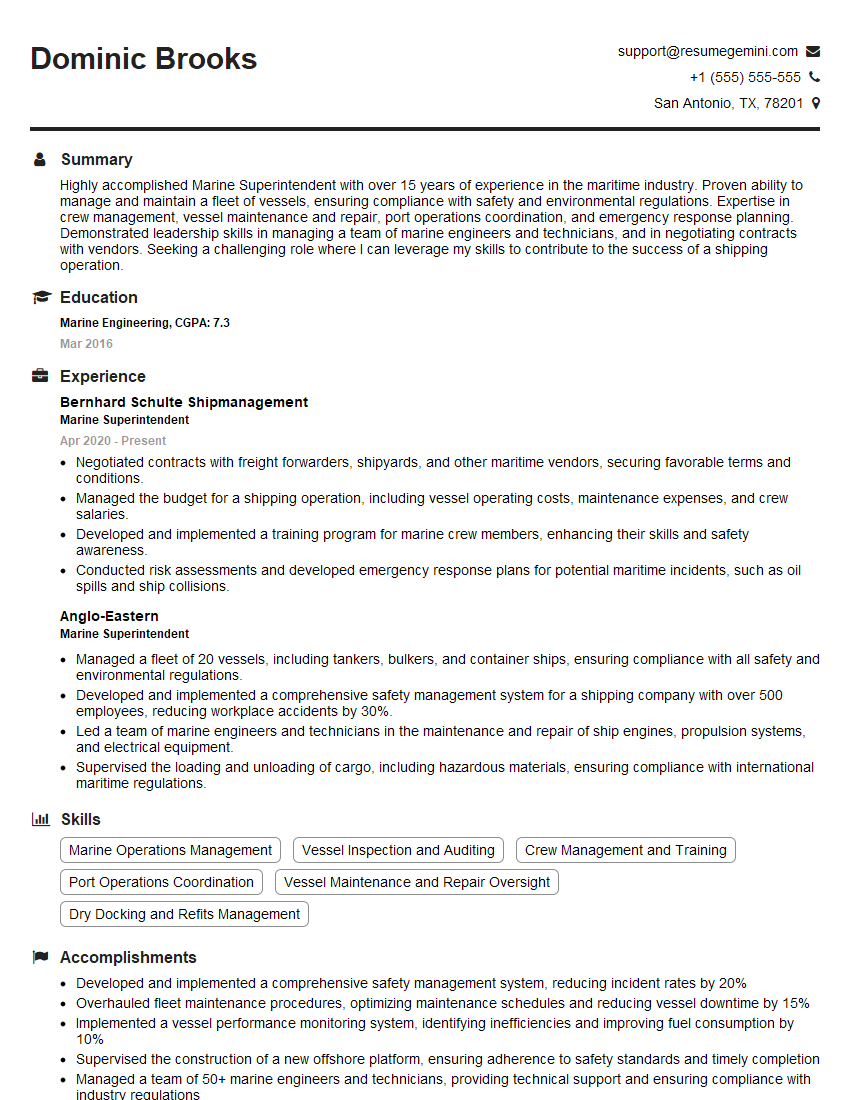
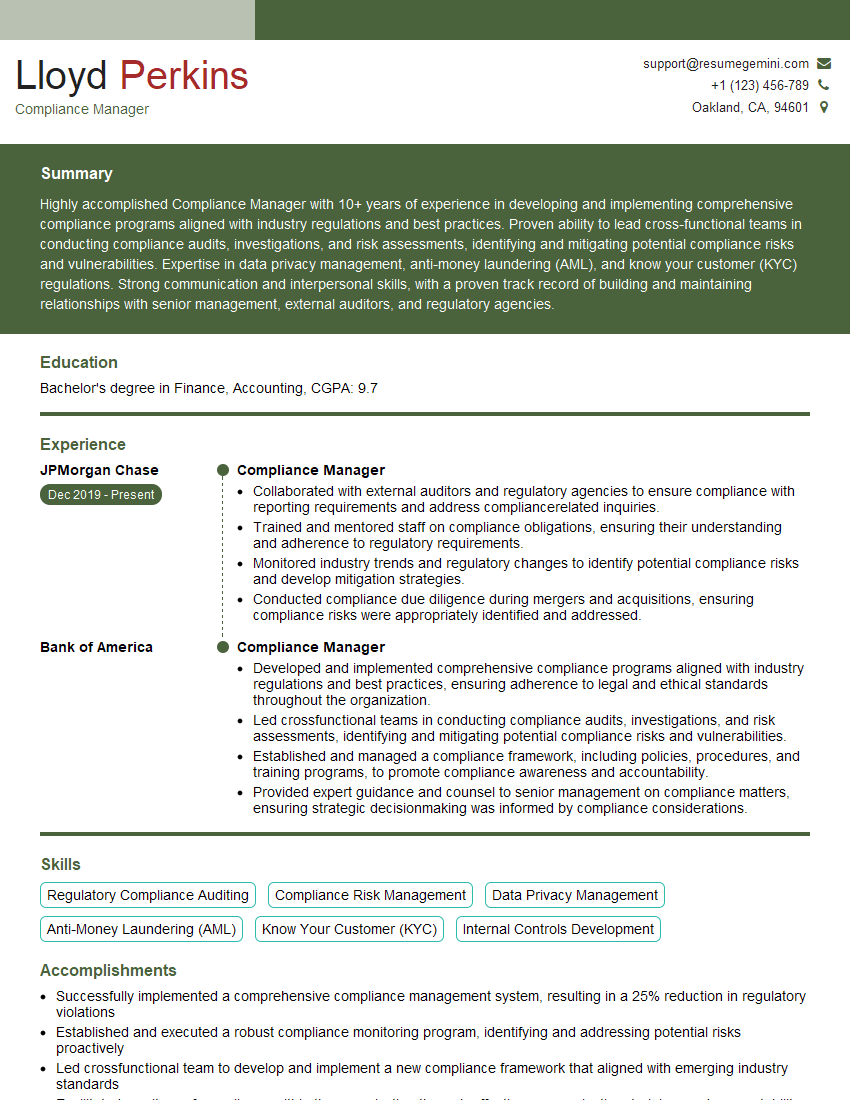
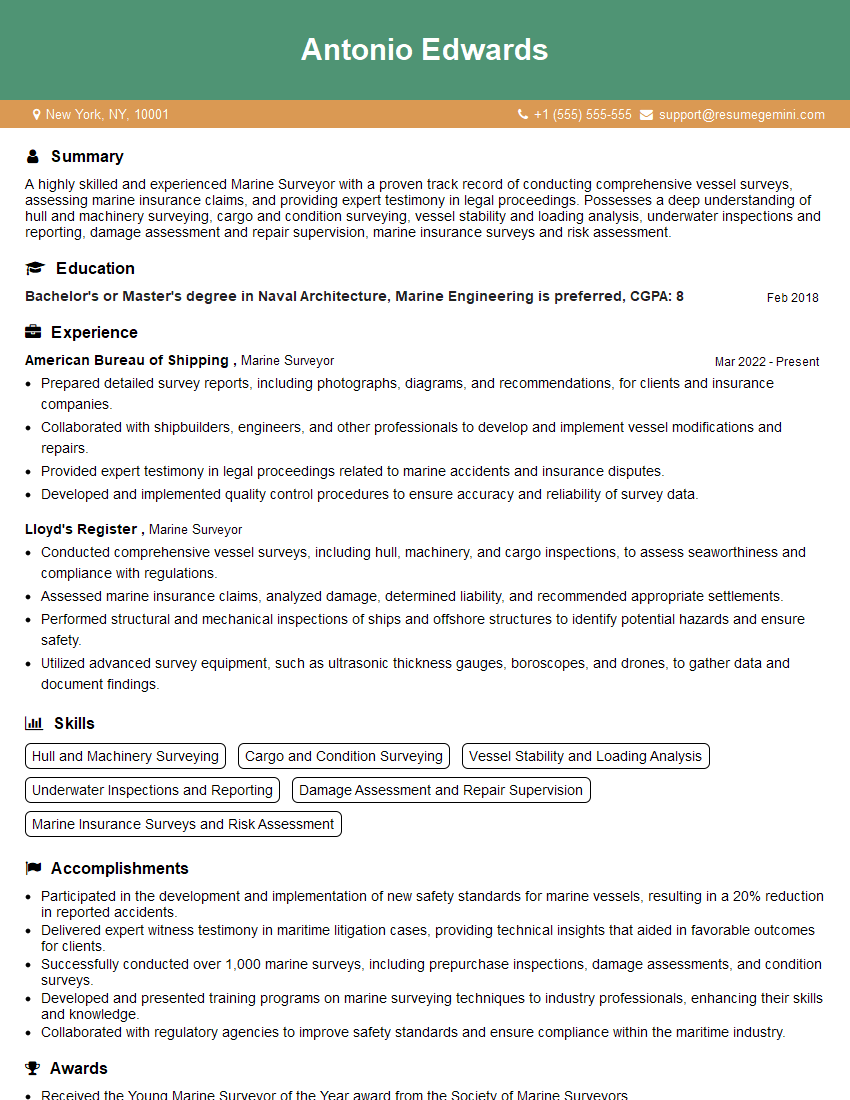
Mastering Maritime Regulations Knowledge is crucial for career advancement in the maritime industry. A strong understanding of these regulations demonstrates your commitment to safety and compliance, opening doors to higher-level positions and increased earning potential. To further enhance your job prospects, create an ATS-friendly resume that highlights your relevant skills and experience. ResumeGemini is a trusted resource to help you build a professional and impactful resume. Examples of resumes tailored to Maritime Regulations Knowledge are available to guide you through the process. Take the next step and craft a resume that showcases your expertise!
Explore more articles
Users Rating of Our Blogs
Share Your Experience
We value your feedback! Please rate our content and share your thoughts (optional).
What Readers Say About Our Blog
Very informative content, great job.
good