Unlock your full potential by mastering the most common Materials Synthesis interview questions. This blog offers a deep dive into the critical topics, ensuring you’re not only prepared to answer but to excel. With these insights, you’ll approach your interview with clarity and confidence.
Questions Asked in Materials Synthesis Interview
Q 1. Explain the difference between solution-based and solid-state synthesis.
Solution-based and solid-state synthesis are two fundamentally different approaches to creating materials. Think of it like baking a cake: solution-based is like mixing all the ingredients in a bowl first, while solid-state is like layering them together dry and baking.
Solution-based synthesis involves dissolving precursor materials (the ingredients) in a solvent, allowing for intimate mixing at the atomic or molecular level. Reactions occur in the homogeneous solution, leading to better control over stoichiometry and often resulting in smaller, more uniform particles. Examples include sol-gel, co-precipitation, and chemical vapor deposition (CVD) techniques. This method is great for creating nanoparticles and thin films with precise control over their composition.
Solid-state synthesis, on the other hand, involves reacting solid precursors directly. The reactants are typically ground together into a fine powder, then heated to high temperatures. The reaction is diffusion-controlled, meaning the reactants have to physically move to react. This method usually leads to larger particles with less precise control over stoichiometry. It’s often used for creating ceramics, but can be more energy intensive.
The choice between these methods depends on the desired material properties, the scalability required, and the cost and complexity of the process. For example, if you need highly uniform nanoparticles with precise stoichiometry, solution-based methods are better suited. For bulk ceramics, solid-state methods might be more practical.
Q 2. Describe your experience with different synthesis techniques, such as sol-gel, hydrothermal, or CVD.
I have extensive experience with a variety of synthesis techniques. My work has heavily involved sol-gel processing, where we create a colloidal solution (a sol) that undergoes gelation, leading to the formation of a porous network. This method is excellent for producing high-purity, homogeneous oxides and other materials like silica aerogels. I’ve used this to synthesize various metal oxide catalysts with tailored porosity for enhanced catalytic activity.
I also have considerable experience in hydrothermal synthesis, using high temperatures and pressures in an aqueous solution to grow crystalline materials. This approach is incredibly powerful for creating single crystals or well-defined nanostructures. For example, I successfully used this technique to grow highly-ordered titanium dioxide nanowires, ideal for applications in photocatalysis.
Finally, my expertise extends to chemical vapor deposition (CVD). CVD allows for the controlled deposition of thin films onto substrates by chemical reactions in the vapor phase. I’ve utilized CVD to synthesize thin films of various nitrides and carbides for applications in microelectronics and protective coatings. A specific project involved depositing diamond-like carbon (DLC) films, known for their exceptional hardness and low friction properties.
Q 3. What are the key factors influencing the particle size and morphology in a synthesis process?
Several key factors determine particle size and morphology during material synthesis. Think of it like growing a plant; the right conditions are crucial for healthy growth.
- Reaction temperature: Higher temperatures generally lead to larger particles due to increased atomic mobility and faster reaction kinetics.
- Concentration of reactants: Higher concentrations usually lead to larger particles, as more reactants are available for nucleation and growth.
- Reaction time: Longer reaction times allow for more particle growth.
- Presence of surfactants or capping agents: These molecules adsorb onto the particle surface, slowing growth and often leading to smaller and more uniform particles. They’re like tiny scaffolding controlling the growth.
- pH of the solution (for solution-based methods): pH influences the solubility of reactants and thus impacts nucleation and growth rates.
- Stirring or mixing rate: Proper mixing is crucial for homogeneous reactions and to prevent agglomeration.
Controlling these factors precisely is key to obtaining materials with the desired particle size and morphology. For instance, by controlling the concentration of a surfactant during sol-gel synthesis, we could fine-tune the pore size of the resulting material, significantly impacting its properties.
Q 4. How do you control the stoichiometry of materials during synthesis?
Stoichiometry, the relative ratios of elements in a compound, is crucial to the final material properties. Controlling this is paramount. We use several strategies:
- Precisely weighing precursors: This is fundamental. We use high-precision balances and carefully calculate the required masses of each precursor to achieve the desired stoichiometric ratio. This is akin to following a recipe exactly.
- Using stoichiometric solutions: In solution-based methods, we prepare solutions with precisely known concentrations to ensure the correct ratios of reactants.
- Monitoring the reaction progress: Techniques like in-situ X-ray diffraction (XRD) or Raman spectroscopy allow us to track the reaction in real-time and adjust conditions as needed.
- Post-synthesis purification: Methods like washing or annealing can help remove impurities that might affect the stoichiometry.
For example, in synthesizing a perovskite oxide like LaMnO3, careful weighing of lanthanum, manganese, and oxygen precursors is critical. If the ratio is off, the material properties – like its magnetic or electrical characteristics – will be affected. Often we use multiple characterization techniques to verify the final stoichiometry and phase purity.
Q 5. Discuss your experience with characterization techniques used to analyze synthesized materials (e.g., XRD, SEM, TEM).
Characterization is essential for verifying the success of a synthesis. I have extensive experience with several techniques:
- X-ray diffraction (XRD): XRD determines the crystal structure and phase purity of the synthesized material. It’s like a fingerprint for the material.
- Scanning electron microscopy (SEM): SEM provides high-resolution images of the material’s surface morphology, allowing us to visualize the particle size, shape, and distribution. It’s like taking a detailed picture of the surface.
- Transmission electron microscopy (TEM): TEM offers even higher resolution, revealing the internal structure of the particles, including crystal defects and lattice fringes. It’s like getting a cross-section view.
- Other techniques: Depending on the material and application, I also utilize techniques like Brunauer–Emmett–Teller (BET) analysis for surface area measurements, energy-dispersive X-ray spectroscopy (EDS) for elemental analysis, and various spectroscopic methods (UV-Vis, Raman, FTIR) to determine the chemical bonding and electronic structure.
For example, after synthesizing a new metal oxide catalyst, we’d use XRD to confirm the formation of the desired phase, SEM to study the particle morphology’s influence on catalytic activity, and BET to measure the surface area which directly relates to the effectiveness of the catalyst.
Q 6. How do you ensure the purity of synthesized materials?
Ensuring the purity of synthesized materials is vital for reliable results and applications. Several strategies help achieve this:
- Using high-purity precursors: Starting with pure chemicals is crucial. Impurities can carry over into the final product.
- Careful purification of intermediates: In multi-step syntheses, we need to carefully purify intermediate products to remove any by-products or contaminants.
- Washing and rinsing: Washing the synthesized materials removes soluble impurities and by-products.
- Annealing or heat treatments: Heating the material at high temperatures can remove volatile impurities or help crystallize the material, thus improving its purity.
- Recrystallization: This process dissolves the material and then slowly reprecipitates it, leaving behind impurities.
The specific purification method depends on the material’s properties and the type of impurities. We often employ a combination of techniques to achieve the highest possible purity. This careful attention to purity is particularly critical for applications in electronics, medicine, or catalysis where even trace amounts of impurities can have significant effects.
Q 7. Explain your understanding of phase diagrams and their relevance to materials synthesis.
Phase diagrams are graphical representations showing the equilibrium relationships between different phases (e.g., solid, liquid, gas) of a material as a function of temperature, pressure, and composition. They are indispensable in materials synthesis.
Understanding phase diagrams is crucial for selecting appropriate synthesis conditions and predicting the phases that will form. For example, knowing the melting point, eutectic point, or solid-state transformation temperatures guides the heating and cooling processes during synthesis, allowing us to obtain specific phases with desired properties.
Imagine making a cake again. The phase diagram tells you the ideal oven temperature and baking time to ensure the correct texture and consistency. You wouldn’t want a completely liquid cake or a completely solid brick.
For example, in synthesizing alloys, the phase diagram indicates the composition ranges for different phases (e.g., solid solutions, intermetallic compounds). This allows us to tailor the material properties by controlling the alloy composition. If we are working with a binary system (like copper-nickel), understanding the solid solution region on the phase diagram would help in achieving uniform alloy formation with desired properties like conductivity.
Q 8. How would you troubleshoot a synthesis reaction that is not yielding the desired product?
Troubleshooting a failed synthesis reaction requires a systematic approach. It’s like detective work – you need to gather clues and systematically eliminate possibilities. First, I’d meticulously review the experimental procedure, comparing it to established literature protocols for the target material. Then, I’d analyze the reaction conditions: temperature, pressure, time, reactant concentrations, and the purity of starting materials are all critical.
Purity of Reactants: Impurities can drastically alter reaction pathways. I would analyze the purity of all starting materials using techniques like NMR, GC-MS, or elemental analysis. For example, trace amounts of water can inhibit certain reactions, while the presence of unwanted metal ions can catalyze undesired side reactions.
Reaction Conditions: Deviations from the optimal temperature or pressure, even slight ones, can significantly affect yield and product purity. I’d carefully check the accuracy of temperature controllers, pressure gauges, and stirring efficiency. For instance, insufficient stirring can lead to localized concentration gradients, preventing homogenous reaction.
Reaction Monitoring: Real-time monitoring techniques, like in-situ FTIR or Raman spectroscopy, can provide valuable insights into the reaction progress. If no reaction occurs, I’d investigate the kinetics to ensure sufficient activation energy is present. If side products are forming, optimizing reaction conditions may be necessary.
Product Characterization: Finally, complete characterization of the obtained product is crucial. Techniques like XRD, SEM, TEM, or other relevant methods help confirm the product’s identity and purity. This stage allows for comparing experimental results with theoretical expectations and assists in identifying the cause of failure.
For example, during the synthesis of a specific metal oxide nanoparticle, I once encountered low yield and an unexpected crystal structure. By carefully examining the raw materials, I discovered a contaminant in the precursor solution that was changing the reaction pathway. After purifying the precursor, the reaction yielded the desired product with the expected properties.
Q 9. What are some common challenges encountered during scale-up of a materials synthesis process?
Scaling up a materials synthesis process from lab-scale to industrial production presents several challenges. The small changes you make at a lab scale can have large implications as you increase production, a situation similar to baking a cake – a recipe works great for one cake, but scaling up to 100 cakes requires careful consideration of mixing, baking time, and oven capacity.
Heat and Mass Transfer: At larger scales, efficient heat and mass transfer become more challenging. What works well in a small beaker might not translate efficiently to a large reactor. Techniques like optimization of reactor design, impeller selection, and improved stirring systems become crucial to ensure uniformity.
Reproducibility: Consistency in large-scale synthesis is paramount. Maintaining uniform reaction conditions across a larger volume, especially for highly exothermic or endothermic reactions, requires precise control and monitoring of reaction parameters. We often need advanced automation and process control systems.
Safety: The scale-up often leads to larger quantities of hazardous materials, demanding enhanced safety precautions. This may involve changing the reactor design, using containment systems, or employing remote operation techniques.
Cost: The cost of raw materials, energy, and equipment increases with scale. Optimization of the process for maximum efficiency and yield becomes crucial to maintain profitability.
In my experience, scaling up the synthesis of a specific polymer for industrial use required extensive optimization of the mixing process to ensure homogeneous polymerization. We addressed this by incorporating a multi-stage mixing system, improving heat transfer, and ultimately increasing yield while reducing energy consumption.
Q 10. Describe your experience with different types of reactors used in materials synthesis.
My experience encompasses a wide range of reactors used in materials synthesis, each tailored to specific reaction conditions and material properties. Choosing the right reactor is like choosing the right tool for a job – a screwdriver is ineffective for hammering a nail.
Batch Reactors: These are the workhorses of the lab. They are simple, easy to use, and ideal for small-scale synthesis and experimentation. However, their limited throughput makes them unsuitable for large-scale production.
Continuous Flow Reactors: These offer superior control over reaction parameters and higher throughput compared to batch reactors. They are particularly useful for continuous production and processes sensitive to time and temperature variations. However, they require careful design and optimization for efficient flow and mixing.
Microwave Reactors: Microwave heating offers rapid and uniform heating, accelerating reaction rates and improving yields. This is especially beneficial for solid-state reactions, but it’s important to consider the dielectric properties of the materials involved.
Autoclaves: These high-pressure reactors are essential for reactions requiring elevated pressures, such as hydrothermal synthesis or solvothermal synthesis. They provide tight control over reaction conditions and are suitable for a broad range of applications. However, safety considerations need to be paramount due to high pressure.
Fluidized Bed Reactors: Fluidized bed reactors are excellent for producing materials in powder form with high surface area and homogeneity. They are typically used when gas-solid reactions are involved. It’s important to carefully control the gas flow and particle size distribution.
I’ve worked extensively with all these reactor types, tailoring my approach to the specific requirements of each synthesis. For example, in one project, we utilized a continuous flow reactor to synthesize metal nanoparticles with high size uniformity and narrow distribution, impossible to achieve with batch processing.
Q 11. What is your experience with designing experiments for materials synthesis?
Designing experiments in materials synthesis involves a systematic approach. The goal is to efficiently explore the reaction parameter space to find the optimal conditions for maximizing yield and controlling product properties. I often employ statistical methods like Design of Experiments (DOE) to efficiently navigate this parameter space. DOE allows you to determine which factors have the most significant effect on your outcome and how they interact with each other.
Defining Objectives: Clearly defining the desired properties of the final material is the first step. What yield, purity, and morphology are required?
Identifying Key Parameters: What reaction conditions (temperature, pressure, time, reactant ratios, solvents, etc.) significantly affect the outcome?
Experimental Design: DOE techniques, such as factorial designs or response surface methodology, are employed to plan efficient experiments that minimize the number of runs needed to understand the effects of multiple parameters. For example, a 2k factorial design allows exploring the effect of k factors at two levels.
Data Analysis: Statistical analysis of the results is critical. This involves identifying significant effects, interactions, and optimizing conditions for desired properties. Software packages like Design-Expert or JMP are frequently used.
Iteration and Optimization: The experimental design and analysis process is iterative. Based on the initial results, experiments may need to be refined to better understand the reaction mechanism and further optimize the synthesis process.
For example, when synthesizing a new type of ceramic, I utilized a central composite design to study the impact of temperature, time, and precursor concentration on the crystal structure and particle size. The results showed a strong interaction between temperature and time, guiding us to optimal synthesis parameters.
Q 12. How do you interpret data from materials characterization techniques to optimize your synthesis process?
Interpreting data from materials characterization techniques is essential for optimizing synthesis processes. It’s like reading a medical report – the data provides clues about the ‘health’ of your material and helps you improve the synthesis conditions.
XRD (X-ray Diffraction): Provides information on crystal structure, phase purity, and crystallite size. Unexpected peaks indicate the formation of unwanted phases, highlighting potential problems in the synthesis procedure. Changes in peak broadening can reveal changes in crystallite size.
SEM/TEM (Scanning/Transmission Electron Microscopy): Reveal information about morphology, particle size distribution, and surface features. Variations in particle size or shape may indicate inconsistencies in the synthesis process, requiring adjustments in reaction parameters.
FTIR (Fourier Transform Infrared Spectroscopy): Provides information on the chemical bonds and functional groups present in the material. Changes in peak intensities or shifts in peak positions can indicate incomplete reactions or the formation of side products.
TGA/DSC (Thermogravimetric Analysis/Differential Scanning Calorimetry): Provide information on thermal stability, decomposition behavior, and phase transitions. Unexpected weight loss or exothermic events can point to potential issues in the synthesis.
Other Techniques: Other techniques like BET (surface area analysis), XPS (X-ray photoelectron spectroscopy), and elemental analysis are useful for determining specific properties of materials.
In a recent project involving the synthesis of a metal-organic framework (MOF), XRD analysis revealed an unexpected phase. By carefully analyzing the XRD data and correlating it with the synthesis parameters, I identified a critical variable (precursor concentration) and optimized the synthesis process to yield the desired phase.
Q 13. Discuss your experience with different types of materials, such as metals, ceramics, polymers, or composites.
My experience spans a broad range of materials, including metals, ceramics, polymers, and composites. Each material class presents unique synthetic challenges and opportunities.
Metals: I’ve worked on the synthesis of metallic nanoparticles via methods like chemical reduction, sol-gel, and electrodeposition. The challenge lies in controlling particle size, shape, and crystallinity.
Ceramics: I have experience synthesizing ceramics via solid-state reactions, sol-gel methods, and hydrothermal techniques. Control over stoichiometry, phase purity, and microstructure is crucial. High temperatures are often involved in these reactions, necessitating proper equipment and control techniques.
Polymers: I’ve synthesized various polymers through polymerization techniques like free radical polymerization, ring-opening polymerization, and condensation polymerization. The challenge lies in controlling molecular weight, dispersity, and microstructure.
Composites: I have experience in developing composite materials by combining different material classes, such as polymer matrix composites with ceramic or metallic fillers. Challenges include ensuring proper dispersion of the filler phase, interfacial adhesion, and optimizing the overall properties of the composite.
My background has provided me with valuable skills to tackle diverse material systems. In one project, I synthesized a polymer-ceramic nanocomposite by combining a conductive polymer with ceramic nanoparticles, achieving superior mechanical strength and electrical conductivity.
Q 14. How would you approach synthesizing a novel material with specific properties?
Synthesizing a novel material with specific properties requires a multi-step approach which requires a good understanding of structure-property relationships.
Target Property Definition: Precisely define the desired properties (e.g., electrical conductivity, magnetic susceptibility, strength, thermal stability). This sets the target for the synthesis process.
Material Selection: Choose candidate materials that are likely to exhibit the desired properties based on existing knowledge. Computational methods can be employed to aid in this selection process. Density functional theory (DFT) calculations, for instance, can predict the properties of novel materials.
Synthesis Strategy Development: Based on the chosen materials, select appropriate synthesis techniques. The technique will depend on the material’s nature and the desired properties. For example, solution-based methods are well-suited for nanoparticles, while solid-state methods are useful for bulk materials.
Iterative Synthesis and Characterization: Develop a detailed experimental plan, execute the synthesis, and thoroughly characterize the resulting material using the appropriate techniques. Based on the characterization results, refine the synthesis process iteratively until the desired properties are achieved.
Structure-Property Relationship Analysis: Once the desired material is obtained, analyze its structure-property relationships to understand the link between the synthesis conditions and the final material properties.
This approach is iterative, requiring continuous refinement and optimization. For example, in the pursuit of a novel high-temperature superconductor, I used computational modeling to identify promising candidates, and subsequently employed high-pressure, high-temperature synthesis techniques to create and test these materials.
Q 15. Explain your understanding of thermodynamics and kinetics in materials synthesis.
Thermodynamics and kinetics are fundamental principles governing materials synthesis. Thermodynamics dictates the feasibility of a reaction – whether a reaction will occur spontaneously and what the equilibrium state will be. It’s all about the energy landscape; reactions proceed to minimize Gibbs Free Energy (ΔG). If ΔG is negative, the reaction is spontaneous. Kinetics, on the other hand, determines the rate at which a reaction proceeds and the pathway it takes to reach equilibrium. It’s concerned with the reaction mechanism and activation energy (Ea). Even if a reaction is thermodynamically favorable (negative ΔG), it might be kinetically hindered if the activation energy is too high.
Example: Consider the synthesis of diamond from graphite. Thermodynamically, graphite is more stable than diamond at ambient conditions, meaning diamond should convert to graphite. However, the kinetic barrier – the extremely high activation energy required for the rearrangement of carbon atoms – is so significant that the transformation is practically impossible without extremely high pressures and temperatures.
In materials synthesis, we carefully control thermodynamic parameters like temperature and pressure to drive the reaction towards the desired product and then manipulate kinetic factors like reactant concentration, catalyst use, and reaction time to influence the reaction rate and control the microstructure (particle size, crystallinity, etc.) of the final material.
Career Expert Tips:
- Ace those interviews! Prepare effectively by reviewing the Top 50 Most Common Interview Questions on ResumeGemini.
- Navigate your job search with confidence! Explore a wide range of Career Tips on ResumeGemini. Learn about common challenges and recommendations to overcome them.
- Craft the perfect resume! Master the Art of Resume Writing with ResumeGemini’s guide. Showcase your unique qualifications and achievements effectively.
- Don’t miss out on holiday savings! Build your dream resume with ResumeGemini’s ATS optimized templates.
Q 16. What safety precautions are crucial during materials synthesis experiments?
Safety is paramount in materials synthesis. We work with potentially hazardous chemicals and equipment, requiring meticulous adherence to safety protocols. These precautions include:
- Proper Personal Protective Equipment (PPE): This is non-negotiable and includes lab coats, safety glasses, gloves appropriate for the chemicals being handled (e.g., nitrile for most organic solvents, neoprene for strong acids/bases), and sometimes respirators depending on the volatile nature of reactants or products.
- Fume Hood Use: Reactions involving volatile or toxic substances are always conducted within a functioning fume hood to prevent inhalation hazards.
- Emergency Procedures: Thorough familiarity with emergency procedures, including the location of eyewash stations, safety showers, fire extinguishers, and emergency exits is essential. Spill kits for specific chemicals should also be readily available.
- Material Safety Data Sheets (MSDS): We always consult MSDS before handling any chemicals to understand their hazards and appropriate handling procedures.
- Controlled Environment: The reaction environment itself needs to be controlled. This may involve inert atmospheres (nitrogen, argon) for air-sensitive reactions or pressure vessels for high-pressure synthesis. All equipment must be appropriately maintained and inspected regularly.
Example: When working with lithium-ion battery materials, which often involve flammable solvents, we always work in a fume hood, use appropriate fire suppression systems, and have a comprehensive spill plan in place. Proper grounding is also necessary to prevent electrostatic discharge which could ignite flammable materials.
Q 17. How do you handle and dispose of waste materials generated during synthesis?
Waste management is crucial for environmental and regulatory compliance. We meticulously document all waste generated during synthesis, segregating it according to its chemical properties and hazard class. This usually involves categorizing waste as hazardous or non-hazardous. Hazardous waste often necessitates specialized handling and disposal.
- Hazardous Waste: This often requires contacting a licensed hazardous waste disposal company. The type of waste (e.g., heavy metals, solvents, reactive chemicals) dictates the appropriate disposal method. Proper labeling and documentation are crucial throughout this process.
- Non-hazardous Waste: Non-hazardous waste like broken glassware or inert materials can often be disposed of following institutional guidelines, often involving segregation and recycling where appropriate.
- Waste Minimization Strategies: We emphasize waste reduction strategies, such as optimizing reaction stoichiometry, using less toxic chemicals as alternatives when feasible, and employing techniques like green chemistry to minimize the environmental footprint of the synthesis process. This also reduces costs associated with waste disposal.
Example: In a project involving cadmium selenide (CdSe) quantum dot synthesis, the cadmium-containing waste was treated as hazardous and disposed of by a licensed vendor specializing in heavy metal waste disposal, adhering to all local, state, and federal regulations.
Q 18. Describe your experience with data analysis and reporting in the context of materials synthesis.
Data analysis and reporting are integral to materials synthesis. We collect a range of data including:
- Structural Characterization: X-ray Diffraction (XRD) for crystal structure, Transmission Electron Microscopy (TEM) for morphology and composition, Scanning Electron Microscopy (SEM) for surface analysis.
- Compositional Analysis: Inductively Coupled Plasma Optical Emission Spectrometry (ICP-OES), Energy-Dispersive X-ray spectroscopy (EDX).
- Optical Properties: UV-Vis Spectroscopy, Photoluminescence (PL) Spectroscopy.
- Physical Properties: BET surface area analysis, Density measurements.
This data is analyzed using specialized software (e.g., OriginPro, MATLAB) to extract meaningful insights such as particle size distribution, crystallinity, band gap, and other material properties. We generate comprehensive reports that detail the synthesis procedure, characterization techniques, results, and interpretation of the data. These reports form a basis for publication in scientific journals and for presenting findings at conferences. Data visualization techniques, like graphs and charts, are crucial for clear and effective communication of results.
Example: In a recent project synthesizing metal-organic frameworks (MOFs), we used XRD data to determine the crystal structure and ICP-OES to confirm the elemental composition. This data was then used to optimize the synthesis process and improve the material’s properties, all meticulously documented in a final report.
Q 19. What is your experience with computational methods used in materials synthesis?
Computational methods are increasingly important in materials synthesis. They allow for the prediction of material properties, the design of new materials, and the optimization of synthesis conditions before carrying out expensive and time-consuming experiments. My experience includes using software packages such as:
- Density Functional Theory (DFT): To predict electronic structure, band gaps, and other fundamental properties of materials.
- Molecular Dynamics (MD): To simulate atomic-scale processes during synthesis, such as crystal growth and phase transitions.
- Monte Carlo Simulations: To study thermodynamic and kinetic aspects of material formation.
These methods help us understand reaction mechanisms, identify potential challenges (e.g., kinetic limitations), and design materials with specific properties. Computational predictions are then validated by experimental synthesis and characterization.
Example: Before synthesizing a new type of catalyst, we used DFT calculations to predict its catalytic activity and selectivity. This allowed us to focus our experimental efforts on the most promising candidates, saving time and resources.
Q 20. How do you stay current with the latest advancements in materials synthesis?
Staying current in materials synthesis requires continuous effort. My strategies include:
- Reading Scientific Literature: Regularly reading peer-reviewed journals like Nature Materials, Advanced Materials, and Chemistry of Materials keeps me updated on the latest discoveries and techniques.
- Attending Conferences and Workshops: Participation in conferences and workshops provides opportunities to network with other researchers and learn about cutting-edge developments firsthand.
- Following Online Resources: Utilizing online resources such as research databases (Web of Science, Scopus), preprint servers (arXiv), and relevant websites helps to track progress in the field.
- Professional Networks: Engaging with professional organizations such as the Materials Research Society (MRS) and the American Chemical Society (ACS) provides access to networking opportunities and valuable resources.
I also actively participate in online forums and discussion groups dedicated to materials science to learn from and contribute to the community’s collective knowledge.
Q 21. Describe your experience with working in a team environment on materials synthesis projects.
I have extensive experience collaborating effectively in team environments on materials synthesis projects. Successful teamwork involves:
- Clear Communication: Open and regular communication is crucial to ensure that everyone understands project goals, timelines, and individual responsibilities.
- Shared Responsibilities: Effective delegation of tasks based on individual expertise and strengths optimizes project efficiency.
- Collaborative Problem-Solving: Facing challenges requires a collaborative approach, drawing on the diverse expertise within the team.
- Respectful Collaboration: A positive and respectful environment fosters creativity and facilitates productive collaboration.
Example: In a recent project focused on developing novel photocatalysts, our team consisted of experts in synthesis, characterization, and theoretical modeling. Effective communication and collaborative problem-solving were key to successfully synthesizing, characterizing, and understanding the performance of the new materials. The project culminated in a joint publication where all team members contributed significantly. These collaborative experiences have honed my communication skills and ability to work effectively in diverse team settings.
Q 22. How do you manage your time effectively when working on multiple synthesis projects?
Effective time management in materials synthesis, where multiple projects often demand attention, relies on a structured approach. I employ a combination of project prioritization, meticulous planning, and flexible scheduling.
- Prioritization: I use a system to rank projects based on urgency, deadlines, and potential impact. This could involve a simple to-do list, a Kanban board, or a more sophisticated project management software.
- Detailed Planning: For each project, I create a detailed timeline that breaks down tasks into manageable steps. This includes allocating specific time slots for each task, factoring in potential delays, and setting realistic milestones. I find Gantt charts exceptionally useful for visualizing the project timeline and identifying potential conflicts.
- Flexible Scheduling: Unexpected issues frequently arise in materials synthesis (e.g., equipment malfunction, reagent delivery delays). I maintain a degree of flexibility in my schedule to accommodate these, avoiding rigid adherence to a fixed plan. This involves regularly reviewing the schedule and making adjustments as necessary.
- Delegation (when applicable): In a team setting, I delegate tasks to team members based on their expertise and availability, ensuring clear communication and coordination.
For instance, I might dedicate Monday mornings to literature review and experimental design for Project A, while allocating Tuesday afternoons to the synthesis and characterization for Project B. This structured approach minimizes time wasted on context switching and ensures efficient progress across multiple research avenues.
Q 23. What are some examples of materials synthesized by you that have found practical applications?
My research has led to the synthesis of several materials with practical applications. One notable example is the development of a novel photocatalyst based on titanium dioxide nanoparticles doped with nitrogen and carbon. This material exhibits significantly enhanced efficiency in splitting water to produce hydrogen, a clean and sustainable fuel source. We are currently exploring its commercialization for large-scale hydrogen production.
Another example involves the synthesis of a specialized polymer composite with high thermal stability and excellent mechanical properties. This material has found application in the aerospace industry as a component in high-temperature engine parts, replacing less durable and less efficient alternatives. The improved performance has directly translated to enhanced fuel efficiency and reduced environmental impact.
Finally, I’ve contributed to the development of a biocompatible polymer scaffold for tissue engineering. This material promotes cell growth and differentiation, showing promising results in pre-clinical trials for bone regeneration. It has the potential to revolutionize the treatment of bone fractures and other bone-related injuries.
Q 24. Discuss your understanding of intellectual property related to materials synthesis.
Intellectual property (IP) in materials synthesis is crucial for protecting innovations and ensuring their commercial viability. My understanding encompasses patents, trademarks, and trade secrets.
- Patents: These legally protect novel inventions, including new materials, processes, or applications. A patent application requires a detailed description of the invention, including the synthesis method, characterization data, and its utility. A strong patent application provides exclusive rights to the inventor for a specified period, allowing them to control its commercialization.
- Trademarks: These protect brand names and logos associated with a material or product. This is especially relevant when a new material is marketed commercially.
- Trade Secrets: These involve confidential information, such as detailed synthesis procedures or specific compositions, that provide a competitive advantage. Trade secrets do not provide the same legal protection as patents but are often used to safeguard commercially sensitive information.
I am familiar with the process of filing patent applications and have collaborated with IP lawyers to protect our research findings. Understanding IP is essential for translating research into commercial products and fostering innovation within the field.
Q 25. How would you handle a situation where a synthesis experiment fails?
A failed synthesis experiment is a common occurrence in materials science. My approach involves a systematic troubleshooting process.
- Review the Procedure: I meticulously review the experimental procedure, comparing it with established protocols and looking for any potential errors in technique, reagent preparation, or equipment settings.
- Analyze the Results: I carefully analyze all available data, including characterization results (e.g., XRD, SEM, TEM) to pinpoint the cause of failure. This often involves comparing the results with successful runs to identify deviations.
- Identify Potential Causes: Based on the analysis, I generate a hypothesis for the cause of failure. This might involve impure starting materials, incorrect reaction conditions (temperature, pressure, time), or equipment malfunction.
- Modify the Procedure: I modify the experimental procedure based on the identified potential causes. This might involve optimizing reaction conditions, using different starting materials, or modifying the synthesis route.
- Repeat the Experiment: I repeat the experiment with the modified procedure. If the problem persists, I iterate through the process until successful. Keeping detailed records of each experiment and its outcome is critical.
For example, if the yield of a reaction is unexpectedly low, I might systematically check the purity of reagents, optimize reaction temperature and time, or explore alternative reaction pathways.
Q 26. Describe your experience with different types of furnaces and their applications in materials synthesis.
My experience encompasses a range of furnaces used in materials synthesis, each with specific applications.
- Tube Furnaces: These are versatile and widely used for high-temperature synthesis under controlled atmospheres. They are ideal for processes like calcination, annealing, and reduction, particularly for ceramic and metal oxide materials. I’ve extensively used tube furnaces for the synthesis of various metal oxides and nitrides.
- Microwave Furnaces: These offer rapid heating and precise temperature control, enabling faster synthesis times and often leading to better product quality. They are particularly useful for synthesizing nanomaterials and materials with complex compositions where uniform heating is crucial. I’ve employed microwave techniques for the synthesis of metal nanoparticles.
- Induction Furnaces: These use electromagnetic induction to heat materials, allowing for very high temperatures and rapid heating rates. They’re particularly useful for melting metals and alloys and are widely used in the preparation of metallic glasses and other specialized alloys. I’ve utilized induction furnaces in the synthesis of metallic nanoparticles with unique morphologies.
- Muffle Furnaces: These provide a relatively simple and cost-effective way to achieve high temperatures in air or other controlled atmospheres. They are often used for annealing, sintering, and other heat treatment processes. I’ve employed muffle furnaces for the preparation of various ceramic and composite materials.
Selecting the appropriate furnace depends on the specific material being synthesized, the desired temperature and atmosphere, and the required heating rate. My experience enables me to choose the optimal furnace and parameters for each specific application.
Q 27. What is your experience with the synthesis of nanomaterials and their applications?
I have significant experience in the synthesis of nanomaterials, employing a variety of techniques including sol-gel, hydrothermal, and chemical vapor deposition (CVD).
- Sol-gel synthesis: Allows for the controlled synthesis of metal oxide nanoparticles with precise control over size and morphology. I have utilized this method extensively for the synthesis of titanium dioxide and zinc oxide nanoparticles for photocatalytic applications.
- Hydrothermal synthesis: Enables the synthesis of a wide range of nanomaterials under high-temperature and high-pressure conditions. I’ve applied this method for the synthesis of various metal sulfide and metal oxide nanostructures with unique properties.
- Chemical vapor deposition (CVD): Allows for the controlled growth of thin films and nanowires. I’ve utilized CVD for the synthesis of carbon nanotubes and graphene for various applications.
The applications of these nanomaterials are diverse. For example, the synthesized metal oxide nanoparticles have been used in photocatalysis, water purification, and sensors. The carbon nanotubes and graphene have been investigated for their applications in energy storage, electronics, and composites. The unique properties of nanomaterials, such as their high surface area and quantum effects, make them ideal for a wide range of applications, driving much of my current research.
Q 28. Explain your understanding of doping and its effect on materials properties.
Doping involves intentionally introducing impurities into a host material to modify its properties. This is a powerful technique for tailoring materials to specific applications.
The dopant atoms substitute for or occupy interstitial sites within the host material’s crystal lattice. This alters the electronic structure, leading to changes in electrical conductivity, optical properties, magnetic behavior, and other characteristics.
- n-type doping: Introducing dopants with more valence electrons than the host material creates excess electrons, increasing conductivity and making the material n-type (e.g., phosphorus in silicon).
- p-type doping: Introducing dopants with fewer valence electrons than the host material creates holes (electron deficiencies), also increasing conductivity and making the material p-type (e.g., boron in silicon).
For example, doping silicon with phosphorus creates n-type silicon, used in transistors and integrated circuits. Similarly, doping zinc oxide with nitrogen enhances its photocatalytic activity. The choice of dopant and doping concentration is critical in achieving the desired effect, requiring careful consideration of the dopant’s electronic structure and its interaction with the host lattice.
Beyond electronic properties, doping can also affect other material characteristics. For example, doping can enhance hardness, improve toughness, change color, or even induce magnetic properties in a material. Understanding the intricate relationship between dopants and the host material is essential for designing materials with specific functionalities.
Key Topics to Learn for Materials Synthesis Interview
- Thermodynamic Principles in Synthesis: Understanding Gibbs Free Energy, equilibrium constants, and their role in driving reactions towards desired product formation. Practical application: Predicting reaction feasibility and optimizing reaction conditions for specific materials.
- Kinetic Control of Reactions: Mastering reaction rate, activation energy, and factors influencing reaction pathways. Practical application: Designing synthesis routes to selectively produce specific phases or morphologies.
- Solid-State Synthesis Techniques: Familiarity with methods like solid-state reaction, sol-gel, hydrothermal, and combustion synthesis. Practical application: Choosing the appropriate technique based on the desired material properties and scalability.
- Chemical Vapor Deposition (CVD) and related techniques: Understanding the principles behind CVD, ALD, and other thin-film deposition methods. Practical application: Fabricating thin films and coatings with specific properties for electronics, coatings, and other applications.
- Characterization Techniques: Proficiency with XRD, SEM, TEM, XPS, and other techniques used to analyze the structure, morphology, and composition of synthesized materials. Practical application: Confirming the successful synthesis of materials and understanding their properties.
- Defect Chemistry and its Influence on Properties: Understanding the role of point defects, line defects, and planar defects on material properties. Practical application: Doping strategies and controlling defects for tailored functionalities.
- Materials Selection and Design: Applying knowledge of material properties to select and design materials for specific applications. Practical application: Developing new materials with enhanced properties for energy storage, catalysis, or biomedical applications.
Next Steps
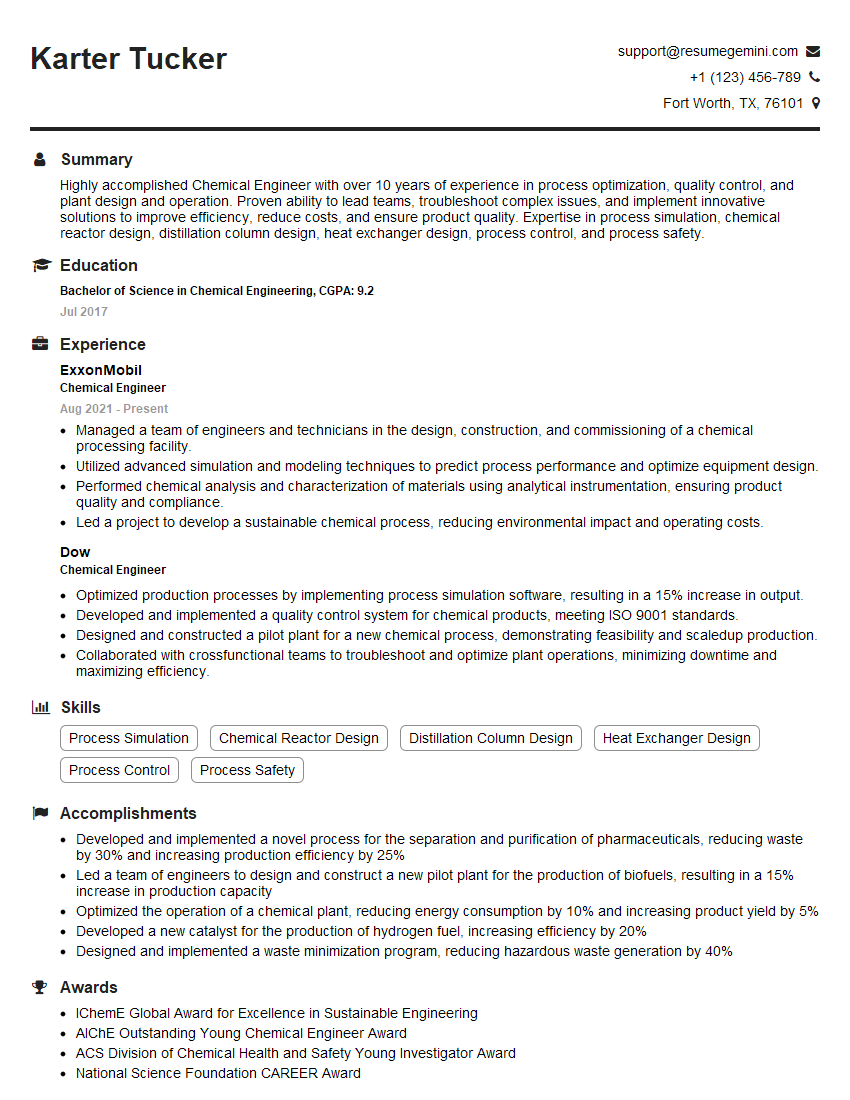
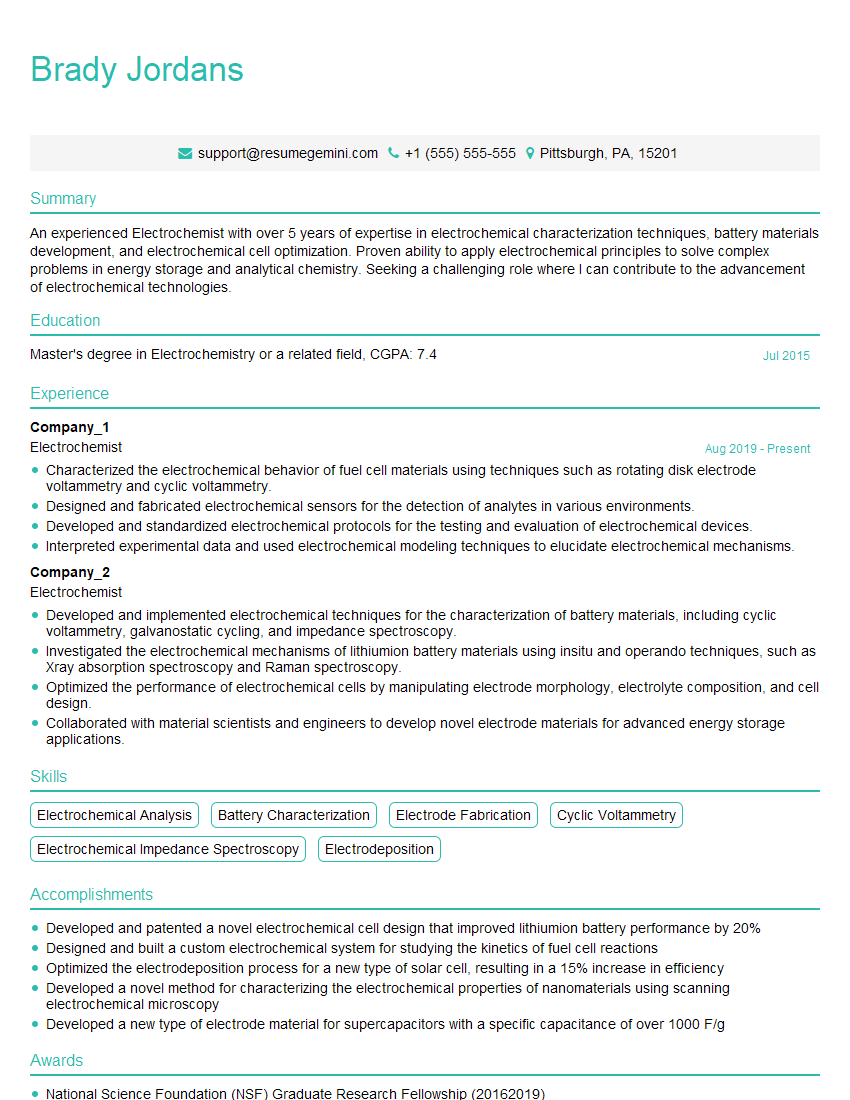
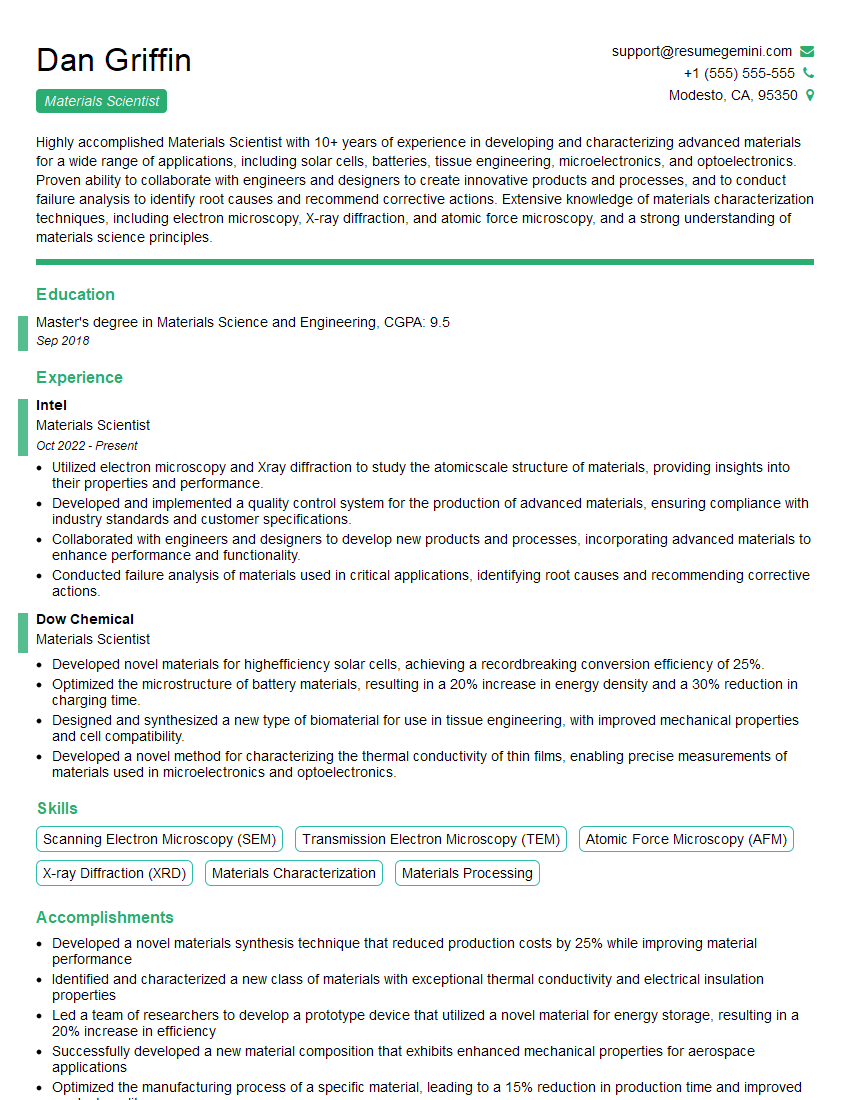
Mastering Materials Synthesis opens doors to exciting career opportunities in research, development, and manufacturing across diverse industries. To maximize your job prospects, create a compelling and ATS-friendly resume that effectively showcases your skills and experience. ResumeGemini is a trusted resource that can help you build a professional and impactful resume tailored to the Materials Synthesis field. Examples of resumes specifically designed for Materials Synthesis professionals are available to guide you. Invest time in crafting a strong resume; it’s your first impression on potential employers.

Explore more articles
Users Rating of Our Blogs
Share Your Experience
We value your feedback! Please rate our content and share your thoughts (optional).
What Readers Say About Our Blog
Very informative content, great job.
good