Feeling uncertain about what to expect in your upcoming interview? We’ve got you covered! This blog highlights the most important Working Under the Direction of Renowned Choreographers interview questions and provides actionable advice to help you stand out as the ideal candidate. Let’s pave the way for your success.
Questions Asked in Working Under the Direction of Renowned Choreographers Interview
Q 1. Describe your experience working within a highly structured rehearsal environment.
Working in a highly structured rehearsal environment, especially under renowned choreographers, demands precision, discipline, and unwavering focus. It’s akin to a finely tuned orchestra where every movement and beat are crucial. The structure usually involves detailed schedules, specific objectives for each rehearsal session, and a clear hierarchy of communication.
For instance, I’ve worked in environments where each day’s rehearsal begins with a review of the previous day’s work, followed by focused work on specific sections, ending with a run-through of the entire piece. There are strict time constraints for each element, demanding efficiency and preparedness. Any deviations from the plan are usually addressed immediately, contributing to the overall structure and precision of the final product. This structured approach allows for efficient progress and a high level of polish in the final performance.
- Detailed Scheduling: Rehearsals often follow a precise schedule, allocating time for specific sections of the choreography and incorporating breaks strategically.
- Clear Communication: The choreographer clearly outlines the objectives for each rehearsal, providing feedback and adjustments as needed.
- Note-Taking and Feedback Integration: Documenting notes from rehearsals ensures consistency and allows for quick revisions and adjustments.
Q 2. How do you adapt to different choreographic styles and methodologies?
Adapting to diverse choreographic styles and methodologies is paramount in this field. It’s like learning to speak different languages – each choreographer has a unique vocabulary of movement, phrasing, and artistic expression. My approach involves careful observation, active listening, and a willingness to experiment.
For example, one choreographer might emphasize sharp, angular movements and precise timing, while another might prefer flowing, lyrical movements with a focus on emotional expression. I adapt by meticulously studying their work, asking clarifying questions, and focusing on understanding the underlying artistic intention behind each movement. I embrace the challenge of stepping outside my comfort zone and exploring new techniques. This adaptability is crucial, as it allows me to seamlessly integrate myself into the creative vision of any choreographer.
Q 3. Explain your process for learning and memorizing complex choreography quickly.
Memorizing complex choreography quickly is a combination of technique and strategy. Think of it as building a mental map. My process involves breaking down the choreography into smaller, manageable sections. I begin by focusing on the structure and spatial relationships between movements. I then work on memorizing each section individually, practicing them repeatedly until they become second nature. This is followed by linking the sections together, practicing transitions and ensuring smooth transitions.
Visual aids, such as videos or written notes, are incredibly helpful. I might also use mnemonics or associate movements with familiar things to aid memorization. Furthermore, consistent repetition and self-testing are crucial – rehearsing in front of a mirror and regularly practicing the piece from beginning to end helps solidify the sequence. It’s a combination of analytical understanding and physical rehearsal that results in efficient memorization.
Q 4. How do you manage feedback and constructive criticism from renowned choreographers?
Managing feedback from renowned choreographers requires a combination of humility, receptiveness, and professionalism. I view constructive criticism not as a personal attack but as an opportunity for growth and improvement. My approach is to listen attentively, ask clarifying questions to fully understand the feedback, and implement the suggestions diligently. It’s essential to maintain a positive attitude and demonstrate a genuine willingness to learn.
For example, if a choreographer suggests a change to my posture during a specific sequence, I don’t take it personally. I analyze the suggestion, try it out, and seek further guidance if necessary. This collaborative process contributes to refining the choreography and enhancing my performance. It’s about understanding that the goal is to create the best possible piece of art collectively.
Q 5. Describe a time you had to troubleshoot a problem during rehearsals.
During a rehearsal for a modern ballet piece, we encountered a problem with the timing of a particularly complex lift. The lift required precise coordination between the two dancers, but repeated attempts resulted in near-misses and safety concerns. The issue was that the lead dancer was starting the lift slightly before the supporting dancer was ready.
To troubleshoot this, we first slowed down the sequence, breaking it down into smaller units. This allowed us to identify the exact point where the timing was off. We used a metronome to establish a more precise tempo and practiced the lift repeatedly, focusing on ensuring our movements aligned with the click. We also focused on clear, visual cues between the two dancers. By systematically addressing the problem, breaking it down, and using various tools for synchronisation, we were able to successfully execute the lift safely and flawlessly.
Q 6. How do you maintain professionalism and respect while working with high-profile individuals?
Maintaining professionalism and respect when working with high-profile individuals hinges on understanding their artistic vision and supporting their creative process. It’s about recognizing their expertise and contributing positively to the team. This involves punctuality, preparedness, actively listening to instructions, and being respectful of their time and creative process.
Beyond these basics, I always strive to be proactive – anticipating their needs and offering support where possible. I also maintain a professional demeanor, which includes clear communication and being receptive to both positive and constructive feedback. I believe that mutual respect is the cornerstone of a successful collaboration, regardless of the individuals’ profiles.
Q 7. Describe your experience collaborating with other dancers and creative professionals.
Collaboration is at the heart of dance. Working with fellow dancers and creative professionals involves open communication, mutual respect, and a willingness to contribute to the collective creative vision. It’s about understanding that everyone brings unique skills and perspectives to the table.
For example, during a production, I collaborated closely with the costume designer and lighting technician to ensure my movements flowed smoothly and the visual aspects of the piece complemented my performance. This involved discussing the limitations of costumes, proposing adaptations to choreography to work with specific lighting effects, and even suggesting modifications that improved the aesthetic cohesion of the piece. Effective collaboration results in a richer and more powerful artistic outcome.
Q 8. How do you handle pressure and meet tight deadlines during intense rehearsal periods?
Working with renowned choreographers often means intense rehearsal periods and tight deadlines. My approach centers on proactive planning and efficient execution. I begin by meticulously reviewing the choreography, identifying potential challenges and prioritizing tasks. This allows me to break down complex sequences into smaller, manageable steps, creating a clear roadmap for rehearsal. For instance, if we’re working on a particularly difficult lift, I’ll spend extra time practicing the individual components—the base, the support, the transition—before attempting the full lift. This minimizes frustration and maximizes learning. Furthermore, I maintain open communication with the choreographer and the team, immediately addressing any concerns or roadblocks that arise. This prevents minor issues from snowballing into major delays. Finally, I prioritize my physical and mental well-being. Adequate rest and mindful self-care are crucial for maintaining focus and endurance during such high-pressure periods.
Q 9. How do you contribute to a positive and productive team dynamic during rehearsals?
A positive and productive team dynamic is essential for successful choreography. I actively contribute by fostering a collaborative environment built on respect, open communication, and mutual support. This includes celebrating each other’s successes, offering constructive feedback, and actively listening to others’ ideas. For example, I’ve found that initiating informal post-rehearsal discussions about the day’s progress, challenges, and creative solutions helps build camaraderie and encourages problem-solving. Furthermore, I’m always willing to assist fellow dancers, offering guidance and support, particularly to those who might be struggling with a specific section of choreography. This creates a sense of collective responsibility and strengthens the team bond. Essentially, I strive to be a supportive team member and a positive influence, promoting a collaborative atmosphere where everyone feels valued and empowered to contribute.
Q 10. Explain your understanding of different dance notations and their practical applications.
Understanding dance notation is crucial for capturing and preserving choreography. I’m proficient in several systems, including Labanotation and Benesh notation. Labanotation uses symbols to represent the body’s movement in space, providing a detailed record of the choreography’s spatial and temporal aspects. Benesh notation offers a more comprehensive approach, employing a complex system of symbols to represent different aspects of movement, including posture, gestures, and even facial expressions. The practical application varies depending on the choreographer’s preference and the project’s requirements. For instance, Labanotation might be sufficient for recording the basic steps of a simple sequence, while Benesh notation is often preferred for more complex and nuanced choreography, ensuring that the subtle details are accurately documented. I can use these systems to create detailed scores of the choreography, to facilitate the learning process for new dancers, and to preserve the work for future productions. Furthermore, I can work with these notations to reconstruct or adapt existing choreography.
Q 11. Describe your experience using various rehearsal technologies (e.g., video recording, tracking software).
Modern rehearsal technologies significantly enhance the creative process and efficiency. I’m experienced in using video recording for capturing rehearsal sessions, providing a valuable resource for review and analysis. This allows dancers to identify areas for improvement and revisit the choreographer’s instructions. I also have experience with motion capture and tracking software. Such software can provide quantitative data on movement patterns, helping to refine technique and ensure consistency. For example, we might use tracking software to analyze the trajectory of a jump, ensuring uniformity across the ensemble. Moreover, video and tracking data can be utilized to create virtual rehearsals or digital representations of the dance work, allowing for remote collaboration and creative experimentation.
Q 12. How do you balance creative input with the choreographer’s vision?
Balancing creative input with the choreographer’s vision requires a delicate balance of respect, communication, and collaboration. I understand that the choreographer possesses the ultimate artistic authority, and their vision should guide the creative process. However, this doesn’t preclude valuable contributions from the dancers. I offer suggestions and insights only when appropriate, ensuring they align with the overall aesthetic and intention of the work. For example, if I notice a potential improvement in flow or clarity in a particular sequence, I would present my idea respectfully and concisely, providing a clear explanation of its potential benefits. I’m adept at recognizing when a suggestion aligns well with the choreographer’s vision, and I’m equally adept at accepting feedback and adjustments. Ultimately, my goal is to facilitate the realization of the choreographer’s vision, supporting and enhancing it through my skills and experience.
Q 13. How do you manage your time effectively during demanding rehearsal schedules?
Effective time management during demanding rehearsal schedules is paramount. I employ a combination of strategies, starting with detailed planning. This involves breaking down the rehearsal schedule into manageable blocks, allocating specific time slots for different aspects of the choreography. I also maintain a personal checklist of tasks and goals for each rehearsal, ensuring that I stay focused and on track. I prioritize tasks according to their importance and urgency, addressing the most crucial elements first. Furthermore, I utilize digital tools like calendars and reminder apps to stay organized and avoid scheduling conflicts. Finally, I recognize the importance of regular breaks and avoid burnout. Short periods of rest and mindful movement can improve focus and prevent fatigue.
Q 14. Describe your problem-solving skills in a scenario involving choreography difficulties.
Problem-solving is a critical skill in choreography. If I encounter a problem, my approach is systematic and collaborative. First, I clearly define the issue. For example, let’s say we’re struggling to execute a particular transition smoothly due to a timing discrepancy. Next, I gather information by analyzing the movement, observing other dancers, and discussing the problem with the choreographer and fellow dancers. Then, I brainstorm solutions, exploring various approaches to address the issue. This might involve adjusting the timing, modifying the steps, or trying alternative movement pathways. I document the tested solutions, recording their success rate or identifying why certain approaches weren’t effective. Finally, I implement the most effective solution, and we iterate until the problem is resolved. The collaborative aspect is key—open communication and willingness to explore different avenues are essential for resolving choreography difficulties successfully.
Q 15. How do you provide constructive feedback to fellow dancers during rehearsals?
Providing constructive feedback to fellow dancers requires a delicate balance of honesty, empathy, and specificity. I always prioritize a supportive and encouraging environment. My approach is to focus on the technique and intention, rather than making personal criticisms.
- Specific and Actionable: Instead of saying ‘that was sloppy,’ I’d say, ‘I noticed your plié could be deeper to better support the jump. Let’s work on that together.’
- Positive Framing: I start by highlighting what they’re doing well before offering suggestions for improvement. For instance, ‘Your energy in that sequence was fantastic! Perhaps if we slightly adjusted the timing on the turn, the flow would be even smoother.’
- Observation-based: I focus on what I objectively observe, rather than subjective judgments. ‘The extension of your leg in that arabesque could be a little higher, based on the choreographer’s markings’.
- Collaborative Approach: I’m not just pointing out errors, but offering suggestions and working collaboratively with the dancer to find solutions. This might involve trying different approaches or exploring alternative ways to achieve the desired movement.
Ultimately, the goal is to help everyone improve and contribute to a stronger overall performance. It’s about fostering a supportive team environment where everyone feels comfortable growing and learning.
Career Expert Tips:
- Ace those interviews! Prepare effectively by reviewing the Top 50 Most Common Interview Questions on ResumeGemini.
- Navigate your job search with confidence! Explore a wide range of Career Tips on ResumeGemini. Learn about common challenges and recommendations to overcome them.
- Craft the perfect resume! Master the Art of Resume Writing with ResumeGemini’s guide. Showcase your unique qualifications and achievements effectively.
- Don’t miss out on holiday savings! Build your dream resume with ResumeGemini’s ATS optimized templates.
Q 16. Have you worked with any renowned choreographers previously? Detail your experience.
Yes, I’ve had the privilege of working with several renowned choreographers. One particularly impactful experience was collaborating with Anya Petrova on her modern ballet piece, ‘Ephemeral Echoes’. Anya’s choreography was incredibly intricate and demanding, requiring an exceptional level of precision and emotional depth. Her rehearsal process was characterized by meticulous attention to detail, pushing us to explore the nuances of each movement and understand the emotional arc of the piece.
I learned a great deal from her about the importance of physical control, emotional expression, and the seamless integration of both. Her feedback was always constructive and insightful, helping me to refine my technique and develop a deeper understanding of the storytelling inherent in dance. Working with Anya was a challenging but incredibly rewarding experience, fundamentally shaping my approach to choreography and performance.
Another significant experience was working with renowned contemporary choreographer, Ricardo Morales, on his piece ‘Urban Labyrinth’. Ricardo’s style is dynamic and highly physical, emphasizing sharp, angular movements and unexpected transitions. His rehearsal process was fast-paced and demanding, but incredibly creative. It helped me hone my skills in adapting rapidly to complex and challenging choreography.
Q 17. How familiar are you with diverse dance genres and techniques?
I’m proficient in a wide range of dance genres and techniques, including ballet (both classical and neoclassical), contemporary, modern, jazz, and hip-hop. My training encompasses various techniques such as Vaganova, Balanchine, and Horton. My experience spans both formal training and independent study, allowing me to adapt quickly to different styles and approaches.
This breadth of knowledge allows me to appreciate the unique qualities of each genre and approach each piece with respect for its aesthetic and technical requirements. I am confident in my ability to seamlessly transition between styles and maintain a high level of technical proficiency regardless of the choreographer’s chosen genre.
Q 18. How do you ensure the accurate execution of choreography across multiple rehearsals?
Ensuring accurate execution of choreography across multiple rehearsals requires a multifaceted strategy. It starts with meticulous note-taking during the initial setting of the choreography, including detailed descriptions of steps, counts, and stylistic cues. I also utilize video recording extensively to document the choreographer’s intent and to facilitate review and correction of details.
- Detailed Documentation: This involves creating comprehensive notes that are both descriptive and visually representative of the choreography.
- Video Referencing: Video recordings serve as invaluable tools for reviewing and refining details, ensuring consistency across rehearsals.
- Regular Check-ins: I conduct regular check-ins with the choreographer and fellow dancers to address any questions or concerns.
- Individualized Attention: I provide specific feedback to dancers struggling with particular movements or sections, offering modifications and support as necessary.
- Rehearsal Schedules: Structured rehearsal schedules help to ensure consistent progress and allow ample time for addressing errors and refining movements.
This systematic approach guarantees a cohesive and accurate portrayal of the choreography, minimizing inconsistencies and ensuring a high-quality final performance.
Q 19. How would you handle a disagreement with a choreographer’s artistic choices?
Disagreements with a choreographer’s artistic choices are a possibility in any collaborative artistic environment. My approach is to handle such situations with professionalism and respect. I would first seek a private conversation with the choreographer to clearly articulate my concerns and perspective, focusing on the reasons for my disagreement.
For instance, if I believe a specific movement poses a risk of injury, I would explain my reasoning based on anatomical principles and previous experiences, emphasizing the importance of dancer safety. Or if I believe a stylistic choice clashes with the overall narrative, I would offer alternative suggestions, providing justification through an analysis of the choreography’s structure and aesthetic. It’s crucial to frame any concerns constructively, offering solutions rather than simply expressing dissent. The ultimate goal is to find a compromise that respects both the choreographer’s vision and the dancers’ well-being and capabilities.
Q 20. Describe your experience with the physical demands of intense rehearsal periods.
Intense rehearsal periods are physically demanding, requiring a high level of stamina, strength, and flexibility. I’ve experienced periods of prolonged rehearsals, often lasting for several hours a day, with minimal breaks. This can lead to muscle fatigue, joint pain, and potential injuries if not carefully managed. I’ve learned the importance of proper warm-ups, cool-downs, and cross-training to mitigate these risks.
Specific examples of physical demands include prolonged periods of standing, repetitive movements, sustained stretches, and high-impact activity. The key is to listen to my body and prioritize rest and recovery. I’ve developed strategies for addressing pain and soreness such as ice baths, foam rolling, and stretching. I also work closely with physical therapists and trainers to stay in peak condition.
Q 21. How do you maintain your physical and mental well-being during a rigorous rehearsal schedule?
Maintaining physical and mental well-being during a rigorous rehearsal schedule is paramount. I prioritize a holistic approach that encompasses physical conditioning, nutrition, and mental wellness strategies.
- Physical Care: This includes regular exercise, stretching, strength training, and proper nutrition to fuel my body and prevent injuries. I also prioritize rest and recovery, getting adequate sleep and incorporating mindfulness exercises like meditation and deep breathing.
- Mental Health: Maintaining mental well-being is crucial to avoid burnout. I prioritize stress management techniques such as meditation, yoga, or spending time in nature. I also maintain a strong support network of friends and family, and I don’t hesitate to seek professional help if needed.
- Hydration and Nutrition: I maintain a healthy diet rich in fruits, vegetables, and lean proteins to provide my body with the necessary fuel and nutrients. I ensure sufficient hydration throughout the day.
- Rest and Recovery: I understand that rest and recovery are crucial. I schedule regular breaks, sleep at least 7-8 hours every night, and incorporate relaxation techniques.
By prioritizing these practices, I can ensure I’m both physically and mentally prepared to meet the demands of intense rehearsals while maintaining a healthy work-life balance.
Q 22. How familiar are you with copyright laws as they apply to choreography?
Copyright law in choreography is complex, protecting the expressive elements of a dance work, not just the literal steps. It’s similar to musical copyright, protecting the arrangement and overall creative expression rather than individual notes. This means a choreographer’s unique staging, movement phrases, and overall stylistic choices are protected. While simply copying a sequence verbatim is clearly infringement, subtler adaptations or ‘inspired by’ works can still raise legal issues if they sufficiently reproduce the essence of the original choreography. I’m familiar with the intricacies of proving ownership, registering works with relevant organizations (like the U.S. Copyright Office or equivalent international bodies), and understanding fair use exceptions, all of which are crucial for protecting a choreographer’s intellectual property and navigating potential disputes.
For example, if a choreographer creates a specific sequence of movements with a distinct emotional arc and style, and another choreographer directly copies this sequence with minimal alterations, this would be a violation. However, borrowing a single step or motif and using it within a totally different context, while potentially influenced, may not fall under copyright infringement. Understanding these nuances is essential to my role.
Q 23. Describe your experience communicating choreographic intentions to others.
Communicating choreographic intentions is a multifaceted skill requiring clear and precise verbal instruction, visual demonstration, and effective feedback mechanisms. I’ve found that combining detailed verbal descriptions with clear, well-paced demonstrations is most effective. I break down complex sequences into smaller, manageable units, using anatomical references and imagery to assist understanding. For instance, instead of saying ‘move your arm gracefully,’ I might say ‘initiate the movement from your shoulder, letting your arm travel in a fluid arc like a willow branch in the wind’.
Furthermore, I use various teaching methods adapted to the dancers’ skill levels and learning styles. Some dancers respond best to kinesthetic learning (hands-on instruction), while others benefit from watching demonstrations or receiving written cues. I always ensure dancers understand the emotional context of the movement, its intended effect on the audience, and the role it plays within the overall narrative or theme of the piece. Continuous feedback, both verbal and nonverbal, plays a crucial role in refining the dancers’ understanding and execution of the choreography.
Q 24. How would you assist a choreographer with their creative process?
Assisting a choreographer involves a multifaceted approach. It goes beyond simply transcribing steps. I act as a sounding board for their ideas, offering constructive feedback and helping to refine their vision. This might involve discussing musicality, narrative development, spatial dynamics, or the overall aesthetic of the work. I can also help with logistical aspects like creating rehearsal schedules, managing props, finding suitable music, and coordinating costumes and sets. I understand that different choreographers have varying workstyles, and my role is adaptable to their specific needs.
For example, I might help a choreographer visualize their abstract ideas by suggesting visual metaphors or researching historical dance styles relevant to their work. Or, if a choreographer is struggling to translate their vision into movement, I can assist by brainstorming possible movement phrases or suggesting improvisation exercises that might unlock the necessary creative breakthroughs. Essentially, I’m a facilitator, helping the choreographer refine and realize their artistic intentions.
Q 25. How adept are you at understanding and interpreting movement vocabulary and intention?
Understanding and interpreting movement vocabulary and intention requires a keen eye for detail and a deep understanding of dance techniques. I’m proficient in recognizing various movement styles, from ballet and modern to contemporary and hip-hop, allowing me to quickly grasp the nuances of each style. My understanding extends beyond just the technical aspects; I can decipher the emotional subtext conveyed through subtle shifts in weight, dynamics, and facial expression. This ability is fundamental in accurately replicating a choreographer’s work and ensuring the integrity of their artistic vision.
For example, understanding the difference between a ‘plié’ in classical ballet versus a ‘bend’ in contemporary dance requires an understanding not only of the physical action but also the underlying principles and aesthetics of each style. My ability to perceive the subtle shifts in energy, weight transference, and emotional intention elevates my ability to faithfully interpret and relay the choreographer’s vision.
Q 26. How do you anticipate and proactively address potential challenges during rehearsals?
Proactive problem-solving is essential during rehearsals. Potential challenges range from dancer injuries and unexpected absences to technical difficulties with lighting or sound. I anticipate these issues by creating detailed rehearsal plans, ensuring sufficient time for each section, and incorporating contingency plans for potential setbacks. This might involve preparing alternative choreography for injured dancers or ensuring backup equipment is readily available.
For instance, if a dancer has a recurring injury prone to flare up, I would work with the choreographer and the dancer’s physical therapist to adapt movements that minimize the risk while maintaining the integrity of the performance. If a section proves particularly challenging, I might develop supplementary exercises to improve dancers’ strength, flexibility, or coordination in that specific area. Open communication, proactive planning, and flexibility are key to smoothly navigating any rehearsal obstacles.
Q 27. Describe your experience with performance preparation and backstage management.
My experience in performance preparation and backstage management is extensive. This includes coordinating costumes, props, and set pieces; creating detailed run sheets for each performance; managing backstage personnel; and addressing any last-minute issues that arise before or during a show. I’m adept at creating a calm and organized backstage environment, ensuring dancers are properly prepared and able to focus on their performance. I understand the importance of efficient and calm teamwork to minimize stress and maximize the likelihood of a smooth performance.
In one particular production, a crucial prop malfunctioned shortly before the curtain rose. My quick thinking allowed me to improvise a replacement using readily available materials and coordinate with the stage manager and lighting designer to seamlessly integrate the change without disrupting the flow of the performance. This highlights my capacity to handle unexpected situations effectively and maintain a professional demeanor under pressure.
Q 28. How would you handle a last-minute change to the choreography during a performance?
Handling last-minute choreography changes requires quick thinking, clear communication, and adaptability. The first step is to fully understand the nature of the change and its implications for the rest of the piece. Then, I work closely with the choreographer and the dancers to communicate the alteration clearly and effectively, ensuring everyone understands the new steps and timing. This often involves breaking down the new choreography into small, easily digestible segments, and offering visual cues and verbal instructions.
The key is to remain calm and focused, guiding the dancers with patience and understanding. If the change involves significant alterations, it is crucial to ensure the dancers have sufficient time for rehearsal and practice before going onstage. Prioritizing safety and minimizing disruption is key. If time is extremely limited, I’d focus on simplifying the change, and on prioritizing the elements that directly affect the narrative or impact of the performance.
Key Topics to Learn for Working Under the Direction of Renowned Choreographers Interview
- Understanding Choreographic Vision: Learn to effectively interpret and translate a choreographer’s artistic vision into physical movement. Consider how different choreographic styles influence your approach.
- Collaboration and Communication: Explore effective communication strategies for receiving and providing feedback in a collaborative environment. Practice active listening and clear articulation of your understanding.
- Adaptability and Problem-Solving: Discuss how you adapt to different teaching styles and resolve challenges related to learning complex choreography under pressure. Consider examples where you’ve overcome obstacles in a similar context.
- Technical Proficiency and Physicality: Highlight your mastery of fundamental dance techniques and your ability to execute choreography with precision, control, and artistry. Be prepared to discuss your strengths and areas for improvement.
- Professionalism and Work Ethic: Emphasize your dedication, discipline, and punctuality. Discuss your ability to maintain a professional demeanor and contribute positively to a team environment.
- Responding to Critique and Feedback: Practice receiving constructive criticism with grace and using it to improve your performance. Demonstrate self-awareness and a growth mindset.
- Showcasing Your Unique Qualities: Reflect on your personal strengths and how they contribute to the success of a collaborative dance project. What makes your approach unique?
Next Steps
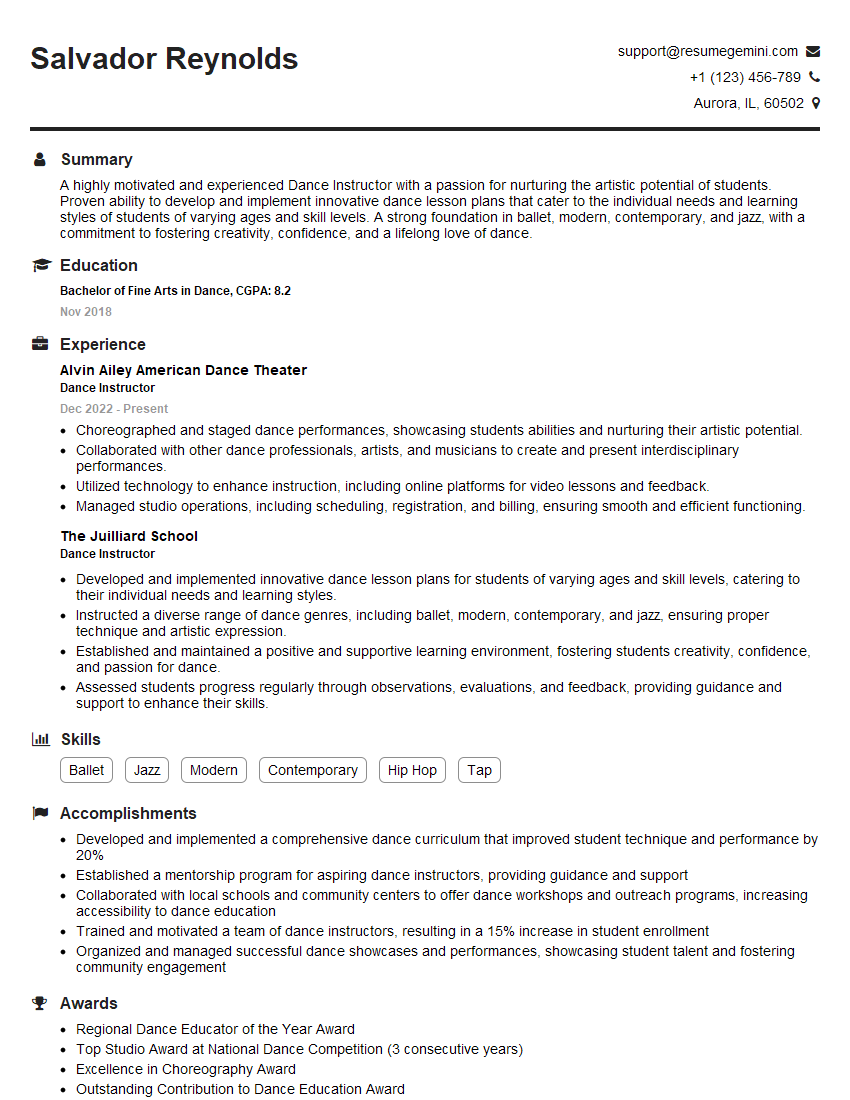
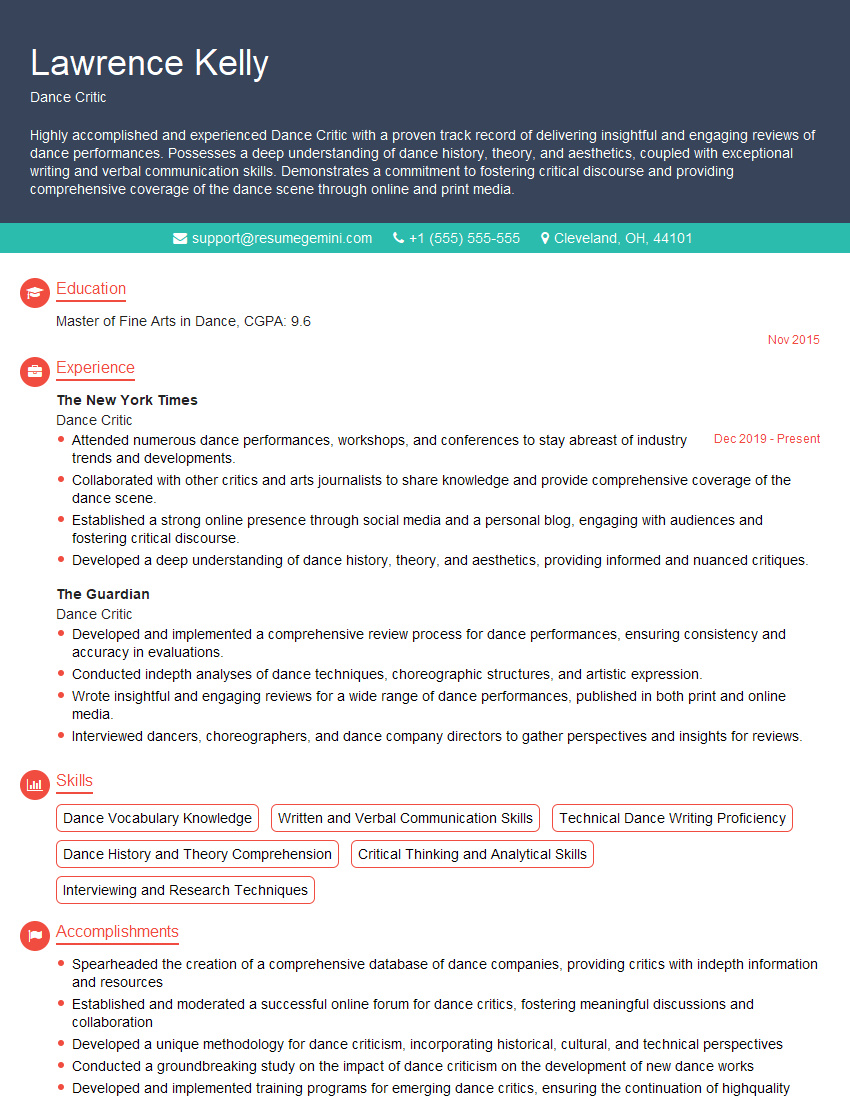
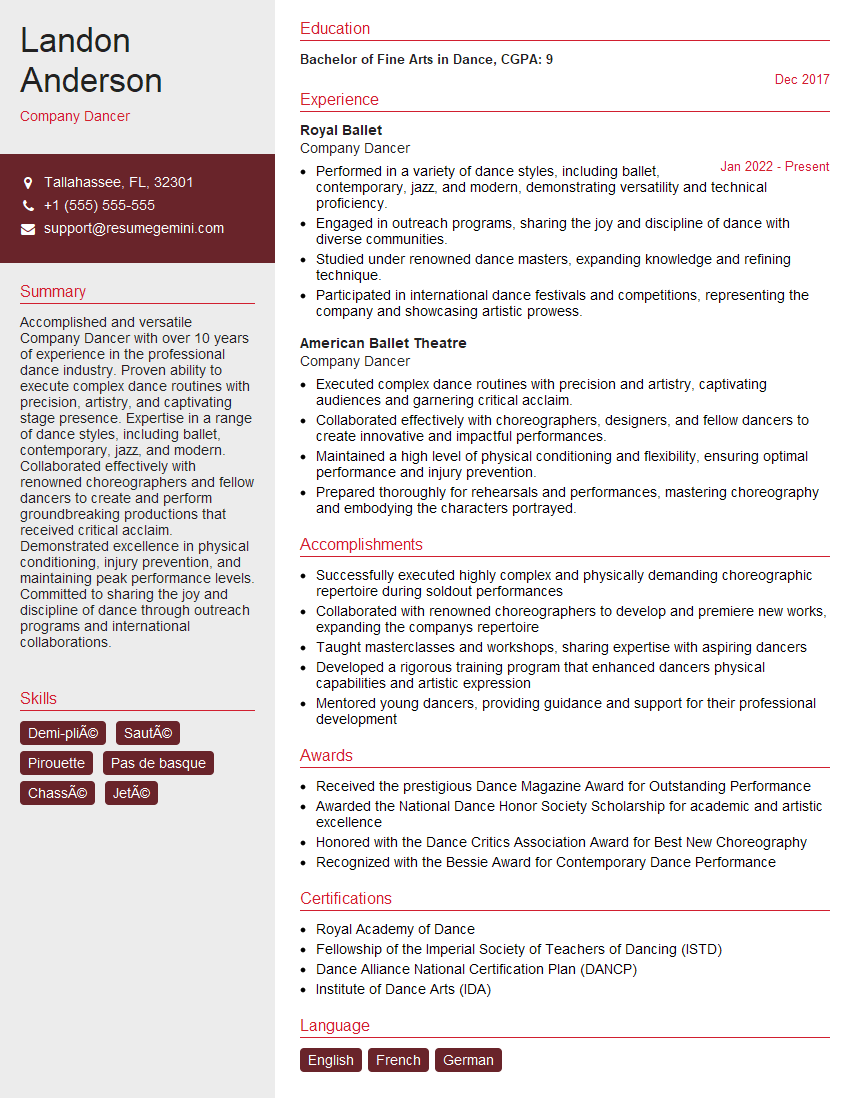
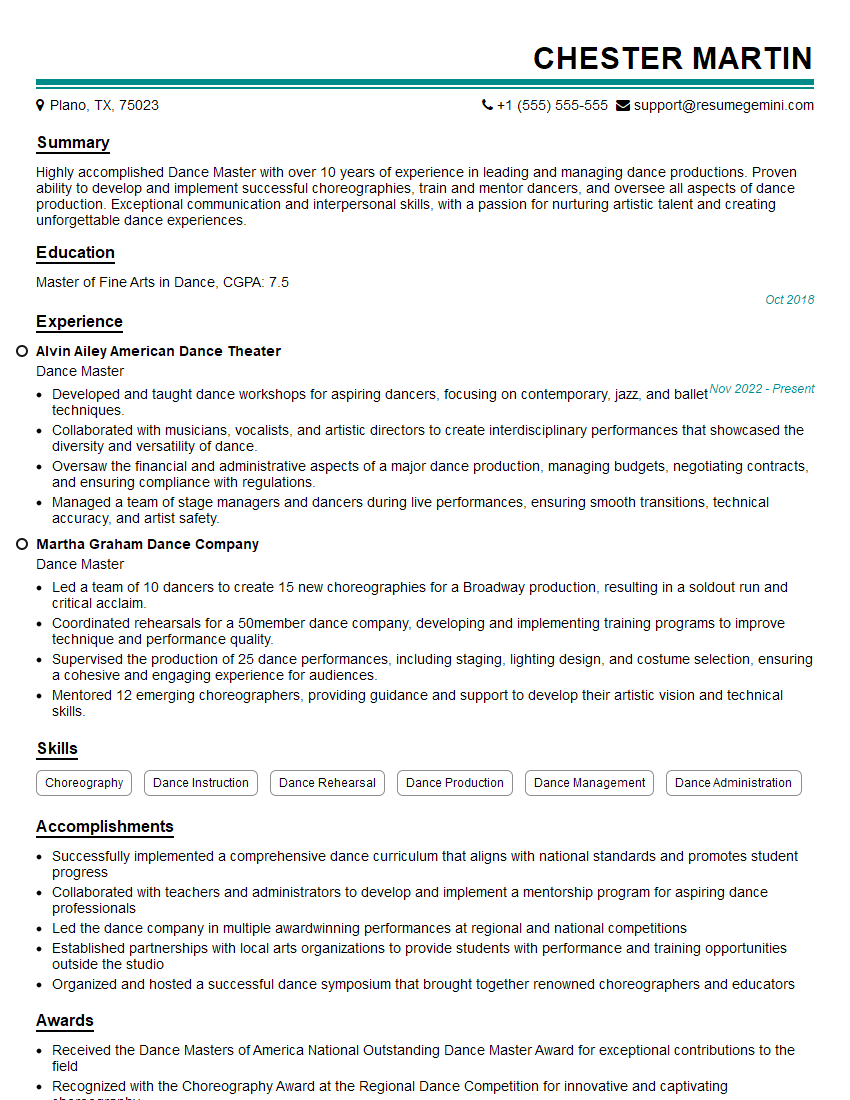
Mastering the art of working under renowned choreographers is crucial for accelerating your career in dance. It demonstrates your professionalism, adaptability, and artistic growth. To significantly enhance your job prospects, create an ATS-friendly resume that effectively highlights your skills and experience. ResumeGemini is a trusted resource to help you build a professional and impactful resume that catches the eye of recruiters. Examples of resumes tailored to showcasing experience in working under renowned choreographers are available to help guide you.
Explore more articles
Users Rating of Our Blogs
Share Your Experience
We value your feedback! Please rate our content and share your thoughts (optional).
What Readers Say About Our Blog
Very informative content, great job.
good