The thought of an interview can be nerve-wracking, but the right preparation can make all the difference. Explore this comprehensive guide to Mechatronics and Control Systems interview questions and gain the confidence you need to showcase your abilities and secure the role.
Questions Asked in Mechatronics and Control Systems Interview
Q 1. Explain the fundamental principles of closed-loop control systems.
A closed-loop control system, also known as a feedback control system, continuously monitors its output and adjusts its input to maintain a desired state. Think of a thermostat: it measures the room temperature (output), compares it to the setpoint (desired temperature), and adjusts the heating/cooling system (input) accordingly. This constant feedback loop ensures the system stays as close as possible to the target.
The fundamental principles involve:
- Setpoint: The desired value of the controlled variable (e.g., desired room temperature).
- Sensor: Measures the actual value of the controlled variable (e.g., thermometer).
- Controller: Compares the sensor’s reading to the setpoint and calculates the necessary adjustments to the actuator.
- Actuator: Implements the controller’s commands to manipulate the system (e.g., heater or air conditioner).
- Process: The system being controlled (e.g., the room).
The controller uses the error signal (difference between setpoint and actual value) to generate a control signal that drives the actuator. This creates a closed loop, continually correcting deviations from the setpoint. The effectiveness depends on the controller’s design and the system’s dynamics.
Q 2. Describe different types of controllers (PID, Fuzzy Logic, etc.) and their applications.
Various controllers exist, each suited to different applications:
- PID (Proportional-Integral-Derivative) Controller: This is the workhorse of control systems. It uses three terms: Proportional (responds to the current error), Integral (accounts for past errors), and Derivative (predicts future errors). PID controllers are versatile and effective for many applications, from temperature control in ovens to the position control of robotic arms. The gains (Kp, Ki, Kd) for each term need tuning for optimal performance.
- Fuzzy Logic Controller: Handles uncertainty and imprecise information better than traditional controllers. It uses linguistic variables (e.g., ‘high’, ‘low’, ‘medium’) and fuzzy sets to map inputs to outputs. This is useful in systems with complex or poorly understood dynamics, like controlling washing machines or autonomous vehicles.
- Other Controllers: Many more advanced controllers exist, including model predictive control (MPC), which uses a model of the system to predict future behavior and optimize control actions, and adaptive controllers, which adjust their parameters in response to changes in the system’s dynamics. These are often used in complex industrial processes.
The choice of controller depends heavily on the application’s complexity, accuracy requirements, and the availability of a system model.
Q 3. What are the advantages and disadvantages of using different types of actuators (hydraulic, pneumatic, electric)?
Actuators convert control signals into mechanical motion or force. Each type offers advantages and disadvantages:
- Hydraulic Actuators: Provide high force and power density. They are ideal for heavy-duty applications like construction equipment or aircraft control surfaces. However, they are less precise than electric actuators, require hydraulic fluid, and can be more expensive to maintain.
- Pneumatic Actuators: Offer simplicity, low cost, and inherent safety features (air is compressible, reducing risk of damage). They are suitable for applications requiring fast response times but lower forces, such as automated assembly lines or clamping mechanisms. However, they are susceptible to leaks and require air compressors.
- Electric Actuators: Are highly precise, efficient, and easy to control using electronic signals. They are widely used in robotics, precision machinery, and automotive systems. They may have lower power density compared to hydraulics for equivalent size, limiting their suitability for some heavy-duty applications.
The selection depends on the required force/torque, speed, precision, cost, and environmental factors.
Q 4. How do you choose the appropriate sensor for a given application?
Sensor selection is crucial for accurate control. Consider these factors:
- Measurand: What physical quantity needs to be measured (e.g., temperature, pressure, displacement)?
- Accuracy and precision: How accurate and precise must the measurement be for the application’s requirements?
- Range: What is the expected range of values?
- Sensitivity: How much does the sensor output change for a given change in the measurand?
- Response time: How quickly does the sensor respond to changes in the measurand?
- Environmental factors: Will the sensor be exposed to extreme temperatures, humidity, vibrations, or electromagnetic interference?
- Cost: What is the budget for the sensor?
For instance, a high-precision laser displacement sensor might be suitable for a robotic arm, while a simple thermocouple could suffice for a less demanding temperature control application.
Q 5. Explain the concept of system stability and how to analyze it.
System stability refers to a system’s ability to return to its equilibrium state after a disturbance. An unstable system will diverge from its setpoint and possibly exhibit uncontrolled oscillations or even catastrophic failure. Stability analysis involves determining whether the system’s response to disturbances remains bounded.
Methods for stability analysis include:
- Root Locus Method: Plots the location of the closed-loop poles in the s-plane as a gain parameter varies. Poles in the right-half plane indicate instability.
- Bode Plots: Graphical representations of the system’s frequency response. Gain margin and phase margin are used to assess stability.
- Nyquist Stability Criterion: (discussed in the next question) A powerful method that determines stability based on the system’s open-loop frequency response.
- Routh-Hurwitz Criterion: A purely algebraic method for determining the stability of a linear time-invariant system based on its characteristic polynomial.
For example, a poorly tuned PID controller could lead to instability, resulting in oscillations or runaway behavior in the controlled system. Stability analysis helps us design controllers that prevent such outcomes.
Q 6. Describe your experience with different types of feedback control strategies.
My experience encompasses several feedback control strategies, including:
- Proportional Control: Simple and widely used, but suffers from steady-state error.
- Proportional-Integral (PI) Control: Eliminates steady-state error but can be prone to overshoot.
- PID Control: Offers the best balance of performance and robustness but requires careful tuning.
- Feedforward Control: Predicts disturbances and compensates for them before they affect the output. This improves responsiveness but requires a good model of the system.
- Cascade Control: Uses multiple control loops to regulate different aspects of the system. This increases precision and robustness.
In a previous project involving a robotic manipulator, we utilized cascade control to independently control the position and velocity of each joint. This resulted in highly accurate and stable motion, surpassing the performance achievable with a single PID loop.
Q 7. What is the Nyquist stability criterion and how is it used?
The Nyquist stability criterion is a graphical method for assessing the stability of a closed-loop system based on its open-loop frequency response. It uses the Nyquist plot, which traces the locus of the open-loop transfer function in the complex plane as frequency varies from -∞ to ∞.
The criterion states that the number of clockwise encirclements of the -1 point by the Nyquist plot is equal to the difference between the number of unstable closed-loop poles and the number of unstable open-loop poles. If the open-loop system is stable and the Nyquist plot does not encircle the -1 point, the closed-loop system is also stable.
It’s a powerful tool because it handles systems with time delays and non-minimum phase characteristics, which other methods struggle with. In practice, it helps determine the stability margins (gain margin and phase margin) of a system, which indicate its robustness to variations in parameters or disturbances.
For instance, in designing a flight control system, the Nyquist criterion helps ensure that the feedback control system remains stable even in the presence of unexpected wind gusts or changes in aircraft dynamics.
Q 8. Explain the role of transfer functions in control system analysis.
Transfer functions are the cornerstone of control system analysis. They provide a mathematical model representing the relationship between a system’s input and output in the Laplace domain (a mathematical tool that simplifies analysis of systems with time-varying signals). Think of it like a recipe: you input ingredients (the input signal), and the transfer function dictates how those ingredients are processed to yield the final dish (the output signal).
Specifically, a transfer function, often denoted as G(s), is a ratio of the Laplace transform of the output to the Laplace transform of the input, assuming zero initial conditions. This allows us to analyze the system’s behavior without explicitly solving complex differential equations. We can determine stability, transient response (how quickly the system settles), and frequency response (how the system responds to different frequencies of input) directly from the transfer function.
For example, a simple first-order system might have a transfer function like G(s) = 1/(τs + 1), where τ is the time constant. From this, we can immediately tell the system’s response time. Higher-order systems have more complex transfer functions, but the principle remains the same. They allow us to predict how a system will behave before it’s even built, saving time and resources during the design phase.
Q 9. How do you design a control system for a specific application?
Designing a control system is an iterative process involving several key steps. It begins with a thorough understanding of the application’s requirements, including desired performance, constraints (e.g., cost, size, power), and environmental factors.
- Define System Requirements: What needs to be controlled? What are the acceptable tolerances? What are the environmental factors that might affect the system?
- Develop a Mathematical Model: Create a transfer function or other mathematical representation of the system’s dynamics. This often involves simplifying the real-world system into a manageable model.
- Choose a Control Strategy: Select an appropriate control algorithm (e.g., PID, state-space, model predictive control) based on the system’s characteristics and performance requirements. A simple system might use a PID controller, while a more complex system might require more advanced control techniques.
- Design the Controller: Tune the controller parameters to achieve the desired performance. This often involves simulation and experimentation to optimize the controller’s response.
- Implementation and Testing: Implement the controller on the hardware and thoroughly test the system under various conditions. This may involve extensive debugging and refinement of the controller.
For example, designing a temperature control system for an oven involves defining the desired temperature range and accuracy, modeling the oven’s thermal dynamics (using heat transfer equations), choosing a PID controller, tuning the PID gains through simulations, and finally implementing the control system using a microcontroller and temperature sensor.
Q 10. What are some common challenges in implementing control systems?
Implementing control systems presents several challenges. These challenges often intertwine and require creative problem-solving.
- Modeling Uncertainty: Real-world systems are inherently complex and difficult to model perfectly. Unmodeled dynamics and parameter variations can significantly impact controller performance.
- Noise and Disturbances: Sensors and actuators are subject to noise and external disturbances that can affect control accuracy. Robust control techniques are necessary to mitigate these effects.
- Non-linearities: Many systems exhibit non-linear behavior, making linear control techniques less effective. Dealing with saturation, friction, and dead zones requires advanced control strategies.
- Hardware Limitations: Constraints such as limited processing power, memory, and sampling rates can restrict the capabilities of the control system.
- Safety and Reliability: Control systems must be designed to be safe and reliable, especially in critical applications. This often includes redundancy and fail-safe mechanisms.
For instance, in a robotic arm control system, unexpected variations in payload weight can affect the robot’s trajectory. Proper modeling and robust control techniques are crucial to overcome this.
Q 11. Describe your experience with real-time operating systems (RTOS).
My experience with real-time operating systems (RTOS) spans several projects. I’ve worked extensively with FreeRTOS and VxWorks, focusing on applications demanding precise timing and deterministic behavior. I understand the importance of task scheduling, interrupt handling, and resource management in RTOS environments. My projects involved developing control algorithms within an RTOS framework to ensure the timely execution of control tasks, particularly in applications such as motion control and sensor data acquisition.
In one project, utilizing FreeRTOS on an ARM Cortex-M4 microcontroller, I implemented a control system for a quadrotor. Precise timing was critical for stable flight. The RTOS allowed me to schedule control loops with precise timing, handle sensor data acquisition, and manage communication with other modules, ensuring smooth and safe quadrotor operation. Understanding RTOS concepts, such as priority inversion and mutual exclusion, were key to the success of this project.
Q 12. What is your experience with programming languages used in mechatronics (e.g., C, C++, Python)?
My programming expertise includes C, C++, and Python. C and C++ are essential for low-level programming of embedded systems in mechatronics, particularly when dealing with real-time constraints and hardware interactions. I’ve used C++ extensively for object-oriented design of complex control algorithms. Python, on the other hand, excels in rapid prototyping, data analysis, and simulation. Its ease of use and extensive libraries make it ideal for model development and testing before implementation on embedded hardware.
I frequently use C for programming microcontrollers, handling low-level hardware interactions, and implementing real-time control loops. C++ is my preferred choice for larger, more complex projects requiring object-oriented design principles, while Python is used for simulation, data analysis, and visualization of the system’s performance. The ability to switch between these languages depending on the specific needs of the project is a crucial skill.
Q 13. Explain your understanding of digital signal processing (DSP) techniques.
Digital signal processing (DSP) is crucial in mechatronics for handling sensor data and implementing control algorithms digitally. I am familiar with common DSP techniques, including filtering (e.g., FIR, IIR), signal transformations (e.g., FFT), and spectral analysis. These are essential for cleaning up noisy sensor data, extracting relevant information, and implementing digital control algorithms.
For instance, I’ve used FIR filters to remove high-frequency noise from accelerometer data in a vibration control system. The choice of filter type depends on the specific application and trade-offs between computational complexity, latency, and signal distortion. Understanding the frequency characteristics of both the sensor and the system is important when designing and implementing these filters. The FFT is invaluable for analyzing the frequency content of signals, allowing for the identification of dominant frequencies and designing frequency-domain controllers.
Q 14. How do you handle sensor noise and uncertainty in control systems?
Sensor noise and uncertainty are inevitable in control systems. Effective strategies for handling them include:
- Filtering: Applying digital filters (as discussed in the previous answer) to remove or reduce noise from sensor measurements. The filter design depends on the characteristics of the noise and the desired signal bandwidth.
- Sensor Fusion: Combining data from multiple sensors to improve accuracy and reliability. Kalman filters are a powerful tool for sensor fusion, providing optimal estimates in the presence of noise and uncertainty.
- Robust Control Techniques: Designing controllers that are less sensitive to variations in sensor measurements and system parameters. H-infinity control and L1 adaptive control are examples of robust control methods.
- Calibration and Compensation: Accurately calibrating sensors to minimize systematic errors and incorporating compensation algorithms to correct for known biases and non-linearities.
For example, in a robotic navigation system, GPS signals can be noisy and unreliable. Sensor fusion techniques, combining GPS data with data from inertial measurement units (IMUs) and other sensors, can produce a more accurate and robust estimate of the robot’s position. These strategies are crucial for building reliable and accurate mechatronic systems.
Q 15. Describe your experience with different types of communication protocols (e.g., CAN, Modbus, Ethernet/IP).
My experience encompasses a wide range of industrial communication protocols, crucial for integrating various components within a mechatronics system. I’ve extensively worked with CAN (Controller Area Network), Modbus, and Ethernet/IP, each suited to different applications and possessing unique characteristics.
- CAN: I’ve utilized CAN extensively in automotive and robotics projects, leveraging its robustness and speed for real-time control of multiple actuators and sensors. Its deterministic nature ensures predictable message delivery, essential for safety-critical applications. For example, I implemented CAN communication for coordinating the movement of multiple robotic arms in a synchronized assembly line, ensuring precise and timely actions.
- Modbus: Known for its simplicity and broad compatibility, Modbus has been valuable in supervisory control and data acquisition (SCADA) systems. I used Modbus in a water treatment plant project to monitor and control various parameters like flow rates and chemical dosages from a central control station. Its ease of implementation made it ideal for integrating legacy equipment with newer control systems.
- Ethernet/IP: For high-bandwidth applications demanding complex data exchange, Ethernet/IP provides a superior solution. I integrated Ethernet/IP in a large-scale manufacturing automation project, facilitating high-speed data transmission between Programmable Logic Controllers (PLCs), robots, and human-machine interfaces (HMIs). Its ability to handle large data sets was crucial for efficient data logging and remote monitoring.
My expertise allows me to select the appropriate protocol based on factors like bandwidth requirements, real-time constraints, cost, and the existing infrastructure. Understanding the strengths and limitations of each protocol is vital for successful system design.
Career Expert Tips:
- Ace those interviews! Prepare effectively by reviewing the Top 50 Most Common Interview Questions on ResumeGemini.
- Navigate your job search with confidence! Explore a wide range of Career Tips on ResumeGemini. Learn about common challenges and recommendations to overcome them.
- Craft the perfect resume! Master the Art of Resume Writing with ResumeGemini’s guide. Showcase your unique qualifications and achievements effectively.
- Don’t miss out on holiday savings! Build your dream resume with ResumeGemini’s ATS optimized templates.
Q 16. What are your experiences with CAD software (SolidWorks, AutoCAD etc.)?
I’m proficient in several CAD software packages, including SolidWorks and AutoCAD, using them for both 2D and 3D design throughout the product development lifecycle. My experience extends from conceptual design to detailed component modeling and assembly simulation.
In SolidWorks, I’ve created detailed 3D models of mechanical components, performing simulations like stress analysis and kinematic studies to optimize designs for strength and performance. For instance, I used SolidWorks to design and simulate a robotic arm, verifying its reach and load-carrying capacity before prototyping.
AutoCAD has been invaluable for creating 2D schematics, electrical diagrams, and detailed drawings for manufacturing. In one project, I used AutoCAD to generate manufacturing drawings for custom jigs and fixtures needed for automated assembly. The precision and clarity of AutoCAD drawings are crucial for seamless manufacturing processes.
My experience with these CAD tools isn’t limited to individual component design. I’ve used them to create full system models, integrating mechanical, electrical, and control systems to ensure a cohesive design and to simulate the interaction between different components. This integrated approach is vital for identifying potential conflicts or issues early in the design phase.
Q 17. Explain your experience with simulations using MATLAB/Simulink.
MATLAB/Simulink is an indispensable tool in my workflow. I leverage its capabilities for system modeling, simulation, and control design, greatly accelerating the development and testing process.
I use Simulink extensively to create dynamic models of mechatronic systems, simulating various scenarios and testing the effectiveness of different control algorithms. For example, I built a Simulink model of a robotic arm with multiple degrees of freedom, simulating its motion under different control strategies. This allowed me to fine-tune the control algorithms before implementing them on the actual hardware.
Beyond simulations, MATLAB is invaluable for data analysis and algorithm development. I’ve used MATLAB to analyze sensor data, identify system parameters, and develop custom algorithms for control and signal processing. A recent project involved using MATLAB to analyze vibration data from a motor to diagnose and predict potential failures.
The ability to perform simulations and analyses before physical implementation reduces development time, minimizes prototyping costs, and ensures robust system performance.
Q 18. How do you troubleshoot a malfunctioning control system?
Troubleshooting a malfunctioning control system requires a systematic and methodical approach. I typically follow these steps:
- Identify the Problem: Clearly define the malfunction. Is it a complete system failure, or a partial malfunction? What are the symptoms?
- Gather Information: Collect data from all relevant sources: sensor readings, error logs, operator observations, etc.
- Isolate the Fault: Systematically examine each component, starting with the most likely culprits. This often involves checking connections, power supplies, and sensor readings. Techniques like signal tracing and process elimination are helpful.
- Test and Verify: Once a potential cause is identified, conduct tests to verify the diagnosis. Replace or repair the faulty component and observe the system’s behavior.
- Document the Solution: Record the troubleshooting steps, diagnosis, and repair actions to aid future maintenance and troubleshooting.
For example, during a recent project involving a robotic arm, a sudden stop in operation was traced to a faulty encoder on one of the joints. Through careful examination of sensor readings and systematic testing, the encoder was identified as the problem. Replacing the encoder restored normal operation, highlighting the importance of thorough fault isolation and verification.
Q 19. Describe your experience with different types of mechanical systems (e.g., gears, linkages, bearings).
My experience with mechanical systems is broad, encompassing a variety of components and assemblies. I understand the principles of operation, design considerations, and limitations of different mechanical elements.
- Gears: I’ve designed and analyzed gear trains for various applications, including speed reduction, torque amplification, and direction reversal. Selecting the right gear type (spur, helical, bevel, etc.) is critical for optimizing efficiency and minimizing noise and wear. For example, in a precision positioning system, I designed a planetary gear train to achieve high accuracy and reduce backlash.
- Linkages: I’m familiar with various types of linkages (four-bar, slider-crank, etc.) and their use in transforming rotary motion to linear motion or vice versa. Understanding the kinematics and dynamics of linkages is essential for designing accurate and efficient mechanical systems. I designed a linkage system for a pick-and-place robot to achieve a specific trajectory.
- Bearings: Bearing selection is critical for minimizing friction and wear. My experience includes selecting bearings based on load capacity, speed, and operating environment. I’ve worked with various bearing types including ball bearings, roller bearings, and hydrostatic bearings, each suited to different applications.
A deep understanding of mechanical systems is essential for designing robust and efficient mechatronics systems. I can assess mechanical designs for strength, durability, and performance, ensuring seamless integration with the electrical and control systems.
Q 20. What is your understanding of system modeling and identification?
System modeling and identification are fundamental to control system design. System modeling involves creating a mathematical representation of the system’s behavior, while system identification involves determining the parameters of the model from experimental data.
System Modeling: This involves selecting an appropriate model structure (e.g., transfer function, state-space representation) based on the system’s characteristics. The model captures the relationships between inputs and outputs, enabling simulation and control design. Different modeling techniques exist, ranging from first-principle modeling based on physical laws to empirical modeling based on experimental data.
System Identification: This is the process of estimating the parameters of a model from experimental data. Techniques like least squares estimation, maximum likelihood estimation, and subspace identification are used to determine the model parameters that best fit the observed data. Software tools like MATLAB’s System Identification Toolbox are commonly used for this process.
For instance, in a recent project involving a temperature control system, I developed a first-principle model based on heat transfer equations. Then, I used system identification techniques to refine the model parameters using experimental data obtained from the physical system. This refined model was crucial for designing a precise and effective control system. Accurate system modeling and identification are crucial for robust control design and performance optimization.
Q 21. Describe your experience with robotics kinematics and dynamics.
Robotics kinematics and dynamics are crucial for designing and controlling robotic manipulators. Kinematics deals with the geometry of motion, while dynamics incorporates forces and moments.
Kinematics: I understand forward and inverse kinematics, enabling me to calculate the robot’s end-effector position and orientation from joint angles (forward kinematics) and vice-versa (inverse kinematics). This is essential for path planning and trajectory generation. I’ve used various techniques like Denavit-Hartenberg (DH) parameters for representing robot geometry and solving kinematic equations.
Dynamics: I’m proficient in analyzing the forces and torques acting on a robot, including inertia, gravity, and friction. This allows me to design controllers that can accurately control the robot’s motion in the presence of disturbances. I’ve used Lagrangian and Newton-Euler methods for dynamic modeling and have designed controllers that compensate for dynamic effects, ensuring accurate and stable robot control. For instance, I developed a dynamic model for a six-axis robotic arm, enabling me to design a controller that accounts for inertial forces and gravity, resulting in smooth and precise movements.
My expertise in robotics kinematics and dynamics allows me to design, simulate, and control robots effectively, ensuring accurate and reliable performance in various applications.
Q 22. Explain your experience with path planning and trajectory generation for robots.
Path planning and trajectory generation are crucial aspects of robotics, determining how a robot moves from point A to point B efficiently and safely. Path planning focuses on finding a collision-free path, while trajectory generation optimizes the path for speed, smoothness, and actuator limitations.
In my experience, I’ve worked extensively with various path planning algorithms, including A*, RRT (Rapidly-exploring Random Trees), and Dijkstra’s algorithm. The choice of algorithm depends on the environment’s complexity and the robot’s capabilities. For example, A* is well-suited for known environments with static obstacles, while RRT excels in high-dimensional spaces or environments with dynamic obstacles.
Trajectory generation often involves techniques like cubic splines or polynomial interpolation to create smooth trajectories that minimize jerk and acceleration. I’ve used these techniques to generate trajectories for industrial robots performing pick-and-place operations, ensuring smooth and precise movements to prevent damage to parts or the robot itself. For example, in a pick-and-place application involving fragile items, a smooth trajectory is crucial to avoid abrupt stops or starts that could cause breakage. This involves considering factors like robot dynamics, joint limits, and payload capacity.
Furthermore, I have experience integrating these algorithms with sensor data, allowing the robot to adapt its path in real-time to avoid unexpected obstacles. This often involves incorporating Kalman filters or other estimation techniques to account for sensor noise and uncertainty.
Q 23. How do you ensure the safety of a mechatronics system?
Ensuring the safety of a mechatronics system is paramount and requires a multi-layered approach. It’s not just about preventing accidents; it’s about designing for safety from the outset.
- Redundancy and Fail-safes: Critical components should have backups. For instance, a dual-channel system for emergency stops can prevent catastrophic failures if one channel malfunctions.
- Sensor Integration: Employing a variety of sensors (e.g., proximity sensors, limit switches, pressure sensors) allows for early detection of potential hazards. These sensors provide real-time feedback that can trigger safety mechanisms.
- Emergency Stop Systems: Robust emergency stop mechanisms (both hardware and software) are essential. These should be easily accessible and highly reliable.
- Risk Assessment and Mitigation: Conducting a thorough hazard analysis early in the design process is critical. This helps identify potential hazards and implement appropriate safety measures. This typically involves using techniques like Failure Mode and Effects Analysis (FMEA).
- Software Safety: Implementing safety protocols within the control software is equally important. This includes using programming practices that minimize the risk of software bugs leading to unsafe behavior. Techniques like formal verification can help ensure the software’s reliability.
- Regular Maintenance and Testing: Regular inspections and functional tests help identify and address potential issues before they escalate into safety hazards.
For example, in a robotic welding cell, safety features would include light curtains to detect human presence, emergency stops readily available, and interlocks to prevent access to dangerous areas when the robot is active. Every element needs to work harmoniously to prevent accidents.
Q 24. Explain your understanding of different types of control system architectures.
Control system architectures dictate how different components of a system interact. Several common architectures exist, each with its strengths and weaknesses:
- Hierarchical Control: This architecture involves multiple levels of control, with higher levels overseeing lower levels. A common example is a robot arm controlled by a higher-level path planner that sends setpoints to lower-level controllers responsible for individual joint movements. This approach is modular and allows for greater complexity.
- Decentralized Control: In this structure, each component has its own controller, communicating with others as needed. This is robust to failures, as a single component’s failure doesn’t affect the entire system. A good example is a multi-robot system where each robot independently navigates but coordinates with others to achieve a common goal.
- Distributed Control: Similar to decentralized control, but with more emphasis on sharing information and coordinating actions across the network. This is often used in large-scale systems like smart grids or industrial automation networks.
- Centralized Control: A single controller manages all aspects of the system. This simplifies design but lacks robustness against failures. A simple example is a temperature controller managing a single heating element.
The choice of architecture depends on the system’s complexity, required level of autonomy, and fault tolerance requirements. My experience spans all these architectures, and I am comfortable adapting my approach depending on the specific needs of the project.
Q 25. Describe your experience with PLC programming.
I have extensive experience with PLC (Programmable Logic Controller) programming, primarily using ladder logic. I’m proficient in designing, implementing, and debugging PLC programs for various industrial automation applications.
My experience includes working with several PLC brands like Allen-Bradley and Siemens. I’m comfortable creating programs for tasks such as:
- Sequential Control: Managing automated processes involving multiple steps, such as conveyor systems or assembly lines.
- Data Acquisition and Logging: Collecting data from sensors and actuators and storing it for analysis and monitoring.
- Process Monitoring and Control: Controlling parameters like temperature, pressure, or flow rate to maintain desired process conditions. This often involves PID control implementations within the PLC program.
- Human-Machine Interface (HMI) Integration: Developing user interfaces for operators to interact with and monitor the PLC-controlled system.
For example, I developed a PLC program for a packaging line that coordinated the movement of conveyors, robotic arms, and labeling machines to efficiently package and label products. This involved managing sensor inputs to ensure proper product detection and handling and implementing error-handling routines to address potential issues.
// Example Ladder Logic snippet (Illustrative) // ---|---[Input Sensor]---|---(Output Actuator)---|---
Q 26. What are your experiences with different types of industrial communication networks?
My experience with industrial communication networks includes various protocols, each chosen based on the application’s specific needs regarding speed, distance, and reliability.
- Profibus: A widely used fieldbus for industrial automation, offering robust communication and good performance over moderate distances.
- Profinet: An Ethernet-based fieldbus providing high bandwidth and advanced features like real-time communication. Ideal for demanding applications requiring high data throughput.
- Ethernet/IP: Another Ethernet-based industrial communication protocol, commonly used in Allen-Bradley systems, offering high speed and scalability.
- Modbus: A simple and widely adopted protocol used for data acquisition and control. It’s known for its simplicity and ease of implementation, though its speed is lower than Ethernet-based options.
- CAN bus (Controller Area Network): Used in applications requiring high reliability and real-time capabilities, often found in automotive and robotics applications. Its robustness to noise makes it suitable for harsh industrial environments.
I understand the strengths and weaknesses of each protocol and can select the appropriate one depending on factors like the required data rate, the number of devices, and the overall system architecture. For example, in a high-speed robotic cell, Profinet or Ethernet/IP would be preferred over Modbus due to their superior speed and real-time capabilities. In a simpler application like monitoring sensor data over longer distances, Profibus might be a suitable choice.
Q 27. How do you approach a complex mechatronics design problem?
Approaching a complex mechatronics design problem requires a systematic and iterative approach. I typically follow these steps:
- Requirements Definition: Clearly define the problem and specify all functional and non-functional requirements. This involves close collaboration with stakeholders to understand the needs and constraints.
- Conceptual Design: Develop several conceptual designs, exploring different approaches and technologies. This often involves brainstorming sessions and evaluating trade-offs between cost, performance, and reliability.
- Detailed Design: Select the most promising conceptual design and develop detailed specifications, including component selection, control system design, and software architecture.
- Simulation and Modeling: Create simulations and models of the system to verify its performance and identify potential issues early on. This allows for virtual prototyping and iterative design improvements before physical implementation. Tools like MATLAB/Simulink are frequently employed for this purpose.
- Prototyping and Testing: Build a prototype and conduct rigorous testing to validate the design and identify areas for improvement. This often involves iterative design cycles to refine the system’s performance and address any identified shortcomings.
- Implementation and Deployment: Once the design is validated, proceed with the full-scale implementation and deployment of the system. This includes manufacturing, assembly, and integration with existing systems.
- Maintenance and Support: Provide ongoing maintenance and support for the deployed system, addressing any issues that arise and ensuring continued operation.
Throughout this process, effective communication and collaboration are crucial, ensuring that all stakeholders are informed and involved in decision-making. I find a structured approach, like the one outlined above, ensures a comprehensive and successful design process, even for complex mechatronics challenges.
Key Topics to Learn for Mechatronics and Control Systems Interview
- Control System Fundamentals: Understand feedback control systems, transfer functions, stability analysis (Routh-Hurwitz, Bode plots), and root locus techniques. Consider practical applications like PID controllers and their tuning methods.
- Modeling and Simulation: Master the art of creating mathematical models for mechatronic systems using techniques like state-space representation and block diagrams. Practice simulating system behavior using software like MATLAB/Simulink.
- Sensors and Actuators: Develop a deep understanding of various sensors (e.g., encoders, accelerometers, IMUs) and actuators (e.g., motors, hydraulics, pneumatics). Be prepared to discuss their characteristics, limitations, and selection criteria for specific applications.
- Robotics and Automation: Familiarize yourself with robotic kinematics, dynamics, and control. Explore different robotic architectures and control strategies (e.g., trajectory planning, force control). Consider practical applications in industrial automation.
- Microcontrollers and Embedded Systems: Gain proficiency in programming microcontrollers (e.g., Arduino, ARM) and designing embedded systems for mechatronic applications. Understanding real-time operating systems (RTOS) is beneficial.
- Signal Processing: Learn the basics of signal processing, including filtering, data acquisition, and signal analysis techniques. This is crucial for interpreting sensor data and controlling systems effectively.
- Troubleshooting and Problem-Solving: Develop your ability to diagnose and resolve issues in mechatronic systems. Practice analyzing system behavior, identifying faults, and implementing corrective actions.
Next Steps
Mastering Mechatronics and Control Systems opens doors to exciting and rewarding careers in diverse fields like robotics, automotive, aerospace, and manufacturing. A strong foundation in these areas significantly enhances your job prospects and paves the way for professional growth and advancement. To maximize your chances of landing your dream role, creating a well-structured, ATS-friendly resume is crucial. ResumeGemini is a trusted resource that can help you build a professional and impactful resume tailored to your specific skills and experience. Examples of resumes tailored to Mechatronics and Control Systems are available to guide you through the process. Invest time in crafting a compelling resume – it’s your first impression on potential employers.
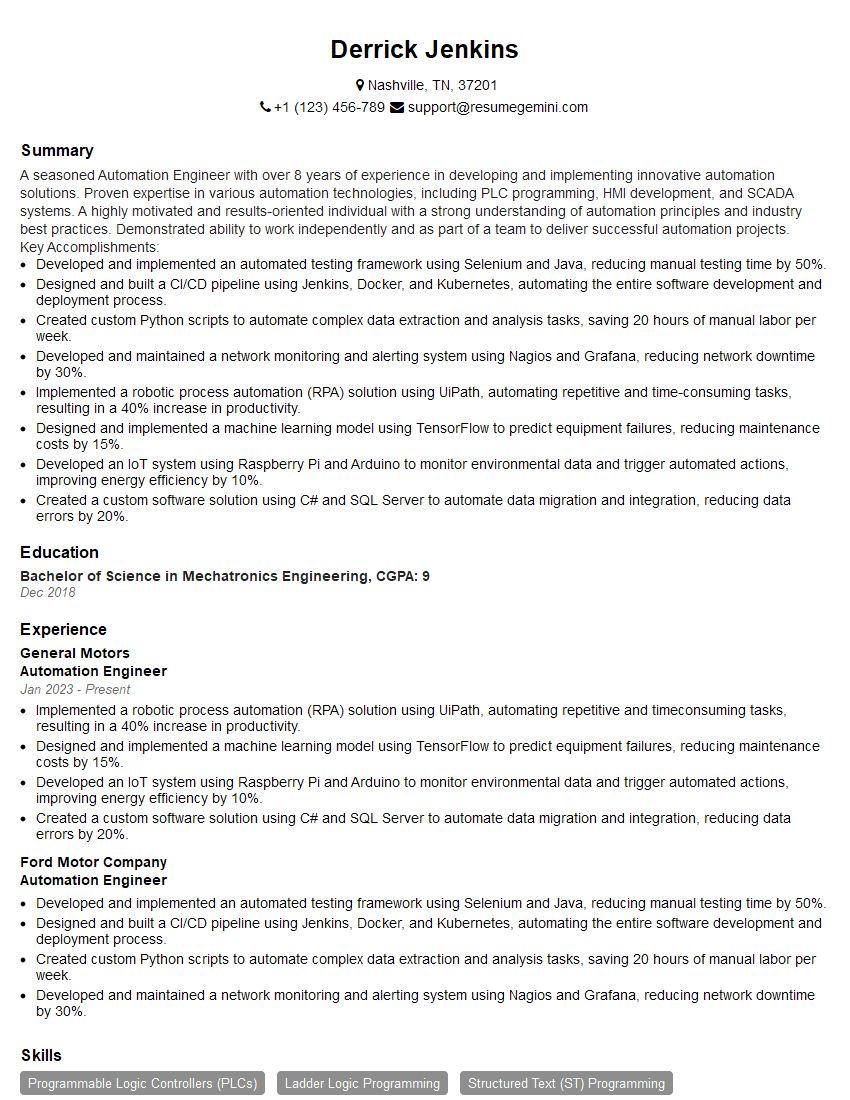
Automation Engineer Resume Sample
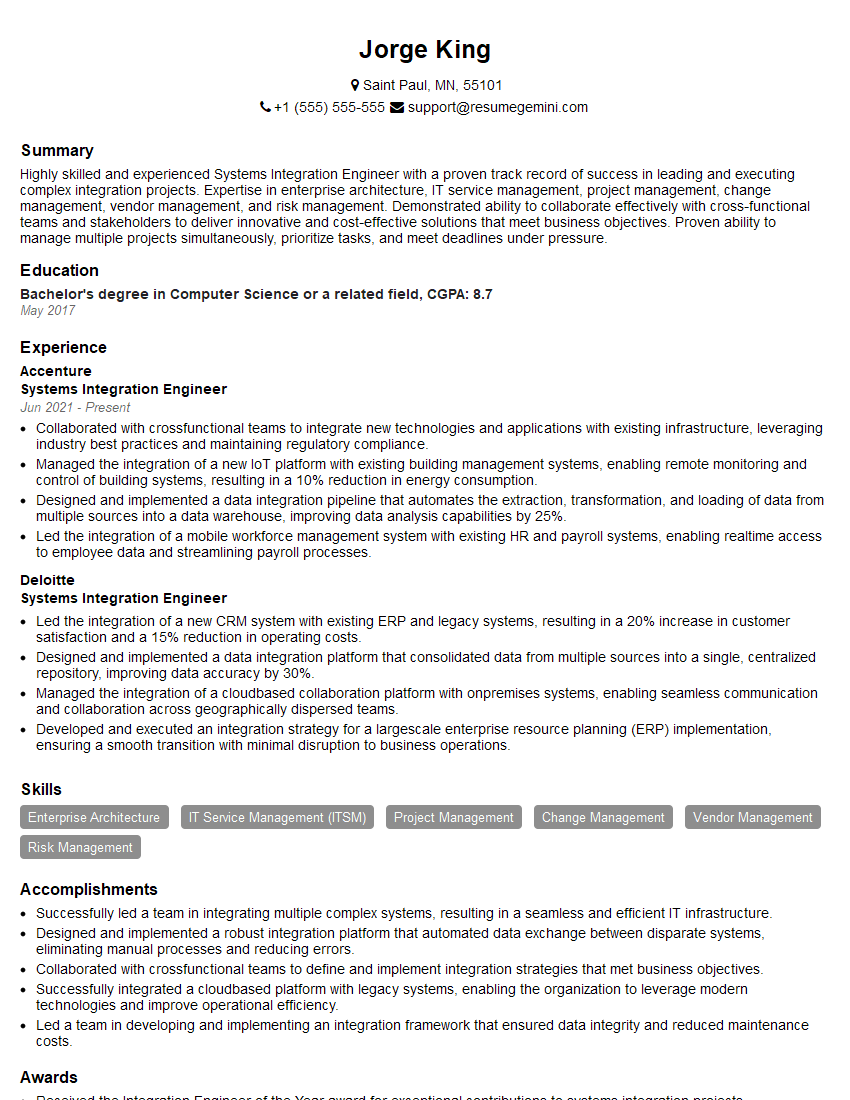
Systems Integration Engineer Resume Sample
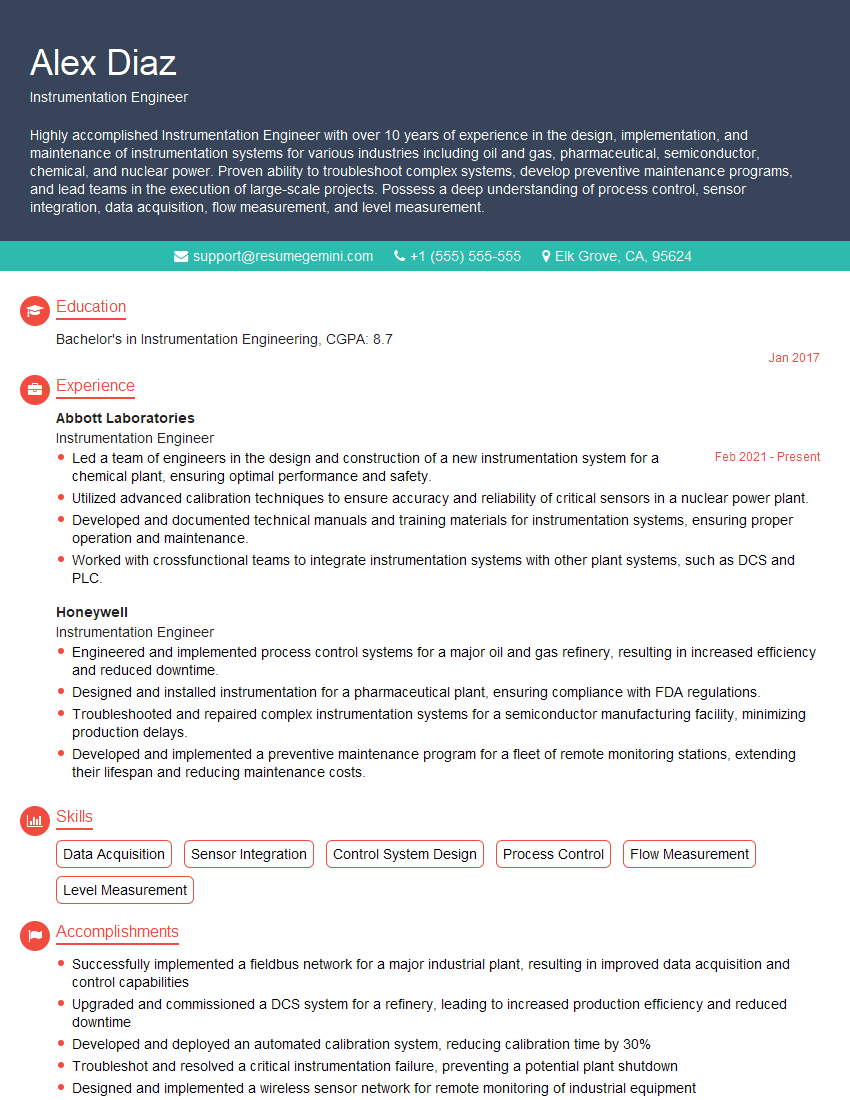
Instrumentation Engineer Resume Sample
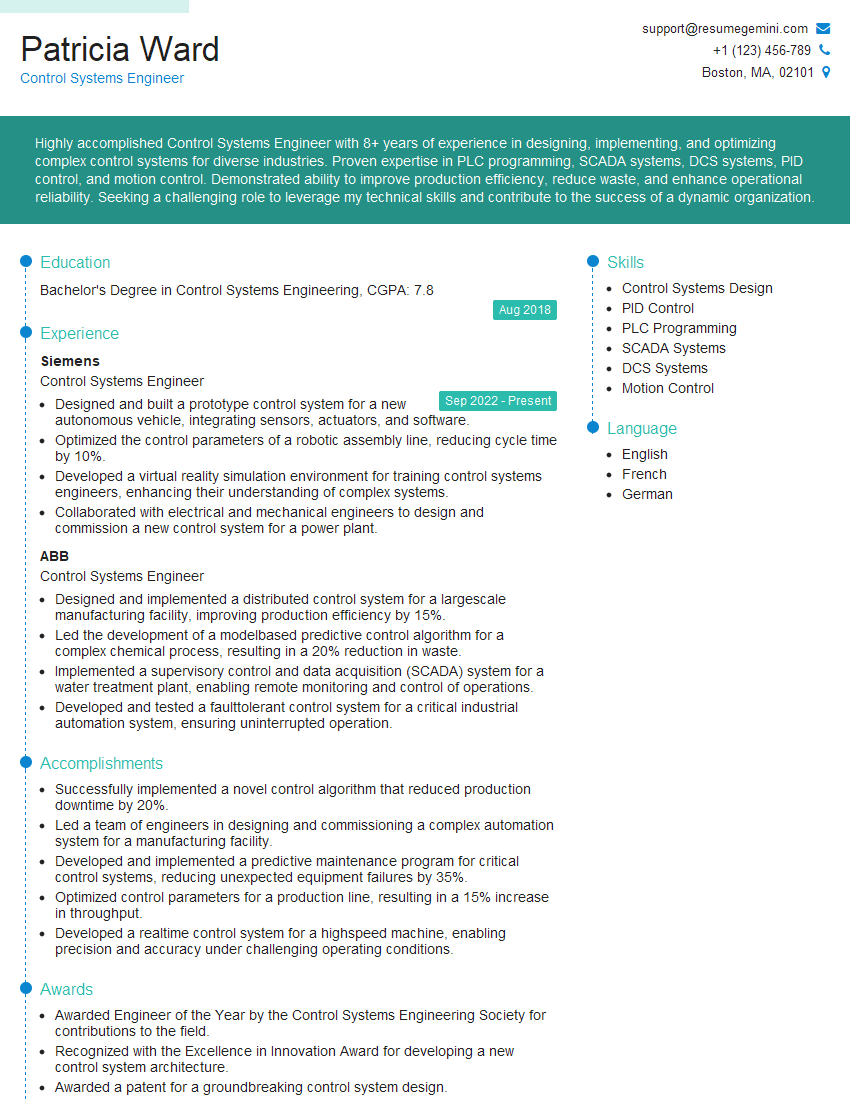
Control Systems Engineer Resume Sample
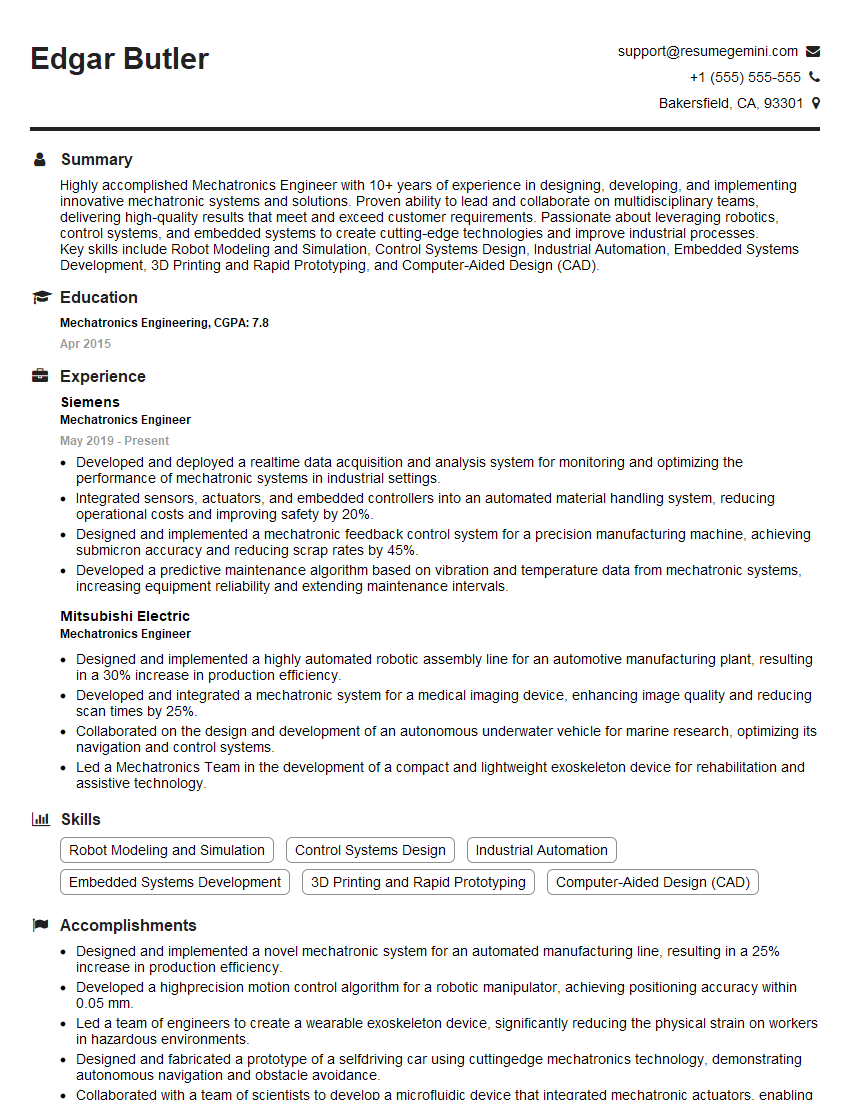
Mechatronics Engineer Resume Sample
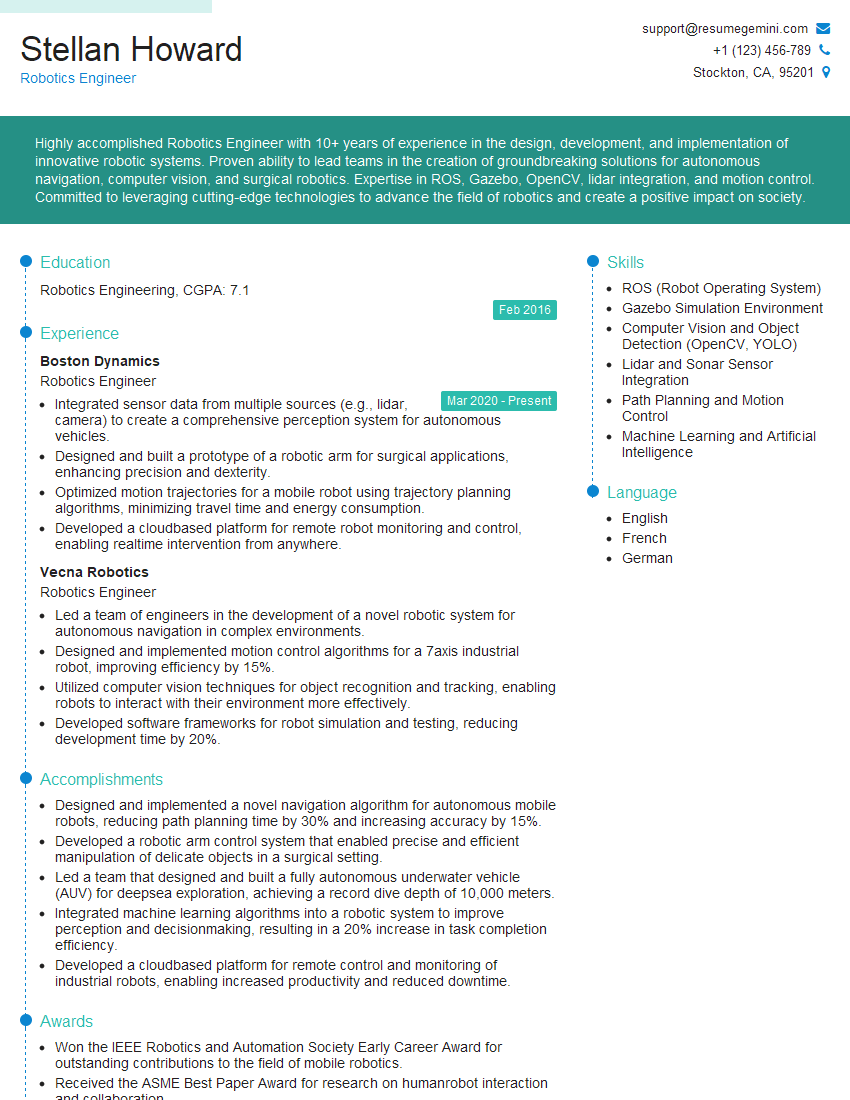
Robotics Engineer Resume Sample
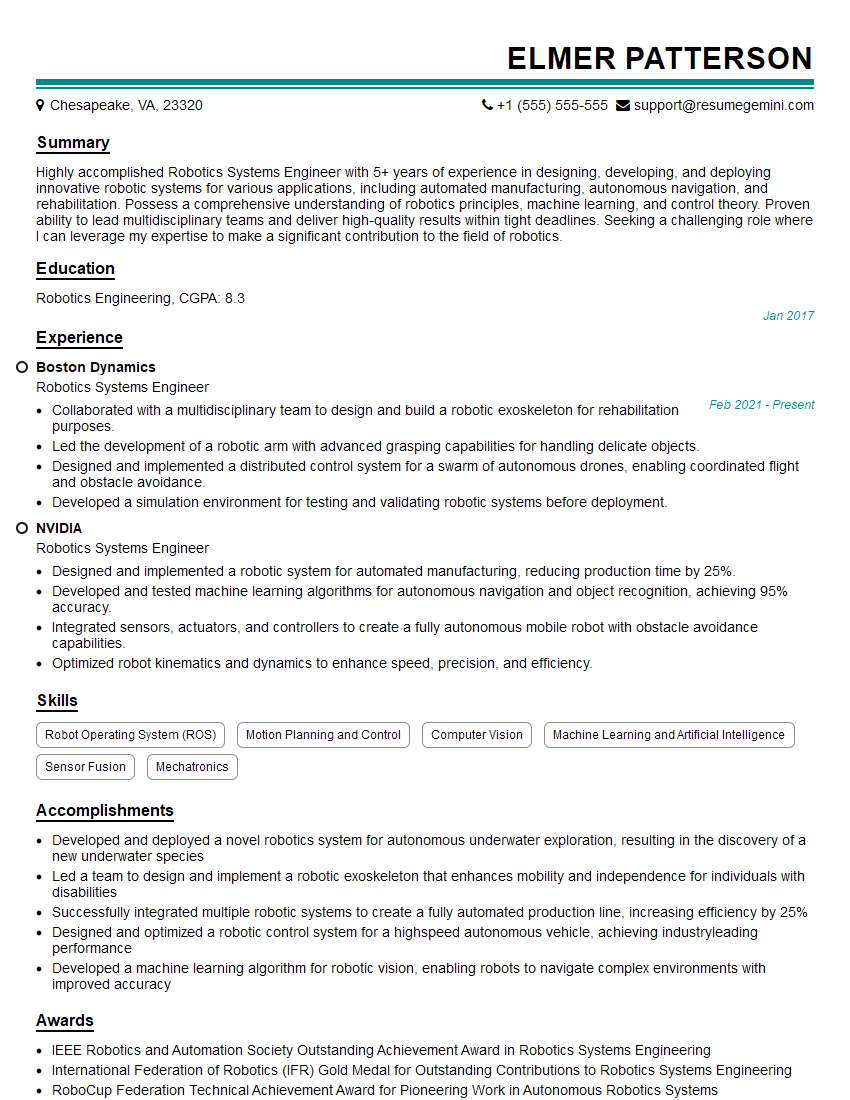
Robotics Systems Engineer Resume Sample
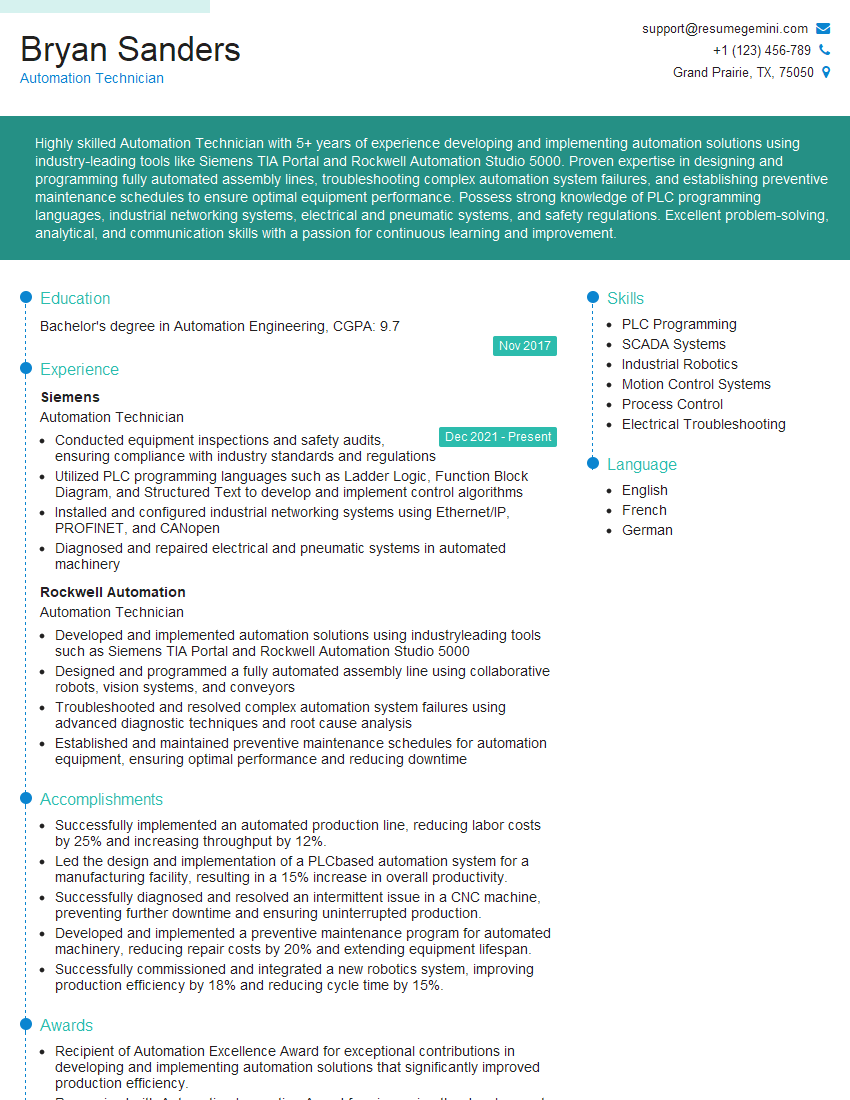
Automation Technician Resume Sample
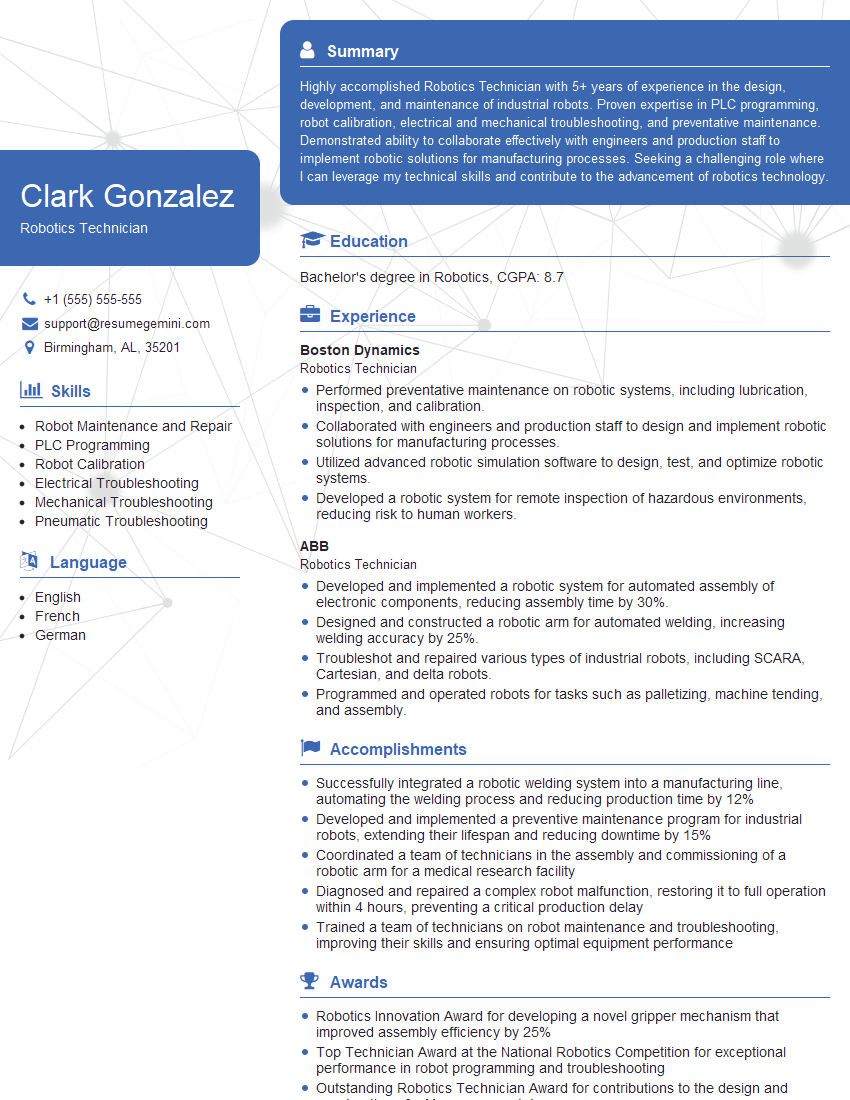
Robotics Technician Resume Sample
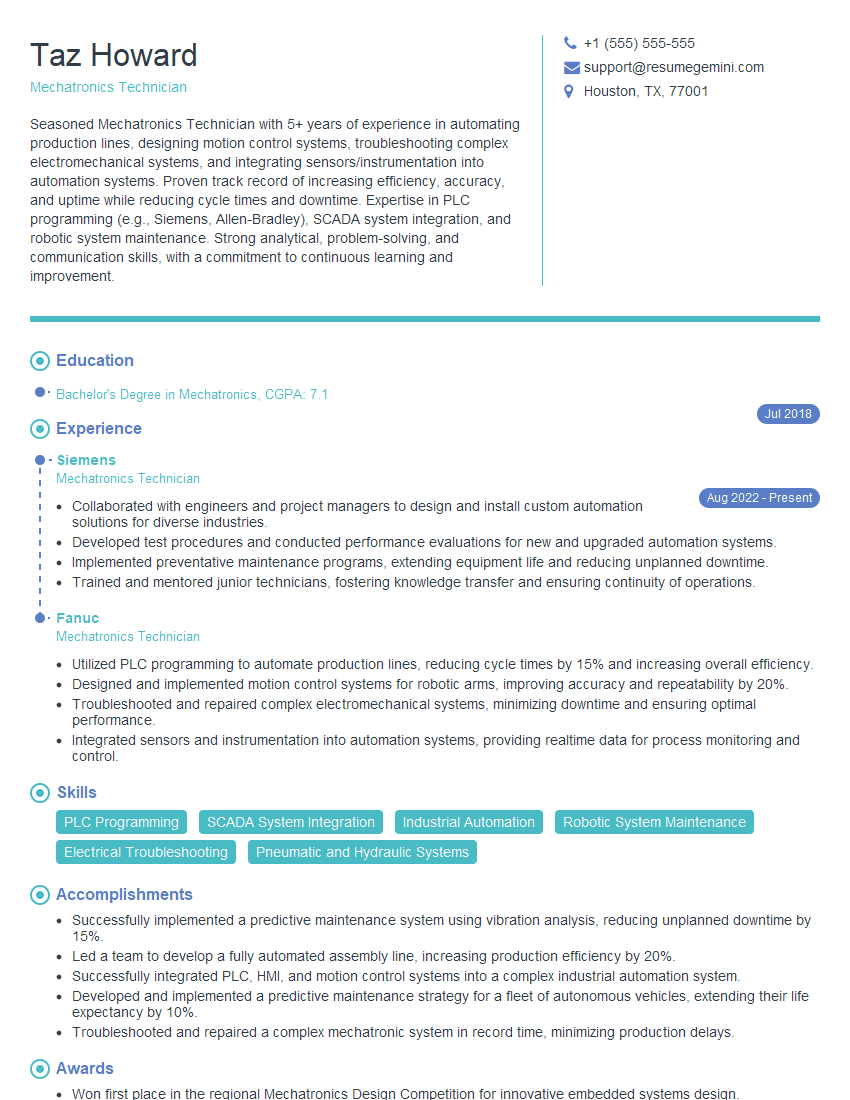
Mechatronics Technician Resume Sample
Explore more articles
Users Rating of Our Blogs
Share Your Experience
We value your feedback! Please rate our content and share your thoughts (optional).
What Readers Say About Our Blog
Very informative content, great job.
good