Cracking a skill-specific interview, like one for Media Relations and Interview Skills, requires understanding the nuances of the role. In this blog, we present the questions you’re most likely to encounter, along with insights into how to answer them effectively. Let’s ensure you’re ready to make a strong impression.
Questions Asked in Media Relations and Interview Skills Interview
Q 1. Describe your experience crafting press releases.
Crafting compelling press releases is crucial for effective media relations. It’s about distilling complex information into a concise, engaging narrative that journalists will find newsworthy and readily use. My approach involves a structured process: First, I identify the key message – the single, most important takeaway I want the audience to remember. Then, I tailor the release to the specific target publication or journalist, considering their audience and editorial style. This includes using strong headlines, incorporating impactful quotes from key individuals, and providing relevant supporting data. I always ensure the release follows the inverted pyramid style – putting the most important information at the beginning. Finally, I meticulously fact-check every detail, ensuring accuracy and credibility.
For example, when announcing a new product launch, I wouldn’t simply list its features. Instead, I’d highlight the problem it solves, the unique benefits it offers, and ideally, include a compelling customer quote demonstrating its impact. I also ensure the release includes strong call-to-actions, directing readers to relevant resources such as the company website or contact information.
Q 2. How do you build and maintain relationships with journalists?
Building strong relationships with journalists is the cornerstone of successful media relations. It’s not about pitching constantly; it’s about building trust and demonstrating value. I start by identifying key journalists covering my industry. I then research their work, understanding their beat and preferred style. I personalize my outreach, avoiding generic mass emails. Instead, I craft targeted pitches highlighting relevant news that aligns with their interests. Regular, informal communication – even outside of pitching – is vital. Sharing relevant industry insights, attending their events (when possible), and simply acknowledging their work can go a long way. Providing them with exclusive information or access can also solidify the relationship. Ultimately, it’s about treating journalists as valuable partners, not just recipients of press releases.
For instance, I might share an interesting industry trend report with a journalist I know covers that area, even if I don’t have a specific story to pitch at that moment. This demonstrates my understanding of their work and my willingness to share relevant information, fostering goodwill.
Q 3. Explain your strategy for handling negative media coverage.
Handling negative media coverage requires a swift, transparent, and proactive response. Ignoring it is rarely an effective strategy. My approach involves: first, acknowledging the issue and understanding the scope and source of the negative coverage. Then, I thoroughly investigate the claims and assemble all relevant facts. A detailed response strategy is then developed, taking into account the nature of the criticism and the specific audience. Sometimes, a straightforward clarification or factual correction is sufficient. Other times, a more comprehensive statement acknowledging shortcomings and outlining corrective actions may be necessary. It’s crucial to communicate with empathy and take responsibility where appropriate. Transparency builds trust, even during crises.
For example, if a product defect is reported, I wouldn’t try to downplay it. Instead, I would acknowledge the issue, explain the steps being taken to address it, and communicate clearly about how customers will be supported. Proactive communication is key to mitigating further damage.
Q 4. What metrics do you use to measure the success of a media relations campaign?
Measuring the success of a media relations campaign goes beyond simple media mentions. I utilize a multi-faceted approach, considering both quantitative and qualitative metrics. Quantitative metrics include the number of media placements (impressions, reach), website traffic from media mentions, and social media engagement. Qualitative metrics focus on the tone and nature of the coverage, whether the key messages were effectively communicated, and the overall impact on brand reputation. I analyze sentiment, assessing whether coverage was positive, neutral, or negative. Ultimately, the success is judged against predefined campaign objectives. Were the goals of increased brand awareness, lead generation, or crisis mitigation achieved?
For example, if the campaign goal was to increase brand awareness, I’d track the number of impressions and reach to gauge success. If the goal was to drive website traffic, I’d monitor website analytics to see how many visitors came from media outlets following the campaign.
Q 5. How do you adapt your communication style to different media outlets?
Adapting communication style to different media outlets is paramount. A press release for a national newspaper will differ significantly from a blog post for a specialized online publication. For example, a tech blog will appreciate technical details and data-driven evidence, while a general interest magazine will prefer a more narrative and accessible style. Before pitching, I thoroughly research the publication’s target audience, tone, and style guide. I then tailor the pitch and the content itself to align with those parameters. This shows respect for the journalist’s work and increases the chances of successful placement.
Adapting might involve using different terminology, adjusting the level of technical detail, and even changing the overall structure of the message to fit the publication’s format and style.
Q 6. Describe your experience with media training.
My media training experience encompasses both delivering and coordinating training programs. I’ve worked with executives and spokespeople from various industries, helping them refine their interview skills, message development, and crisis communication strategies. I focus on practical exercises, role-playing challenging scenarios, and providing constructive feedback. I teach techniques for handling difficult questions, staying composed under pressure, and delivering concise and persuasive messages. The goal is to empower individuals to confidently and effectively communicate their message to the media. My training sessions often involve mock interviews, video recording and review, and personalized coaching to address individual strengths and weaknesses.
For instance, I might train a spokesperson on how to handle a question about a controversial company decision by teaching them a structured response framework that focuses on acknowledging concerns, explaining the decision’s rationale, and highlighting the positive outcomes.
Q 7. How familiar are you with different media pitching techniques?
I’m highly familiar with various media pitching techniques, including traditional methods like email pitches and press releases, as well as newer strategies leveraging social media and personalized outreach. I understand the value of building relationships with journalists before pitching, tailoring pitches to specific journalists and publications, and crafting compelling narratives that highlight the news value of the story. Beyond basic email pitches, I’m adept at using media databases to identify the right journalists, and I know how to leverage social media to build rapport and identify emerging stories. Ultimately, my approach is highly strategic, focused on building genuine relationships and providing journalists with information that is relevant and newsworthy.
I regularly experiment and adapt my approach to different scenarios, remaining aware of best practices and industry trends. This includes optimizing my pitches for various media types and understanding the nuances of different platforms.
Q 8. How do you prioritize media inquiries?
Prioritizing media inquiries is crucial for efficiency and impact. My process involves a multi-step approach. First, I assess the urgency of the request – is it time-sensitive, related to a breaking news story, or a longer-term feature? Second, I consider the reputation and reach of the media outlet. A high-impact publication with a large audience naturally takes precedence. Third, I evaluate the relevance of the inquiry to our current strategic communications goals. Finally, I consider the journalist’s history and their past interactions with our organization. I use a simple scoring system (e.g., 1-5 for each criterion) to rank inquiries and allocate resources effectively. For instance, an urgent request from a reputable national newspaper about a new product launch would score very high, while a low-impact blog post query on an unrelated topic would score much lower.
Q 9. Explain your process for developing a media relations plan.
Developing a robust media relations plan is a strategic process. I begin by defining clear objectives – what do we want to achieve through media coverage? This could be increasing brand awareness, launching a new product, or managing a crisis. Next, I identify our target audiences and the media outlets that best reach them. Then, I craft key messages that are concise, memorable, and aligned with our objectives. I develop a media list, categorized by publication, beat, and contact person. A critical component is creating a content calendar outlining press releases, pitches, and other media activities. The plan includes a detailed budget and a system for tracking and evaluating results. For example, if the objective is to increase brand awareness for a new software, the plan would detail press releases targeted at tech publications, influencer outreach, and a social media campaign. Regular review and adjustment of the plan are crucial based on performance and changing circumstances.
Q 10. How do you track media coverage and analyze its impact?
Tracking media coverage and analyzing its impact requires a systematic approach. I use a combination of media monitoring tools (like Meltwater or Cision) to identify all mentions of our organization across various media channels. This includes traditional media (newspapers, magazines, television, radio) and online platforms (news websites, blogs, social media). The next step involves quantitative analysis – counting the number of mentions, reach (estimated audience), and tone (positive, neutral, or negative). Qualitative analysis then involves a deeper dive into the content of each mention, assessing its accuracy, impact, and overall message. I use this data to assess the effectiveness of our media relations efforts and make adjustments to future strategies. For instance, a high volume of positive mentions in relevant industry publications indicates a successful campaign, while negative mentions require a proactive response and possible strategy revision.
Q 11. Describe your experience working with crisis communication plans.
My experience with crisis communication plans involves developing and implementing strategies to mitigate the negative impact of unforeseen events. This starts with proactive planning, establishing a crisis communication team, and developing pre-approved messaging for various potential scenarios. I emphasize the importance of rapid response, open and transparent communication, and taking ownership of the situation. A key element is having a designated spokesperson who is well-trained in handling media inquiries during a crisis. During the crisis itself, I prioritize accurate and timely information dissemination. After the crisis, a thorough post-mortem analysis helps us identify areas for improvement in future crisis preparedness. For instance, I’ve worked on plans for product recalls, data breaches, and reputational damage scenarios, each requiring a tailored approach based on the specific nature of the event. Regular drills and simulations help ensure the team’s preparedness and efficiency.
Q 12. How do you handle difficult or confrontational interviews?
Handling difficult or confrontational interviews requires careful preparation and a calm, professional demeanor. I begin by anticipating potential difficult questions and crafting thoughtful responses. It’s crucial to maintain composure, listen attentively, and answer directly. If a question is unfair or inaccurate, I acknowledge the concern but reframe the question or politely redirect the conversation. I avoid getting defensive or engaging in arguments. Instead, I focus on delivering our key messages and presenting facts accurately. If necessary, I may use bridging techniques to steer the conversation back to our preferred talking points. The goal is to control the narrative as much as possible while maintaining a respectful and professional dialogue. Remember, even a seemingly negative interview can be salvaged if you remain calm and deliver your message clearly.
Q 13. What is your experience with social media in media relations?
Social media plays a vital role in modern media relations. I leverage platforms like Twitter, LinkedIn, and Facebook to build relationships with journalists, share news and stories, monitor mentions, and engage in conversations relevant to our organization. I use social listening tools to track public sentiment and identify emerging issues. Social media also allows for faster dissemination of information and more direct engagement with our target audience. For instance, I might share a company press release on LinkedIn and Twitter, and then use those platforms to engage with journalists and influencers who cover our industry. I also use social media to amplify positive media coverage. However, a strong social media presence demands consistent monitoring and carefully crafted messaging to avoid potential pitfalls.
Q 14. How do you measure the ROI of a media relations strategy?
Measuring the ROI of a media relations strategy requires a clear understanding of our initial objectives. This might involve tracking website traffic, lead generation, sales increases, or changes in brand awareness and sentiment. I use both quantitative (e.g., number of media mentions, reach, website traffic from media links) and qualitative (e.g., brand sentiment analysis, media impact assessments) data to assess performance. While assigning a direct financial value to every media mention can be challenging, a well-defined tracking system, coupled with appropriate metrics, allows us to demonstrate the value of our media relations investments. For example, if our objective is lead generation, we would track the number of leads generated directly from media mentions. If our goal is to improve brand awareness, we might use surveys or social listening to measure changes in public perception.
Q 15. Describe a time you had to manage conflicting messages from various stakeholders.
Managing conflicting messages from stakeholders requires a delicate balance of diplomacy, clear communication, and strategic decision-making. It’s often about finding common ground and crafting a narrative that resonates with all parties involved, even if their individual priorities differ.
For example, during a product recall, the legal team might prioritize minimizing liability, the marketing team might focus on damage control, and the customer service team might be concerned with customer satisfaction. My approach involves:
- Facilitating open communication: Establishing a clear communication channel where all stakeholders can express their concerns and perspectives.
- Identifying core message: Determining the overarching message that aligns with the company’s values and goals, while addressing the concerns of each stakeholder group.
- Crafting a unified narrative: Developing a single, consistent message that acknowledges diverse viewpoints while maintaining a cohesive brand voice.
- Prioritizing transparency: Being upfront about the challenges and solutions, and showing that all stakeholders’ interests are being considered.
- Regular updates: Keeping everyone informed throughout the process to prevent misunderstandings and build trust.
In a recent crisis involving a product defect, I successfully navigated conflicting viewpoints by creating a central communication hub. This allowed stakeholders to share information, discuss concerns, and collectively develop a unified press release that addressed all key aspects, from the issue’s technical details to the steps taken to rectify it and support affected customers.
Career Expert Tips:
- Ace those interviews! Prepare effectively by reviewing the Top 50 Most Common Interview Questions on ResumeGemini.
- Navigate your job search with confidence! Explore a wide range of Career Tips on ResumeGemini. Learn about common challenges and recommendations to overcome them.
- Craft the perfect resume! Master the Art of Resume Writing with ResumeGemini’s guide. Showcase your unique qualifications and achievements effectively.
- Don’t miss out on holiday savings! Build your dream resume with ResumeGemini’s ATS optimized templates.
Q 16. How do you use data analytics to inform your media relations strategies?
Data analytics plays a crucial role in shaping effective media relations strategies. It allows us to move beyond gut feeling and make data-driven decisions to optimize our outreach and measure its impact. I use analytics to understand audience engagement, identify key influencers, and track the success of campaigns.
- Audience analysis: Tracking website traffic, social media engagement, and media coverage helps identify audience demographics, interests, and media consumption habits. This informs our targeting and messaging.
- Media monitoring and sentiment analysis: Tools track media mentions, allowing us to analyze the tone and sentiment of coverage, identify potential crises, and track campaign performance.
- Influencer identification: Analyzing social media data and media reach helps pinpoint key influencers who can amplify our message.
- Campaign performance measurement: Analyzing website traffic, social media engagement, and media impressions helps evaluate campaign effectiveness and inform future strategies.
For instance, by analyzing website analytics, we discovered a significant portion of our audience was accessing our information through mobile devices. This led us to optimize our website for mobile and tailor our press releases to be easily consumed on smaller screens. We also utilized sentiment analysis tools to track public opinion and adjust our message in real-time during a challenging period.
Q 17. What is your experience with media monitoring tools?
I have extensive experience using a range of media monitoring tools, both traditional and social media. This expertise enables me to effectively track our media coverage, assess the impact of our communications, and proactively manage our reputation. Some tools I’ve used include:
- Meltwater: A comprehensive platform for media monitoring and social listening.
- Cision: Another powerful platform for media monitoring, media database access, and PR campaign management.
- Google Alerts: A free tool for tracking online mentions of specific keywords.
- Brand24: A social listening tool that tracks mentions across various platforms.
My experience goes beyond simply using these tools. I understand how to effectively leverage the data they provide for strategic decision-making. This involves setting up customized alerts, analyzing sentiment trends, and identifying key influencers and media outlets.
Q 18. How do you build credibility and trust with the media?
Building credibility and trust with the media is paramount for successful media relations. It’s built on a foundation of transparency, responsiveness, and consistent delivery on promises.
- Honesty and transparency: Always be truthful and upfront. Acknowledge mistakes and address concerns promptly.
- Responsiveness: Respond to media inquiries promptly and professionally. Establish clear communication channels.
- Building relationships: Cultivate genuine relationships with journalists. Understand their needs and deadlines.
- Providing valuable information: Offer compelling and well-researched stories that are newsworthy.
- Demonstrating expertise: Position your organization and spokespeople as credible sources of information.
I regularly connect with journalists through informal conversations to build rapport. I also make sure my organization provides accurate, timely information, and always follow up on commitments.
Q 19. How do you identify key media influencers for your organization?
Identifying key media influencers requires a multi-faceted approach combining data analysis and qualitative research. It’s not just about the sheer number of followers, but also the quality of their audience and their influence within specific niches.
- Data analysis: Use social media analytics tools to identify individuals with high engagement rates, relevant follower demographics, and significant reach within our target audience.
- Media monitoring: Analyze media coverage to identify journalists and bloggers who frequently cover topics relevant to our organization.
- Competitor analysis: Examine which influencers our competitors are engaging with.
- Qualitative research: Conduct manual research to understand the credibility, authority, and influence of potential influencers within their communities.
- Engagement and interaction: Start engaging with potential influencers to build relationships.
For example, we identified a prominent food blogger with a large following of health-conscious individuals as a key influencer for our new line of organic snacks. Her audience perfectly aligned with our target demographic, and our engagement with her led to a successful product launch campaign.
Q 20. Describe your understanding of different media types (print, broadcast, online).
Understanding the nuances of different media types – print, broadcast, and online – is crucial for tailoring messages effectively. Each medium has its own unique characteristics, target audiences, and content formats.
- Print media (newspapers, magazines): Characterized by longer lead times, in-depth articles, and a more formal tone. Information needs to be well-researched and factually accurate.
- Broadcast media (television, radio): Requires concise and engaging messaging, often delivered through soundbites or short video clips. Visual elements and storytelling are crucial.
- Online media (websites, blogs, social media): Offers a wide range of formats, from news articles and blog posts to social media updates and videos. It demands quick turnaround times and highly engaging content.
When preparing for a television interview, for instance, I’ll ensure our message is concise and memorable, focusing on impactful soundbites. Conversely, for a print article, I’ll provide detailed information and background data.
Q 21. How do you tailor messaging for different target audiences?
Tailoring messaging for different target audiences is key to maximizing the impact of our communications. Understanding audience demographics, psychographics, and media consumption habits is fundamental.
- Demographic segmentation: Targeting messages based on age, gender, location, income, etc.
- Psychographic segmentation: Targeting messages based on lifestyle, values, interests, and attitudes.
- Media consumption habits: Understanding how different audiences consume media (print, broadcast, online) and adjusting our approach accordingly.
- Language and tone: Adapting the language and tone to resonate with specific audiences. For example, using formal language for business publications versus a more conversational style for social media.
- Messaging framework: Employing a clear and consistent messaging framework that can be adapted for diverse audiences.
When launching a new product, for instance, we would tailor messaging for financial publications to emphasize ROI, while simultaneously engaging with consumers on social media through visually appealing content showcasing product benefits.
Q 22. Describe your experience with media kits and press materials.
Media kits and press materials are essential tools for disseminating information to journalists and other media outlets. They are designed to provide a comprehensive overview of a company, product, service, or event, making it easy for media to craft compelling stories. A well-structured media kit typically includes a press release (the core element), fact sheets, high-resolution images or videos, bios of key personnel, and contact information.
My experience spans creating and managing media kits for diverse clients, from tech startups to non-profit organizations. For example, I developed a media kit for a sustainable fashion brand that included a compelling narrative about their ethical sourcing, visually stunning product photos, and data-driven information on their environmental impact. This resulted in significant media coverage in relevant publications and blogs.
I also have experience tailoring media kits to specific media outlets, understanding that a technology magazine will require different information than a lifestyle blog. This involves careful selection and prioritization of materials to resonate with the target audience and improve chances of pickup.
Q 23. How familiar are you with AP style guidelines?
I am very familiar with AP style guidelines. These style guidelines, developed by the Associated Press, are the industry standard for journalism and are essential for ensuring consistency and accuracy in writing for media. Understanding AP style is crucial for crafting professional press releases, media pitches, and other communication materials that will be accepted and used by journalists.
My proficiency includes proper use of capitalization, punctuation, abbreviation, and number styles. I know how to write clear and concise sentences, avoiding jargon and clichés. I’m adept at applying these rules consistently, ensuring high-quality output suitable for professional media distribution. I regularly check my work against the AP Stylebook to maintain the highest standards of accuracy and clarity.
Q 24. What is your experience with media list management?
Media list management is crucial for effective media outreach. It involves building, organizing, and maintaining a database of journalists, bloggers, and influencers relevant to a specific industry or campaign. This list shouldn’t just be names and email addresses; it requires categorizing contacts by beat, publication, preferred contact method, and past interactions.
My experience includes building and maintaining media lists using various CRM tools and spreadsheets. I utilize search engines, media databases, and social media platforms to identify and verify contact information. I regularly update my lists, removing inactive contacts and adding new ones, to ensure their accuracy and effectiveness. I also segment my lists to tailor messages to specific media outlets based on their area of coverage and reader profile. This increases the likelihood of engagement and securing coverage.
Q 25. How do you manage expectations with internal stakeholders regarding media coverage?
Managing expectations with internal stakeholders is critical for a successful media relations strategy. It’s about setting realistic goals, communicating transparently, and providing regular updates. Often, internal teams are overly optimistic about the speed and reach of media coverage.
My approach involves a collaborative process. First, I work with stakeholders to define clear, measurable objectives for the media relations campaign, establishing realistic expectations for coverage. Next, I provide regular progress reports, including metrics like media mentions, website traffic from media referrals, and social media engagement. This transparency helps build trust and allows for proactive adjustments to the strategy as needed. Finally, I address concerns and answer questions openly and honestly, keeping everyone informed and aligned.
For instance, if a stakeholder anticipates significant media coverage in a short timeframe, I will explain the process, the realistic timeline, and the factors that influence media interest. This ensures everyone is on the same page and avoids disappointment.
Q 26. Describe a time you had to deal with a challenging reporter.
I once dealt with a reporter who had a preconceived notion about my client’s product, based on limited information. They were aggressively pursuing a negative angle, despite my attempts to provide factual information and address their concerns. Instead of confrontation, I adopted a collaborative approach.
First, I patiently provided additional data and context to support my client’s claims. I offered to connect them with subject matter experts within the company for deeper understanding. Second, I actively listened to their concerns and acknowledged their perspective. This demonstrated respect and encouraged open dialogue. Finally, I reframed the story, highlighting the positive aspects of the product and its benefits to consumers. While I didn’t completely shift their perspective, I successfully navigated the situation to minimize the negative impact and steered the conversation towards a more balanced narrative. The resulting article wasn’t entirely positive, but it wasn’t the deeply negative piece initially envisioned.
Q 27. How do you identify and respond to potential media crises?
Identifying and responding to potential media crises requires a proactive approach and a well-defined crisis communication plan. This plan should include designated spokespeople, pre-approved messaging, and clear communication channels. Regular monitoring of media and social media for mentions of your company or brand is crucial.
My process begins with actively monitoring for negative news or potential issues. If a crisis emerges, I follow a structured approach: 1) Assess the situation: Understand the scope and impact. 2) Develop a response strategy: This includes crafting key messages, identifying target audiences, and choosing communication channels. 3) Communicate proactively: Issue timely statements and engage directly with concerned parties. 4) Monitor the situation: Track media coverage and public sentiment. 5) Evaluate and learn: Analyze the crisis response to improve future preparedness.
For example, if a product defect is reported, my response would focus on transparently acknowledging the issue, outlining corrective actions, and communicating support for affected customers. Rapid and honest communication minimizes damage and reinforces credibility.
Q 28. How do you integrate media relations into a broader communications strategy?
Media relations is an integral part of a broader communications strategy, working in synergy with other functions like social media, content marketing, and internal communications. It’s not a siloed operation; instead, it enhances and amplifies the overall message.
I integrate media relations by aligning messaging across all platforms. For example, if a company launches a new product, I’ll coordinate the media outreach campaign with the social media strategy to ensure a cohesive message and maximize exposure. I ensure that press releases and other media materials align with the overall brand identity and tone. Additionally, I use media coverage to inform and update internal stakeholders, fostering a sense of unity and shared purpose. By weaving media relations into the broader strategy, I leverage opportunities to amplify brand messages, build credibility, and enhance reputation across all channels.
Key Topics to Learn for Media Relations and Interview Skills Interview
- Crafting Your Narrative: Understanding your personal brand and key messaging to effectively communicate your skills and experience to media outlets and interviewers.
- Media Pitching Techniques: Developing compelling press releases and pitches tailored to specific media outlets and journalists, understanding news cycles and deadlines.
- Interview Preparation & Practice: Structuring your responses to common interview questions, anticipating challenging questions, and practicing your delivery for confidence and clarity.
- Crisis Communication Strategies: Developing protocols for handling negative media attention and effectively managing reputation during challenging situations.
- Building Relationships with Media: Cultivating strong relationships with journalists and media professionals through consistent communication and relationship building.
- Social Media Management in Media Relations: Leveraging social media platforms to promote your work, engage with audiences and build your professional presence.
- Nonverbal Communication: Mastering body language, eye contact and vocal delivery to project professionalism and confidence during interviews and media interactions.
- Storytelling for Impact: Communicating complex information clearly and concisely, engaging your audience and leaving a lasting impression.
- Understanding Media Landscape: Staying informed about current media trends and best practices. Analyzing different media types and adapting your communication strategy accordingly.
- Question Handling and Active Listening: Developing techniques for thoughtful and insightful responses, actively listening to questions and addressing concerns effectively.
Next Steps
Mastering Media Relations and Interview Skills is crucial for career advancement in today’s competitive job market. These skills empower you to effectively communicate your value, build strong professional networks, and navigate challenging situations with confidence. Investing time in crafting a strong, ATS-friendly resume is equally vital to maximizing your job prospects. ResumeGemini is a trusted resource to help you build a professional resume that showcases your skills and experience effectively. Examples of resumes tailored to Media Relations and Interview Skills are available to help you create a compelling application.
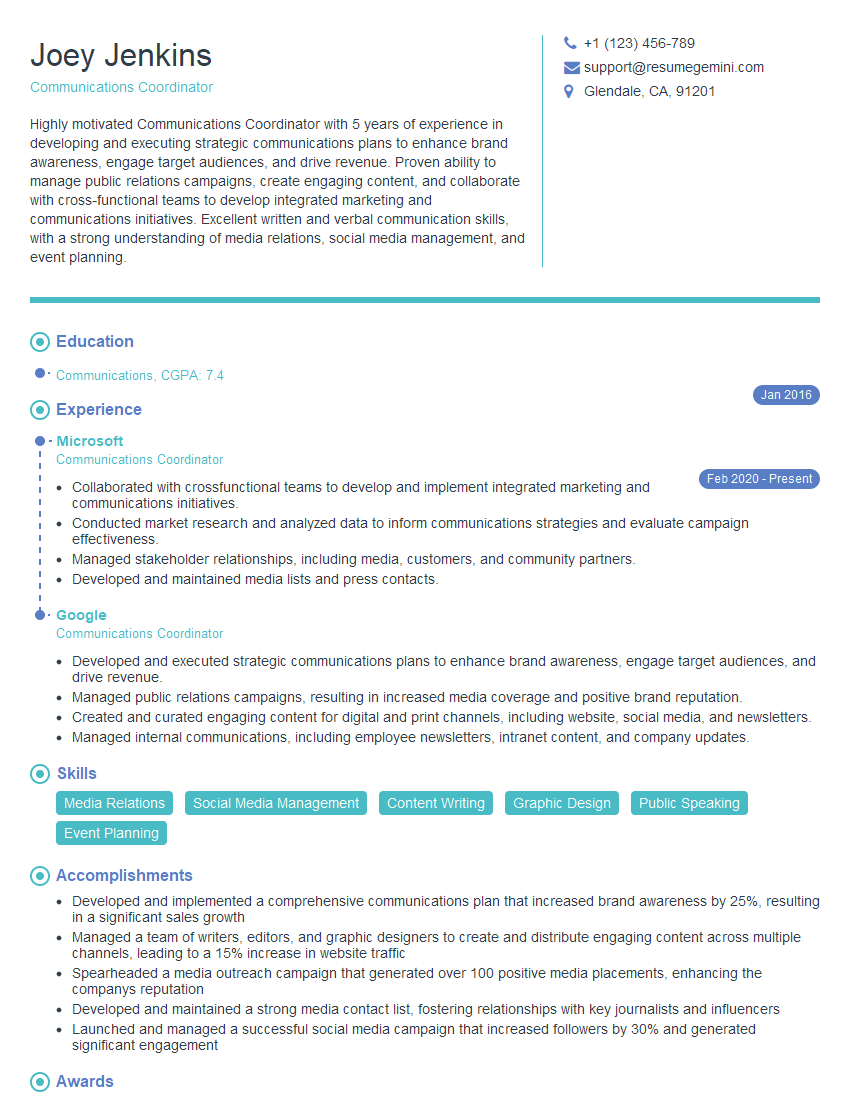
Communications Coordinator Resume Sample

Communications Director Resume Sample

Communications Manager Resume Sample

Marketing Communications Manager Resume Sample
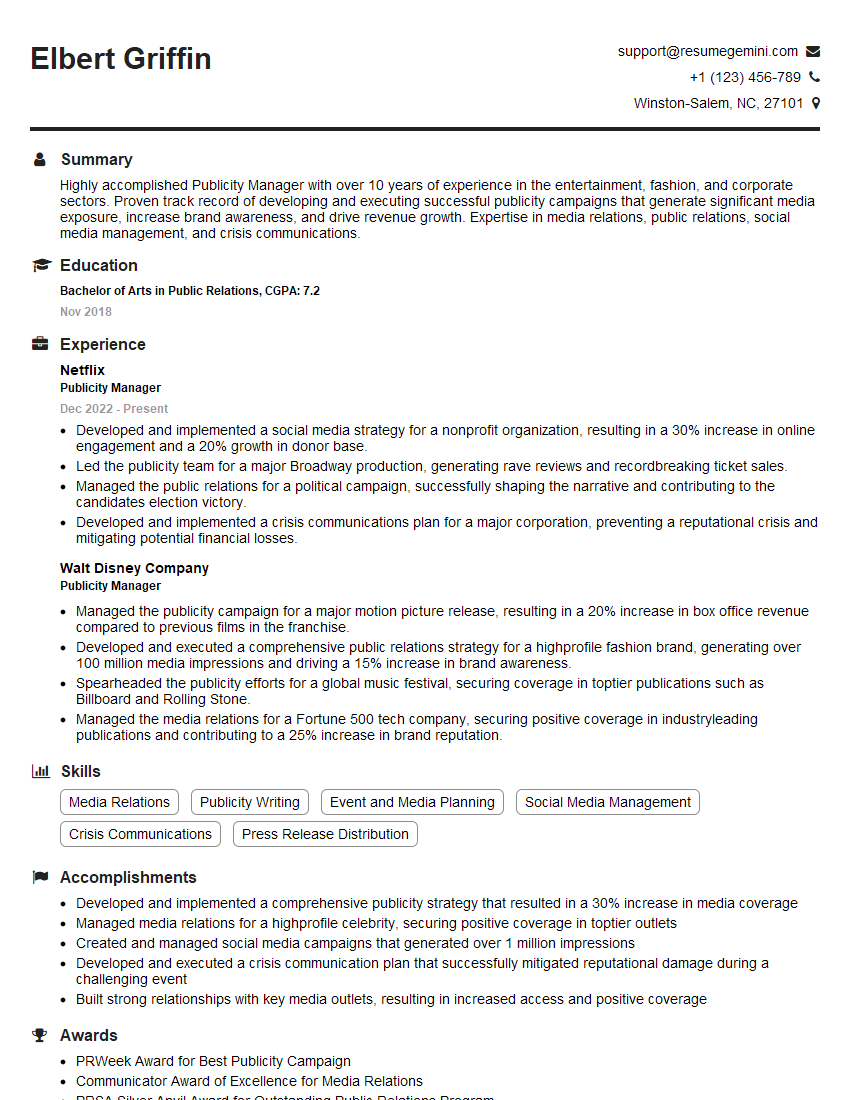
Publicity Manager Resume Sample
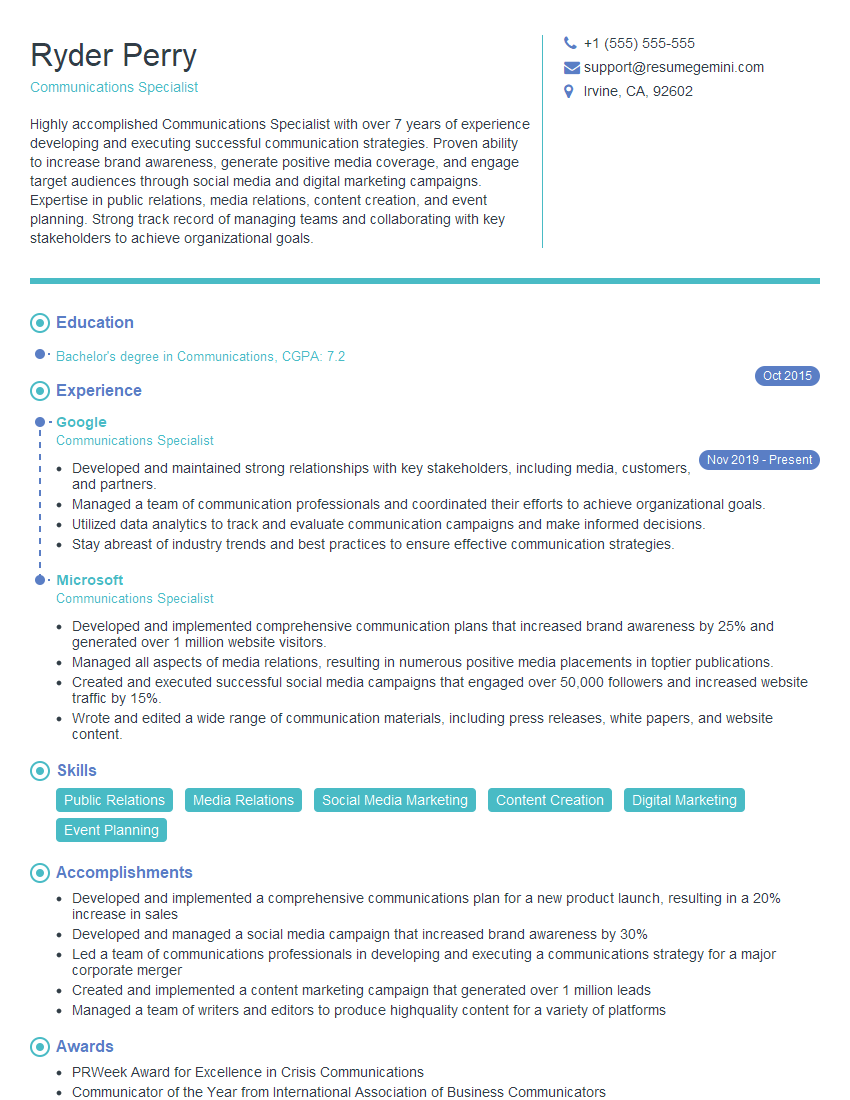
Communications Specialist Resume Sample

Social Media Manager Resume Sample
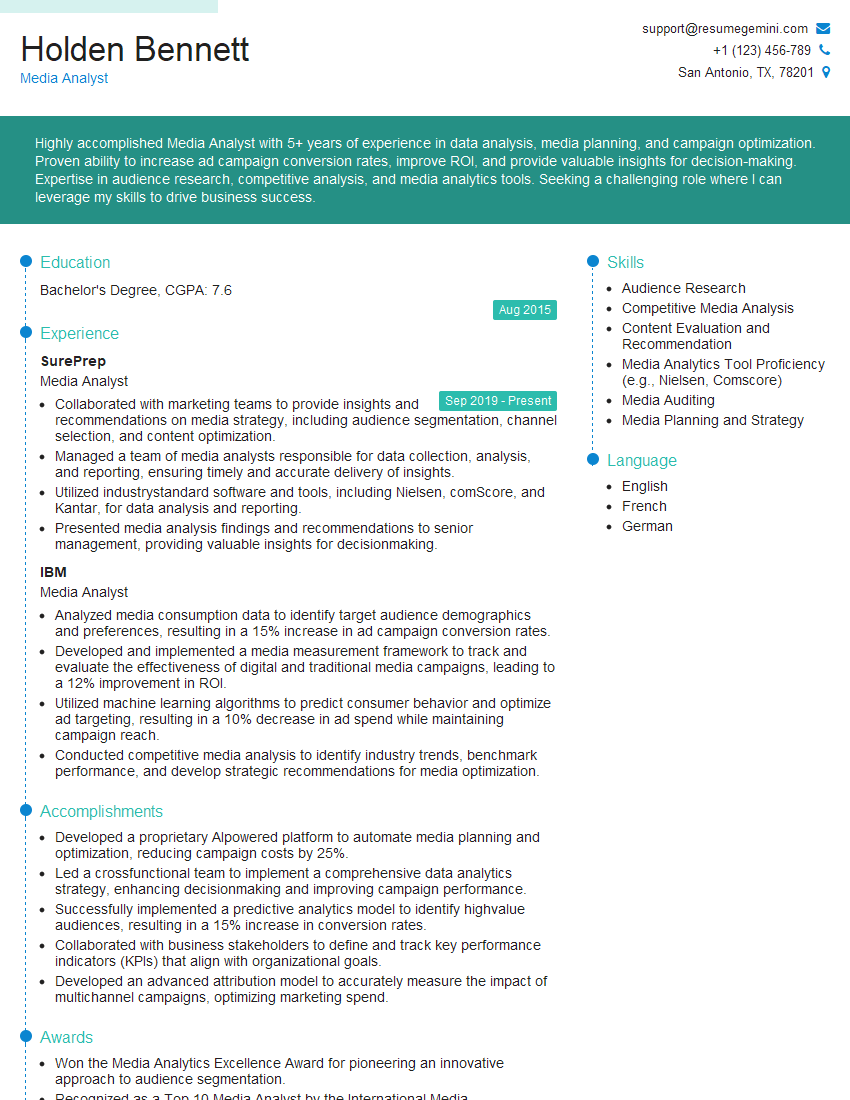
Media Analyst Resume Sample
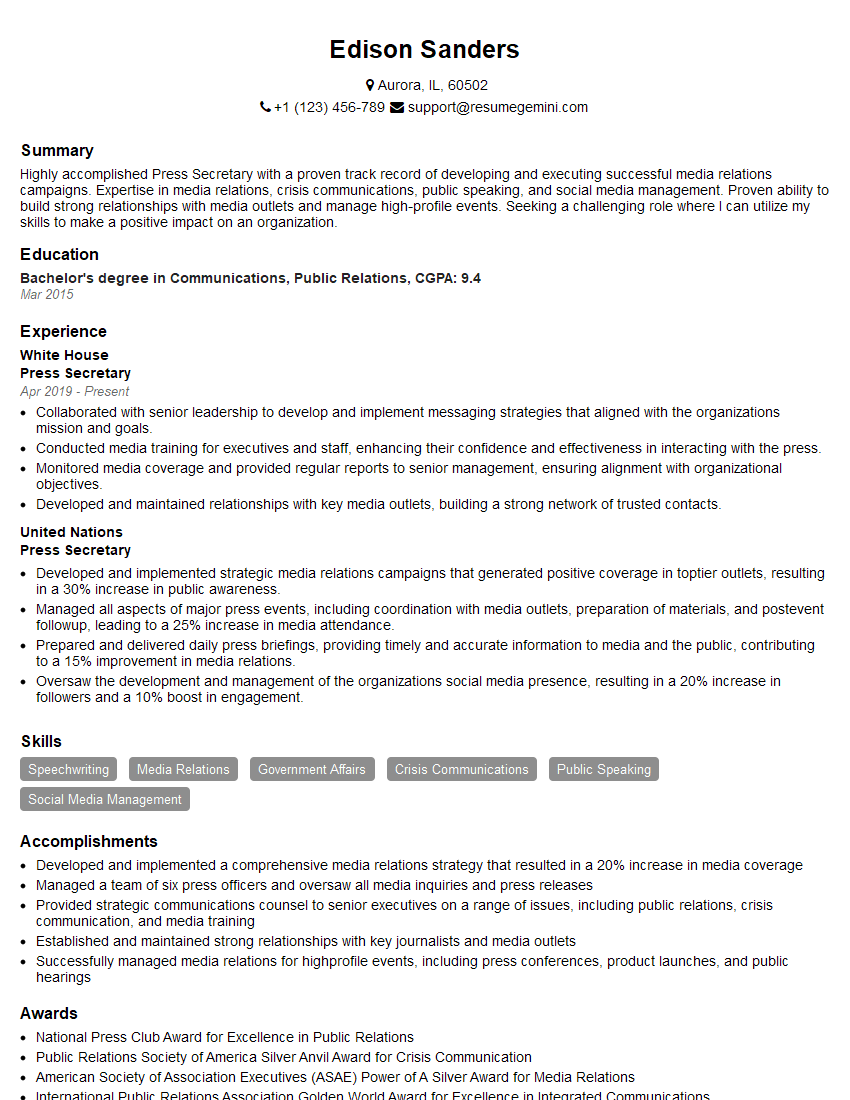
Press Secretary Resume Sample
Explore more articles
Users Rating of Our Blogs
Share Your Experience
We value your feedback! Please rate our content and share your thoughts (optional).
What Readers Say About Our Blog
Very informative content, great job.
good