Interviews are opportunities to demonstrate your expertise, and this guide is here to help you shine. Explore the essential Motivation and Positive Reinforcement interview questions that employers frequently ask, paired with strategies for crafting responses that set you apart from the competition.
Questions Asked in Motivation and Positive Reinforcement Interview
Q 1. Define intrinsic and extrinsic motivation. Provide examples of each.
Intrinsic motivation refers to engaging in an activity for the inherent satisfaction and enjoyment it provides, while extrinsic motivation stems from external rewards or pressures.
- Intrinsic Motivation Example: A software developer spending hours perfecting a codebase because they find the challenge stimulating and enjoy the creative process. The reward is the feeling of accomplishment and the satisfaction of solving a complex problem.
- Extrinsic Motivation Example: An employee working overtime to earn a bonus. The motivation here is the external reward (money) rather than the inherent enjoyment of the work itself.
Q 2. Explain the difference between positive and negative reinforcement.
Both positive and negative reinforcement aim to increase the likelihood of a behavior, but they do so using different methods. Positive reinforcement involves adding a desirable stimulus to strengthen a behavior, while negative reinforcement involves removing an undesirable stimulus to strengthen a behavior. It’s crucial to understand that negative reinforcement is not punishment; it’s about removing something aversive to encourage a desired action.
- Positive Reinforcement: Giving an employee a bonus for exceeding sales targets (adding a desirable stimulus).
- Negative Reinforcement: Removing a tedious task from an employee’s workload after they consistently meet their deadlines (removing an undesirable stimulus).
Q 3. Describe the principles of operant conditioning and how they apply to motivation.
Operant conditioning, based on the work of B.F. Skinner, explains how consequences shape behavior. It involves four key processes: positive reinforcement, negative reinforcement, punishment, and extinction.
- Positive Reinforcement: Increases behavior by adding a rewarding stimulus.
- Negative Reinforcement: Increases behavior by removing an aversive stimulus.
- Punishment: Decreases behavior by adding an aversive stimulus or removing a rewarding one.
- Extinction: Decreases behavior by withholding reinforcement.
In motivation, understanding these principles is vital. For example, consistently rewarding high performance (positive reinforcement) increases the likelihood of that behavior repeating. Conversely, ignoring undesirable behavior (extinction) can lead to its eventual decrease. However, punishment is often less effective than reinforcement and can have unintended negative consequences.
Q 4. What are the key elements of a successful reinforcement program?
A successful reinforcement program hinges on several key elements:
- Clear Goals and Expectations: Employees need to understand exactly what behaviors are being rewarded.
- Consistency: Reinforcements must be applied consistently and fairly.
- Relevance: Rewards should be valued by the employees.
- Timeliness: Reinforcement should be provided promptly after the desired behavior.
- Individualization: Recognize that different individuals are motivated by different things.
- Regular Feedback: Keep open communication about the program’s effectiveness and make adjustments as needed.
Think of it like training a pet: clear commands, consistent rewards, and timing are essential for effective learning. The same applies to motivating employees.
Q 5. How do you measure the effectiveness of a motivation or reinforcement strategy?
Measuring the effectiveness of a motivation or reinforcement strategy requires a multi-faceted approach:
- Performance Metrics: Track key performance indicators (KPIs) relevant to the desired behaviors. Has productivity increased? Has quality improved?
- Employee Surveys and Feedback: Gauge employee satisfaction and perceptions of fairness and effectiveness of the program.
- Observation: Directly observe employee behavior to assess whether the desired changes have occurred.
- Statistical Analysis: Use statistical methods to analyze the data collected to determine the significance of any observed changes.
For example, if a bonus program aims to increase sales, you’d measure sales figures before and after implementing the program to see if there’s a statistically significant improvement.
Q 6. How would you handle an employee who is consistently underperforming despite positive reinforcement?
If positive reinforcement isn’t working, the problem likely lies beyond just the reward system. A systematic approach is needed:
- Identify Underlying Issues: Conduct one-on-one meetings to understand the root cause of underperformance. Are there skill gaps? Lack of resources? Burnout? Personal issues?
- Provide Training and Support: Address any skill deficiencies through training programs or mentorship.
- Review Goals and Expectations: Ensure goals are realistic, achievable, and understood. Adjust them if needed.
- Offer Coaching and Mentoring: Provide guidance and support to improve performance.
- Explore Different Reinforcement Strategies: Try different types of positive reinforcement, or consider using negative reinforcement carefully (removing undesirable tasks).
- Consider Other Factors: Explore whether workplace culture, team dynamics, or management styles might be contributing to the problem.
- Performance Improvement Plan (PIP): As a last resort, if the underperformance continues despite these efforts, a PIP may be necessary. This involves setting clear goals, timelines, and consequences if goals are not met.
Q 7. Explain how to design a reward system that is both motivating and fair.
Designing a fair and motivating reward system requires careful consideration:
- Transparency: Clearly communicate the criteria for rewards, ensuring everyone understands how rewards are earned.
- Equity: Ensure the reward system aligns with company values and provides fair opportunities for all employees. This doesn’t necessarily mean everyone gets the same reward, but it means the criteria for earning rewards are consistently applied.
- Variety: Offer a range of rewards to cater to diverse preferences (e.g., monetary bonuses, promotions, public recognition, extra vacation time, professional development opportunities).
- Regular Review and Adjustment: Regularly review the reward system’s effectiveness and make adjustments to ensure it remains motivating and fair.
For example, a system that rewards both individual and team achievements fosters collaboration while still recognizing individual contributions. Avoid systems that create unhealthy competition or favoritism.
Q 8. What are some common pitfalls to avoid when implementing positive reinforcement?
Implementing positive reinforcement effectively requires careful planning and execution. Common pitfalls include:
- Inconsistency: Intermittently rewarding desired behaviors undermines the effectiveness of the system. Employees need to understand the clear link between their actions and the rewards.
- Delayed Reinforcement: The sooner the reward follows the desired behavior, the stronger the association. Delaying reinforcement weakens its impact. Think of training a dog – immediate treats are far more effective than treats given hours later.
- Rewarding the Wrong Behaviors: Accidentally rewarding undesirable behaviors can inadvertently reinforce them. For example, praising an employee for completing a task quickly but inaccurately reinforces speed over accuracy.
- Lack of Specificity: Vague praise like “good job” is less effective than specific feedback like “I really appreciate how you handled that difficult customer; your calm demeanor and efficient problem-solving skills were excellent.”
- Overuse of Rewards: Constantly rewarding even small achievements can diminish the value of rewards and lead to a sense of entitlement. Strategic application is key.
- Ignoring Intrinsic Motivation: Positive reinforcement shouldn’t replace intrinsic motivation (the internal drive to do something). It should complement it.
Avoiding these pitfalls requires careful planning, consistent application, and regular evaluation of the reinforcement strategy’s effectiveness.
Q 9. How do you adapt your motivational strategies based on individual differences in employees?
Motivational strategies must be tailored to individual employee needs and preferences. Understanding individual differences is crucial. This involves considering factors like:
- Personality: Introverts may respond better to individual recognition, while extroverts might thrive in team-based rewards.
- Values: Some employees value monetary rewards, while others prioritize recognition, professional development opportunities, or increased autonomy.
- Learning Styles: Adapt your communication style to match the employee’s preferred learning style (visual, auditory, kinesthetic).
- Career Goals: Align rewards with individual career aspirations. For example, offering mentorship opportunities to employees interested in leadership development.
A practical approach involves using a combination of methods and regularly seeking feedback from employees to understand what motivates them most effectively. Regular one-on-one meetings can be a great platform for this.
Q 10. Describe a time you successfully used positive reinforcement to improve employee performance.
In a previous role, our customer service team was experiencing high call wait times and low customer satisfaction scores. To address this, we implemented a tiered positive reinforcement system.
First, we clearly defined the desired behaviors: answering calls promptly, resolving issues efficiently, and maintaining a positive and helpful demeanor. Then, we introduced a points-based system. Employees earned points for each instance of demonstrating these behaviors, observed by supervisors and through customer feedback surveys.
These points could be redeemed for various rewards: gift cards, extra vacation time, preferred work schedules, or public recognition during team meetings. We also implemented a ‘Customer Service Star of the Month’ award, based on the accumulated points and customer feedback.
The result was a significant improvement in call wait times, customer satisfaction scores, and overall team morale. The transparency and fairness of the system were key to its success.
Q 11. How do you address resistance to change when implementing motivational initiatives?
Resistance to change is a common hurdle when introducing motivational initiatives. To address this, it’s essential to involve employees in the process from the start. This includes:
- Open Communication: Explain the reasons behind the changes, their benefits, and how they will impact the employees.
- Participation and Feedback: Seek employee input during the design and implementation phases. This helps build ownership and reduces resistance.
- Addressing Concerns: Acknowledge and address any concerns or anxieties employees may have. This shows respect and helps build trust.
- Phased Implementation: Introduce changes gradually, allowing employees time to adjust and providing ongoing support.
- Training and Support: Provide adequate training and ongoing support to help employees adapt to the changes.
- Recognizing and Rewarding Early Adopters: Publicly acknowledge and reward employees who embrace the changes early on, encouraging others to follow suit.
Remember, change management is a process, not a single event. Consistent communication and support are crucial for success.
Q 12. What are the ethical considerations involved in using positive reinforcement?
Ethical considerations in using positive reinforcement are crucial. The key is to ensure fairness, transparency, and respect for individual dignity.
- Fairness: The reward system should be equitable and free from bias. All employees should have an equal opportunity to earn rewards.
- Transparency: The criteria for earning rewards should be clear and communicated to all employees. The process for awarding rewards should also be transparent.
- Avoid Coercion: Positive reinforcement should never be used to manipulate or coerce employees. Rewards should be offered freely, not as a means of control.
- Respect for Individuality: Consider individual differences in preferences and values when selecting rewards. What motivates one employee may not motivate another.
- Avoid Unrealistic Expectations: Setting unrealistic expectations and then using positive reinforcement to attempt to achieve them can lead to burnout and resentment.
By adhering to these ethical guidelines, organizations can ensure that positive reinforcement is used as a tool to motivate and engage employees, not to control or manipulate them.
Q 13. What is the role of feedback in a motivation and reinforcement strategy?
Feedback is an integral part of a successful motivation and reinforcement strategy. It serves several key purposes:
- Clarification of Expectations: Feedback helps employees understand what behaviors are valued and rewarded.
- Performance Improvement: Constructive feedback provides guidance on how to improve performance and achieve desired outcomes.
- Recognition and Reinforcement: Positive feedback reinforces desired behaviors and motivates employees to continue performing well.
- Motivation Enhancement: Receiving regular feedback, both positive and constructive, shows employees that their work is valued and contributes to the team’s success.
- Relationship Building: Regular feedback creates opportunities for managers to build stronger relationships with their team members.
Effective feedback should be specific, timely, balanced (both positive and constructive), and action-oriented. It should focus on behaviors rather than personality traits.
Q 14. How do you ensure that positive reinforcement is sustainable over the long term?
Sustainability of positive reinforcement requires a holistic approach that goes beyond simply offering rewards. Key elements include:
- Integrating Reinforcement into the Organizational Culture: Positive reinforcement should be embedded in the company’s values and practices, not just a standalone program.
- Continuous Improvement: Regularly evaluate the effectiveness of the reinforcement system and make adjustments as needed. Gather employee feedback and track key performance indicators.
- Varying Rewards: Offer a variety of rewards to keep employees engaged and prevent them from becoming desensitized to any one type of reward.
- Linking Rewards to Company Goals: Ensure that the rewarded behaviors directly contribute to the overall goals of the organization. This creates a sense of purpose and shared success.
- Recognizing and Rewarding Effort as well as Outcome: Recognize and reward effort even when the desired outcome isn’t fully achieved. This encourages persistence and resilience.
- Building Intrinsic Motivation: Focus on creating a work environment that fosters intrinsic motivation through empowerment, autonomy, and meaningful work.
By addressing these aspects, organizations can ensure that positive reinforcement remains a sustainable and effective tool for motivating employees long-term.
Q 15. Explain the concept of goal-setting theory and how it relates to motivation.
Goal-setting theory posits that setting specific, measurable, achievable, relevant, and time-bound (SMART) goals significantly impacts motivation. The process of setting and pursuing a goal provides direction, focus, and a sense of accomplishment. When individuals have clear goals, they’re more likely to be motivated to work towards achieving them. This is because the goals provide a framework for action, allowing individuals to track their progress and experience a sense of purpose.
For example, instead of a vague goal like ‘improve performance,’ a SMART goal would be ‘Increase sales by 15% in the next quarter by implementing a new customer outreach strategy.’ This clear goal provides a measurable target, a defined timeframe, and a specific action plan to follow, boosting motivation.
In the workplace, managers can leverage goal-setting theory by collaboratively setting goals with employees, ensuring the goals align with both individual and organizational objectives. Regular check-ins and feedback mechanisms help maintain focus and motivation.
Career Expert Tips:
- Ace those interviews! Prepare effectively by reviewing the Top 50 Most Common Interview Questions on ResumeGemini.
- Navigate your job search with confidence! Explore a wide range of Career Tips on ResumeGemini. Learn about common challenges and recommendations to overcome them.
- Craft the perfect resume! Master the Art of Resume Writing with ResumeGemini’s guide. Showcase your unique qualifications and achievements effectively.
- Don’t miss out on holiday savings! Build your dream resume with ResumeGemini’s ATS optimized templates.
Q 16. What are some common barriers to effective motivation and how can they be overcome?
Several barriers can hinder effective motivation. Lack of clarity regarding goals and expectations is a significant one; people can’t be motivated if they don’t understand what’s expected of them. Unrealistic goals, too ambitious or unattainable, can lead to demotivation and feelings of failure. Insufficient resources, such as time, tools, or support, also create frustration. Poor communication, lacking feedback or recognition, diminishes engagement. Finally, unfair or inconsistent treatment breeds resentment and demotivation.
Overcoming these barriers requires addressing them proactively. Ensure clear communication of expectations, set realistic and attainable goals, provide the necessary resources and support, implement regular feedback mechanisms that acknowledge both successes and areas for improvement, and foster a culture of fairness and transparency where all feel valued and respected.
Q 17. Describe different motivational theories (e.g., Maslow’s Hierarchy of Needs, Herzberg’s Two-Factor Theory).
Several theories explain motivation. Maslow’s Hierarchy of Needs suggests that individuals are motivated by a hierarchy of needs, starting with basic physiological needs (food, shelter), then safety, belonging, esteem, and finally self-actualization. Until lower-level needs are met, higher-level needs won’t be motivating. For instance, an employee worried about job security (safety need) won’t be focused on creative challenges (self-actualization need).
Herzberg’s Two-Factor Theory distinguishes between hygiene factors (like salary, working conditions) and motivators (like achievement, recognition, responsibility). Hygiene factors prevent dissatisfaction, but don’t necessarily motivate; motivators, however, are essential for genuine job satisfaction and engagement. For example, a fair salary is a hygiene factor; a challenging project is a motivator.
Q 18. How can you use positive reinforcement to foster teamwork and collaboration?
Positive reinforcement is crucial for fostering teamwork and collaboration. It involves recognizing and rewarding collaborative behaviors, reinforcing their value. This can take various forms. For example, publicly acknowledging team achievements, celebrating collaborative successes, offering bonuses for collaborative projects, or providing opportunities for team members to share their contributions and receive peer recognition, all positively reinforce teamwork.
Imagine a project team consistently achieving milestones ahead of schedule through effective collaboration. Publicly praising their teamwork, celebrating their success with a team lunch, or awarding a project bonus fosters a culture of collaboration, encouraging similar behavior in future projects.
Q 19. How do you address issues of equity and fairness in a reward system?
Equity and fairness are paramount in any reward system. Perceived inequity – where individuals feel they’re not being rewarded fairly compared to their colleagues – can significantly harm motivation and morale. Transparency is key: clearly communicate the criteria for rewards and how they’re applied. Ensure consistent application of these criteria across the board, avoiding bias or favoritism. Regular reviews of the reward system can identify potential inequities and adjust accordingly.
For example, a performance-based reward system should have clearly defined performance metrics, accessible to all. Regular performance reviews should be conducted fairly, with consistent evaluation criteria applied to all employees. Openly addressing concerns about perceived inequity shows commitment to fairness and promotes trust.
Q 20. What are some effective techniques for providing constructive feedback?
Constructive feedback should be specific, behavioral, and focused on improvement. Instead of saying ‘You’re a poor communicator,’ say ‘During the last presentation, your pace was too fast, and some points were unclear. Consider using visuals to support key arguments next time.’ This is specific, focuses on behavior, and offers actionable suggestions. It should also be delivered in a supportive and respectful manner, focusing on the behavior, not the person. Providing opportunities for dialogue and clarification is essential.
Remember the SBI (Situation-Behavior-Impact) model: Describe the situation, the specific behavior observed, and the impact of that behavior. This framework ensures clarity and focus in providing feedback.
Q 21. Explain the concept of expectancy theory and how it applies to motivation.
Expectancy theory suggests that motivation is determined by three factors: expectancy (belief that effort will lead to performance), instrumentality (belief that performance will lead to rewards), and valence (the value or desirability of the reward). For example, if an employee doesn’t believe their extra effort will improve their performance (low expectancy), they won’t be motivated, even if the reward is highly desirable. Similarly, if they believe that even high performance won’t lead to a reward (low instrumentality), motivation will suffer. Finally, if the reward offered isn’t valued (low valence), motivation will be low.
Managers can apply expectancy theory by ensuring clear performance expectations, providing the necessary resources and support to improve performance, and offering rewards that are valued by employees. Regular feedback helps reinforce the link between effort, performance, and rewards.
Q 22. How can you utilize technology to enhance motivation and reinforcement programs?
Technology offers powerful tools to enhance motivation and reinforcement programs. Think of it as creating a personalized ‘motivation ecosystem’.
- Gamification: Integrating game mechanics like points, badges, leaderboards, and challenges into workflows using platforms like Habitica or customized internal apps can boost engagement and healthy competition. For instance, awarding points for completing tasks and allowing employees to redeem those points for rewards greatly incentivizes productivity.
- Personalized Feedback & Recognition: Tools like employee performance management software can automate timely feedback and recognition. Instead of generic praise, tailored messages acknowledging specific achievements are far more impactful. This could involve integrating with project management systems to automatically send personalized ‘job well done’ notifications upon task completion.
- Learning Management Systems (LMS): These platforms can deliver targeted training and development opportunities, a key motivator for career growth. Integrating progress tracking and personalized recommendations within the LMS ensures employees see the value of continuous learning. This could include personalized learning paths based on performance data and individual learning styles.
- Communication & Collaboration Platforms: Utilizing tools like Slack or Microsoft Teams for instant feedback, team celebrations, and recognition can foster a more connected and motivating work environment. Public acknowledgment of achievements within these platforms can boost morale and team cohesion. For example, a dedicated channel for celebrating team wins and individual successes can be highly effective.
- Data Analytics: Data analytics can reveal trends and patterns in employee behavior, allowing for a more data-driven approach to motivation programs. By analyzing data on task completion rates, feedback responses, and engagement metrics, we can identify areas for improvement and tailor the program for maximum effectiveness.
By leveraging these technologies, we create a more engaging, responsive, and effective system of motivation and reinforcement, moving away from static reward systems towards a dynamic, personalized experience.
Q 23. Describe the impact of organizational culture on employee motivation.
Organizational culture significantly impacts employee motivation. A positive, supportive, and inclusive culture acts as a powerful motivator, while a negative one can severely dampen morale and productivity. It’s like the soil in which motivation grows.
- Recognition & Appreciation: Cultures that value and openly recognize employee contributions foster a sense of belonging and value. If accomplishments are consistently overlooked, motivation will suffer.
- Trust & Autonomy: When employees feel trusted and empowered to make decisions, their intrinsic motivation increases significantly. Micromanagement, conversely, stifles creativity and engagement.
- Open Communication: Transparent communication, including honest feedback and clear expectations, builds trust and understanding, allowing employees to feel heard and valued. Conversely, a culture of secrecy and lack of transparency can breed mistrust and demotivation.
- Work-Life Balance: Cultures that support a healthy work-life balance show they value their employees’ well-being, reducing stress and burnout, leading to increased motivation and productivity.
- Opportunities for Growth: Providing opportunities for skill development, career advancement, and challenging assignments keeps employees engaged and motivated. A stagnant environment leads to boredom and disengagement.
A strong organizational culture that aligns with employee values and fosters a sense of purpose is fundamental to a successful motivation strategy. It creates the fertile ground for positive reinforcement and other motivational techniques to flourish.
Q 24. What are some alternative motivational strategies when positive reinforcement is not effective?
If positive reinforcement isn’t effective, it’s crucial to explore underlying issues and adapt the approach. Sometimes, the reward isn’t valued, the system isn’t fair, or deeper motivational needs aren’t being met. It’s like trying to water a plant with the wrong liquid.
- Addressing Underlying Issues: First, identify *why* positive reinforcement isn’t working. Are the rewards irrelevant? Is the system perceived as unfair? Are there unresolved conflicts or stressful work conditions? Addressing these root causes is essential.
- Intrinsic Motivation: Focus on intrinsic motivators—the satisfaction derived from the work itself. This might involve assigning more challenging or meaningful tasks, providing greater autonomy, or increasing opportunities for skill development. For example, giving employees ownership over a project and allowing them to use their creativity can increase intrinsic motivation.
- Goal Setting & Feedback: Collaboratively set SMART (Specific, Measurable, Achievable, Relevant, Time-bound) goals and provide regular, constructive feedback. This clarifies expectations and empowers employees to take ownership of their performance.
- Recognition & Appreciation: Shift the focus to non-monetary rewards—public acknowledgment, verbal praise, opportunities for growth, or enhanced responsibility.
- Job Redesign: If the job itself is unfulfilling, consider redesigning it to incorporate more variety, autonomy, and challenge. For example, rotating employees through different tasks or giving them increased responsibility can enhance job satisfaction and motivation.
Remember, motivation is complex and individualized. A multi-pronged approach that addresses both extrinsic and intrinsic factors is often necessary when positive reinforcement alone falls short.
Q 25. How do you measure employee engagement and morale and link them to motivation strategies?
Measuring employee engagement and morale, and linking them to motivation strategies, is crucial for a successful program. It’s like checking the health of your plant.
- Surveys & Feedback Mechanisms: Regular employee surveys (anonymous to encourage honest responses) can gauge satisfaction, morale, and engagement levels. This includes open-ended questions allowing employees to articulate their feelings and needs.
- Performance Data: Analyze performance metrics such as productivity, quality of work, absenteeism, and turnover rates. These metrics provide objective evidence of the effectiveness of motivation strategies.
- Focus Groups & Interviews: Conducting focus groups or individual interviews provides in-depth insights into employee perspectives, highlighting both positive aspects and areas for improvement.
- Observation: Direct observation of employee behavior, teamwork, and interactions can reveal subtle indicators of morale and engagement that might be missed in quantitative data.
- Pulse Surveys: Short, frequent pulse surveys can track changes in morale and engagement over time, allowing for quick adjustments to motivation strategies.
By linking these measures to motivation strategies, we can create a feedback loop that continuously refines our approach. For example, if a survey reveals low morale related to lack of recognition, the program can be adapted to include more frequent and specific praise and acknowledgment. This data-driven approach allows for continuous improvement.
Q 26. How do you maintain employee motivation during periods of organizational change?
Maintaining employee motivation during organizational change requires proactive communication, empathy, and a focus on providing clarity and support. Think of it like guiding your plant through a storm.
- Transparent Communication: Openly communicate the reasons for change, the process, and the expected outcomes. Addressing concerns and answering questions proactively reduces uncertainty and anxiety.
- Employee Involvement: Involve employees in the change process wherever possible. This could include seeking input on proposed solutions or allowing them to participate in decision-making. This makes them active stakeholders, not passive recipients of change.
- Training & Development: Provide training and development opportunities to help employees adapt to new roles, responsibilities, or technologies.
- Recognition & Support: Acknowledge the challenges that change brings, show empathy for employees’ concerns, and provide support to help them navigate the transition. This might include mentoring, coaching, or additional resources.
- Celebrate Milestones: Recognize and celebrate successes along the way to maintain momentum and boost morale. Celebrating small wins throughout the transition can maintain a sense of progress and accomplishment.
Change is inherently stressful. Prioritizing communication, support, and recognition during organizational transformation is key to maintaining employee motivation and mitigating the negative impacts of change.
Q 27. What are the key performance indicators (KPIs) you would use to evaluate the success of a motivation program?
The KPIs used to evaluate a motivation program’s success depend on the specific goals and objectives of the program. However, some key indicators include:
- Employee Engagement Scores: Measured through surveys, focus groups, and performance reviews, this reflects the level of enthusiasm and commitment employees feel towards their work.
- Productivity & Performance Metrics: This includes measures such as output, efficiency, quality of work, and customer satisfaction, indicating the direct impact of the motivation program on performance.
- Absenteeism & Turnover Rates: Lower rates suggest improved employee satisfaction and morale, indicating success in creating a more positive work environment.
- Employee Satisfaction Scores: Regular surveys can gauge overall happiness and contentment with the job and the organization.
- Goal Achievement Rates: Tracking the achievement of individual and team goals demonstrates the effectiveness of the motivation program in driving performance.
- Employee Feedback & Suggestions: Tracking the number and quality of constructive feedback and suggestions indicates employee involvement and a culture of continuous improvement.
By monitoring these KPIs, we can track the program’s effectiveness and make data-driven adjustments for continuous improvement. It’s important to establish a baseline before implementing the program to measure the impact effectively.
Q 28. Describe your experience designing and implementing a successful motivation or reinforcement program.
In a previous role, I designed and implemented a motivation program for a customer service team facing high call volumes and increased pressure. Employee morale and productivity were declining.
The program focused on a multi-faceted approach. First, we implemented a peer recognition system using a simple internal platform where team members could nominate each other for exceptional service. This recognition was publicly acknowledged during weekly team meetings, creating a culture of appreciation.
Second, we introduced a ‘skill-building bonus’ program. Employees who completed specific training courses related to customer service techniques received a bonus, recognizing the value of continuous learning and professional development. This addressed the need for skill enhancement and linked it to tangible rewards.
Finally, we analyzed call data to identify areas for process improvement. This showed that a particular step in the call handling procedure was inefficient. By streamlining this process, we reduced employee workload and stress, which indirectly boosted morale. This proactive approach directly addressed performance bottlenecks.
The results were significant. Employee engagement scores increased by 20%, while customer satisfaction ratings rose by 15%. Absenteeism decreased, and turnover rates stabilized. The success demonstrates the importance of a comprehensive, data-driven approach that incorporates both extrinsic and intrinsic motivators, while addressing the unique needs and challenges of the specific team.
Key Topics to Learn for Motivation and Positive Reinforcement Interview
- Intrinsic vs. Extrinsic Motivation: Understanding the difference and how to apply each effectively in various workplace scenarios. Consider the impact of autonomy, mastery, and purpose.
- Reinforcement Schedules: Explore the effectiveness of continuous vs. intermittent reinforcement, fixed-ratio vs. variable-ratio, and their implications for long-term behavior change. Think about real-world examples in team management.
- Positive Reinforcement Techniques: Learn various techniques such as praise, rewards, recognition, and opportunities for growth. Practice applying these techniques to different personality types and situations.
- Addressing Challenges with Positive Reinforcement: Understand how to handle situations where positive reinforcement doesn’t seem to be working. Consider factors like inappropriate reinforcement, inconsistent application, and individual differences.
- Goal Setting and Motivation: Explore the connection between setting SMART goals and employee motivation. Consider the importance of feedback and progress tracking.
- Measuring the Effectiveness of Positive Reinforcement: Discuss methods for evaluating the success of implemented strategies. How can you track behavioral changes and improvements in performance?
- Ethical Considerations in Motivation and Reinforcement: Explore potential pitfalls and ethical implications of using motivational techniques in the workplace. How can you ensure fairness and avoid manipulation?
Next Steps
Mastering Motivation and Positive Reinforcement is crucial for career advancement, especially in leadership and management roles. A strong understanding of these concepts demonstrates your ability to build high-performing teams and foster a positive work environment. To significantly improve your job prospects, create an ATS-friendly resume that highlights your relevant skills and experience. ResumeGemini is a trusted resource to help you build a professional and impactful resume that showcases your expertise in this area. Examples of resumes tailored to Motivation and Positive Reinforcement are available within ResumeGemini to guide your resume creation process.

Operations Manager Resume Sample
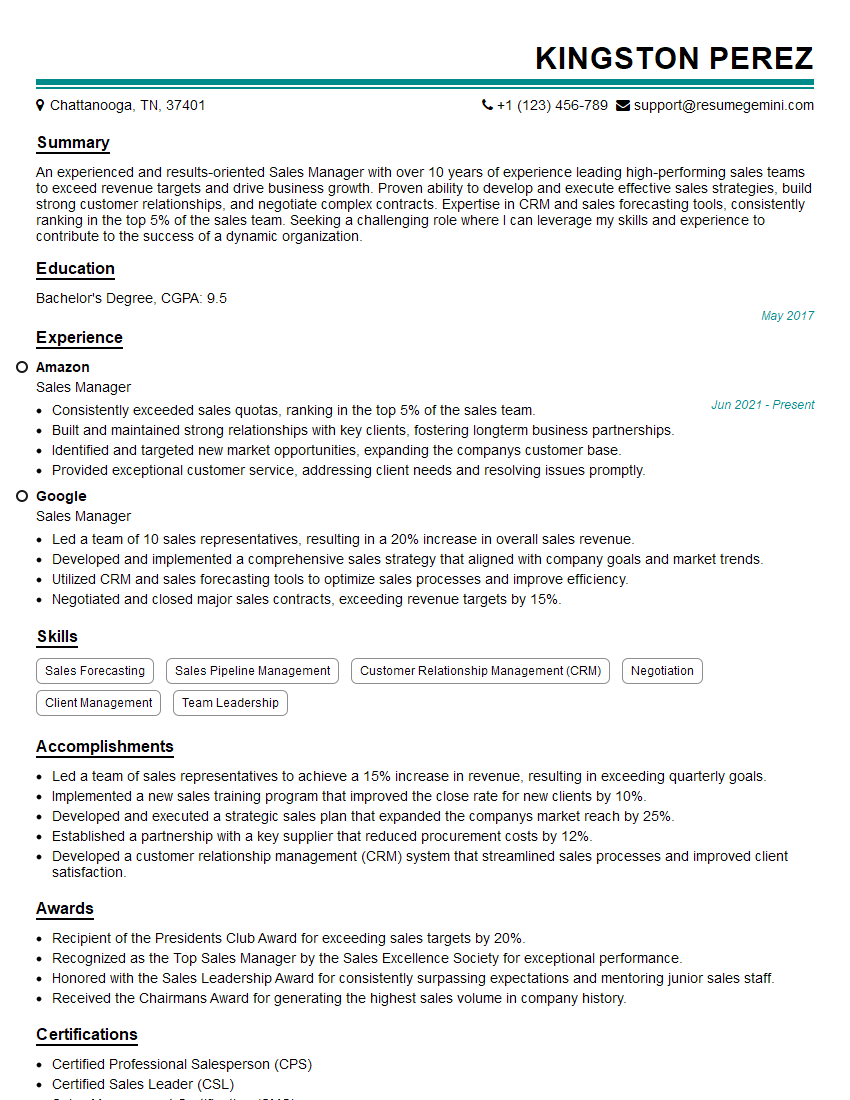
Sales Manager Resume Sample
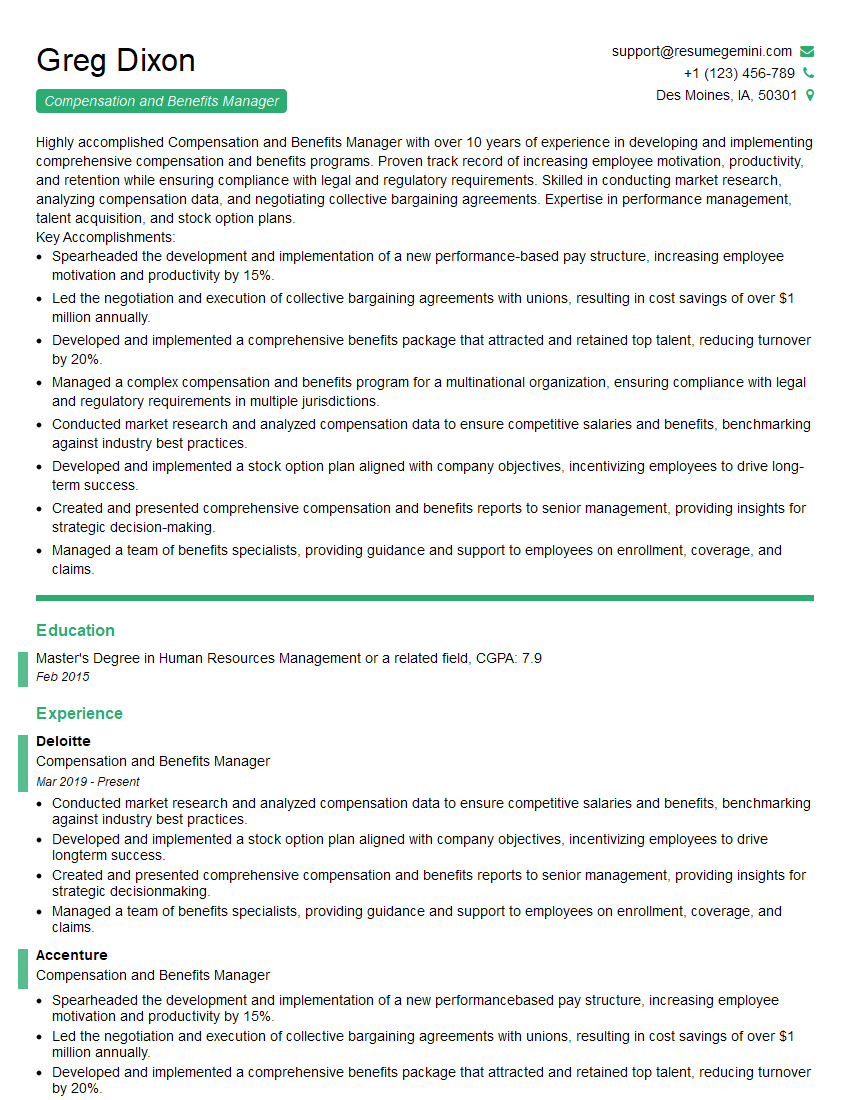
Compensation and Benefits Manager Resume Sample
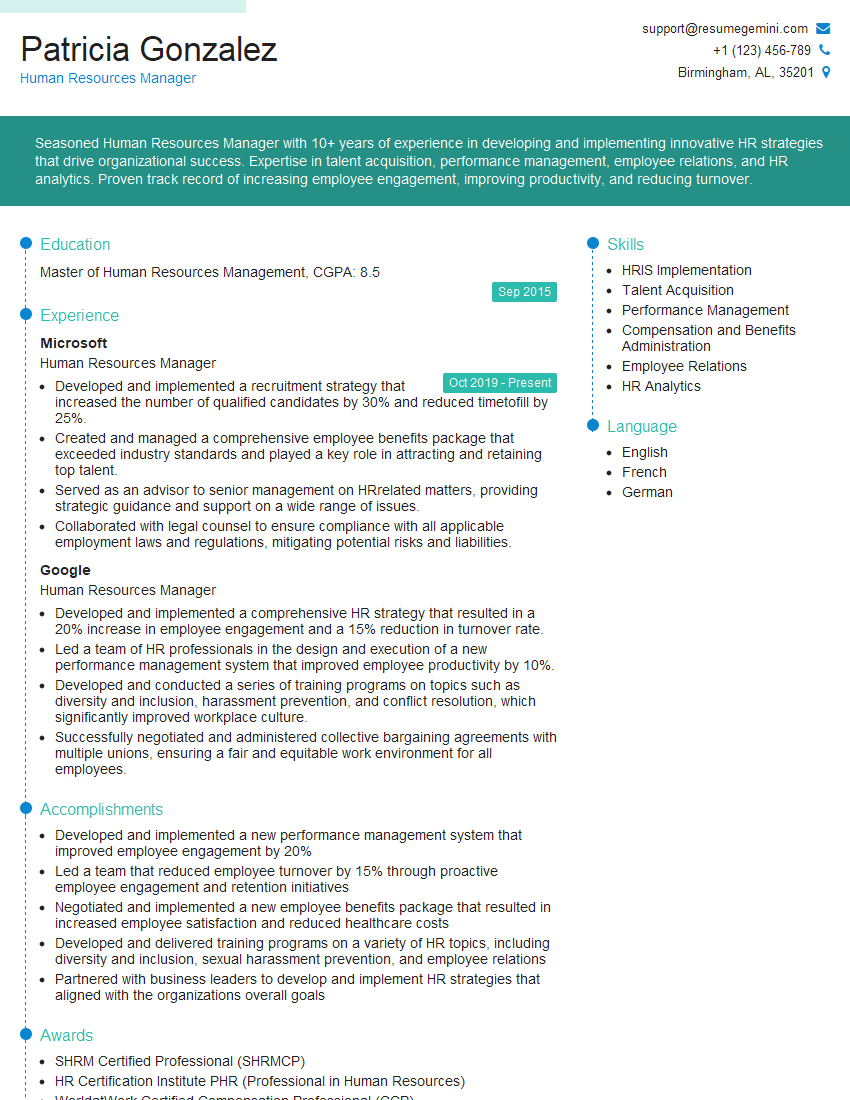
Human Resources Manager Resume Sample
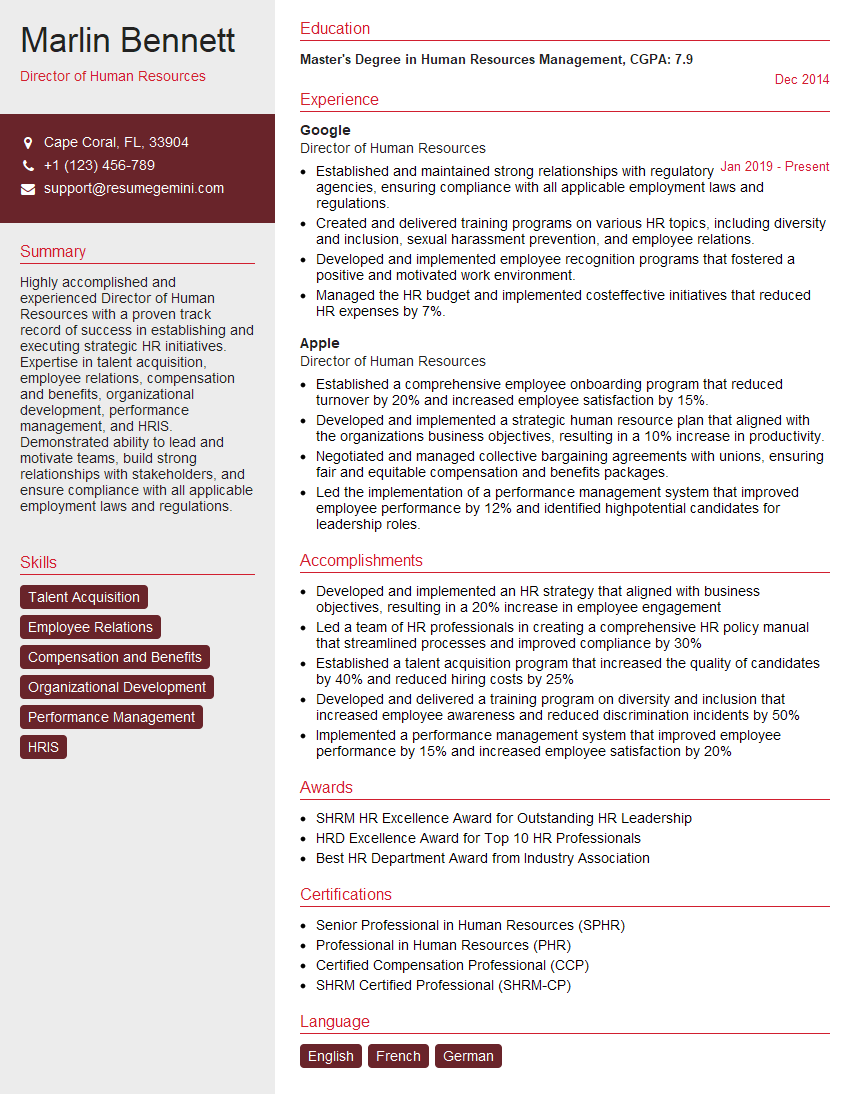
Director of Human Resources Resume Sample

Project Manager Resume Sample
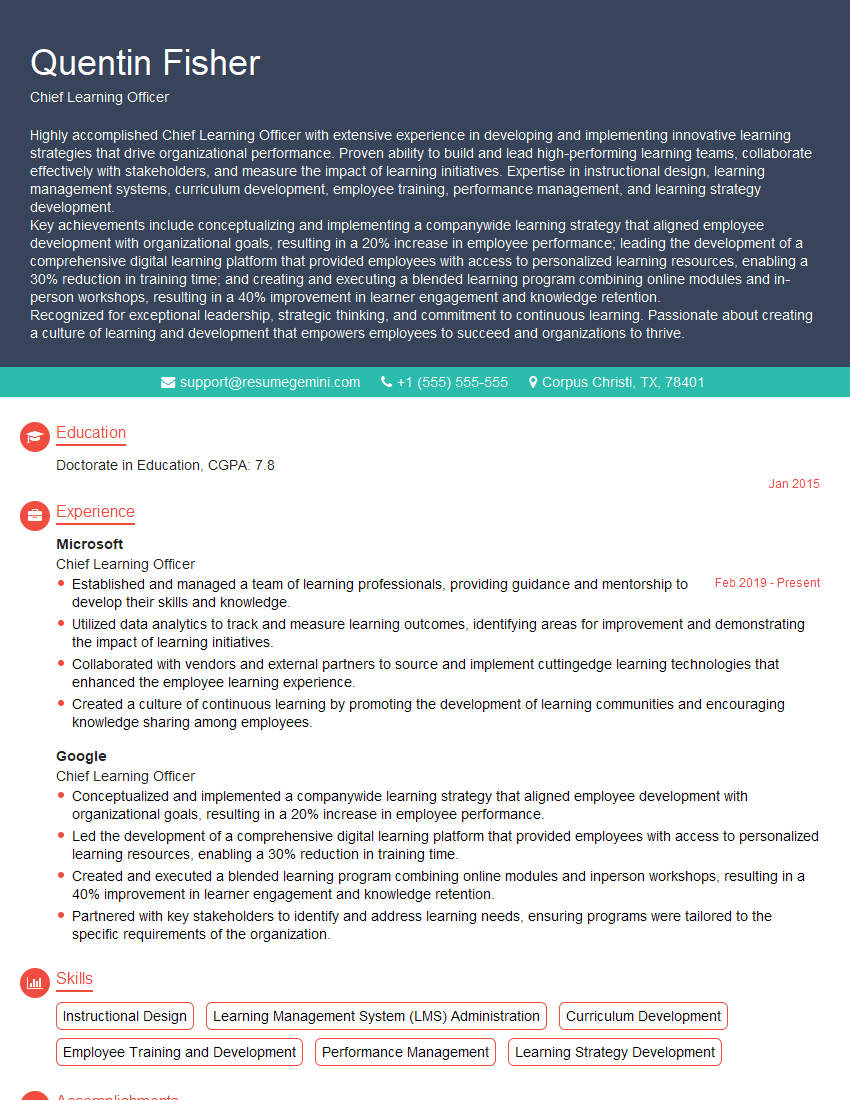
Chief Learning Officer Resume Sample
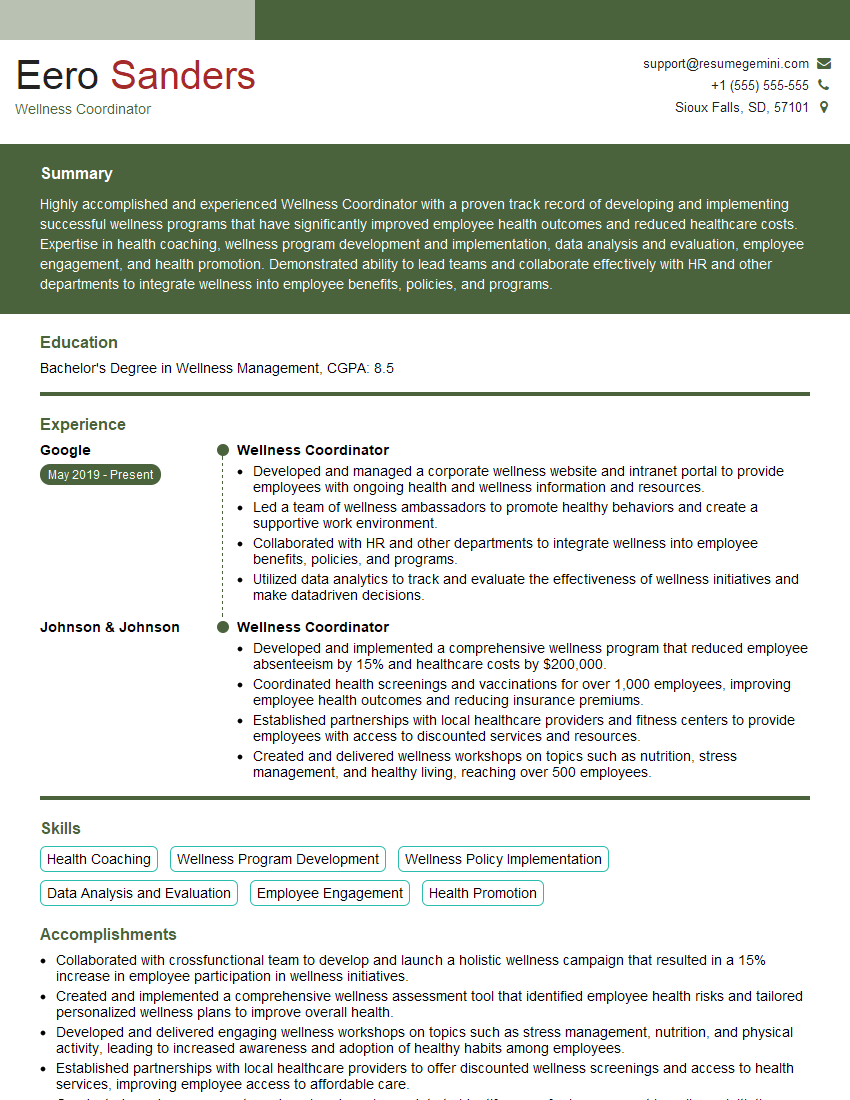
Wellness Coordinator Resume Sample
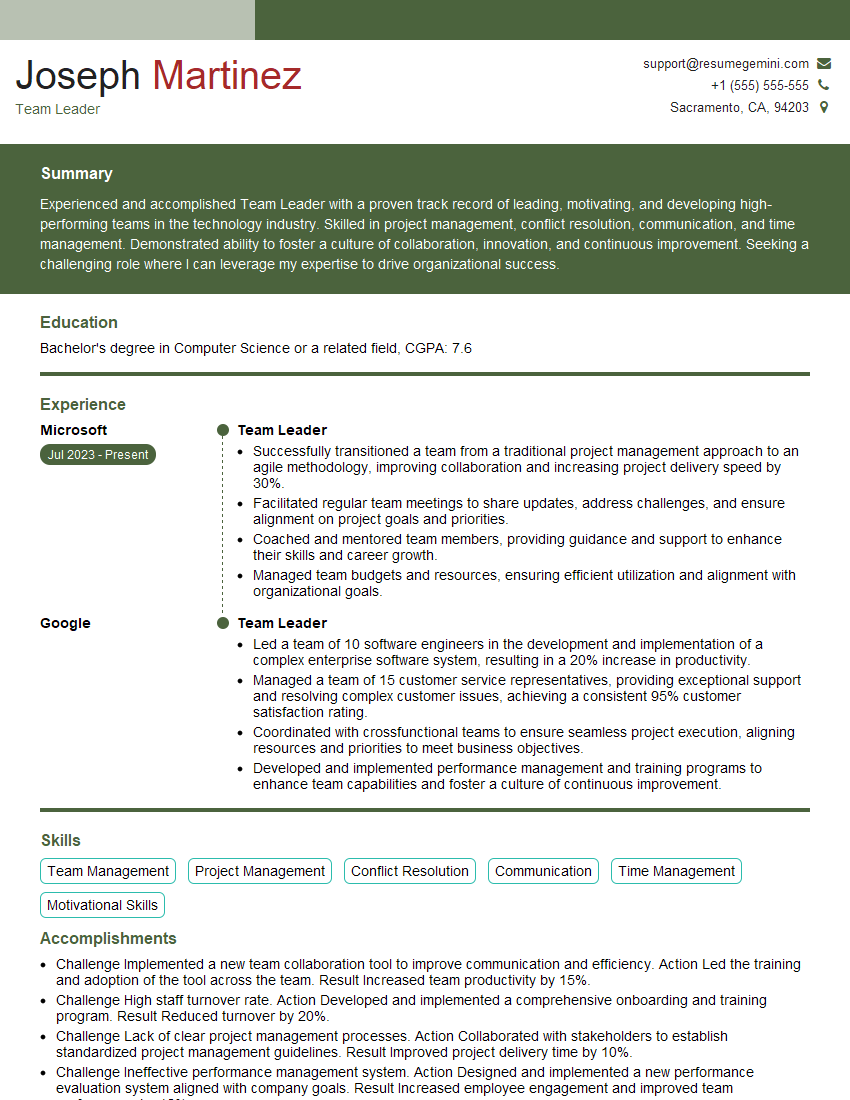
Team Leader Resume Sample
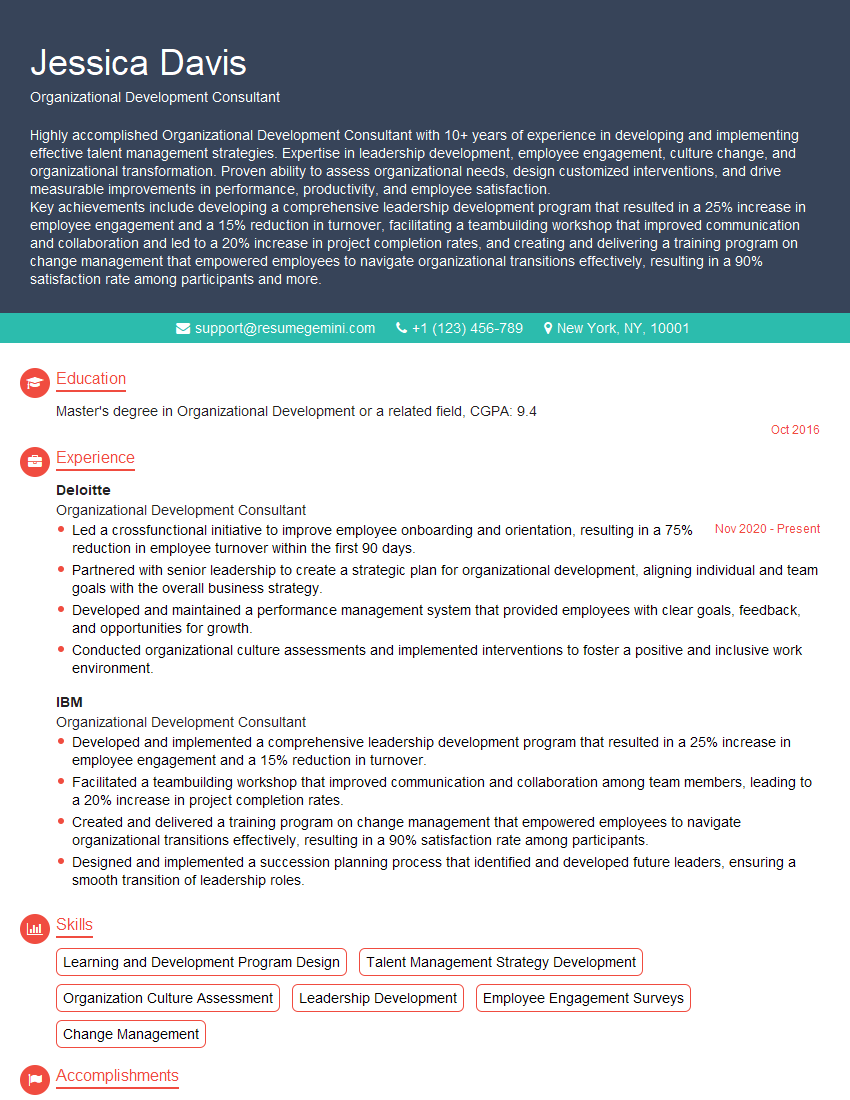
Organizational Development Consultant Resume Sample
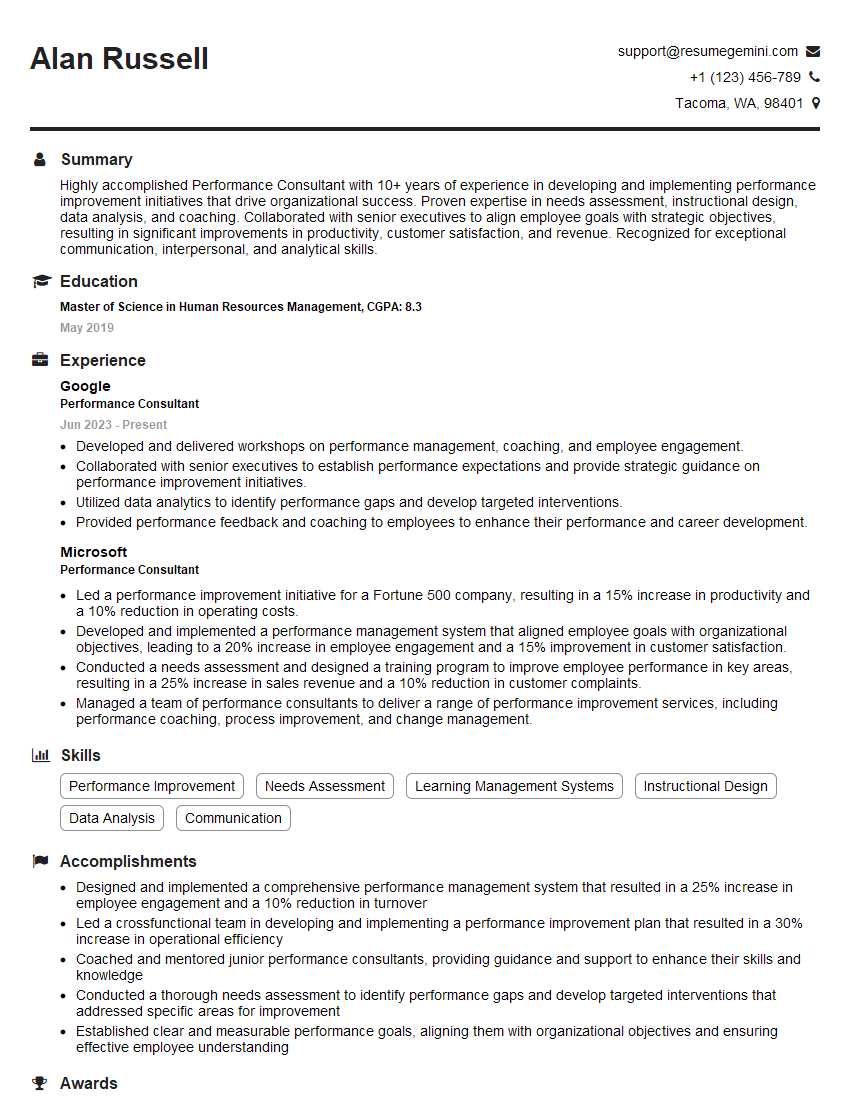
Performance Consultant Resume Sample
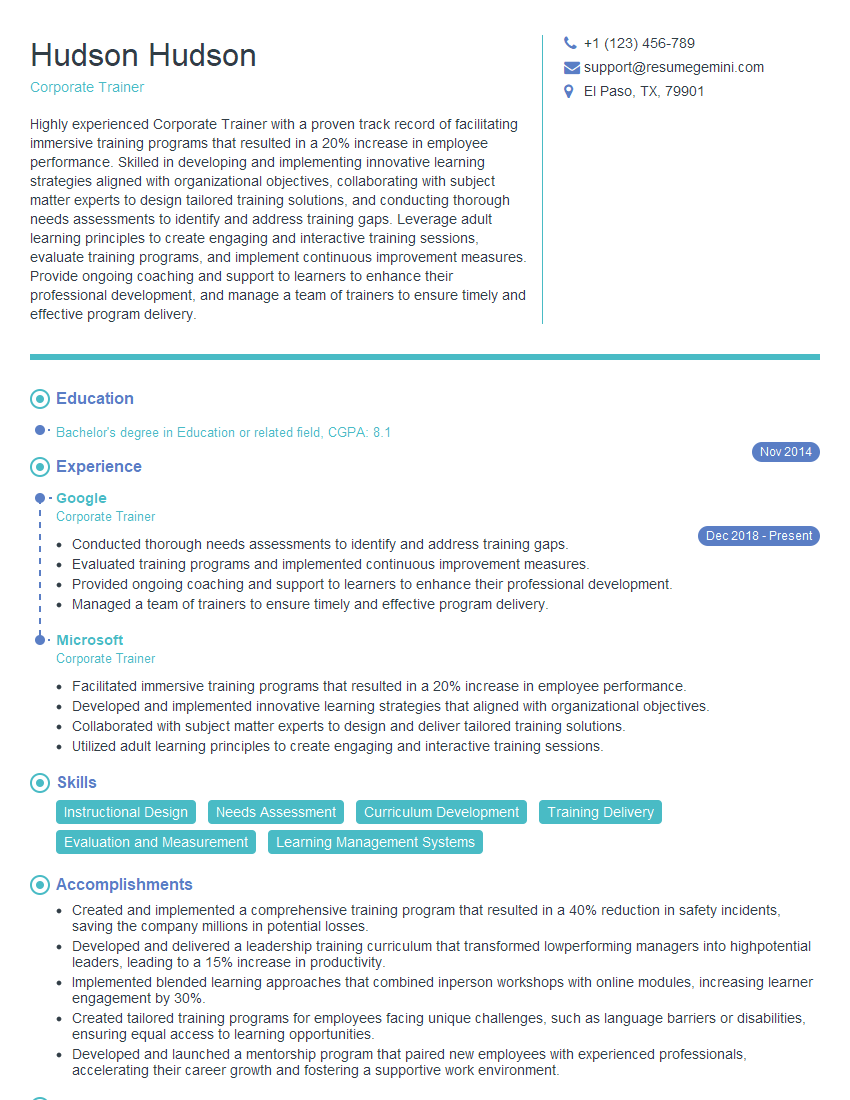
Corporate Trainer Resume Sample
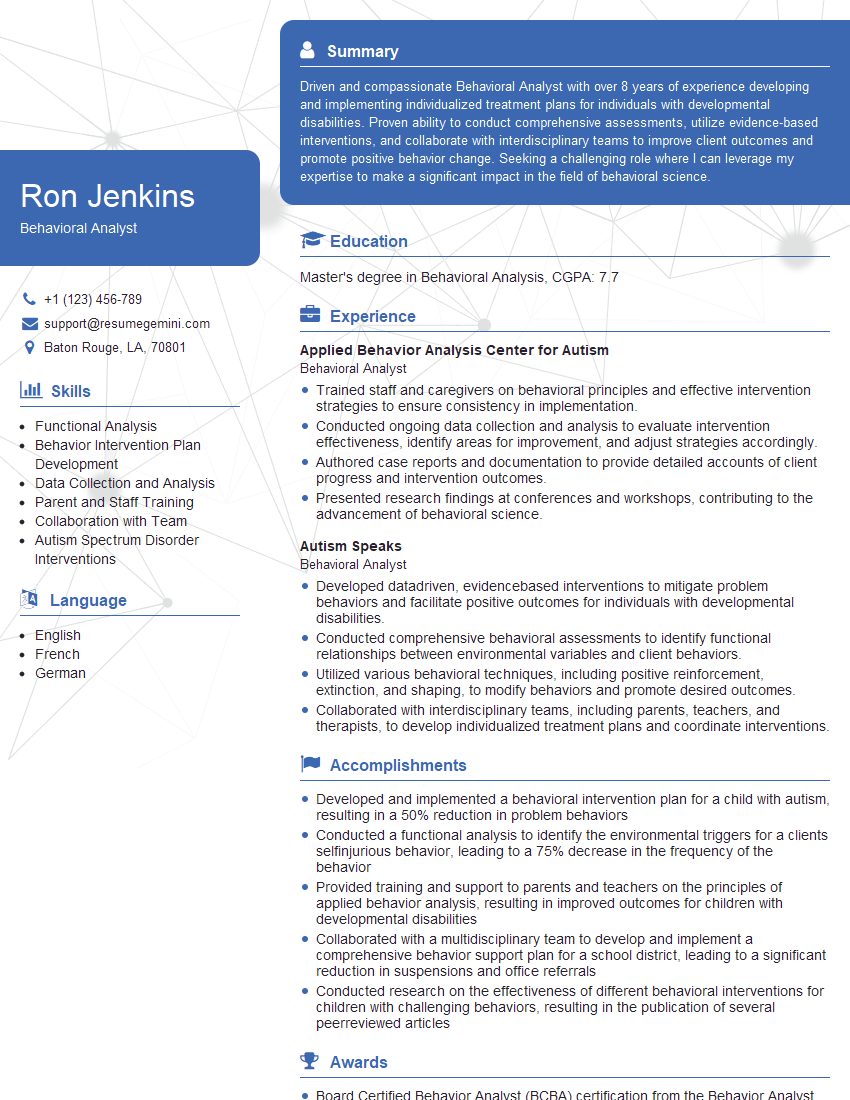
Behavioral Analyst Resume Sample
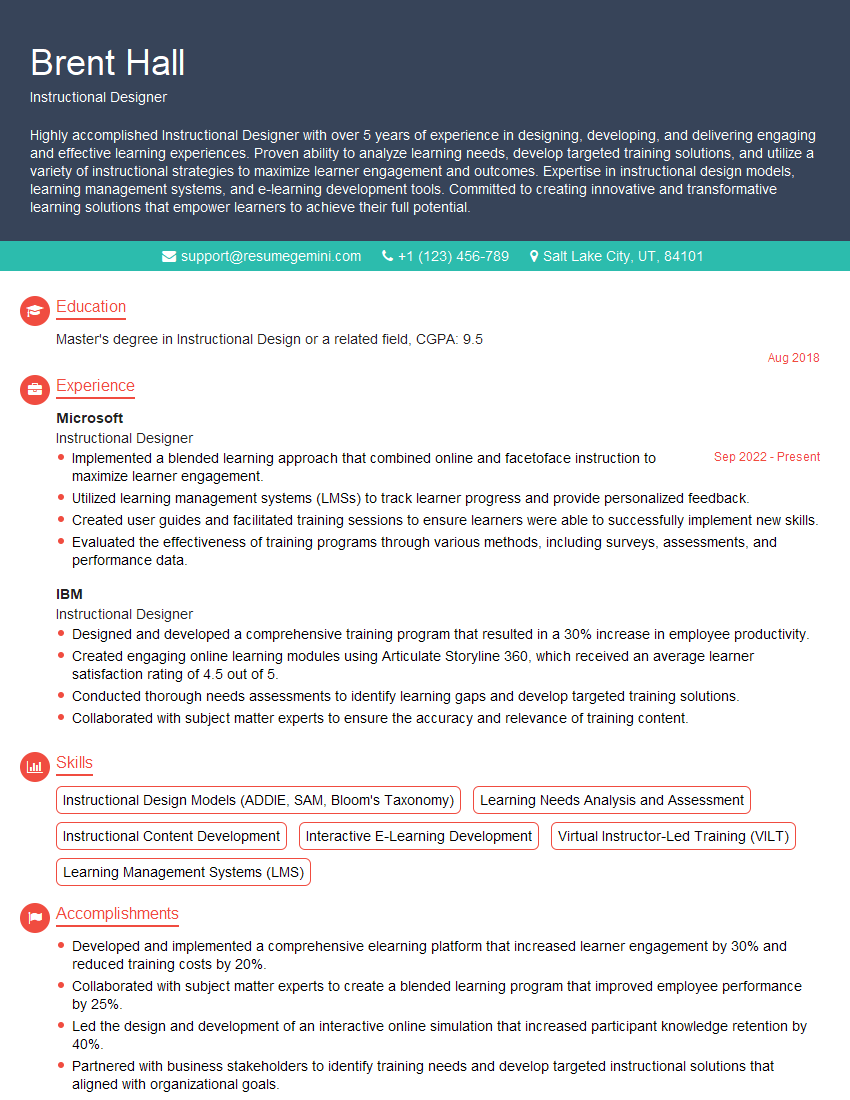
Instructional Designer Resume Sample
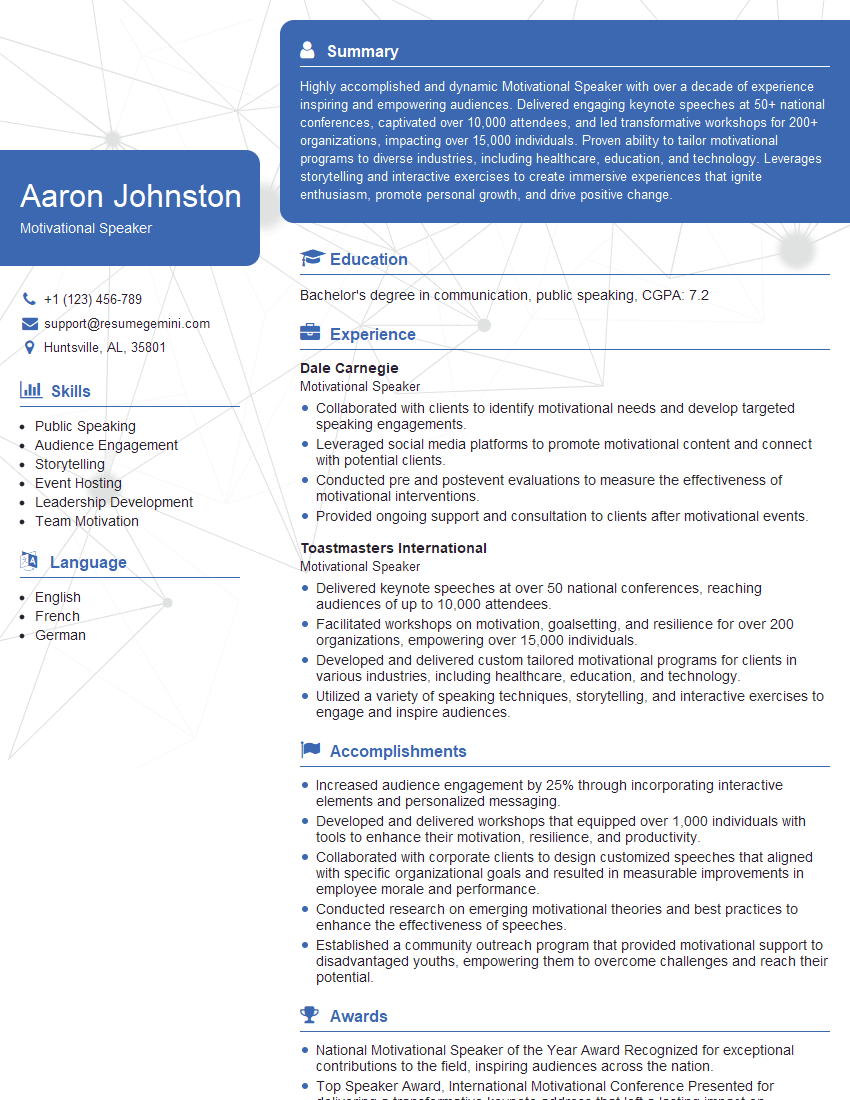
Motivational Speaker Resume Sample
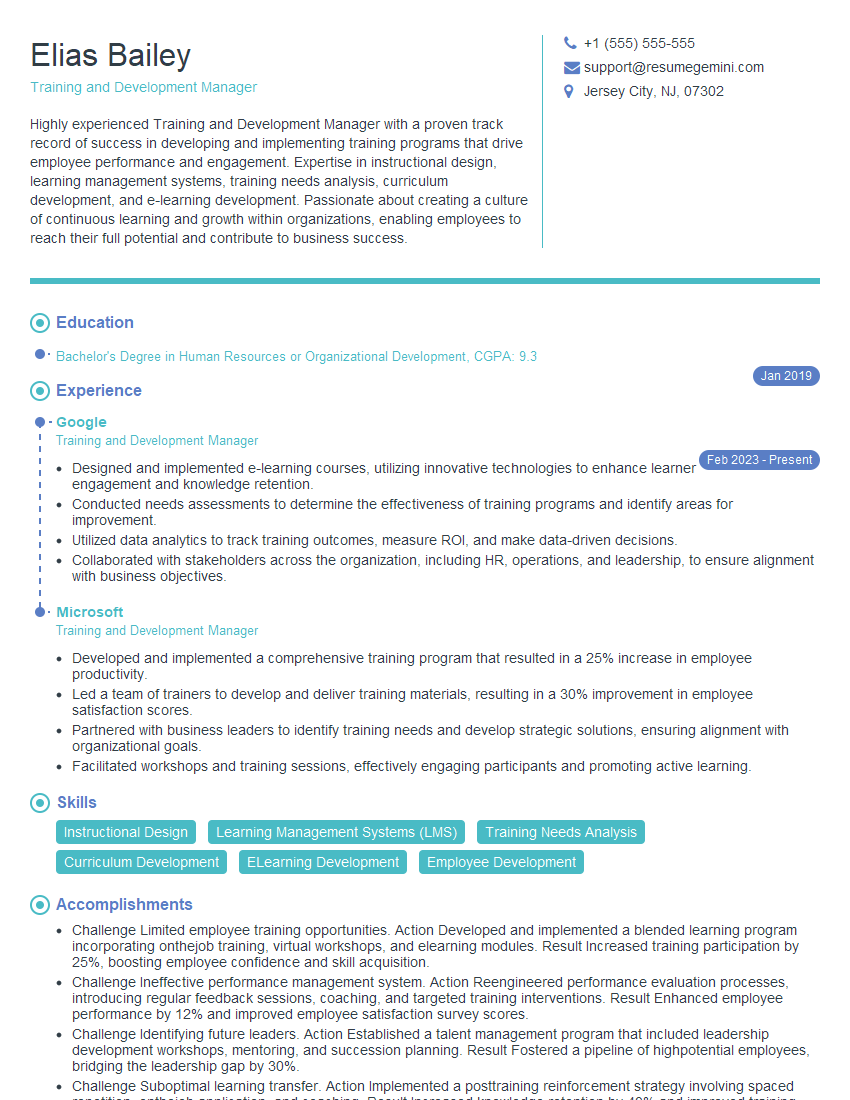
Training and Development Manager Resume Sample
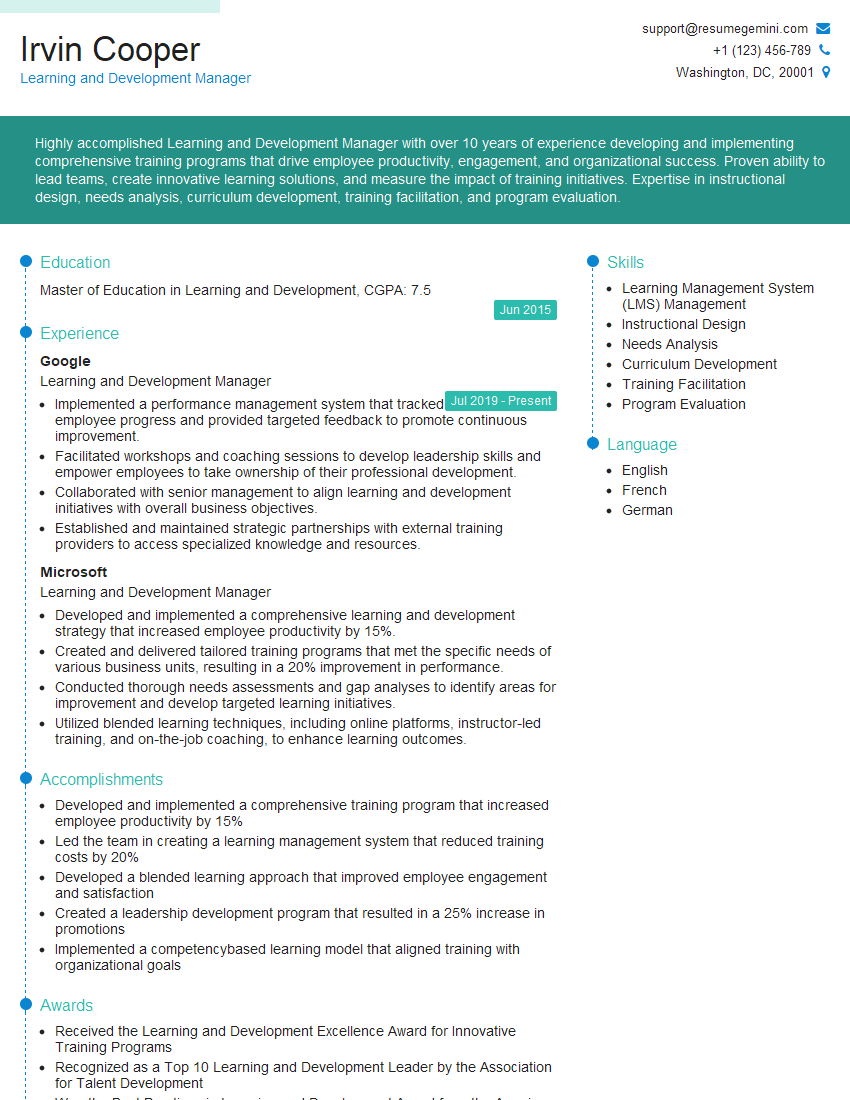
Learning and Development Manager Resume Sample
- Operations Manager
- Sales Manager
- Compensation and Benefits Manager
- Human Resources Manager
- Director of Human Resources
- Project Manager
- Chief Learning Officer
- Wellness Coordinator
- Team Leader
- Organizational Development Consultant
- Performance Consultant
- Corporate Trainer
- Behavioral Analyst
- Instructional Designer
- Motivational Speaker
- Training and Development Manager
- Learning and Development Manager
Explore more articles
Users Rating of Our Blogs
Share Your Experience
We value your feedback! Please rate our content and share your thoughts (optional).
What Readers Say About Our Blog
Very informative content, great job.
good