Are you ready to stand out in your next interview? Understanding and preparing for Mounting and Laminating interview questions is a game-changer. In this blog, we’ve compiled key questions and expert advice to help you showcase your skills with confidence and precision. Let’s get started on your journey to acing the interview.
Questions Asked in Mounting and Laminating Interview
Q 1. What types of laminating films are you familiar with?
Laminating films come in a variety of types, each suited for different applications and substrates. The choice depends heavily on the desired finish, durability, and budget.
- Gloss Laminate: Provides a high-shine, protective layer, ideal for vibrant images and projects needing a polished look. Think of glossy magazines – that’s a gloss laminate.
- Matte Laminate: Offers a non-reflective surface, reducing glare and making it perfect for presentations or artwork where a subtle finish is preferred. It’s often used for photographs where you don’t want the light to bounce off the surface.
- Satin Laminate: Falls between gloss and matte, providing a subtle sheen. It’s a good compromise if you want protection but not an overly shiny or dull finish.
- UV Laminate: Offers superior protection against UV degradation, crucial for long-term preservation of prints and artwork, especially those exposed to sunlight. Think museum-quality displays.
- Anti-scratch Laminate: Specifically designed for high-traffic areas, providing exceptional resistance to scratching and abrasion. Perfect for menus, signage, or anything likely to experience repeated handling.
Beyond these common types, specialized films like textured laminates (offering a unique tactile experience) or anti-static laminates (preventing dust accumulation) are also available.
Q 2. Describe the process of mounting a large-format print.
Mounting a large-format print is a precise process requiring careful planning and execution. The goal is to adhere the print to a backing board, usually foam core or Gatorfoam, creating a rigid, durable display piece. Here’s a step-by-step breakdown:
- Preparation: Clean both the print and the mounting board to ensure a clean adhesive bond. Any dust or debris can lead to inconsistencies.
- Adhesive Application: A heat-activated adhesive sheet is placed between the print and the mounting board. The specific adhesive type depends on the print material and desired permanence.
- Heat Application: A heated roller or vacuum mounting press is used to activate the adhesive. This requires careful control of temperature and pressure to prevent scorching or damaging the print.
- Pressure Application: A roller or the press is used to ensure even adhesion across the entire surface. Working from the center outward helps eliminate air bubbles.
- Cooling and Trimming: The mounted piece is allowed to cool completely under pressure before trimming to the desired size.
For extremely large prints, specialized equipment like a vacuum mounting press is essential to ensure even pressure and prevent wrinkles or bubbles.
Q 3. How do you ensure proper alignment during mounting?
Accurate alignment during mounting is crucial for a professional finish. Here’s how to achieve it:
- Precise Measurement and Marking: Before applying the adhesive, carefully measure and mark the center points of both the print and the mounting board. Use a square to ensure straight lines.
- Registration Marks: If possible, use registration marks (small, easily visible marks) printed on the artwork itself to act as guides for aligning it on the board.
- Test Placement: Before fully adhering the print, perform a test run. Lightly position the print on the board, checking alignment visually and with measurement tools.
- Using a Mounting Table: Professional mounting tables often incorporate alignment aids such as edge guides or adjustable clamps to ensure perfect registration.
- Visual Inspection: Once mounted, carefully inspect the alignment from multiple angles to identify any discrepancies.
Remember, taking the time for proper alignment significantly impacts the final quality of the mounted piece.
Q 4. What are the common causes of air bubbles in lamination?
Air bubbles in lamination are a common frustration. Several factors contribute:
- Improper Pressure: Insufficient pressure during the lamination process prevents the film from adhering completely to the substrate, trapping air pockets.
- Excessive Heat: Too much heat can cause the laminate to expand, creating bubbles that are difficult to remove.
- Dust or Debris: Particles between the laminate and substrate can prevent proper adhesion.
- Moisture: Moisture can also create problems during the lamination process. Ensure both the laminate and substrate are completely dry.
- Incorrect Film Selection: Using the wrong type of film for the material being laminated might result in incompatibility and the formation of air bubbles.
Preventing these issues requires a clean workspace, proper machine settings, and careful attention to detail.
Q 5. How do you troubleshoot a jammed laminating machine?
A jammed laminating machine requires careful troubleshooting. Never force the machine. Always refer to the manufacturer’s instructions first.
- Turn off and Unplug: The first and most important step is to turn off and unplug the machine to prevent any electrical hazards.
- Inspect the rollers: Carefully examine the rollers for any obstructions, such as paper jams or foreign objects. Remove any blockages.
- Check the Paper Path: Make sure the paper is feeding correctly through the machine and that there are no bends or kinks in the path.
- Check the Heat Settings: Excessive heat can sometimes cause the laminate to stick to the rollers. Reduce the heat setting and try again.
- Consult the Manual: Refer to the owner’s manual for specific troubleshooting guidance for your machine’s model.
- Contact Support: If you’re unable to resolve the issue yourself, contact the manufacturer’s customer support for assistance.
It is crucial to handle the equipment with care to avoid further damage.
Q 6. Explain the difference between dry mount and wet mount techniques.
Dry mounting and wet mounting are two distinct methods for adhering prints to backing boards, each with its own advantages and disadvantages.
- Dry Mounting: This method uses a heat-activated adhesive sheet placed between the print and the mounting board. A heated press activates the adhesive, creating a strong, permanent bond. It’s fast, clean, and ideal for large-format prints. Think of poster mounting in a gallery.
- Wet Mounting: This involves applying a wet adhesive (like photo mounting adhesive) directly to the back of the print or the mounting board. The print is then carefully adhered to the board, smoothing out any air bubbles. It’s more flexible and can be used on delicate prints, but requires more skill and patience. This might be suitable for archival work or mounting delicate watercolour paintings.
The choice between dry and wet mounting depends on the type of print, the desired permanence, and the available equipment.
Q 7. What safety precautions do you take when operating laminating equipment?
Safety is paramount when operating laminating equipment. Here are crucial precautions:
- Proper Training: Always receive adequate training before operating any laminating machine or mounting equipment.
- Personal Protective Equipment (PPE): Use appropriate safety equipment, including safety glasses to protect against flying debris or hot materials.
- Machine Maintenance: Regularly inspect the machine for any signs of wear and tear. Address any maintenance needs promptly.
- Proper Ventilation: Ensure adequate ventilation in the workspace to minimize exposure to fumes or heated air, especially when using heat-activated adhesives.
- Fire Safety: Be aware of fire hazards associated with heated equipment and keep a fire extinguisher nearby.
- Follow Manufacturer’s Instructions: Always adhere strictly to the manufacturer’s instructions and safety guidelines provided with the equipment.
Prioritizing safety ensures a safe and efficient working environment.
Q 8. How do you handle different substrates during mounting and laminating?
Handling diverse substrates in mounting and laminating requires careful consideration of material properties. Different materials react differently to heat, pressure, and adhesives. For instance, delicate fabrics require lower temperatures and pressures than rigid plastics.
- Paper and Cardstock: These are relatively straightforward and can tolerate a range of temperatures and pressures. We typically use a dry mounting press or a cold laminator, adjusting pressure to prevent creasing or damage.
- Photographs: Photos require careful handling, often utilizing pressure-sensitive adhesives and low-heat laminators to prevent damage to the image. The choice of laminate is critical here – a matte finish will prevent glare and reflections.
- Acrylic and Plastics: These materials require special attention. The temperature and pressure must be controlled to avoid warping or distortion. Solvents might be required in certain situations and must be carefully chosen.
- Metals and Wood: Though less common in standard laminating, I’ve had experience mounting thin metal sheets or wood veneers. This demands a specialized approach, sometimes involving specific adhesives and potentially different equipment entirely.
In essence, successful substrate handling involves careful selection of the right equipment, adhesive, temperature, and pressure settings tailored to the material’s characteristics. Prior experience and a good understanding of material science are crucial.
Q 9. What is the significance of proper pressure and temperature settings in lamination?
Precise pressure and temperature control are paramount in lamination. They directly affect the bond strength, the final appearance, and the longevity of the laminated product.
- Temperature: Too low, and the adhesive won’t activate properly leading to poor adhesion. Too high, and the substrate could be damaged, causing discoloration, warping, or bubbling. The ideal temperature depends on the adhesive and the substrate.
- Pressure: Insufficient pressure results in air bubbles and uneven adhesion. Excessive pressure can cause the substrate to be compressed or distorted. Different laminators have different pressure ranges and it’s important to understand how pressure is calibrated and regulated in your specific machine.
For example, laminating a delicate watercolor painting needs significantly lower temperature and pressure than laminating a thick vinyl banner. Consistent pressure and temperature throughout the lamination process are crucial to achieve high-quality results. In my experience, regularly calibrating the equipment and using a thermometer to monitor the temperature are essential practices for quality control.
Q 10. How do you inspect for defects after mounting and laminating?
Defect inspection is a critical step. I typically perform a thorough visual inspection under even lighting to detect potential problems.
- Air Bubbles: These are common defects, indicating insufficient pressure or improper adhesive application.
- Wrinkles or Creases: These are caused by improper feeding or excessive pressure.
- Silvering: This refers to an undesirable reflection indicating insufficient adhesion.
- Uneven Laminate Application: This can stem from a variety of issues, including inconsistent pressure or material inconsistencies.
- Damage to Substrates: Scorch marks, discoloration or warping shows improper temperature settings.
Beyond visual inspection, I often use a backlight to illuminate any defects that aren’t apparent under standard lighting. Detailed documentation of findings, including photographic evidence, is crucial for maintaining quality control and identifying recurring issues.
Q 11. What are the different types of laminating machines you have experience with?
Over the course of my career, I’ve worked with a variety of laminating machines, each with its own strengths and limitations.
- Cold Laminators: Ideal for photographs and delicate prints, utilizing pressure-sensitive adhesives, they don’t use heat.
- Thermal Laminators (hot laminators): These are used for a wider range of materials and generally offer greater durability. They utilize heat-activated adhesives and offer various pouch sizes and thicknesses.
- Roll Laminators: Ideal for high-volume production, these machines feed the material through a continuous roll of laminate. These are more suited for larger print sizes and require a different set of skills for optimum use.
- Dry Mount Presses: These machines use heat and pressure to apply an adhesive sheet between the substrate and a mounting board. This approach is commonly used for mounting photographs, posters, and other materials to rigid boards.
My expertise extends to operating and maintaining all these machines effectively and choosing the right one for a specific job is a key part of my skill set.
Q 12. Describe your experience with different adhesive types used in mounting.
My experience encompasses a broad spectrum of adhesives used in mounting, each with unique properties.
- Pressure-Sensitive Adhesives (PSAs): These are common in cold lamination and offer ease of use. Different PSAs offer varying tack and adhesive strength depending on the substrate.
- Hot Melt Adhesives: These require heat activation, offering a strong bond, especially for applications needing long-term durability. They’re often used with thermal laminators.
- Solvent-Based Adhesives: These are stronger and more permanent, offering the best adhesion for difficult substrates but require careful handling due to their volatile nature. This usually entails having a well-ventilated area for working with this type of adhesive.
- Spray Adhesives: These are best suited for mounting smaller materials, providing an even application and good overall adhesion. A specific type of adhesive is needed depending on the substrate, this needs to be kept in mind when choosing this type of adhesive.
The selection of adhesive is crucial. Considerations include the substrates’ materials, the required bond strength, and any potential environmental factors.
Q 13. How do you maintain and clean laminating equipment?
Regular maintenance and cleaning are key to extending the life of laminating equipment and maintaining consistent performance.
- Daily Cleaning: This includes removing any leftover adhesive, dust, or debris from rollers and platens (the heated surface of the machine). I usually use a soft cloth and a mild cleaning solution.
- Weekly Maintenance: This might involve a more thorough cleaning of the machine’s internal components, checking for wear and tear on rollers, and lubricating moving parts as required.
- Periodic Servicing: This includes more advanced checks and potential repairs that are better handled by qualified technicians. This should be done regularly or as soon as any major damage is found.
Proper maintenance not only keeps the equipment functioning smoothly but also prevents damage to materials, reducing waste and improving the overall quality of output. A well-maintained machine is much more efficient and avoids costly repairs or replacements. Following the manufacturer’s guidelines for maintenance is of utmost importance.
Q 14. How do you handle oversized or unusually shaped materials during mounting?
Handling oversized or unusually shaped materials often requires a more creative approach.
- Sectioning: For very large materials that exceed the machine’s capabilities, sectioning into smaller, manageable pieces for individual lamination might be necessary. Careful planning is required to ensure alignment and smooth transitions between sections after they are laminated.
- Custom Jigs and Fixtures: For unusual shapes, custom-made fixtures or jigs can help to hold the material securely during lamination and mounting, ensuring even pressure distribution and preventing damage.
- Specialized Equipment: Larger roll laminators may be necessary for handling oversized materials. Sometimes, specialized tools are needed to maintain alignment, especially in complex geometric shapes.
- Alternative Methods: For particularly large or delicate items, hand lamination or other specialized mounting techniques might be necessary. This requires great skill and patience.
Safety is always the paramount concern when working with large or awkward materials. Ensuring proper support and handling techniques is critical to avoid damage to the material and potential injury.
Q 15. What is your experience with different mounting boards and adhesives?
My experience with mounting boards and adhesives spans a wide range of materials and applications. I’ve worked extensively with foam core boards (various thicknesses and colors), Gatorfoam (for its lightweight yet rigid properties), and archival mat boards (for preserving artwork). Adhesives I’ve used include pressure-sensitive adhesives (PSAs) like spray mount, dry mount tissue, and repositionable glues. The choice depends heavily on the substrate, the final application, and the desired longevity. For instance, spray mount is quick and easy for smaller projects, but dry mounting offers a more permanent and archival bond, particularly suitable for valuable prints or photographs. I also have experience with more specialized adhesives, including those designed for heat-sensitive materials or those requiring a specific drying time.
For example, I once had to mount a large, delicate botanical illustration onto archival mat board for a museum exhibit. The wrong adhesive could have damaged the artwork, so I opted for a dry-mount press and acid-free tissue to ensure both a secure bond and the long-term preservation of the piece.
Career Expert Tips:
- Ace those interviews! Prepare effectively by reviewing the Top 50 Most Common Interview Questions on ResumeGemini.
- Navigate your job search with confidence! Explore a wide range of Career Tips on ResumeGemini. Learn about common challenges and recommendations to overcome them.
- Craft the perfect resume! Master the Art of Resume Writing with ResumeGemini’s guide. Showcase your unique qualifications and achievements effectively.
- Don’t miss out on holiday savings! Build your dream resume with ResumeGemini’s ATS optimized templates.
Q 16. Explain the process of preparing a substrate for lamination.
Substrate preparation is crucial for successful lamination. It’s akin to preparing a canvas before painting – a smooth, clean surface ensures a flawless final product. The process usually involves several steps:
- Cleaning: Removing dust, debris, and fingerprints using a lint-free cloth is the first step. Any residue can lead to imperfections under the laminate.
- Surface Inspection: Carefully examine the substrate for any blemishes, wrinkles, or imperfections. These need to be addressed before lamination to prevent them from being trapped underneath.
- Pre-treating (if necessary): Some substrates might need a specific pre-treatment. For instance, porous materials may benefit from a sealant to prevent the adhesive from being absorbed unevenly.
In a recent project laminating a large-scale architectural drawing, I meticulously cleaned the drawing using a soft brush and then carefully checked for any creases or tears, meticulously repairing them before moving forward with lamination to ensure a pristine, professional finish.
Q 17. How do you address wrinkles or creases during lamination?
Wrinkles and creases during lamination are frustrating but often avoidable. The key is careful application and proper equipment. Here’s a breakdown of how I address them:
- Squeegee Technique: A consistent and firm pressure using a squeegee helps to expel air bubbles and smooth out wrinkles as the film is applied. Multiple passes are often necessary, especially on larger projects.
- Heat Application (if applicable): Some laminating films require heat activation for a proper bond. Applying heat carefully and evenly helps to relax the film and reduce wrinkles.
- Re-lamination (in extreme cases): If wrinkles persist, it might be necessary to remove the laminate and start again, ensuring that the substrate is perfectly clean and dry before reapplying.
I once encountered severe wrinkles while laminating a poster printed on textured paper. By using a heat laminator and working carefully, I was able to largely eliminate the wrinkles. But I learned that the textured paper’s uneven surface made it challenging and in the future, I will recommend a different material for posters of this type.
Q 18. Describe your experience with quality control in mounting and laminating.
Quality control is paramount in mounting and laminating. It’s not just about aesthetics; it’s about ensuring the longevity and integrity of the final product. My quality control measures include:
- Regular Equipment Maintenance: Clean rollers, calibrated heat settings (where applicable), and sharp blades prevent defects and ensure consistent results.
- Visual Inspection: At every stage, I conduct a thorough visual inspection, checking for wrinkles, air bubbles, and misalignments.
- Test Runs: Before laminating large batches, I always perform test runs to verify the settings and the material compatibility. This prevents costly mistakes.
- Material Sourcing: Using high-quality, reputable materials is essential. It minimizes the risks of unexpected issues such as adhesive failure or color inconsistencies.
For example, in a large-scale project involving the lamination of hundreds of maps, I implemented a rigorous quality check after each batch. This ensured that any inconsistencies were quickly identified and resolved, saving considerable time and resources.
Q 19. How do you determine the appropriate type of lamination for a given project?
Choosing the right lamination type hinges on the project’s requirements and the substrate’s properties. Factors I consider include:
- Durability: Will the finished product be exposed to heavy use or harsh environmental conditions? A thicker, more durable laminate will be necessary for applications like outdoor signage.
- Aesthetics: Does the project require a matte, gloss, or textured finish? Different laminates offer a wide range of finishes to complement the substrate.
- Substrate Sensitivity: Some substrates are heat-sensitive. In such cases, a cold-lamination process (using adhesives) might be necessary to avoid damage.
- Archival Requirements: For preserving artwork or important documents, choosing archival-quality laminates that are acid-free and UV resistant is crucial.
For example, laminating a museum poster would call for archival quality, UV resistant lamination to protect it from light damage and ensure its longevity. Conversely, laminating a trade show banner might require a more durable and weatherproof laminate for outdoor use.
Q 20. How do you calculate the amount of lamination film needed for a job?
Calculating the amount of lamination film needed involves precise measurements and accounting for waste. Here’s the process:
- Measure Dimensions: Accurately measure the length and width of the substrate(s) to be laminated.
- Calculate Area: Multiply length by width to obtain the total surface area.
- Add Overlap: Add extra film for overlap, typically a couple of inches on each side, to ensure full coverage and prevent the edges from peeling.
- Factor in Waste: Consider waste due to cutting, alignment, and potential errors. A 10-15% increase in the calculated area usually accounts for this.
- Check Film Rolls: Confirm the dimensions of the lamination film rolls to determine the number of rolls required.
For instance, laminating a poster that is 36 inches by 24 inches would require calculating the area (36×24 = 864 square inches). Adding a 2-inch overlap on each side (4 inches total) and accounting for waste would require approximately 1000-1100 square inches of lamination film.
Q 21. What are the limitations of different mounting and laminating techniques?
Mounting and laminating techniques, while versatile, have limitations:
- Heat Sensitivity: Heat lamination is unsuitable for heat-sensitive substrates. Cold lamination might offer a solution but potentially sacrifices durability.
- Substrate Compatibility: Some substrates might react poorly to certain adhesives or laminates, leading to discoloration, bubbling, or damage. Careful material selection is crucial.
- Thickness Limitations: Thick substrates can be challenging to laminate evenly, particularly with a hand-held laminator. Specialized equipment might be required for large or bulky items.
- Edge Handling: Perfect edge sealing can be difficult, requiring careful trimming to prevent peeling.
For example, laminating a fabric banner presents a challenge due to the softness of the fabric and potential incompatibility of certain laminates. Similarly, mounting a very heavy piece of artwork can place strain on the adhesive, highlighting the importance of choosing the right adhesive and mounting board for the weight and dimensions of the artwork.
Q 22. What are the common causes of delamination?
Delamination, the separation of layers in a laminated material, is a common problem with several potential causes. Think of it like a poorly made sandwich – if the ingredients (layers) aren’t properly bonded, they’ll come apart.
- Improper Adhesive Application: Insufficient adhesive, uneven distribution, or using the wrong type of adhesive for the substrate materials are primary culprits. For instance, using a pressure-sensitive adhesive designed for paper on a high-gloss surface might lead to poor adhesion.
- Substrate Incompatibility: Materials with differing surface energies or chemical properties might not bond well. Imagine trying to glue glass to Teflon – it’s simply not going to stick.
- Environmental Factors: Exposure to excessive heat, moisture, or UV radiation can weaken the adhesive bond over time, causing delamination. Think of leaving a laminated poster in direct sunlight for months.
- Improper Pressure or Temperature During Lamination: Insufficient pressure or improper temperature settings during the lamination process can prevent the layers from bonding correctly. This is like not pressing down hard enough when making a sandwich; the layers will easily separate.
- Contamination: Dust, dirt, or other contaminants on the substrate surfaces can interfere with adhesion, creating weak points. It’s like trying to glue two surfaces together that are covered in dust.
Identifying the root cause is key to preventing future delamination. A thorough investigation of the materials used, the lamination process, and environmental conditions is often necessary.
Q 23. How do you identify and address damaged or defective lamination film?
Identifying damaged or defective lamination film requires a keen eye and understanding of the material’s properties. I typically inspect the film for:
- Visible Defects: Scratches, creases, pinholes, or discoloration are obvious signs of damage. I use a strong light source and a magnifying glass if needed for closer inspection.
- Surface Texture: The film should have a consistent, smooth surface. Uneven texture or a rough feel could indicate a manufacturing defect.
- Adhesive Properties: I test the adhesive’s tack and ability to adhere to a sample substrate. Weak adhesion or inconsistent stickiness suggests a problem with the film itself.
- Clarity and Transparency: For transparent films, I check for clarity and the absence of haze or distortion.
Addressing defective film typically involves replacing it with a new roll. I always meticulously check the new roll for any defects before proceeding with the lamination. In case of minor surface imperfections that don’t significantly affect the overall quality, I might carefully trim the edges to remove the damaged areas, but this depends on the type and extent of the damage and the project requirements.
Q 24. Describe your experience with different types of mounting adhesives.
My experience encompasses a wide range of mounting adhesives, each with its own strengths and weaknesses. The choice of adhesive depends heavily on the materials being bonded and the application’s environmental conditions.
- Pressure-Sensitive Adhesives (PSAs): These are commonly used for mounting posters, photographs, and lightweight materials. They require no curing time and offer easy application, but their bonding strength might be less than other types. Examples include spray mount, double-sided tapes, and repositionable adhesives.
- Hot Melt Adhesives: These are applied in a molten state and solidify upon cooling. They offer strong bonds and quick setting times but require specialized equipment. They are ideal for applications requiring high bond strength and heat resistance.
- Solvent-Based Adhesives: These require drying time and are suitable for heavier materials or applications requiring strong and permanent bonds. They are known for their excellent adhesion but also emit solvents, requiring proper ventilation.
- Water-Based Adhesives: These are environmentally friendly and low-odor options, suitable for many mounting applications. They generally have a longer drying time and may not be as strong as solvent-based adhesives.
In my work, I’ve used various brands and types of adhesives, carefully selecting them based on the specifics of each project. For example, I’d use a PSA for mounting a lightweight print to foam board but a solvent-based adhesive for attaching a heavy canvas to a wooden panel.
Q 25. What software or systems have you used to manage mounting and laminating projects?
Throughout my career, I’ve utilized several software and systems to manage mounting and laminating projects. This includes project management software such as Asana and Trello for tracking progress, deadlines, and client communication. I also use specialized software for design and pre-press operations, ensuring proper file preparation before mounting and laminating. Finally, I have experience with inventory management systems to track consumable supplies like adhesives, films, and substrates.
For example, in a recent project involving multiple large-format prints, I used Asana to assign tasks to team members, track the status of each print, and maintain communication with the client. The software’s features like Gantt charts were particularly useful in visualizing the project timeline and identifying potential bottlenecks.
Q 26. How do you prioritize tasks when working on multiple mounting and laminating jobs?
Prioritizing tasks when handling multiple jobs requires a structured approach. I typically employ a system that considers several factors:
- Deadlines: Jobs with the closest deadlines always take precedence.
- Urgency: Rush orders or time-sensitive projects are given higher priority.
- Complexity: More complex jobs requiring specialized skills or equipment may need to be scheduled earlier.
- Client Priority: Valued clients or those with significant projects might receive preferential treatment.
I often use a Kanban board or a similar visual system to keep track of all jobs and their progress, allowing me to easily shift priorities as needed. Think of it as a dynamic to-do list that allows for flexibility and adaptability.
Q 27. Explain your process for handling rush orders or tight deadlines.
Handling rush orders requires efficient planning and execution. My process involves:
- Immediate Assessment: I quickly assess the project’s requirements, scope, and deadline to determine feasibility.
- Resource Allocation: I prioritize resources (equipment, materials, personnel) to ensure the project can be completed on time.
- Communication: I communicate clearly with the client about the timeline and any potential challenges.
- Process Optimization: I streamline the process by eliminating any unnecessary steps or delays.
- Overtime/Additional Help: If necessary, I arrange for overtime work or bring in extra help to meet the deadline.
For instance, I once had a rush order for a large exhibition display. By working closely with the team, optimizing the workflow, and working overtime, we successfully delivered the display ahead of the exhibition opening, demonstrating commitment and flexibility.
Q 28. How do you stay updated on the latest technologies and best practices in mounting and laminating?
Staying updated on the latest technologies and best practices in mounting and laminating is crucial. I achieve this through a multi-pronged approach:
- Industry Publications and Trade Shows: I regularly read industry magazines and attend trade shows to learn about new products, techniques, and trends.
- Online Resources and Webinars: I access online resources, including websites, forums, and webinars offered by industry leaders and manufacturers.
- Networking: I actively participate in industry events and maintain connections with colleagues to exchange information and best practices.
- Manufacturer Training: I take advantage of training opportunities provided by manufacturers of adhesives and laminating equipment.
This continuous learning helps me stay at the forefront of the field, ensuring I can offer the best possible service to clients and work efficiently and effectively.
Key Topics to Learn for Mounting and Laminating Interview
- Substrate Preparation: Understanding different substrate materials (e.g., wood, foam board, acrylic) and their properties; appropriate cleaning and surface preparation techniques for optimal adhesion.
- Adhesive Selection: Knowledge of various adhesives (e.g., spray adhesive, hot melt, pressure-sensitive) and their suitability for different substrates and applications; understanding the impact of adhesive application techniques on final product quality.
- Mounting Techniques: Mastering various mounting methods (e.g., dry mounting, wet mounting, foam mounting); understanding the principles of proper alignment, pressure application, and avoiding air bubbles.
- Laminating Processes: Familiarity with different laminating films (e.g., matte, gloss, UV protective); understanding the laminating process, including temperature and pressure settings for optimal results.
- Quality Control: Identifying and addressing common issues like wrinkles, air bubbles, and uneven adhesion; implementing quality control measures throughout the mounting and laminating process.
- Equipment Operation & Maintenance: Safe and efficient operation of mounting and laminating equipment; basic troubleshooting and preventative maintenance procedures.
- Health and Safety: Adherence to safety protocols when handling adhesives, solvents, and machinery; understanding relevant health and safety regulations.
- Problem-solving and Troubleshooting: Analyzing and resolving common mounting and laminating challenges; demonstrating critical thinking and practical problem-solving skills.
Next Steps
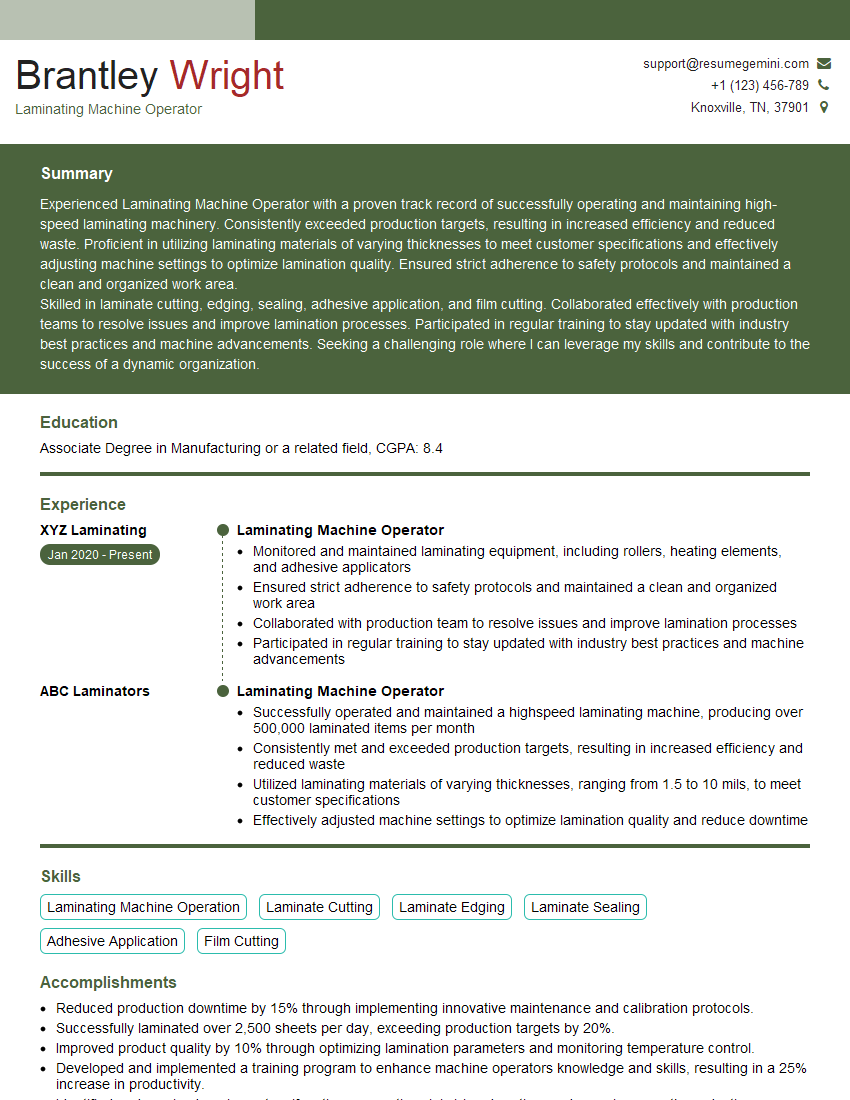
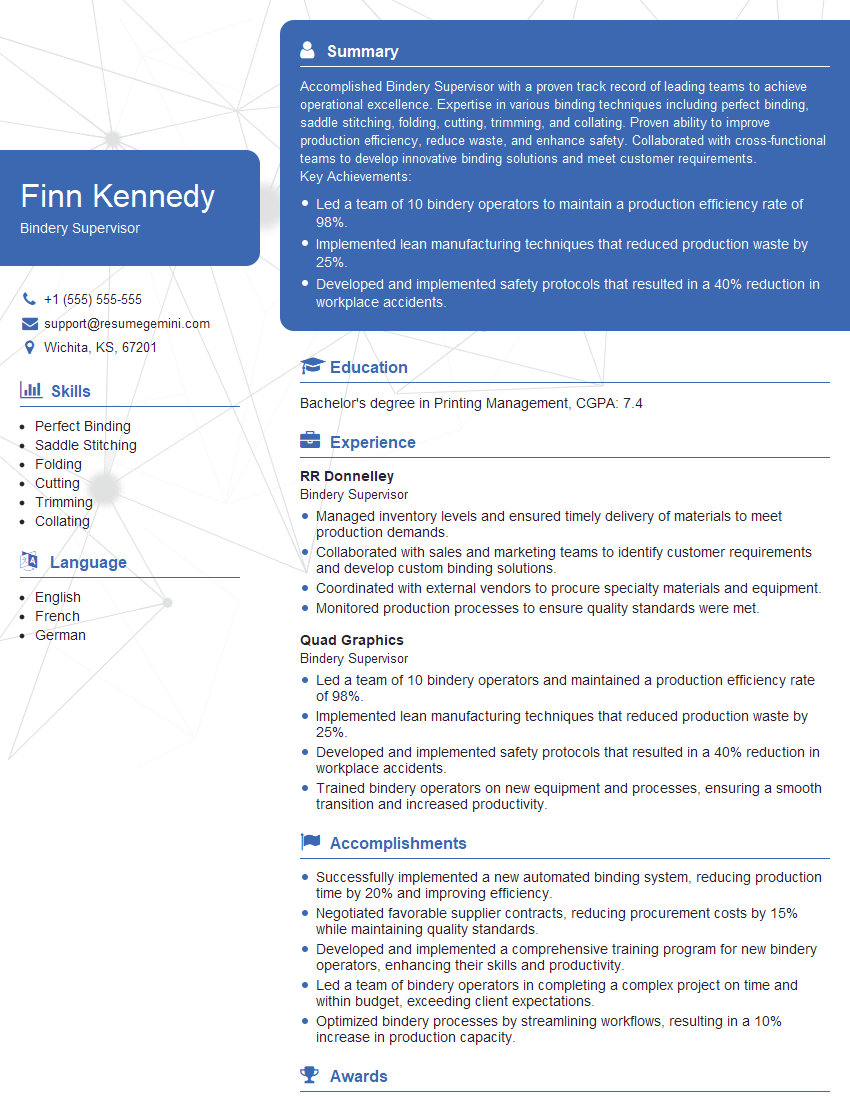
Mastering mounting and laminating opens doors to diverse and rewarding careers in print finishing, visual communication, and related fields. A strong understanding of these techniques is highly valued by employers, leading to greater job security and career advancement opportunities. To maximize your chances of landing your dream job, crafting an ATS-friendly resume is crucial. ResumeGemini is a trusted resource that can help you build a professional resume that highlights your skills and experience effectively. Examples of resumes tailored to the Mounting and Laminating field are available within ResumeGemini to guide your creation. Invest time in building a compelling resume – it’s your first impression and a key to unlocking your career potential.


Explore more articles
Users Rating of Our Blogs
Share Your Experience
We value your feedback! Please rate our content and share your thoughts (optional).
What Readers Say About Our Blog
Very informative content, great job.
good