Feeling uncertain about what to expect in your upcoming interview? We’ve got you covered! This blog highlights the most important Mudlogging interview questions and provides actionable advice to help you stand out as the ideal candidate. Let’s pave the way for your success.
Questions Asked in Mudlogging Interview
Q 1. Describe the different types of mud logging services offered.
Mud logging services encompass a range of analyses performed on drilling mud, providing real-time information about the subsurface formations being drilled. These services are crucial for optimizing drilling operations, identifying potential hazards, and maximizing hydrocarbon recovery. Different types of services offered include:
- Basic Mud Logging: This involves monitoring and recording parameters like mud weight, gas readings, drilling parameters (ROP, torque, and drag), and cuttings descriptions. This is the foundation upon which more advanced services are built.
- Advanced Mud Logging: This builds upon basic logging by incorporating advanced analytical techniques such as gas chromatography (GC) for detailed hydrocarbon analysis, cuttings lithology description using microscopes and other tools for precise identification, and the integration of data with other logging tools (like wireline logs) for a more comprehensive understanding of the formation.
- Environmental Mud Logging: This focuses on monitoring the environmental impact of drilling, including the detection and measurement of potential pollutants in the mud system. It’s crucial for compliance with environmental regulations.
- LWD (Logging While Drilling) Integration: Modern mud logging often integrates with LWD data, combining real-time surface measurements with downhole measurements for a more complete picture of the formation properties.
The specific services offered will vary depending on the client’s needs and the complexity of the well.
Q 2. Explain the importance of maintaining accurate and reliable mud logging data.
Maintaining accurate and reliable mud logging data is paramount because it forms the basis for crucial decisions throughout the drilling process. Inaccurate data can lead to costly errors, including:
- Incorrect Formation Evaluation: Misinterpreting lithology or hydrocarbon presence can lead to inefficient drilling strategies or missed opportunities.
- Safety Hazards: Incorrect gas readings can fail to warn of potential kicks (influx of formation fluids into the wellbore), leading to well control issues and potential blowouts.
- Poor Reservoir Management: Inaccurate data can lead to suboptimal completion strategies, negatively impacting hydrocarbon production.
- Environmental Issues: Incorrect environmental monitoring data could lead to non-compliance with regulations and environmental damage.
Therefore, rigorous quality control procedures, regular calibration of instruments, and experienced mud loggers are essential to ensure data reliability and accuracy. Think of it like a surgeon needing precise instruments – inaccurate data is like using a dull scalpel.
Q 3. How do you identify and interpret different lithologies from mud log data?
Identifying lithologies from mud log data relies on analyzing several parameters: cuttings descriptions, gas readings, and drilling parameters. Cuttings are fragments of rock that are brought to the surface in the drilling mud. Their analysis allows for the determination of the rock type (e.g., sandstone, shale, limestone).
- Visual Inspection of Cuttings: Mud loggers visually examine cuttings under a microscope, noting color, texture, grain size, and the presence of fossils or other distinguishing features.
- Correlation with Drilling Parameters: Changes in ROP (rate of penetration) often correlate with changes in lithology. For example, a higher ROP might indicate softer formations like shale, whereas a lower ROP might suggest harder formations like sandstone.
- Gas Analysis: The type and quantity of gases detected can provide clues about the lithology. For instance, high methane content might indicate a coal or shale gas reservoir.
For example, a mud log might show an increase in shale cuttings, a decrease in ROP, and a spike in methane, indicating the drill bit has entered a shale gas zone. Experience and a solid understanding of regional geology are crucial for accurate interpretation.
Q 4. Describe the process of gas detection and its significance in mud logging.
Gas detection is a critical aspect of mud logging. It involves identifying and quantifying the gases present in the drilling mud, primarily methane (CH4), ethane (C2H6), propane (C3H8), and heavier hydrocarbons. This is done using a gas detector, which typically employs a flame ionization detector (FID).
Significance:
- Early Warning of Kicks: The sudden increase in gas readings can indicate a potential influx of formation fluids into the wellbore (a kick), providing valuable time to take corrective actions and prevent a blowout. This is arguably the most critical aspect of gas detection.
- Hydrocarbon Indication: The presence and type of hydrocarbons in the mud can indicate the proximity of a hydrocarbon reservoir. Certain gas ratios can suggest the type of hydrocarbon (oil or gas).
- Formation Evaluation: Gas analysis, in conjunction with other data, can aid in lithological identification, as mentioned earlier.
Gas detection is a continuous process during drilling, requiring constant monitoring and careful interpretation by experienced mud loggers.
Q 5. How do you calculate gas ratios and what do they indicate?
Gas ratios are calculated by dividing the concentration of one gas by the concentration of another, often methane. The most common ratios are C2/C1 (ethane/methane) and C3/C1 (propane/methane). They are calculated using data from the gas chromatograph.
Example:
If the methane concentration is 10 ppm and the ethane concentration is 2 ppm, the C2/C1 ratio is 2/10 = 0.2.
Significance:
- Hydrocarbon Type Indication: Gas ratios can help distinguish between oil and gas reservoirs. High C2/C1 and C3/C1 ratios typically indicate an oil reservoir, while lower ratios suggest a gas reservoir. This is because the relative abundance of heavier hydrocarbons varies between gas and oil reservoirs.
- Reservoir Maturity: Changes in gas ratios over depth can indicate changes in reservoir maturity.
- Formation Evaluation: Used in conjunction with other data, gas ratios can refine the interpretation of lithology and reservoir characteristics.
It’s important to note that gas ratios are not absolute indicators and should be interpreted in the context of other geological data and regional trends.
Q 6. Explain the significance of ROP (Rate of Penetration) in mud logging.
ROP (Rate of Penetration) is the speed at which the drill bit advances into the formation. It’s a crucial parameter in mud logging because it provides insights into the formation’s properties.
Significance:
- Lithology Indication: Changes in ROP often correlate with changes in lithology. High ROP suggests softer, easily drilled formations (like shale), while low ROP indicates harder, more resistant formations (like limestone or sandstone).
- Drilling Efficiency: Monitoring ROP helps optimize drilling parameters (weight on bit, rotary speed) to enhance drilling efficiency and reduce costs.
- Drilling Problem Identification: Unexpected changes in ROP (e.g., sudden decrease) can indicate potential drilling problems like bit wear, stuck pipe, or formation instability.
For example, a sudden drop in ROP might signal the drill bit has encountered a hard layer or a change in formation strength requiring adjustment to drilling parameters.
Q 7. How do you identify and interpret drilling problems from mud log data?
Mud log data can be a powerful tool for identifying and interpreting drilling problems. Several indicators can point towards issues:
- Sudden Changes in ROP: A significant decrease in ROP might indicate bit dulling, formation instability, or stuck pipe. A sudden increase, while less common, could indicate the bit entering a weaker formation.
- High Torque and Drag: High torque and drag values could suggest issues like stuck pipe, hole closure, or excessive friction between the drill string and the wellbore.
- Changes in Mud Properties: Sudden changes in mud weight, viscosity, or filtrate loss might point to formation fracturing, fluid influx, or circulation problems.
- Abnormal Gas Readings: A significant and unexpected increase in gas readings could indicate a kick (formation fluid influx).
- Cuttings Descriptions: The appearance of unusual materials in cuttings might indicate a problem such as formation collapse, drilling fluid contamination, or unexpected lithology changes.
By carefully analyzing these parameters, mud loggers can alert the drilling team to potential problems and help them take corrective actions promptly, minimizing downtime and potential hazards. It’s like a mechanic using various gauges to diagnose issues in a car – different readings tell a story about what’s happening underground.
Q 8. Describe the different types of mud systems and their applications.
Mud systems are crucial in drilling operations, providing a variety of functions from wellbore stability to cuttings transport. The choice of mud system depends heavily on the geological formations being drilled.
- Water-Based Muds (WBM): These are the most common and cost-effective. They are simple to prepare and handle, making them ideal for many applications. However, they may not be suitable for all formations, particularly those prone to shale instability or high temperatures.
- Oil-Based Muds (OBM): These provide excellent shale inhibition and lubricity, making them suitable for challenging formations. However, they are more expensive and environmentally sensitive, requiring careful handling and disposal. They are commonly used when drilling through shale formations known to swell and cause problems in the wellbore.
- Synthetic-Based Muds (SBM): These offer a balance between the performance of OBM and the environmental friendliness of WBM. They are less environmentally damaging than OBM while providing good shale inhibition. These are often the preferred choice when environmental regulations are stringent.
- Polymer Muds: These use polymers to modify the rheological properties of the mud, providing specialized functions like increased viscosity or improved filtration control. They are often used as additives to other mud types to enhance specific properties.
For example, a water-based mud might be sufficient for a straightforward sandstone reservoir, while an oil-based mud would be more appropriate for a challenging shale gas play. The selection process involves careful consideration of factors like formation pressure, temperature, lithology, and environmental regulations.
Q 9. How do you calibrate mud logging equipment?
Calibrating mud logging equipment is crucial for accurate data acquisition. The process involves checking and adjusting various components to ensure they’re providing reliable readings. This typically involves several steps:
- Gas Chromatograph (GC): We use standard gas mixtures of known concentrations to calibrate the GC. This ensures the accurate measurement of hydrocarbon gases in the mud.
- Mud Properties Sensors (Rheometer, Density Meter, etc.): These are calibrated using known standards, such as calibrated weights and volumes, to ensure accurate measurements of mud viscosity, density, and other properties.
- Cuttings Analyzer: This is often calibrated visually by experienced personnel who compare the cuttings against known geological samples. Advanced systems might use image analysis for more quantitative measurements.
- Data Acquisition System: This system itself needs calibration to ensure proper communication with all sensors and accurate data recording. This typically involves running system diagnostics and checks.
Regular calibrations, often daily or as needed, are essential for maintaining the accuracy and reliability of the mud logging data. Any deviations from established calibration procedures are meticulously documented.
Q 10. What are the safety procedures you follow while performing mud logging operations?
Safety is paramount in mud logging. Our procedures adhere strictly to industry best practices and company guidelines. Key safety aspects include:
- Personal Protective Equipment (PPE): We always use appropriate PPE, including safety helmets, safety glasses, gloves, and steel-toed boots. We also ensure that the PPE is always in good condition.
- Hazard Identification and Risk Assessment (HIRA): Before starting any operation, we conduct a thorough HIRA to identify potential hazards and implement mitigation strategies. This includes understanding the wellsite specific risks.
- Emergency Response Plan: We’re trained in emergency response procedures and have access to emergency communication systems. This includes familiarity with evacuation procedures and the location of emergency equipment.
- Hydrogen Sulfide (H2S) Monitoring: We routinely monitor for H2S, a toxic gas that can be present in drilling operations. Appropriate safety measures, including specialized gas detectors and respirators, are employed.
- Confined Space Entry Procedures: When necessary, we follow strict confined space entry procedures, ensuring proper ventilation, atmospheric monitoring, and rescue protocols.
- Fire Safety: We ensure fire safety measures are followed; including fire extinguisher training and knowledge of fire prevention.
In short, safety isn’t just a set of rules, it’s a culture that guides all our activities on the wellsite.
Q 11. Explain the importance of maintaining a clean and organized work environment.
Maintaining a clean and organized work environment is critical for several reasons:
- Safety: A cluttered workspace increases the risk of accidents. Clear pathways and well-organized equipment prevent tripping hazards and improve response times in emergencies.
- Efficiency: A clean and organized workspace allows for more efficient workflow. Finding and using equipment is easier, improving productivity and reducing downtime.
- Data Accuracy: A well-organized space helps prevent sample contamination and ensures that mud samples and cuttings are properly labeled and stored. This is crucial for accurate analysis and interpretation.
- Professionalism: A clean and organized work environment reflects professionalism and commitment to quality work. It presents a positive image to clients and other wellsite personnel.
Think of it this way: A cluttered desk is a cluttered mind. Similarly, a cluttered mud logging unit can affect both the efficiency and quality of our work. We implement strict housekeeping procedures to ensure a safe and productive environment.
Q 12. How do you handle discrepancies or anomalies in mud log data?
Discrepancies or anomalies in mud log data warrant a thorough investigation. Our approach involves:
- Data Verification: We begin by verifying the data integrity, checking for any equipment malfunctions or recording errors.
- Geological Correlation: We correlate the mud log data with other wellsite data, such as drilling parameters and wireline logs, to identify potential causes of anomalies. This might reveal formation changes.
- Sample Review: We carefully review the mud samples and cuttings to look for physical evidence that supports or contradicts the data.
- Consultation: If the anomaly is significant or unexplained, we consult with geologists, drilling engineers, and other wellsite personnel to determine the cause.
- Documentation: All discrepancies, their investigation, and the conclusions are meticulously documented in the mud log report. This ensures traceability and transparency.
For example, unexpected high gas readings might indicate a gas bearing zone, but could also be due to a faulty gas detector. A methodical investigation is key to correctly interpreting the data.
Q 13. How do you communicate effectively with drilling crews and other wellsite personnel?
Effective communication is crucial for successful mud logging operations. We employ several strategies to ensure clear and concise communication:
- Regular Updates: We provide regular updates to the drilling crew and other wellsite personnel on key observations and any potential issues identified in the mud log data.
- Clear and Concise Language: We avoid technical jargon and use clear, simple language that everyone can understand.
- Visual Aids: We frequently utilize visual aids, such as charts and graphs, to illustrate key trends and patterns in the mud log data.
- Active Listening: We actively listen to the concerns and observations of other wellsite personnel, considering their input and expertise.
- Open Communication Channels: We maintain open communication channels, ensuring that everyone has access to the necessary information and can communicate their concerns effectively.
I’ve found that proactive communication is particularly valuable in preventing miscommunication and delays. I ensure we have regular meetings with the drilling team to review data, address concerns, and plan for upcoming operations.
Q 14. Describe your experience with different types of mud logging software.
My experience encompasses several mud logging software packages, each with its strengths and weaknesses. I’m proficient in:
- LogPlot: A widely-used software for creating and interpreting mud logs. I’m comfortable with its various features, including data entry, analysis tools, and report generation.
- GeoMark: This software offers comprehensive features and is frequently used for integration with other wellsite data. I have substantial experience in its use and data interpretation.
- Other proprietary software: I have also worked with various proprietary software packages developed by specific mud logging companies. My adaptable nature allows me to quickly learn and master new software.
My expertise extends beyond mere data entry; I’m proficient in utilizing the analytical tools within these packages to identify trends, correlate data, and generate meaningful interpretations for decision-making. I am also comfortable troubleshooting technical issues within the software. Software proficiency is only one aspect of my job; interpretation and communication remain paramount.
Q 15. Explain your experience with data interpretation and reporting.
Data interpretation and reporting in mud logging are crucial for understanding subsurface formations. My experience involves meticulously analyzing the continuous stream of data from the mud logging unit, which includes parameters like gas readings, cuttings descriptions, and drilling parameters. I identify key indicators of potential hydrocarbon zones, lithological changes, and formation pressures. This analysis helps in building a comprehensive picture of the subsurface. For example, a sudden increase in gas readings (methane, ethane, propane) coupled with a change in cuttings description from shale to sandstone could suggest a potential hydrocarbon reservoir. I then translate these findings into clear, concise reports, incorporating tables, graphs, and descriptive narratives to communicate the geological interpretation effectively to the drilling team and clients. This includes highlighting potential risks and recommending appropriate drilling strategies. I utilize specialized software to enhance the presentation and analysis of this data, ensuring accuracy and efficiency. A recent project involved identifying a previously unrecognized gas sand using this integrated approach, resulting in successful well completion and increased production.
Career Expert Tips:
- Ace those interviews! Prepare effectively by reviewing the Top 50 Most Common Interview Questions on ResumeGemini.
- Navigate your job search with confidence! Explore a wide range of Career Tips on ResumeGemini. Learn about common challenges and recommendations to overcome them.
- Craft the perfect resume! Master the Art of Resume Writing with ResumeGemini’s guide. Showcase your unique qualifications and achievements effectively.
- Don’t miss out on holiday savings! Build your dream resume with ResumeGemini’s ATS optimized templates.
Q 16. How do you ensure the quality and accuracy of your mud log data?
Ensuring the quality and accuracy of mud log data is paramount. This starts with meticulous calibration and maintenance of the mud logging equipment. Regular checks of gas chromatograph readings, caliper measurements, and other sensors are crucial. We also employ quality control checks throughout the logging process. This includes:
- Duplicate analysis: Regularly repeating analyses to verify results.
- Blind samples: Analyzing samples without prior knowledge to check for bias.
- Cross-checking data: Comparing data from different sensors and parameters to identify inconsistencies.
Q 17. Describe your experience in troubleshooting mud logging equipment.
My experience in troubleshooting mud logging equipment encompasses a wide range of issues, from minor sensor malfunctions to major system failures. I have a strong understanding of the hydraulics, electronics, and mechanics of the various components, allowing me to diagnose and resolve problems efficiently. A common issue involves malfunctioning gas chromatographs. In such cases, I troubleshoot by checking gas flow rates, column temperatures, and detector responses. I’m proficient in interpreting error codes and using diagnostic tools to pinpoint the source of the problem. I also have experience repairing or replacing faulty components, such as sensors, pumps, and data acquisition systems. During a recent project, a power surge damaged the data acquisition system. By systematically checking power supplies, circuit boards, and data cables, I was able to identify the faulty component, which was then replaced, ensuring minimal downtime. Preventive maintenance plays a vital role; I perform routine checks and calibrations to prevent equipment failures and ensure continuous operation.
Q 18. How do you prepare a comprehensive mud log report?
Preparing a comprehensive mud log report involves a systematic approach. It begins with a clear and concise summary of the well’s objectives and the geological setting. Next, I organize the data into easily understandable tables and figures, showing parameters like gas readings, cuttings descriptions, drilling parameters (ROP, WOB, torque), and mud properties. I integrate and interpret the data to provide geological insights, identifying key lithological changes, potential hydrocarbon zones, and formation pressures. The report incorporates well-labeled graphs illustrating trends in various parameters, enhancing readability and comprehension. I include an interpretation section that discusses the significance of the findings and their implications for drilling operations. For example, identifying high-pressure zones requires specific recommendations for managing formation pressure. The report concludes with a summary of key findings, recommendations, and potential risks, providing a clear and actionable summary for the client and drilling team. Ensuring consistency and quality using standardized templates and procedures is paramount. All observations, interpretations, and recommendations are thoroughly documented to maintain traceability and data integrity.
Q 19. Explain your understanding of formation pressure and its relevance to mud logging.
Formation pressure is the pressure exerted by fluids within a geological formation. Understanding formation pressure is critical in mud logging because it directly impacts drilling operations and wellbore stability. High formation pressures can lead to kicks (influx of formation fluids into the wellbore), which can be dangerous and costly. Mud loggers monitor several indicators related to formation pressure, including:
- Rate of penetration (ROP): Increased ROP might suggest lower formation pressure.
- Mud weight: Changes in the required mud weight to control formation pressure are monitored closely.
- Gas readings: Increased gas readings can indicate a pressure increase.
- Cuttings analysis: Changes in the cuttings can signify changes in pressure.
Q 20. Describe your experience with different types of well logging tools.
My experience includes working alongside various well logging tools, providing me with a broad understanding of their applications and limitations. This includes:
- Wireline logs: These tools are run after drilling and provide detailed information about the formation properties. This includes gamma ray, resistivity, porosity, and density logs, which I correlate with the mud log data.
- LWD (Logging While Drilling) tools: These tools are run during drilling and provide real-time data, which I can use to refine mud log interpretations and make decisions during drilling operations. These include gamma ray, resistivity and porosity measurements acquired in real time.
- MWD (Measurement While Drilling) tools: These tools provide directional drilling information, which are crucial for accurate well placement and are used in conjunction with other data to further refine the subsurface understanding.
Q 21. How do you correlate mud log data with other well logging data?
Correlating mud log data with other well logging data is essential for building a robust geological model. Mud logs offer continuous data during drilling, providing a broad overview of the formations encountered. However, they lack the detailed resolution and quantitative measurements provided by other logging tools. Therefore, I use data from wireline logs (gamma ray, resistivity, density, porosity) and LWD/MWD tools to enhance the interpretation of the mud log data. For example, the gamma ray log can be used to confirm the lithology identified by the cuttings descriptions in the mud log. Resistivity logs help identify potential hydrocarbon zones, which can be compared with gas readings from the mud log. I utilize specialized software to visually and quantitatively compare the datasets, aligning the depth scales and identifying correlations between different parameters. Any discrepancies between datasets are carefully investigated to ensure data integrity and to identify potential sources of error. This integrated approach provides a more accurate and comprehensive geological interpretation, aiding in better reservoir characterization and optimized production strategies. A recent project involved successfully correlating gas shows in the mud log with high resistivity zones in the wireline logs, confirming a significant hydrocarbon reservoir.
Q 22. What are the limitations of mud logging?
Mud logging, while a powerful tool in wellsite operations, has certain limitations. Its accuracy depends heavily on the consistency and quality of the mud samples received, which can be affected by factors like drilling parameters and wellbore conditions. For instance, highly deviated wells or those experiencing circulation issues can lead to incomplete or representative samples.
- Limited Depth Resolution: Mud logs provide a continuous record but the resolution is inherently limited by the sampling frequency. Fine-grained geological details might be missed.
- Sample Contamination: The drilling mud itself can contaminate the cuttings, leading to misidentification of lithology or alteration of fossil content. Careful monitoring and sample handling are crucial to mitigate this.
- Interpretation Challenges: Interpreting mud log data requires expertise. Ambiguities can arise, particularly when dealing with complex lithologies or subtle changes in formation properties. The interpretation depends on the experience and knowledge of the mudlogger.
- Depth Discrepancies: Slight discrepancies between the measured depth and true vertical depth can occur, potentially affecting the correlation with other well logs.
Think of it like looking at a landscape from a moving car – you get a general overview, but miss some of the fine details. This analogy highlights the importance of integrating mud log data with other wellsite information (e.g., wireline logs, cores) for a more complete picture.
Q 23. How do you maintain confidentiality of sensitive wellsite data?
Maintaining the confidentiality of sensitive wellsite data is paramount. We adhere to strict company policies and industry best practices to protect this information. This includes:
- Secure Data Storage: All data is stored on password-protected, encrypted devices and servers. Access is limited to authorized personnel only, with specific roles and responsibilities clearly defined.
- Controlled Access to Wellsite: Access to the wellsite itself is restricted, with visitors required to sign in and out and provide identification. Mud logging equipment is secured when not in use.
- Data Transmission Security: When data is transmitted electronically, it’s done via secure channels using encryption protocols (like SSL/TLS) to prevent interception.
- Confidentiality Agreements: All personnel involved in mud logging operations sign confidentiality agreements, understanding the legal and ethical implications of data breaches.
- Regular Audits and Security Training: Our procedures are regularly audited to ensure continued compliance, and all personnel undergo regular training on data security and privacy best practices.
We treat data breaches with the utmost seriousness. If a breach were to occur, immediate steps would be taken to investigate the cause, contain the damage, and notify relevant authorities and clients as per regulations. Data security is an ongoing process, not a one-time event.
Q 24. How do you stay up-to-date with the latest technologies and advancements in mud logging?
Staying current in mud logging requires a multifaceted approach. The industry is constantly evolving with advancements in technology, analytical techniques, and environmental regulations. I utilize various methods to ensure I’m up-to-date:
- Industry Conferences and Workshops: Attending conferences like the SPWLA (Society of Petrophysicists and Well Log Analysts) and IADC (International Association of Drilling Contractors) events provides valuable insights into the latest technologies and best practices. Networking with other professionals is also essential.
- Professional Journals and Publications: I regularly read industry journals, such as SPE (Society of Petroleum Engineers) publications, to stay abreast of new research and advancements.
- Online Courses and Webinars: Numerous online platforms offer courses and webinars on mud logging techniques, software, and related fields. These provide convenient and flexible learning opportunities.
- Vendor Interactions: Engaging with mud logging equipment vendors allows me to understand the capabilities of the latest instrumentation and software. Many vendors offer training programs on their products.
- Mentorship and Peer Learning: Learning from experienced colleagues and mentors is invaluable. Sharing experiences and best practices with peers helps to keep knowledge fresh and relevant.
Continuous learning is critical for a mudlogger. It’s not simply about keeping up; it’s about staying ahead of the curve.
Q 25. Describe a challenging mud logging experience and how you overcame it.
One particularly challenging experience involved a well with extremely unstable formations in a remote location. We experienced frequent lost circulation events, making it difficult to obtain representative cuttings samples. The mud itself was highly reactive with the formations, resulting in significant changes to its properties. This also interfered with gas detection.
To overcome this, we implemented the following steps:
- Increased Sampling Frequency: We increased the frequency of cuttings sample collection to capture more data points, even though the quality was inconsistent.
- Improved Mud Monitoring: We intensified our monitoring of mud parameters (viscosity, density, pH) to identify changes indicative of formation interaction and adjust mud properties accordingly.
- Enhanced Gas Detection Methods: We supplemented our standard gas detection methods with additional techniques, such as using a more sensitive detector.
- Close Collaboration: We maintained constant communication with the drilling team, geosteering engineers, and geologists, sharing our observations and coordinating our actions. This was crucial for optimizing drilling parameters and interpreting the limited data we were receiving.
- Post-Logging Analysis: After the well was completed, we performed a detailed analysis of all collected data, incorporating additional information from other sources (wireline logs, formation testing). This helped us to produce a more accurate and complete geological interpretation.
This situation highlighted the importance of adaptability, problem-solving skills, and effective teamwork in mud logging. The solution was not a single step, but a combination of measures addressing various issues simultaneously.
Q 26. What are the key factors affecting the accuracy of mud log data?
Several key factors influence the accuracy of mud log data. It’s crucial to understand these to interpret the data appropriately and minimize errors. These factors include:
- Drilling Parameters: Rotary speed, weight on bit, and flow rate significantly impact the quality and representativeness of cuttings. High rotary speeds can crush cuttings, while low flow rates can cause cuttings lag.
- Mud Properties: The type of drilling mud used, its properties, and its interaction with the formations being drilled all affect cuttings condition and gas content. Contamination of cuttings by the mud is a significant potential source of error.
- Wellbore Conditions: Hole cleaning efficiency, circulation losses, and wellbore inclination affect the retrieval of cuttings and the accuracy of depth correlation. Deviated wells present additional challenges in sample representativeness.
- Sampling Techniques: The methods used to collect, preserve, and analyze cuttings directly impact data quality. Incorrect sampling procedures, delays in processing, and improper storage can all lead to errors.
- Equipment Calibration and Maintenance: Proper calibration and regular maintenance of the mud logging equipment are critical for ensuring accurate readings of gas content, lithology, and other parameters.
- Mudlogger Expertise: The experience and judgment of the mudlogger in interpreting the data and dealing with unexpected situations are also key factors.
Accuracy in mud logging is not just about technology; it’s a holistic process requiring attention to detail at every stage.
Q 27. How do you identify and mitigate environmental risks associated with mud logging?
Environmental risks associated with mud logging are primarily related to the handling and disposal of drilling fluids and cuttings. These materials can contain chemicals and potentially hazardous substances. Mitigation strategies focus on minimizing environmental impact and complying with regulations:
- Waste Management Plan: A detailed waste management plan must be in place before operations begin. This plan outlines procedures for handling, storing, and disposing of all drilling fluids and cuttings, including the use of appropriate containment measures.
- Spill Prevention and Response: Implementing procedures for preventing spills and having a detailed spill response plan are critical. This includes regular equipment inspections and training personnel on emergency response procedures.
- Minimizing Mud Volume: Using environmentally friendly mud systems and minimizing the volume of mud used help to reduce the overall environmental impact.
- Cuttings Treatment and Disposal: Cuttings may require treatment before disposal to reduce their toxicity and potential environmental harm. Regulations vary by location, with some areas requiring specialized disposal facilities.
- Water Management: Responsible management of water resources is crucial, minimizing water usage and handling wastewater appropriately.
- Air Emissions Monitoring: Monitoring of air emissions from the mud logging equipment and other wellsite activities ensures compliance with regulations.
Environmental stewardship is not an afterthought; it is an integral part of our mud logging operations. We are committed to minimizing our environmental footprint.
Q 28. Explain the importance of environmental regulations and compliance in mud logging.
Environmental regulations and compliance are of utmost importance in mud logging. These regulations vary by location (country, state, region) but generally aim to protect air, water, and land resources from the harmful effects of drilling activities. Compliance involves:
- Permitting and Approvals: Obtaining the necessary permits and approvals before starting any wellsite operation is legally mandatory.
- Adherence to Standards: Strict adherence to all relevant environmental standards and guidelines is essential, including waste disposal regulations, emission limits, and water quality standards.
- Reporting and Monitoring: Regular reporting and monitoring are necessary to track environmental performance. This involves collecting data on waste generation, emissions, and water usage and submitting reports to relevant authorities.
- Emergency Response Plans: Having a well-defined emergency response plan to deal with unexpected environmental incidents (e.g., spills) is crucial.
- Training and Awareness: All personnel involved in mud logging must receive thorough training on environmental regulations, safety procedures, and responsible waste management.
- Audits and Inspections: Regular audits and inspections by regulatory agencies are part of the process to ensure compliance.
Failing to comply with environmental regulations can result in significant penalties, including fines, operational shutdowns, and reputational damage. More importantly, non-compliance jeopardizes the protection of the environment and the health and safety of people and wildlife. Therefore, compliance isn’t just about following the rules; it’s about our commitment to environmental sustainability.
Key Topics to Learn for Your Mudlogging Interview
- Mud Properties and Rheology: Understanding viscosity, yield point, gel strength, and their impact on drilling operations. Practical application: Analyzing mud logs to identify potential problems based on rheological changes.
- Formation Evaluation: Interpreting lithology, porosity, permeability, and hydrocarbon indicators from mud logs. Practical application: Correlating mud log data with other well logs (e.g., gamma ray, resistivity) to build a comprehensive geological model.
- Drilling Parameters and their Influence on Mud Properties: Understanding the relationship between Weight on Bit (WOB), rotary speed, and mud properties. Practical application: Identifying potential issues such as wellbore instability or lost circulation based on changes in drilling parameters and mud properties.
- Gas Detection and Management: Recognizing indicators of gas kicks and implementing appropriate safety procedures. Practical application: Analyzing mud log data for early detection of gas and recommending actions to mitigate risks.
- Mud Log Interpretation and Reporting: Effectively communicating findings through clear and concise reports. Practical application: Creating accurate and informative mud logs suitable for use by drilling engineers and geologists.
- Health, Safety, and Environment (HSE): Understanding and adhering to HSE regulations within a mudlogging environment. Practical application: Identifying and mitigating potential HSE hazards during mudlogging operations.
- Troubleshooting and Problem-Solving: Analyzing abnormal data and identifying potential causes and solutions. Practical application: Using your knowledge of mud properties and drilling parameters to resolve issues related to mud performance.
Next Steps
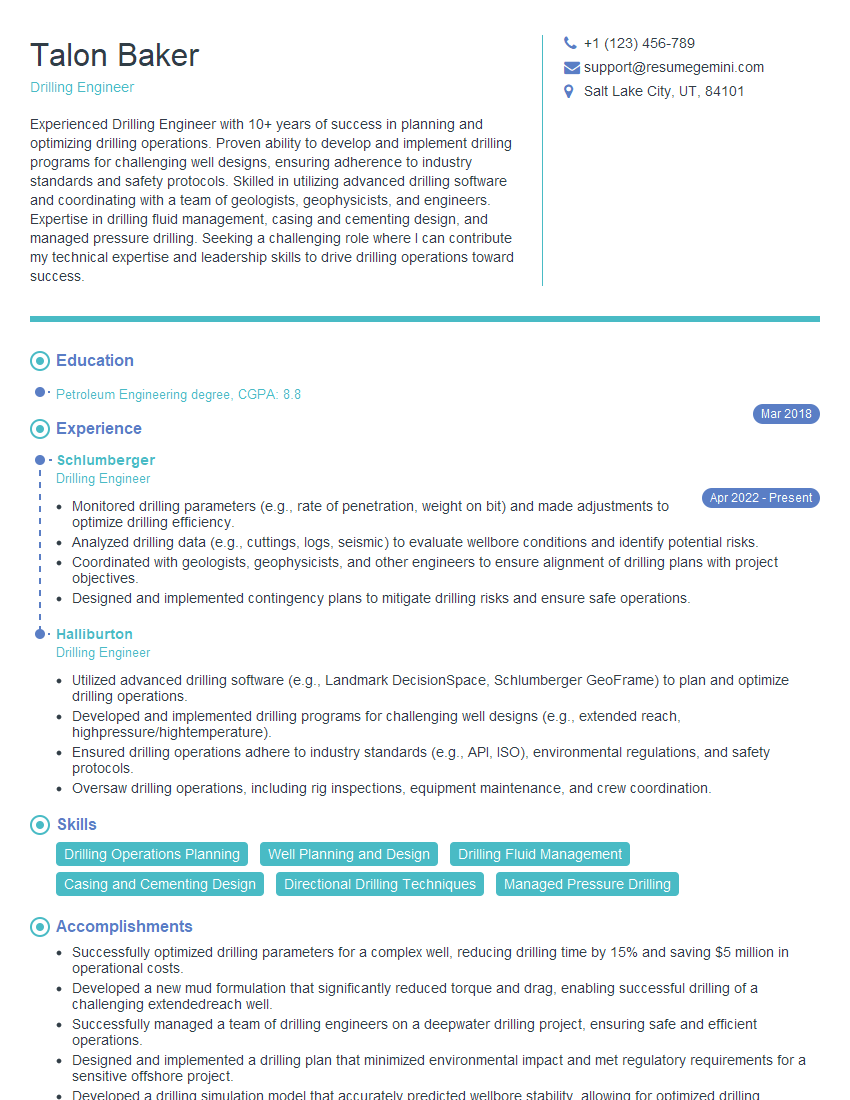
Mastering mudlogging opens doors to a rewarding career in the energy industry, offering diverse opportunities for growth and specialization. To maximize your job prospects, it’s crucial to present your skills effectively. Creating an ATS-friendly resume is paramount for getting your application noticed. ResumeGemini is a trusted resource that can help you craft a compelling and professional resume that highlights your mudlogging expertise. Examples of resumes tailored to the Mudlogging industry are available to guide you through the process.



Explore more articles
Users Rating of Our Blogs
Share Your Experience
We value your feedback! Please rate our content and share your thoughts (optional).
What Readers Say About Our Blog
Very informative content, great job.
good