Cracking a skill-specific interview, like one for Stage Management and Technical Production, requires understanding the nuances of the role. In this blog, we present the questions you’re most likely to encounter, along with insights into how to answer them effectively. Let’s ensure you’re ready to make a strong impression.
Questions Asked in Stage Management and Technical Production Interview
Q 1. Describe your experience with QLab or similar cue management software.
QLab is my primary cue management software, and I’ve used it extensively across various productions, from intimate theatre pieces to large-scale musicals. My proficiency encompasses not only the basics of cueing lights, sound, and video, but also the more advanced features like scripting, integrating external devices, and utilizing its networking capabilities for complex shows.
For instance, in a recent production of Hamlet, I used QLab to manage over 200 cues, including lighting changes synchronized with sound effects and video projections. I created sophisticated cue lists with branching logic, enabling dynamic adjustments based on actor choices and real-time audience reactions. I also utilized QLab’s network capabilities to control lighting fixtures from a separate console, increasing efficiency and reducing the risk of errors.
Beyond QLab, I’m also experienced with other cue management systems, such as ETC EOS and MA Lighting grandMA2, adapting quickly to different interfaces and workflows. My familiarity extends to the practical aspects: troubleshooting, backup strategies, and integrating with other production software.
Q 2. How do you prioritize tasks during a fast-paced production?
Prioritizing in a fast-paced production relies on a combination of proactive planning and reactive problem-solving. My approach involves a three-step process: Assessment, Prioritization, and Execution.
- Assessment: I quickly assess the urgency and impact of each task. This involves understanding deadlines, dependencies on other tasks, and potential consequences of delays. I use a combination of my run sheet, communication from the director and other heads of department, and visual observation of the rehearsal/performance to gauge the situation.
- Prioritization: Using a system like the Eisenhower Matrix (Urgent/Important), I prioritize tasks. Time-sensitive tasks that impact the show’s flow and safety always come first.
- Execution: I delegate effectively when possible, leveraging the skills of the team to maximize efficiency. I also employ time management techniques, like time blocking and breaking down large tasks into smaller, manageable steps. Clear communication is critical during this stage to keep everyone informed and working collaboratively.
For example, during a quick costume change, I would prioritize the smooth and safe execution of the change over discussing minor lighting adjustments that can wait until the next scene. Communication with the costume team is crucial to this prioritization.
Q 3. Explain your process for creating a detailed stage plot.
Creating a detailed stage plot is a crucial step in ensuring a successful production. My process begins with a thorough understanding of the script and the director’s vision. I then systematically gather the necessary information, documenting every detail on the plot.
- Gathering Information: I start by reviewing the script, noting set pieces, props, actor positions, entrances, exits, and any special effects or technical elements.
- Sketching the Stage: I create a scaled drawing of the stage, including all pertinent measurements and markings, such as stage left/right, upstage/downstage. This may start as a hand-drawn sketch and then transition to CAD software for greater accuracy.
- Plotting Elements: I carefully plot the position of set pieces, props, furniture, and other stage elements. Each item is clearly labeled and its dimensions noted. Actor movements and blocking are also indicated.
- Adding Technical Details: I add information relevant to lighting, sound, and other technical aspects, including lighting positions, microphone placements, and any special effects.
- Review and Refinement: Once completed, I review the stage plot with the director, set designer, and technical crew to ensure accuracy and address any questions or concerns. Changes are documented and incorporated, leading to a final, approved version used throughout the production.
Consider the complexity of a large-scale musical. The plot would need to detail not only the positions of the set pieces but also the placement of microphones for each singer, the lighting cues for each song, and the locations of special effects.
Q 4. What are your preferred methods for communication within a production team?
Effective communication is paramount in theatre. I prefer a multi-faceted approach, tailored to the specific situation and individuals involved.
- Face-to-Face Communication: For crucial information or complex issues, nothing beats a direct conversation. This enables immediate clarification and fosters better understanding.
- Email and Messaging: For scheduling, distributing information, and general updates, email and messaging platforms (like Slack or WhatsApp) are invaluable. I use these for clear, documented communication, making sure to keep a tidy chain of communication for later reference.
- Production Meetings: Regular meetings are essential for maintaining alignment and addressing potential issues proactively. These allow for collective brainstorming and collaborative problem-solving.
- Visual Aids: I frequently use diagrams, charts, and other visual aids to make complex information easily accessible and understood. For example, a quick sketch of a lighting cue or a simplified flow chart for complex scene changes.
Maintaining a clear communication chain ensures everyone is informed and working towards the same goals, thus reducing confusion and misunderstandings. For instance, in a fast-paced production using the run sheet, we’d have a color-coded system to highlight immediate needs and actions.
Q 5. Describe a time you had to solve a technical problem under pressure.
During a performance of A Midsummer Night’s Dream, a crucial lighting cue failed just before a pivotal scene. The automated cue system malfunctioned, leaving the stage in near darkness.
Under pressure, I immediately switched to the backup system—a manual lighting board. Having previously prepared for such eventualities, I had already communicated with the lighting designer and had the necessary cue sheet at hand. Through clear, concise communication with the lighting operator, I quickly input the necessary cues, restoring the lighting just seconds before the actors were due on stage. While the audience was completely unaware of the issue, it was a test of my adaptability and composure under pressure.
This incident highlighted the importance of redundancy, thorough planning, and efficient communication in maintaining a professional and polished performance. We later investigated the automated system malfunction and implemented preventative measures to ensure such a situation wouldn’t reoccur.
Q 6. How familiar are you with different types of theatrical lighting instruments?
I’m highly familiar with a wide range of theatrical lighting instruments, from basic incandescent and LED fixtures to more specialized units.
- Incandescent and Halogen: These traditional fixtures offer a warm, familiar light, but are less energy-efficient and have a shorter lifespan than newer technologies.
- LED Fixtures: These energy-efficient units offer a wide array of color options and are highly versatile, suitable for a range of applications. They also often have more controllable features such as dimming curves and color mixing capabilities.
- Moving Lights: These highly versatile fixtures allow for precise control over beam shape, color, and movement. They enable dynamic and creative lighting designs.
- Fresnels: Producing a soft, diffused light, these are ideal for washing the stage and illuminating large areas. They are usually used for background washes and setting the mood of the scene.
- Ellipsoidals: These fixtures allow for sharp, focused beams, making them well-suited for highlighting specific actors or objects. They provide precise control over the beam shape and are used for specials and highlighting.
My knowledge extends beyond the basic functionalities to include considerations like color temperature, light intensity, beam spread, and the different types of lenses and accessories used to modify the light output. Understanding these allows me to collaborate effectively with lighting designers to ensure that their vision is realized successfully.
Q 7. Explain your understanding of theatrical rigging safety procedures.
Rigging safety is paramount, and my understanding encompasses all aspects, from pre-production planning to execution and post-show inspection.
- Pre-Production Planning: This involves careful review of the rigging plot, ensuring that all equipment is properly inspected, rated, and certified for the intended use. Weight calculations are critical to ensure the safety of all rigging points and the load-bearing capacity of the structure.
- Execution: During the rigging process, I strictly adhere to established safety protocols, including the use of appropriate safety harnesses, fall protection systems, and regular inspections of all equipment. Only qualified and authorized personnel are permitted to handle rigging equipment.
- Communication: Clear and concise communication amongst the rigging crew and other members of the technical team is essential to avoid accidents. Regular communication is required for updating on rigging conditions and planning for safe operation.
- Post-Show Inspection: After each performance or rehearsal, a thorough inspection is conducted to check for any damage or wear to the rigging system. Any issues discovered are immediately addressed and rectified before the next use.
Ignoring safety protocols can have dire consequences, so I always prioritize safety. I’m familiar with industry best practices and relevant regulations, and I ensure that the entire production team shares the same commitment to safety.
Q 8. What are your methods for managing actor and crew schedules?
Managing actor and crew schedules requires meticulous organization and proactive communication. I utilize a combination of digital and physical tools. I typically start by creating a master schedule in a software like Google Calendar or a dedicated scheduling program like StageManager. This master schedule includes all rehearsals, performances, tech rehearsals, and any other crucial events. Each individual receives a personalized schedule—either a printed copy or a digital version shared through a collaborative platform—highlighting only their required dates and times. This prevents overload and ensures clarity. I also maintain a contact list with emergency numbers readily available. Regular check-ins with actors and crew members before and during the production, especially using group communication tools, help address any immediate concerns or schedule conflicts. For example, during a recent musical production, I anticipated potential conflicts between the actor’s dance rehearsal schedule and their singing lessons. By proactively coordinating with their dance instructor and vocal coach, I ensured there was minimal scheduling overlap, avoiding burnout and maintaining a positive work environment.
Q 9. How do you handle conflicts between different departments in a production?
Conflicts between departments are inevitable in any production. My approach emphasizes proactive communication and collaborative problem-solving. I believe in creating a transparent environment where each department understands the needs and limitations of others. Regular departmental meetings are essential for identifying potential clashes early on. For instance, if the lighting department needs access to the stage during a rehearsal, I coordinate this with the director and actors, ensuring minimal disruption. When a conflict arises, I facilitate a meeting involving the affected departments, encouraging open dialogue and joint brainstorming of solutions. My role is not to dictate, but to mediate and guide the departments towards a compromise that considers everyone’s needs while keeping the overall production goals in mind. This might involve adjusting rehearsal schedules, finding alternative solutions, or prioritizing certain tasks based on their criticality to the show’s success. I firmly believe that addressing conflicts directly and collaboratively fosters a respectful and productive environment.
Q 10. Describe your experience with sound system setup and troubleshooting.
My experience with sound system setup and troubleshooting is extensive. I’m proficient in setting up a range of sound systems, from simple PA systems for small events to complex systems for large-scale productions. My process begins with understanding the venue’s acoustics and the show’s specific sound requirements. I carefully choose appropriate microphones, speakers, mixers, and other equipment based on these needs. I conduct sound checks to ensure optimal levels, clarity, and balance. Troubleshooting is a significant part of the process. I’m adept at identifying and resolving issues like feedback, distorted sound, or signal loss. My tools include a multi-meter, signal generators, and diagnostic software. For example, in a recent outdoor performance, unexpected wind interfered with the wireless microphone system. By quickly identifying the issue and switching to wired microphones, I prevented any significant disruption to the show. I also possess a strong understanding of digital audio workstations (DAWs) for pre-show sound design and effects.
Q 11. What is your experience with different types of microphones and their applications?
I have extensive experience with various microphone types and their applications. My knowledge covers dynamic microphones (robust, ideal for loud environments like live performances), condenser microphones (sensitive, suitable for recording delicate sounds), lavalier microphones (small, clip-on mics for actors), headset microphones (hands-free, ideal for presenters), and boundary microphones (flat, designed for tabletops). The choice of microphone depends heavily on the specific requirements of the performance. For instance, I’d use a dynamic microphone for a rock concert’s lead vocalist to handle the high sound pressure levels, while a condenser microphone might be ideal for recording intimate dialogue scenes in a play. I also consider factors like proximity effect (bass boost at close range), microphone placement (affecting sound quality), and feedback prevention techniques. This understanding ensures sound quality is consistently high, accommodating the unique needs of different performers and scenes.
Q 12. How do you ensure the safety of performers and crew during a show?
Ensuring performer and crew safety is paramount. My approach involves a multi-faceted strategy starting with thorough risk assessments before and during the production. I meticulously inspect the venue for potential hazards, paying attention to lighting, set pieces, electrical equipment, and walkways. I collaborate with the technical director and other department heads to address safety concerns proactively. Clear communication regarding safety protocols is vital. I conduct regular safety briefings, ensuring all personnel are aware of emergency procedures, including evacuation routes and the location of first-aid kits. I implement strict rules regarding the use of equipment and ensure everyone adheres to them. For example, I ensure proper cable management to prevent tripping hazards and enforce the use of appropriate Personal Protective Equipment (PPE) where necessary. A well-planned safety strategy significantly minimizes risks and creates a secure working environment for everyone.
Q 13. Explain your process for creating a detailed rehearsal schedule.
Creating a detailed rehearsal schedule involves careful planning and collaboration. I start by analyzing the script, identifying key scenes, and determining the overall rehearsal time needed. I then break down the rehearsals into manageable units, focusing on specific scenes, blocking, technical cues, and character development. I consider the director’s vision and actors’ availability when creating the schedule. The schedule is a living document; it’s flexible enough to accommodate unforeseen circumstances. However, it provides a clear roadmap, allowing the director and actors to remain focused. For example, for a complex play with multiple sets, I might allocate specific rehearsal blocks for set changes, lighting cues, and prop handling. This methodical approach minimizes wasted time and maximizes efficiency, ultimately contributing to a polished and well-rehearsed production. I use color-coding and visual cues within the schedule for easy readability and understanding.
Q 14. What software programs are you proficient in for stage management?
I am proficient in several software programs vital for stage management. My expertise includes Google Workspace (Docs, Sheets, Calendar, and Drive for scheduling, communication, and document sharing), various project management software like Asana or Trello for collaborative task management, and specialized stage management software. While there isn’t one universally accepted industry-standard software, I adapt to the chosen program based on the specific needs of the production. Furthermore, I am comfortable learning and using new software as needed. Proficiency in these tools allows for efficient organization, streamlined communication, and proactive problem-solving, ensuring a smoother and more effective production process.
Q 15. How do you maintain accurate inventory of props, costumes, and set pieces?
Maintaining accurate inventory is crucial for smooth productions. Think of it like running a well-oiled machine – every part needs to be accounted for. I utilize a combination of digital and physical methods. A dedicated database (often a spreadsheet software like Google Sheets or a dedicated inventory management program) is my primary tool. Each item – from a single candlestick to a complex set piece – receives a unique ID number, a detailed description (including material, condition, and any special handling instructions), and an assigned location. This database is updated meticulously after every use, noting any damage or loss. Physically, I conduct regular stock checks, often using a barcode scanner for efficiency. This two-pronged approach ensures that we always know what we have, where it is, and its condition, preventing delays and unnecessary costs.
For instance, during a recent production of Hamlet, our database tracked 47 different props, each with a detailed description and assigned storage location. This allowed us to quickly locate the skull prop when a last-minute change was needed to a scene. The database also flagged a damaged goblet, prompting us to arrange for repairs before the next performance, preventing a potential on-stage mishap.
Career Expert Tips:
- Ace those interviews! Prepare effectively by reviewing the Top 50 Most Common Interview Questions on ResumeGemini.
- Navigate your job search with confidence! Explore a wide range of Career Tips on ResumeGemini. Learn about common challenges and recommendations to overcome them.
- Craft the perfect resume! Master the Art of Resume Writing with ResumeGemini’s guide. Showcase your unique qualifications and achievements effectively.
- Don’t miss out on holiday savings! Build your dream resume with ResumeGemini’s ATS optimized templates.
Q 16. Describe your experience working with different types of stage machinery.
My experience encompasses a range of stage machinery, from simple counterweight systems to complex automated fly systems. I’m proficient in operating and maintaining both manual and motorized rigging, including counterweights, winches, and electric hoists. I understand the safety protocols and operational procedures associated with each, recognizing the critical role they play in ensuring the safety of performers and crew.
For example, during a production of Cats, I collaborated extensively with the riggers to program and execute the complex flying sequences that were essential to the show’s unique choreography. This involved meticulously tracking each piece of flying equipment, ensuring its proper maintenance, and coordinating with the stage crew for flawless execution during every performance.
I’m familiar with different types of stage lifts, turntables, and other automated mechanisms. Safety is paramount – I always prioritize thorough pre-show checks and adhere to strict safety procedures.
Q 17. Explain your knowledge of different theatrical sound effects techniques.
Theatrical sound effects encompass a diverse range of techniques. It’s not just about playing pre-recorded sounds; it’s about creating an immersive soundscape that enhances the storytelling. I’m familiar with both traditional and digital methods. Traditional techniques include using foley artists to create sounds live on stage (e.g., crumpling paper for footsteps, breaking sticks for crackling fire), as well as utilizing various sound-producing devices like wind machines, rain sticks, and thunder sheets. Digital methods involve utilizing sound design software to create and manipulate sounds, integrating recorded sound effects and music into a performance.
For example, in a recent production of Macbeth, we used a combination of pre-recorded thunder and wind effects along with live foley for things like the witches’ cackling and the sound of horses galloping, creating a powerfully atmospheric soundscape. We also used sound design software to subtly enhance these effects and add a layer of depth.
Understanding the nuances of sound mixing and the importance of balancing audio levels is crucial. A skilled stage manager ensures the seamless integration of these various techniques to create the desired sonic environment.
Q 18. How do you handle unexpected technical issues during a performance?
Handling unexpected technical issues requires quick thinking, problem-solving skills, and effective communication. My approach is based on a structured protocol:
- Assess the situation: Quickly determine the nature and severity of the problem.
- Communicate immediately: Inform the director, technical director, and relevant crew members.
- Implement a solution: Depending on the issue, this could range from a simple on-stage adjustment to calling for an alternate prop or lighting cue.
- Collaborate and adapt: If necessary, I work with the technical team to implement a quick workaround. We might need to adapt the scene to minimize the disruption. For example, if a lighting instrument fails, we might adjust the scene to use other light sources to compensate or temporarily remove the affected area from the action.
- Document the issue: After the performance, the issue needs to be documented for analysis and preventative measures.
During a performance of A Midsummer Night’s Dream, a crucial sound effect failed mid-scene. Following this procedure, I quickly contacted the sound technician who identified a loose wire. It was fixed within 2 minutes with minimal disruption to the show. The documentation noted the specific sound effect and the source of failure; it was repaired to prevent future occurrences.
Q 19. What is your experience with different types of stage lighting control systems?
My experience includes working with various lighting control systems, from traditional dimmer boards to sophisticated computer-based consoles like ETC Ion and MA Lighting grandMA2. I understand the functionality of each system, including the creation and execution of lighting cues, patching, and the use of different types of lighting instruments. This also extends to understanding the differences between analogue and digital systems, including the advantages and disadvantages of each.
In one production, we used an ETC Ion console to program a complex lighting design for a musical that required precise timing and intricate cueing sequences. My understanding of the console’s capabilities allowed me to efficiently manage the lighting changes, ensuring smooth transitions and effective lighting support for the show’s different moods and scenes. I also collaborate closely with the lighting designer to ensure that their vision is implemented accurately and efficiently.
Q 20. Describe your experience with creating and implementing a lighting or sound design.
While I primarily focus on stage management, I have experience collaborating with lighting and sound designers to bring their vision to life. I’ve assisted with implementing lighting designs, which involves working with the lighting crew to plot cues, troubleshooting problems, and ensuring accurate execution of the design. I don’t typically create a design from scratch, but rather help ensure the designer’s vision is effectively implemented. Similarly, for sound, my role involves supporting the sound designer by managing sound effects and ensuring the smooth execution of sound cues.
In one production, I assisted the lighting designer by assisting with plotting the cues for a scene using Vectorworks. This involved accurately translating the designer’s concept into a technical reality that could be executed by the lighting team. This experience involved understanding the interplay between lighting plot, cue sheet, and the actual execution on the console. My ability to provide technical assistance in this domain helps streamline the entire production process.
Q 21. How do you ensure smooth transitions between scenes or acts?
Smooth transitions are vital for a cohesive theatrical experience. My approach focuses on meticulous planning and precise communication. This begins during the rehearsal process, where I work closely with the director and designers to determine the timing of scene changes, ensuring that the technical elements – lighting, sound, props, and set – are seamlessly integrated. I create detailed cue sheets that precisely specify the timing of each change, often with back-up options to allow for flexibility. I also work closely with the stage crew to establish efficient and safe changeover procedures.
For example, in a fast-paced production requiring many quick changes, we utilized a system of numbered cues for set pieces, props, and costumes which were laid out in an organized grid backstage. This system, coupled with clear instructions, enabled quick and accurate scene changes during performances, even if something unexpected occurred.
Careful pre-planning, clear communication, and meticulous rehearsal are key to achieving those almost invisible scene changes that allow the story to flow seamlessly.
Q 22. How do you manage communication between the stage manager and the director?
Effective communication between the stage manager and director is the backbone of a successful production. It’s a continuous, collaborative dialogue, not a one-way street. I establish this through multiple channels and regular check-ins. This includes daily production meetings where we review the schedule, address any issues, and discuss artistic choices. I also use a variety of communication tools: a shared online calendar for scheduling, a messaging app for quick updates and questions, and detailed notes from all rehearsals and meetings that are readily available to the director. For example, if the director wants to make a significant change to a scene’s blocking, I’ll immediately update the run sheet, inform the actors, and coordinate with the lighting and sound crews to ensure the technical elements seamlessly integrate with the new staging. Transparent and proactive communication ensures everyone is on the same page, preventing conflicts and ensuring the director’s vision is realized efficiently.
Q 23. How familiar are you with various types of stage flooring and their uses?
My familiarity with stage flooring extends across various materials and their applications. Different productions demand different surfaces. For instance, sprung floors are essential for dance performances, providing shock absorption and preventing injuries. They’re typically made of wood with a system of springs or rubber padding underneath. Marley floor, a vinyl-based flooring, is widely used for its durability and ease of installation, making it a versatile option for theatre, film, and television sets. Then you have more specialized flooring like dance rosin surfaces for ballet, or even concrete for certain industrial-themed productions. Understanding the properties of each type—durability, acoustics, traction, and cost—is vital in choosing the right one to meet the specific needs and safety requirements of each production. For example, a musical with complex choreography would definitely necessitate a sprung floor, while a smaller, less physically demanding play could get away with a more economical Marley floor.
Q 24. Describe your experience with creating and maintaining a production budget.
Budget creation and maintenance is a crucial aspect of my role. I begin by collaborating closely with the director and producers to establish a realistic budget based on the production’s scope, including set design, costumes, lighting, sound, and personnel costs. I then break down the budget into detailed line items, ensuring every expense is accounted for. This includes tracking all purchases, meticulously recording receipts, and regularly monitoring spending against the allocated funds. Throughout the production process, I update the budget spreadsheet, flagging potential overruns and proposing cost-saving measures, such as exploring alternative suppliers or renegotiating contracts. For example, in one production, we identified a significant cost saving by renting instead of purchasing specialized lighting equipment. By carefully managing resources and proactively addressing financial issues, I ensure the production stays on budget and minimizes financial risks.
Q 25. What strategies do you use to ensure the smooth running of backstage operations?
Smooth backstage operations are paramount for a successful show. My strategies begin with meticulous planning. This includes creating detailed backstage schedules, assigning clear roles and responsibilities to crew members, and establishing clear communication protocols. I utilize a combination of methods: a well-organized call sheet provides all the crucial information; a clear backstage traffic flow plan minimizes congestion; and regular backstage meetings are critical for briefing the crew and addressing any potential issues. A well-trained and well-informed crew is critical. I conduct thorough rehearsals of backstage procedures and constantly emphasize safety protocols. For example, in one production, I implemented a system of colored lights to signal different cues to the backstage crew, which dramatically improved efficiency and reduced errors. Clear communication and efficient planning prevent chaos and allow for a smooth and seamless performance.
Q 26. How do you assess the risk of potential hazards during a performance?
Risk assessment is an ongoing process throughout the production. I employ a systematic approach that starts with a thorough site survey, identifying potential hazards: uneven flooring, exposed wires, heavy equipment, or hazardous materials. I then develop a risk management plan, which involves implementing control measures to mitigate those risks. These could range from simple solutions like providing adequate lighting to more complex strategies, such as implementing emergency procedures and providing appropriate safety training to the crew. Regular safety checks are conducted throughout the production. Documentation is essential; I maintain a comprehensive record of all identified hazards, implemented controls, and any incidents. For instance, in a recent production involving pyrotechnics, we had a comprehensive safety briefing for all involved, detailed emergency plans, and designated fire marshals throughout the performance.
Q 27. Explain your experience with various types of audio mixing consoles.
My experience with audio mixing consoles spans various brands and models, including digital consoles like Yamaha CL series and Avid S6, as well as analog consoles. I’m proficient in operating and troubleshooting these systems, understanding their capabilities and limitations. The specific choice of console depends heavily on the production’s size and complexity. A larger musical production might require a sophisticated digital console with extensive routing and processing capabilities, while a smaller theatrical piece could use a more compact analog console. I understand the importance of signal flow, gain staging, EQ, compression, and effects processing, and I am comfortable using different microphone techniques to achieve optimum sound quality. My experience includes setting up microphones, routing audio signals, and mixing sound during rehearsals and performances, adjusting levels and effects to support the actors and the overall performance aesthetic.
Q 28. What are your strategies for managing stress and pressure during a production?
Managing stress and pressure during a production demands proactive strategies. Thorough preparation is key; the more organized and prepared I am, the less stressed I become. This includes meticulous planning, clear communication, and establishing strong working relationships with the crew. Delegating tasks effectively and trusting my team is critical. I also prioritize self-care—getting enough sleep, eating well, and taking short breaks when needed. In moments of high pressure, I focus on problem-solving, taking one task at a time, and using deep breathing techniques to stay calm and focused. Building resilience is crucial; I’ve learned to view challenges as opportunities for learning and growth. Finally, reflecting on past experiences helps me identify areas for improvement in my stress management techniques. A sense of humor also helps— it can ease tense situations and provide perspective in stressful moments.
Key Topics to Learn for Stage Management and Technical Production Interview
- Stage Management: Understanding the role of the Stage Manager, including pre-production planning (scheduling, budgeting, communication), rehearsal management, and technical execution during performances. Consider the application of different stage management styles and methodologies.
- Technical Production (Sound): Knowledge of sound systems, microphone techniques, audio mixing consoles, and troubleshooting audio issues. Practical application includes describing experiences setting up sound reinforcement for different performance spaces and audience sizes.
- Technical Production (Lighting): Familiarity with lighting equipment, including instruments, control consoles, and programming software. Demonstrate understanding of lighting design principles, cueing, and troubleshooting lighting systems.
- Technical Production (Set & Props): Experience with set construction, prop management, and understanding of safety regulations within a theatrical environment. Showcase practical applications such as creating and implementing a detailed prop list and managing backstage safety protocols.
- Collaboration & Communication: Effective communication strategies with directors, designers, technicians, and actors. Highlight experience in conflict resolution and teamwork within a fast-paced production environment.
- Problem-Solving & Adaptability: Discuss strategies for anticipating and resolving technical and logistical challenges during rehearsals and performances. Provide examples of your quick thinking and ability to adapt to unexpected situations.
- Health & Safety: Demonstrate a thorough understanding of relevant health and safety regulations and procedures within a theatrical environment, including risk assessment and mitigation strategies.
Next Steps
Mastering Stage Management and Technical Production opens doors to a dynamic and fulfilling career in the performing arts. These skills are highly sought after, offering opportunities for growth and advancement within theatre, opera, live events, and beyond. To maximize your job prospects, creating a strong, ATS-friendly resume is crucial. ResumeGemini is a trusted resource to help you build a professional resume that showcases your skills and experience effectively. Examples of resumes tailored to Stage Management and Technical Production are available to help you craft the perfect application.
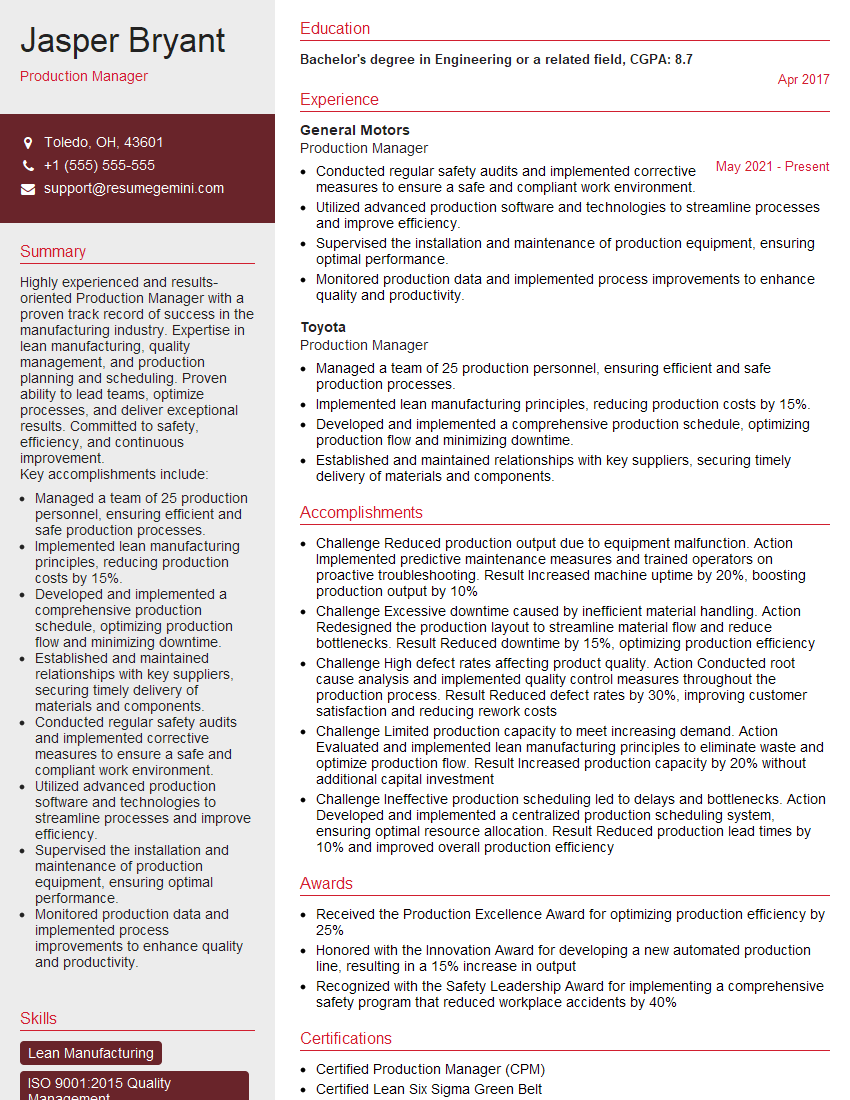
Production Manager Resume Sample
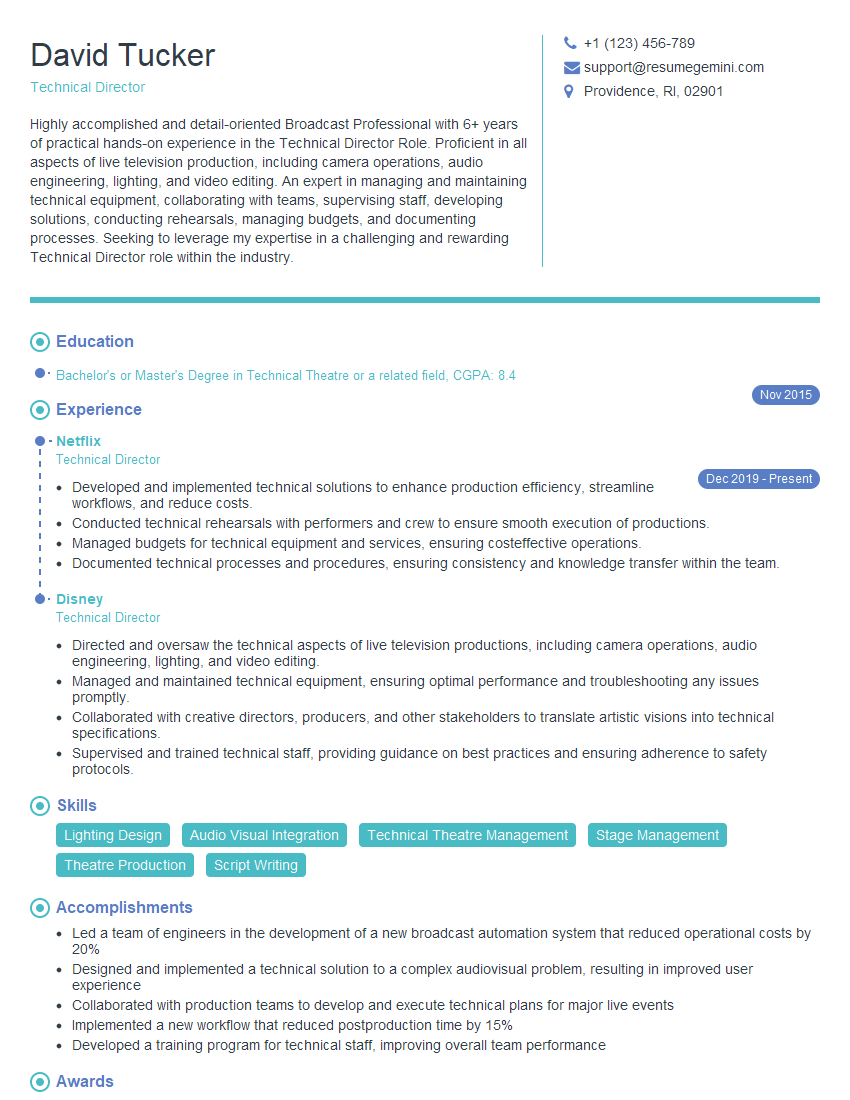
Technical Director Resume Sample

Production Coordinator Resume Sample
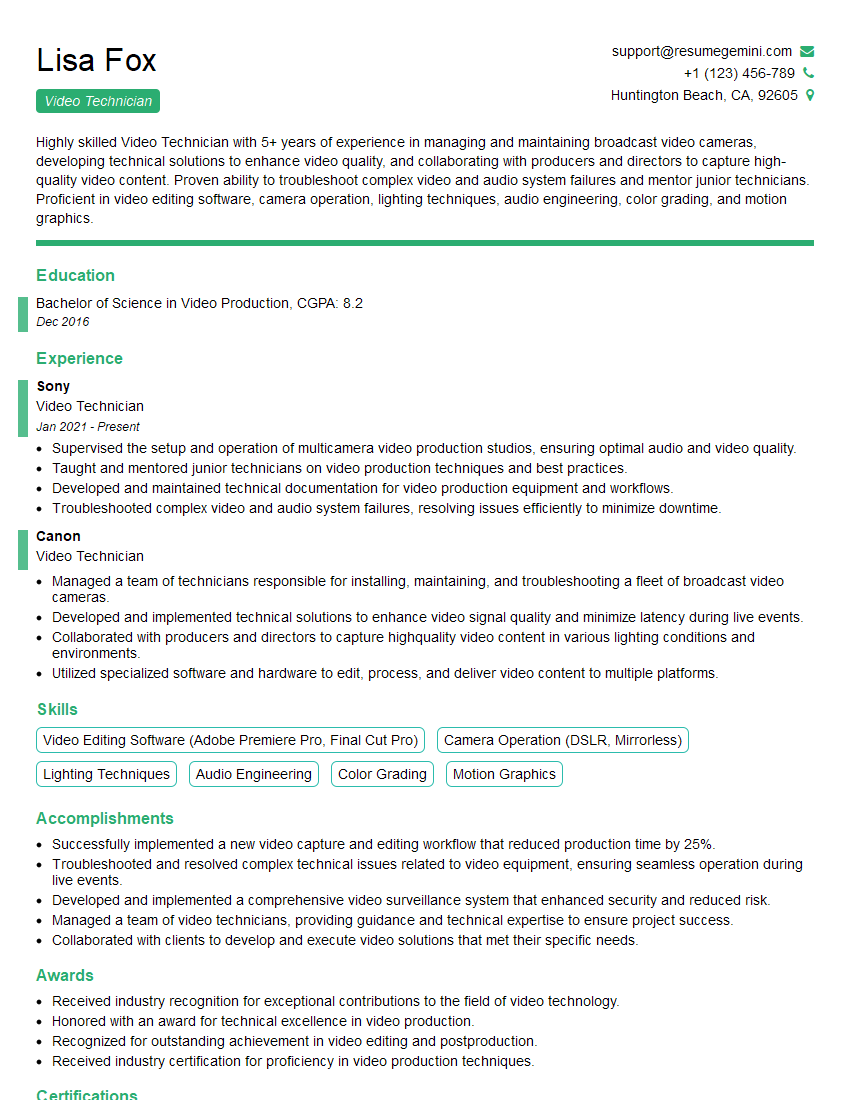
Video Technician Resume Sample
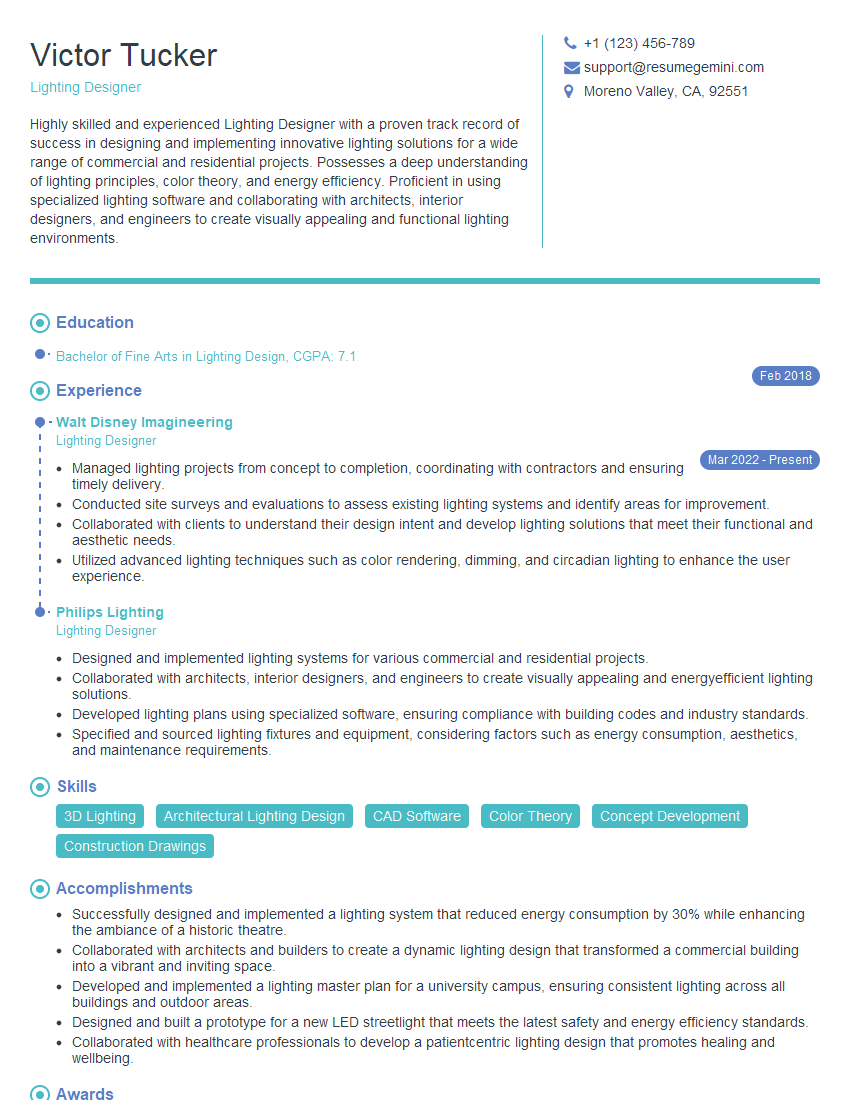
Lighting Designer Resume Sample
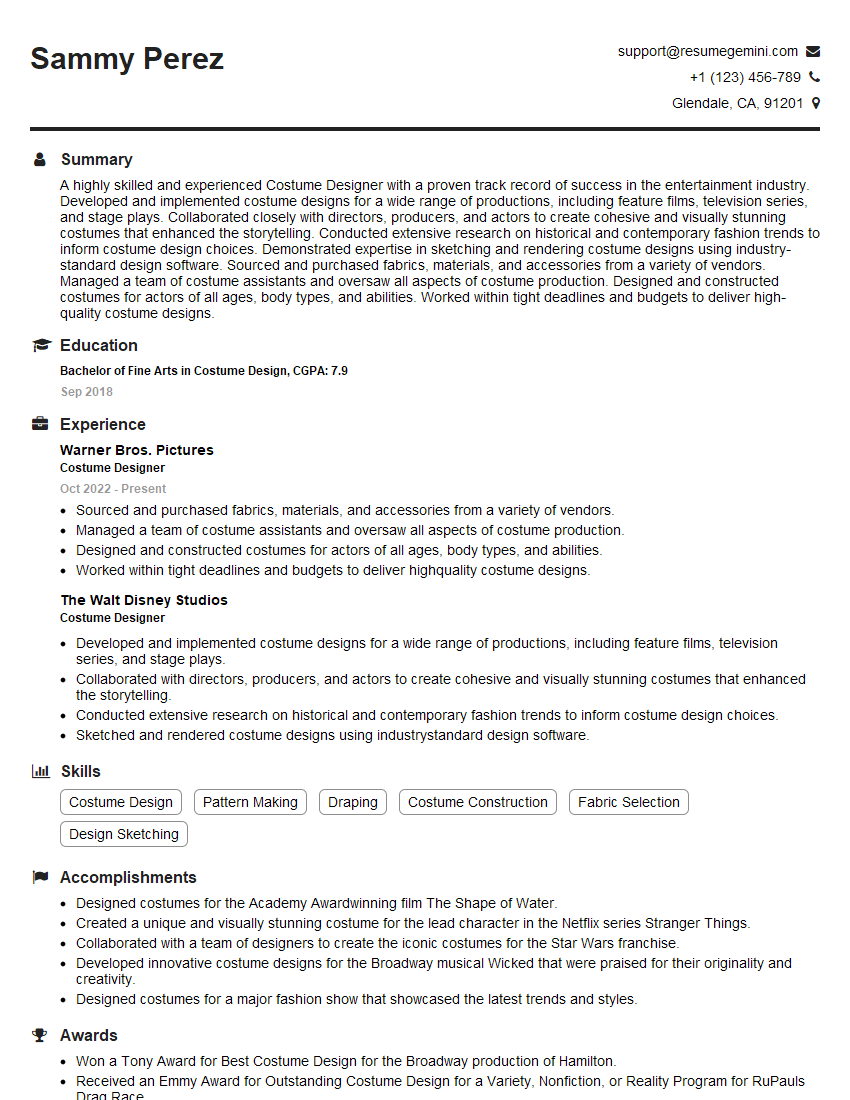
Costume Designer Resume Sample
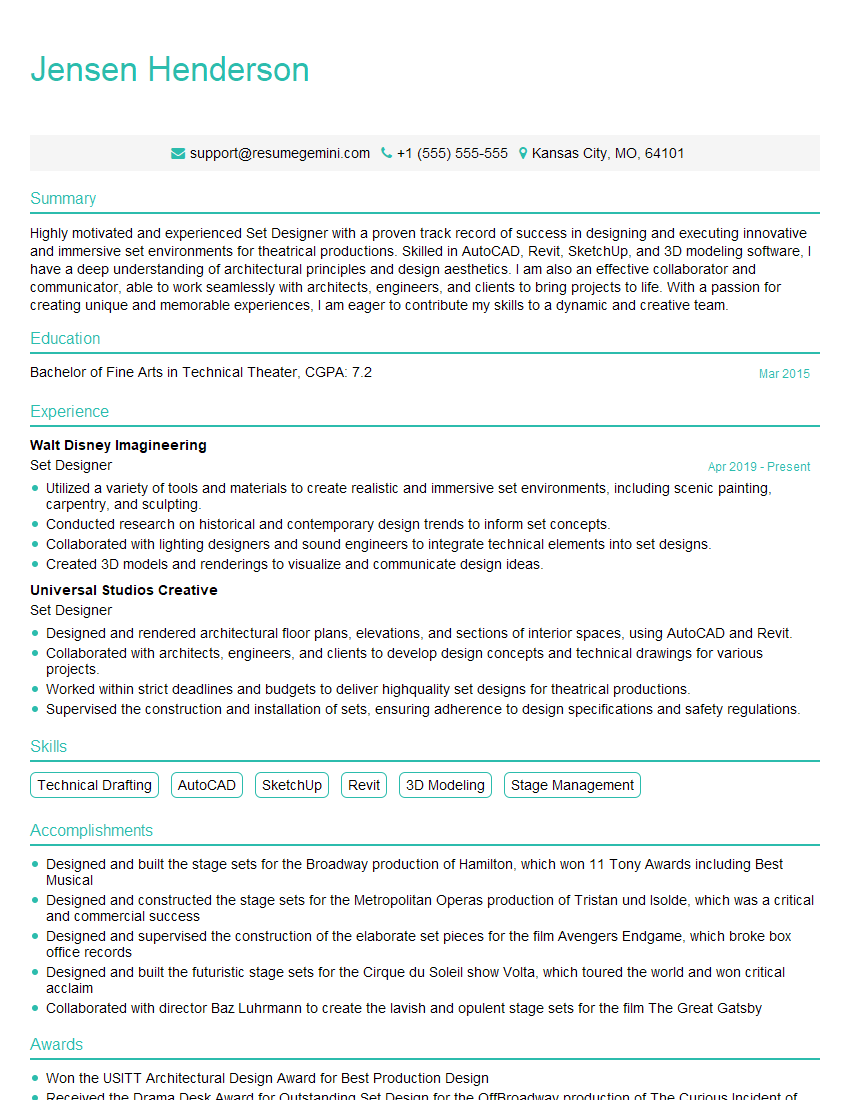
Set Designer Resume Sample
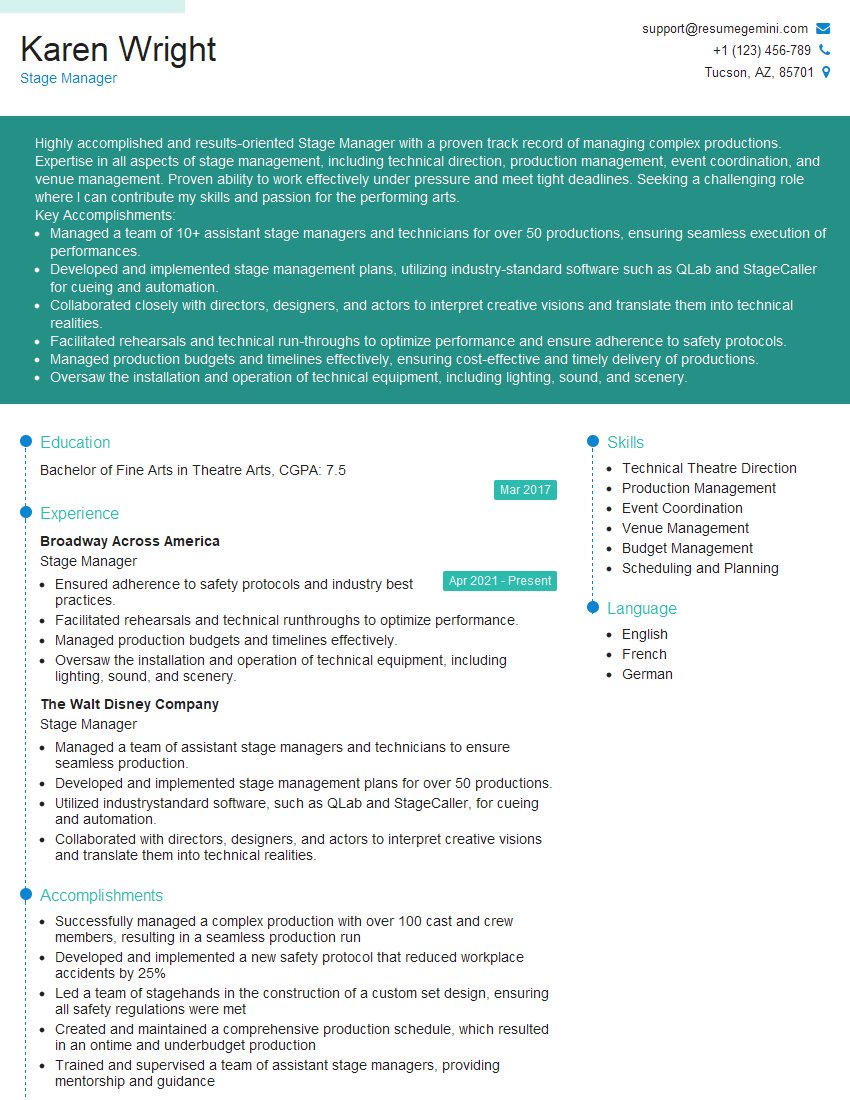
Stage Manager Resume Sample
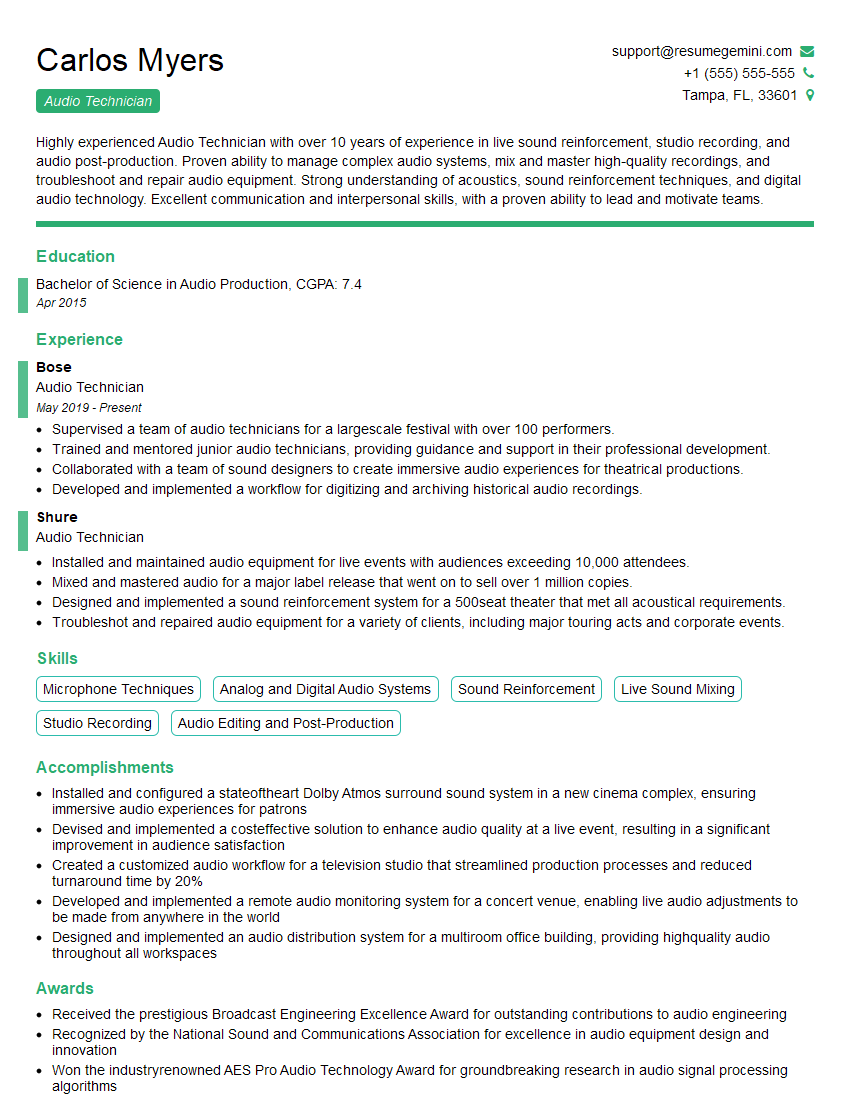
Audio Technician Resume Sample
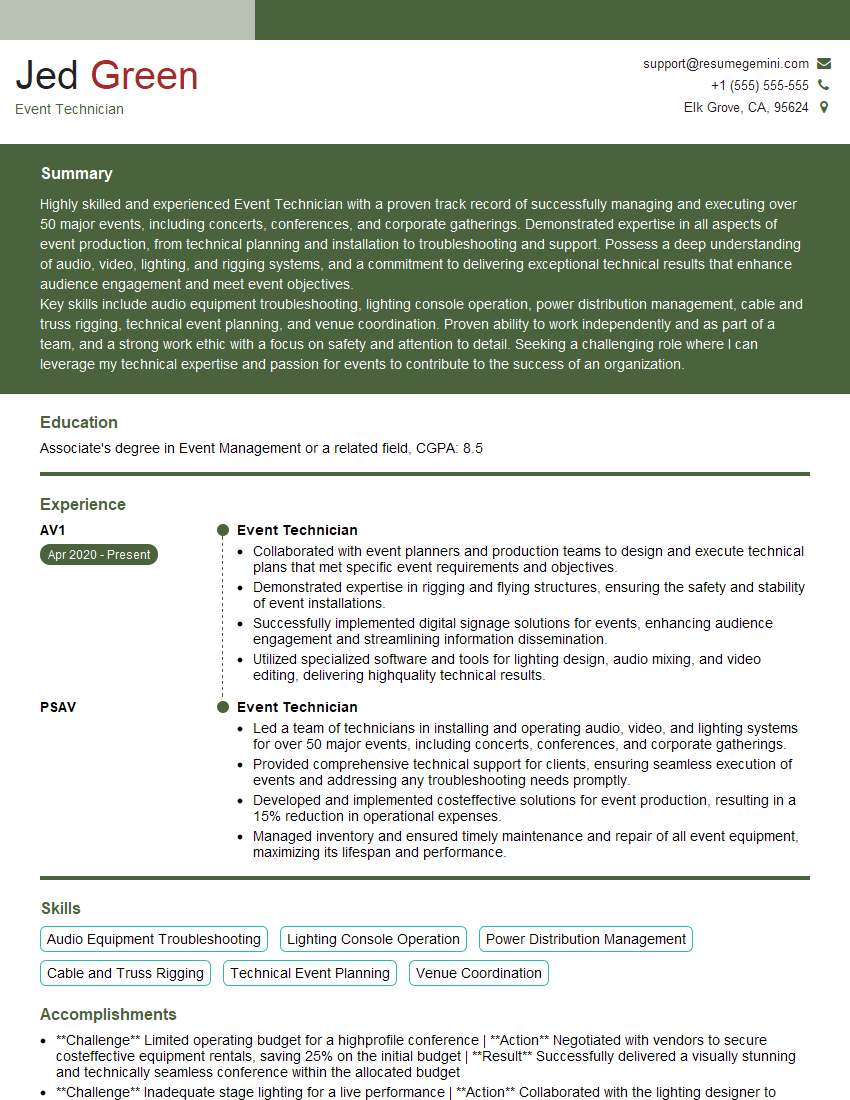
Event Technician Resume Sample
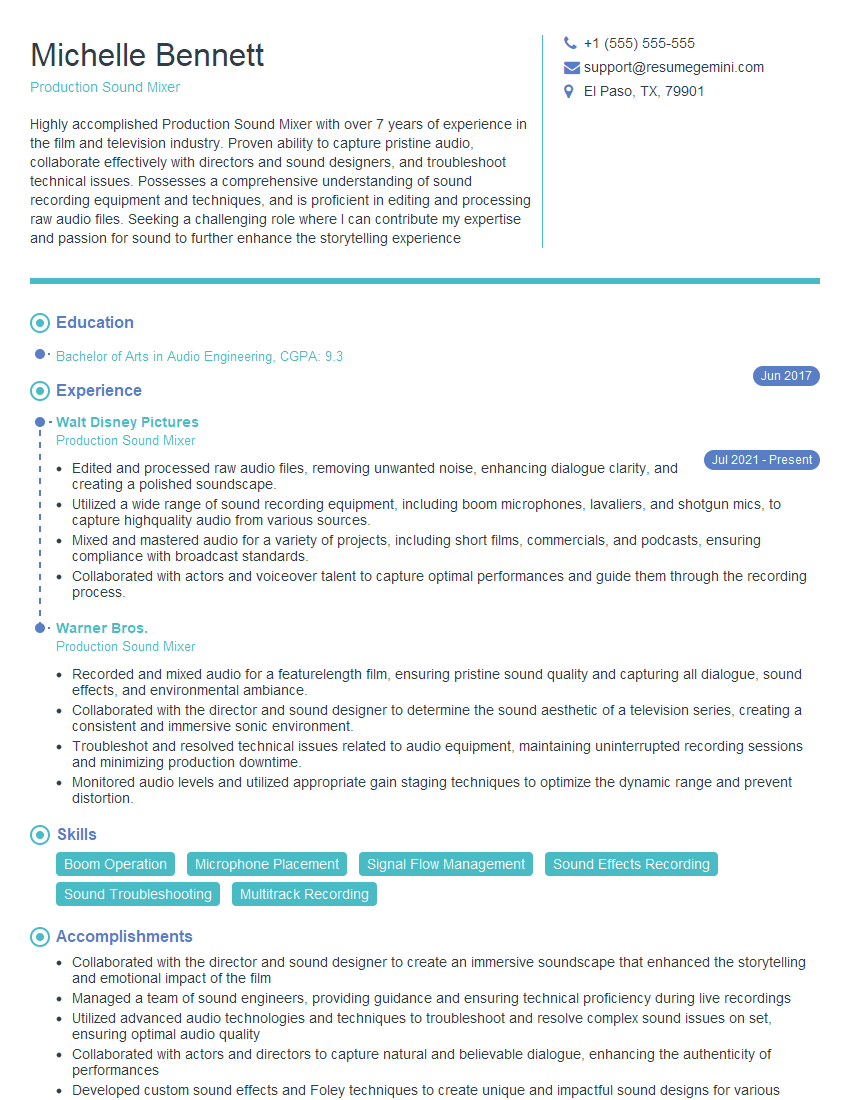
Production Sound Mixer Resume Sample
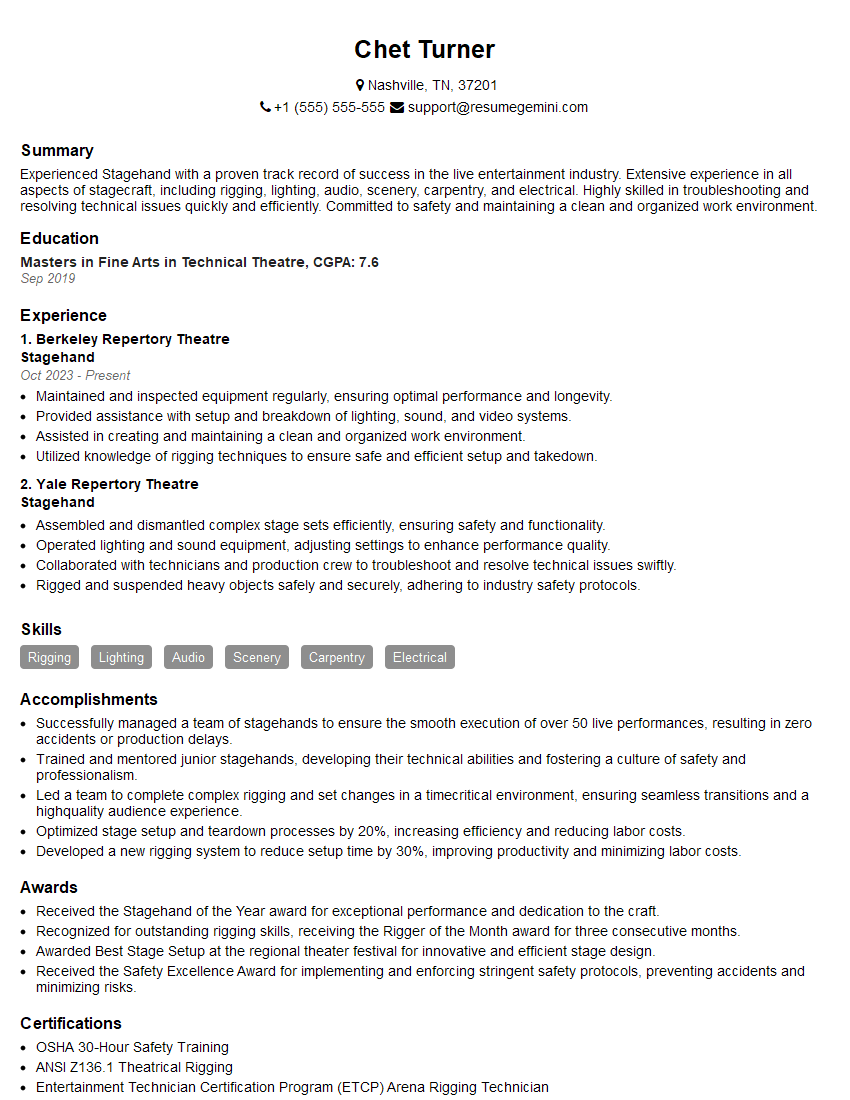
Stagehand Resume Sample
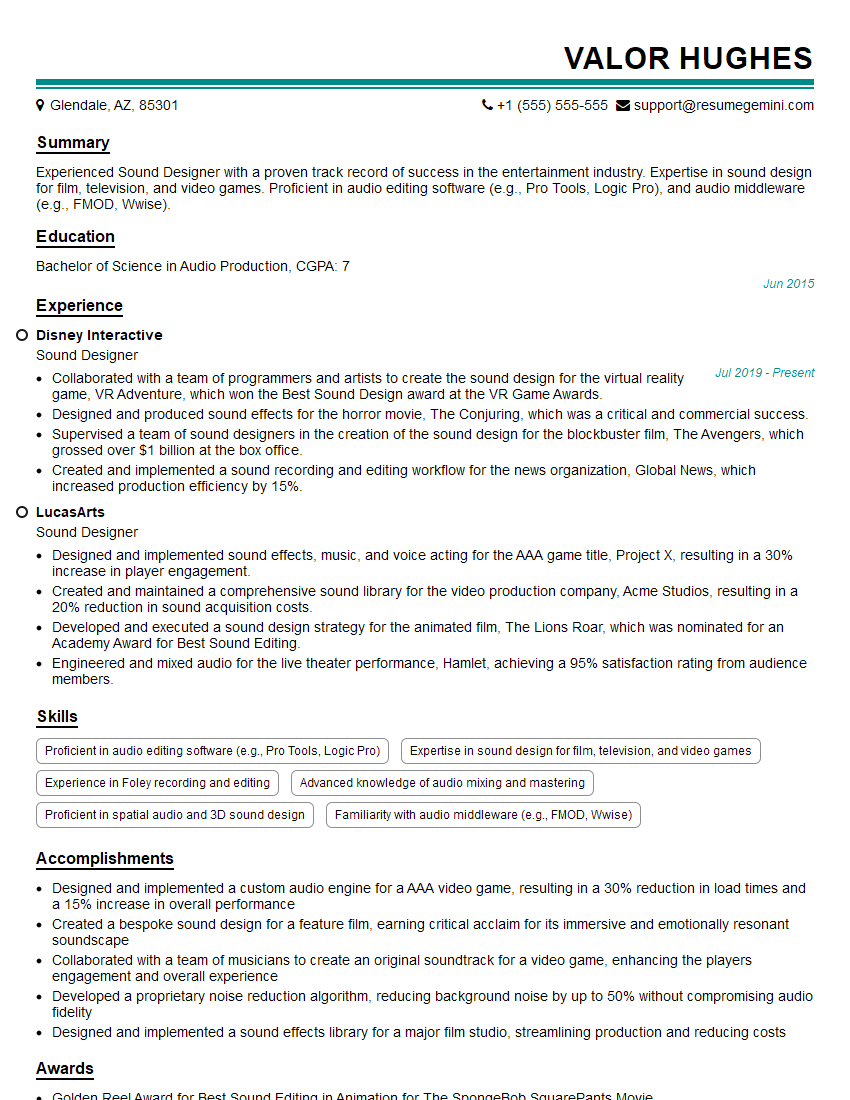
Sound Designer Resume Sample
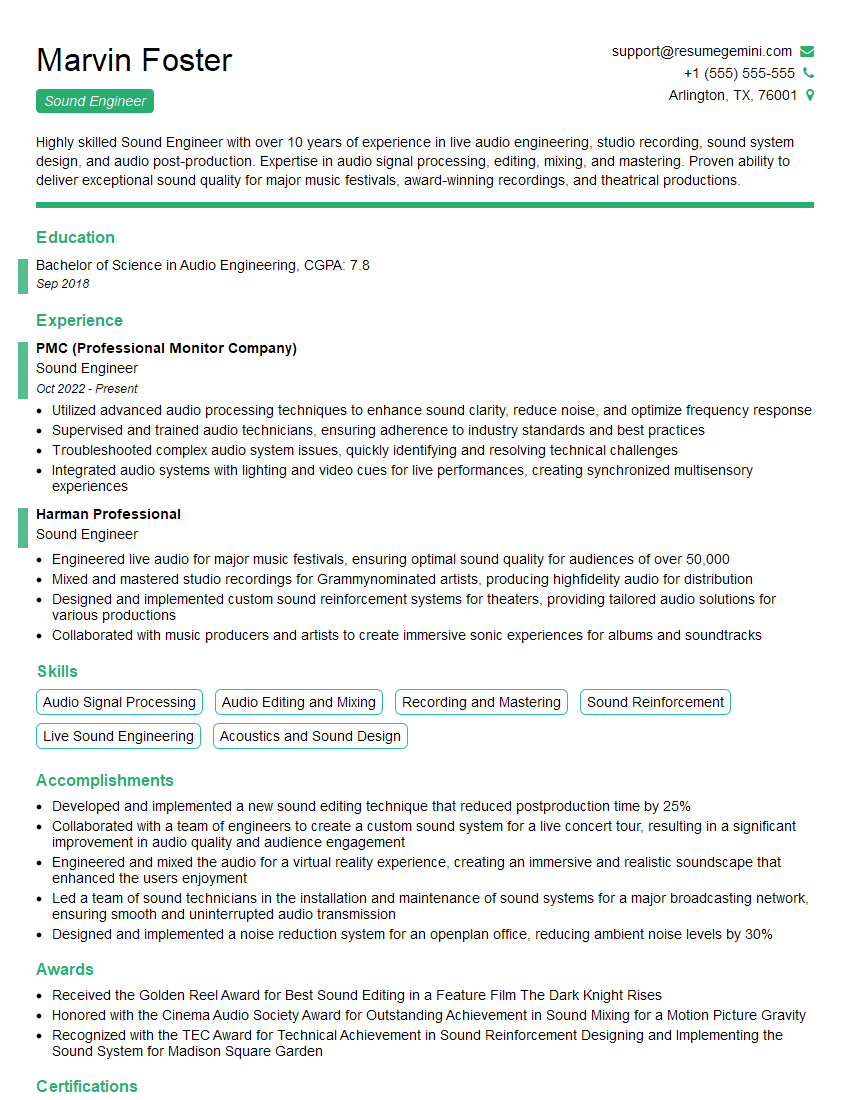
Sound Engineer Resume Sample
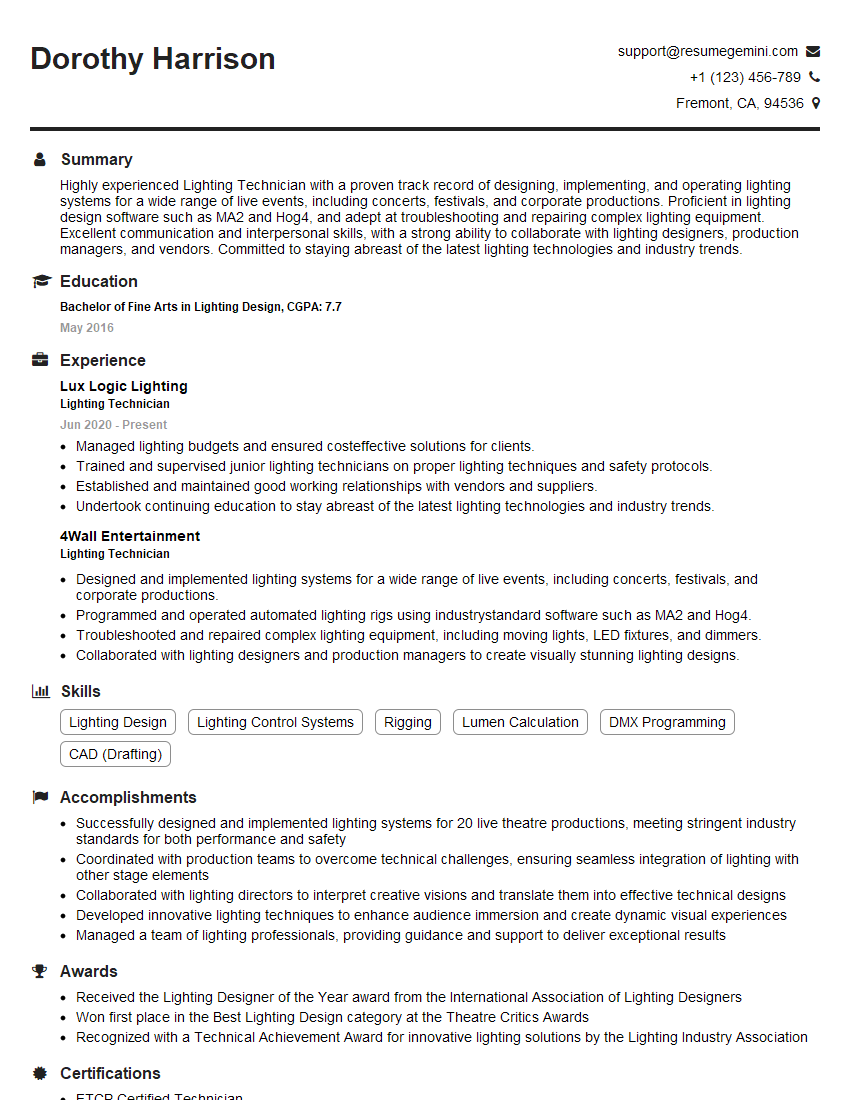
Lighting Technician Resume Sample
Explore more articles
Users Rating of Our Blogs
Share Your Experience
We value your feedback! Please rate our content and share your thoughts (optional).
What Readers Say About Our Blog
Very informative content, great job.
good