Interviews are more than just a Q&A session—they’re a chance to prove your worth. This blog dives into essential MultiVessel Operations interview questions and expert tips to help you align your answers with what hiring managers are looking for. Start preparing to shine!
Questions Asked in MultiVessel Operations Interview
Q 1. Describe your experience managing multiple vessels simultaneously.
Managing multiple vessels simultaneously requires a robust system, strong communication, and proactive planning. It’s like orchestrating a complex symphony – each vessel is an instrument, and the conductor (me) ensures harmony and efficiency. My experience spans overseeing fleets of up to 10 vessels concurrently, ranging from container ships to tankers. This involved coordinating everything from scheduling maintenance and crew rotations to optimizing routes and cargo loading to meet deadlines and customer expectations. I employed a combination of sophisticated software for vessel tracking and communication, alongside regular team meetings to discuss operational challenges and potential solutions.
For example, during a particularly busy period, we had three vessels converging on the same port with overlapping unloading schedules. By proactively communicating with the port authorities and adjusting the arrival times slightly, we avoided congestion and maintained timely deliveries, minimizing delays and financial penalties.
Q 2. How do you optimize vessel scheduling for efficiency and cost-effectiveness?
Optimizing vessel scheduling hinges on several key factors: minimizing idle time, maximizing cargo capacity, adhering to strict delivery schedules, and keeping fuel consumption and maintenance costs low. It’s a delicate balancing act, much like solving a complex logistical puzzle. We utilize advanced voyage optimization software to model different scenarios, considering weather patterns, port congestion, and fuel prices to determine the most efficient routes. This software integrates real-time data, allowing for dynamic adjustments based on unforeseen circumstances.
For instance, we might prioritize a faster, slightly more expensive route if a crucial cargo needs urgent delivery. Conversely, during periods of low fuel prices, we might opt for longer, more economical routes. Regular review and analysis of scheduling data helps us refine our strategies, identify bottlenecks, and continuously improve efficiency.
Q 3. Explain your approach to resolving conflicts between vessel operations and port logistics.
Resolving conflicts between vessel operations and port logistics demands effective communication and collaboration. It’s about understanding the needs and constraints of both parties and finding mutually beneficial solutions. Clear communication channels are vital, whether it’s through direct contact with port authorities or using specialized communication platforms. Proactive planning, anticipating potential conflicts and establishing contingency plans, is also crucial.
A common conflict might involve a vessel arriving earlier than scheduled, causing congestion at the port. To resolve this, we might negotiate alternative berthing arrangements or temporarily re-route the vessel to a less congested facility. In other cases, we might need to adjust the vessel’s loading or unloading plan to accommodate port constraints.
Q 4. What are the key performance indicators (KPIs) you use to monitor multi-vessel operations?
Monitoring multi-vessel operations requires a comprehensive set of Key Performance Indicators (KPIs). These are the vital signs of our operation, offering a real-time pulse on our performance. Key metrics include:
- On-time delivery rate: Percentage of shipments delivered within the agreed-upon timeframe.
- Vessel utilization rate: Percentage of time vessels are actively engaged in transporting cargo.
- Fuel efficiency: Fuel consumption per nautical mile, providing insight into operational cost efficiency.
- Port turnaround time: Time taken for a vessel to complete loading or unloading operations at a port.
- Safety incidents rate: Number of safety incidents per vessel per year.
We use data visualization dashboards to track these KPIs, enabling proactive identification of areas for improvement and timely intervention when necessary.
Q 5. How do you ensure compliance with international maritime regulations across multiple vessels?
Ensuring compliance with international maritime regulations across multiple vessels is paramount. We establish a robust compliance program, including regular audits and training, to guarantee adherence to all relevant rules and regulations – from safety standards to environmental protection. Dedicated compliance officers work closely with vessel crews and shore-based teams, maintaining updated documentation and ensuring all regulatory requirements are met. A strong focus on training and internal communication ensures everyone understands their responsibilities and how to report any potential issues.
We use a combination of internal audits, external inspections, and specialized software to track compliance. This ensures consistent adherence to international standards such as the International Maritime Organisation (IMO) regulations, mitigating risks and maintaining a clean operational record.
Q 6. Describe your experience with vessel tracking and monitoring systems.
My experience with vessel tracking and monitoring systems is extensive. We utilize advanced systems that provide real-time data on vessel location, speed, course, and other crucial parameters. These systems integrate various data sources, including Automatic Identification Systems (AIS), GPS, and onboard sensors, presenting a comprehensive picture of our fleet’s status. This capability is essential for optimized routing, efficient scheduling, and proactive risk management. Data analysis from these systems helps us identify trends, patterns, and potential issues, allowing for timely interventions.
For instance, if a vessel deviates from its planned course or experiences a significant speed reduction, the system alerts our operations team, enabling immediate investigation and appropriate action. These systems are crucial for ensuring safety, efficiency, and overall operational excellence.
Q 7. How do you handle unexpected delays or emergencies affecting multiple vessels?
Handling unexpected delays or emergencies affecting multiple vessels demands a well-defined crisis management plan and strong leadership. It’s like navigating a storm – swift, decisive action is key. Our response relies on rapid assessment of the situation, prioritizing safety and minimizing disruption. We utilize our communication networks to gather information, coordinate responses, and allocate resources effectively. Our crisis management plan details roles, responsibilities, and communication protocols, ensuring a coordinated and efficient response.
For example, if a severe storm threatens several vessels, we might reroute them to safer locations, communicate with the crew to ensure their safety, and inform clients about potential delays. The aim is to mitigate the impact of the emergency, maintain transparency, and minimize disruptions to our operations.
Q 8. Explain your strategy for effective communication and coordination among vessel crews and shore teams.
Effective communication and coordination across multiple vessels and shore teams is paramount in multi-vessel operations. My strategy relies on a multi-layered approach combining robust technological infrastructure with clearly defined communication protocols and a strong emphasis on teamwork.
Technology: We utilize a centralized communication platform, possibly a dedicated maritime communication system integrating features like satellite communication, VHF radio, and instant messaging. This ensures real-time information sharing on weather conditions, vessel locations, cargo status, and operational updates.
Protocols: Clear communication protocols are crucial. This includes standardized reporting procedures, regular check-ins, and emergency response plans. We use predefined terminology to minimize ambiguity. For instance, we might use specific codes for different types of emergencies.
Teamwork and Training: Regular training sessions cover communication procedures, emergency responses, and the effective use of communication technology. Building trust and strong working relationships among crew and shore teams facilitates open communication and quick problem-solving.
Dedicated Communication Officer: A dedicated communication officer on each vessel and in the shore team can streamline information flow and act as a central point of contact.
For instance, during a storm, the communication officer would relay weather updates, adjust vessel routes accordingly, and coordinate with other vessels and shore-based teams to ensure safety.
Q 9. What are your preferred methods for maintaining accurate vessel documentation and records?
Maintaining accurate vessel documentation and records is crucial for compliance, operational efficiency, and risk management. My preferred method involves a combination of digital and physical record-keeping systems, emphasizing data security and accessibility.
Digital Systems: We utilize dedicated ship management software integrating various modules such as voyage planning, cargo management, maintenance tracking, and crew management. Data is securely stored and accessible via a centralized server.
Physical Records: While digital records are preferred, we maintain a physical copy of essential documents, particularly certificates, licenses, and safety documentation. This is kept securely on board and in compliance with relevant regulations.
Regular Audits and Verification: Regular internal and external audits are conducted to ensure the accuracy and integrity of data, and to identify areas for improvement. We use a documented and auditable process to check and verify all records.
Data Backup and Recovery: Robust data backup and recovery mechanisms are in place to ensure data security and recoverability in case of technical failure or unforeseen circumstances. We would use cloud-based and on-site backup systems to minimize the risk of data loss.
Imagine a scenario where a port authority requires verification of cargo details. With a well-maintained digital and physical record-keeping system, retrieving the necessary information is swift and straightforward.
Q 10. How do you ensure crew safety and well-being across a fleet of vessels?
Crew safety and well-being are non-negotiable. My approach is proactive, focusing on prevention, training, and support systems.
Safety Training: Regular and comprehensive safety training covering emergency procedures, fire safety, personal protective equipment (PPE) usage, and risk assessment is provided to all crew members. This involves both classroom sessions and hands-on drills.
Safety Audits: Regular safety audits and inspections ensure that safety standards are consistently upheld across the fleet. We use a documented checklist to provide a systematic approach.
Medical Facilities and Support: We ensure adequate medical facilities and 24/7 access to medical professionals through partnerships with medical service providers. This includes telemedicine options for remote vessels.
Mental Health Support: Recognizing the demands of seafaring, we provide access to mental health services and resources, including counseling and support hotlines. We promote open communication to encourage crew members to seek help when needed.
Fatigue Management: Crew rest and fatigue management are strictly adhered to, complying with international regulations. We use tools to monitor and manage crew fatigue.
For example, a regular safety drill simulates an emergency scenario, allowing the crew to practice their response, identify any weaknesses, and enhance their collective preparedness.
Q 11. What is your experience with various vessel types and their specific operational requirements?
My experience spans a variety of vessel types, each with unique operational requirements. I’ve worked with container ships, tankers, bulk carriers, and smaller specialized vessels. This experience has given me a deep understanding of the nuances of each type and how to optimize their operations for safety and efficiency.
Container Ships: I understand the intricacies of container loading and unloading, port operations, and the importance of precise scheduling to optimize cargo throughput.
Tankers: I am familiar with cargo handling procedures for liquid products, safety measures for hazardous materials, and the specific regulations governing their transportation.
Bulk Carriers: My experience includes managing the loading and unloading of bulk cargo, cargo securing techniques, and dealing with potential cargo shifting during transit.
Specialized Vessels: Experience with specialized vessels like Ro-Ro (roll-on/roll-off) vessels or LNG carriers requires understanding their unique technical and operational demands.
For example, operating a tanker requires a much stricter adherence to safety protocols compared to a container ship due to the hazardous nature of the cargo. Understanding these differences is critical for efficient and safe operation.
Q 12. How do you manage fuel consumption and optimize efficiency across multiple vessels?
Managing fuel consumption and optimizing efficiency across multiple vessels requires a multi-faceted strategy focusing on technical optimization, operational best practices, and data analysis.
Technical Optimization: This includes regular maintenance of engines and propulsion systems, hull cleaning to reduce drag, and implementation of energy-efficient technologies. We continuously monitor engine performance to optimize fuel consumption.
Operational Best Practices: This involves optimizing vessel speed and route planning to minimize fuel burn, efficient cargo loading and unloading procedures to reduce idling time, and crew training in fuel-efficient operations.
Data Analysis: We use data analytics tools to monitor fuel consumption patterns, identify areas for improvement, and compare performance across different vessels. This allows us to identify trends and potential anomalies.
Fuel Procurement Strategies: Implementing effective fuel procurement strategies, considering bunker fuel pricing and availability, can significantly impact fuel costs.
For example, by analyzing fuel consumption data, we might identify that a particular vessel consistently burns more fuel than others, prompting an investigation into potential mechanical issues or operational inefficiencies.
Q 13. Describe your experience with cargo handling and management across multiple vessels.
Cargo handling and management across multiple vessels requires meticulous planning, coordination, and real-time tracking. My approach combines efficient operational procedures, robust technology, and thorough documentation.
Cargo Planning and Scheduling: Efficient cargo planning involves coordinating with ports, clients, and other stakeholders to optimize loading and unloading schedules, minimizing delays and maximizing vessel utilization.
Cargo Tracking and Documentation: Real-time cargo tracking systems provide visibility into the location and status of cargo throughout its journey. Comprehensive documentation ensures that cargo is handled according to regulations and client requirements.
Cargo Security: Implementing robust security measures throughout the handling process is crucial. This includes secure storage, access controls, and regular inspections to prevent loss, damage, or theft.
Port Operations Coordination: Effective communication and collaboration with port authorities and terminal operators are vital for smooth cargo handling and minimizing waiting times.
For example, using real-time cargo tracking, we can quickly identify any delays or issues and take corrective action, preventing potential disruptions to the supply chain.
Q 14. How do you integrate and analyze data from various vessel systems for performance improvement?
Integrating and analyzing data from various vessel systems is essential for performance improvement. We employ a data-driven approach combining technology and expertise.
Data Integration: We use software solutions that integrate data from various vessel systems, including engine performance, navigation, cargo management, and weather data. This creates a unified view of vessel operations.
Data Analysis Techniques: We employ various data analysis techniques, such as statistical modeling, predictive analytics, and machine learning, to identify trends, anomalies, and areas for optimization. This can include forecasting potential maintenance needs.
Performance Indicators (KPIs): We define and monitor key performance indicators (KPIs) to track performance against targets. These KPIs include fuel efficiency, cargo handling time, and operational costs.
Reporting and Visualization: Data is visualized through dashboards and reports to provide a clear overview of performance and aid in decision-making.
For instance, by analyzing engine performance data, we might identify a pattern of increased fuel consumption during certain weather conditions. This information helps us adjust operational strategies to mitigate the impact and improve overall fuel efficiency.
Q 15. Explain your approach to risk assessment and mitigation in multi-vessel operations.
My approach to risk assessment and mitigation in multi-vessel operations is a layered, proactive strategy. It begins with a comprehensive identification of potential hazards, categorized by likelihood and severity. This involves analyzing factors like weather patterns, navigational challenges, crew competency, equipment reliability, and communication vulnerabilities. I utilize established frameworks like HAZOP (Hazard and Operability Study) and bowtie analysis to systematically map out potential risks and their cascading effects.
Mitigation strategies are then developed, focusing on preventative measures. This might include implementing standardized operating procedures (SOPs), investing in advanced navigation and communication systems, and rigorous crew training programs. For instance, we might use a dynamic risk assessment system, where risks are continuously monitored and adjusted based on real-time data, allowing for adaptive responses. Regular audits and safety drills are critical to ensure the effectiveness of these measures. We document all assessments, mitigation plans, and subsequent actions in a centralized, accessible database for constant monitoring and improvement.
Finally, contingency plans are crucial. For example, we develop detailed plans for emergencies, including potential equipment failures, severe weather events, or medical emergencies, ensuring that each vessel and the overall operation have clear protocols for responding to different scenarios. This proactive, multi-layered approach ensures that risks are not only identified and mitigated but also continuously managed and improved upon.
Career Expert Tips:
- Ace those interviews! Prepare effectively by reviewing the Top 50 Most Common Interview Questions on ResumeGemini.
- Navigate your job search with confidence! Explore a wide range of Career Tips on ResumeGemini. Learn about common challenges and recommendations to overcome them.
- Craft the perfect resume! Master the Art of Resume Writing with ResumeGemini’s guide. Showcase your unique qualifications and achievements effectively.
- Don’t miss out on holiday savings! Build your dream resume with ResumeGemini’s ATS optimized templates.
Q 16. What is your experience with budget management and cost control in multi-vessel operations?
Budget management in multi-vessel operations requires meticulous planning and ongoing monitoring. My experience involves developing detailed budgets encompassing vessel operating costs (fuel, maintenance, crew salaries), communication expenses, port fees, and administrative overheads. I employ cost-control techniques like negotiating favorable fuel contracts, optimizing vessel routes using advanced voyage planning software (more on this later), and implementing preventative maintenance schedules to minimize unexpected repairs.
Regular budget reviews are essential, involving comparing actual spending against projected costs. Any deviations require prompt investigation and corrective actions. This includes identifying areas for potential savings, and adjusting the budget accordingly. Technology plays a significant role here, with specialized software enabling real-time tracking of expenditure and generating automated reports, facilitating data-driven decision-making. Transparency is key; I ensure all stakeholders have access to relevant financial information to promote accountability and collaborative cost management. In one project, by implementing route optimization and negotiating better fuel contracts, we reduced operational costs by 15% without compromising safety or efficiency.
Q 17. Describe a time you had to make a critical decision under pressure in a multi-vessel operation.
During a transatlantic operation involving three container vessels, we encountered an unexpected severe storm. Initial forecasts underestimated the severity. Two vessels were already within the storm’s path, and one was approaching. The critical decision was whether to order all vessels to seek immediate shelter in a potentially less optimal port, risking delays and increased costs, or to rely on individual captain’s assessments and risk potential damage.
Under immense pressure, and considering real-time weather updates and the vessels’ individual statuses (structural integrity, cargo securing), I opted for a hybrid approach. I directed the two vessels already in the storm to seek immediate shelter in the nearest safe port, while advising the third vessel to carefully monitor the situation and seek shelter only if necessary. This decision was made after consulting with each captain individually and obtaining their professional opinion. The result was minimized risk of damage without incurring significant additional expenses from an unnecessary port diversion for all three vessels. The detailed post-incident analysis further refined our severe weather protocols.
Q 18. How do you leverage technology to improve efficiency and reduce costs in multi-vessel operations?
Technology significantly enhances efficiency and reduces costs in multi-vessel operations. We leverage various technologies, including:
- Voyage Optimization Software: This software analyzes weather patterns, traffic conditions, fuel consumption, and port schedules to generate the most efficient routes, minimizing fuel costs and transit times. For example, we use software that integrates real-time weather data to predict optimal routes and avoid potential delays.
- Vessel Performance Monitoring Systems: These systems provide real-time data on engine performance, fuel consumption, and other critical parameters, allowing for early detection of potential mechanical issues and preventing costly breakdowns. We use data analytics to identify trends and optimize maintenance schedules.
- Communication Systems (VMS/Fleet Management): Secure and reliable communication systems are vital. This includes satellite communication for global coverage, and integrated platforms for efficient crew communication and data sharing. A unified platform allows for central monitoring of vessel locations, status, and operational data.
- Predictive Maintenance: By analyzing data from various sensors, we predict potential equipment failures and schedule maintenance proactively, reducing downtime and repair costs. This is a shift from reactive maintenance to a more proactive, data-driven approach.
The combined use of these technologies significantly streamlines operations, enhances safety, and delivers substantial cost savings.
Q 19. What is your experience with voyage planning and optimization for multiple vessels?
Voyage planning and optimization for multiple vessels is a complex undertaking requiring careful coordination and advanced tools. I begin by identifying the optimal route for each vessel considering factors like cargo type, destination, weather conditions, and port availability. This often involves using specialized software as mentioned previously.
Then I develop a coordinated schedule that minimizes conflicts and maximizes efficiency. This may involve strategically coordinating arrival times at ports to minimize congestion or aligning routes to optimize refueling and resupply operations. For example, we might plan for vessels to arrive at a common refueling port at staggered times to avoid bottlenecks. The software plays a critical role in simulating various scenarios and optimizing the overall fleet schedule. Regular monitoring and adjustments to the plan based on real-time information are essential to ensure smooth operations. Communication and collaboration among the vessel masters are paramount in ensuring that the planned schedules are feasible and safe.
Q 20. How do you handle communication breakdowns or conflicts between vessel crews?
Communication breakdowns or conflicts between vessel crews are addressed using a multi-pronged approach focused on open communication, clear protocols, and swift conflict resolution. First, we emphasize clear and consistent communication protocols, using established channels for reporting and resolving issues. We utilize both formal and informal communication methods, ensuring that communication is easy, reliable and accessible.
If a breakdown occurs, I facilitate open dialogue between parties, actively listening to their concerns and fostering a collaborative environment. I strive to identify the root cause of the issue, whether it is a misunderstanding, procedural flaw, or personal conflict. Once identified, we work together to develop solutions, drawing upon expertise from different vessels and onshore support. If necessary, we may involve mediation or conflict resolution specialists. Training on effective communication, conflict resolution, and cultural sensitivity is integrated into our crew training programs to prevent future issues.
Q 21. Describe your approach to crew training and development in a multi-vessel environment.
Crew training and development in a multi-vessel environment is a high priority. Our program focuses on competency-based training, tailored to the specific roles and responsibilities within each vessel and the overall operation. This includes both onboard and shore-based training.
We conduct regular refresher courses on safety procedures, emergency response, and specialized equipment operation. Advanced training in areas like navigation, communication technologies, and cargo handling is provided based on individual crew member needs and career progression. The training program also emphasizes leadership skills development, effective communication, and teamwork. We regularly evaluate training effectiveness using feedback from crew members, supervisors and operational data. Furthermore, we encourage cross-training amongst crews to improve flexibility and responsiveness to operational needs. This ensures a highly skilled and adaptable workforce across all vessels, which directly contributes to safety and operational efficiency.
Q 22. What is your familiarity with different communication systems used in multi-vessel operations?
Effective communication is the backbone of any successful multi-vessel operation. We utilize a layered approach, combining various systems to ensure seamless information flow. This includes:
VHF Radio: For immediate, short-range communication between vessels and with shore-based teams. This is crucial for coordinating movements, reporting emergencies, and relaying critical updates in real-time. For example, during a search and rescue operation, VHF radio is the primary tool for coordinating multiple vessels.
Satellite Communication: Essential for long-range communication, particularly when operating in remote areas with limited VHF range. Systems like Inmarsat or Iridium allow for email, data transfer, and voice communication, enabling constant contact with vessels regardless of their location. A good example is using satellite communication to send weather updates and route optimization data to vessels operating across vast ocean expanses.
Fleet Management Software: These software platforms aggregate data from various sources – vessel positions, operational data, maintenance logs – providing a centralized view of the entire fleet’s activities. This allows for proactive monitoring, performance tracking, and improved coordination between vessels and shore-based operations. Think of it like a central dashboard showing the status of all your vessels in real-time.
AIS (Automatic Identification System): AIS is a crucial safety system that automatically broadcasts a vessel’s position, speed, course, and other important data. This improves situational awareness and collision avoidance, especially in busy waterways. It’s like having a constantly updating map showing the locations of all vessels in the vicinity.
Choosing the right mix of communication systems depends on the specific operational context – the geographic area, the number of vessels, and the complexity of the operation. The key is redundancy; ensuring multiple communication pathways are available to maintain contact even if one system fails.
Q 23. How do you ensure timely maintenance and repairs across multiple vessels?
Proactive maintenance is paramount in multi-vessel operations. We employ a comprehensive strategy combining preventative maintenance schedules, predictive analytics, and efficient repair management. This involves:
Computerized Maintenance Management System (CMMS): A CMMS allows us to schedule preventative maintenance tasks based on manufacturer recommendations, operational hours, and historical data. This system generates alerts for upcoming maintenance, ensuring that potential issues are addressed before they become major problems. It’s like a personal assistant for managing maintenance for each vessel.
Predictive Maintenance Techniques: We utilize data from sensors and onboard systems to predict potential equipment failures before they occur. This allows us to proactively schedule repairs and minimize downtime. Imagine predicting a potential engine failure a week in advance, allowing for scheduled repairs during a port call, rather than a costly emergency repair at sea.
Centralized Parts Inventory Management: We maintain a central inventory of spare parts to minimize delays in repairs. This strategy ensures rapid deployment of needed parts to any vessel experiencing an issue. Think of it like a well-stocked warehouse ready to supply any vessel needing repairs.
Remote Diagnostics: In some cases, we can remotely diagnose equipment problems, reducing the need for on-site technicians. This can significantly reduce downtime and repair costs, especially for vessels in remote locations. This is like having a virtual doctor for your vessel’s equipment.
Regular audits and performance reviews of our maintenance protocols are conducted to ensure continuous improvement and adapt to evolving needs. This is a continuous process, ensuring the efficiency and safety of our fleet.
Q 24. What is your experience with managing vessel charters and contracts?
Managing vessel charters and contracts requires a meticulous approach to ensure compliance, optimize costs, and mitigate risks. This involves:
Thorough Due Diligence: Before chartering a vessel, we conduct a thorough due diligence process, including vetting the vessel’s history, safety record, and compliance with relevant regulations. We carefully review the vessel’s class certificate, insurance documents, and operational capabilities.
Negotiation and Contract Drafting: We have a legal team experienced in maritime law to draft and negotiate charter contracts that protect our interests while ensuring fair and transparent terms for all parties. This includes clearly defining responsibilities, liabilities, and payment schedules.
Performance Monitoring: During the charter period, we closely monitor the vessel’s performance against the contract terms. This involves regular communication with the charterer, tracking vessel location and operational data, and ensuring compliance with safety and environmental regulations.
Dispute Resolution: We strive for amicable resolutions in case of disputes. However, we have established procedures and legal counsel to handle disputes efficiently and effectively in line with the terms of the contract.
A well-defined charter contract is crucial for a smooth and efficient operation. It mitigates risk and ensures a clear understanding of expectations between all involved parties.
Q 25. How do you measure and track the performance of your team in a multi-vessel operation?
Measuring and tracking team performance in a multi-vessel operation requires a balanced approach using both qualitative and quantitative metrics. We utilize:
Key Performance Indicators (KPIs): We establish clear KPIs aligned with our operational goals. These might include on-time delivery rates, fuel efficiency, safety incidents, maintenance costs, and cargo handling efficiency. These metrics provide a quantifiable measure of team success.
Performance Reviews and Feedback: We regularly conduct performance reviews with our team members, providing constructive feedback and setting goals for improvement. This includes both individual and team-based assessments.
Safety Performance: Safety is paramount. We track safety incidents, conduct regular safety audits, and provide comprehensive safety training to our crew. A strong safety record is a critical indicator of team proficiency.
Data Analytics: We leverage data analytics to identify trends, patterns, and areas for improvement. This involves analyzing operational data, maintenance logs, and other relevant information to pinpoint bottlenecks and improve efficiency.
Using a combination of these methods provides a comprehensive overview of our teams’ performance, highlighting areas of strength and identifying areas requiring further development.
Q 26. How do you handle conflicting priorities and demands across multiple vessels?
Conflicting priorities in a multi-vessel operation are inevitable. We address this through a structured approach:
Prioritization Matrix: We use a prioritization matrix to rank tasks based on urgency and importance. This allows us to allocate resources effectively and address critical issues first.
Clear Communication and Coordination: Open and transparent communication is crucial. We use regular meetings and communication channels to inform all teams of priorities and potential conflicts.
Flexible Resource Allocation: We maintain a flexible approach to resource allocation. This allows us to re-allocate resources as needed to address urgent situations or changing priorities.
Contingency Planning: We develop contingency plans to handle unforeseen circumstances and potential delays. This helps us minimize disruption when dealing with conflicting priorities.
Proactive communication and a structured approach to prioritization are key to successfully managing competing demands in a dynamic multi-vessel environment.
Q 27. Explain your experience with environmental regulations and their impact on multi-vessel operations.
Environmental regulations significantly impact multi-vessel operations. We maintain strict compliance through:
Knowledge of International Maritime Organization (IMO) regulations: We stay updated on all relevant IMO regulations, including those related to emissions, ballast water management, and waste disposal. This ensures compliance with international standards.
Implementation of Environmental Management Systems (EMS): We implement ISO 14001-compliant EMS to minimize our environmental footprint. This involves setting environmental targets, monitoring our performance, and regularly reviewing our procedures.
Crew Training and Awareness: Our crew receives regular training on environmental regulations and best practices. They are responsible for adhering to these standards during their duties.
Regular Audits and Inspections: We conduct regular internal audits and cooperate fully with external inspections to ensure ongoing compliance with environmental regulations. We strive for continuous improvement in our environmental performance.
Non-compliance with environmental regulations can lead to significant penalties and reputational damage. Prioritizing environmental responsibility is not only legally required but also essential for long-term sustainability and maintaining a positive public image.
Q 28. Describe your understanding of the importance of sustainability in multi-vessel operations.
Sustainability is no longer an optional extra; it’s a core business imperative in multi-vessel operations. We integrate sustainability across all aspects of our operations through:
Fuel Efficiency: We prioritize fuel-efficient vessels and operations to reduce greenhouse gas emissions. This involves optimizing routes, implementing fuel-saving technologies, and training crews on efficient vessel operation.
Waste Management: We implement robust waste management strategies, minimizing waste generation, and ensuring proper disposal according to regulations. This includes reducing plastic use, recycling where possible, and responsible treatment of sewage and other waste streams.
Emissions Reduction Technologies: We actively explore and adopt emissions reduction technologies, including scrubbers and alternative fuels, to lower our environmental impact.
Environmental Monitoring: We implement systems to monitor and track our environmental performance, allowing for continuous improvement and data-driven decision-making.
Investing in sustainability not only protects our planet but also enhances our brand reputation, attracts investors, and provides long-term cost savings through improved efficiency. It’s a win-win for the environment and our business.
Key Topics to Learn for MultiVessel Operations Interview
- Vessel Traffic Management: Understanding principles of safe and efficient vessel coordination, including collision avoidance strategies and communication protocols. Practical application includes analyzing traffic density scenarios and proposing optimized routes.
- Multi-Vessel Coordination Strategies: Exploring different approaches to coordinating multiple vessels, such as convoy operations, berthing procedures, and emergency response protocols. Practical application includes developing plans for efficient cargo transfer and minimizing idle time.
- Navigation & Communication Systems: Familiarizing yourself with various navigational technologies (GPS, AIS, radar) and communication systems (VHF radio, GMDSS) used in multi-vessel operations. Practical application involves troubleshooting communication failures and understanding the limitations of different navigation systems.
- Risk Assessment & Mitigation: Developing skills in identifying and evaluating potential hazards in multi-vessel operations (e.g., environmental factors, human error, equipment malfunction). Practical application involves creating and implementing safety plans and emergency procedures.
- Regulations & Compliance: Understanding relevant maritime regulations and international standards related to multi-vessel operations. Practical application involves ensuring adherence to safety protocols and reporting procedures.
- Operational Efficiency & Optimization: Analyzing operational data to identify bottlenecks and inefficiencies in multi-vessel operations. Practical application includes proposing solutions for improving fuel consumption, reducing transit times, and enhancing overall operational performance.
Next Steps
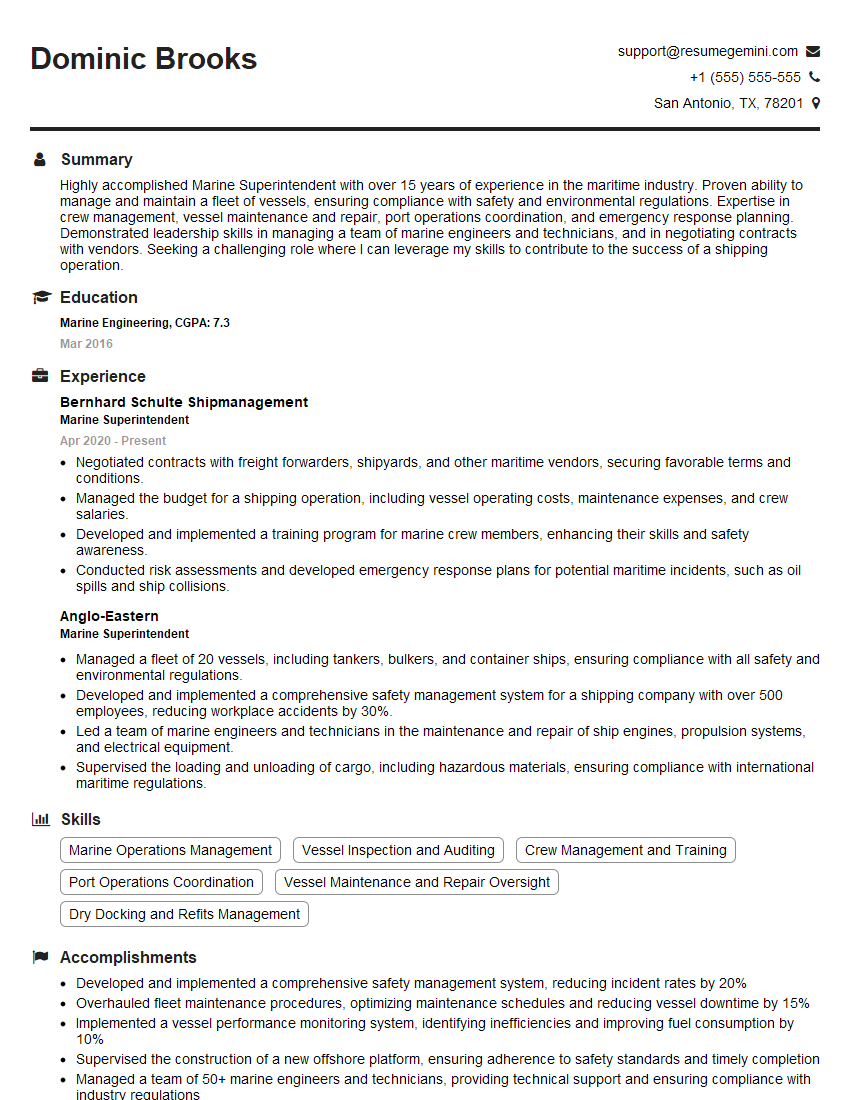
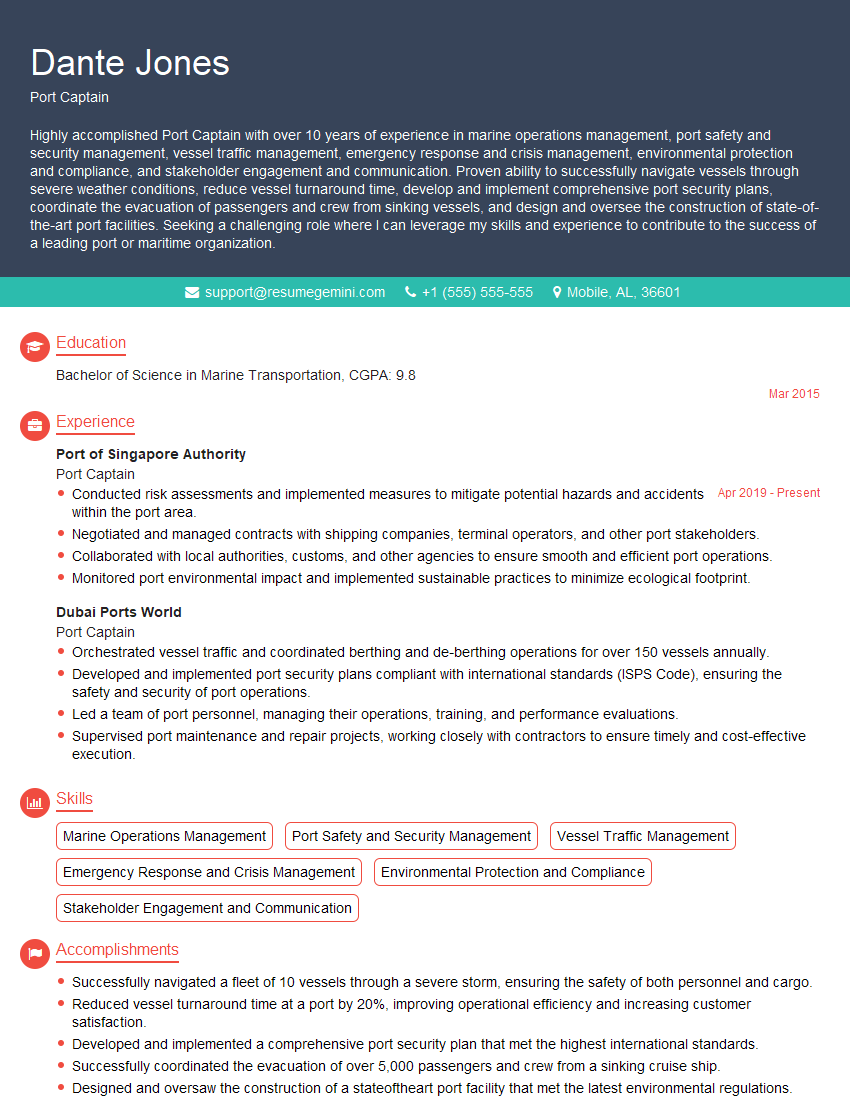
Mastering MultiVessel Operations opens doors to exciting career advancements and leadership roles within the maritime industry. To maximize your job prospects, creating a strong, ATS-friendly resume is crucial. ResumeGemini is a trusted resource that can help you build a compelling and effective resume, showcasing your skills and experience in a way that grabs recruiters’ attention. We provide examples of resumes tailored to MultiVessel Operations to help guide you through the process. Invest in your career – build your best resume with ResumeGemini today.
Explore more articles
Users Rating of Our Blogs
Share Your Experience
We value your feedback! Please rate our content and share your thoughts (optional).
What Readers Say About Our Blog
Very informative content, great job.
good