Preparation is the key to success in any interview. In this post, we’ll explore crucial Music Production Management interview questions and equip you with strategies to craft impactful answers. Whether you’re a beginner or a pro, these tips will elevate your preparation.
Questions Asked in Music Production Management Interview
Q 1. Describe your experience with different Digital Audio Workstations (DAWs).
My experience with Digital Audio Workstations (DAWs) is extensive, encompassing a wide range of software, each with its own strengths and weaknesses. I’m highly proficient in Pro Tools, Logic Pro X, and Ableton Live. Pro Tools is my go-to for larger-scale projects requiring intricate editing and mixing, particularly for projects involving a full orchestra or a complex recording with multiple musicians. Its session recall features are invaluable for complex productions. Logic Pro X excels in its MIDI functionality and its vast library of virtual instruments, making it ideal for composing and creating electronic music. Finally, Ableton Live’s strength lies in its workflow for electronic music production and live performance, its intuitive clip launching, and its powerful arrangement tools making it excellent for loop-based arrangements and beat-making. I also have working knowledge of Cubase and Studio One, allowing me to adapt to various project needs and client preferences.
For example, on a recent orchestral recording project, Pro Tools’ ability to manage a large number of tracks and plugins was crucial to efficient workflow. In contrast, on a solo artist’s electronic album, Ableton Live’s intuitive arrangement view and session view were better suited to their creative process.
Q 2. Explain your process for managing a music production budget.
Managing a music production budget requires meticulous planning and tracking from the outset. My process begins with a detailed breakdown of all anticipated expenses, categorized into pre-production, production, post-production, and marketing. Pre-production includes costs for songwriting, arrangement, and pre-recording preparations. Production covers studio rental, engineer fees, musician fees (session players, backing vocalists etc), and any necessary equipment rentals. Post-production encompasses mixing, mastering, and any additional editing or sound design. Marketing encompasses the costs associated with distribution and promotional efforts.
I utilize spreadsheet software to track expenses against the budget in real-time. I also build in contingency funds to handle unforeseen circumstances, such as equipment malfunction or extra studio time required. Regular budget reviews with the client are essential to ensure transparency and to promptly address any potential overruns. I find that clear communication, regular updates, and proactive problem-solving are crucial in avoiding budget issues.
Q 3. How do you handle conflicts between artists and engineers?
Conflicts between artists and engineers are unfortunately common. My approach involves acting as a mediator, fostering open communication, and prioritizing a collaborative environment. I begin by actively listening to each party’s concerns and perspectives, ensuring both feel heard and understood. I then work to find common ground, emphasizing the shared goal of creating the best possible music. Sometimes this involves clarifying expectations upfront, establishing clear roles and responsibilities, and creating a comfortable and respectful work atmosphere.
If the conflict persists despite mediation, I may suggest compromise, schedule separate conversations to address individual concerns, or, in extreme cases, suggest bringing in a neutral third party for additional mediation. The key is to de-escalate the situation quickly, focusing on solutions and maintaining a productive workflow.
Q 4. What software and hardware are essential for efficient music production?
Essential software for efficient music production includes a DAW (as discussed earlier – Pro Tools, Logic Pro X, Ableton Live are all excellent choices), a good selection of virtual instruments (VSTs) and effects plugins, and audio editing software for more detailed audio manipulation. Crucial hardware includes high-quality audio interface (to connect microphones and instruments to your computer), studio monitors for accurate sound reproduction, and good quality microphones (depending on your recording needs). For example, a large diaphragm condenser microphone is perfect for vocals or acoustic instruments, while a dynamic microphone is ideal for louder sources like drums or amplified guitar. A good pair of headphones is also crucial for monitoring while mixing and editing.
Q 5. Outline your workflow for overseeing a recording session from start to finish.
My workflow for overseeing a recording session begins with thorough pre-production planning. This includes confirming all details with the artist and engineers, finalizing the schedule, preparing the studio, and confirming all necessary equipment and personnel are in place. The actual recording session involves tracking instruments and vocals, followed by quality checks and initial edits. Once the tracking is complete, the focus shifts to the mix. This involves balancing levels, EQ, compression, and other effects to achieve a polished and well-balanced sound. Once the mix is finalized, the project goes to mastering, which aims to optimize the audio for various playback systems. Throughout this entire process, regular communication and feedback loops with the artist are crucial to ensure their vision is realized.
Q 6. How do you ensure projects are completed on time and within budget?
Ensuring projects are completed on time and within budget requires meticulous planning and consistent monitoring. This starts with creating a detailed project timeline, breaking the project down into manageable tasks with assigned deadlines. Regular progress meetings with the team are necessary to track milestones and identify potential delays proactively. Utilizing project management software can be extremely useful in this regard. Addressing any emerging issues promptly is critical. If any problems arise that might cause delays, I actively work with the team to implement effective solutions – potentially involving adjustments to the schedule or budget – while always keeping the client informed.
Q 7. Explain your experience with music licensing and copyright.
My experience with music licensing and copyright is comprehensive. I understand the complexities of different types of licenses, including mechanical, synchronization, and performance licenses. I am familiar with the relevant organizations, such as ASCAP, BMI, and SESAC, and have experience registering copyrights for musical works. I advise clients on best practices for copyright protection, ensuring they properly secure their rights before releasing their music publicly. When working on projects involving licensed samples or other copyrighted material, I ensure all necessary clearances are obtained, adhering to legal requirements and avoiding any potential infringement issues. This involves working closely with music publishers and clearing houses to secure the relevant permissions and pay the associated fees.
Q 8. How do you prioritize tasks in a high-pressure environment?
Prioritizing tasks in a high-pressure music production environment is crucial for staying on schedule and within budget. I use a combination of methods, starting with a clear understanding of project deadlines and deliverables. Then, I employ a prioritization matrix, often a simple Eisenhower Matrix (Urgent/Important), to categorize tasks. This helps me quickly identify what needs immediate attention (e.g., a mastering engineer’s deadline approaching), what’s important but can be scheduled (e.g., researching new plugins), and what can be delegated or eliminated altogether.
For example, during a recent album production, we had a looming radio-play deadline. Using the Eisenhower Matrix, I prioritized the final mix and mastering stages as urgent and important, ensuring those tasks received maximum attention and resources. Less urgent but still important tasks, like creating album artwork, were scheduled for later, ensuring the critical path remained unblocked.
I also utilize project management software to track progress, assign tasks, and set deadlines. Regular check-ins with the team allow for any necessary adjustments based on emerging priorities or unforeseen challenges. Think of it like conducting an orchestra; you need to know which instruments need to play louder at certain moments to maintain harmony and balance. The key is to be flexible and adapt as needed.
Q 9. Describe your experience with audio quality control and assurance.
Audio quality control and assurance is paramount in music production. My experience encompasses the entire process, from initial recording through to final mastering. I use a multi-stage approach to ensure optimal sound quality. This includes regular monitoring throughout the recording sessions using calibrated monitoring systems and employing various techniques to mitigate unwanted noise during recording (e.g., using pop filters, placing microphones strategically).
Post-recording, I meticulously check for any artifacts or anomalies using spectral analysis tools and other audio editing software features. This helps in identifying and correcting issues like clicks, pops, or unwanted background noise. During mixing, I pay close attention to gain staging, ensuring no clipping occurs and that the dynamic range is appropriately balanced. Finally, the mastering stage involves a dedicated mastering engineer, who I collaborate with closely, to finalize the audio, optimizing it for various distribution platforms.
For instance, in one project, we identified a subtle hum in the bassline only during the final mix. Using spectral analysis, we pinpointed the issue, which was a grounding problem, and fixed it, preventing a compromised master. I often compare the QC process to a jeweler carefully inspecting a gemstone – every detail matters in delivering a flawless, polished product.
Q 10. How do you maintain positive relationships with clients and artists?
Maintaining positive relationships with clients and artists is fundamental to a successful music production career. I prioritize clear, open communication, regularly updating clients on progress, offering creative input while respecting their vision, and addressing their concerns promptly and professionally. This proactive communication avoids misunderstandings and ensures a collaborative environment.
Building trust is key. This involves active listening, empathy, and demonstrating respect for the artist’s creative process. I also focus on exceeding expectations where possible, demonstrating professionalism and reliability throughout the project lifecycle. I view myself as a partner to the artist, supporting them in realizing their artistic vision. For example, if a client expresses concerns about a particular sound, I would actively discuss the issue with them, offering various solutions and explaining the technical implications of each choice, so that we can reach a mutually satisfying conclusion together. The goal is to create a collaborative and trustworthy relationship that keeps them coming back.
Q 11. What strategies do you use for team building and collaboration?
Team building and collaboration are essential in music production. I foster a supportive and inclusive environment where every team member feels valued and respected. I achieve this by utilizing open communication channels, regular team meetings, and encouraging feedback. We use collaborative project management tools to track progress and assignments, and I ensure that roles and responsibilities are clearly defined to avoid confusion.
In addition, I organize team-building activities, both formal and informal, to create a sense of camaraderie and trust amongst team members. For instance, we might have a casual lunch together or participate in a team-building workshop to enhance skills like effective communication. I believe in leading by example, exhibiting teamwork and actively participating in all stages of the process. A strong team becomes more than the sum of its parts – it’s a synergy that delivers exceptional results.
Q 12. How do you troubleshoot technical issues during a recording session?
Troubleshooting technical issues during a recording session requires a systematic approach. My first step is to identify the problem accurately. This often involves listening carefully, examining signal flows, and checking connections. Then, I use a methodical process of elimination to pinpoint the source of the problem.
For example, if we experience a sudden drop in audio levels, I would check the gain settings on both the microphone preamp and the audio interface, then check cable connections and the audio interface itself. If that doesn’t solve it, I’ll move on to checking the microphone itself, the signal path in the DAW (Digital Audio Workstation), or even the computer’s audio settings.
Having a backup plan is critical. In the event of equipment failure, we always have spare equipment on hand to minimize downtime. Knowing the limitations of equipment is also important, preventing potential problems. Troubleshooting is like solving a puzzle; it requires patience, methodical investigation, and a deep understanding of audio technology.
Q 13. Describe your experience with project management methodologies (e.g., Agile).
While not strictly Agile, I adapt many of its principles to music production. We use iterative processes, breaking down large projects into smaller, manageable tasks. Daily stand-up meetings (albeit often informal) ensure everyone is on the same page and aware of any roadblocks. I use project management tools to track progress, manage tasks, and set realistic timelines.
For example, the mixing stage might be divided into smaller tasks, like mixing individual tracks, then combining them into a rough mix, followed by final adjustments. This approach allows for continuous feedback and course correction, ensuring that we adapt to the project’s evolving needs. This resembles the Agile principle of iterative development, where we build and test incrementally, adapting to feedback as we go.
Q 14. Explain your approach to risk management in music production.
Risk management in music production involves identifying and mitigating potential issues that could impact the project’s success. This starts with comprehensive project planning, which involves identifying potential risks, such as equipment failure, artist unavailability, or budget overruns. For each identified risk, I develop a mitigation strategy, which could include procuring backup equipment, having contingency plans for artist scheduling, or setting a strict budget and monitoring expenses carefully.
Regular risk assessments are performed throughout the project, and the mitigation plans are adjusted as necessary. For example, if there’s a risk of the studio not meeting a critical deadline, we proactively look at adding extra studio time, or adjust the project scope to make the deadline realistic. This proactive approach helps avoid expensive or disruptive setbacks and ensures smooth project delivery. Think of risk management like having a life raft on a boat – you hope you don’t need it, but its presence offers peace of mind and a safety net in case things get rough.
Q 15. How do you handle unexpected delays or technical difficulties?
Unexpected delays and technical difficulties are inevitable in music production. My approach is proactive and multi-faceted. First, I emphasize meticulous pre-production planning. This includes thorough equipment checks, backup systems for critical components (like having a secondary recording interface), and contingency plans for potential issues like power outages or software crashes. Second, I foster open communication with the artist and the entire team. Transparency about any setbacks and a collaborative problem-solving approach are key. For instance, if a microphone malfunctions mid-session, we wouldn’t panic; we’d quickly assess the situation, possibly using a backup mic or finding a creative workaround, perhaps adjusting the arrangement slightly. Finally, I prioritize efficient workflow management, using time effectively and being flexible to adapt to changes. A recent example involved a sudden hard drive failure during mixing. We had a complete backup, minimizing downtime to just a few hours. The key is not to let unforeseen problems derail the entire process, but to manage them effectively and move forward.
Career Expert Tips:
- Ace those interviews! Prepare effectively by reviewing the Top 50 Most Common Interview Questions on ResumeGemini.
- Navigate your job search with confidence! Explore a wide range of Career Tips on ResumeGemini. Learn about common challenges and recommendations to overcome them.
- Craft the perfect resume! Master the Art of Resume Writing with ResumeGemini’s guide. Showcase your unique qualifications and achievements effectively.
- Don’t miss out on holiday savings! Build your dream resume with ResumeGemini’s ATS optimized templates.
Q 16. What is your experience with different audio formats and their applications?
My experience encompasses a wide range of audio formats, each with its own strengths and weaknesses. WAV (Waveform Audio File Format) is a lossless format ideal for mastering and archiving, preserving the highest audio quality. AIFF (Audio Interchange File Format) is another lossless option, often used on Apple systems. For distribution and streaming, MP3 (MPEG Audio Layer III) is a popular choice due to its smaller file size, although it involves some data compression, resulting in some loss of quality. AAC (Advanced Audio Coding) is another compressed format, generally offering better quality than MP3 at similar bitrates. I also have experience with high-resolution audio formats like FLAC (Free Lossless Audio Codec) and DSD (Direct Stream Digital), gaining in popularity for their superior sound reproduction. Choosing the right format depends entirely on the specific application—archiving requires lossless formats, while streaming needs compressed formats for efficient delivery.
Q 17. Describe your understanding of signal flow and audio routing.
Understanding signal flow and audio routing is fundamental. Think of it like a river flowing from its source to the sea. The source is your instrument or microphone. The river’s path is the signal, travelling through various processing units like preamps, EQs, compressors, and effects. The sea is your final output, whether it’s your speakers or a digital file. Audio routing involves carefully directing this signal. For example, you might route a vocal track to a compressor to reduce dynamics, then to an EQ to shape its tone, then send it to a reverb effect to add ambiance, and finally to your DAW’s mixer. This is represented visually on a mixing console or DAW’s routing diagram. Mastering signal flow is crucial for preventing unwanted noise, feedback, and ensuring the final mix is clear and well-defined. In a recent project, effective routing allowed us to easily create multiple unique effects sends for different instruments without signal bleed, maintaining clean mixes throughout the process. Careful planning and understanding of each element’s role prevent issues down the line.
Q 18. How do you ensure the quality of audio recordings throughout the production process?
Maintaining audio quality requires a holistic approach starting from the initial recording. This involves using high-quality microphones and preamps appropriate for the source, optimizing microphone placement for optimal sound capture, and minimizing background noise during recording. Pre-production involves testing the recording environment for any unwanted noise. During recording, consistent monitoring is crucial to identify any issues. The use of appropriate gain staging is critical to prevent clipping (distortion caused by signal overload). During post-production, careful editing, and mixing techniques are important to refine the recordings and address any remaining flaws. Advanced techniques like noise reduction and de-essing are also useful when dealing with noise. Mastering is the final stage where the mix is optimized for playback on different systems. Regular equipment maintenance, and using high-quality converters, also plays a huge role in the quality of recordings from beginning to end.
Q 19. What are your methods for optimizing workflow and efficiency in the studio?
Optimizing workflow and efficiency involves a combination of technical and organizational strategies. I utilize a DAW (Digital Audio Workstation) effectively, leveraging features such as automation, templates, and session organization for faster and more efficient workflow. In the studio, we adhere to a structured process, starting with a clear project plan and regularly scheduled check-ins. Regular backups are essential to avoid data loss, and I use efficient file management systems to easily locate project assets. I also encourage collaboration and streamline communication among the team members. Using standardized naming conventions and clear folder structures make the workflow seamless. Furthermore, investing in high-quality and well-maintained equipment minimizes downtime, improving overall efficiency. Finally, taking regular breaks is important to avoid burnout and maintain creative focus throughout the process.
Q 20. How do you deal with artists who have unrealistic expectations?
Dealing with unrealistic expectations requires a blend of empathy, professionalism, and clear communication. It starts with setting realistic expectations during the pre-production phase. I clearly outline the project timeline, budget, and the technical capabilities. I use concrete examples and case studies to demonstrate realistic achievable outcomes. Open and honest communication is vital. If an artist requests something technically infeasible, I explain why and offer alternative solutions. This involves demonstrating why certain effects might not work, and suggesting more appropriate methods. It’s a collaborative problem-solving process rather than simply rejecting their ideas. Building trust and rapport is key. By consistently delivering high-quality results within the established parameters, I foster a healthy creative environment where collaboration thrives.
Q 21. Describe your familiarity with various microphones and their uses.
My familiarity with microphones extends across various types, each suited to different applications. Large-diaphragm condenser microphones are excellent for capturing warm, detailed vocals and instruments. Small-diaphragm condenser microphones are versatile, commonly used for acoustic instruments, overhead drum miking, and detailed instrument recording. Dynamic microphones are robust and ideal for loud sources like snare drums, vocals in live situations, and guitars due to their ability to handle high sound pressure levels. Ribbon microphones, known for their smooth and detailed sound, are favored for capturing delicate instruments. The choice of microphone depends critically on the sound source. For example, a large-diaphragm condenser might be ideal for warm vocals, while a dynamic microphone would be suitable for the powerful sound of a snare drum. My understanding includes not only the type of microphone but also its polar pattern (cardioid, omnidirectional, figure-8) which influences the way it captures sound. In practice, the selection process usually involves testing several microphones to find the one that captures the instrument or vocal the best.
Q 22. What are your preferred methods for communication with clients and team members?
Effective communication is paramount in music production. I utilize a multi-pronged approach tailored to the individual. With clients, I prioritize clear, concise project updates via email, supplemented by regular phone calls to discuss creative direction and address concerns. I believe in transparency and proactive communication, keeping them informed every step of the way. With team members, I favor a collaborative atmosphere. We utilize project management software like Asana or Trello for task assignments, deadlines, and file sharing, promoting seamless workflow. Regular team meetings, both in-person and virtual, facilitate open discussion, problem-solving, and a shared understanding of project goals. For quick questions or updates, instant messaging platforms like Slack are invaluable for maintaining efficient communication throughout the entire production process.
Q 23. Explain your experience with audio mixing and mastering techniques.
My experience in audio mixing and mastering spans over [Number] years, encompassing a wide range of genres. Mixing involves balancing individual tracks to create a cohesive and dynamic sound. I’m proficient in various techniques, including EQ (Equalization) to shape the frequency response of individual instruments, compression to control dynamics and add punch, and reverb and delay to create space and depth. For example, I recently mixed a jazz album where careful EQ was crucial to ensure clarity in the intricate instrumental arrangements, avoiding muddiness in the lower frequencies. Mastering is the final stage, focusing on optimizing the overall loudness, clarity, and tonal balance of the entire project across different playback systems. I use tools such as dynamic range processing to maximize impact without sacrificing sonic detail and employ advanced metering techniques to ensure compatibility across various platforms like Spotify and Apple Music. This ensures a consistent and professional listening experience for the end-user. My workflow typically involves multiple revisions and careful listening tests in various environments to ensure the optimal final product.
Q 24. How do you maintain a high level of organization in a demanding studio environment?
Maintaining organization in a busy studio is crucial for efficient workflow and preventing costly mistakes. I use a combination of digital and physical organization strategies. Digitally, I meticulously label and organize all audio files within a clearly defined folder structure. This utilizes a consistent naming convention, date stamps and descriptive tags which allows for quick retrieval. Project management software, as mentioned earlier, tracks deadlines and tasks. Physically, my workspace is kept tidy and clutter-free. Each instrument and piece of equipment has a designated place. I maintain a detailed inventory of all studio equipment, preventing loss or damage. This organized approach minimizes wasted time searching for files or equipment, allowing for smooth transitions between tasks and a consistent, high-quality output.
Q 25. Describe your experience with different audio editing techniques.
My proficiency in audio editing techniques is extensive, ranging from basic tasks like cutting and pasting to advanced techniques like time-stretching and pitch correction. I’m proficient in using DAWs such as Pro Tools, Logic Pro X, and Ableton Live. For instance, I frequently use time-stretching algorithms to adjust the tempo of vocal performances without altering the pitch, ensuring a perfectly timed and rhythmically accurate arrangement. Pitch correction is used judiciously, focusing on subtle adjustments for improved vocal intonation rather than relying on it to mask poor performances. I also utilize advanced editing techniques such as noise reduction and click removal, ensuring pristine audio quality. Additionally, I’m comfortable using automation to create dynamic changes and effects throughout the project. Understanding the nuances of these tools allows for creative manipulation of audio while maintaining the integrity and artistic vision of the project.
Q 26. How do you balance creative vision with technical requirements in music production?
Balancing creative vision with technical requirements is a delicate yet essential aspect of music production. It’s a constant interplay where the artist’s ideas are translated into a technically sound and commercially viable product. I approach this by establishing open communication with the artist early on, understanding their creative goals and artistic vision in detail. Then, I translate this vision into a feasible workflow, outlining the technical challenges and potential solutions. For example, a client might want a specific sound unattainable with current technology. I might suggest alternative approaches that achieve a similar effect, using creative problem-solving. Throughout the process, I provide constructive feedback, ensuring the technical elements enhance, rather than detract from, the creative intent. This collaborative approach preserves the artistic integrity while ensuring a high-quality, polished final product.
Q 27. What’s your strategy for staying up-to-date on the latest advancements in music production technology?
Staying current with music production technology is a constant pursuit. I subscribe to industry publications like Sound on Sound and Mix Magazine. I actively participate in online forums and communities, engaging with other professionals and learning about new techniques and technologies. Attending workshops, conferences, and trade shows like NAMM provides hands-on experience with new equipment. Experimenting with new plugins and software updates is also a key part of my continuous learning process. This ongoing engagement ensures I’m always proficient in using the latest tools and techniques to provide my clients with the best possible service and a cutting-edge sound.
Q 28. How do you contribute to a positive and productive studio culture?
Contributing to a positive and productive studio culture is essential for maintaining morale and creativity. I foster a collaborative and respectful environment where everyone feels comfortable sharing ideas and offering constructive criticism. I encourage open communication and mutual respect among team members, leading by example. I celebrate successes, both big and small, fostering a sense of team accomplishment. I also ensure fair distribution of workload and provide opportunities for professional growth, offering mentorship and support to less experienced individuals. A positive, supportive atmosphere leads to increased productivity, improved quality, and a more enjoyable work experience for everyone involved.
Key Topics to Learn for Your Music Production Management Interview
- Project Management & Budgeting: Understanding project timelines, resource allocation, and effective budgeting techniques within the context of music production. Practical application includes developing realistic project budgets and schedules, managing client expectations, and mitigating potential risks.
- Artist & Client Relations: Building and maintaining strong relationships with artists, clients, and collaborators. This involves effective communication, negotiation, conflict resolution, and understanding diverse personalities and working styles. Consider exploring strategies for feedback delivery and managing expectations.
- Contract Negotiation & Legal Aspects: Familiarity with standard music industry contracts, intellectual property rights, and royalty structures. Practical application includes reviewing contracts, understanding licensing agreements, and ensuring compliance with relevant legal frameworks.
- Marketing & Promotion: Developing and implementing effective marketing strategies for music releases and artists. This includes understanding digital marketing, social media management, public relations, and promotional campaign design. Explore case studies of successful marketing campaigns in the music industry.
- Technical Proficiency: While not requiring in-depth technical production skills, a foundational understanding of music production software (DAWs), audio engineering principles, and studio workflow is beneficial. Demonstrate familiarity with common industry software and hardware.
- Team Leadership & Collaboration: Managing and motivating teams of musicians, engineers, and other professionals. This includes fostering a collaborative environment, delegating tasks effectively, and providing constructive feedback. Consider the challenges of managing creative individuals and finding solutions.
Next Steps
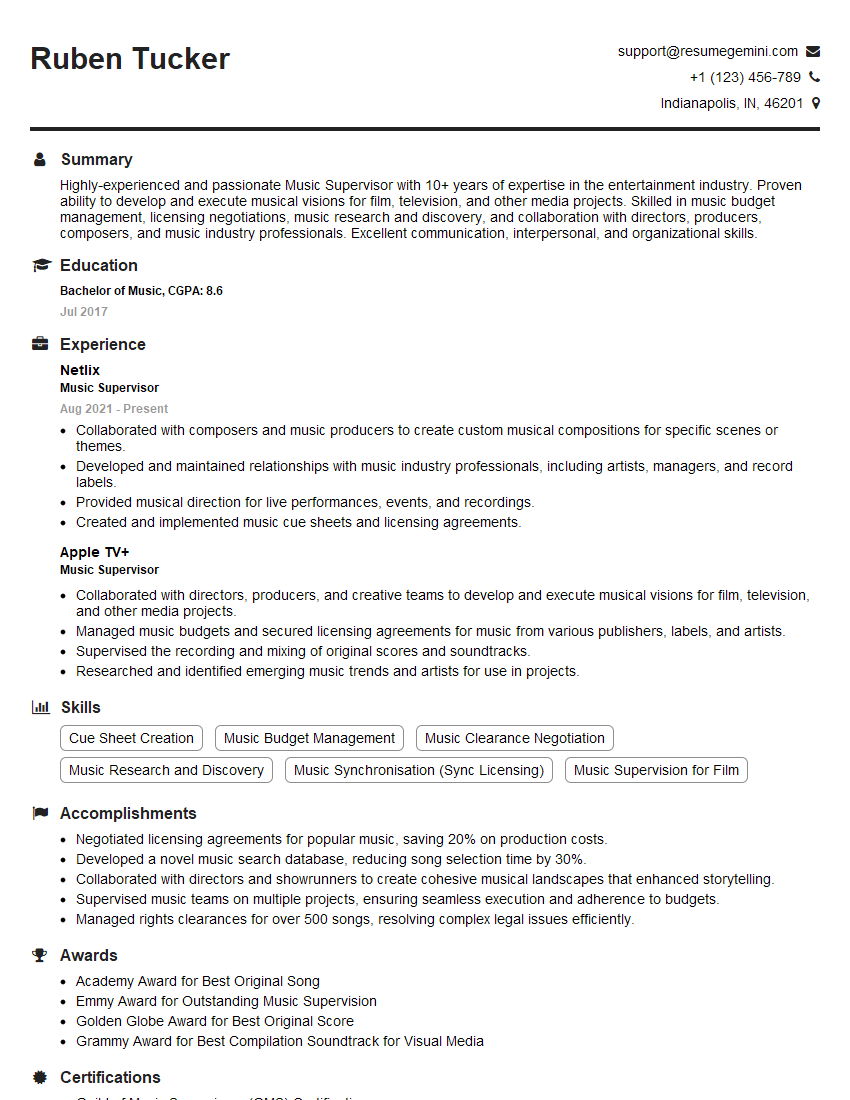
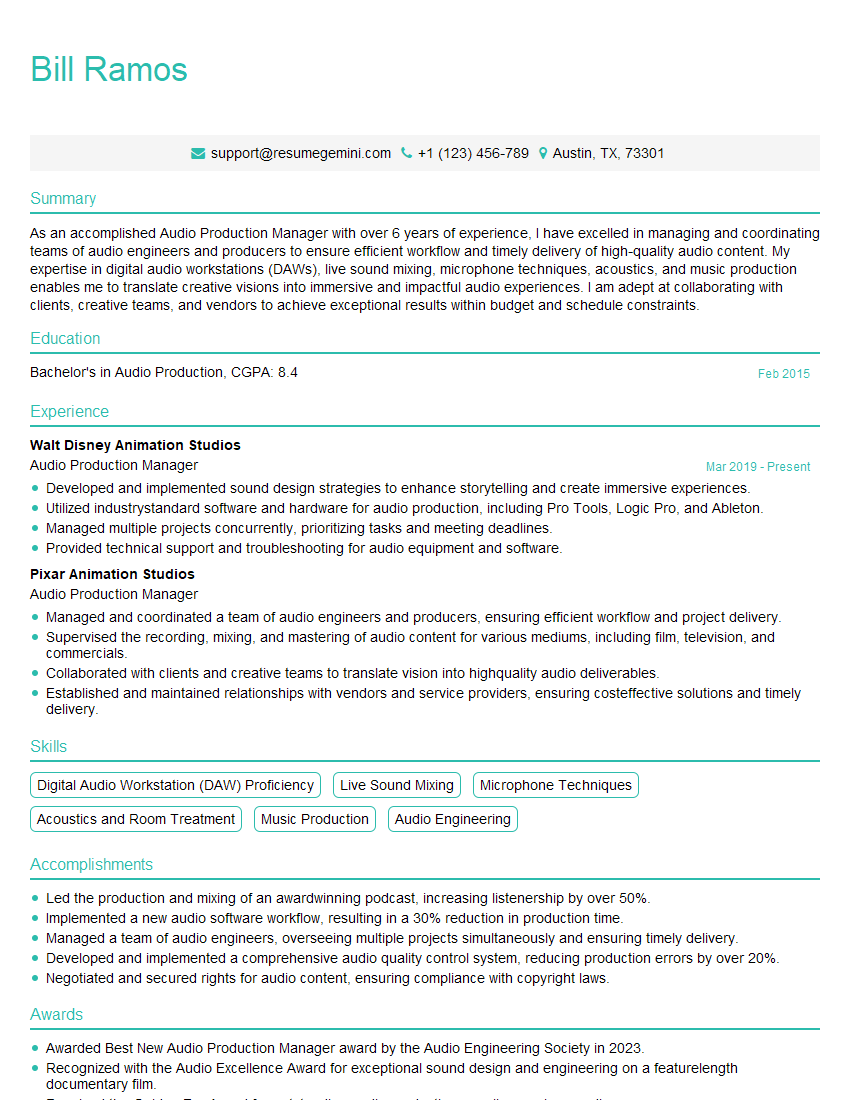
Mastering Music Production Management opens doors to exciting career opportunities, from independent artist management to leading roles in major record labels. A strong resume is crucial for showcasing your skills and experience to potential employers. Crafting an ATS-friendly resume significantly increases your chances of getting your application noticed. We highly recommend using ResumeGemini to build a professional and impactful resume tailored to the music industry. Examples of resumes specifically designed for Music Production Management positions are available to help guide you.

Explore more articles
Users Rating of Our Blogs
Share Your Experience
We value your feedback! Please rate our content and share your thoughts (optional).
What Readers Say About Our Blog
Very informative content, great job.
good