Interviews are more than just a Q&A session—they’re a chance to prove your worth. This blog dives into essential Oil Spill Cleanup interview questions and expert tips to help you align your answers with what hiring managers are looking for. Start preparing to shine!
Questions Asked in Oil Spill Cleanup Interview
Q 1. Describe your experience with different oil spill cleanup methods (e.g., booming, skimming, dispersants, bioremediation).
Oil spill cleanup involves a multifaceted approach, and my experience encompasses a wide range of techniques. Booming, for instance, uses floating barriers to contain the spill and prevent its spread. Skimming employs vessels equipped with specialized devices to remove oil from the water’s surface. Dispersants are chemical agents sprayed onto the oil slick to break it down into smaller droplets, making it easier for natural processes to degrade. Finally, bioremediation leverages naturally occurring microorganisms to consume and break down the oil.
I’ve personally overseen operations using all four methods. For example, during the cleanup of a tanker spill near the coast, we used booms to contain the oil, skimmers to remove the surface oil, and dispersants in areas where booms weren’t feasible. Bioremediation was then implemented on the shorelines to treat the residual oil that had washed ashore. The choice of method often depends on factors such as the type and quantity of oil spilled, weather conditions, and the affected environment. Each method has its strengths and limitations, and a successful cleanup often involves a coordinated strategy using several methods.
Q 2. Explain the role of dispersants in oil spill response and their environmental implications.
Dispersants accelerate the natural breakdown of oil by breaking it into smaller droplets, increasing its surface area and making it more accessible to microbial degradation. They are particularly effective in open ocean scenarios where containment is difficult. However, their environmental implications must be carefully considered. While they prevent oil from reaching sensitive shorelines, dispersants themselves are chemicals that can potentially harm marine life, particularly at high concentrations. The environmental impact depends on the dispersant’s composition, the application method, and the sensitivity of the affected ecosystem. A thorough risk assessment, weighing the benefits of dispersant use against potential harm, is crucial before deployment. For example, in a coastal area with abundant sensitive marine life, dispersant use might be limited or avoided altogether in favor of other methods. Careful monitoring of the water column and marine life post-application is also essential.
Q 3. What are the key factors to consider when selecting an appropriate oil spill response strategy?
Selecting the right oil spill response strategy requires a careful assessment of several key factors. These include the type and volume of oil spilled (crude oil behaves differently than refined products), the location of the spill (open ocean, coastal waters, or inland waterways), weather conditions (wind speed, wave height, and currents greatly influence containment efforts), the presence of sensitive ecosystems (coral reefs, mangroves, wetlands), and the available resources (personnel, equipment, and funding). Furthermore, regulatory considerations and the potential impact on human health and livelihoods play a crucial role. Each spill is unique, and a successful response necessitates a tailored approach based on a thorough understanding of these variables. For example, a spill near a bird sanctuary would necessitate a different strategy than one in the open ocean, focusing on protecting the sensitive bird population and prioritizing shoreline cleanup.
Q 4. How do you assess the environmental impact of an oil spill?
Assessing the environmental impact of an oil spill involves a comprehensive approach combining field surveys, laboratory analyses, and modeling. Field surveys aim to identify and quantify the extent of the oil spill, assess the impact on different habitats (e.g., coastal wetlands, intertidal zones, open water), and document the presence of affected wildlife. Laboratory analyses help determine the chemical composition of the oil and its toxicity to various species. Modeling techniques help predict the fate and transport of the oil, and evaluate long-term environmental consequences. This might include assessing impacts on water quality, sediment contamination, and the recovery of affected ecosystems over time. We typically use a standardized methodology combining visual assessments, biological sampling (fish, shellfish, birds), water and sediment sampling for chemical analysis, and remote sensing data to get a holistic understanding of the impact.
Q 5. What are the regulatory requirements for reporting and responding to oil spills?
Regulatory requirements for oil spill reporting and response vary by jurisdiction but generally involve a series of mandatory actions. Reporting requirements typically necessitate immediate notification to relevant authorities (e.g., the Coast Guard, Environmental Protection Agency) upon discovery of a spill. This includes providing details about the spill’s location, the type and quantity of oil spilled, and the potential environmental impacts. Response plans, often mandated for facilities handling or transporting oil, detail procedures for containing, cleaning up, and mitigating the consequences of a spill. These plans must be regularly updated and subject to periodic audits. Failure to comply with reporting and response regulations can result in significant fines and other legal consequences. For example, in the United States, the Oil Pollution Act of 1990 outlines stringent regulations for oil spill response and preparedness.
Q 6. Describe your experience with risk assessment and mitigation in oil spill response.
Risk assessment in oil spill response involves identifying and evaluating potential hazards associated with a spill and estimating the likelihood and severity of their occurrence. This includes factors like the potential for oil to reach sensitive habitats, the vulnerability of various species to oil exposure, and the potential for human health impacts. Risk mitigation involves developing and implementing strategies to reduce the likelihood or severity of these hazards. This might include measures to prevent spills, improve spill response preparedness, and develop contingency plans for dealing with various scenarios. For example, during a major pipeline construction project, a comprehensive risk assessment would identify potential failure points and propose mitigation measures such as improved pipeline inspection protocols and the development of emergency response plans.
Q 7. How do you prioritize cleanup efforts in a large-scale oil spill?
Prioritizing cleanup efforts in a large-scale spill requires a strategic approach that considers several factors. The immediate priorities typically include containing the spread of oil to prevent further damage, protecting sensitive ecosystems and human populations from immediate risks, and removing oil from areas posing the greatest risk. This involves analyzing the spill’s trajectory and predicting its movement using modeling tools. A phased approach is typically employed, addressing the most urgent concerns first before shifting to secondary cleanup tasks. For example, in a scenario where an oil spill threatens a nesting seabird colony, immediate efforts would focus on containing and removing oil from that area before addressing less urgent cleanup tasks. The overall goal is to minimize long-term environmental damage while optimizing resource allocation.
Q 8. What safety measures are crucial during oil spill cleanup operations?
Safety is paramount in oil spill cleanup. We follow a strict hierarchy of controls, prioritizing engineering controls first, then administrative controls, and finally, relying on personal protective equipment (PPE) as a last resort.
- Engineering Controls: These involve modifying the work environment to minimize hazards. For example, using booms to contain the spill before workers enter the area, deploying remote-controlled skimmers, or establishing controlled access zones.
- Administrative Controls: These are procedures and protocols that minimize risk. This includes detailed safety briefings before each shift, establishing clear communication channels, implementing strict work permits, and regular safety checks.
- Personal Protective Equipment (PPE): This includes specialized clothing like chemical-resistant suits, respirators to protect against volatile organic compounds (VOCs) and fumes, eye protection, and gloves. The type of PPE is chosen based on the specific hazard, and regular inspections ensure its efficacy.
- Emergency Response Plan: A well-defined emergency response plan is critical, detailing procedures for medical emergencies, equipment failure, or sudden weather changes. Regular drills ensure team familiarity and proficiency.
For example, during a cleanup of a light crude oil spill, we deployed booms to contain the spread, used remote skimmers to remove the oil from the water surface, and our team wore chemical-resistant suits and respirators to protect against oil vapor exposure. A safety officer continuously monitored the situation and enforced safety procedures.
Q 9. Explain the importance of proper equipment selection and maintenance in oil spill response.
Proper equipment selection and maintenance are crucial for effective and safe oil spill response. Using the wrong equipment or poorly maintained equipment can lead to delays, inefficiencies, and even environmental damage.
- Skimmers: Selecting the right skimmer depends on the oil type (viscosity, density), water conditions (currents, wave height), and the spill volume. We have experience with various types – disc skimmers, belt skimmers, and weir skimmers – and know when each is most effective.
- Booms: Booms contain the oil spill, preventing further spread. The choice of boom material (e.g., sorbent booms, floating booms) depends on the oil type and environmental conditions. Regular inspection and maintenance ensure their integrity and effectiveness.
- Vacuum Trucks: These are essential for removing collected oil and oily water mixtures. Regular maintenance, including checks of vacuum hoses, filters, and pumps, ensures optimal performance and prevents equipment failure during a crucial moment in cleanup.
- Sorbents: Pads, booms, and pillows absorb oil. Selection depends on the type of oil and the environment. Proper disposal of used sorbents is environmentally crucial.
Imagine trying to clean up a viscous, heavy crude oil spill with a skimmer designed for light oils; the process would be incredibly slow and ineffective. Regular maintenance prevents such issues, ensuring equipment readiness during critical times.
Q 10. Describe your experience with using specialized equipment for oil spill cleanup (e.g., skimmers, booms, vacuum trucks).
I have extensive experience operating and maintaining various specialized oil spill cleanup equipment.
- Skimmers: I’ve used different skimmer types, from small, portable units for minor spills to large, high-capacity skimmers deployed from vessels for major incidents. I’m proficient in operating and troubleshooting these machines, ensuring optimal oil recovery rates.
- Booms: I’m familiar with deploying and maintaining various boom types, including floating booms, sorbent booms, and containment booms, adjusting their deployment based on water currents and environmental conditions to maximize containment effectiveness.
- Vacuum Trucks: I’ve operated vacuum trucks to remove collected oil and oily mixtures from the booms and skimmers. My experience includes maintaining these trucks, ensuring safe and efficient operation.
For example, during a large tanker spill, I coordinated the deployment of multiple skimmers and several kilometers of containment booms. The effective use of the equipment, coupled with efficient coordination, significantly reduced the environmental impact of the spill.
Q 11. How do you manage and coordinate a team during an oil spill response?
Managing and coordinating a team during an oil spill requires clear communication, effective delegation, and a strong understanding of each team member’s roles and responsibilities.
- Incident Command System (ICS): We operate using the ICS framework, which establishes a clear organizational structure and communication protocols. This ensures everyone understands their role and responsibilities within the incident command, from the incident commander to the various team leaders.
- Clear Communication: Maintaining clear and concise communication is critical, especially in high-pressure situations. We use radios, satellite phones, and other communication tools to ensure swift information sharing.
- Delegation: Effective delegation is key. I empower team members to make decisions within their areas of expertise, fostering a sense of ownership and responsibility.
- Regular Briefings: Conducting regular briefings keeps everyone informed about the situation’s progress, any changes in plans, and any potential safety hazards.
During a recent cleanup, I utilized ICS to manage the team. Each crew had a designated leader responsible for their area of work, allowing me to oversee the overall operation and make strategic decisions. This system minimized confusion and maximized efficiency.
Q 12. How do you handle unexpected challenges or emergencies during an oil spill?
Unexpected challenges and emergencies are a common occurrence during oil spills. Preparation and adaptability are crucial.
- Contingency Planning: Our response plans include scenarios for various unforeseen challenges, such as equipment failure, severe weather, or changes in oil behavior. We regularly train for these contingencies.
- Problem-Solving: When faced with an unexpected challenge, we follow a structured problem-solving approach: identify the problem, analyze its causes, develop potential solutions, implement the best solution, and monitor its effectiveness.
- Adaptability: Flexibility is vital. We are prepared to adjust our strategy based on the evolving situation, perhaps switching to a different cleanup method or adjusting the deployment of equipment.
- Communication: Keeping all stakeholders informed about any changes or challenges is crucial. Open and honest communication minimizes confusion and maintains trust.
For instance, during a coastal cleanup, unexpected high tides threatened to spread the contained oil. We quickly mobilized additional booms and personnel, modifying our strategy to prevent further spread. Our ability to react swiftly and adapt our plan minimized the impact.
Q 13. What is your understanding of the different types of oil and their behavior in water?
Understanding the different types of oil and their behavior in water is fundamental to effective oil spill response. Oil properties influence the choice of cleanup methods and the environmental impact.
- Oil Type: Crude oils vary significantly in viscosity (thickness), density, and chemical composition. Light oils spread more rapidly and are more volatile, requiring rapid containment and recovery. Heavy oils are more viscous, spreading slowly but posing long-term environmental risks.
- Water Conditions: Water temperature, currents, wave action, and salinity affect oil behavior. Strong currents can spread oil rapidly, while calmer waters may allow for more efficient cleanup.
- Weather: Wind, rain, and temperature impact oil behavior, influencing its spreading rate and volatility. Adverse weather conditions often impede cleanup operations.
For example, a light, low-viscosity oil spill will require rapid deployment of booms and skimmers to prevent widespread contamination, whereas a heavier, high-viscosity oil spill will likely require different techniques, perhaps focusing on in-situ burning or bioremediation.
Q 14. Describe your experience with environmental monitoring and data collection during and after an oil spill.
Environmental monitoring and data collection are critical throughout the oil spill response and recovery phases. This information informs our cleanup strategies, assesses the environmental impact, and supports post-spill restoration efforts.
- Pre-Spill Baseline Data: Establishing baseline data before the spill is crucial for evaluating the environmental impact of the spill. This involves collecting data on water quality, sediment quality, and biological communities.
- During Spill Monitoring: Continuous monitoring during the cleanup phase provides real-time information about the extent of contamination, the effectiveness of the cleanup measures, and potential risks to wildlife. We use various tools such as water quality analyzers, sediment sampling, and biological surveys.
- Post-Spill Monitoring: Post-spill monitoring assesses the long-term environmental impacts of the spill and tracks the recovery of the affected ecosystem. This information informs the restoration plans and helps evaluate the success of cleanup efforts.
- Data Reporting: All data collected is meticulously documented and reported to regulatory agencies and other stakeholders. This ensures transparency and accountability.
In a recent spill, we employed remote sensing technologies like aerial surveys and satellite imagery to map the spill extent. This data, along with water and sediment samples, guided the cleanup strategy and helped demonstrate the effectiveness of our actions to regulatory agencies.
Q 15. How do you ensure compliance with relevant environmental regulations?
Ensuring compliance with environmental regulations in oil spill response is paramount. It involves a multifaceted approach beginning with thorough familiarity with all applicable laws and regulations, both at the federal, state, and potentially local levels. This includes acts like the Oil Pollution Act of 1990 (OPA) in the US, and equivalent legislation in other countries. We must meticulously adhere to permitting requirements for response activities, ensuring all our actions are documented and transparent. For example, before deploying any cleanup method, we need to secure appropriate permits for the use of dispersants or other chemicals, verifying their compatibility with the environment and the specific oil type involved. Regular internal audits and external inspections help us identify and rectify any non-compliance issues proactively. A robust training program for our personnel ensures everyone understands their responsibilities and the legal framework they operate under. We maintain detailed records of all actions taken, including chemical usage, equipment deployment, and personnel involvement, to facilitate any regulatory reviews or investigations.
Career Expert Tips:
- Ace those interviews! Prepare effectively by reviewing the Top 50 Most Common Interview Questions on ResumeGemini.
- Navigate your job search with confidence! Explore a wide range of Career Tips on ResumeGemini. Learn about common challenges and recommendations to overcome them.
- Craft the perfect resume! Master the Art of Resume Writing with ResumeGemini’s guide. Showcase your unique qualifications and achievements effectively.
- Don’t miss out on holiday savings! Build your dream resume with ResumeGemini’s ATS optimized templates.
Q 16. Explain the process of developing and implementing an oil spill contingency plan.
Developing and implementing an oil spill contingency plan (OSCP) is a critical process. It starts with a thorough risk assessment, identifying potential spill scenarios based on factors like location, infrastructure, oil type, and historical data. This analysis determines the potential impact and guides the development of prevention and response strategies. The plan itself outlines roles and responsibilities of personnel, defines communication protocols, and details response procedures for various spill scenarios. This includes specifying equipment mobilization strategies, cleanup methods (e.g., booming, skimming, bioremediation), and waste management procedures. A key element is regular drills and training exercises to ensure the plan is functional and personnel are well-prepared. The OSCP isn’t a static document; it requires regular updates reflecting changes in regulations, technology, and operational procedures. We’ve implemented a system where the plan is reviewed and updated annually, or whenever significant changes occur within our operational context. Post-incident reviews are crucial for identifying areas for improvement and incorporating lessons learned into future revisions.
Q 17. What are the key differences between onshore and offshore oil spill response?
Onshore and offshore oil spill responses differ significantly due to the distinct environmental settings. Offshore spills, often involving larger volumes of oil in challenging marine environments, necessitate specialized equipment like offshore booms and skimmers, remotely operated vehicles (ROVs) for underwater assessments, and specialized vessels. Accessibility is a major challenge; weather conditions can severely limit operational windows. Onshore spills, conversely, often involve more readily accessible land areas, allowing for greater use of land-based equipment like bulldozers for earthmoving and vacuum trucks. However, onshore spills can still present complexities, particularly in sensitive ecosystems like wetlands or near waterways. Environmental considerations also differ: Offshore spills can impact marine life, migratory patterns, and coastal ecosystems, while onshore spills pose threats to terrestrial flora and fauna, potentially impacting drinking water sources. We must adapt our response strategies and resource allocation based on these distinct contexts.
Q 18. How do you communicate effectively with stakeholders (e.g., government agencies, media, public) during an oil spill?
Effective communication during an oil spill is vital to minimizing environmental damage and maintaining public trust. We employ a multi-pronged approach. A dedicated communication team is established, using pre-defined communication protocols and channels. This involves establishing regular briefings for government agencies, providing updates on our progress and the overall impact. Media relations are handled by trained personnel, delivering accurate and timely information to the public to prevent misinformation and quell public anxiety. We utilize various communication channels, from press releases and press conferences to social media updates, to ensure widespread dissemination. Transparency is key; we proactively engage with affected communities, addressing their concerns and providing updates on the cleanup process. Regular community meetings and the establishment of a dedicated information hotline facilitate this engagement. We use readily understandable language, avoiding technical jargon, to ensure clear and consistent messaging.
Q 19. Explain your experience with the use of GIS and mapping technology in oil spill response.
Geographic Information Systems (GIS) and mapping technology are indispensable in oil spill response. We use GIS extensively to create real-time maps illustrating the spread of the spill, showing the location of booms, skimmers, and other response equipment. The technology allows for precise tracking of oil movement, predicting its trajectory based on currents and wind patterns. This informs strategic deployment of resources. For instance, we can use GIS to model the impact of the spill on sensitive habitats, informing prioritization efforts for cleanup. GIS also facilitates data analysis, allowing us to assess the effectiveness of various cleanup methods. We’ve used GIS to create comprehensive maps displaying historical spill data, which enables identification of risk-prone areas and informs the design of preventive measures. This technology helps us streamline operations, improve decision-making, and ultimately improve the efficiency and effectiveness of the response.
Q 20. Describe your experience with cost-benefit analysis in oil spill remediation decisions.
Cost-benefit analysis is crucial in oil spill remediation decisions. It’s a systematic approach to evaluate the economic costs of cleanup strategies against their environmental benefits. We assess various cleanup options, considering factors like equipment costs, personnel time, chemical usage, and environmental damage costs (e.g., cost of lost fisheries, habitat restoration). We also incorporate long-term environmental consequences into our calculations, projecting the potential costs associated with long-term ecosystem recovery. This approach involves assigning monetary values to ecological damage, a process that incorporates various valuation techniques, including contingent valuation, travel cost methods, and replacement cost methods. Ultimately, the goal is to identify the most cost-effective approach that minimizes both environmental and economic losses. For instance, using bioremediation might initially have higher upfront costs, but could result in lower long-term costs compared to mechanical cleanup methods.
Q 21. How do you determine the effectiveness of an oil spill cleanup operation?
Determining the effectiveness of an oil spill cleanup operation requires a multi-faceted approach. We use a combination of quantitative and qualitative methods. Quantitative assessment involves measuring the volume of oil removed, the extent of shoreline cleanup, and water quality parameters (e.g., hydrocarbon concentration). We compare these measurements against baseline data collected before the spill to assess the overall cleanup success. Qualitative assessments, on the other hand, involve evaluating the impact on sensitive ecosystems, observing changes in wildlife populations and behavior, and monitoring the ecological recovery of affected areas. Remote sensing technologies, such as aerial photography and satellite imagery, provide valuable data for both quantitative and qualitative assessments. Post-incident monitoring is critical, tracking long-term ecological recovery and evaluating the success of restoration efforts. We use a combination of these methods to develop a comprehensive picture of the cleanup effectiveness, allowing for continuous improvement of our response strategies.
Q 22. What are the long-term environmental consequences of oil spills, and how can they be mitigated?
Oil spills have devastating and long-lasting impacts on the environment. The consequences extend far beyond the immediate visible damage. Think of it like a ripple effect – the initial impact spreads outwards, affecting various ecosystems and organisms over time.
- Toxicity and Mortality: Oil is toxic to a wide range of marine life, from microscopic plankton to large mammals. Ingestion or contact with oil can lead to death, reproductive problems, and impaired immune systems. For example, the Deepwater Horizon spill demonstrated the catastrophic impact on dolphins and sea turtles in the Gulf of Mexico.
- Habitat Destruction: Oil coats shorelines, destroying vital habitats for birds, invertebrates, and plants. This affects the entire food web, leading to population declines and ecosystem imbalances. Think of the impact on salt marshes, crucial nurseries for many fish species.
- Water Contamination: Oil spills contaminate water sources, making them unsuitable for drinking and harming aquatic life. The oil can persist in the sediment for years, causing continued contamination.
- Air Pollution: Volatile organic compounds (VOCs) released from spilled oil can contribute to air pollution, impacting human health and the environment.
- Long-term Ecosystem Changes: Even after cleanup, the effects of oil spills can persist for decades. Changes in species composition, biodiversity loss, and ecosystem function are common long-term consequences.
Mitigation strategies focus on prevention, rapid response, and ecological restoration. Prevention involves stricter regulations on oil transportation and extraction, improved vessel design, and technological advancements to minimize spills. Rapid response includes efficient containment and removal of oil, while ecological restoration involves techniques such as bioremediation (using microorganisms to break down oil) and habitat rehabilitation.
Q 23. Explain your familiarity with relevant international conventions and agreements regarding oil spills.
I’m very familiar with the key international conventions and agreements related to oil spill prevention and response. These frameworks are crucial for establishing global standards and promoting cooperation in addressing these incidents.
- International Convention for the Prevention of Pollution from Ships (MARPOL): This is a cornerstone treaty that regulates various aspects of ship pollution, including oil discharge. It establishes strict standards for oil tanker design, operation, and equipment.
- International Convention on Civil Liability for Oil Pollution Damage (CLC): This convention establishes a system of liability and compensation for oil pollution damage caused by ships. It ensures that victims of oil spills can receive compensation for their losses.
- International Convention on the Establishment of an International Fund for Compensation for Oil Pollution Damage (Fund Convention): This complements the CLC by providing supplementary compensation for oil pollution damage exceeding the limits of shipowner liability.
- OPRC (Oil Pollution Response Cooperation): While not a formal treaty, OPRC is a significant international cooperative mechanism. It facilitates global collaboration and information-sharing on oil spill preparedness and response.
My understanding of these conventions extends to their practical application, including the specific requirements for reporting, response planning, and liability assessment. I’ve been involved in numerous projects that required adherence to these international guidelines.
Q 24. Describe your experience with documenting and reporting on oil spill cleanup activities.
Comprehensive documentation and reporting are critical during oil spill cleanup. This is not just about keeping records; it’s about providing accountability, facilitating efficient response, and informing future prevention efforts. Think of it as creating a detailed case study for each spill.
My experience includes:
- Daily activity logs: Recording all cleanup activities, personnel involved, equipment used, and quantities of oil recovered.
- Environmental monitoring data: Documenting water and sediment quality, wildlife observations, and any ecological impacts.
- Geographic Information Systems (GIS) mapping: Utilizing GIS software to track oil movement, cleanup progress, and affected areas.
- Photographic and video documentation: Capturing visual evidence of the spill’s extent, cleanup efforts, and environmental damage.
- Incident reports: Compiling comprehensive reports for regulatory agencies and stakeholders, summarizing the incident, response actions, and assessment of environmental impacts.
I’ve worked on several large-scale spills, and in each case, meticulous documentation was crucial for obtaining compensation, assessing environmental damage, and learning valuable lessons for future responses.
Q 25. What is your experience with using different types of booms for containment and recovery?
Booms are essential containment and recovery tools in oil spill response. Different types of booms are suited for specific situations, depending on factors like oil type, water conditions, and shoreline characteristics. Choosing the wrong boom can significantly reduce effectiveness.
- Floating booms: These are used to contain oil on the water’s surface. They come in various designs, including simple sorbent booms and more sophisticated systems with skimmers attached.
- Absorbent booms: These are designed to absorb oil, rather than simply contain it. They are often used in areas where skimming is difficult or impractical.
- Shoreline booms: These are used to protect sensitive shorelines and marshes from oil contamination. They are typically made from materials that are less likely to damage the environment.
- Current booms: These are specially designed to handle strong currents. They may incorporate specialized anchors or weights to maintain their position in challenging conditions.
My experience spans the deployment and maintenance of these various boom types. I’ve learned the importance of proper boom selection, deployment strategy, and regular inspection to ensure optimal performance. For instance, I recall an incident where the use of a high-performance current boom was essential in preventing a substantial amount of oil from reaching a sensitive estuary.
Q 26. What are the limitations of various oil spill cleanup techniques?
Oil spill cleanup techniques have limitations, and the effectiveness of any method depends heavily on the specific circumstances of the spill – the type and volume of oil, weather conditions, location, and environmental sensitivity.
- In-situ burning: While quick, it can release harmful pollutants into the air.
- Skimming: Effective for relatively calm waters and lighter oils, but less so in rough seas or with heavier, viscous oils.
- Dispersants: Can break down oil into smaller droplets, but they can also have negative impacts on marine life and may not be suitable for all types of oil.
- Bioremediation: A natural and environmentally friendly approach, but it is slow and its effectiveness depends on environmental factors.
- Sorbents: Effective for absorbing oil from shorelines and water surfaces but can be expensive and generate large volumes of contaminated waste.
Understanding these limitations is crucial for developing a comprehensive response strategy. Often, a multi-faceted approach – combining different techniques – is the most effective strategy.
Q 27. How do you deal with sensitive environmental areas during oil spill response?
Protecting sensitive environmental areas during an oil spill response requires a cautious and adaptive approach. Prioritization and careful selection of cleanup methods are essential to minimize environmental damage.
My approach includes:
- Preemptive measures: Implementing protective barriers (booms) and establishing priority areas for cleanup to protect sensitive habitats such as wetlands, nesting sites, or coral reefs.
- Minimizing disturbance: Using techniques that cause minimal damage to fragile ecosystems. This includes careful selection of equipment and personnel training to reduce impact.
- Specialized techniques: Utilizing techniques specifically designed for sensitive environments, such as manual cleanup methods, bioremediation, or the use of specialized absorbent materials.
- Monitoring and assessment: Conducting regular environmental monitoring to assess the effectiveness of cleanup efforts and identify any unexpected impacts.
- Post-spill restoration: Implementing restoration activities to recover damaged habitats and ecosystems.
For example, in a coastal cleanup, I’ve overseen the use of specialized, lightweight booms and absorbent pads to protect a nesting area of a threatened bird species without disturbing the birds or damaging their nesting grounds.
Q 28. Describe your experience with the legal and liability aspects of oil spills.
The legal and liability aspects of oil spills are complex and multifaceted. Understanding these aspects is crucial for both effective response and accountability.
- Regulatory compliance: Ensuring compliance with all relevant national and international regulations, including reporting requirements and cleanup standards.
- Liability assessment: Determining the responsible parties for the spill and assessing their liability under applicable laws.
- Insurance claims: Working with insurance companies to process claims and secure compensation for cleanup costs and environmental damage.
- Legal representation: Collaborating with legal counsel to navigate complex legal proceedings, manage potential litigation, and protect the interests of involved parties.
- Compensation claims: Assisting in processing compensation claims from individuals and businesses affected by the spill.
I’ve worked closely with legal teams throughout various oil spill response efforts. This involved interpreting complex regulations, documenting evidence for liability assessments, and assisting in the negotiation of settlements. A strong understanding of this area is vital to ensure a fair and effective response process.
Key Topics to Learn for Oil Spill Cleanup Interview
- Oil Spill Response Strategies: Understanding various containment, recovery, and remediation techniques (booms, skimmers, dispersants, bioremediation). Consider the environmental impact of each method.
- Environmental Impact Assessment: Analyzing the effects of oil spills on marine life, coastal ecosystems, and human populations. Knowing how to assess damage and inform cleanup strategies.
- Health and Safety Regulations: Familiarity with OSHA, EPA, and other relevant regulations governing personal protective equipment (PPE), emergency response procedures, and waste disposal in oil spill cleanup operations.
- Spill Modeling and Prediction: Understanding the use of software and data analysis to predict oil spill trajectory, assess the potential impact, and optimize cleanup efforts.
- Cleanup Technologies and Equipment: Practical knowledge of various equipment used in oil spill response, including their capabilities, limitations, and maintenance. This includes understanding in situ burning and other advanced techniques.
- Emergency Response Planning: Knowledge of developing and executing contingency plans for oil spill response, including communication protocols, resource allocation, and coordination with various stakeholders.
- Oil Spill Chemistry and Fate: Understanding the physical and chemical properties of oil, how it behaves in different environments, and the processes that affect its degradation.
- Data Analysis and Reporting: Gathering, analyzing, and presenting data related to spill volume, cleanup progress, and environmental impact. This includes proficiency with relevant software.
Next Steps
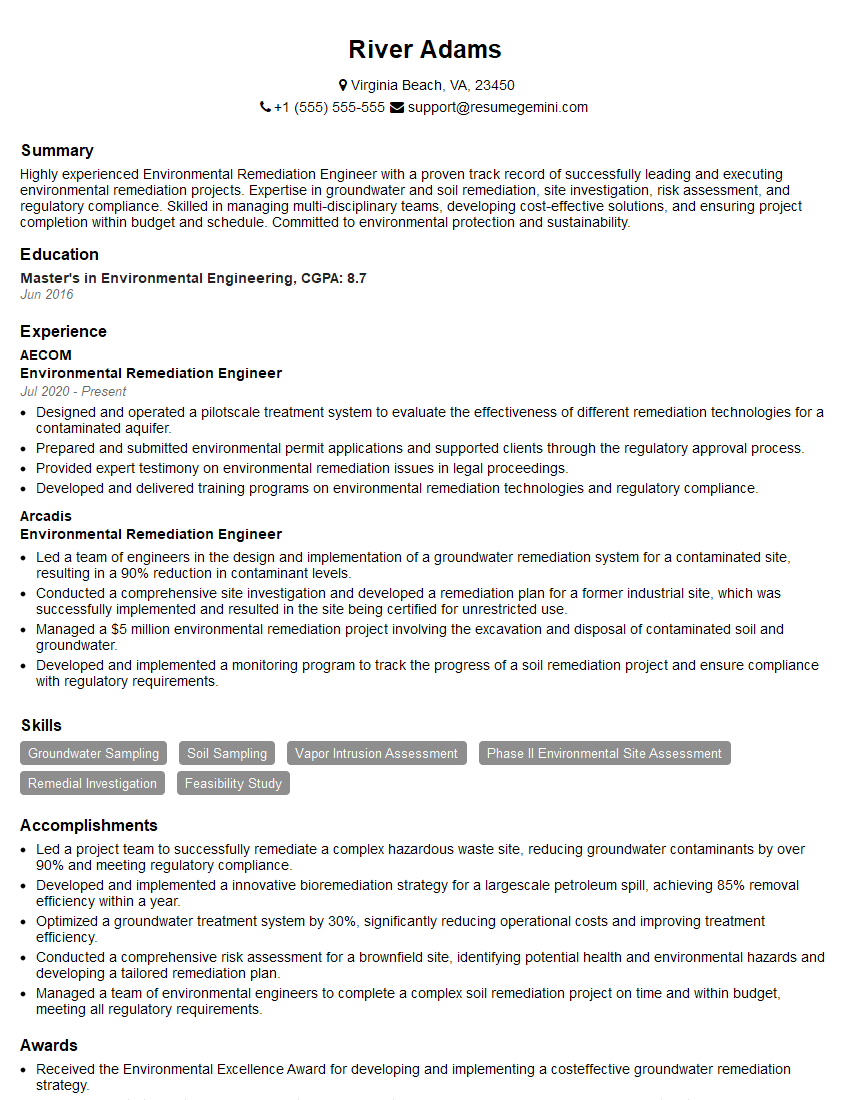
Mastering Oil Spill Cleanup techniques is crucial for a rewarding and impactful career in environmental protection. The demand for skilled professionals in this field is consistently high, offering excellent career growth opportunities. To stand out, create a compelling and ATS-friendly resume that highlights your skills and experience effectively. ResumeGemini is a trusted resource that can help you build a professional and impactful resume tailored to the Oil Spill Cleanup industry. Examples of resumes specifically designed for this field are available to guide you. Invest in your resume – it’s your first impression to potential employers.
Explore more articles
Users Rating of Our Blogs
Share Your Experience
We value your feedback! Please rate our content and share your thoughts (optional).
What Readers Say About Our Blog
Very informative content, great job.
good