Every successful interview starts with knowing what to expect. In this blog, we’ll take you through the top Operate Machinery interview questions, breaking them down with expert tips to help you deliver impactful answers. Step into your next interview fully prepared and ready to succeed.
Questions Asked in Operate Machinery Interview
Q 1. Describe your experience operating [specific type of machine, e.g., CNC milling machine].
My experience with CNC milling machines spans five years, encompassing both high-volume production runs and intricate, custom part fabrication. I’m proficient in programming and operating a variety of CNC milling machines, including 3-axis and 5-axis models from manufacturers such as Haas and Okuma. I’m comfortable working with various materials, such as aluminum, steel, and plastics, and have a strong understanding of tooling selection and cutting parameters to optimize machining efficiency and surface finish. For example, in a recent project involving the production of 1000 intricate aluminum brackets, I developed a highly efficient machining program that reduced cycle time by 15% compared to the previous method, leading to significant cost savings. This involved optimizing toolpaths and implementing advanced CNC features such as high-speed machining where appropriate.
Q 2. Explain the safety procedures you follow when operating machinery.
Safety is paramount in my work. Before operating any machine, I meticulously perform a pre-operational safety check, including inspecting the machine for any damage or loose parts, ensuring all guards are in place and functioning correctly, and verifying the proper functioning of emergency stop buttons. I always wear appropriate personal protective equipment (PPE), such as safety glasses, hearing protection, and steel-toe boots. Furthermore, I maintain a clean and organized work area, free from obstructions that could cause trips or falls. I adhere strictly to lockout/tagout procedures during maintenance or repairs to prevent accidental starts. Thinking of it like driving a car – you wouldn’t drive without checking your mirrors and seatbelt; operating machinery demands the same level of caution and preparedness.
Q 3. How do you troubleshoot common malfunctions in the machinery you operate?
Troubleshooting malfunctions begins with a methodical approach. I first identify the specific issue – is the machine not starting? Is it producing inaccurate parts? Is there a strange noise or vibration? Once the problem is identified, I consult the machine’s manual and diagnostic tools to isolate the cause. Common issues I’ve encountered include tool breakage, improper tool compensation, and programming errors. For example, if a part is consistently out of tolerance, I systematically check the tool length offsets, the workholding setup, and the CNC program itself, looking for errors in geometry or feed rates. If a problem persists after these initial steps, I will escalate the issue to a qualified maintenance technician.
Q 4. What is your experience with preventative maintenance on machinery?
Preventative maintenance is crucial for ensuring machine uptime and preventing costly repairs. My experience includes performing regular lubrication, checking for wear and tear on components, and cleaning the machine to remove chips and debris. I also regularly inspect belts, bearings, and other moving parts for any signs of damage. I maintain detailed records of all maintenance activities and follow a preventative maintenance schedule provided by the manufacturer. Just as you would change the oil in your car regularly, preventative maintenance on machinery ensures longevity and reliability. Neglecting this can lead to breakdowns and ultimately, much higher repair costs.
Q 5. Describe your experience with different types of machine controls (e.g., manual, CNC, PLC).
I have extensive experience with various machine controls. I’m proficient in operating both manual machines, requiring precise hand-eye coordination and knowledge of machining techniques, and CNC machines, which require familiarity with G-code programming and CAM software. I also have experience with PLC (Programmable Logic Controller) controlled machines, understanding their logic and sequences to diagnose and troubleshoot problems. For instance, on a recent project involving a PLC controlled lathe, I was able to quickly diagnose a sensor malfunction that was causing production delays by utilizing the PLC’s diagnostic capabilities. This combination of experience allows me to adapt to diverse operational needs.
Q 6. How do you ensure the quality of your work while operating machinery?
Ensuring quality involves several steps. Firstly, I meticulously check the raw materials for any defects. Secondly, I closely monitor the machining process, using tools such as calipers and micrometers to verify dimensions and ensuring the machine is running within the specified parameters. Thirdly, I perform regular inspections of the finished parts, looking for any imperfections such as burrs or surface flaws. Any deviation from specifications triggers a thorough investigation into the cause, which often requires reviewing the program, tool settings, and machine operation. Quality control is not an afterthought; it’s a continuous process integrated into each phase of the machining operation.
Q 7. What is your understanding of the different types of machine safety guards and their purpose?
Machine safety guards are crucial for preventing injuries. Different guards serve different purposes:
- Fixed guards are permanently attached to the machine and completely enclose hazardous areas.
- Adjustable guards allow for access to the machine during setup or maintenance but automatically reset to the protective position during operation.
- Interlocked guards are designed to prevent the machine from operating when the guard is open.
- Light curtains use infrared beams to detect the presence of personnel in hazardous zones, automatically stopping the machine.
Q 8. How do you handle unexpected downtime or machine failure?
Unexpected downtime is a reality in machinery operation, and my approach prioritizes swift, safe resolution and minimizing disruption. First, I would follow established safety protocols – ensuring the machine is completely shut down and secured before attempting any troubleshooting. Then, I’d systematically analyze the situation. This involves checking the obvious: power supply, fluid levels (oil, coolant), and any visible damage.
If the problem isn’t immediately apparent, I’d consult the machine’s manual, looking for troubleshooting guides and error codes. Many modern machines have diagnostic systems that provide detailed information about potential issues. I’m adept at interpreting these codes and utilizing any built-in self-diagnostic features. For instance, a hydraulic press might display an error code indicating low hydraulic fluid pressure – leading me directly to check the reservoir and potentially identify a leak.
If the issue is beyond my immediate expertise, I wouldn’t hesitate to call for specialized support, either internal maintenance personnel or the machine manufacturer’s technical service. Thorough documentation of the downtime, including the cause, resolution, and time taken, is critical for preventative maintenance and process improvement. This detailed record can identify recurring problems and help prevent future failures.
Q 9. What is your experience with production metrics and how do you track your performance?
Production metrics are essential for evaluating efficiency and identifying areas for improvement. My experience involves tracking various key performance indicators (KPIs), including:
- Overall Equipment Effectiveness (OEE): This measures the percentage of time a machine is producing good parts. I use OEE to pinpoint bottlenecks – perhaps a slow setup process or frequent minor stoppages.
- Throughput: The number of units produced per unit of time. Tracking this helps optimize production speed and identify potential slowdowns.
- Downtime percentage: The percentage of time the machine is not producing due to failures or maintenance. This metric highlights areas requiring attention for improved reliability.
- Defect rate: The percentage of defective parts produced. This KPI guides adjustments in the machine settings or raw materials to improve quality.
I typically use a combination of digital monitoring systems (often integrated into the machine itself) and spreadsheets to record and analyze these metrics. Regular review and analysis allow for proactive adjustments to improve overall efficiency. For example, if the downtime percentage for a specific machine is consistently high, I can investigate the root cause, whether it’s wear and tear, operator error, or insufficient preventative maintenance.
Q 10. Describe a time you had to adapt to a new piece of machinery. How did you approach it?
Adapting to new machinery requires a structured and methodical approach. I once had to learn a new CNC milling machine – a significant change from the older, manually operated machines I was used to. My approach involved several steps:
- Thorough review of the manual: I spent time familiarizing myself with the machine’s control system, safety features, and operational procedures.
- Hands-on training: I sought training from a skilled operator, observing and practicing various functions. I asked many questions to clarify unclear points and to understand the nuances of the machine’s capabilities.
- Incremental practice: I started with simple tasks, gradually increasing complexity as my confidence and proficiency grew. This allowed me to build my skillset without risking costly errors.
- Troubleshooting practice: Simulating common problems, and practicing how to handle them using the manual and available support resources.
- Continuous improvement: I consistently looked for ways to optimize my operation techniques for speed, accuracy, and efficiency.
This structured learning process allowed me to quickly master the new CNC machine, ultimately improving overall production efficiency and quality.
Q 11. Explain your understanding of the different types of lubricants and their applications in machinery.
Lubricants are crucial for machinery operation, reducing friction, wear, and heat. The choice of lubricant depends heavily on the machine’s specific requirements. Some key types include:
- Mineral oils: Derived from petroleum, these are widely used for general lubrication due to their cost-effectiveness.
- Synthetic oils: Engineered oils with improved performance characteristics such as higher temperature resistance and better oxidation stability. They are often used in high-performance machines.
- Greases: Thick lubricants used where a longer-lasting film is needed, often in bearings or other parts requiring less frequent lubrication.
- Specialty lubricants: Designed for specific applications, like extreme high or low temperatures or the presence of corrosive chemicals. Food-grade lubricants are used in machinery that processes food.
Choosing the wrong lubricant can lead to premature wear, machine failure, and even safety hazards. The machine’s manual specifies the appropriate lubricant type, grade (viscosity), and application method. For example, a high-speed spindle might require a very low viscosity synthetic oil to minimize friction at high rotational speeds, while a heavy-duty gear system might need a thick grease to withstand high loads.
Q 12. How familiar are you with the use of machine manuals and technical documentation?
I’m highly proficient in using machine manuals and technical documentation. These are indispensable resources for safe and efficient operation, maintenance, and troubleshooting. I regularly consult manuals to:
- Understand operational procedures: Before starting any new machine, I carefully review the operating instructions to ensure I understand all safety precautions and procedures.
- Identify troubleshooting steps: When a machine malfunctions, the manual is the first resource I consult, providing detailed instructions for identifying and fixing common problems.
- Perform maintenance tasks: Regular maintenance is essential for prolonging machine life, and the manual outlines schedules and procedures for these tasks.
- Interpret error codes: Modern machines frequently provide diagnostic codes that indicate potential problems, and the manual translates these codes into understandable explanations.
I appreciate that manuals provide vital technical details. Understanding diagrams, schematics, and parts lists are also critical skills for effectively using machine documentation.
Q 13. How do you ensure the accuracy of measurements and tolerances while operating machinery?
Ensuring accuracy is paramount. Several methods contribute to precise measurements and tolerances:
- Calibration of measuring instruments: I regularly check and calibrate measuring tools (calipers, micrometers) to ensure they are accurate. This involves comparing readings against known standards and adjusting as necessary.
- Proper machine setup: Correctly setting up a machine according to its specifications is crucial. This includes setting the appropriate speeds, feeds, and depths of cut for the material being processed.
- Use of machine-integrated measurement systems: Many modern machines incorporate sophisticated measurement systems for real-time monitoring of dimensions and tolerances. These systems provide continuous feedback, allowing for immediate adjustments to maintain accuracy.
- Regular inspection of workpieces: Throughout the process, I perform regular checks using calibrated measuring instruments to confirm that the workpieces meet specified tolerances.
Consider a scenario where I’m machining a part with a tight tolerance of ±0.005mm. If a measurement indicates deviation, I would investigate the cause – perhaps tool wear, incorrect machine settings, or workpiece material inconsistencies – and make the necessary corrections to regain accuracy.
Q 14. Explain your experience with different cutting tools and their applications.
My experience encompasses a range of cutting tools, each suited for specific materials and applications:
- High-speed steel (HSS) tools: General-purpose tools suitable for a variety of materials, but they have limitations in terms of speed and feed rates compared to newer materials.
- Carbide tools: Much harder and more wear-resistant than HSS, allowing for higher speeds and feeds, particularly in harder materials like steel.
- Ceramics: Even harder and more wear-resistant than carbide, ideal for high-speed machining and extremely hard materials.
- Cubic Boron Nitride (CBN) and Polycrystalline Diamond (PCD): The hardest cutting materials; used for machining very hard and abrasive materials like hardened steel, ceramics, and composites.
The selection of a cutting tool depends on factors like the material being machined (steel, aluminum, plastics), the required surface finish, and the desired production rate. For instance, a carbide insert would be ideal for high-volume production of aluminum parts, while a CBN tool might be necessary for machining hardened tool steel. Understanding the strengths and limitations of each tool type is vital for efficient and safe machining operations.
Q 15. What is your understanding of the different types of materials used in machining processes?
Understanding the properties of different materials is crucial in machining. The choice of material significantly impacts the machining process, tool selection, and the final product’s quality. Materials can be broadly categorized into metals, polymers, and ceramics, each with its own unique characteristics.
- Metals: These include ferrous metals (like steel and cast iron) and non-ferrous metals (like aluminum, copper, and brass). Ferrous metals are generally stronger and harder but can be more challenging to machine due to their tendency to work-harden. Non-ferrous metals are often easier to machine but may lack the strength of their ferrous counterparts. The specific alloy composition also plays a vital role; for example, stainless steel is more resistant to corrosion but can be more difficult to machine than mild steel.
- Polymers: Plastics, including thermoplastics (like ABS and nylon) and thermosets (like epoxy and polyester), are widely used in machining. They are generally easier to machine than metals but can be prone to heat buildup and tool wear. Different polymers have widely varying machinability, influenced by factors like their density, stiffness, and filler content.
- Ceramics: These materials, such as alumina and zirconia, are extremely hard and wear-resistant. Machining ceramics requires specialized tools and techniques due to their brittleness and tendency to chip or crack. They’re used in applications requiring high wear resistance, such as cutting tools and engine components.
For instance, when machining a high-strength steel part, I would select carbide cutting tools and use a coolant to manage heat and prevent tool wear. Conversely, machining a soft polymer might involve using a high-speed steel tool with minimal cutting force to avoid generating excessive heat.
Career Expert Tips:
- Ace those interviews! Prepare effectively by reviewing the Top 50 Most Common Interview Questions on ResumeGemini.
- Navigate your job search with confidence! Explore a wide range of Career Tips on ResumeGemini. Learn about common challenges and recommendations to overcome them.
- Craft the perfect resume! Master the Art of Resume Writing with ResumeGemini’s guide. Showcase your unique qualifications and achievements effectively.
- Don’t miss out on holiday savings! Build your dream resume with ResumeGemini’s ATS optimized templates.
Q 16. Describe your experience with using measuring instruments (e.g., calipers, micrometers).
Proficiency with measuring instruments is fundamental to precision machining. I have extensive experience using calipers, micrometers, dial indicators, and height gauges to ensure accurate dimensions and tolerances. Calipers allow for quick measurements of external and internal dimensions, while micrometers provide higher precision for smaller measurements. I regularly use dial indicators to check for runout or concentricity, and height gauges are essential for precise positioning and height measurements.
For example, when verifying the diameter of a machined shaft, I would first use a caliper to obtain a rough measurement and then use a micrometer to precisely determine the diameter to within thousandths of an inch. Understanding the proper techniques, including zeroing the instrument and applying appropriate pressure, is critical for obtaining accurate and reliable readings. I am also familiar with using digital versions of these instruments, which can further improve efficiency and reduce human error.
Q 17. How do you maintain cleanliness and organization in your work area?
Maintaining a clean and organized work area is paramount for safety and efficiency. My approach involves a systematic process focusing on preventative measures and consistent upkeep. This begins with proper storage of tools and materials, ensuring everything has a designated place. I regularly clean up chips and debris, using appropriate methods for disposing of hazardous materials. Tools are cleaned and stored properly after each use to prevent damage or rust.
Beyond simple cleaning, I organize my work area to optimize workflow. Frequently used tools are easily accessible, while less frequently used ones are stored systematically. This minimizes wasted time searching for tools and reduces the risk of accidents caused by cluttered surroundings. I also implement a 5S methodology (Sort, Set in Order, Shine, Standardize, Sustain) to maintain a consistently clean and organized workspace.
Q 18. What are the common causes of machine breakdowns and how can they be prevented?
Machine breakdowns can stem from various causes, ranging from simple issues to more complex problems. Common culprits include:
- Improper Maintenance: Lack of regular lubrication, worn-out components (belts, bearings), and neglected cleaning can all lead to malfunctions. Preventive maintenance schedules are key to avoiding this.
- Operator Error: Incorrect operation, exceeding machine limits, or neglecting safety procedures can damage equipment. Comprehensive training and adherence to safety protocols are crucial.
- Tooling Issues: Dull or damaged cutting tools can cause vibrations, excessive heat, and ultimately machine damage. Regular tool inspection and replacement are necessary.
- Environmental Factors: Dust, debris, and extreme temperatures can negatively impact machine performance and longevity. Maintaining a clean and controlled environment is essential.
- Electrical Problems: Faulty wiring, overloaded circuits, and component failures can cause unexpected shutdowns. Regular electrical inspections and maintenance are vital.
Prevention involves a multi-pronged approach. Regular scheduled maintenance, including lubrication, inspection, and cleaning, is crucial. Operator training focusing on safe operating procedures and troubleshooting is equally important. Implementing preventative maintenance programs and using condition monitoring techniques (e.g., vibration analysis) can help identify potential problems early on, minimizing downtime and costly repairs. Proper tool management and environmental controls round out the essential preventative measures.
Q 19. Describe your experience with using computer-aided manufacturing (CAM) software.
My experience with CAM software includes using Mastercam and Fusion 360. I am proficient in creating and optimizing CNC machining programs. This involves importing CAD models, selecting appropriate tools and cutting parameters, simulating the machining process, and generating the G-code necessary to control the CNC machine. I am familiar with various CAM strategies, including roughing, finishing, and drilling operations, and can adapt my approach based on the material being machined and the desired surface finish. I understand the importance of optimizing toolpaths to minimize machining time and maximize tool life.
For example, when programming a complex part requiring intricate features, I would utilize different cutting strategies for roughing and finishing operations. I would employ high-speed roughing techniques to quickly remove material, followed by more precise finishing strategies to achieve the desired surface quality. Simulation capabilities within the software are invaluable for identifying potential collisions or other errors before they occur on the machine, saving time and materials.
Q 20. What is your experience with different types of cutting fluids and their applications?
Cutting fluids play a vital role in machining by lubricating the cutting zone, reducing friction, and removing heat. Different types of cutting fluids are used depending on the material being machined and the specific application. Common types include:
- Water-Soluble Oils (Emulsions): These are widely used due to their relatively low cost and good cooling properties. They are suitable for a variety of materials but may not be ideal for very high-speed machining or difficult-to-machine materials.
- Synthetic Fluids: These offer improved performance compared to emulsions, providing better lubricity and corrosion protection. They are often used in applications requiring higher cutting speeds and longer tool life.
- Straight Oils: These are typically used for heavy-duty machining operations where significant heat is generated. They provide excellent lubrication and cooling but may require more stringent handling procedures.
The selection of cutting fluid depends on several factors, including the material being machined, the type of operation (e.g., milling, turning, drilling), and the machine tool itself. For instance, when machining aluminum, a water-soluble emulsion would be suitable, while machining stainless steel might require a synthetic fluid to mitigate corrosion and prevent tool wear. Improper selection can lead to poor surface finish, shorter tool life, and even machine damage.
Q 21. Describe your process for verifying that a machine is operating safely and correctly.
Verifying the safe and correct operation of a machine is a multi-step process that I meticulously follow before, during, and after operation.
- Pre-Operational Checks: This involves visual inspection for any damage or loose components. I verify the correct setup of tooling, workpieces, and safety guards. Functional tests are performed to ensure all controls, coolant systems, and lubrication systems are functioning correctly. I would also check for any unusual noises or vibrations.
- Operational Monitoring: During operation, I closely monitor machine performance, paying attention to sounds, vibrations, and temperature. I continually check for any abnormal behavior that could indicate a problem. Adherence to the machine’s operational parameters is critical.
- Post-Operational Checks: After completing the machining operation, I inspect the machined part for quality and accuracy. I also clean the machine and conduct a final check for any damage or potential issues before shutting it down. Tooling is inspected and replaced as needed.
This thorough approach ensures both the quality of the machined parts and the safety of the operator and the equipment. A well-maintained machine is a safe machine, and regular inspections are essential for preventing accidents and maximizing efficiency.
Q 22. How do you identify and report any unsafe conditions or equipment malfunctions?
Identifying and reporting unsafe conditions or equipment malfunctions is paramount for maintaining a safe work environment. My approach is proactive and multi-faceted. First, I visually inspect my work area and machinery before each shift, looking for anything out of the ordinary – loose wires, damaged guards, leaking fluids, unusual noises, or anything that simply doesn’t look right. Think of it like a pre-flight check for an airplane – crucial for safety.
If I identify a problem, I immediately cease operation and report it using the established procedure. This typically involves notifying my supervisor and documenting the issue through a formal report, including the location, nature of the problem, and potential risks. Photography or video evidence is often helpful. For instance, if a drill press’s safety guard is broken, I’d take a picture, report it immediately, and refuse to use the machine until it’s repaired.
Beyond immediate reporting, I also actively participate in safety meetings and contribute to the improvement of safety protocols. Suggesting better safety measures or pointing out potential hazards before they manifest into incidents is essential to a safer workplace. My aim is to prevent accidents, not just react to them.
Q 23. What is your understanding of the importance of following all safety protocols and regulations?
Following safety protocols and regulations isn’t just about rules; it’s about responsibility and respect for myself and my colleagues. These protocols are developed based on years of experience and analysis of workplace accidents, designed to minimize risks. Ignoring them isn’t just a disciplinary matter; it directly impacts the safety and well-being of everyone in the facility.
For example, failing to use the proper Personal Protective Equipment (PPE), such as safety glasses or hearing protection, can lead to serious injuries. Similarly, disregarding lockout/tagout procedures before performing maintenance on machinery can result in catastrophic accidents. My commitment to safety is absolute, and I treat adherence to regulations as non-negotiable.
In my experience, a strong safety culture isn’t just enforced from the top down; it’s fostered by every individual actively contributing to a secure work environment. This includes self-monitoring, peer-to-peer safety checks, and a culture of open communication regarding safety concerns.
Q 24. Describe your experience working as part of a team in a manufacturing setting.
Teamwork is integral in a manufacturing setting. In my previous role at [Previous Company Name], I was part of a team responsible for the assembly of [Product Name]. We relied heavily on effective communication and collaboration to meet production targets and maintain quality standards. We used a kanban system to manage workflow and ensure smooth handoffs between different stages of the process. This required us to be both highly efficient individually, and also incredibly adept at coordinating our efforts with one another.
I actively participated in team problem-solving sessions, offering my insights and expertise to overcome challenges. One example was when we experienced a bottleneck in the assembly line. By analyzing the process, I identified a small adjustment in the workflow that improved efficiency by 15%. This demonstrates my ability to contribute meaningfully to a team, and my commitment to continuous improvement.
I thrive in collaborative environments where I can share my knowledge and learn from others. I believe that open communication and mutual respect are key to successful team dynamics, and I strive to foster these elements wherever I work.
Q 25. What is your experience with different types of machine tooling and their applications?
My experience encompasses a range of machine tooling, including milling machines, lathes, drilling machines, and CNC machining centers. I’m proficient in selecting the appropriate tool for a specific application based on factors such as material type, desired finish, and production volume. For example, I’d use a milling machine for shaping complex three-dimensional parts, a lathe for creating cylindrical objects, and a drilling machine for creating holes.
With CNC machines, I’m experienced in programming and operating them, using CAM software to generate toolpaths and ensuring accurate part production. I understand the importance of selecting the correct cutting speeds, feeds, and depths to prevent tool breakage and ensure optimal surface finish. I’ve also worked extensively with various cutting tools, such as end mills, drills, taps, and reamers, understanding their capabilities and limitations. Understanding the intricacies of these tools ensures I can troubleshoot issues effectively and maintain productivity.
My experience extends to both manual and automated systems, enabling me to adapt efficiently to diverse manufacturing environments. I continuously seek opportunities to expand my knowledge and skills to remain current with industry advancements.
Q 26. How do you ensure the consistency of your work and adherence to specifications?
Consistency and adherence to specifications are crucial in manufacturing. I use several strategies to ensure high-quality output. First, I meticulously follow the provided blueprints, work instructions, and quality control checklists. This includes verifying dimensions, tolerances, and surface finishes at various stages of the process.
Regular calibration of the machinery and tools is essential. I perform these checks according to the manufacturer’s recommendations, ensuring accuracy and precision in the final product. For example, I’d regularly verify the accuracy of a micrometer used to measure critical dimensions. In addition, I maintain detailed records of my work, documenting any deviations, issues encountered, and corrective actions taken. This allows for effective traceability and process improvement.
I proactively identify potential sources of variation and implement preventative measures. This includes paying close attention to machine settings, tool wear, and material consistency. If a deviation is identified, I immediately investigate the cause and implement corrective action, ensuring that all future production matches specifications.
Q 27. Describe your experience with using different types of clamping and holding devices.
I have experience using a wide variety of clamping and holding devices, including vises, clamps, magnetic fixtures, and work-holding systems specific to different machines. The choice of clamping device depends heavily on the part’s geometry, material, and the machining operation. For example, a vise is ideal for holding simple rectangular workpieces during milling operations, while a more specialized fixture might be necessary for complex shapes or delicate parts.
Safe and secure clamping is critical to prevent workpiece movement during machining, which could lead to inaccurate parts or even accidents. I ensure proper clamping pressure, avoiding excessive force that could damage the workpiece, while maintaining sufficient holding power to prevent movement. I’m familiar with the various types of clamping mechanisms, from simple screw-type clamps to hydraulic or pneumatic systems, and I select the most appropriate method for each task.
My understanding of clamping techniques also extends to awareness of potential hazards. For example, I understand the importance of proper workpiece alignment to prevent uneven clamping and potential damage to the part or machine. This careful approach ensures both the quality of the finished product and the safety of the operator.
Q 28. How do you prioritize tasks and manage your time effectively while operating machinery?
Effective task prioritization and time management are essential when operating machinery, especially in a high-volume production environment. I typically start by reviewing my work schedule and identifying deadlines for various tasks. I then prioritize tasks based on urgency and importance, focusing on those with the closest deadlines or those that are critical to the overall production process.
I use a combination of techniques to manage my time, including creating detailed checklists, setting time estimates for each task, and utilizing visual management tools such as kanban boards to track progress. This allows me to stay organized and efficiently allocate my time. During the day, I regularly check my progress against the plan and make adjustments as needed. Unexpected delays or issues are addressed promptly and communicated to my supervisor.
In addition, I strive to be proactive in anticipating potential bottlenecks or delays. By anticipating potential problems and planning ahead, I can avoid disruptions and ensure that I meet all deadlines. My approach to time management is dynamic; I adapt my strategies based on the specific demands of the day and any unforeseen circumstances.
Key Topics to Learn for Operate Machinery Interview
- Safety Procedures and Regulations: Understanding and adhering to all relevant safety protocols, including lockout/tagout procedures, personal protective equipment (PPE) use, and hazard identification.
- Machine Operation and Maintenance: Practical knowledge of operating various machinery types (specify types relevant to the target jobs, e.g., forklifts, CNC machines, etc.), including pre-operational checks, routine maintenance, and troubleshooting minor issues.
- Technical Specifications and Diagrams: Ability to interpret technical manuals, schematics, and diagrams to understand machine functionality and perform maintenance tasks.
- Quality Control and Production Standards: Understanding quality control measures, production targets, and the importance of maintaining consistent output quality.
- Troubleshooting and Problem-Solving: Developing skills in identifying, diagnosing, and resolving mechanical or operational problems efficiently and safely. This includes documenting issues and potential solutions.
- Preventive Maintenance: Understanding the importance of scheduled maintenance and its role in preventing breakdowns and extending machine lifespan.
- Emergency Procedures: Knowledge of emergency shutdown procedures and actions to take in case of accidents or malfunctions.
- Data Recording and Reporting: Ability to accurately record operational data, maintenance logs, and production reports.
Next Steps
Mastering the operation of machinery is crucial for career advancement in many high-demand industries. A strong understanding of safety, maintenance, and troubleshooting skills opens doors to higher-paying roles and increased responsibilities. To significantly boost your job prospects, creating an ATS-friendly resume is essential. ResumeGemini can help you build a professional and impactful resume that highlights your skills and experience effectively. We provide examples of resumes tailored to Operate Machinery positions to guide you.

Equipment Operator Resume Sample

Plant Operator Resume Sample

Crane Operator Resume Sample
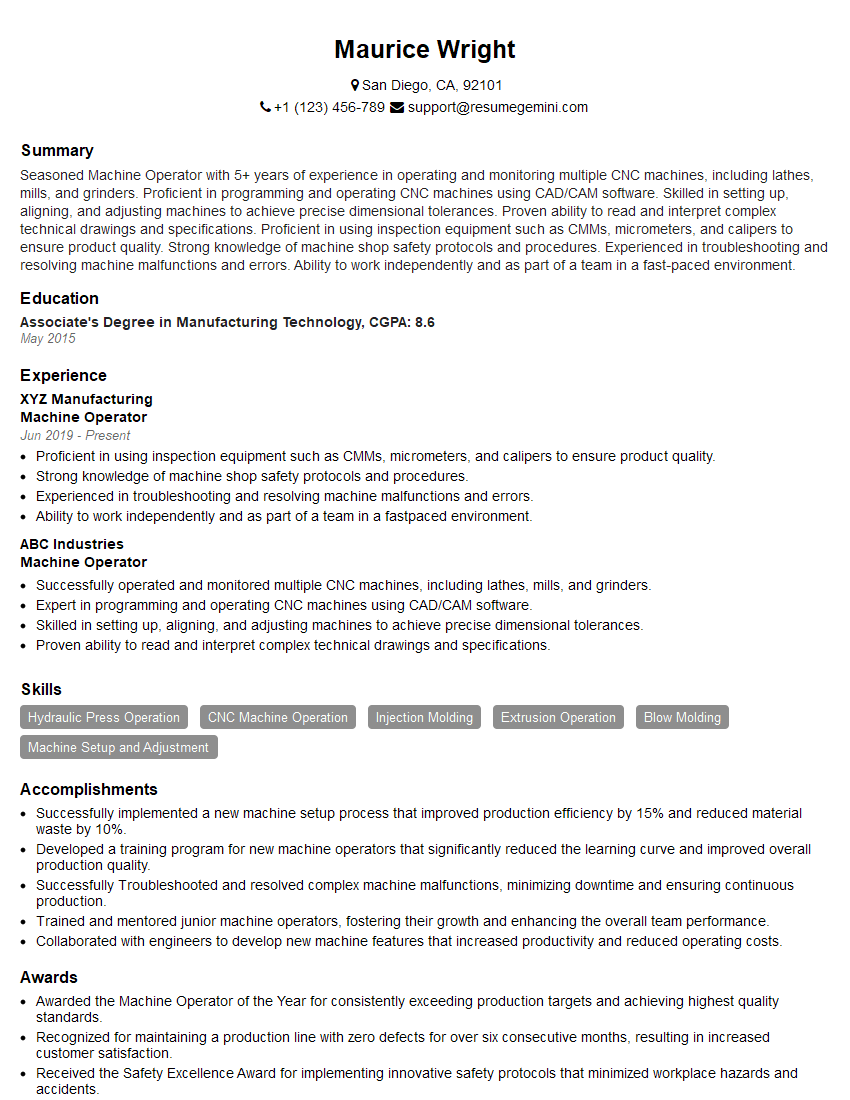
Machine Operator Resume Sample
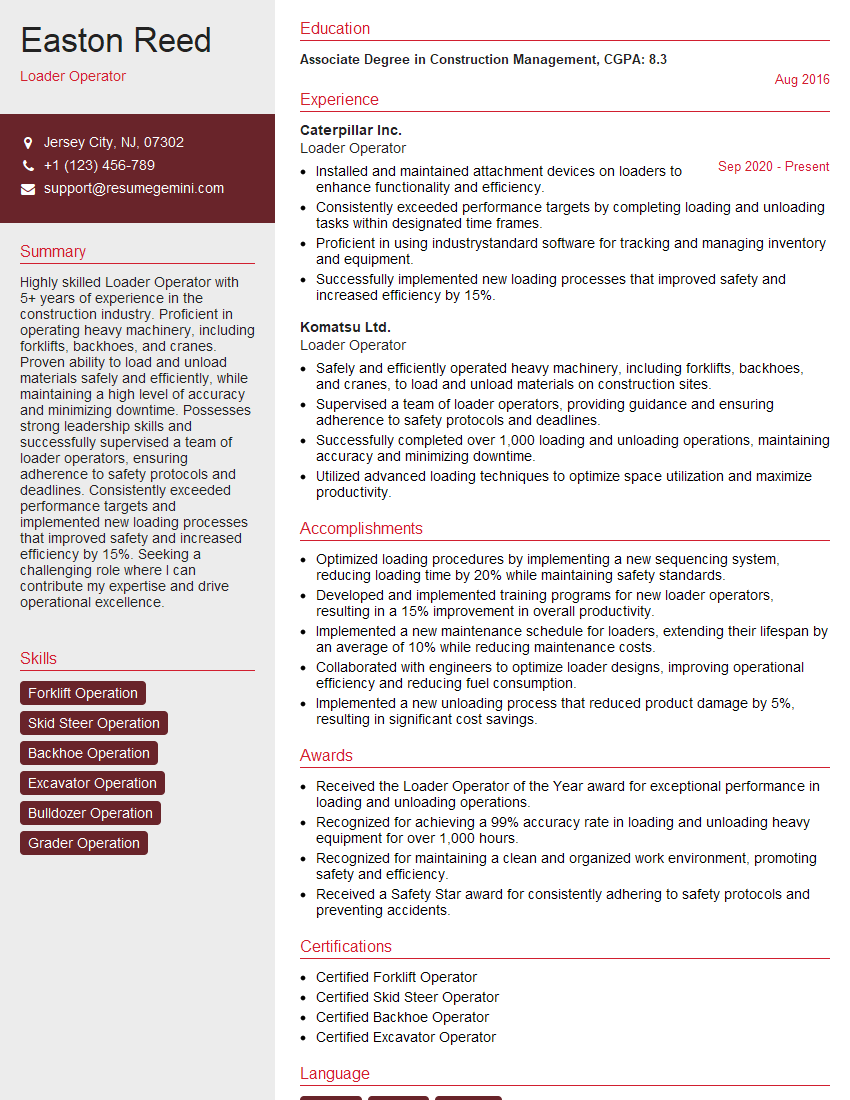
Loader Operator Resume Sample

Heavy Equipment Operator Resume Sample

Bulldozer Operator Resume Sample

Excavator Operator Resume Sample

Forklift Operator Resume Sample
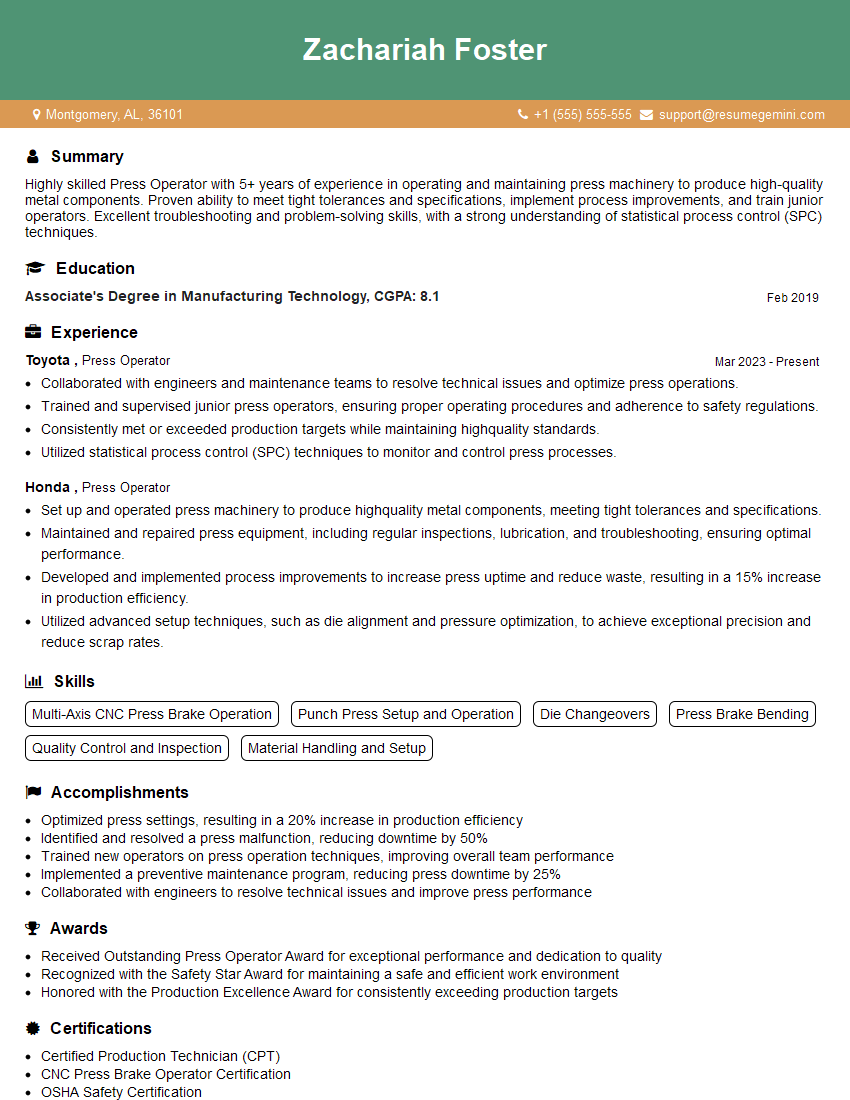
Press Operator Resume Sample

Manufacturing Machine Operator Resume Sample

Grinding Machine Operator Resume Sample

Lathe Operator Resume Sample

Milling Machine Operator Resume Sample
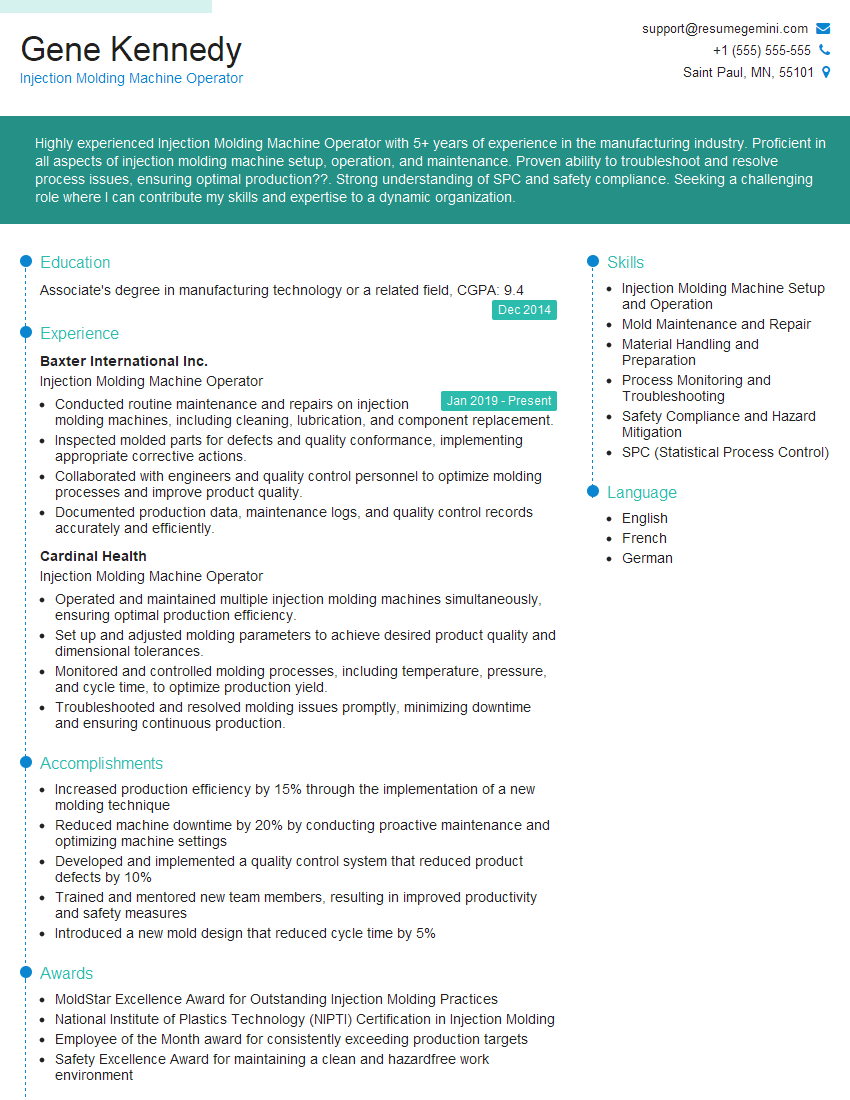
Injection Molding Machine Operator Resume Sample

Welding Machine Operator Resume Sample
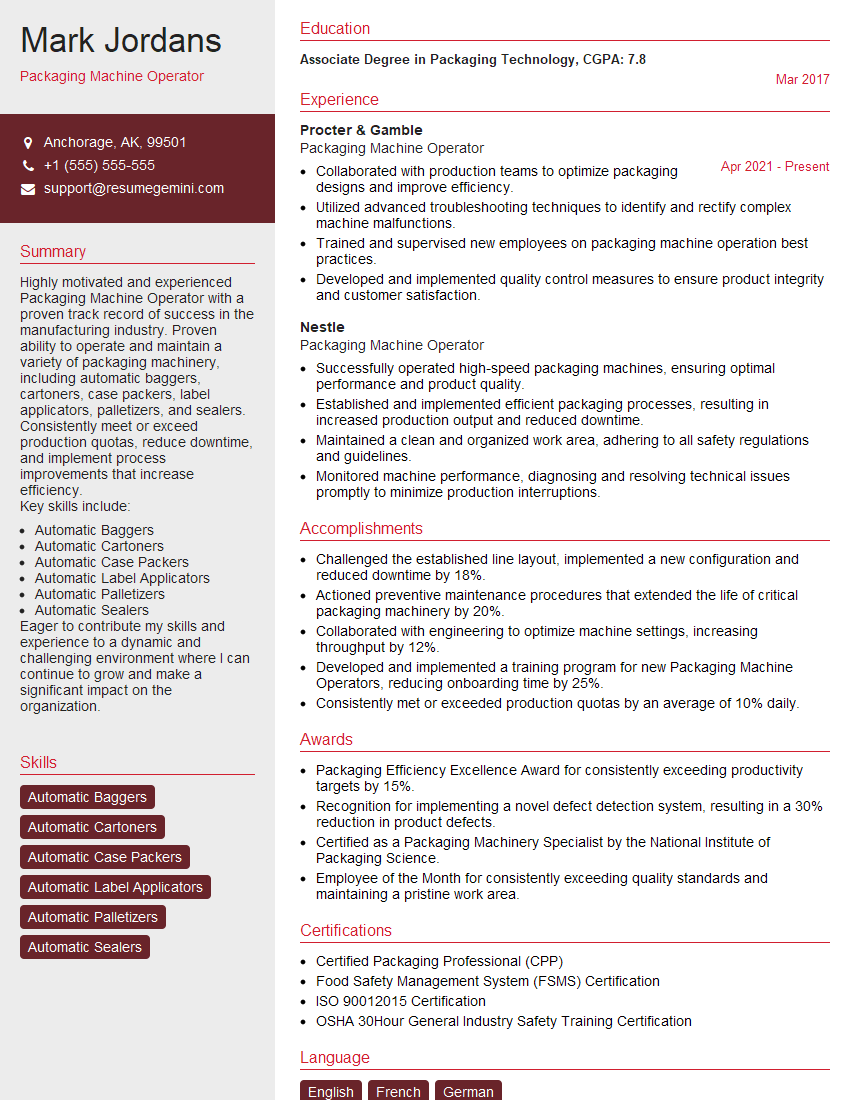
Packaging Machine Operator Resume Sample
- Equipment Operator
- Plant Operator
- Crane Operator
- Machine Operator
- Loader Operator
- Heavy Equipment Operator
- Bulldozer Operator
- Excavator Operator
- Forklift Operator
- Press Operator
- Manufacturing Machine Operator
- Grinding Machine Operator
- Lathe Operator
- Milling Machine Operator
- Injection Molding Machine Operator
- Welding Machine Operator
- Packaging Machine Operator
Explore more articles
Users Rating of Our Blogs
Share Your Experience
We value your feedback! Please rate our content and share your thoughts (optional).
What Readers Say About Our Blog
Very informative content, great job.
good