Interviews are more than just a Q&A session—they’re a chance to prove your worth. This blog dives into essential Operation of Yard Equipment interview questions and expert tips to help you align your answers with what hiring managers are looking for. Start preparing to shine!
Questions Asked in Operation of Yard Equipment Interview
Q 1. Describe your experience operating forklifts.
I have over eight years of experience operating various forklift models, including sit-down counterbalanced forklifts, reach trucks, and order pickers. My experience spans diverse environments, from busy warehouse distribution centers to smaller, more confined construction sites. I’ve consistently exceeded performance expectations in terms of efficiency and safety, maintaining a spotless record throughout my career. For example, at my previous role at Acme Logistics, I was responsible for the efficient movement of over 1000 pallets daily, consistently meeting tight deadlines without incident. This involved a deep understanding of load types, weight distribution, and optimal routes within the warehouse.
Q 2. Explain the pre-operational checks you perform on a forklift.
Pre-operational checks are crucial for ensuring safe and efficient forklift operation. My routine involves a comprehensive inspection covering several key areas. First, I visually inspect the forklift for any obvious damage, leaks, or loose components. This includes checking the tires for wear and tear, the forks for bending or damage, and the mast for any signs of misalignment. Second, I check all fluid levels: hydraulic fluid, engine oil, coolant, and battery charge (for electric forklifts). Third, I test the operational functions: steering, brakes, horn, lift/lower mechanisms, and safety features such as the seatbelt and lights. Finally, I make sure that the load backrest is properly secured, the load weight is within the lift capacity, and any attachments are correctly fitted and secured. Think of it like a pilot’s pre-flight checklist – a critical step before every operation.
Q 3. What are the load capacity limits for the forklifts you’ve operated?
The load capacity limits vary depending on the specific forklift model. I’ve operated forklifts with capacities ranging from 3,000 lbs to 10,000 lbs. It’s crucial to always check the manufacturer’s specified load capacity plate located on the forklift itself before lifting any load. Exceeding these limits is extremely dangerous and can lead to equipment failure, injury, or even death. I always prioritize safe operating practices and will never attempt to lift a load that exceeds the rated capacity, even if it seems like a minor excess. Safety always comes first.
Q 4. How do you ensure safe operation of a forklift in a congested yard?
Safe forklift operation in congested yards demands extra caution and awareness. I employ several key strategies. First, I always maintain a slow speed and keep a wide berth around pedestrians and other vehicles. Second, I use my horn frequently to alert others to my presence and intended movements. Third, I continuously scan my surroundings for potential hazards like blind spots, obstacles, and unexpected movements. Fourth, I prioritize clear communication, particularly with pedestrians and other operators. Fifth, I use the shortest, most efficient routes to minimize congestion and travel time. I follow all designated traffic flows and yield to pedestrians where applicable. In essence, it’s about constant awareness and anticipating the actions of others.
Q 5. What are the different types of forklift attachments and their uses?
Forklifts can be equipped with various attachments to enhance their versatility. Some common attachments include:
- Side Shifters: Allow for precise lateral movement of the forks, enabling easier placement of loads in tight spaces.
- Clamp attachments: Used for handling materials such as lumber, pipes, and concrete blocks.
- Rotators: Rotate the load 360 degrees, helpful for efficient placement of long items.
- Carriage extensions: Increase the reach and carrying capacity of the forks.
- Fork positioners: Allow for precise adjustment of fork width.
Q 6. Explain the proper techniques for loading and unloading materials.
Proper loading and unloading techniques are essential for safety and efficiency. Before lifting a load, I assess its weight and dimensions to ensure it’s within the forklift’s capacity. I position the forks evenly under the load, ensuring a stable and balanced lift. I engage the forks slowly and smoothly, lifting gradually to avoid jerking or sudden movements. When transporting the load, I maintain a slow and controlled speed, avoiding sudden turns or braking. For unloading, I carefully lower the load to the designated area, ensuring a smooth and steady descent. Always secure unstable loads during transport. Imagine carefully carrying a fragile vase – the same principles of caution and precision should apply when operating a forklift.
Q 7. How do you handle unexpected equipment malfunctions?
In case of an unexpected equipment malfunction, my first response is to immediately shut down the forklift and assess the situation safely. If the problem is minor, such as a minor hydraulic leak, I will attempt to address it within safety regulations or report it to the maintenance team immediately. If it’s a significant issue that compromises safety, like brake failure, I’ll secure the forklift in place, warn nearby personnel, and then immediately report it to the supervisor or maintenance department. Safety protocols should always be the top priority. I’ll never attempt to operate a malfunctioning forklift until it has been properly inspected and repaired by qualified personnel. Documenting the issue is important for future preventative maintenance.
Q 8. Describe your experience with different types of loaders (e.g., front-end, skid steer).
My experience encompasses a wide range of loaders, primarily front-end loaders and skid steers. Front-end loaders, like the Caterpillar 950 or John Deere 624K, are powerful machines ideal for moving large volumes of material over longer distances. I’m proficient in operating these, understanding their hydraulic systems, bucket attachments (e.g., general purpose, light material, high-lift), and the importance of load weight distribution for optimal stability. Skid steers, such as Bobcat or Case models, offer superior maneuverability in tight spaces. My experience includes using various attachments on skid steers – from pallet forks and buckets to augers and snow blowers – tailoring the machine to the specific task at hand. I’ve consistently demonstrated efficient operation, maximizing productivity while adhering to safety protocols.
For example, in one project involving a large construction site, I used a front-end loader to efficiently move hundreds of tons of soil and gravel, optimizing fuel consumption and minimizing material spillage. In another, I utilized a skid steer with a grapple attachment to effectively clear debris from a congested urban area, leveraging its maneuverability to avoid obstacles.
Q 9. What safety precautions do you take when operating heavy equipment?
Safety is paramount in operating heavy equipment. My approach involves a multi-layered strategy. Before starting any operation, I conduct a thorough pre-operational inspection, checking fluid levels, tire pressure, and the overall condition of the machine. I always wear appropriate personal protective equipment (PPE), including hard hats, safety glasses, high-visibility vests, and steel-toe boots. I ensure the area is clear of obstructions and pedestrians before commencing work, and I use appropriate signaling devices to warn others of my movements. Smooth operation, avoiding jerky movements, and maintaining a safe speed are crucial. I strictly follow all company safety procedures and never operate the equipment if I’m fatigued or under the influence of drugs or alcohol.
Furthermore, I always maintain awareness of my surroundings, particularly blind spots, and utilize mirrors and cameras where available. Regular training and refresher courses keep my safety knowledge current and help me anticipate potential hazards. A recent training session on confined space operation refreshed my understanding of safe working procedures in those specific environments.
Q 10. How do you maintain a clean and organized work area?
Maintaining a clean and organized work area is not just about aesthetics; it’s a critical safety and efficiency measure. My approach focuses on systematic organization and regular cleanup. I consistently clear debris and materials from around the equipment after each task. I use designated areas for storing tools and materials, and I promptly dispose of waste according to company regulations. Equipment is parked neatly and securely at the end of the day, minimizing the risk of accidents. The work area is kept free of trip hazards such as cables, loose materials, or uneven terrain.
For instance, at the end of a demolition project, I ensured all debris was removed and properly disposed of, leaving the area in a safe and presentable condition. This included segregating different types of waste (metal, wood, concrete etc) for efficient recycling and disposal.
Q 11. Explain your experience with preventative maintenance on yard equipment.
Preventative maintenance is fundamental to ensuring the reliable and safe operation of yard equipment. My experience includes performing daily checks on equipment such as fluid levels, tire pressure, and visual inspections for damage. I’m familiar with conducting more extensive maintenance tasks as per the manufacturer’s guidelines, including lubrication, filter changes, and belt adjustments. I meticulously document all maintenance activities, ensuring compliance with safety regulations and company policies. Early detection of potential problems through regular maintenance is a key part of preventing costly breakdowns and ensuring operational efficiency.
For example, during a routine inspection, I noticed a slight leak in a hydraulic hose on a forklift. Addressing this promptly prevented a major hydraulic failure and potential downtime.
Q 12. Describe your knowledge of load securing techniques.
Secure load handling is crucial for safety and preventing damage. My knowledge encompasses using appropriate securing methods based on the type of load, such as chains, straps, or nets. I understand the importance of proper tensioning and placement of securing devices to prevent shifting during transit. I’m familiar with load weight limits and capacity ratings of the equipment being used. I always use safety devices and follow established procedures to ensure loads are stable and secure throughout transportation and handling.
For example, when transporting heavy steel beams, I utilized chains and ratchet straps to ensure the load remained secure during the entire transportation process. Proper placement and tensioning were crucial in ensuring neither the load nor the equipment were damaged.
Q 13. How do you communicate effectively with other workers in the yard?
Effective communication is vital in a yard environment. I use clear and concise language, both verbal and non-verbal, to avoid misunderstandings. I utilize hand signals and radio communication when necessary, ensuring everyone understands instructions and potential hazards. I actively listen to colleagues, address their concerns, and contribute to a collaborative work environment. Proactive communication prevents accidents and ensures efficient task completion.
For example, when working with a crane operator, I use standardized hand signals to ensure precise positioning of loads, preventing accidents or damage. Using clear radio communication ensures smooth coordination even in noisy environments.
Q 14. What are the common causes of forklift accidents and how can they be prevented?
Forklift accidents often stem from operator error, inadequate training, or poor maintenance. Common causes include speeding, overloading, improper load handling, and unsafe operating conditions. To prevent accidents, rigorous training programs are essential, covering safe operating procedures, pre-operational checks, load stability, and hazard awareness. Regular maintenance ensures the forklift is in optimal working condition, reducing mechanical failures. Clear signage, designated traffic routes, and appropriate speed limits within the yard contribute to a safer working environment. Enforcement of safety regulations and regular inspections help maintain a safe operation.
For instance, inadequate training on load center calculations can lead to tipping accidents. Regular inspections to ensure the functioning of the brakes and other critical systems prevent mechanical failures and accidents.
Q 15. Explain your experience with inventory management systems in a yard setting.
Inventory management in a yard setting is crucial for efficiency and safety. It involves tracking the location, quantity, and condition of all materials and equipment. My experience includes using both manual and computerized systems. Manually, I’ve utilized spreadsheets and physical tagging systems to track assets, ensuring accurate records for audits and material allocation. For larger operations, I’ve worked with sophisticated inventory management software (IMS) that integrates with yard equipment’s GPS and RFID systems. This allows for real-time tracking of equipment location, maintenance schedules, and even fuel levels. For example, in one project, we used an IMS that alerted us when a specific piece of equipment was overdue for its scheduled maintenance, preventing potential breakdowns and downtime.
A key aspect is ensuring accurate data entry and regular reconciliation between physical inventory and the system’s records. This often involves conducting regular yard checks, comparing the software data with on-site observations, and addressing discrepancies promptly. This meticulous approach minimizes discrepancies and prevents costly errors.
Career Expert Tips:
- Ace those interviews! Prepare effectively by reviewing the Top 50 Most Common Interview Questions on ResumeGemini.
- Navigate your job search with confidence! Explore a wide range of Career Tips on ResumeGemini. Learn about common challenges and recommendations to overcome them.
- Craft the perfect resume! Master the Art of Resume Writing with ResumeGemini’s guide. Showcase your unique qualifications and achievements effectively.
- Don’t miss out on holiday savings! Build your dream resume with ResumeGemini’s ATS optimized templates.
Q 16. How do you interpret and follow safety regulations?
Safety regulations are paramount in yard operations. I approach safety proactively, not just reactively. My interpretation involves understanding and adhering to all relevant OSHA, company-specific, and site-specific safety guidelines. This includes daily pre-operational checks of equipment, wearing appropriate PPE (personal protective equipment) like high-visibility clothing, safety glasses, and hearing protection, and conducting regular risk assessments of the work area. I understand the importance of following lockout/tagout procedures for maintenance, communicating clearly with colleagues before commencing any operation, and being fully aware of blind spots when operating heavy machinery. If I encounter a situation where I’m unsure about a safety protocol, I immediately escalate the concern to my supervisor.
For instance, during a recent project involving the use of a forklift, I noticed some damaged racking. Instead of proceeding with the task, I immediately reported it to management, preventing a potential accident. This proactive approach to safety demonstrates my commitment to a safe work environment for everyone.
Q 17. Describe your experience with different types of cranes (e.g., tower, mobile).
I have extensive experience with various crane types, including tower cranes and mobile cranes. Tower cranes are generally used in fixed locations for high-rise construction or large-scale projects requiring precise lifting at significant heights. My experience encompasses their assembly, disassembly, and daily operation, including understanding load charts, swing radii, and the importance of proper counterweight distribution. Mobile cranes, on the other hand, offer greater flexibility. I’m proficient in operating different types of mobile cranes, such as rough-terrain cranes and all-terrain cranes, understanding their strengths and limitations in various terrains and conditions. This includes understanding their outrigger setups, load charts specific to their configurations, and safe operating procedures in varying environments.
For example, I once had to use a rough-terrain crane to lift heavy equipment in a site with uneven terrain. Understanding the limitations of the crane’s outriggers and selecting the appropriate configuration was key to ensuring safe operation.
Q 18. What are the different types of ground conditions and how do they affect equipment operation?
Ground conditions significantly impact equipment operation and safety. Different ground types exhibit varying degrees of stability and bearing capacity.
- Hard surfaces like asphalt and concrete offer strong support, but can be challenging if uneven or have cracks.
- Soft ground such as sand, mud, or clay presents significant challenges, increasing the risk of equipment sinking or getting stuck. This requires careful consideration of ground pressure and potentially the use of mats or ground reinforcement.
- Rocky or uneven terrain requires cautious maneuvering to prevent equipment damage or tipping.
Understanding these conditions involves assessing the site before operation and selecting the appropriate equipment based on the ground’s bearing capacity and stability. It’s crucial to adjust operating speeds and techniques to maintain stability and prevent accidents. For example, operating a forklift on soft ground requires slower speeds and careful weight distribution to avoid sinking.
Q 19. How do you handle challenging weather conditions while operating yard equipment?
Challenging weather conditions demand increased caution and adaptation in yard equipment operation.
- High winds can make operating cranes or forklifts unstable and dangerous. Operations might need to be suspended entirely during extreme winds.
- Heavy rain can reduce visibility and make surfaces slippery, affecting braking distances and tire traction. Slow speeds and extra caution are crucial.
- Snow or ice creates similar risks to heavy rain, requiring careful maneuvering and potentially the use of chains or tire studs.
My approach focuses on risk assessment, adapting operation to the conditions, and prioritizing safety. This might involve using specialized equipment suitable for the weather, reducing operating speeds significantly, or suspending operations entirely if conditions become too hazardous.
Q 20. Describe your experience with refueling and maintaining fuel levels in equipment.
Refueling and maintaining proper fuel levels are essential for uninterrupted operations and prevent equipment damage. My experience involves following established safety procedures, including using proper safety equipment and ensuring the engine is switched off before refueling. I’m familiar with various refueling methods and equipment, from manual hand pumps to automated systems. I accurately record fuel levels, monitoring consumption to identify potential issues, such as leaks or fuel efficiency problems. In addition to refueling, I also regularly check fuel filters and ensure proper fuel storage to prevent contamination.
For example, I’ve implemented a system of regular fuel level checks at the start and end of each shift, flagging any discrepancies or irregularities for investigation. This helps prevent unexpected fuel outages during operations.
Q 21. Explain your understanding of load stability and center of gravity.
Load stability and center of gravity are critical for safe operation of any yard equipment. Understanding the center of gravity – the point where the weight of an object is evenly distributed – is crucial for preventing tipping. An improperly balanced load shifts the center of gravity, increasing the risk of the equipment tipping over. Load stability is affected by several factors: the weight, height, and distribution of the load, the terrain, and the equipment’s own stability.
Before lifting any load, I assess its weight, dimensions, and center of gravity. I ensure that the load is properly secured and that the equipment is correctly positioned to maintain stability. I always refer to the equipment’s load charts to verify that the load is within the safe operating limits. Ignoring these principles can lead to serious accidents. For example, lifting a heavy load that is not properly secured or distributed risks causing the crane or forklift to tip.
Q 22. What are the signs of equipment needing immediate maintenance?
Recognizing when yard equipment needs immediate maintenance is crucial for safety and operational efficiency. It’s not just about scheduled maintenance; it’s about proactively identifying issues before they escalate into major problems or accidents. Key signs include:
- Unusual Noises: Grinding, squealing, knocking, or unusual vibrations indicate potential wear or damage in moving parts. For example, a persistent grinding noise from a forklift’s transmission might signal impending failure.
- Fluid Leaks: Leaks of hydraulic fluid, engine oil, or coolant are serious and should be addressed immediately. A small leak can quickly become a major one, leading to equipment failure and potential environmental hazards.
- Malfunctioning Gauges or Indicators: If temperature gauges are spiking, pressure gauges are reading abnormally low or high, or warning lights are illuminated, these are clear signs that something isn’t right. Ignoring these can lead to overheating, component failure, or even fires.
- Reduced Performance: Noticeably slower operation, decreased lifting capacity, or difficulty in steering or maneuvering are indicators of problems that need investigation. For instance, a noticeable decrease in the speed of a reach stacker might mean problems with its engine or hydraulic system.
- Visible Damage: Obvious damage like dents, cracks, broken parts, or damaged wiring must be addressed at once. Ignoring this poses immediate safety risks.
In short, always trust your instincts. If something feels off or seems unusual about the equipment’s operation, it’s best to stop work and report it for immediate inspection.
Q 23. How do you ensure compliance with all relevant health and safety regulations?
Compliance with health and safety regulations is paramount in yard operations. My approach involves a multi-faceted strategy:
- Regular Training: I ensure that all operators are thoroughly trained on safe operating procedures for the specific equipment they use, including pre-operational checks, emergency procedures, and personal protective equipment (PPE) use. This training is regularly refreshed to address changes in regulations and best practices.
- Strict Adherence to Safety Protocols: I enforce strict adherence to all company safety rules and regulations, including speed limits within the yard, designated pedestrian walkways, and proper load securing techniques. I also ensure all equipment undergoes regular safety inspections.
- PPE Enforcement: I strictly enforce the correct use of PPE, such as safety helmets, high-visibility clothing, safety shoes, and hearing protection, depending on the task and equipment in use. This is non-negotiable.
- Hazard Identification and Risk Assessment: I actively participate in regular hazard identification and risk assessments to proactively identify and mitigate potential dangers in the work environment. This involves pinpointing potential hazards like blind spots in the yard layout or potential pinch points and working with management to implement corrective measures.
- Incident Reporting and Investigation: I follow established procedures for reporting near misses and accidents, ensuring that thorough investigations are conducted to identify root causes and prevent recurrence. This includes documenting all details accurately and cooperating fully with any investigations.
Ultimately, a culture of safety, reinforced by consistent training, enforcement, and proactive risk management, is key to ensuring compliance.
Q 24. Explain your experience using GPS or other tracking systems in yard operations.
I have extensive experience using GPS and other tracking systems in yard operations. These systems are invaluable for optimizing efficiency and improving safety. Specifically, I’ve worked with systems that:
- Track Equipment Location: Real-time location tracking allows us to monitor the position of equipment within the yard, improving dispatching and reducing idle time. For instance, we can quickly locate the nearest available forklift for a particular job.
- Monitor Equipment Utilization: The data collected provides valuable insights into equipment usage patterns, helping us to optimize resource allocation and identify potential bottlenecks. This allows for more effective scheduling of maintenance and repairs.
- Enhance Safety: Tracking systems can alert us to potential hazards or unsafe operating practices. For example, if an operator exceeds a designated speed limit, an alert can be sent, improving safety and risk mitigation. We can also set geofences to warn operators about entering restricted areas.
- Improve Operational Efficiency: By optimizing equipment location and utilization, we reduce travel times, minimize fuel consumption, and streamline workflows, leading to significant cost savings.
I am proficient in using both handheld GPS devices and integrated systems that provide real-time data visualization on dashboards. This allows me to effectively manage the movement and deployment of our yard equipment, ensuring smooth and efficient operations.
Q 25. Describe your experience with reporting near misses or accidents.
Reporting near misses and accidents is an essential part of maintaining a safe working environment. My experience includes:
- Immediate Reporting: I always report any incident, near miss, or accident immediately, following established company protocols. This ensures a swift response and prevents further incidents.
- Detailed Documentation: My reports include detailed descriptions of the event, including date, time, location, involved personnel, equipment involved, and a step-by-step account of the events leading up to the incident. I also take photos or videos if possible to document the scene.
- Root Cause Analysis: I actively participate in root cause analysis investigations to identify the underlying reasons behind incidents. This helps to implement preventative measures and avoid similar occurrences in the future.
- Corrective Actions: I support the implementation of appropriate corrective actions identified during the investigation. This might involve retraining personnel, modifying equipment, or improving safety procedures.
- Follow-up: I follow up on the implementation of corrective actions to ensure their effectiveness and to identify any further necessary adjustments.
By meticulously documenting and investigating incidents, we can learn from our mistakes and create a safer working environment for everyone.
Q 26. How do you manage your time effectively to meet deadlines in a fast-paced environment?
Managing time effectively in a fast-paced yard environment requires a structured approach. My strategies include:
- Prioritization: I prioritize tasks based on urgency and importance, focusing on critical tasks that directly impact deadlines and operational efficiency. This might involve using a task management system to keep track of tasks and deadlines.
- Planning and Scheduling: I create daily and weekly schedules that incorporate realistic time estimates for each task. This allows me to anticipate potential delays and proactively adjust my schedule as needed.
- Efficient Workflow: I streamline workflows by optimizing routes, minimizing unnecessary travel time, and coordinating with other team members to avoid conflicts. This might involve using routing software to optimize equipment movement.
- Delegation: When appropriate, I delegate tasks to other qualified personnel, freeing up my time to focus on more complex or time-sensitive issues.
- Proactive Problem Solving: I identify and address potential problems proactively, preventing them from turning into major delays. This involves regular equipment checks, anticipating potential issues, and preparing for contingencies.
By combining planning, prioritization, efficient workflow, and proactive problem-solving, I consistently meet deadlines even in high-pressure situations.
Q 27. How familiar are you with different types of yard equipment documentation and reporting?
I am very familiar with various types of yard equipment documentation and reporting. This includes:
- Equipment Maintenance Logs: These logs track all maintenance activities performed on each piece of equipment, including inspections, repairs, and replacements. They are essential for ensuring compliance with safety regulations and for predicting potential equipment failures.
- Operator Logs: These logs record the daily usage of each piece of equipment, including operating hours, fuel consumption, and any observed issues. This data is valuable for tracking equipment utilization and identifying potential maintenance needs.
- Inspection Reports: Regular inspection reports document the condition of equipment, identifying any damage, wear, or defects. These reports are crucial for prioritizing repairs and preventing accidents.
- Accident/Incident Reports: These reports detail any accidents, near misses, or other safety incidents that occur within the yard. They are vital for identifying root causes and implementing preventative measures.
- Fuel Consumption Reports: These reports track fuel usage for each piece of equipment, providing data for cost control and efficiency analysis.
Proficiency in understanding and managing these documents is critical for ensuring the safe and efficient operation of yard equipment, complying with safety regulations, and optimizing resource allocation.
Q 28. Describe your problem-solving skills in a situation involving equipment malfunction.
My approach to equipment malfunction problem-solving is systematic and methodical. I follow these steps:
- Safety First: My first priority is always safety. I secure the area, ensuring the safety of myself and others before attempting any repairs or troubleshooting.
- Assessment: I carefully assess the situation, identifying the specific problem and its potential severity. This often involves checking gauges, listening for unusual sounds, and visually inspecting the equipment for signs of damage.
- Troubleshooting: I utilize my knowledge of the equipment and its systems to troubleshoot the problem. This may involve checking electrical connections, hydraulic lines, or fuel systems, depending on the nature of the malfunction.
- Documentation: I meticulously document all observations, troubleshooting steps, and repairs undertaken. This is vital for future reference and for identifying patterns or trends.
- Seeking Assistance: If I am unable to resolve the problem, I seek assistance from more experienced personnel or specialists. I never hesitate to call for help if needed.
- Reporting: I report the malfunction and the steps taken to resolve it, documenting the outcome in the appropriate logs and systems.
For example, if a forklift’s hydraulic system fails, I would first secure the area, then check the hydraulic fluid level, inspect the lines for leaks, and then check the hydraulic pump for any issues. If I cannot identify the problem, I would consult with a qualified mechanic.
Key Topics to Learn for Operation of Yard Equipment Interview
- Safety Procedures and Regulations: Understanding and adhering to all relevant safety protocols, including pre-operation checks, personal protective equipment (PPE) usage, and emergency procedures. Practical application includes explaining your experience with specific safety protocols and how you’ve ensured a safe working environment.
- Equipment Operation and Maintenance: Demonstrating proficiency in operating various types of yard equipment (forklifts, loaders, etc.), including starting, maneuvering, loading/unloading, and basic maintenance tasks. Practical application involves describing your experience with different equipment types and your ability to perform routine maintenance checks.
- Load Handling and Stability: Understanding principles of load balancing, weight distribution, and safe lifting techniques to prevent accidents. Practical application includes explaining how you assess load weight and stability before lifting and how you ensure safe transport of materials.
- Yard Layout and Efficiency: Understanding efficient yard layout, traffic flow, and space optimization for minimizing downtime and maximizing productivity. Practical application focuses on describing your strategies for efficient material movement and space utilization.
- Troubleshooting and Problem-Solving: Ability to identify and address common mechanical issues, perform minor repairs, and effectively communicate problems to supervisors. Practical application involves describing your experience with troubleshooting equipment malfunctions and your problem-solving approach.
- Communication and Teamwork: Effective communication with colleagues and supervisors, working collaboratively within a team environment, and following instructions precisely. Practical application includes demonstrating your ability to communicate clearly and professionally, work effectively as part of a team, and follow instructions carefully.
Next Steps
Mastering the operation of yard equipment is crucial for career advancement in logistics, construction, and warehousing. A strong understanding of these skills opens doors to higher-paying roles and greater responsibilities. To significantly increase your job prospects, creating an ATS-friendly resume is paramount. ResumeGemini is a trusted resource that can help you build a professional resume that highlights your skills and experience effectively. Examples of resumes tailored to Operation of Yard Equipment are available through ResumeGemini to help guide you in crafting your own compelling application.

Crane Operator Resume Sample
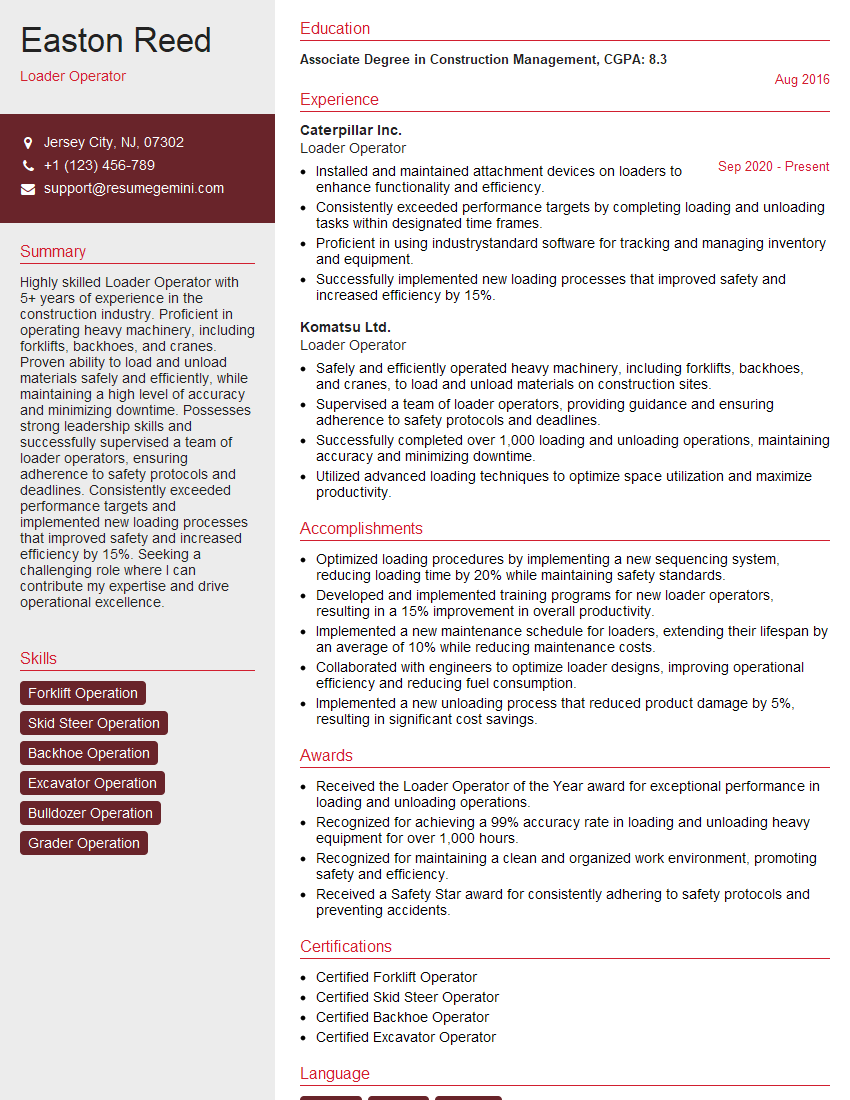
Loader Operator Resume Sample

Heavy Equipment Operator Resume Sample

Backhoe Operator Resume Sample

Bulldozer Operator Resume Sample

Excavator Operator Resume Sample
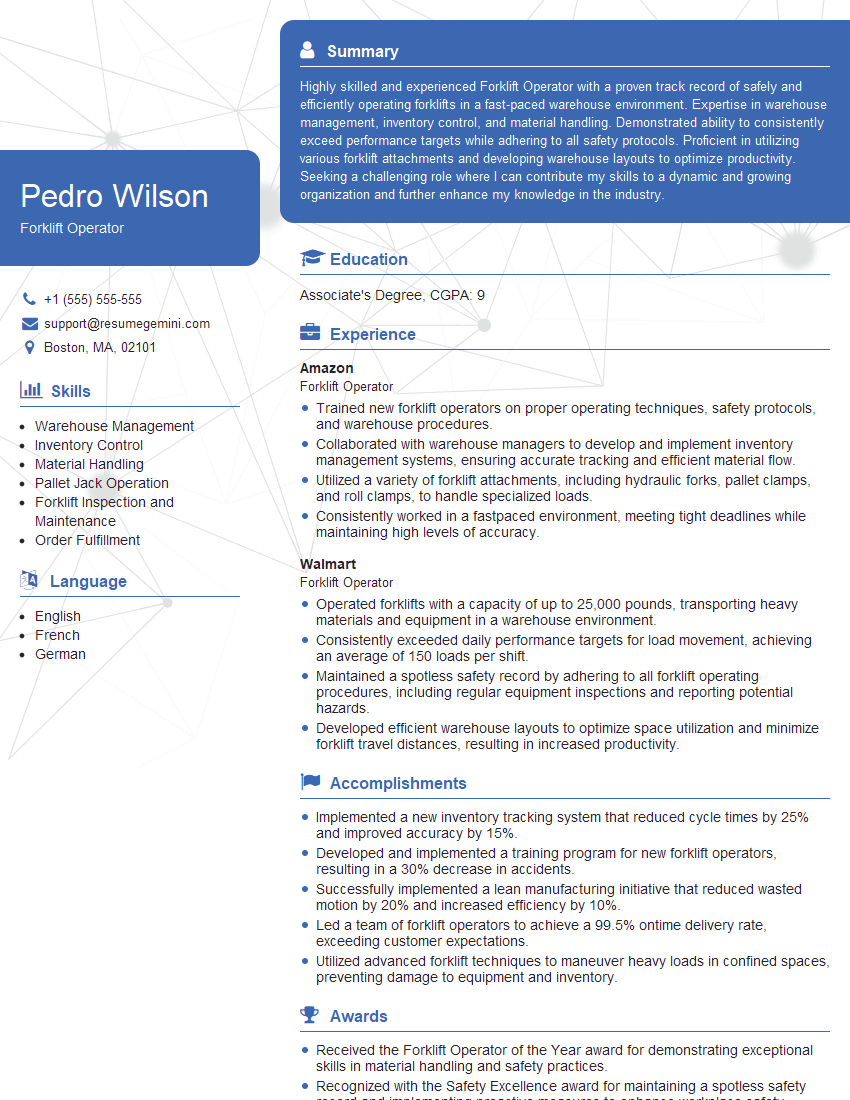
Forklift Operator Resume Sample

Grader Operator Resume Sample
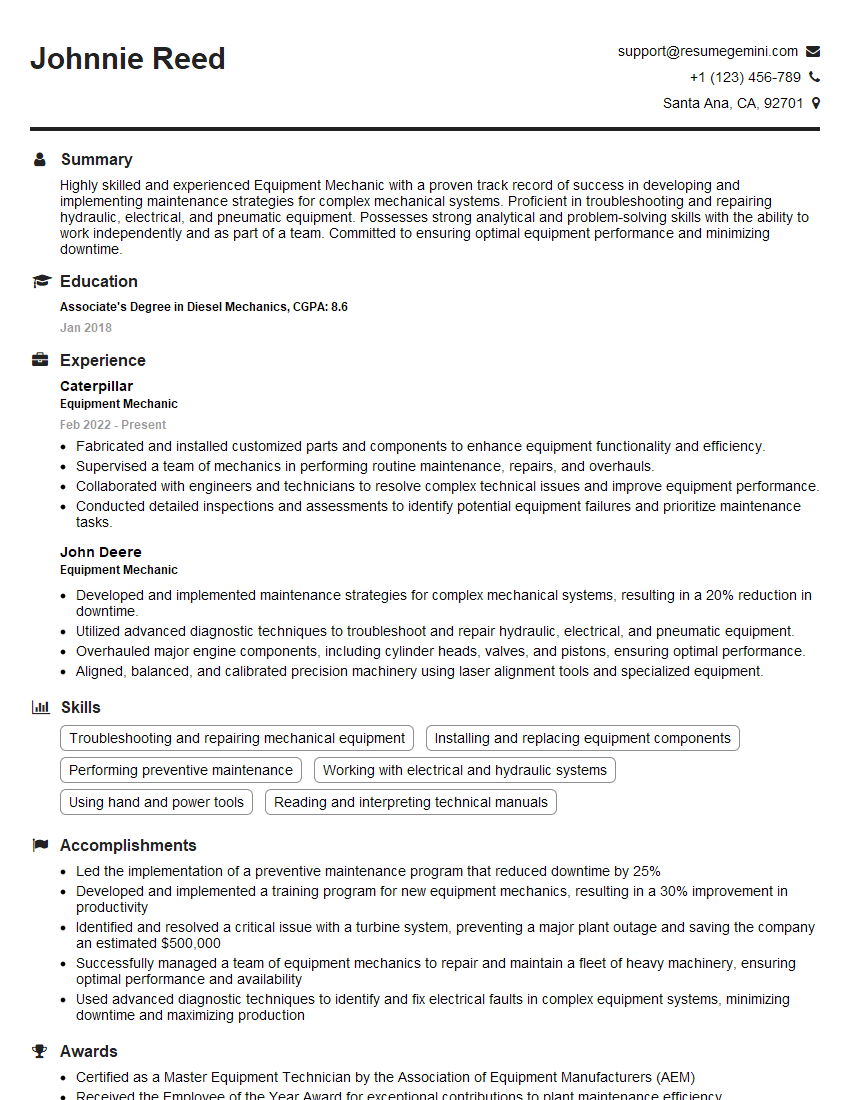
Equipment Mechanic Resume Sample
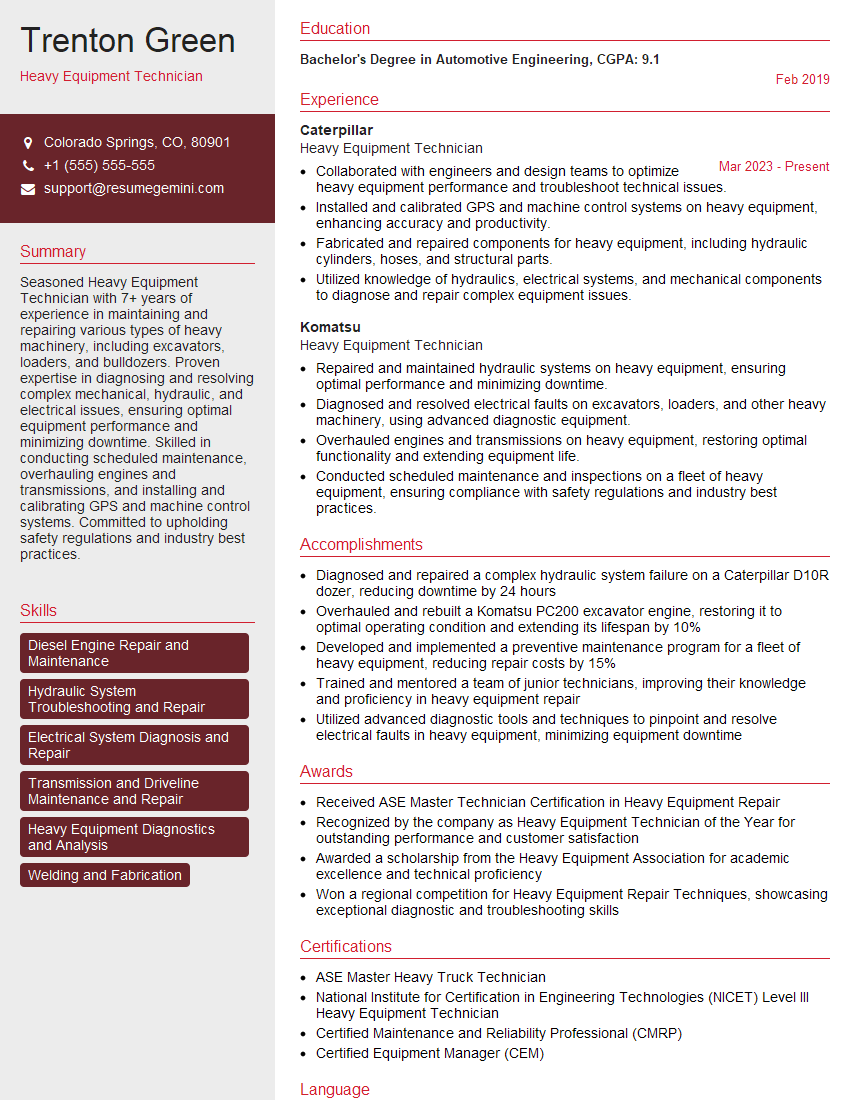
Heavy Equipment Technician Resume Sample
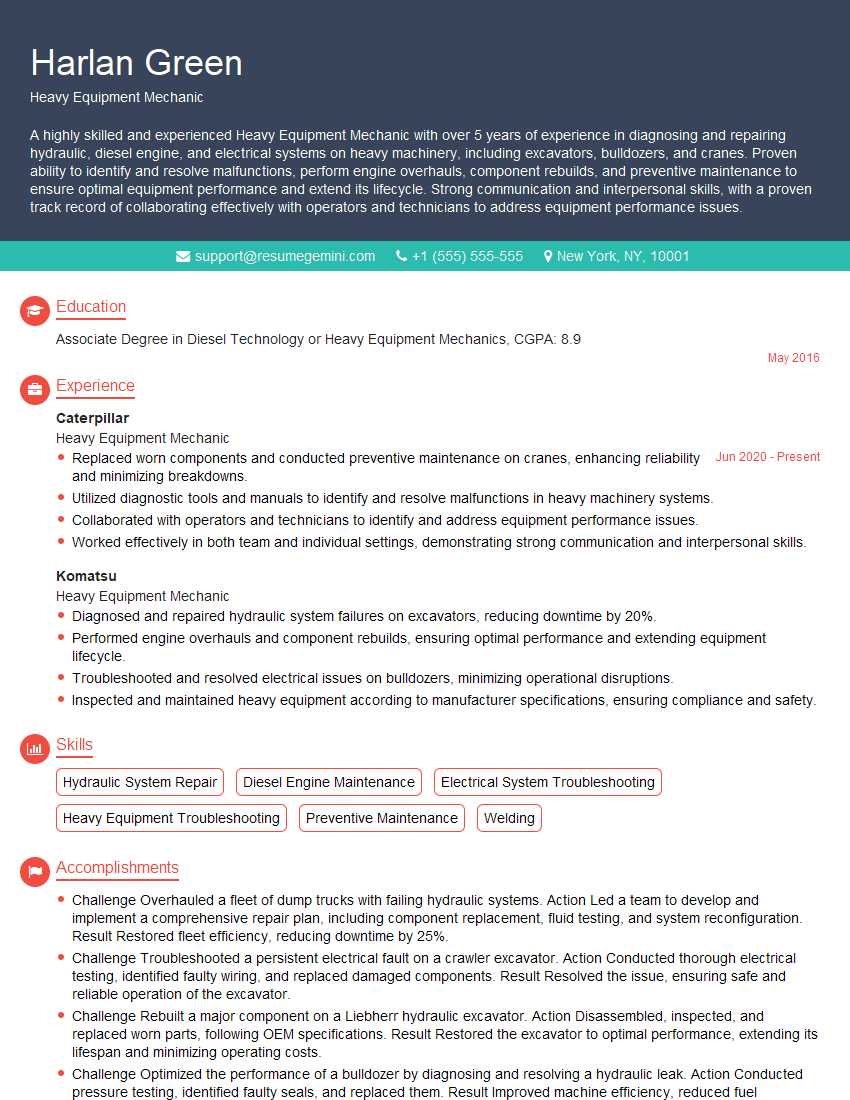
Heavy Equipment Mechanic Resume Sample

Yard Supervisor Resume Sample
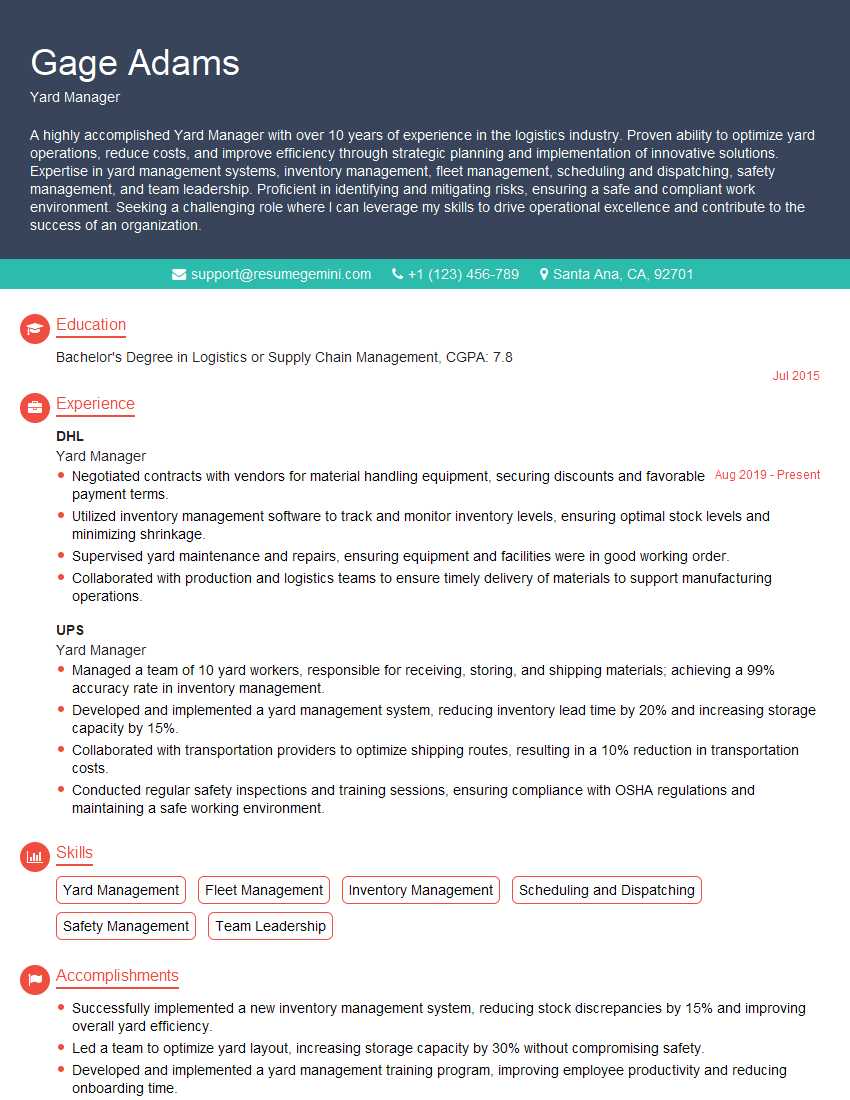
Yard Manager Resume Sample

Front-End Loader Operator Resume Sample
Explore more articles
Users Rating of Our Blogs
Share Your Experience
We value your feedback! Please rate our content and share your thoughts (optional).
What Readers Say About Our Blog
Very informative content, great job.
good