Are you ready to stand out in your next interview? Understanding and preparing for Parasite Management interview questions is a game-changer. In this blog, we’ve compiled key questions and expert advice to help you showcase your skills with confidence and precision. Let’s get started on your journey to acing the interview.
Questions Asked in Parasite Management Interview
Q 1. Describe the life cycle of *Plasmodium falciparum*.
The Plasmodium falciparum life cycle is complex, involving both a human host and a mosquito vector. It’s a classic example of an indirect life cycle. Let’s break it down:
- Sporozoite Stage (in Mosquito): Infected mosquitos harbor sporozoites in their salivary glands. When they bite a human, these sporozoites are injected into the bloodstream.
- Hepatic Stage (in Liver): Sporozoites travel to the liver and invade hepatocytes (liver cells). Here, they undergo asexual reproduction (schizogony), multiplying into thousands of merozoites.
- Erythrocytic Stage (in Blood): Merozoites are released from the liver and invade red blood cells (erythrocytes). Inside these cells, they continue asexual reproduction, creating more merozoites that burst from the red blood cells, causing the cyclical fever characteristic of malaria. Some merozoites differentiate into gametocytes.
- Gametocyte Stage (in Blood): Gametocytes are the sexual forms of the parasite. When a mosquito bites an infected human, it ingests these gametocytes.
- Mosquito Stage (in Mosquito): In the mosquito’s gut, male and female gametocytes fuse to form zygotes. These zygotes develop into ookinetes, which penetrate the mosquito’s midgut wall and develop into oocysts. Within the oocysts, sporozoites develop, eventually migrating to the salivary glands, completing the cycle and ready to infect a new human host.
Understanding this intricate life cycle is crucial for developing effective malaria control strategies targeting either the mosquito vector or the parasite stages within the human host.
Q 2. Explain the difference between direct and indirect life cycles of parasites.
The key difference between direct and indirect life cycles lies in the number of hosts involved.
- Direct Life Cycle: Involves a single host. The parasite completes its entire life cycle within a single organism. A good example is the intestinal roundworm, Ascaris lumbricoides, where eggs are passed in feces, ingested, hatch in the intestine, mature, reproduce, and produce more eggs, all within the same host.
- Indirect Life Cycle: Requires at least two hosts. The parasite undergoes different developmental stages in different hosts. Malaria (as described above) is a prime example, requiring both a human and a mosquito.
The distinction is important because it dictates the strategies needed for control and prevention. Direct life cycles may be managed by targeting the single host (e.g., improved sanitation for Ascaris), whereas indirect cycles necessitate interventions targeting multiple hosts (e.g., mosquito control and antimalarial drugs for malaria).
Q 3. What are the common diagnostic methods used for detecting parasites?
Diagnosing parasitic infections requires a multi-pronged approach, often tailored to the suspected parasite. Common methods include:
- Microscopic Examination: This classic technique involves examining stool, blood, or other bodily fluids under a microscope to directly visualize the parasites or their eggs/larvae. It’s relatively inexpensive but requires skilled technicians.
- Molecular Diagnostics: Techniques like PCR (Polymerase Chain Reaction) offer high sensitivity and specificity. They detect parasite DNA or RNA, even at low infection levels. This is particularly useful for diagnosing infections where parasites are difficult to visualize microscopically.
- Immunological Tests: These tests detect antibodies produced by the host’s immune system in response to the infection. Enzyme-linked immunosorbent assays (ELISAs) are commonly used. While sensitive, they can’t always differentiate between past and present infections.
- Rapid Diagnostic Tests (RDTs): These point-of-care tests are increasingly important for rapid diagnosis, especially in resource-limited settings. They often rely on detecting parasite antigens in blood samples. While user-friendly, accuracy can vary.
The choice of method depends on factors such as the suspected parasite, the availability of resources, and the urgency of diagnosis.
Q 4. Discuss the limitations of current diagnostic techniques for parasitic infections.
Despite advancements, current diagnostic techniques for parasitic infections have limitations:
- Sensitivity and Specificity: Some tests may not detect low-level infections (low sensitivity) or may produce false-positive results (low specificity), leading to misdiagnosis.
- Complexity and Cost: Molecular tests, while highly sensitive, can be expensive and require specialized equipment, limiting their accessibility.
- Technical Expertise: Microscopic examination requires skilled personnel, which may be scarce in some regions.
- Accessibility: Many diagnostic tools are not readily available in resource-limited settings, hindering timely diagnosis and treatment.
- Parasite Diversity: The high diversity of parasitic species and the existence of cryptic species can challenge the accuracy of some diagnostic tests.
Addressing these limitations requires ongoing research and development of new, improved, and more accessible diagnostic tools.
Q 5. Compare and contrast different anthelmintic drug classes.
Anthelmintic drugs target parasitic worms (helminths). Different classes work through various mechanisms:
- Benzimidazoles (e.g., albendazole, mebendazole): These inhibit microtubule synthesis, disrupting worm metabolism and causing paralysis. They are broad-spectrum and used against many nematodes and cestodes.
- Avermectins (e.g., ivermectin): These enhance the permeability of nerve and muscle cell membranes to chloride ions, resulting in paralysis and death of worms. Effective against various nematodes, but less so against cestodes and trematodes.
- Pyrantel pamoate: This acts as a neuromuscular blocker, causing paralysis and expulsion of worms. Primarily effective against nematodes.
- Praziquantel: This increases calcium influx into the parasite’s cells, causing muscle contraction, paralysis, and expulsion. Highly effective against flukes and tapeworms.
- Niclosamide: Inhibits oxidative phosphorylation in the mitochondria of tapeworms, disrupting their energy metabolism. Used specifically against tapeworms.
The choice of anthelmintic depends on the specific type of worm causing the infection. For example, Praziquantel would be suitable for Schistosomiasis (blood flukes), while Albendazole is often used for intestinal roundworms.
Q 6. How do you determine the appropriate treatment for a parasitic infection?
Determining appropriate treatment for a parasitic infection is a crucial step, requiring a combination of factors:
- Accurate Diagnosis: Identifying the specific parasite causing the infection is paramount. This may involve microscopic examination, molecular tests, or immunological assays, as described earlier.
- Patient Assessment: Evaluating the patient’s overall health, age, pregnancy status, and potential drug allergies is crucial to ensure safe and effective treatment. For example, certain drugs might be contraindicated during pregnancy.
- Drug Selection: Choosing the appropriate anthelmintic or antiprotozoal drug depends on the identified parasite and the patient’s clinical presentation. Drug susceptibility patterns in a given geographic area should also be considered.
- Dosage and Duration: The appropriate dosage and duration of treatment vary depending on the specific parasite and infection severity. Following recommended guidelines is essential to ensure efficacy and minimize adverse effects.
- Monitoring and Follow-up: Monitoring the patient’s response to treatment is important, and follow-up evaluations may be necessary to confirm cure and detect any potential relapse.
Treatment decisions should always be made in consultation with a healthcare professional experienced in managing parasitic infections.
Q 7. What are the potential side effects of common antiparasitic drugs?
Antiparasitic drugs, while life-saving, can have potential side effects, varying depending on the specific drug and the patient’s individual characteristics. Some common side effects include:
- Gastrointestinal Issues: Nausea, vomiting, diarrhea, abdominal pain are common side effects, particularly with some anthelmintics.
- Neurological Effects: Some drugs can affect the nervous system, leading to dizziness, headaches, or even seizures in rare cases.
- Hepatotoxicity: Certain antiparasitic drugs can damage the liver, leading to elevated liver enzymes and, in severe cases, liver failure. Regular liver function tests are often recommended during treatment.
- Hypersensitivity Reactions: Allergic reactions, ranging from mild skin rashes to severe anaphylaxis, can occur.
- Bone Marrow Suppression: Some drugs can suppress bone marrow function, leading to decreased blood cell counts.
Careful monitoring of patients during and after treatment is vital to identify and manage any adverse effects promptly. Patient education regarding potential side effects and early warning signs is also crucial.
Q 8. Explain the concept of drug resistance in parasites.
Drug resistance in parasites is a significant challenge in parasite management. It occurs when parasites evolve mechanisms that allow them to survive exposure to antiparasitic drugs that were previously effective. Think of it like an arms race: we develop a drug to kill the parasite, and the parasite adapts to resist it. This adaptation can involve several mechanisms, including:
- Mutations: Changes in the parasite’s genetic material that alter the drug’s target site, rendering the drug ineffective.
- Efflux pumps: The parasite develops pumps that actively expel the drug from its cells before it can cause harm.
- Enzyme modification: The parasite produces enzymes that inactivate or modify the drug.
- Target site modification: The parasite alters the structure of the drug’s target site within the parasite, preventing the drug from binding and exerting its effect.
For example, resistance to artemisinin, a crucial drug in treating malaria, is a growing global concern. The emergence of artemisinin-resistant malaria parasites significantly complicates malaria control efforts, necessitating the development of new drugs and integrated control strategies.
Q 9. Describe different strategies for preventing parasitic infections.
Preventing parasitic infections involves a multi-pronged approach targeting both the parasite and its transmission pathway. Key strategies include:
- Improved sanitation and hygiene: This is crucial in preventing infections transmitted through contaminated water or food. Regular handwashing, safe water sources, and proper waste disposal are fundamental.
- Vector control: Targeting the insects or other organisms that transmit parasites. This can involve insecticide-treated nets, indoor residual spraying, and environmental management to reduce breeding sites.
- Safe food handling practices: Thoroughly cooking meat, washing fruits and vegetables, and avoiding contaminated water are essential in preventing foodborne parasitic infections.
- Chemoprophylaxis: Using antiparasitic drugs to prevent infection in individuals at risk, such as travelers to endemic areas or individuals with compromised immune systems. This is often used for malaria prevention.
- Health education and community engagement: Educating communities about parasite transmission and prevention measures is vital for sustainable control.
- Animal control: For zoonotic parasites (those that can be transmitted from animals to humans), controlling the parasite reservoir in animals is important.
Imagine a community plagued by schistosomiasis (a parasitic disease transmitted through water). Implementing safe water practices and sanitation improvements, along with community education, would significantly reduce infection rates.
Q 10. What are the key factors to consider when implementing a parasite control program?
Successful parasite control programs require careful consideration of several factors:
- Parasite identification and prevalence: Accurate diagnosis is paramount. Knowing which parasites are prevalent and their distribution allows for targeted interventions.
- Transmission dynamics: Understanding how the parasite is transmitted (e.g., fecal-oral, vector-borne) informs the choice of control strategies.
- Host susceptibility: Identifying high-risk populations (e.g., children, immunocompromised individuals) enables focused interventions.
- Resource availability: Financial resources, human resources, and infrastructure limitations must be considered when designing a feasible and sustainable program.
- Environmental context: Environmental factors influencing parasite survival and transmission (e.g., climate, water sources) need to be factored in.
- Socio-economic factors: Poverty, access to healthcare, and community participation all affect the success of control programs.
- Ethical considerations: Respect for human rights and informed consent are crucial, especially in the use of antiparasitic drugs.
A successful program in a rural setting might prioritize community engagement and education alongside improved sanitation, while a program in an urban area might focus on vector control and access to healthcare.
Q 11. How do you assess the effectiveness of a parasite control program?
Assessing the effectiveness of a parasite control program requires a multi-faceted approach:
- Surveillance: Regular monitoring of parasite prevalence using epidemiological surveys and diagnostic testing. This allows for tracking changes in infection rates over time.
- Clinical outcomes: Monitoring the reduction in clinical cases and disease severity. This shows the direct impact on human health.
- Vector density: If relevant, assessing changes in the density of parasite vectors. This helps evaluate the effectiveness of vector control interventions.
- Drug efficacy testing: Regularly assessing the effectiveness of antiparasitic drugs in use. This helps detect the development of drug resistance.
- Economic evaluation: Assessing the cost-effectiveness of the implemented interventions. This is important for justifying resource allocation.
For instance, a reduction in malaria cases following the implementation of insecticide-treated nets would be a positive indicator. Similarly, a decrease in the prevalence of a soil-transmitted helminth after improved sanitation measures would demonstrate program success. Careful monitoring allows for necessary program adjustments.
Q 12. Discuss the role of vector control in managing parasitic diseases.
Vector control plays a crucial role in managing many parasitic diseases. Vectors, such as mosquitoes, tsetse flies, and blackflies, transmit parasites between hosts. Effective vector control strategies significantly reduce disease transmission.
- Insecticide-treated nets (ITNs): Effective in reducing mosquito bites and preventing malaria transmission.
- Indoor residual spraying (IRS): Applying insecticides to the walls of houses to kill mosquitoes resting indoors.
- Larvicides: Targeting mosquito larvae in their breeding sites, such as stagnant water.
- Environmental management: Reducing mosquito breeding sites by draining stagnant water, improving drainage, and managing vegetation.
- Integrated vector management (IVM): Combining various vector control methods for a more effective and sustainable approach.
The success of the global malaria control program is significantly linked to the widespread use of ITNs and IRS. Without effective vector control, the burden of vector-borne parasitic diseases would be drastically higher.
Q 13. Explain the importance of public health initiatives in parasite control.
Public health initiatives are essential for effective parasite control. They provide the framework for implementing and sustaining interventions.
- Disease surveillance and monitoring: Public health systems track parasite prevalence and distribution, providing data for informed decision-making.
- Health education and community engagement: Public health campaigns raise awareness about parasite transmission, prevention, and treatment, empowering communities to take control of their health.
- Access to healthcare: Public health systems ensure access to diagnosis and treatment for parasitic infections, especially in underserved populations.
- Policy development and implementation: Public health agencies develop and implement policies to support parasite control programs, such as regulations on sanitation, water quality, and vector control.
- Research and development: Public health initiatives support research into new diagnostic tools, drugs, and vaccines for parasitic diseases.
Imagine a national program promoting hygiene and sanitation, providing access to clean water, and educating communities about the risks of parasitic infections. This public health approach significantly enhances the effectiveness of any specific parasite control intervention.
Q 14. What are the ethical considerations in using antiparasitic drugs?
Ethical considerations in using antiparasitic drugs are crucial. They involve:
- Access and equity: Ensuring equitable access to affordable and effective drugs, particularly in low-resource settings. The cost of drugs and their availability should not create disparities in access to treatment.
- Drug safety and efficacy: Using drugs that have been proven safe and effective, with careful consideration of potential side effects, especially in vulnerable populations (pregnant women, children).
- Informed consent: Obtaining informed consent from individuals before administering antiparasitic drugs, ensuring they understand the benefits, risks, and alternatives.
- Drug resistance: Implementing strategies to minimize the development and spread of drug resistance, such as rational drug use and combination therapies.
- Animal welfare: When using antiparasitic drugs in animals, ensuring humane treatment and minimizing harm to the animals.
A responsible approach might prioritize using a combination of drugs to minimize resistance, ensuring that the benefits outweigh the risks, and always considering the welfare of those receiving treatment—be it human or animal.
Q 15. Describe the impact of climate change on parasite distribution and prevalence.
Climate change significantly impacts parasite distribution and prevalence. Warmer temperatures, altered rainfall patterns, and increased extreme weather events all play a role. For instance, rising temperatures can expand the geographical range of certain parasites, allowing them to thrive in previously unsuitable environments. Changes in rainfall can affect the breeding grounds of intermediate hosts like snails or mosquitoes, influencing parasite transmission. Increased flooding can contaminate water sources, increasing exposure to waterborne parasites.
Consider Plasmodium falciparum, the parasite causing the most severe form of malaria. Increased rainfall and humidity in certain regions can create ideal breeding grounds for Anopheles mosquitoes, the vector for malaria, leading to increased transmission and prevalence. Conversely, prolonged droughts can concentrate populations and increase human-animal contact, potentially enhancing the spread of zoonotic parasites like Toxoplasma gondii.
Understanding these climate-parasite interactions is crucial for developing effective public health strategies. Predictive models incorporating climate data can help identify areas at high risk of parasitic outbreaks, enabling proactive interventions like targeted vector control or health education campaigns.
Career Expert Tips:
- Ace those interviews! Prepare effectively by reviewing the Top 50 Most Common Interview Questions on ResumeGemini.
- Navigate your job search with confidence! Explore a wide range of Career Tips on ResumeGemini. Learn about common challenges and recommendations to overcome them.
- Craft the perfect resume! Master the Art of Resume Writing with ResumeGemini’s guide. Showcase your unique qualifications and achievements effectively.
- Don’t miss out on holiday savings! Build your dream resume with ResumeGemini’s ATS optimized templates.
Q 16. How do you identify and differentiate between different types of intestinal parasites?
Identifying intestinal parasites involves a multi-step process, typically starting with microscopic examination of fecal samples. Different parasites have distinct morphological characteristics, allowing for their identification. For example, Entamoeba histolytica (amoebiasis) cysts are characterized by their size and number of nuclei, while Giardia lamblia (giardiasis) trophozoites have characteristic pear-shaped bodies and multiple flagella.
Techniques used include:
- Wet mount preparation: Examining fresh stool samples under a microscope to observe live parasites.
- Formalin-ether concentration: A technique that concentrates parasite eggs and cysts, improving detection.
- Permanent stained smears: Using stains like trichrome or iron hematoxylin to enhance visualization of parasite morphology.
- Molecular techniques (discussed in more detail later): Highly sensitive and specific methods for parasite detection and identification using PCR or other molecular assays.
Differentiating between parasites requires expertise in parasitology and often involves comparing observed characteristics with reference images and diagnostic keys. Misidentification can lead to inappropriate treatment and potentially worse outcomes, emphasizing the importance of experienced personnel conducting microscopic examinations.
Q 17. Explain the principles of parasite epidemiology.
Parasite epidemiology focuses on understanding the distribution and determinants of parasitic infections within populations. It draws on principles of ecology, microbiology, and public health to investigate the complex interplay between the parasite, the host, and the environment. Key elements include:
- Host factors: Age, immune status, genetics, and behavioral factors influencing susceptibility to infection.
- Parasite factors: Virulence, transmission mechanisms, life cycle stages, and genetic diversity.
- Environmental factors: Climate, sanitation, access to clean water, and socioeconomic conditions impacting parasite transmission and survival.
Understanding these factors is crucial for developing and implementing effective control strategies. For example, identifying high-risk populations or environmental factors driving transmission allows for targeted interventions, such as improved sanitation, mass drug administration, or vector control programs.
An example would be mapping the prevalence of Schistosoma infection in a community. This involves considering factors like the presence of freshwater snails (intermediate hosts), water contact behaviors of the population, and environmental conditions influencing snail populations to design effective interventions.
Q 18. What is the importance of conducting a thorough epidemiological investigation of a parasitic outbreak?
A thorough epidemiological investigation during a parasitic outbreak is essential for implementing effective control measures and preventing further spread. It involves systematically identifying the source of the outbreak, the mode of transmission, and the affected population. This information guides targeted interventions and resource allocation.
The steps typically include:
- Defining the outbreak: Characterizing the magnitude, geographic distribution, and affected population.
- Identifying cases: Tracing and characterizing infected individuals.
- Identifying risk factors: Determining factors associated with increased infection risk (e.g., water source, food consumption, travel history).
- Hypothesizing the mode of transmission: Developing a plausible explanation based on the collected data.
- Testing hypotheses: Conducting investigations to confirm or refute the hypothesized transmission routes.
- Implementing control measures: Implementing specific control strategies based on the findings, such as treatment, sanitation improvements, or vector control.
- Evaluating the effectiveness of control measures: Monitoring the outbreak to assess the success of implemented interventions.
For instance, an outbreak of Cyclospora in a community might require tracing the source of contaminated food, educating the public about food hygiene, and implementing appropriate sanitation measures.
Q 19. Describe the role of molecular techniques in parasite identification and characterization.
Molecular techniques have revolutionized parasite identification and characterization. They offer increased sensitivity, specificity, and speed compared to traditional microscopic methods. These techniques provide powerful tools for:
- Species identification: Precise identification of parasites using PCR targeting specific DNA sequences.
- Genotyping and phylogenetic analysis: Investigating genetic diversity within parasite populations to understand transmission patterns and evolutionary relationships.
- Drug resistance detection: Identifying genes associated with drug resistance to guide treatment strategies.
- Parasite load quantification: Determining the amount of parasitic DNA present in a sample to monitor infection intensity.
For example, PCR is widely used to detect and identify Plasmodium species responsible for malaria, allowing for rapid diagnosis and tailored treatment. Sequencing technologies further allow researchers to investigate the genetic variations within the Plasmodium population, which can provide insights into drug resistance development and transmission dynamics.
Q 20. Explain the role of sanitation and hygiene in preventing parasitic infections.
Sanitation and hygiene play a crucial role in preventing parasitic infections. Many parasites are transmitted through the fecal-oral route, contaminated water, or vectors like insects that breed in unsanitary environments. Improved sanitation and hygiene measures interrupt transmission cycles, significantly reducing the risk of infection.
Key aspects include:
- Safe water and sanitation: Access to clean drinking water and proper sewage disposal systems minimizes exposure to waterborne parasites.
- Hand hygiene: Frequent handwashing with soap and water reduces the spread of parasites through the fecal-oral route.
- Food hygiene: Proper food preparation, storage, and handling minimize contamination with parasites.
- Vector control: Measures to control insect vectors (e.g., mosquitoes, flies) that transmit parasites, such as using insecticide-treated bed nets or eliminating breeding grounds.
- Waste management: Proper disposal of human and animal waste prevents environmental contamination.
For instance, improved sanitation and hygiene in communities with high rates of soil-transmitted helminth infections, such as hookworm, can significantly reduce transmission by minimizing the contamination of the soil with parasite eggs.
Q 21. Discuss the economic impact of parasitic diseases.
Parasitic diseases have a significant economic impact on both individuals and societies. The burden is felt across various sectors:
- Healthcare costs: Diagnosis, treatment, and management of parasitic infections impose a substantial financial burden on healthcare systems.
- Lost productivity: Infections can lead to illness, absenteeism from work or school, and reduced productivity, impacting economic output.
- Agricultural losses: Parasitic infections in livestock and crops can result in significant agricultural losses, affecting food security and livelihoods.
- Tourism impact: Outbreaks of parasitic diseases can deter tourism, negatively affecting the economy of affected regions.
- Control and prevention costs: Implementing control and prevention programs, such as vector control or sanitation improvements, requires substantial investment.
The overall economic impact varies depending on the specific parasite, the prevalence of infection, and the socioeconomic context. Understanding this economic burden is crucial for justifying investment in prevention and control programs, promoting sustainable development, and improving public health.
Q 22. How do you manage a suspected case of parasitic infection in a clinical setting?
Managing a suspected parasitic infection begins with a thorough patient history, focusing on travel history, exposure to animals or contaminated water, and symptoms. A physical exam is crucial, looking for telltale signs like rash, fever, abdominal pain, or organomegaly (enlarged organs).
Laboratory tests are key. These might include stool examinations (to detect intestinal parasites like Giardia or hookworms), blood tests (to detect malaria, toxoplasmosis, or other blood-borne parasites), or imaging techniques (like ultrasound or CT scans) depending on the suspected parasite.
Once a diagnosis is confirmed, treatment is tailored to the specific parasite identified. This might involve antiparasitic medications, supportive care for symptoms (like managing fever or dehydration), and close monitoring of the patient’s response to treatment. For example, a patient presenting with bloody diarrhea and a history of recent travel to a region with high schistosomiasis prevalence may undergo a stool examination and potentially a serological test; treatment would then be with praziquantel. If the patient doesn’t respond to treatment, further investigation is needed to rule out other conditions or potential drug resistance.
Q 23. Explain the importance of collaboration in parasite control programs.
Effective parasite control requires a multi-pronged, collaborative approach. Think of it like a coordinated military operation; each team plays a vital role. This necessitates partnerships between clinicians, public health officials, researchers, veterinarians, and community members.
Clinicians diagnose and treat infections, public health officials track outbreaks and implement control measures, researchers develop new diagnostic tools and treatments, veterinarians address zoonotic diseases (those transmitted from animals to humans), and communities play a crucial role in implementing prevention strategies, such as improving sanitation.
For example, controlling malaria requires collaboration between entomologists (who study mosquitoes), epidemiologists (who study disease patterns), healthcare workers, and community health educators. Each contributes to understanding transmission pathways, designing effective interventions (such as insecticide-treated bed nets or antimalarial drugs), and ensuring community buy-in for long-term success.
Q 24. What are the latest advancements in parasite research?
Parasite research is a dynamic field with many exciting advancements. We’re seeing progress in several key areas:
- Improved Diagnostics: Developments in molecular diagnostics (like PCR) allow for faster, more sensitive, and specific detection of parasites, even in low-intensity infections. This leads to earlier diagnosis and more effective treatment.
- Drug Development: Researchers are actively searching for new drugs to combat drug-resistant parasites and to treat infections caused by neglected tropical diseases. This includes investigating novel drug targets and exploring repurposing existing medications.
- Vaccine Development: Significant efforts are underway to develop effective vaccines against major parasitic diseases, such as malaria and schistosomiasis. While this remains a significant challenge, promising results are emerging.
- Understanding parasite biology: Advances in genomics and proteomics are helping us better understand the biology of parasites, including their lifecycle, pathogenesis, and drug resistance mechanisms. This knowledge is crucial for developing more effective control strategies.
Q 25. Describe your experience with [Specific Parasite, e.g., Toxoplasma gondii].
Toxoplasma gondii is a fascinating and significant parasite. My experience with it has been primarily focused on understanding its epidemiology and public health implications, specifically in immunocompromised populations. I have been involved in studies examining the prevalence of T. gondii infection in different populations through serological testing.
We found significant variations in prevalence based on factors like age, lifestyle, and geographic location. In one particular study, we identified a higher prevalence among individuals with close contact to cats, highlighting the importance of cat fecal hygiene in preventing transmission. I’ve also worked on evaluating the effectiveness of different preventative measures, and contributed to public health guidelines for preventing toxoplasmosis in vulnerable groups like pregnant women.
Q 26. How do you stay updated on the latest developments in parasitology?
Staying current in parasitology requires a multi-faceted approach. I regularly read peer-reviewed journals like the American Journal of Tropical Medicine and Hygiene and Parasitology. I actively participate in professional organizations like the American Society of Tropical Medicine and Hygiene, attending conferences and workshops to stay abreast of the latest research findings and best practices.
I also utilize online resources, such as the Centers for Disease Control and Prevention (CDC) and the World Health Organization (WHO) websites, to access up-to-date information on parasite-related outbreaks, guidelines, and public health recommendations.
Q 27. Describe your experience with data analysis in a parasitology context.
Data analysis is integral to parasitology research and public health. My experience spans various techniques, from descriptive statistics to more advanced approaches like spatial epidemiology and statistical modeling.
For example, I’ve used Geographic Information Systems (GIS) to map the distribution of parasitic diseases to identify high-risk areas and understand transmission patterns. Statistical modeling has been instrumental in analyzing the risk factors associated with parasitic infections, allowing us to design more effective preventative measures and predict potential outbreaks. My work frequently involves using statistical software like R or SAS to analyze epidemiological data, conduct regression analysis, and visualize results. A recent project involved modeling the effect of climate change on the distribution of a vector-borne parasitic disease, projecting future prevalence based on changing temperature and rainfall patterns.
Q 28. Explain your understanding of One Health approach to parasite management.
The One Health approach recognizes the interconnectedness of human, animal, and environmental health. In the context of parasite management, it means recognizing that many parasites are zoonotic—transmitted between animals and humans.
Effective parasite control requires a holistic strategy that addresses all three aspects. For instance, controlling a zoonotic parasite like Trypanosoma cruzi (which causes Chagas disease) necessitates veterinary involvement in managing infected animals, alongside public health measures to prevent human infection (such as screening blood donations and improving housing conditions). Environmental factors, like deforestation and contact with wild animals, also influence disease transmission, necessitating interdisciplinary collaboration with environmental scientists and ecologists. Ultimately, this integrative approach leads to more effective and sustainable parasite control.
Key Topics to Learn for Parasite Management Interview
- Parasite Biology and Ecology: Understanding parasite life cycles, host-parasite interactions, and the ecological factors influencing parasite distribution and prevalence.
- Diagnostic Techniques: Familiarize yourself with various methods for parasite detection, including microscopy, serology, and molecular diagnostics. Be prepared to discuss their strengths and limitations.
- Control and Prevention Strategies: Explore different approaches to parasite management, such as chemotherapy, vector control, and public health interventions. Consider the ethical and economic implications of each.
- Epidemiology and Surveillance: Understand how to track parasite outbreaks, analyze epidemiological data, and implement effective surveillance programs.
- Impact of Parasites on Human and Animal Health: Discuss the various diseases caused by parasites and their effects on individuals, communities, and ecosystems. Consider the impact on livestock production and wildlife conservation.
- Pharmacology and Drug Resistance: Develop a solid understanding of antiparasitic drugs, their mechanisms of action, and the growing challenge of drug resistance.
- Integrated Pest Management (IPM) Strategies (if applicable): If the role involves agricultural or environmental contexts, be prepared to discuss IPM approaches to parasite control.
- Data Analysis and Interpretation: Demonstrate your ability to interpret research findings, analyze epidemiological data, and draw meaningful conclusions.
- Problem-solving and Critical Thinking: Prepare to discuss your approach to solving complex problems related to parasite management, highlighting your analytical and decision-making skills.
Next Steps
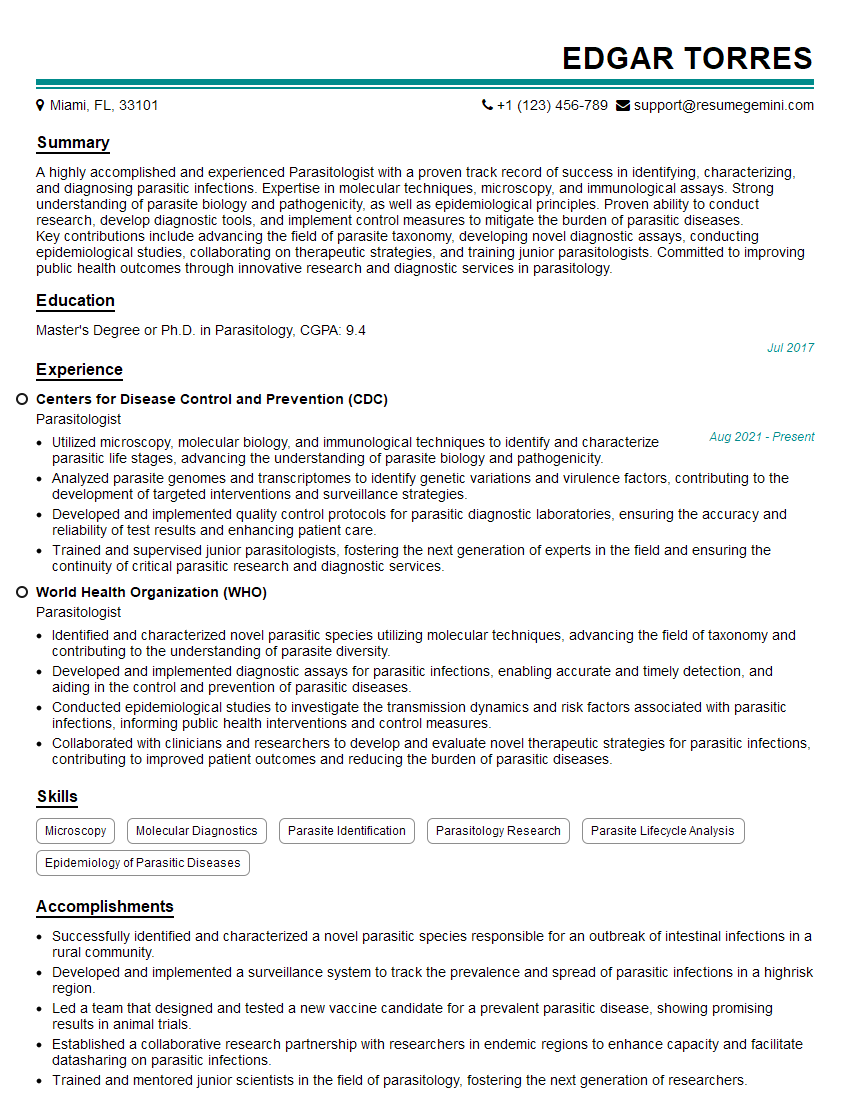
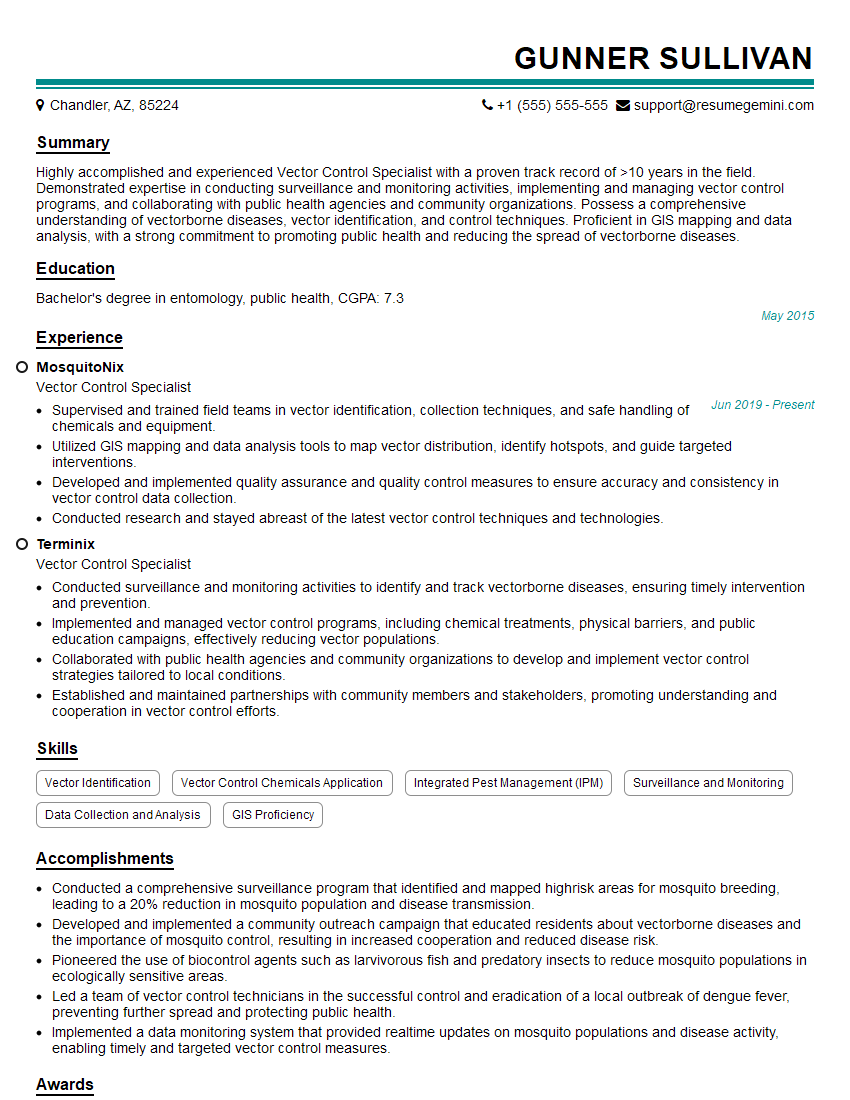
Mastering Parasite Management opens doors to exciting and impactful careers in public health, veterinary medicine, agriculture, and research. A strong foundation in this field will significantly enhance your job prospects and contribute to a fulfilling professional journey. To maximize your chances of landing your dream role, create an ATS-friendly resume that effectively highlights your skills and experience. We highly recommend using ResumeGemini to build a professional and impactful resume. ResumeGemini provides valuable tools and resources, including examples of resumes tailored to Parasite Management, to help you stand out from the competition.
Explore more articles
Users Rating of Our Blogs
Share Your Experience
We value your feedback! Please rate our content and share your thoughts (optional).
What Readers Say About Our Blog
Very informative content, great job.
good