Every successful interview starts with knowing what to expect. In this blog, we’ll take you through the top Photoengraving Machine Operation interview questions, breaking them down with expert tips to help you deliver impactful answers. Step into your next interview fully prepared and ready to succeed.
Questions Asked in Photoengraving Machine Operation Interview
Q 1. Explain the process of creating a printing plate using a photoengraving machine.
Creating a printing plate with a photoengraving machine is a precise process that transforms a digital image into a physical relief or intaglio plate used for printing. It involves several key steps:
Image Preparation: The artwork is digitally prepared and converted into a format suitable for the photoengraving machine, often a high-resolution film positive or a digital file that’s used to create a high-resolution film.
Plate Coating: A photosensitive plate, typically made of zinc, copper, or polymer, is coated with a light-sensitive emulsion. This emulsion undergoes a chemical change when exposed to light, making it either soluble or insoluble depending on the type of photoengraving process.
Exposure: The coated plate is then exposed to a light source through the prepared film. The areas exposed to light will undergo the chemical change. The resolution and accuracy of the exposure directly influence the quality of the final plate. We typically use vacuum frames to ensure perfect contact between the film and the plate during exposure.
Development: The plate is developed using a chemical solution which removes the exposed or unexposed areas of the emulsion, depending on the type of photopolymer used. This leaves behind a relief or etched image on the plate.
Etching (for intaglio): For intaglio plates, the exposed areas are further etched using acid, creating deeper grooves which will hold the ink.
Finishing: Finally, the plate is cleaned, inspected for any defects, and routed to ensure the proper relief or depth for printing. This might include further polishing or cleanup to refine the image and prepare it for printing.
Think of it like creating a detailed, raised map from a photograph—the light exposure is like highlighting the peaks and valleys, and the development reveals the resulting terrain ready for inking and printing.
Q 2. What are the different types of photoengraving machines you are familiar with?
I’m familiar with several types of photoengraving machines, each with its strengths and applications. These include:
Conventional contact exposure units: These use a strong light source and a vacuum frame to ensure even exposure between the film and the photosensitive plate. This is a very common and reliable method.
Computer-to-plate (CTP) systems: These newer systems use digital files directly, bypassing the need for film. A laser or other digital imaging device exposes the plate, offering high precision and efficiency. It’s the workhorse of modern photoengraving, especially for high-volume work.
Hybrid systems: Some systems combine aspects of both conventional and CTP systems, allowing for flexibility and adaptability to different printing demands.
The choice of machine often depends on factors like budget, production volume, required precision, and the type of printing plates needed (e.g., flexographic, gravure, letterpress).
Q 3. Describe the role of a photosensitive plate in photoengraving.
The photosensitive plate is the heart of the photoengraving process. It’s a crucial component that acts as a light-sensitive intermediary between the digital image and the final printing plate. The plate is coated with a light-sensitive emulsion that undergoes a chemical reaction when exposed to light.
Depending on the type of emulsion and process used (positive or negative working), either exposed or unexposed areas of the emulsion become soluble or insoluble, allowing the image to be developed and transferred onto the plate’s surface.
Think of it as photographic film for printing plates. The quality of the photosensitive plate—its resolution, sensitivity to light, and chemical stability—directly impacts the sharpness, detail, and durability of the final printing plate.
Q 4. How do you ensure the accuracy and precision of the plates you produce?
Accuracy and precision in photoengraving are paramount. We ensure this through several measures:
Calibration: Regularly calibrating the machine, including the light source intensity and exposure time, is crucial. This ensures consistent and accurate exposure across all plates.
Precise Exposure Control: We use sophisticated exposure control mechanisms to deliver the correct amount of light, ensuring the development process yields crisp, clean images. This involves carefully measuring and adjusting settings based on the plate type and artwork.
High-Resolution Imaging: Using high-resolution film or digital files is essential for capturing fine details and avoiding blurry or pixelated images in the final print. We use high-resolution scanners and specialized software for optimal image quality.
Quality Control: Rigorous quality checks are implemented at each stage of the process, from initial image preparation to final plate inspection, using tools like densitometers and microscopes to assess the plate’s quality.
For example, we might use a densitometer to ensure consistent density across the plate, preventing areas from being over or under-exposed.
Q 5. What are the common causes of defects in photoengraving, and how do you troubleshoot them?
Several factors can cause defects in photoengraving. Common problems and their troubleshooting strategies include:
Poor Image Resolution: Blurry or pixelated images often stem from low-resolution source files. Solution: Use higher-resolution images and ensure proper scaling.
Uneven Exposure: This can result in light or dark areas on the plate. Solution: Calibrate the light source, check for dust or debris on the plate or film, and verify consistent vacuum pressure during exposure.
Inadequate Development: Underdevelopment or overdevelopment leads to incomplete image transfer or loss of detail. Solution: Strictly adhere to the manufacturer’s instructions for development time and temperature.
Chemical Contamination: Impurities in the chemicals used for coating and developing can damage the plate or interfere with the image transfer. Solution: Use fresh chemicals, maintain cleanliness in the darkroom, and follow proper chemical handling protocols.
Plate Defects: Scratches or imperfections on the plate itself will appear in the final print. Solution: Inspect the plate carefully before coating and handle it gently throughout the process.
Troubleshooting often involves systematic investigation, starting with the most likely culprits and eliminating potential causes one by one. Keeping detailed records and maintaining a consistent workflow significantly reduces the chance of errors.
Q 6. What safety precautions do you take while operating a photoengraving machine?
Safety is paramount when operating a photoengraving machine. Key precautions include:
Personal Protective Equipment (PPE): Always wear appropriate safety glasses, gloves, and lab coats to protect against chemical splashes and exposure to UV light.
Proper Ventilation: The darkroom needs adequate ventilation to remove harmful fumes generated during development and etching. We use fume hoods or exhaust systems.
Chemical Handling: Follow proper chemical handling procedures, including storage, mixing, and disposal. Keep Safety Data Sheets (SDS) readily available and follow the instructions meticulously.
UV Light Protection: UV light exposure can be harmful to the eyes and skin. Use UV-blocking safety glasses and minimize direct exposure.
Emergency Procedures: Have a clear understanding of emergency procedures, including how to handle chemical spills, eye washes, and first aid.
Regular safety training and refresher courses are crucial for maintaining a safe working environment.
Q 7. Explain the importance of maintaining proper machine settings and parameters.
Proper machine settings and parameters are critical for consistent and high-quality plate production. Maintaining these settings ensures:
Consistent Image Quality: Accurate exposure times, light intensity, and development times lead to consistent results. Even slight variations can affect the final image quality.
Reduced Waste: Incorrect settings can lead to rejected plates and wasted materials. Optimizing parameters minimizes waste and maximizes efficiency.
Plate Durability: Proper settings ensure that the plates are durable enough to withstand the printing process and deliver the required number of impressions. Incorrect settings might weaken the plate, leading to premature wear and tear.
Predictable Results: Consistent settings allow for predictable results, reducing variability and making it easier to control the printing quality.
Regularly checking and adjusting these settings using calibration tools and following established protocols helps maintain optimal machine performance and minimizes errors.
Q 8. How do you calibrate a photoengraving machine to ensure consistent results?
Calibrating a photoengraving machine is crucial for consistent, high-quality results. It involves a multi-step process focusing on ensuring the precise interaction between the light source, the photosensitive plate, and the resulting etched image. Think of it like tuning a musical instrument – each component needs to be in perfect harmony.
Firstly, we calibrate the light source’s intensity using a densitometer. This measures the light’s strength and ensures it’s consistent across the entire exposure area. Inconsistencies can lead to uneven etching and image quality issues. For example, a weaker light source on one side of the plate might result in a lighter image in that area. We then adjust the exposure time based on the plate’s sensitivity and the desired depth of etch. This is often done through test exposures on sample plates, fine-tuning the exposure time until the desired depth and detail are achieved. Finally, we verify the machine’s mechanical precision. This involves checking the accuracy of the plate positioning system and ensuring that the exposure frame aligns perfectly with the plate. Even a slight misalignment can distort the final image. Regularly scheduled maintenance, including cleaning the exposure unit and checking the light source for degradation, is also critical to maintaining calibration.
Q 9. What are the different types of inks used in conjunction with photoengraving?
The choice of ink in photoengraving depends heavily on the printing process and the desired outcome. While photoengraving itself doesn’t directly apply ink, the etched plate created acts as a stencil or relief for subsequent ink application. Different inks have unique properties that influence the final print.
- Offset Printing: Often uses oil-based inks that are highly pigmented and designed to transfer efficiently from the plate to a rubber blanket and then to the paper. The viscosity and tack of the ink are important for maintaining sharp details and preventing smudging.
- Flexographic Printing: This method employs fast-drying, water-based or UV-curable inks. These inks are highly fluid and can effectively fill the etched relief of the plate for consistent transfer to a variety of substrates. The fast drying is essential for high-speed printing.
- Gravure Printing: While less common in direct photoengraving workflows, inks are carefully selected for their viscosity to ensure consistent fill within the etched wells of a gravure cylinder. The specific ink characteristics are critical for the level of detail achieved in gravure print.
Choosing the right ink requires understanding its properties and how they interact with the etched plate and substrate. Improper ink selection can result in poor image quality, inconsistent color, or other print defects.
Q 10. How do you handle and store photosensitive plates to prevent damage?
Photosensitive plates are highly sensitive to light and environmental conditions, so careful handling and storage are paramount. Think of them as photographic film – they need to be kept in the dark and protected from physical damage.
Prior to exposure, plates should be handled only in a darkroom or under a safelight of the appropriate wavelength. Fingerprints, dust, or other contaminants can affect the exposure process, leading to imperfections in the final etched image. After exposure, plates must be processed immediately according to the manufacturer’s recommendations and stored in a cool, dry, dark place, away from any sources of light or radiation. They are usually stored in light-tight sleeves or boxes, sometimes with desiccant packs to absorb moisture. Damaged or exposed plates should be discarded immediately to avoid contamination and degradation of unexposed plates. This careful handling process is essential for minimizing waste and maximizing the quality of the final product.
Q 11. Describe your experience with different types of printing processes (e.g., offset, flexo).
My experience encompasses both offset and flexographic printing processes. In offset printing, I’ve worked extensively with the creation of photopolymer plates used for the image transfer. Understanding the fine details required for high-resolution offset printing was a key aspect of my role. I’m adept at troubleshooting issues related to ink density, dot gain, and image sharpness. This includes adjusting the exposure parameters to achieve optimal results. In flexographic printing, the experience has been more focused on the creation of rubber or photopolymer plates for packaging and label printing. This demands a good understanding of different types of flexo inks and their interaction with the plate surface to achieve optimal print quality at high speeds.
The key difference lies in the plate type and ink characteristics. Offset uses a planographic printing method – using a flat plate – while flexography utilizes relief printing from a raised image on a flexible plate. This understanding has provided me with a comprehensive perspective on the pre-press requirements and challenges for various applications.
Q 12. How do you interpret and follow technical specifications and instructions?
Interpreting technical specifications and instructions is fundamental to my work. It often involves deciphering complex technical data sheets, artwork specifications, and machine operation manuals. A good example is interpreting color profiles, ensuring accurate color reproduction throughout the printing process. For this, I use software like Adobe Acrobat and color management tools to properly translate the client’s specifications into workable machine parameters. I meticulously follow step-by-step instructions to avoid errors. These may include specific exposure settings, chemical processing times, and plate handling procedures. If there’s any ambiguity, I always seek clarification to avoid costly mistakes. I’m accustomed to working with various international standards (e.g., ISO standards for color management) which necessitates careful attention to detail and a strong understanding of industry best practices.
Q 13. Explain your experience with quality control procedures in photoengraving.
Quality control is an integral part of photoengraving. It begins with the careful inspection of the incoming artwork for any defects or inconsistencies. I meticulously check for resolution, color accuracy, and the presence of any flaws that could impact the quality of the final product. During the plate-making process, I monitor each step closely to ensure optimal results. This includes checking for proper exposure, consistent etching depth, and the absence of any defects like pinholes or scratches on the plate. After the plate is created, we perform a rigorous quality control check by printing test prints. This allows us to verify the image sharpness, color accuracy, and overall quality of the plate before mass production. Any discrepancies identified at this stage are immediately addressed, ensuring the highest quality output.
We maintain detailed records of all quality control checks, including measurements, observations, and any corrective actions taken. This documentation provides valuable insights into the process, helping us improve efficiency and quality over time. We use statistical process control methods to track key parameters and identify trends that indicate potential problems before they escalate.
Q 14. What software programs are you familiar with for prepress operations?
My prepress experience involves proficiency in several software programs. I am highly skilled in Adobe Photoshop for image manipulation and color correction, ensuring artwork is prepared correctly for plate making. I’m also experienced in using Adobe Illustrator for vector-based artwork preparation and ensuring that the artwork is compatible with the photoengraving process. Furthermore, I’m familiar with RIP software used for generating the digital output for the photoengraving machine. This often involves managing color profiles and ensuring correct halftone screening. Other tools I use include color management software to guarantee consistent color reproduction across different platforms and prepress workflow automation software for efficient task management. My experience extends to working with various proprietary software systems depending on the specific photoengraving equipment in use.
Q 15. Describe your experience with file format conversions for printing plates.
File format conversion is crucial in photoengraving to ensure compatibility between design software and the photoengraving machine. We primarily deal with formats like TIFF, EPS, and PDF. My experience involves verifying the color space (typically CMYK for print), resolution, and the presence of any embedded profiles. For instance, a low-resolution TIFF file might lead to a grainy print, whereas an improperly embedded color profile could result in significant color shifts. I routinely use dedicated software to convert files, ensuring optimal image quality and data integrity. I’ve also had to troubleshoot files with corrupted data or missing information, often needing to collaborate with the design team to rectify issues before proceeding to plate making. A recent project involved converting a series of large-format EPS files, requiring careful batch processing and quality checks to maintain consistency throughout the entire print run.
Career Expert Tips:
- Ace those interviews! Prepare effectively by reviewing the Top 50 Most Common Interview Questions on ResumeGemini.
- Navigate your job search with confidence! Explore a wide range of Career Tips on ResumeGemini. Learn about common challenges and recommendations to overcome them.
- Craft the perfect resume! Master the Art of Resume Writing with ResumeGemini’s guide. Showcase your unique qualifications and achievements effectively.
- Don’t miss out on holiday savings! Build your dream resume with ResumeGemini’s ATS optimized templates.
Q 16. How do you handle unexpected machine malfunctions?
Unexpected malfunctions are an unfortunate reality in photoengraving. My approach is methodical. First, I prioritize safety, shutting down the machine and ensuring the area is secure. Then, I systematically analyze the error messages displayed on the machine’s console, cross-referencing them with the machine’s troubleshooting manual. Simple issues, such as a jammed plate or low laser power, I can usually handle directly. More complex problems, like laser head misalignment or software glitches, require a more detailed investigation and may necessitate contacting the manufacturer’s technical support. I keep a detailed log of all malfunctions, including the error codes, the corrective actions taken, and the time it took to resolve the issue. This log has been invaluable in identifying recurring problems and preventing future disruptions. For example, a pattern of recurring laser power fluctuations led to proactive maintenance of the power supply, preventing a major production halt.
Q 17. What is your experience with cleaning and maintaining photoengraving equipment?
Cleaning and maintenance are paramount to maintaining the machine’s accuracy and longevity. This involves daily cleaning of the laser head, ensuring no dust or debris interferes with the laser’s precision. We also regularly clean the plate transport system and vacuum pathways to prevent scratches on plates and ensure smooth plate movement. Periodically, we conduct more extensive maintenance, including checking and cleaning the optics, lubricating moving parts, and performing system diagnostics. We follow the manufacturer’s recommended maintenance schedule meticulously. Neglecting this process can result in inaccurate engravings, damaged plates, and costly repairs. I’ve personally trained junior technicians in these procedures, emphasizing the importance of careful handling and preventative maintenance.
Q 18. Explain your understanding of color management in photoengraving.
Color management is critical for achieving consistent and accurate color reproduction. We utilize color profiles (ICC profiles) to translate the color information from the digital file to the actual printed output on the plate. This involves calibrating the photoengraving machine’s output to a standardized color space, typically using a spectrophotometer to measure the color produced. Understanding color transformations, such as CMYK to the specific color space of the plate material, is essential. We often collaborate with pre-press departments to ensure that the source files are properly color-managed from the initial design stage. Problems such as color shifts or banding can often be traced back to issues within the color management workflow, which I am trained to diagnose and resolve. For example, in one instance, a significant color shift was resolved by correcting a mismatched ICC profile in the digital workflow.
Q 19. How do you ensure the proper resolution and screen ruling for different printing processes?
Resolution and screen ruling are directly linked to the printing process. High-resolution images (e.g., 300 dpi or higher) are needed for detailed reproduction in high-quality printing. However, the screen ruling (the number of lines per inch) needs to be adjusted based on the print method; for example, finer rulings are usually used for offset lithography which demands high detail. Conversely, coarser rulings are acceptable for techniques like flexographic printing. My experience includes configuring the photoengraving software to accurately render the correct resolution and screen ruling based on the client’s specifications and the chosen printing method. I frequently cross-reference technical documentation to ensure optimal settings for specific applications. An incorrect setting can result in blurred or distorted images in the final product. For instance, using a high screen ruling for flexographic printing might lead to filling-in and loss of fine detail.
Q 20. How do you identify and rectify problems related to dot gain or dot loss?
Dot gain and dot loss are common problems impacting the tonal range and image quality. Dot gain refers to the enlargement of halftone dots during printing, while dot loss refers to the reduction or disappearance of dots. Identifying these issues requires careful visual inspection of the engraved plates and test prints. Dot gain can be caused by factors such as excessive ink, improper press settings, or plate material properties. Dot loss, on the other hand, can be due to insufficient ink, worn plates, or improper exposure during the photoengraving process. To address these problems, we adjust the exposure settings in the photoengraving machine, potentially using specialized software compensation for dot gain or loss. We also work closely with the press operators to fine-tune press settings and ensure the use of appropriate inks. Regular calibration of the entire process, from file preparation to printing, is crucial in minimizing these issues.
Q 21. What is your experience with different types of plate materials?
I have extensive experience working with various plate materials, each having its own properties and suitability for different printing processes. This includes aluminum plates (commonly used in offset lithography), polyester plates (for flexographic printing), and specialized plates with coatings designed to enhance durability or ink transfer. The choice of plate material is driven by factors like print quality requirements, printing press type, and run length. Each material requires specific processing parameters during photoengraving to optimize image quality and plate life. For example, aluminum plates require careful cleaning and preparation to ensure proper etching. My knowledge encompasses handling and processing each of these materials while adhering to safety standards and optimizing the performance of the photoengraving machine for each particular plate type. This ensures efficient and high-quality production of printing plates for a wide range of applications.
Q 22. Explain the significance of proper exposure time and intensity in photoengraving.
Proper exposure time and intensity are crucial in photoengraving because they directly determine the quality of the final image. Think of it like baking a cake – too little heat (intensity) or too little time, and you have a raw cake; too much, and it’s burnt. In photoengraving, the exposure process transfers the image from a film negative onto a photosensitive plate.
Exposure Time: This refers to how long the plate is exposed to the light source. Insufficient exposure time results in a weak image, with thin, underdeveloped lines and details. Too long an exposure, conversely, can lead to overexposure, causing blurring and a loss of detail. The optimum time depends on factors like the light source’s intensity, the film’s density, and the plate’s sensitivity.
Exposure Intensity: This is the strength of the light source. Low intensity means a weaker, potentially underdeveloped image. High intensity might cause rapid exposure, potentially leading to uneven results or scorching the plate. The intensity is usually controlled by adjusting the light source’s power or by adjusting the distance between the light source and the plate.
Practical Example: Let’s say we’re working on a detailed line art piece. Insufficient exposure would lead to thin, faint lines that might not reproduce well during the etching process. Overexposure would cause the lines to broaden, resulting in a blurred, less precise image.
Q 23. Describe your troubleshooting skills related to image quality issues.
Troubleshooting image quality issues in photoengraving requires a systematic approach. My process starts with carefully examining the final output to identify the exact problem – are the lines too thin, too thick, uneven, or is there a lack of detail? Once the issue is identified, I investigate the likely causes in a step-wise manner:
- Check the Film Negative: Scratches, dust, or flaws in the negative will directly affect the final image. I meticulously inspect the negative under a high-magnification viewer.
- Review the Exposure Settings: I verify the exposure time and intensity were correctly set based on the film and plate characteristics. Incorrect settings are a frequent culprit.
- Inspect the Plate: I carefully examine the photosensitive plate for any imperfections like scratches, dust particles, or uneven coating. Any of these can lead to significant image defects.
- Examine the Chemical Processing: Incorrect development or etching times and temperatures can compromise image quality. I verify that all chemical processes are following the manufacturer’s specifications meticulously.
- Check the Equipment: Issues with the light source (intensity variations, inconsistent exposure), the vacuum system (holding the negative and plate in perfect contact), or the processing equipment (temperature inconsistencies, uneven chemical distribution) must be investigated.
Through this systematic approach, I can often pinpoint the root cause and make the necessary adjustments to resolve the issue, ensuring high-quality outputs.
Q 24. How familiar are you with the concept of halftone screening?
Halftone screening is fundamental to photoengraving, especially for reproducing continuous-tone images (like photographs) on printing presses that only use dots of ink. It’s a process that converts a continuous-tone image into a pattern of dots of varying sizes and densities. The size and spacing of these dots dictate the perceived tone and shading in the final print.
How it Works: A halftone screen is a fine mesh of transparent and opaque lines, placed between the original image and the photosensitive plate during exposure. The screen breaks up the continuous tones of the image into a pattern of dots. Darker areas in the image produce larger dots, while lighter areas result in smaller dots. The screen’s ruling (lines per inch or lpi) significantly influences the final image’s resolution and sharpness. A higher lpi provides more detail, but can be harder to reproduce with certain printing processes.
Example: A photograph printed on a newspaper uses a relatively low lpi screen, typically around 65-85 lpi, whereas a high-quality magazine print might use a higher lpi screen (133-150 lpi) to achieve greater detail and sharpness.
My experience encompasses working with different screen rulings, angles, and types (e.g., amplitude modulated, frequency modulated) to optimize image reproduction for various printing substrates and techniques. I understand the limitations of different screen rulings and how to select the appropriate screen to achieve desired quality.
Q 25. How do you manage your workload and prioritize tasks efficiently?
Managing workload and prioritizing tasks efficiently involves a blend of planning and execution. In a fast-paced photoengraving environment, I rely on a few key strategies:
- Prioritization Matrix: I use a system to categorize tasks based on urgency and importance (e.g., Eisenhower Matrix). Urgent and important tasks are tackled immediately, while less urgent tasks are scheduled accordingly.
- Detailed Scheduling: I create detailed schedules that allow for efficient workflow, incorporating estimated times for each task and factoring in potential delays or unexpected issues.
- Communication: I maintain open communication with my team and supervisors to ensure everyone is aware of deadlines and any potential bottlenecks, allowing for collaborative problem-solving.
- Time Management Techniques: I utilize techniques like time blocking, the Pomodoro Technique, and eliminating distractions to maximize focus and productivity during work periods.
- Continuous Improvement: I regularly review my workflow to identify areas for improvement and to refine my time management strategies based on experience and feedback.
This systematic approach allows me to handle multiple tasks concurrently, meet tight deadlines, and consistently deliver high-quality results.
Q 26. Describe your experience working in a fast-paced production environment.
I thrive in fast-paced production environments. My previous role at [Previous Company Name] frequently involved meeting tight deadlines and handling high-volume orders. We often faced rush jobs and unexpected changes in schedules. I adapted well to this environment by:
- Flexibility and Adaptability: I readily adjust to changing priorities and unexpected situations.
- Proactive Problem-Solving: I anticipate potential bottlenecks and proactively seek solutions to avoid delays.
- Teamwork and Collaboration: Effective communication and collaboration with colleagues are crucial in high-pressure situations to ensure smooth workflow and efficient task completion.
- Efficiency and Speed: I strive for efficiency in all my tasks, continuously seeking ways to optimize workflows and reduce processing times without compromising quality.
I remember one instance where we had a major rush order for 500 plates due within 24 hours. Through efficient teamwork, proactive problem-solving, and diligent time management, we successfully completed the order on time and met the client’s high standards.
Q 27. Explain your understanding of environmental health and safety regulations in prepress.
Environmental health and safety (EHS) regulations are paramount in the prepress industry, and I have a strong understanding of these. Photoengraving involves working with chemicals that can be hazardous if not handled properly. My knowledge covers several aspects:
- Chemical Handling: I understand the safe handling, storage, and disposal of chemicals like etchants, developers, and solvents. This includes proper labeling, usage of personal protective equipment (PPE) such as gloves, eye protection and ventilation, and adherence to spill response protocols.
- Waste Management: I am familiar with regulations concerning the proper disposal of chemical waste, including the segregation of hazardous materials and compliance with local and national regulations.
- Equipment Safety: I understand the safety procedures for operating equipment such as exposure units, etching machines, and processing equipment. This includes regular maintenance and inspection of the equipment to ensure safe operation.
- Emergency Procedures: I am familiar with emergency procedures in case of chemical spills, equipment malfunctions, or other incidents, including the location of safety equipment such as eyewash stations and fire extinguishers.
I’m committed to maintaining a safe working environment and always prioritize safety protocols to minimize risks.
Q 28. What are your salary expectations for this role?
My salary expectations for this role are in the range of $[Lower Bound] to $[Upper Bound] per year. This range reflects my experience, skills, and the market value for similar positions with comparable responsibilities. I am open to discussing this further and am confident that my contributions will significantly benefit your organization.
Key Topics to Learn for Photoengraving Machine Operation Interview
- Machine Operation & Maintenance: Understanding the intricacies of photoengraving machines, including setup, operation, and preventative maintenance procedures. This includes knowledge of different machine types and their specific functionalities.
- Plate Making & Preparation: Proficiency in preparing plates for the engraving process, including cleaning, coating, and exposure techniques. Understanding the impact of different plate materials and their properties on the final product.
- Image Processing & Transfer: Knowledge of digital image processing techniques and their application in photoengraving. Understanding how to accurately transfer images onto plates for high-quality reproduction.
- Quality Control & Troubleshooting: Developing a keen eye for detail to identify and rectify defects during the engraving process. Understanding common troubleshooting techniques and their application in resolving production issues.
- Safety Procedures & Regulations: Familiarity with all relevant safety protocols and regulations associated with operating photoengraving machinery and handling chemicals. Prioritizing safe work practices and maintaining a clean and organized workspace.
- Workflow Optimization & Efficiency: Understanding the entire workflow from initial image input to final plate output. Identifying opportunities for process improvement and increasing overall efficiency.
- Understanding of different printing techniques & their relevance to photoengraving: This includes knowledge of various printing methods and how the quality of the photoengraving process impacts the final printed result.
Next Steps
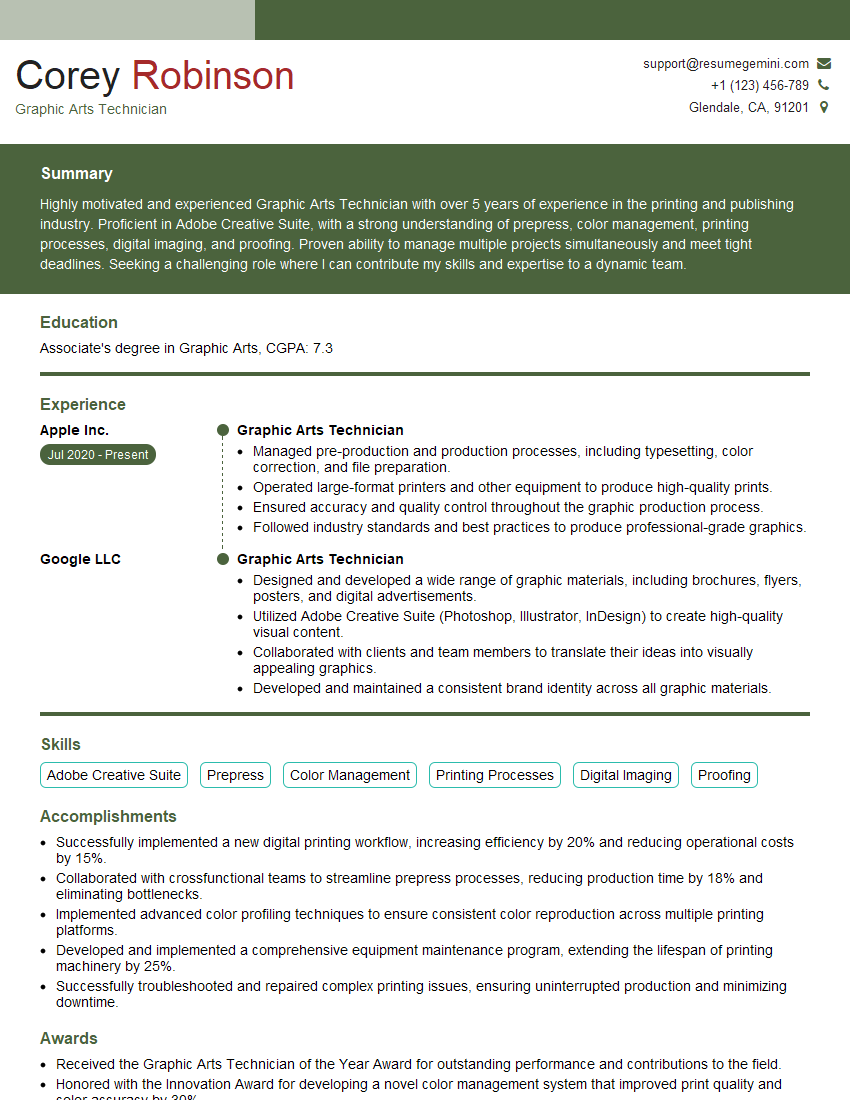
Mastering Photoengraving Machine Operation opens doors to exciting career opportunities in printing and related industries, offering potential for growth and specialization. To maximize your job prospects, creating a strong, ATS-friendly resume is crucial. ResumeGemini is a trusted resource that can help you build a professional and impactful resume, highlighting your skills and experience effectively. Examples of resumes tailored to Photoengraving Machine Operation are available through ResumeGemini, helping you present your qualifications in the best possible light.




Explore more articles
Users Rating of Our Blogs
Share Your Experience
We value your feedback! Please rate our content and share your thoughts (optional).
What Readers Say About Our Blog
Very informative content, great job.
good