Are you ready to stand out in your next interview? Understanding and preparing for Pit Crew Coordination interview questions is a game-changer. In this blog, we’ve compiled key questions and expert advice to help you showcase your skills with confidence and precision. Let’s get started on your journey to acing the interview.
Questions Asked in Pit Crew Coordination Interview
Q 1. Describe your experience in coordinating pit crew activities during a race.
My experience in coordinating pit crew activities encompasses over ten years working with various racing teams, from grassroots level to professional circuits. My role involves the pre-race planning, the real-time orchestration during pit stops, and post-race analysis. This includes everything from assigning crew members to specific tasks and roles based on their strengths and experience (e.g., tire changers, fuelers, jackmen), to creating and refining pit stop strategies tailored to the specific track conditions, car performance, and race dynamics. I’ve worked with teams using both manual and automated jack systems, as well as different fuel dispensing technologies. For instance, in one race, I implemented a new strategy involving a staggered tire change to reduce the overall pit stop time, resulting in a significant gain in track position.
A typical race day involves constant communication with the team engineers, the driver, and the pit crew itself. We strategize about pit stop timing based on the car’s performance, the fuel consumption rate, and the current standings. I ensure that all crew members are well-briefed on the plan and are aware of potential contingencies. Post-race, I lead the analysis of the pit stops, identifying areas for improvement and refining the team’s processes to enhance efficiency and safety.
Q 2. Explain the importance of effective communication within a pit crew.
Effective communication is the lifeblood of a successful pit crew. Think of it like a perfectly choreographed dance; every movement needs to be precise and synchronized. Without clear and immediate communication, even minor issues can escalate into major problems, potentially costing valuable time or even leading to accidents. We use a combination of hand signals, pre-determined verbal cues, and radio communication.
- Hand Signals: Standardized, unambiguous hand signals are critical for quick communication in the noisy pit lane. For example, a specific hand signal might indicate that a tire is ready to be changed or that the fueler is complete.
- Verbal Cues: Pre-determined verbal commands help streamline the process, ensuring everyone understands their next action. For instance, “Jack up!” or “Tires on!” serve as clear instructions.
- Radio Communication: The pit crew chief uses a radio to maintain communication with the driver and team engineers, providing updates on the car’s status and informing them of any issues requiring attention.
Regular drills and training sessions are vital to ensure that everyone understands the communication system. This not only facilitates smooth execution during pit stops but also enhances the safety of the entire crew.
Q 3. How do you ensure the safety of the pit crew during a pit stop?
Ensuring the safety of the pit crew is paramount. We approach this through a multi-layered strategy:
- Rigorous Training: Crew members undergo extensive training on safety procedures, including emergency response protocols, fire safety, and the proper use of equipment. This training is regularly updated and refreshed.
- Safety Equipment: All crew members wear mandatory protective gear, including helmets, fire-resistant suits, gloves, and safety shoes. We also ensure that all tools and equipment are in perfect working order.
- Designated Areas: The pit area is organized to define clear working zones for each member, minimizing the risk of collisions or interference. This spatial arrangement is a critical aspect of the pit stop strategy.
- Emergency Procedures: We practice emergency drills regularly, covering scenarios such as fire, equipment malfunctions, or injuries. Everyone is thoroughly briefed on the procedures and their roles in such situations. This includes designated safety personnel who are trained in first aid and emergency response.
- Spotters: Experienced spotters monitor the car’s position and movements during the pit stop, alerting the crew to any potential hazards.
Safety isn’t just a checklist; it’s a mindset that permeates every aspect of our pit crew operations.
Q 4. What strategies do you use to optimize pit stop times?
Optimizing pit stop times requires a multifaceted approach. It’s not simply about speed; it’s about efficient, safe speed. My strategies include:
- Practice and Drills: Repetitive practice under simulated race conditions is crucial. We continually refine our processes, identifying bottlenecks and optimizing individual tasks.
- Ergonomics: Tools and equipment are strategically placed for ease of access and optimal workflow, minimizing unnecessary movement and wasted time.
- Data Analysis: We meticulously analyze each pit stop, recording times for every task. This allows us to pinpoint areas for improvement and track our progress over time.
- Technology: Utilizing advanced tools and technology, such as automated jack systems and precise fuel dispensing equipment, can significantly reduce pit stop times.
- Crew Specialization: Assigning crew members to roles that match their individual strengths and experience maximizes efficiency. For example, our best tire changers focus on that task while others specialize in fuel dispensing.
- Pre-race Planning: We prepare for potential issues and variations in race conditions, developing contingency plans to address any unexpected challenges.
Continuous improvement is key. We don’t just strive for faster pit stops; we strive for safer and more consistent ones.
Q 5. Describe your experience with tire changing procedures.
My tire changing experience is extensive. I’ve worked with various tire designs and wheel configurations across different race series. Our procedure involves a highly coordinated effort, with each crew member having a specific role and precise steps to follow. The process typically involves:
- Car Arrival: The car is precisely positioned in the pit box.
- Jacking: The car is securely lifted using either a manual or pneumatic jack system.
- Wheel Removal: Tire changers, working with specialized guns, rapidly remove the old tires.
- Tire Installation: New tires are immediately installed, ensuring correct torque and secure fitting.
- Wheel Tightening: The wheels are meticulously tightened to the manufacturer’s specifications.
- Lowering: The car is carefully lowered.
- Final Checks: A final check of the wheels confirms they are securely attached before the car leaves the pit box.
We regularly practice this sequence, focusing on minimizing the time it takes to complete each step, while always prioritizing safety. The skill level and coordination of this process is paramount. I’ve seen firsthand how even minor deviations from the procedure can significantly increase pit stop times and risk safety.
Q 6. How do you handle unexpected issues during a pit stop?
Handling unexpected issues requires a calm, decisive approach. We practice scenarios that could go wrong to prepare for anything that happens. We utilize a system of clear communication and pre-defined contingency plans to quickly address any problems.
For example, if a wheel nut jams, the crew is trained to immediately switch to a backup strategy, potentially using different tools and assigning different crew members to tackle the problem. If a tire gets damaged during installation, we have spare tires and procedures ready to address this. Similarly, if a fuel hose leaks, we have a well-rehearsed protocol for safely securing the hose and completing the fuel operation. The key is having established procedures for common failures.
The ability to adapt quickly is invaluable in high-pressure racing situations. We constantly emphasize problem-solving during training to build the crew’s preparedness for any unexpected issues that might arise.
Q 7. What is your experience with fuel dispensing procedures and safety protocols?
My experience with fuel dispensing includes both manual and automated systems. Safety is always the top priority. Our procedures adhere to strict safety protocols to prevent fires and other hazards.
- Pre-Fueling Checks: Before commencing, we inspect the fuel lines, nozzle, and surrounding area for any leaks or hazards.
- Grounding Procedures: We use proper grounding techniques to prevent static electricity build-up.
- Fuel Level Monitoring: The fueler uses a gauge to precisely control the amount of fuel dispensed, preventing overfilling.
- Spill Containment: We maintain a spill-containment system to prevent any fuel spills.
- Fire Suppression: Fire extinguishers are readily available, and crew members are trained in their use.
Regular maintenance and inspection of the fuel dispensing system are vital. We regularly work with experts who inspect the fueling equipment and review the safety procedures to ensure they remain current and effective. Proper fueling is critical for both performance and safety. Any mishap here can lead to serious repercussions.
Q 8. Explain your understanding of pit lane rules and regulations.
Pit lane rules and regulations are crucial for safety and fair competition. They govern everything from speed limits and entry/exit procedures to the permitted actions within the pit lane itself. These rules vary slightly depending on the sanctioning body (e.g., FIA, NASCAR, IMSA), but common themes include:
- Speed Limits: Strict speed limits are enforced, often drastically reduced compared to track speeds, to prevent accidents. These limits are usually displayed prominently and monitored via timing systems. Exceeding these limits results in penalties.
- Designated Pit Boxes: Each team is assigned a specific pit box, ensuring organized and efficient pit stops. Improper use of a pit box (e.g., occupying another team’s box) leads to penalties.
- Personnel Restrictions: Only authorized personnel, wearing appropriate safety gear, are allowed in the pit lane during a race. Unauthorized individuals risk serious injury and team penalties.
- Equipment Restrictions: The type and placement of equipment within the pit box are regulated to maintain safety and prevent unfair advantages. For example, the placement of fuel hoses or jack stands is strictly controlled.
- Radio Communication: Communication between the pit crew and the driver is typically monitored, and certain communications (e.g., instructions that might constitute an unfair advantage) are prohibited.
- Safety Procedures: Strict procedures exist for the safe handling of fuel, tires, and equipment, minimizing the risk of fire or injury. These procedures are often meticulously rehearsed.
A team violating pit lane rules can face penalties ranging from warnings and time penalties to disqualification from the race, underscoring the importance of strict adherence to these regulations.
Q 9. How do you manage pit crew personnel and allocate tasks?
Managing pit crew personnel involves a combination of clear communication, task delegation based on individual strengths, and fostering a team environment. I typically use a combination of methods:
- Role Assignment Based on Skill: Each crew member has specific roles (e.g., jack man, tire changer, fueler) based on their expertise and experience. I carefully assess each crew member’s capabilities to optimize their performance. For example, our fastest tire changer is always assigned the front-left tire change, which statistically takes the longest.
- Pre-Race Briefing: Before each race, I conduct a detailed briefing that covers the race strategy, pit stop procedures, and individual responsibilities. This includes visual aids like diagrams and checklists.
- Clear Communication System: A clear and efficient communication system (often using hand signals and coded verbal cues) is crucial to ensure seamless coordination during the pit stop. We practice this extensively to ensure flawless execution under pressure.
- Performance Tracking and Feedback: I continuously monitor individual and team performance, providing constructive feedback after each pit stop to identify areas for improvement. This data-driven approach ensures constant optimization of our pit crew’s efficiency.
- Team Building and Motivation: Fostering a strong team spirit and motivating the crew is vital. I prioritize building trust and camaraderie to encourage collaboration and improve overall performance. Team celebrations after successful pit stops build morale.
Q 10. How do you track and analyze pit stop performance data?
Tracking and analyzing pit stop performance data is critical for continuous improvement. We utilize various tools and methods:
- Timing Systems: Precise timing systems record the duration of each pit stop, broken down by individual tasks. This allows for granular analysis.
- Video Analysis: High-speed video recordings of pit stops are meticulously reviewed to identify inefficiencies or potential safety hazards. Slow-motion replays reveal crucial details often missed during live observation.
- Data Logging: Data loggers record key parameters like jacking speed, tire change times, and fuel flow rates. This detailed data provides quantitative insights for improvement.
- Statistical Analysis: Statistical methods are employed to identify trends, outliers, and areas where improvement is needed. We use software to generate reports that visually represent performance metrics.
- Comparison with Competitors: We actively analyze the pit stop times and performance of our competitors to benchmark ourselves and identify best practices.
This comprehensive data analysis enables us to set realistic goals, identify areas for improvement, and train the team to achieve optimal performance.
Q 11. Describe your experience with pit crew training and development.
Pit crew training and development is an ongoing process requiring a structured approach. Our program integrates various techniques:
- On-Track Practice: Regular practice sessions simulate real race conditions, allowing the crew to refine their techniques and improve coordination. These sessions gradually increase in intensity to build resilience under pressure.
- Simulation Training: Utilizing simulators, the crew can practice pit stops repeatedly without the risks and costs associated with on-track practice. This enhances muscle memory and coordination.
- Individual Skill Development: Specialized coaching focuses on individual skills, such as quick tire changes, efficient jacking, and safe fuel handling. We use metrics to track individual improvement.
- Team Drills: Drills are designed to improve team communication, coordination, and response time. We focus on various scenarios (e.g., unexpected equipment failures).
- Safety Training: Comprehensive safety training emphasizes the correct procedures for handling equipment, minimizing risk of injury, and responding to emergencies.
Continuous assessment and feedback loops ensure that the training is effective and addresses individual and team needs. We tailor the training program based on the team’s performance and identify areas requiring more focus.
Q 12. How do you maintain and manage pit crew equipment?
Maintaining and managing pit crew equipment is crucial for safety and efficiency. This involves:
- Regular Inspection and Maintenance: All equipment undergoes regular inspections and maintenance schedules to ensure optimal functioning and prevent failures during pit stops. This includes tools, jacks, air guns, fuel rigs and safety gear.
- Preventive Maintenance: A preventive maintenance program minimizes downtime and extends the life of equipment. We track maintenance schedules meticulously.
- Spare Parts Inventory: A comprehensive inventory of spare parts ensures that equipment can be quickly repaired or replaced in case of failure during races. We carefully choose high-quality spare parts.
- Equipment Storage: Proper storage protects equipment from damage and deterioration. We utilize purpose-built storage solutions in climate-controlled environments.
- Cleaning and Organization: Maintaining a clean and organized pit box is essential for efficiency and safety. After each race, the equipment is thoroughly cleaned and checked for any wear or damage.
This rigorous approach guarantees that the equipment is always in top working order, minimizing risk and maximizing performance.
Q 13. How do you coordinate with other race team members during pit stops?
Coordinating with other race team members during pit stops requires seamless communication and clear roles. I work closely with:
- Race Strategist: The strategist provides information on the race situation, including track conditions, fuel consumption, and competitor positions, influencing pit stop strategy.
- Crew Chief: The crew chief provides overall guidance and is the main point of contact between the pit crew and the team leadership.
- Engineers: Engineers provide technical insights and support, ensuring the optimal functioning of the car’s systems.
- Driver: Clear communication with the driver is paramount. They relay critical information about the car’s condition and preferences.
- Mechanics: Mechanics work closely with the pit crew to address any car issues during the pit stop.
Effective communication, often via radio and pre-determined signals, allows for rapid response to changing circumstances. We often use pre-planned strategies and contingency plans to handle unforeseen issues during a pit stop.
Q 14. Explain your experience with different types of pit stop strategies.
Different pit stop strategies are employed depending on race conditions, car performance, and the overall race strategy. These strategies can include:
- Two-Tire Strategy: Changing only two tires during a pit stop is faster but reduces tire lifespan.
- Four-Tire Strategy: Changing all four tires is slower but offers optimal tire performance. This is often combined with fuel fill-ups.
- Undercut Strategy: Pitting before a competitor to gain a track position advantage.
- Overcut Strategy: Pitting later than a competitor to gain an advantage on tires.
- Fuel-Only Stop: A quick pit stop where only fuel is added, often used for saving time in cases of close competition.
Selecting the best strategy requires careful analysis of various factors. For example, a two-tire strategy might be employed late in the race to gain a speed advantage, while a four-tire strategy might be better early in the race for longer-term performance. The choice also depends on the specific tire compound in use and the track characteristics.
Q 15. How do you adapt your pit crew strategy based on changing race conditions?
Adapting pit crew strategy to changing race conditions is crucial for optimal performance. It’s not a static plan; it’s a dynamic response system. We monitor several factors constantly: the weather (rain, track temperature changes), the condition of the car (tire wear, fuel consumption, mechanical issues), and the performance of our competitors. For example, if rain starts, our strategy shifts immediately to a faster pit stop focusing on tire changes and potentially fuel-saving adjustments. We might even preemptively call the driver in early to avoid being caught out in a downpour. Conversely, if the gap to the next car widens, we might slightly lengthen the pit stop to ensure extra maintenance checks, enhancing our long-term race strategy.
This requires constant communication between the crew chief, strategists, and the driver via radio. The data collected is analyzed in real-time, and the pit stop plan is adjusted to maximize our chances of winning or securing a strong finishing position.
Career Expert Tips:
- Ace those interviews! Prepare effectively by reviewing the Top 50 Most Common Interview Questions on ResumeGemini.
- Navigate your job search with confidence! Explore a wide range of Career Tips on ResumeGemini. Learn about common challenges and recommendations to overcome them.
- Craft the perfect resume! Master the Art of Resume Writing with ResumeGemini’s guide. Showcase your unique qualifications and achievements effectively.
- Don’t miss out on holiday savings! Build your dream resume with ResumeGemini’s ATS optimized templates.
Q 16. What is your experience with pit stop simulations and practice sessions?
Pit stop simulations and practice sessions are the backbone of our success. We use sophisticated software to create realistic simulations, replicating various race scenarios – from routine stops to emergencies like flat tires. These simulations help us identify potential bottlenecks in our processes, allowing us to refine our techniques before a race. Practice sessions are equally important, involving rigorous physical repetitions of the pit stop procedures under simulated race conditions. We meticulously track times, analyze individual performances, and identify areas for improvement. These exercises aren’t just about speed; they’re about precision and safety. A single mistake during a race pit stop can cost us valuable time or even damage the car.
For example, we might simulate a scenario where a tire change is complicated by a damaged wheel nut, forcing us to adapt our procedure on the fly. This drills the team in problem-solving under pressure.
Q 17. Describe your experience with different types of race cars and their specific pit stop requirements.
My experience encompasses a variety of race cars, each with unique pit stop requirements. Open-wheel cars, like Formula 1 cars, require extremely fast and precise pit stops, focusing on tire changes and minimal adjustments. The design of the car itself dictates specific tools and procedures. Stock cars, on the other hand, often need more extensive servicing during pit stops, including fuel, tire changes, and potentially chassis adjustments. Their heavier weight and different construction also influences the procedures. Prototype cars may have even more specialized requirements due to their technological advancements. Each car type necessitates different training for the crew, adapted tools, and safety protocols.
For instance, the procedures for changing tires on a Formula 1 car, with its intricate wheel attachment mechanisms, differ significantly from changing tires on a NASCAR stock car which uses a simpler lug nut system. This necessitates specialized training and the use of customized equipment.
Q 18. How do you ensure the pit crew is adequately prepared for different race scenarios?
Preparing the pit crew for diverse race scenarios is an ongoing process. It involves thorough training, regular practice, and detailed briefings. We conduct drills that simulate a range of events such as unexpected weather, mechanical failures, and varying levels of competition. Each member receives specific training on their role and understands their responsibilities within the larger context of the pit stop. This includes not only the mechanical skills but also communication protocols and safety procedures.
We also utilize advanced data analytics to identify individual and team weaknesses, tailoring training programs to address these specific areas. This proactive approach ensures we’re always one step ahead, ready for whatever the race throws at us. For example, a thorough briefing before a race might include specific information about the track characteristics, weather forecasts, tire degradation estimates, and competitors’ strategies.
Q 19. How do you handle conflicts or disagreements among pit crew members?
Handling conflicts or disagreements among pit crew members is crucial for maintaining efficiency and safety. Open communication is key. We foster a culture of trust and mutual respect where everyone feels comfortable expressing concerns. Disagreements are viewed as opportunities for improvement, not as personal attacks. I usually facilitate discussions where each member can explain their perspective. We identify the root cause of the conflict, seeking a mutually agreeable solution that prioritizes the overall team goal.
Sometimes, a formal mediation process might be necessary to ensure objectivity and fairness. However, the emphasis is always on resolving the issue quickly and effectively without impacting team cohesion. Maintaining team morale and trust is just as important as achieving fast pit stops.
Q 20. What is your understanding of pit crew performance metrics?
Pit crew performance metrics are essential for continuous improvement. Key metrics include pit stop time, the time taken for individual tasks such as tire changes, fuel filling, and any necessary repairs. We also monitor the consistency of pit stop times across multiple stops. Error rates – incidents like dropped tools or incorrectly tightened nuts – are carefully tracked. In addition to quantitative data, qualitative observations of crew member performance are crucial, including teamwork, communication, and adherence to safety procedures.
Data analysis helps us pinpoint weaknesses in our processes and identify areas where training is needed. This data-driven approach allows us to constantly refine our procedures and improve overall team performance. By comparing our metrics against other leading teams, we can also identify best practices and benchmark our performance.
Q 21. How do you prioritize tasks during a high-pressure pit stop?
Prioritizing tasks during a high-pressure pit stop involves a pre-defined sequence of actions and efficient teamwork. The procedure is carefully choreographed to ensure maximum efficiency, with each team member knowing their role and responsibilities. The process is usually pre-planned based on the type of pit stop needed (tire change only, fuel and tires, repairs etc.). However, the ability to adapt to unexpected situations is crucial. For example, if a tire change encounters difficulty, the crew automatically prioritizes resolving that issue while maintaining communication to ensure the rest of the tasks are completed as quickly and safely as possible. Communication is paramount; clear signals and concise commands ensure that everyone understands the current priorities and adapts to changing circumstances in real-time.
Think of it as a well-rehearsed orchestra; each instrument (crew member) plays its part with precision and coordination. The conductor (crew chief) guides the orchestra through the performance, ensuring harmony and effectiveness under immense pressure.
Q 22. Explain your experience with pit stop technology and equipment.
My experience with pit stop technology and equipment is extensive. I’ve worked with a wide range of systems, from traditional pneumatic tools to the latest integrated wheel guns and automated jack systems. Understanding the nuances of each piece of equipment is crucial; a slight miscalibration in a wheel gun, for example, can significantly increase stop time or risk damage.
I’m proficient in pre-race checks and maintenance protocols, ensuring all equipment is functioning optimally before each race. This includes understanding torque settings for each nut and bolt, air pressure requirements for pneumatic tools, and the proper use of safety mechanisms to prevent injury. I’ve also been involved in the testing and implementation of new technologies, including data acquisition systems that provide real-time feedback on pit stop performance, allowing us to identify areas for improvement.
For instance, I was instrumental in transitioning our team from a purely manual jacking system to a hydraulic system. The initial learning curve was steep, requiring extensive training and practice sessions to ensure safe and efficient operation, but the subsequent time savings during pit stops were substantial – an average of 2 seconds per stop, which can make a huge difference in a close race.
Q 23. Describe your experience with risk assessment and mitigation within a pit crew context.
Risk assessment and mitigation are paramount in pit crew operations. We use a multi-layered approach. Before every race, we conduct a thorough risk assessment, identifying potential hazards such as equipment malfunctions, human error, and communication breakdowns. We then develop mitigation strategies for each identified risk.
- Equipment Checks: Rigorous pre-race inspections to ensure all equipment is in perfect working order.
- Communication Drills: Regular practice sessions to refine communication procedures, using clear and concise language.
- Safety Procedures: Strict adherence to safety protocols, including the use of protective gear and standardized procedures to minimize the risk of injury.
- Contingency Planning: Having backup plans in place to address unexpected situations, such as equipment failure or a driver’s unexpected issues.
For example, during one race, we anticipated potential heavy rain. Our risk assessment highlighted the increased chance of wheel gun slippage. To mitigate this, we used higher-torque wheel guns and increased the number of crew members involved in securing the wheels. We also added extra grip mats to improve traction and prevent slippage. This proactive approach ensured a smooth and safe pit stop even in adverse weather conditions.
Q 24. How do you ensure the pit crew maintains high levels of motivation and focus?
Maintaining high levels of motivation and focus within a pit crew is essential for consistent high performance. I believe in fostering a positive and supportive team environment. We utilize a combination of techniques:
- Team Building Activities: Engaging in team-building exercises to strengthen camaraderie and improve communication.
- Performance Recognition: Regularly acknowledging and rewarding individual and team achievements to boost morale.
- Open Communication: Creating a culture of open communication where everyone feels comfortable voicing concerns or suggestions.
- Data-Driven Feedback: Utilizing performance data to show the team the results of their hard work and highlight areas for improvement, showcasing their collective impact on race outcomes.
- Clear Goals and Expectations: Establishing clear and attainable goals and expectations for each pit stop, providing focus and motivation.
I often share stories of past successes and highlight how individual contributions made a difference. This helps them connect their work to a larger goal and feel their contribution matters. Celebrating small wins along with larger accomplishments maintains consistent team motivation.
Q 25. How do you incorporate feedback from pit stop performance analysis to improve crew efficiency?
Feedback from pit stop performance analysis is crucial for continuous improvement. We use a variety of data sources, including high-speed video analysis, telemetry data, and individual crew member feedback, to pinpoint areas for optimization. This data is then used to:
- Identify Bottlenecks: Pinpointing the specific steps in the process that are causing delays.
- Refine Procedures: Modifying existing procedures to improve efficiency and safety.
- Improve Communication: Identifying and addressing communication gaps that hinder performance.
- Individual Training: Tailoring training programs to address individual weaknesses.
For instance, video analysis revealed that our tire changes were slightly slower than our competitors. By analyzing the footage frame-by-frame, we identified a minor delay in the gun attachment process. We then adjusted our training program to focus on this specific step, resulting in a noticeable improvement in overall pit stop times.
Q 26. Describe a time you had to make a quick and critical decision during a pit stop.
During a crucial race, a wheel gun malfunctioned during a stop. We had less than 5 seconds before the car would have to rejoin the race. The standard procedure would have been to get a replacement gun, but this would have resulted in a significant time loss. I made the quick decision to instruct the team to use the backup wheel gun from the other side, even though it meant changing the established order. This caused initial confusion, but the team adapted quickly and we were able to execute a sub-optimal, but successful pit stop. The decision minimized the negative consequences at the cost of some minor procedural non-compliance, and we still managed to avoid a significant loss of time.
Q 27. How do you deal with a pit stop that goes wrong?
When a pit stop goes wrong, a systematic approach is necessary. First, we immediately identify the root cause of the problem; was it equipment failure, communication breakdown, or human error? Once the cause is identified, we implement corrective measures:
- Immediate Fixes: Addressing the immediate issue to get the car back on track.
- Post-Race Debrief: Holding a thorough debrief session to analyze what went wrong and prevent future occurrences.
- Equipment Maintenance: Conducting detailed equipment inspections to identify and address any underlying issues.
- Crew Training: Adjusting training to address any skills gaps revealed by the incident.
It’s crucial to remain calm under pressure, focus on problem-solving, and ensure the safety of both the crew and the driver. Learning from mistakes is essential to avoiding future errors and ensuring consistent pit stop performance.
Q 28. What are your salary expectations for this role?
My salary expectations are commensurate with my experience and expertise in pit crew coordination. Considering my proven track record of improving pit stop times, implementing new technologies, and fostering a high-performing team, I am seeking a salary in the range of [Insert Salary Range Here]. I am open to discussing this further based on the specific details of the role and the overall compensation package.
Key Topics to Learn for Pit Crew Coordination Interview
- Team Dynamics and Communication: Understanding effective communication strategies within a high-pressure environment, including clear and concise instructions, active listening, and conflict resolution techniques.
- Strategic Planning and Execution: Developing and implementing efficient pit stop strategies, considering factors like tire changes, fuel refills, and driver changes. This includes understanding the importance of pre-race planning and adaptability during unexpected situations.
- Time Management and Efficiency: Mastering techniques for optimizing pit stop durations, minimizing downtime, and coordinating the actions of multiple team members simultaneously. Practical application includes analyzing pit stop data to identify areas for improvement.
- Safety Procedures and Protocols: Deep understanding of and adherence to all safety regulations and procedures to ensure the well-being of the team and drivers. This includes risk assessment and mitigation strategies.
- Equipment Knowledge and Maintenance: Familiarity with the tools and equipment used during pit stops, including their proper use, maintenance, and troubleshooting. Practical application involves understanding the potential impact of equipment malfunction and having contingency plans.
- Data Analysis and Performance Improvement: Utilizing data to analyze pit stop performance, identify bottlenecks, and implement improvements. This includes understanding key performance indicators (KPIs) and using data-driven decision-making to optimize processes.
- Leadership and Delegation: Understanding how to effectively lead and delegate tasks within the pit crew, motivating team members, and ensuring accountability. This also includes providing constructive feedback and fostering a collaborative environment.
Next Steps
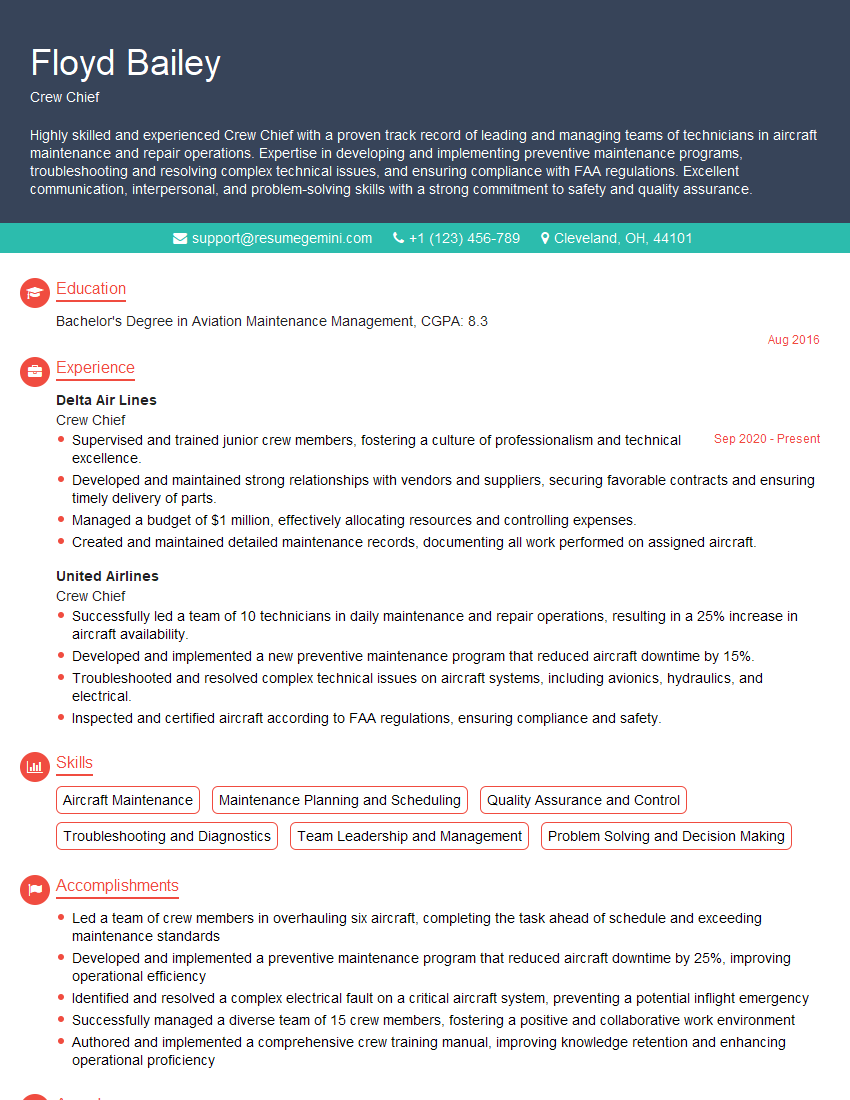
Mastering Pit Crew Coordination opens doors to exciting career opportunities in motorsports and related high-performance industries. It demonstrates valuable skills in teamwork, leadership, and efficient execution under pressure – highly sought-after qualities in many professional settings. To maximize your chances of securing your dream role, creating a strong, ATS-friendly resume is crucial. ResumeGemini is a trusted resource to help you build a professional and impactful resume that highlights your relevant skills and experience. Examples of resumes tailored to Pit Crew Coordination are available to help guide your creation process.
Explore more articles
Users Rating of Our Blogs
Share Your Experience
We value your feedback! Please rate our content and share your thoughts (optional).
What Readers Say About Our Blog
Very informative content, great job.
good