Unlock your full potential by mastering the most common Planned Maintenance System Implementation interview questions. This blog offers a deep dive into the critical topics, ensuring you’re not only prepared to answer but to excel. With these insights, you’ll approach your interview with clarity and confidence.
Questions Asked in Planned Maintenance System Implementation Interview
Q 1. What are the key benefits of implementing a Planned Maintenance System?
Implementing a Planned Maintenance System (PMS) offers numerous benefits, significantly impacting an organization’s efficiency, safety, and profitability. Think of it like scheduling regular check-ups for your car – preventing small issues from becoming major breakdowns.
- Reduced Downtime: PMS proactively addresses potential equipment failures, minimizing unexpected outages and maximizing operational uptime. This translates directly to increased production and revenue.
- Lower Maintenance Costs: By catching problems early, you avoid costly emergency repairs. Addressing minor issues before they escalate is significantly cheaper than dealing with major failures.
- Improved Safety: Regular inspections and maintenance reduce the risk of accidents caused by malfunctioning equipment. This protects employees and minimizes the cost of workplace incidents.
- Extended Equipment Lifespan: Proper maintenance extends the life of your assets, delaying the need for costly replacements. This is akin to properly maintaining your home to avoid costly renovations.
- Better Inventory Management: A PMS allows for better forecasting of spare parts needs, optimizing inventory levels and reducing storage costs.
- Enhanced Compliance: Many industries have regulatory requirements for equipment maintenance. A robust PMS helps ensure compliance with these regulations, avoiding potential penalties.
Q 2. Explain the difference between preventative and predictive maintenance.
Preventative and predictive maintenance are both proactive approaches, but they differ significantly in their methodology. Think of preventative maintenance as scheduled checkups, while predictive maintenance is like using advanced diagnostic tools to anticipate problems.
- Preventative Maintenance (PM): This involves performing maintenance tasks at predetermined intervals or based on operating hours. It’s a scheduled approach, regardless of the actual condition of the equipment. Example: Changing the oil in a car every 3,000 miles, even if it seems fine.
- Predictive Maintenance (PdM): This utilizes data and technology like sensors and vibration analysis to monitor equipment and predict when maintenance is actually needed. It’s a condition-based approach, focusing on the actual health of the asset. Example: Using sensors to detect abnormal vibrations in a motor, indicating a need for maintenance before it fails.
The key difference is that PM is time-based, while PdM is condition-based. A successful PMS often integrates both approaches for optimal results.
Q 3. Describe your experience with CMMS software implementation.
In my previous role, I was instrumental in implementing a CMMS (Computerized Maintenance Management System) for a large manufacturing facility. This involved a multi-phased approach:
- Needs Assessment: We started by thoroughly assessing the current maintenance practices, identifying pain points, and defining the key requirements for the CMMS.
- Software Selection: We evaluated various CMMS solutions based on factors like functionality, scalability, integration capabilities, and cost. We considered both cloud-based and on-premise options.
- Data Migration: This involved carefully migrating existing equipment data, maintenance history, and spare parts information into the new CMMS. Data accuracy was paramount here.
- System Configuration: We customized the CMMS to match the company’s specific workflows, creating customized maintenance plans, work orders, and reporting templates.
- User Training: We provided comprehensive training to all maintenance personnel to ensure proper utilization of the system. This included hands-on workshops and ongoing support.
- Go-Live and Post-Implementation Support: We supported the team through the initial go-live phase and provided ongoing support to address any issues or provide further training.
The successful implementation resulted in a 20% reduction in downtime and a 15% decrease in maintenance costs within the first year.
Q 4. How do you prioritize maintenance tasks within a planned maintenance system?
Prioritizing maintenance tasks is crucial for effective PMS. Several methods can be employed, often in combination:
- Criticality: Prioritize tasks based on the criticality of the equipment and the potential consequences of failure. Essential equipment gets higher priority.
- Urgency: Consider the urgency of the task, with immediate safety concerns or imminent failures taking precedence.
- Cost: Balance the cost of maintenance with the potential cost of failure. Preventative maintenance is generally cheaper than reactive repairs.
- Risk: Assess the risk associated with equipment failure, considering factors like potential downtime, safety hazards, and environmental impacts.
Many CMMS systems offer built-in prioritization tools, often using a scoring system that combines these factors to rank tasks. For example, a simple scoring system might assign points for criticality, urgency, and cost, with a higher total score indicating a higher priority.
Q 5. What are some common challenges in implementing a Planned Maintenance System?
Implementing a PMS presents various challenges, many stemming from resistance to change, data management issues, and technological limitations:
- Resistance to Change: Maintenance teams may be resistant to adopting new systems or processes. Effective change management strategies are vital.
- Data Accuracy and Completeness: Inaccurate or incomplete data can render the system useless. Data quality must be a high priority.
- Integration with Existing Systems: Integrating the PMS with other systems (ERP, inventory management) can be complex and require significant effort.
- Lack of Resources: Implementing and maintaining a PMS requires adequate resources, including budget, personnel, and time.
- Technological Limitations: Choosing the right CMMS and ensuring compatibility with existing infrastructure is crucial.
- User Adoption: Ensuring consistent user adoption and engagement requires effective training and ongoing support.
Q 6. How do you measure the effectiveness of a Planned Maintenance System?
Measuring the effectiveness of a PMS is essential to demonstrate its value and identify areas for improvement. Key metrics include:
- Mean Time Between Failures (MTBF): This measures the average time between equipment failures. An increase in MTBF indicates improved reliability.
- Mean Time To Repair (MTTR): This measures the average time it takes to repair failed equipment. A decrease in MTTR shows improved efficiency.
- Downtime Reduction: Tracking downtime due to equipment failures and comparing it to previous periods demonstrates the impact of the PMS.
- Maintenance Cost Reduction: Comparing maintenance costs before and after PMS implementation shows cost savings.
- Compliance Rate: Measuring adherence to maintenance schedules and regulatory requirements indicates system effectiveness.
- Overall Equipment Effectiveness (OEE): This holistic metric combines availability, performance, and quality to assess equipment efficiency.
Regularly monitoring these metrics allows for adjustments and improvements to the PMS strategy, ensuring it remains effective.
Q 7. What are some key performance indicators (KPIs) used to monitor maintenance performance?
KPIs (Key Performance Indicators) provide quantifiable measures for monitoring maintenance performance. Examples include:
- MTBF (Mean Time Between Failures): The average time between equipment failures.
- MTTR (Mean Time To Repair): The average time to repair a failed piece of equipment.
- Downtime Percentage: The percentage of time equipment is unavailable due to failures.
- Maintenance Cost per Unit of Production: The cost of maintenance relative to output.
- Backlog of Work Orders: The number of outstanding maintenance requests.
- Preventive Maintenance Completion Rate: The percentage of scheduled preventative maintenance tasks completed on time.
- Inventory Turnover Rate for Spare Parts: How quickly spare parts are used and replenished.
- Safety Incidents Related to Equipment Failures: The number of accidents caused by malfunctioning equipment.
Tracking these KPIs provides insights into the effectiveness of maintenance strategies and allows for data-driven decision-making.
Q 8. How do you handle unexpected equipment failures within a planned maintenance program?
Unexpected equipment failures are inevitable, even with a robust planned maintenance program. The key is to minimize their impact and learn from them. My approach involves a multi-pronged strategy:
- Immediate Response: A well-defined emergency response protocol is crucial. This includes a clear escalation path, readily available spare parts, and trained personnel capable of quickly assessing the situation and implementing temporary fixes. For instance, in a manufacturing plant, a sudden power failure might necessitate immediate switching to backup generators, while a broken conveyor belt requires a rapid repair or a temporary workaround to avoid production halt.
- Root Cause Analysis (RCA): Once the immediate issue is addressed, a thorough RCA is conducted to identify the underlying cause. This might involve reviewing maintenance logs, interviewing operators, and analyzing data from sensors. For example, repeated failures of a specific component could point to a flaw in the design or a problem with the procurement process.
- Preventative Measures: Based on the RCA findings, preventative measures are implemented to prevent future occurrences. This could involve adjusting maintenance schedules, improving training, modifying equipment design, or upgrading components. If the RCA reveals operator error, additional training on proper operation might be implemented. If material fatigue is identified, more frequent inspections or replacement schedules can be implemented.
- Documentation and Communication: All findings, actions taken, and lessons learned are meticulously documented and shared across relevant teams. This ensures transparency, facilitates continuous improvement, and prevents similar failures in the future.
Q 9. Describe your experience with developing and implementing maintenance procedures.
I have extensive experience in developing and implementing maintenance procedures, spanning diverse industrial settings. My approach is systematic and focuses on clarity, practicality, and safety. It usually involves these steps:
- Needs Assessment: I begin by meticulously evaluating the equipment, understanding its operational characteristics, criticality, and potential failure modes.
- Procedure Development: This stage involves creating detailed, step-by-step procedures that include safety precautions, necessary tools, required skills, and expected outcomes. I use visual aids like diagrams and checklists whenever possible to enhance understanding and reduce errors. For example, a procedure for changing a pump seal would include images of the seal, diagrams showing the disassembly and reassembly process, and torque specifications for tightening bolts.
- Testing and Refinement: Before implementation, the procedures undergo rigorous testing and refinement to identify any ambiguities, inconsistencies, or inefficiencies. This often involves conducting mock exercises with maintenance personnel.
- Training and Implementation: I provide comprehensive training to the maintenance team on the new procedures, ensuring they understand the rationale behind each step and are comfortable performing the tasks. I often use hands-on training and simulated scenarios for better understanding.
- Continuous Improvement: Post-implementation, I actively monitor the effectiveness of the procedures and make necessary adjustments based on feedback and data. This could include identifying and rectifying bottlenecks or improving the clarity of instructions based on actual maintenance experiences.
Q 10. How do you ensure compliance with safety regulations during maintenance activities?
Ensuring compliance with safety regulations is paramount in any maintenance activity. My approach involves:
- Risk Assessment: A thorough risk assessment is conducted prior to any maintenance task, identifying potential hazards and developing control measures. This might involve using lock-out/tag-out procedures, providing personal protective equipment (PPE), and establishing clear communication protocols.
- Permit-to-Work Systems: I often implement permit-to-work systems to formalize the authorization process for high-risk tasks, ensuring that all necessary safety checks are completed before work commences. This system tracks who, what, where, when and why of each maintenance job from start to finish.
- Training and Competency: Maintenance personnel receive comprehensive training on safety regulations, relevant procedures, and the use of PPE. Regular competency assessments ensure that they maintain the required skills and knowledge.
- Safety Audits and Inspections: Regular safety audits and inspections are conducted to identify any potential hazards and ensure compliance with regulations. This may involve walk-throughs, checklists, and observations of maintenance activities.
- Incident Reporting and Investigation: A robust system for reporting and investigating safety incidents ensures that lessons are learned and preventative measures are implemented to avoid future incidents. Every incident is analyzed to understand the root cause and prevent re-occurrence.
For example, before working on energized electrical equipment, we always implement a lock-out/tag-out procedure to ensure power is safely isolated and prevent accidental energization.
Q 11. What is your experience with root cause analysis in maintenance?
Root cause analysis (RCA) is crucial for preventing recurring equipment failures. My experience encompasses various RCA methodologies, including the ‘5 Whys’, fault tree analysis, and fishbone diagrams. I typically follow these steps:
- Define the Problem: Clearly define the equipment failure and its impact on operations.
- Gather Data: Collect relevant data, such as maintenance logs, operator reports, and sensor data. Conduct interviews with personnel who were involved.
- Analyze the Data: Use the chosen RCA methodology to identify the root cause. For example, using the ‘5 Whys’ method involves repeatedly asking ‘why’ to drill down to the underlying cause.
- Develop Corrective Actions: Based on the root cause, develop effective corrective actions to prevent future failures.
- Implement and Verify: Implement the corrective actions and verify their effectiveness. Monitor the equipment to ensure the problem is resolved.
For example, if a pump repeatedly fails due to overheating, the ‘5 Whys’ might reveal that the problem is insufficient lubrication, which is caused by a malfunctioning lubrication system, which was caused by inadequate maintenance, caused by lack of trained personnel, which is solved by proper training program.
Q 12. How do you manage maintenance budgets and resources?
Managing maintenance budgets and resources effectively is critical for optimizing maintenance performance. My approach combines strategic planning with efficient resource allocation:
- Budgeting: I develop detailed maintenance budgets based on historical data, equipment criticality, and planned maintenance activities. This includes allocating resources for labor, materials, and external services.
- Resource Allocation: I optimize resource allocation by prioritizing tasks based on their impact on operations and equipment criticality. This might involve employing techniques like criticality analysis or prioritizing high-risk equipment.
- Cost Control: I implement cost-control measures by negotiating favorable contracts with suppliers, optimizing inventory levels, and tracking maintenance expenses closely.
- Performance Monitoring: I regularly monitor key performance indicators (KPIs), such as maintenance costs per unit produced, equipment uptime, and mean time between failures (MTBF), to track progress and identify areas for improvement.
- Reporting and Analysis: I provide regular reports on maintenance budget performance and resource utilization to management, allowing for timely corrective actions and strategic decisions.
Q 13. Describe your experience with different types of maintenance strategies (e.g., RCM, TPM).
I have extensive experience with various maintenance strategies, including:
- Reliability-Centered Maintenance (RCM): RCM focuses on analyzing equipment failure modes and identifying the most effective maintenance strategies to minimize their impact. It prioritizes tasks based on their impact on reliability and safety. In a power plant, RCM might be used to determine the optimal maintenance strategy for a critical turbine, balancing the cost of maintenance against the potential consequences of failure.
- Total Productive Maintenance (TPM): TPM is a philosophy that engages all employees in maintaining equipment, aiming to maximize equipment effectiveness and minimize downtime. This involves operator involvement in basic maintenance, preventing small problems before they become big problems.
- Preventive Maintenance (PM): PM involves performing scheduled maintenance tasks at predetermined intervals to prevent equipment failures. This could involve regular lubrication, inspections, and component replacements.
- Predictive Maintenance (PdM): PdM uses condition monitoring techniques, such as vibration analysis and oil analysis, to predict when maintenance is needed, reducing unnecessary maintenance and avoiding unexpected failures.
The choice of maintenance strategy depends on factors such as equipment criticality, cost, and the availability of technology and resources. Often, a combination of these strategies is most effective.
Q 14. How do you integrate a Planned Maintenance System with other business systems?
Integrating a Planned Maintenance System (PMS) with other business systems is crucial for optimizing operations and gaining valuable insights. This integration can be achieved through various methods:
- Enterprise Resource Planning (ERP) Systems: Integrating the PMS with an ERP system allows for seamless data exchange between maintenance and other departments, such as procurement, finance, and production. For instance, the system can automatically generate purchase orders for required spare parts when maintenance is scheduled.
- Computerized Maintenance Management Systems (CMMS): CMMS software provides a centralized platform for managing all maintenance activities, including scheduling, work orders, inventory management, and reporting. Integration with other systems often happens via APIs or data exports/imports.
- Data Analytics Platforms: Integrating the PMS with data analytics platforms enables the analysis of maintenance data to identify trends, predict equipment failures, and optimize maintenance strategies. This might involve using machine learning algorithms to predict equipment failures based on sensor data.
- Manufacturing Execution Systems (MES): Integration with MES allows for real-time monitoring of equipment performance and the immediate scheduling of maintenance tasks when needed. For example, if a sensor detects abnormal vibrations in a machine, the MES could automatically trigger a work order in the PMS.
The specific integration strategy will depend on the existing IT infrastructure and the requirements of the business. It’s often beneficial to work with IT and system integrators for a smooth and efficient integration process.
Q 15. What is your experience with data analysis in maintenance management?
Data analysis is the backbone of any effective Planned Maintenance System (PMS). My experience involves leveraging various data sources, including CMMS (Computerized Maintenance Management System) databases, sensor data from equipment, and historical maintenance records. I’m proficient in using statistical methods to identify trends, predict equipment failures, and optimize maintenance strategies. For example, I once analyzed historical data on a specific pump that kept failing prematurely. By using regression analysis, we identified a correlation between operating pressure and failure rate, leading to adjustments in operating parameters and a significant reduction in failures.
I also utilize data visualization tools to present findings clearly and concisely to stakeholders. Dashboards showing key performance indicators (KPIs) like Mean Time Between Failures (MTBF), Mean Time To Repair (MTTR), and equipment uptime are critical for demonstrating the effectiveness of our PMS and identifying areas for improvement.
Career Expert Tips:
- Ace those interviews! Prepare effectively by reviewing the Top 50 Most Common Interview Questions on ResumeGemini.
- Navigate your job search with confidence! Explore a wide range of Career Tips on ResumeGemini. Learn about common challenges and recommendations to overcome them.
- Craft the perfect resume! Master the Art of Resume Writing with ResumeGemini’s guide. Showcase your unique qualifications and achievements effectively.
- Don’t miss out on holiday savings! Build your dream resume with ResumeGemini’s ATS optimized templates.
Q 16. How do you use data to improve maintenance planning and scheduling?
Data significantly improves maintenance planning and scheduling by moving us from reactive to proactive maintenance. By analyzing historical data on equipment failures, maintenance durations, and spare parts usage, we can predict future needs and optimize maintenance schedules. For instance, if we consistently see a high failure rate for a particular component during a specific season, we can schedule preventative maintenance during the off-season to avoid production downtime. This is often done by creating a risk-based maintenance schedule, which prioritizes components with higher failure risk and potential impact.
Further, data helps optimize resource allocation. Analyzing technician workload and skill sets enables us to assign tasks efficiently, minimizing downtime and maximizing productivity. We might use algorithms to optimize scheduling, ensuring resources are utilized effectively while adhering to planned downtime windows. This minimizes conflicts and keeps maintenance aligned with production goals.
Q 17. How do you train maintenance technicians on new procedures and technologies?
Training maintenance technicians is crucial for the success of any PMS. My approach involves a blended learning strategy, combining hands-on training with online modules and simulations. New procedures are introduced through interactive workshops, focusing on practical application and problem-solving. We use real-world case studies and simulations to allow technicians to practice troubleshooting and repair techniques in a safe environment. For example, when implementing a new diagnostic tool, we’d conduct a training session with step-by-step guided exercises and practical equipment use.
For new technologies, we often partner with vendors to offer specialized training. Regular refresher courses and competency assessments ensure technicians remain up-to-date with the latest procedures and technological advancements. We also encourage technicians to participate in professional development activities to build their skills and knowledge.
Q 18. How do you handle conflicts between planned maintenance and production schedules?
Conflicts between planned maintenance and production schedules are inevitable. Resolving these conflicts requires careful planning and communication. We use a collaborative approach, involving production managers and maintenance supervisors, to create a mutually agreeable schedule. This often involves prioritizing critical maintenance tasks based on their impact on production, utilizing downtime windows effectively and employing techniques such as predictive maintenance to identify optimal maintenance windows.
Sometimes, compromises must be made. We might need to adjust production schedules slightly to accommodate essential maintenance, or we might prioritize certain tasks based on their criticality to the overall production process. The key is proactive communication and transparency to minimize disruption and maintain a balance between maximizing production efficiency and preventing equipment failures.
Q 19. What are your experience with spare parts management within a Planned Maintenance System?
Effective spare parts management is essential for minimizing downtime. My experience includes implementing and managing inventory control systems, using both ABC analysis (categorizing parts by their criticality and consumption) and EOQ (Economic Order Quantity) models to optimize stock levels and minimize storage costs. We use CMMS software to track parts usage, predict demand, and manage reorder points. This ensures we have the necessary parts readily available when needed, while avoiding excessive inventory costs.
Regular inventory audits, along with vendor relationship management, are vital for ensuring the accuracy of our spare parts inventory. This also helps us negotiate favorable pricing and delivery terms. In one instance, we implemented a just-in-time inventory system for frequently used parts, significantly reducing storage costs and improving efficiency.
Q 20. How do you ensure the accuracy and reliability of maintenance data?
Ensuring data accuracy and reliability is paramount for a successful PMS. We implement strict data entry protocols and regularly audit our CMMS data for consistency and accuracy. Data validation rules are implemented within our CMMS system to ensure data integrity. We regularly compare our CMMS data with actual equipment performance and production records to identify discrepancies and errors. For instance, we might compare scheduled maintenance completion times against actual completion times to identify delays or inefficiencies.
Training staff on accurate data entry is crucial. We also utilize automated data capture techniques where possible, such as integrating sensor data directly into the CMMS system. Data backups and disaster recovery plans are essential to ensure business continuity and data protection.
Q 21. Describe your experience with work order management and tracking.
My experience with work order management involves utilizing CMMS software to create, assign, track, and close out work orders. We use a standardized work order format, ensuring all essential information (equipment details, task description, priority, assigned technician, scheduled date and time) is consistently captured. The system facilitates seamless communication and collaboration among technicians, supervisors, and other stakeholders. We use workflow automation features to ensure tasks are completed promptly and efficiently.
Real-time tracking of work orders allows us to monitor progress, identify delays, and allocate resources effectively. The system provides reporting capabilities, enabling analysis of work order completion times, costs, and other KPIs. We can also track key metrics such as MTTR (Mean Time To Repair), which helps us identify areas for improvement in our maintenance processes.
Q 22. How do you evaluate and select CMMS software?
Selecting CMMS software is a crucial step in implementing a successful planned maintenance system. It’s not just about finding software with bells and whistles, but identifying a system that precisely aligns with your organization’s unique needs and workflows. My evaluation process involves a multi-stage approach:
- Needs Assessment: I begin by thoroughly understanding the organization’s maintenance requirements. This includes identifying the types of assets, the complexity of maintenance tasks, the number of users, and the desired reporting capabilities. For instance, a manufacturing plant will have vastly different needs than a small office building.
- Software Feature Evaluation: I then compare various CMMS options based on key features like work order management, inventory tracking, preventive maintenance scheduling, reporting and analytics, and integration with other systems (e.g., ERP). I prioritize features that directly address the needs identified in the assessment. For example, if accurate inventory tracking is critical, I’ll closely examine the software’s inventory management module.
- Vendor Evaluation: The vendor’s reputation, customer support, and implementation services are paramount. I look for vendors with a proven track record, responsive support teams, and a clear implementation plan. References and case studies provide valuable insight into the vendor’s capabilities.
- Trial and Testing: Before making a final decision, I recommend a thorough trial period to test the software’s functionality and user-friendliness. This allows for realistic assessment within the actual work environment and provides opportunities for feedback.
- Cost Analysis: Finally, I evaluate the total cost of ownership, including licensing fees, implementation costs, training, and ongoing support. Cost should always be considered in relation to the value and ROI the system will provide.
This structured approach ensures that the chosen CMMS software optimally supports the organization’s maintenance goals and enhances operational efficiency.
Q 23. What is your experience with developing and managing maintenance plans?
Developing and managing maintenance plans is central to my role. My experience encompasses all aspects of the process, from initial assessment to ongoing optimization. I typically follow these steps:
- Asset Identification and Classification: The first step is to thoroughly document all assets, categorizing them based on criticality, age, and maintenance requirements. This might involve physically inspecting equipment and reviewing existing documentation.
- Preventive Maintenance Task Development: Based on manufacturer recommendations, historical data, and industry best practices, I develop detailed preventive maintenance (PM) tasks for each asset. These tasks specify the frequency, procedures, required parts, and responsible personnel. For example, a PM task for a specific machine might include lubrication, visual inspection, and functional testing.
- Scheduling and Optimization: PM tasks are scheduled using the CMMS system, considering factors such as production schedules, resource availability, and potential downtime to optimize maintenance activities. For example, we might schedule lubrication tasks during a planned production break to minimize disruption.
- Documentation and Training: All PM tasks and procedures are meticulously documented within the CMMS system, providing clear instructions for maintenance personnel. Training programs are implemented to ensure technicians are well-versed in the tasks and safety procedures.
- Performance Monitoring and Adjustment: The effectiveness of the maintenance plans is continuously monitored using key performance indicators (KPIs) like Mean Time Between Failures (MTBF) and Mean Time To Repair (MTTR). Plans are adjusted as needed based on performance data and feedback from the maintenance team.
Through this iterative approach, I ensure that maintenance plans are efficient, effective, and aligned with the organization’s overall objectives.
Q 24. How do you handle maintenance work requests from different departments?
Handling maintenance work requests effectively is crucial for minimizing downtime and ensuring efficient resource allocation. I’ve implemented a structured process to manage requests from different departments:
- Centralized System: All maintenance requests are submitted through a centralized system – often integrated within the CMMS. This ensures transparency and prevents requests from getting lost.
- Prioritization and Triage: Incoming requests are categorized and prioritized based on urgency and impact. Critical requests, such as equipment failures impacting production, receive immediate attention. We utilize a standardized prioritization matrix to ensure consistency.
- Assignment and Tracking: Once prioritized, requests are assigned to appropriate technicians based on their skills and availability. The CMMS tracks the progress of each request, providing real-time visibility into the status of repairs.
- Communication and Feedback: Regular communication with requesting departments is vital. I ensure timely updates are provided on the status of requests, explaining any delays and outlining the next steps. Feedback is actively solicited to improve the process and address concerns.
- Performance Analysis: Regular analysis of work order data provides valuable insights into the types of requests, the frequency of issues, and potential areas for improvement in preventive maintenance or asset management. For example, an unexpectedly high number of requests for a particular equipment type might indicate a need for more frequent preventative maintenance.
This system minimizes confusion, ensures timely responses, and enhances collaboration between maintenance and other departments.
Q 25. Explain your experience with using different maintenance metrics and reporting.
Effective maintenance management relies heavily on data-driven insights. My experience involves utilizing a range of metrics and reporting to monitor performance and identify areas for improvement. Key metrics include:
- Mean Time Between Failures (MTBF): This metric measures the average time between equipment failures. A higher MTBF indicates improved reliability.
- Mean Time To Repair (MTTR): This measures the average time it takes to repair failed equipment. A lower MTTR shows faster response times and reduced downtime.
- Overall Equipment Effectiveness (OEE): OEE combines availability, performance, and quality to provide a comprehensive measure of equipment efficiency.
- Preventive Maintenance Compliance Rate: This metric tracks the percentage of scheduled PM tasks that are completed on time. A high compliance rate indicates effective PM planning and execution.
- Maintenance Costs: Tracking maintenance costs (labor, parts, etc.) allows for cost analysis and identification of opportunities for cost optimization.
These metrics are tracked and reported using the CMMS and other analytical tools. Regular reports are generated to monitor trends, identify potential problems, and track progress toward maintenance goals. Data visualization techniques (charts, graphs) are used to present this information clearly and concisely, enabling informed decision-making.
Q 26. How do you utilize technology to optimize planned maintenance operations?
Technology plays a vital role in optimizing planned maintenance. I’ve leveraged several technologies to enhance efficiency and effectiveness:
- CMMS Software: A robust CMMS is the cornerstone of our technology-driven approach. It centralizes maintenance data, automates tasks, and provides valuable insights through reporting and analytics.
- Mobile Apps: Mobile CMMS apps empower technicians to access work orders, update progress, and submit reports from the field, improving responsiveness and reducing administrative overhead.
- IoT Sensors and Predictive Maintenance: Integrating IoT sensors into equipment allows for real-time monitoring of key parameters (temperature, vibration, pressure). This enables predictive maintenance, where potential failures are identified before they occur, minimizing downtime and optimizing maintenance schedules.
- Data Analytics and Machine Learning: Analyzing historical maintenance data through machine learning algorithms helps identify patterns and predict future maintenance needs with greater accuracy, allowing for proactive interventions.
- Augmented Reality (AR): AR technology can assist technicians during repairs by overlaying digital instructions onto physical equipment, improving efficiency and reducing errors.
By strategically implementing these technologies, we achieve greater accuracy in forecasting maintenance needs, optimize resource allocation, and significantly reduce downtime.
Q 27. Describe your experience with leading and motivating a maintenance team.
Leading and motivating a maintenance team requires a multifaceted approach focused on fostering a collaborative and high-performing environment. My approach emphasizes:
- Clear Communication and Expectations: I maintain open and transparent communication, ensuring team members understand their roles, responsibilities, and performance expectations. Regular team meetings and one-on-one check-ins provide opportunities for feedback and problem-solving.
- Empowerment and Development: I empower team members by providing them with autonomy in their work, encouraging initiative, and fostering a culture of continuous learning. I actively support professional development through training programs and mentorship opportunities. For example, I might sponsor a team member attending a specialized training course relevant to their skillset.
- Recognition and Appreciation: I actively acknowledge and appreciate individual and team accomplishments, recognizing their hard work and contributions. This fosters a positive work environment and strengthens morale.
- Performance Management: A structured performance management system is essential. This involves setting clear goals, providing regular feedback, and conducting performance reviews to ensure individual and team performance align with organizational objectives.
- Conflict Resolution: I actively address and resolve conflicts within the team in a fair and timely manner, ensuring a positive and productive work environment. This involves creating a safe space for open dialogue and working collaboratively to find solutions.
Through a combination of effective communication, mentorship, and recognition, I aim to create a highly motivated and effective maintenance team.
Q 28. How do you stay current with the latest trends and best practices in maintenance management?
Staying current with the latest trends and best practices in maintenance management is crucial for optimizing performance and leveraging the latest technologies. I employ several strategies:
- Professional Organizations: Active membership in professional organizations like the Society for Maintenance & Reliability Professionals (SMRP) provides access to industry publications, conferences, and networking opportunities.
- Industry Publications and Journals: Regularly reading industry publications and journals keeps me abreast of the latest advancements in maintenance management techniques and technologies. This includes both print and online resources.
- Conferences and Workshops: Attending industry conferences and workshops provides opportunities to learn from experts, network with peers, and gain hands-on experience with new technologies.
- Online Courses and Webinars: Online learning platforms offer a wealth of courses and webinars covering various aspects of maintenance management, enabling continuous learning and skill enhancement.
- Networking with Peers: Engaging with colleagues and other maintenance professionals through online forums and networking events facilitates the exchange of best practices and insights.
This ongoing professional development ensures my skills and knowledge remain current, enabling me to implement the most effective strategies and technologies to optimize maintenance operations.
Key Topics to Learn for Planned Maintenance System Implementation Interview
- System Selection & Requirements Gathering: Understanding the process of choosing the right PM system based on organizational needs, and defining clear requirements for successful implementation.
- Data Migration & Integration: Practical application of migrating existing maintenance data into the new system, ensuring data accuracy and integrity, and integrating with other enterprise systems (ERP, CMMS).
- Configuration & Customization: Understanding the system’s configuration options, customizing workflows and reporting to match specific business needs, and the importance of user acceptance testing (UAT).
- Workflow Design & Optimization: Designing efficient maintenance workflows within the system, minimizing downtime and maximizing resource utilization. Consider aspects like work order management, scheduling, and preventative maintenance routines.
- Training & Change Management: Developing and implementing effective training programs for end-users, managing the change process, and addressing resistance to adopting new technologies. Understanding change management methodologies is key.
- Implementation Methodologies (Agile, Waterfall): Understanding the advantages and disadvantages of different project management approaches and their applicability to PM system implementations.
- Reporting & Analytics: Leveraging the system’s reporting capabilities to track key performance indicators (KPIs), identify areas for improvement, and demonstrate the ROI of the implemented system.
- Troubleshooting & Problem Solving: Demonstrating the ability to identify and resolve technical issues, manage unexpected problems during implementation, and proactively anticipate potential challenges.
- Maintenance Strategies (Preventive, Predictive, Corrective): Understanding the various maintenance strategies and how a PM system supports and optimizes each.
- Security & Compliance: Ensuring data security and compliance with relevant industry regulations and standards throughout the implementation process.
Next Steps
Mastering Planned Maintenance System Implementation significantly enhances your career prospects in operations, maintenance, and IT. It demonstrates valuable skills in project management, technical expertise, and problem-solving. To maximize your job search success, focus on building an ATS-friendly resume that highlights your relevant experience and skills. ResumeGemini is a trusted resource to help you create a professional and impactful resume. Examples of resumes tailored to Planned Maintenance System Implementation are available to guide you through the process.
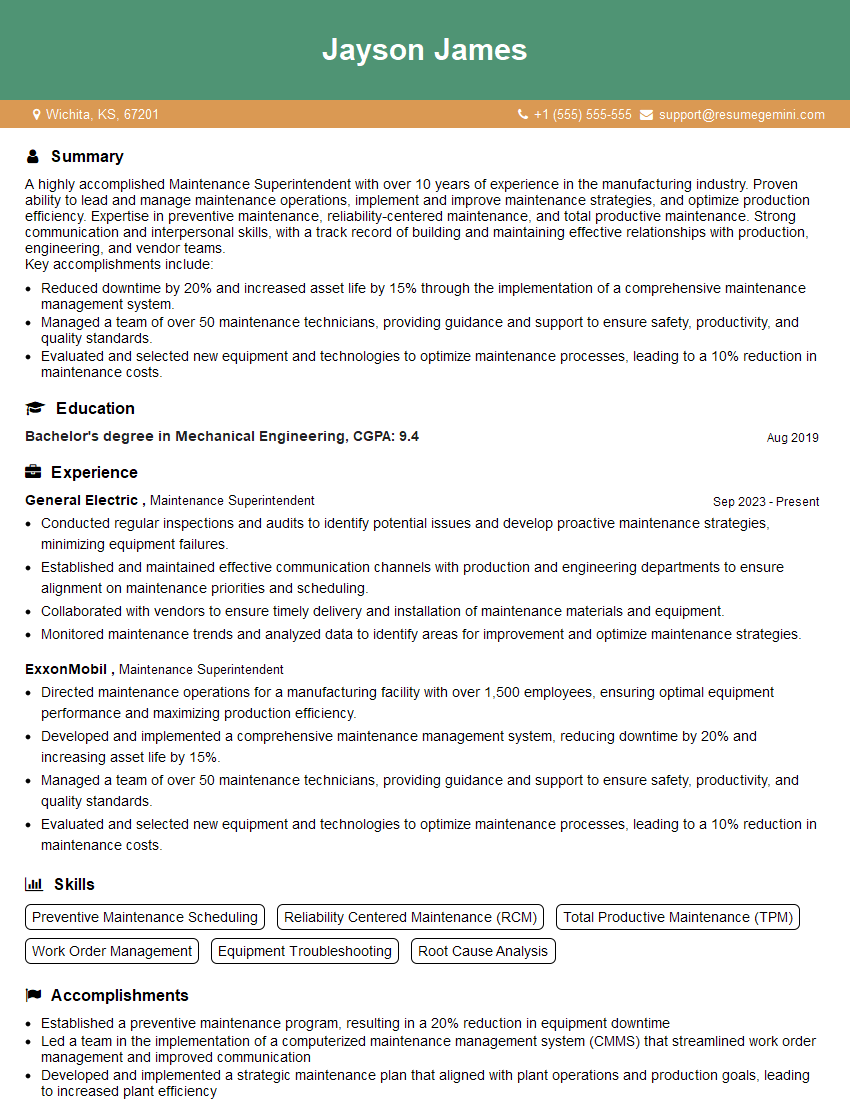
Maintenance Superintendent Resume Sample
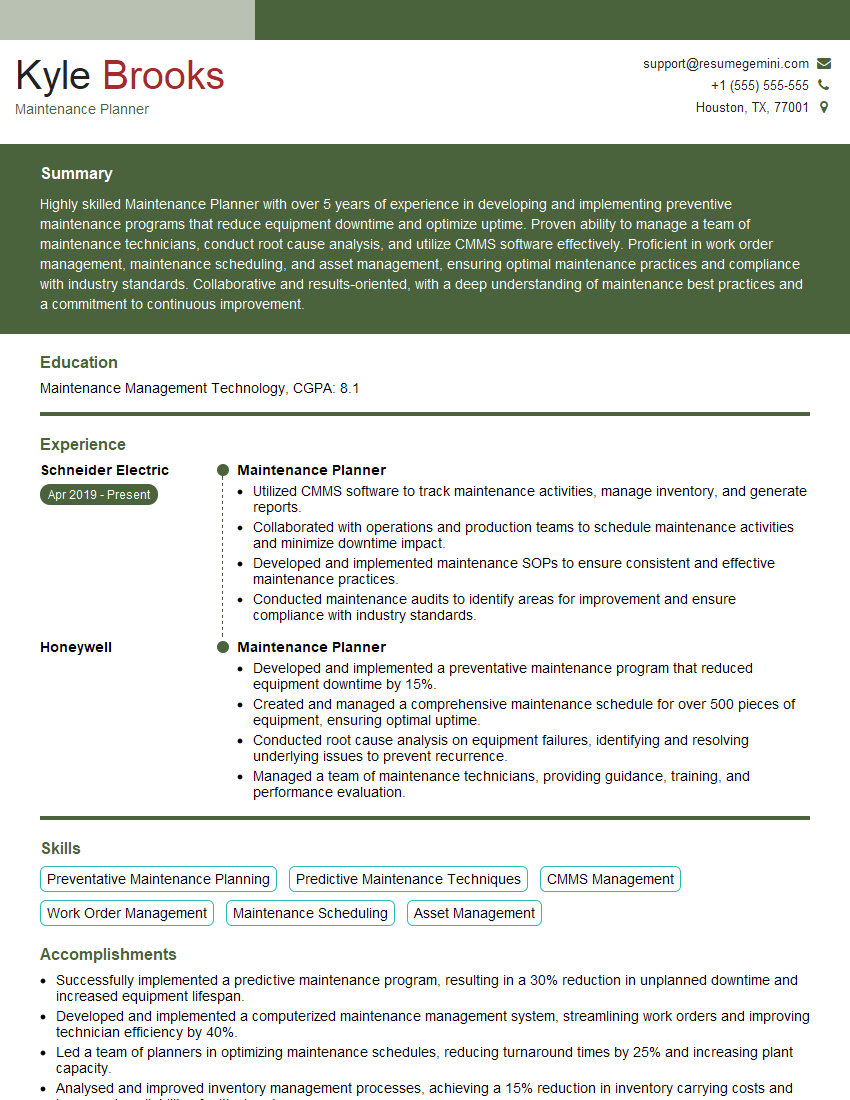
Maintenance Planner Resume Sample
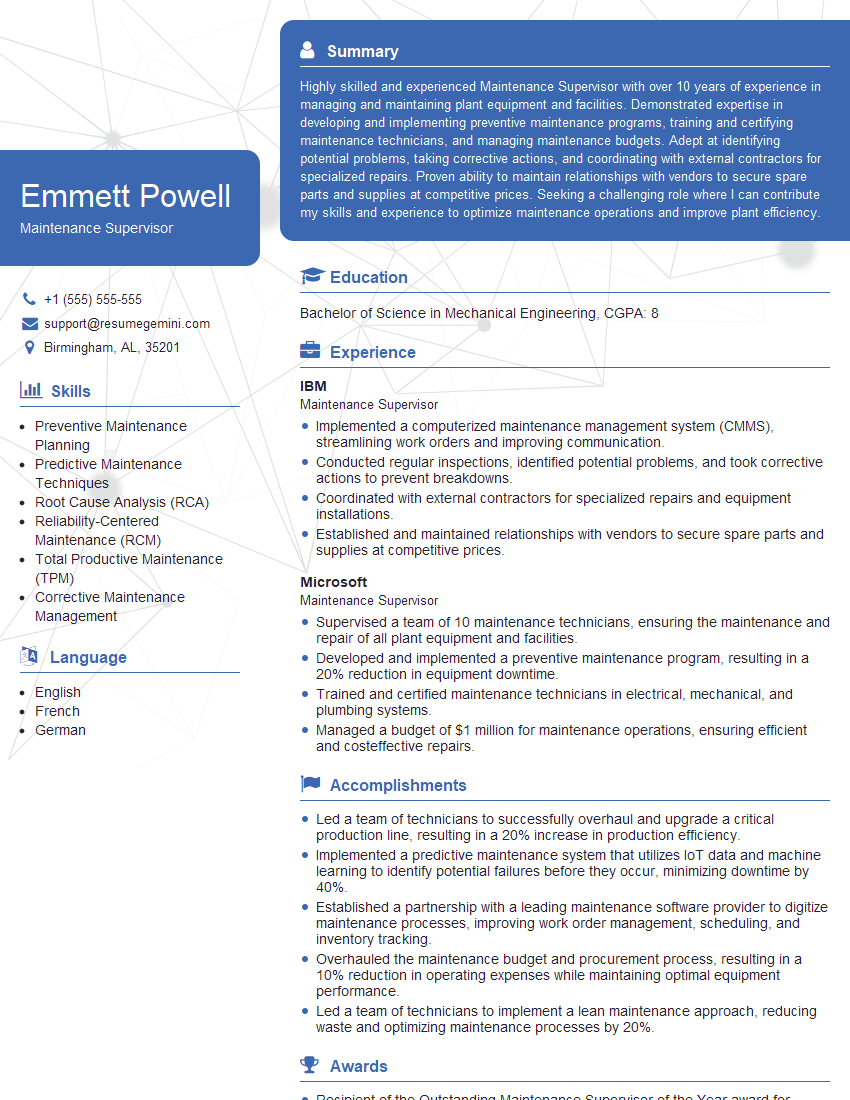
Maintenance Supervisor Resume Sample
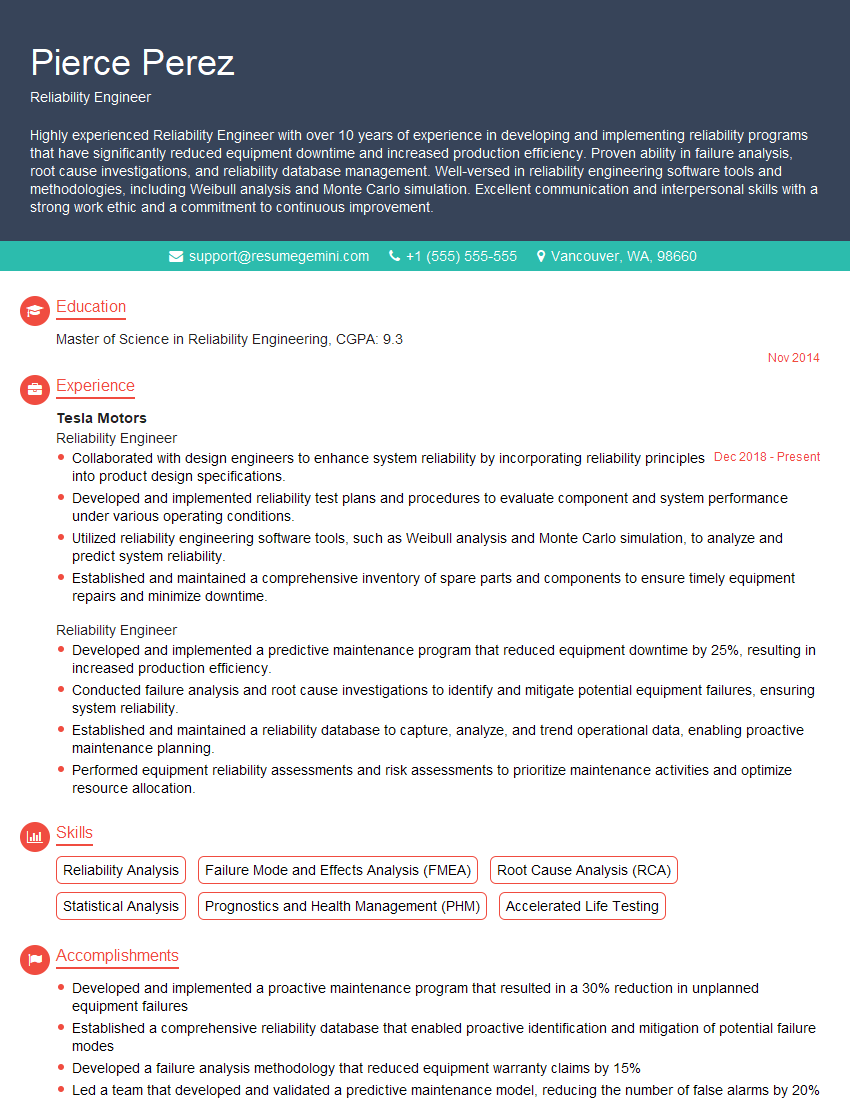
Reliability Engineer Resume Sample
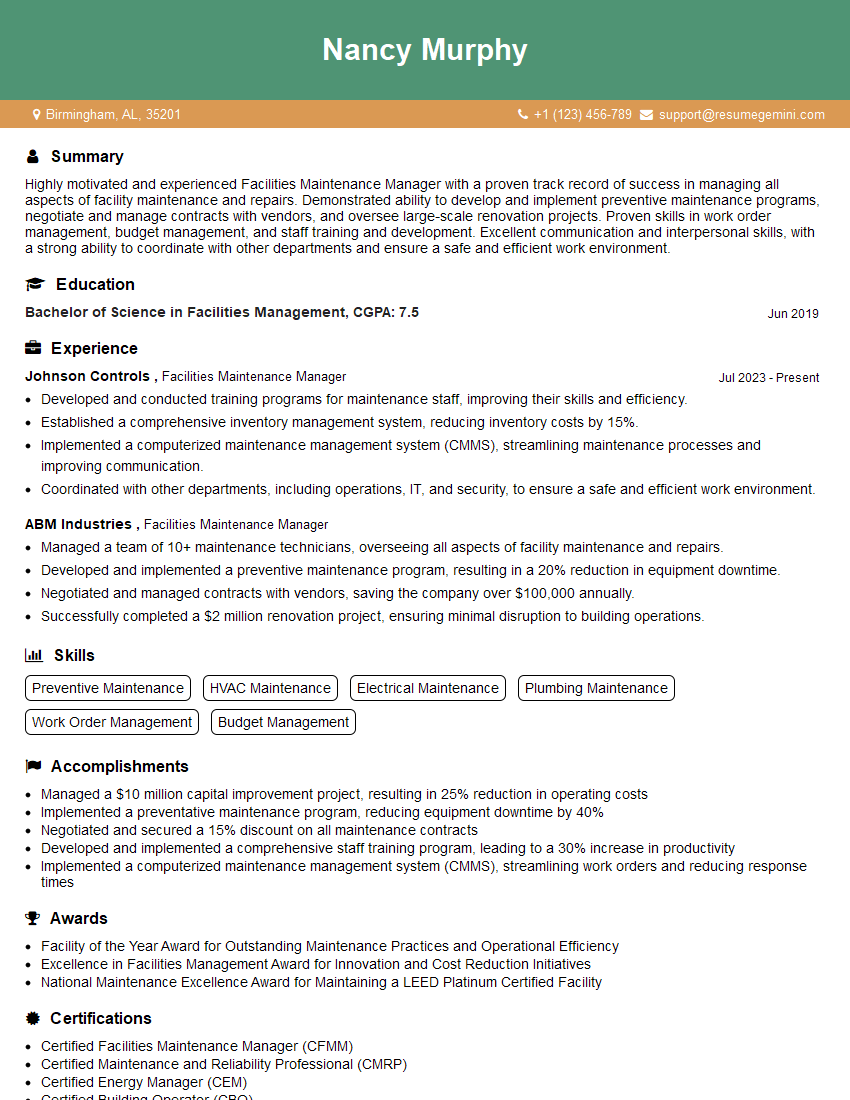
Facilities Maintenance Manager Resume Sample
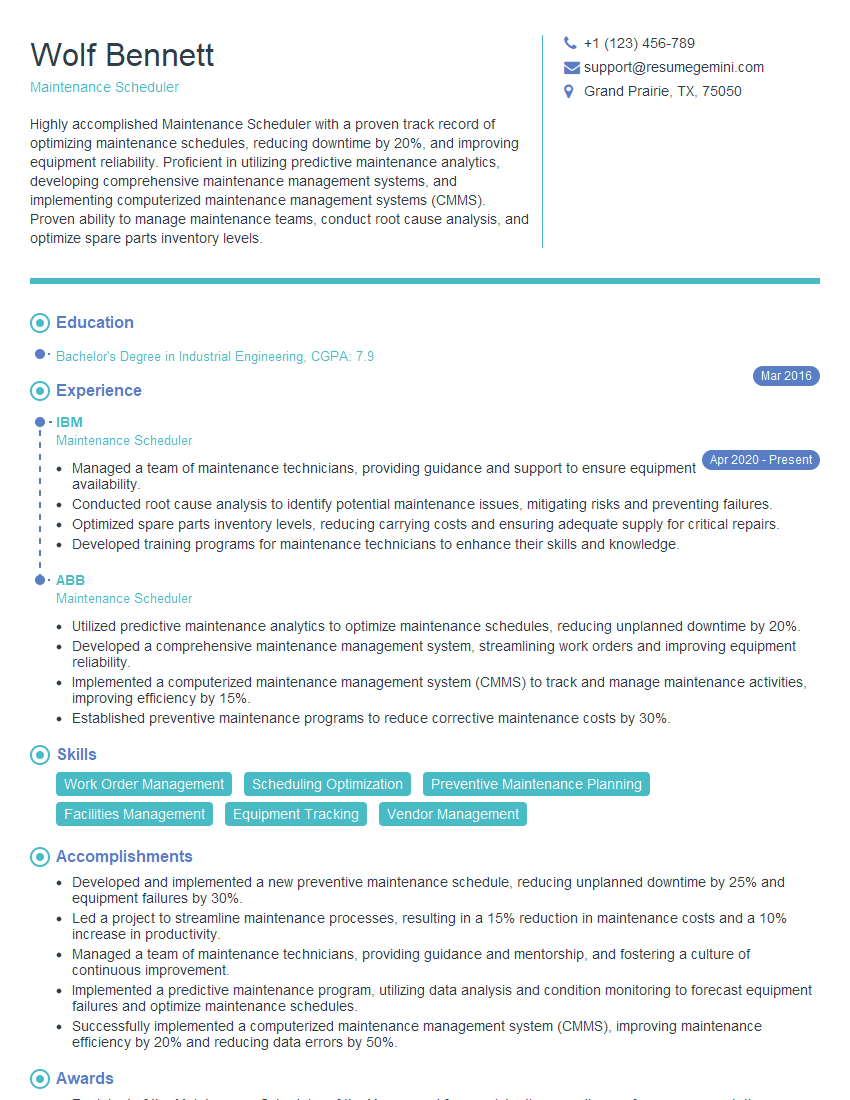
Maintenance Scheduler Resume Sample
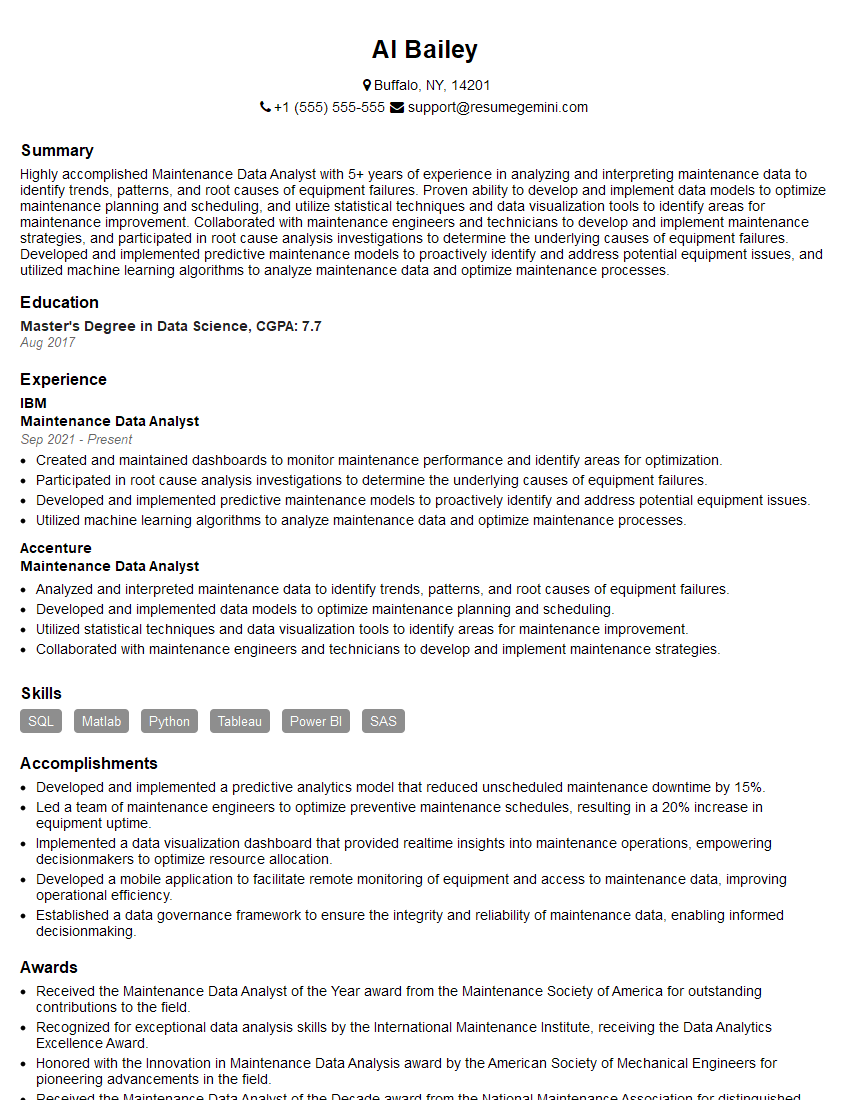
Maintenance Data Analyst Resume Sample
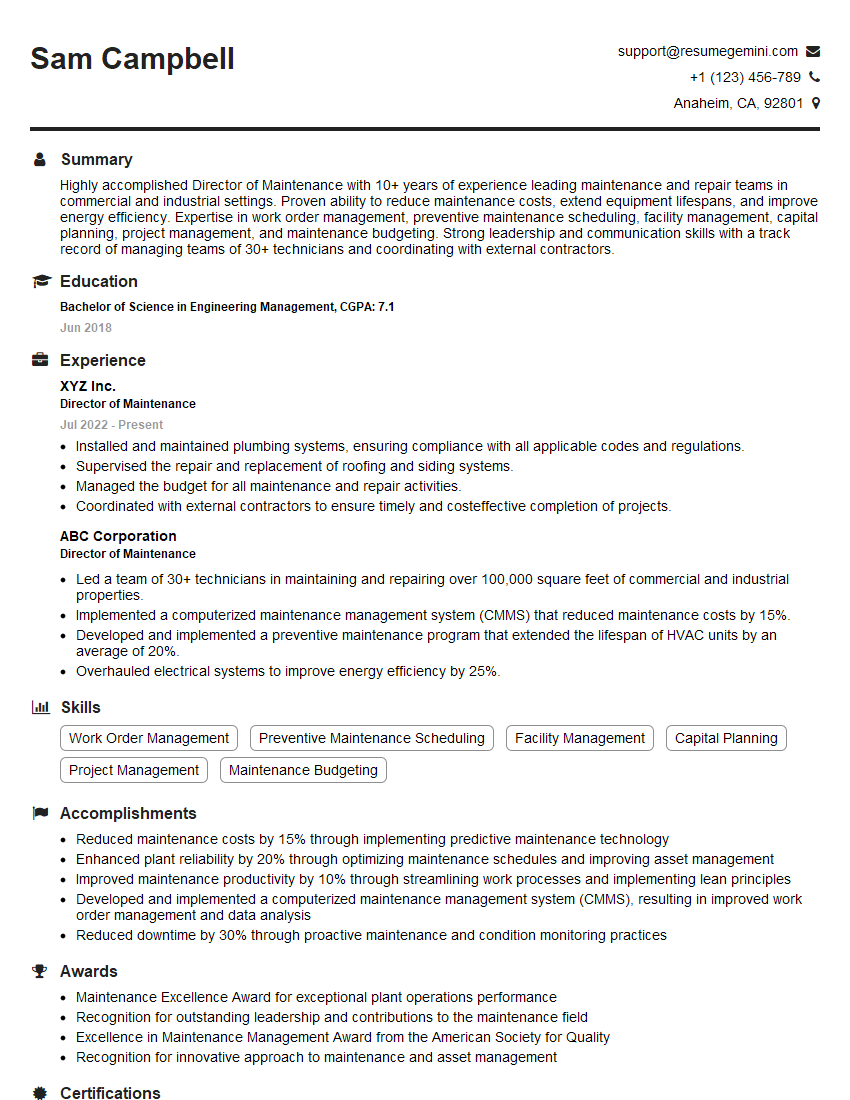
Director of Maintenance Resume Sample
Explore more articles
Users Rating of Our Blogs
Share Your Experience
We value your feedback! Please rate our content and share your thoughts (optional).
What Readers Say About Our Blog
Very informative content, great job.
good