Interviews are more than just a Q&A session—they’re a chance to prove your worth. This blog dives into essential Power System Repair interview questions and expert tips to help you align your answers with what hiring managers are looking for. Start preparing to shine!
Questions Asked in Power System Repair Interview
Q 1. Describe your experience with troubleshooting power system faults.
Troubleshooting power system faults is a systematic process requiring a blend of theoretical knowledge and practical experience. My approach involves a multi-step process: Firstly, I gather information; this includes reviewing system logs, alarms, and any available historical data to identify the affected area and potential causes. Secondly, I conduct visual inspections, carefully checking for any visible damage to equipment such as insulators, conductors, or transformers. Thirdly, I utilize specialized testing equipment like multimeters, oscilloscopes, and insulation testers to pinpoint the fault location and its nature. For example, I once investigated a plant-wide power outage. Through analysis of the system logs, I traced the fault to a tripped circuit breaker, but further investigation using a thermal imager revealed a significantly overloaded transformer, which was the root cause of the issue. Finally, I carefully document all findings, implementing a solution while ensuring safety procedures are followed. The most crucial aspect is the ability to quickly and effectively isolate the fault to prevent escalation and minimize downtime.
Q 2. Explain the process of diagnosing and repairing a faulty circuit breaker.
Diagnosing and repairing a faulty circuit breaker begins with safety. First, I ensure the breaker is completely de-energized and locked out, following strict lockout/tagout procedures. Then, I visually inspect the breaker for obvious signs of damage, such as arc burns, loose connections, or mechanical damage. Next, I use a multimeter to check the continuity of the internal contacts and coils, verifying they’re functioning correctly. If the problem is mechanical, like a faulty mechanism, I’d repair or replace the component as necessary. If the issue is electrical, it could involve replacing faulty coils or contacts. For example, a recent case involved a circuit breaker failing to trip during an overcurrent event. My investigation showed that the tripping mechanism was seized due to years of neglect and poor maintenance. After carefully cleaning and lubricating the mechanism, the breaker functioned correctly.
Q 3. What are the common causes of power outages and how would you approach resolving them?
Power outages have diverse causes, broadly categorized as equipment failures, weather events, and human error. Equipment failures include transformer faults, damaged conductors, or failing circuit breakers. Weather events like storms and lightning strikes can cause widespread damage. Human error encompasses accidental damage during maintenance or construction. Resolving outages involves a prioritized, systematic approach. We start by confirming the outage scope and its impact. The next step involves isolating the faulted section using protective relays and circuit breakers to minimize the impact on the rest of the system. Then we employ diagnostic techniques to identify the root cause, repairing or replacing the faulty equipment. For example, during a severe storm, multiple transmission lines went down. Using the SCADA system, we rapidly identified the affected areas, dispatched crews to the most critical locations, and restored power in stages, prioritizing essential services.
Q 4. How do you ensure safety while working on high-voltage power systems?
Safety is paramount when working on high-voltage power systems. We adhere strictly to safety protocols and regulations like OSHA and NFPA 70E. Before any work commences, the system is de-energized and locked out, following a strict lockout/tagout procedure. This is verified by multiple team members. Personal Protective Equipment (PPE) is mandatory, including insulated gloves, safety glasses, arc-flash suits, and appropriate footwear. We use insulated tools and equipment designed for high-voltage work. We also utilize ground mats and grounding rods to eliminate the risk of stray voltages. Additionally, all personnel are trained in CPR and first aid and are constantly aware of their surroundings. For example, before working on a high-voltage substation, our crew goes through a detailed safety briefing and a thorough lockout/tagout procedure, ensuring every member is aware of potential risks and mitigation strategies. Regular safety audits and refresher training courses also reinforce these practices.
Q 5. What are the different types of protective relays and their functions?
Protective relays are vital for safeguarding power systems. Several types exist, each with specific functions:
- Overcurrent Relays: These detect excessive current flow, tripping circuit breakers to prevent damage from short circuits or overloads.
- Differential Relays: These compare current entering and leaving a protected zone (like a transformer). Any significant difference indicates an internal fault, triggering a trip.
- Distance Relays: These measure the impedance to a fault, tripping the breaker when a fault occurs within a specific distance of the relay.
- Ground Fault Relays: These detect ground faults, protecting personnel and equipment. They are crucial for safety.
Q 6. Describe your experience with SCADA systems in power system operations.
My experience with SCADA (Supervisory Control and Data Acquisition) systems in power system operations is extensive. SCADA provides real-time monitoring and control of power systems, enhancing situational awareness. I’ve used SCADA systems to monitor voltage levels, current flows, and equipment status across large distribution networks. SCADA enables early detection of abnormal conditions, facilitating prompt corrective action. It significantly speeds up fault localization and restoration efforts, minimizing downtime. For example, a recent issue involving a gradual voltage drop in a specific feeder was detected immediately through SCADA. This allowed us to proactively investigate, identify a faulty capacitor bank, and schedule its replacement before it resulted in a major outage.
Q 7. Explain the principles of power system grounding and its importance.
Power system grounding is crucial for safety and system stability. Its principles involve establishing a low-impedance path to earth for fault currents. This minimizes voltage surges, protects personnel from electric shock, and helps prevent equipment damage. Grounding achieves this through grounding grids, grounding conductors, and grounding electrodes. The importance stems from its role in safety, preventing equipment damage during faults, and improving system stability. For example, a proper grounding system ensures that in the event of a lightning strike or a fault, the fault current is diverted safely to the earth, preventing dangerous voltage buildup and preventing damage to expensive equipment. A poorly designed or maintained grounding system can lead to serious safety hazards and equipment failures.
Q 8. How do you perform testing and maintenance on transformers?
Transformer testing and maintenance are crucial for ensuring reliable power delivery. It involves a multi-step process encompassing both preventative and corrective measures. Preventative maintenance focuses on regular inspections and testing to identify potential problems before they cause outages. Corrective maintenance addresses issues discovered during testing or after a failure.
Visual Inspection: This is the first step, checking for physical damage, loose connections, oil leaks, and signs of overheating. I always look for things like corrosion, loose bolts, or any signs of arcing.
Insulation Resistance Test (IR Test): This measures the insulation resistance between windings and ground, indicating the health of the insulation system. Low resistance indicates potential insulation breakdown and may require further investigation or even winding replacement. For instance, a reading significantly below the manufacturer’s specifications would trigger a deeper analysis.
Dissolved Gas Analysis (DGA): Oil samples are analyzed for dissolved gases, such as methane, ethane, and acetylene, which indicate potential faults like overheating, partial discharges, or arcing within the transformer. Different gas ratios point to specific problems allowing for targeted maintenance actions.
Turns Ratio Test: This verifies the correct winding ratio, ensuring the transformer operates at its designed voltage levels. Incompatibility here can result in serious issues.
Short-Circuit Test: This measures impedance and losses, providing data critical for assessing the transformer’s operational efficiency.
Oil Testing: Beyond DGA, the oil’s dielectric strength, moisture content, and viscosity are checked. These tests provide a comprehensive assessment of its insulating properties.
Maintenance Activities: Based on the test results, actions might include cleaning, tightening connections, replacing bushings, or even a complete oil change or winding repair. The frequency of these maintenance activities depends on factors like the transformer’s age, load profile, and environmental conditions.
Q 9. What are the common types of insulators used in power transmission lines?
Power transmission lines employ various insulators to prevent current leakage to the ground. The choice depends on voltage levels, environmental conditions, and cost considerations. Common types include:
Pin-type insulators: These are relatively simple, inexpensive insulators used for lower voltage lines. They consist of a series of porcelain or glass discs strung on a metal pin.
Suspension insulators: Used for high-voltage lines, these consist of a string of individual porcelain or composite discs, allowing for greater flexibility and easier maintenance. The string configuration enables the handling of higher voltages by distributing the voltage across multiple discs.
Strain insulators: These are used at points of high mechanical stress, such as line angles or dead-ends. They are designed to withstand high tensile loads. They typically have stronger and more robust construction.
Post insulators: These are used in substations or for higher-voltage applications. They are typically made of porcelain or composite materials and are designed to support significant weight and voltage.
Polymer insulators: Increasingly popular, these are made of composite materials that offer advantages like high strength-to-weight ratio, hydrophobicity (water-repellent properties), and resistance to pollution. They offer advantages in harsh environments and are often lighter than their porcelain counterparts.
Q 10. Explain the difference between AC and DC power systems.
The fundamental difference between AC and DC power systems lies in the direction of current flow. AC (Alternating Current) changes its direction periodically, while DC (Direct Current) flows in one direction only.
AC Systems: AC power is easier to generate, transform (using transformers to change voltage levels), and transmit over long distances with lower losses compared to DC. The voltage can be easily stepped up for transmission and stepped down for distribution. This is why the vast majority of power grids are AC-based.
DC Systems: DC power is increasingly important for applications like renewable energy integration (solar and wind power), high-voltage direct current (HVDC) transmission for long distances, and powering sensitive electronic equipment. DC systems have lower transmission losses over extremely long distances.
Key Differences summarized:
- Current Flow: AC alternates, DC is unidirectional.
- Transmission: AC is generally more efficient for shorter to medium distances. DC offers advantages over extremely long distances.
- Generation: Both AC and DC generation are possible but AC is predominant in the power grid.
- Applications: AC dominates power grids. DC finds applications in specialized areas like HVDC transmission, renewable energy systems, and electronic devices.
Q 11. Describe your experience working with power system automation systems.
I have extensive experience with power system automation systems, including supervisory control and data acquisition (SCADA) systems and energy management systems (EMS). I’ve worked on projects involving the design, implementation, and maintenance of these systems for both transmission and distribution networks.
My responsibilities included configuring SCADA systems to monitor real-time data from substations and power plants, integrating renewable energy sources, developing and implementing control strategies for automated load shedding, and troubleshooting and resolving system faults. For example, I was instrumental in implementing a new SCADA system for a large utility company, reducing their response time to power outages by 30%. This involved coordinating with various teams, from engineers to field technicians, ensuring seamless integration and training. Another project focused on optimizing energy management through predictive analytics, leading to significant cost savings.
Q 12. How familiar are you with power system modeling and simulation software?
I’m very familiar with several power system modeling and simulation software packages, including ETAP, PSS/E, and PowerWorld Simulator. I have used these tools extensively for various applications, such as short-circuit analysis, load flow studies, transient stability analysis, and harmonic analysis. This expertise allows me to predict system behavior under different operating conditions and identify potential weaknesses, making it easier to prevent issues before they escalate.
For instance, in one project we used PSS/E to model a proposed transmission line upgrade. The simulation helped us evaluate the impact of the upgrade on the system’s stability and ensure a smooth integration of the new line without compromising reliability. In another project, ETAP was used for detailed short-circuit analysis of a substation to ensure adequate protection system design.
Q 13. Explain the importance of power system stability and control.
Power system stability and control are paramount for reliable and efficient power delivery. Stability refers to the system’s ability to maintain synchronism and voltage regulation following disturbances such as faults or load changes. Control systems are crucial for maintaining stability and ensuring the safe and reliable operation of the power grid.
Importance of Stability: Loss of stability can lead to cascading outages, widespread blackouts, and significant economic losses. Maintaining stability is crucial for continuous power supply to consumers and industries.
Control Systems: These systems use various devices and strategies, such as automatic generation control (AGC), voltage regulators, and protection relays, to maintain the frequency, voltage, and power flow within acceptable limits. For example, AGC ensures that generation matches the system load demand, maintaining a constant frequency.
Impact of Instability: Instability can manifest in various forms, including voltage collapse, frequency instability, and loss of synchronism, all of which can have serious consequences, particularly during peak demand.
Q 14. How would you address a situation where a critical component fails during peak demand?
Addressing a critical component failure during peak demand requires immediate and decisive action. My approach would involve the following steps:
Immediate Assessment: First, quickly identify the failed component and its impact on the system. This involves reviewing SCADA data and relay reports to determine the extent of the disruption.
Emergency Response: Initiate the emergency response plan, which would involve isolating the faulty component to prevent further damage and protect other equipment. This may involve activating backup systems or initiating load shedding.
Load Management: Implement load shedding strategies to reduce the demand on the remaining parts of the system to avoid further instability or collapse. This is done strategically to minimize the impact on critical consumers.
Repair and Restoration: Prioritize the repair or replacement of the failed component. This may involve mobilizing repair crews, coordinating with suppliers for replacement parts, and implementing a phased restoration plan.
Post-Incident Analysis: After restoration, conduct a thorough root cause analysis to determine the reasons for the failure and implement corrective actions to prevent recurrence. This would involve reviewing operational logs, maintenance records and investigating the failed equipment to identify potential improvements to prevent future incidents.
For instance, in one case, a large transformer failure during peak demand required immediate load shedding in specific areas. We used our emergency response plan to isolate the affected section and prioritize the restoration of critical services, while simultaneously working to repair the transformer and restore full service to the affected customers. Our post-incident analysis highlighted the need for upgraded protection schemes which prevented a repeat incident.
Q 15. What are your experience with different types of power system protection schemes?
My experience encompasses a wide range of power system protection schemes, from the foundational overcurrent relays to more sophisticated schemes like differential protection, distance protection, and busbar protection. I’ve worked extensively with numerical relays, which offer advanced features like adaptive protection and communication capabilities. For instance, I was involved in a project upgrading an aging substation’s protection system. We replaced electromechanical relays with modern numerical relays, significantly improving the system’s speed and accuracy in identifying and isolating faults. This involved detailed analysis of the existing system, selecting appropriate relay settings based on fault current calculations and system impedance, and rigorous testing to ensure seamless integration. I’m also familiar with various communication protocols used in protection systems, such as IEC 61850, which allows for enhanced interoperability and data exchange.
Another project involved implementing a pilot protection scheme for a long transmission line. This required a deep understanding of distance relay principles, including the effects of line compensation and transient phenomena. The successful implementation ensured quick fault clearance and minimized the impact of disturbances on the power system.
- Overcurrent Protection: Basic but crucial, protecting lines and equipment from excessive current.
- Differential Protection: Compares currents entering and leaving a protected zone; highly sensitive to internal faults.
- Distance Protection: Measures impedance to locate faults along a transmission line.
- Busbar Protection: Protects the busbar itself from faults.
Career Expert Tips:
- Ace those interviews! Prepare effectively by reviewing the Top 50 Most Common Interview Questions on ResumeGemini.
- Navigate your job search with confidence! Explore a wide range of Career Tips on ResumeGemini. Learn about common challenges and recommendations to overcome them.
- Craft the perfect resume! Master the Art of Resume Writing with ResumeGemini’s guide. Showcase your unique qualifications and achievements effectively.
- Don’t miss out on holiday savings! Build your dream resume with ResumeGemini’s ATS optimized templates.
Q 16. How do you interpret power system diagrams and schematics?
Interpreting power system diagrams and schematics is fundamental to my work. I’m proficient in reading single-line diagrams, which show the main components and connections of a power system, and three-line diagrams, offering a more detailed view of the system. I can easily identify transformers, generators, circuit breakers, buses, transmission lines and other critical equipment. I understand the importance of understanding the different symbols and notations used in these diagrams. For example, a circle represents a transformer, a double line indicates a high-voltage line and a breaker is represented by a switch symbol. Understanding the labeling convention, which may include impedance values, voltage ratings, and equipment identification numbers is crucial for accurately diagnosing problems and planning repairs.
Beyond static diagrams, I’m skilled in interpreting dynamic simulations. These simulations, often produced using software like PSS/E or PowerWorld Simulator, help predict system behavior under various operating conditions and fault scenarios. This ability is crucial for identifying vulnerabilities and planning preventative maintenance.
Think of a power system schematic like a map – you need to understand the symbols (roads, buildings, etc.) and their connections to navigate efficiently. Similarly, understanding the symbols and connections in a power system diagram is key to understanding the system’s operation and troubleshooting problems.
Q 17. Explain your understanding of power factor correction.
Power factor correction involves improving the power factor of an electrical system. The power factor is the ratio of real power (kW) to apparent power (kVA). A low power factor indicates that a significant portion of the apparent power is reactive power, which doesn’t perform useful work but still stresses the system. This can lead to increased energy costs and reduced efficiency.
We improve the power factor by adding power factor correction capacitors to the system. These capacitors supply the reactive power needed by inductive loads, such as motors, reducing the overall reactive power demand and bringing the power factor closer to unity (1.0). The size of the capacitors is calculated based on the load’s power factor and reactive power demand.
For example, a factory with many induction motors might have a low power factor. By installing power factor correction capacitors, we reduce the reactive power drawn from the grid, decreasing energy bills and improving the efficiency of the system. The improvement isn’t just financial – it also reduces strain on the power system’s infrastructure, including transformers and lines.
Q 18. Describe your experience with fault current calculations.
Fault current calculations are essential for selecting appropriate protective devices and ensuring the safety and reliability of a power system. I have extensive experience using both manual calculation methods and specialized software packages such as ETAP or SKM PowerTools. My experience spans various fault types, including three-phase faults, single-line-to-ground faults, and line-to-line faults.
The calculations involve applying principles of circuit analysis, including Ohm’s law and Kirchhoff’s laws, to determine the magnitude and direction of fault currents under different fault conditions. The calculations consider impedance of system components, including transformers, generators, lines and loads. Accurate fault current calculations are critical for the proper setting of protective relays to ensure reliable and selective fault clearing.
For example, in designing a new substation, I’d use fault current calculations to determine the interrupting capacity required for circuit breakers. An inaccurate calculation could lead to a breaker failing to clear a fault, causing damage and potential hazards.
Q 19. How do you ensure compliance with safety regulations while working on power systems?
Safety is paramount in power system repair. I strictly adhere to all relevant safety regulations, including OSHA standards and industry best practices. Before commencing any work, I perform a thorough risk assessment, identifying potential hazards such as energized equipment, arc flash, and working at heights. This assessment guides the implementation of appropriate safety measures.
My safety practices include the use of appropriate personal protective equipment (PPE), such as insulated gloves, safety glasses, arc flash suits, and safety footwear. I always employ lockout/tagout procedures to de-energize equipment before performing any maintenance or repair work. I regularly attend safety training courses to stay up-to-date on best practices and regulations, and I consistently emphasize safety with my team.
In my experience, a proactive approach to safety, which includes regular inspections, thorough documentation and a strong safety culture, has prevented numerous incidents.
Q 20. What are the common causes of transformer failures?
Transformer failures can stem from various causes, broadly categorized into electrical and mechanical issues. Electrical failures often originate from overheating due to overloading, short circuits, or insulation breakdown. Overloading occurs when the transformer is subjected to currents exceeding its rated capacity. Short circuits, often caused by insulation failure, can generate excessive heat and damage windings. Insulation breakdown can be accelerated by aging, moisture ingress, or excessive voltage surges.
Mechanical issues include winding damage resulting from transportation or installation, core damage due to vibrations or manufacturing defects, and tank leakage caused by corrosion or damage. External factors, such as lightning strikes or environmental conditions, can also contribute to failures. Regular maintenance, including oil testing and inspection of the windings and core, is crucial to mitigate these risks.
For example, a transformer operating at high ambient temperature could experience accelerated insulation aging, increasing the risk of failure. Similarly, a lightning strike could induce a voltage surge leading to insulation breakdown.
Q 21. How do you troubleshoot problems with power system communication networks?
Troubleshooting problems in power system communication networks requires a systematic approach. I start by identifying the symptoms of the problem – is it a complete communication failure, intermittent connectivity, or data corruption? Once the symptoms are understood, I move to investigate the different layers of the communication network. This might involve checking physical connections, testing network devices like routers and switches, and verifying communication protocols.
I’m proficient in using network diagnostic tools such as protocol analyzers and network management systems (NMS) to pinpoint the location and cause of the problem. I’m familiar with various communication protocols used in power systems, including IEC 61850, DNP3, and Modbus. Understanding these protocols allows for effective troubleshooting by isolating whether the issue is with the physical layer, data link layer, or network layer. For instance, a physical cable fault would manifest differently than a misconfigured network setting.
Documenting findings and following a structured approach, like using a decision tree, is essential in efficient troubleshooting. The objective is not only to fix the immediate problem but to understand its root cause and implement preventative measures.
Q 22. Describe your experience with various testing equipment used in power system maintenance.
My experience with power system testing equipment is extensive, encompassing a wide range of instruments crucial for preventative and diagnostic maintenance. I’m proficient in using various types of meters, including:
- Multimeters: For basic voltage, current, and resistance measurements, essential for verifying circuit integrity.
- Clamp meters: To measure current without breaking the circuit, indispensable for high-current applications. I’ve used these extensively to troubleshoot overloaded circuits and identify faulty components in distribution panels.
- Power quality analyzers: These sophisticated devices measure voltage sags, swells, harmonics, and other power quality disturbances. I’ve relied on these to diagnose intermittent power issues impacting sensitive equipment in industrial settings. For example, I once used a power quality analyzer to pinpoint harmonic distortion caused by a faulty variable-frequency drive, preventing further damage.
- Insulation resistance testers (Meggers): Used to check the insulation resistance of cables and other electrical equipment, ensuring safety and preventing short circuits. Proper insulation testing is crucial for preventing outages and electrical hazards. I’ve successfully prevented a major incident by identifying deteriorated insulation in a high-voltage cable using a Megger.
- Partial discharge detectors: These are critical for detecting partial discharge in high-voltage equipment, a precursor to major failures. Early detection prevents costly and potentially dangerous equipment failures.
Beyond these, I’m familiar with specialized equipment like circuit breakers testers, relay testers, and transformer testers, ensuring comprehensive testing across all aspects of a power system.
Q 23. What are your skills in using specialized software for power system analysis?
My skills in power system analysis software are highly developed. I am proficient in using several industry-standard packages, including ETAP, PSCAD, and PowerWorld Simulator. These tools allow for detailed modeling and simulation of power systems.
- ETAP: I use ETAP for tasks like load flow studies, short-circuit analysis, and protective relay coordination studies. For instance, I recently used ETAP to optimize the protective relay settings in a substation, improving its reliability and response time to fault conditions.
- PSCAD: PSCAD is my go-to for simulating transient events and evaluating the dynamic behavior of power systems. This is invaluable for assessing the impact of renewable energy integration, as well as analyzing the performance of power electronic devices.
- PowerWorld Simulator: This software is particularly useful for large-scale power system studies, including state estimation and optimal power flow calculations. I’ve used it to analyze the impact of load changes on system stability and to plan for future grid expansion.
My expertise extends beyond basic simulations. I can build complex models, interpret results accurately, and use the findings to propose effective solutions to real-world power system challenges. I also have experience with data acquisition and analysis software, allowing me to leverage real-time data to optimize system performance.
Q 24. Explain your understanding of harmonic distortion in power systems.
Harmonic distortion refers to the presence of non-sinusoidal waveforms in a power system, typically caused by nonlinear loads like variable frequency drives (VFDs), rectifiers, and switch-mode power supplies. These loads draw current in pulses rather than a smooth sine wave, creating harmonic currents that add to the fundamental frequency (50Hz or 60Hz).
These harmonics can cause numerous problems:
- Overheating of transformers and cables: Harmonic currents generate additional heat, leading to premature aging and potential failures.
- Malfunctioning of sensitive equipment: Harmonics can disrupt the operation of electronic devices, causing malfunctions or premature failure.
- Increased power losses: Harmonic currents lead to increased energy consumption and decreased efficiency.
- Resonance problems: Harmonics can resonate with the system’s capacitance and inductance, leading to voltage magnification and potentially damaging overvoltages.
Mitigation techniques include using harmonic filters (passive or active), employing power factor correction capacitors, and choosing equipment with lower harmonic distortion levels. During my career, I’ve used these techniques to solve harmonic distortion issues in several industrial facilities, significantly improving power quality and equipment lifespan. Proper understanding of harmonic distortion is fundamental to ensuring the reliability and efficiency of a power system.
Q 25. How do you handle emergency situations related to power system failures?
Handling emergency situations requires a calm, methodical approach. My experience has honed a robust protocol:
- Safety First: My priority is always safety. I ensure the affected area is secured and personnel are clear of any potential hazards before commencing any work.
- Assess the Situation: A quick yet thorough assessment of the situation is crucial. This involves determining the extent of the failure, identifying affected equipment, and assessing any immediate threats (fire, electrocution, etc.).
- Isolate the Fault: Using appropriate safety procedures, I isolate the faulty section of the power system to prevent further damage or escalation. This may involve switching off breakers or isolating affected equipment.
- Implement Contingency Plans: Depending on the nature of the outage, I implement appropriate contingency plans. This could involve switching to backup generators, rerouting power, or engaging with utility companies for assistance.
- Repair and Restoration: Once the situation is under control, the repair process begins. This may involve replacing faulty components, repairing damaged cables, or performing other necessary repairs. Rigorous testing is performed to ensure system integrity.
- Root Cause Analysis: After the system is restored, a thorough investigation is carried out to determine the root cause of the failure. This helps in preventing similar incidents in the future.
For example, I once responded to a substation transformer failure, quickly isolating the fault, preventing a wider system collapse, and coordinating the replacement of the transformer, minimizing downtime. Effective emergency response involves training, preparedness, and systematic troubleshooting.
Q 26. Describe your experience with renewable energy integration into power systems.
My experience with renewable energy integration is substantial. I’ve worked on numerous projects integrating solar PV, wind turbines, and hydro power into existing power systems. This involves considering several key aspects:
- Power Quality Issues: Renewable energy sources, particularly those utilizing power electronics, can introduce power quality issues like voltage fluctuations and harmonic distortion. Mitigation strategies, as previously discussed, are essential.
- Grid Stability: Integrating intermittent sources requires careful consideration of grid stability. This involves assessing the impact on frequency and voltage regulation, and often requires the implementation of grid support systems like battery storage or synchronous condensers.
- Protection Schemes: Specialized protection schemes are needed to protect both the renewable energy sources and the grid from faults. This includes appropriate circuit breakers, relays, and fault detection systems.
- Control Systems: Sophisticated control systems are often required to manage the power flow from intermittent renewable sources and maintain grid stability. I have experience working with advanced control systems to ensure seamless integration.
One notable project involved the integration of a large-scale solar farm into a rural grid. This required careful planning to address power quality issues, grid stability concerns, and the development of robust protection schemes. Successful integration of renewable energy requires a holistic approach encompassing power system analysis, control systems engineering, and protection engineering.
Q 27. What are your experience with power system load flow analysis?
Power system load flow analysis is a crucial tool for understanding the steady-state operation of a power system. It determines the voltage magnitude and phase angle at each bus (node) in the system, as well as the power flow in each transmission line and transformer.
This analysis helps in:
- Planning and Design: Load flow analysis is used to design and plan future power systems, ensuring adequate capacity and stability.
- System Operation: It helps in the real-time operation of power systems, allowing operators to monitor voltage levels and manage power flow to maintain system stability.
- Fault Analysis: Load flow data is used as a starting point for fault analysis studies, enabling engineers to predict the impact of faults on the system.
- Renewable Energy Integration: Load flow studies are vital when integrating renewable energy sources to assess their impact on the overall power system.
I’ve used load flow analysis extensively throughout my career, leveraging software tools like ETAP and PowerWorld Simulator. For instance, I used load flow analysis to identify potential voltage violations in a distribution system, guiding modifications to improve system performance. This analysis is foundational for reliable and efficient power system operation.
Q 28. Explain your understanding of power quality issues and their mitigation.
Power quality issues encompass any deviation from a clean, stable sinusoidal waveform. These disturbances can significantly impact the reliability and performance of electrical equipment. Common issues include:
- Voltage Sags and Swells: Temporary reductions or increases in voltage magnitude.
- Voltage Harmonics: Non-sinusoidal waveforms caused by nonlinear loads.
- Transients: Short-duration voltage spikes or dips.
- Flicker: Perceptible fluctuations in light intensity caused by voltage variations.
Mitigation techniques vary depending on the specific problem. For voltage sags and swells, uninterruptible power supplies (UPS) or voltage regulators can be employed. Harmonics are mitigated using harmonic filters. Transients can be suppressed with surge arresters. Flicker is often addressed by improving power factor correction and load balancing.
In my experience, I’ve addressed various power quality issues in industrial settings. For example, I resolved a flicker problem in a manufacturing plant by identifying and correcting a faulty motor control center. Understanding and mitigating power quality issues is critical for optimizing equipment performance and preventing costly downtime.
Key Topics to Learn for Power System Repair Interview
- High-Voltage Systems: Understanding operational principles, safety protocols, and troubleshooting techniques for various high-voltage equipment.
- Transformers: Diagnosis and repair of transformer failures, including winding faults, insulation breakdown, and core problems. Practical experience with transformer testing equipment is valuable.
- Protective Relaying: Knowledge of different types of relays, their functions, and how to identify and resolve relay malfunctions. This includes understanding fault analysis and protection schemes.
- Switchgear and Circuit Breakers: Familiarity with various switchgear components, troubleshooting arc flash hazards, and understanding maintenance procedures for circuit breakers.
- Power System Calculations: Ability to perform basic power system calculations, including load flow analysis, short circuit calculations, and fault current determination. Understanding of per-unit systems is beneficial.
- AC/DC Motors and Generators: Troubleshooting and repairing common faults in AC and DC motors and generators, including bearing failures, winding issues, and control system problems.
- Substation Maintenance and Repair: Understanding the procedures and safety regulations involved in substation maintenance and repair, including working at height and dealing with energized equipment.
- Power System Automation and SCADA: Familiarity with SCADA systems and their role in monitoring and controlling power systems. Basic programming skills related to PLC’s are a plus.
- Troubleshooting and Problem-Solving: Demonstrate a systematic approach to diagnosing and resolving power system faults, including using diagnostic tools and interpreting test results.
- Safety Regulations and Practices: Thorough understanding and adherence to all relevant safety regulations and best practices related to power system repair work.
Next Steps
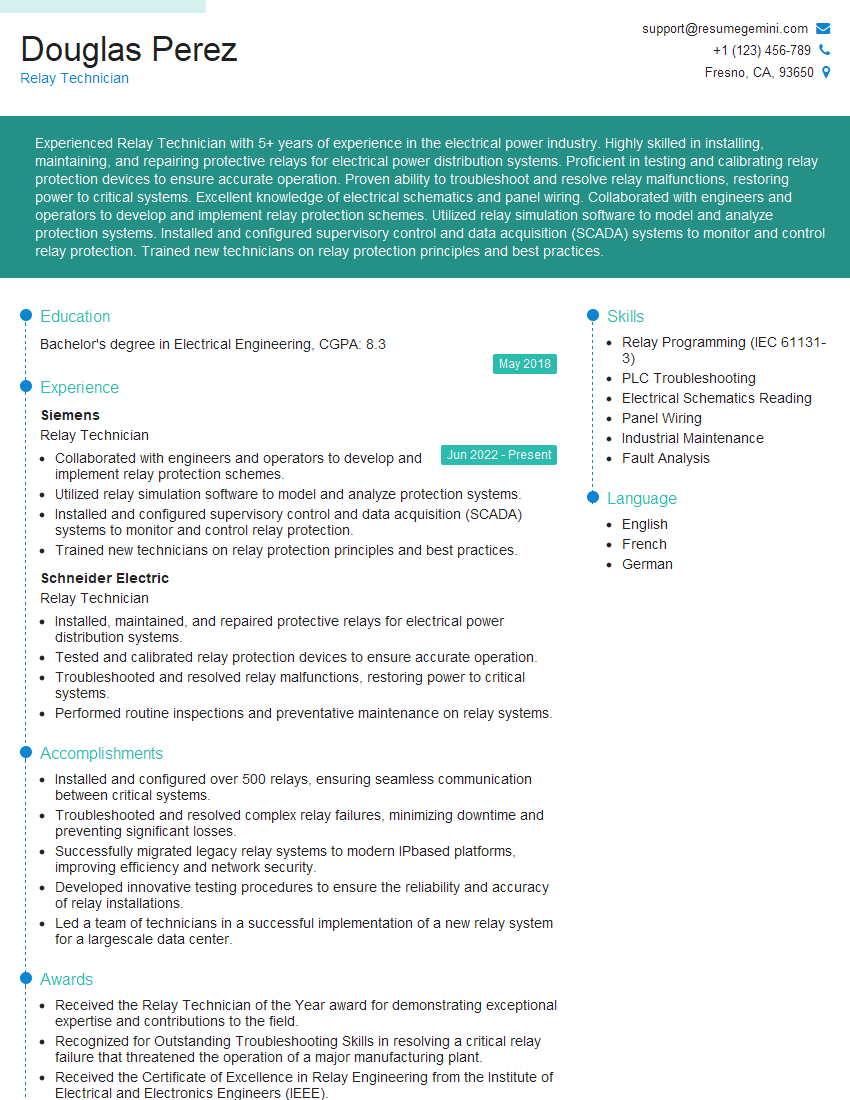
Mastering Power System Repair opens doors to a rewarding and in-demand career with excellent growth potential. Advancement opportunities are plentiful for skilled technicians who possess a strong theoretical understanding and practical experience. To maximize your job prospects, creating a strong, ATS-friendly resume is crucial. ResumeGemini is a trusted resource that can help you build a professional resume tailored to highlight your skills and experience effectively. Examples of resumes tailored to the Power System Repair field are provided to guide you. Invest time in crafting a compelling resume – it’s your first impression with potential employers.
Explore more articles
Users Rating of Our Blogs
Share Your Experience
We value your feedback! Please rate our content and share your thoughts (optional).
What Readers Say About Our Blog
Very informative content, great job.
good