The thought of an interview can be nerve-wracking, but the right preparation can make all the difference. Explore this comprehensive guide to Press Controls Operation interview questions and gain the confidence you need to showcase your abilities and secure the role.
Questions Asked in Press Controls Operation Interview
Q 1. Explain the role of a register control system in a printing press.
A register control system is crucial in printing to ensure accurate alignment of multiple colors or print units. Think of it like perfectly aligning layers in a cake – if the layers are off, the final product looks messy. In printing, misregistration leads to blurry images and incorrect color combinations. The system uses sensors and actuators to precisely control the lateral and longitudinal movement of each printing unit, keeping the colors perfectly aligned on the substrate. It continuously monitors the position of each print unit and makes tiny adjustments to maintain registration throughout the entire print run, compensating for variations in paper feed and other factors.
For example, imagine printing a four-color image (CMYK). The register system ensures that the cyan, magenta, yellow, and black inks align perfectly. Without it, the colors might overlap incorrectly, resulting in muddy colors and inaccurate representation of the original artwork. This system is often automated and integrated into a sophisticated press control system.
Q 2. Describe different types of ink density sensors and their applications.
Several types of ink density sensors are used in printing presses to maintain consistent color quality. They measure the amount of ink being applied, allowing for precise adjustments.
- Spectrophotometric Sensors: These sensors measure the spectral reflectance or transmittance of the printed ink, providing highly accurate color density readings. They’re like sophisticated colorimeters, providing data that’s used for precise color control. They are more expensive but offer superior accuracy and are commonly found on high-end presses.
- Transmission Density Sensors: These sensors measure the amount of light passing through a printed sample, useful for transparent substrates. Think of a transparency sheet. The sensor measures the light that gets through the ink to determine density.
- Reflection Density Sensors: These measure the amount of light reflected from the printed surface. This is commonly used for paper-based substrates like those used in offset or flexographic printing. It’s like shining a light on the print and measuring the amount of light bounced back – less light reflected means more ink density.
The choice of sensor depends on the printing process, substrate type, and required accuracy. For instance, a spectrophotometer is preferred for high-quality color critical work like packaging, while a reflection density sensor might suffice for simpler applications.
Q 3. How do you troubleshoot a color registration issue on a web press?
Troubleshooting color registration problems on a web press is a systematic process requiring a methodical approach. It’s like solving a puzzle, where each step gets you closer to the solution. Here’s a breakdown:
- Visual Inspection: Start by carefully examining the printed sheet for misregistration patterns. Identify which colors are misaligned and to what extent. Is it consistent or random?
- Check Press Settings: Review the press settings, including the register rollers, impression cylinders, and the settings for each printing unit. Are they aligned correctly?
- Sensor Check: Verify the functionality of the register control sensors. Are they providing accurate readings? Are they clean and free of obstructions?
- Actuator Check: If the sensors seem fine, check the actuators that adjust the position of the printing units. Are they functioning correctly and responding to the sensor inputs? Sometimes they may need adjustment or recalibration.
- Paper Inspection: Analyze the paper feed. Is the paper consistently feeding through the press? Inconsistencies in the paper feed can cause registration problems.
- Ink Viscosity: Check the viscosity (thickness) of the inks. Inconsistencies can affect the ink transfer and lead to misregistration.
- Dampening System (Offset): If this is an offset press, carefully evaluate the dampening system. Incorrect dampening can also lead to registration issues.
By following this step-by-step approach, you can systematically identify and resolve the root cause of the misregistration issue. Remember to record all findings and adjustments.
Q 4. What are the common causes of web breaks and how can they be prevented?
Web breaks, the dreaded interruption of a continuous printing process, can be caused by a variety of factors. Think of a web break as a chain breaking – one weak link can bring the whole thing down.
- Paper Problems: Paper wrinkles, creases, tears, or static electricity are common culprits. This is often due to improper handling, storage, or variations in paper quality.
- Mechanical Issues: Worn rollers, misaligned guides, or improper tension settings can cause the web to tear or slip. Regular maintenance and inspections are vital.
- Environmental Factors: Humidity and temperature fluctuations can affect paper properties, making it more prone to breaking. Controlling the environment is crucial.
- Ink Problems: Excessive ink buildup or improper ink transfer can increase friction and stress on the web, leading to breaks.
- Operator Error: Improper handling of the web, incorrect adjustments to the press controls, or lack of attention can sometimes cause breaks.
Preventing web breaks requires a proactive approach focusing on: proper paper handling, regular maintenance, environmental control, and operator training. Implementing preventative maintenance procedures, such as regular cleaning and lubrication of the rollers, can significantly reduce web breaks and increase productivity.
Q 5. Explain the process of setting up and maintaining a color profile.
Setting up and maintaining a color profile is essential for achieving consistent and accurate color reproduction in printing. A color profile acts as a translation dictionary between the digital file and the printed output. Think of it like a recipe that tells the press how to mix inks to match specific colors on your screen.
The process typically involves:
- Profile Creation: Using a spectrophotometer, a series of test prints are created and their color is measured. This data is then used to create a color profile (usually ICC profile) that maps the digital colors to the actual printed colors. Specialized software is used for this.
- Profile Embedding: The generated profile is embedded into the digital files (PDFs, etc.) or assigned to the printing device. This ensures that the printing software uses the profile during the printing process.
- Regular Verification: Periodically, print color test charts to check the accuracy of the profile. Over time, factors like ink changes or wear and tear on the press can affect color accuracy. If significant deviations are found, the profile needs recalibration.
- Profile Management: Store and manage color profiles properly. This includes keeping track of the profile’s creation date, version, and any modifications made.
Proper color profile management is crucial for ensuring consistent color reproduction throughout the print run and across different print jobs. It’s an iterative process requiring attention to detail and regular checks.
Q 6. Describe your experience with different types of printing presses (offset, flexo, digital).
My experience spans across various printing press technologies, each with its unique characteristics and challenges:
- Offset Printing: I have extensive experience with offset presses, understanding their intricate dampening systems, ink distribution, and registration mechanisms. I’ve worked on both sheet-fed and web offset presses, handling high-volume commercial printing projects as well as intricate packaging jobs. I’m familiar with managing plate changes, ink settings, and ensuring consistent print quality across long runs.
- Flexographic Printing: I’m proficient in flexographic printing, focusing on its use for flexible packaging and labels. I understand the nuances of anilox rollers, ink viscosity management, and the challenges of maintaining print quality on various flexible substrates. This includes experience with both narrow-web and wide-web flexo presses.
- Digital Printing: My experience with digital printing encompasses both inkjet and toner-based systems. I’m familiar with the workflow, color management, and the specific requirements of these presses, including their strengths (short-run printing, personalization) and limitations (higher cost per unit for large runs).
Across these platforms, my focus is always on optimizing the printing process for maximum efficiency, consistent output, and minimal waste, adapting my approach based on the unique requirements of each technology.
Q 7. How do you ensure consistent print quality throughout a long print run?
Maintaining consistent print quality throughout a long print run is paramount. It requires a combination of preventative measures and ongoing monitoring. It’s like running a marathon, not a sprint; consistent effort is required.
- Regular Maintenance: Proactive maintenance is crucial to minimizing inconsistencies. This includes regular cleaning, lubrication, and inspection of all press components. Think of it as a car needing regular oil changes and tire rotations.
- Environmental Control: Maintaining a stable temperature and humidity in the pressroom is essential to prevent paper variations that can affect registration and color consistency.
- Ink Management: Consistent ink viscosity and supply are essential. This includes proper ink mixing, agitation, and monitoring ink levels. Regular ink changes also prevent color shifts due to ink aging.
- Monitoring and Adjustment: Continuously monitor the print quality using color densitometers and register gauges. Make small adjustments to maintain consistency throughout the run. It’s like constantly making small course corrections in a race to stay on track.
- Operator Skill and Training: Properly trained operators play a vital role in maintaining consistent quality. Experience and well-defined operational procedures are essential to ensure the consistency of the print quality.
By combining a meticulous approach to maintenance, monitoring, and operator training, we can ensure consistent print quality even during the longest print runs.
Q 8. What are the key performance indicators (KPIs) you monitor in press controls?
Key Performance Indicators (KPIs) in press control are crucial for optimizing print quality, efficiency, and overall productivity. We monitor a range of metrics, categorized for clarity.
- Print Quality KPIs: These focus on the visual aspects of the printed product. We track metrics like color consistency (measured using densitometry), register accuracy (how precisely colors align), and print sharpness (resolution). For example, a Delta E value below 2 indicates excellent color accuracy.
- Production Efficiency KPIs: These relate to the speed and effectiveness of the printing process. We monitor the press speed (impressions per minute or IPM), waste percentage (amount of spoiled sheets), and overall equipment effectiveness (OEE), which combines availability, performance, and quality rate. A consistently high OEE indicates efficient press operation.
- Maintenance KPIs: These highlight preventative maintenance effectiveness and downtime minimization. We track metrics like mean time between failures (MTBF), mean time to repair (MTTR), and the number of planned versus unplanned maintenance events. Lower MTTR and higher MTBF indicate effective preventative maintenance programs.
- Cost KPIs: This focuses on the economic aspects of operation. We monitor ink consumption, paper waste, and overall production cost per unit. Identifying trends in these costs helps us optimize resource usage.
By continuously monitoring and analyzing these KPIs, we can identify areas for improvement, optimize press settings, and proactively address potential problems.
Q 9. Explain your understanding of automated press control systems.
Automated press control systems are the backbone of modern printing operations, significantly enhancing efficiency, quality, and consistency. These systems use a combination of sensors, actuators, and sophisticated software to automatically control various aspects of the printing process. Think of it as a highly advanced autopilot for your printing press.
A typical automated system might include:
- Automatic register control: Sensors constantly monitor color registration and automatically adjust the press to maintain precise alignment.
- Automatic ink control: Sensors monitor ink density and automatically adjust ink flow to maintain consistent color throughout the print run. This eliminates the need for constant manual adjustments.
- Automatic cutoff control: The system precisely adjusts the cutting mechanism to ensure accurate sheet sizes.
- Automatic blanket wash-up: The system can initiate and control the process of cleaning the printing blankets.
- Predictive maintenance: Some advanced systems use data analysis to predict potential failures and schedule preventative maintenance accordingly.
The advantages are numerous: reduced waste, improved print quality, increased productivity, and minimized operator intervention. Essentially, automation frees up press operators to focus on more complex tasks and quality control.
Q 10. Describe your experience with different types of press control software.
My experience encompasses several leading press control software packages. I’ve worked extensively with systems like those from Press Controls, BST eltromat, and other industry-leading vendors. Each system has its own strengths and user interface, but the core principles remain consistent.
For example, I’ve used systems employing closed-loop control algorithms to maintain precise ink and register adjustments in real-time. These systems rely on feedback from sensors to make continuous corrections, ensuring highly accurate and consistent output. Other systems incorporate features like color profiling and predictive maintenance capabilities. The specific features and functionalities vary, but my proficiency lies in understanding the underlying principles and adapting my approach to any system.
I’m comfortable navigating the intricacies of different user interfaces and programming languages commonly used in these systems, allowing me to effectively troubleshoot and optimize press performance regardless of the specific software employed.
Q 11. How do you handle a situation where the press malfunctions during a critical print job?
Handling press malfunctions during a critical print job requires a calm, methodical approach. My first step is always safety. I would immediately shut down the press according to established emergency procedures, ensuring the safety of myself and others. Once the press is safely stopped, I would then:
- Assess the situation: Identify the nature of the malfunction—is it a sensor failure, a mechanical problem, or a software glitch?
- Consult available resources: Review the press’s diagnostic logs, operator manuals, and any online support documentation.
- Troubleshoot the problem: Use my knowledge and experience to systematically check and resolve the issue. If the problem is beyond my immediate capabilities, I wouldn’t hesitate to seek assistance from specialized technicians or engineers.
- Communicate: Keep the client informed of the situation, providing realistic estimates of downtime and recovery time.
- Implement corrective actions: Once the problem is resolved, I ensure the press is thoroughly tested before resuming the print job.
- Document everything: Thoroughly document the malfunction, troubleshooting steps, and corrective actions taken to prevent future occurrences.
In my experience, effective communication and a systematic approach to troubleshooting are essential for minimizing downtime and ensuring customer satisfaction during such critical events.
Q 12. What safety procedures do you follow when operating a printing press?
Safety is paramount when operating a printing press. My safety procedures are consistent with industry best practices and company regulations. These include:
- Lockout/Tagout procedures: Before performing any maintenance or repair work, I always follow lockout/tagout procedures to ensure the press is completely de-energized and safe to work on.
- Personal Protective Equipment (PPE): I consistently wear appropriate PPE, including safety glasses, hearing protection, and gloves, as needed.
- Machine guards: I ensure all machine guards are in place and functioning correctly before starting the press.
- Emergency shutdown procedures: I’m thoroughly familiar with the location and operation of all emergency stop buttons and switches.
- Regular inspections: I routinely inspect the press for any signs of damage or wear and tear before starting each shift.
- Training and compliance: I maintain up-to-date training on safe operating procedures and adhere strictly to all company safety policies.
Safety is not just a set of rules; it’s a mindset. I treat every press operation with the utmost care and respect for my safety and the safety of others.
Q 13. Explain your experience with preventative maintenance on printing presses.
Preventative maintenance is key to maximizing uptime and minimizing costly breakdowns. My approach involves a proactive, scheduled maintenance program based on the manufacturer’s recommendations and our own historical data. This includes:
- Regular inspections: Daily, weekly, and monthly inspections of all critical components, checking for wear, tear, and potential problems.
- Scheduled maintenance tasks: Following a strict schedule for tasks such as lubrication, cleaning, and adjustments of various press components. This often involves detailed checklists to ensure thoroughness.
- Predictive maintenance: Using data analytics from the press control system to predict potential failures and schedule maintenance before they occur.
- Spare parts management: Maintaining a sufficient inventory of commonly used spare parts to minimize downtime during repairs.
- Documentation: Meticulously documenting all maintenance activities, including dates, tasks performed, and any findings or issues identified.
Preventative maintenance isn’t just about fixing things before they break; it’s about optimizing the entire operation by maximizing the equipment’s lifespan and maintaining peak performance.
Q 14. How do you identify and resolve issues related to ink consistency and distribution?
Maintaining consistent ink distribution is crucial for uniform print quality. Troubleshooting ink-related issues often involves a systematic approach. I start by visually inspecting the ink supply, ink ducts, and ink rollers for any blockages or inconsistencies. I then use specialized tools such as densitometers to measure ink density across the print. Differences in density can point to problems with ink flow or roller settings.
Possible causes and solutions:
- Ink viscosity: If the ink is too thick or thin, it can affect its distribution. I would adjust the viscosity by adding or removing thinner as needed, following manufacturer’s recommendations.
- Ink circulation: If the ink isn’t circulating properly, it can lead to inconsistent ink distribution. I would check the ink pumps and filters for any obstructions.
- Roller settings: Incorrect roller settings can lead to uneven ink transfer. I would adjust the roller pressure and position according to the manufacturer’s specifications and press requirements.
- Ink fountain settings: Improper ink fountain settings can affect ink flow and distribution. I would check and adjust these settings based on the job’s requirements.
- Ductor roller condition: Worn or damaged ductor rollers can lead to uneven ink transfer. I would check their condition and replace them if necessary.
By systematically addressing these potential issues, using my understanding of the press’s mechanics, and utilizing the diagnostic tools available within the control system, I can efficiently pinpoint the root cause of ink inconsistencies and implement the necessary corrective actions.
Q 15. What are your troubleshooting skills for common press control system errors?
Troubleshooting press control system errors requires a systematic approach. I begin by identifying the nature of the problem – is it a register issue, color variation, or a complete shutdown? Then, I use a combination of diagnostic tools and my experience to pinpoint the root cause.
- Error Codes and Logs: Most modern press control systems provide error codes and detailed logs. Analyzing these is my first step. For example, a code indicating a sensor malfunction points to a specific component requiring inspection or replacement.
- Visual Inspection: I carefully examine the press for any obvious mechanical problems – loose connections, damaged sensors, ink or paper jams. A visual check often reveals the source of problems quickly.
- Systematic Elimination: If the cause isn’t immediately apparent, I isolate potential sources of error one by one. This might involve temporarily disabling certain components or checking various parameters within the control system to observe their effect.
- Calibration and Adjustment: Many issues stem from miscalibration. I have experience calibrating various sensors, including color sensors and register sensors. This involves carefully following the manufacturer’s instructions and using specialized calibration tools.
- Remote Diagnostics (if applicable): Some systems offer remote diagnostic capabilities allowing for real-time support from the manufacturer or a specialized technician. I leverage these features when necessary for advanced troubleshooting.
For example, I once experienced a recurring register problem that seemed linked to variations in paper moisture. By meticulously checking the paper’s humidity and adjusting the press settings accordingly, I resolved the issue. Detailed logging of troubleshooting steps is crucial for future reference.
Career Expert Tips:
- Ace those interviews! Prepare effectively by reviewing the Top 50 Most Common Interview Questions on ResumeGemini.
- Navigate your job search with confidence! Explore a wide range of Career Tips on ResumeGemini. Learn about common challenges and recommendations to overcome them.
- Craft the perfect resume! Master the Art of Resume Writing with ResumeGemini’s guide. Showcase your unique qualifications and achievements effectively.
- Don’t miss out on holiday savings! Build your dream resume with ResumeGemini’s ATS optimized templates.
Q 16. Explain the relationship between press speed and print quality.
Press speed and print quality are intricately linked. Increasing speed often compromises print quality, while slower speeds generally allow for better results. Think of it like driving a car: at high speed, you have less control and are more likely to make mistakes; at low speed, you have greater precision.
- Ink Drying Time: Higher speeds reduce the drying time available for the ink, potentially leading to smudging, set-off (ink transferring to the back of the next sheet), and poor image sharpness.
- Register Accuracy: At high speeds, maintaining accurate registration (alignment of colors) becomes challenging due to the increased inertia of the printing units. This results in misaligned colors.
- Dot Gain: Increased press speeds can cause excessive dot gain (an increase in the size of ink dots), leading to darker, muddier colors.
- Mechanical Stability: High-speed operation stresses the press components, leading to vibrations and inconsistencies. This may manifest as banding or uneven print quality.
It’s a delicate balance. The optimal speed is determined by the specific print job, ink type, paper, and desired quality. Experimentation and fine-tuning of press parameters are critical to achieving high quality at acceptable speeds.
Q 17. Describe your understanding of color management and its importance in printing.
Color management is crucial for ensuring consistent and accurate color reproduction across different stages of the printing process – from design to final output. It involves managing the color profile of various devices, such as scanners, monitors, and the printing press, and standardizing them using a common color space (such as CMYK or RGB). Imagine trying to paint a picture using paints that have different shades even if they bear the same name. Color management is like having a color dictionary to ensure everyone is working with the same palette.
- Color Profiles: Each device has a color profile that describes its response to color inputs. Precise color management necessitates having accurate profiles for all devices involved.
- Color Conversion: Color conversions are needed when transferring images between different color spaces (e.g., from RGB to CMYK). Correct conversion is vital to avoid color shifts.
- Proofing: Color management includes generating accurate proofs—printed samples—to validate color accuracy before the main print run. It assures client approval and eliminates costly reprints.
- Ink Characterization: The press’s ink characteristics influence color reproduction. Precise color management involves proper characterization of the inks used.
Without proper color management, color variations between the design, proof, and final print are inevitable, leading to costly reprints and customer dissatisfaction.
Q 18. How do you interpret and analyze press control system data?
Press control system data provides invaluable insights into press performance and print quality. I interpret and analyze this data using various methods:
- Real-time Monitoring: I constantly monitor key parameters like ink density, register accuracy, and speed during the printing process. Any deviation from established norms requires immediate attention.
- Data Logging and Trend Analysis: The data is logged for historical analysis. This allows identifying trends and patterns that can indicate potential problems before they escalate. I use statistical methods to detect abnormalities and predict maintenance needs.
- Statistical Process Control (SPC): SPC charts are used to monitor key parameters and identify deviations from the norm. This allows for timely adjustments and prevention of defects.
- Reports and Dashboards: Most systems generate reports that summarize key performance indicators (KPIs). I use these reports to monitor overall efficiency and identify areas for improvement. Dashboards provide a visual overview of the press’s performance.
For example, consistent deviation in ink density over several print runs may point to a problem with the ink supply or a faulty ink metering system. By analyzing the logged data, I can quickly pinpoint the issue.
Q 19. Describe your experience with different types of paper and their impact on print quality.
Different paper types significantly impact print quality. Paper properties such as weight, surface finish, moisture content, and fiber type influence ink absorption, drying time, and overall appearance.
- Paper Weight: Heavier papers generally result in sharper images and less show-through (ink bleeding through to the other side of the sheet), but may require adjustments to the press settings.
- Surface Finish: Coated papers offer smoother surfaces, leading to vibrant colors and sharp details, while uncoated papers provide a more natural feel but may result in less saturated colors and more ink absorption.
- Moisture Content: Paper moisture variations affect the stability of the paper and its ability to accept ink consistently. This impacts registration and can cause problems with drying.
- Fiber Type: The type of fibers used in paper (wood pulp, recycled fibers, etc.) can affect ink absorption, paper strength, and printability.
For instance, using high-gloss coated paper requires different ink settings than using uncoated paper. Using paper with inconsistent moisture can lead to register problems and increased waste. Understanding these properties allows for appropriate press adjustments and optimal print quality.
Q 20. What are the advantages and disadvantages of using different types of inks?
Various ink types offer advantages and disadvantages depending on the application and desired outcome. Here’s a comparison:
- Advantages of UV Inks: Fast drying, vibrant colors, superior scratch resistance, suitable for diverse substrates.
- Disadvantages of UV Inks: Requires specialized UV curing units, higher cost, potential odor and safety concerns.
- Advantages of Water-Based Inks: Environmentally friendly, low odor, suitable for sensitive materials.
- Disadvantages of Water-Based Inks: Slower drying time, less vibrant colors compared to UV, potential for water damage if not dried completely.
- Advantages of Vegetable-Based Inks: Eco-friendly, biodegradable, low odor.
- Disadvantages of Vegetable-Based Inks: Can have less vibrant colors, may require specialized handling and adjustments to press parameters.
The choice depends on factors such as environmental concerns, the type of substrate, the required print speed, and the desired level of color vibrancy and durability. For example, for packaging applications where durability is critical, UV inks are preferred, whereas for printing on sensitive items, water-based inks may be more appropriate.
Q 21. How do you ensure the proper cleaning and maintenance of printing press components?
Proper cleaning and maintenance are essential for optimal press performance and print quality. A well-maintained press prevents errors, downtime, and waste.
- Daily Cleaning: This involves removing excess ink, paper dust, and debris from the various components, such as rollers, blankets, and impression cylinders. Using the appropriate cleaning agents and following the manufacturer’s recommendations is crucial.
- Regular Maintenance: This includes scheduled lubrication of moving parts, inspection of rollers and blankets for wear and tear, and periodic cleaning of the ink system. Preventative maintenance extends the life of the press components and minimizes unexpected breakdowns.
- Specialized Cleaning Solutions: Using the right cleaning solutions for each component is critical. Using the wrong cleaner can damage parts or leave residue, affecting print quality.
- Documentation: Maintaining detailed records of maintenance activities and spare parts is vital for tracking performance and facilitating future maintenance tasks.
For example, neglecting regular cleaning of the inking system can lead to ink build-up, resulting in color inconsistencies and poor print quality. Similarly, ignoring the recommended lubrication schedule can cause premature wear and tear of crucial mechanical components.
Q 22. Explain your experience with various print finishing techniques.
My experience encompasses a wide range of print finishing techniques, crucial for transforming printed sheets into marketable products. This includes:
- Folding: From simple parallel folds to complex gatefolds and saddle-stitching, I’m proficient in various folding techniques, optimizing for speed and minimizing paper waste. For instance, I’ve successfully implemented a new folder configuration that increased our production rate by 15% on a recent brochure job.
- Cutting and Trimming: I’m skilled in using various cutting and trimming machines to ensure precise and clean edges. This includes understanding the intricacies of die-cutting for unique shapes and sizes. A memorable project involved precisely trimming thousands of postcards with intricate designs to ensure no misalignment.
- Binding: I have extensive experience with different binding methods like perfect binding (for books), wire-O binding (for notebooks), and spiral binding. Choosing the right binding method depends on the project’s requirements and desired aesthetic. I’ve successfully troubleshooted binding machine jams multiple times, minimizing downtime.
- Finishing Processes: This includes lamination (gloss or matte), UV coating (for enhanced durability and shine), and embossing/debossing (for added texture). I understand the importance of selecting the right finishing process based on the substrate and intended use.
My understanding extends beyond the operational aspect; I am also familiar with the impact of each technique on overall cost and production efficiency. I constantly seek ways to optimize these processes.
Q 23. Describe your knowledge of different paper handling systems.
My knowledge of paper handling systems is extensive, recognizing that efficient paper handling is paramount to smooth press operation. I’m familiar with:
- Paper Reels and Roll Handling: I understand the importance of proper reel mounting, tension control, and splicing to avoid breaks and maintain consistent paper feed. I’ve dealt with various reel sizes and paper weights, and I can quickly identify and resolve paper-related issues on the press.
- Sheet Feeders: I’m experienced with various types of sheet feeders, including those that handle different paper sizes, weights, and finishes. I understand the importance of accurate registration and the adjustments needed to maintain it. I have experience troubleshooting and maintaining different feeder systems.
- Paper Conveyors and Stackers: I’m familiar with the design and function of paper conveyors and stackers, ensuring the smooth transport of sheets through the press and the neat stacking of finished prints. Properly configuring these systems is crucial for reducing jams and preventing damage to the printed materials.
- Automatic Paper Detection and Control Systems: I understand how sophisticated sensors detect paper misfeeds and jams, stopping the press to prevent damage. I can troubleshoot malfunctions in these systems, ensuring minimal downtime.
My experience allows me to optimize paper handling for different jobs, minimizing waste and maximizing throughput.
Q 24. How do you maintain accurate inventory control of printing materials?
Accurate inventory control is essential for smooth press operation and cost management. My approach involves a combination of physical and digital systems:
- Regular Physical Inventory Checks: I conduct regular checks of all printing materials, including paper, inks, plates, and cleaning supplies, to accurately track stock levels and identify potential shortages.
- Inventory Management Software: I utilize inventory management software to track stock levels, order new supplies, and generate reports on usage and costs. This software allows for precise forecasting and reduces the risk of unexpected stockouts.
- First-In, First-Out (FIFO) System: I implement a FIFO system to ensure that older materials are used first, minimizing waste and preventing spoilage of inks or other consumables with limited shelf lives.
- Supplier Relationships: I maintain strong relationships with reliable suppliers to ensure timely delivery and quality of materials. This includes negotiating favorable pricing and delivery terms.
This multi-faceted approach allows for efficient inventory management, minimizing waste and ensuring that the press never lacks essential materials.
Q 25. Explain your understanding of different types of printing plates and their preparation.
My understanding of printing plates encompasses various types and their preparation, a critical aspect of quality print production. I’m familiar with:
- Conventional Plates: This includes aluminum plates with various coatings and sensitivities. I’m proficient in the processes of plate making, including exposing, processing, and mounting.
- CTP (Computer-to-Plate) Plates: I’m experienced with digital plate making, utilizing CTP devices to create high-resolution plates directly from digital files. This significantly reduces production time and waste compared to traditional methods.
- Plate Types and Materials: My knowledge extends to the different materials and coatings available, and their suitability for specific printing applications. This includes factors like durability, resolution, and press compatibility.
- Plate Preparation: I’m skilled in the proper handling and preparation of plates, ensuring they are clean, free of defects, and properly mounted on the press to avoid issues like ghosting and slurring.
Understanding the properties of different plate types and their preparation procedures allows me to optimize the printing process for various projects and achieve consistent, high-quality results.
Q 26. Describe your experience with quality control checks and procedures.
Quality control is fundamental to my work, and I follow rigorous procedures to ensure the highest standards. My approach includes:
- Pre-Press Checks: I meticulously review proofs and digital files before printing to identify potential errors and inconsistencies in design and color. This proactive approach prevents costly mistakes.
- Press Checks During Production: I regularly monitor the printing process for accurate color reproduction, registration, and consistent ink density. This involves using color measurement tools and adjusting the press settings as needed.
- Post-Press Checks: After printing, I conduct thorough inspections of finished products for defects such as misprints, smudges, and inconsistencies in folding or binding. This includes statistical sampling and random checks.
- Documentation and Reporting: I maintain detailed records of all quality control checks, including any identified issues and corrective actions taken. This documentation is crucial for continuous improvement and identifying trends.
My commitment to quality control ensures that every job meets the highest standards and client expectations. I view quality control not just as a final step, but as an integrated part of the entire printing process.
Q 27. How do you manage and resolve conflicts within a pressroom team?
Conflict resolution is a crucial skill in a pressroom environment. My approach focuses on open communication and collaboration:
- Open Dialogue: I encourage open communication amongst team members to proactively address any disagreements or misunderstandings.
- Active Listening: I actively listen to understand each person’s perspective before offering solutions or making decisions. This ensures all concerns are addressed.
- Mediation: If a conflict arises, I act as a mediator, facilitating a discussion between the parties involved to find a mutually acceptable solution. This involves maintaining neutrality and focusing on finding common ground.
- Focus on Shared Goals: I emphasize the importance of teamwork and achieving shared goals. By reminding the team of our collective responsibility, I help foster a positive and collaborative work environment.
My goal is to create a positive and productive pressroom where everyone feels valued and respected. By addressing conflicts constructively, I ensure high team morale and efficient workflow.
Q 28. What are your salary expectations for this position?
My salary expectations are commensurate with my experience and skills, and I am open to discussing a competitive compensation package. I have researched industry benchmarks for similar roles with my level of expertise and would be happy to share my findings and rationale during our conversation. My primary focus is on finding a mutually beneficial arrangement that reflects my contributions and aligns with the company’s budget.
Key Topics to Learn for Press Controls Operation Interview
- Understanding Press Control Systems: Familiarize yourself with the different types of press control systems, their architectures, and functionalities. Explore the interplay between hardware and software components.
- Automation and Robotics in Press Control: Learn about automated processes within press control operations, including robotic systems, automated ink and register controls, and their impact on efficiency and quality.
- Data Acquisition and Analysis: Understand how data is collected, processed, and used for optimizing press performance. This includes understanding sensor technologies, data logging, and analysis techniques.
- Troubleshooting and Maintenance: Develop a strong understanding of common problems encountered in press control systems, their causes, and effective troubleshooting strategies. Explore preventative maintenance procedures.
- Safety Protocols and Procedures: Understand the safety regulations and best practices related to operating and maintaining press control systems. This includes lockout/tagout procedures and hazard identification.
- Quality Control and Optimization: Learn how press control systems contribute to maintaining consistent print quality. Explore techniques for optimizing color consistency, registration, and overall print efficiency.
- Networking and Communication Protocols: Familiarize yourself with the communication protocols used in press control systems, such as industrial Ethernet and fieldbuses. Understand how these protocols facilitate data exchange and system integration.
- Predictive Maintenance and AI in Press Control: Explore the emerging use of predictive maintenance and artificial intelligence in optimizing press operations and reducing downtime.
Next Steps
Mastering Press Controls Operation opens doors to exciting career opportunities in a dynamic industry. A strong understanding of these systems is highly sought after, making you a valuable asset to any printing company. To maximize your job prospects, creating a well-structured, ATS-friendly resume is crucial. ResumeGemini is a trusted resource to help you build a professional resume that showcases your skills and experience effectively. Examples of resumes tailored to Press Controls Operation are available to guide you in crafting your perfect application.

Print Production Manager Resume Sample

Pressroom Supervisor Resume Sample

Digital Press Operator Resume Sample
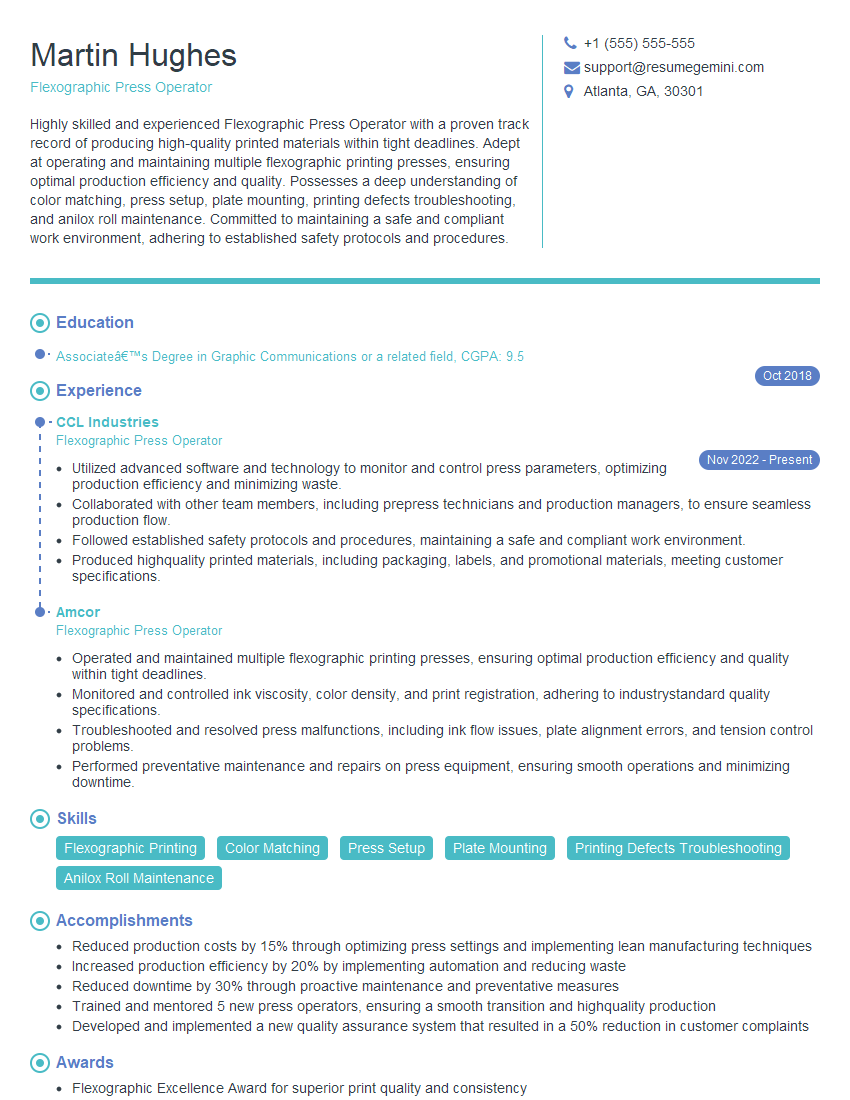
Flexographic Press Operator Resume Sample

Offset Press Operator Resume Sample
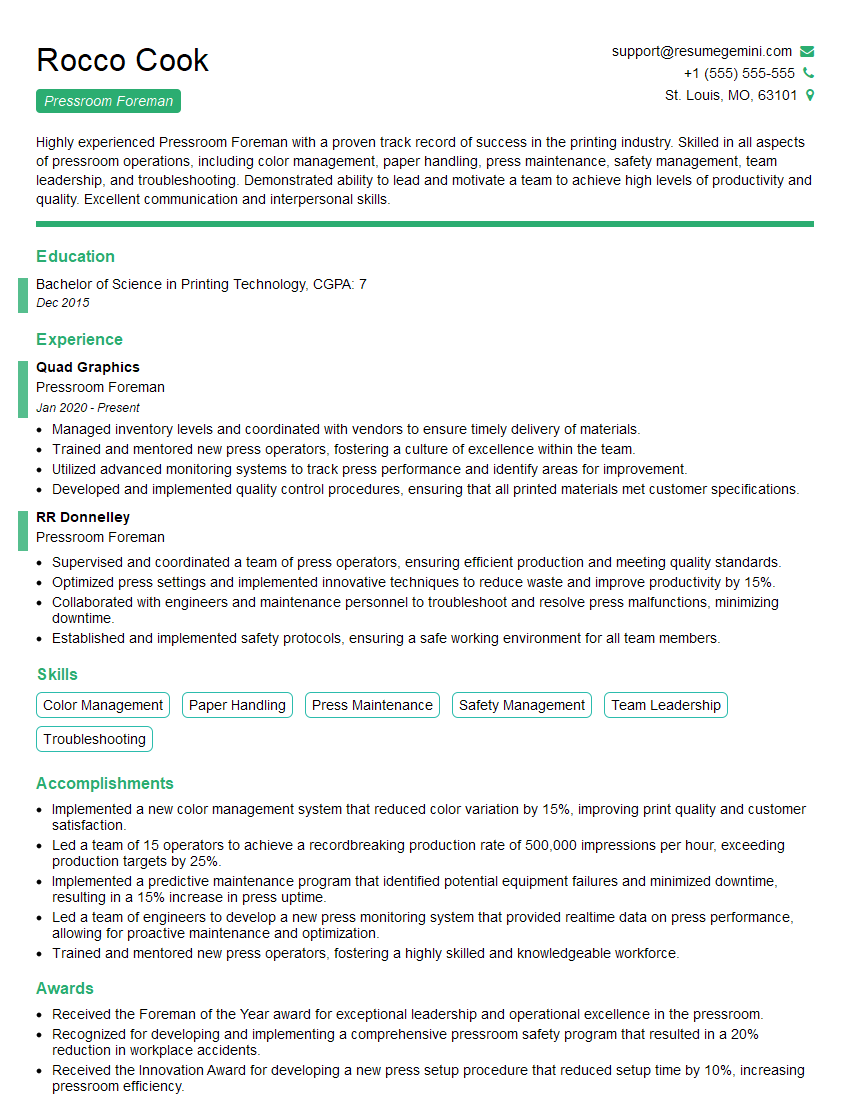
Pressroom Foreman Resume Sample
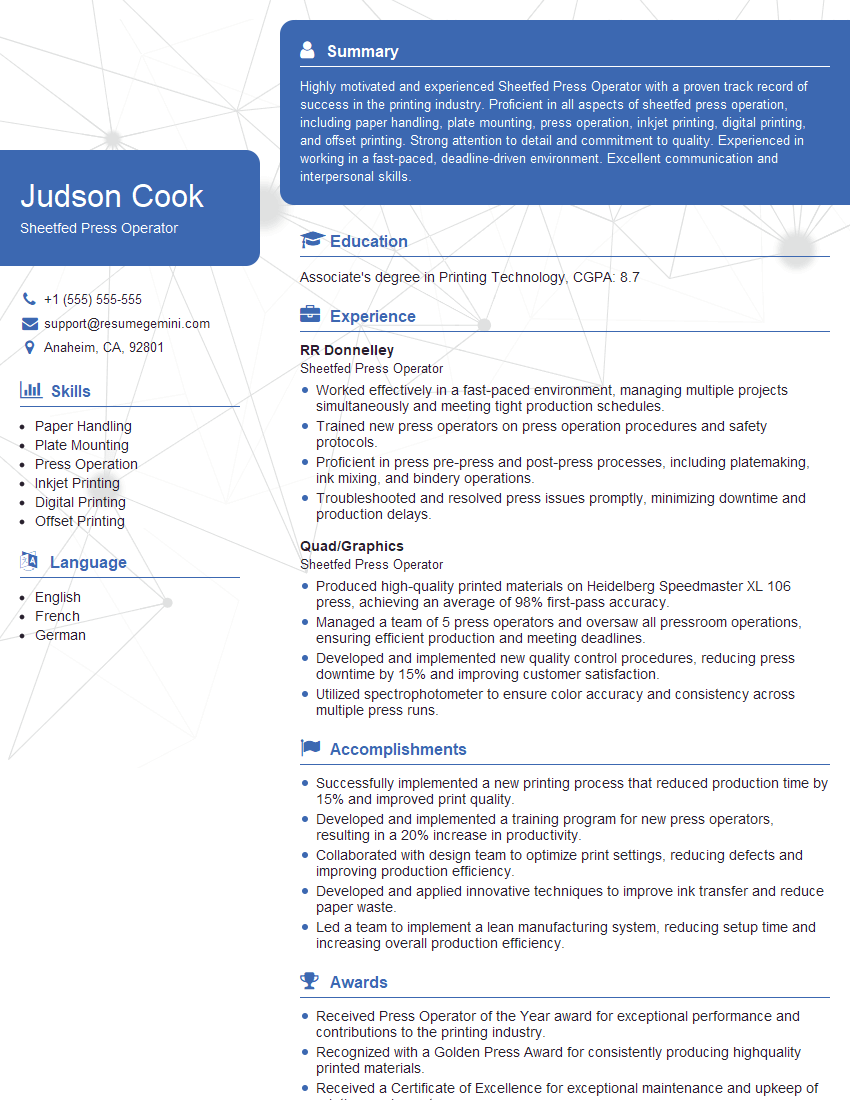
Sheetfed Press Operator Resume Sample
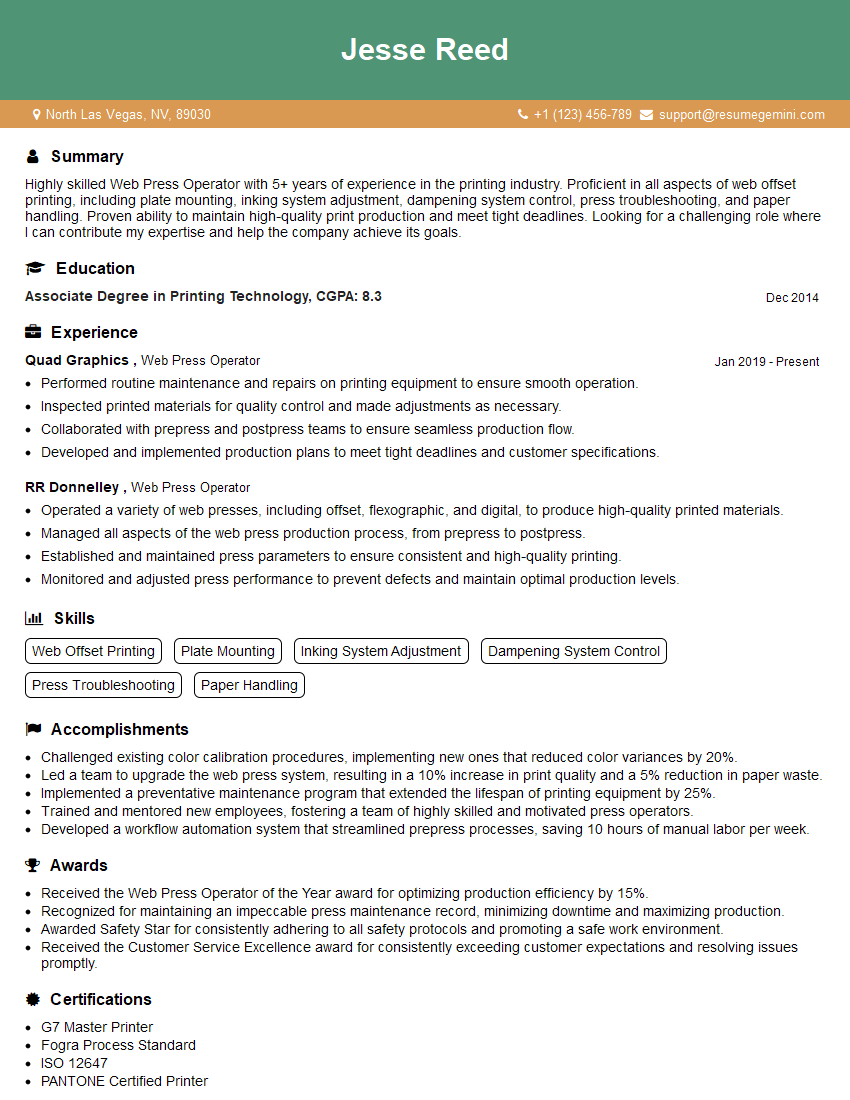
Web Press Operator Resume Sample
Explore more articles
Users Rating of Our Blogs
Share Your Experience
We value your feedback! Please rate our content and share your thoughts (optional).
What Readers Say About Our Blog
Very informative content, great job.
good