The right preparation can turn an interview into an opportunity to showcase your expertise. This guide to Rope Handling and Maintenance interview questions is your ultimate resource, providing key insights and tips to help you ace your responses and stand out as a top candidate.
Questions Asked in Rope Handling and Maintenance Interview
Q 1. What are the different types of ropes used in industrial applications and their strengths/weaknesses?
Industrial applications utilize a variety of ropes, each with its own strengths and weaknesses. The choice depends heavily on the specific task, the load requirements, and the environmental conditions.
- Nylon: Known for its high strength-to-weight ratio, excellent shock absorption, and good abrasion resistance. However, it can be susceptible to UV degradation and loses strength when exposed to prolonged heat. Example: Commonly used in marine applications and general lifting where shock absorption is crucial.
- Polyester: Offers high strength and good abrasion resistance, plus better UV resistance than nylon. It stretches less under load than nylon but isn’t as good at absorbing shock. Example: Frequently used in towing and heavy-duty lifting where dimensional stability is important.
- Polypropylene: Lightweight and floats on water, making it ideal for marine applications. It’s relatively inexpensive but has lower tensile strength compared to nylon and polyester and is susceptible to UV degradation. Example: Often used in mooring lines or lighter-duty applications.
- Steel Wire Rope: Offers exceptionally high strength but is heavy and susceptible to corrosion. Proper lubrication is crucial for longevity. Example: Used in heavy lifting, crane operations, and construction where immense strength is required.
- Aramid (e.g., Kevlar): Extremely high strength-to-weight ratio, excellent cut resistance, and high heat resistance. However, it’s more expensive and can be more difficult to handle. Example: Used in specialized applications requiring high strength and resistance to cutting or abrasion, such as high-performance sailing or safety harnesses.
Remember, always consult the manufacturer’s specifications for precise strength and safety data for each specific rope.
Q 2. Explain the process of inspecting a rope for damage.
Inspecting a rope for damage is a crucial safety procedure that should be done before each use and regularly throughout its lifespan. A thorough inspection involves a systematic visual check and, in some cases, a hands-on assessment.
- Visual Inspection: Examine the entire length of the rope carefully, looking for:
- Broken strands: Any broken fibers or strands significantly weaken the rope.
- Abrasions and cuts: These reduce the rope’s strength and can lead to catastrophic failure.
- Kinks and twists: These concentrate stress on the rope, reducing its strength.
- Swelling or discoloration: Could indicate chemical damage or internal degradation.
- Excessive wear: Look for flattening, fuzziness, or general wear and tear.
- UV damage: Look for stiffening, brittleness, or cracking, especially in ropes exposed to sunlight.
- Hands-on Check: Carefully feel the rope’s surface, checking for any abnormalities that aren’t visible. Look for unusual stiffness or softness in sections of the rope.
- Testing: While a visual inspection is sufficient for most applications, specialized testing might be required for critical applications. This often includes strength testing using specialized equipment.
If any damage is found, the rope should be immediately removed from service and replaced.
Q 3. Describe proper techniques for tying various knots used in rope access and rigging.
Proper knot tying is fundamental to rope access and rigging safety. Incorrect knots can lead to serious injury or equipment damage. Here are a few essential knots:
- Bowline: A fundamental knot forming a strong, reliable loop that won’t slip or tighten under load. Technique: Form a loop, pass the end around the standing part, then through the loop. It’s easily untied even after being under load. Example: Commonly used for creating a secure loop at the end of a rope for attaching to equipment.
- Figure Eight: Creates a secure loop that is easy to tie and untie. It’s often used as a stopper knot to prevent a rope from running through a system. Technique: Make a loop, then cross the rope over itself and through the loop. Example: Used to create a secure loop on a harness or for securing a rope to an anchor point.
- Clove Hitch: A quick and easy knot used to attach a rope to a post or ring. It’s not as strong as a bowline but useful for temporary attachments. Technique: Wrap the rope around the object twice, then pass the end under the first wrap. Example: Securing a rope to a railing or a tree.
- Prusik Knot: Used for ascending and descending ropes. It’s a friction knot that grips the rope when loaded but can be easily moved when unloaded. Technique: Requires two separate ropes. One is wrapped twice around the main rope. This requires specific training and should only be used by trained professionals. Example: Used in rope access techniques.
Practicing knot tying is crucial for proficiency and safety. Always double-check your knots before putting them under load.
Q 4. How do you determine the working load limit (WLL) of a rope?
The Working Load Limit (WLL) of a rope is the maximum load that the rope can safely support in normal use. It’s always less than the rope’s breaking strength, considering safety factors. The WLL is typically specified by the manufacturer and found on the rope’s label or in its accompanying documentation.
If the manufacturer’s information is unavailable, determining the WLL requires specialized testing. This involves using a tensile testing machine to measure the rope’s breaking strength, then applying a safety factor to determine the WLL. The safety factor is typically between 5 and 10, depending on the application and the desired level of safety. This calculation should only be done by a trained professional with the appropriate equipment.
Never exceed the WLL of a rope. Overloading can lead to rope failure and potentially catastrophic consequences.
Q 5. What safety procedures must be followed when working at heights with ropes?
Working at heights with ropes demands rigorous adherence to safety procedures. Failure to do so can lead to serious injury or fatality.
- Competent Personnel: Only trained and qualified personnel should work at heights using ropes. Proper certification and training in rope access techniques are mandatory.
- Regular Inspections: Before each use, inspect all ropes, harnesses, and other equipment for any signs of damage or wear.
- Fall Protection Systems: Use redundant fall protection systems, including a backup system, to minimize the risk of falls.
- Appropriate Equipment: Use appropriately rated equipment designed for the specific task and environment.
- Communication: Maintain clear communication with ground crew members to ensure a safe working environment.
- Emergency Procedures: Develop and practice emergency procedures for rescue and evacuation.
- Weather Considerations: Avoid working in adverse weather conditions that could compromise safety.
- Personal Protective Equipment (PPE): Use appropriate PPE, including helmets, gloves, and safety harnesses.
Adherence to these procedures is not merely advisable, it is essential for the safety of both the workers and those around them.
Q 6. Explain the importance of regular rope maintenance and inspection.
Regular rope maintenance and inspection are crucial for ensuring safety and prolonging the lifespan of the rope. Neglecting this can lead to premature failure, posing a significant risk.
Regular inspections (as described previously) should be conducted before each use and at regular intervals depending on the frequency of use and environmental conditions. This should include a visual inspection and a hands-on check for any signs of wear, damage, or deterioration. The frequency might range from daily for ropes in constant use to monthly for those used less often.
Maintenance can involve:
- Cleaning: Removing dirt and debris that can abrade the rope.
- Drying: Allowing the rope to dry thoroughly after exposure to water, to prevent mildew and rot.
- Lubrication: For ropes like steel wire rope, regular lubrication is essential to prevent corrosion and improve flexibility. The type of lubricant will vary depending on the rope material.
- Storage: Storing ropes in a cool, dry place away from direct sunlight and harsh chemicals helps to prevent degradation.
Proper maintenance and inspection significantly reduce the risk of rope failure and ensure a safe working environment.
Q 7. How would you handle a situation where a rope is damaged during a job?
If a rope is damaged during a job, immediate action is critical. Safety should be the paramount concern.
- Immediately cease operations: Stop all work involving the damaged rope. This prevents further risk.
- Assess the damage: Carefully examine the extent of the damage to determine the severity and the potential risks.
- Report the incident: Report the incident to the appropriate supervisor or safety officer. Maintain a record of the incident for future reference.
- Replace the damaged rope: Never attempt to repair a damaged rope. Replace it with a new rope of the same type and specification.
- Investigate the cause: Try to identify the cause of the damage to prevent future occurrences.
- Implement corrective actions: Based on the investigation, implement corrective actions to mitigate future risks.
Using a damaged rope is extremely dangerous and can lead to serious accidents. Following this protocol is essential for maintaining a safe work environment.
Q 8. Describe your experience with different rope access techniques.
My experience encompasses a wide range of rope access techniques, from basic single-rope techniques (SRT) to more complex systems like twin-rope techniques and advanced rescue scenarios. I’m proficient in various ascent and descent methods, including using ascenders, descenders, and various types of anchors. For example, I’ve used SRT extensively for inspection and maintenance work on bridges, while twin-rope techniques proved invaluable during challenging rescue operations in confined spaces. My expertise also extends to setting up complex anchor systems using different materials and configurations, ensuring redundancy and safety in every operation.
Specifically, I’ve worked extensively with:
- Single Rope Technique (SRT): This is my foundation, used for a variety of tasks, from inspections to maintenance. I am adept at creating efficient and safe systems using ascenders like the Petzl Ascension and descenders like the Petzl I’D.
- Double Rope Technique (DRT): This technique offers increased safety and redundancy, particularly important in more challenging environments. It’s crucial for operations where a single point of failure is unacceptable.
- Self-Rescue Techniques: I am trained and experienced in a variety of self-rescue techniques, essential for any rope access professional.
Q 9. What are the common causes of rope failure?
Rope failure can stem from several factors, broadly categorized into material degradation and improper use. Material degradation includes:
- Abrasion: Friction against sharp edges, rough surfaces, or other ropes can weaken the fibers, leading to breakage. Think of a rope rubbing against a jagged rock face.
- UV Degradation: Prolonged exposure to sunlight weakens the rope’s structure, making it brittle and prone to snapping.
- Chemical Degradation: Contact with acids, solvents, or other chemicals can damage the rope’s fibers, reducing its strength.
- Age and Wear: Over time, even with proper care, ropes lose their strength. Regular inspections and retirement schedules are critical.
Improper use contributes significantly to rope failure:
- Overloading: Exceeding the rope’s working load limit (WLL) can cause immediate failure. Always check the rope’s rated capacity and never exceed it.
- Incorrect Knotting: Improperly tied knots can create weak points, drastically reducing the rope’s strength. Proper knot selection and tying techniques are crucial.
- Sharp Bends: Sharp bends create stress concentrations, weakening the rope and making it vulnerable to breakage.
- Improper Storage: Storing ropes incorrectly—such as in damp or direct sunlight—accelerates deterioration.
Q 10. How do you ensure the safety of yourself and your team when using ropes?
Safety is paramount. My approach involves a layered system:
- Thorough Planning and Risk Assessment: Every job starts with a detailed plan, including potential hazards, mitigation strategies, and emergency procedures. This includes selecting the appropriate equipment and techniques for the specific task.
- Regular Inspections: Before every use, I meticulously inspect ropes, harnesses, and other equipment for any signs of wear or damage. I also conduct thorough inspections after any significant incident or exposure to harsh conditions.
- Redundancy: Wherever possible, I incorporate redundancy in my systems. This means using multiple anchors, backup systems, and double-checking all connections.
- Communication: Clear and consistent communication within the team is crucial. We use hand signals, radios, and pre-determined protocols to ensure everyone is aware of the situation and potential hazards.
- Proper Training and Certification: All team members must hold appropriate certifications and undergo regular refresher training to maintain their skills and knowledge.
For example, on a recent project involving high-angle work, we employed a double-rope system with multiple backups, and conducted regular communication checks to ensure everyone’s safety.
Q 11. What are the different types of fall protection systems used with rope access?
Several fall protection systems are used with rope access, each offering different levels of protection and suitability depending on the task:
- Self-Belaying Devices: These allow the worker to control their descent and ascent, providing a degree of self-arrest in the event of a fall. Examples include ascenders and descenders like the Petzl Grigri.
- Anchor Systems: These are crucial for providing a secure point of attachment for the rope. They range from simple natural anchors like large boulders to more complex systems using specialized equipment. The design of the anchor system is critical in ensuring adequate strength and redundancy.
- Fall Arrest Systems: These systems are designed to arrest a fall, minimizing the impact force on the worker. This typically involves a harness, an energy absorber, and an anchor point. In rope access, these are crucial for situations where a fall is possible even with careful technique.
- Redundant Systems: Often, a combination of these systems is used to create a redundant and highly safe system.
Q 12. Explain the importance of using appropriate personal protective equipment (PPE) when working with ropes.
Appropriate PPE is non-negotiable in rope access work. It’s the first line of defense against injuries. This includes:
- Harness: A properly fitted harness is essential for distributing the forces during a fall or load. Different harnesses are designed for different types of work and must be selected and inspected meticulously.
- Helmet: Protecting the head from falling objects or impacts is critical. The helmet should be appropriate for the task and in good condition.
- Gloves: Gloves protect hands from abrasions, cuts, and cold. Specialized gloves may be needed depending on the work involved.
- Footwear: Appropriate footwear is vital for maintaining a secure footing. This typically involves sturdy boots with good ankle support.
- Eye Protection: Protecting eyes from flying debris or harsh sunlight is essential.
Using correctly maintained and appropriate PPE significantly reduces the risk of serious injury or even death. Think of it as a safety net, adding an extra layer of protection to your overall safety procedures.
Q 13. Describe your experience with different types of rope access equipment.
My experience encompasses a variety of rope access equipment, selected based on the specific job requirements. This includes:
- Ropes: I’m familiar with various rope types, including dynamic and static ropes, each with specific properties suited to different applications. I understand the importance of selecting ropes with the correct diameter, strength, and length for each job.
- Ascenders and Descenders: I have hands-on experience with various ascenders and descenders, from manual devices to assisted braking systems. I understand their operation, maintenance, and limitations.
- Carabiners and Connectors: I’m skilled in selecting and using different types of carabiners and connectors, ensuring they are correctly loaded and functioning optimally.
- Anchors and Anchor Systems: My expertise extends to designing and implementing robust anchor systems, understanding the principles of load distribution and redundancy.
- Fall Arrest Systems: This includes a variety of energy absorbers and shock-absorbing lanyards designed to minimize the impact force in the event of a fall.
For instance, in a recent project involving a confined space, we used a specialized small-diameter rope for ease of maneuvering, along with a self-braking descender to ensure a controlled descent.
Q 14. How do you create a rescue plan for rope access work?
Creating a robust rescue plan is a critical aspect of rope access work. It involves several key steps:
- Hazard Identification and Risk Assessment: Identify all potential hazards, including falls, equipment failures, environmental factors, and medical emergencies.
- Rescue System Design: Develop a rescue system that addresses these hazards, considering factors like access, terrain, and the availability of resources. This might involve pre-positioning rescue equipment or designating specific team members with rescue responsibilities.
- Communication Plan: Establish clear communication protocols, including emergency signals and contact procedures, ensuring efficient communication during a rescue operation.
- Emergency Procedures: Develop detailed emergency procedures, covering various scenarios and potential emergencies, outlining step-by-step actions for each situation.
- Training and Drills: The entire team must be trained on the rescue plan and participate in regular drills to ensure proficiency and coordination. This ensures the team can respond effectively and efficiently in an emergency.
- Equipment Selection: Select the appropriate rescue equipment, ensuring it’s compatible with the rescue system and in good working order. Regular inspections are paramount.
For instance, in a high-angle rescue plan, we would have a dedicated rescue team with specialized equipment, pre-positioned safety lines and designated communication channels. Regular drills would ensure the team’s readiness in the event of an emergency.
Q 15. What are the legal and regulatory requirements for rope access work in your region?
Legal and regulatory requirements for rope access work vary significantly by region. In my region, compliance mandates adherence to stringent safety standards, often overseen by national or regional occupational safety and health bodies. These standards typically cover aspects such as worker training and certification, equipment inspection and maintenance, risk assessments, emergency procedures, and permit-to-work systems. For instance, a common requirement is that all rope access technicians must hold a recognized certification demonstrating competency in various skills, including rescue techniques. Regular inspections and maintenance logs for all equipment are mandatory, documenting checks for wear and tear, damage, and appropriate storage conditions. Failure to comply can lead to substantial fines and legal action.
Specific regulations often address the selection and use of appropriate Personal Protective Equipment (PPE), including harnesses, helmets, gloves, and fall arrest systems. Detailed risk assessments must be conducted prior to any work commencement, identifying potential hazards and implementing control measures to minimize risk. Emergency response plans, including evacuation procedures and communication strategies, must also be in place and regularly tested. The exact regulations can be complex and vary, so regular updates on the current legislation are essential to maintain compliance.
Career Expert Tips:
- Ace those interviews! Prepare effectively by reviewing the Top 50 Most Common Interview Questions on ResumeGemini.
- Navigate your job search with confidence! Explore a wide range of Career Tips on ResumeGemini. Learn about common challenges and recommendations to overcome them.
- Craft the perfect resume! Master the Art of Resume Writing with ResumeGemini’s guide. Showcase your unique qualifications and achievements effectively.
- Don’t miss out on holiday savings! Build your dream resume with ResumeGemini’s ATS optimized templates.
Q 16. Describe your experience with different types of rigging.
My experience encompasses a broad range of rigging techniques, including static and dynamic rope systems. I’m proficient in setting up various anchor points using different materials such as steel, wood, and concrete, adapting to the specific environment. I’ve worked extensively with both single-rope and double-rope techniques, understanding the benefits and limitations of each. My experience includes setting up complex rigging systems for tasks requiring multiple access points or load sharing, including load calculations to ensure safety and structural integrity. For example, I’ve rigged systems for facade inspections on high-rise buildings, bridge inspections, and industrial maintenance within confined spaces. I’m familiar with a variety of knots and hitches, choosing the most appropriate ones based on the specific application and load requirements. My proficiency also extends to the use of specialized equipment like ascenders, descenders, and pulleys, always prioritizing safety and efficiency.
Q 17. How do you calculate the safe working load of a rigging system?
Calculating the safe working load (SWL) of a rigging system isn’t a simple calculation; it’s a critical process requiring a deep understanding of physics, material science, and safety factors. It’s not just about the rope’s SWL; you must consider the strength of every component in the system, including the anchor points, shackles, carabiners, and any other hardware. Each component has its own SWL, and the weakest link determines the overall system’s capacity. The SWL is typically a fraction of the rope’s breaking strength, usually between 1/5 and 1/10, incorporating a significant safety margin to account for unforeseen factors like wear, tear, and environmental conditions.
The calculation involves identifying all components and their respective SWLs, determining the load distribution across the system (for instance, is the load distributed evenly across multiple ropes?), and accounting for any angles or leverage points that might impact the load on individual components. It’s crucial to always use a conservative approach, erring on the side of caution to ensure safety. Software and calculation tools can help, but a thorough understanding of the principles involved remains paramount. Failure to accurately calculate the SWL can lead to catastrophic equipment failure and serious injury or fatality.
Q 18. What are the different types of anchors used in rope access?
Anchor selection is crucial in rope access, as it forms the foundation of the entire system. The choice depends on factors like the structure’s material, load capacity, and the specific task. Common anchor types include:
- Steel anchors: Bolted or welded into strong structural members; offering high strength and durability, but require significant preparation.
- Concrete anchors: Chemical anchors or expansion bolts set into concrete; suitable for concrete structures but require proper installation to ensure adequate holding power.
- Structural steel anchors: Utilizing existing structural members like beams or columns, this requires careful assessment of the member’s strength and suitability.
- Natural anchors: Using strong, fixed natural features like large, solid rock formations (in appropriate scenarios) requires careful assessment of stability and strength.
- Mobile anchors: Used in some circumstances, such as specialized systems for rescue. These have to be carefully set up and evaluated to ensure suitability.
Each anchor type needs a thorough assessment before use, ensuring it can handle the anticipated load with sufficient safety margins. It is absolutely critical to follow best practices and only use appropriately certified anchors and related equipment.
Q 19. Explain the importance of using proper communication techniques when working with ropes.
Effective communication is paramount in rope access work, where a single miscommunication can have life-threatening consequences. Clear, concise, and unambiguous language is essential, using standardized terminology to avoid confusion. Before commencing any operation, a thorough briefing with all team members is vital, outlining the plan, potential hazards, and emergency procedures. During the operation, constant communication is needed, using hand signals, radios, or a combination, to ensure everyone is aware of the situation and can react appropriately. A designated communication officer can be very helpful for coordinating and clarifying instructions. For instance, using a standardized system for signaling ascent/descent significantly reduces the potential for misinterpretation.
In emergency situations, clear and immediate communication is critical for effective rescue operations. Practice drills and regular communication training are necessary to build teamwork and ensure everyone is comfortable and proficient in this aspect of the work.
Q 20. How do you mitigate risks associated with weather conditions when working at heights with ropes?
Weather conditions pose significant risks to rope access operations. High winds, rain, snow, or ice can drastically reduce visibility, make work surfaces slippery, and compromise the integrity of the rope and anchor systems. Before starting work, a detailed weather forecast is essential, and work should be postponed or suspended if conditions become unsafe. This includes wind speed limits; for example, work may be halted if sustained wind speed surpasses the pre-determined safe limit for the rope access system in use. The use of appropriate PPE, such as waterproof clothing and gloves, is also critical. In extreme conditions, it may be necessary to use specialized equipment or techniques to mitigate the risks.
Regular monitoring of weather conditions throughout the operation is necessary, and a clear protocol should be in place for suspending work and safely evacuating personnel if conditions deteriorate. The worksite should have clear weather-related escape procedures.
Q 21. What are your experiences in working within confined spaces using ropes?
Working in confined spaces using ropes adds another layer of complexity and risk. Limited space can restrict movement, making maneuvering ropes and equipment challenging. The risk of entrapment or getting caught on protruding objects is significantly higher. Adequate ventilation is crucial to prevent oxygen deficiency or the buildup of hazardous gases. Before entering a confined space, a thorough assessment of the environment, including atmospheric testing for hazardous gases, is mandatory. Emergency escape plans, including backup access points and emergency rescue procedures, need to be meticulously prepared and thoroughly understood by all team members.
Using lighter, smaller-diameter ropes can improve maneuverability within tight spaces. Proper communication and coordination within the team are even more critical than in open-space operations, to ensure everyone is aware of their position and movement. Regular inspections and maintenance of equipment are essential to prevent malfunctions in the confined space.
Q 22. What is your understanding of different rope materials (e.g., nylon, polyester, kernmantle)?
Rope materials significantly impact a rope’s strength, stretch, durability, and overall suitability for a given task. Let’s explore some common types:
- Nylon: Known for its high strength-to-weight ratio and excellent elasticity. This stretch can be beneficial in absorbing shock loads, making it ideal for climbing and rescue applications. However, excessive stretch can be a drawback in other situations.
- Polyester: Offers high strength similar to nylon but with considerably less stretch. This makes it suitable for applications requiring minimal elongation, such as load-bearing rigging or sailing.
- Kernmantle: This construction consists of a core (kern) of strands surrounded by a sheath (mantle). The kern provides the primary strength, while the mantle protects the core from abrasion and UV degradation. This design is common in climbing and rescue ropes, offering a good balance of strength, durability, and flexibility. Different materials can be used for both the kern and mantle, tailoring the rope’s properties.
Choosing the right material depends heavily on the specific application. For instance, a dynamic kernmantle rope is preferred for rock climbing due to its ability to absorb shock, while a high-strength polyester rope might be better suited for lifting heavy loads in industrial settings.
Q 23. Describe a time you had to troubleshoot a problem with rope or rigging equipment.
During a challenging mountain rescue operation, we encountered a situation where a critical section of our main hauling rope showed signs of significant abrasion, posing a serious safety risk. The abrasion was concentrated in a small area, close to a sharp rock edge.
My immediate response was to carefully inspect the damaged area, documenting the extent of the damage with photos. I then consulted the rope’s manufacturer’s specifications to determine acceptable wear limits. Since the damage exceeded these limits, immediate replacement was necessary. We couldn’t risk a rope failure during the rescue.
We had a spare rope of similar specifications and quickly executed a controlled rope change, minimizing disruption to the rescue operation. The damaged rope was carefully removed and sent for analysis to understand the root cause of the abrasion and implement preventive measures for future operations. Thorough communication and swift decision-making were crucial in mitigating this potential hazard.
Q 24. Explain your understanding of dynamic vs. static ropes.
The key difference between dynamic and static ropes lies in their elasticity or stretch:
- Dynamic ropes: Designed to stretch significantly under load. This stretching helps to absorb shock and reduce the impact force on the user in situations like falls in climbing or rappelling. They are typically made of materials like nylon, which allows for controlled elongation. The controlled stretch helps protect the climber from the full force of the impact.
- Static ropes: Have minimal stretch under load. They are designed for applications where minimal elongation is critical, such as rigging, hauling, or in certain rescue scenarios where precise positioning is important. They are often made from materials such as polyester.
Think of it like this: a dynamic rope acts like a shock absorber, while a static rope behaves like a rigid bar.
Q 25. What are the signs of rope degradation and how would you address them?
Rope degradation can manifest in various ways, and early detection is crucial for safety. Here are some key signs:
- Abrasion: Wear and tear on the rope’s surface, often appearing as frayed fibers or exposed core.
- Cuts and nicks: Sharp cuts or small tears in the rope’s sheath, significantly weakening its structure.
- UV degradation: Exposure to sunlight weakens the rope’s fibers, making it brittle and prone to failure. This is often visible as discoloration and stiffening.
- Chemical damage: Exposure to certain chemicals can also weaken the rope.
- Knot damage: Repeated use of knots can weaken the rope fibers around the knot.
- Melting or burning: Exposure to high temperatures will affect the rope’s structural integrity.
Addressing these issues requires careful assessment. Minor abrasions might be acceptable depending on the rope’s type and use, while significant damage necessitates immediate replacement. Regular inspections, proper storage, and avoiding contact with sharp objects are vital preventive measures.
Q 26. How do you perform a thorough pre-use inspection of a rope and harness?
A thorough pre-use inspection is non-negotiable for safety. For a rope, I would check for:
- Overall condition: Look for any visible signs of damage, such as abrasion, cuts, or unusual wear.
- Sheath integrity: Examine the outer sheath for any fraying, cuts, or discoloration.
- Core exposure: Check if any of the core fibers are exposed.
- Stiffness or brittleness: Test the rope’s flexibility. Excessive stiffness can indicate UV degradation.
- Knots: Inspect any knots for damage or wear.
- Manufacturer markings: Verify that the rope’s identification and specifications are still visible and accurate.
For a harness, I would check:
- Buckles and straps: Examine all buckles and straps for damage, cracks, or excessive wear.
- Stitching: Inspect all stitching carefully for any loose threads or broken seams.
- Padding: Check for any tears or deterioration in padding.
- Connectors: Inspect all carabiners and other connectors for damage, corrosion, or wear.
- Labels: Verify that all labels are present and legible.
If any damage is found, the equipment should be immediately removed from service and replaced.
Q 27. What are the different types of rope terminations and their applications?
Rope terminations are crucial for secure and safe rope handling. Several methods exist, each suited for specific applications:
- Whipping: A protective covering applied to the end of a rope to prevent fraying. It’s typically done with special whipping twine.
- Eye Splice: Creates a closed loop at the rope’s end. This is strong and durable, commonly used in rigging and sailing.
- Braid-on-Braid Splice: A more complex splice, used for high-strength applications where a smooth transition is critical.
- Soft Eye: A loop formed by tucking the rope’s end back into itself. Usually reinforced by stitching or heat sealing.
- Knots: Various knots, such as bowlines, figure eights, and clove hitches, can be used to create loops or secure ropes to other objects. However, knots weaken the rope and should be used judiciously.
Choosing the right termination is vital for safety and functionality. An incorrectly terminated rope can easily fail under stress, resulting in accidents. Proper training and technique are essential for creating safe and reliable rope terminations.
Q 28. Describe your experience with rope rescue techniques.
My experience in rope rescue techniques is extensive, encompassing various scenarios, from swift water rescues to technical high-angle rescues. My training includes proficiency in various rope systems, including:
- Z-pulleys: Used to create mechanical advantage for hauling systems.
- Three-to-one and five-to-one systems: Leverage ratios for lifting heavy loads.
- Rappelling and ascending techniques: Safe and controlled descent and ascent using ropes.
- Belaying and anchoring: Securely managing ropes and creating stable anchor points.
- Rescue knots: Utilizing specialized knots like the prusik knot for ascents and descents.
I have participated in numerous training exercises and real-world rescue operations, constantly refining my skills and knowledge of safety protocols. Teamwork, communication, and adherence to strict safety guidelines are paramount in rope rescue operations.
Key Topics to Learn for Rope Handling and Maintenance Interview
- Rope Types and Properties: Understanding the differences between various rope materials (e.g., nylon, polyester, steel), their strengths, weaknesses, and appropriate applications.
- Inspection and Assessment: Developing a keen eye for identifying wear and tear, damage, and potential hazards in ropes. Practical application includes performing regular inspections and documenting findings.
- Safe Handling Techniques: Mastering proper techniques for lifting, lowering, tying knots, and securing ropes to prevent accidents and ensure efficiency.
- Maintenance Procedures: Learning about cleaning, lubrication, storage, and repair methods to extend the lifespan of ropes and maintain their integrity.
- Health and Safety Regulations: Familiarizing yourself with relevant safety standards, regulations, and best practices for rope handling and maintenance in your specific industry.
- Troubleshooting and Problem-Solving: Developing the ability to diagnose issues, identify causes of rope failure, and implement effective solutions to prevent future problems. This includes understanding the impact of environmental factors.
- Specialized Equipment: Gaining knowledge about tools and equipment used in rope maintenance, such as rope testers, splicing tools, and specialized cleaning agents.
Next Steps
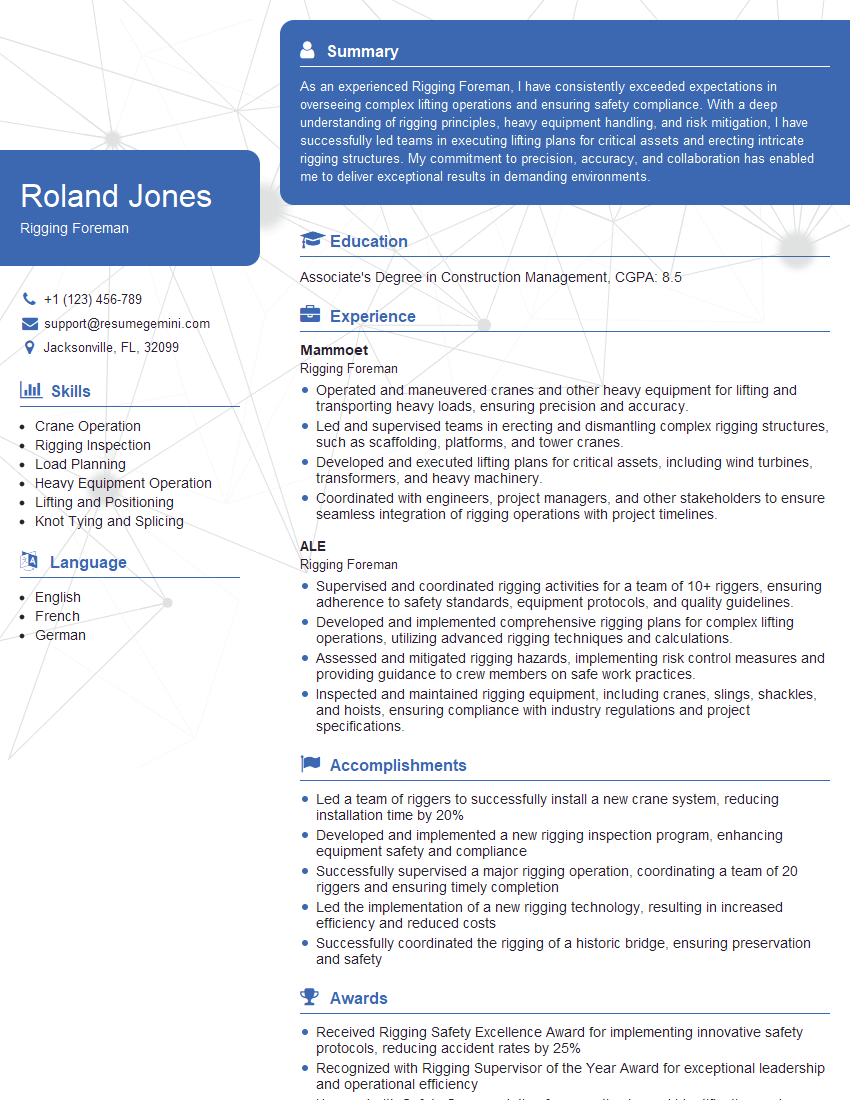
Mastering Rope Handling and Maintenance is crucial for career advancement in many industries, opening doors to specialized roles and increased earning potential. A strong resume is your key to unlocking these opportunities. Creating an ATS-friendly resume ensures your qualifications are effectively communicated to potential employers. ResumeGemini is a trusted resource to help you craft a professional and impactful resume that highlights your skills and experience in Rope Handling and Maintenance. Examples of resumes tailored to this field are available to help guide you through the process.

Explore more articles
Users Rating of Our Blogs
Share Your Experience
We value your feedback! Please rate our content and share your thoughts (optional).
What Readers Say About Our Blog
Very informative content, great job.
good